Article

Three-Dimensional Mapping of Clay and Cation Exchange Capacity of Sandy and Infertile Soil Using EM38 and Inversion Software


1
School of Biological, Earth and Environmental Sciences, Faculty of Science, UNSW Sydney, Kensington, NSW 2052, Australia
2
Land Development Regional Office 5, Land Development Department, Khon Kaen 40000, Thailand
*
Author to whom correspondence should be addressed.
Sensors 2019, 19(18), 3936; https://doi.org/10.3390/s19183936
Submission received: 15 June 2019 / Revised: 14 August 2019 / Accepted: 2 September 2019 / Published: 12 September 2019
(This article belongs to the Special Issue Smart Sensing Technologies for Agriculture)

Abstract

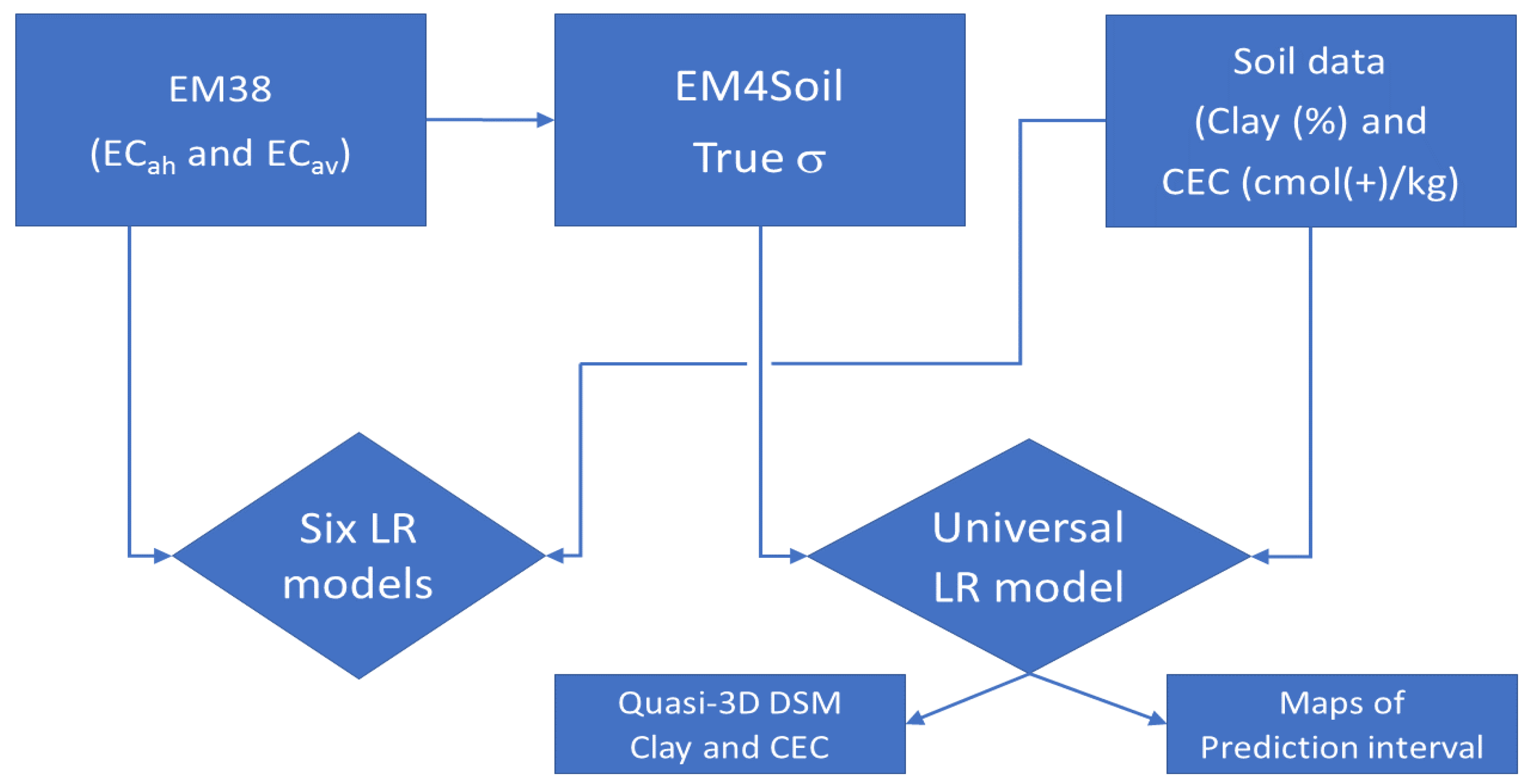
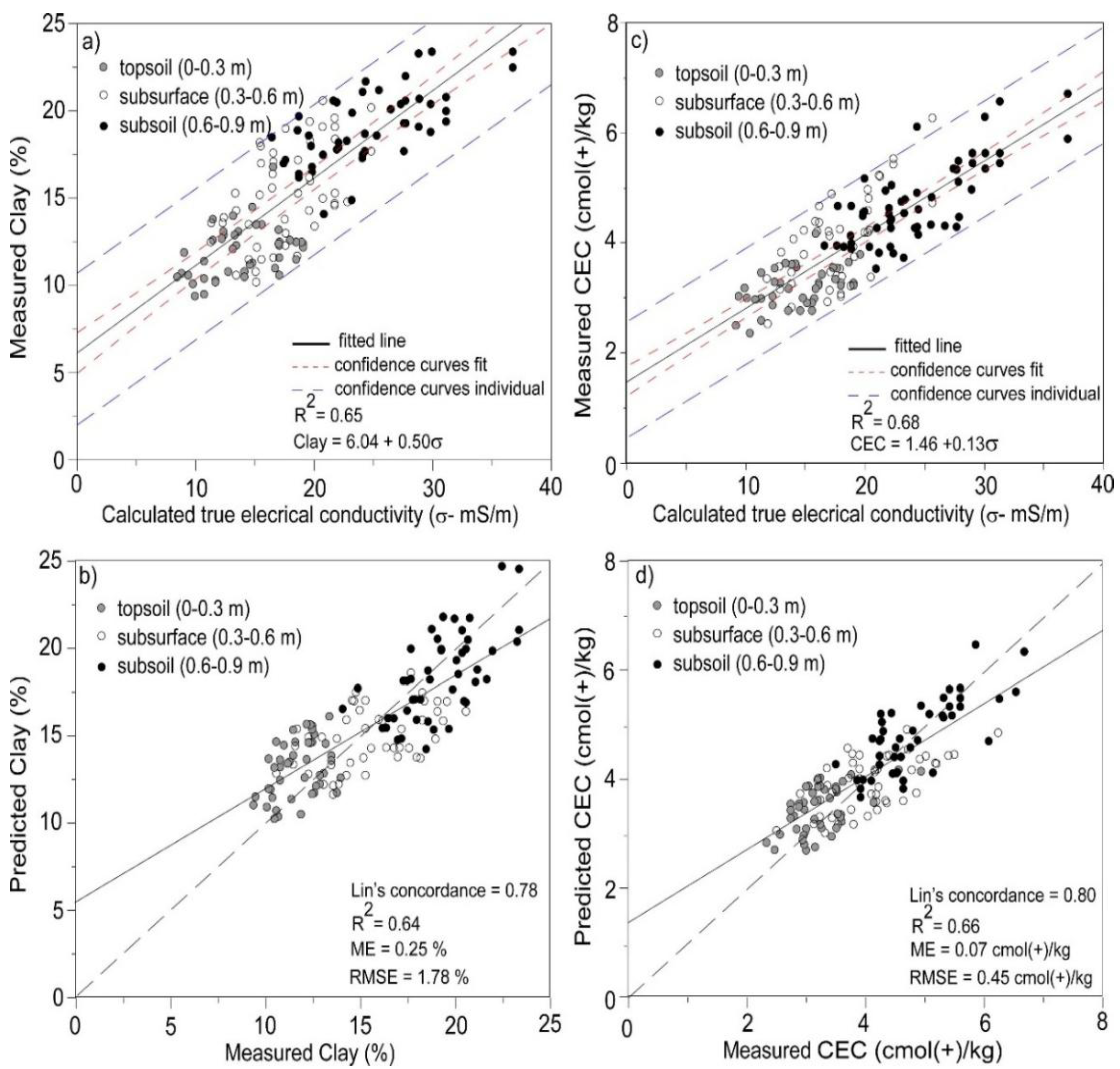
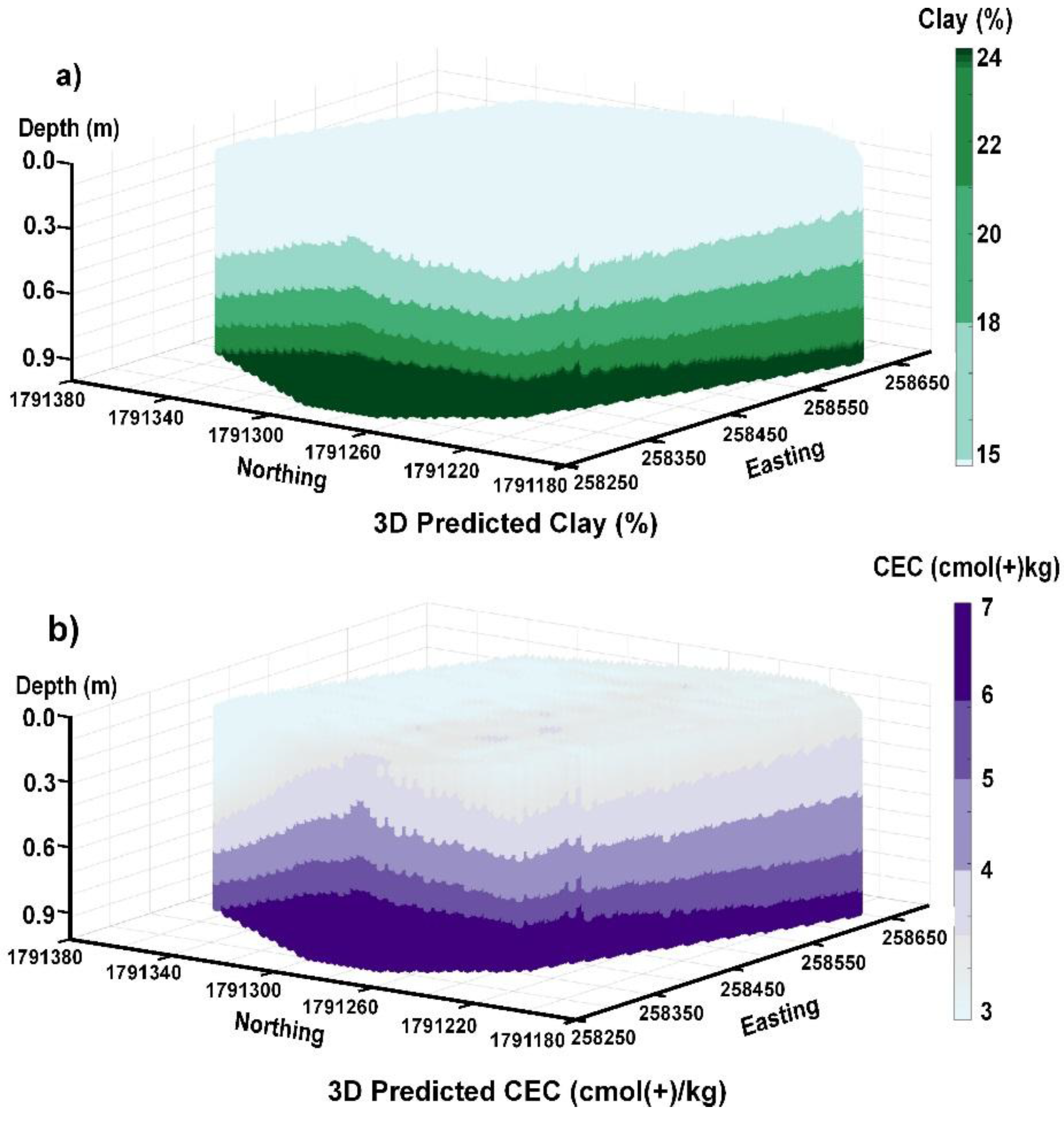
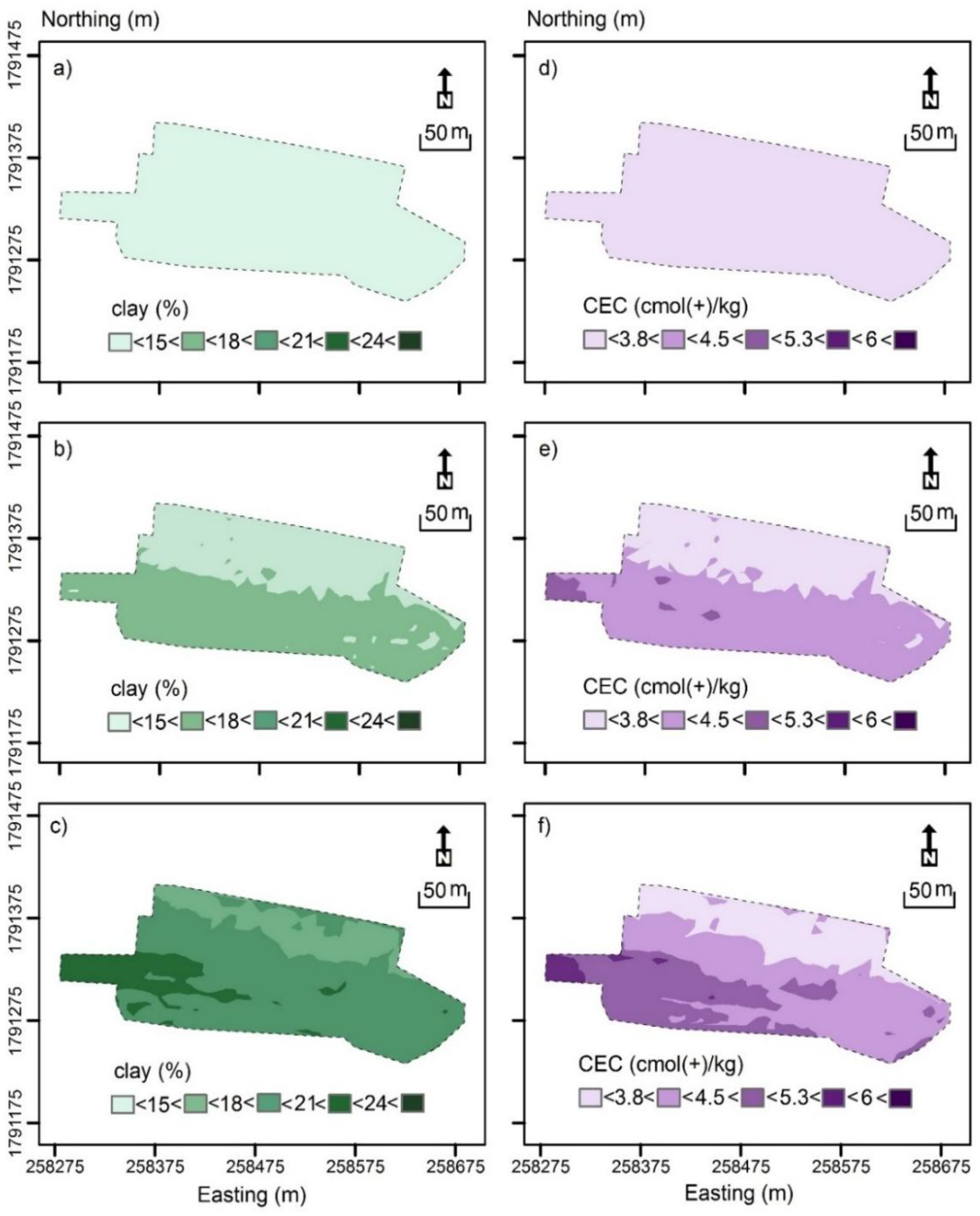
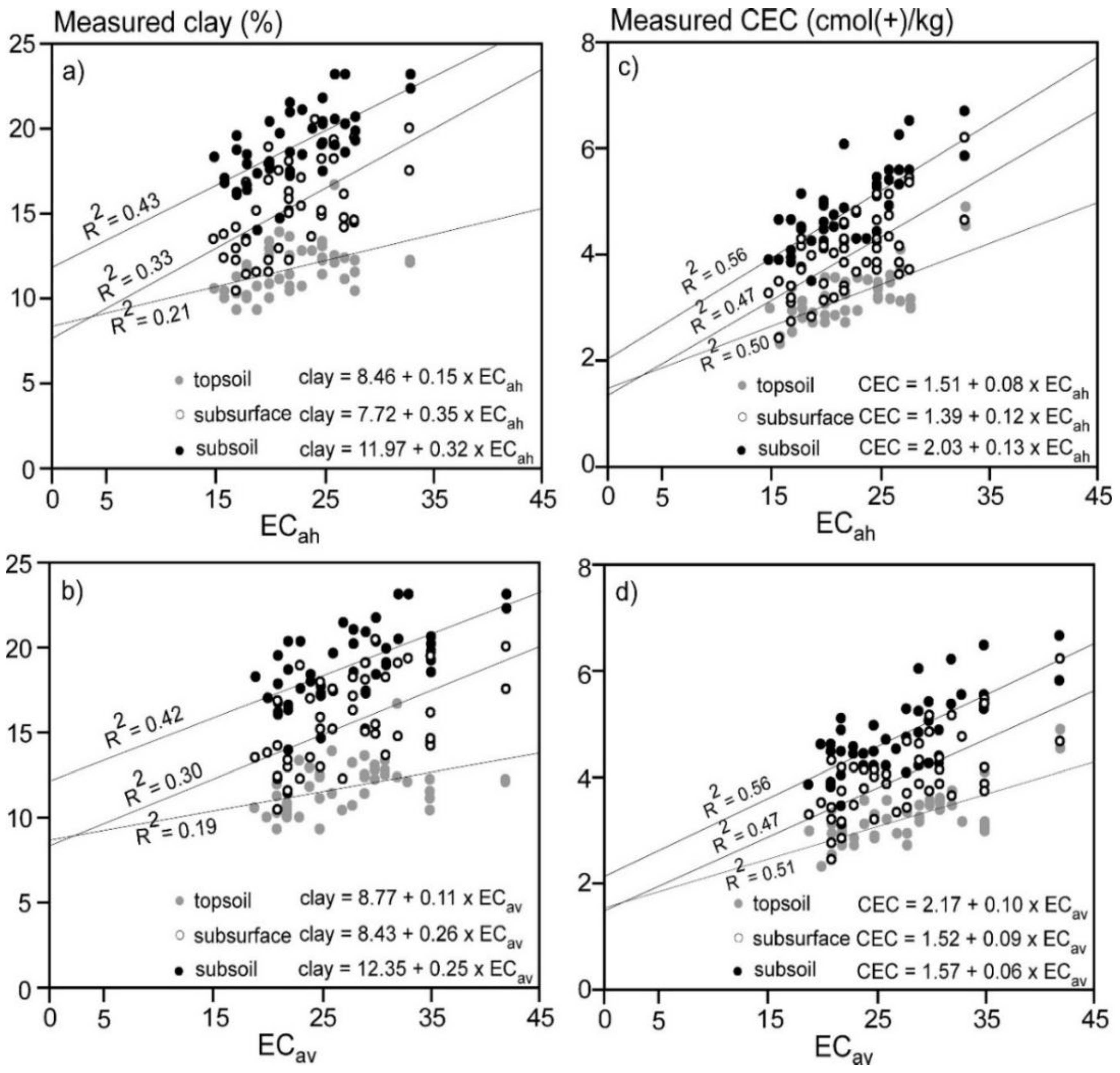
Most cultivated upland areas of northeast Thailand are characterized by sandy and infertile soils, which are difficult to improve agriculturally. Information about the clay (%) and cation exchange capacity (CEC—cmol(+)/kg) are required. Because it is expensive to analyse these soil properties, electromagnetic (EM) induction instruments are increasingly being used. This is because the measured apparent soil electrical conductivity (ECa—mS/m), can often be correlated directly with measured topsoil (0–0.3 m), subsurface (0.3–0.6 m) and subsoil (0.6–0.9 m) clay and CEC. In this study, we explore the potential to use this approach and considering a linear regression (LR) between EM38 acquired ECa in horizontal (ECah) and vertical (ECav) modes of operation and the soil properties at each of these depths. We compare this approach with a universal LR relationship developed between calculated true electrical conductivity (σ—mS/m) and laboratory measured clay and CEC at various depths. We estimate σ by inverting ECah and ECav data, using a quasi-3D inversion algorithm (EM4Soil). The best LR between ECa and soil properties was between ECah and subsoil clay (R2 = 0.43) and subsoil CEC (R2 = 0.56). We concluded these LR were unsatisfactory to predict clay or CEC at any of the three depths, however. In comparison, we found that a universal LR could be established between σ with clay (R2 = 0.65) and CEC (R2 = 0.68). The LR model validation was tested using a leave-one-out-cross-validation. The results indicated that the universal LR between σ and clay at any depth was precise (RMSE = 2.17), unbiased (ME = 0.27) with good concordance (Lin’s = 0.78). Similarly, satisfactory results were obtained by the LR between σ and CEC (Lin’s = 0.80). We conclude that in a field where a direct LR relationship between clay or CEC and ECa cannot be established, can still potentially be mapped by developing a LR between estimates of σ with clay or CEC if they all vary with depth.
Keywords: Three-dimensional mapping; quasi-3D inversion algorithm; cation exchange capacity; clay content; sandy infertile soil Three-dimensional mapping; quasi-3D inversion algorithm; cation exchange capacity; clay content; sandy infertile soil