Article

Assessment of the Spatial Distribution of Moisture Content in Granular Material Using Electrical Impedance Tomography †

Faculty of Environmental Engineering, Cracow University of Technology, Warszawska 24, 31-155 Krakow, Poland
This paper is an extended version of the paper: Porzuczek, J. Monitoring of the drying process using EIT method. In Proceedings of the 9th World Congress on Industrial Process Tomography, Bath, UK, 2–6 September 2018.
Sensors 2019, 19(12), 2807; https://doi.org/10.3390/s19122807
Submission received: 28 May 2019 / Revised: 19 June 2019 / Accepted: 20 June 2019 / Published: 23 June 2019

Abstract

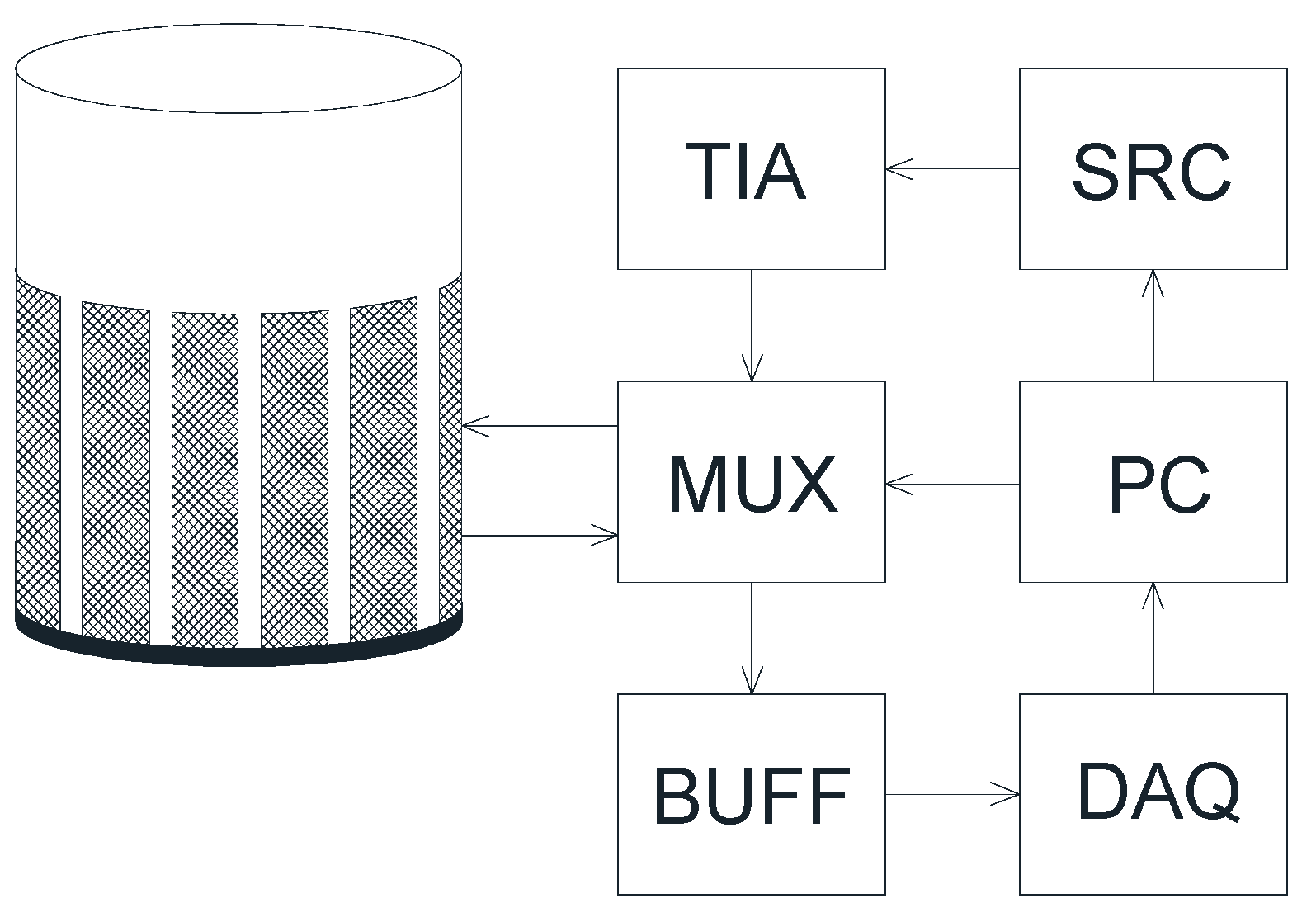
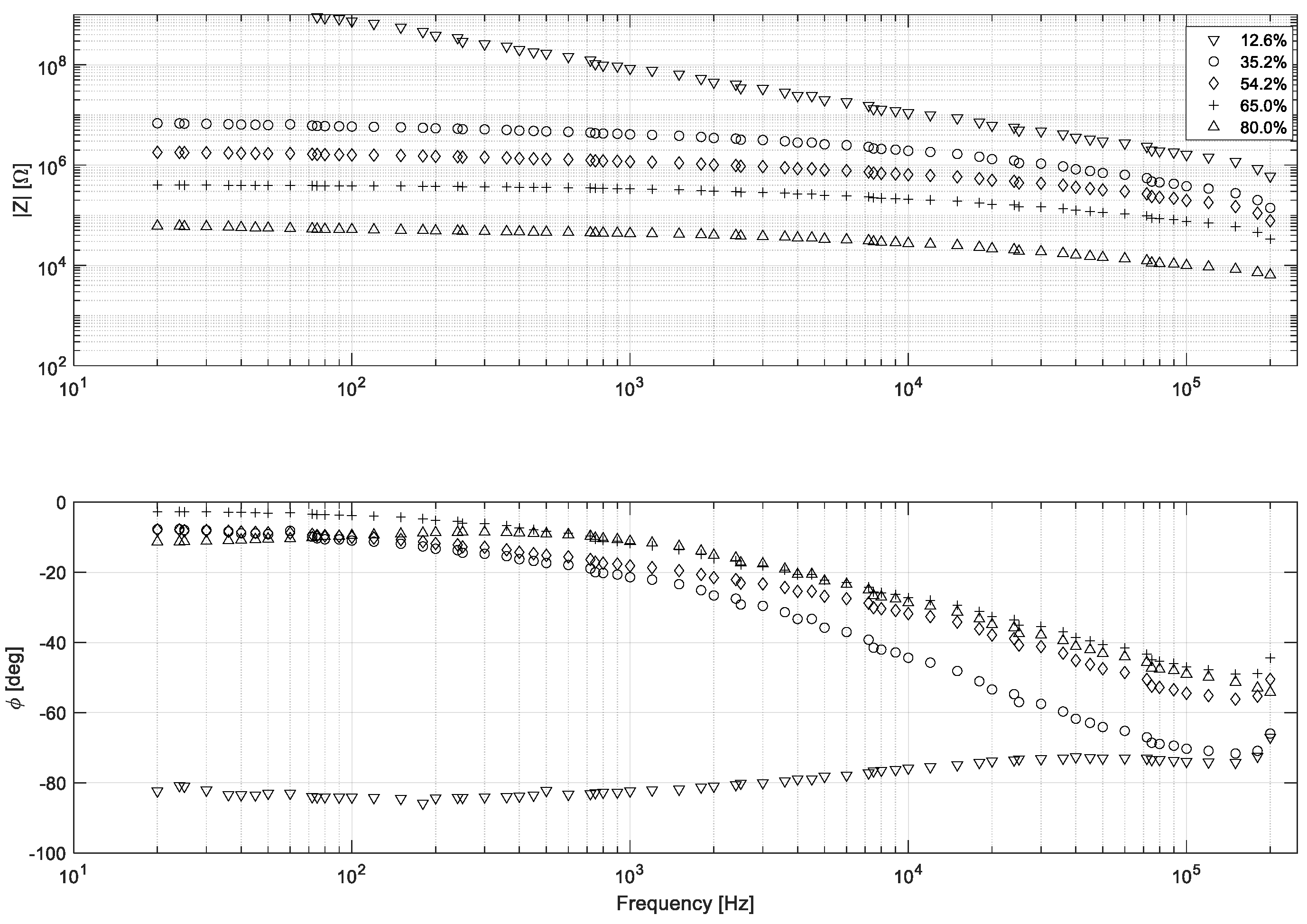
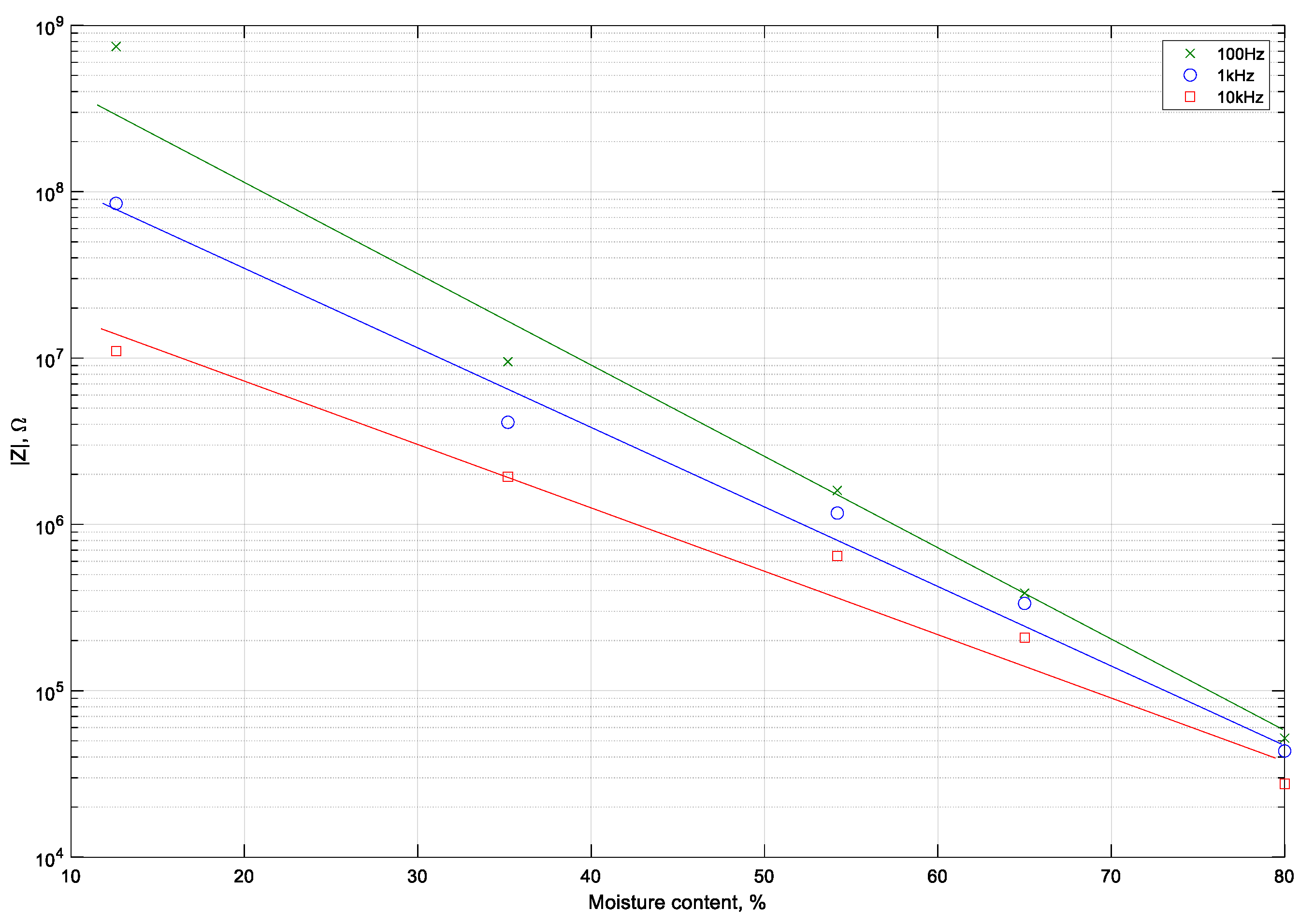
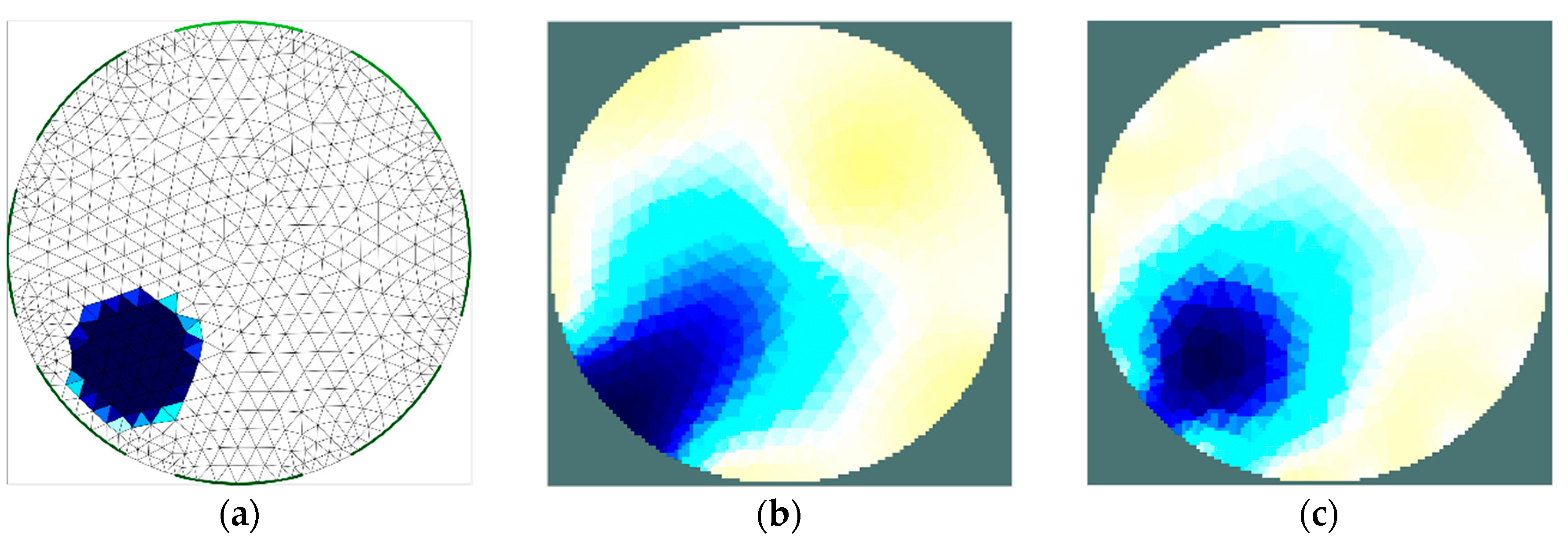
This paper presents a method for the online determination of the spatial distribution of the moisture content in granular material. It might be essential for the monitoring and optimal control of, for example, drying processes. The proposed method utilizes Electrical Impedance Tomography (EIT). As an exemplary material for experimental research, the black chokeberry (Aronia melanocarpa) was used. The relationship between the electrical impedance of the chokeberry and its moisture content was determined for a wide range of frequencies (20 Hz–200 kHz). The EIT research consisted of both simulation and experimental investigation. Experimental studies of the spatial distribution of the moisture content were performed in a cylindrical vessel equipped with 8 electrodes circumferentially arranged. The voltage signal from the electrodes was acquired simultaneously using the data acquisition module. Due to the high impedance of the chokeberries, exceeding 109 Ω for the dried matter, extraordinary instrumentation was necessary to be applied. On the other hand, raw chokeberry was characterized by a several orders of magnitude lower impedance (103–104 Ω), especially for high frequencies. The wide range of the observed impedance was able to be measured owing to its use of the voltage stimulation instead of the current stimulation (which is most common for EIT). The image reconstruction problem was solved using an iterative Gauss–Newton algorithm and the EIDORS (Electrical Impedance Tomography and Diffuse Optical Tomography Reconstruction Software) package. The obtained results showed a satisfactory ability to localize an insufficiently dried part of the material. Prospective ways to improve the imaging quality are also discussed.
Keywords: drying process; Electrical Impedance Tomography; impedance spectroscopy; chokeberry; EIDORS drying process; Electrical Impedance Tomography; impedance spectroscopy; chokeberry; EIDORS