Article

Clustering Transmission Opportunity Length (CTOL) Model over Cognitive Radio Network

1
Research Centre of Excellence for Wireless and Photonics Network (WiPNET), Department of Computer and Communication Systems Engineering, Faculty of Engineering, Universiti Putra Malaysia, Serdang 43400, Selangor, Malaysia
2
Center for Telecommunication Research & Innovation (CeTRI), Fakulti Kejuruteraan Elektronik dan Kejuruteraan Komputer (FKEKK), Universiti Teknikal Malaysia Melaka (UTeM), Hang Tuah Jaya, Durian Tunggal 76100, Melaka, Malaysia
3
Centre of Advanced Electronic & Communication Engineering, Faculty of Engineering and Built Environment, Universiti Kebangsaan Malaysia, Bangi 43600, Malaysia
4
Faculty of Engineering Electrical and Computer Engineering, Shinshu University, 4-17-1, Wakasato, Nagano City 380 8553, Japan
*
Author to whom correspondence should be addressed.
Sensors 2018, 18(12), 4351; https://doi.org/10.3390/s18124351
Submission received: 31 August 2018 / Revised: 26 October 2018 / Accepted: 6 November 2018 / Published: 10 December 2018
(This article belongs to the Section Sensor Networks)

Abstract

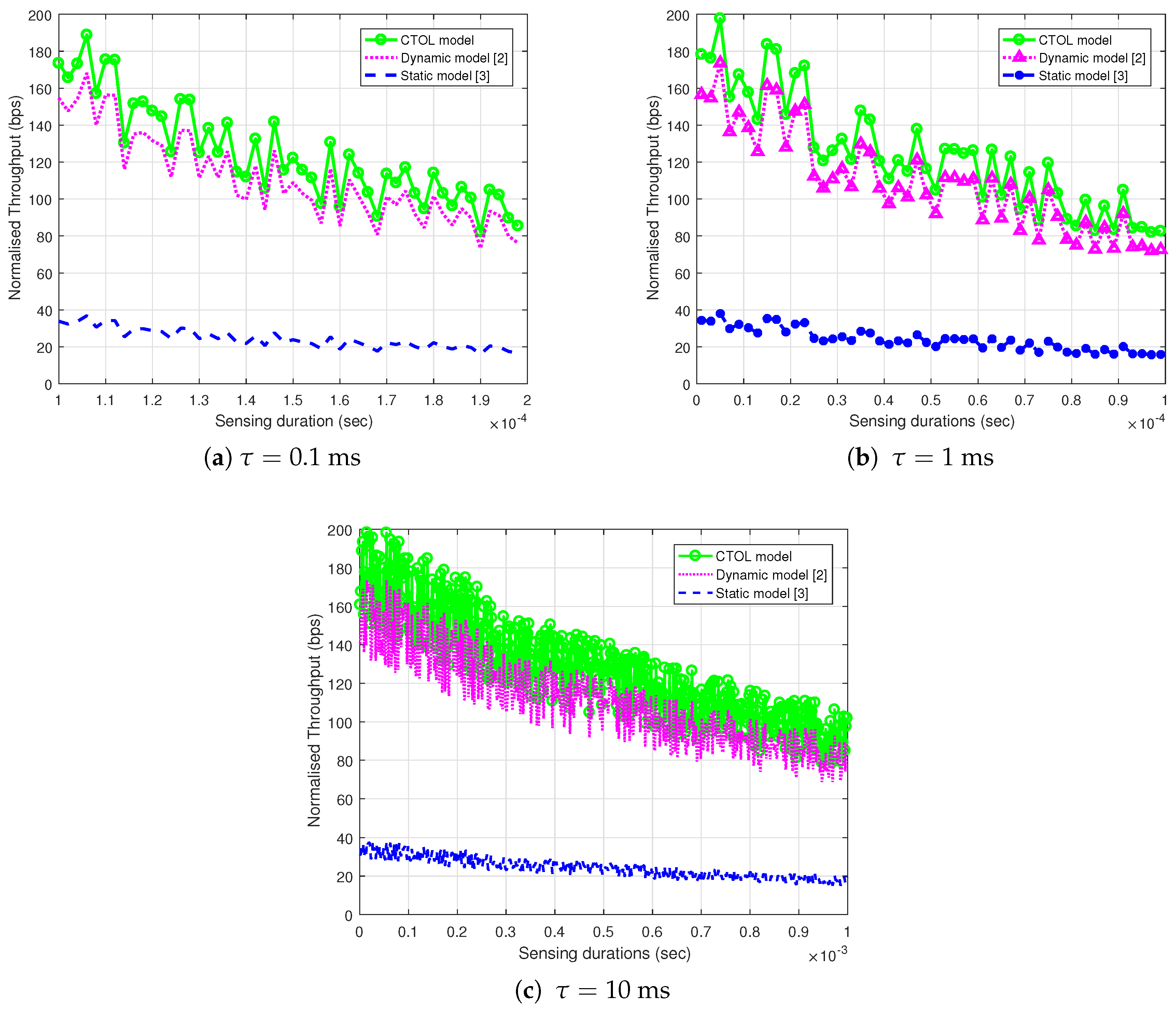
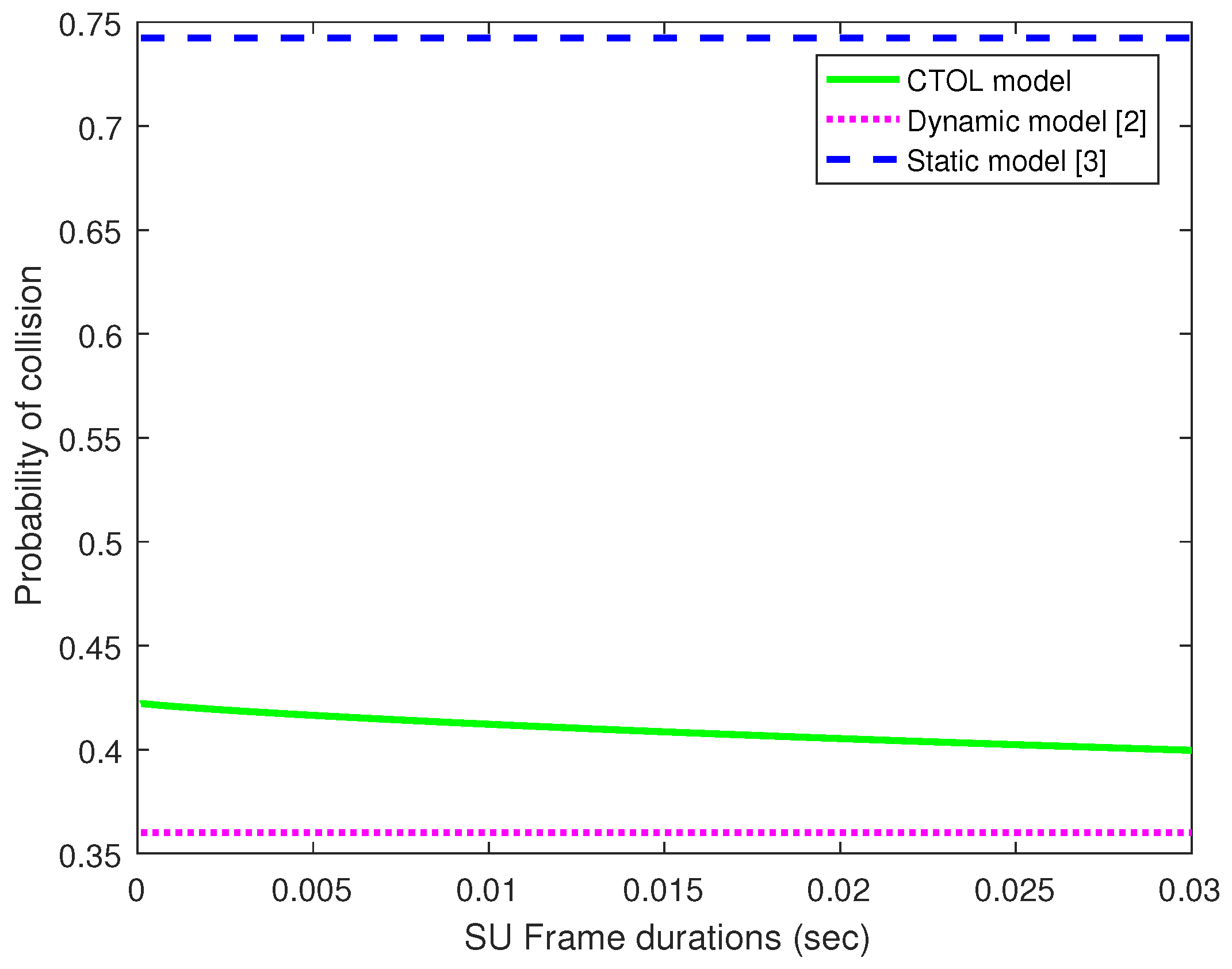
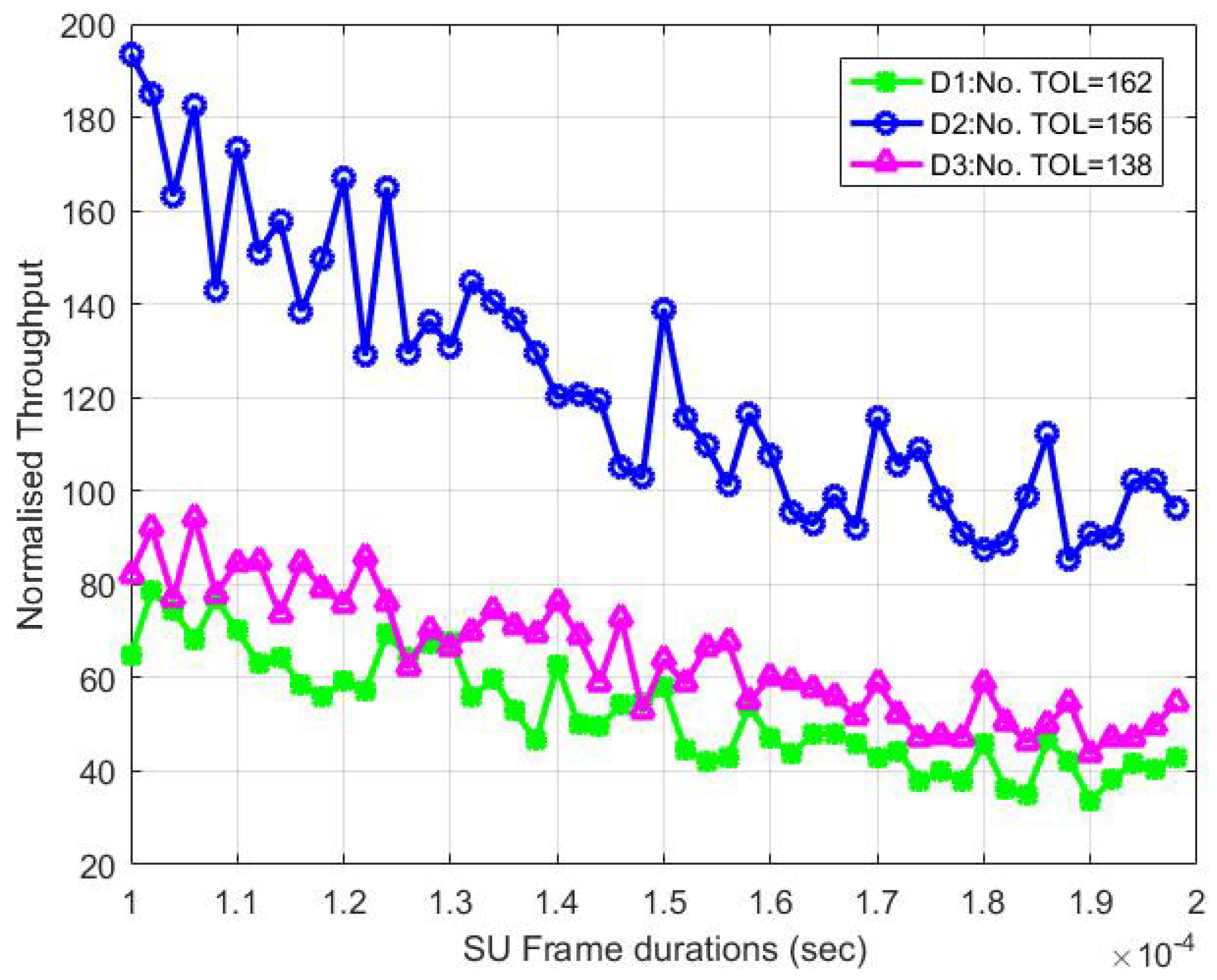
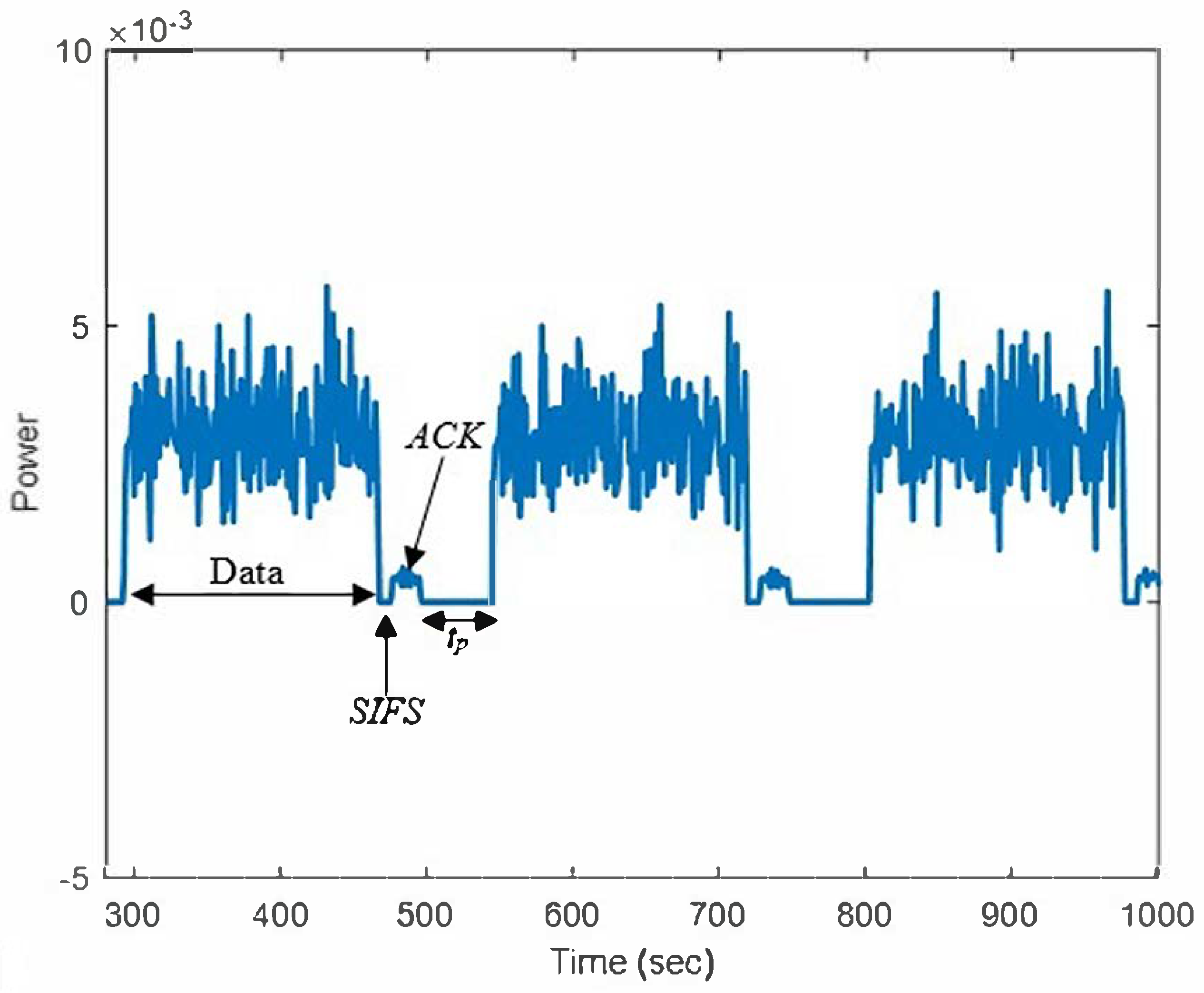
This paper investigated the throughput performance of a secondary user (SU) for a random primary user (PU) activity in a realistic experimental model. This paper proposed a sensing and frame duration of the SU to maximize the SU throughput under the collision probability constraint. The throughput of the SU and the probability of collisions depend on the pattern of PU activities. The pattern of PU activity was obtained and modelled from the experimental data that measure the wireless local area network (WLAN) environment. The WLAN signal has detected the transmission opportunity length (TOL) which was analyzed and clustered into large and small durations in the CTOL model. The performance of the SU is then analyzed and compared with static and dynamic PU models. The results showed that the SU throughput in the CTOL model was higher than the static and dynamic models by almost 45% and 12.2% respectively. Furthermore, the probability of collisions in the network and the SU throughput were influenced by the value of the minimum contention window and the maximum back-off stage. The simulation results revealed that the higher contention window had worsened the SU throughput even though the channel has a higher number of TOLs.
Keywords: cognitive radio; opportunistic access; primary user; secondary user; transmission opportunity length; WLAN cognitive radio; opportunistic access; primary user; secondary user; transmission opportunity length; WLAN