Article

Improved Short-Term Clock Prediction Method for Real-Time Positioning
GNSS Research Center, Wuhan University, 129 Luoyu Road, Wuhan 430079, China
*
Authors to whom correspondence should be addressed.
Sensors 2017, 17(6), 1308; https://doi.org/10.3390/s17061308
Submission received: 5 April 2017 / Revised: 26 May 2017 / Accepted: 1 June 2017 / Published: 6 June 2017
(This article belongs to the Section Remote Sensors)

Abstract

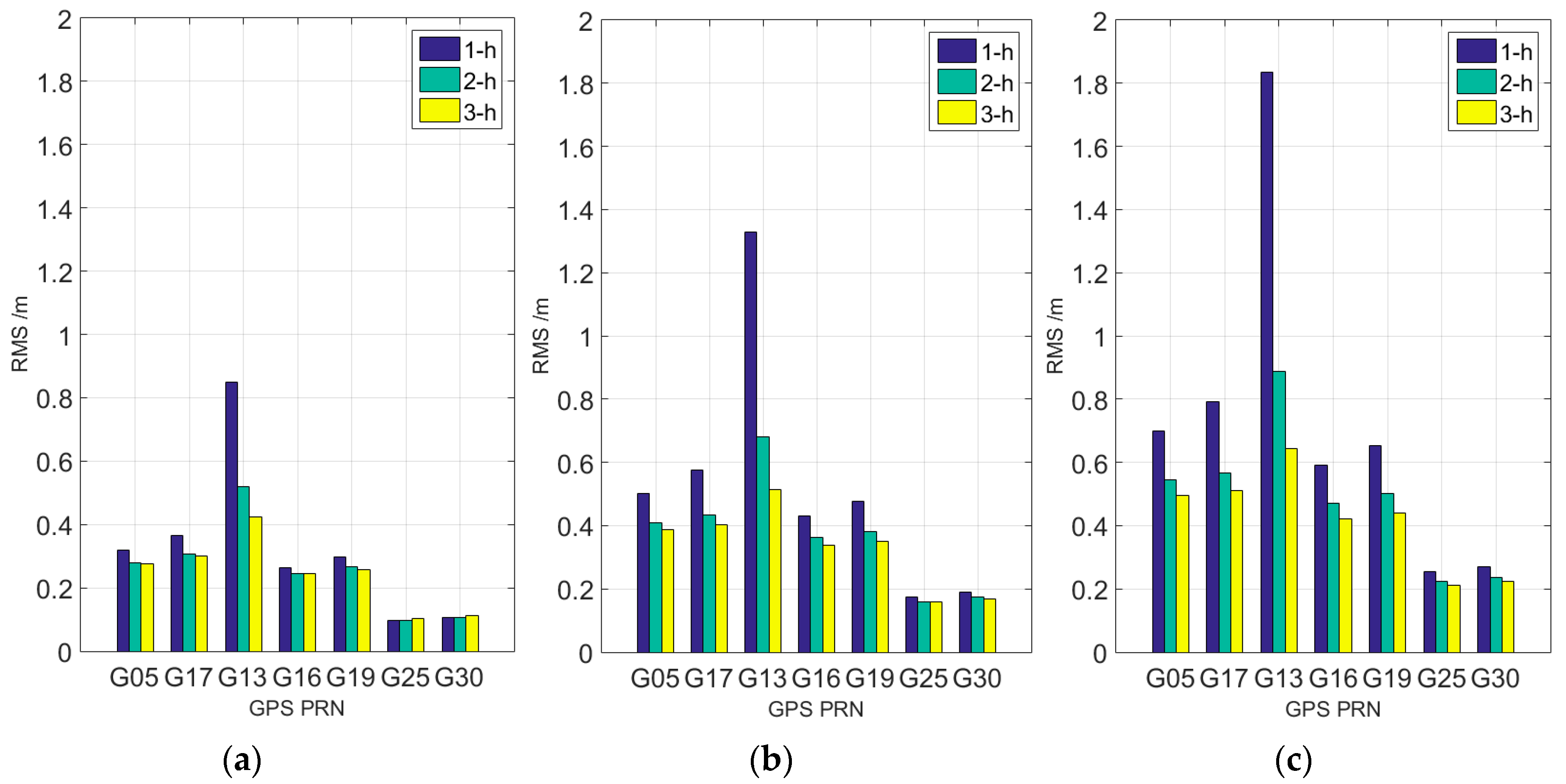
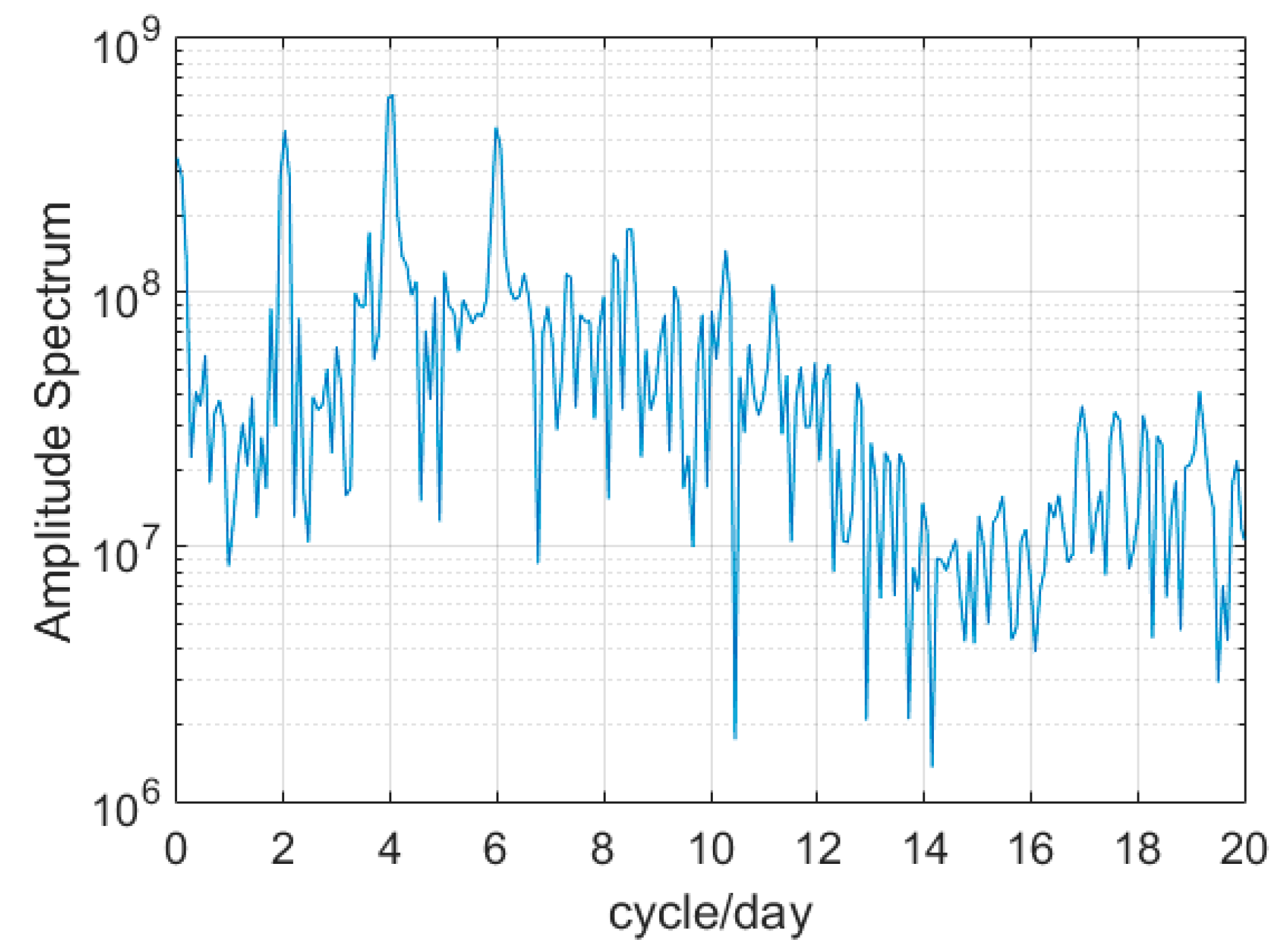
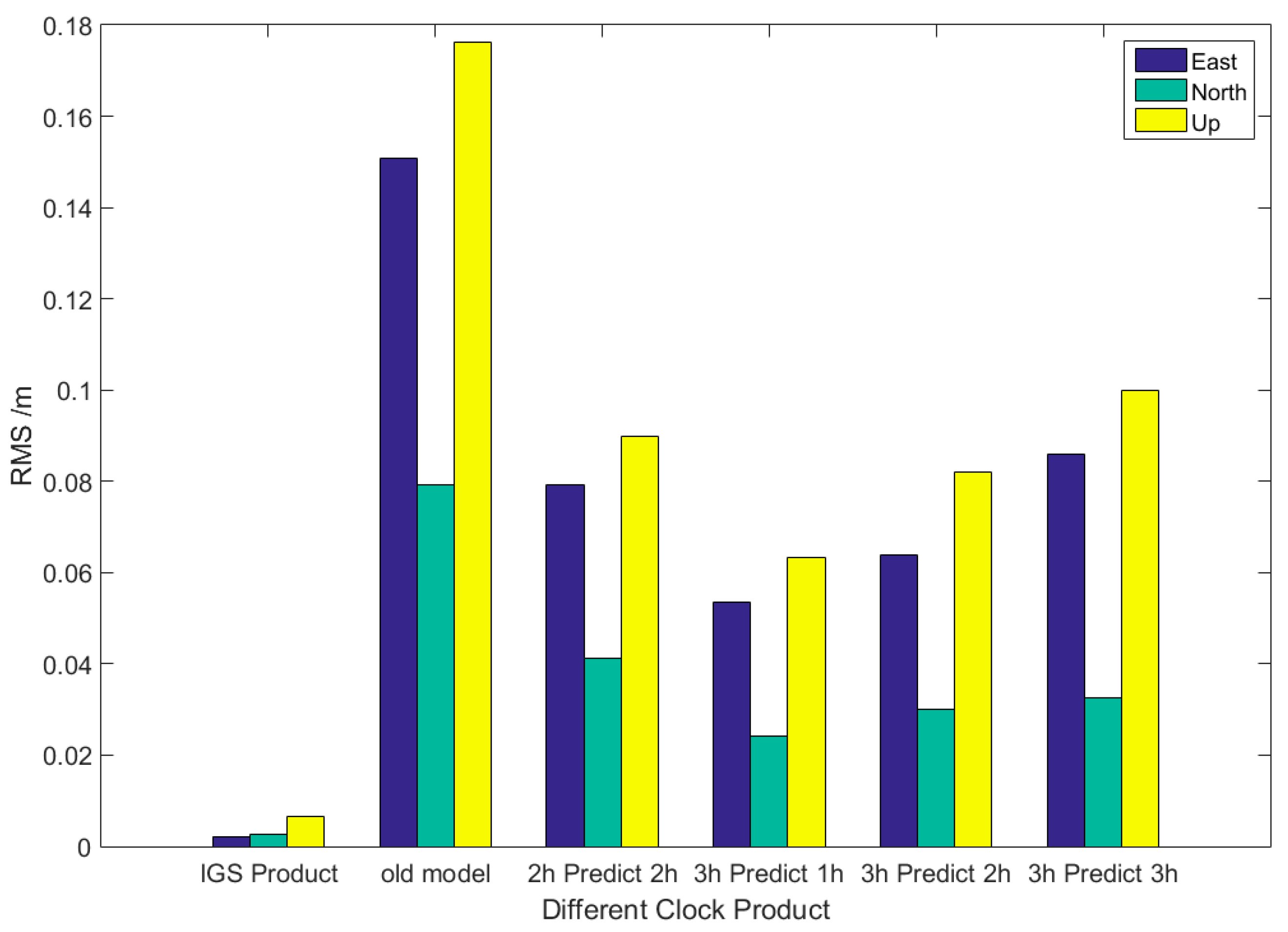
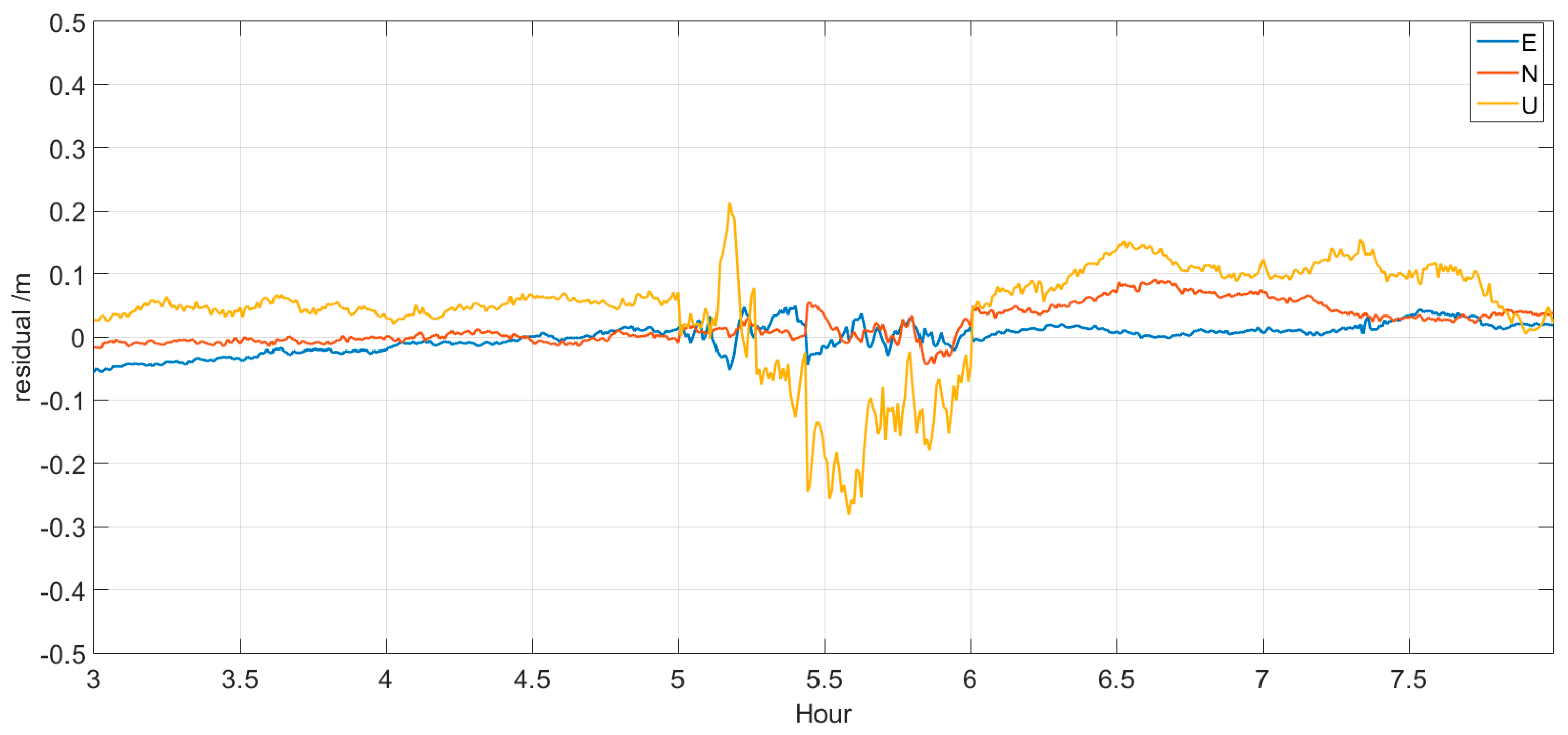
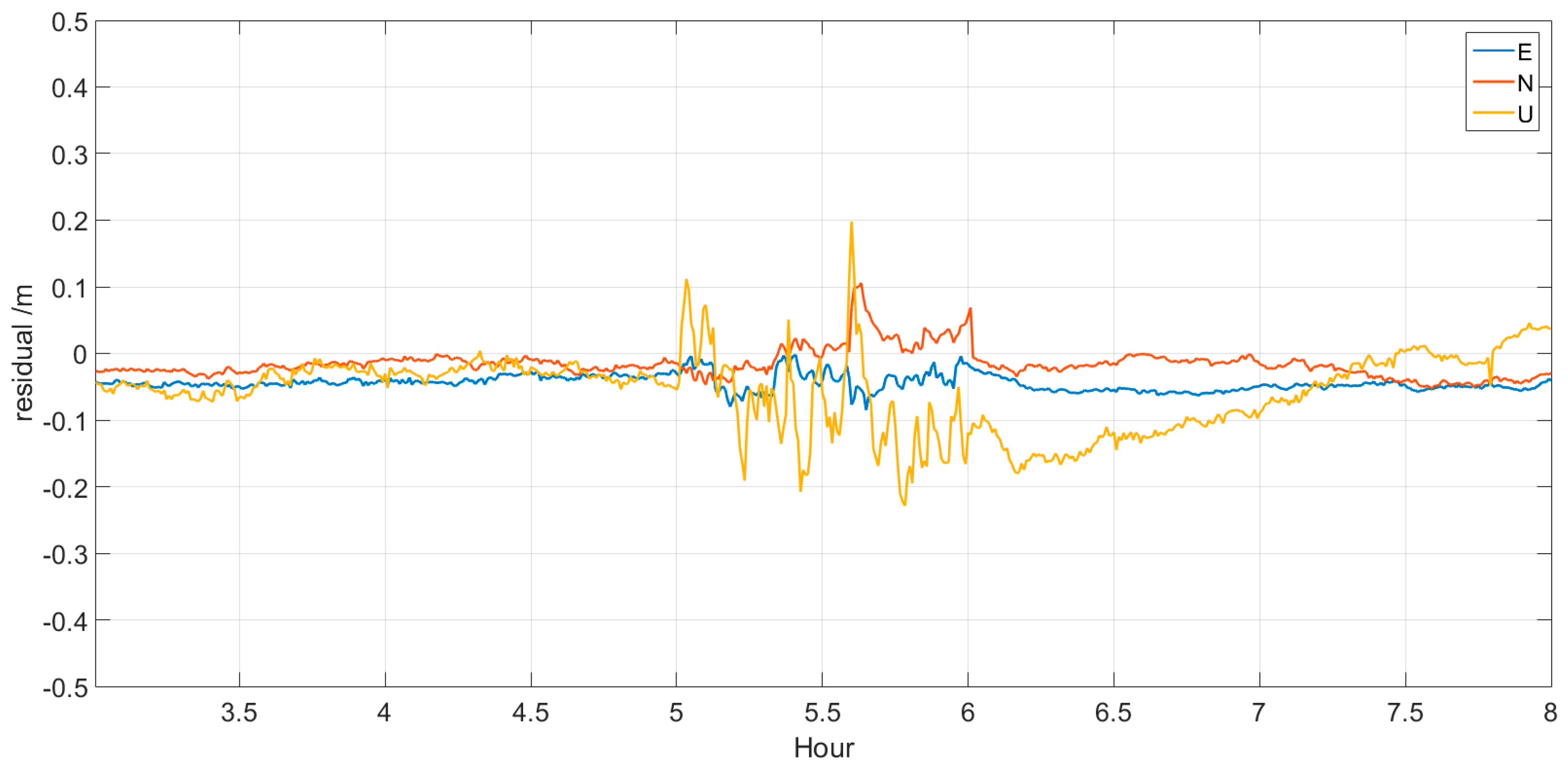
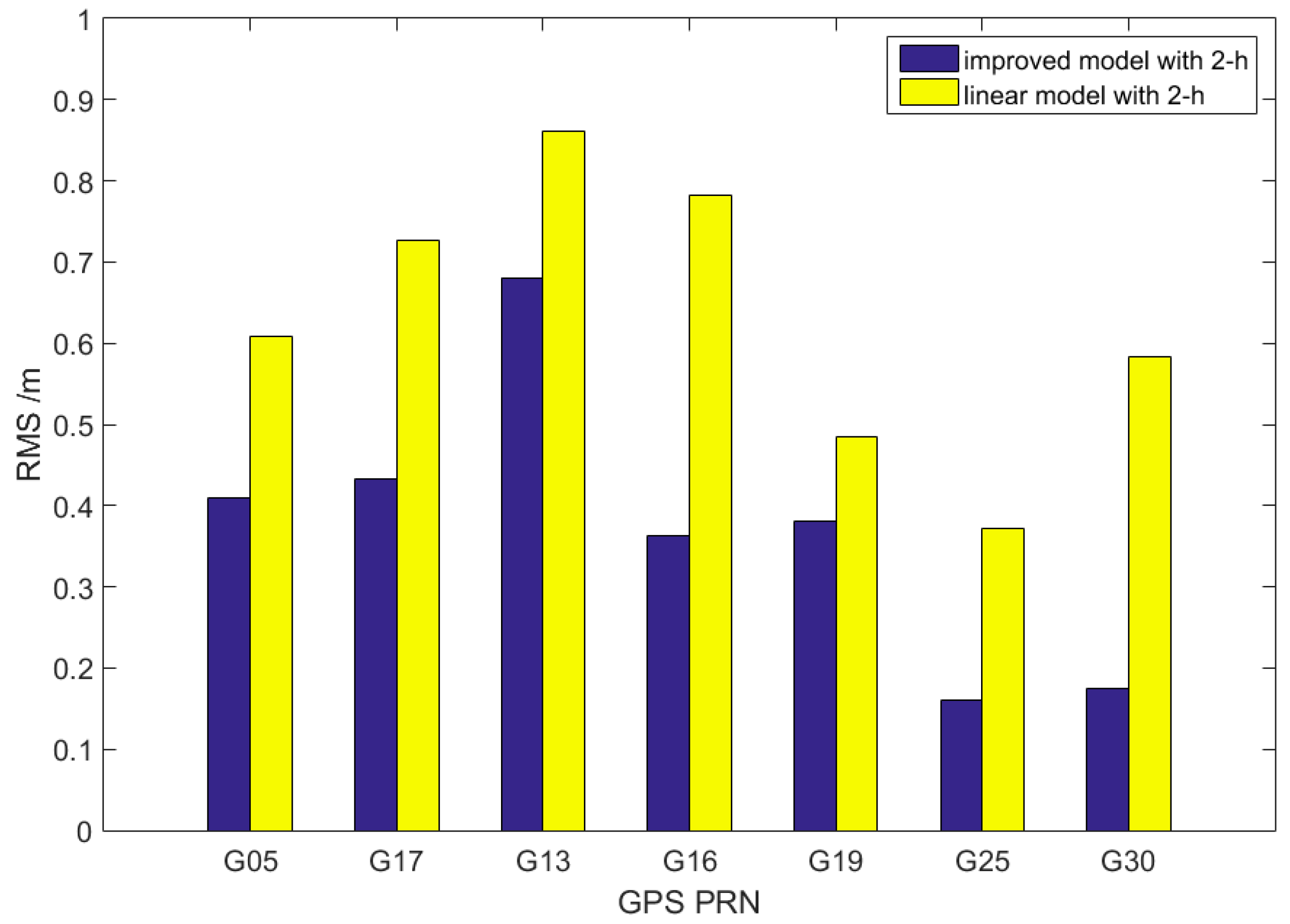
The application of real-time precise point positioning (PPP) requires real-time precise orbit and clock products that should be predicted within a short time to compensate for the communication delay or data gap. Unlike orbit correction, clock correction is difficult to model and predict. The widely used linear model hardly fits long periodic trends with a small data set and exhibits significant accuracy degradation in real-time prediction when a large data set is used. This study proposes a new prediction model for maintaining short-term satellite clocks to meet the high-precision requirements of real-time clocks and provide clock extrapolation without interrupting the real-time data stream. Fast Fourier transform (FFT) is used to analyze the linear prediction residuals of real-time clocks. The periodic terms obtained through FFT are adopted in the sliding window prediction to achieve a significant improvement in short-term prediction accuracy. This study also analyzes and compares the accuracy of short-term forecasts (less than 3 h) by using different length observations. Experimental results obtained from International GNSS Service (IGS) final products and our own real-time clocks show that the 3-h prediction accuracy is better than 0.85 ns. The new model can replace IGS ultra-rapid products in the application of real-time PPP. It is also found that there is a positive correlation between the prediction accuracy and the short-term stability of on-board clocks. Compared with the accuracy of the traditional linear model, the accuracy of the static PPP using the new model of the 2-h prediction clock in N, E, and U directions is improved by about 50%. Furthermore, the static PPP accuracy of 2-h clock products is better than 0.1 m. When an interruption occurs in the real-time model, the accuracy of the kinematic PPP solution using 1-h clock prediction product is better than 0.2 m, without significant accuracy degradation. This model is of practical significance because it solves the problems of interruption and delay in data broadcast in real-time clock estimation and can meet the requirements of real-time PPP.
Keywords: real-time precise point positioning; real-time clock estimation; short-term prediction real-time precise point positioning; real-time clock estimation; short-term prediction