Article

Impact Analysis of Flow Shaping in Ethernet-AVB/TSN and AFDX from Network Calculus and Simulation Perspective
School of Electronic and Information Engineering, Beihang University, Beijing 100191, China
*
Author to whom correspondence should be addressed.
Sensors 2017, 17(5), 1181; https://doi.org/10.3390/s17051181
Submission received: 19 February 2017 / Revised: 17 May 2017 / Accepted: 17 May 2017 / Published: 22 May 2017

Abstract

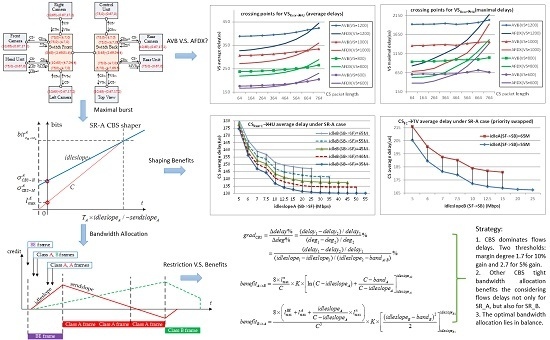
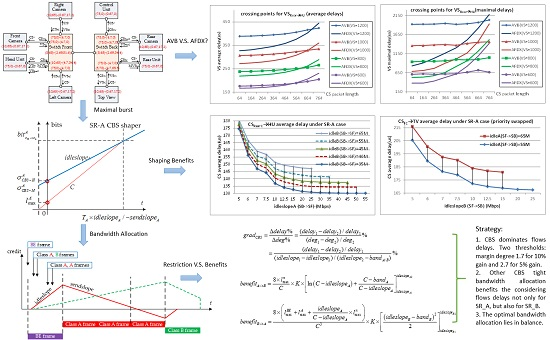
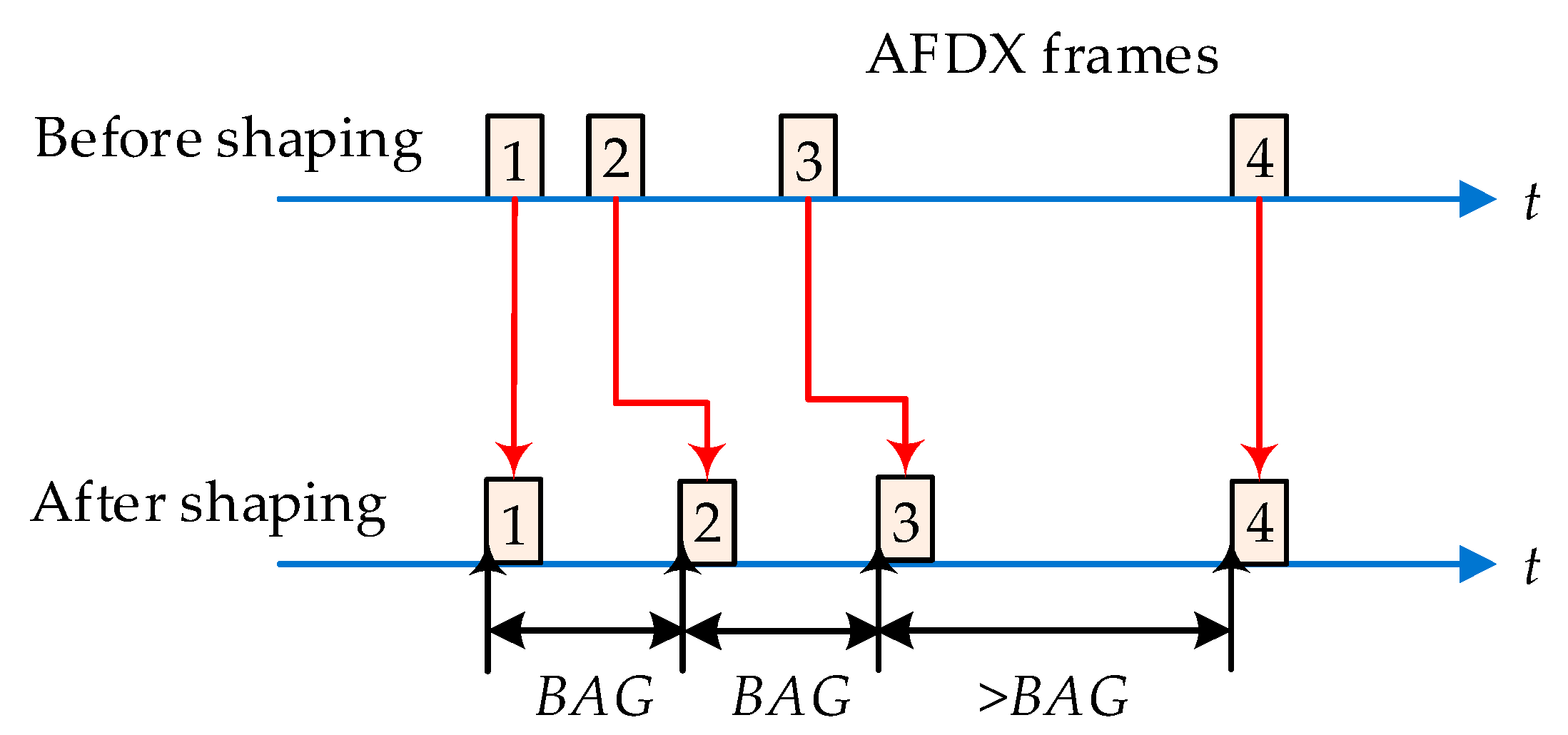
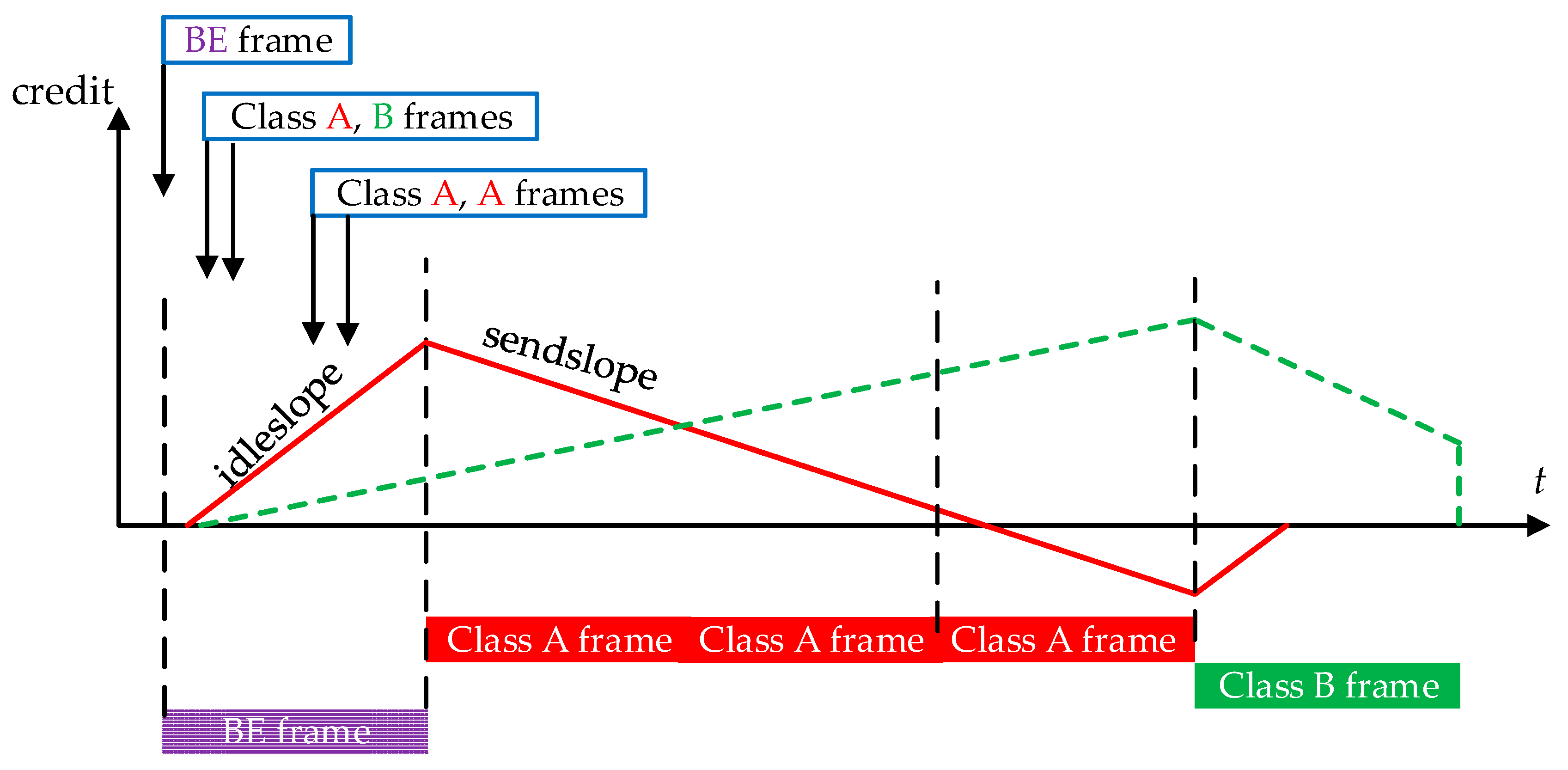
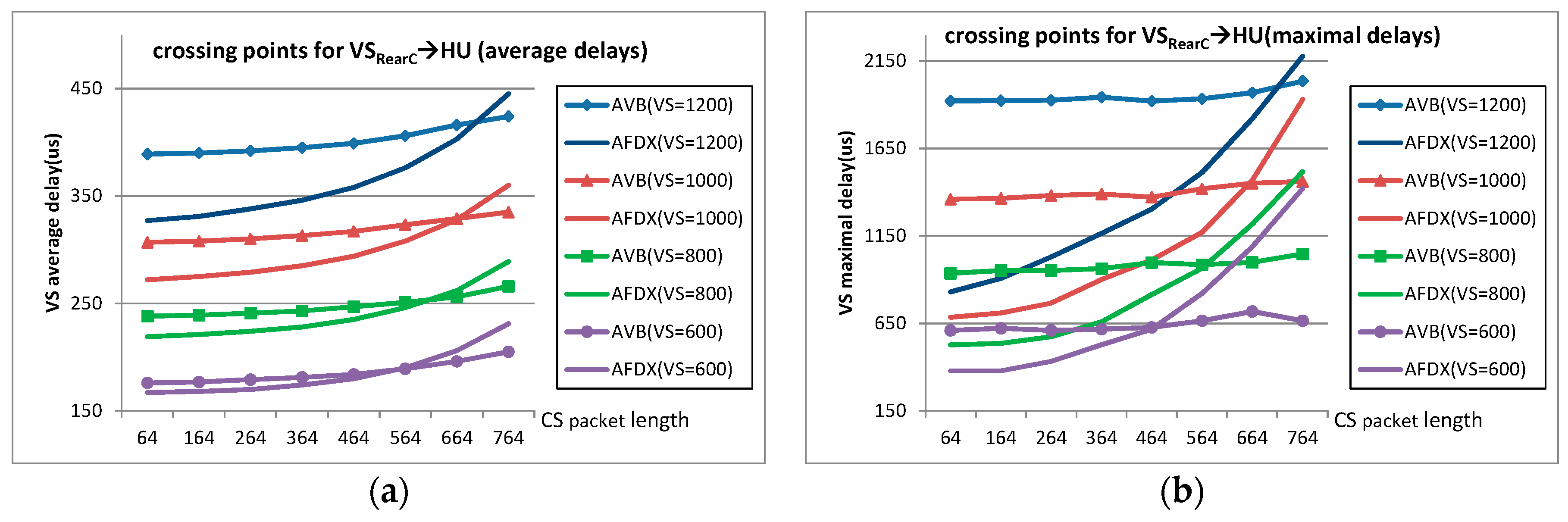
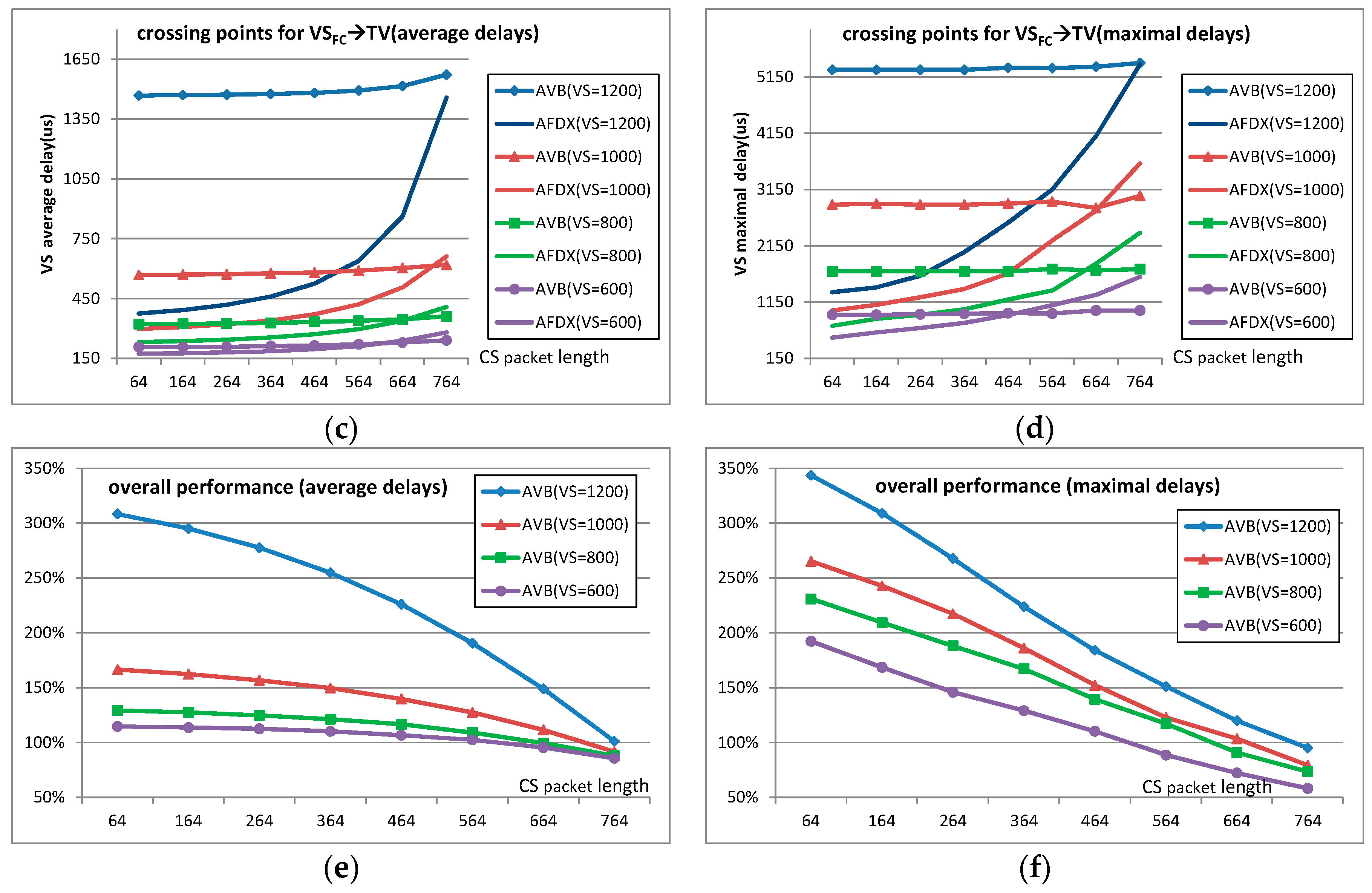
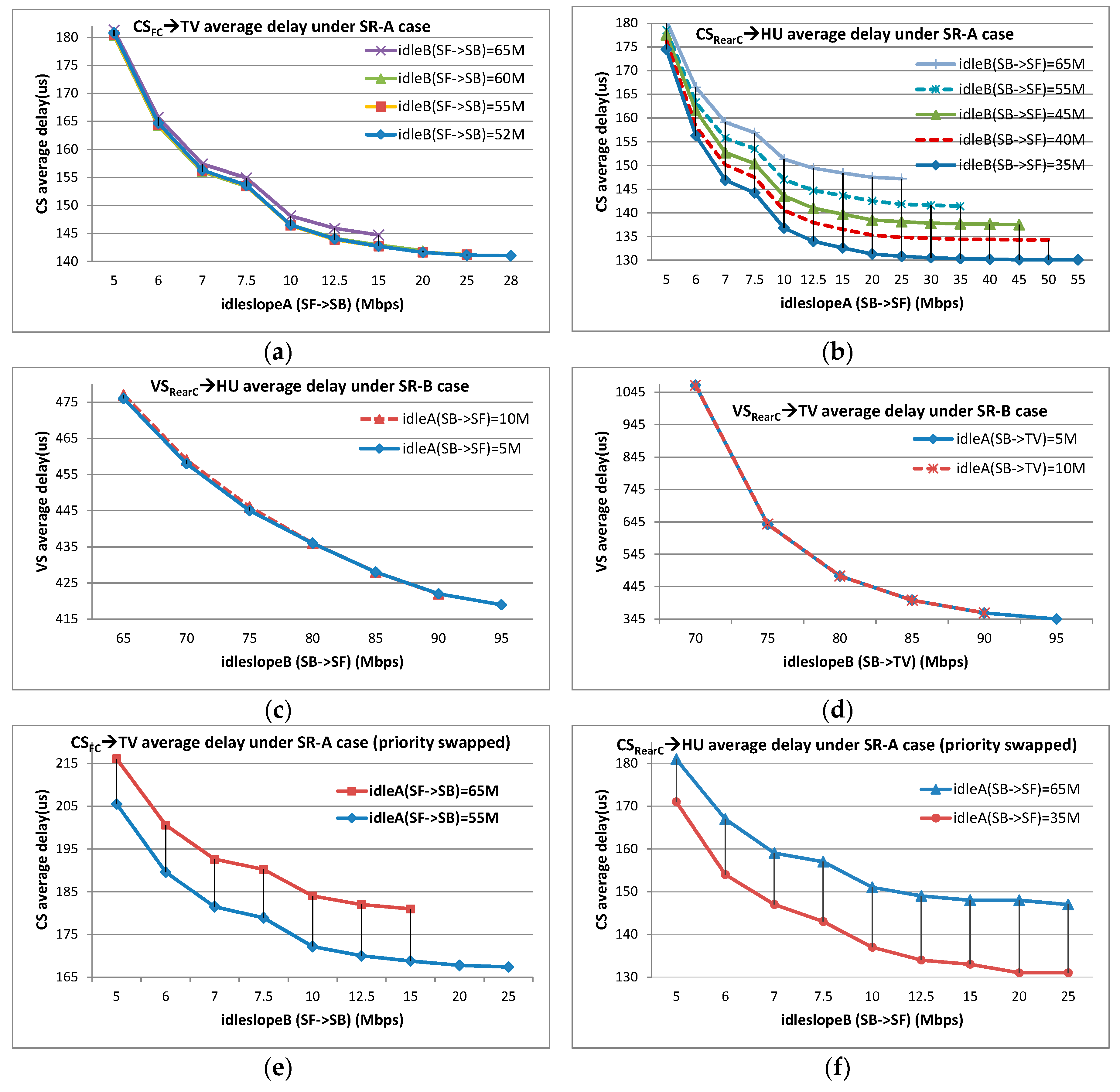
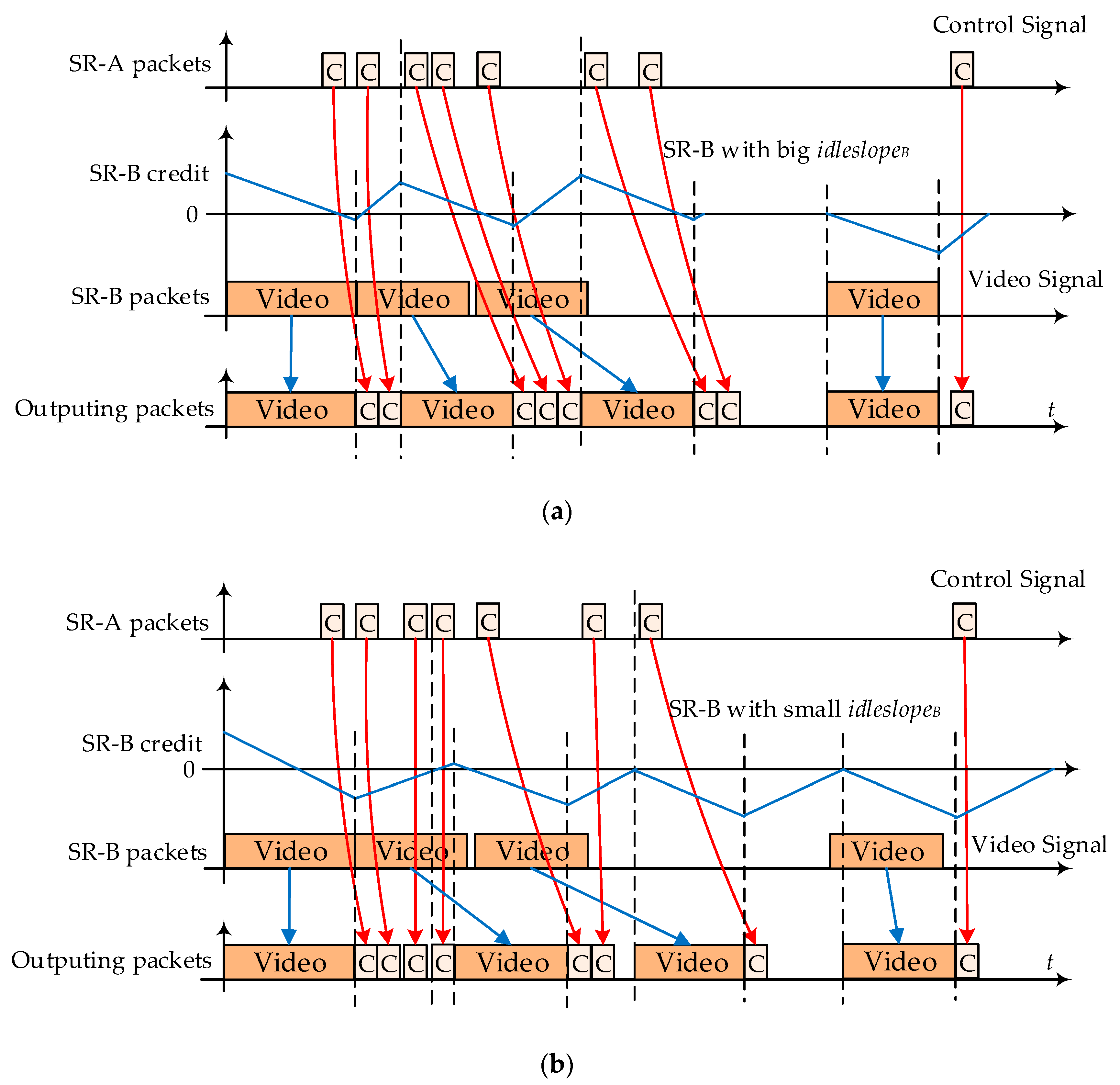
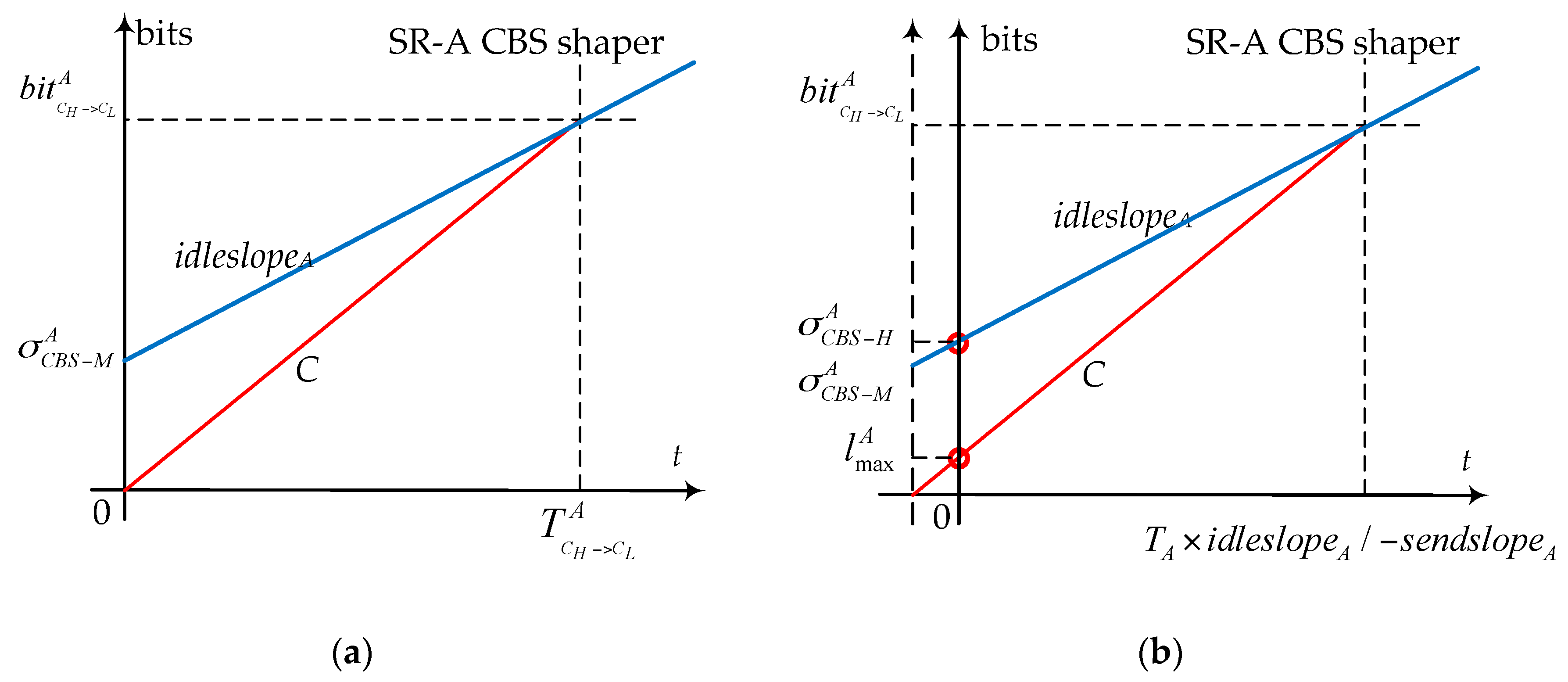
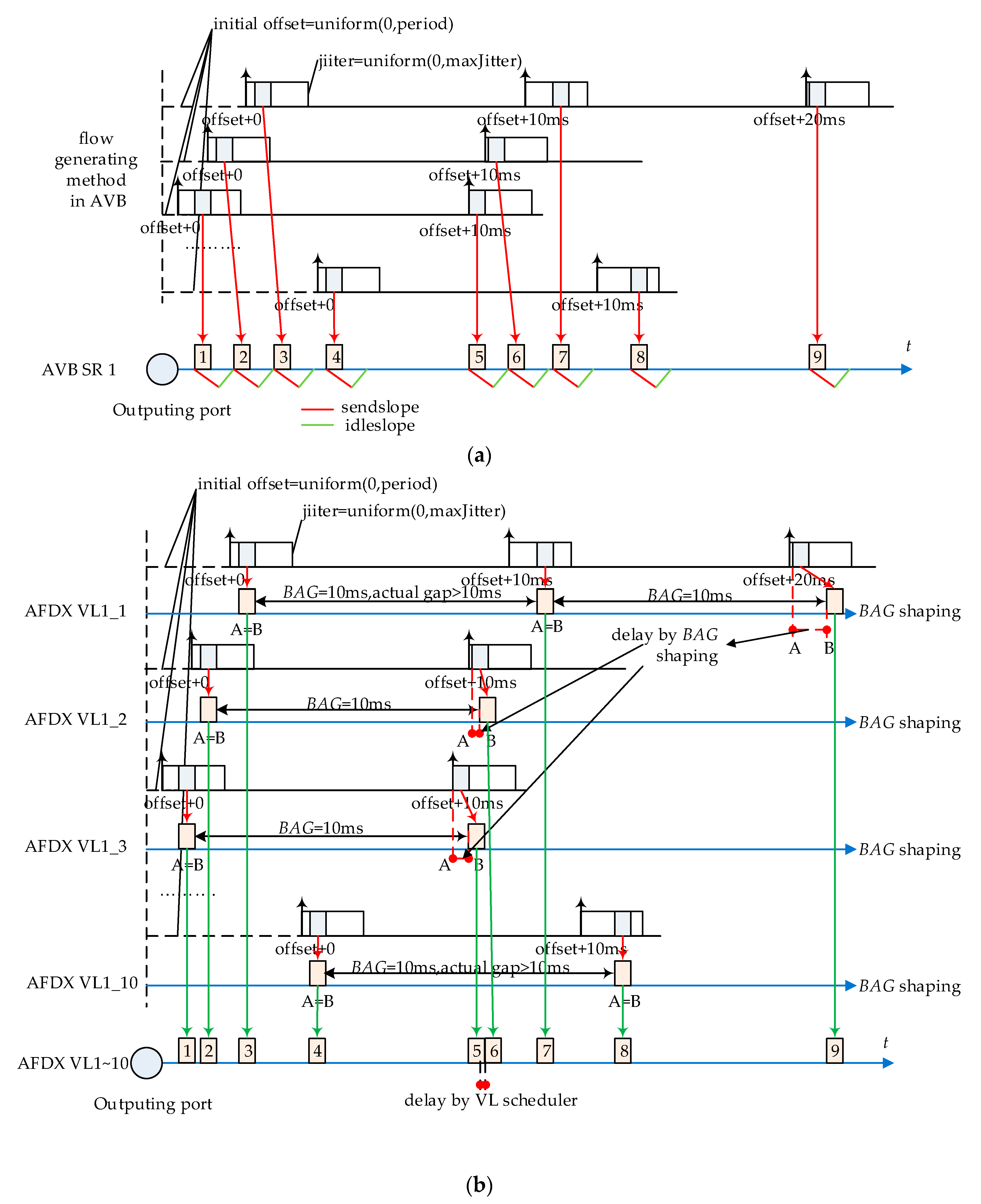
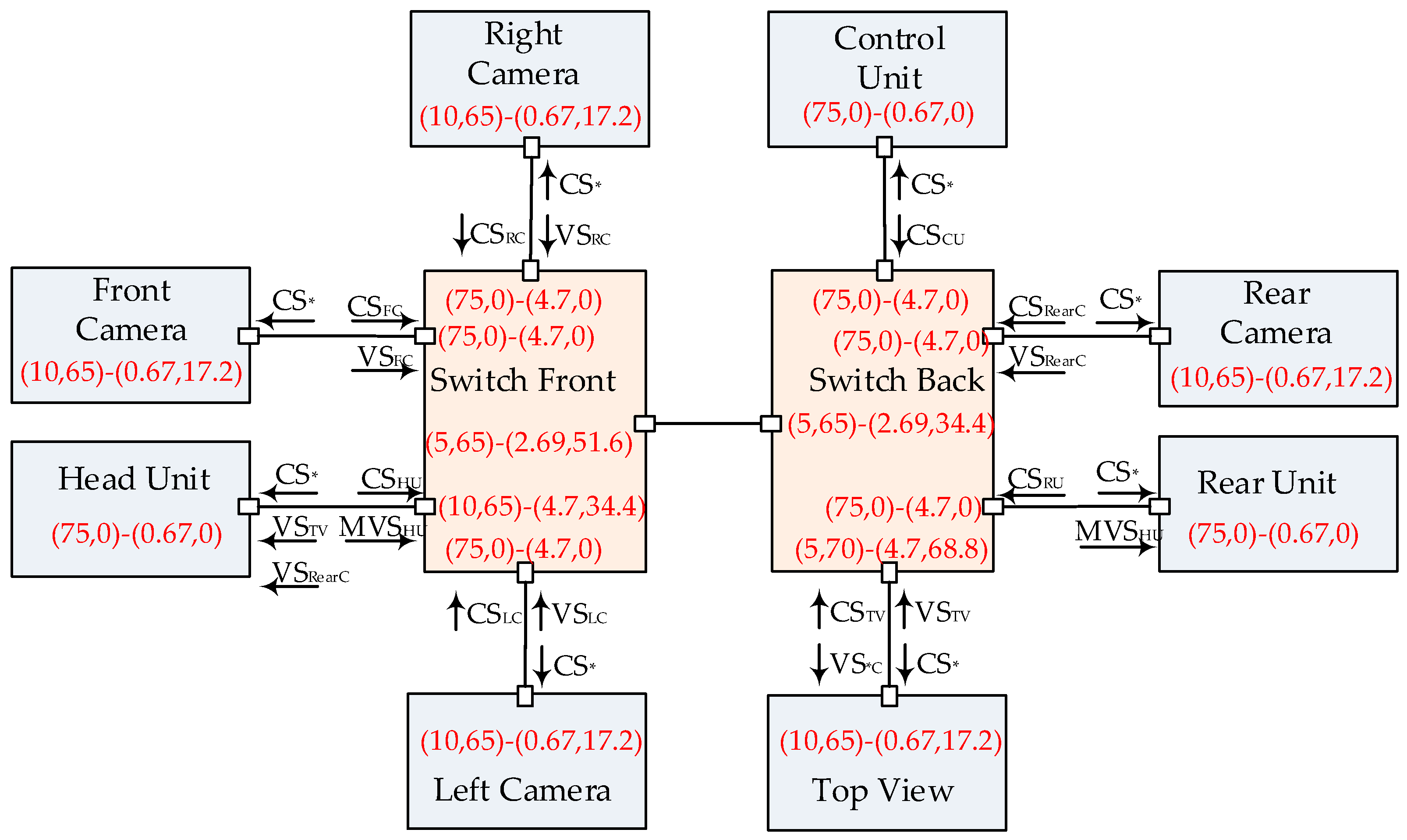
Ethernet-AVB/TSN (Audio Video Bridging/Time-Sensitive Networking) and AFDX (Avionics Full DupleX switched Ethernet) are switched Ethernet technologies, which are both candidates for real-time communication in the context of transportation systems. AFDX implements a fixed priority scheduling strategy with two priority levels. Ethernet-AVB/TSN supports a similar fixed priority scheduling with an additional Credit-Based Shaper (CBS) mechanism. Besides, TSN can support time-triggered scheduling strategy. One direct effect of CBS mechanism is to increase the delay of its flows while decreasing the delay of other priority ones. The former effect can be seen as the shaping restriction and the latter effect can be seen as the shaping benefit from CBS. The goal of this paper is to investigate the impact of CBS on different priority flows, especially on the intermediate priority ones, as well as the effect of CBS bandwidth allocation. It is based on a performance comparison of AVB/TSN and AFDX by simulation in an automotive case study. Furthermore, the shaping benefit is modeled based on integral operation from network calculus perspective. Combing with the analysis of shaping restriction and shaping benefit, some configuration suggestions on the setting of CBS bandwidth are given. Results show that the effect of CBS depends on flow loads and CBS configurations. A larger load of high priority flows in AVB tends to a better performance for the intermediate priority flows when compared with AFDX. Shaping benefit can be explained and calculated according to the changing from the permitted maximum burst.
Keywords: real-time Ethernet; network performance evaluation; credit based shaper; AVB; AFDX; TSN; end-to-end delay; network calculus real-time Ethernet; network performance evaluation; credit based shaper; AVB; AFDX; TSN; end-to-end delay; network calculus
Graphical Abstract