Article

Using Dimensionality Reduction Techniques for Refining Passive Indoor Positioning Systems Based on Radio Fingerprinting


by
Pedro E. Lopez-de-Teruel
,
Oscar Canovas
*,† and
Felix J. Garcia
Department of Computer Engineering, University of Murcia, 30100 Murcia, Spain
*
Author to whom correspondence should be addressed.
These authors contributed equally to this work.
Sensors 2017, 17(4), 871; https://doi.org/10.3390/s17040871
Submission received: 31 January 2017 / Revised: 3 April 2017 / Accepted: 12 April 2017 / Published: 15 April 2017

Abstract

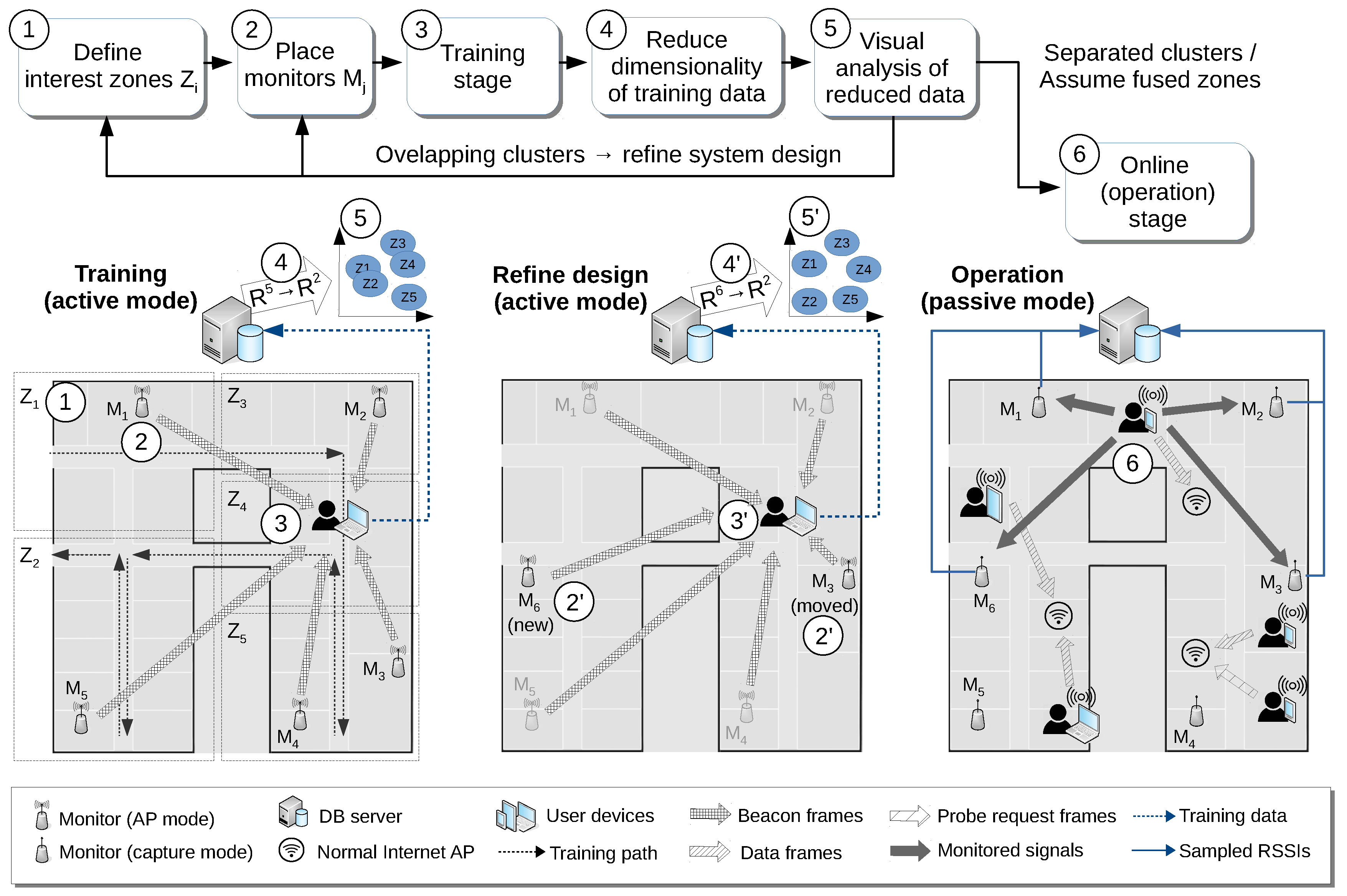
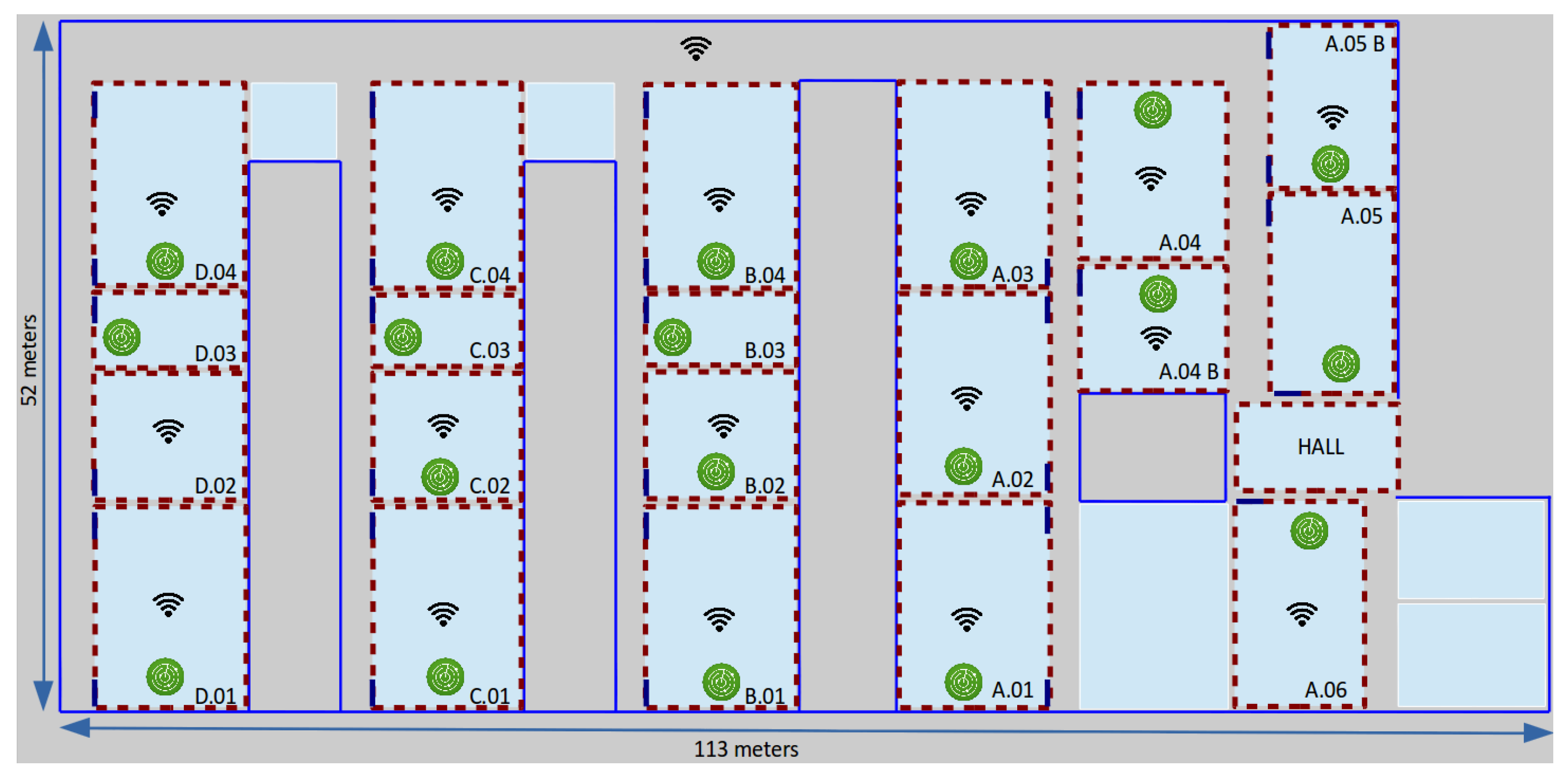
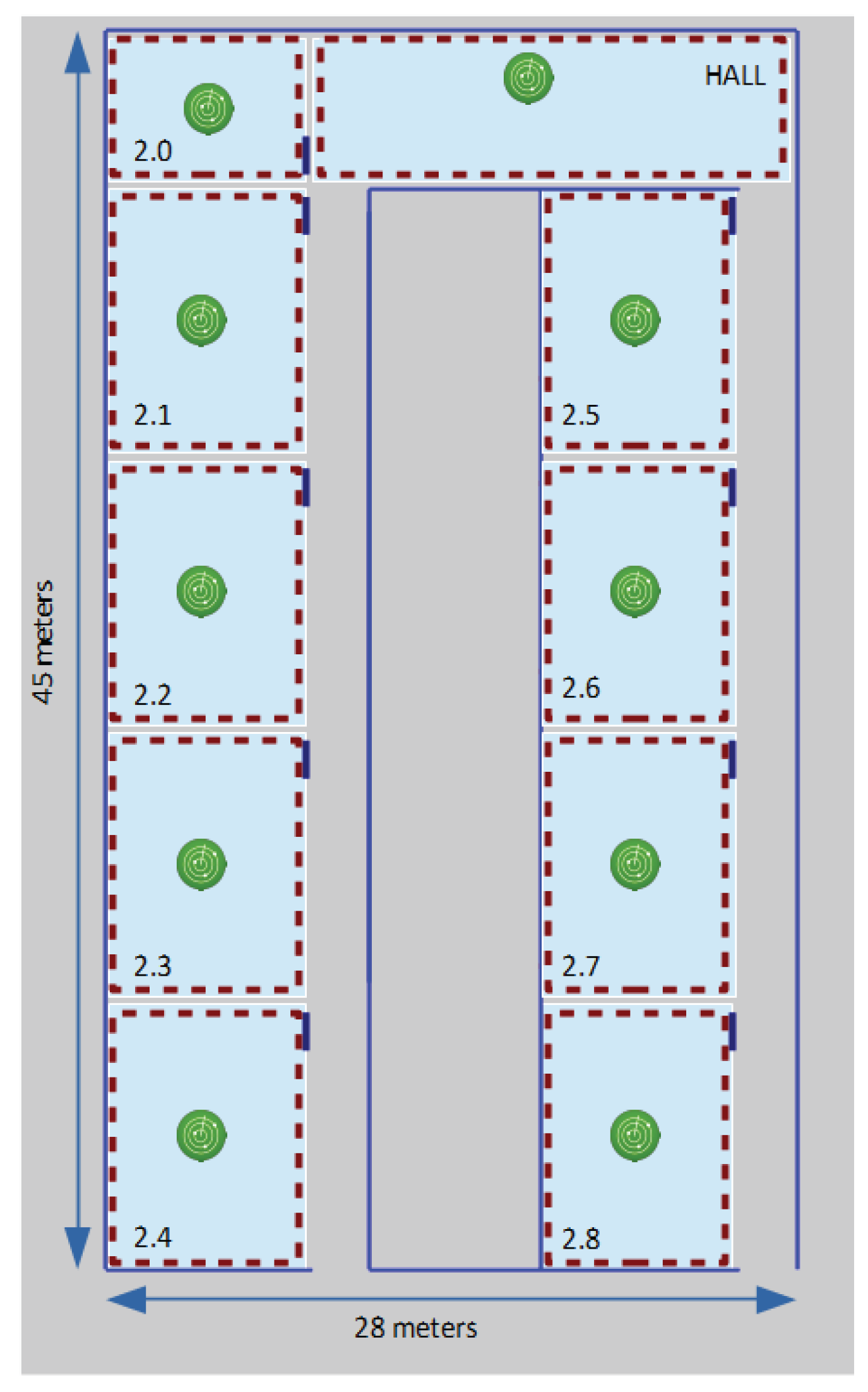
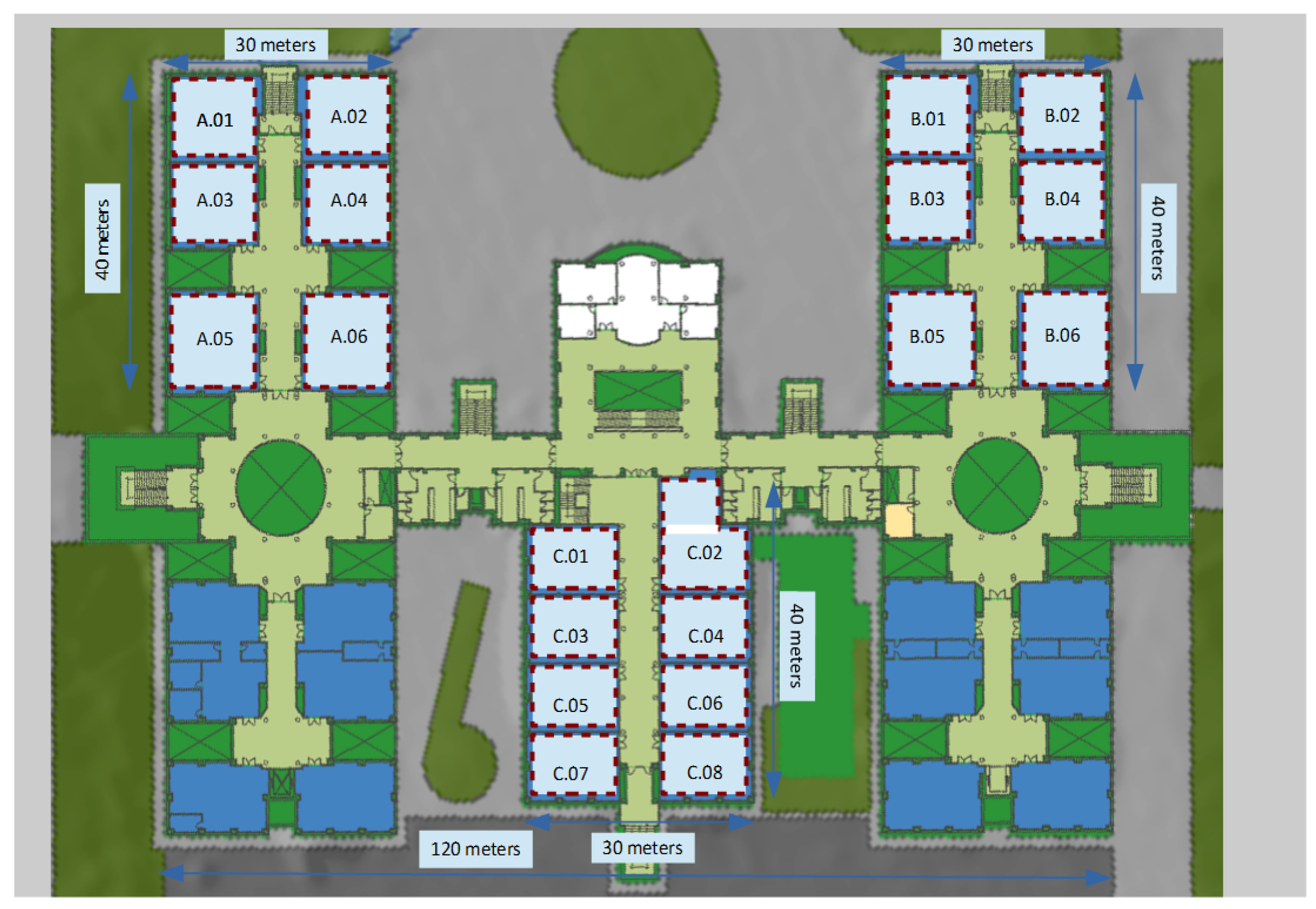
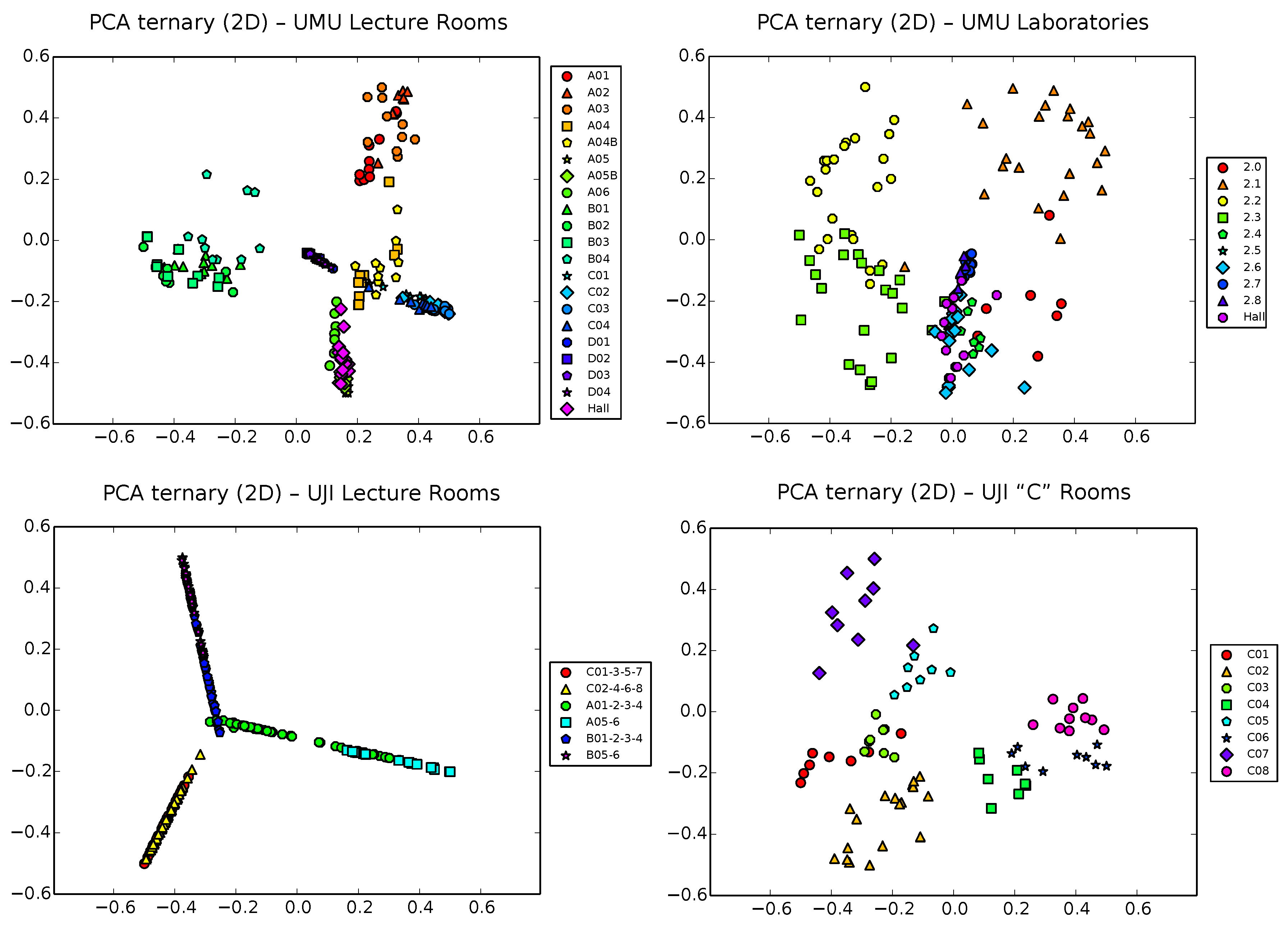
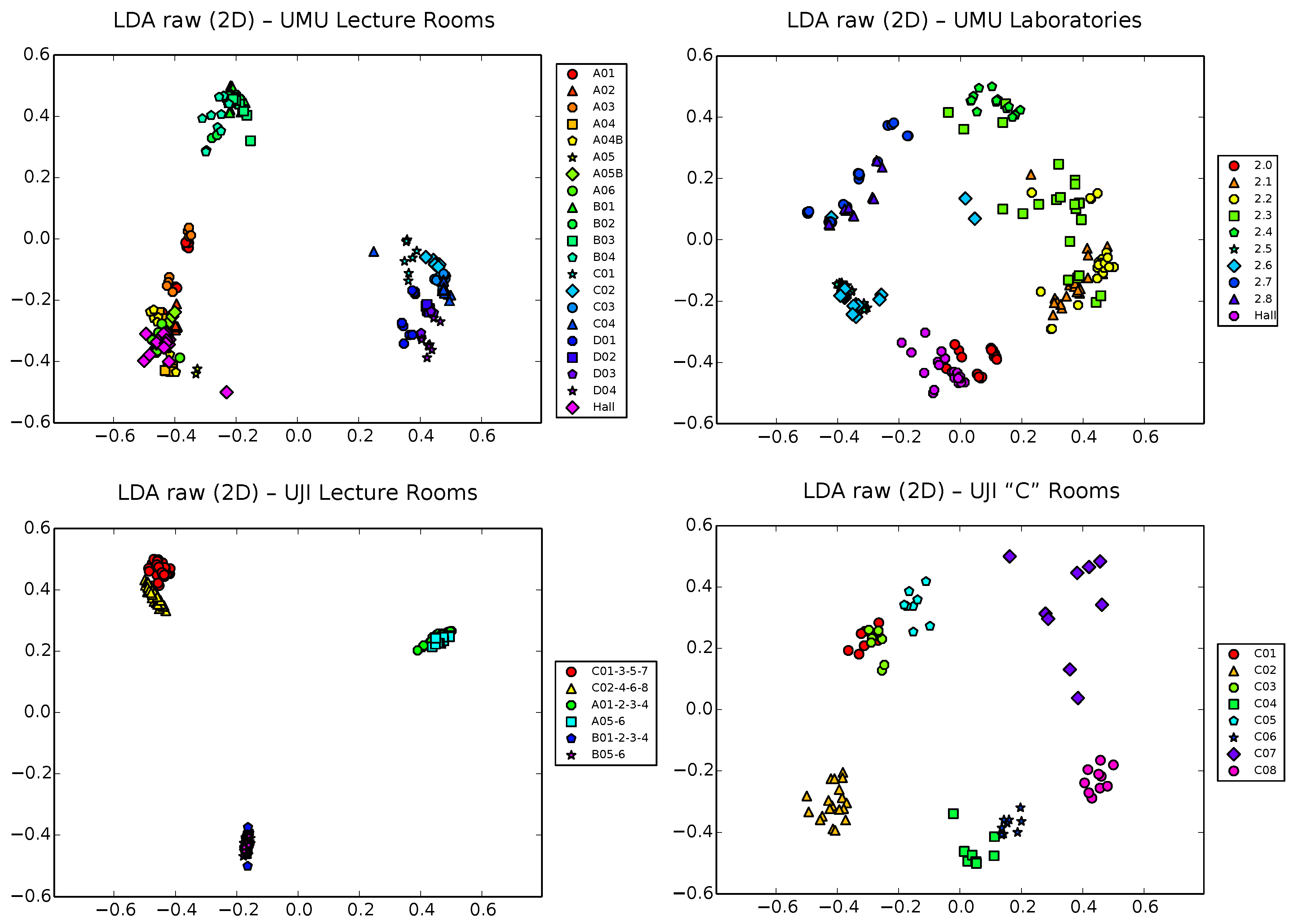
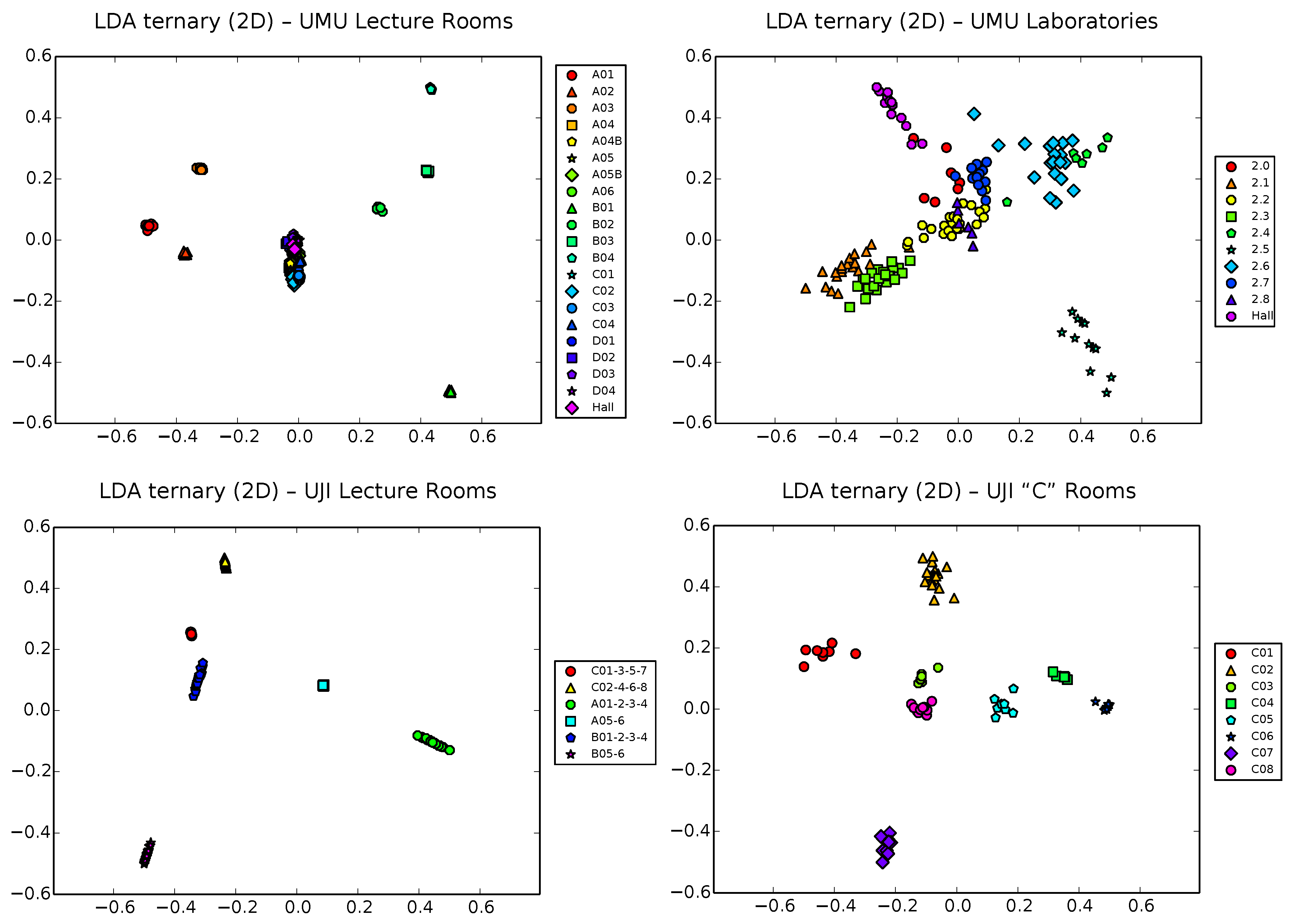
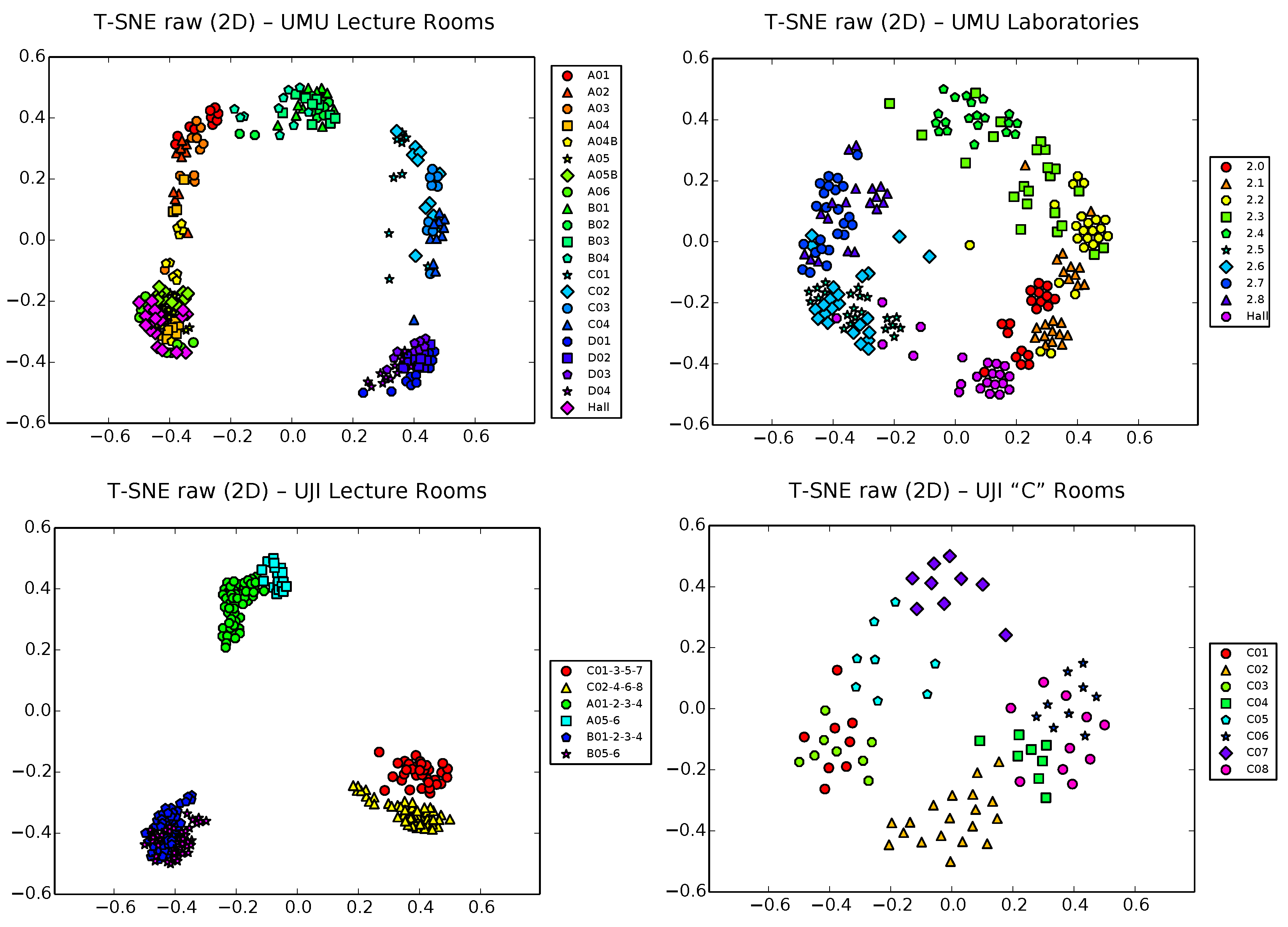
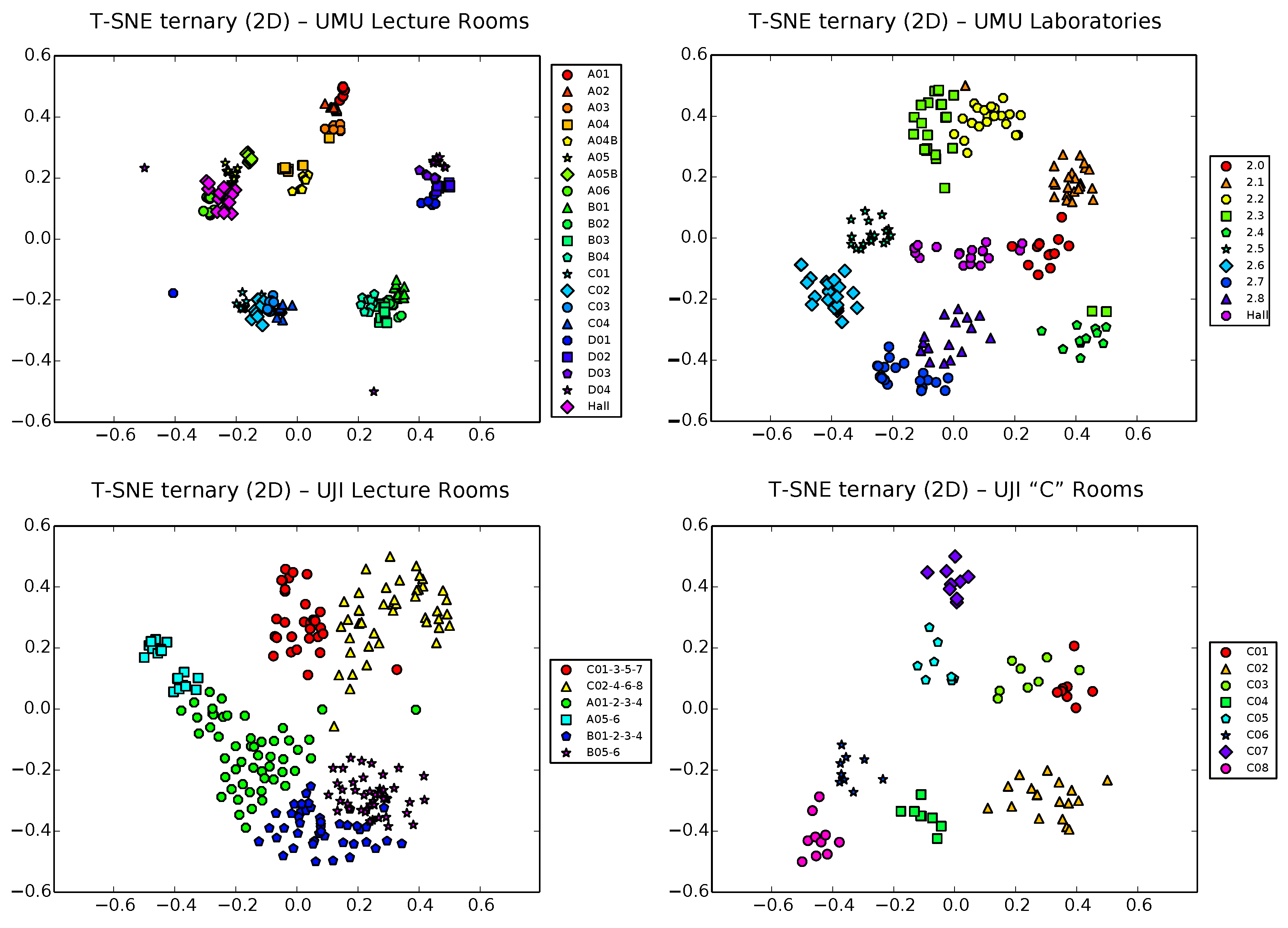
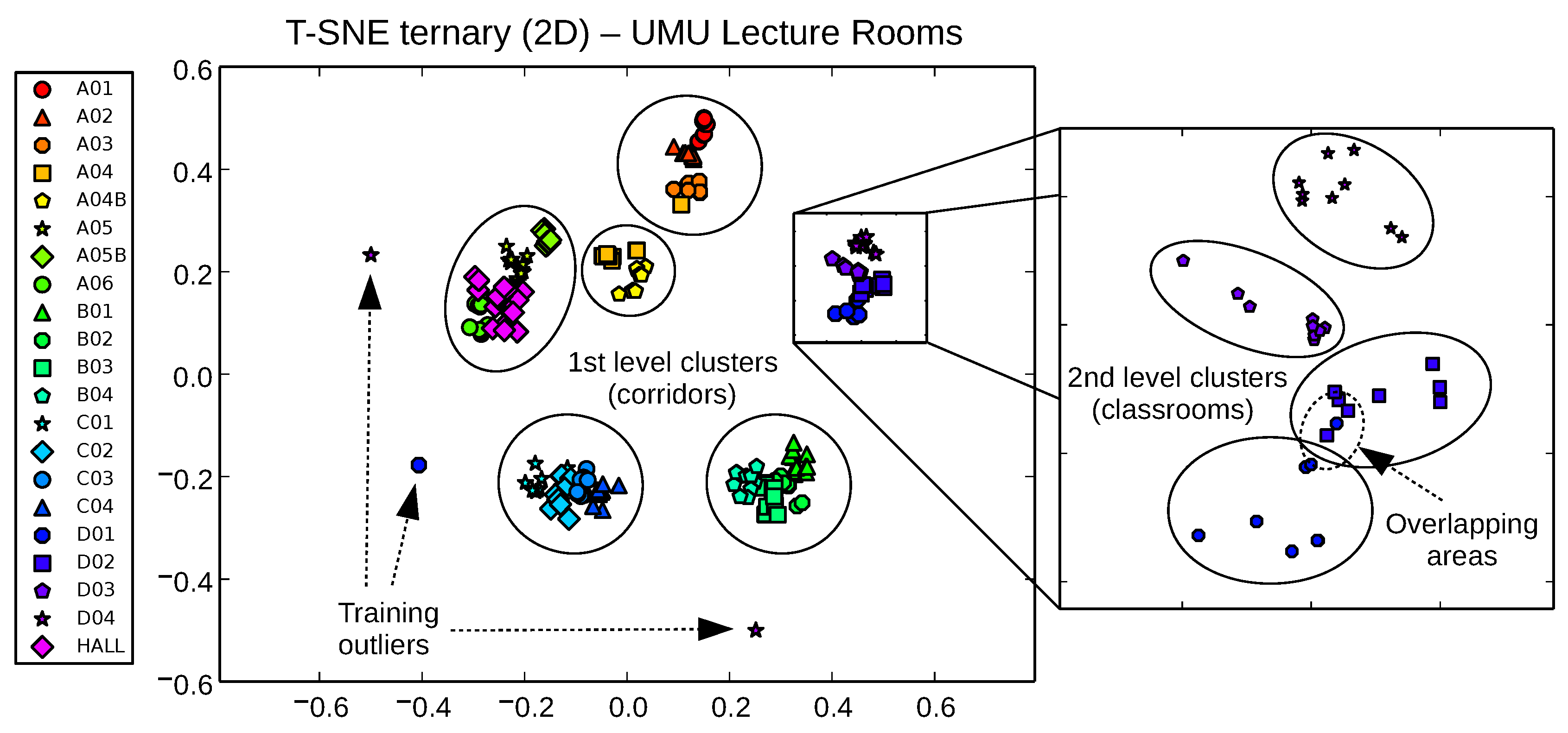
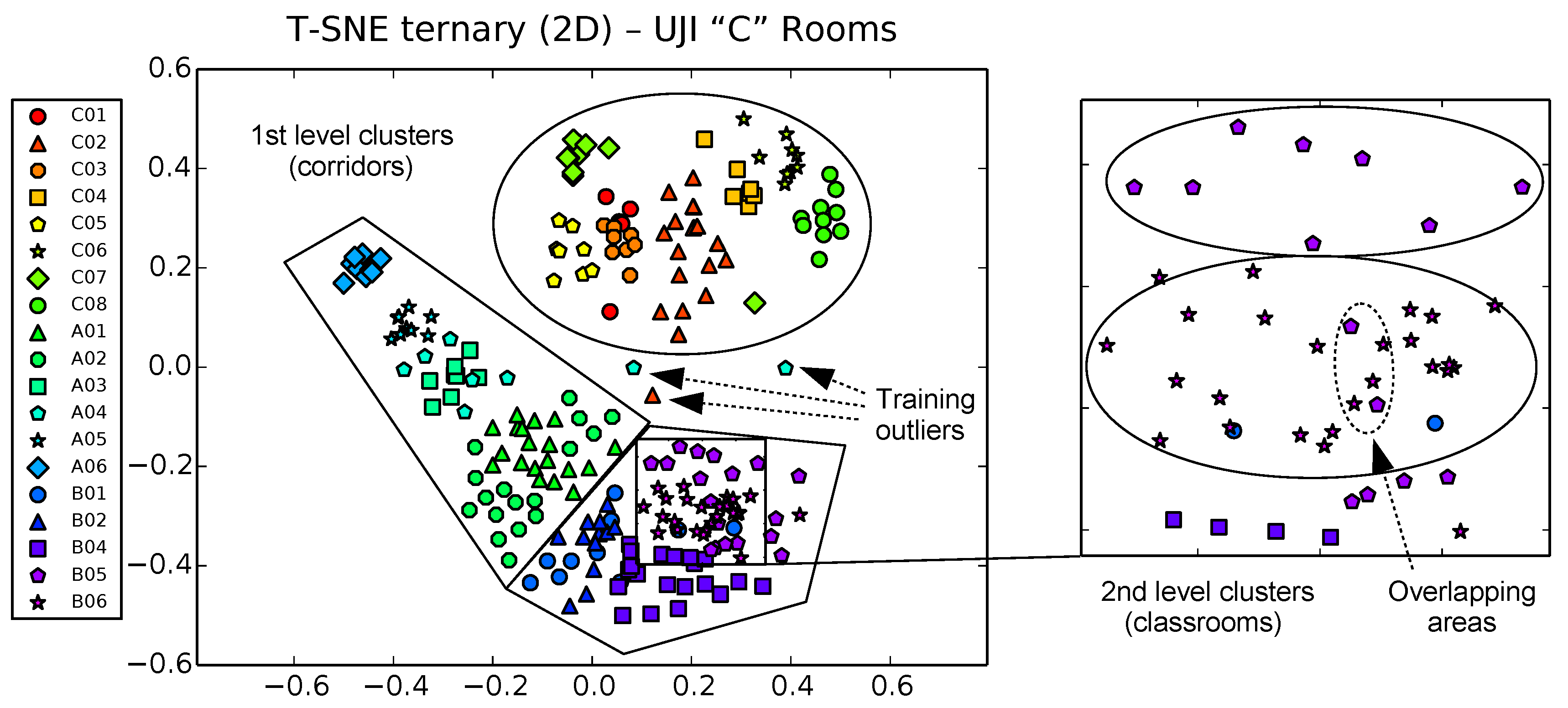
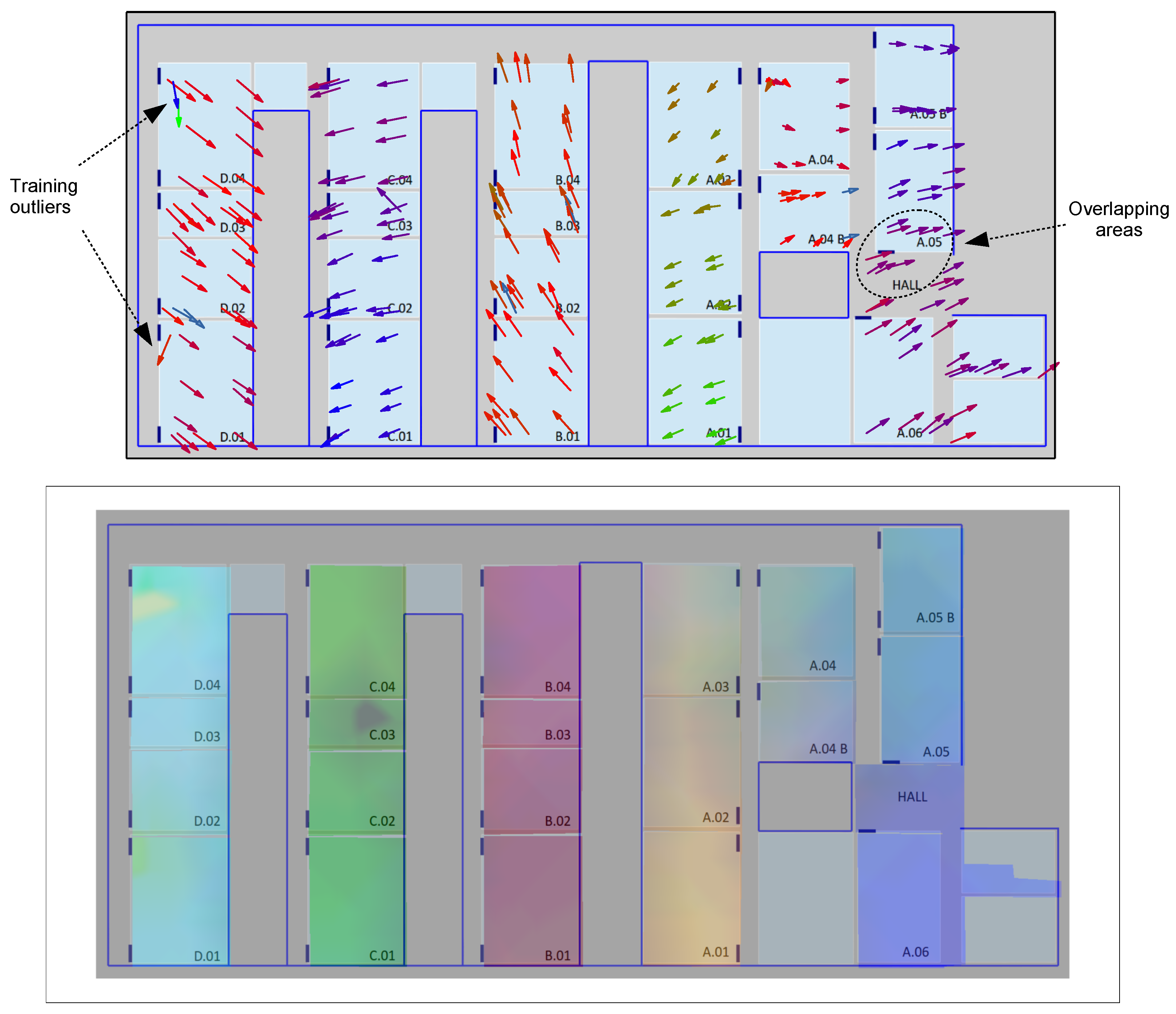
Indoor positioning methods based on fingerprinting and radio signals rely on the quality of the radio map. For example, for room-level classification purposes, it is required that the signal observations related to each room exhibit significant differences in their RSSI values. However, it is difficult to verify and visualize that separability since radio maps are constituted by multi-dimensional observations whose dimension is directly related to the number of access points or monitors being employed for localization purposes. In this paper, we propose a refinement cycle for passive indoor positioning systems, which is based on dimensionality reduction techniques, to evaluate the quality of a radio map. By means of these techniques and our own data representation, we have defined two different visualization methods to obtain graphical information about the quality of a particular radio map in terms of overlapping areas and outliers. That information will be useful to determine whether new monitors are required or some existing ones should be moved. We have performed an exhaustive experimental analysis based on a variety of different scenarios, some deployed by our own research group and others corresponding to a well-known existing dataset widely analyzed by the community, in order to validate our proposal. As we will show, among the different combinations of data representation methods and dimensionality reduction techniques that we discuss, we have found that there are some specific configurations that are more useful in order to perform the refinement process.
Keywords: dimensionality reduction; fingerprinting; RSSI; passive localization; visualization dimensionality reduction; fingerprinting; RSSI; passive localization; visualization