Article

Concept Design for a 1-Lead Wearable/Implantable ECG Front-End: Power Management
by
Libin George
1,2,*,
Gaetano Dario Gargiulo
2,
Torsten Lehmann
1 and
Tara Julia Hamilton
2
1
School of Electrical Engineering and Telecommunications, University of New South Wales, Sydney 2052, Australia
2
The MARCS Institute, Western Sydney University, Penrith 2751, Australia
*
Author to whom correspondence should be addressed.
Sensors 2015, 15(11), 29297-29315; https://doi.org/10.3390/s151129297
Submission received: 15 July 2015 / Revised: 9 November 2015 / Accepted: 13 November 2015 / Published: 19 November 2015
(This article belongs to the Special Issue Power Schemes for Biosensors and Biomedical Devices)

Abstract

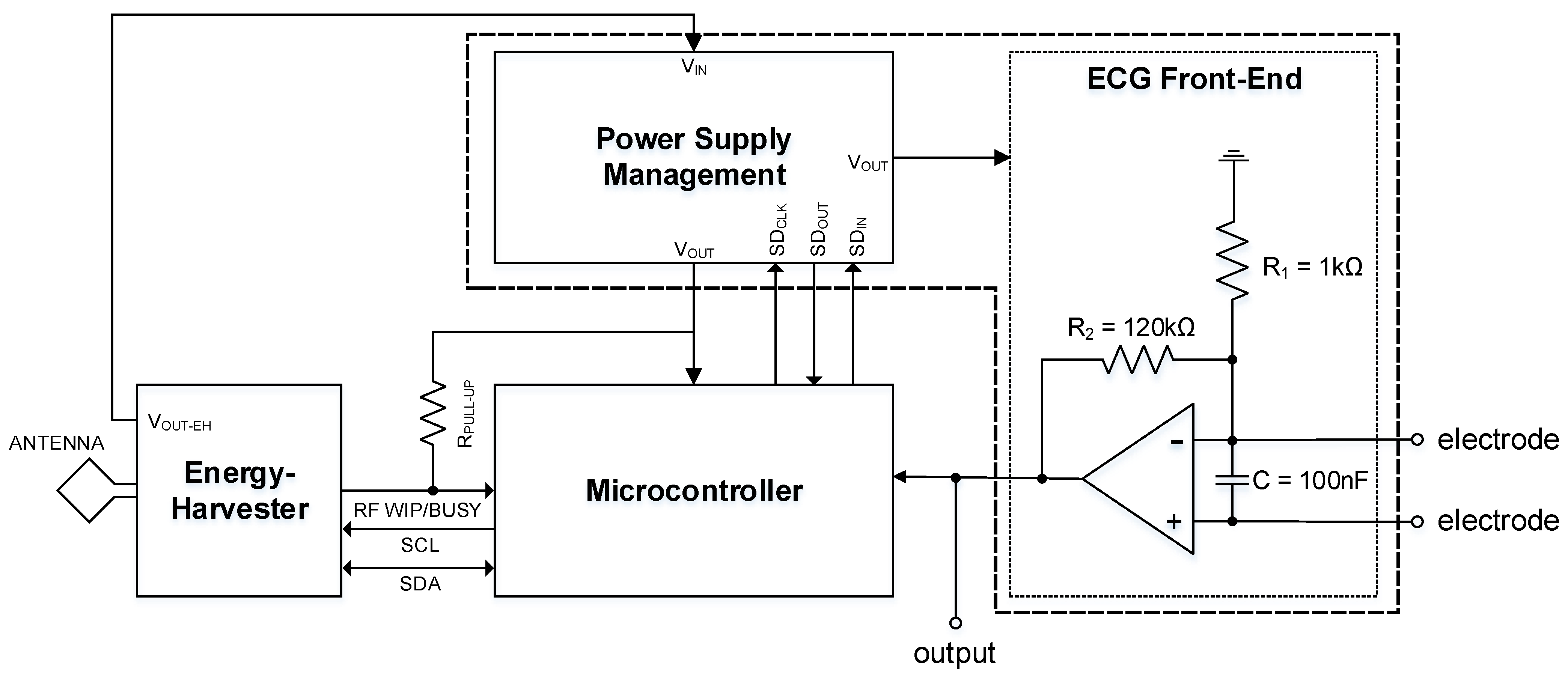
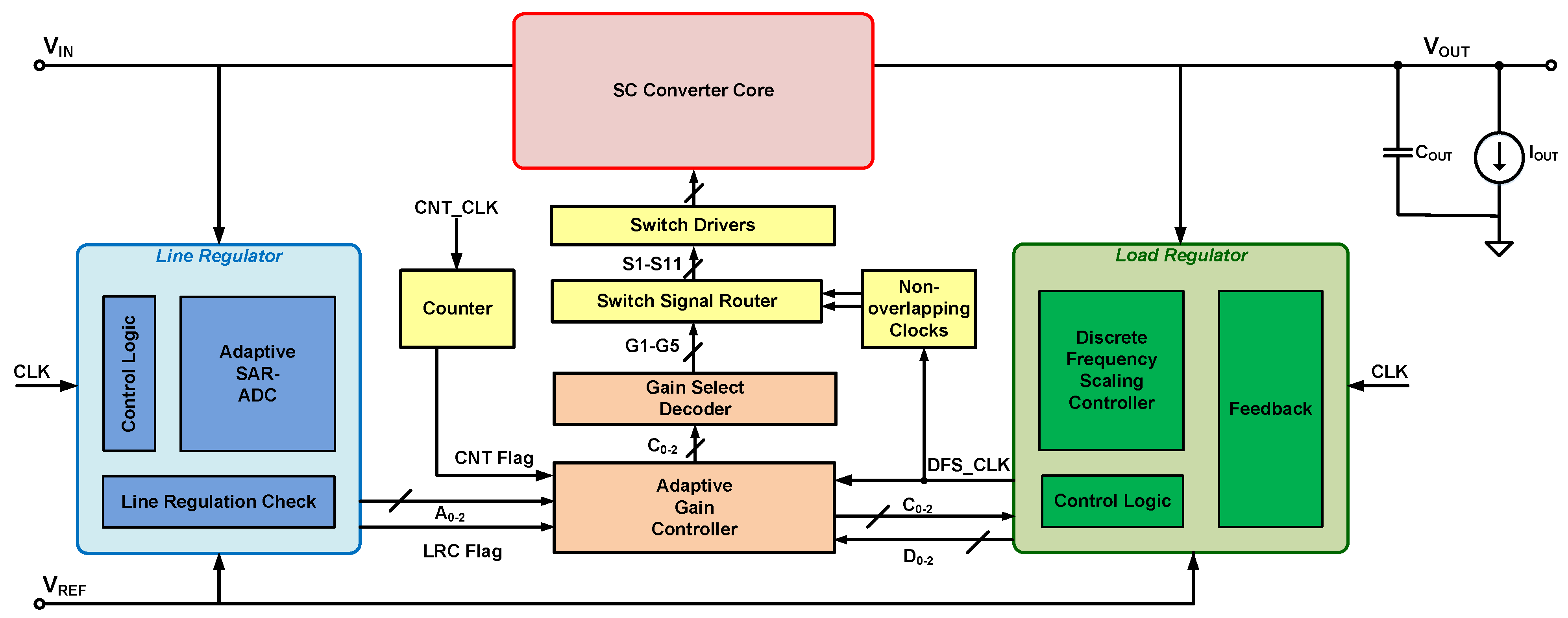
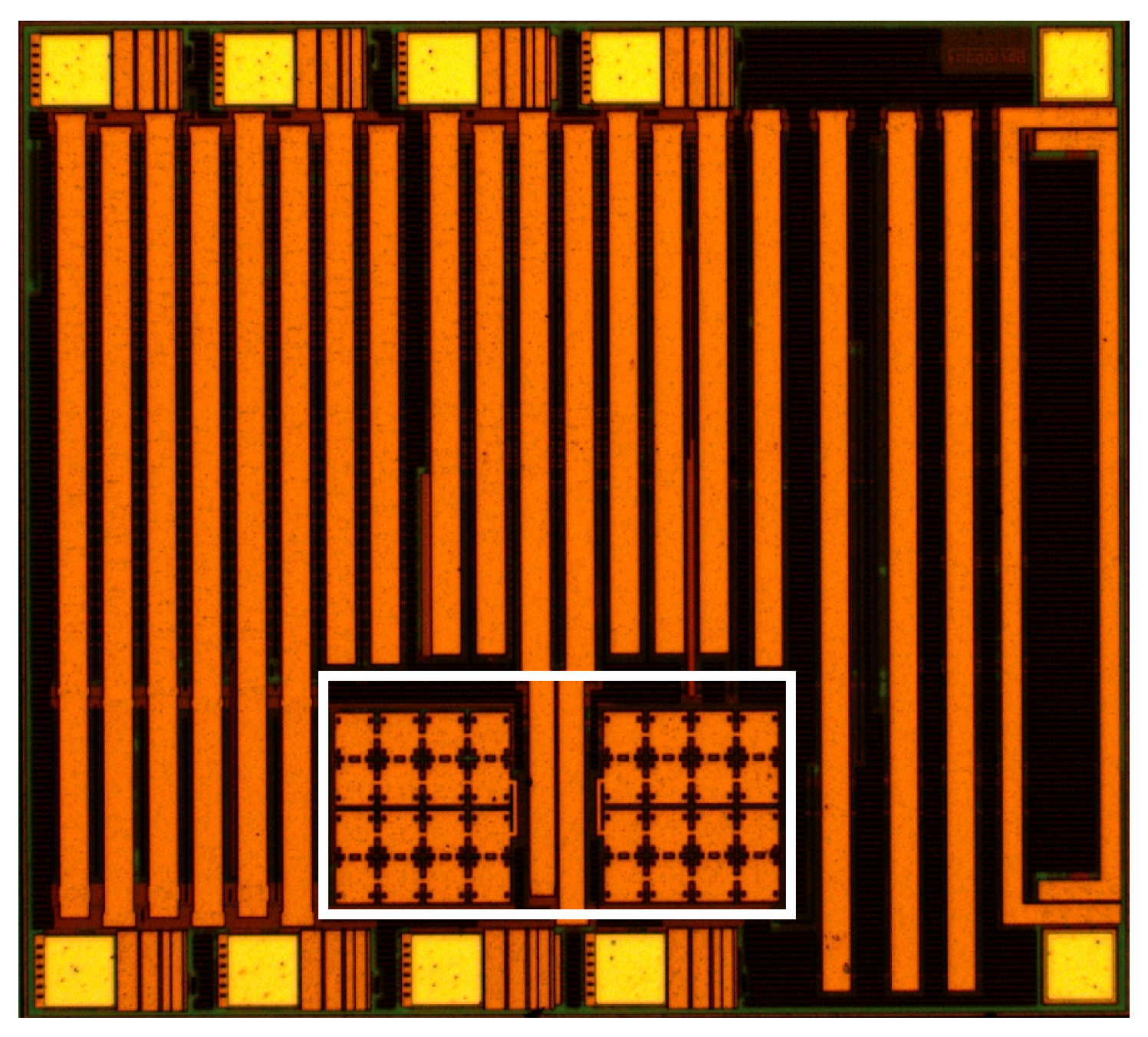
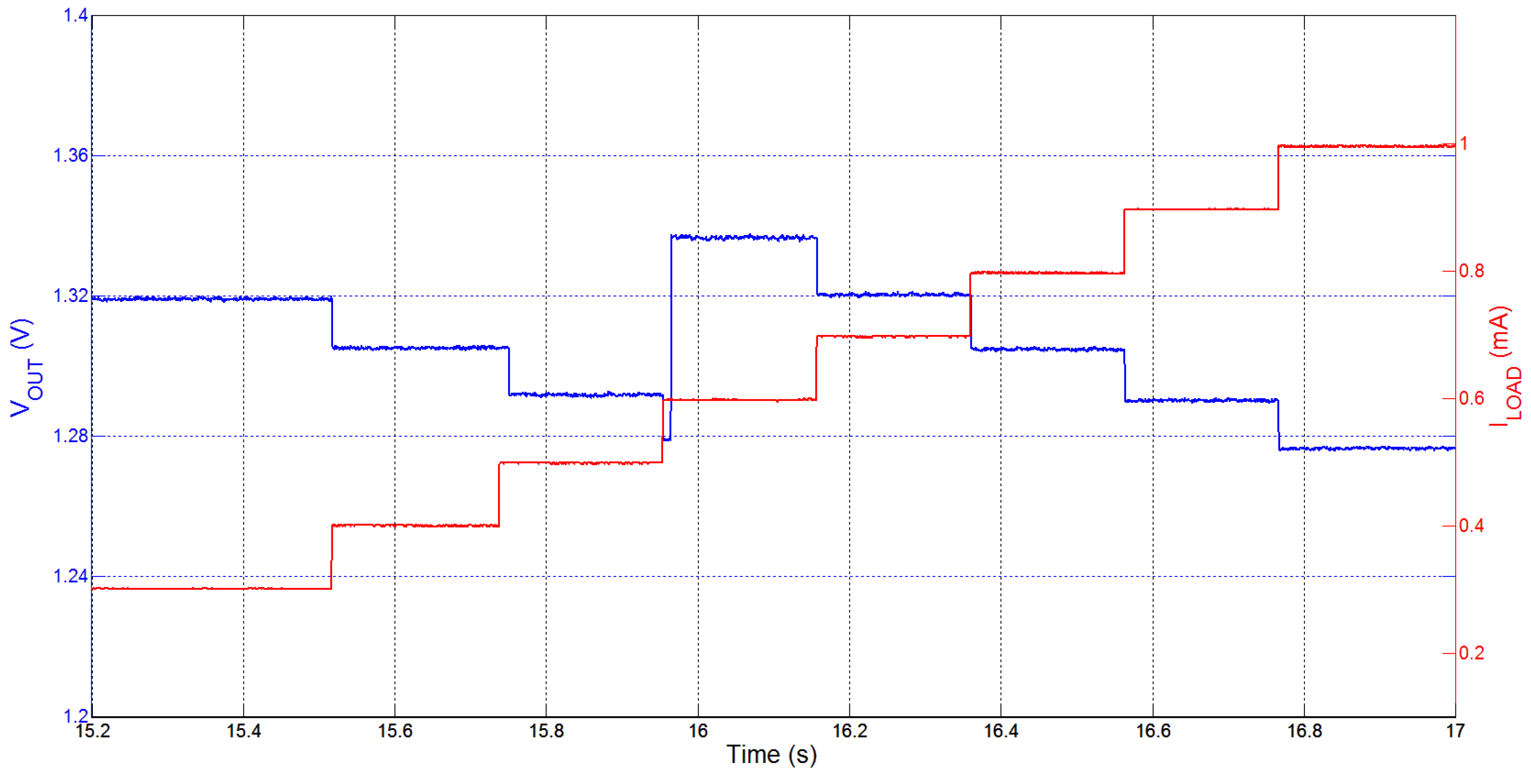
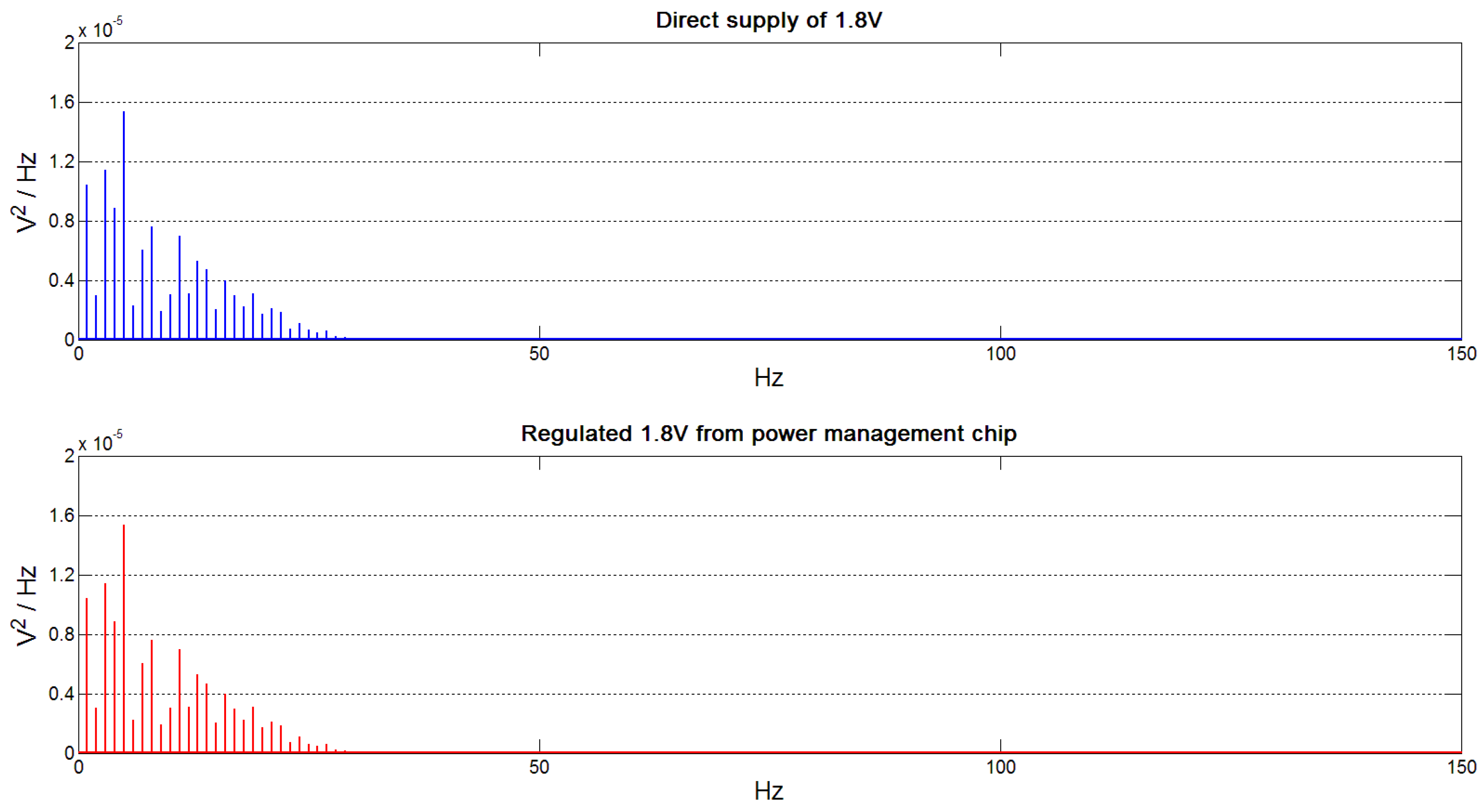
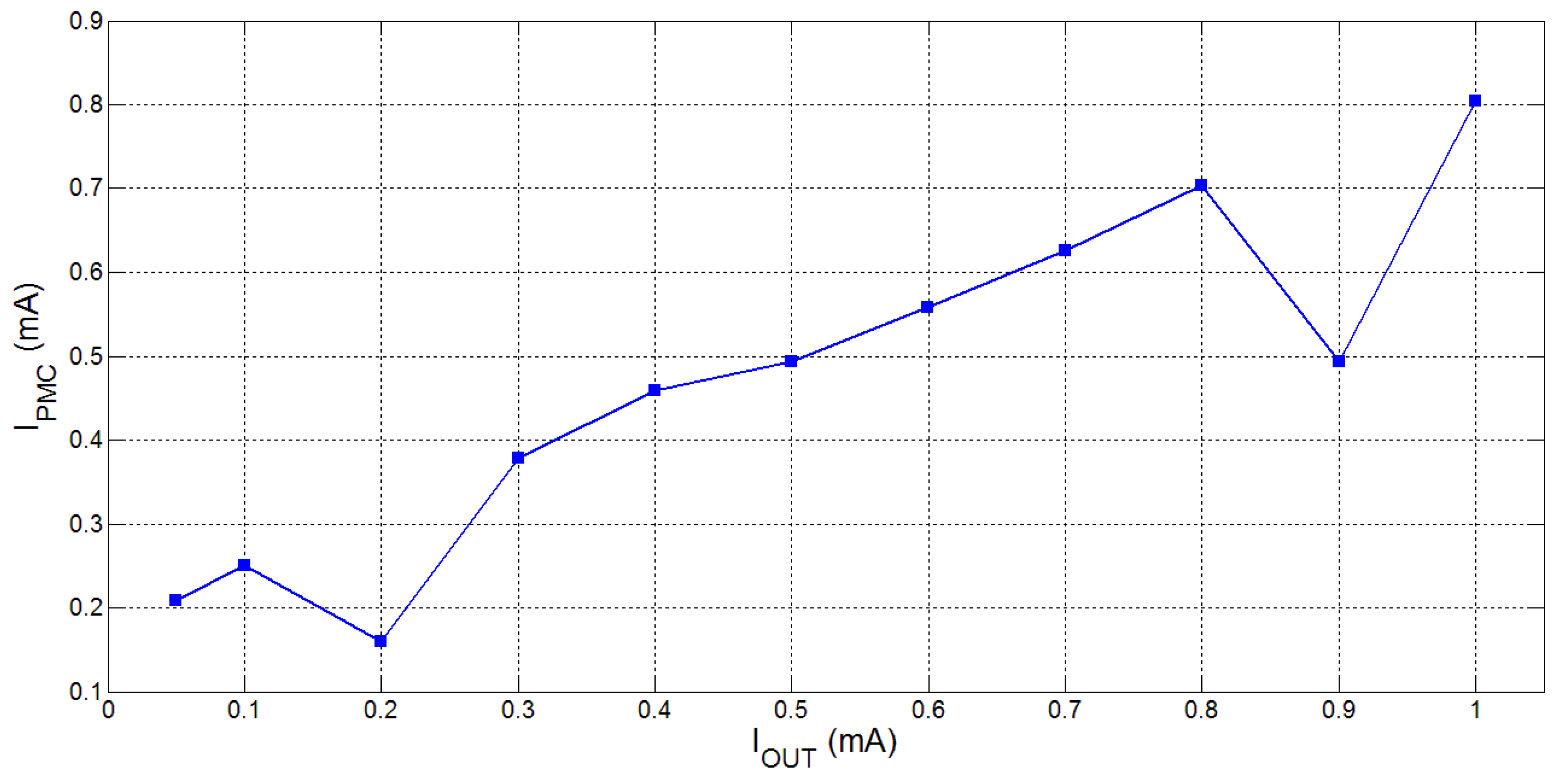
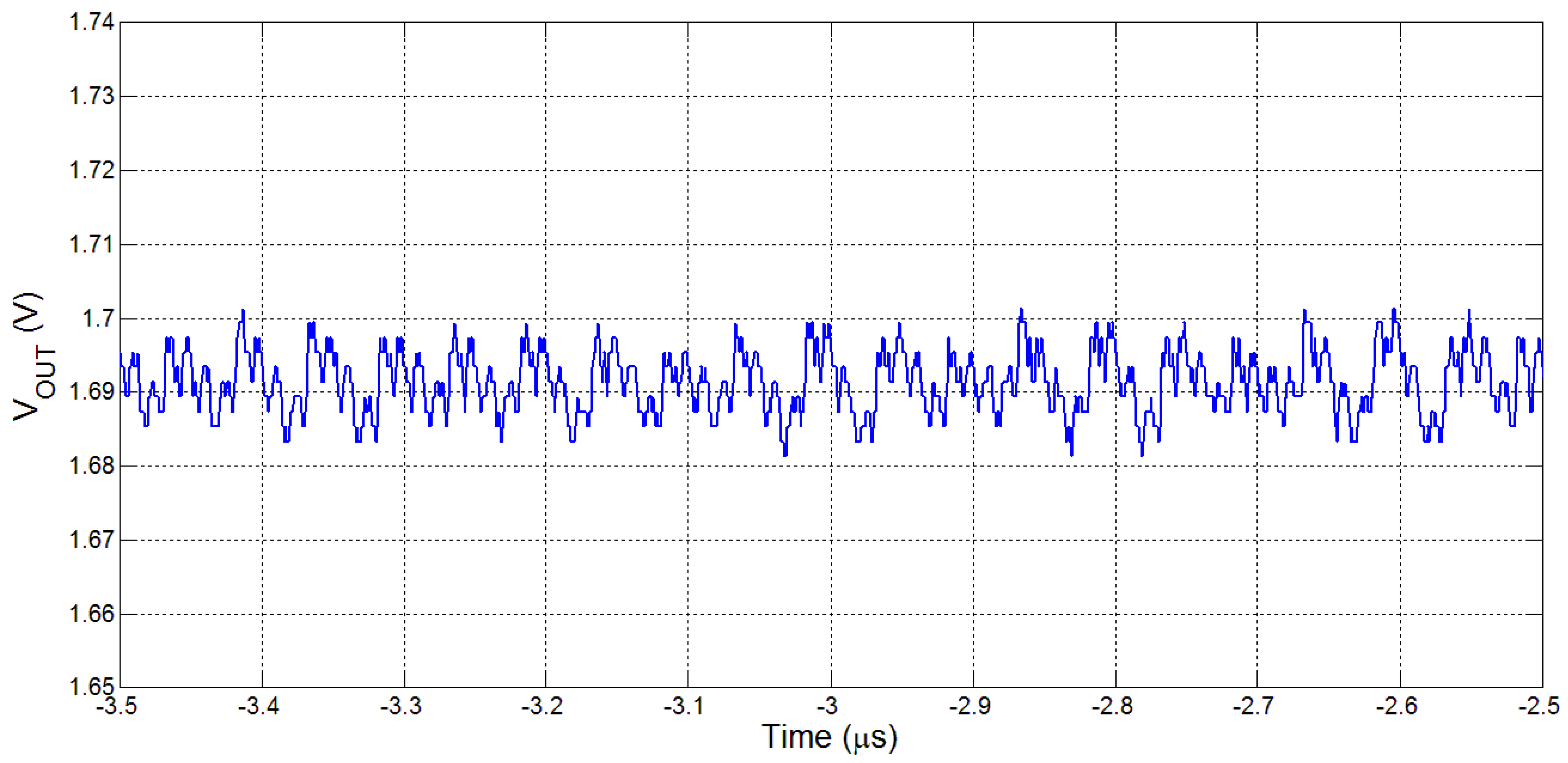
Power supply quality and stability are critical for wearable and implantable biomedical applications. For this reason we have designed a reconfigurable switched-capacitor DC-DC converter that, aside from having an extremely small footprint (with an active on-chip area of only 0.04 mm2), uses a novel output voltage control method based upon a combination of adaptive gain and discrete frequency scaling control schemes. This novel DC-DC converter achieves a measured output voltage range of 1.0 to 2.2 V with power delivery up to 7.5 mW with 75% efficiency. In this paper, we present the use of this converter as a power supply for a concept design of a wearable (15 mm × 15 mm) 1-lead ECG front-end sensor device that simultaneously harvests power and communicates with external receivers when exposed to a suitable RF field. Due to voltage range limitations of the fabrication process of the current prototype chip, we focus our analysis solely on the power supply of the ECG front-end whose design is also detailed in this paper. Measurement results show not just that the power supplied is regulated, clean and does not infringe upon the ECG bandwidth, but that there is negligible difference between signals acquired using standard linear power-supplies and when the power is regulated by our power management chip.
Keywords: DC-DC; reconfigurable; wearable; ECG; sensor DC-DC; reconfigurable; wearable; ECG; sensor