Article

Computational Methodology for Absolute Calibration Curves for Microfluidic Optical Analyses

Department of Electrical and Computer Engineering, The George Washington University, Washington DC 20052, USA
*
Author to whom correspondence should be addressed.
Sensors 2010, 10(7), 6730-6750; https://doi.org/10.3390/s100706730
Submission received: 10 May 2010 / Revised: 12 July 2010 / Accepted: 12 July 2010 / Published: 12 July 2010
(This article belongs to the Section Chemical Sensors)

Abstract

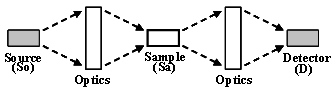
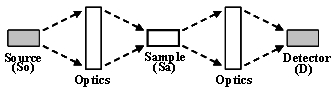
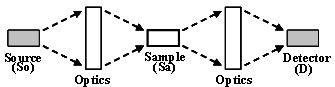
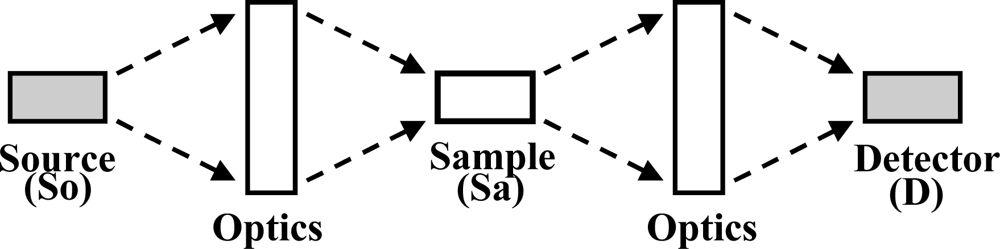
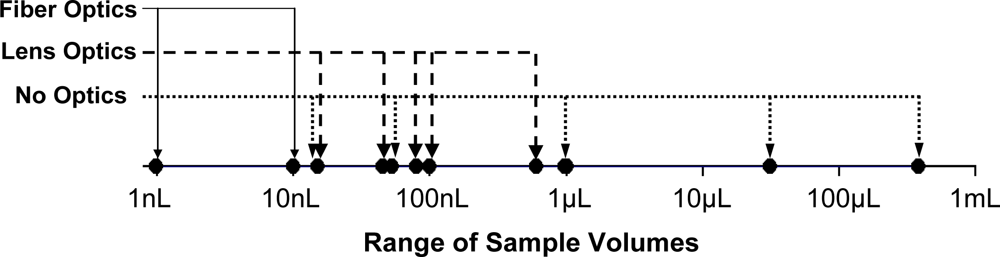
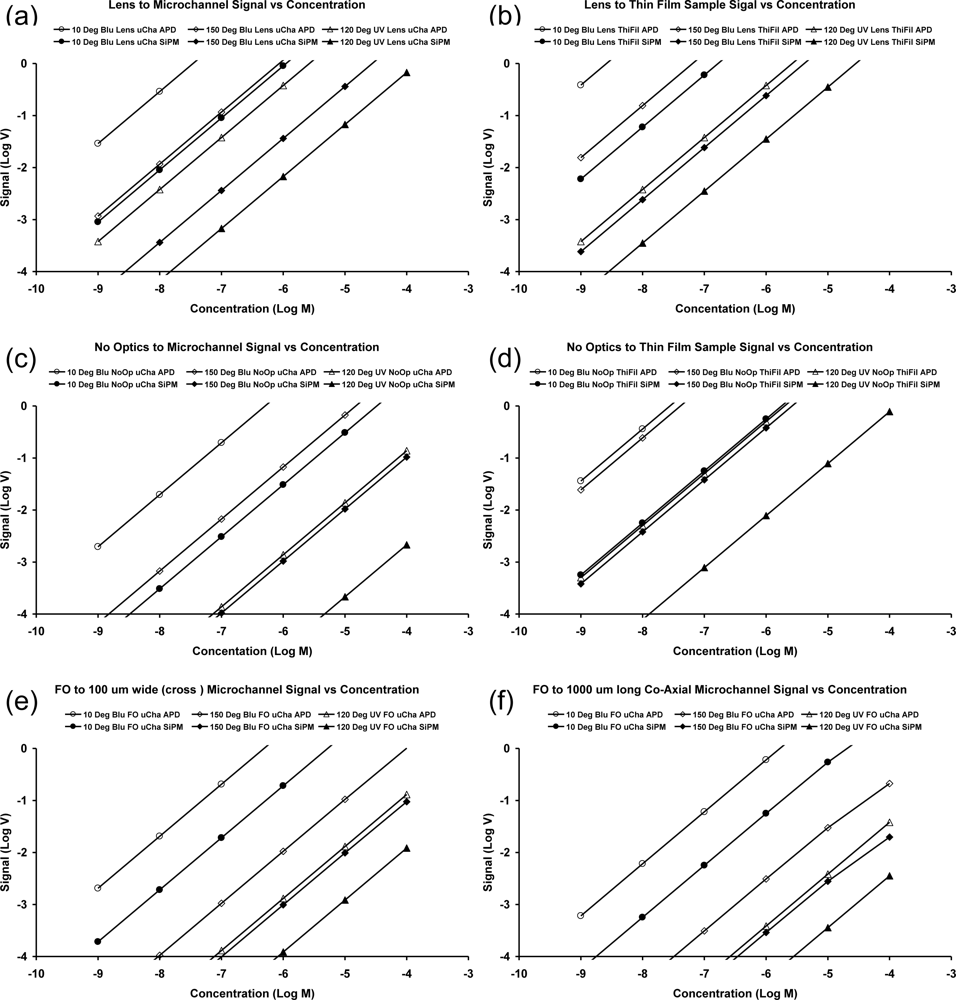
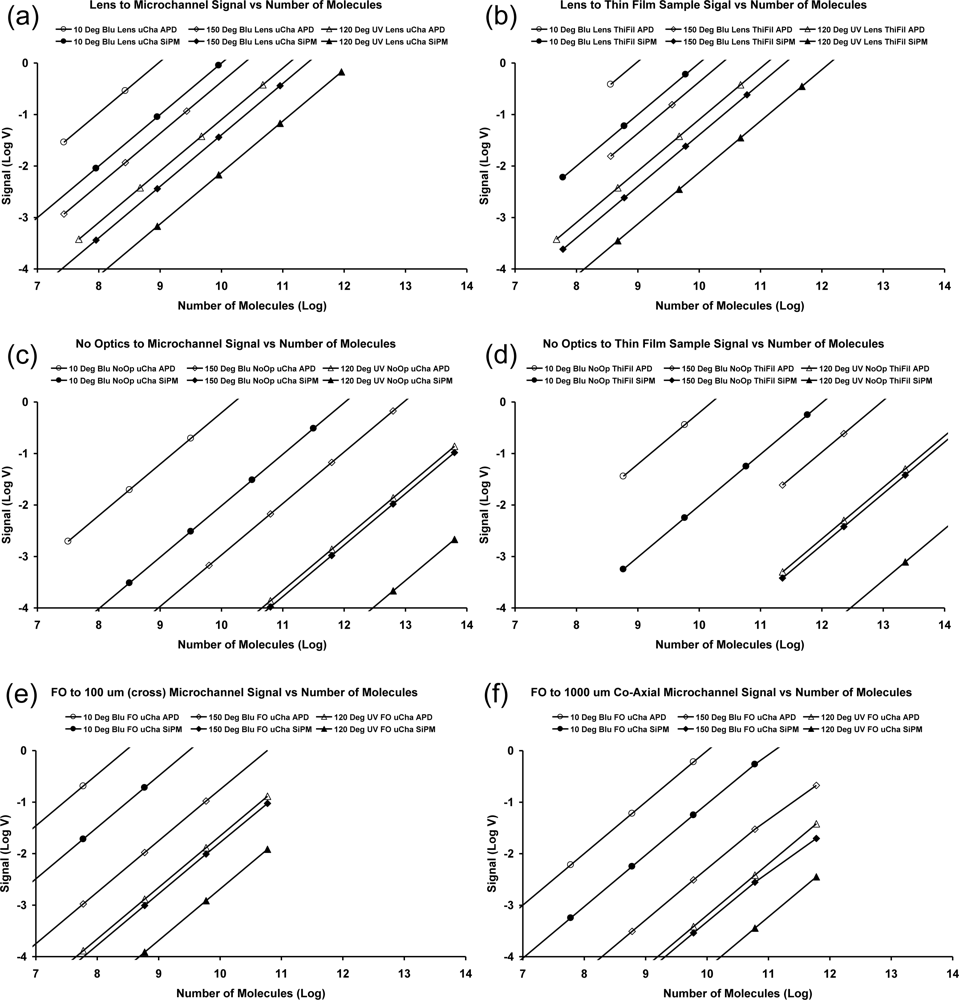
Optical fluorescence and absorption are two of the primary techniques used for analytical microfluidics. We provide a thorough yet tractable method for computing the performance of diverse optical micro-analytical systems. Sample sizes range from nano- to many micro-liters and concentrations from nano- to milli-molar. Equations are provided to trace quantitatively the flow of the fundamental entities, namely photons and electrons, and the conversion of energy from the source, through optical components, samples and spectral-selective components, to the detectors and beyond. The equations permit facile computations of calibration curves that relate the concentrations or numbers of molecules measured to the absolute signals from the system. This methodology provides the basis for both detailed understanding and improved design of microfluidic optical analytical systems. It saves prototype turn-around time, and is much simpler and faster to use than ray tracing programs. Over two thousand spreadsheet computations were performed during this study. We found that some design variations produce higher signal levels and, for constant noise levels, lower minimum detection limits. Improvements of more than a factor of 1,000 were realized.
Keywords: microfluidic; chemical analysis; bio-chemical analysis; optical fluorescence; optical absorption microfluidic; chemical analysis; bio-chemical analysis; optical fluorescence; optical absorption
Graphical Abstract