Review

Potentially Invasive and Non-Native Algal Taxa in Iraq: Distribution, Ecological Risks, and Research Gaps


by
Murtada Naser
1,2,*,
Amaal Yasser
1,2,
Helen Onyeaka
3,
Jonas Schoelynck
4,
Patricio R. De los Ríos-Escalante
5,6 and
Franz Essl
2,*
1
School of Environment and Science, Griffith University, 170 Kessels Road, Nathan, QLD 4111, Australia
2
Division of BioInvasions, Global Change and Macroecology, Department of Botany and Biodiversity Research, University of Vienna, Rennweg 14, 1030 Vienna, Austria
3
School of Chemical Engineering, University of Birmingham, Birmingham B15 2TT, UK
4
Department of Biology, ECOSPHERE Research Group, University of Antwerp, Universiteitsplein 1C, 2610 Wilrijk, Belgium
5
Departamento de Ciencias Biológicas y Químicas, Facultad de Recursos Naturales, Universidad Católica de Temuco, Temuco 4810399, Chile
6
Núcleo de Estudios Ambientales, Facultad de Recursos Naturales, Universidad Católica de Temuco, Temuco 4810399, Chile
*
Authors to whom correspondence should be addressed.
Diversity 2026, 18(8), 451; https://doi.org/10.3390/d18080451
Submission received: 23 June 2026 / Revised: 23 July 2026 / Accepted: 24 July 2026 / Published: 28 July 2026
(This article belongs to the Section Freshwater Biodiversity)

Abstract

Invasive algal taxa represent an emerging but poorly quantified threat to Iraq’s freshwater ecosystems. Drawing on floristic surveys, recent molecular detections, and regional literature, this review synthesizes the current evidence regarding the occurrence of Didymosphenia geminata and Hydrodictyon reticulatum and identifies Leptolyngbya benthonica and Nostoc paludosum as cryptogenic cyanobacterial taxa requiring further ecological assessment. A preliminary qualitative risk evaluation identifies D. geminata and H. reticulatum as high-priority taxa for monitoring based on their documented invasion history elsewhere, potential ecological effects, and likelihood of introduction and spread. In contrast the cryptogenic cyanobacteria Leptolyngbya benthonica and Nostoc paludosum should be interpreted cautiously because they are recently detected taxa whose origin and ecological behavior remain uncertain. Potential ecological risks include competitive displacement of native periphyton, disruption of benthic food webs, oxygen depletion during decomposition, and habitat alteration through the formation of dense mats. Major knowledge gaps include the absence of baseline distribution data, continued reliance on morphology-based identifications, limited application of molecular tools, and the lack of standardized national risk-assessment frameworks. Addressing these gaps would improve Iraq’s ability to detect, monitor, and manage algal invasions, thereby safeguarding vital water resources under escalating climatic and anthropogenic pressures.

1. Introduction

Invasive algal taxa can severely disrupt aquatic ecosystems by outcompeting native flora, altering nutrient regimes, and triggering harmful blooms [1,2]. In Iraq, aquatic ecosystems are already facing pressures from hydrological changes, pollution, and climate variation [3,4,5,6,7] and, as such, invasive microalgae species may represent a critical threat. A number of research investigations have focused on invasive aquatic vascular plant species [8,9] and macrofauna [10,11,12] in Iraq, though information regarding the ecology of invasive microalgal species is very limited. Two potentially invasive or non-native microalgal species, Didymosphenia geminata and Hydrodictyon reticulatum, have recently been reported in the Al-Yusifiya River and other water bodies in and around Baghdad, respectively. Molecular analyses utilizing 16S rRNA gene sequencing revealed the presence of two cryptogenic cyanobacteria, Leptolyngbya benthonica and Nostoc paludosum, along the Tigris River. These two cyanobacterial species were not recorded by any of the previous flora checklists from Iraq [13]. Sequence comparison with GenBank reference strains revealed close genetic similarity to isolates from India and Brazil, raising questions about their origin and ecological role, but not providing sufficient evidence to classify them as invasive.
Iraq’s aquatic ecosystems, which include the Tigris and Euphrates Rivers, the Mesopotamian Marshes and saline habitats near Basrah, represent diverse and vulnerable areas that could be exposed to new species of algae; therefore, there are significant risks associated with algal biosecurity in Iraq aquatic ecosystems [14,15,16,17,18]. Given the current situation of a lack of long-term monitoring of algal biodiversity and the increase in eutrophication, hydrological alterations and poor regulation, the potential for new species introductions, as well as an increase in the frequency of harmful algal blooms, is greatly increased. Iraq is currently lacking a comprehensive assessment of invasive algal taxa and numerous reports are being made but not all are corroborated by clear data.
The terminology follows commonly accepted invasion biology concepts. Non-native refers to taxa occurring outside their presumed historical native range due to human-mediated transport beyond their natural biogeographic boundaries [19,20,21]. Invasive refers to non-native taxa that have established self-sustaining populations and are capable of spreading from introduction sites; many widely accepted frameworks additionally restrict this term to taxa with documented or strongly suspected negative ecological or socioeconomic impacts [19,20,21,22]. Cryptogenic refers to taxa whose native or introduced status cannot be confidently determined because of insufficient historical, biogeographical, or taxonomic evidence [23,24]. Given the limited long-term monitoring data available for Iraq, as well as the recognized uncertainty associated with invasion status assessments in poorly studied regions, the several taxa discussed here are more appropriately considered potentially invasive or non-native taxa of concern rather than definitively potentially invasive species [20,21,25,26]. Accordingly, molecular detection alone is not considered sufficient evidence of invasiveness unless supported by evidence of establishment, spread, nuisance growth, or ecological impact.
This structured narrative review (1) synthesizes the available evidence regarding algal taxa reported from Iraq; (2) presents a preliminary qualitative risk evaluation; and (3) highlights areas for additional research and strategic actions to enhance national biosecurity.

2. Literature Review Approach

This study was designed as a structured narrative review rather than a formal systematic review. Literature sources were identified using Google Scholar, Scopus, and Web of Science, together with national floristic checklists and relevant regional literature. Searches were conducted using combinations of predefined keywords, and the retrieved literature was screened for relevance based on the objectives of this review. Search terms included combinations of “Iraq”, “algae”, “cyanobacteria”, “invasive algae”, “non-native algae”, “cryptogenic species”, “Didymosphenia geminata”, “Hydrodictyon reticulatum”, “Leptolyngbya benthonica”, “Nostoc paludosum”, “freshwater ecosystems”, “Tigris River”, “Euphrates River”, and “Shatt Al-Arab”.
Studies were included when they reported algal taxa from Iraq, discussed potential invasive or non-native algal species, provided molecular or floristic evidence relevant to Iraqi freshwater systems, or offered comparative information on invasion history, ecological impacts, or introduction pathways in other regions. Studies were excluded when they focused exclusively on unrelated marine macroalgae, lacked sufficient taxonomic resolution, or did not provide information relevant to distribution, invasion status, ecological risk, or monitoring.
Because long-term monitoring data and formal national invasion assessments remain limited in Iraq, the review integrates both direct Iraqi records and comparative ecological evidence from international studies while clearly distinguishing documented local evidence from inferred or hypothesized ecological risks where appropriate.

3. Documented Occurrences of Potentially Invasive and Non-Native Algal Taxa in Iraq

National checklists and floristic surveys have shown the presence of several algal taxa found in Iraq that are considered invasive or capable of forming blooms elsewhere in the world [27]. These records, as well as the environmental context and increasing human impacts, show that invasions by these algae in Iraq’s aquatic ecosystems could also be on the rise.
Hydrodictyon reticulatum (Linnaeus) Bory (“water net” green algae): This filamentous green alga develops net-like structures of interconnected filaments that are dense and persistent. It is native to Europe (Curonian Lagoon, others) [28,29] and considered an invasive species in North America, New Zealand, and Brazil, where it often becomes very abundant, forms enormous surface mats, and may negatively affect water quality by blocking light in the water column and depleting oxygen, sometimes clogging irrigation systems [30]. In Iraq, this species has been reported in urban waterbodies in Baghdad, such as artificial brooks and nutrient-rich pools [31]. These records suggest that the species may have the potential to become a nuisance or invasive taxon in aquatic systems given its ability to cause blooms and displace other aquatic organisms. However, additional ecological studies and long-term monitoring are required to determine whether it is established and invasive under Iraqi environmental conditions.
Didymosphenia geminata (Lyngbye) M. Schmidt (didymo): A benthic diatom that forms thick masses of mucilage in cool and oligotrophic rivers. It is native to many parts of the Northern Hemisphere and is considered invasive in countries like Argentina, Australia, Chile and specially in New Zealand where it led to launch of the Check-Clean-Dry campaign to avoid further spread [32,33,34,35]. It has been reported to cause ecological impacts in invaded systems, including alterations of benthic communities and reduced diversity [36]. In Iraq, D. geminata has been reported in the Al-Yusifiya River [37], indicating its occurrence in a natural freshwater ecosystem. It is therefore hypothesized to represent a potentially non-native taxon with invasive potential, although its native status requires further biogeographical and molecular verification. These taxa not only have records in Iraq’s national algal floras [27], but they also possess ecological traits such as rapid biomass accumulation, benthic mat formation, tolerance to eutrophic conditions, and proliferation in hydrologically modified systems, which are characteristics commonly associated with nuisance growth and spread in freshwater ecosystems.
A molecular eDNA study of Tigris River sediments identified Leptolyngbya benthonica and Nostoc paludosum, which are registered at NCBI (MN714226.1, MN714225.1), as new records for algal flora in Iraq [13]. Light microscopy alone failed to detect them, highlighting their cryptic presence and the need for molecular tools [13]. These are benthic/attached cyanobacteria, consistent with the broad recognition that benthic forms are important but often overlooked in Iraqi systems [38,39,40]. Because these cyanobacteria were only detected through 16S rRNA-based molecular data, and because 16S rRNA alone has limited species-level resolution in several cyanobacterial groups, their taxonomic identification should be interpreted cautiously. Additional molecular markers (e.g., ITS) and polyphasic taxonomic approaches are needed to confirm their species identity. No massive growth, nuisance blooms, spread, or ecological impacts have yet to be documented in Iraq; therefore, they are treated here as cryptogenic taxa requiring further ecological and phylogeographic assessment rather than as invasive species.
The reported occurrence of the above-mentioned species in Iraq highlights the importance of their inclusion in national monitoring efforts and risk assessment frameworks. Further ecological and management implications of these species are elaborated in Section 5.

4. Potential Introduction Pathways

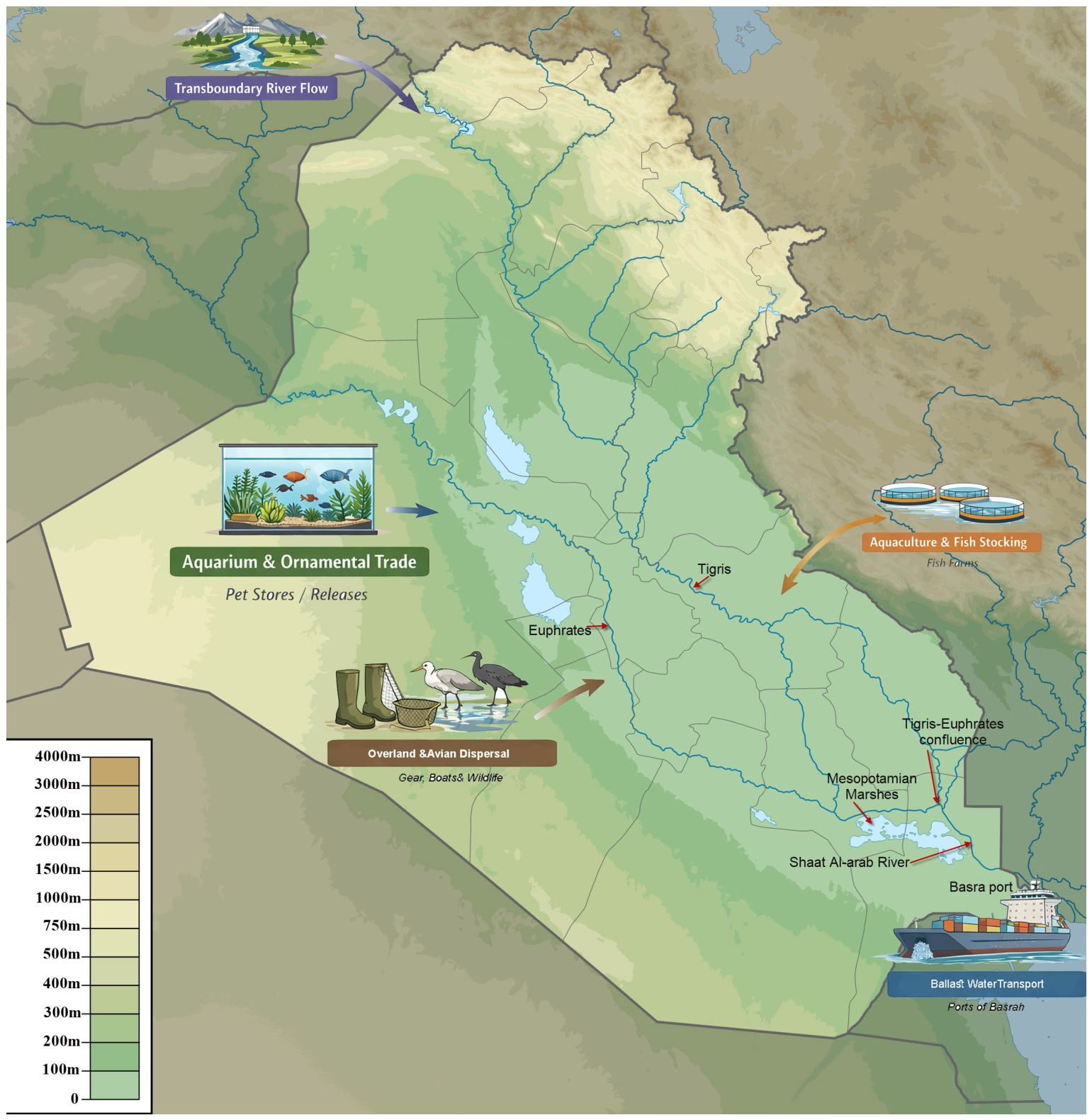
Invasive algal species can be introduced to Iraqi waters through several vectors, many of which are linked to increasing globalization, trade, and increased hydrological connectivity. These pathways are often unmonitored and can allow for the silent spread of harmful taxa into sensitive freshwater and estuarine systems. The main potential introduction pathways of invasive algae into Iraqi freshwater systems are summarized in Figure 1.

4.1. Discharge from Ballast Water in Inland Ports and Canals

Ships operating out of commercial ports and riverine terminals may unintentionally introduce alien algal species via ballast water discharge and thus assist with establishing harmful or otherwise unwanted phytoplankton species [41,42,43,44]. The release of these species via ballast water is a well-established global pathway for the introduction of aquatic invasive species. In Iraq, this pathway may represent a significant risk for Basrah Port and the Shatt Al-Arab waterway, which together constitute Iraq’s primary connection to international shipping routes. Although Iraq does not yet have a dedicated port phytoplankton monitoring programme, the increasing number of recorded non-native aquatic species in southern Iraq [3,6,10,11] suggests that shipping activities may represent an important introduction pathway and therefore warrant closer ecological monitoring.

4.2. Aquaculture and Fish Stocking

Aquaculture can also unintentionally transport algae, which can be either attached or free-living, through vectors such as stocked fish, aquatic vegetation, and equipment that had been previously contaminated [45,46]. Aquaculture has expanded significantly during recent decades in Iraq, particularly in the southern regions and the marshes, where semi-intensive carp culture is practiced [47]. However, biosecurity measures remain largely undocumented and unregulated, and no screening for associated algal introductions is currently implemented. This combination of increasing aquaculture activity and limited biosecurity represents a plausible but unquantified pathway for algal introductions.

4.3. Aquarium Trade and Accidental Release of Ornamental Algae

Non-native algae are unintentionally introduced to the wild through the dumping of aquarium materials such as water, sand, and vegetation, and by being transported on ornamental aquatic plants. Humans have also been known to deliberately release unwanted species, which may facilitate the establishment of non-native species in natural ecosystems. Some genera, such as Chaetomorpha and Hydrodictyon, which are used in aquaria, have proven their ability to become established outside their native range [48,49,50]. In studies conducted in Europe and North America, aquarium strains of Chaetomorpha spp. were shown to be able to tolerate broad environmental conditions and to regrow from microscopic fragments after disposal [48,51]. Similarly, molecular surveys of retail outlets detected macroalgae associated with the aquarium trade, including representatives of the genus Hydrodictyon, and demonstrated that viable material can escape via discarded aquarium water and plant material [52].
Although formal market surveys are currently lacking for Iraq, documented releases of ornamental fish into Iraqi freshwaters indicate that the aquarium trade represents a plausible introduction pathway for aquatic non-native organisms. Examples include the introduction of the neotropical piranha Serrasalmus maculatus into the Tigris River [53] and the Amazon sailfin catfish Pterygoplichthys pardalis into the Shatt al-Arab River [54]. Considering the ongoing degradation of Iraqi rivers and marshes through hydrological modification, pollution, and aquatic plant invasion [4,7], even low-level aquarium-mediated introductions may have the potential to become established under favorable environmental conditions.

4.4. Transboundary Water Flows

The Tigris–Euphrates basin is shared by Iraq and its upstream neighbors (Turkey, Iran, and Syria), which are having an increasing impact on Iraqi freshwater resources due to dam construction, hydrological modifications, and pollutant additions. Upstream alterations within the basin may affect Iraqi freshwater ecosystems through changes in salinity levels, nutrient availability, hydrological regimes, and habitat structure. These impacts may create more favorable conditions for the establishment of alien species in Iraq [55]. Beyond environmental suitability, this transboundary connectivity also represents a direct biological pathway whereby organisms introduced upstream may disperse downstream into Iraqi waters. Despite its obvious relevance, no coordinated transboundary monitoring exists for aquatic invasive species, representing a major regional biosecurity gap.

4.5. Other Indirect Pathways

Additional vectors possibly impacting Iraq include migratory birds, movement of vessels and agricultural machinery, and movement of scientific sampling instruments/devices from site to site. Biosecurity plans at the national level largely neglect these vectors and rarely address them explicitly.
Herbivorous fish as mobilising vectors can carry living and viable algae from one habitat to another [56]. Studies from other regions have shown that discarded bait packets (containing living algae) introduced into freshwater systems can contribute to the introduction of invasive species [57]. In a country characterized by high hydrological connectivity and limited sanitation infrastructure, these indirect pathways may be particularly important yet remain entirely unquantified.

5. Ecological Risks and Impacts

Iraq’s freshwater ecosystems are highly susceptible to invasive algae due to long-term nutrient enrichment, modified hydrological conditions, and poor regulatory implementation. Many of the river networks, canals and urban waterbodies in Iraq are already known to be affected by high-nutrient loading, low flow conditions and simplified habitats, which provide ideal conditions for colonization of strategist opportunistic algal species. In Iraq, non-native or potentially invasive algal species are primarily associated with nutrient-enriched and hydrologically modified ecosystems. Although direct ecological assessments remain limited, these environmental conditions may increase the likelihood of establishment and associated ecosystem-level impacts. For example, substantial biomass accumulations of the patterned alga Hydrodictyon reticulatum have been recorded in eutrophic urban waterbodies in Baghdad [31], and this species is well known for its ability to rapidly assimilate nitrogen and phosphorus, potentially reinforcing eutrophication processes. Limited reports of Didymosphenia geminata have also recently been documented in the Al-Yusifiya River [37], where it forms benthic mats, a growth form that is globally associated with habitat smothering and alteration of benthic community structure [58].
While no direct assessment of the impact on Iraqi systems has been made, these taxa have primarily been reported in nutrient-enriched and hydrologically modified ecosystems where ecological effects may already be occurring under highly degraded conditions. Thick algal mats are also known to decrease habitat heterogeneity, reduce the abundance of native macrophytes and periphyton, and alter benthic food-web structures [58,59]. As a result of the widespread decline of macrophyte cover and regulation in Iraqi surface waters, such habitat-level effects can be assumed to be possible and deserve focused study. However, direct evidence of ecological impacts under Iraqi conditions remains limited, and most current interpretations are inferred from invasion histories and ecological studies conducted in other geographic regions.
Currently, no research has reported on the impacts of invasive algae on nutrient cycling, oxygen dynamics, toxin production, or ecosystem services in Iraq. This represents an important knowledge gap. Although toxic cyanobacteria such as Microcystis spp. have not been studied in a systematic way in Iraq, their worldwide association with eutrophic and warm waters points to an increasing risk as nutrient enrichment and climate warming continue. Regular surveillance of algal biomass, cyanobacteria toxin and benthic habitat statuses in high-risk water bodies should therefore be a priority for research and management, particularly for future ecological monitoring and biosecurity planning.

6. Notable Records from Iraq’s Algal Checklist

New floristic and taxonomic surveys continue to identify previously undocumented algae in southern Iraq. Several recent field studies have documented the emergence of algal taxa not previously recorded in Iraq’s aquatic ecosystems, particularly in systems affected by anthropogenic disturbance and hydrological variability such as the Shatt Al-Arab River.
As illustrated by the records of D. geminata and H. reticulatum discussed above, there is a clear need for ongoing long-term monitoring of non-native algae across different freshwater ecosystems in Iraq. Long-term monitoring programs will allow researchers to track new species if they enter an area as well as assess any changes in their current distribution patterns. For example, both D. geminata and H. reticulatum have created problems for the completeness of Iraq’s National Algal Records [27], but at the same time highlight that there are other species of algal taxa occurring within the region that may form blooms or potentially spread within Iraqi waters. Ref. [37] identified multiple occurrences of D. geminata within their diatom analyses of samples taken from the Al-Yusifiya River. Dense benthic mats produced by D. geminata may substantially alter benthic habitat structures by covering substrate surfaces, reducing exposed hard substrates and bryophyte microhabitats, and modifying near-bed hydrodynamics. Studies from Europe, North America, and New Zealand have shown that these mats can influence periphyton composition, simplify benthic invertebrate assemblages, favor tolerant opportunistic taxa, and alter nutrient exchange and trophic interactions within freshwater ecosystems [58,60,61,62]. However, direct ecological evidence from Iraqi freshwater systems remains currently unavailable. In addition to D. geminata, the authors identified other diatom taxa, including Asterionella formosa, Cymbella prostrata and Diploneis puella. These additional diatom species may reflect local environmental variation rather than direct evidence of ecological impacts caused by Didymosphenia geminata. The occurrence of D. geminata in the Al-Yusifiya River is nevertheless noteworthy. However, because this species is typically associated with cool, oligotrophic rivers and low bioavailable phosphorus concentrations, its reported occurrence in Iraq should be interpreted cautiously. The possibility of morphological misidentification cannot be excluded, and molecular confirmation together with detailed ecological investigations is needed to verify its occurrence and better understand the environmental conditions supporting its persistence. Water taken from the Al-Yusifiya River for agricultural and aquaculture could facilitate downstream dispersal if the occurrence is confirmed, raising ecological concerns [32,37,58,63].
Hydrodictyon reticulatum also displays a preference for nitrogen- and phosphorus-rich habitats, particularly eutrophic freshwater systems, and dense growths of this alga may substantially modify nutrient dynamics through high rates of nitrogen and phosphorus uptake from the surrounding water [64,65,66,67]. The growth of this alga has shown invasive behavior in Brazil and New Zealand, indicating its ability to quickly occupy available space when the environment is favorable, such as those with warm temperatures and disturbed habitats [30,67]. Although its invasion potential in Iraq has not yet been fully assessed, its documented presence—and the increasing levels of nutrient loading, and chloride and hydration defects that have occurred in the region—warrants specific environmental monitoring and ecological assessments. Recent surveys of urban water bodies in Baghdad have revealed the presence of H. reticulatum, particularly in human-made brooks and stagnant water bodies. This indicates that the species flourishes in nutrient-rich stagnant water bodies and other human-impacted aquatic habitats [31]. This also indicates the need to recognize urban ecosystems as potential reservoirs for species introductions into Iraqi aquatic ecosystems, as well as the need for species prioritization (Table 1).
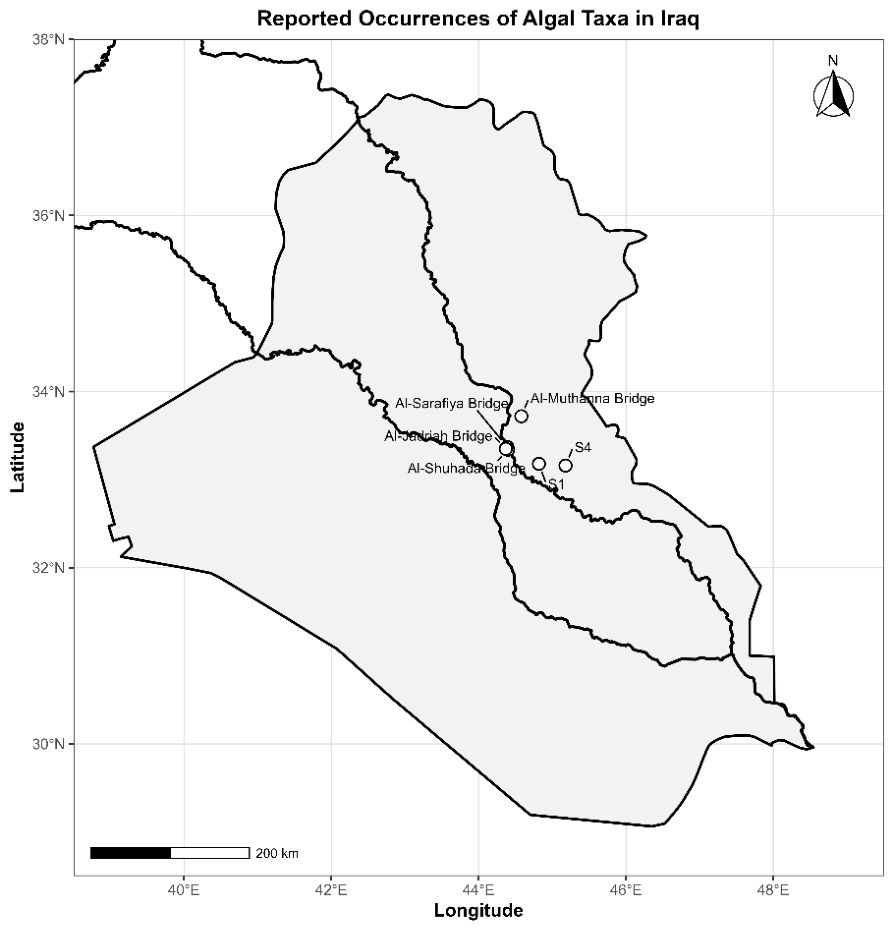
In groundwater investigations carried out in the Greenbelt area of Najaf, it was found that salinity and pollution levels were high, thus illustrating the role of poor water quality in promoting algal blooms in both managed and unmanaged water systems [68]. These species should be considered priorities for future national biosecurity monitoring efforts, including early detection and ecological assessment programs for aquatic invasive species. A case study from New Zealand illustrates the invasive potential of H. reticulatum. This alga was probably introduced to New Zealand through the ornamental aquarium trade or via aquatic plants used in ornamental ponds. Following its introduction, it rapidly colonized hatcheries and nutrient-rich ponds, where it formed dense floating mats that interfered with water use and proved difficult to control [69]. Since H. reticulatum has demonstrated the ability to spread very quickly and tolerate some chemical control measures, increased ecological monitoring of Iraqi water bodies, particularly stagnant and nutrient-rich areas that can support algal proliferation, would improve the early detection and assessment of potentially invasive taxa before widespread establishment occurs. Recent molecular-based studies in the Tigris River have also revealed the presence of two previously unrecorded cyanobacterial species in Iraq: Leptolyngbya benthonica and Nostoc paludosum [13]. While not currently listed as invasive globally, their detection and high genetic similarity to Indian and Brazilian isolates, respectively, raises questions about their biogeographic origin and ecological behavior in Mesopotamian freshwater systems. Given their filamentous structure and potential for proliferation in nutrient-rich sediments, both species warrant monitoring as potentially cryptogenic or non-native taxa requiring further ecological assessment in the region. The currently available occurrence records of the reported non-native and cryptogenic algal/cyanobacterial taxa in Iraq are summarized in Figure 2.
Overall, the currently available records should be interpreted cautiously because most taxa have not yet been evaluated through long-term ecological monitoring or formal invasion assessments in Iraq. Consequently, several species discussed here are more appropriately regarded as non-native or potentially invasive taxa of concern pending further ecological validation.

7. Current Knowledge Gaps

7.1. Knowledge Gaps for Documented Potentially Invasive and Non-Native Algae in Iraq

The reported occurrence of D. geminata (a diatom) and H. reticulatum (a green alga) highlights the need for continued monitoring, ecological assessment, and appropriate management to limit potential spread and ecosystem degradation.
The preliminary qualitative risk evaluation presented in Table 2 was developed as an expert-based prioritization tool rather than a formal quantitative risk assessment. Rankings were assigned using currently available evidence from published occurrence records in Iraq, documented invasion histories in other regions, known ecological characteristics of each taxon, and evidence from comparable freshwater systems. The rankings are primarily intended to guide future monitoring and research priorities under conditions of limited ecological data availability.
To prioritise monitoring and management activities for these two species, Table 2 summarises a preliminary qualitative risk evaluation developed based upon expert opinion and previously published data on the environmental characteristics of each species, including their likelihood of introduction, potential environmental impact, and monitoring requirements.
Didymosphenia geminata was assigned a moderate introduction likelihood and moderate ecological impact because its occurrence in Iraq currently requires molecular confirmation, and the possibility of morphological misidentification cannot be excluded. Nevertheless, it remains a high monitoring priority because, if its occurrence is confirmed, international studies have demonstrated its capacity for rapid dispersal, dense benthic mat formation, and significant ecological impacts in invaded freshwater ecosystems [32,36,58,59,60,61,62,63]. In comparison, H. reticulatum has a high introduction potential and a moderate environmental impact because it can produce large blooms in mesotrophic water bodies, although its potential effects on benthic fauna remain insufficiently understood [30,31]. Leptolyngbya benthonica and Nostoc paludosum were detected only once through molecular analyses and currently have no documented history of bloom formation, spread, or ecological impacts in Iraq. Consequently, their ecological status remains uncertain and requires further ecological, taxonomic, and distributional investigation. This initial prioritization supports the urgent need for enhanced surveillance of high-risk taxa and highlights where further ecological impact assessments are warranted.
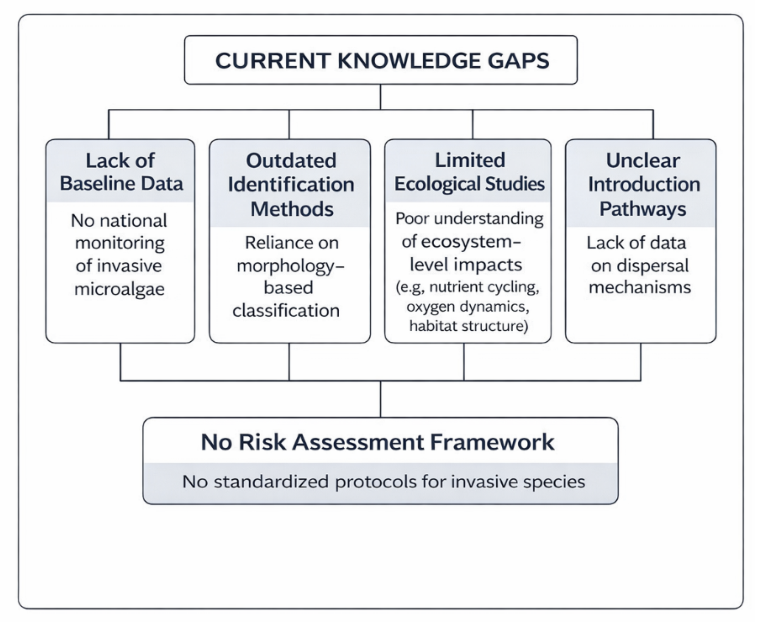
Despite scattered records, there is no dedicated national monitoring program for invasive microalgae in Iraq (Figure 3).
There is currently a lack of dependable baseline data distinguishing native from non-native algal taxa. As a result, the ability to monitor environmental change and detect newly introduced algal taxa remains limited. Most of the currently available studies are based on outdated morphological classifications and do not distinguish between morphologically similar species or genetically related (cryptic species). Additionally, due to the reliance on traditional morphological classifications for species identification, many invasive species remain unrecognized. For example, recent port surveys in the Adriatic Sea identified numerous taxa that had previously been overlooked or misidentified using conventional morphological approaches but were later recognized as non-native or potentially invasive through the application of molecular identification techniques and integrative taxonomic analyses [70]. Also, an earlier research study that performed molecular analyses of red algal species in Australia revealed that several taxa had previously been misidentified using morphological characteristics alone [43]. Alternative methodologies, such as DNA barcoding, represent valuable tools for species inventories, particularly for the detection of non-dominant or early-stage invasive species [71]. When combined with traditional ecological knowledge, these approaches can contribute to the development of more reliable reference baselines and improve long-term species monitoring [72,73]. Recent advances in environmental DNA (eDNA) and metabarcoding have further improved the early detection and surveillance of non-native and potentially invasive algal taxa by increasing detection sensitivity and taxonomic coverage beyond conventional floristic surveys [74,75,76]. These approaches are particularly valuable for detecting cryptic or low-abundance taxa and are being increasingly incorporated into aquatic biosecurity monitoring programs worldwide [77,78]. However, they are best regarded as complementary to traditional morphological identification because their performance depends on marker selection, reference database completeness, and methodological standardization [79]. Nevertheless, the application of DNA sequencing technologies such as barcoding or metagenomics is still rare in Iraq; therefore, the early detection of closely related or morphologically similar invasive taxa remains limited under current monitoring approaches. There is also a scarcity of ecological studies in Iraq that quantify the important functional impacts of invasive algae on ecosystem processes and aquatic ecosystem functioning. Only a few studies have researched the impacts of algae invading local freshwater and marine systems, particularly the impacts of invasive algae on critical processes such as nutrient cycling, oxygen dynamics, and habitat structure. International studies report that invasive algae (e.g., Gracilaria salicornia) can fundamentally alter nitrogen uptake and change epifaunal communities, thereby altering the trophic structure of invaded habitats [80].
Overall, we argue that local studies are critically needed in Iraq to measure the functional effects of alien algae on oxygen demand, nutrient cycling, and habitat structure.
In Iraq, documentation of introduction pathways and dispersal mechanisms for invasive algae remains extremely limited. While global studies have clearly identified major pathways such as ballast water, aquaculture, and aquarium trade, e.g., [81,82,83], these pathways have not been systematically assessed in the Iraqi context. This lack of pathway-specific data, combined with the absence of coordinated surveillance and biosecurity frameworks, currently prevents effective tracing of introductions and targeted management responses. Addressing this gap will require the development of structured monitoring and risk assessment protocols tailored to Iraq’s aquatic systems.
Risk assessments of introduced algae species in Iraq are not backed by a national framework or tools for the collection of risk data, which will greatly affect the management of the species. It is widely accepted in the literature that risk assessments are an essential component of the management of aquatic species, which include both indigenous and non-indigenous species, at the international level. This is because such assessments use the best available evidence to identify potential threats and support more efficient resource management [84]. For example, multi-species risk assessment frameworks developed for the Great Lakes have advanced methods for identifying high-risk species and pathways, enabling agencies to implement targeted surveillance and early response measures [85]. Furthermore, comparative analyses of international risk assessments have shown that harmonized frameworks such as those of the EU and the International Maritime Organization promote consistent responses, facilitate policy integration, reduce ambiguity in surveillance efforts, and allow for transparent risk scoring [86]. The absence of a national framework in Iraq results in fragmented monitoring activities and responses, thus clearly illustrating the need to develop national risk-based protocols tailored to Iraq’s aquatic ecosystems.
Given the limited options to date for addressing knowledge gaps, it is crucial that science-based frameworks for algal biosecurity are developed, and the resilience of Iraq’s freshwater ecosystems is enhanced.

7.2. Cryptogenic or Recently Detected Cyanobacteria

Molecular analyses based on 16S rRNA sequencing have reported the presence of Leptolyngbya benthonica and Nostoc paludosum in the Tigris River, representing their first record in Iraq [13]. However, because 16S rRNA alone provides limited species-level resolution in several cyanobacterial groups, these identifications should be regarded as provisional pending confirmation using additional molecular markers and polyphasic taxonomic approaches.
For example, Leptolyngbya strains show substantial genetic divergence and possess traits that may facilitate natural dispersal (e.g., buoyancy regulation via gas vesicles) as well as high tolerance to environmental stressors such as salinity fluctuations, temperature variation, and nutrient enrichment [87,88].
Furthermore, N. paludosum has been proposed for biotechnological applications, such as lipid production, which should be of ecological concern when broadly introduced into new environments for cultivation [89]. We encourage future studies on the ecology and phylogeography of these taxa to clarify their origin, distribution, ecological role, and potential for proliferation under Iraqi environmental conditions.

8. Recommendations and Future Research Directions

There is a need for improved ecological monitoring, taxonomic verification, and long-term assessment of non-native and cryptogenic algal taxa in Iraqi freshwater ecosystems. Although reports of H. reticulatum from urban and eutrophic freshwater habitats in Iraq are increasing, the current monitoring capacity and coordinated biosecurity frameworks for non-native aquatic organisms remain limited. Previous studies [90] have highlighted weaknesses in legislation, border control, and inter-agency coordination related to aquatic biosecurity and invasive species management in Iraq.
Current knowledge remains limited by the scarcity of long-term monitoring programs, restricted molecular data, and incomplete distributional information. Future studies should prioritize repeated field surveys, ecological assessments, experimental algal studies, and molecular verification of reported taxa in order to better understand their distribution, environmental tolerances, nutrient dynamics, bloom formation potential, and ecological significance under Iraqi conditions. Additional priorities include the development of coordinated freshwater biosecurity frameworks, improved taxonomic reference databases, and integration of molecular and morphological monitoring approaches. Greater collaboration among academic institutions and environmental agencies may improve early detection capacity and support evidence-based management of emerging non-native taxa.

9. Conclusions

Although evidence for ecological invasiveness remains incomplete for several taxa, the available records collectively suggest that algal introductions may represent an emerging biosecurity concern for Iraqi freshwater ecosystems. The cryptogenic cyanobacteria discussed here represent taxa requiring further taxonomic, ecological, and distributional assessment.
Potential ecological consequences associated with non-native and cryptogenic algal taxa may include alterations to benthic habitat structures, shifts in periphyton and diatom community compositions, changes in nutrient dynamics, and modifications to trophic interactions within freshwater ecosystems. Studies from Europe, North America, and New Zealand have shown that dense blooms of taxa such as Didymosphenia geminata and Hydrodictyon reticulatum can simplify benthic communities, favor tolerant opportunistic taxa, and influence ecological functioning through extensive substrate coverage and nutrient uptake. However, direct ecological evidence from Iraqi freshwater systems remains limited, and these potential impacts require further experimental and long-term ecological investigation under local environmental conditions. Proposed monitoring and biosecurity frameworks for Iraq should be based upon successful international approaches while remaining adapted to local environmental and institutional conditions. Improved ecological monitoring, prevention strategies, and institutional coordination may contribute to limiting future spread of non-native taxa and improving freshwater ecosystem management in Iraq. As the environmental challenges continue to increase, proactive ecological assessment and coordinated monitoring efforts may help support ecosystem resilience and sustainable freshwater resource management. Ultimately, advancing the national discourse on coordinated responses to algal invasions among researchers, environmental managers, and policymakers remains essential for improving freshwater biosecurity and ecosystem management in Iraq.

Author Contributions

Conceptualization, M.N. and A.Y.; data curation, M.N. and A.Y.; writing—original draft, M.N., A.Y., H.O., J.S., P.R.D.l.R.-E. and F.E. All authors have read and agreed to the published version of the manuscript.

Funding

This research was funded in whole or in part by the Austrian Science Fund (FWF) [10.55776/PIN1102425]. For open access purposes, the author has applied a CC BY public copyright license to any author accepted manuscript version arising from this submission.

Data Availability Statement

No new datasets were generated or analyzed during the current study. All information supporting the conclusions of this review was obtained from published literature, and the relevant sources are cited throughout the manuscript.

Conflicts of Interest

The authors declare no conflicts of interest.

References

  1. Salvaterra, T.; Green, D.S.; Crowe, T.P.; O’gOrman, E.J. Impacts of the invasive alga Sargassum muticum on ecosystem functioning and food web structure. Biol. Invasions 2013, 15, 2563–2576. [Google Scholar] [CrossRef] [Scilit]
  2. DeRoy, E.M.; MacIsaac, H.J. Impacts of invasive species in the Laurentian Great Lakes. In Contaminants of the Great Lakes; Crossman, J., Weisener, C., Eds.; The Handbook of Environmental Chemistry; Springer: Cham, Switzerland, 2020; Volume 101. [Google Scholar] [CrossRef] [Scilit]
  3. Yasser, A.G.; Naser, M.D.; Ghazi, A.H.; Mahdi, R.; Younis, M.; Shahen, M.; Ali, R. An expansion of the invasive species Amphibalanus subalbidus (Henry, 1973) in southern Iraq. BioInvasions Rec. 2022, 11, 977–982. [Google Scholar] [CrossRef] [Scilit]
  4. Yasser, A.; Al-Kaaby, I.; Shabeeb, A.; Naser, M.; Auda, N.; Ajeel, S.; Yesser, A.; Al-Hello, A.-Z.; Lebepe, J. Histopathology and micronuclei induction as pollution biomarkers in common carp, Cyprinus carpio, from southern Iraq. J. Biol. Stud. 2024, 7, 11–30. [Google Scholar] [CrossRef] [Scilit]
  5. Yasser, A.G.; Naser, M. Acute toxicity and histopathological effects of malathion on shrimp Macrobrachium nipponense. J. Biol. Stud. 2023, 5, 774–779. [Google Scholar] [CrossRef] [Scilit]
  6. Naser, M.; Yasser, A.; Geist, J. Probable extirpation of Anodonta vescoiana in Iraq: A case study of unionid displacement by Sinanodonta woodiana. Diversity 2025, 17, 415. [Google Scholar] [CrossRef] [Scilit]
  7. Naser, M.; Yasser, A.; Schoelynck, J.; Essl, F. Threatened aquatic plants of the southern Tigris–Euphrates Basin: Status, threats, and conservation priorities. Plants 2025, 14, 1914. [Google Scholar] [CrossRef] [Scilit] [PubMed]
  8. Alwan, A.R.A. Past and present status of the aquatic plants of the Marshlands of Iraq. J. Marsh Bull. 2006, 1, 120–172. [Google Scholar]
  9. Salim, M.A.; Al-Sudani, I.M.; Haloob, A.; Abed, S.A. Invasive alien species in Al-Dalmaj Protected Area, Iraq: Conservation and Wildlife Management Approach. IOP Conf. Ser. Earth Environ. Sci. 2021, 790, 012088. [Google Scholar] [CrossRef] [Scilit]
  10. Naser, M.D.; Yasser, A.G.; De Los Ríos-Escalante, P.R.; Essl, F. Spatial distribution and abundance of non-native barnacles of the genus Amphibalanus in southern Iraq. J. Crustac. Biol. 2024, 44, ruae048. [Google Scholar] [CrossRef] [Scilit]
  11. Naser, M.D.; Yasser, A.G.; Dobrzycka-Krahel, A.; Lo Brutto, S.; Auda, N.M.; De Los Ríos-Escalante, P.R.; Essl, F. Aquatic non-native invertebrate species in large river basins of southern Iraq. BioInvasions Rec. 2024, 13, 963–978. [Google Scholar] [CrossRef] [Scilit]
  12. Naser, M.; Yasser, A.; Vivó-Pons, A.; Gümüş, B.A.; De Los Ríos-Escalante, P.R. Diversity, environmental drivers, and niche overlap of native and invasive gastropods in southern Iraq’s freshwater ecosystems. Ecologies 2026, 7, 22. [Google Scholar] [CrossRef] [Scilit]
  13. Salih, W.Y.; Hassan, F.M. Environmental diagnosing of the new algal pollution of Tigris River in Iraq. IOP Conf. Ser. Earth Environ. Sci. 2021, 877, 012024. [Google Scholar] [CrossRef] [Scilit]
  14. Habeeb, M.; Al-Shaheen, M.; Abbas, A.; Hamza, H.; Okash, A.; Hussain, N.; Reiss, P. The fragile ecology in Iraq’s Mesopotamian marshlands endangered and restructured by a sharp increase in salinity. GSC Adv. Res. Rev. 2023, 16, 7–18. [Google Scholar] [CrossRef] [Scilit]
  15. Hassany, A. Revision of algal flora (diatoms) checklist in Tigris River within Baghdad city-Iraq. Iraqi J. Agric. Sci. 2021, 52, 836–858. [Google Scholar] [CrossRef] [Scilit]
  16. Kazmi, S.; Yapa, N.; Karunarathna, S.; Suwannarach, N. Perceived intensification in harmful algal blooms is a wave of cumulative threat to the aquatic ecosystems. Biology 2022, 11, 852. [Google Scholar] [CrossRef] [Scilit] [PubMed]
  17. Maulood, B.; Hassan, F. Algal studies in Iraqi inland waters: A review. In Tigris and Euphrates Rivers: Their Environment from Headwaters to Mouth; Springer Nature: Berlin/Heidelberg, Germany, 2021. [Google Scholar] [CrossRef] [Scilit]
  18. Mohamad, H.; Schimani, K.; Al-Shaheen, M.; Abarca, N.; Jahn, R.; Al-Handal, A.; Kusber, W.; Zimmermann, J. Comparison of the biodiversity of epiphytic diatoms in the Euphrates-Tigris rivers using morphological and metabarcoding analyses. Metabarcoding Metagenomics 2024, 8, 411–453. [Google Scholar] [CrossRef] [Scilit]
  19. Richardson, D.; Pyšek, P.; Rejmánek, M.; Barbour, M.; Panetta, F.; West, C. Naturalization and invasion of alien plants: Concepts and definitions. Divers. Distrib. 2000, 6, 93–107. [Google Scholar] [CrossRef] [Scilit]
  20. Latombe, G.; Canavan, S.; Hirsch, H.; Hui, C.; Kumschick, S.; Nsikani, M.; Potgieter, L.; Robinson, T.; Saul, W.; Turner, S.; et al. A four-component classification of uncertainties in biological invasions: Implications for management. Ecosphere 2019, 10, e02669. [Google Scholar] [CrossRef] [Scilit]
  21. Soto, I.; Balzani, P.; Carneiro, L.; Cuthbert, R.; Macêdo, R.; Tarkan, A.; Ahmed, D.; Bang, A.; Bącela-Spychalska, K.; Bailey, S.; et al. Taming the terminological tempest in invasion science. Biol. Rev. 2024, 99, 1357–1390. [Google Scholar] [CrossRef] [Scilit] [PubMed]
  22. Garcia-Lozano, C.; Pueyo-Ros, J.; Canelles, Q.; Latombe, G.; Adriaens, T.; Bacher, S.; Cardoso, A.; Cleary, M.; Coromina, L.; Courchamp, F.; et al. Management measures and trends of biological invasions in Europe: A survey-based assessment of local managers. Glob. Change Biol. 2025, 31, e70028. [Google Scholar] [CrossRef] [Scilit] [PubMed]
  23. Katsanevakis, S.; Moustakas, A. Uncertainty in marine invasion science. Front. Mar. Sci. 2018, 5, 38. [Google Scholar] [CrossRef] [Scilit]
  24. Carlton, J.; Schwindt, E. The assessment of marine bioinvasion diversity and history. Biol. Invasions 2024, 26, 237–298. [Google Scholar] [CrossRef] [Scilit]
  25. McGeoch, M.; Spear, D.; Kleynhans, E.; Marais, E. Uncertainty in invasive alien species listing. Ecol. Appl. 2012, 22, 959–971. [Google Scholar] [CrossRef] [Scilit] [PubMed]
  26. Truong, T.; Hardy, G.; Andrew, M. Contemporary remotely sensed data products refine invasive plants risk mapping in data poor regions. Front. Plant Sci. 2017, 8, 770. [Google Scholar] [CrossRef] [Scilit] [PubMed]
  27. Maulood, B.K.; Hassan, F.M.; Al-Lami, A.A. Checklist of Algal Flora in Iraq; Ministry of Environment: Baghdad, Iraq, 2013.
  28. Volodina, A.; Gerb, M. Findings of water net Hydrodictyon reticulatum in the Curonian Lagoon. Bot. Lith. 2013, 19, 72–74. [Google Scholar] [CrossRef] [Scilit]
  29. Michalak, I.; Messyasz, B. Concise review of Cladophora spp.: Macroalgae of commercial interest. J. Appl. Phycol. 2020, 33, 133–166. [Google Scholar] [CrossRef] [Scilit]
  30. Peres, C.K.; Lambrecht, R.W.; Tavares, D.A.; Guimarães, J.F.; Henn, C. Massive occurrence of the invasive alga Hydrodictyon reticulatum (L.) Bory in a Brazilian lotic system and variables explaining its biomass at the microhabitat scale. Limnetica 2016, 35, 95–102. [Google Scholar] [CrossRef] [Scilit]
  31. Toma, J.J.; Hassan, F.M.; Ismail, A.M.; Alhassany, J.S.; Hadi, R.A.M.; Maulood, B.K. A contribution to algal flora in Baghdad area, Iraq. J. Adv. Lab. Res. Biol. 2012, 3, 76–84. [Google Scholar]
  32. Spaulding, S.A.; Elwell, L. Increase in nuisance blooms of Didymosphenia geminata. U.S. Geol. Surv. Open-File Rep. 2007, 1425, 38. [Google Scholar] [CrossRef] [Scilit]
  33. Montecino, V.; Molina, X.; Kumar, S.; Castillo, M.; Bustamante, R.; Montecino, V.; Molina, X.; Kumar, S.; Castillo, M.L.; Bustamante, R.O. Niche dynamics and potential geographic distribution of Didymosphenia geminata (Lyngbye) M. Schmidt, an invasive freshwater diatom in southern Chile. Aquat. Invasions 2014, 9, 507–519. [Google Scholar] [CrossRef] [Scilit]
  34. Salvo Pereira, J.; Oyanedel Pérez, A. Community signals of the effect of Didymosphenia geminata (Lyngbye) M. Schmidt on benthic diatom communities in Chilean rivers. Rev. Chil. Hist. Nat. 2019, 92, 4. [Google Scholar] [CrossRef] [Scilit]
  35. National Institute of Water and Atmospheric Research (NIWA). Testing and Assessment of Cyanobacterial Detection Devices. 2020. Available online: https://niwa.co.nz/sites/default/files/Testing%20CCD%20Feb%202020.pdf (accessed on 23 March 2026).
  36. Bray, J.; Kilroy, C.; Gerbeaux, P.; Burdon, F.; Harding, J. Ecological processes mediate the effects of the invasive bloom-forming diatom Didymosphenia geminata on stream algal and invertebrate assemblages. Hydrobiologia 2020, 847, 177–190. [Google Scholar] [CrossRef] [Scilit]
  37. Talib, A.H.; Hassan, F.M.; Sadoon, W.A. An environmental study on phytoplankton (diatoms) in Al-Yusifiya River, Iraq. Baghdad Sci. J. 2014, 11, 28. [Google Scholar] [CrossRef] [Scilit]
  38. Al-Nasrawi, S.; Salman, J.; Hassan, F. Community structure of benthic algae in a lotic ecosystem, Karbala Province, Iraq. Baghdad Sci. J. 2017, 14, 692–706. [Google Scholar] [CrossRef] [Scilit]
  39. Hadi, S.; Hussain, N. Review of some classes of epipelic in Iraqi waters. Al-Kufa Univ. J. Biol. 2021, 13, 17–27. [Google Scholar] [CrossRef] [Scilit]
  40. Wood, S.A.; Kelly, L.T.; Bouma-Gregson, K.; Humbert, J.F.; Laughinghouse, H.D.; Lazorchak, J.; McAllister, T.G.; McQueen, A.; Pokrzywinski, K.; Puddick, J.; et al. Toxic benthic freshwater cyanobacterial proliferations: Challenges and solutions for enhancing knowledge and improving monitoring and mitigation. Freshw. Biol. 2020, 65, 1824–1842. [Google Scholar] [CrossRef] [Scilit] [PubMed]
  41. Steichen, J.L.; Denby, A.; Windham, R.; Brinkmeyer, R.; Quigg, A. A tale of two ports: Dinoflagellate and diatom communities found in the high ship traffic region of Galveston Bay, Texas (USA). J. Coast. Res. 2015, 31, 407–416. [Google Scholar] [CrossRef] [Scilit]
  42. Steichen, J.L.; Windham, R.; Brinkmeyer, R.; Quigg, A. Ecosystem under pressure: Ballast water discharge into Galveston Bay, Texas (USA), from 2005 to 2010. Mar. Pollut. Bull. 2012, 64, 779–789. [Google Scholar] [CrossRef] [Scilit] [PubMed]
  43. Mozetič, P.; Cangini, M.; Francé, J.; Bastianini, M.; Aubry, F.B.; Bužančić, M.; Cabrini, M.; Cerino, F.; Čalić, M.; D’Adamo, R.; et al. Phytoplankton diversity in Adriatic ports: Lessons from the port baseline survey for the management of harmful algal species. Mar. Pollut. Bull. 2019, 147, 117–132. [Google Scholar] [CrossRef] [Scilit] [PubMed]
  44. Cabrini, M.; Cerino, F.; De Olazabal, A. Potential transfer of aquatic organisms via ballast water with a particular focus on harmful and non-indigenous species: A survey from Adriatic ports. Mar. Pollut. Bull. 2019, 147, 16–35. [Google Scholar] [CrossRef] [Scilit] [PubMed]
  45. Kerr, S.J.; Brousseau, C.S.; Muschett, M. Invasive aquatic species in Ontario: A review and analysis of potential pathways for introduction. Fisheries 2005, 30, 21–30. [Google Scholar] [CrossRef] [Scilit]
  46. Kiruba-Sankar, R.; Raj, J.P.; Saravanan, K. Invasive species in freshwater ecosystems—Threats to ecosystem services. In Biodiversity and Climate Change Adaptation in Tropical Islands; Academic Press: London, UK, 2018; pp. 257–296. [Google Scholar] [CrossRef] [Scilit]
  47. Salman, N.; Saleh, K. Aquaculture industry in Iraq: Past, present, and future perspectives. In Tigris and Euphrates Rivers: Their Environment from Headwaters to Mouth; Springer Nature: Berlin/Heidelberg, Germany, 2021. [Google Scholar] [CrossRef] [Scilit]
  48. Vranken, S.; Bosch, S.; Peña, V.; Leliaert, F.; Mineur, F.; De Clerck, O. A risk assessment of aquarium trade introductions of seaweed in European waters. Biol. Invasions 2018, 20, 1171–1187. [Google Scholar] [CrossRef] [Scilit]
  49. Zhan, S.H.; Hsieh, T.C.; Yeh, L.Y.; Kuo, T.C.; Suda, S.; Liu, S.L. Hidden introductions of freshwater red algae via the aquarium trade exposed by DNA barcodes. bioRxiv 2020. [Google Scholar] [CrossRef] [Scilit]
  50. Brown, J.; Kelso, W.E.; Diaz, R.; Daniel, W.; Brassard, H.; Kaller, M.D. Invasive species in the aquarium trade: Survey of attitudes, behaviors, and knowledge among US participants. Hydrobiologia 2025, 853, 281–297. [Google Scholar] [CrossRef] [Scilit]
  51. Odom, R.L.; Walters, L.J. A safe alternative to invasive Caulerpa taxifolia (Chlorophyta)? Assessing aquarium-release invasion potential of aquarium strains of the macroalgal genus Chaetomorpha (Chlorophyta). Biol. Invasions 2014, 16, 1589–1597. 52. [Google Scholar] [CrossRef] [Scilit]
  52. Woodhouse, K.O.; Zuccarello, G.C. Diversity of tropical macroalgae in the New Zealand marine aquarium trade. N. Z. J. Mar. Freshw. Res. 2023, 57, 207–228. [Google Scholar] [CrossRef] [Scilit]
  53. Jawad, L.A.; Qasim, A.M. Neotropical piranha, Serrasalmus maculatus (Kner, 1858) (Teleostei: Serrasalmidae), in the Tigris River, Baghdad, Iraq: A case of deliberate introduction by the aquarium trade. Acta Ichthyol. Piscat. 2019, 49, 199–201. [Google Scholar] [CrossRef] [Scilit]
  54. Qasim, A.M.; Jawad, L.A. Presence of the Amazon sailfin catfish, Pterygoplichthys pardalis (Castelnau, 1855) (Pisces: Loricariidae), in the Shatt al-Arab River, Basrah, Iraq. Integr. Syst. Stuttg. Contrib. Nat. Hist. 2022, 5, 95–103. [Google Scholar] [CrossRef] [Scilit]
  55. Montazeri, A.; Mazaheri, M.; Morid, S.; Mosaddeghi, M.R. Effects of upstream activities of Tigris–Euphrates River Basin on water and soil resources of Shatt al-Arab border river. Sci. Total Environ. 2023, 858, 159751. [Google Scholar] [CrossRef] [Scilit] [PubMed]
  56. Bierwagen, S.L.; Price, D.K.; Pack, A.A.; Meyer, C.G. Bluespine unicornfish (Naso unicornis) are both natural control agents and mobile vectors for invasive algae in a Hawaiian marine reserve. Mar. Biol. 2017, 164, 25. [Google Scholar] [CrossRef] [Scilit]
  57. Haska, C.L.; Yarish, C.; Kraemer, G. Bait worm packaging as a potential vector of invasive species. Biol. Invasions 2012, 14, 481–493. [Google Scholar] [CrossRef] [Scilit]
  58. Kilroy, C.; Snelder, T.N.; Floerl, O. A rapid technique for assessing the suitability of areas for invasive species applied to New Zealand’s rivers. Divers. Distrib. 2008, 14, 262–272. [Google Scholar] [CrossRef] [Scilit]
  59. Richardson, D.C.; Oleksy, I.A.; Hoellein, T.J.; Arscott, D.B.; Gibson, C.A.; Root, S.M. Habitat characteristics, temporal variability, and macroinvertebrate communities associated with a mat-forming nuisance diatom (Didymosphenia geminata) in Catskill Mountain streams, New York. Aquat. Sci. 2014, 76, 553–564. [Google Scholar] [CrossRef] [Scilit]
  60. Ladrera, R.; Gomá, J.; Prat, N. Effects of Didymosphenia geminata massive growth on stream communities: Smaller organisms and simplified food web structure. PLoS ONE 2018, 13, e0193545. [Google Scholar] [CrossRef] [Scilit] [PubMed]
  61. Larned, S.; Kilroy, C. Effects of Didymosphenia geminata removal on river macroinvertebrate communities. J. Freshw. Ecol. 2014, 29, 345–362. [Google Scholar] [CrossRef] [Scilit]
  62. Brogan, M.; Peckarsky, B.; Resasco, J. Consequences of nuisance algal blooms of Didymosphenia geminata on invertebrate communities in Rocky Mountain streams. Freshw. Sci. 2024, 43, 52–64. [Google Scholar] [CrossRef] [Scilit] [PubMed]
  63. Kumar, S.; Spaulding, S.A.; Stohlgren, T.J.; Hermann, K.A.; Schmidt, T.S.; Bahls, L.L. Potential habitat distribution for the freshwater diatom Didymosphenia geminata in the continental US. Front. Ecol. Environ. 2009, 7, 415–420. [Google Scholar] [CrossRef] [Scilit]
  64. Hall, J.A.; Cox, N. Nutrient concentrations as predictors of nuisance Hydrodictyon reticulatum populations in New Zealand. J. Aquat. Plant Manag. 1995, 33, 68–74. [Google Scholar]
  65. Hall, J.; Payne, G. Factors controlling the growth of field populations of Hydrodictyon reticulatum in New Zealand. J. Appl. Phycol. 1997, 9, 229–236. [Google Scholar] [CrossRef] [Scilit]
  66. Hawes, I.; Smith, R. Influence of environmental factors on the growth in culture of a New Zealand strain of the fast-spreading alga Hydrodictyon reticulatum (water-net). J. Appl. Phycol. 1993, 5, 437–445. [Google Scholar] [CrossRef] [Scilit]
  67. Chen, X.; Huang, G.; Fu, H.; An, C.; Yao, Y.; Cheng, G.; Suo, M. Allelopathy inhibitory effects of Hydrodictyon reticulatum on Chlorella pyrenoidosa under co-culture and liquor-cultured conditions. Water 2017, 9, 416. [Google Scholar] [CrossRef] [Scilit]
  68. Awad, E.S.; Imran, N.S.; Albayati, M.M. Groundwater hydrogeochemical and quality appraisal for agriculture irrigation in Greenbelt Area, Iraq. Environments 2022, 9, 43. [Google Scholar] [CrossRef] [Scilit]
  69. Coffey, R.G.; Miller, D.H. Hydrodictyon reticulatum Lagerheim (Chlorophyta): A new genus record from New Zealand. N. Z. J. Bot. 1988, 26, 367–370. [Google Scholar] [CrossRef] [Scilit]
  70. Piñeiro-Corbeira, C.; Verbruggen, H.; Díaz-Tapia, P. Molecular survey of the red algal family Rhodomelaceae (Ceramiales, Rhodophyta) in Australia reveals new introduced species. J. Appl. Phycol. 2020, 32, 2535–2547. [Google Scholar] [CrossRef] [Scilit]
  71. Rey, A.; Basurko, O.C.; Rodriguez-Ezpeleta, N. Considerations for metabarcoding-based port biological baseline surveys aimed at marine nonindigenous species monitoring and risk assessments. Ecol. Evol. 2020, 10, 2452–2465. [Google Scholar] [CrossRef] [Scilit] [PubMed]
  72. Klymus, K.E.; Marshall, N.T.; Stepien, C.A. Environmental DNA (eDNA) metabarcoding assays to detect invasive invertebrate species in the Great Lakes. PLoS ONE 2017, 12, e0177643. [Google Scholar] [CrossRef] [Scilit] [PubMed]
  73. Rishan, S.T.; Kline, R.J.; Rahman, M.M. Applications of environmental DNA (eDNA) to detect subterranean and aquatic invasive species: A critical review on the challenges and limitations of eDNA metabarcoding. Environ. Adv. 2023, 13, 100370. [Google Scholar] [CrossRef] [Scilit]
  74. Fonseca, V.; Davison, P.I.; Créach, V.; Stone, D.; Bass, D.; Tidbury, H. The application of eDNA for monitoring aquatic non-indigenous species: Practical and policy considerations. Diversity 2023, 15, 631. [Google Scholar] [CrossRef] [Scilit]
  75. Takahashi, M.; Saccó, M.; Kestel, J.H.; Nester, G.; Campbell, M.; Van Der Heyde, M.; Heydenrych, M.J.; Juszkiewicz, D.J.; Nevill, P.; Dawkins, K.; et al. Aquatic environmental DNA: A review of the macro-organismal biomonitoring revolution. Sci. Total Environ. 2023, 895, 162322. [Google Scholar] [CrossRef] [Scilit] [PubMed]
  76. Nester, G.; Suter, L.; Kitchener, J.; Bunce, M.; Polanowski, A.; Wasserman, J.; Deagle, B. Long-distance Southern Ocean environmental DNA (eDNA) transect provides insights into spatial marine biota and invasion pathways for non-native species. Sci. Total Environ. 2024, 947, 175657. [Google Scholar] [CrossRef] [Scilit] [PubMed]
  77. Pawlowski, J.; Bruce, K.; Panksep, K.; Aguirre, F.I.; Amafitano, S.; Apothéloz-Perret-Gentil, L.; Baussant, T.; Bouchez, A.; Carugati, L.; Cermakova, K.; et al. Environmental DNA metabarcoding for benthic monitoring: A review of sediment sampling and DNA extraction methods. Sci. Total Environ. 2021, 818, 151783. [Google Scholar] [CrossRef] [Scilit] [PubMed]
  78. Çevik, T.; Çevik, N. Environmental DNA (eDNA): A review of ecosystem biodiversity detection and applications. Biodivers. Conserv. 2025, 34, 2999–3035. [Google Scholar] [CrossRef] [Scilit]
  79. Beng, K.C.; Corlett, R.T. Applications of environmental DNA (eDNA) in ecology and conservation: Opportunities, challenges and prospects. Biodivers. Conserv. 2020, 29, 2089–2121. [Google Scholar] [CrossRef] [Scilit]
  80. Fukunaga, A.; Peyton, K.A.; Thomas, F.I. Epifaunal community structure and ammonium uptake compared for the invasive algae Gracilaria salicornia and Acanthophora specifera, and the native alga Padina thivyi. J. Exp. Mar. Biol. Ecol. 2014, 456, 78–86. [Google Scholar] [CrossRef] [Scilit]
  81. Guala, I.; Flagella, M.M.; Andreakis, N. Aliens—Algal introductions to European shores. Biogeographia 2003, 24, 1. [Google Scholar] [CrossRef] [Scilit]
  82. Padilla, D.K.; Williams, S.L. Beyond ballast water: Aquarium and ornamental trades as sources of invasive species. Front. Ecol. Environ. 2004, 2, 131–138. [Google Scholar] [CrossRef]
  83. Bailey, S.A. An overview of thirty years of research on ballast water as a vector for aquatic invasive species to freshwater and marine environments. Aquat. Ecosyst. Health Manag. 2015, 18, 261–268. [Google Scholar] [CrossRef] [Scilit]
  84. Mandrak, N.E.; Cudmore, B. Risk assessment: Cornerstone of an aquatic invasive species program. Aquat. Ecosyst. Health Manag. 2015, 18, 312–320. [Google Scholar] [CrossRef] [Scilit]
  85. Davidson, A.; Fusaro, A.; Sturtevant, R.; Kashian, D. Development of a risk assessment framework to predict invasive species establishment for multiple taxonomic groups and vectors of introduction. Manag. Biol. Invasions 2017, 8, 25–36. [Google Scholar] [CrossRef] [Scilit]
  86. Srėbalienė, G.; Olenin, S.; Minchin, D.; Narščius, A. A comparison of impact and risk assessment methods based on the IMO Guidelines and EU invasive alien species risk assessment frameworks. PeerJ 2019, 7, e6965. [Google Scholar] [CrossRef] [Scilit] [PubMed]
  87. El Semary, N.A. Microscopic, molecular, and biochemical investigations to characterize a benthic cyanoprokaryote Leptolyngbya strain from Egypt. Microsc. Res. Tech. 2012, 76, 249–257. [Google Scholar] [CrossRef] [Scilit] [PubMed]
  88. Lee, W.; Ryu, Y.; Kim, T.; Park, A.; Lee, Y.; Lee, Y.; Kim, J.; Oh, C.; Kang, D.; Choi, W. Optimization of Industrial-Scale Cultivation Conditions to Enhance the Nutritional Composition of Nontoxic Cyanobacterium Leptolyngbya sp. KIOST-1. Appl. Sci. 2023, 14, 282. [Google Scholar] [CrossRef] [Scilit]
  89. Mellisa, S.; Dabbadie, L. Alternative media for the culture of the cyanobacteria Nostoc paludosum and conditions for optimizing biomass and lipid production. AACL Bioflux 2015, 8, 679–686. [Google Scholar]
  90. Ahmad, S.A.; Ahmad, N.S.; Salih, S. Invasive alien species in Iraq. In Invasive Alien Species: Observations and Issues from Around the World; Pullaiah, T., Ielmini, M.R., Eds.; John Wiley & Sons: Hoboken, NJ, USA, 2021; Volume 2, pp. 126–134. [Google Scholar] [CrossRef] [Scilit]
Figure 1. Major potential pathways for the introduction and spread of non-native and potentially invasive algal taxa in Iraq. Shown are the principal introduction pathways (transboundary river flow, aquarium and ornamental trade, aquaculture and fish stocking, overland dispersal via boats, fishing gear and migratory waterbirds, and ballast water transport), together with the major hydrological features of Iraq, including the Tigris, Euphrates, Shatt Al-Arab River, and the Mesopotamian Marshes.
Diversity 18 00451 g001
Figure 2. Geographic distribution of the reported occurrences of potentially non-native and cryptogenic algal taxa in Iraq. Distribution points represent published records of Didymosphenia geminata, Hydrodictyon reticulatum, Leptolyngbya benthonica, and Nostoc paludosum. The map includes the major hydrological network (Tigris, Euphrates, and Shatt Al-Arab rivers).
Diversity 18 00451 g002
Figure 3. Schematic representation of current knowledge gaps in invasive algal species management in Iraq. Major limitations include the lack of baseline data, reliance on outdated identification methods, limited understanding of ecosystem-level impacts, and unclear introduction pathways. Collectively, these gaps hinder the development of standardized risk assessment frameworks necessary for effective biosecurity and monitoring.
Diversity 18 00451 g003
Table 1. Summary of non-native, potentially invasive, and cryptogenic algal taxa reported in Iraq.
SpeciesStatusHabitatDetection MethodMolecular VerificationFirst Record Source
Didymosphenia geminataPotentially non-native; status uncertainRivers (Al-Yusifiya)Morphological, Field ObservationsNo[37]
Hydrodictyon reticulatumPotentially non-native; status uncertainUrban waterbodies (Baghdad)Morphological, Field ObservationsNo[31]
Leptolyngbya benthonicaCryptogenic; ecological status uncertainTigris River sedimentMolecular (16S rRNA sequencing)Partial (16S rRNA only)[13]
Nostoc paludosumCryptogenic; ecological status uncertainTigris River sedimentMolecular (16S rRNA sequencing)Partial (16S rRNA only)[13]
Species identifications of Leptolyngbya benthonica and Nostoc paludosum are based on published 16S rRNA sequence data and require confirmation using additional molecular markers and polyphasic taxonomic approaches.
Table 2. Preliminary qualitative risk evaluation of reported non-native, potentially invasive, and cryptogenic algal taxa in Iraq. Rankings are based on expert evaluation of current ecological evidence and monitoring priority.
SpeciesIntroduction LikelihoodEcological ImpactMonitoring Priority
Didymosphenia geminataModerateModerateHigh
Hydrodictyon reticulatumHighModerateHigh
Leptolyngbya benthonicaLowUnknownLow
Nostoc paludosumLowUnknownLow
Disclaimer/Publisher’s Note: The statements, opinions and data contained in all publications are solely those of the individual author(s) and contributor(s) and not of MDPI and/or the editor(s). MDPI and/or the editor(s) disclaim responsibility for any injury to people or property resulting from any ideas, methods, instructions or products referred to in the content.