Article

Palynological Assemblages from the Jurassic Qingtujing Formation in the Northwestern Margin of the Chaoshui Basin: Implications for Geological Chronology and Paleoclimate

1
Geoscience Big Data Engineering Research Center, Gansu Province and Geological Survey of Gansu Province, Lanzhou 730000, China
2
Key Laboratory of Mineral Exploration of Gansu Province, Lanzhou 730000, China
*
Authors to whom correspondence should be addressed.
Diversity 2026, 18(7), 439; https://doi.org/10.3390/d18070439
Submission received: 28 May 2026 / Revised: 15 July 2026 / Accepted: 17 July 2026 / Published: 21 July 2026
(This article belongs to the Section Phylogeny and Evolution)

Abstract

The Qingtujing Formation of the Chaoshui Basin is an important Jurassic coal-bearing unit in the Hexi Corridor. Palynological data on this formation are crucial for regional stratigraphic correlation and paleoclimate reconstruction. In this study, we systematically identified and analyzed the palynological fossils in the Qingtujing Formation in Well Gao 4 and Well 801 on the northwest margin of the Chaoshui Basin and identified two characteristic palynological assemblages. The lower part is the DisacciatriletiCycadopitesOsmundacidites assemblage, dominated by gymnosperm pollen, followed by fern spores, with very low Classopollis content. The upper part is the ClassopollisDisaccites assemblage, dominated by gymnosperm pollen, among which Classopollis pollen accounts for a portion as high as 75.5%, and fern spores only appear sporadically. Based on a comparison of palynological assemblages and the distribution pattern of fossils, the sedimentary age of the Qingtujing Formation was determined to be early to late Middle Jurassic. The paleoclimate was reconstructed based on the ecological habits of the pollen/spore-producing plants, indicating that the study area had a warm and humid climate in the early Middle Jurassic and that this climate changed to a hot and dry one in the late Middle Jurassic. This evolution pattern is consistent with the Jurassic climate evolution trend in the northwest of China. These results provide key palynological evidence for the stratigraphic chronology and paleoclimate reconstruction of the Jurassic strata in the Chaoshui Basin.

1. Introduction

The climate during the Jurassic is representative of a typical “greenhouse” environment, with an atmospheric CO2 concentration reaching approximately four times that of the present day, and it was relatively warm and largely devoid of polar continental ice caps [1,2,3,4,5]. The climate in the mid-latitudes of the Northern Hemisphere was warm and humid, with lush vegetation, indicating conditions suitable for life, dominated by coniferous trees, cycads, and ferns [6]. The Jurassic strata in China are mainly composed of sedimentary rocks formed in continental environment [7], while a series of large continental basins in Northern China have developed coal-bearing sedimentary rocks, making them an excellent place for studying global climate change during the Jurassic [8]. An abundance of plant and animal fossils from the Middle Jurassic have been recovered in the northwest region and spore diversity was found to be high [9,10,11]. Detailed analyses of the plant communities in several regions such as the Ordos Basin, Xilinhot Basin, and Longjiang Basin have all indicated that there were warm and humid climate conditions the northern region of China during the Middle Jurassic, accompanied by seasonal fluctuations in temperature and precipitation [12,13,14,15]. In recent years, many scholars have analyzed the river deposits in the continental basins of Northwest China and discussed the climate change processes within the region, including in places such as the Junggar Basin [16,17], and Qaidam Basin [18], yielding remarkable results. At the same time, the Chaoshui Basin, the region with the most concentrated coal resources in the Hexi Corridor, is dominates by Jurassic coal-bearing strata [19,20], and studies have discovered an abundance of fossil spores [21], but no detailed studies on ancient vegetation or climate have been conducted.
The Qingtujing Formation is the main coal-bearing strata in the Chaoshui Basin. The coal seam is thick, and ancient biological fossils such as spores, ostracods, and algal fossils have been found [21,22,23]. Ref. [21] conducted spore analysis on the Jurassic coal-bearing strata in the Chaoshui Basin, revealing that there were five spore-pollen assemblage zones from bottom to top: in the lower section of the Jijigou Formation lies the CyathiditesChasmatosporitesDisaccites assemblage (J11); in the upper section of the Jijigou Formation lies the CyathiditesChasmatosporitesCycadopites assemblage (J12); in the lower section of the Qingtujing Formation lies the Cyathidites minorCycadopites typicus assemblage (J21); in the upper section of the Qingtujing Formation lies the CyathiditesQuadraeculinaClassopollis assemblage (J22); and in the Shazhaohe Formation lies the Classopollis high-content assemblage (J31). In the Qingtujing Formation of the Chaoshen 1 well in the eastern part of the Chaoshui Basin, the ostracod assemblage DarwinulaTimiriasevia was found, considered to correspond to the late Middle Jurassic [22,23]. In the third section of the Qingtujing Formation of the Chaoshen 1 well in the eastern part of the Chaoshui Basin, numerous algal fossils, predominatly Aclistochara were found, and its geological age is Late Jurassic or late Middle Jurassic [22].
Based on previous studies, our understanding of the geological age, ancient vegetation, and ancient climate of the sedimentation period of the Qingtujing Formation in the Chaoshui Basin is still relatively limited. Therefore, we conducted palynological analysis of the spore–pollen samples from the Qingtujing Formation in the Well Gao 4 and Well 801 of the Chaoshui Basin to determine the geological age of the Qingtujing Formation, explore the ancient vegetation landscape and climate during this geological period, and provide basic geological evidence for the geological exploration of coal, oil, and other resources in this area.

2. Geological Setting

The Chaoshui Basin is located at the southern edge of the Alxa Block in the eastern section of the Hexi Corridor of Gansu Province. It belongs to the Beishan Basin Group and is oriented east–west, showing a band-like distribution, and it is narrow on the west and wide on the east [24]. This basin is controlled by the NW- and NE-trending structural systems and near the EW-trending structural systems of Longshou Mountain, the arc-shaped structural system of Beida Mountain, and the north-easterly structural line of Bayan Ula Mountain. It forms a basin with alternating faults and depressions [25,26]. The Chaoshui Basin developed on the Paleoproterozoic basement and is an inland syn-diastemic basin of Mesozoic and Cenozoic [27,28]. The Chaoshui Basin has evolved through four stages: the faulting and basin formation stage in the Early–Middle Jurassic, the depression stage in the Late Jurassic, the uplift and contraction stage in the Late Jurassic to the Early Cretaceous, and the transformation and extinction stage of the Cenozoic Himalayan Orogeny [29]. The study area is in the northwest corner of the Chaoshui Basin. On the basis of drilling, seismic, paleontological, and basin margin exposure data, it was inferred that this area belongs to the northwest depression area of the Chaoshui Basin. Within the area, there is the Longshou Mountain rock group of Late Archean to Early Proterozoic age, overlain successively by Jurassic, Cretaceous, Paleogene, and Quaternary strata.
The Jurassic strata in the Chaoshui Basin are the thickest, distributed in most areas of the basin, but with obvious limitations. They mainly develop in the depocenter within the basin, with a maximum thickness of up to 3000 m, generally ranging from 1000 to 2000 m. In the structural high within the basin, the thickness is lower, generally ranging from 500 to 1000 m. The Jurassic strata are partially missing in the peripheral areas of the basin. The Jurassic strata in the Chaoshui Basin can be divided into the Jijigou Formation, Qingtujing Formation and Shazaohe Formation from bottom to top [21]. The Jijigou Formation in the Chaoshui Basin mainly consists of sandstones, gravelly sandstones, and siltstones, with a proximal to mid-fan subfacies; the Qingtujing Formation is composed of gravelly sandstones, sandstones, and siltstones mudstones, with a sedimentary facies of mid-fan to fan-margin facies and deltaic facies; and the Shazaohe Formation is composed of gravelly sandstones and muddy sandstones, with well-developed erosion structures, and the sedimentary facies are mainly fluvial to nearshore. In the study area, the Jurassic strata only include the Qingtujing Formation. Based on the lithological combination characteristics, it can be further divided into two sections. The lower section of the Qingtujing Formation consists of grayish-white gravelly coarse sandstones, coarse sandstones, yellow sandstones, yellow-brown sandstones, fine siltstones, and purple-red sandy mudstones intercalated with carbonaceous mudstone and coal seams, and the bottom is purple-red gravelly sandstones, conglomerate. The upper section consists of gray/grayish-white gravelly rocks, gravelly sandstones, sandstones, and sandy shale intercalated with mudstone, black mud shale, etc. It is oil-bearing and has multiple coal stringers and coal seams, and the bottom consists of gray–green conglomerate and sandstones intercalated with shale and coal stringers.

3. Materials and Methods

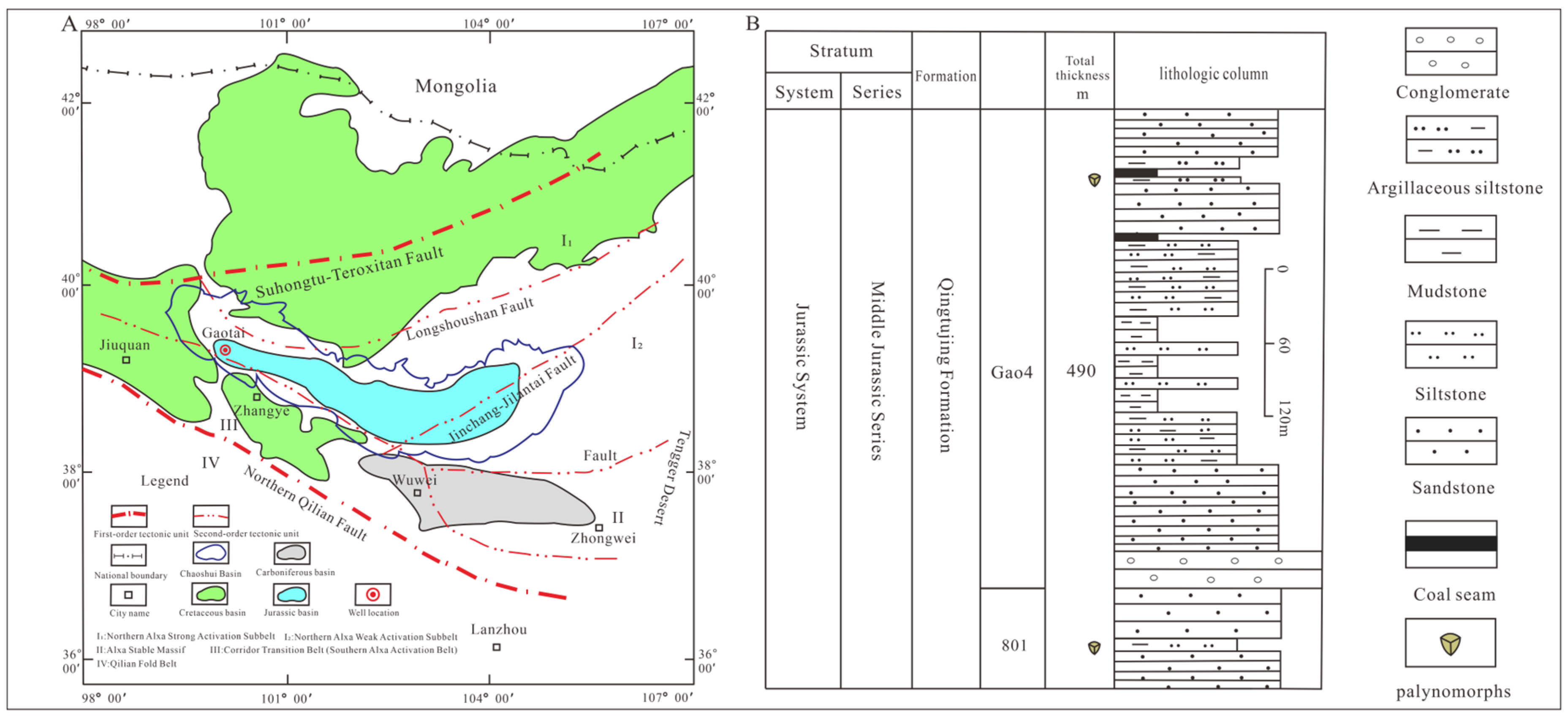
The spore–pollen samples for this study were collected from the Qingtujing Formation of the Well Gao 4 and Well 801, and over 100 grains were counted for each sample. These wells are in the northwest corner of the Chaoshui Basin, and the rock formation consists of a series of deep-lacustrine, semi-deep lacustrine, and lake–marsh deposits (Figure 1). In this study, 3 spore–pollen samples were collected from the Well 801, while 7 spore–pollen samples were collected from the Well Gao 4.
A palynological analysis was conducted in the palynology laboratory of the Institute of Geomechanics of the Chinese Academy of Geological Sciences. The palynological samples were pre-treated using the hydrochloric acid–potassium hydroxide–hydrofluoric acid method [30]. The pre-treatment experimental steps were as follows: Weigh out 100 g of the dried samples. Crush the samples into small particles and put them in a glass container, add 250 mL of 20% hydrochloric acid solution to remove carbonate substances, and then heat the sample in a water bath for 0.5 h until no bubbles are produced. Centrifuge and wash the residue until neutral. Add 100 mL of 10% potassium hydroxide solution to remove organic substances, and then heat the sample in a water bath for 0.5 h until complete reaction is achieved. Centrifuge and wash again until neutral. Transfer the samples to a plastic beaker, add 250 mL of 40% hydrofluoric acid solution to remove silicate substances, and let them stand for 3–5 days until the reaction is complete. Then, centrifuge and wash again until neutral. Pass the samples through 200 µm and 7 µm sieve cloths in an ultrasonic bath to concentrate palynomorphs. Then, add glycerol to preserve the samples and make slides.
Palynomorph identification and counting were conducted under an Olympus BX-51(Manufacturer: Olympus Corporation, Tokyo, Japan) optical microscope at 400× magnification. Photography was carried out using an Olympus DP25 (Manufacturer: Olympus Soft Imaging Solutions GmbH, Münster, Germany)imaging system at 600× magnification. Palynomorph identification was performed with reference to “Spore Morphology of Chinese Ferns” [31]; “The Morphology of Plant Pollen” [32]; “Chinese Spore Fossils, Volume 2: Mesozoic Spores” [33]; and numerous published papers. After identification and statistics establishment, the percentage abundances of palynomorphs and major plant groups (ferns and gymnosperms) were calculated. Finally, the spore–pollen percentage diagrams were created using the Tilia 2.0.45 software.

4. Characteristics of Palynological Assemblage

4.1. The Palynological Assemblage of the Lower Part of the Qingtujing Formation of the Middle Jurassic

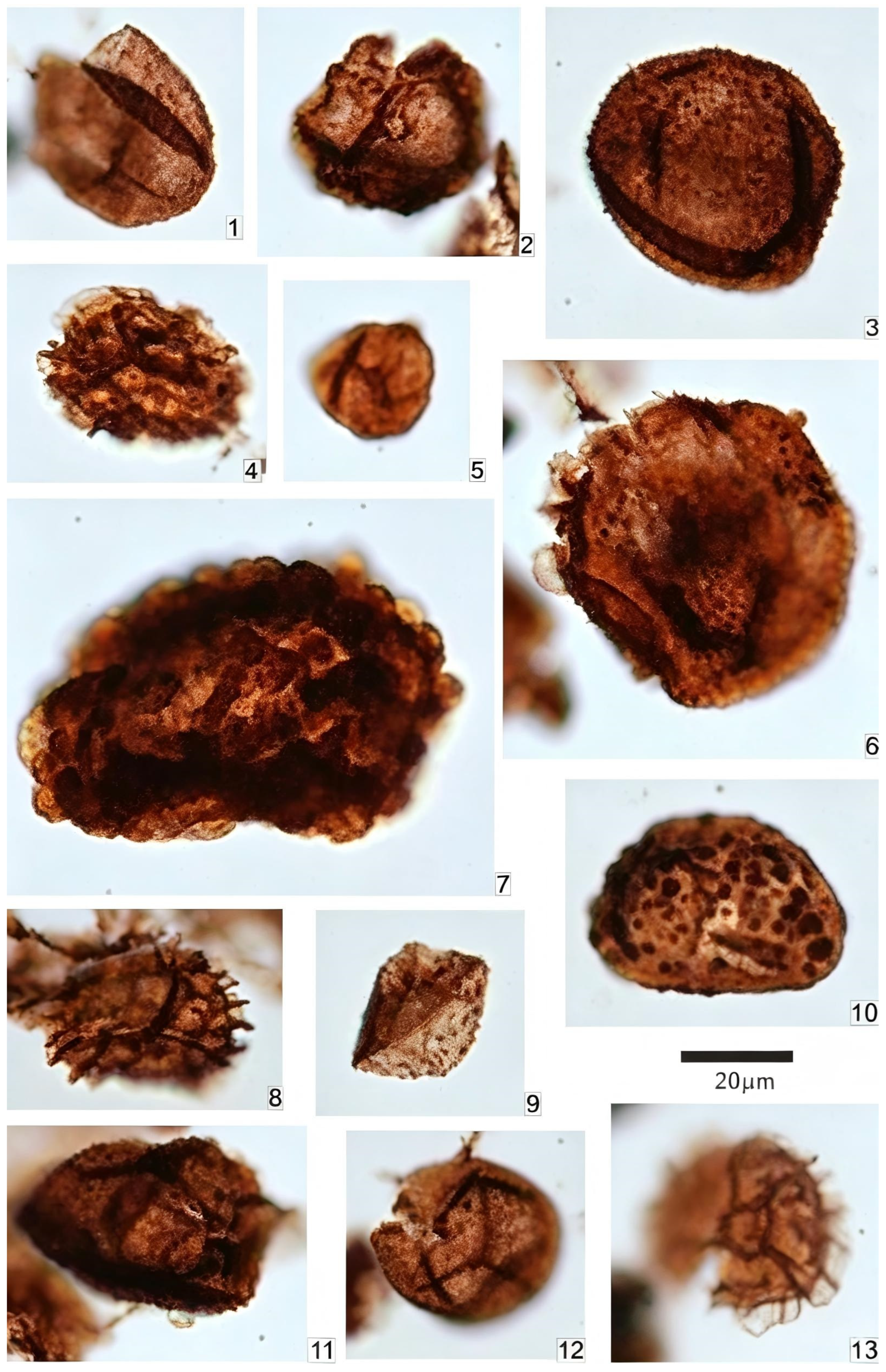
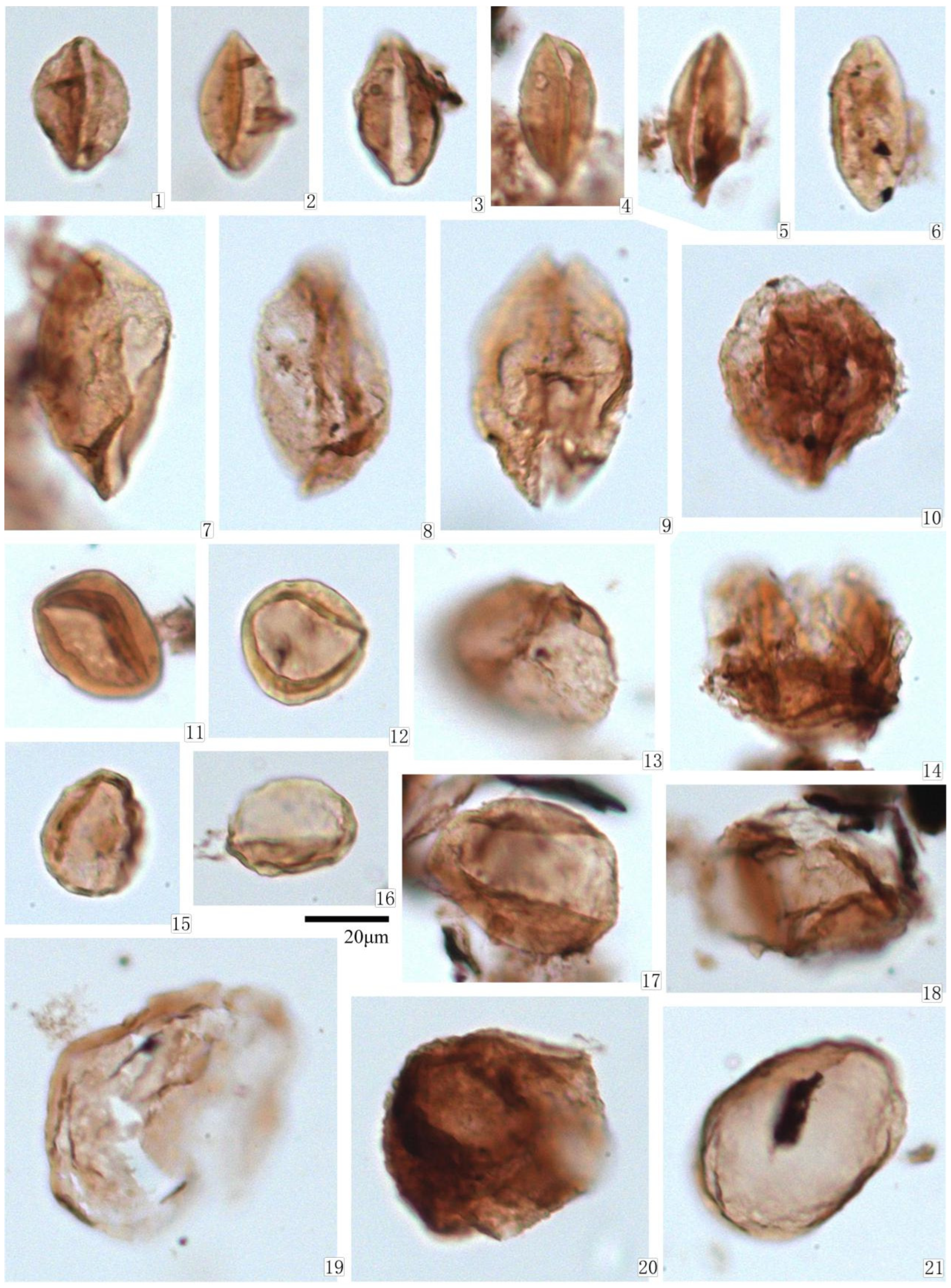
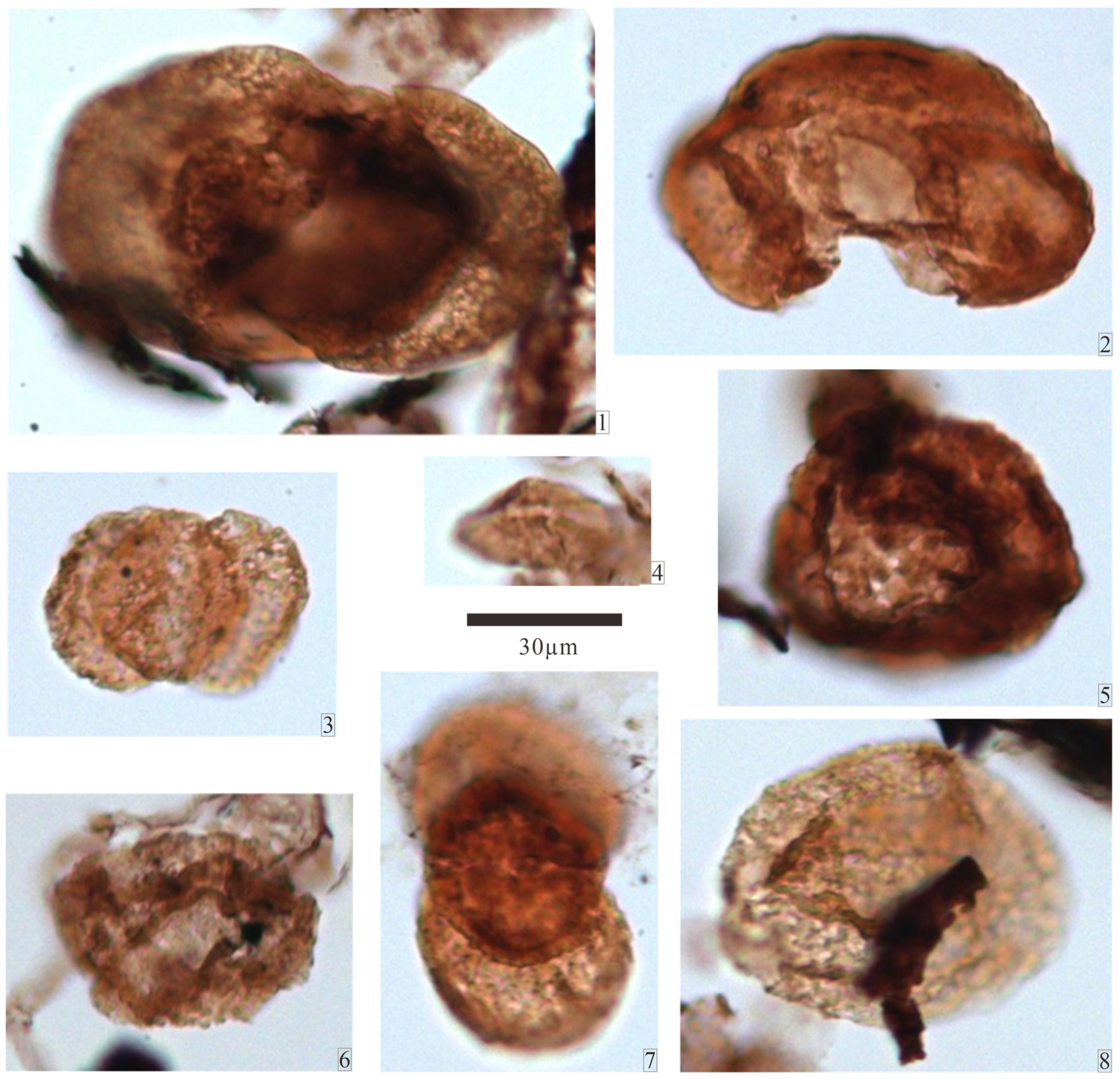
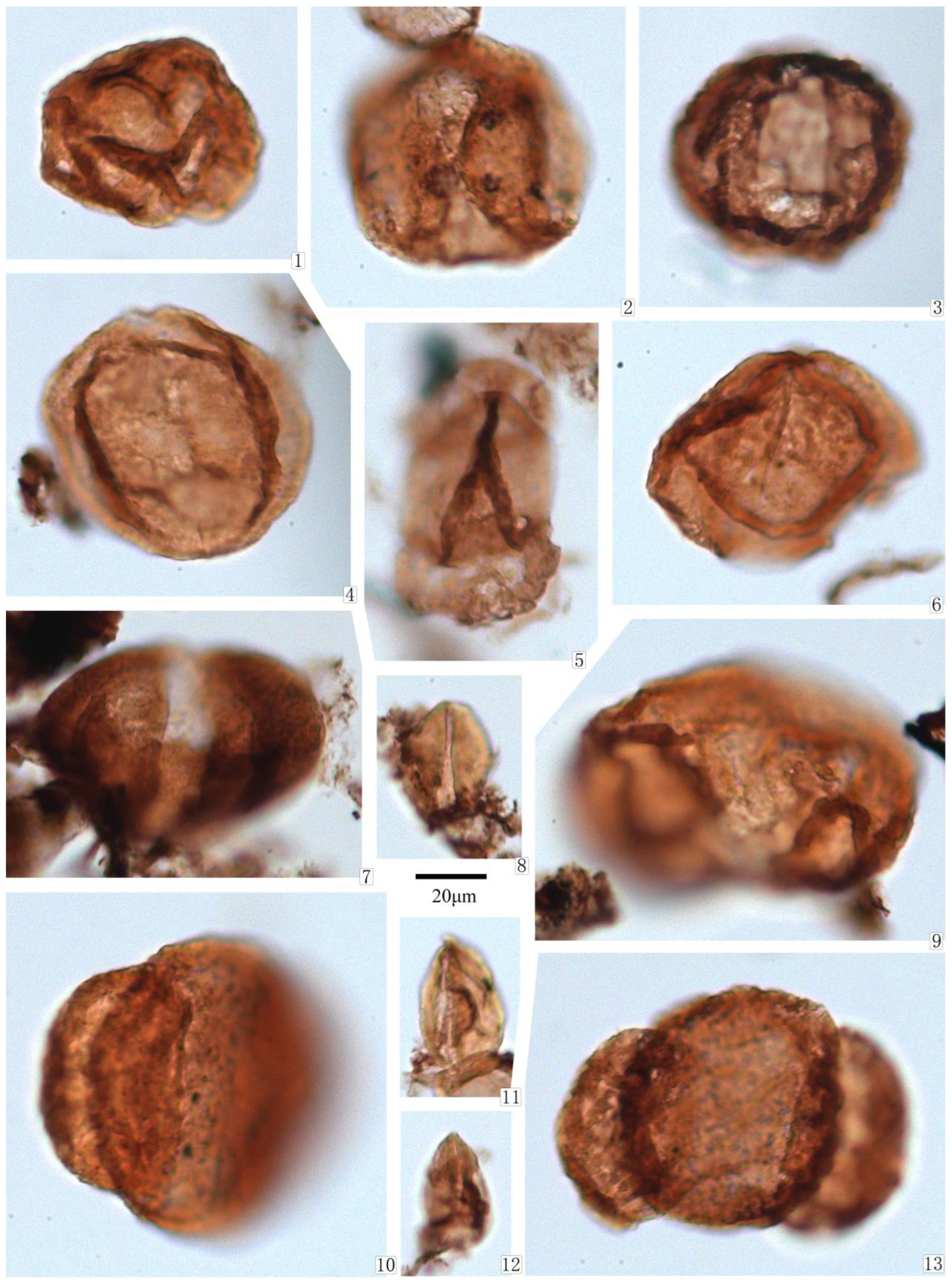
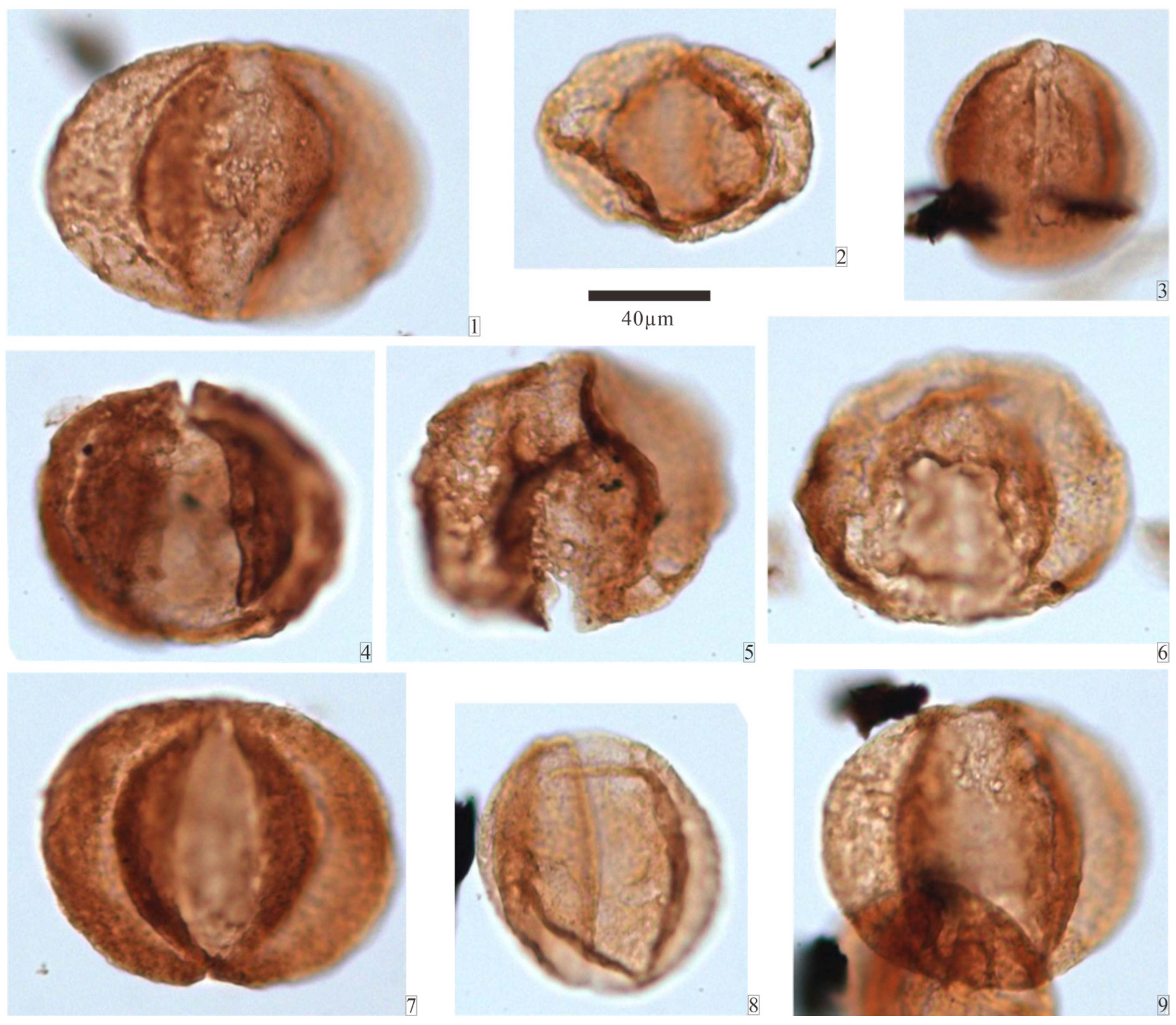
Three samples are analyzed in this section. The pollen assemblage is dominated by gymnosperm pollen, with a content ranging from 79.3% to 84.1%, averaging 81.68%; fern spores occupy a secondary position, with a content ranging from 16.0% to 20.7%, averaging 18.3%. The main types of pollen are shown in Figure 2, Figure 3, Figure 4, Figure 5 and Figure 6.
Disaccates of coniferous affinities are the most common forms of gymnosperm pollen with a share ranging from 30.5% to 66.5%, averaging 48.5%, including primitive coniferous with incompletely differentiated disaccate pollen, mostly monosaccate and bisaccate conifer pollen of Abietineae/Pinuspollenites, followed by Piceaepollenites complanatiformis, Podocarpidites, Quadraeculina anellaeformis, Paleoconiferus asaccatus, Protoconiferus oviformis, Protoconiferus funarius, Pseudopices magnifica, Piceites expositus, Protopinus vastus, Protopinus subluteus, and Disacciatrileti-disaccates that cannot be identified as soecific genera and species. There is also a relatively high content of monosulcate/protosulcate pollen, ranging from 5.5% to 37.4%, averaging 21.4%, mainly including Cycadopites subgranulosus, Cycadopites coxii, Cycadopites carpentieri, Cycadopites praeacuta, Cycadopites nitidus, Chasmatosporites elegans, Chasmatosporites apertus, Chasmatosporites hians, etc. Cypress pollen accounts for 5.4% to 6.2%, averaging 5.8%, mainly including Sciadopityspollenites mesozoicus, Sciadopityspollenites macroverrucosus, Sciadopityspollenites carlyensis, Perinopollenite, Concentrisporite fragilis, etc. [34]. The rest of the pollen occurs sporadically, such as Callialasporites dampieri and Psophosphaera minor from Araucariaceae and Classopollis annulatus from Cheirolepidiaceae.
Spores of Osmundaceae display the greatest abundance and diversity, with a content ranging from 9.0% to 11.8%, averaging 10.4%. The main species are Osmundacidites parvus, followed by Osmundacidites diversispinulatus, Osmundacidites wellmanii, and Osmundacidites elegans. The spores of the Strobilanthesaceae account for 2.5% to 3.1%, averaging 2.8%, with the main representatives being Cyathidites minor and Deltoidospora. The remaining species are quite rare, such as Cibotiumspora of the Dicksoniaceae, Torisporis of the Lygodiaceae M. Roem., the nearly round Lycopodiumsporites subrotundum and Lycopodiumsporites tenellus of the Lycopodiaceae, Granulatisporites, the verrucate spore Converrucosisporites, Verrucosisporites, Lophotriletes, and Apiculatisporis.
Sparse relict species from the Triassic and even the Late Paleozoic have also been discovered, namely, Striatoabieites, Parataenaesporites, and Chordasporites.

4.2. The Pollen Assemblage of the Upper Part of the Qingtujing Formation

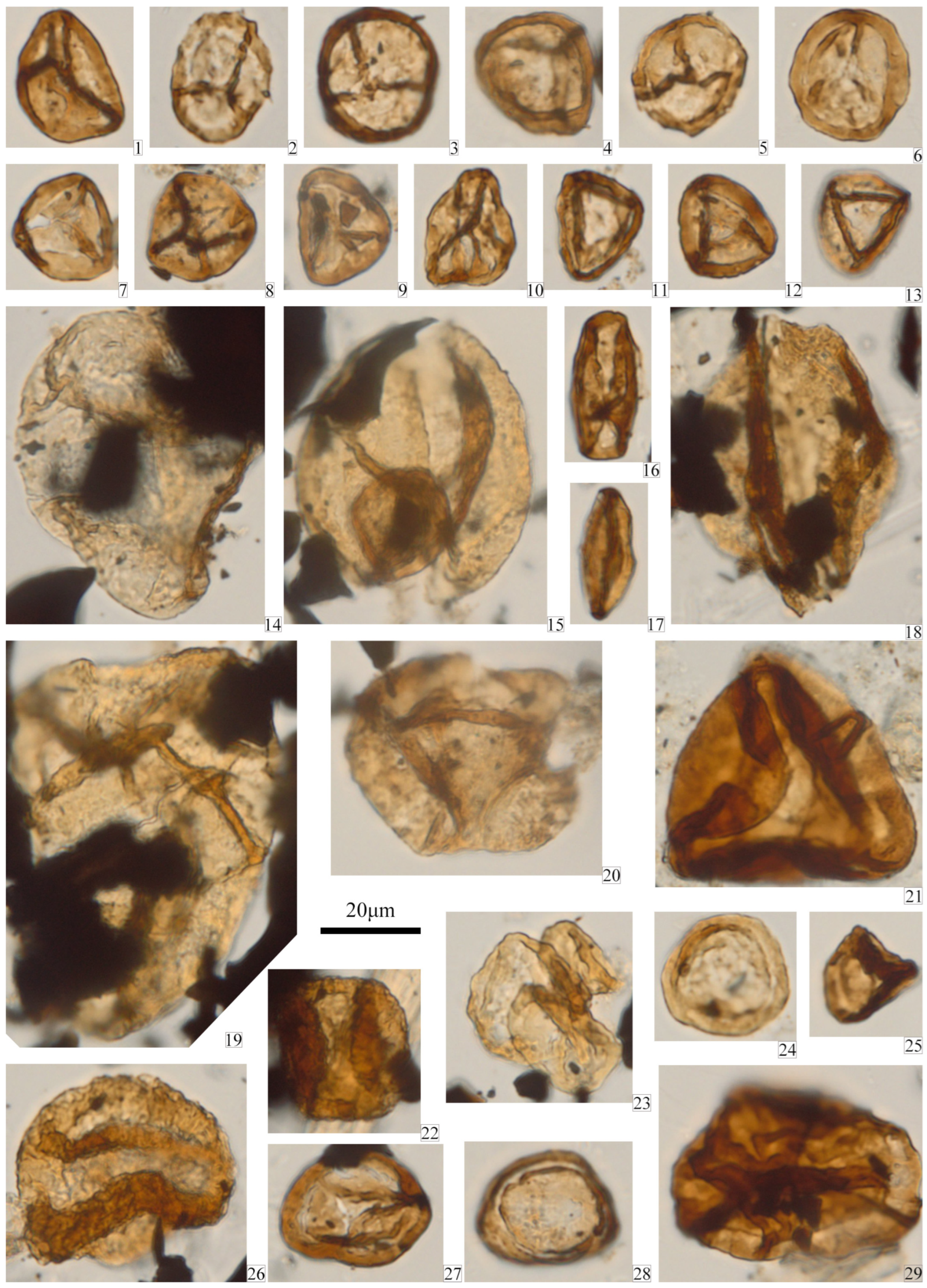
Seven samples from the upper Qingtujing Formation were analyzed. After analysis and identification, it was found that this section has abundant palynomorphs, belonging to 11 genera and 16 species. Among them, six samples with over 100 grains were identified, and the main palynomorph types and genera are shown in Figure 7.
The palynological composition is predominantly gymnosperm pollen (97.3–99.4%, with an average of 98.4%), while fern spores were only seen in small quantities (0.6–2.7%, with an average of 1.6%), and no angiosperm pollen was found. The dominant type of gymnosperm pollen was Classopollis (70.7–87.7%, with an average of 75.5%), mainly including Classopollis annulatus (16.7–57.9%, with an average of 33.1%), Classopollis qiyangensis (14.6–34.7%, with an average of 25.4%), Classopollis granulatus (0–18.1%, with an average of 9.5%), and Classopollis triangulus (0–13.1%, with an average of 7.5%). Disaccates was also present, including Pseudopinus oblatinoides (0–12.0%, with an average of 6.4%), Quadraeculina limbata (0–8.9%, with an average of 5.1%), Quadraeculina minor (1.8–6.3%, with an average of 4.1%), Abiespollenites sp. (0–3.4%, with an average of 1.7%), Dacrycarpites priscus (0–2.3%, with an average of 0.9%), Protoconiferus flavus (0–3.5%, with an average of 0.8%), Pseudowalchia sp. (0–1.8%, with an average of 0.6%), and a small amount of Cycadopites minor (0.8–5.3%, with an average of 2.3%), Cycadopites nitidus (0–1.8%, with an average of 0.8%), and Perinopollenites elatoides (0–0.7%, with an average of 0.2%). Spores were scarce, and only Cyathidites and Biretisporites were present. Therefore, the spore composition of the Qingtujing Formation in Well Gao 4 of the Chaoshui Basin is characterized by ClassopollisDisaccites, with gymnosperm Classopollis pollen being absolutely dominant, containing a certain amount of Disaccites subgroups as well as a small amount of Cycadopites, Perinopollenites pollen, and Cyathidites and Biretisporites fern spores.

5. Discussion

5.1. Geological Chronology

5.1.1. Palynostratigraphy of the Lower Part of the Qingtujing Formation

This palynomorph assemblage is characterized by well-developed disaccates of gymnosperm conifers (including primitive conifers with incompletely differentiated disaccates) and monosulcate pollen, the frequent presence of spores of Osmundaceae (Osmundacidites) and the occasional occurrence of relict species. It can be referred to as the Disacciatrileti (with two air sacs)–Cycadopites (Cycadaceae)–Osmundacidites (Osmundaceae) assemblage.
Among the dominant (important) pollen types, disaccate pollen is very abundant, being one of the characteristic pollen assemblages in many regions of China, especially in the northern part during the Early Jurassic and Middle Jurassic. Examples include sporopollen assemblages of the late Early Jurassic in the Fuxian Formation in the Shaanxi–Gansu–Ningxia Basin [35]; in the Early Jurassic Wudanggou Formation of the Shiguai Coalfield, Baotou, Inner Mongolia [36]; in the Early Jurassic Beipiao Formation in western Liaoning [37]; in the Early Jurassic Badaowan Formation and Sangonghe Formation, Junggar Basin in Xinjiang [38]; in the Early Jurassic Yangxia Formation in Baicheng, Xinjiang [39]; and drom the Sangonghe Formation to Xishanyao Formation in the Santanghu Basin in Xinjiang [40]. Therefore, we infer that the geological age of the lower part of the Qingtujing Formation is Early to Middle Jurassic. Additionally, the high content of Cycadopites reflects the appearance of the Jurassic pollen flora in China, especially in the northern region during the Early Jurassic and Middle Jurassic. Types of pollen such as Deltoidospora and Cyathidites, although they appeared in the Mesozoic and Cenozoic as well, are mainly concentrated in the Jurassic strata of the Mesozoic Era. Spores of Osmundaceae (royal ferns) are widely distributed and correspond to a relatively high content in the Early Jurassic and Middle Jurassic pollen assemblages in various regions of China, such as Liaoxi, the Shaanxi–Gansu–Ningxia Basin, the Turpan Basin, the Junggar Basin, Qinghai, and Jiangsu. It often appears as a component of the assemblage. Other types, such as Sciadopityspollenites, Callialasporites, Perinopollenites, and Concentrisporites are limited to strata after the Early Jurassic and are mainly distributed in the Jurassic–Cretaceous strata all over the world.
In addition, scattered relict species of the Triassic and even the Late Paleozoic also occur in the assemblage (including Striatoabieites, Parataenaesporites, Parataenaesporites, and Chordasporites). Existing data indicate that small amounts or individual specimens of such elements are commonly present in Early Jurassic spore–pollen assemblages from many regions across China, such as Early Jurassic palynological assemblages of the Fuxian Formation in the Shaanxi–Gansu–Ningxia Basin, the Badaowan Formation and Sangonghe Formation in the Junggar Basin, the Yangxia Formation in Baicheng in Xinjiang, the lower part of the Xiangxi Formation in western Hubei, the Zaoshang Formation in the Hunan–Jiangxi area, and the Turpan–Hami Basin in Xinjiang ang Jurong and other places in Jiangsu Province [41]. These relict species vanish entirely within palynological assemblages of the Middle Jurassic. Comprehensively, taking the stratigraphic ranges of dominant genera and species of this palynological assemblage into consideration, we propose that the geological age indicated by the studied palynological assemblage is the early Middle Jurassic.

5.1.2. Palynostratigraphy of the Upper Part of the Qingtujing Formation

This pollen assemblage is characterized by ClassopollisDisaccites. No Triassic relict species, such as Aratrisporites, Chordasporites, Protohaploxypinus, Striatopodocarpites, or Taeninaesporites, were observed. The presence of Triassic relict species is usually an important basis for determining whether a pollen assemblage belongs to the Early Jurassic [42,43]. Nor were any Cretaceous pioneer species observed, such as Cicatricososporites or Trilobosporites [42]. Therefore, the overall features of the spore–pollen assemblage match the typical palynofloral aspect of the Middle to Late Jurassic.
The main characteristic of this sporopollen assemblage is the high abundance of Classopollis pollen. Among the pollen identified, Classopollis annulatus (16.7–57.9%) and Classopollis qiyangensis (14.6–34.7%) are abundant, while Classopollis granulatus (0–18.1%) and Classopollis triangulus (0–13.1%) are relatively abundant. The dominant type, Classopollis in this section appeared in the Triassic–Paleocene, mainly flourishing in the Early Jurassic to Early Cretaceous [33]. The pollen content of Classopollis in the northern regions of China had two peak periods during the Jurassic, with a small peak in the late Early Jurassic, followed by a significant decline, and then the content increased again in late Middle Jurassic, reaching a peak at the end of the Middle Jurassic, and this second peak lasted until the early Late Jurassic [33,44,45,46]. Classopollis pollen is an important fossil genus with respect to dividing geological periods in the Mesozoic era. The average content of Classopollis pollen in this assemblage is above 70%. In the Aalenian–Bathonian stages of the Middle Jurassic in the regions of Inner Mongolia, Gansu Province, and Qinghai Province, Classopollis pollen was occasionally present, and the pollen content of Classopollis in the Callovian stages was generally above 50%, and it accounted for an absolute majority in the Oxfordian of the Late Jurassic [44]. In addition, disaccate pollen is also present, with Quadraeculina pollen (1.8–13.9%) generally distributed in the Triassic to Early Cretaceous, but it is relatively common in Middle–Late Jurassic strata [33,47]. Other species are less abundant. Perinopollenites is mainly distributed in Jurassic–Cretaceous strata of various regions around the world, but it mainly appears in the Lower–Middle Jurassic. The genus Cyathidites (Cyatheaceae) is common in Mesozoic and Cenozoic strata worldwide, but it is mainly distributed in the Jurassic strata. Therefore, based on the pollen content of Classopollis in this assemblage, it can be inferred that the geological age of the Well Gao 4 in the Chaoshui Basin may be the end of the Middle Jurassic (Callovian)—the early Late Jurassic (Oxfordian).
This pollen assemblage can be compared with the second pollen assemblage zone of Well Meng’edi 1 in the Yin’e Basin. The dominant groups in this pollen assemblage are all Classopollis pollen, and it contains a certain amount of Quadraeculina pollen. There are no residual spores of the Late Triassic, nor are there the prosperous pioneering spores of the Early Cretaceous. The geological age reflected by this pollen assemblage should be the late Middle Jurassic period, roughly equivalent to the Bathonian to Callovian [46]. This assemblage is also similar to the pollen assemblage of the upper part of the Wangjiashan Formation in the Jingyuan area of the North Qilian-Qinhuangdao stratigraphic division. The latter is also dominated by gymnosperm pollen, with the content of Classopollis pollen ranging from 77.8% to 91.1%, while the spore content of ferns is low. The age of the upper part of the Wangjiashan Formation correspond to Callovian stages of the Middle Jurassic [44]. This assemblage is also similar to the second segment of the pollen assemblage of the Tuchengzi Formation in the Qianjiadian Basin in Beijing. The content of Classopollis pollen reaches over 90%, and non-taeniate diaccate pollen and fern spores are very rare. This assemblage’s age corresponds to the early Late Jurassic [48].
In summary, the pollen assemblage of the Qingtujing Formation in Well Gao 4 of the Chaoshui Basin is characterized by ClassopollisDisaccites. There are no Triassic relict species or Cretaceous pioneer species. Instead, common species from the Middle Jurassic and Late Jurassic periods such as Cycadopites, Perinopollenites, Cyathidites, and Biretisporites are present. The geological age reflected by the pollen assemblage is likely the late Middle Jurassic.
By combining the geological ages indicated by the pollen assemblages of the lower and upper parts of the Qingtujing Formation, we determined that the geological age of this formation corresponds to the early to late Middle Jurassic.

5.2. Discussion on Paleoclimate

The Jurassic was a typical greenhouse period in geological history [49], and it was also an important turning point in ancient climate change [10,50,51,52]. Based on the pollen species contained in the strata and the ecological characteristics of their parent plants, via the “Principle of Actualism” method, the ancient vegetation landscape and climate can be reconstructed. We reconstructed the ancient vegetation types in the study area based on the types of vegetation, ecological habits and types of climates corresponding to the parent plants of the Qingtujing Formation in Well 801 and Well Gao4 (Table 1 and Table 2), and inferred the paleoclimate of the period.
The pollen assemblage of the Early Jurassic in the Chaoshui Basin was dominated by gymnosperm pollen, and ferns were subordinate. The primitive conifers with poorly differentiated disaccate pollen was mainly distributed in temperate regions, among which Pinaceae and Podocarpaceae were mainly adapted to humid environments [9], while other coniferous plants were mesophytic. The Taxaceae plants in this sporopollen assemblage also grew in humid environments. Cyatheaceae and Dicksoniaceae inhabited humid tropical and subtropical environments, whereas Osmundaceae and Lycopodiaceae represent eurythermal taxa that also favored moist habitats. Classopollis, whose presence indicates a typical arid climate, is extremely scarce in this pollen assemblage. On the basis of the habitat characteristics of entire fossil plant assemblage, we interpret the climate of the Chaoshui Basin during the early Middle Jurassic as being warm and humid.
In the Late Jurassic in the Chaoshui Basin, the palynoflora was dominated by gymnosperms such as Classopollis and Disaccites. The presence of Classopollis indicates a dry and hot climate. Classopollis is associated with Cheirolepidiaceae under Coniferopsida, serving as a key indicators of hot and arid climates. Generally, an increase in Classopollis pollen content indicates a rise in temperature, and it is widely regarded as a type of drought-resistant vegetation. The parent plants of Classopollis are typically found in warm-temperate arid regions, well-drained mountainous areas, coastal lowlands, and saline–alkali lands [53,54]. The content of Classopollis in this palynofloral assemblage is over 70%, and a pollen content exceeding 50% is generally considered to indicate arid conditions [55]. The parent plants of disaccites are mostly gymnosperms such as conifers or coniferous trees, and they are unlikely to be xerophytes [33,56]. Most ferns prefer shade and humid environments. Among them, Cyathea spinulosa belongs to the Cyatheaceae family and is a woody fern, mostly distributed in humid tropical and subtropical regions, but the content of ferns in this section is very low [9,57]. Therefore, the sporopollen assemblage of the upper section of the Qingtuging Formation in the Chaoshui Basin may reflect a hot and arid climate.
Our observations of the Chaoshui Basin match other studies in the Ordos Basin, Junggar Basin and Qaidam Basin in the northwest region of China. According to plant and sporopollen assemblage in these areas, the climate was deemed to be warm and humid from the Early Jurassic to Middle Jurassic, but from the late Middle Jurassic to the Late Jurassic, the climate heated up and finally shifted towards aridity in the Cretaceous [16,58,59,60]. The main basis for the paleoclimatic speculation is the abundance of Classopollis (Cheirolepidiaceae) pollen. High abundance tends to reflect a dry and hot climate. In previous studies, it was found that the content of Classopollis pollen was higher in the Late Jurassic, generally reaching over 50%; in some areas, it was even 90% or higher [11,61,62,63,64]. From the Turpan–Hami Basin of Xinjiang, the vegetation in the late Middle Jurassic and the Late Jurassic was a combination of Classopollis and Pinuspollenites, with a low diversity of genera and species, and Classopollis pollen was abundant, with the basin presenting a desert landscape corresponding to a hot and dry subtropical climate [65]. Similarly, in the Inner Mongolia, Gansu, and Qinghai regions, the climate during the late Middle Jurassic (Callovian) became relatively hot and arid, a characteristic continuing until the end of the Late Jurassic [44]. As shown in overall climate change of other regions in the northwest region of China [9,52,66], the climate of the Chaoshui Basin during the early to late Middle Jurassic changing from warm and humid to dry and hot.

6. Conclusions

(1) The palynological assemblage from the lower member of the Qingtujing Formation in the Chaoshui Basin is composed of Disacciatrileti (disaccates), Cycadopites, and Osmundacidites. Gymnosperm pollen predominates, followed by fern spores, while Classopollis pollen is relatively rare. The palynological assemblage of the upper member is characterized by the Classopollis–Disaccites assemblage. Gymnosperm pollen of Classopollis is absolutely dominant, along with a moderate content of disaccate pollen, small amount of gymnosperm pollen (including Cycadopites and Perinopollenites), and sparse fern spores represented by Cyathidites and Biretisporites.
(2) According to chronologic correlation of palynological assemblages, the Qingtujing Formation in the Chaoshui Basin is suggested to be deposited from the early to late Middle Jurassic.
(3) According to the ecological habits of the parent plants, we inferred that the climate in the Chaoshui Basin during the early to late Middle Jurassic changed from being warm and humid to dry and hot.

Author Contributions

Conceptualization, W.R.; field sampling, data processing, and measurement, G.D.; writing—original draft preparation, P.N.; writing—review and editing, W.R. All authors contributed suggestions and revised the article. All authors have read and agreed to the published version of the manuscript.

Funding

This research was supported by the National Nature Science Foundation of China (No. 42362003); 1:50,000 Mineral Prospect Survey Project of Three Sheets in the Chounidun-Xixiaokouzi area, Gaotai County, Gansu Province (No. [2017] 64 Document Issued by Land and Resources Exploration of Gansu); Regional Oil and Gas Reconnaissance in the Chounidun area, Zhangye City, Gansu Province (No. 202203-D01).

Data Availability Statement

The data presented in this study are available on request from the corresponding author.

Conflicts of Interest

The authors declare no conflicts of interest.

References

  1. Berner, R.A. GEOCARB II: A revised model of atmospheric CO2 over phanerozoic time. Am. J. Sci. 1994, 294, 56–91. [Google Scholar] [CrossRef] [Scilit]
  2. Handel, M.D.; Risbey, J.S. An annotated bibliography on the greenhouse effect and climate change. Clim. Change 1992, 21, 97–255. [Google Scholar] [CrossRef] [Scilit]
  3. Sun, B.N.; Xiao, L.; Xie, S.P.; Deng, S.H.; Wang, Y.D.; Jia, H.; Turner, S. Stomatal characters of Jurassic-Cretaceous Ginkgo fossils and quantitative reconstruction of paleoatmospheric CO2 concentration in China. Acta Geol. Sin. 2007, 81, 931–939. [Google Scholar] [CrossRef] [Scilit]
  4. Xiao, L.; Li, Y.; Zhou, J.R.; Li, X.C.; Guo, J.F.; He, W.L. Paleoatmospheric CO2 level of the Middle Jurassic in Turpan-Hami Basin, Xinjiang. J. Lanzhou Univ. 2014, 50, 154–160. [Google Scholar]
  5. Xiao, L.; Liang, J.Q.; Guo, L.Y.; Ji, D.S.; Yuan, M.; Li, X.C.; Sun, N.; Li, Z.C. Stable carbon isotopes and stomatal frequency of Middle Jurassic ginkgophyte fossils from the Turpan basin, northwestern China: Implications for reconstructing paleo-CO2 changes. J. Asian Earth Sci. 2024, 259, 105938. [Google Scholar] [CrossRef] [Scilit]
  6. Harris, R.; McCall, R.; Randall, O.; Bin Tawang, M.H.; Williams, R.; Fairman, J.G.; Schultz, D.M. Climate change during the Triassic and Jurassic. Geol. Today 2017, 33, 210–215. [Google Scholar] [CrossRef] [Scilit]
  7. Li, X.X. Floras of Geological Periods in China; Guangdong Science and Technology Press: Guangzhou, China, 1995. [Google Scholar]
  8. Price, G.D. Carbon-isotope stratigraphy and temperature change during the Early-Middle Jurassic (Toarcian-Aalenian), Raasay, Scotland, UK. Palaeogeogr. Palaeoclimatol. Palaeoecol. 2010, 285, 255–263. [Google Scholar] [CrossRef] [Scilit]
  9. Deng, S.H. Paleoclimatic indicative significance of major Mesozoic plant fossils. J. Palaeogeogr. 2007, 9, 559–574. [Google Scholar]
  10. Deng, S.H.; Lu, Y.Z.; Zhao, Y.; Fan, R.; Wang, Y.D.; Yang, X.J.; Li, X.; Sun, B.N. The Jurassic paleoclimate regionalization and evolution of China. Earth Sci. Front. 2017, 24, 106–142. [Google Scholar]
  11. Deng, S.H.; Zhao, Y.; Lu, Y.Z.; Shang, P.; Fan, R.; Li, X.; Dong, S.X.; Liu, L. Plant fossils from the Lower Jurassic coal-bearing formation of central Inner Mongolia of China and their implications for palaeoclimate. Palaeoworld 2017, 26, 279–316. [Google Scholar] [CrossRef] [Scilit]
  12. Li, Y.F.; Wang, H.; Dilcher, D.L.; Bugdaeva, E.; Tan, X.; Li, T.; Na, Y.L.; Sun, C.L. Middle Jurassic Plant Diversity and Climate in the Ordos Basin, China. Paleontol. J. 2019, 53, 1216–1235. [Google Scholar] [CrossRef] [Scilit]
  13. Na, Y.L.; Sun, C.L.; Wang, H.; Dilcher, D.L.; Yang, Z.Y.; Li, T.; Li, Y.F. Insect herbivory and plant defense on ginkgoalean and bennettitalean leaves of the Middle Jurassic Daohugou Flora from Northeast China and their paleoclimatic implications. Palaeoworld 2018, 27, 202–210. [Google Scholar] [CrossRef] [Scilit]
  14. Deng, S.H.; Wang, S.E.; Yang, Z.Y.; Lu, Y.Z.; Li, X.; Hu, Q.Y.; An, C.Z.; Xi, D.P.; Wan, X.Q. Comprehensive study of Middle-Upper Jurassic in Junggar Basin, Xinjiang. Acta Geosci. Sin. 2015, 36, 559–574. [Google Scholar]
  15. Zhang, Y.J.; Yang, Y.J.; Liang, F.; Wu, X.W.; Zhang, C.; Fu, J.Y.; Wang, Y.; Zhang, S.Q.; Liu, M.; Ding, Q.H.; et al. The Middle Jurassic palynoflora and its implication for paleoclimate in the western margin of Longjiang Basin. Geol. Bull. China 2021, 40, 905–919. [Google Scholar]
  16. Yao, Z.Q.; Yu, X.H.; Shan, X.; Li, S.L.; Li, S.L.; Li, Y.L.; Tan, C.P.; Chen, H.L. Braided-meandering system evolution in the rock record: Implications for climate control on the Middle-Upper Jurassic in the southern Junggar Basin, north-west China. Geol. J. 2018, 53, 2710–2731. [Google Scholar] [CrossRef] [Scilit]
  17. Zhang, C.; Yu, X.H.; Yao, Z.Q.; Li, S.L.; Shan, X.; Xiang, M.; Li, Y.L. Sedimentary evolution and controlling factors of the Middle-Upper Jurassic in the western part of the southern Junggar Basin. Geol. China 2021, 48, 284–296. [Google Scholar]
  18. Bai, N.; Xu, S.; Wang, Y.X.; Guo, T.X. Sedimentary facies characteristics and sedimentary evolution model of the seventh member of Dameigou Formation in Yuqa area, northern margin of Qaidam Basin. Northwest. Geol. 2021, 54, 74–85. [Google Scholar]
  19. Ge, L.G.; Chen, Z.H.; Wu, F.D.; Zhang, S.L.; Zhang, Z.H.; Xu, T.L. Sequence stratigraphy and coal accumulation regularity of Jurassic in Chaoshui Basin. Coal Geol. Explor. 1998, 26, 14–18. [Google Scholar]
  20. Zhang, X.J. Discussion on coal-forming law and coal prospecting prospect of Jurassic system in Chaoshui Basin. West-China Explor. Eng. 2010, 12, 111–116. [Google Scholar]
  21. Yang, Y.S.; Zhang, Y.L.; Li, X.R.; Li, Z.W. The Propertiies, Age and Correlattion pf Sporo-pollen Assemblages in Chaoshui Basin. Coal Geol. China 2000, 12, 7–12. [Google Scholar] [CrossRef] [Scilit]
  22. Jiang, F.H.; Wang, W.D.; Lu, H.Y.; Liu, C.F. Jurassic charophytes from Qingtujing Group in Chaoshui Basin. Acta Palaeontol. Sin. 2003, 42, 257–265. [Google Scholar]
  23. Yang, J.; Wang, Z.P.; Wang, H.H. Jurassic ostracod fossils from Well Chaocan 1 in the Chaoshuibasin, Gansu, NW China. Acta Micropalaeontol. Sin. 2003, 20, 303–308. [Google Scholar]
  24. Wang, S.; Zhang, M.Z.; Li, A.J.; Zhang, J.; Du, Z.; Du, B.X.; Ji, L.M.; Zhang, X.W. Organic geochemical characteristics of Qingtujing Formation coal-measuresource rocks in the Chaoshui Basin and Minhe Basin, and their hydrocarbon-generation significances. Nat. Gas. Geosci. 2020, 31, 282–294. [Google Scholar]
  25. Zuo, G.C.; Liu, Y.K.; Liu, C.Y. Framework and evolution of the tectonic structure in Beishan area across Gansu Province, Xinjiang Autonomous Region and Inner Mongolia Autonomous Region. Acta Geol. Gansu 2003, 12, 1–15. [Google Scholar]
  26. Wu, Q.; Wang, G.; Niu, T.; Guo, W.; Yang, B.B.; Cao, L.; Ye, F.W.; Tong, Q.L.; Li, X.C. Structural evolution and uranium metallogenetic process in western Chaoshui Basin. Uranium Geol. 2022, 38, 1070–1083. [Google Scholar]
  27. Gao, L.B.; Liu, L. Tectonic evolution characteristics and its relationship with sandstone-type uranium mineralization on the northern margin of Chaoshui Basin. Northwest Uranium Geol. 2006, 32, 13–17. [Google Scholar]
  28. Zhang, L.; Zhong, J.H.; Zhong, F.P.; Gao, Y.F. Jurassic sedimentary system and basin evolution in Chaoshui Basin. Fault-Block Oil Gas. Field 2009, 16, 1–15. [Google Scholar]
  29. Zhao, H.B.; He, X.R.; Wang, X.Y.; Gu, D.H. Structural characteristics of Chaoshui Basin. Lithol. Reserv. 2013, 25, 36–40. [Google Scholar]
  30. Faegri, K.; Kaland, P.E.; Krzywinski, K. Textbook of Pollen Analysis; John Wiley & Sons Ltd.: Chichester, UK, 1989; pp. 69–89. [Google Scholar]
  31. Institute of Botany; Chinese Academy of Sciences (Palynology Group). Sporae Pteridophytorum Siniorum; Science Press: Beijing, China, 1976. [Google Scholar]
  32. Institute of Botany; Chinese Academy of Sciences (Palynology Group). Pollen Flora of China; Science Press: Beijing, China, 1960. [Google Scholar]
  33. Song, Z.C.; Shang, Y.K. Fossil spores and pollen of China. In Mesozoic Spores and Pollen; Science Press: Beijing, China, 2000; Volume 2. [Google Scholar]
  34. Gravendyck, J.; Coiffard, C.; Bachelier, J.B.; Kürschner, W. Re-evaluation of Cerebropollenites thiergartii Eberh. Schulz 1967 and related taxa: Priority of Sciadopitys pollenites and nomenclatural novelties. Grana 2023, 62, 1–47. [Google Scholar] [CrossRef] [Scilit]
  35. Wei, Y.; Nan, Q.M.; Yang, B.; Zhang, X.Z.; Sun, S.Y.; Su, G.F. Palynoflora from the Lower Jurassic Fuxian Formation in Ordos basin and its response to the Jenkyns event. Acta Geol. Sin. 2024, 98, 3017–3030. [Google Scholar] [CrossRef] [Scilit]
  36. Liu, Z.S. Early and Middle Jurassic Sporopollen Assemblages from the Shiguai Coalfield, Baotou, Inner Mongolia. Acta Palaeontol. Sin. 1982, 21, 371–379. [Google Scholar] [CrossRef] [Scilit]
  37. Zhang, Y.; Pei, C.R.; Sun, S.L.; Wan, C.B.; Sun, Y.W. Palynological Assemblage of Beipiao Formation in Well SZK01, Jinyang Basin, Western Liaoning and Its Geological Significance. Pet. Geol. Oilfield Dev. Daqing 2022, 41, 13–22. [Google Scholar]
  38. Huang, P. Sporopollen Assemblages from the Xiaoquangou Group and the Badaowan Formation at the Shichang Section in the Junggar Basin, Xinjiang. Acta Micropalaeontol. 2019, 36, 251–280. [Google Scholar]
  39. Zhang, W.P.; Li, Y.A. Sporopollen Assemblages of the Ahe, Yengisar and Kezilenuer Formations in Beicheng County, Xinjiang. Xinjiang Geol. 1990, 8, 256–271. [Google Scholar]
  40. Aliya, A.; Xiao, J.N.; Shi, T.M.; Weng, Y.X. Mesozoic Sporopollen Assemblages from Well Shimo-1 in Junggar Basin and Their Stratigraphic Significance. Xinjiang Pet. Geol. 2018, 39, 140–150. [Google Scholar]
  41. Yang, X.Y. Sporopollen Assemblage, Spore Color Index and Organic Matter Type of Upper Permian Longtan Formation in Jurong, Jiangsu. Acta Micropalaeontol. Sin. 2002, 3, 309–315. [Google Scholar]
  42. Huang, P.; Li, J.G. Palynological assemblages and stratigraphic significance of Xishanyao and Toutunhe Formations in Honggou section, Manas River, Xinjiang. Acta Micropalaeontol. Sin. 2000, 17, 170–193. [Google Scholar]
  43. Chi, J.Q.; Jin, J.; Xiao, J.N.; Luo, Z.J.; Shi, T.M.; Aliya; Zhou, X.H.; Xu, S.S.; Feng, T. Palynological assemblage and its paleoclimatic significance of Xishanyao Formation in Sikeshu area, southwestern margin of Junggar Basin. Geol. Rev. 2022, 68, 69–79. [Google Scholar]
  44. Yan, C.F.; Yuan, J.Y.; Zhao, Y.C.; Wei, D.T.; Li, Z.G. Jurassic spora pollen assemblages and paleoclimate in Inner Mongolia, Gansu, Qinghai, China. Nat. Gas. Geosci. 2006, 17, 634–639. [Google Scholar]
  45. Jiang, D.X.; Wang, Y.D.; He, Z.S.; Dong, K.L. Middle Jurassic palynoflora from Targa Formation in Tarim Basin, Xinjiang and its stratigraphic and paleogeographic implications. Acta Micropalaeontol. Sin. 2008, 25, 333–344. [Google Scholar]
  46. Li, S.P.; Liu, Y.Q.; Kuang, H.W.; Peng, N.; Jia, J.L.; Wang, T. Jurassic palynoflora and its stratigraphic and chronological significance in Yingen-Ejina Basin. Acta Geol. Sin. 2021, 95, 1382–1399. [Google Scholar] [CrossRef] [Scilit]
  47. Srivastava, S.K. Jurassic spore-pollen assemblages from Normandy (France) and Germany. Geobios 1987, 20, 5–79. [Google Scholar] [CrossRef] [Scilit]
  48. He, J.R.; Nan, Y.; Hao, C.Y.; Song, Q.W.; Jiao, R.C.; Li, L.J.; Ran, S.H.; Cheng, S.Z.; Wu, J.Y. Palynological assemblage, age and paleoclimate of Tuchengzi Formation in Qianjiadian Basin, Beijing. Geol. Bull. China 2020, 39, 1573–1579. [Google Scholar]
  49. Lenton, T.M.; Daines, S.J.; Mills, B.J.W. COPSE reloaded: An improved model of biogeochemical cycling over Phanerozoic time. Earth-Sci. Rev. 2018, 178, 1–28. [Google Scholar] [CrossRef] [Scilit]
  50. Sellwood, B.W.; Valdes, P.J. Jurassic climates. Proc. Geol. Assoc. 2008, 119, 5–17. [Google Scholar] [CrossRef] [Scilit]
  51. Dera, G.; Brigaud, B.; Monna, F.; Laffont, R.; Pucéat, E.; Deconinck, J.F.; Pellenard, P.; Joachimski, M.M.; Durlet, C. Climatic ups and downs in a disturbed Jurassic world. Geology 2011, 39, 215–218. [Google Scholar] [CrossRef] [Scilit]
  52. Zhang, L.; Yi, J.J.; Li, W.T.; Jiang, T.; Lei, X.T.; Wang, T.; Deng, L.T. Response of palynological flora in Yangye Formation to Aalenian-Bajocian cooling event from the Tarim basin, Xinjiang. Acta Geol. Sin. 2026, 100, 1262–1271. [Google Scholar]
  53. Heimhofer, U.; Adatte, T.; Hochuli, I.P.A.; Burla, S.; Weissert, H. Coastal sediments from the Algarve: Low-latitude climate archive for the Aptian-Albian. Int. J. Earth Sci. 2008, 97, 785–797. [Google Scholar]
  54. Mendes, M.M.; Dinis, J.L.; Gomez, B.; Pais, J. Reassessment of the cheirolepidiaceous conifer Frenelopsis teixeirae Alvin et Pais from the Early Cretaceous (Hauterivian) of Portugal and palaeoenvironment considerations. Rev. Palaeobot. Palynol. 2010, 161, 30–42. [Google Scholar] [CrossRef] [Scilit]
  55. Huang, P. Discovery of Middle Jurassic palynological assemblage from Beixiangshan area, Nanjing. Acta Micropalaeontol. Sin. 2000, 17, 457–469. [Google Scholar]
  56. Abbink, O.A.; Van Konijnenburg-Van Cittert, J.H.A.; Visscher, H. A sporomorph ecogroup model for the Northwest European Jurassic-Lower Cretaceous: Concepts and framework. Neth. J. Geosci. 2004, 83, 17–31. [Google Scholar] [CrossRef] [Scilit]
  57. Xin, C.L.; Wang, L.; Du, B.X.; Zhang, Y.; Wang, J. Cuticles and spores in situ of Coniopteris hymenophylloides from the Middle Jurassic in Gansu, northwestern China. Acta Geol. Sin. 2018, 92, 904–914. [Google Scholar] [CrossRef] [Scilit]
  58. Fu, J.H. Geological Events and Their Significance in the Subdivision and Correlation of the Continental Jurassic in Northwest China. Acta Sedimentol. Sin. 1998, 16, 147–152. [Google Scholar]
  59. Zhang, Z.H.; Wang, C.S.; Lv, D.W.; Hay, W.W.; Wang, T.T.; Cao, S. Precession-scale climate forcing of peatland wildfires during the early middle Jurassic greenhouse period. Glob. Planet. Change 2020, 184, 103051. [Google Scholar] [CrossRef] [Scilit]
  60. Wang, Y.X.; Xu, S.; Hao, F.; Poulton, S.W.; Zhang, Y.Y.; Guo, T.X.; Lu, Y.B.; Bai, N. Arid climate disturbance and the development of salinized lacustrine oil shale in the Middle Jurassic Dameigou Formation, Qaidam Basin, northwestern China. Palaeogeogr. Palaeoclimatol. Palaeoecol. 2021, 577, 110533. [Google Scholar] [CrossRef] [Scilit]
  61. Du, X.J. Jurassic Plant Fossil Assemblages Characteristics and Paleoclimatic Evolution Indication in Northern China. Master’s Thesis, China University of Geosciences, Beijing, China, 2015. [Google Scholar]
  62. Morin, J.; Jolivet, M.; Robin, C.; Heilbronn, G.; Barrier, L.; Bourquin, S.; Jia, Y.Y. Jurassic paleogeography of the Tian Shan: An evolution driven by far-field tectonics and climate. Earth-Sci. Rev. 2018, 187, 286–313. [Google Scholar] [CrossRef] [Scilit]
  63. Yi, Z.; Liu, Y.; Meert, J. GA true polar wander trigger for the Great Jurassic East Asian Aridification. Geology 2019, 47, 1112–1116. [Google Scholar] [CrossRef] [Scilit]
  64. Jiao, Y.Q.; Wu, L.Q.; Rong, H.; Zhang, F. Coal accumulation regularity, paleoclimate and uranium metallogenic environmental implications of Zhiluo Formation in Ordos Basin. J. China Coal Soc. 2021, 46, 2331–2345. [Google Scholar]
  65. Zhang, D.S.; Fu, G.B.; Qin, E.P.; Hou, Q.Z.; Li, X.L. Discussion on Jurassic paleovegetation, paleoclimate and paleoenvironment in the Tuha Basin in Xinjiang. Geoscience 2002, 16, 147–152. [Google Scholar]
  66. Huang, L.; Zhang, X.J.; Li, G.Z.; Ji, X.K.; Han, X.; Wang, Z.Y.; Liu, Z.Q.; Hou, Z.M.; Ai, Z.H. Sporopollen assemblage from the Middle Jurassic of the northeastern Ordos basin, Inner Mongolia, and their paleoclimatic implications. Acta Geol. Sin. 2023, 97, 1390–1406. [Google Scholar]
Figure 1. Regional geological map and stratigraphic columnar diagram of the sporopollen collection area in the Chaoshui Basin. (A) Regional geological map of the collection area with fossil site and (B) stratigraphic column diagram.
Diversity 18 00439 g001
Figure 2. The main spore types (with a scale of 20 μm) in the lower part of the Qingtujing Formation of Well 801 in the Chaoshui Basin. 1, 2, 9, 12. Osmundacidites parvus; 3, 11. Osmundacidites elegans; 4, 8. Lycopodiumsporites tenellus; 5. Cibotiumspora sp.; 6. Osmundacidites senectus; 7. Sciadopityspollenites macroverrucosus; 10. Verrucosisporites sp.; 13. Lycopodiumsporites subrotundum.
Diversity 18 00439 g002
Figure 3. The main spore types (with a scale of 20 μm) in the lower part of the Qingtujing Formation of Well 801 in the Chaoshui Basin. 1. Cycadopites coxii; 2. Cycadopites praeacuta; 3. Cycadopites sp.; 4. Cycadopites acerrimus; 5. Cycadipites nitidus; 6. Cycadopites fragilis; 7–9. Cycadipites subgranulosus; 10, 14, 18. Concentrisporites fragilis; 11, 12. Chasmatosporites elegans; 13, 17. Chasmatosporites apertus; 15, 16. Chasmatosporites minor; 19, 21. Chasmatosporites hians; 20. Perinopollenites sp.
Diversity 18 00439 g003
Figure 4. The main spore types (with a scale of 30 μm) in the lower part of the Qingtujing Formation of Well 801 in the Chaoshui Basin. 1, 3, 7. Podocarpidites spp.; 2. Abietineae/Pinuspollenites spp.; 4. Cycadopites sp.; 5. Sciadopityspollenites mesozoicus; 6. Sciadopityspollenites carlyensis; 8. Sciadopityspollenites papilloporus.
Diversity 18 00439 g004
Figure 5. The main spore types (with a scale of 20 μm) in the lower part of the Qingtujing Formation of Well 801 in the Chaoshui Basin. 1. Psophosphaera minor; 2, 3. Quadraeculina anellaeformis; 4, 6, 7. Parataenaesporites spp.; 5. Chordasporites sp.; 8, 11, 12. Cycadopites spp.; 9. Piceaepollenites complanatiformis; 10, 13. Abiespollenites spp.
Diversity 18 00439 g005
Figure 6. 1, 9. Piceites expositus; 2. Protopinus subluteus; 3, 8. Protoconiferus oviformis; 4, 6. Protopinus vastus; 5. Protoconiferus funarius; 7. Piceites cf. podocarpoides.
Diversity 18 00439 g006
Figure 7. The main spore types of the upper section of the Qingtujing Formation in Well Gao4 of the Chaoshui Basin (all scales are 20 μm). 1–10. Classopollis qiyangensis; 11–13. Classopollis triangulus; 14. Abiespollenites sp.; 15. Perinopollenites elatoides; 16. Cycadopites nitidus; 17. Cycadopites minor; 18. Pseudopinus oblatinoides; 19. Pseudowalchia sp.; 20. Dacrycarpites priscus; 21. Cyathidites australis; 22. Quadraeculina minor; 23–25. Cyathidites australis; 26. Quadraeculina limbate; 27, 28. Classopollis granulatus; 29. Protoconiferus flavus.
Diversity 18 00439 g007
Table 1. The habitat of the parent plants of the main spore fossils of the Qingtujing Formation in the Early Jurassic of Well 801 in the Chaoshui Basin.
Genus and Species of PollenContent (%)Parent PlantEcological HabitClimate Type
gymnosperm79.3–84.1%
Coniferopsida30.5–66.5%
Abietineae/Pinuspollenites Pinusmesophytetropic-temperate
Piceaepollenites Piceahygrophytetemperate
Podocarpidites Podocarpushygrophytetropic-temperate
Protopinus Pinaceaemesophytetropic-temperate
Cycadopsida5.5–37.4%
Cycadopites Cycadaceaemesophytetropic
-temperate
Chasmatosporites Cycadaceaemesophytetropic-temperate
Taxodiaceae5.4–6.2%
Perinopollenites Taxodiaceaehygrophytetemperate
Concentrisporites Taxodiaceaehygrophytetemperate
Araucariaceae<1%
Callialasporites Araucariaceaemesophytetropic, subtropics
Cheirolepidiaceae<1%
Classopollis Cheirolepidiaceaexerophytetropic, subtropics
pteridophyte
Osmundacidites8.95–11.82%Osmundaceaehygrophytetemperate
Cyathidites2.46–3.11%Cyatheaceaehygrophytetropic, subtropics
Cibotiumspora<2%Dicksoniaceaehygrophytetropic-temperate
Torisporis<2%lygodiaceaehygrophytetropic, subtropics
Lycopodiumsporites<1%Lycopodiaceaehygrophytetemperate
Table 2. The habitat of the parent plants of the main pollen fossils of the late Middle Jurassic Qingtujing Formation in Well Gao 4, Chaoshui Basin.
Genus and Species of PollenContent (%)Parent PlantEcological HabitClimate Type
gymnosperm97.3–99.4%
Classopollis70.7–87.7%Cheirolepidiaceaexerophytetropic, subtropics
Quadraeculina1.8–13.9%Conifersmesophyte–hygrophytetemperate
Pseudopinus0–12.0%Voltziales?mesophyte–hygrophytetemperate
Abiespollenites0–3.4%Pinaceaemesophyte–hygrophytetropic-temperate
Dacrycarpites0–2.3%Podocarpaceaemesophyte–hygrophytetemperate
Protoconiferus0–3.5%Voltziales?mesophyte–hygrophytetemperate
Pseudowalchia0–1.8%Voltziales?mesophyte–hygrophytetemperate
Cycadopites0.8–5.3%Cycadaceaemesophyte–hygrophytetropic-temperate
Perinopollenites0–0.7%Cupressaceaemesophyte–hygrophytetemperate
pteridophyte0.6–2.7%
Cyathidites0–2.0%Cyatheaceaehygrophytetropic, subtropics
Biretisporites0–1.2%Hymenophyllaceae?Helophytetropic-temperate
Disclaimer/Publisher’s Note: The statements, opinions and data contained in all publications are solely those of the individual author(s) and contributor(s) and not of MDPI and/or the editor(s). MDPI and/or the editor(s) disclaim responsibility for any injury to people or property resulting from any ideas, methods, instructions or products referred to in the content.