Article

Comparative Study of the Composition and Function of Endosymbiont Communities in Two Tea Plantation Planthoppers


Research Center of Buckwheat Industry Technology, College of Life Science, Guizhou Normal University, Guiyang 550025, China
Diversity 2026, 18(7), 407; https://doi.org/10.3390/d18070407 (registering DOI)
Submission received: 29 May 2026 / Revised: 29 June 2026 / Accepted: 1 July 2026 / Published: 2 July 2026
(This article belongs to the Section Microbial Diversity and Culture Collections)

Abstract

The planthopper pests Geisha distinctissima and Ricanula fujianensis are major threats to tea plantations. Although insect endosymbionts are functionally important, their communities in these pests are poorly understood. This study, conducted in the representative tea-growing region of Guiyang in southwestern China, employed high-throughput sequencing to analyze the bacterial and fungal endosymbionts of both species. We found that bacterial communities were dominated by Proteobacteria and Firmicutes, with core genera such as Enterobacter and Rickettsia showing significant interspecific variation. Fungal communities were primarily composed of Ascomycota and Basidiomycota, and key genera like Fusarium exhibited host-specific patterns. Most notably, we discovered an intriguing pattern: bacterial communities differed in structure but showed conserved predicted functions, whereas fungal communities were structurally similar yet functionally divergent. This suggests that bacterial symbionts may underpin core physiological stability, while fungal symbionts could act as key drivers of host-specific adaptation. These results provide critical insights into planthopper–microbe interactions and establish a theoretical basis for developing targeted, microbiome-based pest management strategies.

1. Introduction

The tea planthoppers Geisha distinctissima (Walker, 1858) (family Flatidae) and Ricanula fujianensis Ren, Stroiński & Qin, 2016 (family Ricaniidae) are members of the superfamily Fulgoroidea (suborder Auchenorrhyncha, Hemiptera). Within this superfamily, over 20 species are recognized as tea pests, with the families Ricaniidae and Flatidae containing the most significant representatives [1]. These piercing–sucking insects, which have broad host ranges, inflict damage through multiple pathways: direct feeding, oviposition, secretion of metabolites, and plant virus transmission [2,3,4,5,6,7]. Furthermore, the gregarious behavior of many species often leads to severe outbreaks, amplifying their economic impact.
Historically, planthopper research has centered on their morphology, molecular phylogenetics, and biological control [8,9,10]. Beyond these classical domains, insects ubiquitously host diverse endosymbiotic microorganisms. These microbial partners are recognized for performing vital functions, including nutrient provisioning, immune enhancement, pathogen defense, toxin detoxification, and pesticide resistance [11,12,13]. Current knowledge of endosymbiotic communities within Fulgoromorpha planthoppers, while advancing, is largely derived from a limited number of lineages, with the family Delphacidae being the most extensively studied. A representative example comes from microbiome analyses of the Laodelphax striatellus (Fallén, 1826) and Sogatella furcifera (Horváth, 1899). These studies revealed that their bacterial communities are highly variable, shaped by species, sex, tissue (gut versus reproductive organs), and environment. Dominant bacterial lineages include Wolbachia, Cardinium, Rickettsia, and Pantoea. In contrast, the fungal communities showed no significant variation between sexes but were more abundant and diverse in the gut, where genera such as Sarocladium, Alternaria, Malassezia, Aspergillus and Curvularia predominated. Notably, bacterial and fungal assemblages were not strongly correlated. Instead, the fungal microbiome appeared to be more closely associated with plant-derived symbionts or pathogens in Delphacidae [14]. Furthermore, specific studies have elucidated the functional roles of individual endosymbionts. For example, antibiotic treatment alters the bacterial community structure across different tissues in L. striatellus [15], Wolbachia influences host fecundity in L. striatellus [16], and infection by Cardinium or Wolbachia (either individually or as a co-infection) reshapes the microbiome and metabolome of S. furcifera, thereby affecting its reproductive output [17]. Additionally, endosymbiotic fungi in Delphacodes kuscheli Fennah, 1955 have been shown to encode key metabolic genes for the host, involved in essential amino acid synthesis, nitrogen cycling, and steroid biosynthesis [18]. Concurrently, the transmission mechanisms of certain endosymbionts in families such as Delphacidae (Delphacoidea), Cixiidae, Tropiduchidae, and Dictyopharidae (all Fulgoroidea) have been preliminarily characterized [18,19,20,21,22,23,24,25,26,27]. Nevertheless, current research remains heavily focused on a few agricultural pest groups like Delphacidae, leaving the endosymbionts of numerous other fulgoromorphan lineages—particularly those commonly found in tea plantation ecosystems—largely understudied.
This study employed 16S rRNA and ITS amplicon sequencing to analyze the community structure and function of endosymbionts in two tea planthoppers (G. distinctissima and R. fujianensis) from tea plantations in central Guizhou Province, aiming to provide reference information for the control of these pests.

2. Materials and Methods

2.1. Sample Collection and Identification

Adults of G. distinctissima and R. fujianensis were collected from tea plantations at Yangai Farm in Pingba District, Guiyang City, Guizhou Province, China (coordinates: 26.3814142° N, 106.5206675° E; elevation: 1347.63 m). The site was selected based on historical records documenting the occurrence of G. distinctissima in this area [2] and preliminary field surveys confirming active populations of both target species. It represents a typical tea plantation ecosystem in southwestern China. Sampling was conducted in July 2025, during the vigorous growth stage of the tea plants (cultivar: Shilixiang). Specimens were captured using a 38 cm diameter insect sweep net by sweeping across the tea plant canopy. Species identification was performed morphologically with reference to established taxonomic keys [28,29].

2.2. Sample Processing

A total of 15 adult individuals of G. distinctissima and 15 adult individuals of R. fujianensis were used for this analysis. Prior to analysis, all planthopper specimens underwent a 48 h fasting period under ambient laboratory conditions (approximately 25 °C, natural photoperiod) without food to clear transient dietary microbes and standardize gut contents. No additional laboratory rearing or feeding was conducted, as the insects were processed immediately after the fasting period. Each whole insect was then surface-sterilized by sequential immersion in 75% ethanol (1 min) and 1% sodium hypochlorite (3 min), with three sterile-water washes after each step. After the final rinse, individual samples were transferred to sterile 2 mL centrifuge tubes, homogenized using a cryogenic grinder, and stored at −80 °C.

2.3. DNA Extraction, Amplicon Sequencing and Bioinformatic Analysis

Total DNA was extracted from homogenized samples and amplified via PCR. For bacteria, the V3–V4 region of the 16S rRNA gene was targeted using primers 338F (5′-ACTCCTACGGGAGGCAGCA-3′) and 806R (5′-GGACTACHVGGGTWTCTAAT-3′). For fungi, the ITS1 region was amplified using the primer pair ITS1 (5′-CTTGGTCATTTAGAGGAAGTAA-3′) and ITS2 (5′-GCTGCGTTCTTCATCGATGC-3′) [30]. After purification and quality control, the amplicons were subjected to high-throughput sequencing on an Illumina NovaSeq 6000 platform (Illumina Inc.San Diego, CA, USA) by Biomarker Technologies Co. (Beijing, China). Raw paired-end reads were quality-filtered with Trimmomatic 0.33 and trimmed of primers using Cutadapt 1.9.1 (maximum mismatch 20%, minimum coverage 80%). Reads were then merged with Usearch 10 (min. overlap 10 bp, overlap similarity 90%, max. mismatches 5 bp), and chimeras were removed with UCHIME 8.1. High-quality sequences were denoised with the DADA2 plugin in QIIME2 to generate amplicon sequence variants (ASVs), which were finally filtered at a 0.005% abundance threshold. and the raw sequence data have been deposited in the NCBI Sequence Read Archive (SRA) under BioProject accession number PRJNA1384430.
High-throughput sequencing of the bacterial 16S rRNA V3–V4 region across six samples generated 409,456 raw reads, yielding 378,421 high-quality reads that were clustered into 1198 ASVs. For fungi, ITS1 sequencing produced 480,026 raw reads, from which 325,739 high-quality reads were derived, forming 1626 ASVs. Bacterial and fungal ASVs were taxonomically classified against the SILVA 138 and UNITE 8.0 databases, respectively, at a 70% confidence threshold. Functional profiles were predicted using PICRUSt2(version 2.1.0-b) for bacteria [31] and FUNGuild (version 1.0)for fungi [32].

2.4. Date Analyses

Statistical analysis of endosymbiont data was implemented through an integrated analytical workflow. The ggpubr and vegan packages in R 4.3.2 facilitated nonparametric Wilcoxon rank-sum testing and principal coordinates analysis (PCoA). Normality assessment and comparative analyses were executed in SPSS 26.0, while GraphPad Prism 9.0 enabled comprehensive visualization of microbial composition, functional attributes, and diversity patterns.

3. Results

3.1. Endosymbiont Composition and Diversity

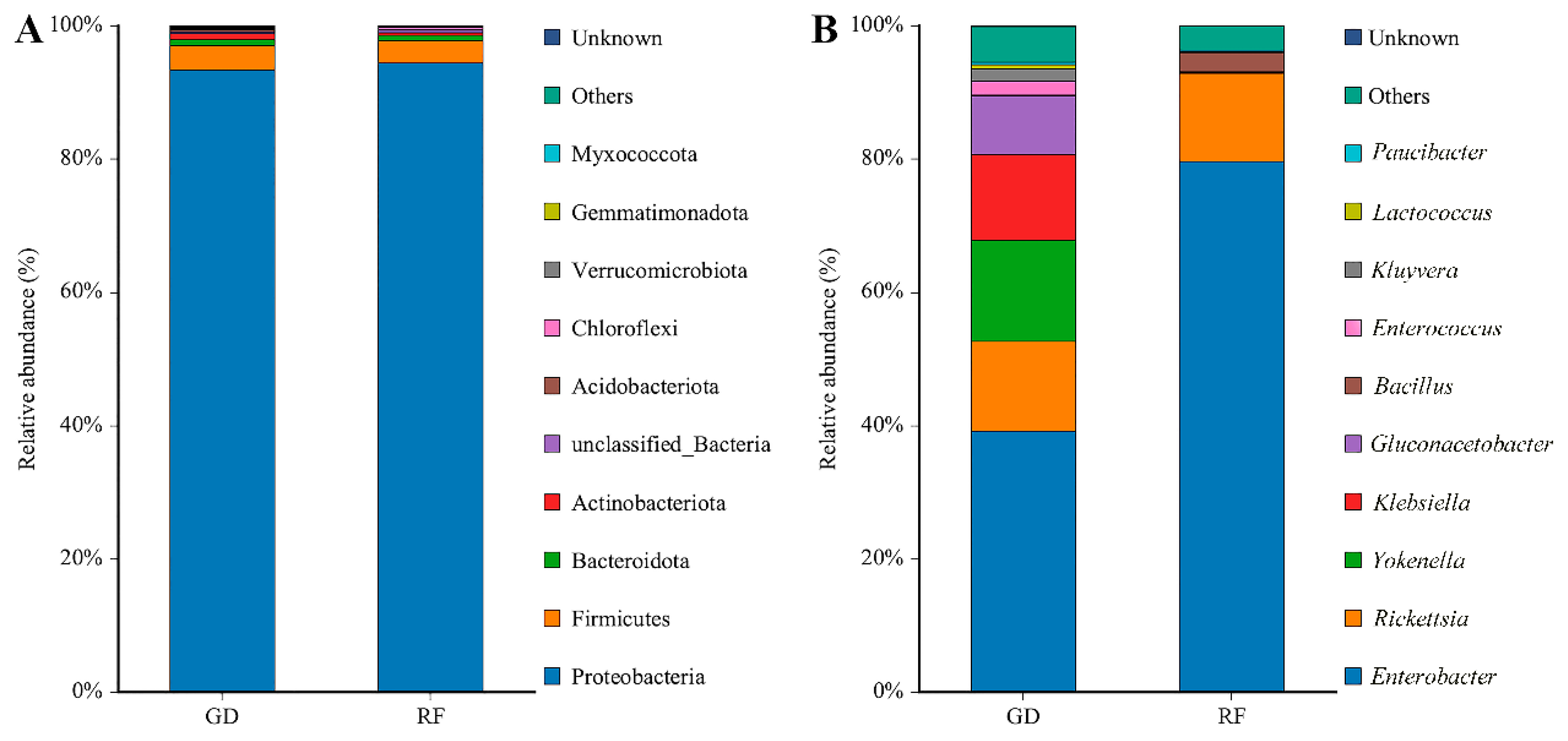
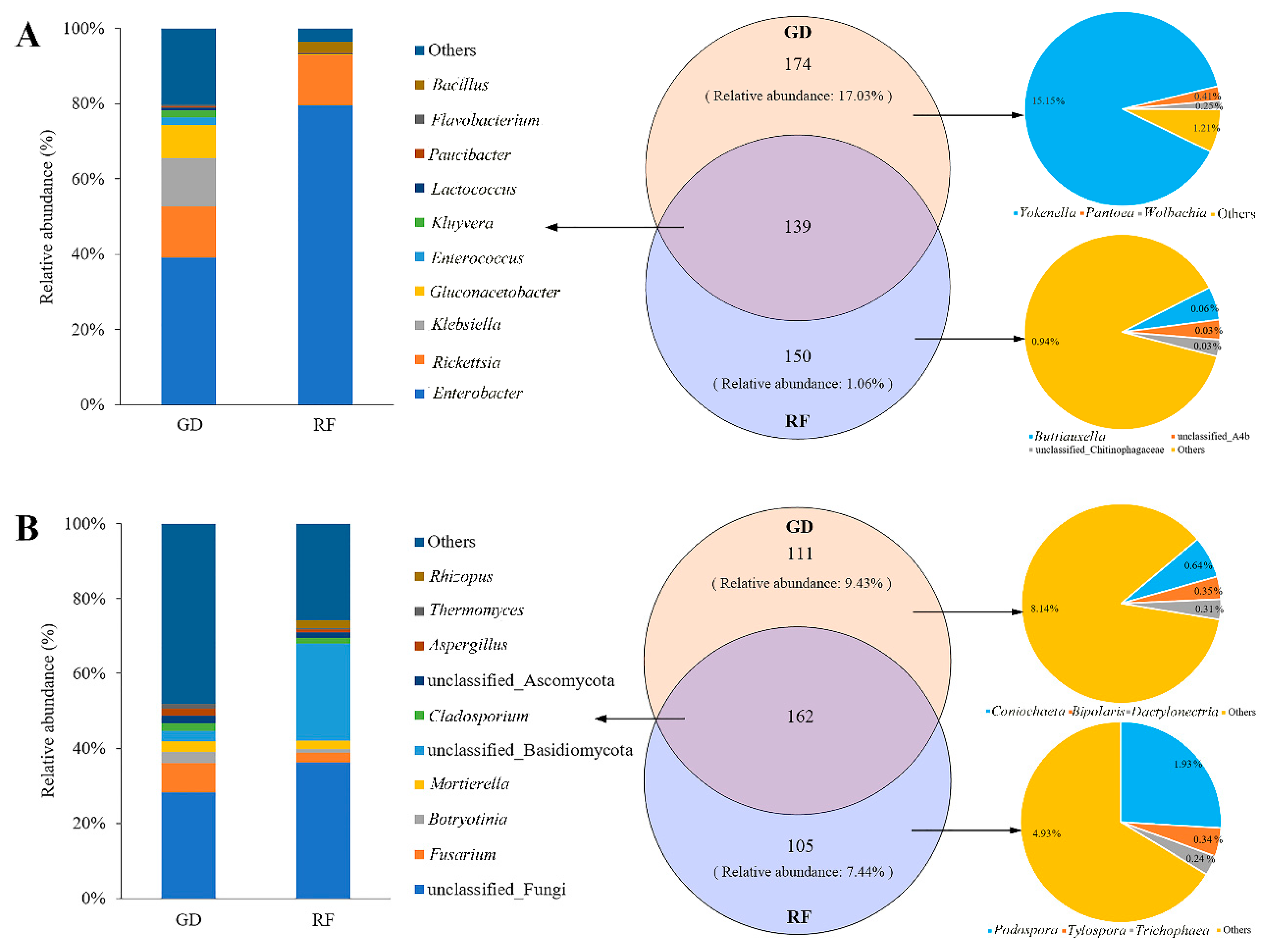
The bacterial communities of the two planthopper species comprised 2 kingdoms, 29 phyla, 58 classes, 150 orders, 259 families, and 463 genera. Specifically, the community in G. distinctissima included 2 kingdoms, 24 phyla, 48 classes, 117 orders, 197 families, and 313 genera, whereas that in R. fujianensis consisted of 2 kingdoms, 25 phyla, 44 classes, 107 orders, 172 families, and 289 genera. At the phylum level, the endosymbiotic bacterial communities of both planthopper species were predominantly composed of Proteobacteria, Firmicutes, Actinobacteriota, and Bacteroidota. In G. distinctissima, Proteobacteria constituted the absolute dominant phylum with a relative abundance of 94.37%, followed by Firmicutes (3.47%), Bacteroidota (0.69%), and Actinobacteriota (0.48%). Similarly, in R. fujianensis, Proteobacteria was also the absolute dominant phylum (93.34%), followed by Firmicutes (3.65%), Actinobacteriota (0.94%), and Bacteroidota (0.93%) (Figure 1A). At the genus level, the bacterial communities in both species mainly comprised genera such as Enterobacter, Rickettsia, Yokenella, Klebsiella, Gluconacetobacter, and Enterococcus. However, the dominant genera differed between the two species. In G. distinctissima, the predominant genera were Enterobacter (39.14%), Yokenella (15.15%), Rickettsia (13.52%), Klebsiella (12.84%), Gluconacetobacter (8.89%), and Enterococcus (2.05%). In contrast, the bacterial community in R. fujianensis was overwhelmingly dominated by Enterobacter (79.60%), followed by Rickettsia (13.24%) and Bacillus (2.92%) (Figure 1B).
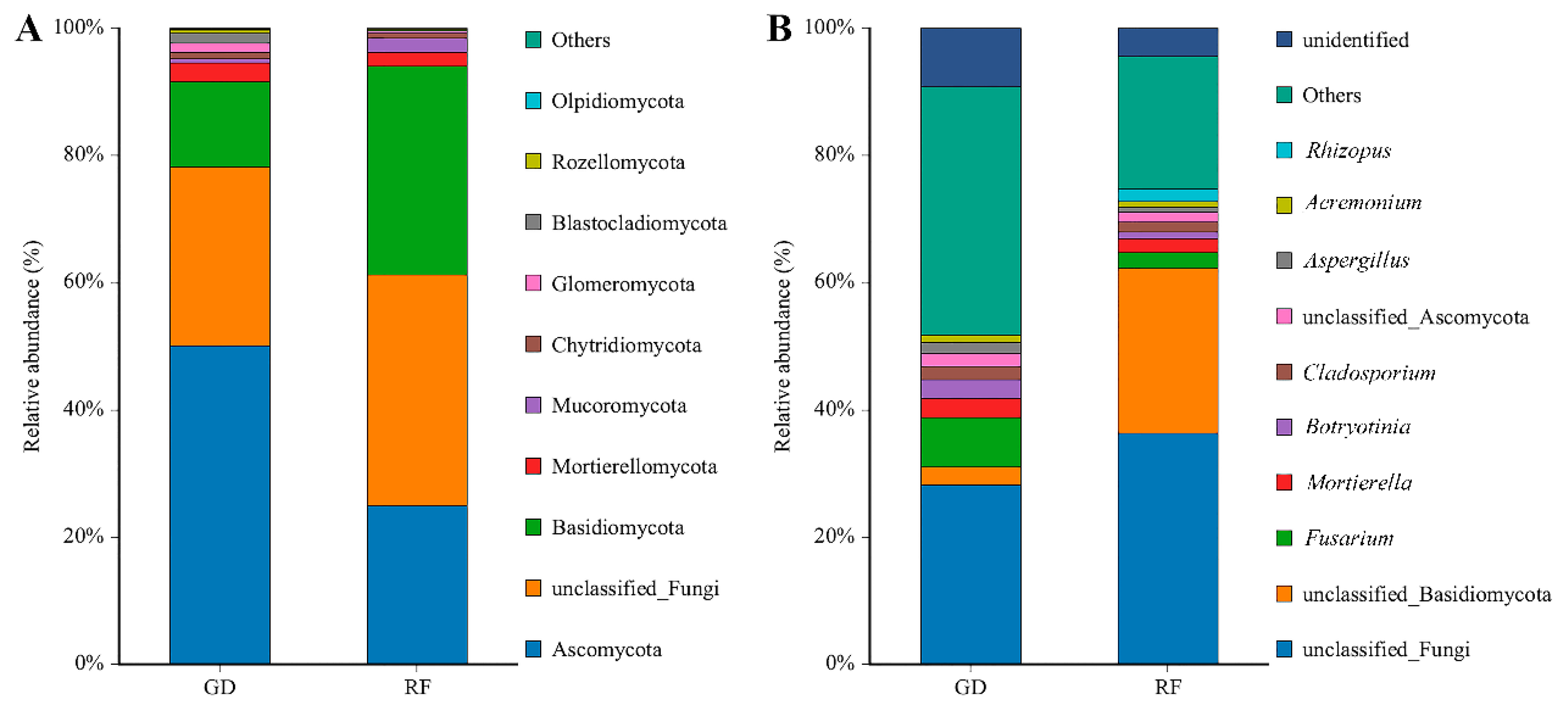
The fungal communities of the two planthopper species were affiliated with 12 phyla, 39 classes, 81 orders, 176 families, and 378 genera. Specifically, the community in G. distinctissima comprised 12 phyla, 36 classes, 72 orders, 147 families, and 273 genera, while that in R. fujianensis encompassed 10 phyla, 33 classes, 67 orders, 133 families, and 267 genera. At the phylum level, the fungal communities in both species were predominantly composed of Ascomycota, Basidiomycota, unclassified fungi, and Mortierellomycota. In G. distinctissima, the predominant fungal phyla were Ascomycota (50.04%), unclassified fungi (28.20%), Basidiomycota (13.28%), and Mortierellomycota (3.09%). In contrast, the fungal community in R. fujianensis was dominated by unclassified fungi (36.35%), followed by Basidiomycota (32.81%), Ascomycota (24.90%), Mucoromycota (2.19%), and Mortierellomycota (2.18%) (Figure 2A). At the genus level, the fungal communities in both planthopper species were primarily composed of Fusarium, Mortierella, Botryotinia, Cladosporium, Penicillium, Aspergillus, Rhizopus, Acremonium, among others. However, the specific dominant genera differed between the two species. In G. distinctissima, the predominant fungal genera were unclassified Basidiomycota (28.20%), Fusarium (7.89%), Botryotinia (2.99%), Mortierella (2.88%), unclassified Fungi (2.78%), Cladosporium (2.14%), unclassified Ascomycota (2.01%), and Aspergillus (1.76%). In contrast, the community in R. fujianensis was dominated by unclassified Fungi (36.35%), followed by unclassified Basidiomycota (25.98%), Fusarium (2.44%), Mortierella (2.12%), and Rhizopus (1.95%) (Figure 2B).
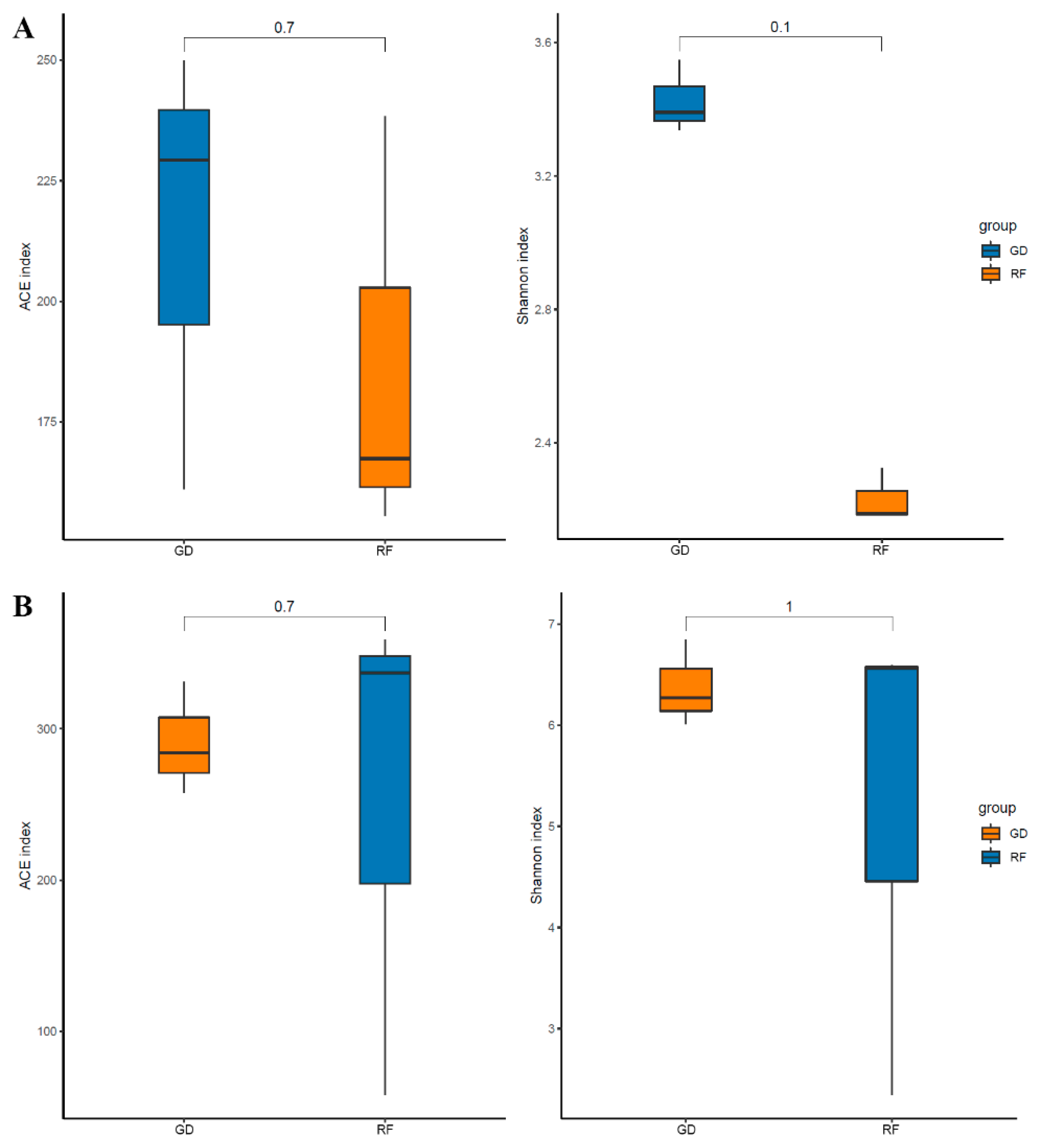
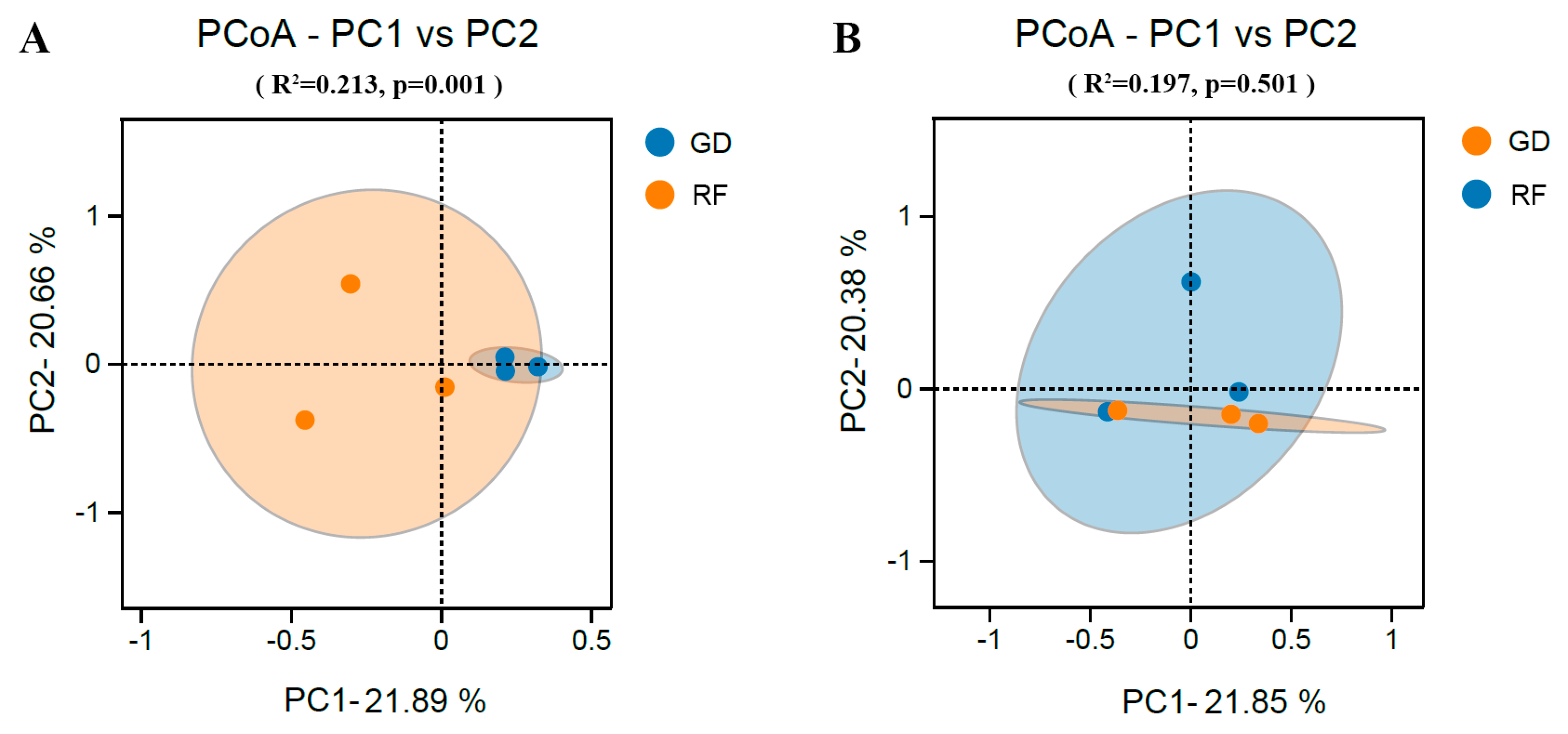
Diversity analysis based on OTU data using the non-parametric Wilcoxon rank-sum test revealed no significant differences in either the ACE or Shannon indices for both bacterial and fungal endosymbionts between G. distinctissima and R. fujianensis (p > 0.05), indicating comparable overall microbial diversity in the two planthopper species (Figure 3). Principal Coordinate Analysis (PCoA) based on the binary Jaccard distance showed distinct separation between the bacterial communities of the two species (R2 = 0.213, p = 0.001), indicating a significant difference in bacterial community structure (Figure 4A). In contrast, their fungal communities exhibited substantial overlap (R2 = 0.197, p = 0.501), suggesting no significant structural difference (Figure 4B).

3.2. Shared and Unique Taxa of Endosymbionts

The two planthopper species shared 139 genera of endosymbiotic bacteria. These shared genera accounted for 44.41% of the total genera in G. distinctissima but constituted 82.97% of its total bacterial relative abundance. Similarly, they represented 48.10% of the total genera in R. fujianensis, yet made up 98.94% of its total bacterial relative abundance. Among the top ten most abundant shared genera, the high-abundance taxa in G. distinctissima were Enterobacter, Rickettsia, Klebsiella, Gluconacetobacter, Enterococcus, and Kluyvera. In contrast, those in R. fujianensis were Enterobacter, Rickettsia and Bacillus. The relative abundance of unique bacterial genera was low in both planthopper species. In G. distinctissima, unique genera accounted for 17.03% of the total bacterial abundance, primarily represented by Yokenella (15.15%), Pantoea (0.41%), and Wolbachia (0.25%). In contrast, in R. fujianensis, unique genera constituted only 1.06% of the total bacterial abundance, with the main contributors being Buttiauxella (0.06%), unclassified A4b (0.03%), and unclassified Chitinophagaceae (0.03%) (Figure 5A).
The two planthopper species shared a core of 162 genera of endosymbiotic fungi. In G. distinctissima, these shared genera comprised 59.34% of all fungal genera while contributing 90.57% to the total fungal relative abundance. The same pattern was observed in R. fujianensis, where the shared genera accounted for 60.67% of the genera and 92.56% of the relative abundance. Among the ten most abundant shared fungal genera, the high-abundance taxa in G. distinctissima were unclassified Fungi, Fusarium, Botryotinia, Mortierella, unclassified Basidiomycota, Cladosporium, unclassified Ascomycota, Aspergillus, and Thermomyces; whereas in R. fujianensis, they were unclassified Fungi, unclassified Basidiomycota, Fusarium, Mortierella, Rhizopus, unclassified Ascomycota, Cladosporium, and Botryotinia. The relative abundance of unique fungal genera was also low in both planthopper species. In G. distinctissima, unique genera accounted for 9.43% of the total fungal abundance, primarily represented by Coniochaeta (0.64%), Bipolaris (0.35%), and Dactylonectria (0.31%). In R. fujianensis, they constituted 7.44%, with the main contributors being Podospora (1.93%), Tylospora (0.34%), and Trichophaea (0.24%) (Figure 5B).

3.3. Predicted Functional Profiles of the Endosymbionts

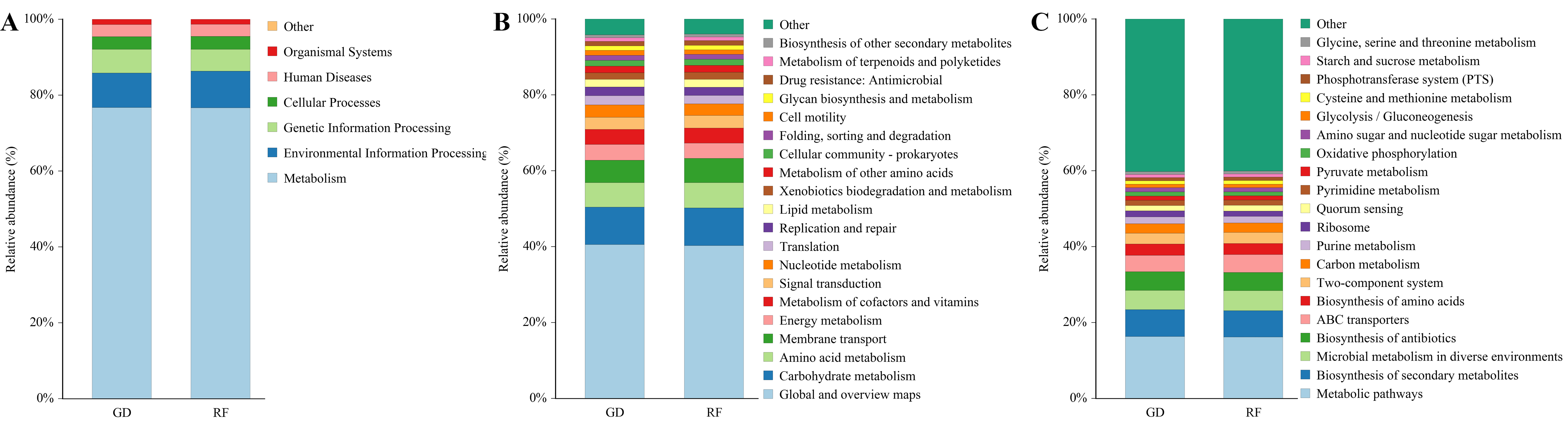
Functional potentials of the endosymbiotic bacterial communities were predicted using PICRUSt2 based on the KEGG database. Among the six Level 1 functional categories, Metabolism exhibited the highest relative abundance in both G. distinctissima (76.73%) and R. fujianensis (76.69%), followed by Environmental Information Processing (9.09% and 9.65%, respectively), Genetic Information Processing (6.25% and 5.76%), Cellular Processes (3.38% and 3.37%), Human Diseases (3.20% and 3.22%), and Organismal Systems (1.35% and 1.30%) (Figure 6A). A total of 44 functional categories were predicted at Level 2, of which Global and Overview Maps was predominant in both G. distinctissima and R. fujianensis (40.57% and 40.32%, respectively). This was followed by Carbohydrate Metabolism (9.86% and 9.92%) and Amino Acid Metabolism (6.48% and 6.66%). Other notable categories included Membrane Transport (5.85% and 6.34%), Energy Metabolism (4.17% and 4.09%), Metabolism of Cofactors and Vitamins (4.00% and 3.95%), Signal Transduction (3.22% and 3.29%), and Nucleotide Metabolism (3.21% and 3.10%) (Figure 6B). A total of 319 functional pathways were predicted at Level 3. Metabolic pathways was the most abundant in both G. distinctissima (16.35%) and R. fujianensis (16.17%), followed by Biosynthesis of secondary metabolites (7.04% and 6.96%, respectively). With the following also prominent: Microbial metabolism in diverse environments (5.12% and 5.26%); Biosynthesis of antibiotics (4.93% and 4.79%); ABC transporters (4.32% and 4.75%); and Biosynthesis of amino acids (2.97% and 2.91%) (Figure 6C).
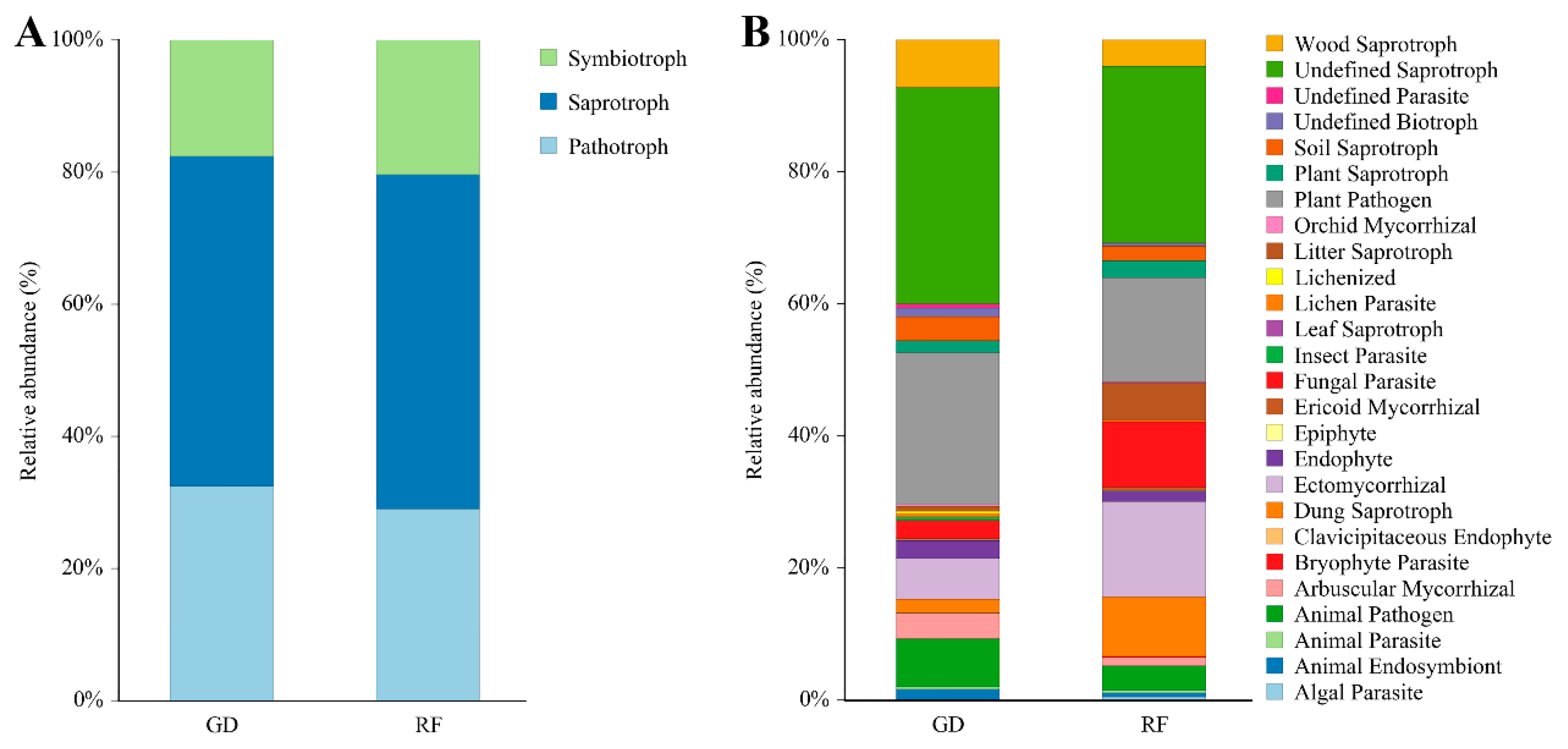
Prediction via FUNGuild assigned the endosymbiotic fungi into 26 functional guilds under 3 trophic modes. Among these, Saprotroph was the most abundant mode in both G. distinctissima (49.93%) and R. fujianensis (50.63%), followed by Pathotroph (32.50% and 29.04%, respectively) and Symbiotroph (17.57% and 20.32%, respectively) (Figure 7A). Analysis of the 26 functional guilds revealed that Undefined Saprotroph dominated in G. distinctissima (32.77%) and R. fujianensis (26.72%); followed by Plant Pathogen (23.06%; 15.80%) and Ectomycorrhizal (6.16%; 14.41%). Other prominent guilds were Fungal Parasite (2.77%; 9.89%), Dung Saprotroph (2.09%; 8.96%), Wood Saprotroph (7.22%; 4.01%), Animal Pathogen (7.28%; 3.71%), Soil Saprotroph (3.61%; 2.25%), Arbuscular Mycorrhizal (3.90%; 1.20%), and Endophyte (2.66%; 1.58%) (Figure 7B). Notably, guilds such as Algal Parasite, Bryophyte Parasite, and Clavicipitaceous Endophyte were absent in G. distinctissima, whereas Insect Parasite, Leaf Saprotroph, and Lichenized were not detected in R. fujianensis.

4. Discussion

The endosymbiotic bacterial assemblage in both G. distinctissima and R. fujianensis from tea garden habitats was strikingly similar at the phylum level, overwhelmingly dominated by Proteobacteria and Firmicutes. The combined relative abundance of these two phyla reached 97.84% and 96.99%, respectively. Notably, this similarity was also evident when compared with the bacterial composition reported for L. striatellus, a planthopper from a different family within Fulgoromorpha [15]. In contrast to their phylum-level similarity, the two planthopper species exhibited striking divergence in their dominant endosymbiotic genera at a finer taxonomic resolution. R. fujianensis possessed a community dominated by fewer high-abundance genera, whereas G. distinctissima harbored a more diverse array of dominant taxa. Furthermore, although Enterobacter was the most abundant genus in both, its relative abundance was over two-fold higher in R. fujianensis. Conversely, Rickettsia showed comparable levels in both hosts. This consistency, coupled with its reported presence and diverse transmission strategies in other fulgoroid families (e.g., Delphacidae in Delphacoidea, Caliscelidae in Fulgoroidea), strongly indicates that Rickettsia is a hallmark and potentially ubiquitous symbiont within the Fulgoromorpha superfamily [14,19,21,23]. Notably, the endosymbiont compositions differ markedly between Delphacidae (Delphacoidea) and other planthopper families traditionally placed within Fulgoroidea. For instance, while delphacids are often associated with facultative reproductive manipulators such as Wolbachia and Cardinium [14,17], Fulgoroidea families (e.g., Flatidae, Ricaniidae, Caliscelidae, Cixiidae, Dictyopharidae) consistently harbor obligate nutritional symbionts Sulcia and Vidania [19,24,27]. This distinction may reflect deep evolutionary divergence between the two superfamilies in terms of ecology, feeding habits, and symbiont acquisition history.
G. distinctissima was further distinguished by the high abundance of Klebsiella and Gluconacetobacter, genera scarcely represented in R. fujianensis. Klebsiella has been implicated in nutrient provisioning for insects and may influence insecticide susceptibility [33,34], while Gluconacetobacter may confer probiotic benefits [35]. Despite the presence of these distinct, high-abundance genera, the endosymbiotic communities in both planthopper species were overwhelmingly composed of shared bacterial taxa. Uniquely associated genera contributed minimally to the total abundance in both hosts, with Yokenella in G. distinctissima being the notable exception. A notable finding was the enrichment of the genus Yokenella, which was both unique to and dominant in G. distinctissima. This is of particular interest as research on the stink bug Nezara viridula (Linnaeus, 1758) suggests Yokenella may play a role in regulating host nutritional metabolism [36,37]. It is noteworthy that Pantoea and Wolbachia were identified as unique genera in G. distinctissima. Research indicates that Pantoea can be associated with insect feeding behavior, pesticide resistance, and the regulation of plant defense responses [34,38,39,40]. In contrast to Pantoea, Wolbachia is an obligate intracellular endosymbiont renowned for its profound manipulation of host reproduction and physiological impact. For instance, in the planthopper L. striatellus (Delphacidae, Delphacoidea), a specific Wolbachia strain (wStri) enhances female fecundity by increasing apoptosis of nurse cells in the ovaries [41]. Furthermore, the naturally infecting strain wStriCN in L. striatellus retains complete pathways for the synthesis of biotin and riboflavin [14]. Within Fulgoromorpha, Wolbachia has been widely detected across various tissues and cells of species such as S. furcifera and Ommatidiotus dissimilis (Fallén, 1806) [19,21,42], indicating its capacity for systemic colonization within the host body cavity. The α-diversity analysis revealed no significant difference in endosymbiotic bacterial richness and evenness between the two planthopper species, which may be attributed to their shared habitat. In contrast, PCoA demonstrated a significant separation in bacterial community structure. This suggests that, while the shared environment may homogenize the overall number and evenness of bacterial taxa (α-diversity), the specific composition and assembly of the community (β-diversity) are more strongly shaped by host-specific factors, such as phylogenetic divergence at the family level.
At the phylum level, the endosymbiotic fungal communities of the two planthopper species were composed of similar groups, primarily Ascomycota, Basidiomycota, unclassified fungi, and Mortierellomycota. However, the relative abundances of these groups differed more substantially between the two species than the relative abundances observed for the dominant bacterial phyla. At the genus level, a significant divergence was also observed in the dominant endosymbiotic fungi between the two planthopper species. A striking feature was the high proportion of unclassified genera, accounting for 32.99% in G. distinctissima and 62.33% in R. fujianensis. Among the identifiable dominant genera were Fusarium, Botryotinia, Mortierella, Cladosporium, Aspergillus, and Rhizopus. This community profile, characterized by this specific combination of known genera alongside a dominant unclassified fraction, differs markedly from those reported for other fulgoroid planthoppers such as L. striatellus and S. furcifera [14], to our knowledge, has not been documented in any other group within Fulgoromorpha. Furthermore, the shared fungal taxa also formed the core of the endosymbiotic communities in both planthopper species, with the unique genera of each host constituting a relatively low proportion of the total relative abundance. Both α-diversity and PCoA analyses indicated that the composition and community structure of their endosymbiotic fungi were highly similar. These results suggest that, in contrast to the pattern observed for their endosymbiotic bacteria, the assembly of the fungal communities in these two species may be less affected by interspecific differences and more closely associated with their shared habitat.
Despite compositional divergence in their endosymbiotic bacterial communities, the two planthopper species (G. distinctissima and R. fujianensis) exhibited functional convergence, with highly similar relative abundances of predicted gene functions across primary, secondary, and tertiary metabolic categories. This indicates that underlying this structural divergence is a conserved functional core. The observed pattern may be attributed to functional redundancy within the bacterial community, where phylogenetically distinct taxa can perform equivalent metabolic roles to meet the hosts’ shared physiological demands. While the predicted trophic modes of the endosymbiotic fungi showed little divergence between the two planthopper species, clear differences emerged at the level of functional guilds. Specifically, G. distinctissima exhibited notably higher relative abundances of guilds such as Undefined Saprotroph, Plant Pathogen, Wood Saprotroph, Animal Pathogen, and Arbuscular Mycorrhizal. In contrast, R. fujianensis was enriched in guilds including Ectomycorrhizal, Fungal Parasite, and Dung Saprotroph. Importantly, functional guilds absent in either species were present at negligible levels. These species-specific functional profiles strongly suggest that host identity, rather than shared habitat, is the primary driver shaping the functional potential of their endosymbiotic fungal communities.
Despite the widespread use of ITS and 16S rRNA as primary taxonomic barcodes, their limitations in resolving species-level identities—particularly among closely related taxa—should be considered when interpreting our findings. As demonstrated by Nilsson et al. [43], substantial intraspecific variability in the fungal ITS region complicates automated species delimitation, and no single universal threshold applies across the fungal kingdom. Similarly, Edgar [44] showed that taxonomy prediction accuracy for 16S rRNA sequences declines rapidly with decreasing sequence identity, with genus-level accuracy dropping to approximately 50% at the conventional 97% threshold. Therefore, some taxonomic assignments at finer resolutions in this study warrant caution, and future investigations employing multi-locus markers or shotgun metagenomics are needed to validate our conclusions.

5. Conclusions

This study provides a characterized the endosymbiotic microbiome in two tea garden planthoppers, G. distinctissima and R. fujianensis. The bacterial communities in both species were dominated by Proteobacteria and Firmicutes, but the relative abundances of core genera (e.g., Enterobacter, Rickettsia, Yokenella) differed significantly between the two hosts. Similarly, the fungal communities were dominated by Ascomycota and Basidiomycota, showed host-associated distributions of key genera such as Fusarium and Mortierella. A key finding was the contrasting structure–function relationship: the bacterial community structures differed significantly while their predicted functions were highly similar; conversely, the fungal community structures were similar but their predicted functional profiles differed. These results provide a foundational description of the microbiome associated with these planthoppers. However, the resolution limits of ITS and 16S rRNA should be considered when interpreting these findings. Future research employing multi-locus markers or shotgun metagenomics, combined with broader geographical sampling and mechanistic studies, is needed to further validate and expand upon these findings.

Funding

This work was supported by the Guizhou Province High-Level Talent Cultivation Support Program in the Field of Scientific and Technological Innovation — "Provincial Leading Talent" (Grant No. QKX KJLYRC-[2026]037)..

Data Availability Statement

The original data presented in the study are openly available in the Sequence Read Archive (SRA) of NCBI at https://submit.ncbi.nlm.nih.gov(accessed on 30 June 2026) under the accession number PRJNA1384430.

Acknowledgments

I thank the anonymous reviewers for their comments, which helped to improve the manuscript.

Conflicts of Interest

The author declares no conflicts of interest.

References

  1. Zhang, H.H. Fauna and main species of planthoppers in tea plantations in China. J. Tea Sci. 2004, 24, 240–242. [Google Scholar]
  2. He, J.; Yu, W.T.; Chen, W.L. Occurrence regularity and control of Geisha distinctissima in tea plantations in Guiyang area. Guizhou Agric. Sci. 2013, 41, 105–107+110. [Google Scholar]
  3. Fan, G.Y.; Liu, N.G.; Yang, Q. Observation on behavioral rhythm of Ricania cacaonis. Guizhou Agric. Sci. 2016, 44, 53–56. [Google Scholar]
  4. Zhang, X.; Sun, X.L.; Xiao, Q. The makers of white pollution in tea gardens: Geisha distinctissima and Salurnis marginellus. China Tea 2018, 40, 12–13. [Google Scholar]
  5. Jin, Y.L.; Ma, Q.C.; Zhang, S.J.; Yin, J.; Shi, H.Z.; Geng, S.B. Oviposition regularity of Euricania ocellus and the effect of temperature on the development of overwintering eggs. J. Tea Sci. 2020, 40, 807–816. [Google Scholar]
  6. Xiao, Q.; Wang, Z.B.; Yang, C. Jumping masters on tea plants: Ricania cacaonis. China Tea 2021, 43, 15–17. [Google Scholar]
  7. Xu, Y.; Wu, X.M.; Wang, G.Q.; Zou, Y.D.; Bi, S.D. Relationship between the number of Ricaniidae insects and biochemical substances in tea leaves. Acta Agric. Zhejiangensis 2023, 35, 1834–1843. [Google Scholar]
  8. Ai, D.; Thierry, B.; Bu, W.; Zhang, Y. Toward a new phylogeny-based classification of Flatidae (Hemiptera: Fulgoromorpha): A diversification shaped by angiosperm expansion. Mol. Phylogenet. Evol. 2025, 216, 108508. [Google Scholar] [CrossRef] [PubMed]
  9. Xu, S.Y.; Long, J.K.; Chen, X.S. Two new species of genus Magadhaideus Long & Chen, 2017 from China (Hemiptera: Fulgoromorpha: Achilidae). ZooKeys 2018, 787, 81–90. [Google Scholar] [CrossRef]
  10. Xu, S.Y.; Long, J.K.; Chen, X.S. Comparative analysis of the complete mitochondrial genomes of five Achilidae species (Hemiptera: Fulgoroidea) and other Fulgoroidea reveals conserved mitochondrial genome organization. PeerJ 2019, 7, e6659. [Google Scholar] [CrossRef] [PubMed]
  11. Engel, P.; Moran, N.A. The gut microbiota of insects-diversity in structure and function. FEMS Microbiol. Rev. 2013, 37, 699–735. [Google Scholar] [PubMed]
  12. Douglas, A.E. Multiorganismal insects: Diversity and function of resident microorganisms. Annu. Rev. Entomol. 2015, 60, 17–34. [Google Scholar] [CrossRef] [PubMed]
  13. Douglas, G.M.; Beiko, R.G.; Langille, M.G.I. Predicting the functional potential of the microbiome from marker genes using PICRUSt. Methods Mol. Biol. 2018, 1849, 169–177. [Google Scholar] [CrossRef] [PubMed]
  14. Bing, X.L.; Zhao, D.S.; Peng, C.W.; Huang, H.J.; Hong, X.Y. Similarities and spatial variations of bacterial and fungal communities in field rice planthopper (Hemiptera: Delphacidae) populations. Insect Sci. 2020, 27, 947–963. [Google Scholar] [CrossRef] [PubMed]
  15. Zhang, X.; Li, T.P.; Zhou, C.Y.; Zhao, D.S.; Zhu, Y.X.; Bing, X.L.; Huang, H.J.; Hong, X.Y. Antibiotic exposure perturbs the bacterial community in the small brown planthopper Laodelphax striatellus. Insect Sci. 2020, 27, 895–907. [Google Scholar] [PubMed]
  16. Chen, J.; Wang, M.K.; Xie, Q.X.; Bing, X.L.; Li, T.P.; Hong, X.Y. NDUFA8 potentially rescues Wolbachia-induced cytoplasmic incompatibility in Laodelphax striatellus. Insect Sci. 2023, 30, 1689–1700. [Google Scholar] [PubMed]
  17. Li, T.P.; Zhou, C.Y.; Wang, M.K.; Zha, S.S.; Chen, J.; Bing, X.L.; Hoffmann, A.A.; Hong, X.Y. Endosymbionts Reduce Microbiome Diversity and Modify Host Metabolism and Fecundity in the Planthopper Sogatella furcifera. mSystems 2022, 7, e0151621. [Google Scholar] [CrossRef] [PubMed]
  18. Pascual, A.; Calabresi, F.; de la Fuente, D.; Catalano, M.I.; Brentassi, M.E. Transcriptome Analysis of the Fat Body of the Maize Pest Delphacodes kuscheli (Hemiptera: Delphacidae) Reveals Essential Roles of Fungal Endosymbionts. Microb. Ecol. 2025, 88, 74. [Google Scholar] [CrossRef] [PubMed]
  19. Michalik, A.; Szwedo, J.; Stroiński, A.; Świerczewski, D.; Szklarzewicz, T. Symbiotic cornucopia of the monophagous planthopper Ommatidiotus dissimilis (Fallén, 1806) (Hemiptera: Fulgoromorpha: Caliscelidae). Protoplasma 2018, 255, 1317–1329. [Google Scholar] [CrossRef] [PubMed]
  20. Michalik, A.; Castillo Franco, D.; Kobiałka, M.; Szklarzewicz, T.; Stroiński, A.; Łukasik, P. Alternative Transmission Patterns in Independently Acquired Nutritional Cosymbionts of Dictyopharidae Planthoppers. mBio 2021, 12, e0122821. [Google Scholar] [CrossRef] [PubMed]
  21. Michalik, A.; Franco, D.C.; Deng, J.; Szklarzewicz, T.; Stroiński, A.; Kobiałka, M.; Łukasik, P. Variable organization of symbiont-containing tissue across planthoppers hosting different heritable endosymbionts. Front. Physiol. 2023, 14, 1135346. [Google Scholar] [CrossRef] [PubMed]
  22. Michalik, A.; Franco, D.C.; Szklarzewicz, T.; Stroiński, A.; Łukasik, P. Facultatively intrabacterial localization of a planthopper endosymbiont as an adaptation to its vertical transmission. mSystems 2024, 9, e00634. [Google Scholar] [CrossRef] [PubMed]
  23. Michalik, A.; Szklarzewicz, T. Together forever: Patterns and strategies of vertical symbiont transmission in planthoppers. Dev. Biol. 2025, 525, 319–330. [Google Scholar] [CrossRef] [PubMed]
  24. Urban, J.M.; Cryan, J.R. Two ancient bacterial endosymbionts have coevolved with the planthoppers (Insecta: Hemiptera: Fulgoroidea). BMC Evol. Biol. 2012, 12, 87. [Google Scholar] [CrossRef] [PubMed]
  25. Bressan, A.; Mulligan, K.L. Localization and morphological variation of three bacteriome-inhabiting symbionts within a planthopper of the genus Oliarus (Hemiptera: Cixiidae). Environ. Microbiol. Rep. 2013, 5, 499–505. [Google Scholar] [PubMed]
  26. Bennett, G.M.; Mao, M. Comparative genomics of a quadripartite symbiosis in a planthopper host reveals the origins and rearranged nutritional responsibilities of anciently diverged bacterial lineages. Environ. Microbiol. 2018, 20, 4461–4472. [Google Scholar] [CrossRef] [PubMed]
  27. Deng, J.; Bennett, G.M.; Franco, D.C.; Prus-Frankowska, M.; Stroiński, A.; Michalik, A.; Łukasik, P. Genome Comparison Reveals Inversions and Alternative Evolutionary History of Nutritional Endosymbionts in Planthoppers (Hemiptera: Fulgoromorpha). Genome Biol. Evol. 2023, 15, evad120. [Google Scholar] [CrossRef] [PubMed]
  28. Wang, Y.L.; Che, Y.L.; Yuan, X.Q. Taxonomic study of the genus Geisha in China (Hemiptera: Flatidae). Entomotaxonomia 2005, 27, 179–186. [Google Scholar]
  29. Ren, L.L.; Stroiński, A.; Qin, D.Z. Three new species of the genus Ricanula Melichar, 1898 (Hemiptera: Fulgoromorpha: Ricaniidae) from China. Zootaxa 2016, 4168, 557–569. [Google Scholar] [CrossRef] [PubMed]
  30. Xu, S.-Y. Endosymbiont Communities in Tea Plantation Beetles: A Comparative Study of Composition and Function Across Four Species. Agriculture 2025, 15, 2592. [Google Scholar] [CrossRef]
  31. Parks, D.H.; Tyson, G.W.; Hugenholtz, P.; Beiko, R.G. STAMP: Statistical analysis of taxonomic and functional profiles. Bioinformatics 2014, 30, 3123–3124. [Google Scholar] [CrossRef] [PubMed]
  32. Nguyen, N.H.; Song, Z.; Bates, S.T.; Branco, S.; Tedersoo, L.; Menke, J.; Schilling, J.S.; Kennedy, P.G. FUNGuild: An open annotation tool for parsing fungal community datasets by ecological guild. Fungal Ecol. 2016, 20, 241–248. [Google Scholar] [CrossRef]
  33. Martinez, A.J.; Onchuru, T.O.; Ingham, C.S.; Sandoval-Calderón, M.; Salem, H.; Deckert, J.; Kaltenpoth, M. Angiosperm to Gymnosperm host-plant switch entails shifts in microbiota of the Welwitschia bug, Probergrothius angolensis (Distant, 1902). Mol. Ecol. 2019, 28, 5172–5187. [Google Scholar] [PubMed]
  34. Zhu, Y.; Wu, Y.; Li, X.; Li, Y.; Zheng, Z.; Gao, Q.; Ding, W.; He, H.; Qiu, L.; Li, Y. Cadmium exposure increases insecticide sensitivity of Sogatella furcifera (Horváth) by decrease the diversity of symbiotic bacteria. Ecotoxicol. Environ. Saf. 2025, 290, 117597. [Google Scholar] [PubMed]
  35. Liu, Y.; Perumalsamy, H.; Kang, C.H.; Kim, S.H.; Hwang, J.S.; Koh, S.C.; Yi, T.H.; Kim, Y.J. Intracellular synthesis of gold nanoparticles by Gluconacetobacter liquefaciens for delivery of peptide CopA3 and ginsenoside and anti-inflammatory effect on lipopolysaccharide-activated macrophages. Artif. Cells Nanomed. Biotechnol. 2020, 48, 777–788. [Google Scholar] [PubMed]
  36. Medina, V.; Sardoy, P.M.; Soria, M.; Vay, C.A.; Gutkind, G.O.; Zavala, J.A. Characterized non-transient microbiota from stinkbug (Nezara viridula) midgut deactivates soybean chemical defenses. PLoS ONE 2018, 13, e0200161. [Google Scholar] [CrossRef] [PubMed]
  37. Medina, V.; Rosso, B.E.; Soria, M.; Gutkind, G.O.; Pagano, E.A.; Zavala, J.A. Feeding on soybean crops changed gut bacteria diversity of the southern green stinkbug (Nezara viridula) and reduced negative effects of some associated bacteria. Pest Manag. Sci. 2022, 78, 4608–4617. [Google Scholar] [CrossRef] [PubMed]
  38. Gao, Z.; Ju, X.; Yang, M.; Xue, R.; Li, Q.; Fu, K.; Guo, W.; Tong, L.; Song, Y.; Zeng, R.; et al. Colorado potato beetle exploits frass-associated bacteria to suppress defense responses in potato plants. Pest Manag. Sci. 2022, 78, 3778–3787. [Google Scholar] [PubMed]
  39. Ma, M.; Luo, J.; Chen, X.; Li, C.; Li, S.; Sun, J.; Xu, L. Gut bacteria facilitate leaf beetles in adapting to dietary specialization by enhancing larval fitness. npj Biofilms Microbiomes 2024, 10, 110. [Google Scholar] [CrossRef] [PubMed]
  40. Wielkopolan, B.; Szabelska-Beręsewicz, A.; Gawor, J.; Obrępalska-Stęplowska, A. Cereal leaf beetle-associated bacteria enhance the survival of their host upon insecticide treatments and respond differently to insecticides with different modes of action. Environ. Microbiol. Rep. 2024, 16, e13247. [Google Scholar] [PubMed]
  41. Guo, Y.; Hoffmann, A.A.; Xu, X.Q.; Zhang, X.; Huang, H.J.; Ju, J.F.; Gong, J.T.; Hong, X.Y. Wolbachia-induced apoptosis associated with increased fecundity in Laodelphax striatellus (Hemiptera: Delphacidae). Insect Mol. Biol. 2018, 27, 796–807. [Google Scholar] [PubMed]
  42. Li, F.; Li, P.; Hua, H.; Hou, M.; Wang, F. Diversity, Tissue Localization, and Infection Pattern of Bacterial Symbionts of the White-Backed Planthopper, Sogatella furcifera (Hemiptera: Delphacidae). Microb. Ecol. 2020, 79, 720–730. [Google Scholar] [PubMed]
  43. Nilsson, R.H.; Kristiansson, E.; Ryberg, M.; Hallenberg, N.; Larsson, K.H. Intraspecific ITS variability in the kingdom fungi as expressed in the international sequence databases and its implications for molecular species identification. Evol. Bioinform. 2008, 4, 193–201. [Google Scholar] [CrossRef]
  44. Edgar, R.C. Accuracy of taxonomy prediction for 16S rRNA and fungal ITS sequences. PeerJ 2018, 6, e4652. [Google Scholar] [CrossRef] [PubMed]
Figure 1. Relative abundance of endosymbiotic bacteria at the phylum and genus levels. (A) Phylum level. (B) Genus level. Note: GD, Geisha distinctissima; RF, Ricanula fujianensis. The same abbreviations apply to the subsequent figures.
Diversity 18 00407 g001
Figure 2. Relative abundance of endosymbiotic fungi at the phylum and genus levels. (A) Phylum level. (B) Genus level.
Diversity 18 00407 g002
Figure 3. Diversity analysis of endosymbiotic bacteria and fungi. (A) Bacteria. (B) Fungi.
Diversity 18 00407 g003
Figure 4. PCoA (Principal Coordinate Analysis) of endosymbiotic bacterial and fungal communities. (A) Bacteria. (B) Fungi.
Diversity 18 00407 g004
Figure 5. Shared and unique genera of endosymbiotic bacteria and fungi. (A) Bacteria. (B) Fungi.
Diversity 18 00407 g005
Figure 6. Functional prediction of endosymbiotic bacteria by PICRUSt2. (A) Level 1. (B) Level 2. (C) Level 3.
Diversity 18 00407 g006
Figure 7. Functional prediction of endophytic fungi by FUNGuild. (A) Trophic modes. (B) Functional guilds.
Diversity 18 00407 g007
Disclaimer/Publisher’s Note: The statements, opinions and data contained in all publications are solely those of the individual author(s) and contributor(s) and not of MDPI and/or the editor(s). MDPI and/or the editor(s) disclaim responsibility for any injury to people or property resulting from any ideas, methods, instructions or products referred to in the content.