

Autogamy vs. Allogamy: Biotic-Dependent Populations Reveal Shift in the Reproduction System of an Essentially Autogamous Vanilla


Abstract
1. Introduction
2. Materials and Methods
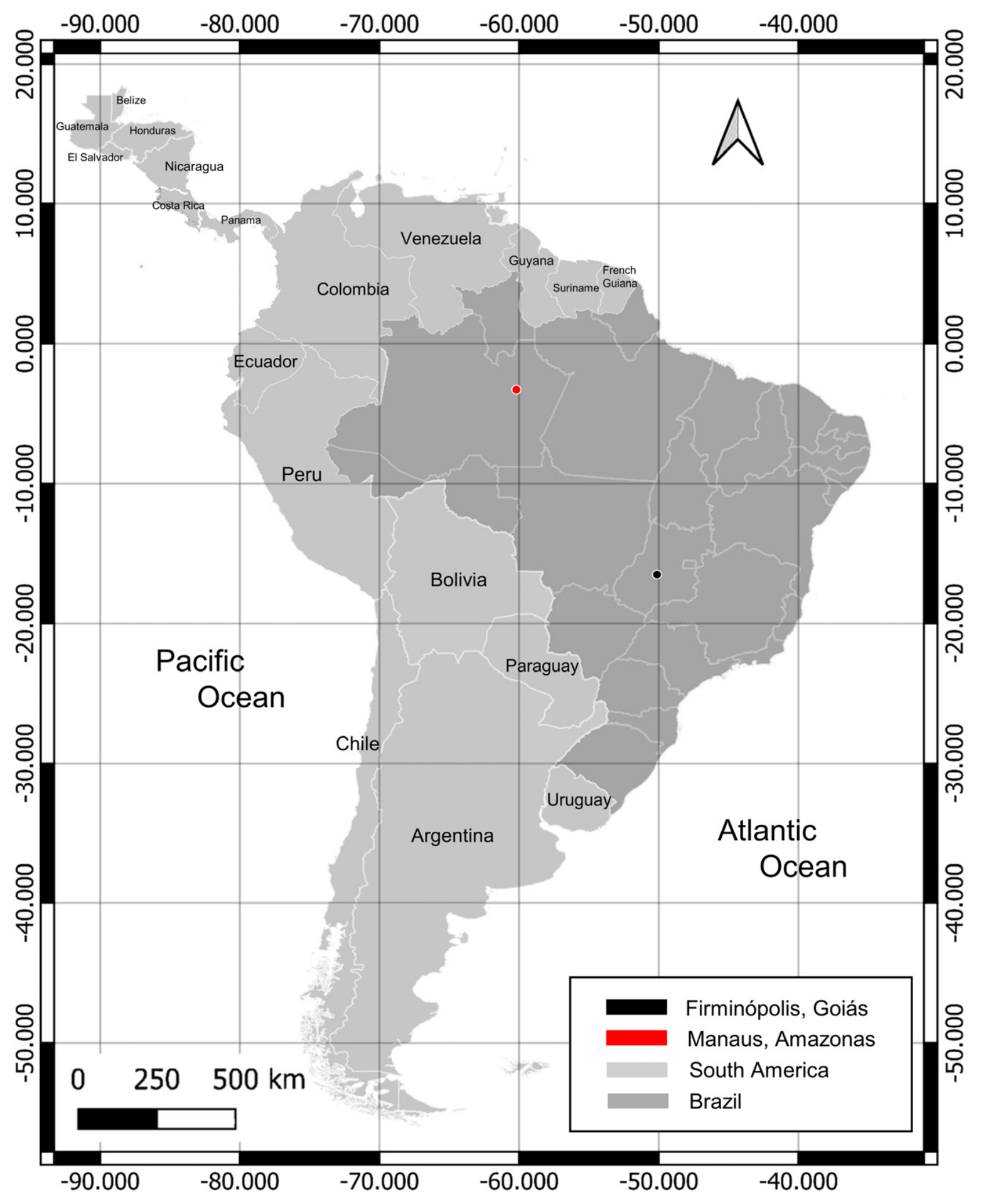
2.1. Study Sites and Plant Material
2.2. Floral Features
2.3. Floral Visitors and Pollination Process
2.4. Breeding System
3. Results
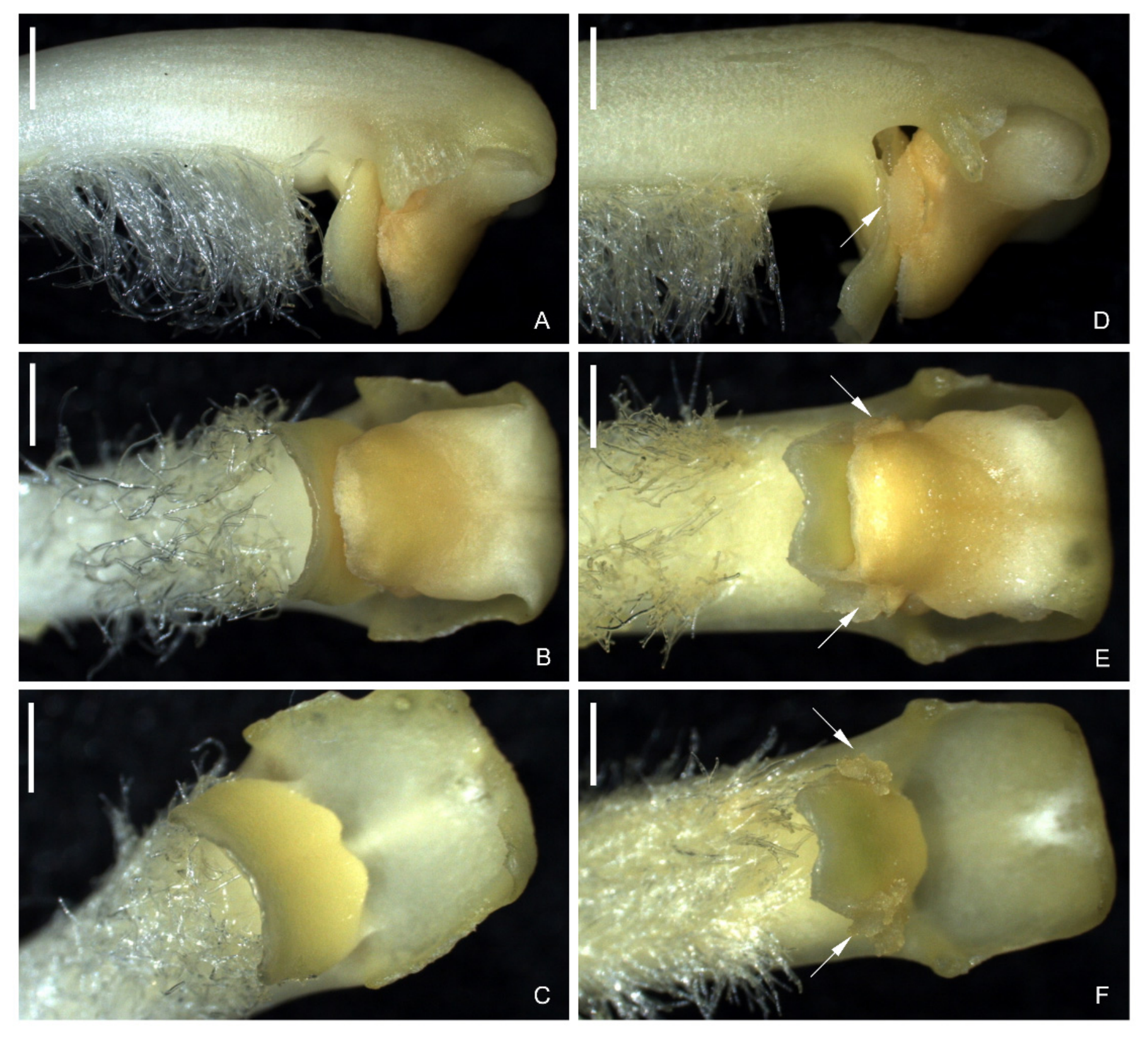
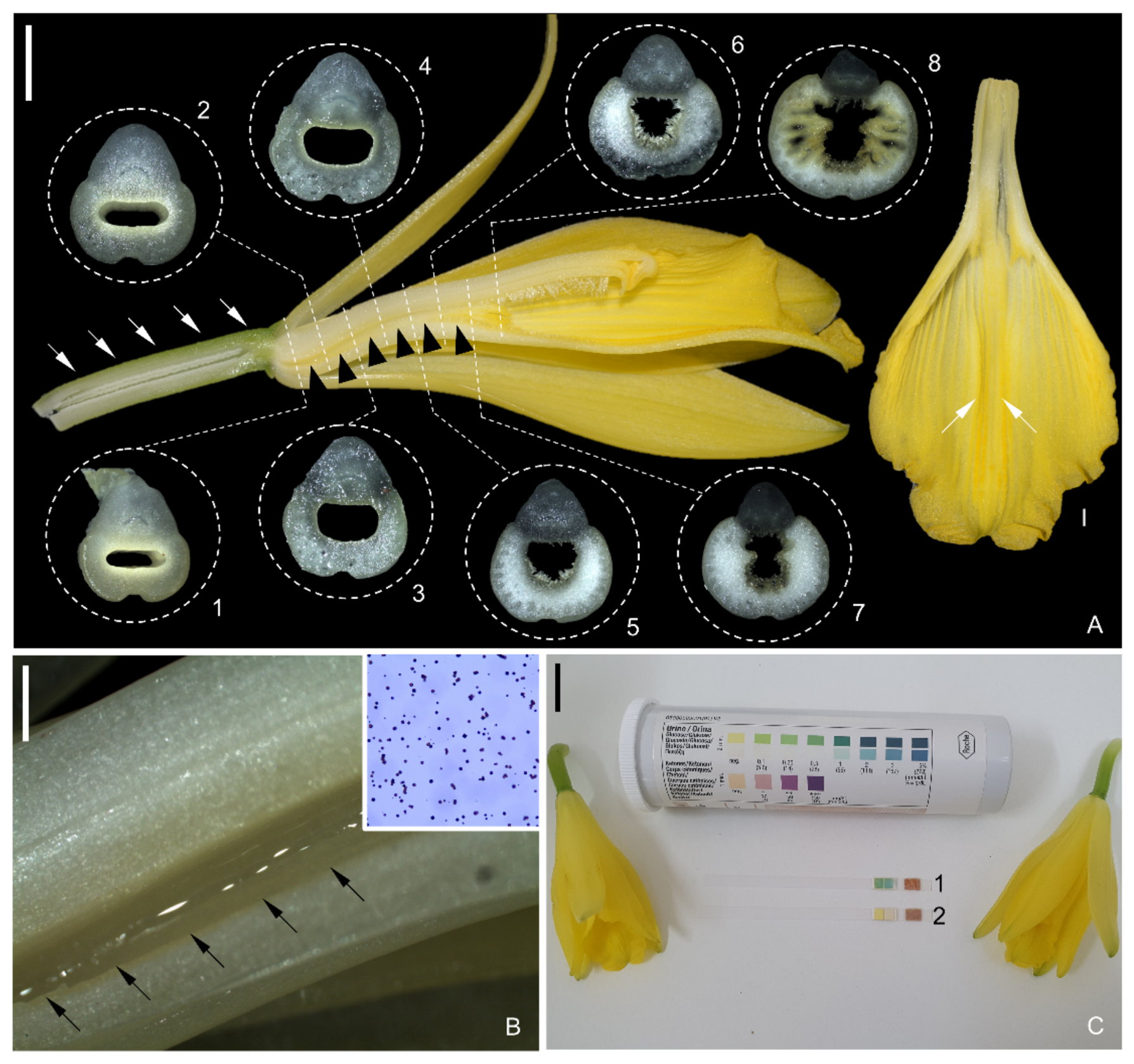
3.1. Floral Features
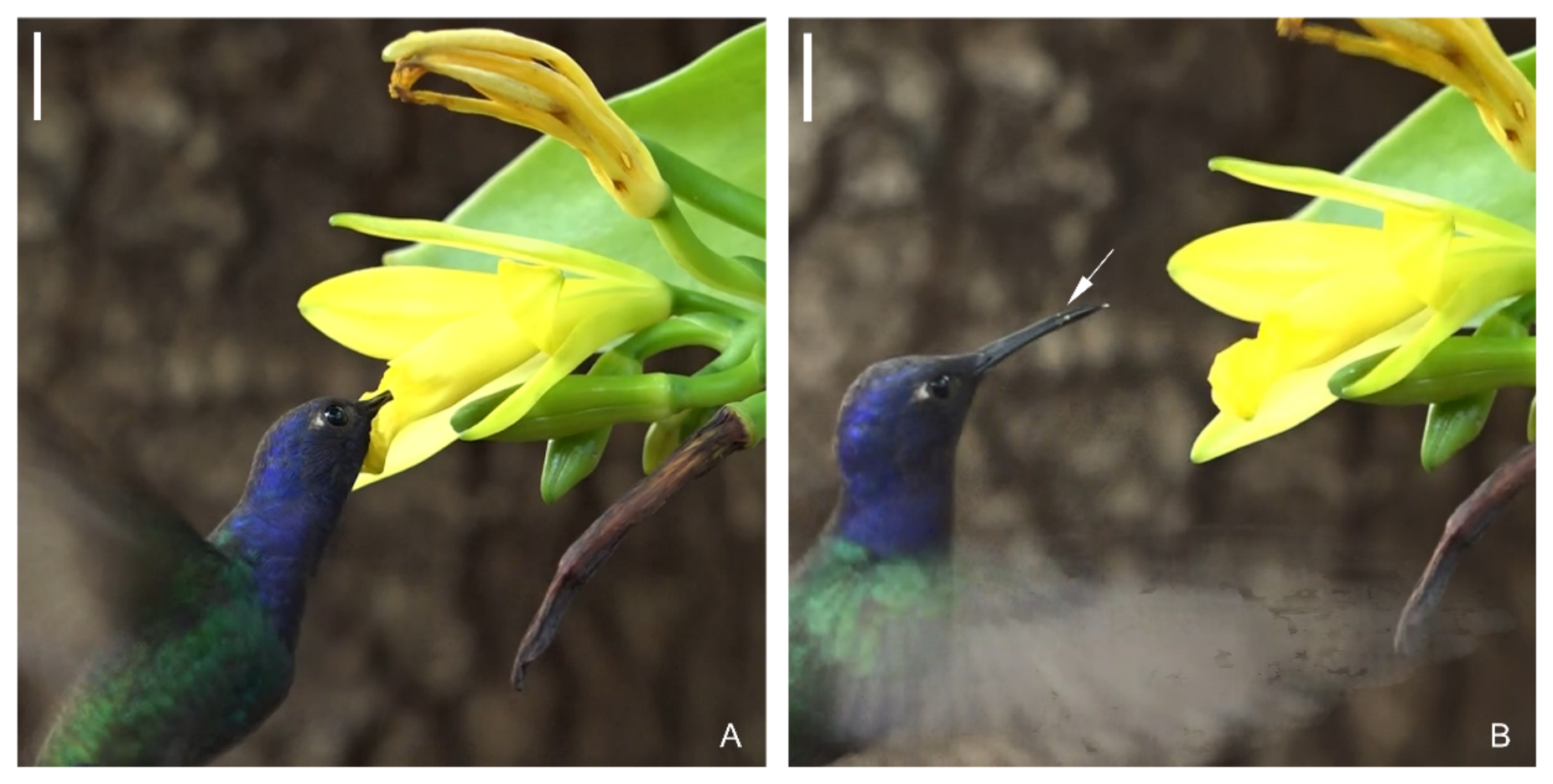
3.2. Floral Visitors and Pollination Process
3.3. Breeding System
4. Discussion
Supplementary Materials
Funding
Institutional Review Board Statement
Data Availability Statement
Acknowledgments
Conflicts of Interest
References
- Schaefer, H.M.; Ruxton, G.D. Plant-Animal Communication; Oxford University Press: Oxford, UK, 2011. [Google Scholar]
- Rodrigues, J.G.; Borba, E.L. Variation in self-incompatibility and interspecific compatibility in a lineage of the mostly self-compatible genus Bulbophyllum (B. sect. Micranthae–Orchidaceae). Plant Syst. Evol. 2023, 309, 9. [Google Scholar] [CrossRef]
- Barreda-Castillo, J.M.; Pansarin, E.R.; Lozano-Rodríguez, M.Á.; Monribot-Villanueva, J.L.; Guerrero-Analco, J.A.; Menchaca-García, R.A. From pollen to seed: Strategies and barriers in orchid reproduction. Bot. Lett. 2026, 173, 162–177. [Google Scholar] [CrossRef]
- Zhang, X.; Jia, Y.; Liu, Y.; Chen, D.; Luo, Y.; Niu, S. Challenges and perspectives in the study of self-incompatibility in orchids. Int. J. Mol. Sci. 2021, 22, 12901. [Google Scholar] [CrossRef] [PubMed]
- Kobayas, H.; Arditti, J. Rostellum in orchids. Lankesteriana 2024, 24, 285–318. [Google Scholar]
- Pansarin, E.R.; Ferreira, A.W.C. Evolutionary disruption in the pollination system of Vanilla (Orchidaceae). Plant Biol. 2022, 24, 157–167. [Google Scholar] [CrossRef] [PubMed]
- Pansarin, E.R. Vanilla lindmaniana and V. palmarum (Orchidaceae) are distinct allopatric species. Plant Ecol. Evol. 2025, 158, 53–62. [Google Scholar] [CrossRef]
- Pansarin, E.R.; Menezes, E.L.F. A new remarkable Vanilla (Orchidaceae) endemic from Brazilian campos rupestres: Their phylogenetic position and evolutionary relationships among Neotropical congeners. Phytokeys 2023, 227, 151–165. [Google Scholar] [CrossRef] [PubMed]
- Pansarin, E.R. Rediscovery and revalidation of the Brazilian endemic Vanilla schwackeana Hoehne (Orchidaceae): Its distribution and phylogenetic position. Plant Ecol. Evol. 2024, 157, 32–41. [Google Scholar] [CrossRef]
- Pansarin, E.R.; Miranda, M.R. A new species of Vanilla (Orchidaceae: Vanilloideae) from Brazil. Phytotaxa 2016, 267, 84–88. [Google Scholar] [CrossRef]
- Pansarin, E.R. Taxonomic notes on Vanilleae (Orchidaceae: Vanilloideae): Vanilla dietschiana, a rare South American taxon transferred from Dictyophyllaria. Selbyana 2010, 30, 198–202. [Google Scholar]
- Pansarin, E.R. The natural history of Neotropical Vanilla and its implications for selection of favorable genotypes for vanilla production. ACI, 2026; in press.
- Köppen, W. Climatologia: Com um Estúdio de los Climas de la Tierra; Fondo de Cultura Econômica: Mexico City, Mexico, 1948. [Google Scholar]
- Luizão, F.J. Ecological Studies in Constrasting Forest Types in Central Amazonia. Ph.D. Thesis, University of Stirling, Stirling, UK, 1995. [Google Scholar]
- Veloso, H.P.; Rangel-Filho, A.L.R.; Lima, J.C.A. Classificação da Vegetação Brasileira, Adaptada a um Sistema Universal; Instituto Brasileiro de Geografia e Estatística: Rio de Janeiro, Brazil, 1991. [Google Scholar]
- Soares, J.J.; Silva, D.W.d.; Lima, M.I.S. Current state and projection of the probable original vegetation of the São Carlos region of São Paulo State, Brazil. Braz. J. Biol. 2003, 63, 527–536. [Google Scholar] [CrossRef]
- Pansarin, E.R.; Pansarin, L.M. Reproductive biology of Epidendrum tridactylum (Orchidaceae: Epidendroideae): A reward-producing species and its deceptive flowers. Plant Syst. Evol. 2014, 300, 321–328. [Google Scholar] [CrossRef]
- Purvis, M.J.; Collier, D.C.; Walls, D. Laboratory Techniques in Botany; Butterwoths: London, UK, 1964. [Google Scholar]
- Pansarin, E.R. Vanilla flowers: Much more than food-deception. Bot. J. Linn. Soc. 2022, 198, 57–73. [Google Scholar] [CrossRef]
- Dafni, A. Pollination Ecology: A Practical Approach; Oxford University Press: Oxford, UK, 1992. [Google Scholar]
- Sick, H. Birds in Brazil. A Natural History; Princeton University Press: Princeton, NJ, USA, 1993. [Google Scholar]
- StatSoft. STATISTICA (Data Analysis Software System), Version 6; StatSoft: Tulsa, OK, USA, 2003. [Google Scholar]
- Pansarin, E.R. Vanilla × robusta (Orchidaceae: Vanilloideae), the first natural Vanilla hybrid for South America. Nord. J. Bot. 2025, 2025, e04743. [Google Scholar] [CrossRef]
- Pansarin, E.R. Systematics of the Vanilla chamissonis complex (Orchidaceae): A study based on integrative taxonomy. Plant Ecol. Evol. 2025, 158, 260–278. [Google Scholar] [CrossRef]
- Soto-Arenas, M.A.; Dressler, R.L. A revision of the Mexican and Central American species of Vanilla Plumier ex Miller with a characterization of their ITS region of the nuclear ribosomal DNA. Lankesteriana 2010, 9, 285–354. [Google Scholar] [CrossRef]
- Pansarin, E.R. Non-species-specific pollen transfer and double-reward production in euglossine-pollinated Vanilla. Plant Biol. 2023, 25, 612–619. [Google Scholar] [CrossRef]
- Lubinsky, P.; Van Dam, M.H.; Van Dam, A.R. Pollination of Vanilla and evolution in Orchidaceae. Lindleyana 2006, 75, 926–929. [Google Scholar]
- Danforth, B.N.; Cardinal, S.; Praz, C.; Almeida, E.A.B.; Michez, D. The impact of molecular data on our understanding of bee phylogeny and evolution. Annu. Rev. Entomol. 2013, 58, 120830113030002. [Google Scholar] [CrossRef] [PubMed]
- Fenster, C.B.; Armbruster, W.S.; Wilson, P.; Dudash, M.R.; Thomson, J.D. Pollination syndromes and floral specialization. Annu. Rev. Ecol. Evol. Syst. 2004, 35, 375–403. [Google Scholar] [CrossRef]
- Cronk, Q.C.B.; Ojeda, I. Bird-pollinated flowers in an evolutionary and molecular context. J. Exp. Bot. 2008, 59, 715–727. [Google Scholar] [CrossRef]
- Van Dam, A.R.; Householder, J.E.; Lubinsky, P. Vanilla bicolor Lindl. (Orchidaceae) from the Peruvian Amazon: Auto-fertilization in Vanilla and notes on floral phenology. Genet. Resour. Crop Evol. 2010, 57, 473–480. [Google Scholar] [CrossRef]
- Pridgeon, A.M.; Cribb, P.J.; Chase, M.W.; Rasmussen, F.N. Genera Orchidacearum, Vol. 3, Orchidoideae (Part 2), Vanilloideae; Oxford University Press: London, UK, 2003. [Google Scholar]
- Gigant, R.; Bory, S.; Grisoni, M.; Besse, P. Biodiversity and evolution in the Vanilla genus. In The Dynamical Processes of Biodiversity—Case Studies of Evolution and Spatial Distribution; Grillo, O., Venora, G., Eds.; InTech: Rijeka, Croatia, 2011; pp. 1–27. [Google Scholar]
- Faegri, K.; van der Pijl, L. The Principles of Pollination Ecology; Pergamon Press: Oxford, UK, 1979. [Google Scholar]
- Stebbins, G.L. Self-fertilization and population variability in the higher plants. Am. Nat. 1957, 91, 337–354. [Google Scholar] [CrossRef] [PubMed]
- van der Pijl, L.; Dodson, C.H. Orchid Flowers: Their Pollination and Evolution; University of Miami: Coral Gables, FL, USA, 1966. [Google Scholar]
- Aguiar, J.M.R.B.V.; Pansarin, L.M.; Ackerman, J.D.; Pansarin, E.R. Biotic versus abiotic pollination in Oeceoclades maculata (Lindl.) Lindl. (Orchidaceae). Plant Species Biol. 2012, 27, 86–95. [Google Scholar] [CrossRef]
- Pansarin, E.R. Epiphyte Vanilla relies on birds as long-distance seed dispersers. Plant Biol. 2025, 27, 1497–1504. [Google Scholar] [CrossRef]
- Kundu, A.; Karmakar, P. Pollination ecology and breeding system of Ecbolium Ligustrinum (Acanthaceae): A transition from autogamy to xenogamy through specialised plant-pollinator interactions. Acta Bot. Hung. 2022, 64, 137–155. [Google Scholar] [CrossRef]



| Treatment | Fruit Set (a) | Fruit Set (b) |
|---|---|---|
| Autonomous self-pollination | (30/0) 0% | (30/28) 93.3% |
| Manual self-pollination | (30/29) 96.6% | (30/30) 100% |
| Manual cross-pollination | (30/28) 93.3% | (30/29) 96.6% |
| Open pollination | (450/90) 20.7% | (485/458) 94.4% |
Disclaimer/Publisher’s Note: The statements, opinions and data contained in all publications are solely those of the individual author(s) and contributor(s) and not of MDPI and/or the editor(s). MDPI and/or the editor(s) disclaim responsibility for any injury to people or property resulting from any ideas, methods, instructions or products referred to in the content. |
© 2026 by the author. Licensee MDPI, Basel, Switzerland. This article is an open access article distributed under the terms and conditions of the Creative Commons Attribution (CC BY) license.
Share and Cite
Pansarin, E.R. Autogamy vs. Allogamy: Biotic-Dependent Populations Reveal Shift in the Reproduction System of an Essentially Autogamous Vanilla. Diversity 2026, 18, 353. https://doi.org/10.3390/d18060353
Pansarin ER. Autogamy vs. Allogamy: Biotic-Dependent Populations Reveal Shift in the Reproduction System of an Essentially Autogamous Vanilla. Diversity. 2026; 18(6):353. https://doi.org/10.3390/d18060353
Chicago/Turabian StylePansarin, Emerson R. 2026. "Autogamy vs. Allogamy: Biotic-Dependent Populations Reveal Shift in the Reproduction System of an Essentially Autogamous Vanilla" Diversity 18, no. 6: 353. https://doi.org/10.3390/d18060353
APA StylePansarin, E. R. (2026). Autogamy vs. Allogamy: Biotic-Dependent Populations Reveal Shift in the Reproduction System of an Essentially Autogamous Vanilla. Diversity, 18(6), 353. https://doi.org/10.3390/d18060353