Article

Bathymetric Patterns of Phytobenthic Communities and Bottom Types Along the Aegean Coasts of Türkiye


1
Department of Biology, Faculty of Engineering and Natural Sciences, Manisa Celal Bayar University, 45140 Manisa, Türkiye
2
Eser Deniz Ecological, Environmental Company, Technocity of Manisa Celal Bayar University, 45140 Manisa, Türkiye
3
Faculty of Fisheries Sciences, Ege University, 35040 İzmir, Türkiye
4
Faculty of Aquatic Sciences, University of Istanbul, 34134 Istanbul, Türkiye
*
Author to whom correspondence should be addressed.
Diversity 2026, 18(5), 300; https://doi.org/10.3390/d18050300
Submission received: 13 April 2026 / Revised: 4 May 2026 / Accepted: 13 May 2026 / Published: 17 May 2026

Abstract

Evaluating the bathymetric distribution of phytobenthic communities is essential for understanding the factors affecting habitat heterogeneity along a depth gradient. In the present study, we investigated the composition and vertical zonation patterns of phytobenthic communities across different bottom types (rocky and sedimentary) along the Turkish Aegean coasts. Dominant habitat types were identified in 175 depths and classified into 18 categories (Posidonia oceanica, Cymodocea nodosa, Halophila stipulacea, Halopteris spp., Stypopodium schimperi, Ericaria crinita, coralligenous, coralligenous/Mesophyllum spp., Jania spp./Halopteris spp., Ulva spp., rocky, rocky-turf, sandy, sandy-Caulerpa taxifolia var. distichophylla, sandy-Gongolaria montagnei var. compressa, silt, muddy, slime). Among the study sites, P. oceanica meadows (41%) were the dominant habitat in 70 depths, followed by sandy (30%), and rocky bottoms (11%). Total coverage of P. oceanica meadows was recorded as 28%, 80%, 76%, and 56% at 5 m, 10 m, 15 m, and 20 m depths, respectively. Seagrass meadows have started to be replaced by sandy bottoms at 30 m (52%) and 40 m (72%). Considering the bathymetrical divergence in phytobenthic community composition and abundance particularly in urban sites, reflected the influence of intense anthropogenic stressors. Here, non-destructive and cost-effective visual sampling technique based on in situ observations of phytobenthic community assemblages, proved to be an effective approach for the assessment of subtidal habitats.

1. Introduction

Benthic marine macrophytes, including seagrasses and macroalgae, play a key role in sustaining the high productivity of coastal ecosystems [1]. Dwelling in shallow, high-irradiance environments, they exhibit high rates of primary production. Their complex physical structures function as ecosystem engineers by providing habitat and nursery grounds for a wide range of marine organisms, thereby increasing species richness. Phytobenthic communities stabilize sediments, thereby reducing turbidity and increasing light penetration. Collectively, these characteristics make benthic macrophytes fundamental drivers of coastal ecosystem productivity, resilience, and biogeochemical cycling [2,3,4,5,6]. Marine benthic macrophytes, including macroalgae and seagrasses, are widely recognized as reliable biological quality elements for assessing the ecological status of coastal waters under the European Water Framework Directive (WFD) [7]. The Mediterranean Basin is recognized as a global biodiversity hotspot, characterized by high levels of endemism and ecological heterogeneity, particularly in coastal benthic ecosystems. These communities respond sensitively to environmental gradients and anthropogenic pressures, making them effective indicators for monitoring coastal ecosystem health [7].
Considering the characteristic phytobenthic species of the Aegean Sea (Eastern Mediterranean), the endemic Posidonia oceanica (L.) Delile is the leading seagrass, covering significant areas and constructing habitats at 0–40 m in the region [8,9,10]. The distribution and structural complexity of Posidonia oceanica meadows are strongly controlled by depth-related environmental factors, particularly light availability, which directly influences growth rates and vertical limits [11]. In addition, Cystoseira belts, macroalgal turfs, rocky-turfs, and associations of macroalgal communities with seagrass beds are widely distributed along the Aegean Sea coasts from pristine to urban sites.
In recent years, benthic macrophytes and associated habitats have been exposed to significant environmental pressures (i.e., pollution, anchoring, the invasion of alien species, and various destructive forms of land use and fishing methods) that initiate regressions and permanent degradation of macrophytic communities and habitat heterogeneity in the Mediterranean Sea ecosystem [12,13,14,15,16,17]. Nutrient enrichment and eutrophication processes often lead to the proliferation of opportunistic macroalgae, which reduce light availability and negatively affect sensitive macrophytes such as P. oceanica [18]. Macroalgal communities associated with seagrass beds exhibit similar responses to environmental stressors, often undergoing regression under increasing anthropogenic pressure [19].
In a depth range of 0–40 m along the Turkish Aegean coasts, there are significant alterations in dominant phytobenthic community compositions. General observations on the regression of P. oceanica meadows indicate a deterioration of environmental conditions at greater depths. Depth integrates key abiotic factors such as light availability, water transparency, and sedimentation, thereby acting as a major driver of phytobenthic community structure. Depth acts as an integrative environmental gradient, combining light availability, turbidity, and sedimentation effects, thereby controlling both the composition and vertical zonation of phytobenthic communities [18,19]. The upward regression of P. oceanica meadows by 1–2 m likely reflects increasing light limitation and declining water quality. These changes are consistent with depth acting as an environmental pressure, influencing the settlement of phytobenthic communities [20]. Considering the biodiversity and species richness, phytobenthic community structure is generally more complex in shallow waters than in deeper zones, indicating that depth can be regarded as a key determinant of environmental pressure affecting phytobenthic assemblages [21,22,23,24,25,26].
Therefore, seagrass beds (Posidonia, Cymodocea, and Zostera), macroalgal forests (Cystoseira s.l., Sargassum), and coralligenous algal concretions in the Mediterranean Sea are integrated to ‘Priority Habitats in the Convention on the Conservation of European Wildlife’ and ‘Natural European Union’s Habitats Directive (92/43/EEC)’ and they are also applied as key/target elements due to their sensitivity to environmental impacts in a wide geospatial extent in the monitoring programs implemented by the WFD and the MSFD [27,28].
Evaluating the bathymetric distribution of benthic communities is essential to recognize the factors that affect benthic community structure [29]. Understanding depth-related biodiversity patterns is essential for predicting ecosystem responses to environmental change in coastal marine systems. In the present study, we aim to investigate the composition and vertical zonation patterns of dominant habitat types along the Turkish coasts of the Aegean Sea. A non-destructive and cost-effective visual sampling technique based on in situ assessment of phytobenthic community assemblages represents an applicable approach for the assessment of subtidal habitats [30,31]. Therefore, this study provides a rapid and scalable tool for ecosystem-functioning assessment for coastal management and efficient large-scale monitoring, in addition to enabling a consistent estimation of sensitive habitats with minimal disturbance.

2. Materials and Methods

2.1. Study Site

The Aegean coasts of Türkiye are characterized by distinct hydrological features compared to the Western Mediterranean Sea as a result of the Turkish Straits Current System. The Aegean Sea is a temperate region with high seasonal variability in physico-chemical parameters (i.e., temperature, irradiance, salinity). Salinity values in the surface waters oscillate between 32.5 and 37.0 ‰ due to freshwater inputs and the Black Sea waters [32,33]. The study region is generally characterized by steep rocky bottom types at 0–20 m depth, while the lower limit of the seagrass meadows reaches up to a 30 m depth.

2.2. Sampling

In order to determine the bathymetric variation in the composition and abundance of different habitat types, underwater surveys were conducted in 25 sites along the Aegean coasts of Türkiye (Eastern Mediterranean) in June 2023 (Figure 1).
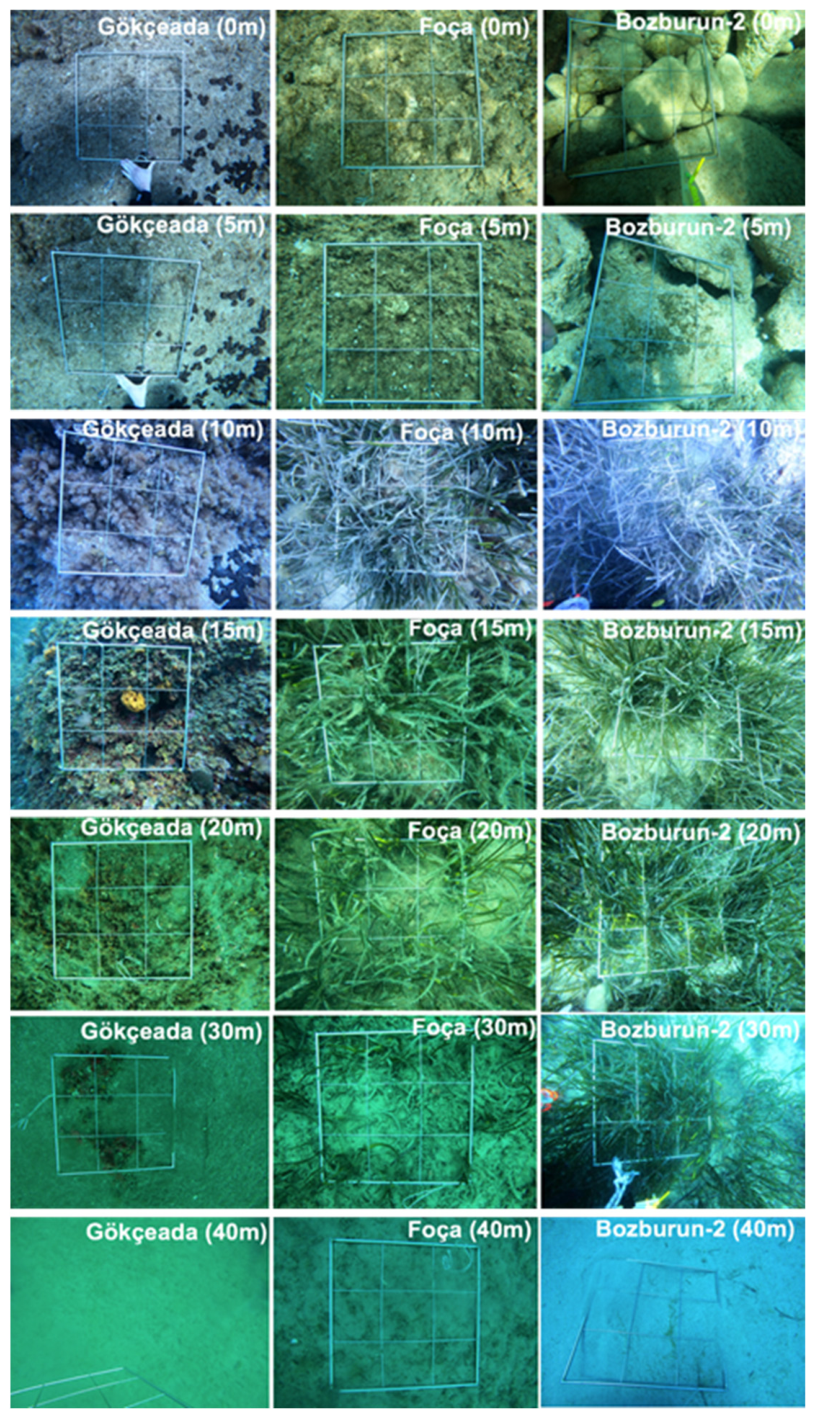
At each site, sampling was carried out by capturing images of the phytobenthic communities along a 0–40 m depth gradient (0, 5, 10, 15, 20, 30, 40 m) with an underwater camera (Olympus OM-D E-M5) (Figure 2).
Dominant habitat types (when its cover exceeded 30%) were distinguished and their abundance was defined as the percentage cover (%) estimated visually within each quadrat frame (0.36 m2). Three replicate images were taken at 5-m intervals along transects perpendicular to the shoreline. Transparency (Secchi depth) among the study sites was also recorded during the survey.

2.3. Data Analysis

The phytobenthic communities that were identified were categorized according to their ecological and morphological characteristics (seagrass, macroalgae, association), life spans (temporal, perennial), and growth forms (sheet, turf, canopy-forming).
Bathymetric distribution of the habitat types among the study sites was analyzed through Euclidean distance analysis. Principal Component Analysis (PCA) was also performed in order to put forward the variations in the composition of habitat types along a bathymetric gradient among sites. All statistical analyses were conducted using PAST 4.0 Software [34].
Graphical representation of the spatial distribution of dominant phytobenthic communities was generated using ArcGIS (ArcMap 10.5)-based interpolation of abundance (percentage cover) data across sampling depths and sites.

3. Results

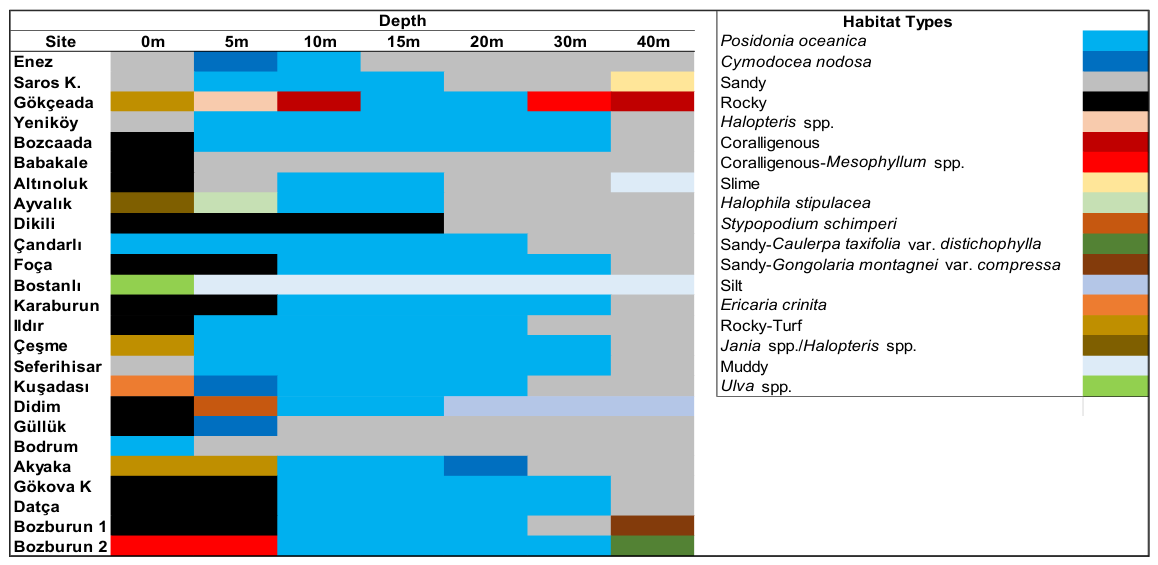
Dominant phytobenthic communities and habitat types were identified across 175 depth records and classified into 18 categories (Posidonia oceanica, Cymodocea nodosa, Halophila stipulacea, Halopteris spp., Stypopodium schimperi, Ericaria crinita, coralligenous, coralligenous/Mesophyllum spp., Jania spp./Halopteris spp., Ulva spp., rocky, rocky-turf, sandy, sandy-Caulerpa taxifolia var. distichophylla, sandy-Gongolaria montagnei var. compressa, silt, muddy, slime) (Figure 3). In addition, invasive alien species from brown algae S. schimperi; red algae Asparagopsis spp., Ganonema farinosum; green algae Caulerpa cylindracea, C. prolifera, Codium bursa and C. fragile were recorded in the study sites.
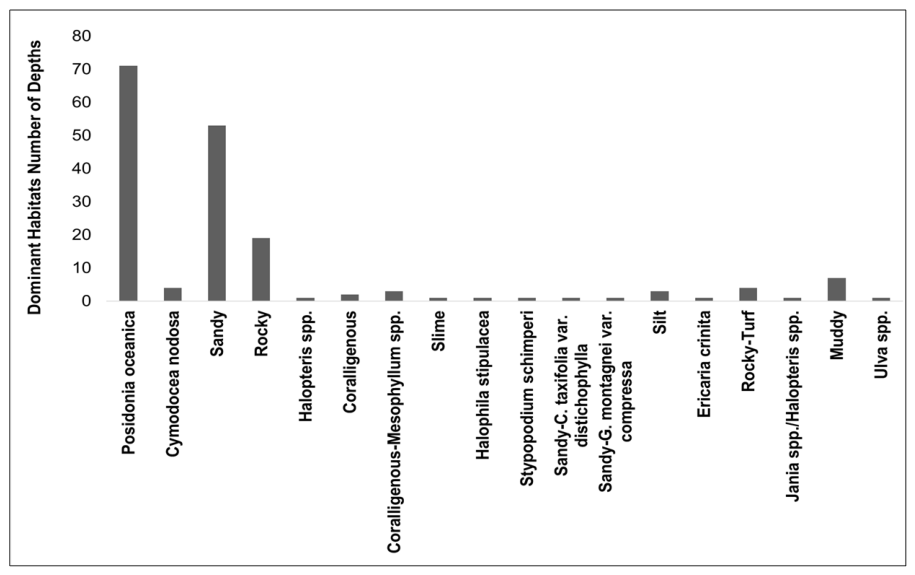
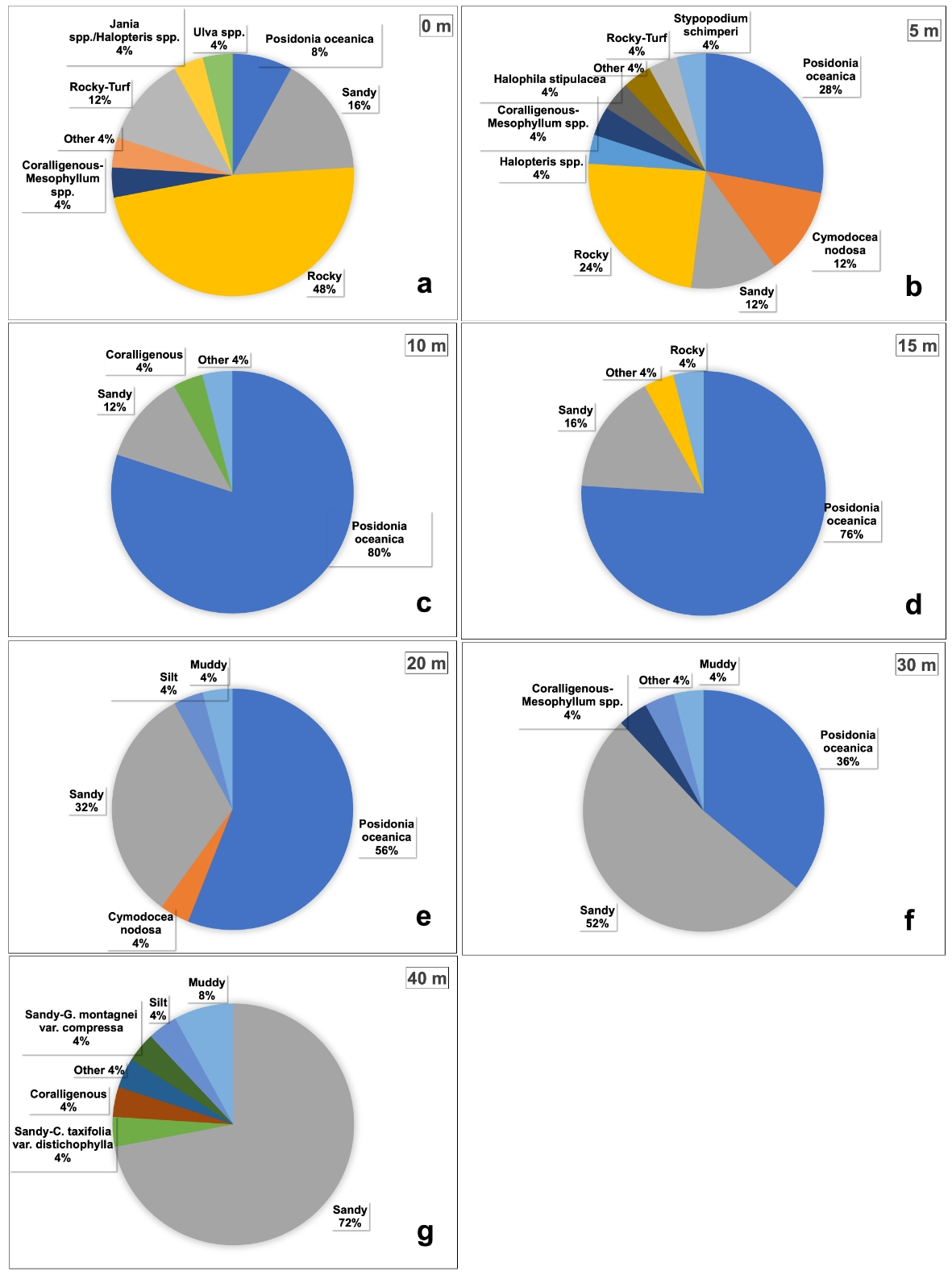
Among the study sites, P. oceanica meadows (41%) were recorded at 70 depths, while sandy (30%) and rocky bottoms (11%) were recorded at 53 and 20 depths, respectively (Figure 4). At the surface (0 m), rocky bottoms (48%) represent the dominant habitat, followed by sandy bottoms (16%). At 5 m depth, P. oceanica meadows (28%) dominated the study area together with rocky bottoms (24%), mixed algal assemblages (24%), C. nodosa meadows (12%), and sandy bottoms (12%). Total coverage of P. oceanica meadows reached to 80%, 76%, and 56% at 10 m, 15 m, and 20 m depth, respectively. Seagrass meadows have started to be replaced by sandy bottoms at 30 m (52%) and 40 m (72%) (Figure 5).
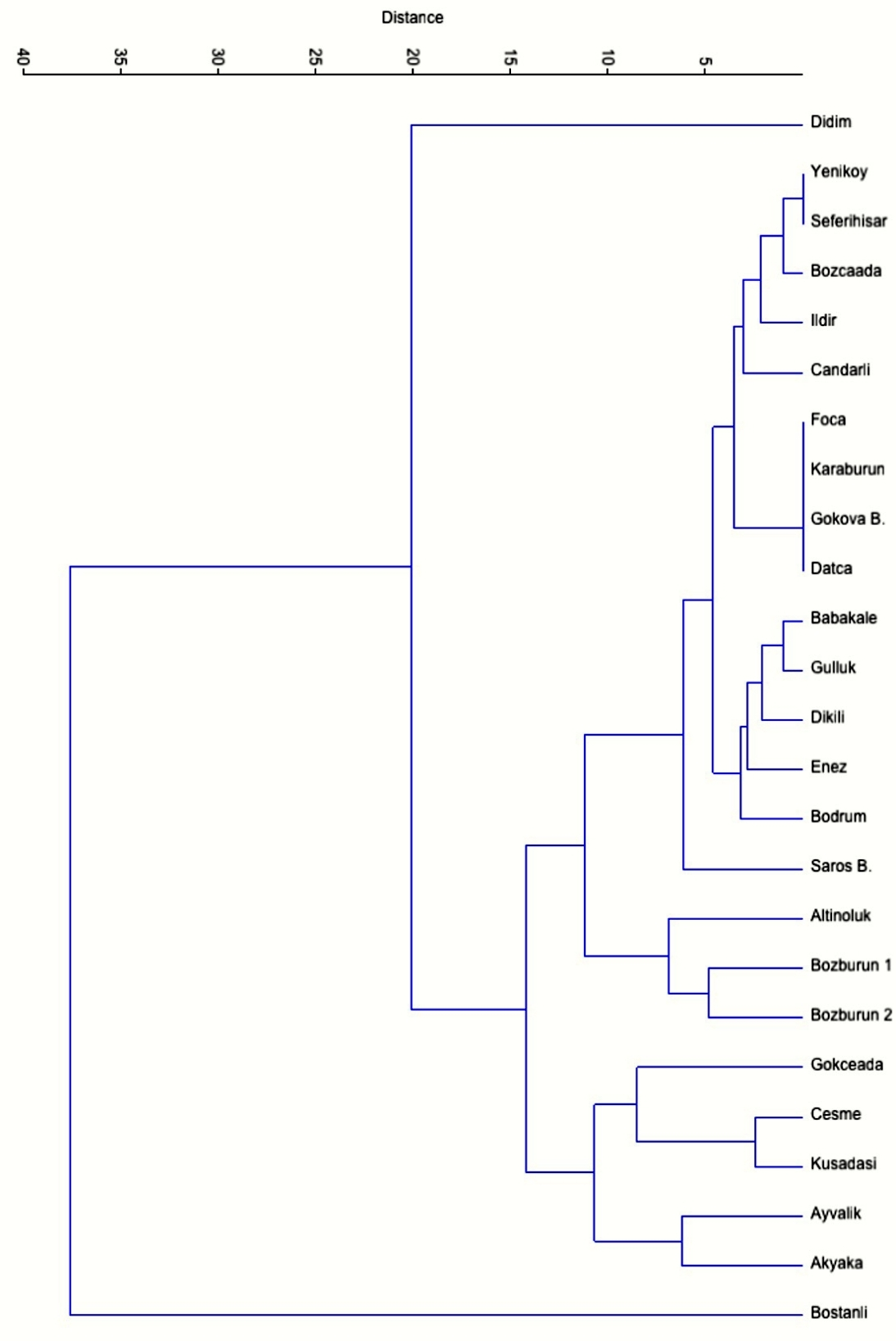
The Euclidean distance analysis highlighted a pronounced separation of the study sites into two main groups based on the bathymetric distribution of habitat types, with İzmir forming a distinct cluster apart from all other locations. In contrast, Gökçeada, Çeşme, Kuşadası, Ayvalık, and Akyaka grouped closely together, indicating a more comparable bathymetric distribution of phytobenthic communities dominated by rocky-turf assemblages, Jania spp./Halopteris spp., and P. oceanica (Figure 6). Some sites (Babakale, Dikili, Enez, Bodrum, İzmir, and Güllük) are characterized by the absence of continuous P. oceanica meadows or the presence of fragmented patches, indicating low meadow density, and limited water transparency. In contrast, Saros, Gökçeada, Bozcaada, Altınoluk, Ayvalık, Çandarlı, Foça, Urla, Çeşme, Seferihisar, Kuşadası, Akyaka, Gökova, and Datça exhibited deeper lower limits and high meadow density, reflecting more favorable light conditions. Lower limit depth (36.5 m) of P. oceanica and Secchi depth (25 m) reached their maximum values in Bozburun-2.
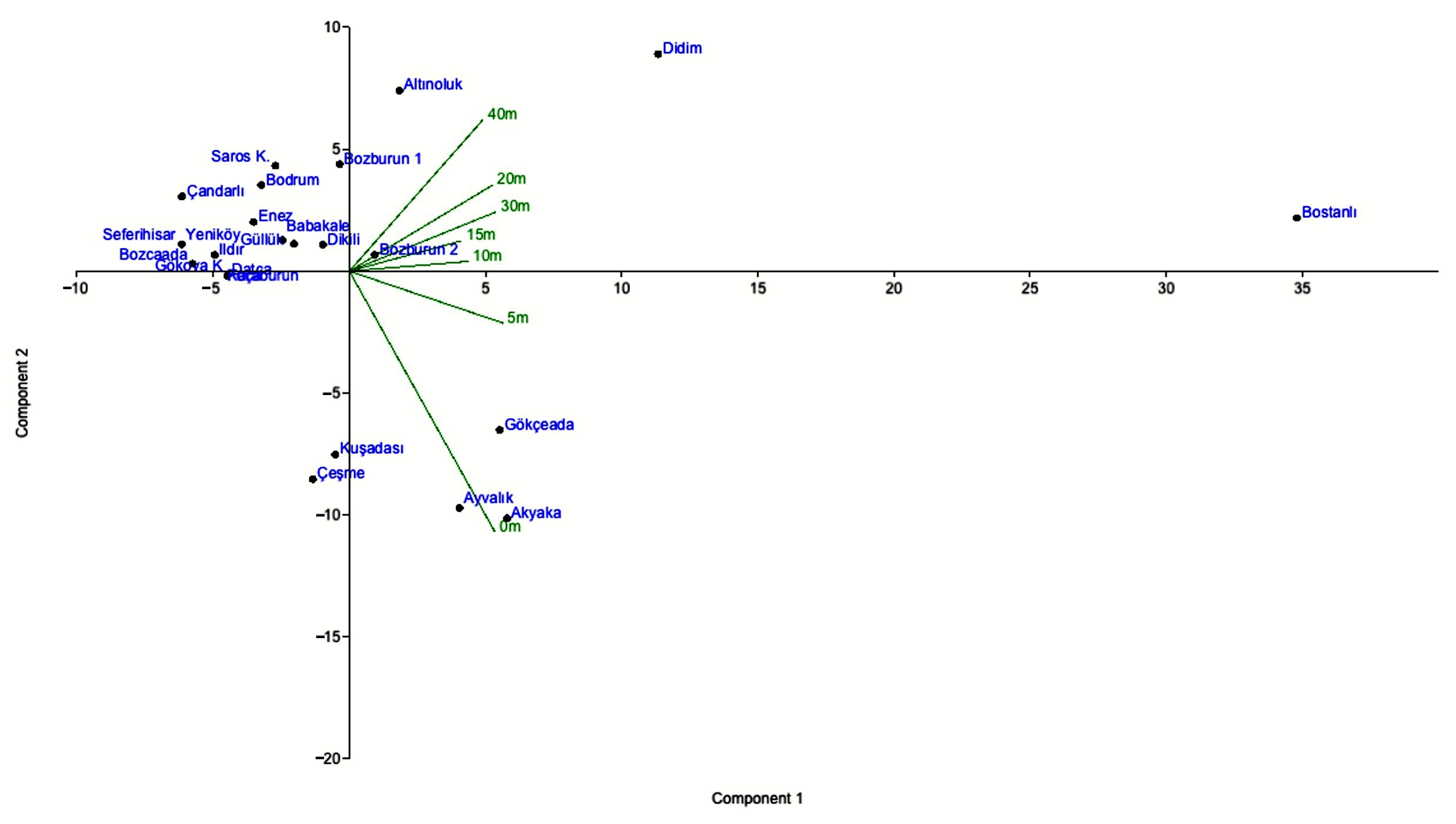
Principal Component Analysis (PCA) revealed a clear differentiation of sites based on the composition of habitat types along the bathymetric gradient (Figure 7). The first principal component (PC1) primarily separated sites influenced by disturbed conditions, such as İzmir, from relatively less impacted locations, indicating a strong association with opportunistic and simplified habitat types (e.g., Ulva spp., slime, and sandy substrates). On the other hand, the second principal component (PC2) reflected variability related to depth-dependent community structure, distinguishing sites characterized by continuous seagrass meadows (P. oceanica, C. nodosa) and complex macroalgal assemblages (e.g., coralligenous formations and E. crinita) from those dominated by fragmented or degraded habitats. Shallow-water habitats (0–10 m), associated with rocky substrates and turf-forming macroalgae (e.g., Halopteris spp., Jania spp./Halopteris spp.), were positioned closer to the origin, indicating transitional community structures. Deeper habitats (20–40 m), including coralligenous assemblages and sandy substrates, showed a more distinct distribution along the ordination axes, reflecting increasing environmental filtering, particularly light limitation and sedimentation effects. Furthermore, sites such as Gökçeada, Akyaka, and Ayvalık clustered together, indicating similar habitat compositions dominated by seagrass meadows and macroalgal communities, whereas sites such as İzmir were clearly separated, suggesting altered community structure under higher anthropogenic pressures.
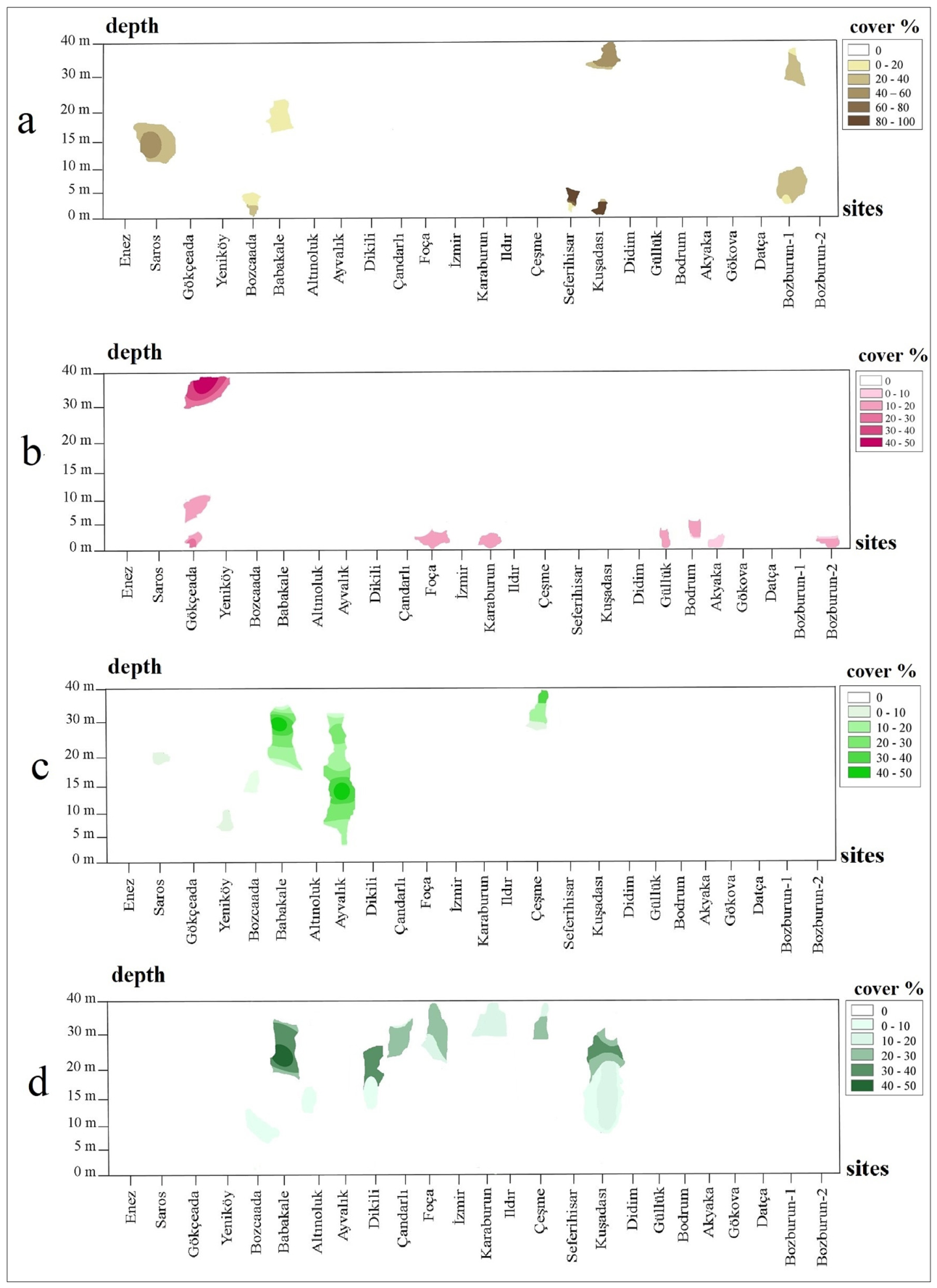
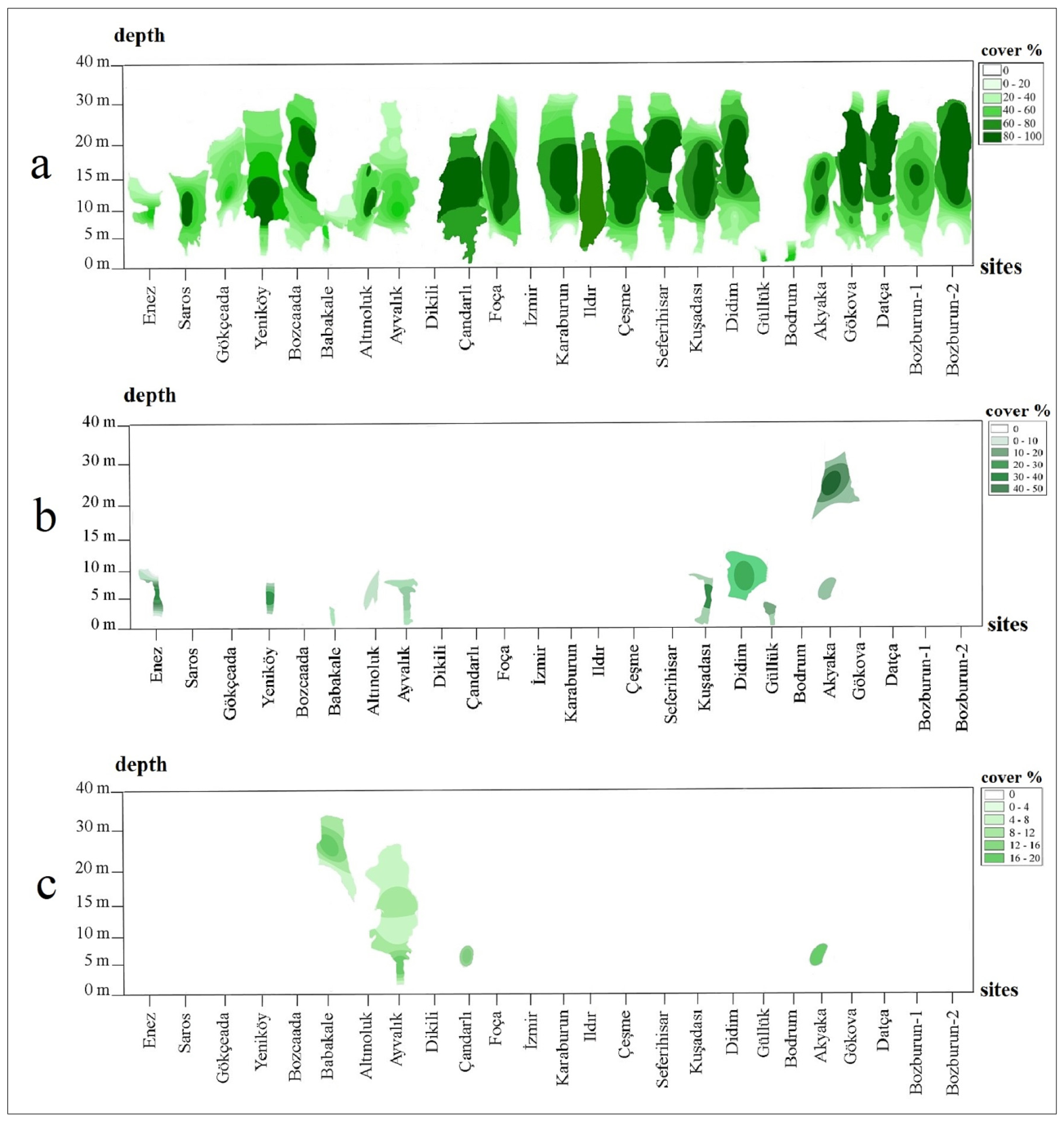
Graphical representation of the spatial distribution of dominant phytobenthic communities (P. oceanica, C. nodosa, H. stipulacea, Cystoseira s.l., C. cylindracea, Corallina spp., and C. bursa) according to their total coverage (%) at 0–40 m depths are shown in Figure 8 and Figure 9. Along the Aegean coasts of Türkiye, P. oceanica is the dominant seagrass species forming facies (continuous, sparse and patches). It occurs as dense and continuous beds at 5–30 m depth, whereas it appears as small and fragmented patches at 0–5 m depth at several sites (Babakale, Dikili, Enez, Bodrum, İzmir, and Güllük). Moreover, in Altınoluk, Ayvalık, Çandarlı, Ildır, and Didim, P. oceanica roots are recorded in muddy bottoms deeper than its lower limits, where the lower limit type is determined as sparse and regressive, in general. C. nodosa is generally found as patches at 0–10 m depth, and continuous meadows at 20–30 m in Akyaka. When the invasive alien species are taken into account, angiosperm H. stipulacea is observed densely at 0–30 m in Ayvalık and Babakale, and is frequently associated with the invasive green alga C. cylindracea at 20–40 m depth, where P. oceanica meadows regressed. Brown algae E.crinita, E. corniculata, C. foeniculacea f. tenuiramosa are generally observed along the coasts, G. montagnei var. spinosa and G. montagnei var. compressa are found in deeper parts and at the lower limit depths of P. oceanica meadows. Unlike Corallina spp., distributed in the rocky bottoms, a high coverage of green alga C. bursa is observed in deeper parts (>20 m) and at the lower limit depths of P. oceanica meadows.

4. Discussion

Bathymetric adaptations of phytobenthic communities highlight depth as a primary driver structuring their composition and vertical zonation, as stated in previous studies [35,36,37]. The bathymetric patterns observed in this study highlight the combined influence of depth-related environmental gradients and substrate type on the structure and distribution of phytobenthic communities [19]. Differences among bottom types indicate that substrate characteristics interact with depth-related environmental gradients, such as light availability and hydrodynamism, in determining the community structure. Shallower zones are generally characterized by high structural complexity and habitat heterogeneity, reflecting favorable light conditions.
The temporal variability observed in shallow phytobenthic communities is consistent with the patterns observed in shallow rocky habitats dominated by opportunistic taxa such as Ulva spp. and Halopteris spp. In these environments, high irradiance and strong hydrodynamism promote rapid algal growth and adaptation, resulting in evident temporal shifts in community structure [38]. Shallow rocky substrates also provide convenient conditions for ephemeral algae, which promptly respond to environmental variabilities (i.e., nutrient levels) [39,40]. In contrast, slow-growing bioconstructors, such as coralligenous communities, tend to exhibit greater structural stability, reflecting more stable hydrodynamic conditions at deeper parts.
The dominance of rocky substrates in surface waters (0–5 m) reflects high hydrodynamic disturbance that favors hard-bottom habitats, such as photophilic erect macroalgae (Cystoseira s.l., Padina, Halopteris, Dictyota, Corallina, Laurencia, Ulva), and limits seagrass establishment.
Seagrass P. oceanica dominated the phytobenthic communities in shallow to mid-depth zones (5–20 m) characterized by dense and continuous beds prevailing under optimal light conditions, while sparse and patchy meadows are more commonly observed in disturbed areas or at the lower limit depths. Regression in P. oceanica meadows beyond 20 m depth is consistent with decreasing light along the depth gradient, which limits meadow persistence and promotes replacement by sciaphilic macroalgae (Mesophyllum, Peyssonnelia, Flabellia). The observed reduction in seagrass density and lower depth limits is consistent with previous findings indicating that light availability decreases with depth and constrains the growth and persistence of P. oceanica meadows [11]. These patterns may also reflect ongoing ecological shifts driven by long-term environmental change and increasing human pressures in Mediterranean coastal systems.
The increasing dominance of sandy bottoms at greater depths (30–40 m) further indicates a shift toward sedimentary environments, where reduced irradiance and lower hydrodynamism limit the development of dense macrophytic assemblages [41,42]. According to the PCA results, these patterns emphasize that the distribution of phytobenthic communities along the Aegean coasts are influenced along a bathymetric gradient, as also stated in various studies [43,44,45].
The bathymetrical divergence in phytobenthic community composition, structure and abundance in urban areas (e.g., İzmir and Güllük) reflects the influence of intense coastal urbanization and increased turbidity. These anthropogenic pressures significantly reduce light penetration and affect seagrass meadow development at greater depths. The bathymetric patterns observed in the Aegean Sea have been witnessed in other oligotrophic Mediterranean regions experiencing anthropogenic pressures [46,47,48]. Anthropogenic pressures have been considered to promote opportunistic macroalgal growth while reducing the abundance of sensitive habitats such as canopy-forming algae and seagrasses [18]. Such community shifts reflect a transition from structurally complex, late-successional assemblages to simplified systems dominated by opportunistic taxa [7,19,49,50]. Mediterranean benthic ecosystems, including seagrass meadows, coralligenous formations, and macroalgal assemblages, are recognized as biodiversity hotspots, where habitat complexity and environmental gradients play a key role in structuring biological communities and their response to anthropogenic pressures [51,52,53]. Therefore, our results underscore the importance of considering macroalgal communities in relation to bottom types and seagrass metrics (integrated bio-indicators of coastal quality) while evaluating benthic ecosystems, particularly in the context of habitat mapping, monitoring, and the management of coastal environments [41].
This study provides a conceptual framework linking bathymetric gradients and substrate heterogeneity to phytobenthic community organization in Aegean coastal ecosystems. The identification of spatial patterns in phytobenthic communities can support the design and sustainable management of Marine Protected Areas (MPAs), particularly in defining priority zones for conservation and restoration efforts. These findings further support the use of phytobenthic communities as effective bio-quality tools for assessing ecosystem health and guiding coastal management strategies under frameworks such as the WFD and MSFD [19]. Consequently, integrating long-term phytobenthic monitoring with predictive modeling is expected to improve the forecasting of ecosystem responses to multiple stressors such as climate change, eutrophication, and coastal development, therefore enabling more adaptive and spatially targeted management scenarios.

Author Contributions

E.T., conceptualization, methodology, data analysis and interpretation, writing—original draft, writing—review and editing, visualization; A.G., data analysis and interpretation, writing—original draft; F.B., O.K., E.M., Ö.Y., O.M. and S.O.G., methodology, writing—review and editing. All authors have read and agreed to the published version of the manuscript.

Funding

This research received no external funding.

Institutional Review Board Statement

The study was based on a non-destructive visual sampling technique involving in situ observations only. No experimental procedures involving humans or animals were conducted; therefore, ethical approval was not required according to the guidelines of Manisa Celal Bayar University Ethics Committee (https://etikkurul.mcbu.edu.tr).

Data Availability Statement

The original contributions presented in this study are included in the article. Further inquiries can be directed to the corresponding author.

Acknowledgments

This study was supported by the Scientific and Technological Research Council of Türkiye (TÜBİTAK Project number: 121Y215).

Conflicts of Interest

Furkan Bilgiç was employed by the company Eser Deniz Ecological, Environmental Company. The remaining authors declare that the research was conducted in the absence of any commercial or financial relationships that could be construed as a potential conflict of interest.

References

  1. Panayotidis, P.; Montesanto, B.; Orfanidis, S. Use of low-budget monitoring of macroalgae to implement the European Water Framework Directive. J. Appl. Phycol. 2004, 16, 49–59. [Google Scholar] [CrossRef]
  2. Pergent-Martini, C.; Bonacorsi, M.; Bein, A.; Braschi, J.; Kremmer, L.; Pergent, G. Mapping of Coastlines of the Republic of Cyprus—Progress Report, April 2013; GIS Posidonie Publ.: Corte, France, 2013; pp. 1–38. [Google Scholar]
  3. Lopez y Royo, C.; Casazza, G.; Pergent-Martini, C.; Pergent, G. A biotic index using the seagrass Posidonia oceanica (BiPo) to evaluate ecological status of coastal waters. Ecol. Indic. 2010, 10, 380–389. [Google Scholar] [CrossRef]
  4. Montefalcone, M.; Morri, C.; Peirano, A.; Albertelli, G.; Bianchi, C.N. Substitution and phase-shift in Posidonia oceanica meadows of NW Mediterranean Sea. Estuar. Coast. Shelf Sci. 2007, 75, 63–71. [Google Scholar] [CrossRef]
  5. Montefalcone, M.; Parravicini, V.; Vacchi, M.; Albertelli, G.; Ferrari, M.; Morri, C.; Bianchi, C.N. Human influence on seagrass habitat fragmentation in NW Mediterranean Sea. Estuar. Coast. Shelf Sci. 2010, 86, 292–298. [Google Scholar] [CrossRef]
  6. Boudouresque, C.F.; Bernard, G.; Pergent, G.; Shili, A.; Verlaque, M. Regression of Mediterranean seagrasses caused by natural processes and anthropogenic disturbances and stress: A critical review. Bot. Mar. 2009, 52, 395–418. [Google Scholar] [CrossRef]
  7. Taşkın, E.; Tan, İ.; Çakır, M.; Sungur, Ö.; Minareci, O.; Minareci, E.; Atabay, H. Ecological quality status of the Turkish coastal waters by using a marine macrophytic biotic index (EEI-c). Turk. J. Bot. 2023, 47, 34–49. [Google Scholar] [CrossRef]
  8. Lopez y Royo, C.; Silvestri, C.; Pergent, G.; Casazza, G. Assessing human-induced pressures on coastal areas with publicly available data. J. Environ. Manag. 2009, 90, 1494–1501. [Google Scholar] [CrossRef]
  9. Boudouresque, C.F.; Bernard, G.; Bonhomme, P.; Charbonnel, E.; Diviacco, G.; Meinesz, A.; Pergent, G.; Pergent-Martini, C.; Ruitton, S.; Tunesi, L. Protection and Conservation of Posidonia oceanica Meadows; RAMOGE and RAC/SPA Publisher: Tunis, Tunisia, 2012; pp. 1–202. [Google Scholar]
  10. Boudouresque, C.F.; Bernard, G.; Bonhomme, P.; Charbonnel, E.; Diviacco, G.; Meinesz, A.; Pergent, G.; Pergent-Martini, C.; Ruitton, S.; Tunesi, L. Préservation et Conservation des Herbiers à Posidonia oceanica; RaMoGe Publisher: Monaco, 2006; pp. 1–202. [Google Scholar]
  11. Taşkın, E.; Bilgiç, F.; Güreşen, A. Evaluation of the Ecological Dynamics of the Seagrass Posidonia oceanica in a Turkish Mediterranean Site Considering the Plant Growth. Mediterr. Fish. Aquac. Res. 2025, 8, 49–62. [Google Scholar] [CrossRef]
  12. Blanco-Murillo, F.; Fernández-Torquemada, Y.; Garrote-Moreno, A.; A. Sáez, C.; Sánchez-Lizaso, J.L. Posidonia oceanica L. (Delile) meadows regression: Long-term affection may be induced by multiple impacts. Mar. Environ. Res. 2022, 174, 105557. [Google Scholar] [CrossRef]
  13. Telesca, L.; Belluscio, A.; Criscoli, A.; Ardizzone, G.; Apostolaki, E.T.; Fraschetti, S.; Gristina, M.; Knittweis, L.; Martin, C.S.; Pergent, G.; et al. Seagrass meadows (Posidonia oceanica) distribution and trajectories of change. Sci. Rep. 2015, 5, 12505. [Google Scholar] [CrossRef]
  14. Halpern, B.S.; Frazier, M.; Potapenko, J.; Casey, K.S.; Koenig, K.; Longo, C.; Lowndes, J.S.; Rockwood, R.C.; Selig, E.R.; Selkoe, K.A.; et al. Spatial and temporal changes in cumulative human impacts on the world’s ocean. Nat. Commun. 2015, 6, 7615. [Google Scholar] [CrossRef] [PubMed]
  15. Bonacorsi, M.; Pergent-Martini, C.; Breand, N.; Pergent, G. Is Posidonia oceanica regression a general feature in the Mediterranean Sea? Mediterr. Mar. Sci. 2013, 14, 193–203. [Google Scholar] [CrossRef]
  16. Giakoumi, S.; Sini, M.; Gerovasileiou, V.; Mazor, T.; Beher, J.; Possingham, H.P.; Abdulla, A.; Çinar, M.E.; Dendrinos, P.; Gucu, A.C.; et al. Ecoregion-based conservation planning in the Mediterranean: Dealing with Large-scale heterogeneity. PLoS ONE 2013, 8, e76449. [Google Scholar] [CrossRef]
  17. Coll, M.; Piroddi, C.; Albouy, C.; Ben Rais Lasram, F.; Cheung, W.W.L.; Christensen, V.; Karpouzi, V.S.; Guilhaumon, F.; Mouillot, D.; Paleczny, M.; et al. The Mediterranean Sea under siege: Spatial overlap between marine biodiversity, cumulative threats and marine reserves. Glob. Ecol. Biogeogr. 2011, 21, 465–480. [Google Scholar] [CrossRef]
  18. Taşkın, E.; Tan, İ.; Minareci, E.; Minareci, O.; Çakır, M.; Polat Beken, Ç. Ecological quality status of the Turkish coastal waters by using marine macrophytes (macroalgae and angiosperms). Ecol. Indic. 2020, 112, 106107. [Google Scholar] [CrossRef]
  19. Taşkın, E.; Güreşen, A.; Bilgiç, F. Implementation of a new Nondestructive Phytobenthic Index (NPI) with the Posidonia Biotic Index (BiPo) to evaluate the ecological status of the Turkish Aegean coasts (Eastern Mediterranean). Turk. J. Bot. 2024, 48, 296–307. [Google Scholar] [CrossRef]
  20. Ballesteros, E.; Zabala, M. El bentos: El marc fı’sic. In Historia natural de l’Arxipélag de Cabrera; Alcover, J.A., Ballesteros, E., Forno’ s, J.J., Eds.; Monografics Societat Historia Natural de Balears: Pais, España, 1993; pp. 663–685, CSIC-Edit. Moll. [Google Scholar]
  21. Ballesteros, E. Structure and dynamics of north-western Mediterranean phytobenthic communities: A conceptual model. Homage to Margalef; or, Why there is such pleasure in studying nature. Oecologia Aquat. 1991, 10, 223–242. [Google Scholar]
  22. Ballesteros, E. Els Vegetals i la Zonacio’ Litoral: Espe‘cies, Comunitats i Factors Que Influeixen la Seva Distribucio’; Arxius de la Seccio’ de Ciencies CI, Institut d’Estudis Catalans: Barcelona, Spain, 1992; 616p. [Google Scholar]
  23. Nikolaou, A.; Tsirintanis, K.; Rilov, G.; Katsanevakis, S. Invasive fish and sea urchins drive the status of canopy-forming macroalgae in the Eastern Mediterranean. Biology 2023, 12, 763. [Google Scholar] [CrossRef] [PubMed]
  24. Jacob, É.; Cabral, M.; Schohn, T.; Belloni, B.; Boudouresque, C.-F.; Thibaut, T.; Ruitton, S.; Astruch, P. Understanding the ecosystem quality of Mediterranean shallow rocky reefs: Insights from ecosystem-based indices. Mar. Pollut. Bull. 2024, 209, 117050. [Google Scholar] [CrossRef]
  25. Pinedo, S.; Jordana, E.; Ballesteros, E. Assessing the diversity and species composition in macroinvertebrate assemblages thriving in shallow water macroalgal habitats: Structural complexity is not always better. Mar. Environ. Res. 2024, 202, 106818. [Google Scholar] [CrossRef]
  26. Moreda, U.; Mazarrasa, I.; Cebrian, E.; Kaal, J.; Ricart, A.M.; Serrano, E.; Serrano, O. Role of macroalgal forests within Mediterranean shallow bays in blue carbon storage. Sci. Total Environ. 2024, 934, 173219. [Google Scholar] [CrossRef] [PubMed]
  27. EEC. Council Directive 92/43/EEC on the Conservation of Natural Habitats and of Wild Fauna and Flora; Official Journal of the European Communities: Brussels, Belgium, 1992. [Google Scholar]
  28. Med-GIG. WFD Intercalibration technical report for coastal and transitional waters in the Mediterranean ecoregion. In WFD Intercalibration Phase 2: Milestone 5 Report: Coastal Waters, Marine Angiosperms; EU-JRC: Brussels, Belgium, 2011; 22p. [Google Scholar]
  29. Cebrian, E.; Ballesteros, E. Zonation patterns of benthic communities in an upwelling area from the western Medierranean (La Herradura, Alboran Sea). Sci. Mar. 2004, 68, 69–84. [Google Scholar] [CrossRef]
  30. Mayer, L.A. Frontiers in seafloor mapping and visualization. Mar. Geophys. Res. 2006, 27, 7–17. [Google Scholar] [CrossRef]
  31. Diaz, R.J.; Solan, M.; Valente, R.M. A review of approaches for classifying benthic habitats and evaluating habitat quality. J. Environ. Manag. 2004, 73, 165–181. [Google Scholar] [CrossRef]
  32. Ignatiades, L. Scaling the trophic status of the Aegean Sea, Eastern Mediterranean. J. Sea Res. 2005, 54, 51–57. [Google Scholar] [CrossRef]
  33. Siokou-Frangou, I.; Zervoudaki, S.; Christou, E.D.; Zervakis, V.; Georgopulos, D. Variability of mesozooplankton spatial distribution in the North Aegean Sea, as influenced by the Black Sea Waters outflow. J. Mar. Syst. 2009, 78, 557–575. [Google Scholar] [CrossRef]
  34. Hammer, Ø.; Harper, D.A.T.; Ryan, P.D. PAST: Paleontological statistics software package for education and data analysis. Palaeontol. Electron. 2001, 4, 1–9. [Google Scholar]
  35. Guinda, X.; Juanes, J.A.; Puente, A.; Echavarri-Erasun, B. Spatial distribution pattern analysis of subtidal macroalgae assemblages by a non-destructive rapid assessment method. J. Sea Res. 2012, 67, 34–43. [Google Scholar] [CrossRef]
  36. Juanes, J.A.; Guinda, X.; Puente, A.; Revilla, J.A. Macroalgae, a suitable indicator of the ecological status of coastal rocky communities in the NE Atlantic. Ecol. Indic. 2008, 8, 351–359. [Google Scholar] [CrossRef]
  37. Kautsky, H.; van der Maarel, E. Multivariate Approaches to the Variation in Phytobenthic Communities and Environmental Vectors in the Baltic Sea. Mar. Ecol. Prog. Ser. 1990, 60, 169–184. [Google Scholar] [CrossRef]
  38. Ballesteros, E.; Torras, X.; Pinedo, S.; García, M.; Mangialajo, L.; De Torres, M. A new methodology based on littoral community cartography for the implementation of the European Water Framework Directive. Mar. Pollut. Bull. 2007, 55, 172–180. [Google Scholar] [CrossRef]
  39. Orfanidis, S.; Panayotidis, E.; Stamatis, N. Ecological evaluation of transitional and coastal waters: A marine benthic macrophytes-based model. Mediterr. Mar. Sci. 2001, 2, 45–65. [Google Scholar] [CrossRef]
  40. Wells, E.; Wilkinson, M.; Wood, P.; Scanlan, C. The use of macroalgal species richness and composition on intertidal rocky seashores in the assessment of ecological quality under the European Water Framework Directive. Mar. Pollut. Bull. 2007, 55, 151–161. [Google Scholar] [CrossRef]
  41. Díez, I.; Santolaria, A.; Gorostiaga, J.M. The relationship of environmental factors to the structure and distribution of subtidal seaweed vegetation to the western Basque coast (N Spain). Estuar. Coast. Shelf Sci. 2003, 56, 1041–1054. [Google Scholar] [CrossRef]
  42. Díez, I.; Secilla, A.; Santolaria, A.; Gorostiaga, J.M. Phytobenthic intertidal community structure along an environmental pollution gradient. Mar. Pollut. Bull. 1999, 38, 463–472. [Google Scholar] [CrossRef]
  43. Ventura, D.; Grosso, L.; Pensa, D.; Casoli, E.; Mancini, G.; Valente, T.; Scardi, M.; Rakaj, A. Coastal benthic habitat mapping and monitoring by integrating aerial and water surface low-cost drones. Front. Mar. Sci. 2023, 9, 1096594. [Google Scholar] [CrossRef]
  44. Díez, I.; Santolaria, A.; Gorostiaga, J.M. Different levels of macroalgal sampling resolution for pollution assessment. Mar. Pollut. Bull. 2010, 60, 1779–1789. [Google Scholar] [CrossRef]
  45. Parravicini, V.; Micheli, F.; Montefalcone, M.; Villa, E.; Morri, C.; Bianchi, C.N. Rapid assessment of epibenthic communities: A comparison between two visual sampling techniques. J. Exp. Mar. Biol. Ecol. 2010, 395, 21–29. [Google Scholar] [CrossRef]
  46. Fakiris, E.; Zarkadas, C.; Georgiou, N.; Spondylidis, G.; Papakonstantinou, A.; Poursanidis, D. Predictive mapping of Mediterranean seagrasses. Remote Sens. 2023, 15, 2943. [Google Scholar] [CrossRef]
  47. Mayol, E.; Cabanellas-Reboredo, M.; Savva, I.; Vassilopoulou, V.; Duarte Carlos, M. Understanding the depth limit of Csymodocea nodoa. Mar. Environ. Res. 2022, 182, 105765. [Google Scholar] [CrossRef] [PubMed]
  48. Vacchi, M.; Montefalcone, M.; Morri, C.; Bianchi, C.N.; Diviacco, G. Hydrodynamic constraints to the seaward development of Posidonia oceanica meadows. Estuar. Coast. Shelf Sci. 2012, 97, 58–65. [Google Scholar] [CrossRef]
  49. Johnson, V.R.; Brownlee, C.; Milazzo, M.; Hall-Spencer, J.M. Marine microphytobenthic assemblage shift along a natural shallow-water CO2 gradient subjected to multiple environmental stressors. J. Mar. Sci. Eng. 2015, 3, 1425–1447. [Google Scholar] [CrossRef]
  50. Giakoumi, S.; Katsanevakis, S.; Fraschetti, S. Early succession patterns of benthic assemblages on artificial reefs in the oligotrophic Eastern Mediterranean. J. Mar. Sci. Eng. 2022, 10, 620. [Google Scholar] [CrossRef]
  51. Töpfel, A.; Steinhoff, M.; Wild, C. Assessment of Non-Sessile Invertebrates Associated with Mats of the Red Alga Phyllophora crispa at Giglio Island, Mediterranean Sea. Diversity 2025, 17, 728. [Google Scholar] [CrossRef]
  52. Ferrigno, F.; Di Martino, G.; Donnarumma, L.; Innangi, S.; Molisso, F.; Rendina, F.; Sandulli, R.; Tonielli, R.; Russo, G.F.; Sacchi, M. Unexpected and Extraordinarily Shallow Coralligenous Banks at the Sinuessa Site, a Heritage of the Campania Coast (SW Italy, Mediterranean Sea). Water 2024, 16, 2942. [Google Scholar] [CrossRef]
  53. García-Salines, L.; Sanchez-Jerez, P. Comparing the Structure of Fish Assemblage among Natural and Artificial Shallow Rocky Habitats. Oceans 2024, 5, 244–256. [Google Scholar] [CrossRef]
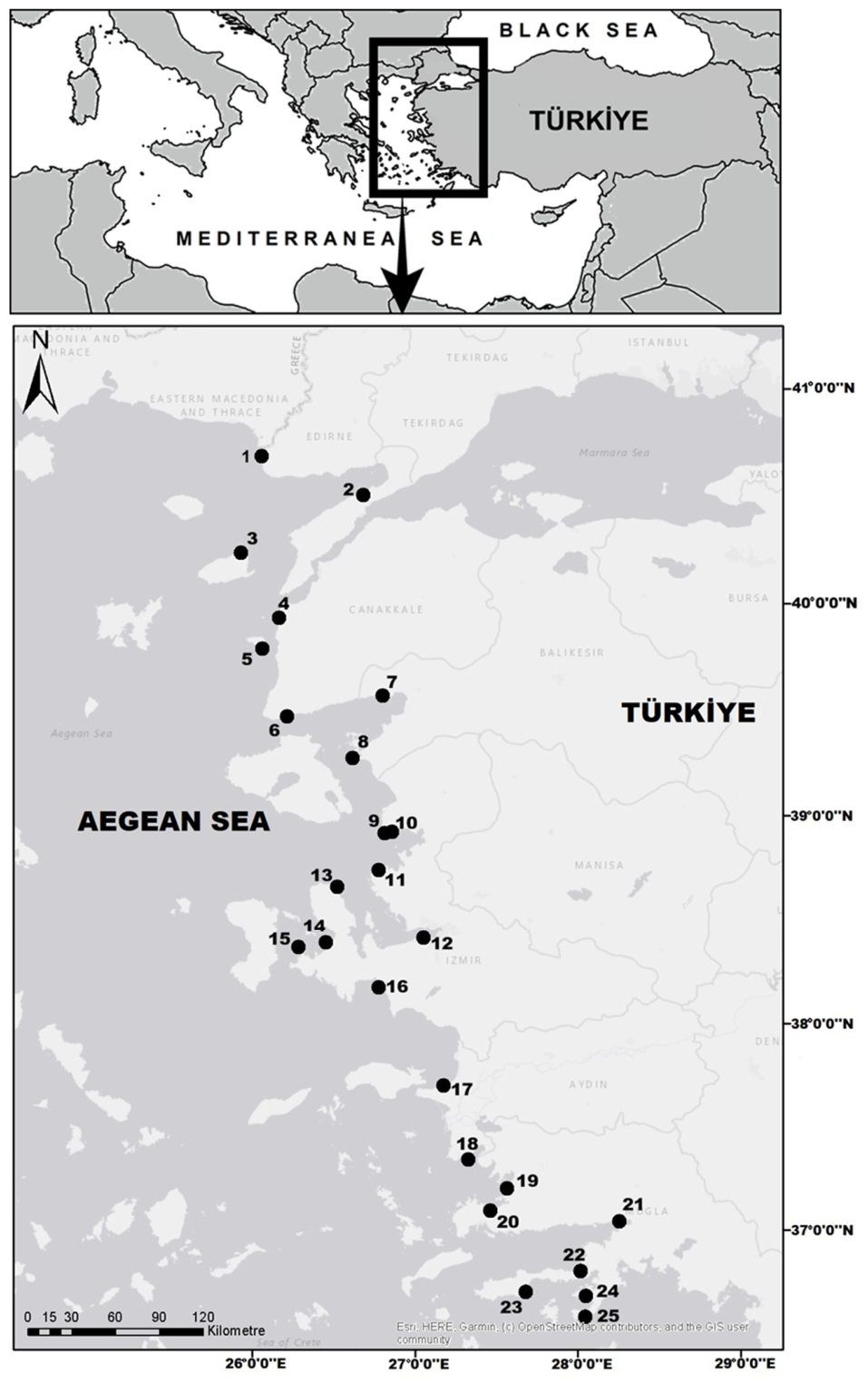
Figure 1. Sampling sites along the Aegean coasts of Türkiye (1: Enez, 2: Saros Bay, 3: Gökçeada Island, 4: Yeniköy, 5: Bozcaada Island, 6: Babakale, 7: Altınoluk, 8: Ayvalık, 9: Dikili, 10: Çandarlı, 11: Foça, 12: İzmir, 13: Karaburun, 14: Ildır, 15: Çeşme, 16: Seferihisar, 17: Kuşadası, 18: Didim, 19: Güllük, 20: Bodrum, 21: Akyaka, 22: Gökova Bay, 23: Datça: 24: Bozburun-1, 25: Bozburun-2).
Diversity 18 00300 g001
Figure 2. Bathymetric distribution (0–40 m) of different habitat types in three sites.
Diversity 18 00300 g002
Figure 3. Distribution of dominant habitat types along depth gradients.
Diversity 18 00300 g003
Figure 4. Habitat types according to number of depth records among sites.
Diversity 18 00300 g004
Figure 5. Bathymetric distribution (0–40 m) of dominant habitat types ((a): 0 m, (b): 5 m, (c): 10 m, (d): 15 m, (e): 20 m, (f): 30 m, (g): 40 m).
Diversity 18 00300 g005
Figure 6. Euclidean distance analysis of the dominant communities and habitat types according to depths among sites.
Diversity 18 00300 g006
Figure 7. PCA ordination of sites based on dominant habitat types.
Diversity 18 00300 g007
Figure 8. Distribution of seagrasses Posidonia oceanica (a), Cymodocea nodosa (b), and Halophila stipulacea (c) in relation to sites and depths.
Diversity 18 00300 g008
Figure 9. Distribution of marine macroalgae Cystoseira s.l. (incl. Ericaria and Gongolaria) (a), Corallina (b), Caulerpa cylindracea (c), and Codium bursa (d) in relation to sites and depths.
Diversity 18 00300 g009
Disclaimer/Publisher’s Note: The statements, opinions and data contained in all publications are solely those of the individual author(s) and contributor(s) and not of MDPI and/or the editor(s). MDPI and/or the editor(s) disclaim responsibility for any injury to people or property resulting from any ideas, methods, instructions or products referred to in the content.