Article

Molecular Taxonomy of Elasmobranchs in the Southern Arabian Gulf: From Species Confirmation to Cryptic Diversity


1
Department of Biology, College of Science, United Arab Emirates University, Al Ain P.O. Box 15551, United Arab Emirates
2
The Environment Agency—Abu Dhabi, Al Mamoura Street, Al Nahyan, Abu Dhabi P.O. Box 45553, United Arab Emirates
3
School for Field Studies, Center for Marine Resource Studies, South Caicos, Cockburn Harbour TKCA 1ZZ, Turks and Caicos Islands
4
Department of Natural Resources and the Environment, Marine and Freshwater Research Centre, Atlantic Technological University, Dublin Road, H91 T8NW Galway, Ireland
*
Author to whom correspondence should be addressed.
Diversity 2026, 18(5), 298; https://doi.org/10.3390/d18050298
Submission received: 19 April 2026 / Revised: 10 May 2026 / Accepted: 13 May 2026 / Published: 16 May 2026
(This article belongs to the Section Marine Diversity)

Abstract

Reliable species-level information on elasmobranchs (sharks, rays, and skates) in the Arabian Gulf remains limited, despite these fish being among the most threatened marine vertebrates. Taxonomic uncertainty, driven by morphological similarities and incomplete reference datasets, continues to hinder accurate biodiversity assessments in the region. In this study, NADH dehydrogenase subunit 2 (NADH2) gene sequences were analyzed to assess the taxonomic status of elasmobranchs in United Arab Emirates waters, based on 182 specimens representing 31 species (15 sharks and 16 batoids) across 12 families. Shark lineages were consistently recovered and matched closely with published references, indicating a stable taxonomy. Batoids (rays), however, showed greater complexity, including misidentification among morphologically similar taxa, gaps in available reference sequences, and signs of possible cryptic diversity, reflecting persistent challenges in species identification and the need for more comprehensive molecular resources. Our findings highlight the value of genetic approaches in improving taxonomic resolution and establishing robust biodiversity baselines. Expanding reference databases, applying multi-locus genomic approaches, and broadening regional sampling will be essential to refining taxonomic frameworks and informing conservation management for elasmobranchs in the Arabian Gulf.

1. Introduction

Elasmobranchs (i.e., sharks and batoids) are crucial to marine ecosystems, functioning both as meso- and apex predators that regulate prey populations and maintain balance within ecosystems [1,2,3]. Many populations are in decline, primarily due to overfishing, habitat degradation, and climate change [4]. Overfishing is a widespread driver of decline, with global assessments indicating that over one-third of shark and ray species are now threatened with extinction [4]. Effective conservation and management of these threatened species relies heavily on the scientific record. This includes documenting species diversity and distributions by providing baseline information required to detect population trends, assess threats, and prioritize areas for protection [4,5].
In the Arabian Gulf, records of elasmobranchs have accumulated sporadically throughout decades of research, beginning with early documentation by Blegvad [6], followed by broader ichthyofaunal references [7,8]. More recently, targeted approaches to elasmobranch research have emerged, particularly over the past two decades [9,10,11,12,13]. While these works provide invaluable references for regional diversity, significant gaps remain in establishing reliable species-level identification.
Accurate taxonomic identification associated with elasmobranchs in the Arabian Gulf poses a challenge to regional research. Misidentification is potentially a result of coloration and morphological variation within species, the presence of cryptic species and/or species complexes, or overlapping external features among closely related taxa [9,14,15]. Common reasons for misidentification include difficulty visually distinguishing bull sharks, Carcharhinus leucas (Valenciennes, 1839), and pigeye sharks, C. amboinensis (Müller & Henle, 1839), and separating the reticulate whipray Himantura uarnak (Gmelin, 1789) from the leopard whipray H. leoparda Manjaji-Matsumoto & Last, 2008. Species misidentification negatively impacts attempts to set population baselines and inhibits ecological understanding, which will greatly undermine any conservation-planning efforts.
Recently, molecular approaches have emerged as powerful tools to address these challenges. Mitochondrial markers, such as the NADH dehydrogenase subunit 2 (NADH2) gene, have proven particularly effective for distinguishing elasmobranch species and resolving taxonomic relationships [16,17,18]. In this study, we used the NADH2 gene to generate a molecular dataset for sharks and batoids collected in the Arabian Gulf waters of the United Arab Emirates (UAE). Our objectives were to (1) confirm species identities across a range of morphologically similar taxa, (2) assess the extent of taxonomic ambiguities and species complexes in the region, and (3) contribute new reference sequences to support biodiversity monitoring and management in the Arabian Gulf.

2. Materials and Methods

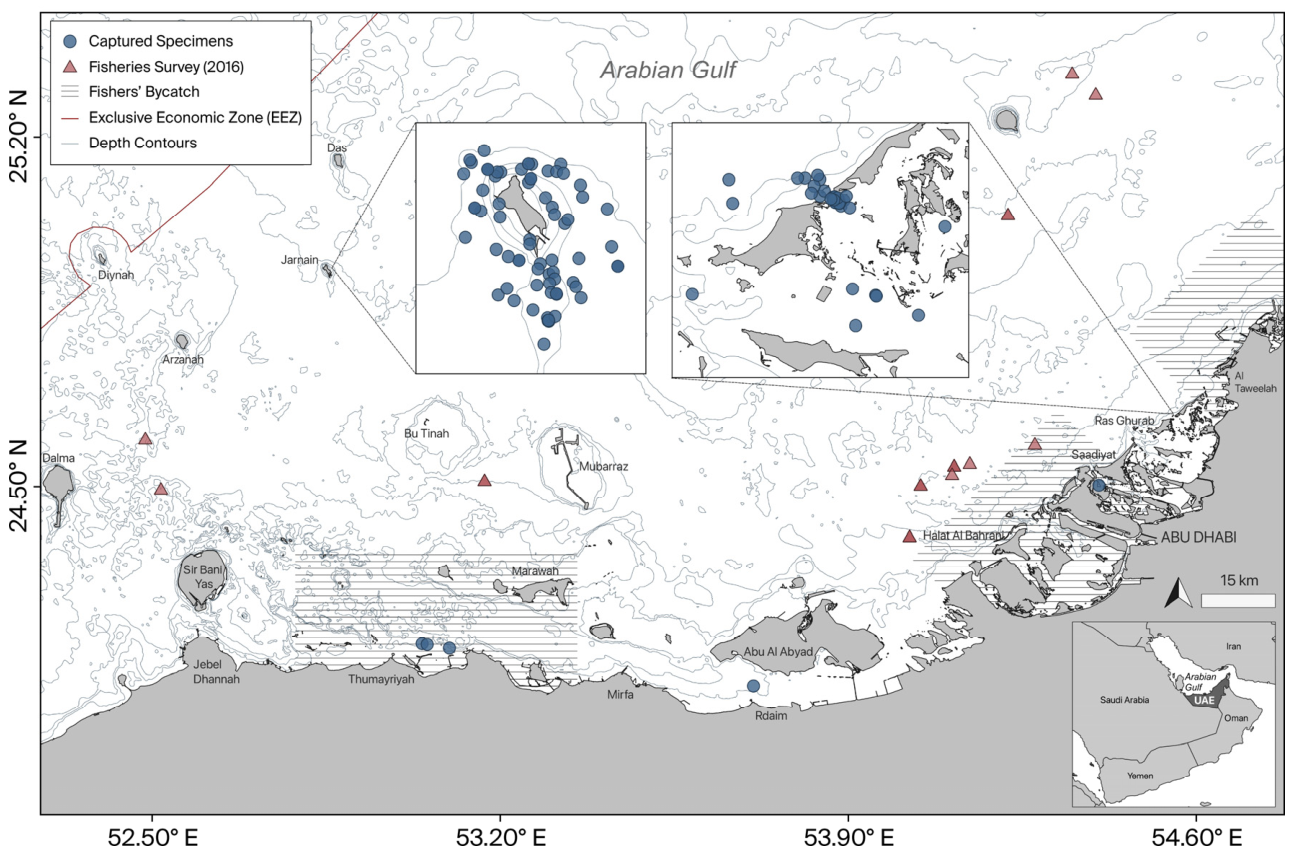
A total of 182 tissue samples were collected from the dorsal fins of sharks and shark-like batoids and from the pectoral fins of batoids. The majority of samples were collected concurrently during surveys conducted between September 2019 and October 2023 at two study sites in Abu Dhabi, United Arab Emirates (UAE): an offshore site around Jarnain Island and an inshore site around Ras Ghurab Island. Additional samples were collected opportunistically from elasmobranch bycatch landed by artisanal fishers around Halat Al Bahrani (Abu Dhabi) Island, Al Taweela, and Khor Al Bazm (Al Dhafra Region, Abu Dhabi). Archived samples from frozen specimens at the Environment Agency—Abu Dhabi (EAD) laboratory, originally collected during a fisheries research survey in 2016, were also included in this study (Figure 1). Preliminary morphological identifications were performed using Rays of the World [19] for batoids and Sharks of the World: A Complete Guide [20] for sharks.
All samples were stored in microtubes with 95% ethanol at −20 °C. Genomic DNA was extracted using an NZY Tissue gDNA Isolation kit (NZYtech, Lisboa, Portugal), following the kit protocol, and extracts were stored at −20 °C. The DNA concentration and quality of the extracts were assessed on a NanoDrop 2000 spectrophotometer (Thermo Scientific, Waltham, MA, USA), and working stocks were diluted to 25 ng/µL. The NADH2 region of the mitochondrial genome was amplified using ILEM_SeqF (5′-AAGCTTTTGGGCCCATACC-3′) and ANSM_SeqR (5′-AAGCTTTGAAGGCTTTTGGT-3′) primers [21]. Target sequences were amplified by polymerase chain reaction (PCR) in 50 µL reaction volumes containing 2 µL of diluted genomic DNA, 1 µL of both forward and reverse primers, 25 µL of NZYTaq II 2× Colourless Master Mix, and 21 µL of PCR-grade water Invitrogen (Thermo Fisher Scientific, Waltham, MA, USA). Amplifications were carried out using a T100 Thermal Cycler (Bio-Rad Laboratories, Inc., Philadelphia, PA, USA).
The PCR cycling parameters for NADH2 were adopted from Naylor et al. [16], with a 3 min initial denaturation at 94 °C, followed by 35 cycles consisting of denaturation at 94 °C, for 30 s; an annealing phase at 54 °C for 30 s; and extension at 72 °C for 90 s, concluded with a final extension at 72 °C for 10 min, after which samples were held at 4 °C. The resulting PCR products were visualized on 1% agarose gels to confirm amplification, and samples with clear bands at the expected amplicon size (approx. 1050 bp) were subsequently selected for sequencing. The PCR products were purified with ExoSAP-IT reagent (Thermo Fisher Scientific, Waltham, MA, USA) and prepared for sequencing using the Big-Dye Terminator v3.1 Sequencing Kit (Thermo Fisher Scientific, Waltham, MA, USA), followed by ethanol/EDTA purification. Sanger sequencing was performed on a 3500 Genetic Analyzer (Thermo Fisher Scientific, Waltham, MA, USA).
Forward and reverse sequences were assembled in Geneious software (version 2025.0.1; Biomatters Ltd., Auckland, New Zealand). All alignments were performed using the MUSCLE algorithm and trimmed to equal length. Specimens were identified by comparing the resulting sequences with verified references from Henderson et al. [18] and Naylor et al. [17] via the Basic Local Alignment Search Tool (BLAST; https://www.ncbi.nlm.nih.gov/genbank/, accessed on 7 September 2025).
Phylogenetic trees were constructed in MEGA 12 [22], using sequences generated in this study and reference sequences from Oman [18,23]. Because the primary aim was to support taxonomic assignment (i.e., clustering consistent with species-level identification) rather than to examine deeper evolutionary relationships, distance-based trees were generated using the neighbor-joining algorithm with the p-distance model and 1000 bootstrap repetitions. For taxa lacking reference sequences from Oman, additional comparative trees were constructed by supplementing the dataset with relevant sequences downloaded from GenBank. Within- and between-group mean genetic distances (p-distance) were calculated with the same software, and standard error estimates for these distances were computed based on 1000 bootstrap replications. Where there was ≥95% bootstrap support for clusters within taxa, clusters were treated as separate taxonomic entities [23].

3. Results

Tissue samples were collected from 182 individuals representing 32 putative species (15 sharks and 17 batoids). NADH2 sequences were successfully generated for 31 species. The one exception was a batoid species that may represent an undescribed Narcine species; although PCR amplification was successful, repeated sequencing attempts yielded reads of insufficient quality for reliable analysis, and this species requires further investigation (Figure 2). The NADH2 sequences have been deposited in GenBank (https://www.ncbi.nlm.nih.gov/nucleotide/, accessed on 30 March 2026), accession numbers PZ229364–PZ229545. Between-group mean genetic distances for each phylogenetic analysis are presented in the corresponding tables (Table 1 and Table 2, Table S1 and Table S2).
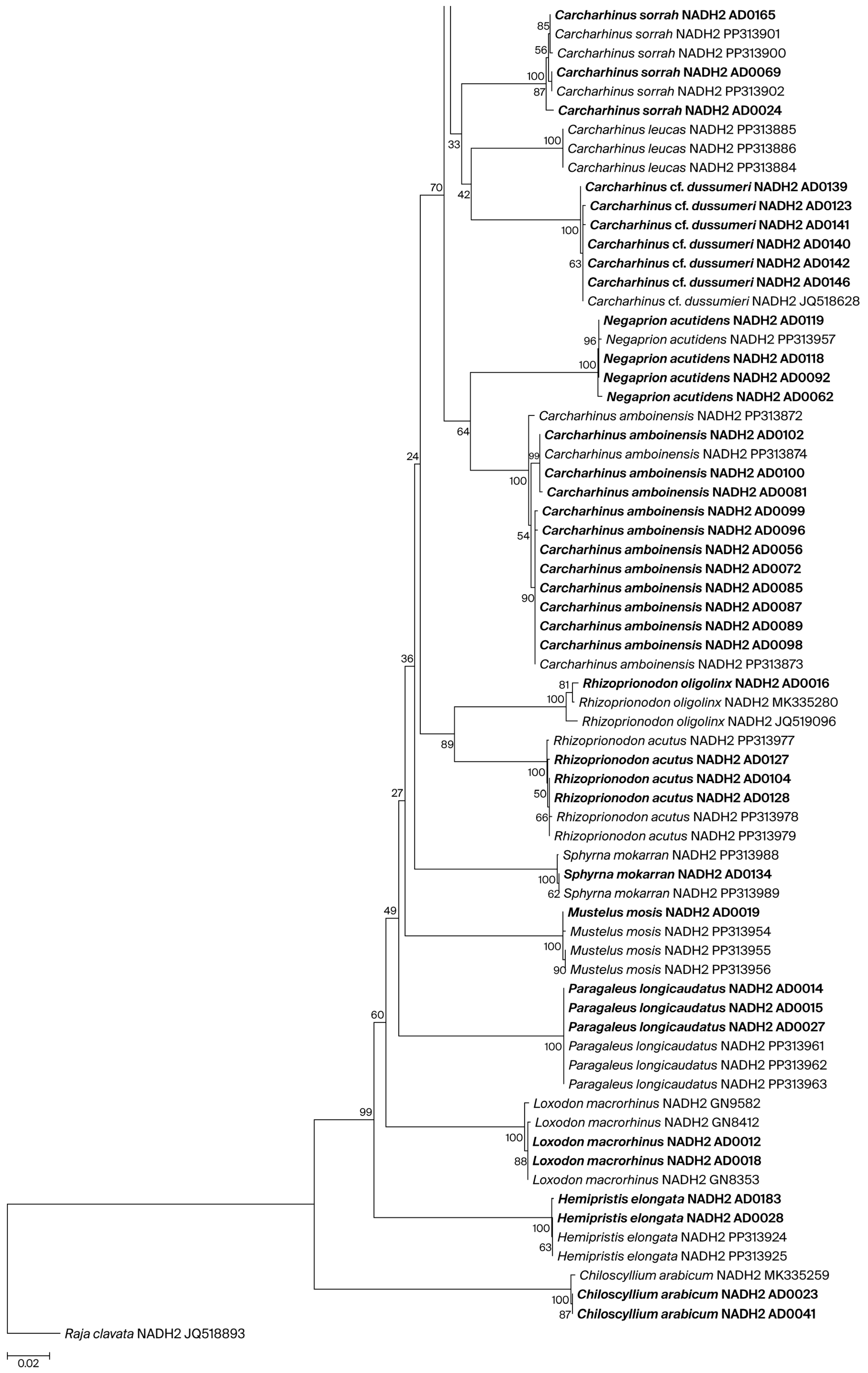
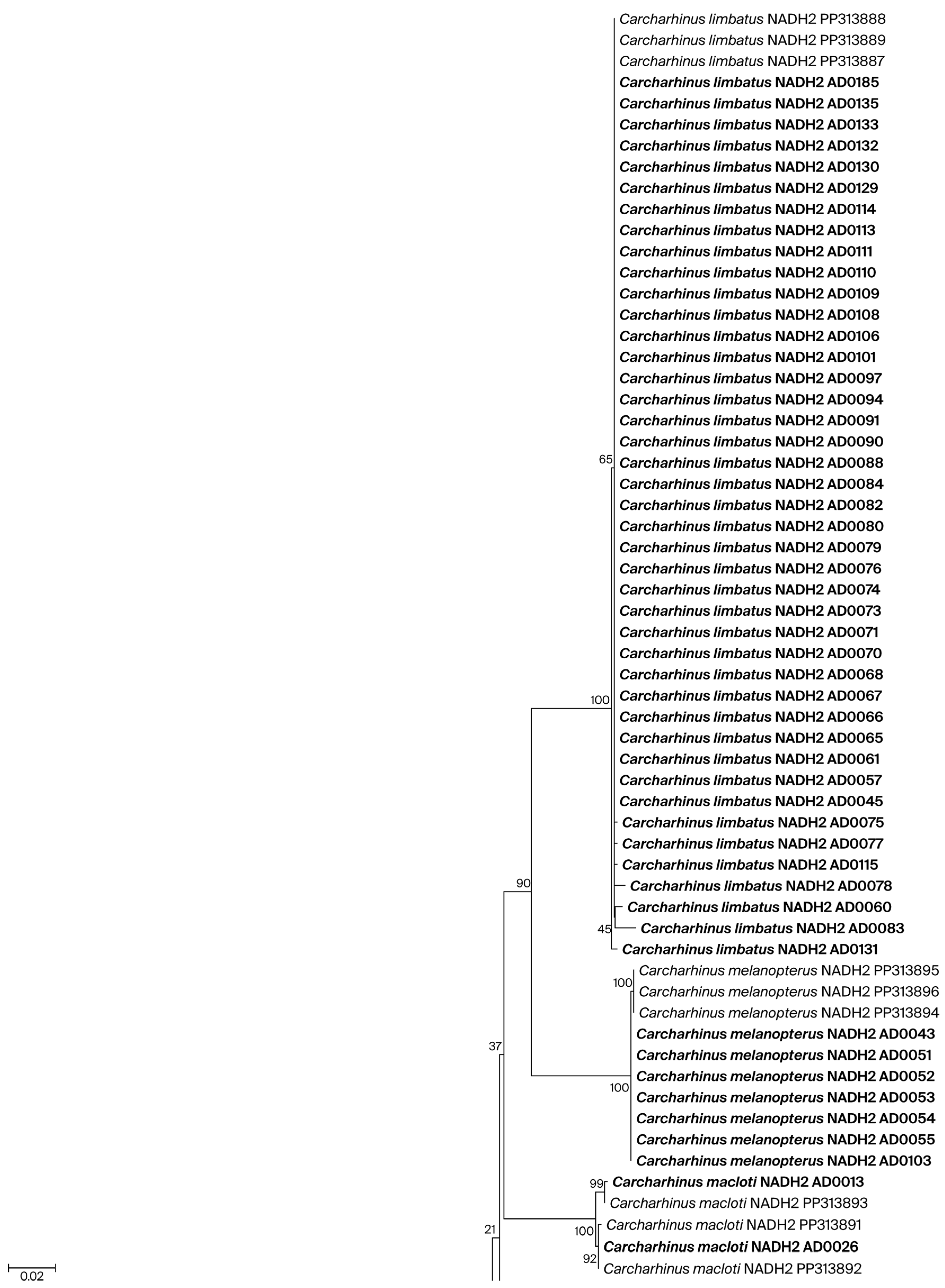
All 15 putative shark species formed distinct clusters in the phylogenetic tree, with no appreciable sub-clustering, supporting their initial designation as distinct species lineages (Figure 3). These lineages also clustered as expected with available reference sequences from Henderson et al. [18,23], further supporting their respective species designation. Although the Arabian carpetshark Chiloscyllium arabicum Gubanov, 1980 was not included in Henderson et al. [18,23], an NADH2 sequence from Sri Lanka was available for comparison [21] and clustered with the C. arabicum sequences generated in the present study. Similarly, Carcharhinus dussumieri (Müller & Henle, 1839) was not assessed by Henderson et al. [18,23]; however, Naylor et al. [17] designated Arabian Gulf specimens as Carcharhinus cf. dussumieri based on notable NADH2 divergence. The sequences generated in the present study clustered with the Arabian Gulf cf. dussumieri lineage of Naylor et al. [17]. Accordingly, the initial designations for all 15 shark species were accepted as valid.
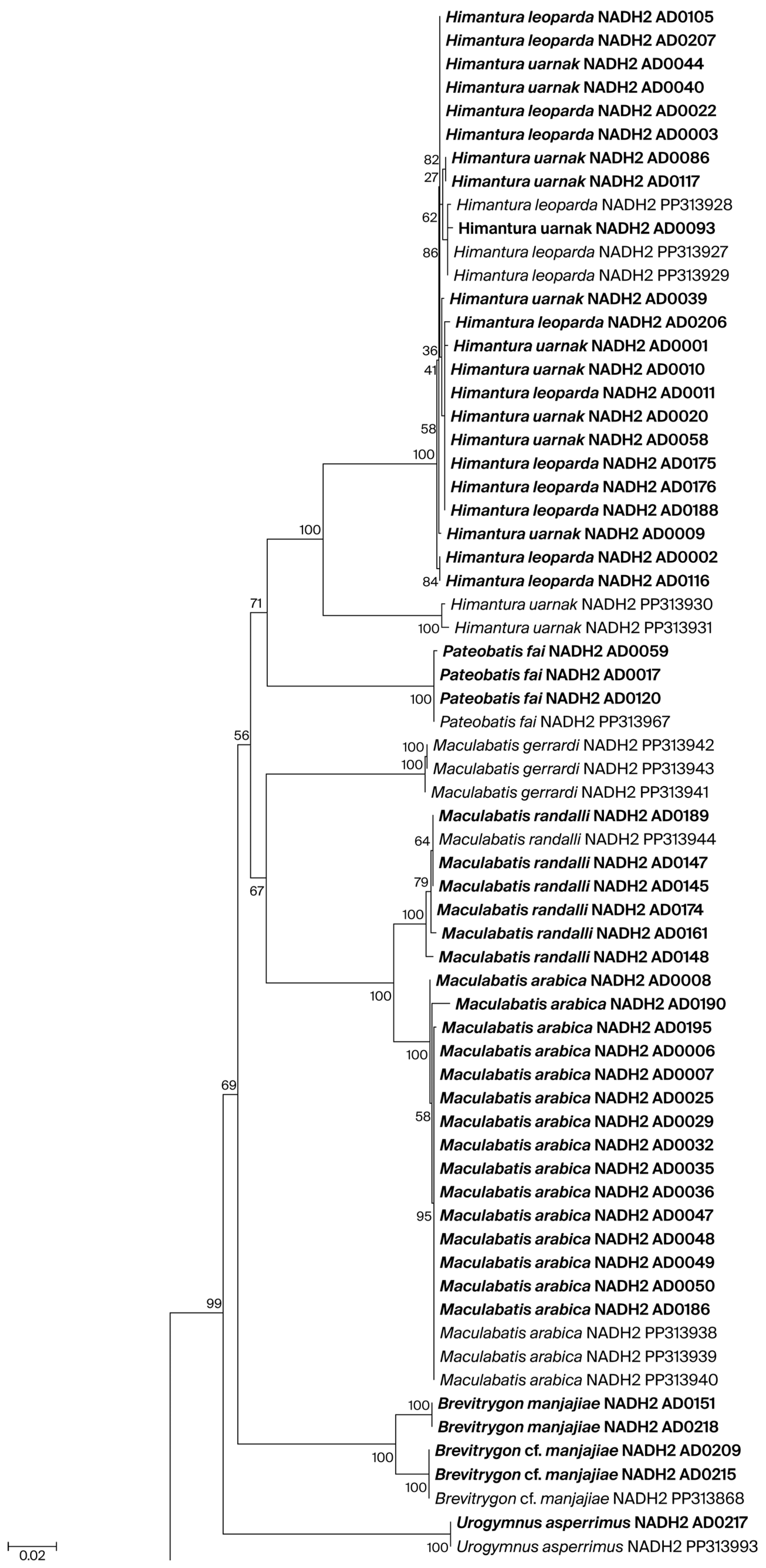
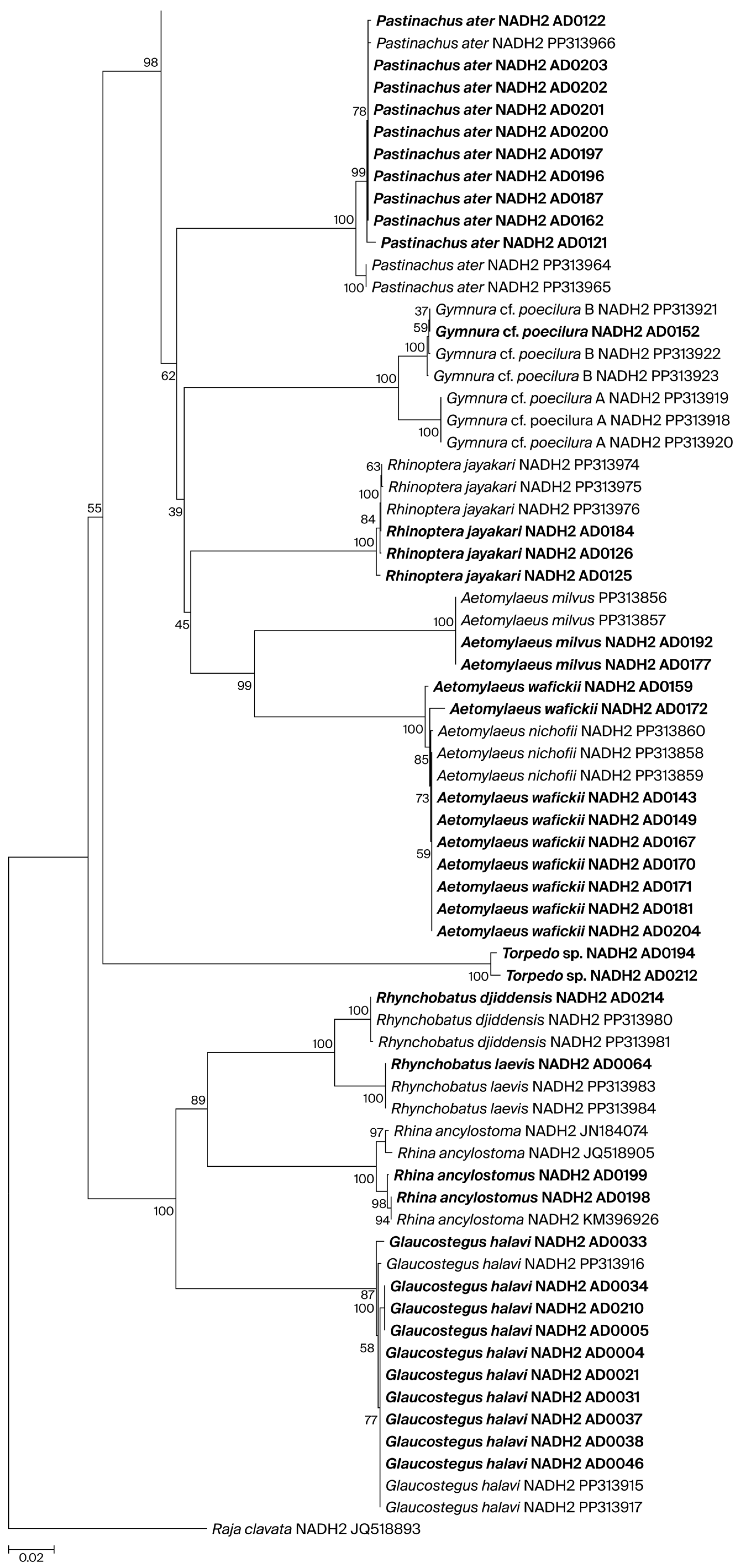
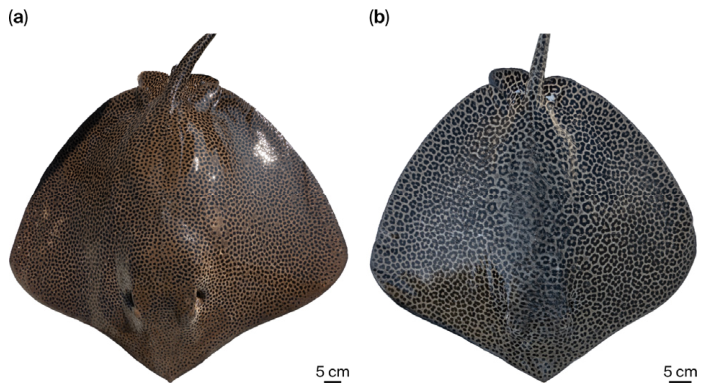
The situation for batoids was more complex. Although 17 putative species were assessed and the phylogenetic tree recovered 17 distinct lineages (Figure 4), two conspicuous discrepancies were observed. Notably, specimens that had been identified in the field as the coach whipray Himantura uarnak (n = 12) and the leopard whipray Himantura leoparda (n = 10) based on their distinct color patterns (Figure 5) formed a single cluster, with no separation among sequences and a low within-group mean genetic distance of 0.0027 ± 0.0009. Moreover, all these sequences clustered with H. leoparda reference sequences from Henderson et al. [18], which were clearly separated from H. uarnak sequences in that study.
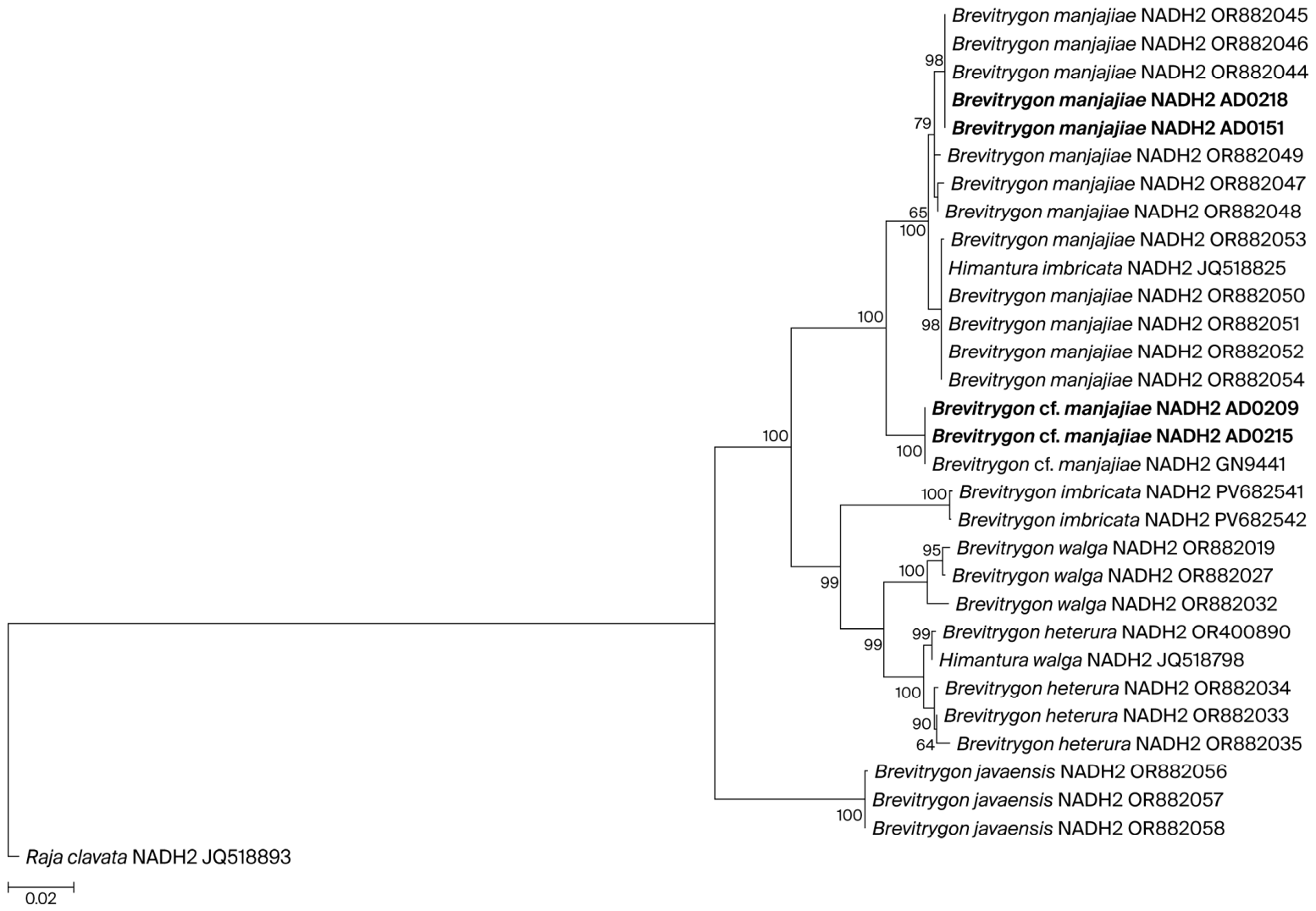
The second discrepancy involved the Brevitrygon specimens assessed in this study. These were all initially identified as the sandwich whipray Brevitrygon manjajiae Last, Weigmann & Naylor, 2023, based on a recent review of the genus [24]. However, the four sequences separated into two well-supported clusters with strong branch support (100%) (Figure 3) and a moderate between-group genetic distance of 0.0290 ± 0.0053 (Table 2). Morphometric comparisons also revealed notable differences between the two groups. The two specimens in the divergent cluster had broader snout angles (116–117°) than the specimens clustering with B. manjajiae (109°), while the latter were consistent with values reported by Last et al. [24]. Interorbital width also differed between the groups (17–18% disc width, DW vs. 10–13% DW for B. manjajiae (Table S3)). Last et al. [24] also noted a possible additional Brevitrygon species off of southern Oman, albeit no further material was available for study. Henderson et al. [18] assessed one specimen in this genus, which was designated B. cf. manjajiae, and that sequence clustered with two of the present sequences. The inclusion of all publicly available Brevitrygon NADH2 sequences in the analysis failed to clarify this matter, with purported B. manjajiae sequences forming two distinct clusters with strong branch support (100%) (Figure 6) and a between-group mean genetic distance of 0.0292 ± 0.0051 (Table S3).
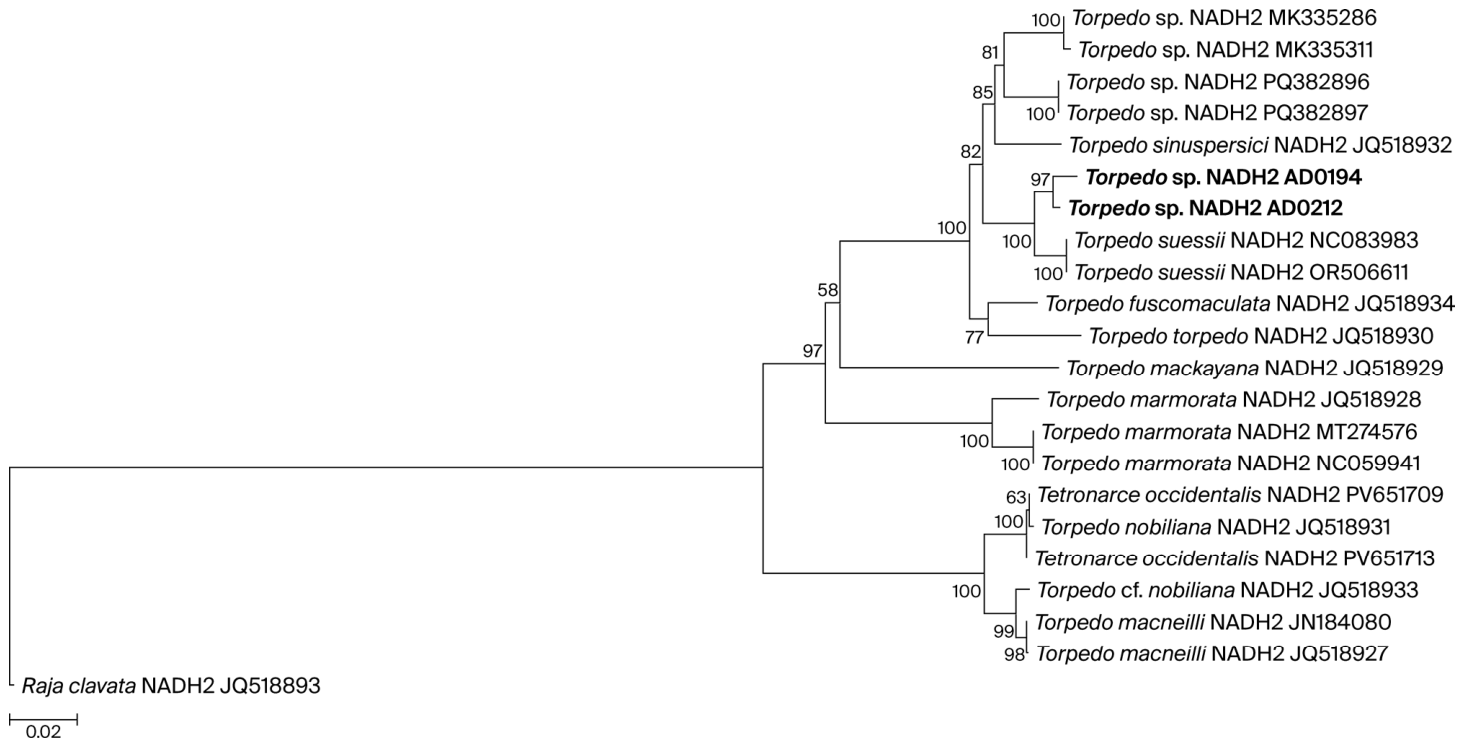
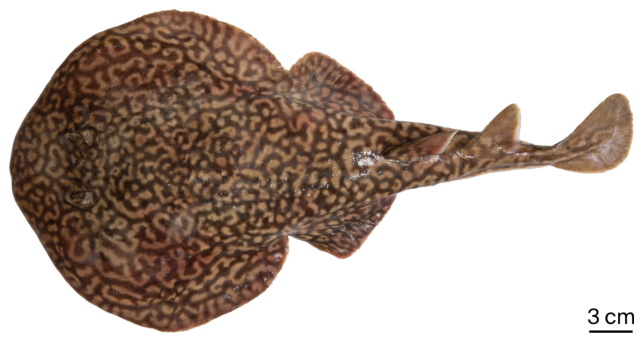
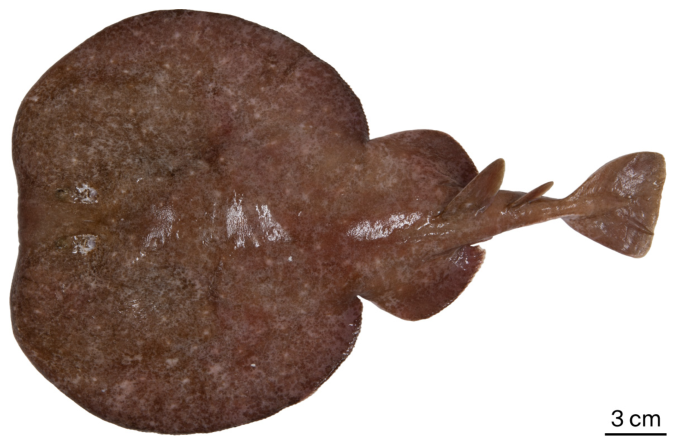
In addition to the unidentified Narcine sp. mentioned previously, two specimens tentatively assigned as Torpedo sp. were also assessed in the present study. Four species of Torpedo have been reported from waters surrounding the Arabian Peninsula: the Aden torpedo T. adenensis Carvalho, Stehmann & Manilo, 2002; the panther torpedo T. panthera Olfers, 1831; the Arabian Gulf torpedo T. sinuspersici Olfers, 1831; and the Red Sea torpedo T. suessii Steindachner, 1898. The two Torpedo specimens formed a single cluster (Figure 7) with low interspecific divergence, supporting their conspecific status. NADH2 reference sequences for regional Torpedo species remain limited, and comparative sequences for T. panthera and T. adenensis were unavailable, precluding definitive molecular identification. Morphometric and meristic comparison with the type series of De Carvalho et al. [25] (Table S4) indicates closest overall affinity to T. adenensis. The total vertebral counts (98 in both specimens) fall within the range of T. adenensis (97–101) and substantially exceed those of the T. panthera lectotype (86), while the proportional disc width (66.1% and 66.8% TL) is consistent with T. adenensis (58.6–67.0% TL). The number of spiracular papillae (8–9) matches the subadult male paratype ISH 4–1993 (8), though it exceeds the holotype count (3). However, two notable discrepancies were observed. First, interorbital width in the present specimens (8.0–8.4% TL) is approximately twice that reported for T. adenensis (3.8–4.9% TL) and T. panthera (5.1% TL). Second, the dorsal coloration (Figure 8), a pale pinkish ground color overlaid with irregular dark brown blotches, does not conform to the uniform reddish to orange-brown dorsum without spots or blotches diagnostic of T. adenensis nor the discrete whitish spots of T. panthera, the strong vermiculations of T. sinuspersici, or the prominent ocelli of T. suessii. Given the meristic congruence, these specimens are provisionally assigned to Torpedo sp., pending the availability of comparative molecular data for regional Torpedo species. The conspicuous differences in coloration and interorbital proportions leave the possibility that these specimens represent a cryptic lineage within the subgenus Torpedo and warrant further investigation incorporating additional genetic markers and morphological material.
All the remaining batoid species clustered with their relevant reference sequences from Henderson et al. [18,23], although certain findings merit additional clarification. Reference sequences for Rhina ancylostomus Bloch & Schneider, 1801 were not included in Henderson et al. [18,23], so sequences were sourced from GenBank [21,26,27] to confirm the identity of the specimens in the present study. As reported by Henderson [18], the Gymnura poecilura (Shaw, 1804) specimens recorded in the region are unlikely to be this species and possibly encompass two cryptic Gymnura spp., which were designated Gymnura cf. poecilura A and B. In this study, the sole representative of this genus clustered with Gymnura cf. poecilura B (Figure 4). With regard to the recently described Wafic’s eagle ray Aetomylaeus wafickii Jabado, Ebert & Al Dhaheri 2022, Henderson et al. [18] opted to retain the Aetomylaeus cf. nichofii designation, based on the fact A. wafickii was not at that time recognized by Eschmeyer’s Catalog of Fishes [28]. Sequences from the present study clustered with the Aetomylaeus cf. nichofii sequences, but as A. wafickii is now listed as valid [28], this designation has been used here.

4. Discussion and Conclusions

This study provides a broad NADH2 dataset for elasmobranchs in United Arab Emirates Arabian Gulf waters, establishing a molecular baseline for both sharks and batoids. Across the sampled sharks, NADH2 lineages were consistent and matched available references, supporting stable species-level verification. In contrast, batoids showed multiple forms of taxonomic complexity, including misidentification among morphologically similar taxa, incomplete reference coverage for key regional groups, and evidence of potentially unresolved lineages. Together, these outcomes reinforce the value of genetic reference libraries for biodiversity baselining and highlight priority gaps that directly limit species-level reporting in this region.
Shark identifications were comparatively robust, with distinct clusters and alignment to regional reference datasets. However, Carcharhinus leucas was notably absent from the present dataset despite being the fifth most common carcharhinid landed in Abu Dhabi [29]. This absence may reflect differences in local distribution or competitive exclusion [30]. The distinction between C. amboinensis and C. leucas is well-recognized as a source of misidentification [31,32], and molecular approaches remain critical for confirming their occurrence. Similarly, other large-bodied sharks, such as C. brevipinna (Müller & Henle, 1839), C. leiodon Garrick, 1985, C. amblyrhynchoides (Whitley, 1934), and C. plumbeus (Nardo, 1827), have been reported in Abu Dhabi and the broader Arabian Gulf region [9,29,33,34] but were not collected in this study. Further targeted sampling is required to achieve a more comprehensive taxonomic assessment of sharks in the southern Arabian Gulf.
Taxonomic ambiguity was most pronounced within the Himantura complex, where specimens identified morphologically as H. uarnak based on external color pattern clustered unambiguously with H. leoparda reference sequences from Henderson et al. [18], which were clearly separated from H. uarnak in that study. This finding underscores the well-documented difficulty of distinguishing these taxa using external characters alone [15,19]. While the simplest interpretation is that all specimens in this study were H. leoparda, an alternative explanation is mitochondrial introgression, whereby historical hybridization between the two species may have resulted in the capture of one species’ mitochondrial genome by the other, rendering mitochondrial markers unreliable for species discrimination. Such a phenomenon has been documented in other elasmobranchs: Henderson et al. [18] noted that the NADH2 gene lacked sufficient resolution to differentiate C. altimus (Springer, 1950) from C. plumbeus, possibly due to historical mitochondrial introgression, and Corrigan et al. [35] demonstrated pervasive mitochondrial admixture between C. galapagensis (Snodgrass & Heller, 1905) and C. obscurus (Lesueur, 1818) despite clear nuclear differentiation. Irrespective of the underlying mechanism, this result has significant taxonomic implications: either (1) all specimens in this study were indeed H. leoparda despite their varied external patterning, which would indicate considerable intraspecific color polymorphism or (2) H. uarnak in the Arabian Gulf represents a genetically distinct population from conspecifics in the Gulf of Oman and Arabian Sea, given the clear mitochondrial separation between H. uarnak and H. leoparda reported from Oman [18]. The latter possibility is consistent with the semi-enclosed nature and biogeographic isolation of the Arabian Gulf and warrants further investigation using multi-locus nuclear markers to assess mitochondrial–nuclear concordance in these taxa. Within Pastinachus, both P. ater (Macleay, 1883) and P. sephen (Forsskål, 1775) have previously been reported in the Arabian Gulf [8,9], but only P. ater was detected in this study. Combined with the lack of verified P. sephen reference sequences, this highlights a significant gap in the molecular characterization of the genus and underscores the need for additional sampling.
In contrast, Maculabatis arabica Manjaji-Matsumoto & Last, 2016, M. randalli (Last, Manjaji-Matsumoto & Moore, 2012), and M. gerrardi (Gray, 1851) formed well-supported, clearly separated lineages, with interspecific divergences of >2% and minimal intraspecific variation (<0.5%). These results validate the distinctiveness of the three species, supporting their recognition in both morphological and molecular treatments [18,19].
Sequences of Brevitrygon manjajiae were resolved into two clusters separated by ~2.8% divergence. A congeneric tree constructed with B. imbricata (Bloch & Schneider, 1801), B. walga (Müller & Henle, 1841), B. heterura (Bleeker, 1852), and B. javaensis (Last & White, 2013) confirmed the distinct separation of these clusters. Divergences of this magnitude exceed typical intraspecific variation reported for batoids [17,36] and may reflect cryptic diversity or pronounced population structuring. Given that Brevitrygon species are known to form regional species complexes [19], further sampling and multi-locus analyses are warranted to determine whether multiple lineages exist within the Arabian Gulf.
The Torpedo sp. specimens recovered in this study did not align with T. sinuspersici, the only Arabian Gulf species represented by NADH2 data. Because no sequences exist for T. panthera, its identity remains unresolved. In addition to the genetic distinction, the specimens also differed morphologically: both T. sinuspersici and T. panthera are described as having a rounded caudal fin [19,25], whereas the individuals collected here showed a straighter, more angular caudal-fin margin. This combined molecular and morphological discrepancy highlights a potentially undescribed lineage or overlooked variation within Torpedinidae in the region and underscores the urgent need for further taxonomic investigation of this group.
Collectively, these results show a clear contrast between sharks and batoids in UAE waters. Sharks displayed consistent clustering with reference sequences, supporting their current taxonomic treatment. In contrast, batoids remain difficult to resolve, with frequent misidentifications (Himantura), missing references (Pastinachus), and signs of potential cryptic diversity (Brevitrygon, Torpedo). Such gaps reduce confidence in regional checklists and can affect conservation assessments. At the same time, well-resolved groups such as Maculabatis demonstrate how molecular tools can provide robust species boundaries that strengthen biodiversity monitoring and management.
Future work should focus on expanding reference datasets by generating verified NADH2 and COI sequences for poorly represented taxa, particularly T. panthera and T. adenensis, which are essential for resolving the identity of the unassigned Torpedo specimens reported here. Similarly, multi-locus approaches and detailed morphological examination will be required to determine the status of the putative novel Narcine species. Targeted field sampling will also be essential, with surveys focusing on species reported from the Arabian Gulf but not recovered in this study, such as C. leucas and P. sephen, to confirm their status in UAE Arabian Gulf waters and improve knowledge of their distributions. Broader regional comparisons, incorporating material from the Red Sea, Arabian Sea, and Gulf of Oman, are likewise necessary to determine whether observed divergences reflect localized variation or wider biogeographic patterns. It should be noted that NADH2 alone cannot definitively resolve hybridization, incomplete lineage sorting, or cryptic species boundaries. Future studies incorporating complete mitogenomes, nuclear markers, and traditional morphometric and meristic data will be essential to confirm the taxonomic hypotheses presented here.
In summary, this study offers insights into the molecular identification of elasmobranch species in the southern Arabian Gulf, supporting the reliability of shark species identifications while revealing the taxonomic complexity that persists within batoids. Together, these findings underscore the need for expanded molecular databases and targeted research to resolve taxonomic ambiguities to strengthen biodiversity assessments for elasmobranchs in the Arabian Gulf.

Supplementary Materials

The following supporting information can be downloaded at: https://www.mdpi.com/article/10.3390/d18050298/s1, Table S1: Between-group mean p-distances (%) for Brevitrygon taxa included in the Neighbor-joining tree (below the diagonal) with their standard error values (%) (above the diagonal). Table S2: Between-group mean p-distances (%) for Torpedo taxa included in the Neighbor-joining tree (below the diagonal) with their standard error values (%) (above the diagonal). Table S3: Proportional morphometrics (in mm and as % of disc width) of Brevitrygon manjajiae specimens from the Arabian Gulf compared with non-type, holotype, and paratype specimens (Last et al., 2023 [24]); Table S4: Proportional morphometrics and meristics (in mm and as % of total length) of Torpedo sp. specimens from the Arabian Gulf compared with the lectotype of T. panthera and holotype of T. adenensis (data from De Carvalho et al., 2002 [25]).

Author Contributions

Fieldwork was conducted by S.A.H., S.B. and A.C.H. Laboratory work was conducted by S.A.H., S.B. and B.K. Data analysis was performed by S.A.H., review and editing by S.A.H. and A.C.H. All authors have read and agreed to the published version of the manuscript.

Funding

This project was partially funded by United Arab Emirates University grant G00003663, and Dubai’s Atlantis Atlas Project grant G00004131.

Institutional Review Board Statement

The Environment Agency—Abu Dhabi (EAD) is the regulatory authority for wildlife and environmental research in the Emirate of Abu Dhabi. This study was carried out as part of the lead author’s role at EAD and was reviewed internally rather than the separate ethical approval required of external researchers. EAD has provided formal documentation confirming this approval (Refs EAD/EISOM/2026/742 and EAD/EISOM/2026/743, approval date: 12/05/2026). Tissue collection was limited to a minimally invasive fin-clip per individual; and all captured specimens during the active surveys were released alive by the team.

Data Availability Statement

The original contributions presented in this study are included in the article/Supplementary Material. Further inquiries can be directed to the corresponding author.

Acknowledgments

The authors would like to thank His Highness Sheikh Hamdan Bin Zayed Al Nahyan and Sheikh Zayed bin Hamdan Al Nahyan for their continued support of our research. We would also like to thank United Arab Emirates University and Dubai’s Atlantis Atlas Project for funding this study and Khalid Al Hashemi, Ahmed Al Ameen, and Sandeep Shirodkar for providing logistical support. We are grateful to all volunteers who participated in fieldwork and the Environment Agency—Abu Dhabi for permitting the research to be undertaken. We also thank Gavin Naylor for his valuable advice regarding NADH2 sequencing.

Conflicts of Interest

The authors declare no conflict of interest.

References

  1. Dedman, S.; Moxley, J.H.; Papastamatiou, Y.P.; Braccini, M.; Caselle, J.E.; Chapman, D.D.; Heithaus, M.R. Ecological Roles and Importance of Sharks in the Anthropocene Ocean. Science 2024, 385, adl2362. [Google Scholar] [CrossRef]
  2. Pacoureau, N.; Rigby, C.L.; Kyne, P.M.; Sherley, R.B.; Winker, H.; Carlson, J.K.; Dulvy, N.K. Half a Century of Global Decline in Oceanic Sharks and Rays. Nature 2021, 589, 567–571. [Google Scholar] [CrossRef]
  3. Dulvy, N.K.; Fowler, S.L.; Musick, J.A.; Cavanagh, R.D.; Kyne, P.M.; Harrison, L.R.; White, W.T. Extinction Risk and Conservation of the World’s Sharks and Rays. eLife 2014, 3, e00590. [Google Scholar] [CrossRef] [PubMed]
  4. Dulvy, N.K.; Pacoureau, N.; Rigby, C.L.; Pollom, R.A.; Jabado, R.W.; Ebert, D.A.; Simpfendorfer, C.A. Overfishing Drives over One-Third of All Sharks and Rays toward a Global Extinction Crisis. Curr. Biol. 2021, 31, 4773–4787. [Google Scholar] [CrossRef]
  5. Pacoureau, N.; Carlson, J.K.; Kindsvater, H.K.; Rigby, C.L.; Winker, H.; Simpfendorfer, C.A.; Charvet, P.; Pollom, R.A.; Barreto, R.; Sherman, C.S.; et al. Conservation Successes and Challenges for Wide-Ranging Sharks and Rays. Proc. Natl. Acad. Sci. USA 2023, 120, e2216891120. [Google Scholar] [CrossRef]
  6. Blegvad, H. Fishes of the Iranian Gulf. Dan. Sci. Exped. Iran 1944, 3, 247. [Google Scholar]
  7. Randall, J.E. Coastal Fishes of Oman; University of Hawaii Press: Honolulu, HI, USA, 1995. [Google Scholar]
  8. Carpenter, K.E. Living Marine Resources of Kuwait, Eastern Saudi Arabia, Bahrain, Qatar, and the United Arab Emirates; Food & Agriculture Organization: Rome, Italy, 1997. [Google Scholar]
  9. Moore, A.B.M.; McCarthy, I.D.; Carvalho, G.R.; Peirce, R. Species, Sex, Size and Male Maturity Composition of Previously Unreported Elasmobranch Landings in Kuwait, Qatar and Abu Dhabi Emirate. J. Fish Biol. 2012, 80, 1619–1642. [Google Scholar] [CrossRef]
  10. Jabado, R.W.; Al Ghais, S.M.; Hamza, W.; Henderson, A.C.; Ahmad, M.A. First Record of the Sand Tiger Shark, Carcharias taurus, from United Arab Emirates Waters. Mar. Biodivers. Rec. 2013, 6, e27. [Google Scholar] [CrossRef]
  11. Almojil, D. Local Ecological Knowledge of Fisheries Charts Decline of Sharks in Data-Poor Regions. Mar. Policy 2021, 132, 104638. [Google Scholar] [CrossRef]
  12. Al Hameli, S.; Bruns, S.; Henderson, A.C. Notable Abundance of Two Critically Endangered Elasmobranch Fishes near an Area of Intensive Coastal Development in the Arabian Gulf. Endanger. Species Res. 2024, 53, 437–447. [Google Scholar] [CrossRef]
  13. Bruns, S.; Al Hameli, S.; Henderson, A.C. A Wandering Wedgefish Illustrates the Need for Cooperative Elasmobranch Conservation in the Arabian Gulf. Environ. Biol. Fishes 2024, 107, 269–278. [Google Scholar] [CrossRef]
  14. Jabado, R.W. The Fate of the Most Threatened Order of Elasmobranchs: Shark-like Batoids (Rhinopristiformes) in the Arabian Sea and Adjacent Waters. Fish. Res. 2018, 204, 448–457. [Google Scholar] [CrossRef]
  15. Henderson, A.C. A Review of Potential Taxonomic Barriers to the Effective Management of Gulf Elasmobranch Fisheries. Aquat. Ecosyst. Health Manag. 2020, 23, 210–219. [Google Scholar] [CrossRef]
  16. Naylor, G.J.P.; Ryburn, J.A.; Fedrigo, O.; Lopez, J.A. Phylogenetic Relationships among the Major Lineages of Modern Elasmobranchs. In Reproductive Biology and Phylogeny of Chondrichthyes; Taylor & Francis: Abingdon, UK, 2005; pp. 1–25. [Google Scholar]
  17. Naylor, G.J.P.; Caira, J.N.; Jensen, K.; Rosana, K.A.M.; White, W.T.; Last, P.R. A DNA Sequence-Based Approach to the Identification of Shark and Ray Species and Its Implications for Global Elasmobranch Diversity and Parasitology. Bull. Am. Mus. Nat. Hist. 2012, 367, 1–262. [Google Scholar] [CrossRef]
  18. Henderson, A.C.; Reeve, A.J.; Jabado, R.W.; Naylor, G.J.P. A Molecular-Assisted Taxonomic Assessment of Elasmobranch Fishes (Chondrichthyes: Elasmobranchii) from South-Eastern Arabia Revisited. Zootaxa 2025, 5575, 429–446. [Google Scholar] [CrossRef] [PubMed]
  19. Last, P.; Naylor, G.; Séret, B.; White, W.; Stehmann, M.; de Carvalho, M. (Eds.) Rays of the World; CSIRO Publishing: Clayton, Australia, 2016. [Google Scholar]
  20. Ebert, D.A.; Dando, M.; Fowler, S. Sharks of the World: A Complete Guide; Princeton University Press: Princeton, NJ, USA, 2021. [Google Scholar]
  21. Fernando, D.; Bown, R.M.K.; Tanna, A.; Gobiraj, R.; Ralicki, H.; Jockusch, E.L.; Caira, J.N. New Insights into the Identities of the Elasmobranch Fauna of Sri Lanka. Zootaxa 2019, 4585, 201–238. [Google Scholar] [CrossRef] [PubMed]
  22. Kumar, S.; Stecher, G.; Suleski, M.; Sanderford, M.; Sharma, S.; Tamura, K. MEGA12: Molecular Evolutionary Genetic Analysis Version 12 for Adaptive and Green Computing. Mol. Biol. Evol. 2024, 41, msae263. [Google Scholar] [CrossRef]
  23. Henderson, A.C.; Reeve, A.J.; Jabado, R.W.; Naylor, G.J.P. Taxonomic Assessment of Sharks, Rays and Guitarfishes (Chondrichthyes: Elasmobranchii) from South-Eastern Arabia, Using the NADH Dehydrogenase Subunit 2 (NADH2) Gene. Zool. J. Linn. Soc. 2016, 176, 399–442. [Google Scholar] [CrossRef]
  24. Last, P.R.; Weigmann, S.; Naylor, G.J.P. The Indo-Pacific Stingray Genus Brevitrygon (Myliobatiformes: Dasyatidae): Clarification of Historical Names and Description of a New Species, B. manjajiae sp. nov., from the Western Indian Ocean. Diversity 2023, 15, 1213. [Google Scholar] [CrossRef]
  25. De Carvalho, M.R.; Stehmann, M.F.W.; Manilo, L.G. Torpedo adenensis, a New Species of Electric Ray from the Gulf of Aden, with Comments on Nominal Species of Torpedo from the Western Indian Ocean, Arabian Sea, and Adjacent Areas (Chondrichthyes: Torpediniformes: Torpedinidae). Am. Mus. Novit. 2002, 3369, 1–34. [Google Scholar] [CrossRef]
  26. Aschliman, N.C.; Nishida, M.; Miya, M.; Inoue, J.G.; Rosana, K.M.; Naylor, G.J.P. Body Plan Convergence in the Evolution of Skates and Rays (Chondrichthyes: Batoidea). Mol. Phylogenet. Evol. 2012, 63, 28–42. [Google Scholar] [CrossRef] [PubMed]
  27. Spaet, J.L.Y.; Berumen, M.L. Fish Market Surveys Indicate Unsustainable Elasmobranch Fisheries in the Saudi Arabian Red Sea. Fish. Res. 2015, 161, 356–364. [Google Scholar] [CrossRef]
  28. Fricke, R.; Eschmeyer, W.N.; Van der Laan, R. (Eds.) Eschmeyer’s Catalog of Fishes: Genera, Species, References; California Academy of Sciences: San Francisco, CA, USA, 2026; Available online: https://researcharchive.calacademy.org/research/ichthyology/catalog/fishcatmain.asp (accessed on 7 March 2026).
  29. Jabado, R.W.; Al Ghais, S.M.; Hamza, W.; Achary, M.S.; Al Ahmad, A.; Al Breiki, M.R. Shark Diversity in the Arabian/Persian Gulf Higher Than Previously Thought: Insights Based on Species Composition of Shark Landings in the United Arab Emirates. Mar. Biodivers. 2015, 45, 719–731. [Google Scholar] [CrossRef]
  30. Compagno, L.J.V. An Annotated and Illustrated Catalogue of Shark Species Known to Date. Part 2. Carcharhiniformes; FAO Species Catalogue Volume 4: Sharks of the World; FAO: Rome, Italy, 1984. [Google Scholar]
  31. Compagno, L.; Dando, M.; Fowler, S. A Field Guide to the Sharks of the World; FAO: Rome, Italy, 2005. [Google Scholar]
  32. Last, P.R.; Stevens, J.D. Sharks and Rays of Australia; CSIRO Publishing: Clayton, Australia, 2009. [Google Scholar]
  33. Moore, A.B.M.; Peirce, R. Composition of Elasmobranch Landings in Bahrain. Afr. J. Mar. Sci. 2013, 35, 593–596. [Google Scholar] [CrossRef]
  34. Moore, A.B.M.; Ward, R.D.; Peirce, R. Sharks of the Persian (Arabian) Gulf: A First Annotated Checklist (Chondrichthyes: Elasmobranchii). Zootaxa 2012, 3167, 1–16. [Google Scholar] [CrossRef]
  35. Corrigan, S.; Maisano Delser, P.; Eddy, C.; Duffy, C.; Yang, L.; Li, C.; Bazinet, A.L.; Mona, S.; Naylor, G.J.P. Historical Introgression Drives Pervasive Mitochondrial Admixture between Two Species of Pelagic Sharks. Mol. Phylogenet. Evol. 2017, 110, 122–126. [Google Scholar] [CrossRef]
  36. Ward, R.D.; Zemlak, T.S.; Innes, B.H.; Last, P.R.; Hebert, P.D.N. DNA Barcoding Australia’s Fish Species. Philos. Trans. R. Soc. B 2005, 360, 1847–1857. [Google Scholar] [CrossRef] [PubMed]
Figure 1. Map indicating primary sites for data collection, general locality of artisanal fishers by catch collected, and archived samples collected by the Environment Agency—Abu Dhabi (EAD) from a fisheries research survey conducted in 2016.
Diversity 18 00298 g001
Figure 2. Narcine sp., female 429.0 mm TL, collected from Al Dhafra region, Abu Dhabi, United Arab Emirates. Scale bar: 3 cm.
Diversity 18 00298 g002
Figure 3. Neighbor-joining tree representing shark species recorded from the southern Arabian Gulf with relevant reference sequences from Henderson [18,23] and GenBank. Values on branches indicate bootstrap support based on 1000 replicates, and the tree is rooted on the outgroup (OG). Species collected for the current study are in bold.
Diversity 18 00298 g003aDiversity 18 00298 g003b
Figure 4. Neighbor-joining tree representing batoid species recorded from the southern Arabian Gulf with relevant reference sequences from Henderson [18,23] and GenBank. Values on branches indicate bootstrap support based on 1000 replicates, and the tree is rooted on the outgroup (OG). Species collected for the current study are in bold.
Diversity 18 00298 g004aDiversity 18 00298 g004b
Figure 5. Dorsal color pattern variation in Himantura leoparda from Abu Dhabi, UAE. (a) Specimen with a reticulate pattern of fine dark spots, initially identified in the field as H. uarnak; (b) specimen with a bold leopard-like pattern of dark rings, initially identified as H. leoparda. All specimens were genetically confirmed as H. leoparda based on NADH2 sequences. Scale bars: 5 cm.
Diversity 18 00298 g005
Figure 6. Neighbor-joining tree representing Brevitrygon sequences from the present study together with relevant reference sequences from GenBank. Values on branches indicate bootstrap support based on 1000 replicates, and the tree is rooted on the outgroup (OG). Species collected for the current study are in bold.
Diversity 18 00298 g006
Figure 7. Neighbor-joining tree representing Torpedo sequences from the present study together with available reference sequences from GenBank. Values on branches indicate bootstrap support based on 1000 replicates, and the tree is rooted on the outgroup (OG). Species collected for the current study are in bold.
Diversity 18 00298 g007
Figure 8. Torpedo sp., male 317.9 mm TL, collected from Al Dhafra region, Abu Dhabi, United Arab Emirates. Scale bar: 3 cm.
Diversity 18 00298 g008
Table 1. Between-group mean p-distances (%) for shark taxa included in the Neighbor-joining tree (below the diagonal) with their standard error values (%) (above the diagonal).
12345678910111213141516
1 0.941.001.001.071.071.151.031.181.111.171.181.251.221.321.43
27.96 1.041.001.041.121.100.971.201.181.251.191.211.171.261.43
38.9910.16 0.991.051.011.100.971.161.101.161.261.221.171.271.43
49.829.839.30 1.001.031.110.961.201.141.251.201.211.191.271.39
510.399.799.948.95 0.991.090.961.171.131.111.241.241.231.291.46
611.3412.399.9010.169.65 1.111.121.251.121.161.201.261.141.291.44
712.7811.6211.2312.4512.1712.22 1.001.171.181.231.271.231.221.241.44
89.678.939.159.348.7012.009.39 1.141.201.221.221.181.181.251.40
913.9415.0013.3615.1214.3815.6514.5212.76 0.991.201.191.271.161.261.45
1012.4014.2511.7913.5513.6512.4914.2913.8510.11 1.141.171.281.151.291.44
1113.5214.8813.4715.1812.7713.0214.2114.2315.0012.57 1.221.271.291.291.44
1214.5815.0516.4014.8716.4215.6217.2015.8816.3014.9314.70 1.231.241.261.44
1315.3115.7815.6815.8415.9815.8014.9514.1015.9815.5515.3515.36 1.261.241.41
1414.8914.8413.1413.9814.4513.3114.2713.0414.2613.7516.1116.9615.39 1.231.43
1517.5615.3416.9417.1916.8917.8316.1215.8415.9717.5617.0516.9817.2415.83 1.43
1623.8323.6923.9223.6823.5423.2124.7423.3124.2924.2324.4023.1623.6622.6623.57 
1, Carcharhinus limbatus; 2, Carcharhinus melanopterus; 3, Carcharhinus macloti; 4, Carcharhinus sorrah; 5, Carcharhinus leucas; 6, Carcharhinus cf. dussumieri; 7, Negaprion acutidens; 8, Carcharhinus amboinensis; 9, Rhizoprionodon oligolinx; 10, Rhizoprionodon acutus; 11, Sphyrna mokarran; 12, Mustelus mosis; 13, Paragaleus longicaudatus; 14, Loxodon macrorhinus; 15, Hemipristis elongata; 16, Chiloscyllium arabicum.
Table 2. Between-group mean p-distances (%) for batoid taxa included in the Neighbor-joining tree (below the diagonal) with their standard error values (%) (above the diagonal).
1234567891011121314151617181920
1 0.951.121.121.141.141.201.171.271.271.401.421.281.361.371.471.401.441.411.45
210.26 1.131.161.171.141.201.181.311.301.371.351.351.361.351.481.401.421.411.47
314.4114.62 1.171.151.141.131.151.231.271.321.381.261.351.331.451.421.441.411.46
415.4015.2916.00 1.111.111.151.151.311.271.341.351.321.371.341.561.431.431.431.45
515.7416.0815.2114.06 0.551.201.191.241.271.351.361.321.401.381.501.441.471.421.45
615.8215.7415.5713.553.07 1.191.151.271.251.351.361.301.371.371.481.421.441.421.43
716.7717.0815.4515.6016.1615.85 0.531.231.251.311.341.301.411.371.471.431.471.401.47
816.6716.5615.6615.8016.1215.642.90 1.231.241.331.351.291.401.371.491.451.491.411.49
918.7319.6218.1419.2217.4417.9317.9118.12 1.301.331.371.371.391.391.451.431.431.441.49
1020.8220.9419.5119.9520.5420.2219.7219.0719.91 1.271.291.261.331.301.451.361.371.371.42
1124.2622.9021.8723.3422.3922.3122.3922.3322.2319.24 0.561.291.331.351.461.421.431.401.44
1225.3323.6623.7423.6822.5222.3422.0622.4722.1619.983.21 1.271.381.371.461.421.431.391.45
1321.4422.4720.3521.8820.6620.4721.0520.1222.8118.2120.5119.89 1.251.241.471.371.401.401.36
1424.2724.4823.4224.2624.7124.8524.9524.3324.1220.9422.7723.4719.28 1.171.481.401.401.361.42
1523.5023.5323.3523.8523.2723.0923.9523.6422.9220.4721.3521.8620.1316.73 1.471.421.421.431.43
1631.0830.1730.9732.8531.8631.6531.0530.9432.1430.3131.0232.1031.5729.6030.40 1.491.511.471.50
1726.2226.3827.2928.1627.8727.6527.0527.1627.7824.9525.6626.2324.7826.2227.6230.20 0.641.181.22
1827.2227.1728.2927.9228.1428.2328.1628.2628.1625.5025.4125.9925.7126.9228.1030.893.86 1.191.25
1928.1826.4926.8427.6528.6528.4229.5928.6628.8124.5526.0526.8125.4826.1327.7231.2015.4016.07 1.28
2027.8227.6027.5228.5527.4827.2528.5628.1430.1824.6026.4027.2925.7026.1926.8029.5116.5917.5219.70 
1, Himantura leoparda; 2, Himantura uarnak; 3, Pateobatis fai; 4, Maculabatis gerrardi; 5, Maculabatis randalli; 6, Maculabatis arabica; 7, Brevitrygon manjajiae; 8, Brevitrygon cf. manjajiae; 9, Urogymnus asperrimus; 10, Pastinachus ater; 11, Gymnura cf. poecilura B; 12, Gymnura cf. poecilura A; 13, Rhinoptera jayakari; 14, Aetomylaeus milvus; 15, Aetomylaeus wafickii; 16, Torpedo sp.; 17, Rhynchobatus djiddensis; 18, Rhynchobatus laevis; 19, Rhina ancylostomus; 20, Glaucostegus halavi.
Disclaimer/Publisher’s Note: The statements, opinions and data contained in all publications are solely those of the individual author(s) and contributor(s) and not of MDPI and/or the editor(s). MDPI and/or the editor(s) disclaim responsibility for any injury to people or property resulting from any ideas, methods, instructions or products referred to in the content.