1. Introduction
Social wasps play a multifaceted role in global ecosystems, acting both as essential apex predators that provide natural pest control and as significant threats to apiculture. Among these, the oriental hornet,
Vespa orientalis Linnaeus 1771 (Hymenoptera: Vespidae), is a prominent social insect known for its predatory impact on honeybees,
Apis mellifera [
1,
2,
3], similar to other invasive or expanding vespids like
Vespa velutina [
4,
5] and
Vespa crabro [
6]. This predatory efficiency is further enhanced by its physiological adaptations;
Vespa orientalis is specifically adapted to arid and semi-arid environments, utilizing its unique yellow cuticle bands to harvest solar energy, which enhances its metabolic activity during peak heat [
7,
8]. The colony structure consists of a single queen, workers, and males, with the queen being morphologically larger and responsible for colony initiation after winter diapause [
9].
The native geographical range of
V. orientalis traditionally encompasses the Mediterranean basin, North Africa, the Middle East, and parts of Asia [
9]. In recent decades, this species has expanded into new territories across southern and central Europe, with occurrences in northern Italy and regions of Spain and France where it was previously absent or rare [
1,
9,
10,
11]. The expansion of hornets into new habitats is a major concern for the beekeeping industry, as heavy predation can lead to colony collapse and reduced honey production [
2,
12]. Various factors facilitate this expansion, including international trade and anthropogenic transport; however, changes in global climate are considered the most significant driver for the long-term establishment of these hornets in higher latitudes [
13,
14].
Climate change remains a dominant force driving the global redistribution of species and the reshaping of ecological niches [
4,
15]. As global temperatures continue to rise, thermophilic species are increasingly able to bypass historical environmental barriers, facilitating the colonization of temperate zones [
16,
17,
18]. Recent evidence suggests that the synergy between climate warming and intensified global trade has further accelerated these range expansions [
9,
19]. For instance, the northward progression of the yellow-legged hornet,
V. velutina, from Southeast Asia into Europe is well-documented [
4,
5]. Similarly, the Oriental hornet,
V. orientalis, has significantly expanded its presence across northern Mediterranean countries [
9]. This expansion poses a substantial threat to local biodiversity and agricultural stability, specifically through the predation of honeybee colonies and the potential transmission of honeybee pathogens [
20]. While the species is well-adapted to arid and warm environments, including high-elevation Mediterranean regions, its metabolic plasticity allows it to thrive in newly invaded territories [
19,
21]. Despite these documented ecological impacts, the potential future distribution of
V. orientalis under changing climatic conditions remains insufficiently explored within its native geographical range.
Ecological Niche Modeling (ENM) has emerged as a robust framework for quantifying the impacts of anthropogenic climate change on the spatial dynamics of biodiversity. Among the available algorithms, Maximum Entropy (MaxEnt) is widely recognized as a premier tool for predicting species distributions, particularly when modeled using presence-only occurrence records [
22,
23]. The efficacy of MaxEnt lies in its ability to handle complex environmental interactions and small sample sizes, making it highly reliable for assessing the invasive potential of expanding species [
24,
25]. Although this species has been studied previously, comprehensive assessments using the latest climate scenarios (CMIP6/Shared Socioeconomic Pathway, or SSP) across the Western Palearctic remain limited, highlighting the novelty of the present study. Delineating future colonization risks is essential for proactive biosecurity and adaptive management to safeguard apiculture and native pollinators. This is particularly critical, as projected climate warming is expected to drive spatial reorganization within Mediterranean regions. Therefore, this study aims to: (1) model the current potential distribution of
V. orientalis using the MaxEnt algorithm; (2) identify the key environmental drivers shaping its ecological niche; and (3) predict potential range shifts under future climate scenarios (SSP245) to support early warning and management strategies.
2. Materials and Methods
The climatic suitability of
Vespa orientalis was modeled across a transcontinental domain encompassing Europe, North Africa, the eastern Mediterranean, and the Arabian Peninsula. This region—spanning strong climatic gradients from temperate Atlantic systems to hyper-arid deserts—was selected to represent the species’ accessible area. The broad extent was chosen to avoid the “truncation effect”, whereby restricted background sampling can underestimate environmental tolerances. By including both the native range and the active invasion front, the domain ensures that pseudo-absence data are drawn from areas realistically accessible to the species, thereby reducing sampling bias and improving predictive reliability under shifting climatic conditions. Occurrence records were obtained from the Global Biodiversity Information Facility (GBIF) through an occurrence download. Available online:
https://doi.org/10.15468/dl.atepu4 (accessed on 7 February 2026). To ensure
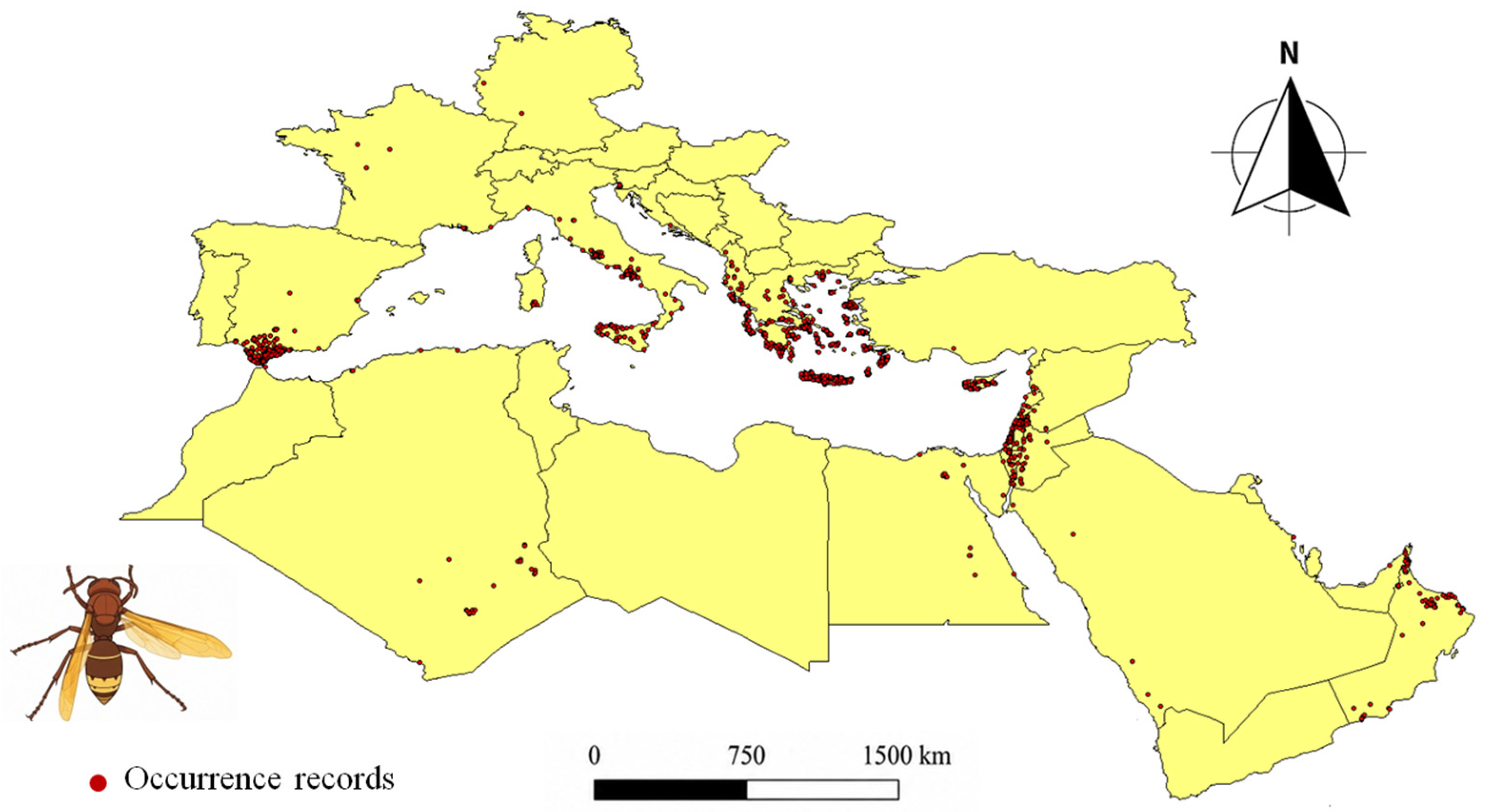
V. orientalis has been observed in recent years, the query was restricted to records meeting the following criteria: basis of record = human observation, occurrence status = present, and a temporal range between 2000 and 2026. The resulting dataset comprised 5142 occurrence records aggregated from 21 contributing datasets (16 publishers across 14 countries). Records were compiled into a curated, georeferenced dataset and subjected to a multi-stage filtering protocol in R (version 4.5.1). All spatial processing was conducted using the WGS 84 coordinate reference system. First, missing, invalid, or zero-coordinate entries were removed to ensure data integrity. To guarantee geographic accuracy, a spatial intersection against a terrestrial country-level vector map was performed; this process effectively excluded records in the sea, global outliers, and occurrences falling outside the target environmental domain to minimize extrapolation risk (
Supplementary Materials File S1). While spatial thinning is common in species distribution modeling, no thinning was performed here to preserve the species’ natural clustering pattern, which is characterized by high nest density in suitable areas. This rigorous cleaning process resulted in a final dataset of 3123 records (
Supplementary Materials File S2 and
Figure 1).
The analysis was conducted in R (version 4.5.1) using a Maximum Entropy framework implemented through the R package maxnet (
Supplementary Materials File S1). Several supporting libraries (terra, sf, dplyr, pROC, dismo, caret, raster, rnaturalearth, and ggplot2) were used for spatial data handling, modelling, and evaluation.
Climatic predictors were derived from WorldClim version 2.1 at 2.5 arc-minute resolution [
26]. Nineteen bioclimatic variables were initially considered. Variables bio18 and bio19 were excluded due to known artifacts [
15]. Highly correlated variables (|r| > 0.7) were removed using the findCorrelation algorithm implemented in the caret package. The resulting predictor set retained only ecologically interpretable and statistically independent variables. All raster processing was conducted using the terra package, including cropping, masking, and trimming to the study domain. Finally, the used predictors were bio5 (Max Temperature of Warmest Month (°C)), bio7 (Temperature Annual Range (°C)), bio11(Mean Temperature of Coldest Quarter (°C)), and bio12 (Annual precipitation (mm)). These variables are important for
V. orientalis colony dynamics: bio5 reflects the species’ tolerance to heat stress during peak activity; bio7 represents adaptability to seasonality and thermal amplitude; bio11 is a critical factor influencing queen overwintering survival; and bio12 reflects moisture requirements for nest construction and larval development. The selection of bioclimatic predictors was intended to characterize the species’ potential climatic niche rather than its realized distribution. While non-climatic factors—including land-use patterns, urbanization, nesting-site availability, and human-mediated dispersal—play significant roles in local establishment and colonization, these were beyond the scope of the current regional climatic assessment. Consequently, model outputs are interpreted as indicators of climatic suitability. This approach follows standard Maximum Entropy protocols for assessing broad-scale geographic favorability based on stable climatic envelopes, identifying areas where the environmental conditions are physiologically suitable for the species.
Climatic suitability was modeled using Maximum Entropy as implemented in the maxnet R package. To ensure model stability and reproducibility, a global random seed (set.seed(123)) was set prior to background sampling and data partitioning. Presence records were contrasted with 10,000 background points randomly sampled across the entire study area, defining the accessible environmental space. Consistent with established ecological niche modeling (ENM) standards, linear, quadratic, product, and hinge (lqph) feature classes were used. This configuration allows for flexible response curves while maintaining biological interpretability. The default regularization multiplier (β = 1.0) was applied to balance model fit and complexity. This standard lqph feature set is widely recognized for its robust performance and inherent penalization of overly complex responses.
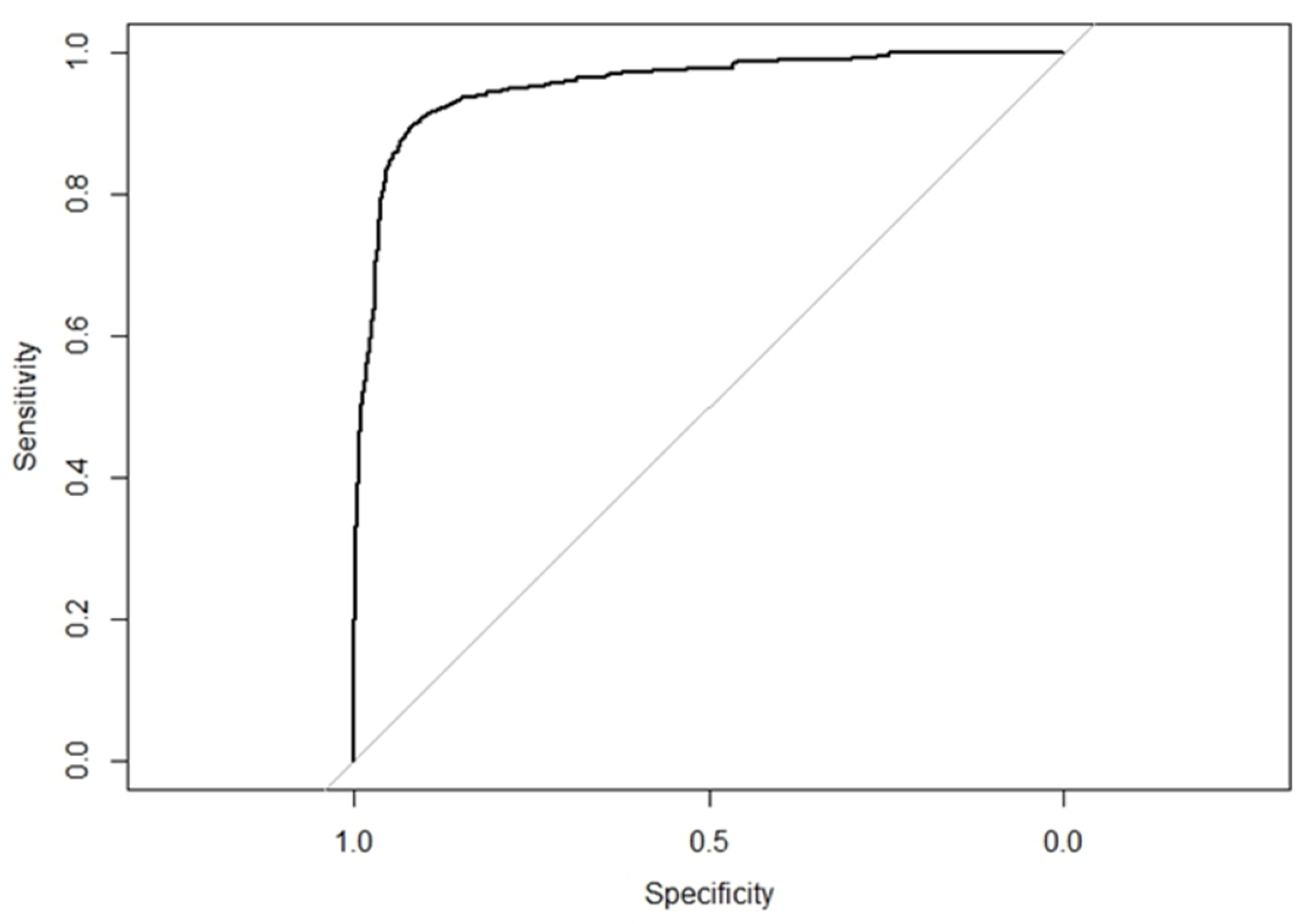
To address potential overfitting and evaluate predictive performance, a five-fold cross-validation procedure (using the caret package) was implemented. The dataset was partitioned into five folds, with 80% of the data used for training and 20% for testing in each iteration. Model performance was quantified using the Area Under the Receiver Operating Characteristic Curve (AUC), providing a robust measure of the model’s ability to generalize. Binary suitability maps were derived using the Youden Index, calculated from the training data, which optimizes the balance between sensitivity and specificity. This identical threshold was applied consistently to both current and future climate projections. To provide a more comprehensive assessment of model calibration beyond AUC, the True Skill Statistic (TSS) was also calculated. These threshold-dependent metrics ensure that binary classification is statistically grounded for presence–background modeling.
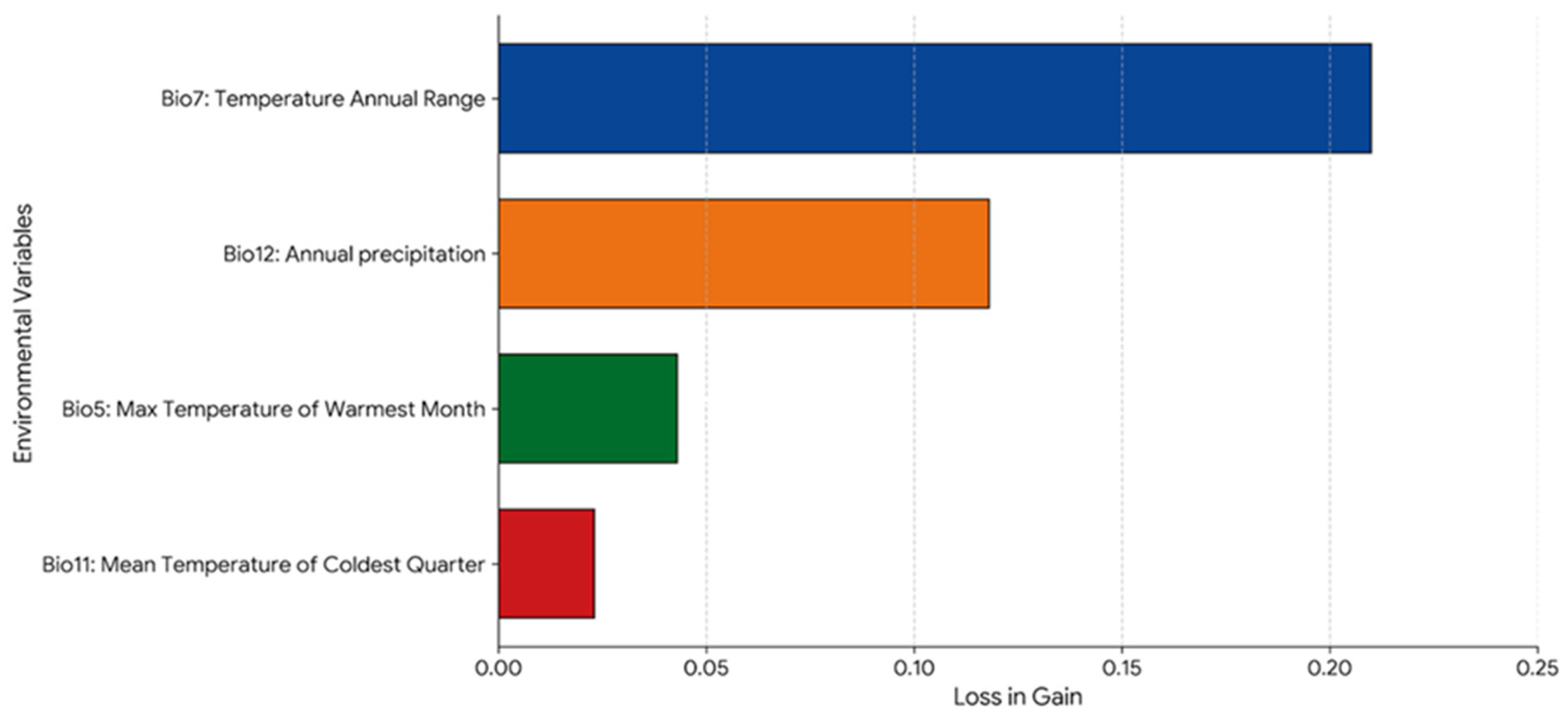
Predictor contributions using a gain-based jackknife procedure were quantified. For each variable, model gain was recalculated after exclusion of that predictor. The reduction in gain relative to the full model was used as a measure of variable importance, providing an interpretable estimate of each variable’s unique contribution.
Future climatic suitability was projected to 2050 (2041–2060 time slice) under the Shared Socioeconomic Pathway 245 (SSP245) scenario using the MIROC6 general circulation model to represent a realistic intermediate emissions pathway and ensure reliable simulation of temperature and precipitation patterns. This approach enables robust prediction of potential distribution shifts in V. orientalis while supporting MaxEnt analysis in identifying suitable habitats and areas of environmental novelty under future conditions. Future bioclimatic layers were processed identically to current layers and restricted to the selected predictor set to ensure model compatibility. Habitat suitability was represented using MaxEnt output maps, expressed as cloglog probability values ranging from 0 (rarely suitable) to 1 (highly suitable).
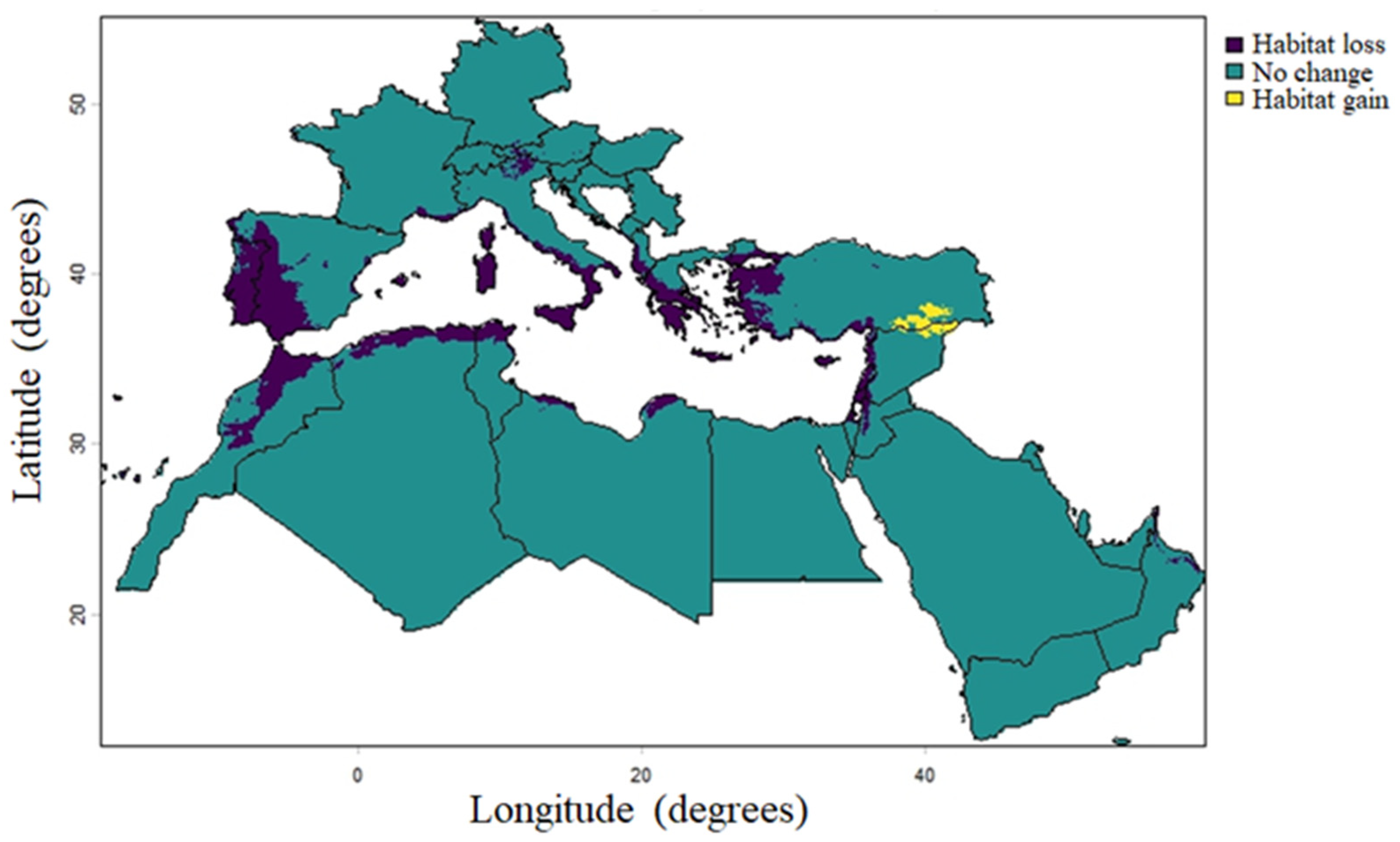
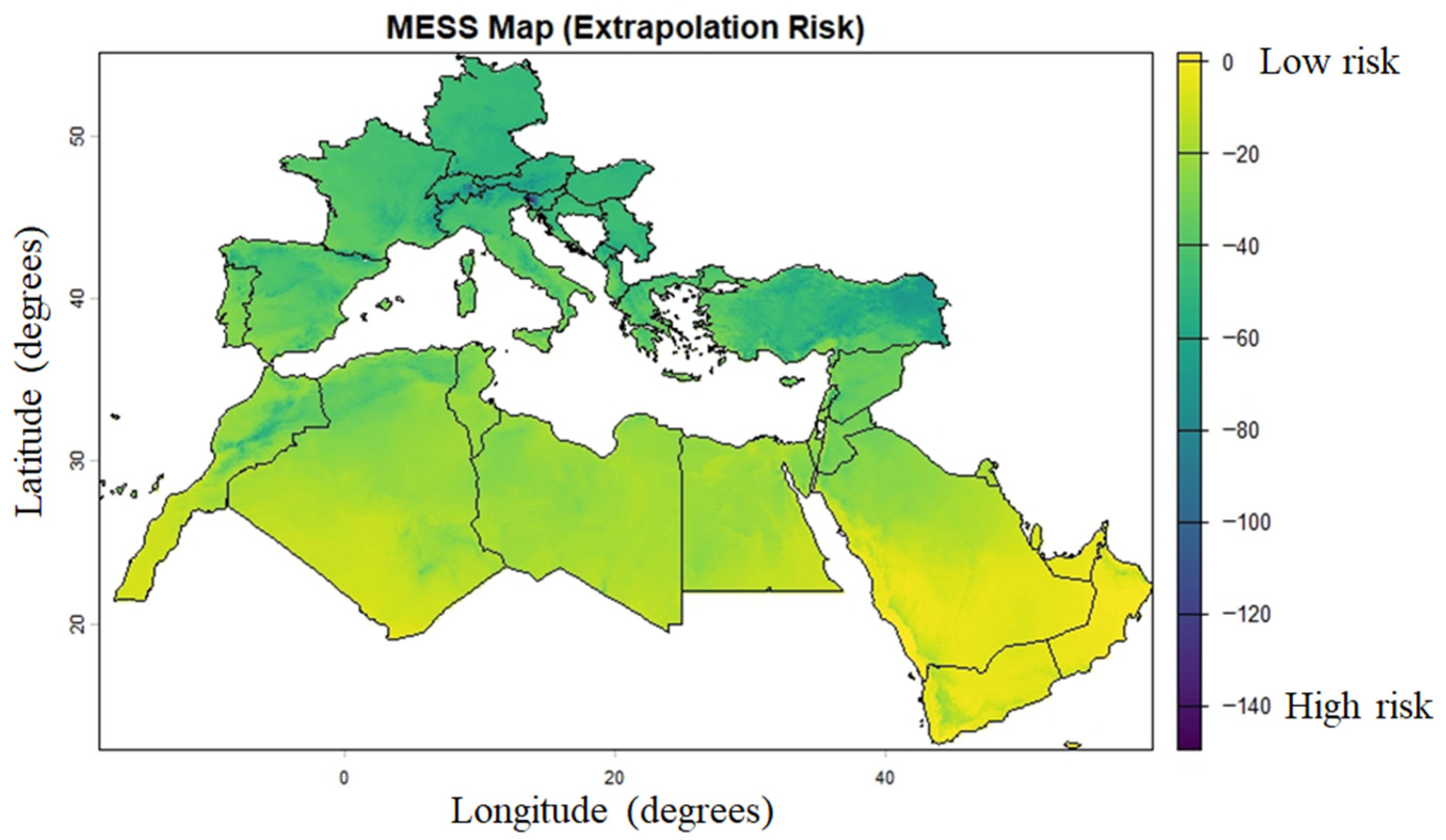
To assess extrapolation risk, Multivariate Environmental Similarity Surfaces (MESS) were computed using the dismo. Negative MESS values indicate climatic conditions outside the range observed in the training data and therefore represent areas of reduced projection reliability. Range shifts were quantified by subtracting binary current suitability from future suitability, classifying grid cells as stable, gained, or lost. Future projections were generated without environmental clamping to allow for response flexibility, but extrapolation risk was strictly monitored using MESS. Regions with negative MESS values were retained in the final maps but were qualitatively identified as areas of lower predictive reliability.
4. Discussion
The MaxEnt model demonstrated high predictive accuracy for
V. orientalis, with Area Under the Curve (AUC) values for training (0.9533) and cross-validation (0.95) datasets exceeding the 0.90 threshold indicative of high performance [
22]. The negligible divergence between these values confirms model stability and a high capacity for generalization [
27]. Furthermore, the True Skill Statistic (TSS) of 0.78 reflects the agreement between observed and predicted distributions, effectively accounting for both omission and commission errors, independent of species prevalence [
28]. These metrics indicate that the environmental predictors used were ecologically relevant and the model is well-calibrated for spatial risk assessment.
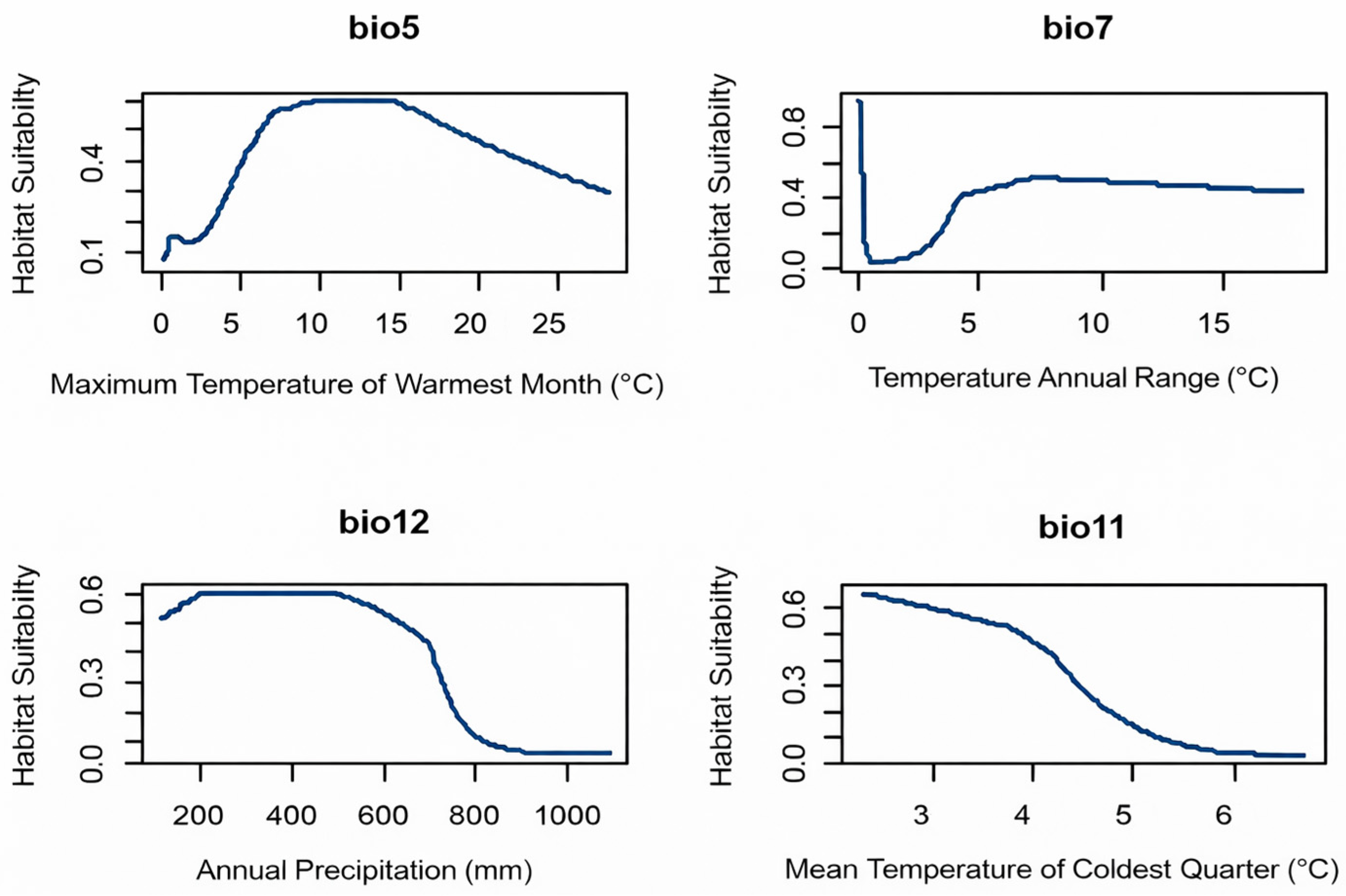
The MaxEnt response curves provide critical insights into the climatic niche of
V. orientalis, demonstrating how environmental constraints shape its spatial distribution and supporting the biological plausibility of presence-only models [
22]. Habitat suitability exhibited a unimodal relationship with the maximum temperature of the warmest month (bio5), peaking at an optimal threshold before declining, which suggests that while high summer temperatures enhance foraging and colony development, extreme heat imposes physiological stress or reduces efficiency, consistent with ectothermic thermal limits and the “thermal window” hypothesis [
9,
16,
23]. Similarly, the species showed a preference for moderate temperature annual range (bio7), indicating that some seasonality is beneficial—likely for life-cycle synchronization and diapause requirements—whereas excessive variability constrains distribution [
25,
29]. Suitability also declined with increasing mean temperature of the coldest quarter (bio11), suggesting a requirement for cooler winter conditions to support successful diapause, as warmer winters may cause metabolic depletion, premature emergence, or phenological mismatches [
30,
31]. In terms of annual precipitation (bio12), the bell-shaped response indicates limitation under both arid and overly humid conditions: insufficient moisture leads to hydric stress, while excessive rainfall may disrupt foraging and damage nesting sites [
22,
32]. Overall, these findings indicate that
V. orientalis is adapted to environments with moderate thermal variability and intermediate moisture availability, highlighting that its distribution is governed by a balance of thermal stability and hydric conditions, and providing a valuable baseline for predicting range shifts and informing monitoring and management under future climate change scenarios.
The jackknife analysis identified the relative contribution of individual bioclimatic predictors to the habitat suitability of
V. orientalis, distinguishing the unique information provided by each variable and the degree of redundancy among predictors [
22,
33]. The results indicate that habitat suitability is primarily governed by temperature annual range (bio7), which showed the greatest contribution to model gain, highlighting climatic seasonality—rather than mean temperature—as the dominant limiting factor for the species’ distribution. This strong influence suggests a high sensitivity to fluctuations between annual thermal extremes and underscores the importance of seasonality in regulating critical life-cycle processes [
25]. The model identifies an optimal thermal range for
V. orientalis, which aligns with peak periods of colony development. Within this window, thermal conditions maximize the metabolic rates necessary for intensive nest construction and enhance foraging efficiency, ensuring robust resource acquisition. Consequently, deviations from this range likely impose physiological constraints that disrupt the timing of colony initiation and the onset of diapause [
9,
25]. Annual precipitation (bio12) was the second most influential variable, emphasizing the role of moisture balance in sustaining colonies through its effects on nesting materials, prey availability, and floral resources, while excessive moisture may negatively impact nesting success [
23]. In contrast, the maximum temperature of the warmest month (bio5) and the mean temperature of the coldest quarter (bio11) showed relatively low independent contributions, suggesting either shared information with bio7 or a lesser ecological constraint compared to seasonal variability. This pattern reflects the complex interaction of environmental gradients in which seasonality and moisture availability jointly shape the realized niche of the species [
34]. The dominance of bio7 and bio12 indicates that the distribution of
V. orientalis is highly sensitive to changes in thermal variability and precipitation regimes, implying that shifts in climatic stability may exert a stronger influence on future range dynamics than gradual increases in mean temperature.
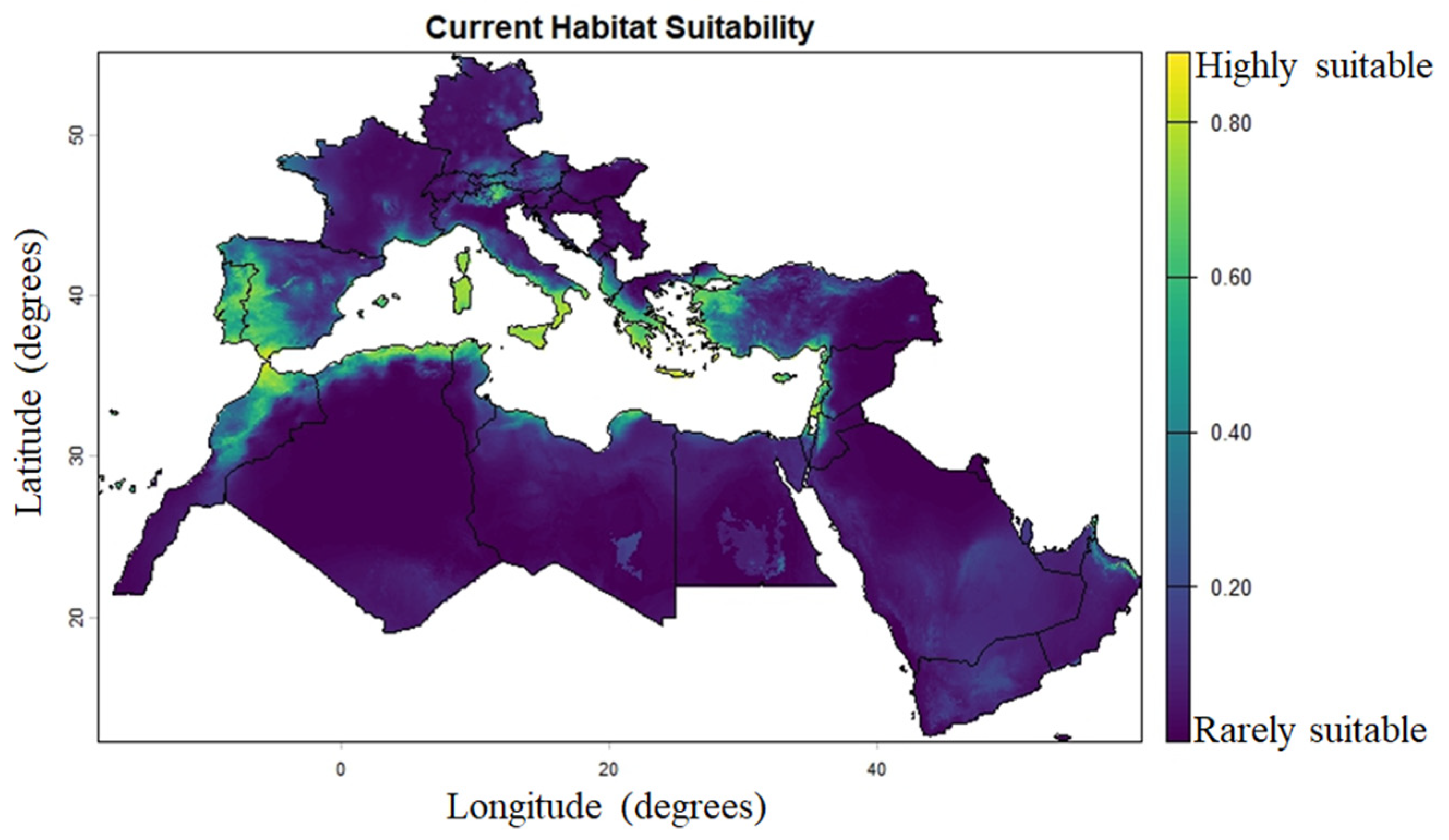
Under current climatic conditions, MaxEnt projections reveal significant spatial heterogeneity in
V. orientalis habitat suitability across the Western Palearctic. The model identifies a high-suitability core concentrated within the Mediterranean basin, specifically in southern Europe (Spain, Italy, Greece), coastal North Africa (Morocco, Algeria, Tunisia), Turkey, and the Levantine corridor. This distribution confirms the species’ strong affinity for Mediterranean-type climates, characterized by warm, dry summers and mild, wet winters [
35]. These findings are consistent with the model’s response curves, which emphasize a preference for moderate thermal variability and intermediate moisture availability. In Mediterranean ecosystems, climatic seasonality and precipitation are recognized as the primary drivers of insect community structure and distribution [
24]. Conversely, habitat suitability declines sharply in hyper-arid regions such as the Sahara Desert and the Arabian Peninsula. The extreme thermal regimes and negligible precipitation in these zones likely exceed the physiological thresholds of
V. orientalis, reinforcing the role of moisture as a critical limiting factor. The absence of suitability in these desert environments highlights clear ecological constraints that prevent range expansion into extreme arid climates. Binary projections reveal contiguous corridors of suitable habitat along the southern European coastline and northern Africa. Identifying these pathways is essential for regional biosecurity and management, as these corridors may serve as conduits for colonization under shifting climatic conditions.
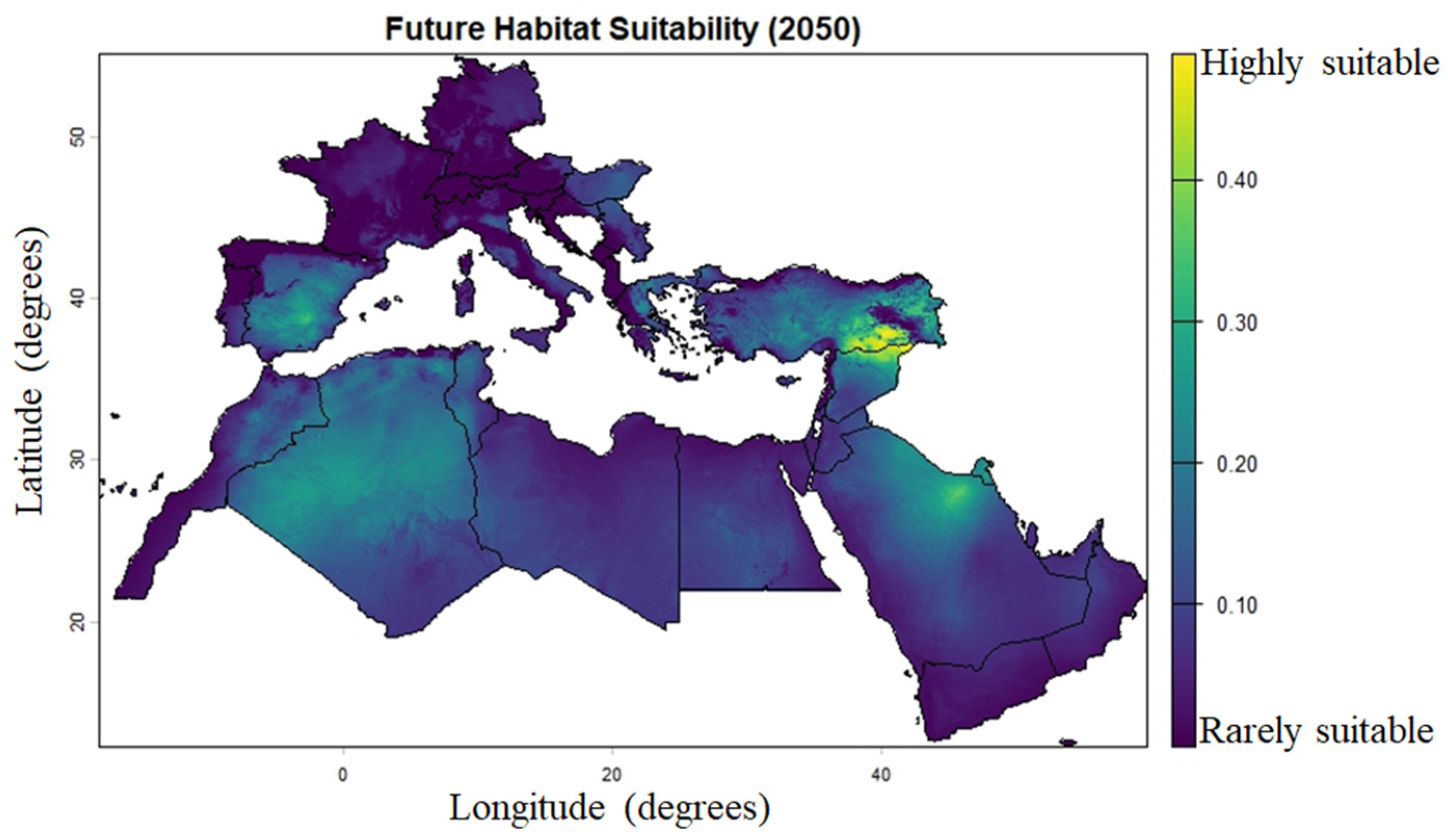
Mid-century projections under the moderate-warming SSP245 scenario indicate a net expansion of
V. orientalis habitat, primarily characterized by a pronounced poleward and eastward shift into central and eastern Europe. This pattern is rooted in the historical role of cold-temperature constraints as a primary geographic filter; the predicted expansion reflects a relaxation of these low-temperature limits—specifically winter minima (bio11)—which previously acted as a physiological barrier to colonization in higher latitudes. Such range shifts are a hallmark of species tracking their preferred thermal envelopes as temperate zones undergo warming [
36]. The emergence of newly suitable areas suggests that parts of the European interior may become climatically receptive to hornet establishment by 2050. In contrast to the northern expansion, the model predicts significant suitability losses across North Africa and the Arabian Peninsula. These contractions are likely driven by intensified aridity and thermal extremes that exceed the species’ physiological tolerance thresholds [
16]. The projected colonization of central and eastern Europe carries significant ecological and economic implications. As a generalist predator, the establishment of
V. orientalis in these newly suitable regions may disrupt local food webs through increased predation pressure on native pollinators and competitive exclusion of indigenous vespid species. Furthermore, the expansion poses a substantial threat to the European apiculture industry;
V. orientalis is a well-documented specialist predator of honeybees (
Apis mellifera), and its arrival in major honey-producing regions could lead to significant colony losses and reduced pollination services [
2,
3,
9].
While
V. orientalis exhibits high heat tolerance compared to other vespids, the synergistic effect of rising maximum temperatures (bio5) and declining precipitation (bio12) under SSP245 may induce severe desiccation stress, rendering currently favorable southern regions unsuitable. These findings mirror broader projections for Mediterranean and semi-arid biodiversity, where drought-induced range contractions are expected to accelerate [
35]. The model also highlights the importance of topographically diverse regions, such as the Anatolian highlands and parts of the Mediterranean coast, which may serve as climatic refugia. In these areas, the species is projected to shift upward in elevation, utilizing cooler high-altitude microclimates to offset rising regional temperatures [
24]. This altitudinal tracking suggests that mountainous landscapes will be critical for the long-term persistence of the species’ core populations.
The projected 2050 distribution of
V. orientalis is characterized by spatial reorganization rather than uniform expansion, with suitability shifts following clear longitudinal and latitudinal gradients. Large areas of North Africa and the Middle East remain environmentally stable due to persistent hyper-arid conditions, indicating that even under the moderate-warming scenario (SSP245), the Sahara and Arabian Peninsula will continue to act as strong ecological barriers [
30]. In contrast, habitat loss is concentrated in the coastal and lowland regions of southern Europe—particularly in Spain, Italy, and Greece—where rising summer temperatures and declining precipitation push conditions beyond the species’ optimal thermal and moisture limits, reinforcing the Mediterranean’s status as a climate change hotspot and increasing the risk of localized population declines [
35,
37]. At the same time, habitat gains are mainly observed in eastern regions such as Turkey and southeastern Europe, where warming reduces cold limitations while moisture levels remain suitable. These patterns indicate that
V. orientalis is tracking a shifting climatic niche rather than simply expanding its range. The coexistence of stable areas, localized losses, and emerging suitable zones highlights the dynamic nature of habitat suitability, with transition zones playing a critical role as potential dispersal pathways and priority areas for monitoring and biosecurity as management challenges intensify toward mid-century.
The results agree with a previous study [
9] in identifying the Mediterranean basin as the core suitable range of
V. orientalis, confirming the importance of temperature and precipitation as key drivers and highlighting its potential for range expansion into new regions. However, unlike the study by [
9], these findings emphasize simultaneous range contraction in southern areas and demonstrate that distribution shifts are driven by climatic constraints (e.g., bio7, bio11, bio12), adding new insights into spatial reorganization, directional (poleward/eastward) expansion, and the role of transition zones and refugia under climate change. The MESS analysis was employed to evaluate model transferability under future climatic conditions. Under the SSP245 scenario, the results revealed low levels of climatic novelty across the primary projection areas, suggesting that mid-century suitability shifts occur largely within the environmental space used for model training. This minimizes extrapolation risk and enhances confidence in the reliability of the forecasts [
38]. MESS values near or above zero were widespread across the northern and central Mediterranean, including Italy, Greece, and western Turkey. In these regions, the projected expansion of
V. orientalis is strongly supported by climatic gradients already represented in the calibration domain [
23]. Conversely, strongly negative MESS values—denoting novel climatic conditions—were restricted to extreme desert systems (e.g., the Sahara) and specific high-elevation zones. These areas represent combinations of temperature and precipitation outside the species’ currently observed environmental range. Predictions in such regions inherently carry higher uncertainty as they rely on the model’s ability to extrapolate beyond known species–environment relationships [
39]. Consequently, suitability projections in these specific zones should be interpreted with caution. The MESS analysis reinforces the robustness of the core Mediterranean and European projections. By identifying regions of high extrapolation risk, this analysis provides a more nuanced understanding of where model outputs are most reliable and where future climatic combinations may exceed the species’ known ecological tolerance limits.