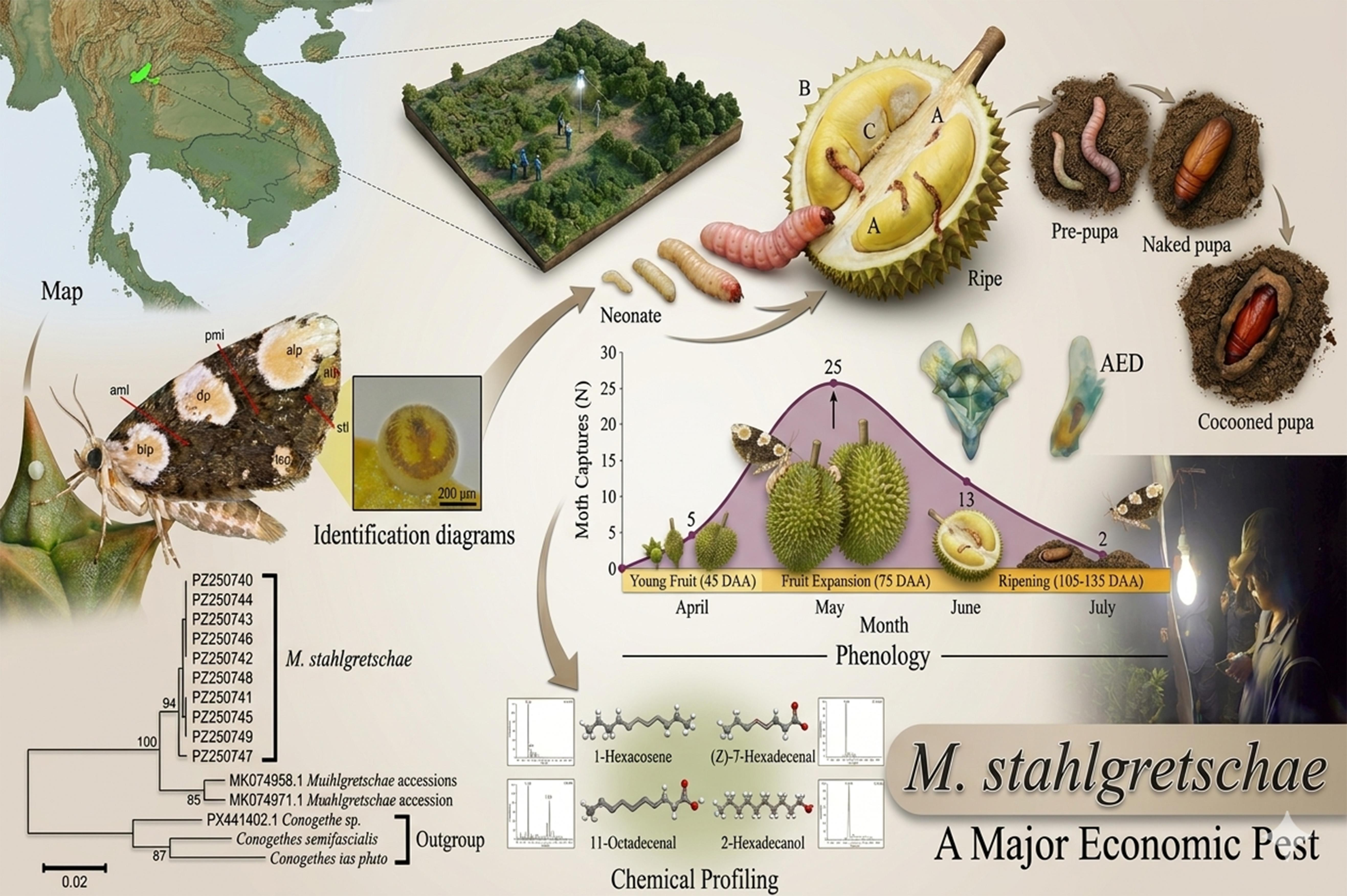

Integrative Taxonomy, Seasonal Phenology, and Sex Pheromone Profiling of the Durian Seed Borer (Mudaria stahlgretschae) for Enhanced Pest Monitoring



Abstract
1. Introduction
2. Materials and Methods
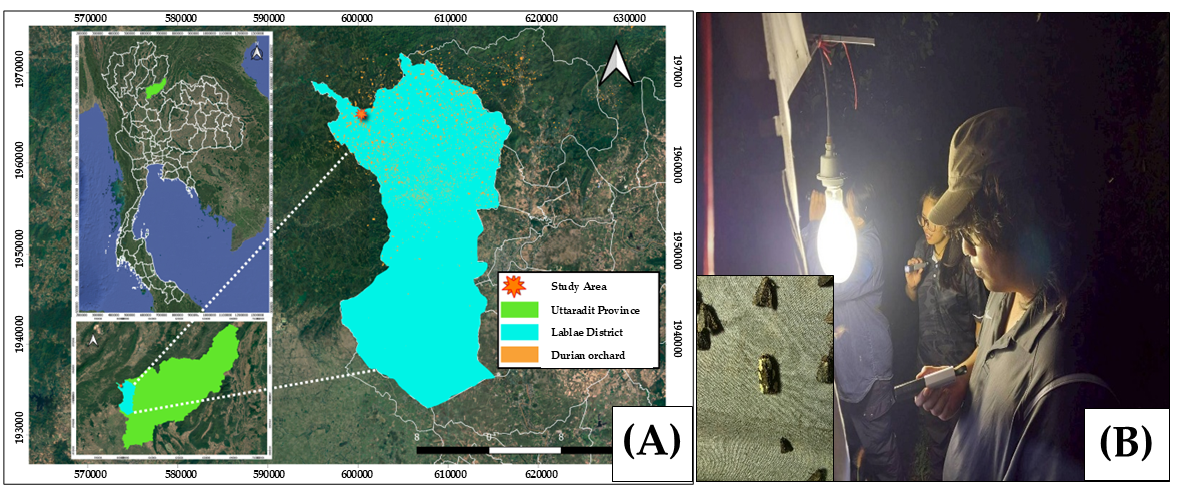
2.1. Study Site and Sample Collection
2.2. Integrative Taxonomic Identification
2.2.1. Laboratory Rearing and Development
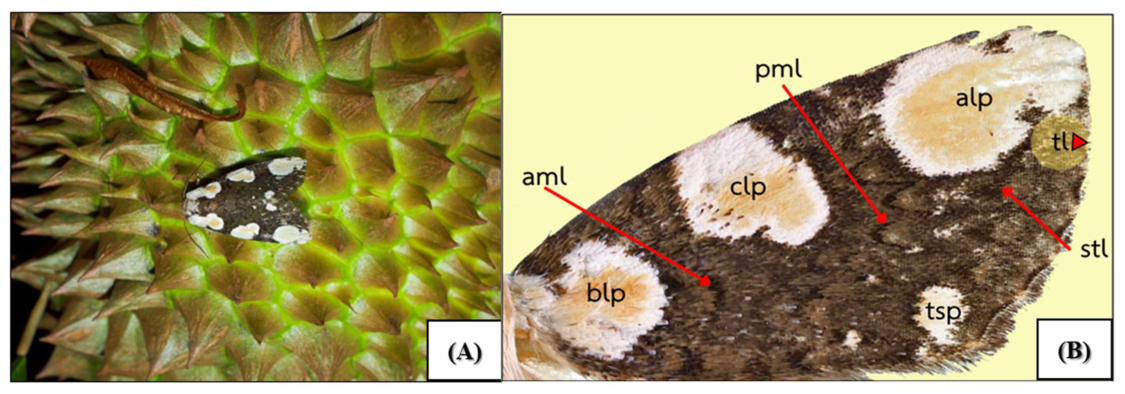
2.2.2. Morphological Characterization
2.2.3. Molecular Analysis: DNA Barcoding and Phylogeny
2.3. Extraction of Putative Sex Pheromone Candidates and GC-MS Analysis
2.4. Statistical Analysis
3. Results
3.1. Morphological Descriptions and Bionomics of Mudaria stahlgretschae
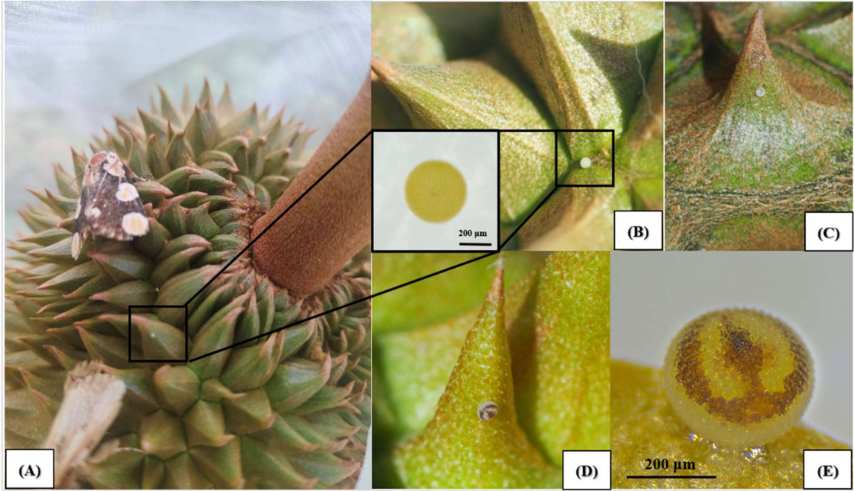
3.1.1. Oviposition
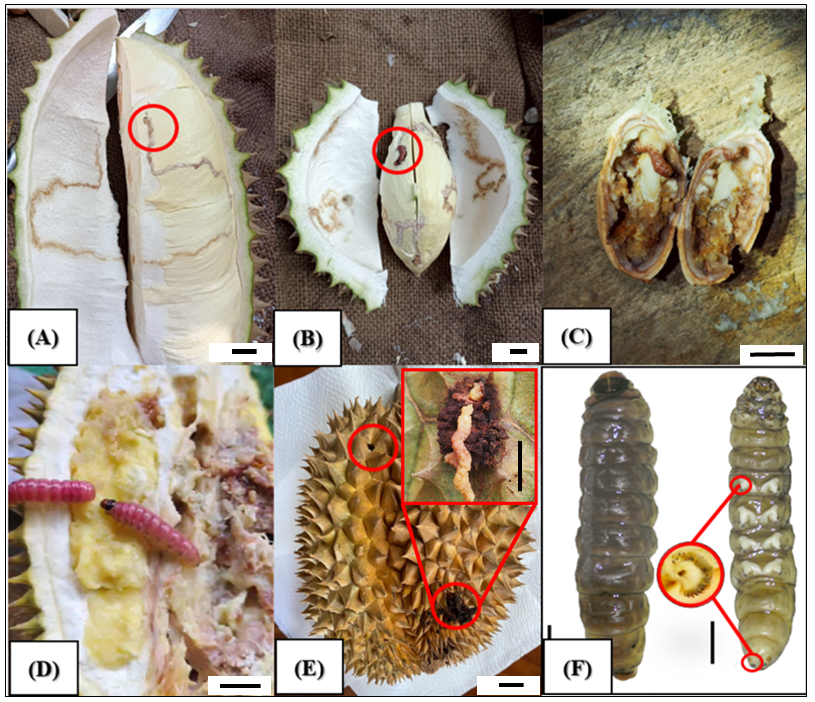
3.1.2. Infestation and Feeding Behavior
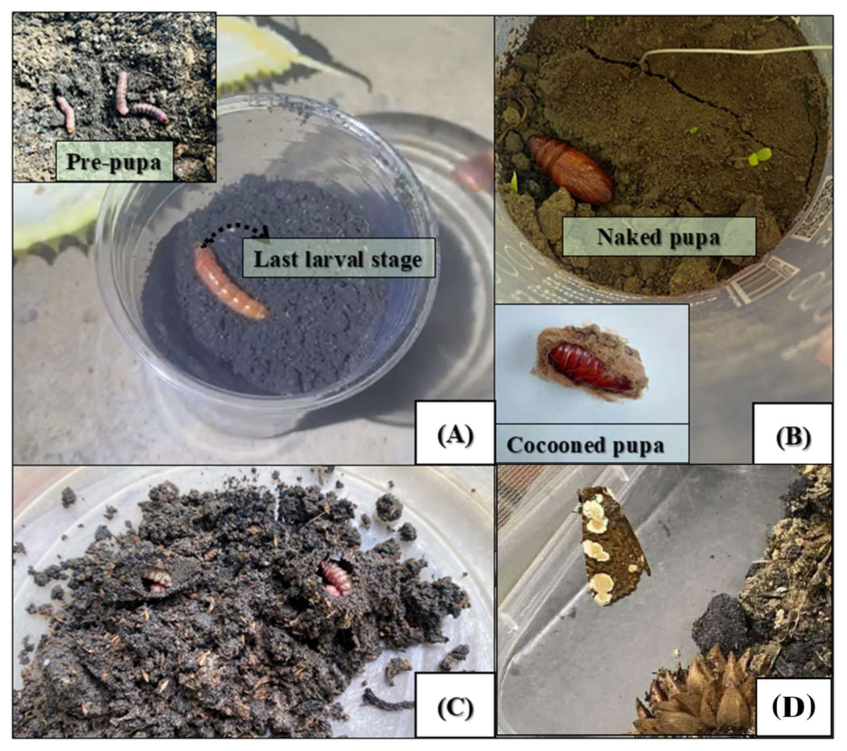
3.1.3. Prepupal and Pupal Development
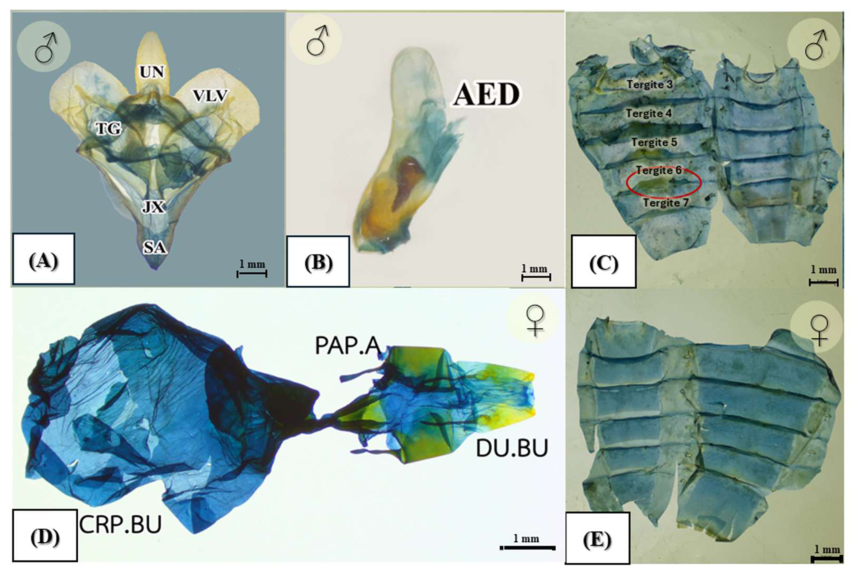
3.1.4. Integrative Taxonomic Identification and Systematic Accounts
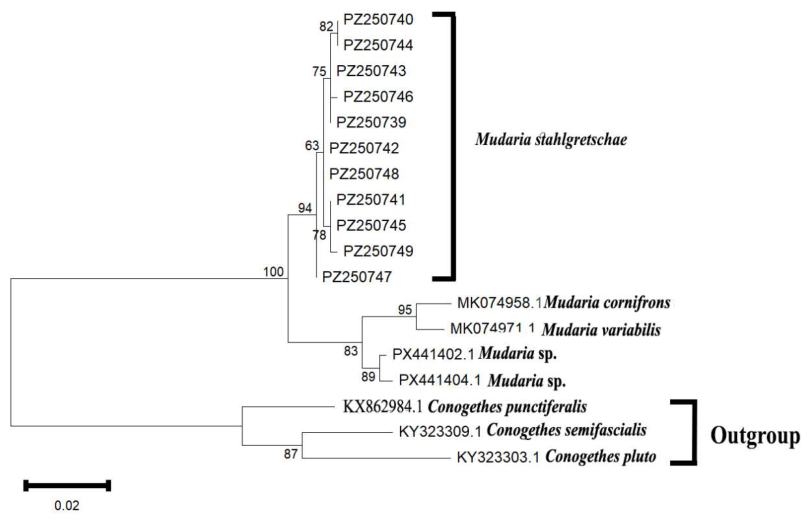
3.2. Molecular Identification and Validation
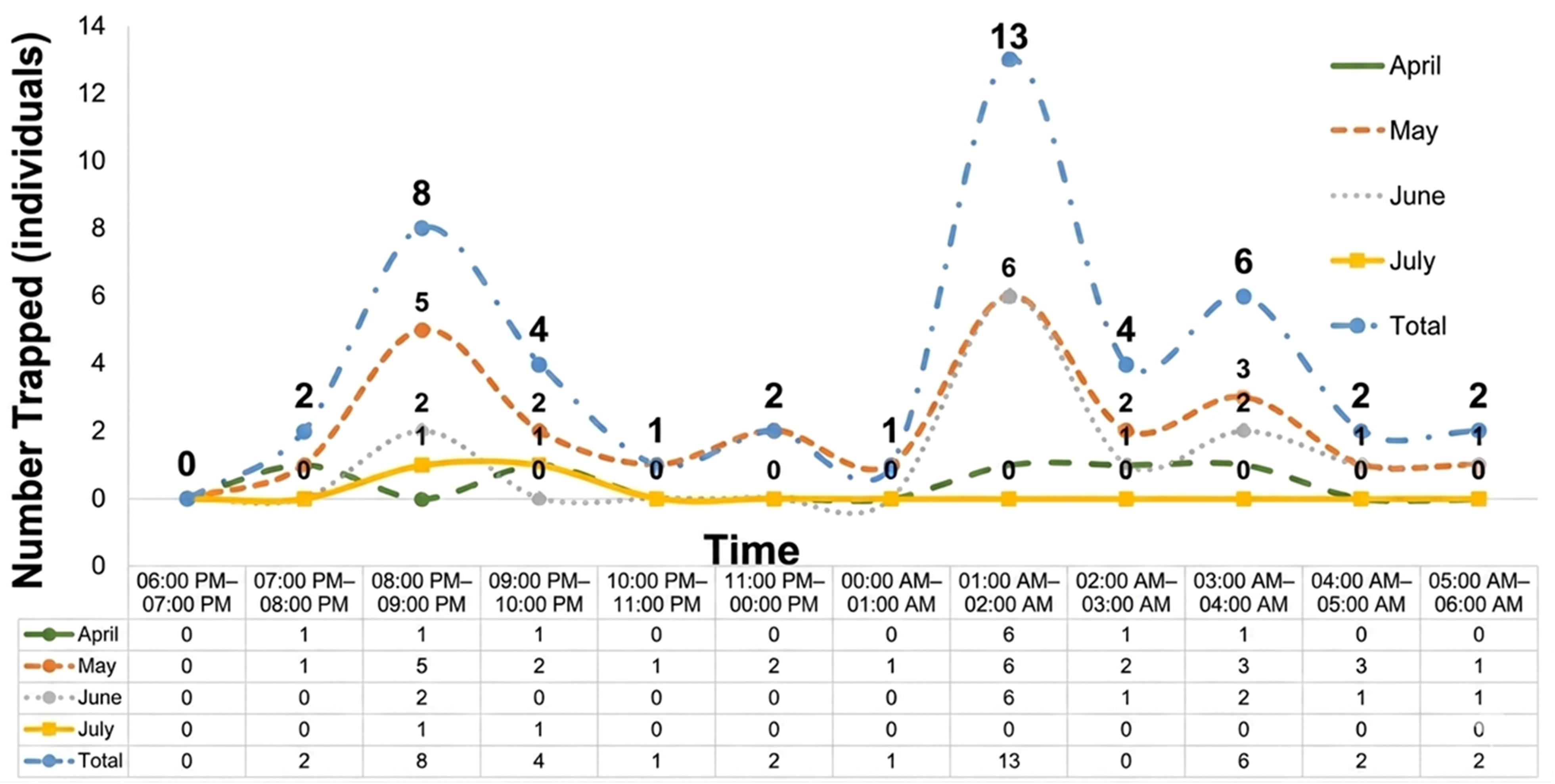
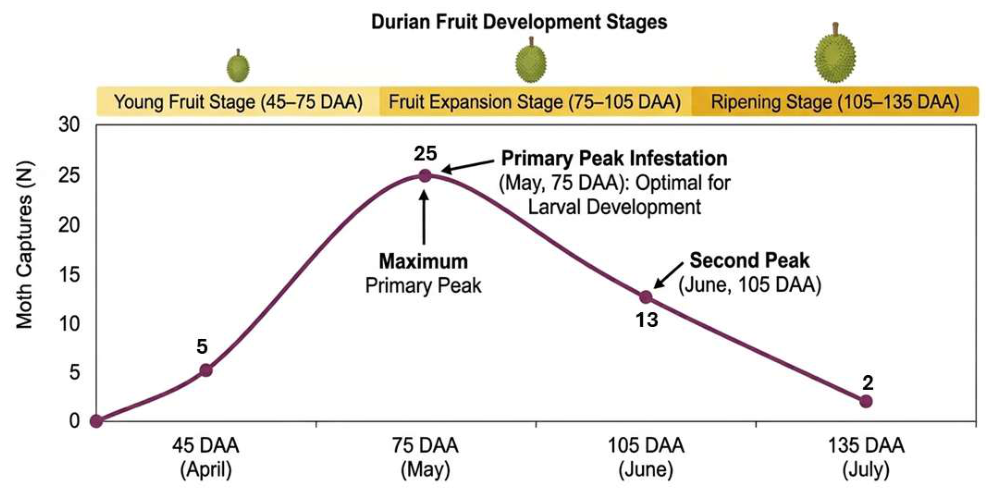
3.3. Nocturnal Activity and Seasonal Phenology of M. stahlgretschae
3.4. Profiling of Putative Sex Pheromone Candidates
4. Discussion
4.1. Integrative Taxonomy and the Critical Role of First Formal Records
4.2. Evolutionary Synchronization and Environmental Drivers for Precision IPM
4.3. Chemical Ecology and Its Implications for Pest Management
4.4. Strategic Outlook for Agro-Biodiversity and Export Security
5. Conclusions
Author Contributions
Funding
Institutional Review Board Statement
Data Availability Statement
Conflicts of Interest
Abbreviations
| COI | Cytochrome c Oxidase Subunit I |
| DNA | Deoxyribonucleic Acid |
| HS-SPME | Headspace Solid-Phase Microextraction |
| GC-MS | Gas Chromatography–Mass Spectrometry |
| MSD | Mass Selective Detector |
| EI | Electron Impact |
| IPM | Integrated Pest Management |
| NRCT | National Research Council of Thailand |
| RT | Retention time |
| SRI | Science, Research, and Innovation |
References
- Kuroko, H.; Lewvanich, A. Lepidopterous Pests of Tropical Fruit Trees in Thailand; Japan International Cooperation Agency: Tokyo, Japan, 1993. [Google Scholar]
- Ronkay, G.; Ronkay, L.; Landry, B. The Jacques Plante Noctuidae Collection. Part II. Descriptions of New Taxa. In Memoires de la Société de Physique et D’histoire Naturelle de Genève; Landry, B., Ed.; Heterocera Press: Budapest, Hungary; Société de Physique et d’Histoire Naturelle de Genève: Geneva, Switzerland, 2023; Volume 49, pp. 1–445. [Google Scholar]
- Robinson, G.S.; Tuck, K.R.; Shaffer, M. A Field Guide to the Smaller Moths of South-East Asia; Malaysian Nature Society: Kuala Lumpur, Malaysia, 1994. [Google Scholar]
- Kononenko, V.S.; Pinratana, A. Moths of Thailand. Vol. 3, Part 2: Noctuoidea. An Illustrated Catalogue of Erebidae, Nolidae, Euteliidae and Noctuidae (Insecta, Lepidoptera) in Thailand; Brothers of St. Gabriel in Thailand: Bangkok, Thailand, 2013; 625p. [Google Scholar]
- Holloway, J.D. The Moths of Borneo. Part 12: Family Noctuidae, Trifine Subfamilies: Heliothinae, Hadeninae, Acronictinae, Amphipyrinae, Agaristinae; The Malayan Nature Society: Kuala Lumpur, Malaysia, 1989; 226p. [Google Scholar]
- Chammui, Y. Rapid analysis of some endocrine disruptor chemicals leaching from baby milk feeding bottles using SPME and SDME techniques. Food Anal. Methods 2017, 10, 2607–2618. [Google Scholar] [CrossRef]
- Greene, G.L.; Leppla, N.C.; Dickerson, W.A. Velvetbean caterpillar: A rearing procedure and artificial medium. J. Econ. Entomol. 1976, 69, 487–488. [Google Scholar] [CrossRef]
- Adedeji, A.A.; Ekramirad, N.; Rady, A.; Hamidisepehr, A.; Donohue, K.D.; Villanueva, R.T.; Parrish, C.A.; Li, M. Non-destructive technologies for detecting insect infestation in fruits and vegetables under postharvest conditions: A critical review. Foods 2020, 9, 927. [Google Scholar] [CrossRef] [PubMed]
- Zhou, W.; Arcot, Y.; Medina, R.F.; Bernal, J.; Cisneros-Zevallos, L.; Akbulut, M.E.S. Integrated pest management: An update on the sustainability approach to crop protection. ACS Omega 2024, 9, 41130–41147. [Google Scholar] [CrossRef]
- Hebert, P.D.N.; Ratnasingham, S.; de Waard, J.R. Barcoding animal life: Cytochrome c oxidase subunit 1 divergences among closely related species. Proc. Biol. Sci. 2003, 270, S96–S99. [Google Scholar] [CrossRef]
- Folmer, O.; Black, M.; Hoeh, W.; Lutz, R.; Vrijenhoek, R. DNA primers for amplification of mitochondrial cytochrome c oxidase subunit I from diverse metazoan invertebrates. Mol. Mar. Biol. Biotechnol. 1994, 3, 294–299. [Google Scholar]
- Rukkasikorn, A.; Chaovalit, S.; Dokchan, P.; Ratanamahamaneekorn, K.; Ruangsuk, K.; Poolprasert, P. Diversity of Moths in the Genus Mudaria Moore, 1893 (Lepidoptera: Noctuidae) and Their Impact on Durian Production in Thailand. In Proceedings of the 16th National Plant Protection Conference, Chiang Mai, Thailand, 18–20 February 2025; pp. 49–66. [Google Scholar]
- Millar, J.G. Polyene hydrocarbons and epoxides: A second major class of lepidopteran sex attractant pheromones. Annu. Rev. Entomol. 2000, 45, 575–604. [Google Scholar] [CrossRef] [PubMed]
- Karthika, P.; Krishnaveni, N.; Vadivalagan, C.; Murugan, K.; Nicoletti, M.; Benelli, G. DNA barcoding and evolutionary lineage of 15 insect pests of horticultural crops in South India. Karbala Int. J. Mod. Sci. 2016, 2, 156–168. [Google Scholar] [CrossRef]
- Triplehorn, C.A.; Johnson, N.F. Borror and DeLong’s Introduction to the Study of Insects, 7th ed.; Thomson Brooks/Cole: Belmont, CA, USA, 2005; 864p. [Google Scholar]
- Robinson, G. The preparation of slides of Lepidoptera genitalia with special reference to the Microlepidoptera. Entomol. Gaz. 1976, 27, 127–132. [Google Scholar]
- Winter, W.D. Basic Techniques for Observing and Studying Moths and Butterflies; Memoirs of the Lepidopterists’ Society No. 5; Natural History Museum: Los Angeles, CA, USA, 2000; 444p. [Google Scholar]
- Pellinen, M.; Mutanen, M.; Sihvonen, P. New species of genus Mudaria Moore, 1893 and the first record of Mudaria cornifrons Moore, 1893 from Thailand (Lepidoptera, Noctuidae, Noctuinae). Zootaxa 2018, 4500, 292–300. [Google Scholar] [CrossRef]
- Ronkay, G.; Ronkay, L.; Pekarsky, O. New Mudaria and Chodapsaphida (Lepidoptera, Noctuidae, Psaphidinae) species from the Himalaya region and Indochina. Fibigeriana Supplement; Heterocera Press: Budapest, Hungary, 2022; Volume 3, pp. 143–152. [Google Scholar]
- Kumar, S.; Stecher, G.; Suleski, M.; Sanderford, M.; Sharma, S.; Tamura, K. MEGA12: Molecular Evolutionary Genetic Analysis Version 12 for adaptive and green computing. Mol. Biol. Evol. 2024, 41, msae263. [Google Scholar] [CrossRef]
- Foulks, Z.; Parks, J.; Stoecker, W.; Kristensen, C.; Hebets, E.A.; Shi, H. Identification and Quantification of 11 Airborne Biochemicals Emitted by the Brown Recluse and Another Primitive Hunting Spider Using Headspace Solid-Phase Microextraction-GC/MS. Anal. Bioanal. Chem. 2021, 413, 6605–6615. [Google Scholar] [CrossRef] [PubMed]
- Lee, S.; Lee, D.-W.; Boo, K.S. Sex pheromone composition of the diamondback moth, Plutella xylostella (L.) in Korea. J. Asia Pac. Entomol. 2005, 8, 243–248. [Google Scholar] [CrossRef]
- Magsi, F.H.; Li, Z.; Cai, X.; Yamamoto, M.; Bian, L.; Zhao, Y.; Zhou, L.; Xiu, C.; Fu, N.; Ando, T.; et al. Identification of a unique three-component sex pheromone produced by the tea black tussock moth, Dasychira baibarana (Lepidoptera: Erebidae: Lymantriinae). Pest. Manag. Sci. 2022, 78, 2607–2617. [Google Scholar] [CrossRef] [PubMed]
- Lee, L.K. Biology and Phenology of the Durian Fruit Borer, Mudaria magniplaga Walker (Lepidoptera: Noctuidae); Final Project Report; Universiti Pertanian Malaysia: Serdang, Malaysia, 1996. [Google Scholar]
- Lee, L.K. Seasonal Occurrence of the Durian Fruit Borer, Mudaria magniplaga Walker (Lepidoptera: Noctuidae). Master’s Thesis, Universiti Pertanian Malaysia, Serdang, Malaysia, 1996. [Google Scholar]
- Holloway, J.D. The moths of Borneo (part 2): Families Phaudidae, Himantopteridae and Zygaenidae; revised and annotated checklist. Malay. Nat. J. 2011, 63, 1–548. [Google Scholar]
- Moore, F.Z.S. The silk cotton pod moth. Indian Mus. Notes 1893, 3, 68–70. [Google Scholar]
- Warren, W. Die Gross-Schmetterlinge der Erde. In The Macrolepidoptera of the World; Seitz, A., Ed.; Verlag des Seitz’schen Werkes (Alfred Kernen): Stuttgart, Germany, 1914; Volume 11, p. 339. [Google Scholar]
- Mazumdar, S.M.; Reddy, B.T.; Chandrashekharaiah, M.; Chowdary, N.B.; Chattopadhyay, S.; Rathore, M.S.; Sathyanarayana, K. Influence of abiotic factors on seasonal and non-seasonal emergence of Tasar silkworm, Antheraea mylitta Drury. J. Environ. Biol. 2023, 44, 445–451. [Google Scholar] [CrossRef]
- Hendrichs, J.; Kenmore, P.; Robinson, A.S.; Vreysen, M.J.B. Area-wide integrated pest management (AW-IPM): Principles, practice and prospects. In Area-Wide Control of Insect Pests; Vreysen, M.J.B., Robinson, A.S., Hendrichs, J., Eds.; Springer: Dordrecht, The Netherlands, 2007; pp. 193–233. [Google Scholar]
- Fetnassi, N.; Ude, K.; Kull, A.; Tammaru, T. Weather Sensitivity of Sugar Bait Trapping of Nocturnal Moths: A Case Study from Northern Europe. Insects 2022, 13, 1087. [Google Scholar] [CrossRef]
- Yela, J.L.; Holyoak, M. Effects of moonlight and meteorological factors on light and bait trap catches of noctuid moths (Lepidoptera: Noctuidae). Environ. Entomol. 1997, 26, 1283–1290. [Google Scholar] [CrossRef]
- Venter, G.J.; Boikanyo, S.N.B.; de Beer, C.J. The influence of temperature and humidity on the flight activity of Culicoides imicola both under laboratory and field conditions. Parasit. Vectors 2019, 12, 4. [Google Scholar] [CrossRef]
- Capinera, J.L. Area-wide control of insect pests: From research to field implementation. Fla. Entomol. 2008, 91, 349–350. [Google Scholar] [CrossRef]
- IPPC Secretariat. International Standards for Phytosanitary Measures (ISPM) No. 6: Surveillance; FAO: Rome, Italy, 2018; Available online: https://www.ippc.int/en/publications/615/ (accessed on 12 April 2026).
- World Trade Organization (WTO). Agreement on the Application of Sanitary and Phytosanitary Measures (SPS Agreement); WTO: Geneva, Switzerland, 1994; Available online: https://www.worldtradelaw.net/document.php?id=uragreements/spsagreement.pdf (accessed on 12 April 2026).
- Witzgall, P.; Kirsch, P.; Cork, A. Sex pheromones and their impact on pest management. J. Chem. Ecol. 2010, 36, 80–100. [Google Scholar] [CrossRef]
- Fu, N.; Magsi, F.H.; Zhao, Y.; Cai, X.; Li, Z.; Bian, L.; Xiu, C.; Chen, Z.; Luo, Z. Identification and Field Evaluation of Sex Pheromone Components and Its Antagonist Produced by a Major Tea Pest, Archips strojny (Lepidoptera: Tortricidae). Insects 2022, 13, 1056. [Google Scholar] [CrossRef]
- Xiang, Y.-Y.; Yang, M.-F.; Li, Z.-Z. Sex Pheromone Components of the Female Black Cutworm Moth in China: Identification and Field Trials. Zool. Res. 2009, 30, 59–64. [Google Scholar] [CrossRef]
- Rizvi, S.A.H.; George, J.; Reddy, G.V.P.; Zeng, X.; Guerrero, A. Latest Developments in Insect Sex Pheromone Research and Its Application in Agricultural Pest Management. Insects 2021, 12, 484. [Google Scholar] [CrossRef]
- Chillaud, T. The World Trade Organisation agreement on the application of sanitary and phytosanitary measures. Rev. Sci. Tech. 1996, 15, 733–751. [Google Scholar] [CrossRef]







| Parameter | Male | Female | Overall (Combined) |
| Number of individuals observed (n) | 3 | 5 | 8 |
| Developmental duration (days) | |||
| -Mean ± SD | 28.67 ± 1.15 | 25.40 ± 3.85 | 26.63 ± 3.34 |
| -Range (min–max) | 28–30 | 21–31 | 21–31 |
| Emergence success | |||
| -Successfully emerged | - | - | 8 (57.14%) |
| -Mortality/incomplete | - | - | 6 (42.86%) |
| No. | Name | Retention Time (RA) | % of Total | NIST Match (%) | Category/Chemical Class |
|---|---|---|---|---|---|
| 1 | Benzene, methyl- | 3.304 | 1.085 | 83.4 | Solvent residue/Aromatic |
| 2 | 1,3,5-Cycloheptatriene | 3.345 | 0.520 | 78.7 | Cyclic hydrocarbon |
| 3 | 2-Decanol | 3.748 | 1.045 | 81.8 | Secondary alcohol |
| 4 | E-2-Hexenyl benzoate | 8.659 | 0.419 | 81.6 | Ester |
| 5 | 7,9-Di-tert-butyl-1-oxaspiro(4,5)deca-6,9-diene-2,8-dione | 11.671 | 0.079 | 54.8 | Complex organic oxide |
| 6 | Trifluoroacetyl-epiisoborneol | 12.779 | 1.723 | 80 | Terpenoid derivative |
| 7 | Pentanoic acid, 2,2,4-trimethyl-3-carboxyisopropyl, isobutyl ester | 13.617 | 0.274 | 57.1 | Branched ester |
| 8 | 8,14-Cedranoxide | 13.934 | 0.189 | 50.1 | Sesquiterpene oxide |
| 9 | 2,4-Hexadiene, 3-methyl-, (E,Z)- | 14.094 | 0.108 | 84.6 | Diene |
| 10 | Ether, 3-butenyl pentyl | 15.303 | 0.025 | 80.1 | Ether |
| 11 | 1-Hexacosene | 16.537 | 0.258 | 63 | Hydrocarbon (Candidate) |
| 12 | Tetradecane | 17.554 | 4.642 | 58.3 | Alkane |
| 13 | 1-Dodecen-1-ol, acetate | 17.608 | 1.151 | 67.9 | Acetate ester |
| 14 | 7-Dehydrocholesteryl isocaproate | 17.745 | 0.239 | 63.9 | Steroid ester |
| 15 | Myristic acid | 17.853 | 0.044 | 51.5 | Fatty acid |
| 16 | [1,1′-Bicyclopropyl]-2-octanoic acid, 2′-hexyl-, methyl ester | 17.896 | 0.690 | 56.8 | Fatty acid ester |
| 17 | Dibutyl phthalate | 18.290 | 1.269 | 76.9 | Plasticizer (Contaminant) |
| 18 | Phthalic acid, 2-fluorophenyl pentadecyl ester | 18.338 | 1.235 | 65.7 | Phthalate derivative |
| 19 | Undecanal | 18.596 | 1.395 | 58.4 | Aldehyde |
| 20 | (Z)-7-hexadecenal | 18.653 | 1.621 | 58.4 | Aldehyde (Candidate) |
| 21 | (l) 3-amino-2-methylbutanoic acid | 18.800 | 0.078 | 83.8 | Amino acid derivative |
| 22 | Methyl-9,9,10,10-D4-octadecanoate | 18.917 | 2.531 | 60.1 | Deuterated fatty acid ester |
| 23 | Serverogenin acetate | 19.059 | 0.162 | 60.5 | Cardenolide derivative |
| 24 | 11-Octadecenal | 19.177 | 0.245 | 54.9 | Aldehyde (Candidate) |
| 25 | Hexadecanoic acid | 19.273 | 49.700 | 85.6 | Fatty acid (Major lipid) |
| 26 | Cyclopropanetetradecanoic acid, 2-octyl-, methyl ester | 19.466 | 0.688 | 77.4 | Cyclic fatty acid ester |
| 27 | 2,6,9,11-Dodecatetraenal, 2,6,10-trimethyl-, (E,E,E)- | 19.694 | 8.144 | 67.2 | Terpene aldehyde |
| 28 | 2-Heptanamine, 6-methyl- | 19.797 | 0.026 | 70.4 | Amine |
| 29 | 2-Hexadecanol | 19.877 | 0.215 | 53.9 | Alcohol (Candidate) |
| 30 | Hexadecanoic acid, ethyl ester | 19.946 | 0.083 | 53.3 | Fatty acid ester |
| 31 | Tetracosane, 3-ethyl- | 20.169 | 0.189 | 48.4 | Branched alkane |
| 32 | Methyl 9,10-dieutero-9-octadecadienoate | 20.611 | 0.855 | 62 | Fatty acid ester |
| 33 | 9-Octadecenoic acid (Z)- | 20.955 | 2.522 | 69.1 | Fatty acid |
| 34 | 9-Octadecenoic acid (Z)- | 20.992 | 5.878 | 78.5 | Fatty acid |
| 35 | 9-Octadecenoic acid (Z)- | 21.152 | 7.462 | 75.6 | Fatty acid |
| 36 | 9,12,15-Octadecatrienoic acid, (2-phenyl-1,3-dioxolan-4-yl) methyl ester | 21.242 | 0.457 | 61.6 | Complex ester |
| 37 | Octadecanoic acid, (2-phenyl-1,3-dioxolan-4-yl) methyl ester, cis- | 21.321 | 1.083 | 63.7 | Complex ester |
| 38 | Octadecanoic acid, 2-hydroxyethyl ester | 22.353 | 0.384 | 56.9 | Fatty acid ester |
| 39 | Ethyl 2-acetamido-3,3,3-trifluoro-2-{4-[(5-methyl-3-isoxazolyl)sulfamoyl]anilino}propionate | 23.003 | 0.598 | 62.4 | Complex nitrogenous ester |
| 40 | Benzoic acid, (4-methyl-3-nitrophenyl)methyl ester | 24.450 | 0.691 | 73.5 | Benzoic acid ester |
| 100.00 | |||||
Disclaimer/Publisher’s Note: The statements, opinions and data contained in all publications are solely those of the individual author(s) and contributor(s) and not of MDPI and/or the editor(s). MDPI and/or the editor(s) disclaim responsibility for any injury to people or property resulting from any ideas, methods, instructions or products referred to in the content. |
© 2026 by the authors. Licensee MDPI, Basel, Switzerland. This article is an open access article distributed under the terms and conditions of the Creative Commons Attribution (CC BY) license.
Share and Cite
Chamsuk, P.; Wannachart, K.; Khokyen, W.; Pudchimnun, K.; Klangpahol, P.; Klinpet, A.; Sangtongpraow, B.; Poolprasert, P. Integrative Taxonomy, Seasonal Phenology, and Sex Pheromone Profiling of the Durian Seed Borer (Mudaria stahlgretschae) for Enhanced Pest Monitoring. Diversity 2026, 18, 284. https://doi.org/10.3390/d18050284
Chamsuk P, Wannachart K, Khokyen W, Pudchimnun K, Klangpahol P, Klinpet A, Sangtongpraow B, Poolprasert P. Integrative Taxonomy, Seasonal Phenology, and Sex Pheromone Profiling of the Durian Seed Borer (Mudaria stahlgretschae) for Enhanced Pest Monitoring. Diversity. 2026; 18(5):284. https://doi.org/10.3390/d18050284
Chicago/Turabian StyleChamsuk, Porntap, Kanittha Wannachart, Woranad Khokyen, Karit Pudchimnun, Pakorn Klangpahol, Attaporn Klinpet, Benjakhun Sangtongpraow, and Pisit Poolprasert. 2026. "Integrative Taxonomy, Seasonal Phenology, and Sex Pheromone Profiling of the Durian Seed Borer (Mudaria stahlgretschae) for Enhanced Pest Monitoring" Diversity 18, no. 5: 284. https://doi.org/10.3390/d18050284
APA StyleChamsuk, P., Wannachart, K., Khokyen, W., Pudchimnun, K., Klangpahol, P., Klinpet, A., Sangtongpraow, B., & Poolprasert, P. (2026). Integrative Taxonomy, Seasonal Phenology, and Sex Pheromone Profiling of the Durian Seed Borer (Mudaria stahlgretschae) for Enhanced Pest Monitoring. Diversity, 18(5), 284. https://doi.org/10.3390/d18050284