Article

Integrative Taxonomy, Seasonal Phenology, and Sex Pheromone Profiling of the Durian Seed Borer (Mudaria stahlgretschae) for Enhanced Pest Monitoring

by
Porntap Chamsuk
1,
Kanittha Wannachart
2,
Woranad Khokyen
2,
Karit Pudchimnun
2,
Pakorn Klangpahol
3,
Attaporn Klinpet
3,
Benjakhun Sangtongpraow
1 and
Pisit Poolprasert
1,*
1
Department of Entomology, Faculty of Agriculture, Kasetsart University, Bangkok 10900, Thailand
2
Plant Protection and Soil-Fertilizer Management Promotion Division, Department of Agricultural Extension, Bangkok 10900, Thailand
3
Uttaradit Provincial Agricultural Extension Office, Department of Agricultural Extension, Uttaradit 53000, Thailand
*
Author to whom correspondence should be addressed.
Diversity 2026, 18(5), 284; https://doi.org/10.3390/d18050284
Submission received: 15 April 2026 / Revised: 5 May 2026 / Accepted: 7 May 2026 / Published: 9 May 2026
(This article belongs to the Section Plant Diversity)

Abstract

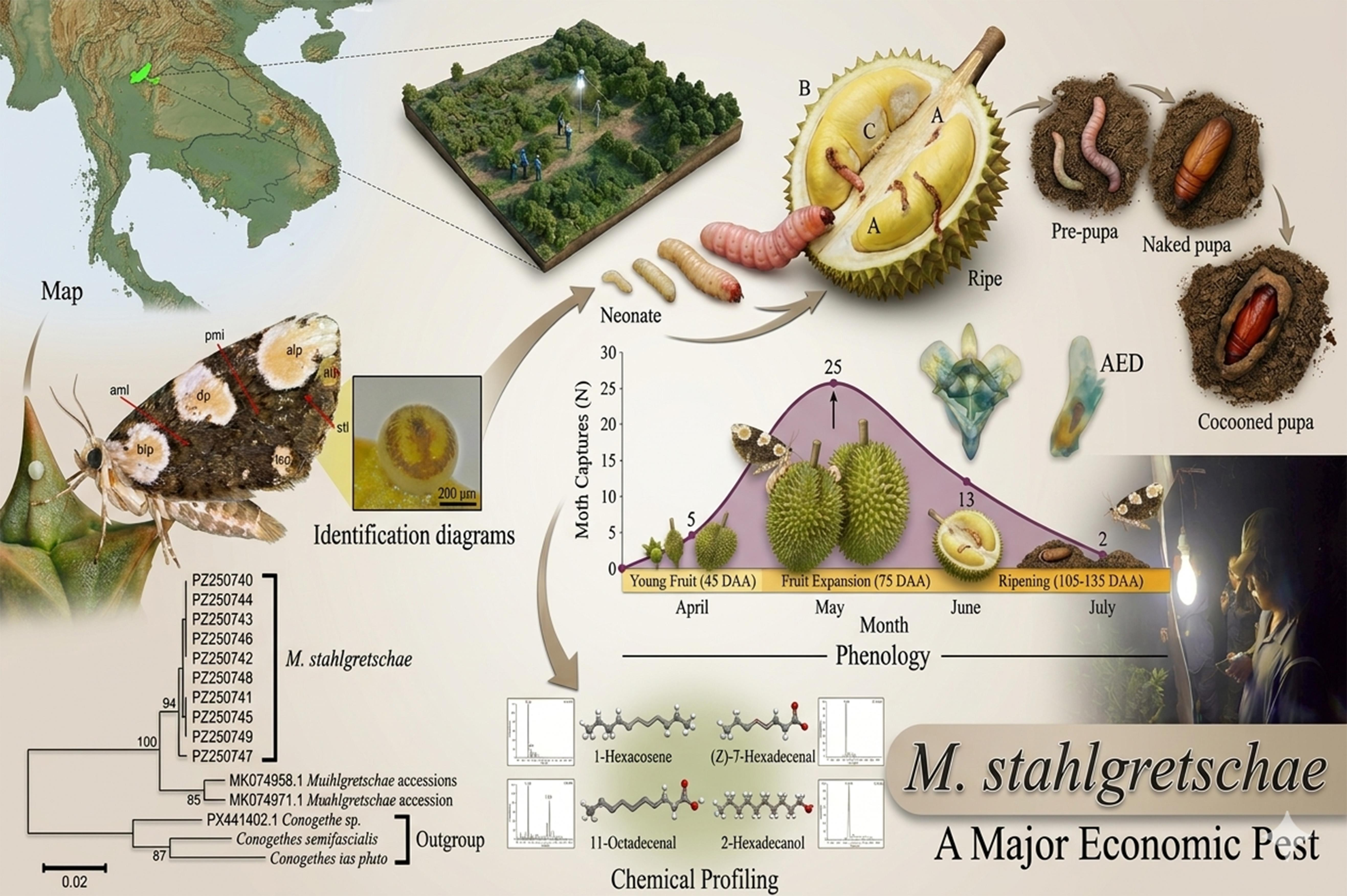
The durian seed borer, Mudaria stahlgretschae, is a major economic pest that has significantly impacted durian cultivation in Southeast Asia; however, comprehensive biological and ecological data for this species remain limited. This study employs an integrative taxonomic approach, combining morphological examination with molecular validation of the mitochondrial cytochrome c oxidase subunit I (COI) gene. Phylogenetic analysis (Neighbor-Joining) confirmed that all collected specimens (n = 11) formed a distinct monophyletic clade within the genus Mudaria, showing a genetic identity of 95.75–96.85% with existing GenBank accessions, thereby confirming their identity as M. stahlgretschae. Systematic monitoring using light traps in Uttaradit Province revealed a clear seasonal phenology, with adult flight activity restricted to a five-month period from April to July 2025. Population density peaked in May (55.56%), synchronized with the mid-stages of durian fruit development. Furthermore, chemical profiling of female gland volatiles via GC-MS identified 40 compounds; among these, four putative sex pheromone candidates—1-Hexacosene, (Z)-7-Hexadecenal, 11-Octadecenal, and 2-Hexadecanol—were identified as key constituents based on their consistent detection across all replicates (n = 3), high relative abundance, and absence in male extracts or blank controls. These findings establish a critical foundation for developing synthetic pheromone lures and synchronized monitoring programs, offering a robust framework for the sustainable management of M. stahlgretschae in durian agroecosystems.

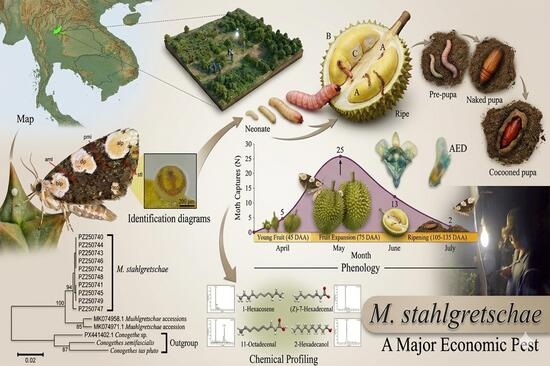
Graphical Abstract

1. Introduction

Durian (Durio zibethinus L.) is one of the most economically significant tropical fruits in Southeast Asia, with Thailand serving as the world’s leading producer and exporter [1]. Despite its high market value, durian production is severely threatened by various insect pests. Among these, the durian seed borer, Mudaria stahlgretschae (Lepidoptera: Noctuidae), has emerged as a primary threat [2]. The damage caused by M. stahlgretschae is particularly destructive because the larvae bore directly into the fruit to feed on the seeds, often leaving the exterior appearance of the fruit intact [3,4]. This cryptic feeding behavior makes early detection difficult, leading to substantial yield losses and compromising the quality standards required for international trade [4,5].
Effective management of M. stahlgretschae is currently hindered by a lack of fundamental biological and ecological data [2,6]. In many durian-growing regions, farmers rely heavily on the calendar-based application of chemical insecticides [1,7]. However, these conventional methods often fail to control the pest effectively because they are not synchronized with the insect’s peak activity or specific life stages [8]. To develop a more sustainable Integrated Pest Management (IPM) strategy, it is essential to establish an accurate species identification system and understand the seasonal population dynamics of the pest [6,9].
Modern “integrative taxonomy” combines traditional morphological analysis with molecular techniques, such as DNA barcoding of the mitochondrial cytochrome c oxidase subunit I (COI) gene, and has become a vital tool for accurately identifying agricultural pests [10,11]. This approach is particularly critical for the genus Mudaria, which has long been characterized by taxonomic uncertainty due to subtle morphological differences between congeners. In Thailand, recent surveys have documented a high diversity of 11 species within this genus, with at least three confirmed as major economic pests of durian production, namely M. minor, M. szalkayjozsefi, and M. stahlgretschae [12]. The latter is the primary focus of this study, in which we provide expanded biological and chemical ecological data. In specific durian-growing areas of Uttaradit Province, particularly those characterized by high-altitude slopes, infestation rates by this pest have been reported to reach up to 11%, causing significant economic impact on local production. The diagnostic challenge is further heightened by the presence of other congeners, such as M. cornifrons and M. variabilis, which are morphologically nearly indistinguishable from the target pests but are typically associated with alternative Malvaceae hosts (e.g., kapok and silk cotton trees) or occur outside the typical durian cropping season [12]. These similarities and varying infestation patterns have frequently led to misidentifications in many durian-growing regions of Southeast Asia, complicating pest management efforts [2,10]. Establishing the first formal record of M. stahlgretschae in Thailand is therefore not only a taxonomic necessity but a fundamental requirement for the development of effective, species-specific control strategies and the formal adoption of pest management policies by national agricultural agencies. By integrating detailed genital descriptions with COI sequence analysis and interpreting genetic distances against established interspecific thresholds (typically 2–3% for Lepidoptera), a more robust and reliable identification of M. stahlgretschae can be achieved, resolving previous ambiguities relative to its congeners. Furthermore, the study of chemical ecology—specifically the identification of putative sex pheromone candidates—offers a promising preliminary pathway for developing highly specific monitoring tools, such as pheromone-baited traps, which can significantly reduce the reliance on broad-spectrum pesticides [13,14].
This study addressed these challenges by employing an integrated approach to investigate M. stahlgretschae in Thailand. The objectives were (1) to validate the species identity using morphological descriptions and molecular characterization, addressing previous taxonomic ambiguities within the genus; (2) to monitor the seasonal phenology and population dynamics in a commercial durian orchard in Uttaradit Province; and (3) to profile the chemical constituents of putative sex pheromone candidates using Gas Chromatography–Mass Spectrometry (GC-MS). The results of this research will provide a scientific basis for enhancing pest monitoring and developing more precise management frameworks for the durian industry.

2. Materials and Methods

2.1. Study Site and Sample Collection

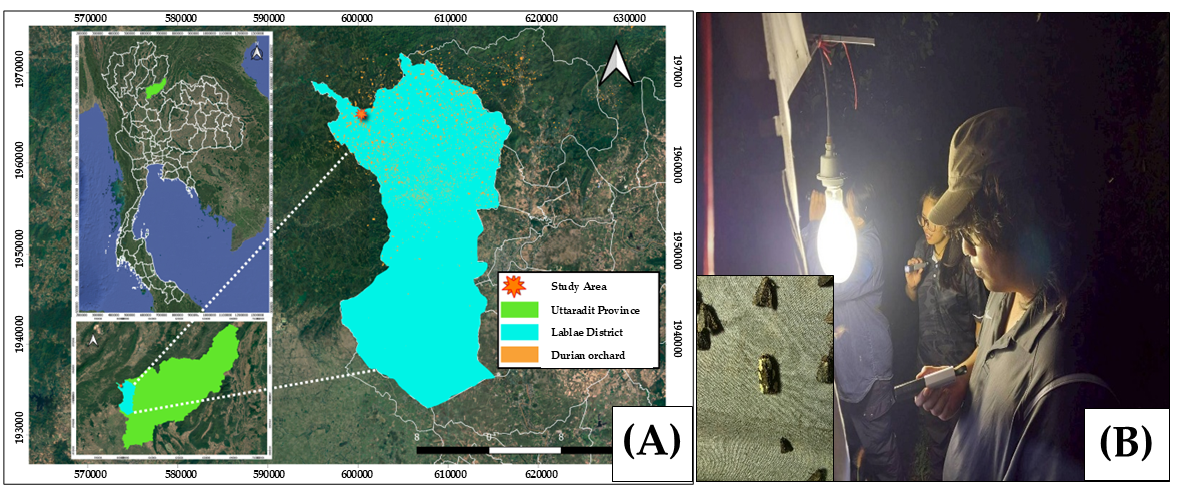
This study was conducted in a representative commercial durian orchard characterized by a steep mountainous terrain in Mae Phun Sub-District (Ban Pha Mub), Laplae District, Uttaradit Province, Thailand (17.724081° N, 100.013161° E) (Figure 1). The study site covers approximately 3.2 hectares (20 rai), situated at an elevation of 500–600 m above sea level. This high-altitude region was specifically selected due to its unique microclimate and history of severe M. stahlgretschae infestations [2].
Adult moths were sampled using two types of light-trapping systems: an 85 W fluorescent blacklight (TSM, Guangzhou, China) and a 500 W High-Pressure Mercury Vapor Lamp (Bowling, Bangkok, Thailand). These lamps were positioned in front of a 1.5 m × 3.0 m white vertical cloth screen. Trapping was conducted from 18:00 to 06:00 during the durian production season. Light trapping was exclusively employed for population monitoring to establish a reliable phenological baseline. While potential sex pheromone candidates were identified, field evaluation using pheromone-baited traps was not conducted during this phase. This was due to the necessity of first establishing a precise chemical blueprint for the species and the operational constraints posed by its highly synchronized and brief seasonal emergence window.
In addition to the geographic coordinates, environmental parameters—including ambient temperature, relative humidity, wind speed, and rainfall—were continuously monitored and recorded at the site using a 7-in-1 Wi-Fi Weather Station (Bresser GmbH, Rhede, Germany). To establish a phenological baseline, adult moths were sampled monthly throughout the durian production season, with each sampling event consisting of a single overnight light-trapping session (18:00–06:00) during the new moon phase to maximize capture efficiency and ensure temporal consistency. These abiotic factors, combined with specific topographical data (slope gradient and elevation measured via handheld GPS), provide a comprehensive baseline for analyzing the environmental drivers that influence the seasonal abundance and vertical distribution patterns of this species in highland agroecosystems.
Additionally, larvae were collected through a proactive sampling approach. A large number of apparently healthy-looking durian fruits, showing no visible entry holes or external frass, were randomly collected from orchards with a documented history of M. stahlgretschae outbreaks. These fruits were subsequently transported to the laboratory and systematically dissected to identify internal infestations. This method enabled the collection of early-stage larvae that would otherwise be overlooked by conventional visual inspection. The collected larvae were categorized for different study purposes: a subset of healthy larvae was utilized for laboratory rearing to study developmental biology (as detailed in Section 2.2.1), while the remaining specimens were either preserved in 95% ethanol for molecular analysis [10,12] or prepared as pinned voucher specimens for morphological examination [15]. This multi-track processing ensured that all aspects of the integrative taxonomic study were supported by the field-collected material.

2.2. Integrative Taxonomic Identification

A three-tiered integrative approach was employed to achieve a high taxonomic resolution for M. stahlgretschae, combining laboratory rearing, detailed morphological characterization, and molecular validation.

2.2.1. Laboratory Rearing and Development

A subset of healthy, late-instar larvae obtained from the systematic dissection of asymptomatic durian fruits (as described in Section 2.1) was utilized for laboratory rearing. Developmental studies of Mudaria stahlgretschae were conducted at the Biological Pest Control Promotion Group, Pest Management Division, Department of Agricultural Extension (DOAE), Thailand. To observe pupation and adult emergence, mature larvae and prepupae were harvested from infested durian fruits. These specimens were reared in 22 oz plastic containers, following modified protocols for Noctuidae [7]. The containers were filled to two-thirds capacity with a rearing medium consisting of either natural orchard soil or a peat moss and sand mixture (3:1 ratio). These units were kept in mesh cages (30 × 30 × 30 cm) under controlled environmental conditions (25 ± 2 °C, 60–80% RH). Substrate moisture was maintained by lightly misting the medium every 3–5 days to simulate natural pupation conditions. Developmental transitions were monitored daily by DOAE specialists and researchers to record the duration of each life stage.
For the morphological study, eggs were characterized using a Leica Ivesta 3 Series Stereo Microscope (Leica Microsystems, Wetzlar, Germany) at a magnification range of 6.4× to 48×. Image acquisition and detailed analysis of egg shape, color, and chorionic surface structures were performed using the Enersight software platform (version 1.3.1, Leica Microsystems, Wetzlar, Germany). This digital ecosystem enabled high-resolution imaging and precise documentation of all morphological features, ensuring consistency and accuracy in the measurements and visual data across the developmental stages.

2.2.2. Morphological Characterization

Adult specimens obtained from the laboratory rearing (Section 2.2.1) and supplemental field collections were utilized for morphological analysis. Diagnostic external features, including wing patterns, body coloration, and size, were examined using a Leica Ivesta 3 Series Stereo Microscope. For internal anatomical analysis, genitalia dissections were performed following standard entomological protocols [16,17].
The terminal abdominal segments were removed and macerated in a 10% potassium hydroxide (KOH) solution. Following the procedures described in established protocols [16], the segments were heated to approximately 80–90 °C to dissolve non-sclerotized tissues. The dissected structures were then cleaned in 70–80% ethanol and subsequently transferred to a glycerin base for examination or mounted on glass slides. Image acquisition and morphometric measurements of the genital structures were conducted using the Enersight software platform. Species identification was confirmed based on established taxonomic keys and descriptions, including Holloway [5], Kononenko and Pinratana [4], Pellinen et al. [18], and Ronkay et al. [2,19].

2.2.3. Molecular Analysis: DNA Barcoding and Phylogeny

Total DNA was extracted from 11 representative specimens (larvae and adults) using the U2Bio Genomic DNA Extraction Kit (U2Bio Thailand Co., Ltd., Bangkok, Thailand) following the manufacturer’s instructions. The mitochondrial cytochrome c oxidase subunit I (COI) gene was amplified using the universal primers LCO1490 and HCO2198 [11]. PCR reactions were performed in a 20 µL volume containing 5× PCR Enhancer, 10× HF Reaction Buffer, 10 mM dNTPs, 0.75 U of Long and High-Fidelity DNA Polymerase (biotechrabbit, Hennigsdorf, Germany), and ~2 ng of DNA template. The thermal profile was 94 °C (3 min), followed by 35 cycles of 94 °C (1 min), 48 °C (1 min), and 72 °C (1 min), with a final extension at 72 °C (5 min). PCR products were verified via 1% agarose gel electrophoresis, purified using the GenUP PCR/Gel Cleanup Kit (biotechrabbit, Berlin, Germany), and sequenced bi-directionally by Macrogen Inc. (Seoul, Republic of Korea). The resulting sequences were inspected and aligned using MEGA 12 [20] to generate 645 bp consensus sequences. All sequences were deposited in GenBank under Accession Numbers PZ250739–PZ250749.

2.3. Extraction of Putative Sex Pheromone Candidates and GC-MS Analysis

To ensure the high purity and virgin status of the subjects, M. stahlgretschae were reared from the prepupal stage collected from laboratory colonies. Upon emergence, females were immediately isolated to prevent mating. To characterize the potential chemical communication system, two complementary extraction methods were employed: Headspace Solid-Phase Microextraction (HS-SPME) and Solvent Extraction of abdominal glands.
Prior to extraction, the calling behavior of virgin females (1–2 days post-emergence) was monitored. Females exhibited a characteristic calling posture by stationary perching, slightly elevating their wings, and extending the terminal abdominal segments (ovipositor extrusion). This behavior was predominantly observed during the scotophase (total darkness), peaking between 3 and 7 h after the onset of darkness.
For the HS-SPME technique, a non-destructive sampling approach was adapted from the methods described by Foulks et al. [21]. Individual calling females were placed in 20 mL glass vials, and volatile compounds were collected from the headspace using a Polydimethylsiloxane (PDMS) fiber (100 µm; Supelco, Bellefonte, PA, USA) exposed overnight (approximately 12 h) during the peak scotophase window. This method is highly sensitive for capturing major potential pheromone components, such as hexadecenal isomers, as they are naturally emitted by the insect [22].
Alternatively, for solvent extraction, putative sex pheromone glands were excised from the terminal abdominal segments of calling virgin females during their peak activity periods. The excised glands were immediately immersed in high-purity n-hexane for 15–30 min [23]. The resulting extracts were filtered and concentrated to approximately 50 µL under a gentle stream of nitrogen gas (N2). To ensure the specificity of the identified compounds, parallel extractions from male adults and solvent-only blanks were performed as negative controls. These procedures were adapted from established protocols for durian seed borer biology and pheromone extraction [6,24,25].
Chemical constituents from both extraction methods were analyzed using a Gas Chromatography–Mass Spectrometry (GC–MS) system (Agilent 7890A GC coupled with a 5975C MSD; Agilent Technologies, Santa Clara, CA, USA). Samples (1.0 µL for solvent extracts or direct thermal desorption for SPME) were injected in splitless mode into an HP-5MS capillary column (30 m × 0.25 mm I.D. × 0.25 µm film thickness). Helium (He) served as the carrier gas at a constant flow rate of 1.0 mL/min.
The oven temperature was programmed to start at 50 °C for 2 min, increased at 10 °C/min to a final temperature of 240 °C, and maintained for 10 min, resulting in a total run time of 31 min. The MS transfer line and ion source temperatures were set at 250 °C and 230 °C, respectively. Mass spectra were acquired in Electron Impact (EI) mode at 70 eV, scanning a range of 30–500 m/z. Chemical compounds were identified by comparing mass spectra and retention indices with the NIST11 and Wiley spectral libraries [6]. Key putative pheromone candidates were prioritized based on their consistent occurrence across all female replicates, their relative abundance in the extracts, and their absence in male and solvent blank controls.

2.4. Statistical Analysis

The seasonal abundance of M. stahlgretschae was synthesized from weekly light trap captures, with data presented as total monthly counts to identify peak flight activity. Temporal patterns were analyzed using descriptive statistics, and population dynamics were visualized in relation to durian host phenology using Microsoft Excel 365 (Microsoft Corp., Redmond, WA, USA).
For molecular data, species identity was verified via BLASTn (https://blast.ncbi.nlm.nih.gov/Blast.cgi, accessed on 10 April 2026) searches against the NCBI GenBank and BOLD Systems databases. Intraspecific genetic distances were calculated using the Kimura 2-parameter (K2P) model. Phylogenetic reconstruction was performed using the Maximum Likelihood (ML) method in MEGA 12 [20]. The best-fit nucleotide substitution model was selected based on the lowest Bayesian Information Criterion (BIC) score, and the tree’s reliability was assessed through bootstrap analysis with 1000 replicates. Conogethes pluto (KY323303.1), C. semifascialis (KY323309.1), and C. punctiferalis (KX862984.1) were used as outgroups to root the tree.

3. Results

3.1. Morphological Descriptions and Bionomics of Mudaria stahlgretschae

3.1.1. Oviposition

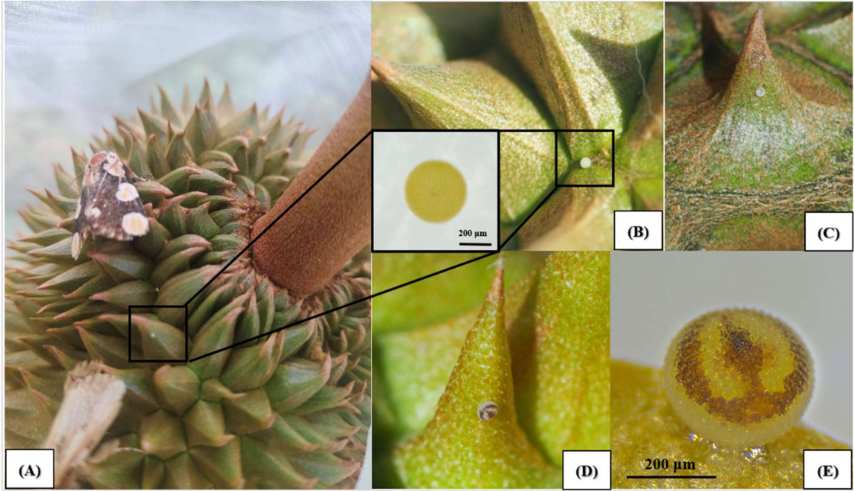
Through diurnal field surveys and nocturnal light-trap monitoring, female moths were observed ovipositing on durian fruits during the mid-developmental stage. This period occurs approximately 45–60 days after fruit set—locally referred to as the “milk can” stage—and coincides with rapid fruit expansion. Field-collected eggs were deposited either singly or in small clusters of 2–3 on the durian spines or within the grooves (Figure 2A,B). Structurally, the eggs are broadly hemispherical and flattened, measuring approximately 0.5–0.6 mm in diameter, with no hairs or scales covering the surface (Figure 2C). Newly laid eggs are off-white, gradually darkening until hatching (Figure 2D,E) after an incubation period of 4–5 days. Anatomical dissection of female ovaries collected from light traps revealed a mean fecundity of over 200 eggs per female.

3.1.2. Infestation and Feeding Behavior

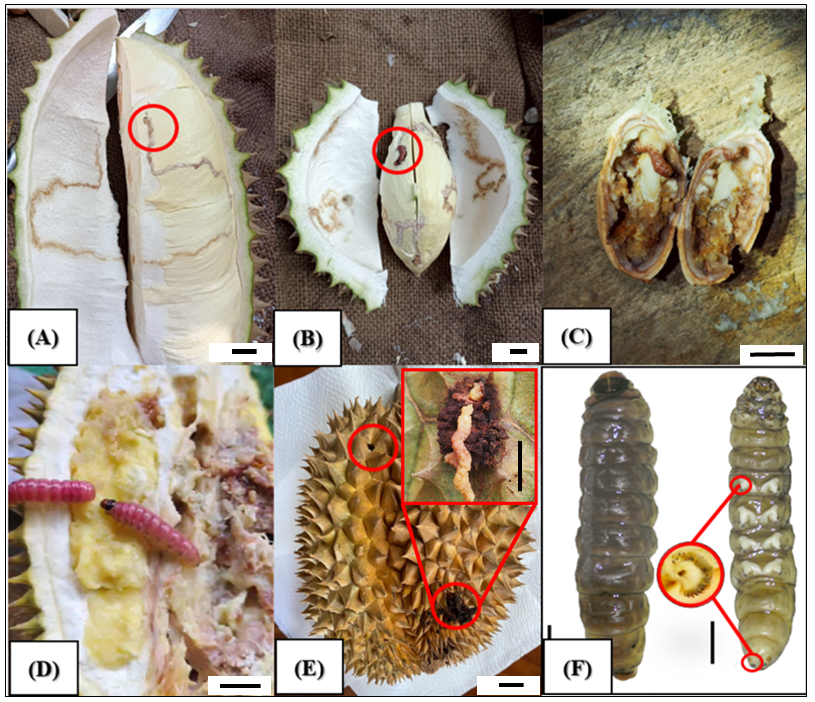
Upon hatching, Mudaria stahlgretschae larvae immediately bore through the durian rind, leaving a small, barely visible entry hole. The neonate larvae (first instar) are initially off-white and reside within the inner rind, feeding on the fruit pulp (Figure 3A). As they develop into the second and third instars, they continue to consume the pulp (Figure 3B). During the third to fourth instar stages, the larvae transition to the seeds, boring into them and causing extensive internal damage (Figure 3C). In their final larval stage, they emerge from the seeds to feed once again on the surrounding pulp while ejecting frass (excrement), which often leads to localized fruit rot. Multiple larvae or various developmental stages may coexist within a single fruit. Mature larvae are characterized by a deep pink body (brownish) with a distinct black band on the head capsule (Figure 3D). The external evidence of infestation includes exit holes; these may appear as “dry holes” from which larvae have already departed (upper-left circle) or “wet holes” marked by active frass expulsion as the larvae prepare to drop to the ground (Figure 3E). These final-stage larvae reach approximately 4–5 cm in length. A key morphological feature is the cream-colored prolegs on the ventral side, where the crochet arrangement on abdominal and anal prolegs is a weakly biordinal mesoseries (Figure 3F).

3.1.3. Prepupal and Pupal Development

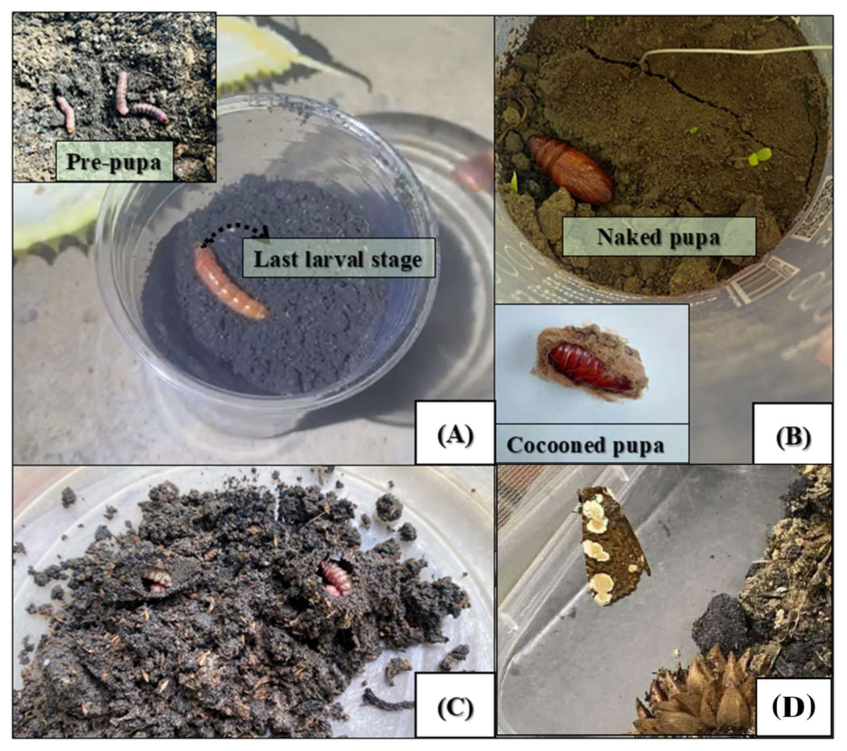
Observations revealed that final-instar larvae transition into the prepupal stage within 1–3 days. During this period, the larvae undergo physical contraction, becoming shorter and less mobile. In the case of Mudaria spp., the prepupa constructs a small earthen cell or silk cocoon within the soil, where it remains motionless for a short period before undergoing its final larval molt to become a pupa (Figure 4A).
The pupal stage exhibited morphological variations depending on the environmental conditions and substrate. The specimens were observed as either cocooned pupae—enclosed within a protective silk structure–or naked pupae (obtect) (Figure 4B). In many instances, the pupae were found encrusted with soil particles, organic matter, or rearing substrate, forming a reinforced protective layer (Figure 4C). Upon completing the pupal period, the adults emerged by pushing through the substrate and typically remained stationary on the pupal casing (exuviae) until their wings were fully expanded and hardened (Figure 4D). The specific duration of the pupal stage for the reared specimens is summarized in Table 1.
Based on the developmental duration and survival rate, 14 prepupae were reared under laboratory conditions to observe their development into the adult stage. The results showed that eight individuals successfully emerged as adults, representing an emergence rate of 57.14%. The remaining 42.86% failed to complete their development due to mortality during the pupal stage or incomplete transformation (Table 1).
For the successfully emerged adults, the total duration from the prepupal stage to adult emergence ranged from 21 to 31 days, with an average developmental period of 26.6 ± 3.4 days (mean ± SD). Most specimens that entered the prepupal stage in mid-May completed their development within approximately 21–30 days. The shortest developmental period observed was 21 days, while the longest was 31 days.

3.1.4. Integrative Taxonomic Identification and Systematic Accounts

The identity of the durian seed borer specimens was robustly validated through an integrative taxonomic approach, synthesizing morphological characterization with molecular analysis.
Family: Noctuidae Latreille, 1809.
Subfamily: Noctuinae Latreille, 1809 (incertae sedis sensu Holloway 2011 [26]).
Genus: Mudaria Moore, 1893.
Mudaria Moore, 1893, Indian Museum Notes 3: 68 [27]. Type-species: Mudaria cornifrons Moore, 1893 (India: Calcutta).
= Plagideicta Warren, 1914, in Seitz, Macrolepidoptera of the World 11: 339 [28]. Type-species: Euplexia leprosticta Hampson, 1906 (Sri Lanka). Synonymy by Holloway (1989) [5].
Mudaria stahlgretschae Ronkay, Ronkay, Ronkay & Landry, 2023 [2] Mudaria stahlgretschae Ronkay, Ronkay, Pekarsky & Landry, 2023; Mém. Soc. phys.-hist. nat. Genéve 49 (2): 37, pl. 9, f. 1.
Diagnosis: Members of the genus Mudaria are characterized by a robust body and cryptic forewing coloration, typically dominated by grayish-brown or earthy tones that provide effective camouflage against tree bark. A primary diagnostic feature is the presence of a well-developed, sclerotized frontal prominence on the head—an adaptation used by emerging adults to navigate through soil or hardened seed coats. The wing venation follows the typical pattern of the subfamily Noctuinae, often featuring distinct but sometimes diffused reniform and orbicular spots.
The larvae of Mudaria are specialized endophytes. Key adaptations for their wood or seed-boring lifestyle include a heavily sclerotized head capsule and a prominent prothoracic shield, specifically adapted for boring into hard durian seeds (Durio spp.). Unlike surface-feeding caterpillars, their bodies are relatively smooth with reduced setae, allowing for efficient movement within the galleries excavated inside the fruit.
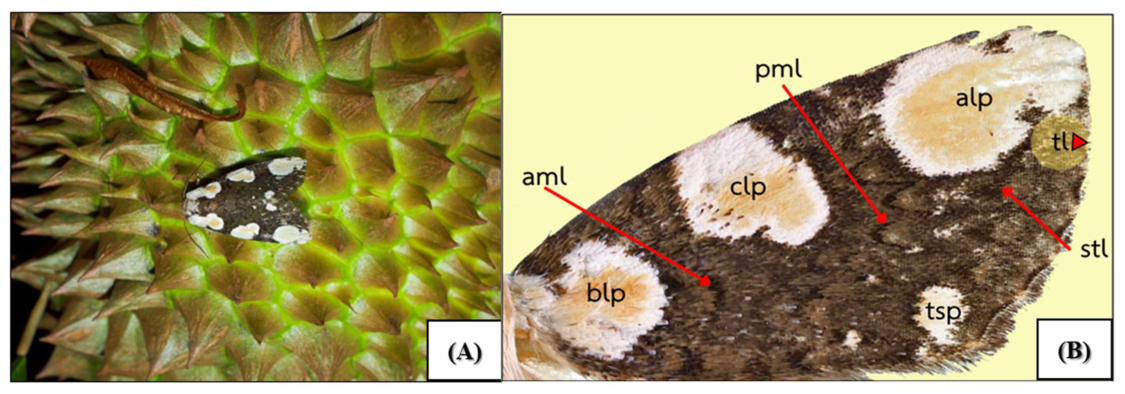
The adult Mudaria stahlgretschae is a relatively large moth, with a wingspan typically ranging from 42 to 60 mm. Sexual dimorphism is minimal regarding wing patterns. In both sexes, the antennae are filiform (Figure 5A).
Forewings: The ground color is a deep, rich brown, punctuated by prominent yellowish-white “leprous” patches. These consist of three main areas: the basal (blp), central (clp), and apical (alp) patches, which are approximately subequal in size. A primary distinguishing characteristic of this species is the broadly oval apical patch (alp), which is uniquely shaped like the numeral “8,” while the central patch (clp) is sub-oval with a subtle ventral indentation. Detailed markings include the antemedian line (aml), median line (ml), double-lined postmedial line (pml), subterminal line (stl), and terminal line (tl), as well as a distinct tornal spot (tsp) (Figure 5B).
Hindwings: In contrast to the complex patterns of the forewings, the hindwings are relatively plain, ranging from uniform brown to white, without distinct markings.
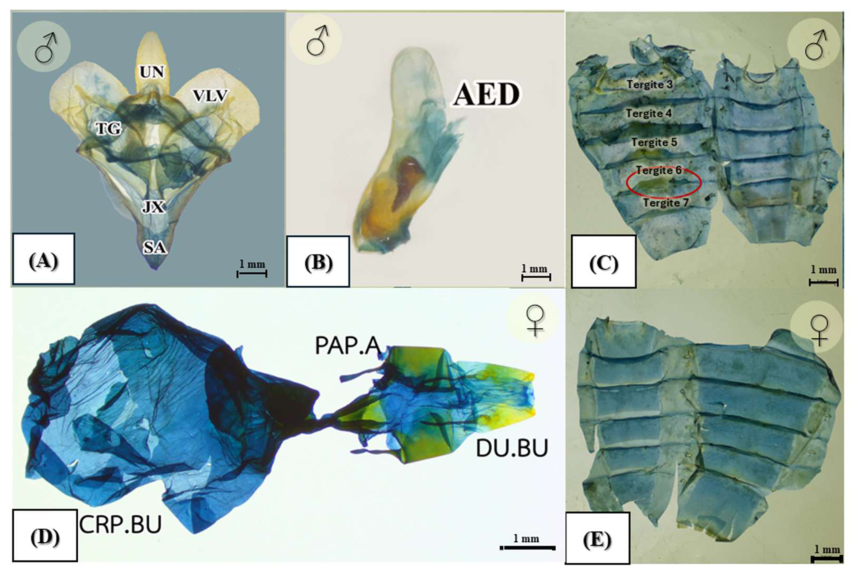
The taxonomic identification of the species is confirmed by the distinct morphology of the genitalia and abdominal tergites (Figure 6).
Male genitalia: The male genitalia (Figure 6A) are characterized by a prominent, acuminate–lanceolate uncus (UN) rather than an oblong one. The tegumen (TG) is moderately broad, leading to the valva (VLV). The juxta (JX) is plate-like, and the saccus (SA) is narrow and elongated. The aedeagus (AED) (Figure 6B) is relatively wide and stout, characterized by a sclerotized phallobase; the ductus ejaculatorius enters basally, leading to a broad, membranous vesica.
Abdominal tergites: Sexual dimorphism is clearly visible in the abdominal structures. In the male, the anterior margins of tergites 4–7 possess dorsal tufts of scales. When scales are removed, these areas appear as elliptical zones (Figure 6C) on the integument (the red circle indicates the specialized scales on tergites 4–7).
Female genitalia: The female genitalia (Figure 6D) feature broad papillae anales (PAP.A). The ductus bursae (DU.BU) is short and sclerotized, connecting to a large, membranous corpus bursae (CRP.BU), which is characterized by fine internal grooves or scobination and lacks a distinct signum.
Female abdominal tergites: By contrast, the female abdominal tergites (Figure 6E) are simple, lacking the dorsal scale tufts and specialized elliptical zones.

3.2. Molecular Identification and Validation

DNA barcoding of the mitochondrial COI gene from 11 specimens yielded high-quality consensus sequences of 645 bp. Translation using the Invertebrate Mitochondrial Genetic Code revealed no insertions, deletions, or premature stop codons, confirming the amplification of a functional protein-coding gene rather than nuclear pseudogenes (numts). These sequences have been deposited in GenBank under accession numbers PZ250739–PZ250749.
BLASTn analysis against the NCBI database (parameters: word size, 28; E-value, 0.05) confirmed that all sequences belong to the genus Mudaria. The highest sequence similarities (96.69–96.85%) were observed with unidentified Mudaria specimens from Malaysia (Accession Nos. PX441402.1 and PX441404.1), with 98% query coverage and an E-value of 0.0. Among validly described species, our sequences exhibited identities of 95.75% with M. variabilis (MK074971.1) and 95.59% with M. cornifrons (MK074958.1).
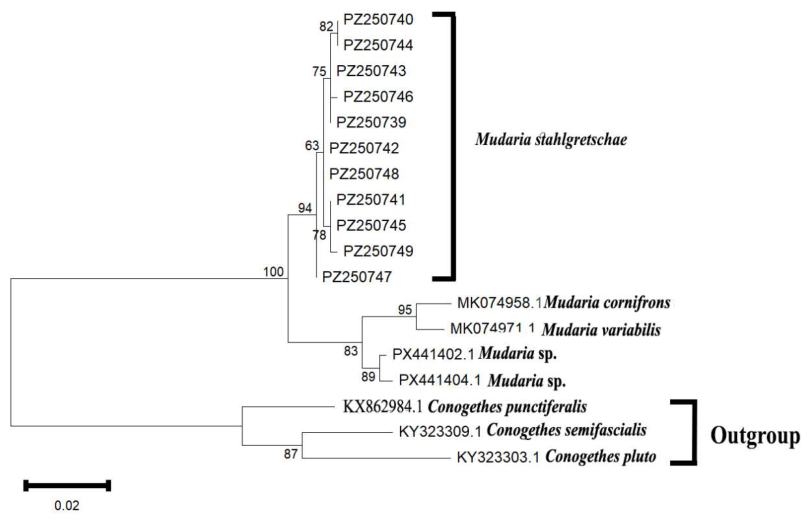
Phylogenetic reconstruction using the ML method (Figure 7) further demonstrated that all 11 specimens from the current study formed a robust monophyletic clade, distinct from other Mudaria congeners available in GenBank. Three species of Conogethes (C. pluto KY323303.1, C. semifascialis KY323309.1, and C. punctiferalis KX862984.1) were employed as the outgroup. This Mudaria clade exhibited significant genetic divergence from all previously sequenced species. These molecular findings are congruent with the morphological characteristics of the specimens, collectively confirming their identity as M. stahlgretschae.

3.3. Nocturnal Activity and Seasonal Phenology of M. stahlgretschae

The surveillance of M. stahlgretschae provided a comprehensive overview of its activity at both nightly and seasonal scales, revealing a strong synchronization with nocturnal periods and host plant development.
Nocturnal Flight Pattern (Hourly Captures)
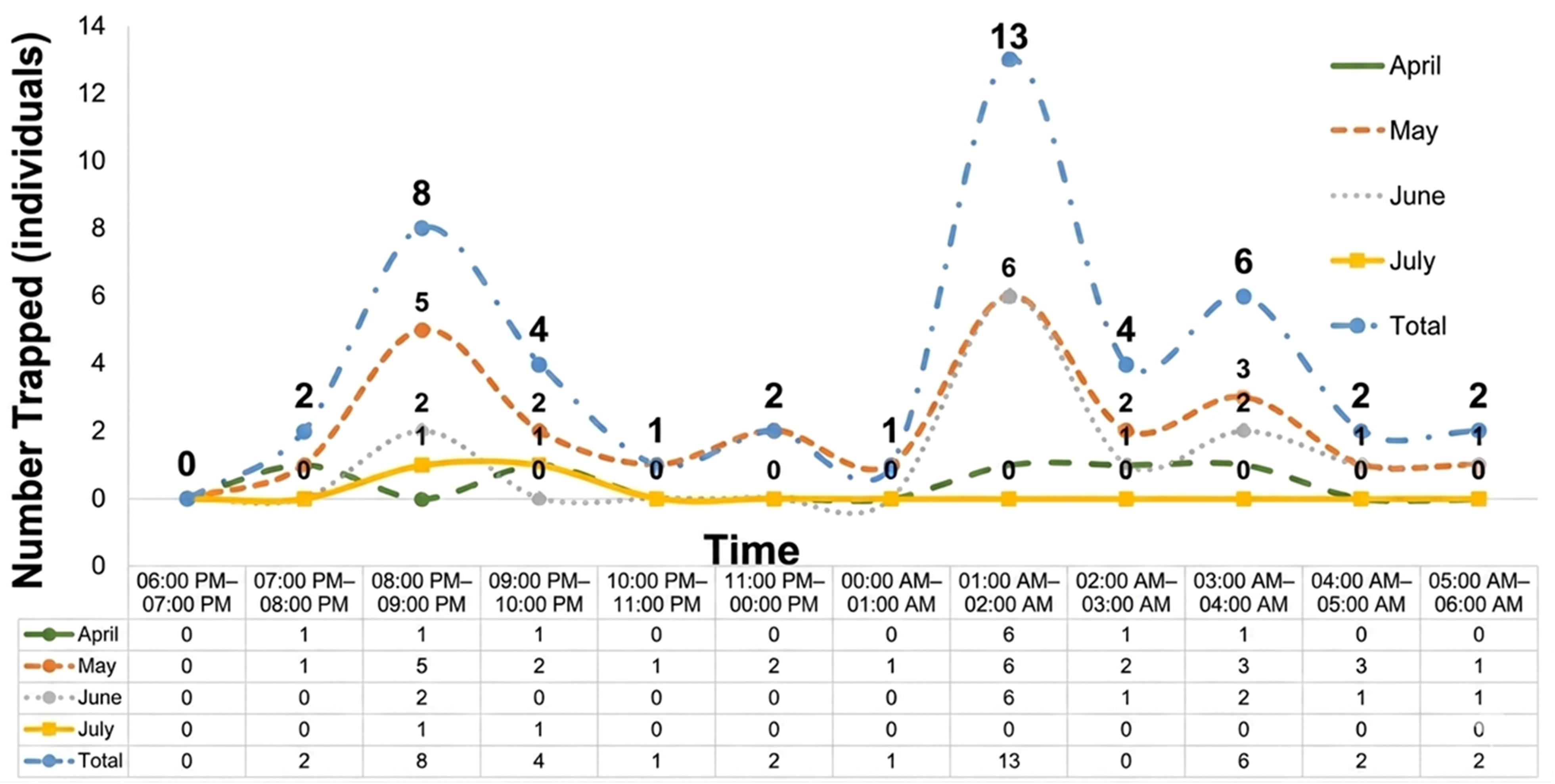
The nightly activity of M. stahlgretschae was characterized by a multi-modal nocturnal flight curve, as illustrated in Figure 8. Adult moths were captured exclusively during the dark hours (18:00 to 06:00). The data shows two distinct peaks of nocturnal activity: a primary peak during the early morning hours between 01:00 AM and 02:00 AM, and a secondary peak earlier in the evening between 08:00 PM and 09:00 PM. Activity was noticeably lower during the midnight period (23:00–00:00). These nocturnal patterns are crucial for determining the most effective hours to operate light traps for pest suppression.
Seasonal Phenology and Correlation with Durian Development
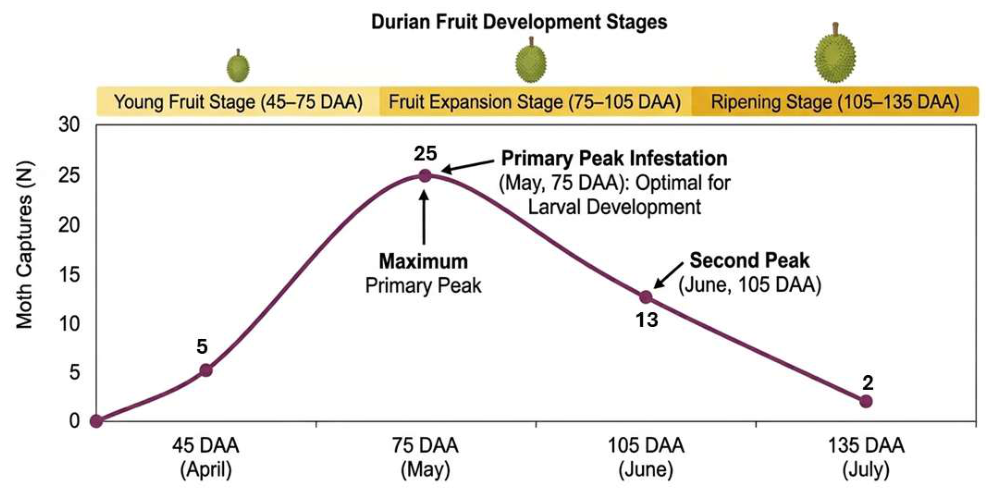
On a seasonal scale, the year-long surveillance in Uttaradit demonstrated that M. stahlgretschae activity was strictly confined to a four-month period from April to July 2025, closely following the durian fruiting season (Figure 9). A total of 45 individuals were captured, marking the first quantitative record of this species’ seasonal dynamics in Northern Thailand.
The initial emergence began in April (45 DAA; n = 5, 11.11%) during the young fruit stage. The population density reached its maximum peak in May (75 DAA), accounting for more than half of the total seasonal abundance (n = 25, 55.56%; Figure 9). This peak was directly synchronized with the fruit expansion stage, which field observations suggest is the most susceptible period for infestation. Quantitative data from the on-site weather station confirmed that this peak activity was closely linked to specific environmental drivers; the highest capture rates coincided with high-humidity events, including continuous rain and dense fog, where relative humidity consistently exceeded 87% and ambient temperatures remained within a stable range of 23–25 °C. In contrast, sampling sessions conducted during periods of lower humidity (<75%) and higher temperatures yielded significantly fewer captures (n < 5).
Following the primary peak, activity declined through June (105 DAA; n = 13, 28.89%) during the ripening stage. By July (135 DAA), the population diminished significantly (n = 2, 4.44%; Figure 9) before becoming undetectable post-harvest. These findings indicate that the critical window for intervention should be prioritized during the fruit expansion stage (May) to effectively target the primary generation of M. stahlgretschae.

3.4. Profiling of Putative Sex Pheromone Candidates

Preliminary attempts to capture female volatiles using the HS-SPME technique yielded only trace amounts of chemical constituents, which were insufficient for definitive structural quantification. Consequently, we prioritized the analysis of female gland extracts to obtain a more robust chemical profile. GC-MS analysis of the female gland extracts obtained from three virgin specimens (n = 3) of M. stahlgretschae revealed a consistent and complex mixture of chemical constituents. The compounds were observed eluting between 3 and 24 min, with a total of 40 chemical compounds identified by comparing their retention times (RTs) and mass spectra with the NIST and Wiley libraries (Table 2).
Across all three replicates, four major compounds were consistently detected and identified as putative candidates for pheromone-based monitoring due to their high relative abundance and established biological roles in Lepidoptera. These key constituents included 1-Hexacosene (RT = 16.537 min), (Z)-7-Hexadecenal (RT = 18.653 min), 11-Octadecenal (RT = 19.177 min), and 2-Hexadecanol (RT = 19.877 min). These four compounds were prioritized based on their high relative abundance, consistent occurrence across all female replicates, and complete absence in the male extracts and solvent-only blanks used as negative controls. The presence of these components across all sampled females provides a preliminary molecular basis for the future development of synthetic pheromone lures to enhance monitoring strategies for this pest, pending behavioral and electrophysiological validation.

4. Discussion

4.1. Integrative Taxonomy and the Critical Role of First Formal Records

The alignment of COI mtDNA sequences with detailed morphological and genitalia characterization strongly suggests that M. stahlgretschae is a primary driver of the durian infestations observed in the surveyed areas of Northern Thailand. While the necessity for this integrative approach was established in the introduction to resolve taxonomic ambiguities within the genus, our results provide the first empirical baseline for this species in Thailand. Specifically, the formal description of egg morphology and refined genitalia structures fills a significant void in the global taxonomic database [2,5]. In the context of international trade, accurate species identification is the cornerstone of Sanitary and Phytosanitary (SPS) measures. Since M. stahlgretschae is a cryptic pest, its presence in exported fruit can lead to immediate rejection by trading partners, causing severe economic disruptions. This first record fills a significant void in the global taxonomic database, shifting the management paradigm from reactive to proactive. The ability to identify eggs on the fruit surface before larval penetration is a fundamental breakthrough, allowing for “Early Warning” systems that are essential for maintaining the market access of Thai durian.

4.2. Evolutionary Synchronization and Environmental Drivers for Precision IPM

The seasonal phenology observed in this study highlights a precise evolutionary synchronization between M. stahlgretschae and its host, Durio zibethinus. Our results show that adult activity spans April to July, with a definitive primary peak in May (55.56% of total catch), as clearly illustrated in Figure 8. This synchronization suggests that the reproductive cycle of M. stahlgretschae has evolved to ensure that larval emergence aligns perfectly with the availability of mature seeds, providing an optimal nutrient source for the endophagous stage, which is consistent with early observations of lepidopterous pests in Thai fruit orchards [1,25].
A key finding in this study is the high resilience of M. stahlgretschae to adverse meteorological conditions. The capture of a significant portion of the seasonal population—specifically 45 individuals recorded during a single peak activity period—coincided with continuous overnight rain, intermittent storms, and dense fog (visibility 10–20 m). These findings indicate that high relative humidity (>87%) and rainfall are strongly associated with adult emergence and nocturnal flight. While such conditions might typically hinder the flight of smaller insects, for M. stahlgretschae, these patterns suggest that high moisture may serve as a physiological trigger for pupal eclosion and enhanced pheromone dispersal efficiency [22,29,30,31,32]. Furthermore, the stable temperatures (23–25 °C) recorded during these peak sessions suggest a specific ‘thermal window’ for mating activity, characteristic of the high-altitude orchards in the Mae Phun area.
Understanding these environmental factors is vital for Area-Wide Integrated Pest Management (AW-IPM) [33]. By pinpointing these “Biological Windows”—particularly the high-humidity periods in May identified in this first record—farmers can transition from conventional calendar-based spraying to precision monitoring. Such systematic data collection aligns with the international standards for phytosanitary measures, providing the necessary scientific evidence for robust pest surveillance [34]. Synchronizing control efforts with adult flight activity during these environmental conditions prevents oviposition before larvae transition to their cryptic, endophagous stage within the seeds, where they remain shielded from chemical interventions [35]. This data-driven approach is essential for achieving “Pest-Free” production standards, ensuring that Thai durian exports can overcome trade barriers while preserving the natural biodiversity of the agroecosystem [36]. These preliminary associations are currently being further substantiated through ongoing multi-season monitoring to develop more precise predictive models.

4.3. Chemical Ecology and Its Implications for Pest Management

This research provides the first chemical profiling of putative sex pheromone candidates for M. stahlgretschae in Thailand. The chemical identification of 1-Hexacosene, (Z)-7-hexadecenal, 11-octadecenal, and 2-hexadecanol represents a foundational step in understanding the chemical ecology of this species. Notably, (Z)-7-Hexadecenal is a well-documented primary attractant in various Lepidoptera [6,37]. The presence of aldehyde components such as (Z)-7-Hexadecenal and 11-Octadecenal aligns with the pheromone profiles of other significant Noctuidae and Tortricidae species, where these unsaturated aldehydes act as key sex pheromone components or synergistic attractants [38,39,40]. Furthermore, the identification of 2-Hexadecanol is particularly noteworthy, as secondary alcohols and their derivatives often function as crucial pheromone precursors or minor components that enhance male attraction and species-specific recognition in complex agroecosystems [38,40]. While the NIST match factors for these candidate compounds were within the 80–89% range, their consistent detection across replicates and their established biological roles in related taxa—as highlighted in recent reviews of noctuid pheromones [40]—support their identification as putative pheromones. However, further electrophysiological (EAG) and behavioral assays are essential to confirm the biological activity of these candidate compounds as a functional pheromone blend.
From a management perspective, developing pheromone-based lures could potentially enhance durian pest monitoring and reduce reliance on broad-spectrum insecticides. This approach supports “Pest-Free” production and aligns with phytosanitary requirements for the global durian market by minimizing chemical residues [41]. Nevertheless, it is important to acknowledge the spatial and temporal limitations of this study, as the results are derived from a single high-altitude orchard over one season. Future multi-site and multi-year studies are required to validate the generalizability of these findings across diverse durian agroecosystems in Southeast Asia.

4.4. Strategic Outlook for Agro-Biodiversity and Export Security

By integrating taxonomy, phenology, and chemical ecology, this study moves beyond simple pest control toward a holistic management model. The insights gained here provide the scientific evidence required to support quarantine protocols and trade negotiations, ensuring that Thai durian remains competitive in the global market. Future research should prioritize field-testing the identified synthetic pheromone blends across diverse landscapes. This will refine the efficacy of mass-trapping techniques, ensuring that the durian industry can overcome trade barriers while preserving the natural biodiversity of tropical fruit systems.

5. Conclusions

In conclusion, this study provides a comprehensive baseline for the management of the durian seed borer, M. stahlgretschae, in Thailand through an integrative approach. By synthesizing taxonomic precision—supported by expert verification and the description of male and female genitalia—with seasonal phenological mapping and the first chemical profiling of putative sex pheromone candidates, we have established a robust scientific framework for this cryptic pest. Our molecular and morphological data resolve previous identification ambiguities, while the phenological insights pinpoint critical biological windows for intervention, facilitating a shift from reactive chemical spraying to data-driven proactive management.
The identification of specific candidate pheromone components, particularly (Z)-7-Hexadecenal, opens a potential pathway for developing high-specificity monitoring and mass-trapping tools. These “Green Agriculture” technologies are essential for reducing chemical reliance, ensuring that durian production meets the stringent MRLs and SPS standards required for international trade. While these findings are promising, we emphasize that they are based on observations from a specific high-altitude orchard over a single production season. Consequently, further behavioral validation and multi-site trials over multiple seasons are strictly necessary to confirm the efficacy of the identified compounds and the generality of the observed patterns. Ultimately, this research provides a foundational framework that serves as a model for other durian-producing regions, offering the necessary tools to safeguard the economic viability and export security of the durian industry against this significant hidden threat.

Author Contributions

Conceptualization, P.C. and P.P.; methodology, P.C., K.W., W.K., K.P., P.K., A.K., B.S. and P.P.; software, P.C., K.W. and P.P.; validation, P.C. and P.P.; formal analysis, P.C., K.W. and P.P.; investigation, P.C., K.W., W.K., K.P., P.K., A.K., B.S. and P.P.; resources, P.C. and P.P.; data curation, P.C., K.W. and P.P.; writing—original draft preparation, P.C. and P.P.; writing—review and editing, P.C. and P.P.; visualization, P.C., K.W., W.K., K.P., P.K., A.K., B.S. and P.P.; supervision, P.C. and P.P.; project administration, P.C. and P.P.; funding acquisition, P.C., W.K. and P.P. All authors have read and agreed to the published version of the manuscript.

Funding

This research was funded by the Science, Research, and Innovation Fund (SRI Fund) through the National Research Council of Thailand (NRCT) under the Strategic Research Fund (SF) for Upgrading High-Value Agricultural Products and Commodities, fiscal year 2026, Project Code 222221.

Institutional Review Board Statement

Not applicable.

Data Availability Statement

The mitochondrial COI gene sequences reported in this study have been deposited in the GenBank database under accession numbers PZ250739–PZ250749. The remaining data presented in this study are available within the article.

Conflicts of Interest

The authors declare no conflicts of interest. The funders had no role in the design of the study; in the collection, analyses, or interpretation of the data; in the writing of the manuscript; or in the decision to publish the results.

Abbreviations

The following abbreviations are used in this manuscript:
COICytochrome c Oxidase Subunit I
DNADeoxyribonucleic Acid
HS-SPMEHeadspace Solid-Phase Microextraction
GC-MSGas Chromatography–Mass Spectrometry
MSDMass Selective Detector
EIElectron Impact
IPMIntegrated Pest Management
NRCTNational Research Council of Thailand
RTRetention time
SRIScience, Research, and Innovation

References

  1. Kuroko, H.; Lewvanich, A. Lepidopterous Pests of Tropical Fruit Trees in Thailand; Japan International Cooperation Agency: Tokyo, Japan, 1993. [Google Scholar]
  2. Ronkay, G.; Ronkay, L.; Landry, B. The Jacques Plante Noctuidae Collection. Part II. Descriptions of New Taxa. In Memoires de la Société de Physique et D’histoire Naturelle de Genève; Landry, B., Ed.; Heterocera Press: Budapest, Hungary; Société de Physique et d’Histoire Naturelle de Genève: Geneva, Switzerland, 2023; Volume 49, pp. 1–445. [Google Scholar]
  3. Robinson, G.S.; Tuck, K.R.; Shaffer, M. A Field Guide to the Smaller Moths of South-East Asia; Malaysian Nature Society: Kuala Lumpur, Malaysia, 1994. [Google Scholar]
  4. Kononenko, V.S.; Pinratana, A. Moths of Thailand. Vol. 3, Part 2: Noctuoidea. An Illustrated Catalogue of Erebidae, Nolidae, Euteliidae and Noctuidae (Insecta, Lepidoptera) in Thailand; Brothers of St. Gabriel in Thailand: Bangkok, Thailand, 2013; 625p. [Google Scholar]
  5. Holloway, J.D. The Moths of Borneo. Part 12: Family Noctuidae, Trifine Subfamilies: Heliothinae, Hadeninae, Acronictinae, Amphipyrinae, Agaristinae; The Malayan Nature Society: Kuala Lumpur, Malaysia, 1989; 226p. [Google Scholar]
  6. Chammui, Y. Rapid analysis of some endocrine disruptor chemicals leaching from baby milk feeding bottles using SPME and SDME techniques. Food Anal. Methods 2017, 10, 2607–2618. [Google Scholar] [CrossRef]
  7. Greene, G.L.; Leppla, N.C.; Dickerson, W.A. Velvetbean caterpillar: A rearing procedure and artificial medium. J. Econ. Entomol. 1976, 69, 487–488. [Google Scholar] [CrossRef]
  8. Adedeji, A.A.; Ekramirad, N.; Rady, A.; Hamidisepehr, A.; Donohue, K.D.; Villanueva, R.T.; Parrish, C.A.; Li, M. Non-destructive technologies for detecting insect infestation in fruits and vegetables under postharvest conditions: A critical review. Foods 2020, 9, 927. [Google Scholar] [CrossRef] [PubMed]
  9. Zhou, W.; Arcot, Y.; Medina, R.F.; Bernal, J.; Cisneros-Zevallos, L.; Akbulut, M.E.S. Integrated pest management: An update on the sustainability approach to crop protection. ACS Omega 2024, 9, 41130–41147. [Google Scholar] [CrossRef]
  10. Hebert, P.D.N.; Ratnasingham, S.; de Waard, J.R. Barcoding animal life: Cytochrome c oxidase subunit 1 divergences among closely related species. Proc. Biol. Sci. 2003, 270, S96–S99. [Google Scholar] [CrossRef]
  11. Folmer, O.; Black, M.; Hoeh, W.; Lutz, R.; Vrijenhoek, R. DNA primers for amplification of mitochondrial cytochrome c oxidase subunit I from diverse metazoan invertebrates. Mol. Mar. Biol. Biotechnol. 1994, 3, 294–299. [Google Scholar]
  12. Rukkasikorn, A.; Chaovalit, S.; Dokchan, P.; Ratanamahamaneekorn, K.; Ruangsuk, K.; Poolprasert, P. Diversity of Moths in the Genus Mudaria Moore, 1893 (Lepidoptera: Noctuidae) and Their Impact on Durian Production in Thailand. In Proceedings of the 16th National Plant Protection Conference, Chiang Mai, Thailand, 18–20 February 2025; pp. 49–66. [Google Scholar]
  13. Millar, J.G. Polyene hydrocarbons and epoxides: A second major class of lepidopteran sex attractant pheromones. Annu. Rev. Entomol. 2000, 45, 575–604. [Google Scholar] [CrossRef] [PubMed]
  14. Karthika, P.; Krishnaveni, N.; Vadivalagan, C.; Murugan, K.; Nicoletti, M.; Benelli, G. DNA barcoding and evolutionary lineage of 15 insect pests of horticultural crops in South India. Karbala Int. J. Mod. Sci. 2016, 2, 156–168. [Google Scholar] [CrossRef]
  15. Triplehorn, C.A.; Johnson, N.F. Borror and DeLong’s Introduction to the Study of Insects, 7th ed.; Thomson Brooks/Cole: Belmont, CA, USA, 2005; 864p. [Google Scholar]
  16. Robinson, G. The preparation of slides of Lepidoptera genitalia with special reference to the Microlepidoptera. Entomol. Gaz. 1976, 27, 127–132. [Google Scholar]
  17. Winter, W.D. Basic Techniques for Observing and Studying Moths and Butterflies; Memoirs of the Lepidopterists’ Society No. 5; Natural History Museum: Los Angeles, CA, USA, 2000; 444p. [Google Scholar]
  18. Pellinen, M.; Mutanen, M.; Sihvonen, P. New species of genus Mudaria Moore, 1893 and the first record of Mudaria cornifrons Moore, 1893 from Thailand (Lepidoptera, Noctuidae, Noctuinae). Zootaxa 2018, 4500, 292–300. [Google Scholar] [CrossRef]
  19. Ronkay, G.; Ronkay, L.; Pekarsky, O. New Mudaria and Chodapsaphida (Lepidoptera, Noctuidae, Psaphidinae) species from the Himalaya region and Indochina. Fibigeriana Supplement; Heterocera Press: Budapest, Hungary, 2022; Volume 3, pp. 143–152. [Google Scholar]
  20. Kumar, S.; Stecher, G.; Suleski, M.; Sanderford, M.; Sharma, S.; Tamura, K. MEGA12: Molecular Evolutionary Genetic Analysis Version 12 for adaptive and green computing. Mol. Biol. Evol. 2024, 41, msae263. [Google Scholar] [CrossRef]
  21. Foulks, Z.; Parks, J.; Stoecker, W.; Kristensen, C.; Hebets, E.A.; Shi, H. Identification and Quantification of 11 Airborne Biochemicals Emitted by the Brown Recluse and Another Primitive Hunting Spider Using Headspace Solid-Phase Microextraction-GC/MS. Anal. Bioanal. Chem. 2021, 413, 6605–6615. [Google Scholar] [CrossRef] [PubMed]
  22. Lee, S.; Lee, D.-W.; Boo, K.S. Sex pheromone composition of the diamondback moth, Plutella xylostella (L.) in Korea. J. Asia Pac. Entomol. 2005, 8, 243–248. [Google Scholar] [CrossRef]
  23. Magsi, F.H.; Li, Z.; Cai, X.; Yamamoto, M.; Bian, L.; Zhao, Y.; Zhou, L.; Xiu, C.; Fu, N.; Ando, T.; et al. Identification of a unique three-component sex pheromone produced by the tea black tussock moth, Dasychira baibarana (Lepidoptera: Erebidae: Lymantriinae). Pest. Manag. Sci. 2022, 78, 2607–2617. [Google Scholar] [CrossRef] [PubMed]
  24. Lee, L.K. Biology and Phenology of the Durian Fruit Borer, Mudaria magniplaga Walker (Lepidoptera: Noctuidae); Final Project Report; Universiti Pertanian Malaysia: Serdang, Malaysia, 1996. [Google Scholar]
  25. Lee, L.K. Seasonal Occurrence of the Durian Fruit Borer, Mudaria magniplaga Walker (Lepidoptera: Noctuidae). Master’s Thesis, Universiti Pertanian Malaysia, Serdang, Malaysia, 1996. [Google Scholar]
  26. Holloway, J.D. The moths of Borneo (part 2): Families Phaudidae, Himantopteridae and Zygaenidae; revised and annotated checklist. Malay. Nat. J. 2011, 63, 1–548. [Google Scholar]
  27. Moore, F.Z.S. The silk cotton pod moth. Indian Mus. Notes 1893, 3, 68–70. [Google Scholar]
  28. Warren, W. Die Gross-Schmetterlinge der Erde. In The Macrolepidoptera of the World; Seitz, A., Ed.; Verlag des Seitz’schen Werkes (Alfred Kernen): Stuttgart, Germany, 1914; Volume 11, p. 339. [Google Scholar]
  29. Mazumdar, S.M.; Reddy, B.T.; Chandrashekharaiah, M.; Chowdary, N.B.; Chattopadhyay, S.; Rathore, M.S.; Sathyanarayana, K. Influence of abiotic factors on seasonal and non-seasonal emergence of Tasar silkworm, Antheraea mylitta Drury. J. Environ. Biol. 2023, 44, 445–451. [Google Scholar] [CrossRef]
  30. Hendrichs, J.; Kenmore, P.; Robinson, A.S.; Vreysen, M.J.B. Area-wide integrated pest management (AW-IPM): Principles, practice and prospects. In Area-Wide Control of Insect Pests; Vreysen, M.J.B., Robinson, A.S., Hendrichs, J., Eds.; Springer: Dordrecht, The Netherlands, 2007; pp. 193–233. [Google Scholar]
  31. Fetnassi, N.; Ude, K.; Kull, A.; Tammaru, T. Weather Sensitivity of Sugar Bait Trapping of Nocturnal Moths: A Case Study from Northern Europe. Insects 2022, 13, 1087. [Google Scholar] [CrossRef]
  32. Yela, J.L.; Holyoak, M. Effects of moonlight and meteorological factors on light and bait trap catches of noctuid moths (Lepidoptera: Noctuidae). Environ. Entomol. 1997, 26, 1283–1290. [Google Scholar] [CrossRef]
  33. Venter, G.J.; Boikanyo, S.N.B.; de Beer, C.J. The influence of temperature and humidity on the flight activity of Culicoides imicola both under laboratory and field conditions. Parasit. Vectors 2019, 12, 4. [Google Scholar] [CrossRef]
  34. Capinera, J.L. Area-wide control of insect pests: From research to field implementation. Fla. Entomol. 2008, 91, 349–350. [Google Scholar] [CrossRef]
  35. IPPC Secretariat. International Standards for Phytosanitary Measures (ISPM) No. 6: Surveillance; FAO: Rome, Italy, 2018; Available online: https://www.ippc.int/en/publications/615/ (accessed on 12 April 2026).
  36. World Trade Organization (WTO). Agreement on the Application of Sanitary and Phytosanitary Measures (SPS Agreement); WTO: Geneva, Switzerland, 1994; Available online: https://www.worldtradelaw.net/document.php?id=uragreements/spsagreement.pdf (accessed on 12 April 2026).
  37. Witzgall, P.; Kirsch, P.; Cork, A. Sex pheromones and their impact on pest management. J. Chem. Ecol. 2010, 36, 80–100. [Google Scholar] [CrossRef]
  38. Fu, N.; Magsi, F.H.; Zhao, Y.; Cai, X.; Li, Z.; Bian, L.; Xiu, C.; Chen, Z.; Luo, Z. Identification and Field Evaluation of Sex Pheromone Components and Its Antagonist Produced by a Major Tea Pest, Archips strojny (Lepidoptera: Tortricidae). Insects 2022, 13, 1056. [Google Scholar] [CrossRef]
  39. Xiang, Y.-Y.; Yang, M.-F.; Li, Z.-Z. Sex Pheromone Components of the Female Black Cutworm Moth in China: Identification and Field Trials. Zool. Res. 2009, 30, 59–64. [Google Scholar] [CrossRef]
  40. Rizvi, S.A.H.; George, J.; Reddy, G.V.P.; Zeng, X.; Guerrero, A. Latest Developments in Insect Sex Pheromone Research and Its Application in Agricultural Pest Management. Insects 2021, 12, 484. [Google Scholar] [CrossRef]
  41. Chillaud, T. The World Trade Organisation agreement on the application of sanitary and phytosanitary measures. Rev. Sci. Tech. 1996, 15, 733–751. [Google Scholar] [CrossRef]
Figure 1. Study area and sampling setup for Mudaria stahlgretschae in Uttaradit Province, Thailand. (A) Geographical location of the study site: the primary map (green) displays the national boundaries of Thailand with a red inset box marking the position of Uttaradit Province. This area is magnified in the regional map (blue) to highlight Laplae District. The specific sampling site (orange star) is situated in a commercial durian orchard in Mae Phun Sub-district (Ban Pha Mub) (17.724081° N, 100.013161° E), located on steep mountainous terrain at an elevation of 500–600 m a.s.l. (B) Field instrumentation: The nocturnal light trap setup (active 18:00–06:00) used for adult specimen collection and long-term population monitoring.
Diversity 18 00284 g001
Figure 2. Egg morphology of the durian seed borer, Mudaria stahlgretschae: (A) A female moth depositing a single egg on a durian spine. (B) Dorsal view of a newly laid egg within the groove of a durian spine. (C) Ventral view of an egg firmly attached to the spine’s surface. (D,E) Development of fertilized eggs on durian spines at 2–3 days post-oviposition, showing darkening of the egg prior to hatching.
Diversity 18 00284 g002
Figure 3. Larval development, morphological characteristics, and infestation patterns of the durian seed borer, Mudaria stahlgretschae: (A) A neonate (1st instar) larva, with an off-white body, residing within the inner rind and feeding on the fruit pulp. (B) Second- to third-instar larvae continuing to consume the durian pulp. (C) Third- to fourth-instar larvae boring into and causing extensive damage to the seed. (D) Final-stage larva, exhibiting a distinct deep pink coloration and a black band on the head capsule, amid frass and decaying pulp. (E) External signs of fruit damage, showing a “dry” exit hole (upper-left circle) and a “wet” hole with active frass expulsion (lower-left circle). (F) Ventral view of a final-stage larva (approx. 4–5 cm) highlighting the cream-colored prolegs with a weakly biordinal mesoseries crochet arrangement. Scale bars: 1 cm.
Diversity 18 00284 g003
Figure 4. Pupation and adult emergence of the durian seed borer, Mudaria stahlgretschae: (A) A prepupa during the construction of an earthen cell within the soil substrate. (B) Morphological comparison between a cocooned pupa and a naked pupa. (C) A pupa encased in a protective layer of soil and organic matter. (D) A newly emerged adult moth resting on the substrate surface to allow for wing expansion and hardening.
Diversity 18 00284 g004
Figure 5. Morphological characteristics of the durian seed borer, Mudaria stahlgretschae. (A) Adult moth resting on a durian fruit showing cryptic coloration; (B) Detailed forewing markings: apical leprous patch (alp), central leprous patch (clp), basal leprous patch (blp), tornal spot (tsp), antemedian line (aml), double-lined postmedial line (pml), subterminal line (stl), and terminal line (tl).
Diversity 18 00284 g005
Figure 6. Genitalia and abdominal characteristics of Mudaria stahlgretschae. (A) Male genitalia in ventral view; (B) Aedeagus; (C) Male abdominal tergites showing specialized zones on tergites 4–7; (D) Female genitalia; (E) Female abdominal tergites. Abbreviations: AED: aedeagus; PAP.A: papilla analis; CRP.BU: corpus bursae; DU.BU: ductus bursae; TG: tegumen; UN: uncus; VLV: valva; JX: juxta; SA: saccus. The red circles indicate the specialized scales on tergites 4–7.
Diversity 18 00284 g006
Figure 7. Maximum Likelihood (ML) phylogenetic tree of Mudaria stahlgretschae and related taxa based on COI sequences. The tree was constructed using the Tamura–Nei model, with bootstrap support values (>70%) from 1000 replicates indicated at the nodes. The scale bar represents 0.02 substitutions per site.
Diversity 18 00284 g007
Figure 8. Monthly seasonal phenology and flight activity of Mudaria stahlgretschae adults captured via light traps from April to July 2025 in Uttaradit, Thailand (n = 45). The primary population peak in May (55.56%) highlights a critical synchronization with the mid-development stage of durian fruit. The bar and line graphs illustrate temporal emergence patterns and population dynamics, providing a scientific baseline for integrated pest monitoring and area-wide management strategies.
Diversity 18 00284 g008
Figure 9. Seasonal population dynamics of Mudari stahlgretschae in relation to durian fruit phenology. The data represent captures from April to July 2025 in Uttaradit, Thailand. The x-axis indicates the time scale in Days After Anthesis (DAA) and corresponding months. Horizontal bars at the top denote specific durian development stages: Young Fruit (45 DAA), Fruit Expansion (75 DAA), and Ripening (105–135 DAA). The primary peak at 75 DAA (May) synchronizes with the fruit expansion stage, representing the most susceptible period for infestation.
Diversity 18 00284 g009
Table 1. Developmental duration of Mudaria stahlgretschae from prepupal stage to adult emergence under laboratory conditions.
ParameterMaleFemaleOverall (Combined)
Number of individuals observed (n)358
Developmental duration (days)   
     -Mean ± SD28.67 ± 1.1525.40 ± 3.8526.63 ± 3.34
     -Range (min–max)28–3021–3121–31
Emergence success   
     -Successfully emerged--8 (57.14%)
     -Mortality/incomplete--6 (42.86%)
Note: The mean developmental duration (26.6 ± 3.34 days) was calculated based on the eight successfully emerged individuals; the dash (-) indicates specimens that failed to reach the adult stage.
Table 2. Putative chemical compounds identified from M. stahlgretschae females. Identification was performed using the W10N14R NIST Library.
No.NameRetention
Time (RA)
% of TotalNIST Match (%)Category/Chemical Class
1Benzene, methyl-3.3041.08583.4Solvent residue/Aromatic
21,3,5-Cycloheptatriene3.3450.52078.7Cyclic hydrocarbon
32-Decanol3.7481.04581.8Secondary alcohol
4E-2-Hexenyl benzoate8.6590.41981.6Ester
57,9-Di-tert-butyl-1-oxaspiro(4,5)deca-6,9-diene-2,8-dione11.6710.07954.8Complex organic oxide
6Trifluoroacetyl-epiisoborneol12.7791.72380Terpenoid derivative
7Pentanoic acid, 2,2,4-trimethyl-3-carboxyisopropyl, isobutyl ester13.6170.27457.1Branched ester
88,14-Cedranoxide13.9340.18950.1Sesquiterpene oxide
92,4-Hexadiene, 3-methyl-, (E,Z)-14.0940.10884.6Diene
10Ether, 3-butenyl pentyl15.3030.02580.1Ether
111-Hexacosene16.5370.25863Hydrocarbon (Candidate)
12Tetradecane17.5544.64258.3Alkane
131-Dodecen-1-ol, acetate17.6081.15167.9Acetate ester
147-Dehydrocholesteryl isocaproate17.7450.23963.9Steroid ester
15Myristic acid17.8530.04451.5Fatty acid
16[1,1′-Bicyclopropyl]-2-octanoic acid, 2′-hexyl-, methyl ester17.8960.69056.8Fatty acid ester
17Dibutyl phthalate18.2901.26976.9Plasticizer (Contaminant)
18Phthalic acid, 2-fluorophenyl pentadecyl ester18.3381.23565.7Phthalate derivative
19Undecanal18.5961.39558.4Aldehyde
20(Z)-7-hexadecenal18.6531.62158.4Aldehyde (Candidate)
21(l) 3-amino-2-methylbutanoic acid18.8000.07883.8Amino acid derivative
22Methyl-9,9,10,10-D4-octadecanoate18.9172.53160.1Deuterated fatty acid ester
23Serverogenin acetate19.0590.16260.5Cardenolide derivative
2411-Octadecenal19.1770.24554.9Aldehyde (Candidate)
25Hexadecanoic acid19.27349.70085.6Fatty acid (Major lipid)
26Cyclopropanetetradecanoic acid, 2-octyl-, methyl ester 19.4660.68877.4Cyclic fatty acid ester
272,6,9,11-Dodecatetraenal, 2,6,10-trimethyl-, (E,E,E)-19.6948.14467.2Terpene aldehyde
282-Heptanamine, 6-methyl-19.7970.02670.4Amine
292-Hexadecanol19.8770.21553.9Alcohol (Candidate)
30Hexadecanoic acid, ethyl ester19.9460.08353.3Fatty acid ester
31Tetracosane, 3-ethyl-20.1690.18948.4Branched alkane
32Methyl 9,10-dieutero-9-octadecadienoate20.6110.85562Fatty acid ester
339-Octadecenoic acid (Z)-20.9552.52269.1Fatty acid
349-Octadecenoic acid (Z)-20.9925.87878.5Fatty acid
359-Octadecenoic acid (Z)-21.1527.46275.6Fatty acid
369,12,15-Octadecatrienoic acid, (2-phenyl-1,3-dioxolan-4-yl) methyl ester21.2420.45761.6Complex ester
37Octadecanoic acid, (2-phenyl-1,3-dioxolan-4-yl) methyl ester, cis-21.3211.08363.7Complex ester
38Octadecanoic acid, 2-hydroxyethyl ester 22.3530.38456.9Fatty acid ester
39Ethyl 2-acetamido-3,3,3-trifluoro-2-{4-[(5-methyl-3-isoxazolyl)sulfamoyl]anilino}propionate23.0030.59862.4Complex nitrogenous ester
40Benzoic acid, (4-methyl-3-nitrophenyl)methyl ester24.4500.69173.5Benzoic acid ester
  100.00  
Note: RT: Retention time (minutes). Relative Area (%): Mean percentage of the total peak area from three biological replicates (n = 3). Identification was based on mass spectral matches with NIST and Wiley libraries (Match > 80%). Compounds in bold represent key pheromone candidates. Dibutyl phthalate (No. 17) and Phthalic acid (No. 18) are considered common laboratory artifacts.
Disclaimer/Publisher’s Note: The statements, opinions and data contained in all publications are solely those of the individual author(s) and contributor(s) and not of MDPI and/or the editor(s). MDPI and/or the editor(s) disclaim responsibility for any injury to people or property resulting from any ideas, methods, instructions or products referred to in the content.