Article

Condition Factors Do Not Reflect Parasite Loads: A Case Study on Juvenile Cyprinus carpio (Cypriniformes, Cyprinidae) from the Lower Danube River


1
National Institute for Research and Development in Environmental Protection, Bucharest, 294 Splaiul Independenței Blv, District 6, 060031 Bucharest, Romania
2
Department of Animal Production Techniques, Almussib Technical Instated, Al-Furat Al-Awsat Technical University, Babylon-Najaf Str., Najaf 54003, Iraq
*
Author to whom correspondence should be addressed.
Diversity 2026, 18(5), 263; https://doi.org/10.3390/d18050263
Submission received: 25 March 2026 / Revised: 10 April 2026 / Accepted: 20 April 2026 / Published: 28 April 2026
(This article belongs to the Section Freshwater Biodiversity)

Abstract

The present study aimed to evaluate whether commonly used condition indices reflect parasite load and bacterial colonization in juvenile Cyprinus carpio under natural environmental conditions in the Lower Danube River. A total of 260 specimens were examined for parasitological, microbiological, and biometric parameters, including 20 individuals analyzed for bacterial communities. Twenty-three parasite taxa belonging to eight major taxonomic groups were identified. Ectoparasites were found on the gills, skin, and fins, with monogeneans and ciliates, notably Dactylogyrus ssp. and Trichodina ssp., representing the dominant groups. Infection intensity was generally low to moderate, and histopathological examination revealed only mild epithelial alterations, including focal hemorrhage and mucus hypersecretion in more heavily infected individuals. Microbiological analysis identified six bacterial taxa associated with the skin, with Aeromonas hydrophila being the most frequently detected species. Correlation analyses showed no significant relationships between parasite abundance and condition indices (Fulton’s K, Le Cren’s Kn, scaled mass index, and BMI), although a slight reduction in Fulton’s K was observed in infected individuals. These findings indicate a stable host–parasite–microbiota equilibrium under natural environmental conditions. The results provide baseline ecological data that contribute to understanding fish health dynamics in the Lower Danube River and may support future monitoring and management strategies.

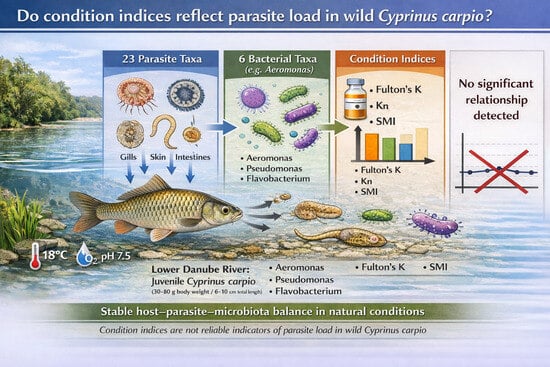
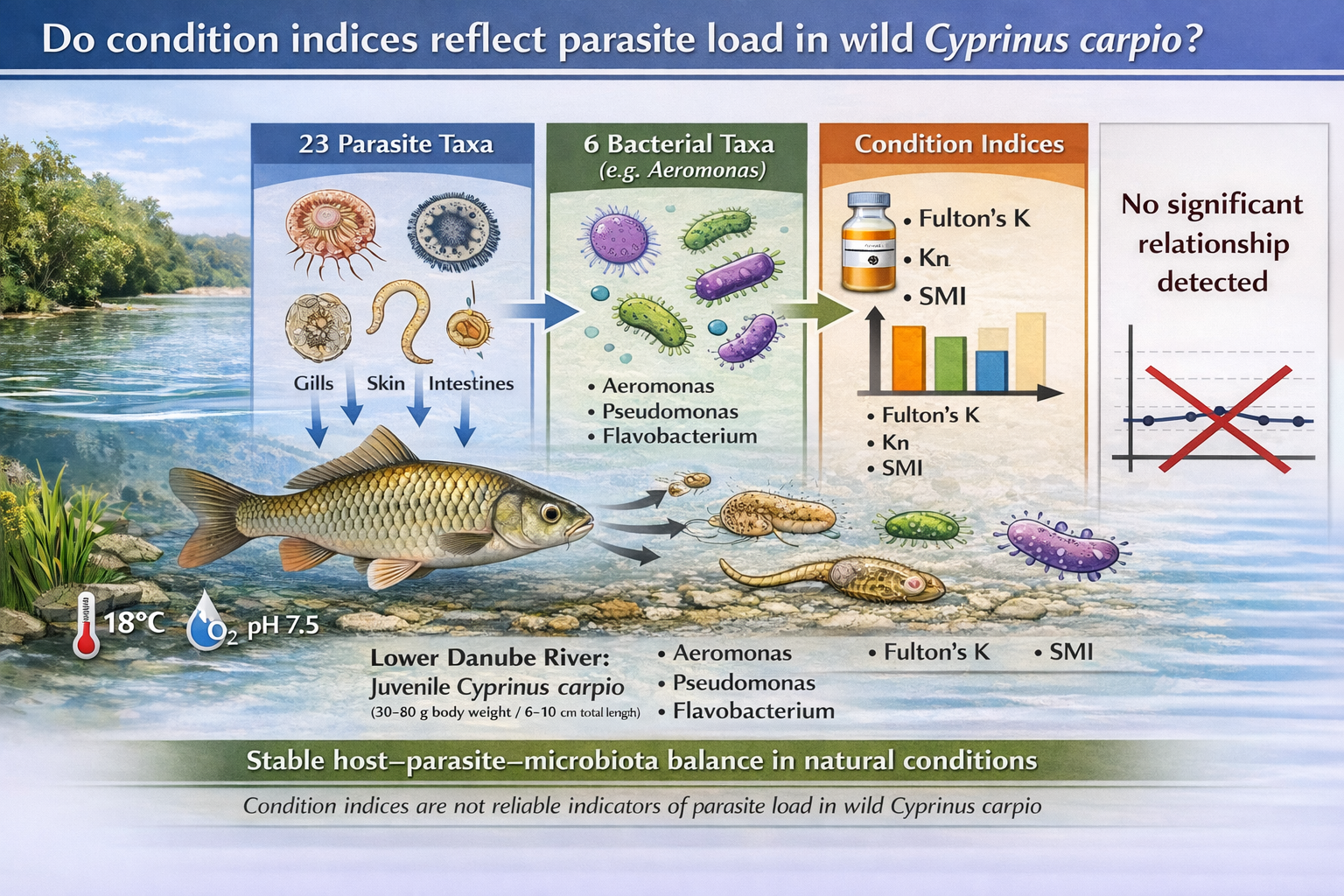
Graphical Abstract

1. Introduction

The assessment of fish health in freshwater ecosystems is a key component of ecological monitoring, particularly under increasing anthropogenic pressure and climate change [1,2]. Fish are widely recognized as sensitive bioindicators, as their physiological condition reflects the combined effects of environmental degradation, parasitic infections, and microbial colonization [3]. Among the various tools used to evaluate fish vitality, condition indices (CIs), particularly Fulton’s condition factor (K), are commonly applied due to their simplicity and assumed relationship with somatic energy reserves and physiological status [4,5]. Traditionally, reduced condition values have been interpreted as indicators of environmental stress and disease, often associated with parasitic infections and bacterial colonization [6]. However, growing evidence suggests that the relationship between condition indices and pathogen load is not universal and may depend on species-specific traits, host–parasite coevolution, and environmental conditions [7,8].
Host–parasite interactions in freshwater fish are complex and may involve multiple taxonomic groups, including monogeneans, trematodes, protozoans, and myxozoans. Any of which can induce effects ranging from subclinical physiological changes to severe tissue damage, particularly in gill and integumentary systems [9,10]. In parallel, opportunistic bacteria such as Aeromonas spp. and Pseudomonas spp. frequently colonize epithelial surfaces, especially under conditions of environmental stress, including eutrophication, temperature fluctuations, and chemical pollution [11,12]. Under such situations, traditional condition indices may not adequately reflect the physiological impact of parasitic and microbial infections [13,14].
Several morphometric indices based on mass–length relationships have been developed to assess fish condition. Fulton’s condition factor assumes isometric growth and have been widely applied across fish taxa [15,16,17,18], Le Cren’s relative condition factor (Kn), which compares observed and expected body mass for a given length, provides a refined estimate of relative condition [19,20]. The scaled mass index (SMI), which incorporates both body length and weight through standardized major-axis regression, have been proposed as a more robust metric of somatic condition [5,6,7,8,9,10,11,12,13,14,15,16,17,18,19,20,21]. These non-lethal approaches are widely used in ecological, fisheries, and growth studies [22,23].
The Common carp, Cyprinus carpio Linnaeus, 1758, represents an ideal model species for investigating interactions among environmental stressors, parasite communities, and host physiological condition. Widely distributed in the Danube River Basin, this species inhabits ecosystems increasingly affected by habitat fragmentation, pollution, and hydrological alterations. Juvenile individuals are particularly susceptible to parasitic infections and opportunistic bacterial colonization due to their developing immune systems and high exposure to environmental variability. The Lower Danube River represents a dynamic ecosystem characterized by fluctuating hydrological regimes, nutrient enrichment, and complex pollutant inputs, all of which may influence host–parasite–microbiota interactions [24].
Although numerous studies have examined parasitic infections or bacterial communities in freshwater fish, relatively few have integrated these biological components with morphometric condition indices in wild populations of the common carp Cyprinus carpio Linnaeus, 1758. This knowledge gap is increasingly relevant in the context of climate-driven shifts in parasite distribution, rising antimicrobial resistance, and increasing anthropogenic pressure on freshwater ecosystems. Additionally, host-specific factors such as age, developmental stage, and environmental exposure may influence infection dynamics and complicate the interpretation of condition indices, highlighting the need for multifactorial approaches [25,26].
The present study aims to determine whether commonly used condition indices reflect parasite load and bacterial colonization in juvenile Cyprinus carpio Linnaeus, 1758 from the Lower Danube River under natural environmental conditions. Specifically, the study addresses two key questions: (1) the extent to which condition indices reflect parasitic and bacterial infections in wild carp populations, and (2) how host-specific and environmental factors influence these relationships.

2. Materials and Methods

2.1. Study Site

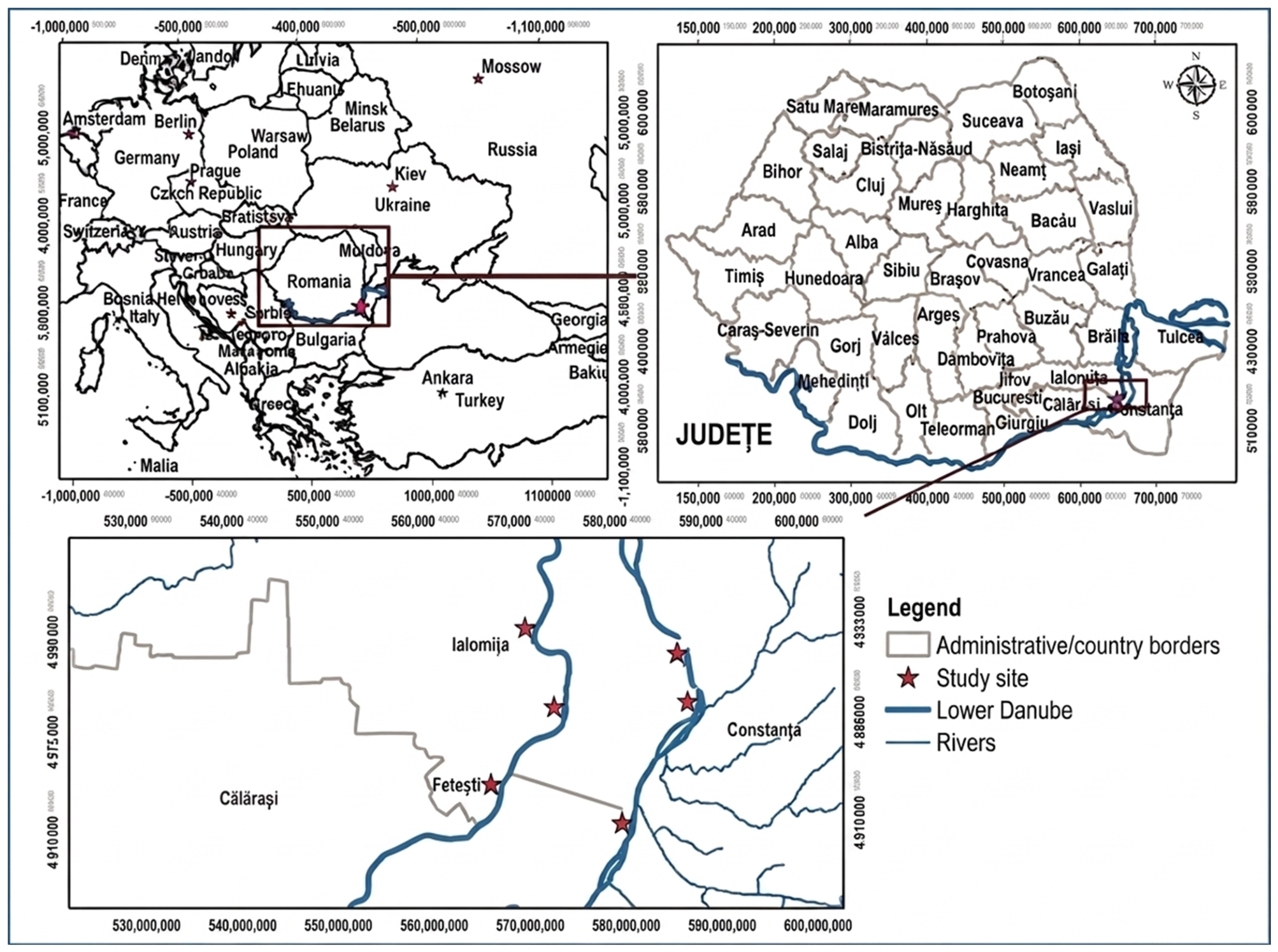
The study was conducted in the Lower Danube River basin in southeastern Romania, focusing on the Borcea Branch and adjacent floodplain sectors within Ialomiţa and Călărași counties (44°20′ N, 28°01′ E). This section of the Danube is characterized by a complex hydrological network comprising river channels, floodplain lakes, and tributary systems that support diverse freshwater fish communities and play a significant role in shaping parasite transmission dynamics. To account for spatial variability in host–parasite interactions, fish were collected from multiple locations along the Lower Danube floodplain, including areas near Fetești, Borcea, and Călărași. These sampling sites represent distinct hydrological sectors of the river system and encompass both main-channel habitats and floodplain-connected water bodies, which differ in terms of hydrological connectivity, water residence time, and ecological conditions. The geographic distribution of the sampling sites within the Lower Danube basin is presented in Figure 1.

2.2. Environmental Parameters

Water quality parameters were measured in situ at each sampling location using a multiparameter meter probe (HACH Company, Loveland, CO, USA). The recorded variables included water temperature (°C), dissolved oxygen (mg L−1), and pH. To minimize diurnal variation, all measurements were conducted at a standardized time (14:00 h) during each monthly sampling event throughout the study period (April 2022–January 2024). This approach ensured comparability among sampling dates and reduced potential bias associated with daily fluctuations in physicochemical conditions. A summary of these data is provided in Supplementary Table S1.

2.3. Fish Sample Collection and Age Determination

Wild specimens were collected between April 2022 and January 2024, encompassing multiple seasonal periods to account for variability in parasite transmission and host physiological condition. Fish were obtained in collaboration with local commercial fishermen using traditional fishing gear, including gill nets and trap nets commonly employed in the region. Immediately after capture, specimens were placed in insulated containers and transported to the laboratory for further analysis. A total of 260 individuals of Common carp Cyprinus carpio were included in the parasitological examination. Upon arrival, each specimen was rinsed with clean water to remove surface debris prior to analysis. Biometric measurements were then recorded for each individual. Total length (TL, cm) was measured using a calibrated ichthyometer (measured using a calibrated ichthyometer (fish measuring board; Aquatic BioTech, Seattle, WA, USA), and body weight (BW, g) was determined using an electronic analytical scale (Ohaus Corporation, Parsippany, NJ, USA) with a precision of ±0.01 g.
To evaluate the relationship between host size and parasite occurrence, the examined specimens (n = 260) were classified into four body-size groups based on total length and body weight ranges: 5.1 ± 8.0 cm (10 ± 15 g), 8.1 ± 10.0 cm (15.1 ± 20.0 g), 10.1 ± 12.0 cm (20.1 ± 25.0 g), and 12.1 ± 15.0 cm (25.1 ± 30.0 g). Each group included 65 individuals and represented increasing size classes within the sampled population. These measurements were subsequently used to calculate condition indices based on mass–length relationships, including Fulton’s condition factor (K), Le Cren’s relative condition factor (Kn), and the scaled mass index (SMI). Fish age was estimated using scale annuli analysis, and all specimens were classified as juvenile individuals (approximately 8 months old) [27]. Following biometric assessment, each specimen was subjected to a comprehensive parasitological examination, including detailed inspection of external tissues (skin, fins, and gills) and internal organs for parasite detection.

2.4. Parasite Isolation and Identification

Parasites were isolated and identified following standard parasitological protocols for freshwater fish to ensure reliable detection of both external and internal taxa. Each specimen was systematically examined for parasites belonging to major groups, including Monogenea, Ciliophora, Dinophyceae, Oligohymenophorea, Myxosporea, Trematoda, Nematoda, and Cestoda. All procedures were conducted under laboratory conditions using sterilized instruments, and samples were processed immediately after dissection [28,29]. Ectoparasites were collected from the skin, fins, and gills by gentle scraping and examined as fresh wet mounts in physiological saline (0.9% NaCl) under a stereomicroscope and light microscopy (100–400×). When required, smears were fixed and stained with Giemsa or iron hematoxylin to enhance visualization. Monogeneans were fixed in 10% neutral buffered formalin, mounted in ammonium picrate glycerin (APG), and identified based on haptoral structures [7,8]. Protozoan taxa (e.g., Trichodina, Ichthyophthirius, Apiosoma, Epistylis, Tetrahymena) and dinoflagellates (Piscinoodinium sp.) were identified using morphological criteria, with silver impregnation applied when necessary to visualize [9,10,11].
Internal parasites were recovered by dissecting the abdominal cavity and digestive tract. Trematodes were identified from compressed tissues and stained preparations [14], nematodes were cleared in lactophenol for morphological observation [26,27,28,29,30], and cestodes were isolated from the intestine and identified based on scolex and proglottid morphology [16]. Parasite identification was performed using standard taxonomic keys and morphological criteria. Parasitological indices were calculated according to [31]. Prevalence (P) was defined as the percentage of infected hosts relative to the total number of examined individuals. Mean intensity (MI) was calculated as the average number of parasites per infected host, while mean abundance (MA) was defined as the average number of parasites per examined host, including both infected and uninfected individuals. Ninety-five percent confidence intervals (95% CI) were estimated using bootstrap resampling (10,000 iterations). Data are shown in Table 1.

2.5. Microbiological Analysis and Bacterial Identification

From the examined specimens (±n = 260), a representative subset of 20 individuals juvenile Cyprinus carpio Linnaeus, 1758 specimens (total length 8 ± 12 cm) were selected for bacteriological analysis. Sampling was performed periodically throughout the study period (April 2022–January 2024) to account for temporal variation in surface-associated bacterial communities. Specimens were processed immediately after collection.
Prior to sampling, each fish was rinsed in three successive baths of sterile distilled water to remove loosely attached debris and transient microorganisms. Cutaneous microbiota were collected by swabbing a standardized 3 cm2 area of the ventral surface using a sterile flocked swab. Each swab was transferred into 1 mL of liquid Amies transport medium (Copan ESwab™, Copan Diagnostics, Brescia, Italy) under aseptic conditions [32].
For bacterial isolation, 100 µL of the transport medium was inoculated onto agar plates using a sterile Drigalski spatula and evenly distributed across the surface. The following culture media were used: MacConkey sorbitol agar, DCL agar, Yersinia agar, and 5% sheep blood agar (MLT, Arad, Romania). Plates were incubated at 27 °C for 24 h, after which colony-forming units (CFUs) were enumerated using a digital colony counter. Representative colonies were subsequently subcultured on chromogenic media for preliminary differentiation. The incubation temperature (27 °C) was selected to reflect the optimal growth range of freshwater fish-associated bacteria, which are typically inhibited at temperatures above 30 °C [32]. Elevated temperatures may also induce stress-related responses, such as heat-shock protein expression (e.g., HSP70) in fish tissues [33].
Final taxonomic identification was performed using Matrix-Assisted Laser Desorption/Ionization Time-of-Flight mass spectrometry (MALDI-TOF MS; Microflex LT/SH, Bruker Daltonik GmbH, Bremen, Germany). Isolated colonies were applied to an MSP 96 polished steel target plate (Bruker Daltonics GmbH, Bremen, Germany), followed by the addition of an α-cyano-4-hydroxycinnamic acid matrix prepared in a solution containing acetonitrile and trifluoroacetic acid. Spectral profiles were analyzed using MBT Compass software (version 4.1, Bruker Daltonik GmbH, Bremen, Germany) and compared with reference spectra from the SR Library Database to determine taxonomic identity. MALDI-TOF MS enables rapid and accurate identification of microorganisms based on their proteomic profiles and is widely used in clinical and research microbiology [34].

2.6. Statistical Analysis

Parasite count data, including total fish length (L), body weight (W), parasite abundance (P), and cumulative parasite load (PTOT), were tested for normality using the Shapiro–Wilk and Anderson–Darling tests implemented in XLSTAT for Microsoft Excel. Fish physiological condition was assessed using Fulton’s condition factor (K), Le Cren’s relative condition factor (Kn), and the Scaled Mass Index (SMI). Fulton’s condition factor was calculated as: K = 100 × (W/L3). Le Cren’s relative condition factor was calculated as: Kn = W/(aLb). The Scaled Mass Index (SMI) was calculated following Peig and Green [35], as: SMI = Wi × (L0/Li)bSMA, where Wi is individual body mass, Li is individual length, L0 is the mean population length, and bSMA is the slope obtained from the standardized major-axis regression of ln(W) against ln(L).
Associations between condition indices (K, Kn, and SMI) and parasite load were evaluated using correlation analyses. Pearson’s correlation coefficient (r) was applied for normally distributed data, whereas Spearman’s rank correlation was used for non-normally distributed variables. Descriptive statistics, including mean, standard deviation (SD), coefficient of variation (CV), and standard error (SE), were calculated as follows: CV = SD/mean; SE = SD/√N. Parasite weight was not measured; all parasitological analyses were based on numerical descriptors, including parasite counts, abundance, and total parasite load per host. Statistical significance was set at p < 0.05. All analyses were performed using SPSS version 26 (IBM Corp., Armonk, NY, USA) and GraphPad Prism version 3.

3. Results

3.1. Prevalence of Infection Across Size Groups

Fish were classified into four size groups based on body weight and total length, with 65 individuals assigned to each group (Table 2). Parasite prevalence varied among size classes and showed a consistent increasing trend with host size. The lowest prevalence was observed in the smallest size group, whereas progressively higher values were recorded in intermediate and larger groups. The highest prevalence occurred in the largest size class, where nearly all individuals were infected. These results indicate a clear size-related pattern in parasite occurrence across the examined population, with larger individuals exhibiting a higher frequency of infection compared to smaller ones.

3.2. Composition and Epidemiological Structure of the Parasite Community

Twenty three parasite taxa were recorded across multiple infection sites, including the skin, fins, gills, muscles, and intestine, providing a comprehensive overview of parasite diversity in juvenile Cyprinus carpio Linnaeus, 1758 from the Lower Danube River, including both ectoparasitic and endoparasitic species belonging to multiple different taxonomic groups, such as Monogenea, Ciliophora, Myxosporea, Trematoda, Nematoda, and Cestoda (Table 3). Ectoparasites were primarily associated with the gills, skin, and fins, whereas endoparasites were predominantly recovered from internal organs and the intestinal tract.
The parasite community was dominated by monogeneans and protozoans, particularly representatives of the genera Dactylogyrus, Gyrodactylus, and Trichodina. Among these, Dactylogyrus vastator and Trichodina cottidarum exhibited the highest prevalence and abundance values.
Epidemiological parameters indicated a moderate to high level of infection across most taxa, with prevalence values ranging from 43% to 72%. Mean intensity values were generally low to moderate, while mean abundance values remained relatively low across the parasite species.
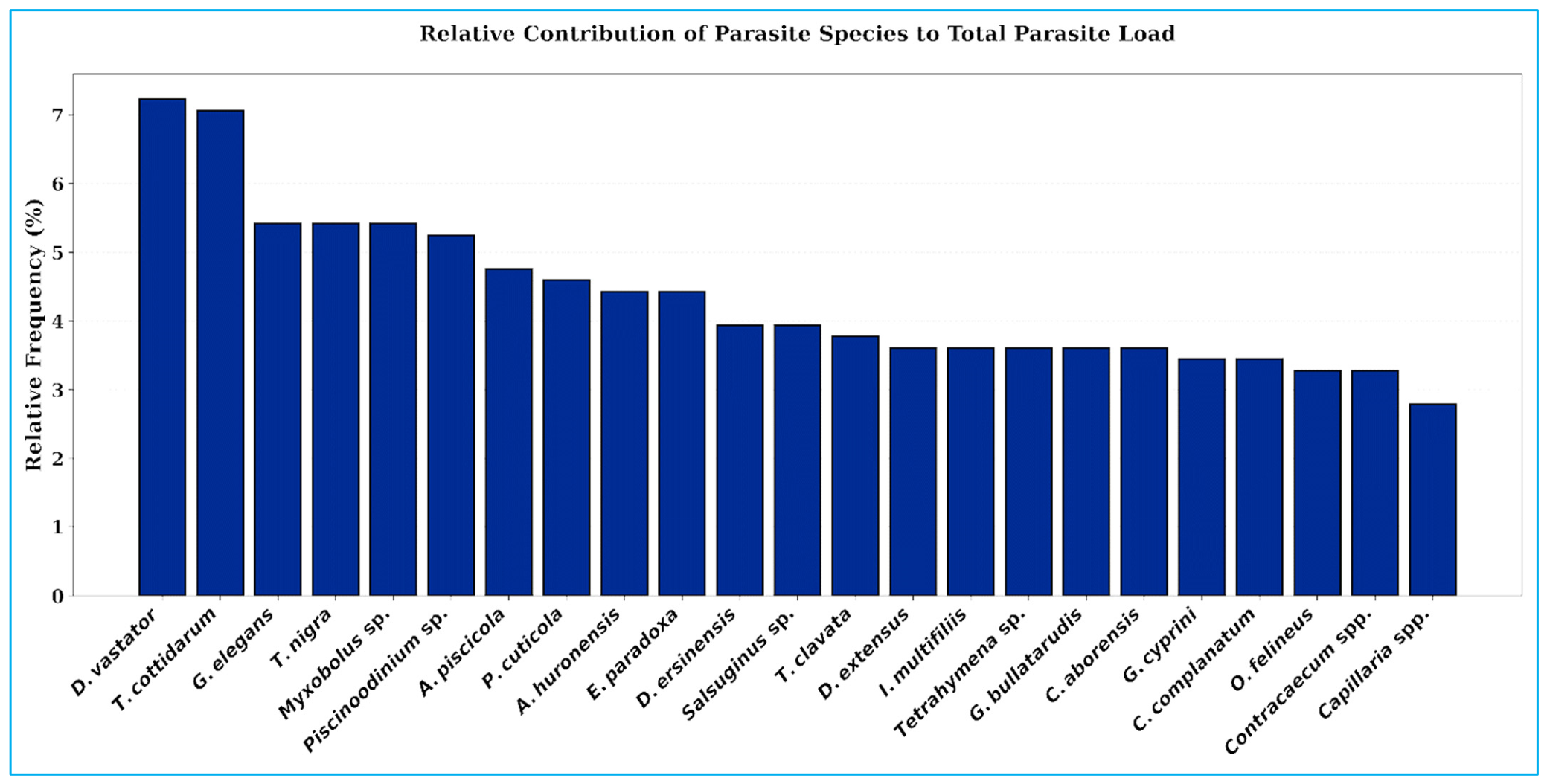
Relative frequency analysis showed that parasite contributions were distributed across taxa, with no single species dominating the community. The highest contributions were observed for Dactylogyrus vastator and Trichodina cottidarum, while most species exhibited lower proportional contributions.

3.3. Descriptive Statistics and Parasite Distribution

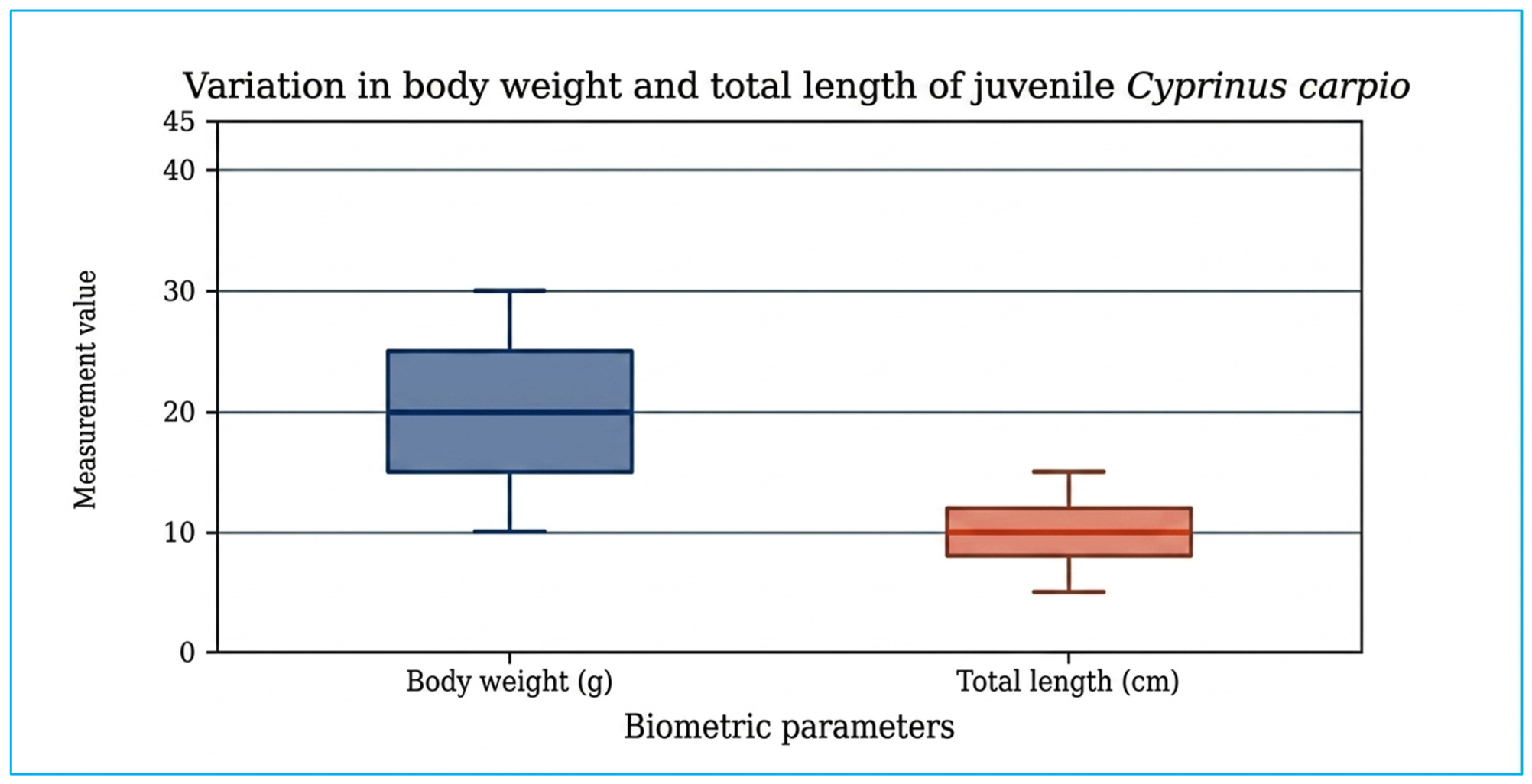
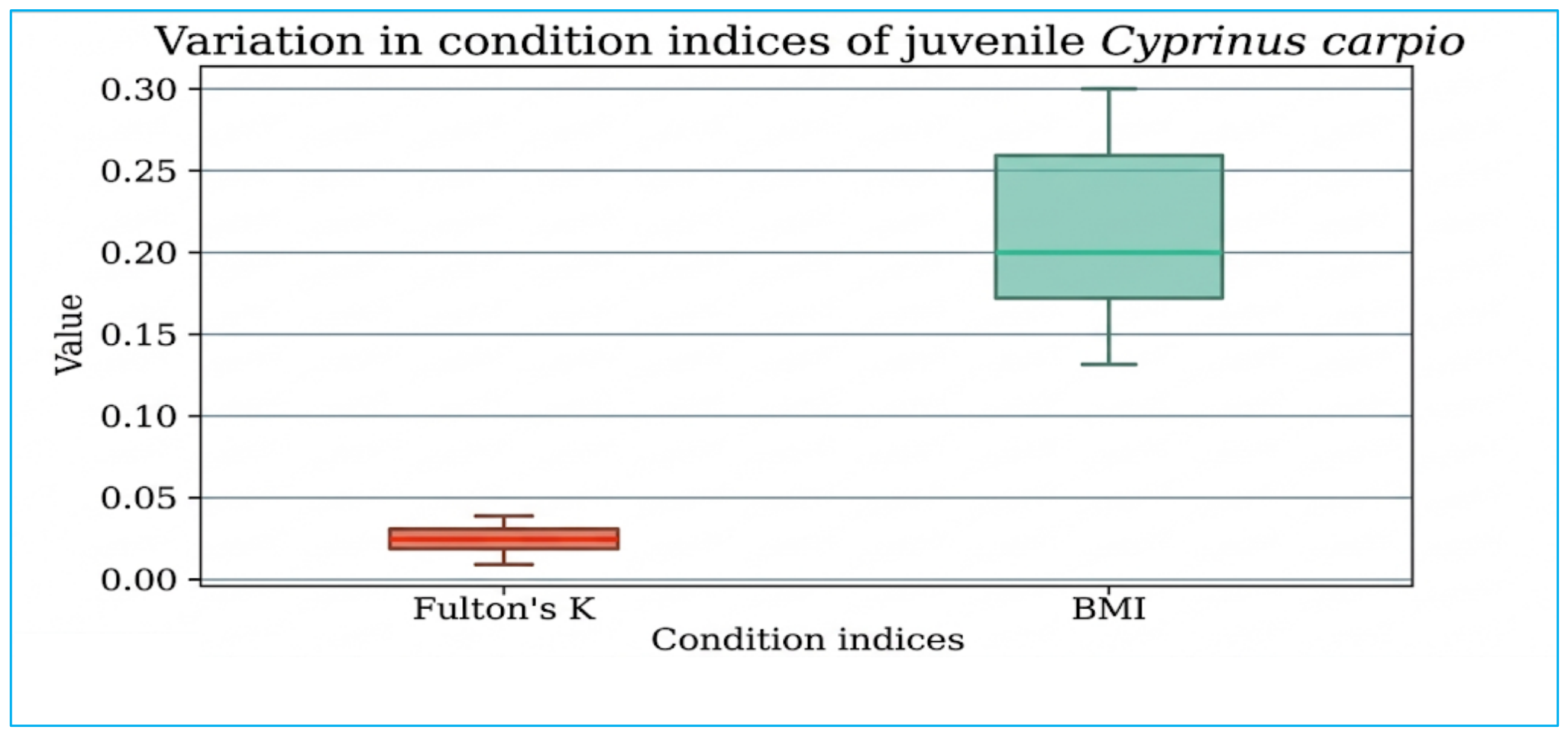
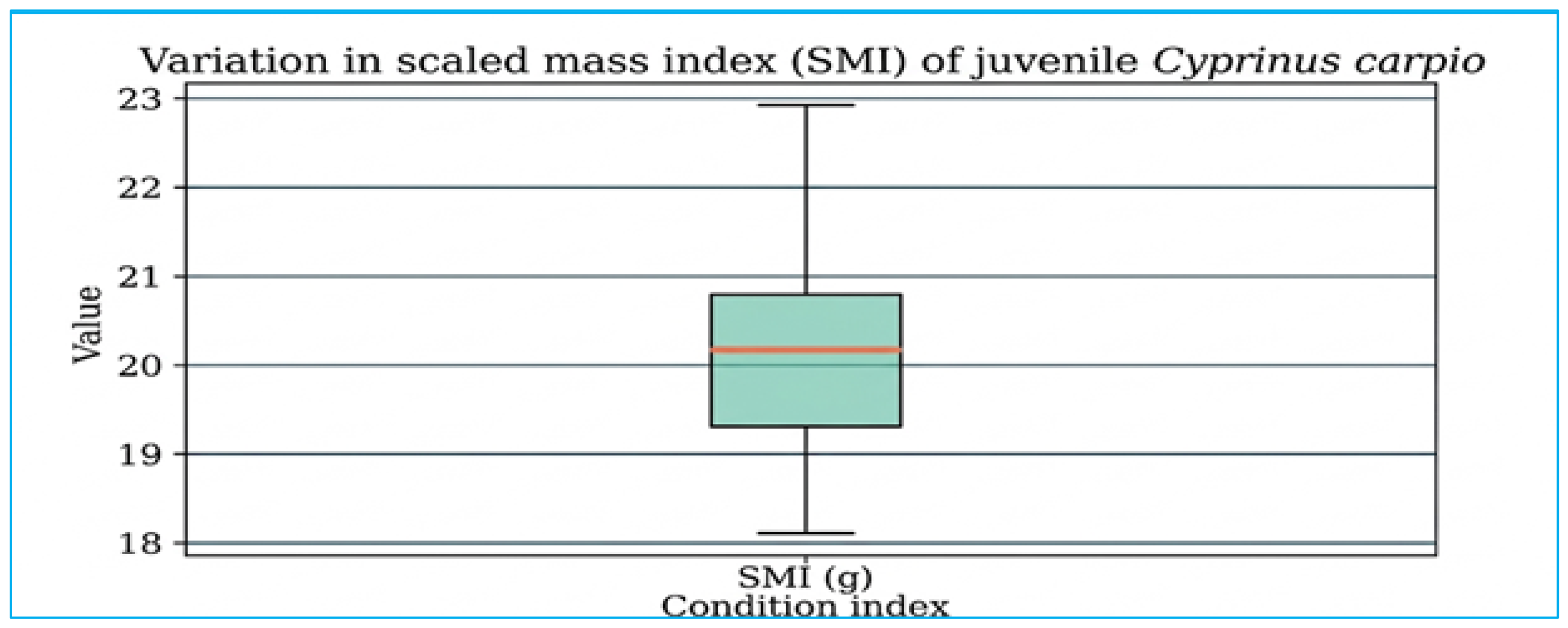
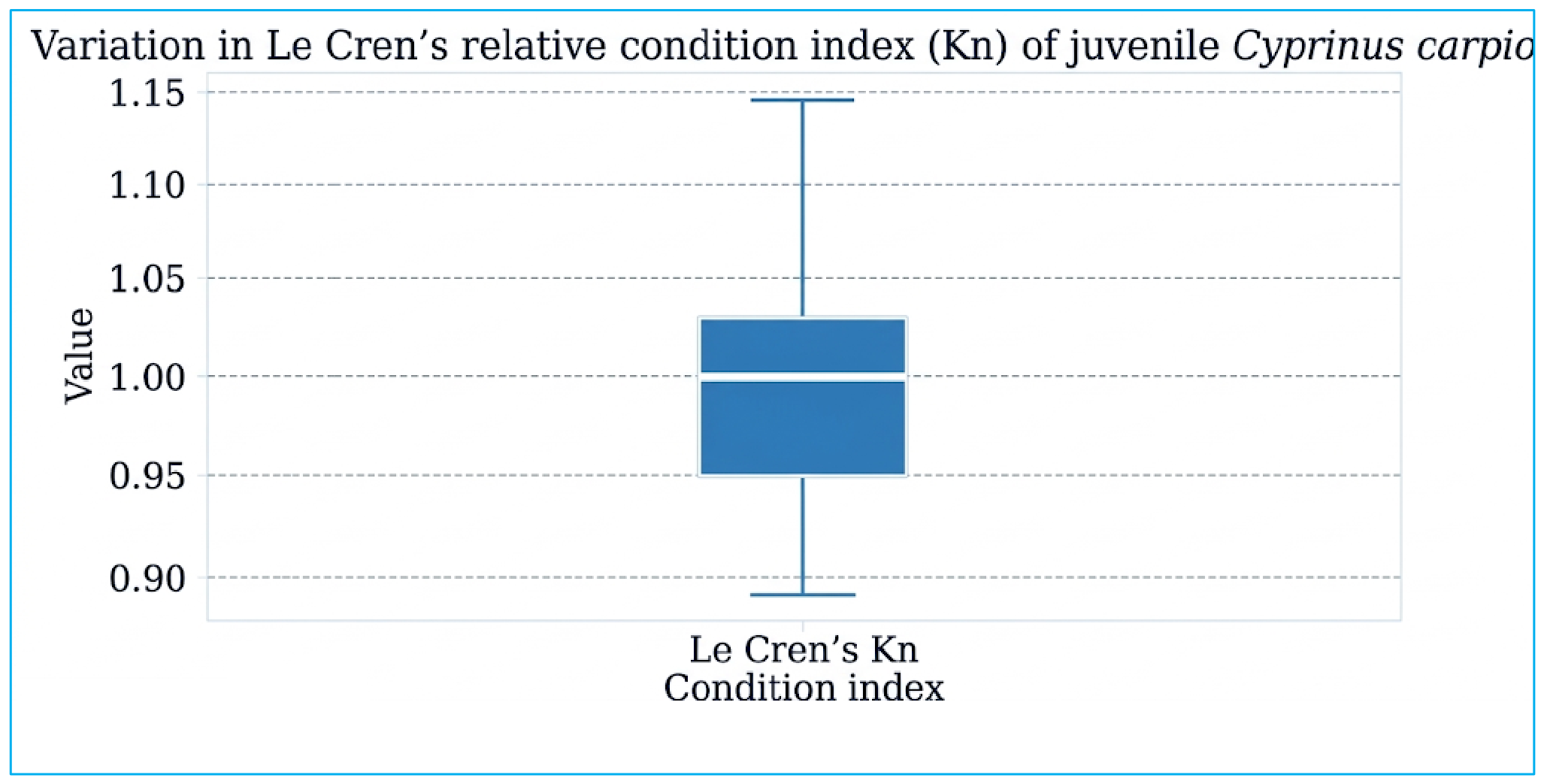
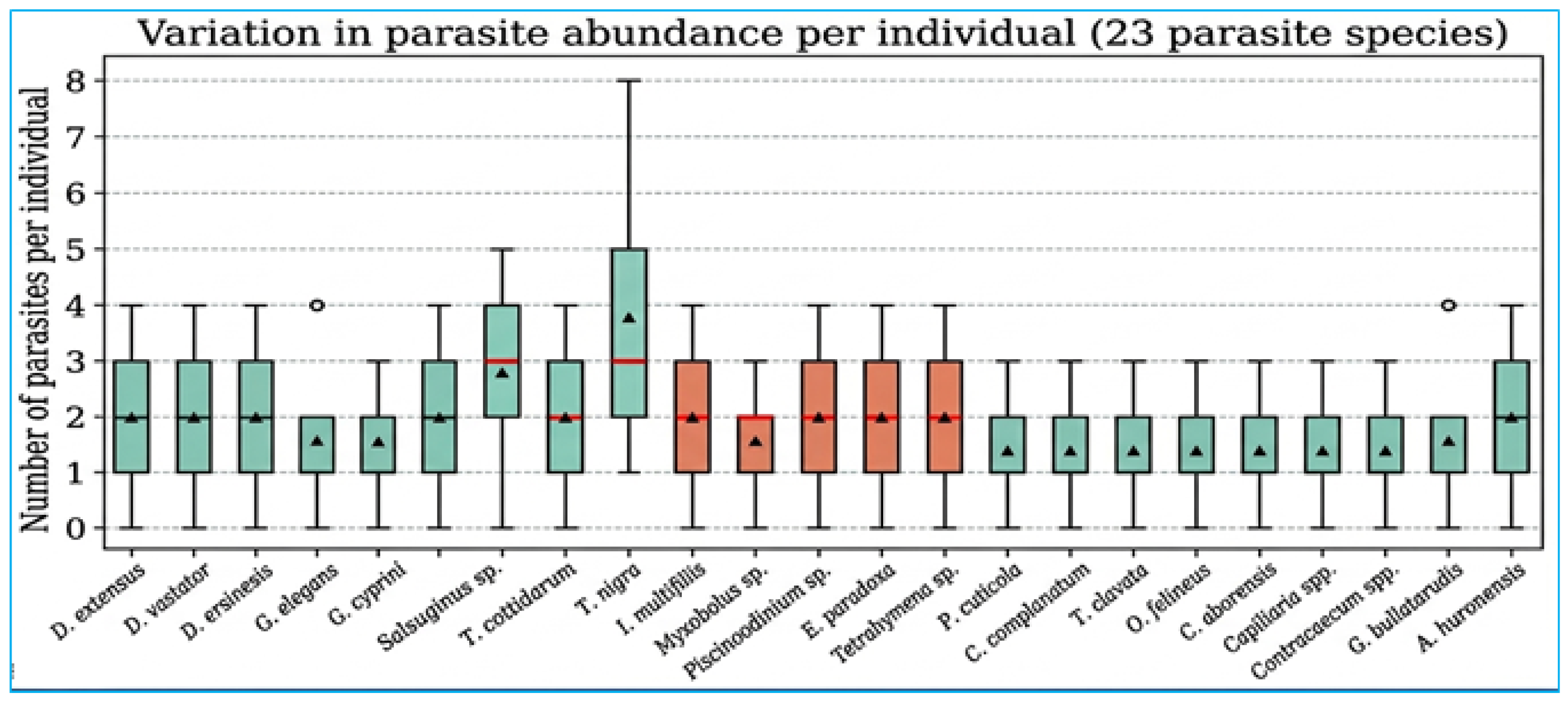
Descriptive statistics for biometric parameters, condition indices, and total parasite abundance are presented in Table 4, and Figure 2, Figure 3, Figure 4, Figure 5 and Figure 6. The common carp Cyprinus carpio Linnaeus, 1758 mean abundance values per parasite species were generally low, indicating that individual parasite burdens remained limited despite the presence of multiple taxa. This distribution pattern is characteristic of natural parasite communities, where aggregation typically occurs in a subset of hosts. These results indicate a moderately dispersed parasite distribution with low individual burdens, supporting the interpretation of a stable host–parasite system under natural environmental conditions, without evidence of severe infection pressure [34,35].

3.4. Relationship Between Parasite Load and Condition Indices Correlation Analysis (Pearson)

The relationships between parasite burden and host physiological condition were evaluated using Pearson’s correlation analysis (Table 5). The results indicated that most correlations between parasite abundance and condition indices—including Fulton’s condition factor (K), Le Cren’s relative condition factor (Kn), and the Scaled Mass Index (SMI)—were weak and not statistically significant (p > 0.05).
The lack of strong associations between parasite load and condition indices suggests that the examined parasite community exerts a relatively low physiological cost on the host population. This pattern is consistent with stable host–parasite systems in natural environments, where long-term coevolution promotes reduced virulence and host tolerance.
These findings support the hypothesis that commonly used morphometric condition indices may have limited sensitivity in detecting subclinical parasitic infections in wild fish populations, particularly under conditions of moderate infection intensity [36].

3.5. Structure and Relative Contribution of the Parasite Community

The graphical representation of parasite contributions revealed a gradual decline in relative abundance across species, with no single taxon exhibiting overwhelming dominance (Figure 7). Dactylogyrus vastator and Trichodina cottidarum showed the highest contributions, each approaching 7% of the total parasite load, followed by several taxa with intermediate contributions ranging between approximately 4% and just over 5%. The majority of parasite species contributed less than 4%, indicating a relatively even distribution of parasite abundance across the community. This pattern is characteristic of a structured and, balanced parasite assemblage, where multiple taxa coexist without strong competitive exclusion or dominance. The observed distribution supports the presence of a stable and diverse parasite community in juvenile C. carpio, consistent with equilibrium conditions in natural freshwater ecosystems.

3.6. Correlation Between Biometric Parameters, Condition Indices, and Parasite Load

Pearson correlation analyses (α = 0.05) were performed to evaluate the relationships between parasite abundance and host biometric parameters (body weight and total length), as well as condition indices (Table 6). Most parasite species exhibited weak and non-significant correlations with both biometric variables and condition indices. Only a limited number of statistically significant relationships were detected between parasite abundance and host size parameters. Specifically, Gyrodactylus elegans and Myxobolus sp. showed weak but statistically significant positive correlations with both body weight and total length (p < 0.05), although the strength of these relationships remained low (|r| < 0.20). Similarly, Atractolytocestus huronensis exhibited a statistically significant association with host size (p < 0.001), but with low explanatory power, indicating only a weak relationship.
In contrast, no significant correlations were observed between parasite abundance and condition indices, including the Scaled Mass Index (SMI), Le Cren’s relative condition factor (Kn), and Fulton’s condition factor (K). In several cases, correlation analyses could not be reliably performed due to limited variability in these indices.
These findings indicate that parasite burden had minimal influence on host physiological condition. The predominance of weak and non-significant correlations suggests that parasite load is only weakly associated with host biometric traits and does not substantially affect somatic condition. This pattern is consistent with a stable host–parasite system in which infections remain largely subclinical and do not impair host growth or condition under natural environmental conditions.

3.7. Surface-Associated Bacterial Communities in Juvenile C. carpio

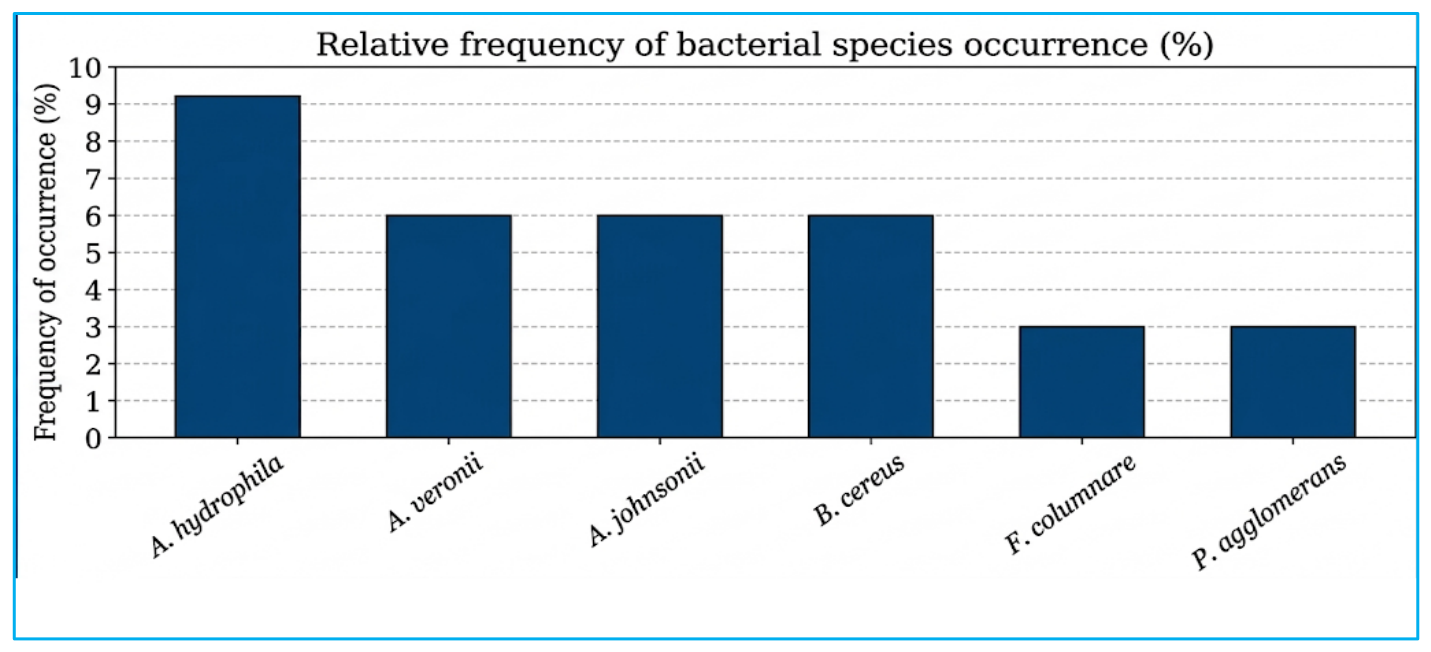
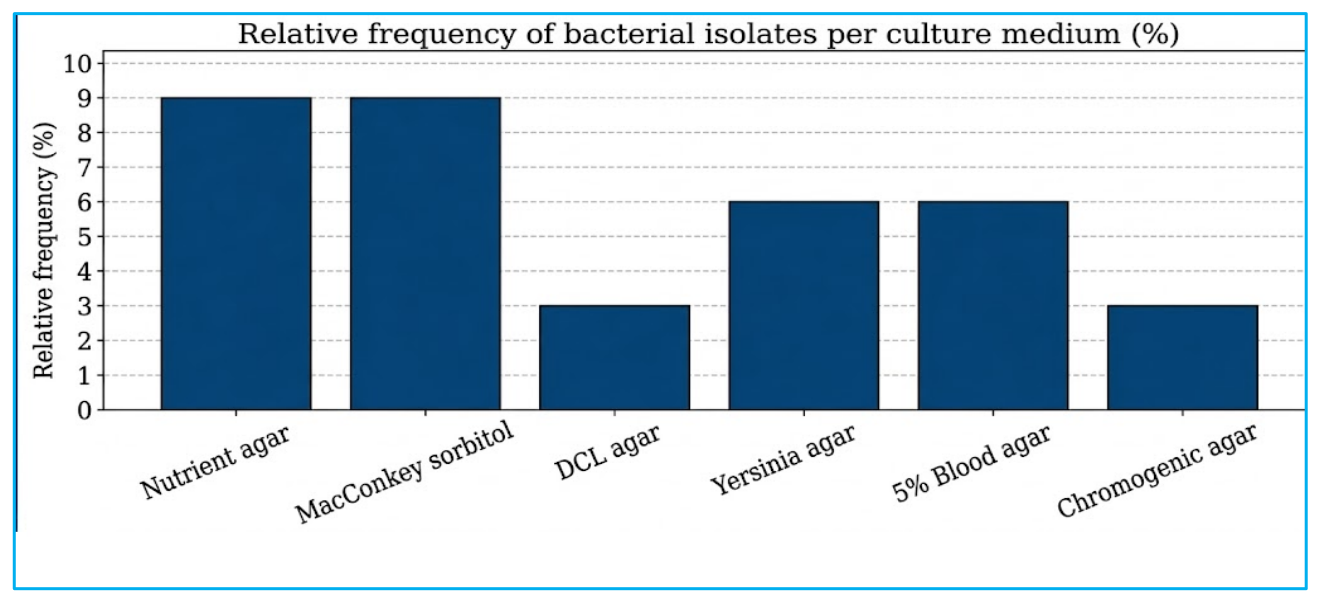
Six bacterial taxa were isolated from the skin of juvenile common carp Cyprinus carpio Linnaeus, 1758, based on bacteriological analyses conducted on representative subsamples collected periodically throughout the study period (April 2022–January 2024). The identified taxa included Aeromonas hydrophila, Aeromonas veronii, Acinetobacter johnsonii, Bacillus cereus, Flavobacterium columnare, and Pantoea agglomerans. Among these, A. hydrophila was the most frequently detected species across sampling events, followed by A. veronii, A. johnsonii, and B. cereus, indicating their dominant role within the cutaneous microbiota. In contrast, F. columnare and P. agglomerans were less frequently isolated. The distribution of identified bacterial taxa varied among culture media. Nutrient agar and MacConkey sorbitol agar consistently supported the highest diversity and frequency of bacterial growth, whereas DCL agar and chromogenic agar yielded fewer isolates. Yersinia agar and 5% blood agar showed intermediate recovery rates, particularly for Aeromonas spp. The frequency of occurrence of each bacterial taxon is illustrated in Figure 8, confirming the predominance of A. hydrophila, while F. columnare and P. agglomerans exhibited comparatively lower frequencies. Similarly, Figure 9 demonstrates that nutrient agar and MacConkey sorbitol agar produced the highest number of bacterial isolates, highlighting their effectiveness for recovering diverse fish-associated microbiota. The bacterial assemblage was dominated by opportunistic freshwater-associated taxa and remained relatively consistent across sampling periods, indicating a stable environmental microbiota rather than a disease-driven community structure.

3.8. Condition Indices of Juvenile C. carpio

Condition indices for bacteriologically analyzed specimens (n = 20, including one control) are summarized in Table 7. The uncolonized control specimen exhibited slightly higher values of Fulton’s condition factor (K), Le Cren’s relative condition index (Kn), and the scaled mass index (SMI) compared with bacterially colonized individuals. Among colonized specimens, Fulton’s K showed a general decreasing trend, suggesting a modest reduction in somatic condition associated with bacterial colonization. In contrast, Kn and SMI values remained relatively stable across individuals, indicating that bacterial presence did not substantially affect overall physiological condition. Despite the occurrence of multiple bacterial taxa, variations in condition indices were limited and did not indicate severe physiological impairment. These findings are consistent with the predominance of opportunistic and commensal bacterial species and support the interpretation of a balanced host–microbiota relationship under natural environmental conditions.

4. Discussion

The present study provides a comprehensive evaluation of parasite diversity, bacterial colonization, and host condition in juvenile Cyprinus carpio from the Lower Danube River, integrating parasitological, microbiological, and biometric approaches. The expanded dataset (±n = 260 fish; 23 parasite taxa; ±n = 20 for bacteriology) offers a robust framework for understanding host–parasite–microbiota interactions under natural environmental conditions.
A clear size-related pattern in parasite infection was observed, with prevalence increasing progressively across weight and length classes. Larger individuals exhibited higher infection rates, supporting the concept of cumulative exposure, whereby prolonged contact with infective stages and increased body surface area enhance parasite acquisition. Similar size-dependent patterns have been widely reported in cyprinid fishes and are generally associated with ontogenetic changes in habitat use, feeding behavior, and immune function.
The parasite community exhibited relatively high taxonomic diversity, encompassing representatives of Monogenea, Ciliophora, Myxosporea, Trematoda, Nematoda, and Cestoda. Ectoparasitic taxa, particularly monogeneans (Dactylogyrus, Gyrodactylus) and ciliates (Trichodina, Ichthyophthirius), dominated both prevalence and abundance, likely reflecting their direct life cycles and continuous environmental transmission. In contrast, endoparasites displayed lower intensity values, suggesting predominantly chronic infections linked to trophic transmission pathways. The predominance of parasites on gills and skin further highlights the importance of direct exposure to waterborne infective stages.
Despite the high prevalence of several parasite taxa, infection intensity remained generally low to moderate, indicating sublethal infection levels. This pattern suggests that parasite burdens were relatively controlled at the individual level, even under conditions of widespread exposure. Such findings are consistent with stable host–parasite equilibria commonly observed in natural freshwater ecosystems, where long-term coevolution promotes reduced virulence and increased host tolerance.
The examined population displayed moderate variability in biometric parameters, reflecting natural growth patterns in juvenile fish. In contrast, condition indices such as the Scaled Mass Index and Le Cren’s relative condition factor showed relatively low variability, indicating a generally homogeneous physiological state across individuals. The observed distribution of parasite abundance was heterogeneous, with most individuals harboring low parasite loads and fewer hosts exhibiting higher infection levels, a pattern typical of aggregated parasite distributions in wild fish populations.
Correlation analyses revealed weak associations between parasite abundance and condition indices, indicating that parasite infections had limited measurable effects on host somatic condition under the studied environmental conditions. However, moderate relationships between parasite load and biometric traits, particularly body weight and total length, suggest that host size remains an important determinant of parasite burden. These findings support the hypothesis that commonly used condition indices may have limited sensitivity in detecting subclinical or moderate parasite infections in natural populations.
The microbiological analysis revealed a relatively similar cutaneous bacterial community dominated by opportunistic freshwater-associated taxa, including Aeromonas hydrophila, A. veronii, Acinetobacter johnsonii, Bacillus cereus, Flavobacterium columnare, and Pantoea agglomerans. The predominance of Aeromonas species is consistent with their well-documented role as common opportunistic pathogens in freshwater environments. The presence of F. columnare further suggests for the of potential pathogenic interactions under environmentally stressful conditions.
The Co-occurrence of ectoparasites and opportunistic bacteria indicates a functional interaction within the host microbiota. Damage to epithelial tissues caused by ectoparasites likely facilitates bacterial colonization, increasing susceptibility to secondary infections. However, the relatively stable condition indices observed across bacterially colonized individuals suggest that these interactions remained within a subclinical range during the study period, supporting the presence of a balanced host–microbiota relationship.
Environmental factors likely played a key role in shaping the observed patterns. Seasonal variations in water temperature and dissolved oxygen suggest that warmer periods may enhance parasite transmission and bacterial proliferation, while cooler, oxygen-rich conditions may limit infection dynamics. These environmental drivers likely contributed to the observed distribution of parasites and bacteria, emphasizing the importance of abiotic conditions in regulating host–parasite–microbiota interactions.
Several limitations should be acknowledged. Although the parasitological dataset was extensive, microbiological analyses were conducted on a subset of specimens, which may not fully capture temporal variability in bacterial communities. Additionally, reliance on culture-based identification methods will underestimate microbial diversity compared with molecular approaches. Environmental parameters were measured periodically rather than continuously, limiting the ability to directly link abiotic factors to infection dynamics.
The findings demonstrate that high parasite diversity and frequent bacterial colonization do not necessarily result in reduced host condition, highlighting the resilience of wild fish populations and the importance of integrating multiple biological indicators when assessing fish health.

5. Conclusions

The common carp Cyprinus carpio Linnaeus, 1758. This study provides an integrated assessment of parasite diversity, surface-associated bacterial communities, and host condition in juvenile Cyprinus carpio from the Lower Danube River under natural environmental conditions. The results demonstrate that parasite prevalence increases with host size, supporting size-dependent infection dynamics driven by cumulative exposure.
Despite the high diversity and widespread occurrence of parasites, infection intensities remained low to moderate, indicating predominantly sublethal infections and a stable host–parasite equilibrium. Similarly, the cutaneous bacterial community was dominated by opportunistic freshwater-associated taxa, reflecting a typical environmental microbiota rather than active disease conditions.
Importantly, parasite load and bacterial colonization showed weak and inconsistent relationships with condition indices, suggesting that commonly used morphometric indices have limited sensitivity for detecting subclinical biological stress in wild fish populations.
These findings highlight the resilience of juvenile Cyprinus carpio and emphasize the need to integrate parasitological, microbiological, and environmental indicators for a more comprehensive evaluation of fish health. Future studies incorporating temporal monitoring and molecular approaches are recommended to further elucidate host–parasite–microbiota interactions in freshwater ecosystems.

Supplementary Materials

The following supporting information can be downloaded at: https://www.mdpi.com/article/10.3390/d18050263/s1, Table S1: Monthly water quality parameters recorded in the Lower Danube River between April 2022 and January 2024.

Author Contributions

Data curation, A.J., G.D. and M.B.; Formal analysis, A.J., G.D., M.B. and I.S.; Funding acquisition, G.D., M.B. and E.H.; Investigation, A.J. and I.S.; Methodology, G.D.; Project administration, G.D., M.B. and E.H.; Resources, A.J. and E.H.; Supervision, G.D. and M.B.; Validation, G.D.; Visualization, M.B. and A.J.; Writing—original draft, G.D., E.H. and A.J.; Writing—review and editing, G.D., M.B., E.H., A.J. and I.S. All authors have read and agreed to the published version of the manuscript.

Funding

This research received no external funding.

Institutional Review Board Statement

All procedures involving fish were conducted in accordance with institutional and national guidelines for the care and use of animals in research. Ethical approval was obtained from the all procedures involving fish were conducted in accordance with institutional and national guidelines for the care and use of animals in research. Ethical approval was obtained from the National Institute for Research and Development in Environmental Protection Institute, in conformity with the Guide for the Use and Care of Laboratory Animals regarding the reduction of animal suffering and the number of animals sacrificed, INCDPM Care and Use Committee/Ethical Review.

Informed Consent Statement

Not applicable.

Data Availability Statement

The data that support the findings of this study are available from the corresponding author upon reasonable request.

Acknowledgments

We would to like to express thanks to Robert Wolff, an Independent Researcher, 104 Cyclamen Ct., Columbia, SC 29212, USA, for his help. During the preparation of this manuscript, the authors used Grammarly (Grammarly Inc., San Francisco, CA, USA; version 2024) and ChatGPT (OpenAI, San Francisco, CA, USA; GPT-5, 2026 version) to assist with language refinement and grammar correction. These tools were used solely for linguistic purposes and not for data generation, analysis, interpretation, or study design. The authors have reviewed, verified, and edited all AI-assisted content and take full responsibility for the scientific accuracy and integrity of the final manuscript.

Conflicts of Interest

The authors declare no conflict of interest.

References

  1. Stevenson, R.D.; Woods, W.A., Jr. Condition indices for conservation: New uses for evolving tools. Integr. Comp. Biol. 2006, 46, 1169–1190. [Google Scholar] [CrossRef]
  2. Lafferty, K.D.; Kuris, A.M. How environmental stress affects the impacts of parasites. Limnol. Oceanogr. 1999, 44, 925–931. [Google Scholar] [CrossRef]
  3. Iaria, C.; Spanò, N.; Smeriglio, A.; Capparucci, F.; De Benedetto, G.; Lanteri, G.; Marino, F.; Macheda, S.; Macrì, F.; Belvedere, A.; et al. Massive infection of Cystidicoloides ephemeridarum in brown trout Salmo trutta with skeletal deformities. Dis. Aquat. Organ. 2021, 143, 159–168. [Google Scholar]
  4. Guidelli, G.; Tavechio, W.L.G.; Takemoto, R.M.; Pavanelli, G.C. Relative condition factor and parasitism in anostomid fishes from the floodplain of the Upper Paraná River, Brazil. Vet. Parasitol. 2011, 177, 145–151. [Google Scholar] [PubMed]
  5. Maceda-Veiga, A.; Green, A.J.; Poulin, R.; Lagrue, C. Body condition peaks at intermediate parasite loads in the common bully Gobiomorphus cotidianus. PLoS ONE 2016, 11, e0168992. [Google Scholar] [CrossRef] [PubMed]
  6. Li, Y.; Feng, M.; Huang, L.; Zhang, P.; Wang, H.; Zhang, J.; Tian, Y.; Xu, J. Weight-length relationship analysis revealing the impacts of multiple factors on body shape of fish in China. Fishes 2023, 8, 269. [Google Scholar] [CrossRef]
  7. Natsopoulou, M.E.; McMahon, D.P.; Doublet, V.; Bryden, J.; Paxton, R.J. Interspecific competition in honeybee intracellular gut parasites is asymmetric and favours the spread of an emerging infectious disease. Proc. R. Soc. B Biol. Sci. 2015, 282, 20141896. [Google Scholar]
  8. Lo, C.M.; Morand, S.; Galzin, R. Parasite diversity/host age and size relationship in three coral-reef fishes from French Polynesia. Int. J. Parasitol. 1998, 28, 1695–1708. [Google Scholar] [CrossRef] [PubMed]
  9. Rohlenová, K.; Morand, S.; Hyršl, P.; Tolarová, S.; Flajšhans, M.; Šimková, A. Are fish immune systems really affected by parasites? An immunoecological study of common carp (Cyprinus carpio). Parasites Vectors 2011, 4, 120. [Google Scholar] [CrossRef]
  10. Barber, I.; Scharsack, J. The three-spined stickleback-Schistocephalus solidus system: An experimental model for investigating host-parasite interactions in fish. Parasitology 2010, 137, 411–424. [Google Scholar] [CrossRef]
  11. Smith, N.C.; Christian, S.L.; Taylor, R.G.; Santander, J.; Rise, M.L. Immune modulatory properties of 6-gingerol and resveratrol in Atlantic salmon macrophages. Mol. Immunol. 2018, 95, 10–19. [Google Scholar] [CrossRef]
  12. Whyte, S.K. The innate immune response of finfish—A review of current knowledge. Fish Shellfish Immunol. 2007, 23, 1127–1151. [Google Scholar] [PubMed]
  13. Paredes-Trujillo, A.; Velázquez-Abunader, I.; Papiol, V.; del Rio-Rodríguez, R.E.; Vidal-Martínez, V.M. Negative effect of ectoparasite burdens on the condition factor from farmed tilapia Oreochromis niloticus in the Yucatan, Mexico. Vet. Parasitol. 2021, 292, 109393. [Google Scholar] [CrossRef]
  14. Johnston, T.A.; Lescord, G.L.; Quesnel, M.; Savage, P.-L.; Gunn, J.M.; Kidd, K.A. Age, body size, growth and dietary habits: What are the key factors driving individual variability in mercury of lacustrine fishes in northern temperate lakes? Environ. Res. 2022, 213, 113740. [Google Scholar] [CrossRef]
  15. Fulton, T.W. The rate of growth of fishes. In 22 Annual Report of the Fishery Board for Scotland; Her Majesty’s Stationery Office (HMSO): Edinburgh, UK, 1904; Volume 3, pp. 141–241. [Google Scholar]
  16. Connolly, D.T.; Heuvelman, D.M.; Nelson, R.; Olander, J.V.; Eppley, B.L.; Delfino, J.J.; Siegel, N.R.; Leimgruber, R.M.; Feder, J. Tumor vascular permeability factor stimulates endothelial cell growth and angiogenesis. J. Clin. Investig. 1989, 84, 1470–1478. [Google Scholar] [CrossRef]
  17. Jones, R.; Petrell, R.; Pauly, D. Using modified length-weight relationships to assess the condition of fish. Aquac. Eng. 1999, 20, 261–276. [Google Scholar] [CrossRef]
  18. Bister, T.J.; Willis, D.W.; Brown, M.L.; Jordan, S.M.; Neumann, R.M.; Quist, M.C.; Guy, C.S. Proposed standard weight (Ws) equations and standard length categories for 18 warmwater nongame and riverine fish species. N. Am. J. Fish. Manag. 2000, 20, 570–574. [Google Scholar] [CrossRef]
  19. Le Cren, E.D. The length-weight relationship and seasonal cycle in gonad weight and condition in the perch (Perca fluviatilis). J. Anim. Ecol. 1951, 20, 201–219. [Google Scholar] [CrossRef]
  20. Jisr, N.; Younes, G.; Sukhn, C.; El-Dakdouki, M.H. Length-weight relationships and relative condition factor of fish inhabiting the marine area of the eastern Mediterranean city, Tripoli-Lebanon. Egypt. J. Aquat. Res. 2018, 44, 299–305. [Google Scholar] [CrossRef]
  21. Peig, J.; Green, A.J. New perspectives for estimating body condition from mass/length data: The scaled mass index as an alternative method. Oikos 2009, 118, 1883–1891. [Google Scholar] [CrossRef]
  22. Bolger, T.; Connolly, P.L. The selection of suitable indices for the measurement and analysis of fish condition. J. Fish Biol. 1989, 34, 171–182. [Google Scholar] [CrossRef]
  23. Deák, G.; Burlacu, L.; Lumânăroiu, L.; Jawdhari, A.; Gheorghe, P.I.; Raischi, M.; Holban, E.; Zakarya, I.A. Captive growth analysis of Siberian sturgeon juveniles (Acipenser baerii J.F. Brandt, 1869) fed on a commercial fodder and its importance to a sustainable development of the aquaculture sector. In IOP Conference Series: Earth and Environmental Science; IOP Publishing: Bristol, UK, 2023. [Google Scholar]
  24. García-Berthou, E. On the misuse of residuals in ecology: Testing regression residuals vs. the analysis of covariance. J. Anim. Ecol. 2001, 70, 708–711. [Google Scholar] [CrossRef]
  25. Garrow, J.S.; Webster, J. Quetelet’s index (W/H2) as a measure of fatness. Int. J. Obes. 1985, 9, 147–153. [Google Scholar]
  26. Thompson, D.W. A Glossary of Greek Fishes; Oxford University Press: London, UK, 1947. [Google Scholar]
  27. Vilizzi, L. Age determination in common carp Cyprinus carpio: History, relative utility of ageing structures, precision and accuracy. Rev. Fish Biol. Fish. 2018, 28, 461–484. [Google Scholar] [CrossRef]
  28. Woo, P.T.K. (Ed.) Fish Diseases and Disorders, Volume 1: Protozoan and Metazoan Infections, 2nd ed.; CABI Publishing: Wallingford, UK, 2006. [Google Scholar]
  29. Bykhovskaya-Pavlovskaya, I.E.; Kulakova, A.P. Class Trematoda. In Keys to the Parasites of Freshwater Fishes of the Fauna of the USSR; Nauka Publishers: Leningrad, Russia, 1987; Volume 3, pp. 77–198. [Google Scholar]
  30. Bunkaew, K.; Yenraksa, A.; Pewhom, A.; Kiriratnikom, S.; Sewaka, M.; Lertworapreecha, M.; Chanasit, W. Dietary administration effects of microbial exopolysaccharide from Bacillus subtilis P1 on growth performance and immunity in Nile tilapia (Oreochromis niloticus). Microbiol. Res. 2024, 15, 2210–2231. [Google Scholar] [CrossRef]
  31. Bush, A.O.; Lafferty, K.D.; Lotz, J.M.; Shostak, A.W. Parasitology meets ecology on its own terms: Margolis et al. revisited. J. Parasitol. 1997, 83, 575–583. [Google Scholar] [CrossRef]
  32. Jawdhari, A.; Deák, G.; Mihăilescu, D.F.; Crăciun, N.; Staicu, A.C.; Stanca, I.; Cozorici, D.; Fendrihan, S.; Pop, C.-E.; Mernea, M. Ingested microplastics can act as microbial vectors of ichthyofauna. Microbiol. Res. 2024, 15, 614–625. [Google Scholar] [CrossRef]
  33. Jansson, E.; Haenen, O.; Nonnemann, B.; Madsen, L.; Van Gelderen, E.; Aspán, A.; Säker, E.; Gulla, S.; Colquhoun, D.J.; Roozenburg-Hengst, I.; et al. MALDI-TOF MS: A diagnostic tool for identification of bacterial fish pathogens. Bull. Eur. Assoc. Fish Pathol. 2020, 40, 240–248. [Google Scholar]
  34. Finch, C.E. The Biology of Human Longevity: Inflammation, Nutrition, and Aging in the Evolution of Lifespans; Elsevier: Amsterdam, The Netherlands, 2010. [Google Scholar]
  35. Arteni, M.O.; Roșca, I. Some morphological features of carp (Cyprinus carpio Linnaeus, 1758) in different stages of development. Anim. Biol. Anim. Husb. 2010, 2, 47–52. [Google Scholar]
  36. Santoro, M.; Mattiucci, S.; Work, T.; Cimmaruta, R.; Nardi, V.; Cipriani, P.; Bellisario, B.; Nascetti, G. Parasitic infection by larval helminths in Antarctic fishes: Pathological changes and impact on the host body condition index. Dis. Aquat. Organ. 2013, 105, 139–148. [Google Scholar] [CrossRef]
Figure 1. Geographic location of the sampling sites in the Lower Danube River basin (Romania). The map illustrates the regional position within Europe (upper left), national context (upper right), and detailed sampling locations along the Borcea Branch and adjacent floodplain sectors in Ialomiţa and Călărași counties (lower panel). Sampling sites are indicated by red stars.
Diversity 18 00263 g001
Figure 2. Boxplot of body weight (g) and total length (cm) in juvenile Cyprinus carpio from the Lower Danube River (±n = 260). Boxes indicate interquartile range (IQR), lines show medians, and whiskers represent minimum–maximum values.
Diversity 18 00263 g002
Figure 3. Boxplot of Fulton’s condition factor (K) and body mass index (BMI) in juvenile Cyprinus carpio Boxes represent interquartile range (IQR), median lines, and whiskers indicate minimum–maximum values.
Diversity 18 00263 g003
Figure 4. Boxplot of the scaled mass index (SMI) in juvenile Cyprinus carpio Boxes represent interquartile range (IQR), median lines, and whiskers indicate minimum–maximum values.
Diversity 18 00263 g004
Figure 5. Boxplot of Le Cren’s relative condition factor (Kn) in juvenile Cyprinus carpio from the Lower Danube River. The box represents the interquartile range (IQR), the central line indicates the median, and whiskers represent the minimum and maximum values.
Diversity 18 00263 g005
Figure 6. Variation in parasite abundance per individual for the 23 parasite taxa recorded in juvenile Cyprinus carpio from the Lower Danube River. Boxplots represent median values, interquartile ranges, and variability, while triangles indicate mean parasite counts per host.
Diversity 18 00263 g006
Figure 7. Relative contribution (%) of parasite species to the total parasite load in juveniles of the common carp Cyprinus carpio Linnaeus, 1758 from the Lower Danube (n = 609 parasites).
Diversity 18 00263 g007
Figure 8. Illustrates the relative frequency of bacterial species occurrence isolated from the skin of Cyprinus carpio.
Diversity 18 00263 g008
Figure 9. Mean bacterial counts (CFU) recovered from the skin of Cyprinus carpio in different culture media.
Diversity 18 00263 g009
Table 1. Epidemiological parameters of parasite species recorded in juvenile common carp Cyprinus carpio Linnaeus, 1758 from the Lower Danube River.
Parasite SpeciesPrevalence (%)Mean Intensity ± 95% CIMean Abundance ± 95% CITotal Parasites
Dactylogyrus vastator Nybelin, 1924723 (2–5)2 (1–3)44
Trichodina cottidarum Dogiel, 1940704 (3–6)3 (2–4)43
Gyrodactylus elegans von Nordmann, 1832663 (2–4)2 (1–3)33
Myxobolus sp. Bütschli, 1882653 (2–4)2 (1–3)33
Trichodina nigra Lom, 1960643 (2–5)2 (1–3)33
Piscinoodinium sp. Lom, 1981633 (2–4)2 (1–3)32
Apiosoma piscicola Blanchard, 1885603 (2–4)2 (1–3)29
Posthodiplostomum cuticola Nordmann, 1832582 (1–3)1 (0–2)28
Atractolytocestus huronensis Anthony, 1958573 (2–4)2 (1–3)27
Epistylis paradoxa Ehrenberg, 1830563 (2–4)2 (1–3)27
Dactylogyrus ersinensis Ergens, 1960553 (2–4)2 (1–3)24
Salsuginus sp. Yamaguti, 1968543 (2–4)2 (1–3)24
Tylodelphys clavata Nordmann, 1832532 (1–3)1 (0–2)23
Dactylogyrus extensus Mueller & Van Cleave, 1932523 (2–5)2 (1–3)22
Ichthyophthirius multifiliis Ehrenberg, 1830524 (3–7)2 (1–4)22
Tetrahymena sp. Müller, 1773513 (2–4)2 (1–3)22
Gyrodactylus bullatarudis Turnbull, 1956503 (2–4)2 (1–3)22
Capillaria aborensis Joko (2017)492 (1–3)1 (0–2)22
Gyrodactylus cyprini Ergens, 1961483 (2–4)2 (1–3)21
Clinostomum complanatum Rudolphi, 1814472 (1–3)1 (0–2)21
Contracaecum sp. Railliet & Henry, 1912462 (1–3)1 (0–2)20
Opisthorchis felineus Rivolta, 1884452 (1–3)1 (0–2)20
Capillaria sp. Zeder, 1800432 (1–3)1 (0–2)17
Note: Prevalence (%) = (number of infected hosts/number of examined hosts) × 100. Mean intensity = total number of parasites/number of infected hosts. Mean abundance = total number of parasites/number of examined hosts. Ninety-five percent confidence intervals (95% CI) were estimated using bootstrap resampling (10,000 iterations).
Table 2. Prevalence of parasitic infection across body-size classes of the common carp Cyprinus carpio Linnaeus, 1758 during the study period.
No.(BW, g)(TL cm)Fish Examined (n)Fish Infected (n)Prevalence (%)
110 ± 155.1 ± 8.0653858.46
215.1 ± 20.08.1 ± 10.0654366.15
320.1 ± 25.010.1 ± 12.0654873.85
425.1 ± 30.012.1 ± 15.0656498.46
Prevalence (%) = (number of infected fish/number of examined fish) × 100. BW = body weight; TL = total length; No. = body size class.
Table 3. Epidemiological and quantitative parameters of parasite species recorded in juvenile Cyprinus carpio Linnaeus, 1758 from the Lower Danube River.
Parasite SpeciesPrevalence (%)Mean Intensity (±95% CI)Mean Abundance (±95% CI)Total
Parasites
Relative Frequency (%)
Dactylogyrus vastator723 (2–5)2 (1–3)447.23
Trichodina cottidarum704 (3–6)3 (2–4)437.06
Gyrodactylus elegans663 (2–4)2 (1–3)335.42
Myxobolus sp.653 (2–4)2 (1–3)335.42
Trichodina nigra643 (2–5)2 (1–3)335.42
Piscinoodinium sp.633 (2–4)2 (1–3)325.25
Apiosoma piscicola603 (2–4)2 (1–3)294.76
Posthodiplostomum cuticula582 (1–3)1 (0–2)284.6
Atractolytocestus huronensis573 (2–4)2 (1–3)274.43
Epistylis paradoxa563 (2–4)2 (1–3)274.43
Dactylogyrus ersinensis553 (2–4)2 (1–3)243.94
Salsuginus sp.543 (2–4)2 (1–3)243.94
Tylodelphys clavate532 (1–3)1 (0–2)233.78
Dactylogyrus extensus523 (2–5)2 (1–3)223.61
Ichthyophthirius multifiliis524 (3–7)2 (1–4)223.61
Tetrahymena sp.513 (2–4)2 (1–3)223.61
Gyrodactylus bullatarudis503 (2–4)2 (1–3)223.61
Capillaria aborensis492 (1–3)1 (0–2)223.61
Gyrodactylus cyprinid483 (2–4)2 (1–3)213.45
Clinostomum complanatum472 (1–3)1 (0–2)213.45
Contracaecum spp.462 (1–3)1 (0–2)203.28
Opisthorchis felineus452 (1–3)1 (0–2)203.28
Capillaria spp.432 (1–3)1 (0–2)172.79
Table 4. Descriptive statistics for biometric traits, condition indices, and parasite abundance in juvenile C. carpio.
ParameterMinMeanMaxSDCVSE
Weight (g)10.0020.2830.005.810.290.84
Length (cm)5.1010.1515.002.530.250.37
Scaled Mass Index (SMI)18.1220.1922.841.090.050.16
Fulton’s K0.010.020.080.010.560.00
Body Mass Index (BMI)0.130.210.380.050.240.01
Le Cren’s Kn0.891.001.140.050.050.01
Total parasite abundance0.0013.3126.009.580.721.38
Table 5. Pearson correlation coefficients (r) between parasite load and host condition indices in juvenile C. carpio.
VariableFulton’s KLe Cren’s KnSMI
Total parasite load−0.12−0.08−0.05
Parasite abundance−0.10−0.06−0.04
Note: Correlation coefficients (r) were calculated using Pearson’s method. No statistically significant correlations were detected between parasite load and condition indices (p > 0.05).
Table 6. Pearson correlation between parasite abundance and host biometric parameters in juvenile Cyprinus carpio Linnaeus, 1758 from the Lower Danube River.
Parasite SpeciesBody Weight (BW) (r/p-Value)Total Length (TL) (r/p-Value)
Dactylogyrus extensus0.063/0.2970.055/0.360
Dactylogyrus vastator0.020/0.7470.033/0.542
Dactylogyrus ersinensis0.105/0.0900.100/0.101
Gyrodactylus elegans0.167/0.007 *0.184/0.003 *
Gyrodactylus cyprinid0.077/0.2150.063/0.319
Salsuginus sp.0.032/0.5610.033/0.548
Trichodina cottidarum0.063/0.2910.078/0.229
Trichodina nigra0.063/0.3160.071/0.268
Ichthyophthirius multifiliis0.100/0.1150.100/0.100
Apiosoma piscicola0.033/0.5460.033/0.581
Myxobolus sp.0.127/0.044 *0.141/0.024 *
Piscinoodinium sp.0.033/0.5400.025/0.615
Epistylis paradoxa0.012/0.8580.009/0.930
Tetrahymena sp.0.033/0.5570.045/0.451
Posthodiplostomum cuticula0.089/0.1410.089/0.162
Clinostomum complanatum0.071/0.2800.033/0.573
Tylodelphys clavate0.033/0.6330.045/0.517
Opisthorchis felineus0.033/0.6700.012/0.833
Capillaria aborensis0.055/0.3760.055/0.391
Capillaria spp.0.055/0.3530.063/0.316
Contracaecum spp.0.110/0.0760.122/0.051
Gyrodactylus bullatarudis0.055/0.4030.045/0.422
Atractolytocestus huronensis0.228/<0.001 *0.228/<0.001 *
Pearson correlation coefficients (r) and corresponding p-values are presented. Statistically significant correlations are indicated in bold (* p < 0.05). Correlation strength was interpreted as weak (|r| < 0.30), moderate (0.30–0.50), and strong (>0.50). Only biometric parameters are shown, as condition indices did not exhibit significant or reliable correlations with parasite abundance.
Table 7. Condition indices of control and bacterially colonized juvenile common carp Cyprinus carpio Linnaeus, 1758 (n = 20, including control).
Fish No.Length (cm)Weight (g)Fulton’s KLe Cren’s KnSMI (g)Infection Status CFU/mL
Control8.115.42.870.97915.65Uninfected (Control)
Specimen 18.315.62.720.97415.74Bacterially colonized
Specimen 29.516.41.910.96816.39Bacterially colonized
Specimen 310.117.61.710.96517.40Bacterially colonized
Specimen 410.715.21.630.97418.32Bacterially colonized
Specimen 510.015.22.460.96216.44Bacterially colonized
Specimen 68.118.51.850.96317.93Bacterially colonized
Specimen 711.718.32.750.97918.07Bacterially colonized
Specimen 89.318.61.770.97316.73Bacterially colonized
Specimen 911.219.02.240.97216.37Bacterially colonized
Specimen 109.818.92.350.96116.56Bacterially colonized
Specimen 1111.319.12.120.96017.42Bacterially colonized
Specimen 1211.216.92.290.96418.08Bacterially colonized
Specimen 139.117.71.980.96416.79Bacterially colonized
Specimen 1410.515.52.670.97817.38Bacterially colonized
Specimen 159.515.72.100.97716.46Bacterially colonized
Specimen 169.118.52.700.97218.25Bacterially colonized
Specimen 1711.615.02.640.96215.82Bacterially colonized
Specimen 1810.918.82.160.97316.88Bacterially colonized
Specimen 1912.019.71.960.96818.47Bacterially colonized
Note: Fulton’s K = 100 × (W/L3); Le Cren’s Kn = W/aLb; SMI = Wi × (L0/Li)bSMA. Indices were calculated following Cren, E. D. Le 1951 [19]. Higher values of K and SMI generally indicate better somatic condition. CFU/mL (Colony Forming Units per milliliter).
Disclaimer/Publisher’s Note: The statements, opinions and data contained in all publications are solely those of the individual author(s) and contributor(s) and not of MDPI and/or the editor(s). MDPI and/or the editor(s) disclaim responsibility for any injury to people or property resulting from any ideas, methods, instructions or products referred to in the content.