Article

Diversity Conservation Status, and Ecological Characteristics of Endangered Plant Species in Than Sa–Phuong Hoang Nature Reserve, Thai Nguyen Province, Vietnam


1
International School, Thai Nguyen University, Thai Nguyen 230000, Vietnam
2
Thai Nguyen University, Thai Nguyen 250000, Vietnam
3
Thai Nguyen University of Agriculture and Forestry, Thai Nguyen 250000, Vietnam
4
Lao Cai Campus, Thai Nguyen University, Lao Cai 330000, Vietnam
*
Author to whom correspondence should be addressed.
Diversity 2026, 18(4), 228; https://doi.org/10.3390/d18040228
Submission received: 21 March 2026 / Revised: 11 April 2026 / Accepted: 12 April 2026 / Published: 15 April 2026
(This article belongs to the Section Plant Diversity)

Abstract

This study investigates plant species diversity, regeneration patterns, and the ecological drivers influencing endangered plant species in the Than Sa–Phuong Hoang Nature Reserve, Thai Nguyen Province, Vietnam. Although tropical forest ecosystems in Southeast Asia are known for their high biodiversity, there is still a lack of site-specific studies that integrate species diversity, regeneration dynamics, and environmental drivers at the reserve scale. A total of 15 standard plots (20 × 50 m) were established across three main forest types (limestone forests, soil mountain forests, and transitional forests) to assess species composition, community structure, and regeneration patterns. Multivariate analyses, including principal component analysis (PCA) and cluster analysis, were applied to identify key ecological factors shaping species distribution and regeneration. The results recorded 1234 plant species belonging to 171 families, confirming the high biodiversity of the study area. Regeneration capacity differed significantly among forest types and was strongly influenced by environmental variables such as canopy cover, soil moisture, topography, and human disturbance. Multivariate results revealed clear ecological differentiation among forest types, highlighting the role of environmental filtering in structuring plant communities. The three target species (Curculigo orchioides Gaertn, Parashorea chinensis, and Paphiopedilum hirsutissimum Stein) exhibited strong dependence on stable microhabitat conditions and showed limited regeneration under disturbed environments, indicating high sensitivity to ecological changes and anthropogenic pressure. This study provides new insights into species–environment relationships at a local scale and highlights key ecological drivers of endangered plant distribution and regeneration, contributing to more effective conservation planning and biodiversity management in tropical forest ecosystems.

1. Introduction

Globally, biodiversity loss is occurring at an increasingly rapid pace and is considered one of the most serious environmental challenges of the 21st century. Numerous studies have shown that the number of species, especially plants, is declining sharply due to habitat loss, overexploitation, climate change, and socio-economic development activities [1]. Nature reserves are considered a key tool for maintaining biodiversity and limiting the risk of species extinction; however, conservation effectiveness largely depends on having complete scientific data on species composition, population status, and threat levels. Although the area of nature reserves worldwide is expanding, there remains a significant gap in the full representation of threatened species, especially plants [1]. This highlights the need for extinction risk assessments on a region-specific scale.
At the species level, the IUCN Red List is considered an international standard tool for assessing extinction risk and supporting conservation policy planning. IUCN assessment criteria are based on quantitative indicators such as distribution range, population size and trends, and habitat fragmentation [2]. Besides its scientific value, the Red List also has practical significance in conservation management if regularly updated and appropriately applied at the national and local levels [3]. Simultaneously, international frameworks such as the Kunming–Montreal Global Biodiversity Framework and the Global Strategy for Plant Conservation emphasize the need to strengthen the inventory, assessment, and monitoring of endangered plant species.
In Vietnam, plant biodiversity is considered rich but is facing significant pressure to decline. Legal systems such as the Biodiversity Law [4] and regulations on the management of endangered, rare, and precious species have clearly defined the responsibilities for investigating, assessing, and protecting endangered species. However, in reality, conservation efforts in many nature reserves still face difficulties due to a lack of updated data, incomplete application of international assessment criteria, and limitations in identifying priority species for conservation [5].
The Than Sa–Phuong Hoang Nature Reserve in Thai Nguyen Province is a special-use forest with high ecological value in Northeast Vietnam, characterized by a limestone mountain ecosystem with high biodiversity and many rare and endemic plant species. Some previous studies have addressed the plant diversity, vegetation structure, and medicinal plant resources in the area [6]. However, these studies mainly focused on describing species composition and community structure, without an in-depth assessment of the extinction risk of each species according to quantitative criteria, nor did they clearly identify the list of species requiring priority conservation.
The unique ecological characteristics of limestone mountain ecosystems, with their high fragmentation, significant endemism, and limited resilience, make plant species in the area particularly sensitive to human impacts such as deforestation, non-timber forest product harvesting, and land-use change. Furthermore, difficulties in species identification, especially for groups with similar morphology or habitat variations, can lead to inaccuracies in threat assessment and affect conservation effectiveness. Therefore, a solid scientific basis is needed to accurately identify priority species, delineate important habitats, and develop appropriate conservation solutions.
The selection of the three target species (Curculigo orchioides Gaertn, Parashorea chinensis, and Paphiopedilum hirsutissimum Stein) was based on their high conservation value, ecological importance, and representative distribution across different forest types in the study area. These species are listed in the Vietnam Red Book and/or IUCN Red List and are considered vulnerable to habitat disturbance and overexploitation. In addition, they represent different ecological niches, including canopy tree species, understory herbs, and limestone-specialist orchids, making them suitable model species for analyzing species–environment relationships and regeneration patterns in the Than Sa–Phuong Hoang Nature Reserve.
Therefore, this study aims to (i) assess plant species diversity and regeneration patterns across different forest types; (ii) evaluate the conservation status of endangered plant species; and (iii) analyze the relationships between species distribution and key ecological and anthropogenic factors in the Than Sa–Phuong Hoang Nature Reserve, Thai Nguyen Province, Vietnam.
To address these objectives, the study is guided by the following research questions:
(1)
How does species diversity vary among different forest types?
(2)
What are the key ecological factors controlling the distribution and regeneration of endangered plant species?
(3)
How do anthropogenic activities influence population structure and conservation status?
Despite previous studies on plant diversity and vegetation structure in the study area, there remains a lack of integrated analyses linking species diversity, regeneration dynamics, and environmental drivers at the reserve scale. In particular, limited attention has been given to identifying the key ecological factors controlling the distribution and regeneration of endangered plant species.
This study addresses this gap by integrating field-based biodiversity assessment with multivariate ecological analysis to identify the main environmental drivers shaping species distribution and regeneration patterns. By combining species-level evaluation with ecological modeling, this research provides novel insights into species–environment relationships at a local scale and contributes to improving conservation planning for endangered plant species in tropical forest ecosystems.
By integrating field-based data with ecological analyses, this study provides new insights into biodiversity patterns and supports conservation planning and sustainable management of endangered plant species in tropical forest ecosystems.

2. Materials and Methods

2.1. Study Area

The Than Sa–Phuong Hoang Nature Reserve is located in Vo Nhai District, Thai Nguyen Province, northern Vietnam, approximately 40 km north of Thai Nguyen city. The reserve lies between 21°45′12″ and 21°56′30″ N latitude, and 105°51′05″ and 106°08′07″ E longitude. The study area is characterized by a tropical humid evergreen forest ecosystem on both limestone and soil mountains, with high biodiversity and a large number of rare and endemic plant species. The geographical location of the study area is shown in Figure 1.
The Than Sa–Phuong Hoang Nature Reserve boasts a unique rocky mountain forest ecosystem with rich biodiversity and numerous genetic resources. Currently, the Than Sa-Phuong Hoang Nature Reserve is also home to 295 rare animal species and has a rich flora with over 160 families and 1096 species. Currently, the population living in the border area and within the reserve is scattered across 71 villages and hamlets in 7 communes and 1 town, comprising 8 ethnic groups.
The Than Sa–Phuong Hoang Nature Reserve is located in the high mountains of southeastern Thai Nguyen Province, Vietnam. Its rugged terrain, characterized by steep, deeply dissected rock mountains, is a result of geological and mountain-building history. In the Than Sa–Phuong Hoang Nature Reserve, rocky mountains occupy nearly 87% of the land area, with an average absolute altitude of approximately 700 m.
The Than Sa–Phuong Hoang Nature Reserve has a rich variety of soils and land types, including the following main soil types: reddish-brown soils on limestone mountains and slopes at the foot of rock mountains, and red-yellow or yellow-gray soils on shale and metamorphic rocks; in addition, the Than Sa–Phuong Hoang Nature Reserve also has alluvial soil along rivers and streams.

2.2. Synthesis of Secondary Data

The study employs a literature review and synthesis approach to gather background information for analysis. Secondary data related to the natural and socio-economic conditions of the study area were collected from scientific reports, statistical documents, local planning documents, and previous publications.
These sources were synthesized, selected, and systematized to provide a scientific basis for assessing biodiversity, identifying the status of threatened plant species, and analyzing factors influencing their distribution within the study area.

2.3. Field Data Collection and Threat Assessment

Field data was collected to assess the threat status of forest tree species in the Than Sa–Phuong Hoang Nature Reserve. The assessment was based on a combination of secondary data and information from the local community.
First, information on the conservation status of the species was compiled from existing sources, including the IUCN Red List and the Vietnam Red Book, to preliminarily determine the threat level of the studied species.
In addition, a community-based approach was applied to collect field data. Household surveys were conducted using stratified random sampling, with a total of 70 households in Nghinh Tuong, Than Sa, and Sang Moc communes (Thai Nguyen Province). The selected households belonged to two main groups: (i) households involved in harvesting forest products and (ii) households involved in buying and selling forest trees. Each household was considered a survey unit, with the participation of 3–5 members knowledgeable about forest resources.
Interviews focused on key information including: socio-economic conditions, indigenous knowledge in species identification, current exploitation and use status, and the conservation and development status of forest tree species in the locality.
In addition, focus group discussions were conducted to assess the endangerment level of species based on community awareness. Assessment criteria included field occurrence frequency, number of observed individuals (classified by prevalence from common to extremely rare), and the demand for the species. The survey results were compiled, and expert opinions were consulted to refine and complete the dataset for analysis.

2.4. Investigating the Natural Ecological Characteristics of Endangered Forest Tree Species Requiring Conservation

The investigation of the natural ecological characteristics of endangered forest tree species requiring conservation in the Than Sa–Phuong Hoang Nature Reserve was conducted using a transect survey method combined with field surveys.
The survey transects were developed in collaboration with the research team, the reserve’s forest rangers, local forest rangers, and experienced local foresters. The selection of transects ensured representation of different habitat types within the study area, while also facilitating access and data collection in the field. In addition, the locations of the standard plots were selected to ensure representative coverage of the main forest vegetation types in the study area, including limestone forests, soil mountain forests, and mixed forests. Plot selection was based on vegetation structure, habitat heterogeneity, field accessibility, and consultation with local forest rangers and experienced field researchers.
Based on the established transects, field surveys were conducted to record the occurrence, distribution, and ecological characteristics of endangered forest tree species. Information collected included distribution locations, habitat conditions, population status, and related environmental factors. The collected data was used to analyze ecological characteristics and to assess and propose appropriate conservation solutions.
For each forest vegetation state, preliminary survey transects were established, and subjects knowledgeable about the distribution of three tree species (Curculigo orchioides Gaertn, Parashorea chinensis, and Paphiopedilum hirsutissimum Stein) were interviewed. The study established three survey transects, each with recorded coordinates of the starting and ending points, and designed according to direction (east, west, south, north). The transects were designed in a tree-shaped layout, with the main axis following the main road and the branches extending along trails into mountain valleys; the transects are for forest surveys; and the transects varied in length depending on terrain conditions. A total of three main transects were established to represent different forest types in the study area, ensuring coverage of limestone forests, soil mountain forests, and mixed forests. Along the transects, the characteristics of different vegetation types or habitats were recorded, the plant species present were cataloged, and natural or human impacts on the vegetation were assessed. GPS, compasses, maps, etc., were used to determine the geographical coordinates, altitude, slope, and direction of the vegetation where the three tree species are distributed.
Along with transect surveys, the study of the distribution and ecological characteristics of trees and medicinal plants was conducted through a system of typical standard plots representing the vegetation types present in the study area. The size of the standard plots depends on the terrain and sample size; however, for natural forests, the area of the standard plots varies from 1000 to 2000 m2 [7].
A stratified sampling design was applied in this study. The standard plots were systematically distributed within each forest type along the survey transects rather than randomly placed, ensuring ecological representativeness and comparability among vegetation types. In each vegetation state, 5 standard plots were established, each with an area of 1000 m2 (20 × 50 m), resulting in a total of 15 plots across the three forest types. A total of 15 standard plots (20 × 50 m each) were established, with five plots representing each forest type. Thus, the total sampled area was 15,000 m2 (1.5 ha). Although this represents a relatively small proportion of the total reserve area, the sampling intensity was considered sufficient to capture variation in vegetation structure, species composition, and regeneration patterns across the three main forest types. Within the standard plots, the species composition of trees, shrubs, herbaceous plants, vines, leaf litter, etc., was investigated, and ecological conditions (canopy cover, slope, exposure direction, etc.) were determined. Species abundance in each plot was determined based on the number of individuals recorded for each species. Natural regeneration was assessed by recording regenerating individuals and classifying them into different growth stages (seedlings, saplings, and mature individuals) based on plant height and size.
Information Collection:
This includes two main parts: (i) information on ecological conditions, including: forest cover, altitude, slope, exposure direction, plot coordinates, soil type, soil pH, soil moisture, surface water regime, distance to village/hamlet, distance to nearest trail, cover of exposed rocks, cover of boulders, cover of gravel, rockless soil, cover of litter, cover of shrubs/herb, cover of bamboo, reeds and rattan, cover of grass, abundance of epiphytes, and abundance of vines; (ii) information on plant species, including common names and Latin names of species in the study plot.
Determining soil properties (pH, moisture, soil type): Soil samples were collected at a depth of 0–10 cm from three replicated sampling points within each plot to ensure representativeness. Soil samples were collected using a soil auger (5 cm diameter auger) made of stainless steel. Soil evaluation and classification should be based on components such as humus, clay, and sand. Soil depth was determined through soil profile analysis. Soil moisture and pH were determined using a Takemura DM-15 soil moisture/pH meter.
Plot location, elevation, slope, and exposure direction were determined using a handheld GPS device.
Factors (forest canopy cover, shrub/grass cover, litter cover, bamboo/reed cover, grass cover, epiphytic vegetation, and vines) are the average percentages of their occurrence in the standard plots. However, litter cover focuses on the degree of decomposition of the fallen material on the ground; canopy cover refers to the degree of foliage coverage. Shrub–herb cover is the coverage of all ground vegetation and is expressed as a percentage of all shrubs present in secondary plots.
Distance to trails and villages/hamlets is determined based on topographic and land administration maps. Human impact on the forest (deforestation) is determined using observational methods.
Identifying the three target plant species in the field: Botanists used various methods such as observing leaf and stem morphology for comparison, or making small incisions in the trunk (2–3 cuts) to examine bark characteristics, color, or sap. These are important characteristics to look for in order to identify tropical woody plants and determine their family, genus, and species.
Identifying trees and vines in the field is based on morphological characteristics: stem color and bark structure, branching pattern, and canopy structure. Leaves and flowers collected from the ground are compared with leaves and flowers in the canopy using an electron microscope. For species that cannot be identified in the field, specimens are collected for later identification.
-
Information Processing and Analysis:
Information was obtained through two sources: fieldwork (in the field) and internal work. Information obtained from the field included elevation, exposure direction, soil pH, surface water regime, soil type, etc. Information from the internal work consisted of calculations based on data obtained from the field, such as the total number of species present in the study plot, the number of beneficial species (of each type), tree density, etc. This information was collected and coded.
The relationship between plant species composition in forest vegetation and ecological factors was analyzed, coded, and entered into the PRIMER 5 (Plymouth Routines In Multivariate Ecological Research) computer software to form a database of ecological characteristics related to the three target plant species in the study area and analyzed using Principal Axis Analysis (PCA). Prior to PCA, all variables were standardized to eliminate the effects of different measurement units. The variables included in the PCA consisted of species composition data (species presence and abundance) and environmental variables such as canopy cover, soil properties (pH and moisture), elevation, slope, exposure direction, and indicators of human disturbance. The first two principal components (PC1 and PC2) captured the major variation in the dataset and were used to interpret the relationships between species distribution and environmental factors. PCA is a multivariate analysis in which each variable is considered a vector with a magnitude (determined by its length) and characteristic direction. A dataset with n variables means there are n vectors represented in an n-dimensional space. The relationship between vectors is determined by the cosine of the angle α between two vectors, a number ranging from −l to +l. The larger the absolute value, the stronger the correlation. Variables that tend to vary close together are grouped into a series of variables called “hypervariables,” such that the sum of the squares of the varying values is maximized. These hypervariables are called principal axes (principal component analysis—PCA). The first principal axes (PCA1, PCA2, PCA3…) are usually the most important because they explain most of the variation in the variables in the analyzed data [8].
-
Determining the scientific names of plant species:
Scientific names were determined using expert methods and comparative morphological methods based on specimens at the Specimen Room of the Faculty of Forestry, Thai Nguyen University of Agriculture and Forestry, Institute of Tropical Biology, Vietnam National University, Hanoi, and the Institute of Ecology and Biological Resources. Scientific names were revised based on documents such as \Flora of Indochina\, \Vietnamese Plants\, \Dictionary of Vietnamese Medicinal Plants\ [9], \List of Vietnamese Forest Trees\, and \1900 Useful Plant Species in Vietnam\ [10].
Primary data collection methods: The Rural Rapid Assessment (PRA) tool, including cross-sectional and field surveys, household group interviews, and key information provider interviews, was used. The interview questionnaires were designed according to themes and levels of information provision from communes, villages, and hamlets, and by group or individual, including: (i) 27 questionnaires collected from commune People’s Committee officials, Than Sa–Phuong Hoang Nature Reserve officials, local forest rangers, etc.; (ii) 69 questionnaires collected from local people regarding the management, protection, exploitation, use, and related information of the three main target plant species studied in the project.

3. Results

3.1. Current Status of Biodiversity in Than Sa–Phuong Hoang Nature Reserve

The results of the flora survey at Than Sa–Phuong Hoang Nature Reserve recorded 1234 species, 660 genera, and 171 families belonging to five divisions of vascular higher plants. The plant composition in the study area is detailed in Table 1.
Of the five plant divisions present in the Than Sa–Phuong Hoang Nature Reserve, the Angiosperm (Magnoliophyta) division has 1152 species, accounting for 95.35% of the total species recorded in the study area. This is followed by the Fern (Polypodiophyta) division with 70 species, accounting for 5.67%. The Lycopodiophyta and Polypodiophyta divisions have six and five species, accounting for 0.49% and 0.41%, respectively. The division with the fewest species is Psilotophyta with one species, accounting for 0.08%.
The Than Sa–Phuong Hoang Nature Reserve is assessed to have high biodiversity with many native plant species. The results are presented in Table 2.
Table 2 shows that the study area contains 10 plant families with 397 species, accounting for 32.17% of the total number of species in the study area. Among them, the Euphorbiaceae family has the largest number of species with 57 species, representing 4.62%. The Poaceae and Coffee families have the next largest number of species with 53 and 52 species, representing 4.29% and 4.21% respectively. The Orchidaceae family has the next largest number of species with 39 species, representing 3.16%; the Asteraceae, Figaceae, and Nettle families have the next largest number of species with 36, 35, and 34 species, representing 2.92%, 2.84%, and 2.76% respectively. The Leguminosae and Araceae families have the fewest species with 30 and 29 species, representing 2.43% and 2.35% respectively.

3.2. Identifying Several Rare and Endangered Timber Species in the Than Sa–Phuong Hoang Nature Reserve

The data compiled in Table 3 lists 37 endangered forest tree species according to the Vietnam Red Book, distributed in the Than Sa–Phuong Hoang Nature Reserve, including both rare and endemic species as well as species with high biological and economic value. According to conservation classification, 19 species (51.4%) belong to the vulnerable (VU) group, and 18 species (48.6%) belong to the endangered (EN) group.
Several economically and ecologically important species, including Annamocarya sinensis, Excentrodendron tonkinense, Madhuca pasquieri, and Aquilaria crassna, were identified as key endangered species. These species are primarily accsociated with specific forest types and exhibit declining population trends, likely driven by overexploitation and habitat degradation.
A considerable proportion of the recorded species are restricted to specific ecological conditions, indicating high habitat specialization. This pattern suggests that these species are particularly vulnerable to environmental changes and highlights the need for targeted conservation strategies.
Establishing and compiling a complete list of endangered species is of great significance in management, providing clear direction for strict protection zones, research on breeding and restoration of species, and maintaining the ecological integrity of forests. At the same time, it also provides a scientific basis for integrating biodiversity conservation into the socio-economic development planning of localities in a sustainable manner.

3.3. Endangered Plant Species According to the IUCN Red List

Table 4 presents a list of endangered forest tree species in the Than Sa–Phuong Hoang Nature Reserve according to the classification of the International Union for Conservation of Nature (IUCN). A total of eight plant species are listed, distributed at different levels of endangerment, including: critically endangered (CR), endangered (EN), and vulnerable (VU).
Among the surveyed species, one species is classified as critically endangered (CR), indicating a very high risk of extinction. Three species are categorized as endangered (EN), representing key components of tropical forest ecosystems that are currently experiencing significant population declines due to overexploitation and habitat degradation. The remaining species are classified as vulnerable (VU), indicating a moderate level of threat. Although not yet critically endangered, these species require continuous monitoring and targeted conservation measures to prevent further population decline. Overall, the data shows that the biodiversity of the reserve is facing a serious risk of degradation, with the alarming fact that endangered and critically endangered species account for up to 50% of the total number of species surveyed. This reflects the high level of threat to the flora in the area and highlights the urgent need to strengthen measures to protect natural forests, limit illegal logging, and restore habitats. Furthermore, the presence of species belonging to the Dipterocarpaceae family—a characteristic forest tree family of Southeast Asia—further emphasizes the important ecological role of the Than Sa–Phuong Hoang Nature Reserve as a national priority conservation area.

3.4. Endangered Plant Species According to Decree 06/2019/ND-CP

Decree 06/2019/ND-CP [11], issued on 22 January 2019, replaces Decree 32/2006/ND-CP [12] on the management of endangered, rare, and precious forest animals and plants, and the implementation of international conventions on international trade in endangered wild animals and plants. Survey results recorded 56 species in the study area listed in Decree 06/2019/ND-CP, including the Limestone Orchid, which is listed in Appendix IA as prohibited from exploitation and trade for commercial purposes; the remaining 55 species are listed in Appendix IIA as restricted from exploitation and trade for commercial purposes. The results are presented in Table 5.
All listed species belong to two priority groups under strict protection according to the decree: Group IA (prohibited from exploitation and use for commercial purposes)—one species, Anoectochilus calcareus (Limestone Anoectochilus), was recorded; Group IIA (restricted exploitation, requiring strict management)—55 species were recorded, accounting for an overwhelming proportion (98.2%). The results indicate that the majority of species fall within Group IIA, reflecting a high level of exploitation pressure and the need for strict management. The presence of species in Group IA further highlights the conservation importance of the study area, particularly for endemic and ecologically sensitive taxa associated with limestone forest ecosystems. Overall, the distribution of species across conservation categories under Decree 06/2019/ND-CP emphasizes the urgent need for strengthened protection measures, sustainable resource management, and long-term conservation planning to mitigate biodiversity loss in the reserve.
Biodiversity and conservation value: Species belonging to groups IA and IIA are distributed in many different plant families.
The recording of a large number of species belonging to group IIA indicates significant pressure on the management of forest plant exploitation and use in the protected area. These species are not absolutely prohibited from exploitation, but harvesting, trading, or transporting them all require permits and are strictly controlled according to legal regulations. The presence of Anoectochilus calcareus in group IA confirms the urgent need for conservation in this endemic limestone mountain forest area, where the ecosystem is sensitive and prone to degradation.

3.5. The Natural Ecological Characteristics of Some Rare Forest Trees Need to Be Preserved in the Than Sa–Phuong Hoang Nature Reserve

The ecological characteristics of endangered plant species in the study area varied significantly among forest types. In limestone forests, shallow soils and high rock exposure limited regeneration capacity, resulting in lower species density and reduced recruitment. In contrast, soil mountain forests exhibited higher regeneration potential due to deeper soils and more favorable moisture conditions.
The results also indicated that environmental factors such as canopy cover, soil moisture, and litter thickness played a key role in shaping species distribution patterns. These factors influenced both species composition and regeneration dynamics across different habitats.
Multivariate analysis (PCA) further confirmed that canopy cover, soil properties, and topographic variables were among the most important drivers of ecological differentiation. These findings highlight the role of environmental filtering in structuring plant communities and emphasize the importance of habitat-specific conservation strategies for endangered species in the reserve.

3.6. Natural Ecological Characteristics of Parashorea chinensis

The species is characterized by its dispersal ability. The tree has strong regenerative capacity, often forming clumps under the mother tree’s canopy or thriving in open spaces with plenty of sunlight.
Parashorea chinensis is an ecologically important canopy tree species in tropical forests of the study area. The species is primarily distributed in primary and mature forest types, where it plays a significant role in maintaining forest structure and regulating microclimatic conditions.
Field observations indicated that regeneration of P. chinensis is influenced by light availability and habitat conditions. The species shows better regeneration under moderate canopy openings, while excessive shading or harsh environmental conditions may limit seedling establishment.
Parashorea chinensis is a valuable timber species used for furniture and construction; therefore, Shorea spp. have high economic value. This tree has a wide canopy and large timber; it plays an important role in forest structure, retaining soil moisture, stabilizing the microclimate, and conserving forest soil, thus having significance in the conservation of primary forests.
In terms of the distribution of Parashorea chinensis in nature, this species is distributed in Vietnam and China. In Vietnam, it is found in closed forests, humid rainforests, primary forests, and midland-mountainous areas. It prefers deep, humus-rich ferralitic soil with a well-developed weathering layer, as well as humid forests with high humidity and diffused light, and it usually grows under the forest canopy in areas with stable microclimatic conditions.
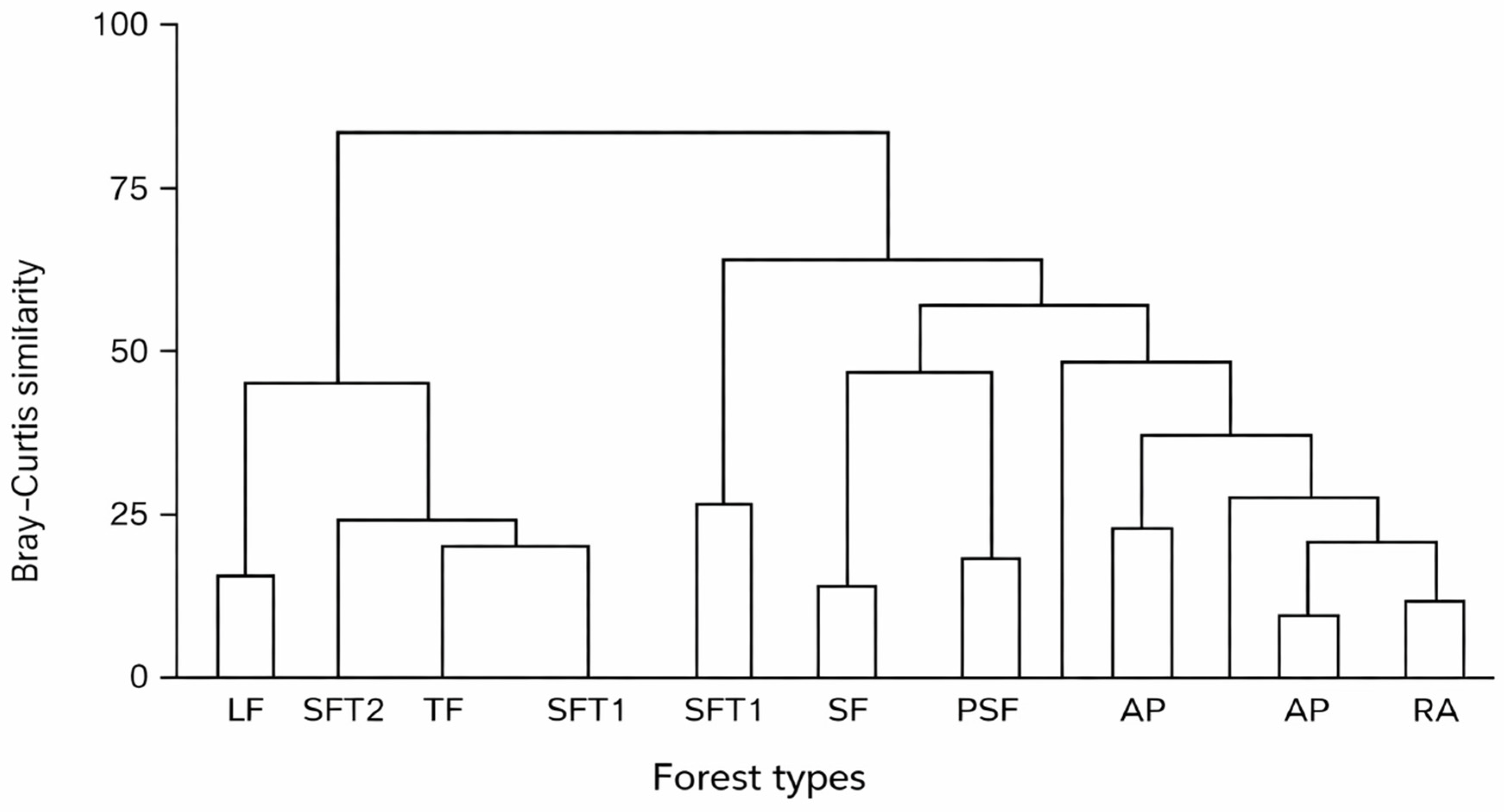
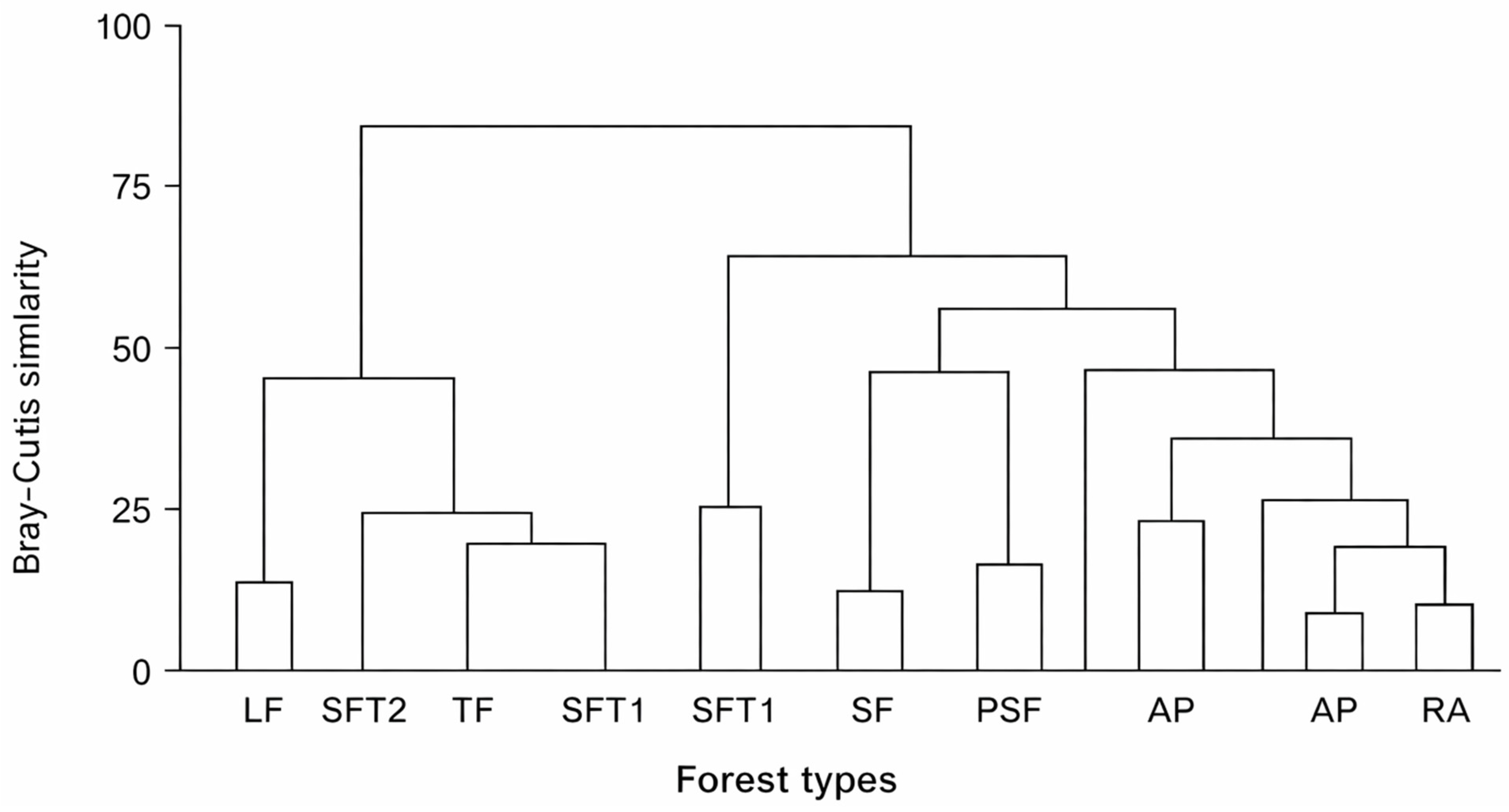
The relationship between several ecological factors and the Parashorea chinensis tree is that Syzygium tonkinensis is a large tree that typically occupies the upper canopy layer of the forest. Due to its large canopy diameter, it plays a very important ecological role in the ecosystem. Research results show that in the study area, Shorea tonkinensis has an ecological relationship with several species such as Syzygium tonkinensis Merr. & Perry, Syzygium grande Walp., Amesiodendron chinense Hu, Annamocarya sinensis J. Leroy, Dipterocarpus retusus Blume., etc., which grow together and form the main canopy layer of the forest, simultaneously influencing the microclimatic conditions of the ecosystem. The distribution of plant species across different forest types is shown in Figure 2. The dendrogram illustrates distinct clustering patterns of ecological and environmental factors, suggesting their varying influence on the distribution and regeneration of Parashorea chinensis across forest types.
The cluster analysis (Figure 3) reveals clear differences in plant community structure across forest types. These differences are associated with variations in environmental conditions such as canopy cover, soil depth, and slope. Such patterns indicate that habitat heterogeneity plays a significant role in shaping species composition and ecological interactions within the study area.
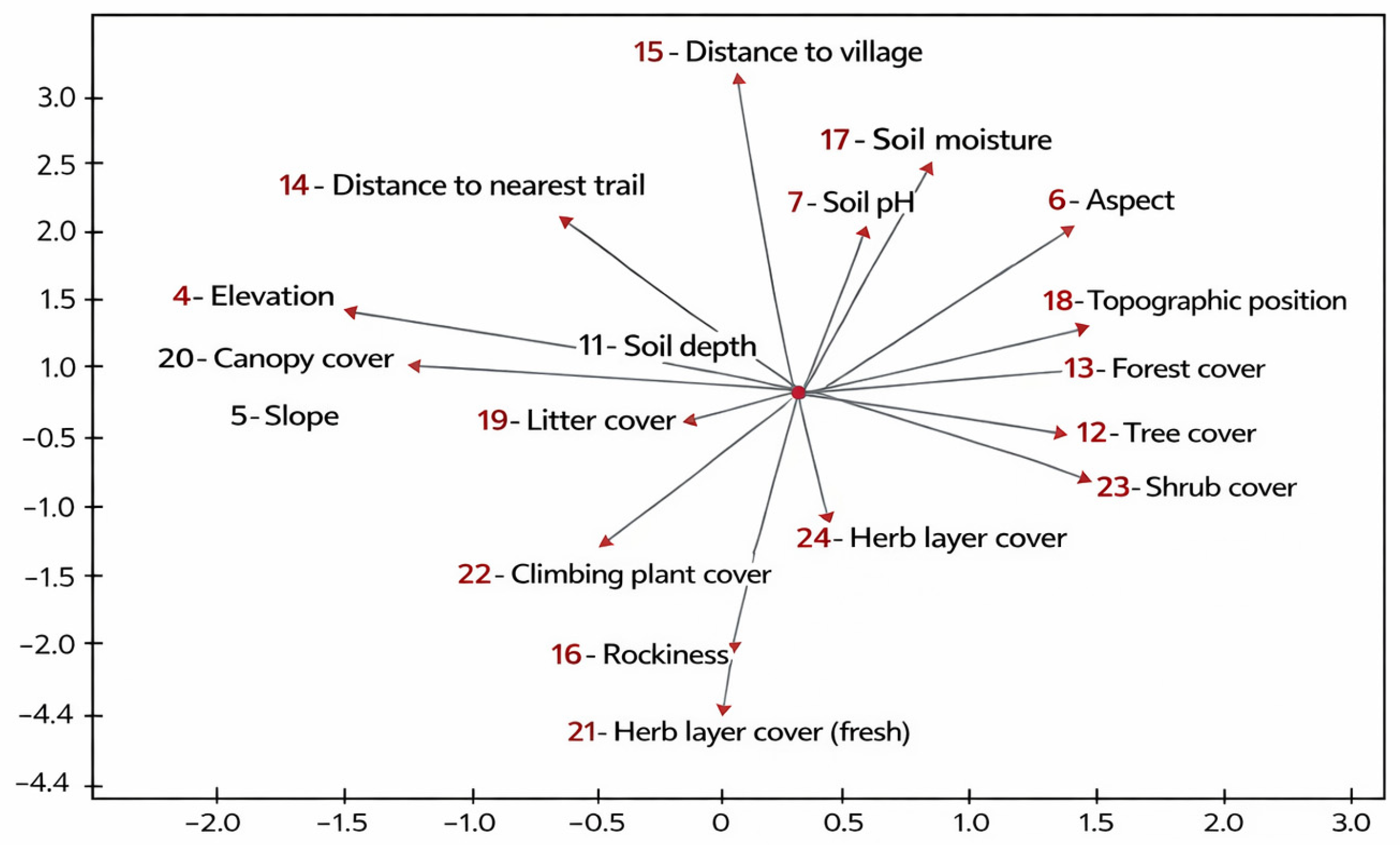
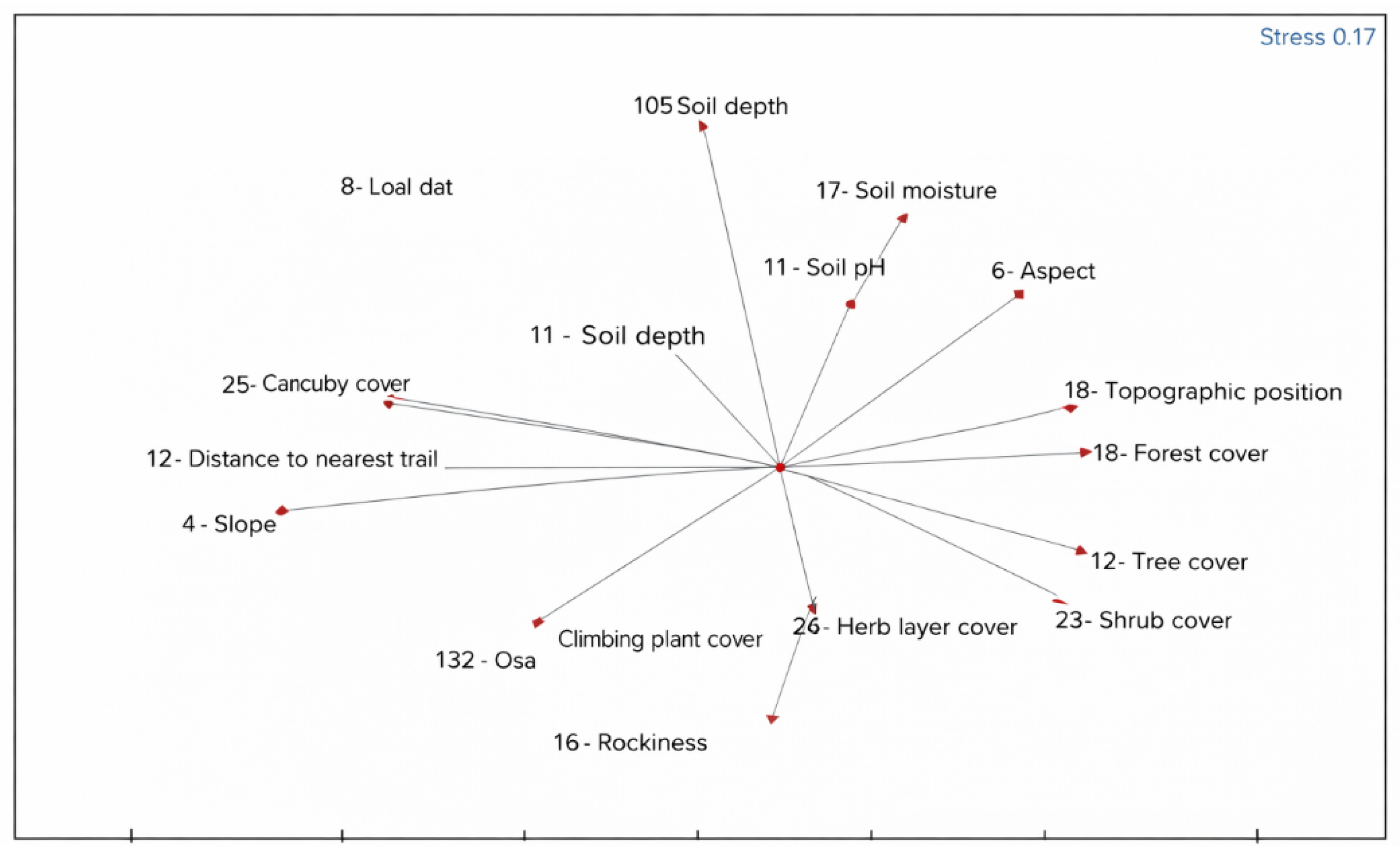
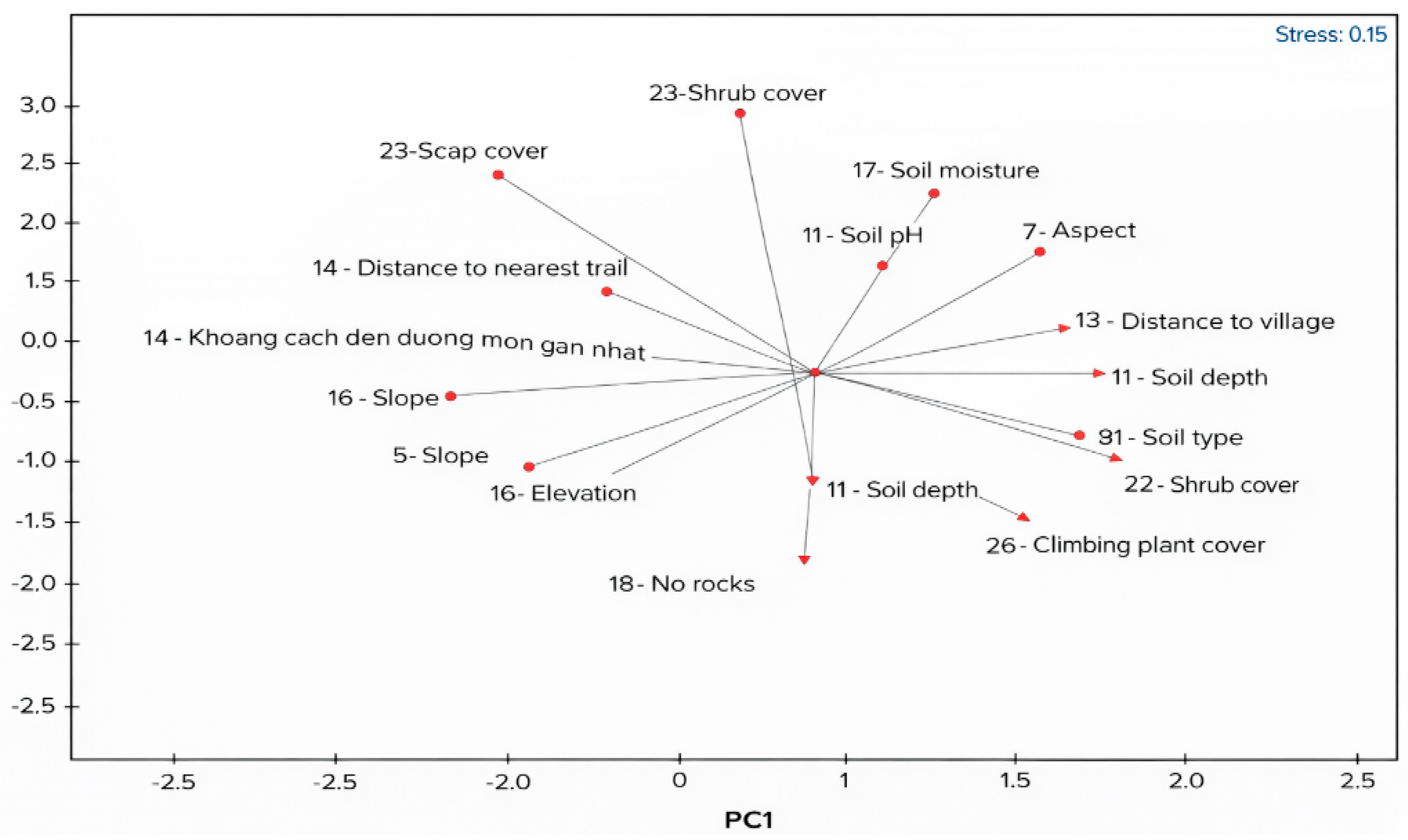
The PCA results (Figure 4) indicate that the distribution of P. chinensis is strongly associated with environmental variables such as canopy cover, soil moisture, and topographic position. Positive correlations with canopy cover and soil depth suggest that the species prefers stable forest environments with favorable growth conditions.
In contrast, negative associations with rockiness and exposed habitats indicate limited adaptability to harsh environmental conditions, particularly in limestone-dominated areas (Figure 5).
Figure 5. PCA ordination showing the relationship between Parashorea chinensis and environmental variables in Than Sa–Phuong Hoang Nature Reserve.
Diversity 18 00228 g005
These results demonstrate that environmental factors strongly influence the ecological distribution of P. chinensis across forest types. The species shows clear habitat preferences, reflecting its sensitivity to environmental variation. This highlights the importance of maintaining suitable habitat conditions to support the regeneration and long-term conservation of this endangered species.

3.7. Natural Ecological Characteristics of Curculigo orchioides Gaertn

Curculigo orchioides Gaertn is an ecologically important understory species in the study area, commonly found in shaded habitats under forest canopies. The species is associated with humid environments and plays a role in maintaining understory biodiversity. Field observations indicated that regeneration of C. orchioides is relatively slow and strongly influenced by habitat conditions, particularly soil moisture and canopy cover. The species shows higher abundance in stable forest environments with sufficient humidity, while disturbance and overexploitation may limit population recovery.
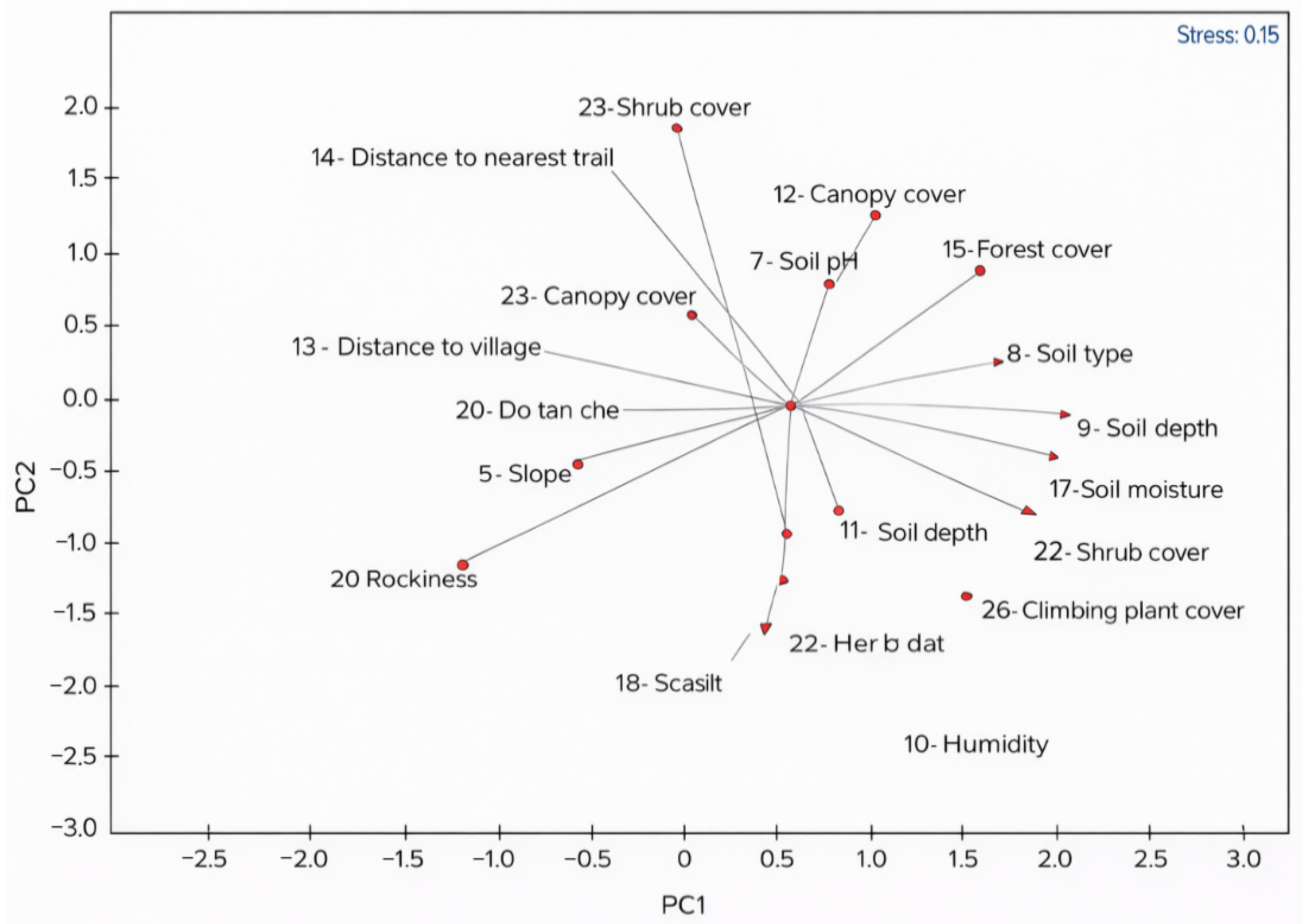
The research results on the relationship between ecological factors and the species Curculigo orchioides Gaertn are shown in Figure 6, Figure 7 and Figure 8 below.
The PCA results (Figure 7) indicate that the distribution of C. orchioides is strongly associated with environmental variables such as soil moisture, canopy cover, and soil pH. Positive correlations with soil moisture and shaded conditions suggest that the species prefers stable, humid environments.
In contrast, negative associations with rockiness and exposed habitats indicate limited adaptability to dry or disturbed conditions. These results highlight the sensitivity of C. orchioides to environmental changes and emphasize the importance of maintaining suitable understory habitats for its conservation.

3.8. Natural Ecological Characteristics of the Paphiopedilum hirsutissimum Stein Plant

Paphiopedilum hirsutissimum is an ecologically important understory species in limestone forest ecosystems, typically occurring in shaded and humid microhabitats. The species is strongly associated with stable environmental conditions under forest canopies.
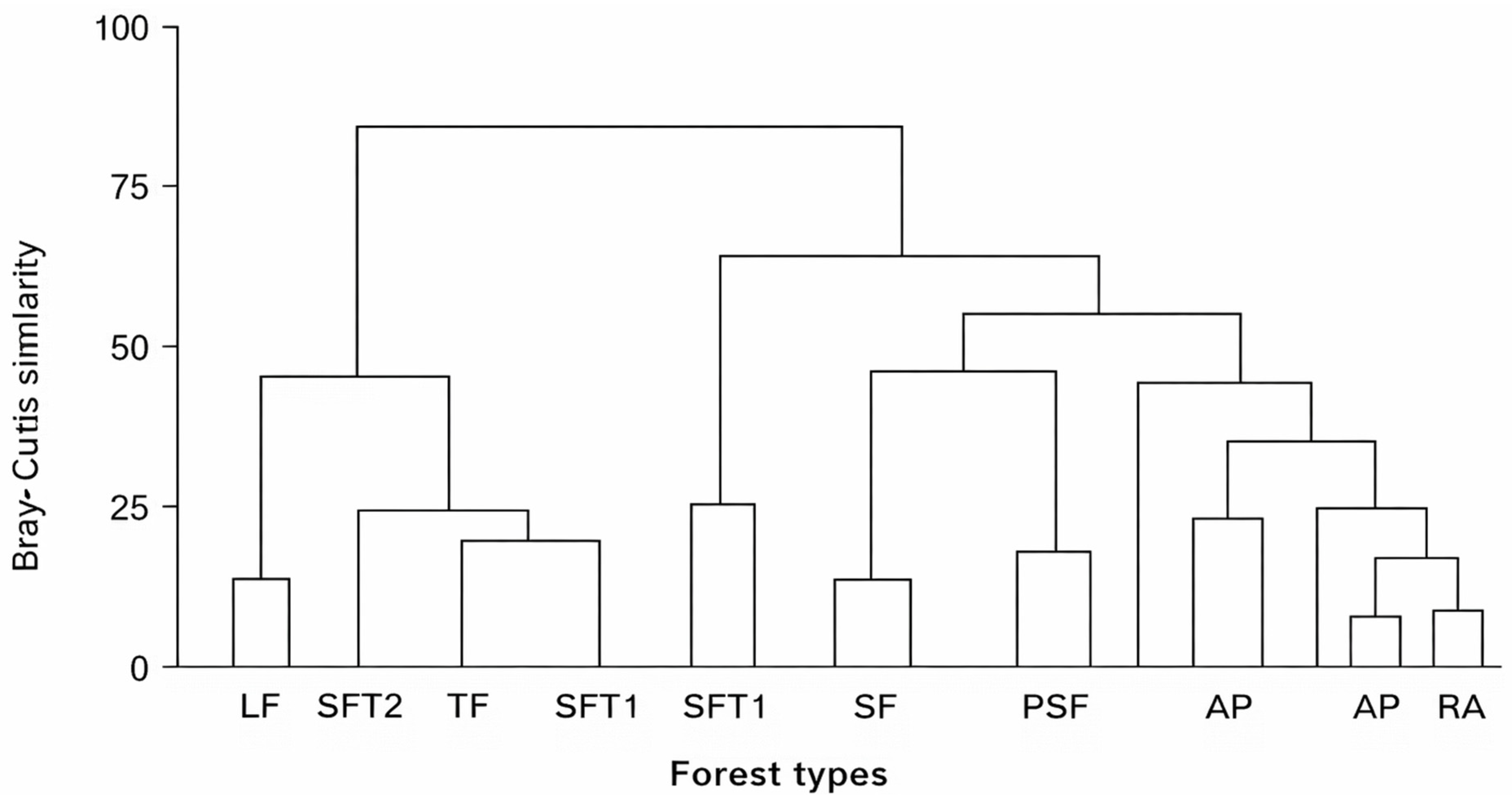
Field observations indicated that the growth and regeneration of P. hirsutissimum are highly dependent on microclimatic conditions, particularly canopy cover, humidity, and temperature. The species shows optimal development under moderate canopy cover and high air humidity, while excessive light or habitat disturbance can negatively affect its survival and reproduction (Figure 9).
Figure 9. Cluster analysis of ecological and environmental factors associated with Paphiopedilum hirsutissimum Stein, based on Bray–Curtis similarity using the group-average linkage method.
Diversity 18 00228 g009
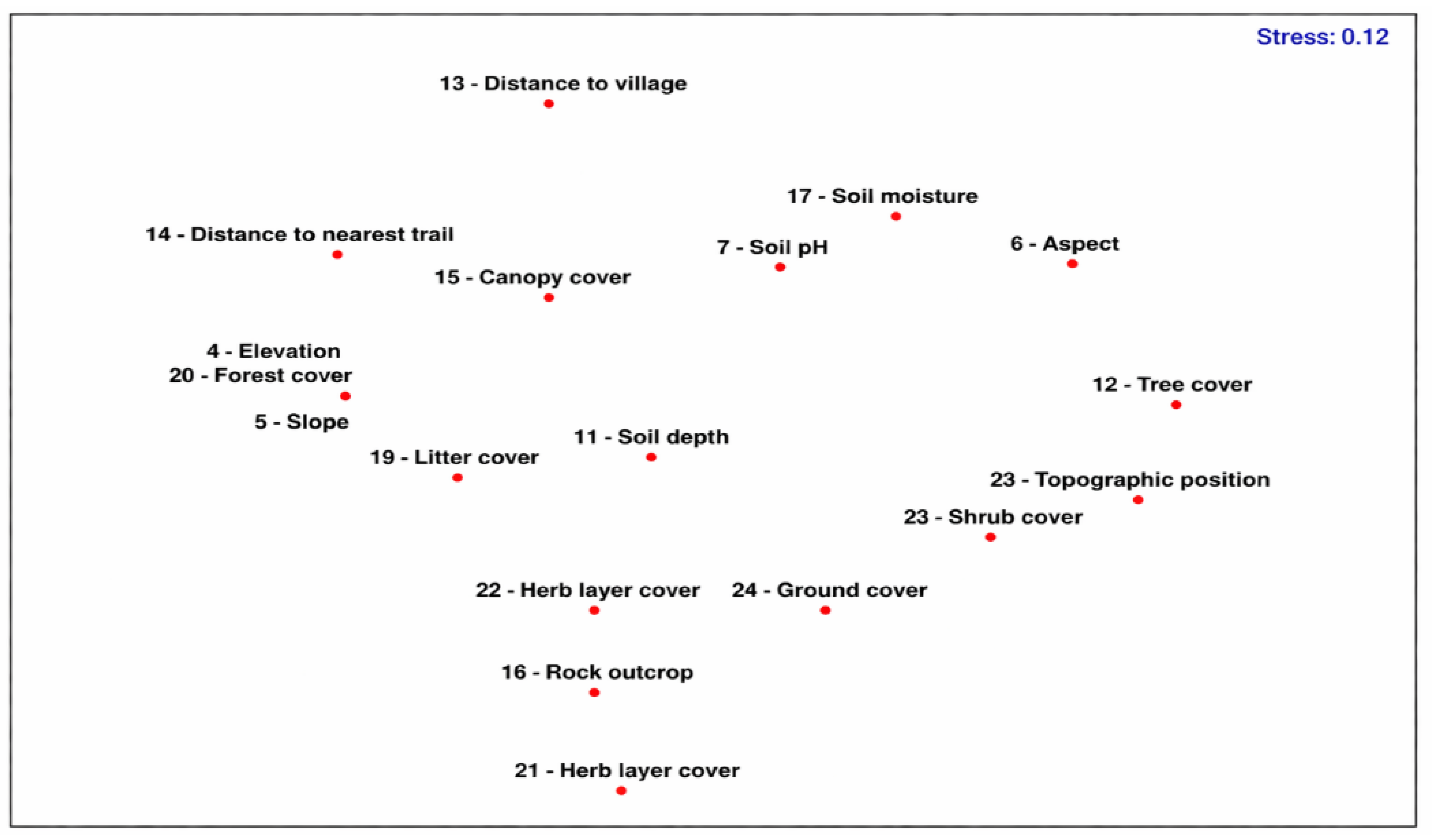
The variation in species distribution under different environmental conditions is illustrated in Figure 10 and Figure 11.
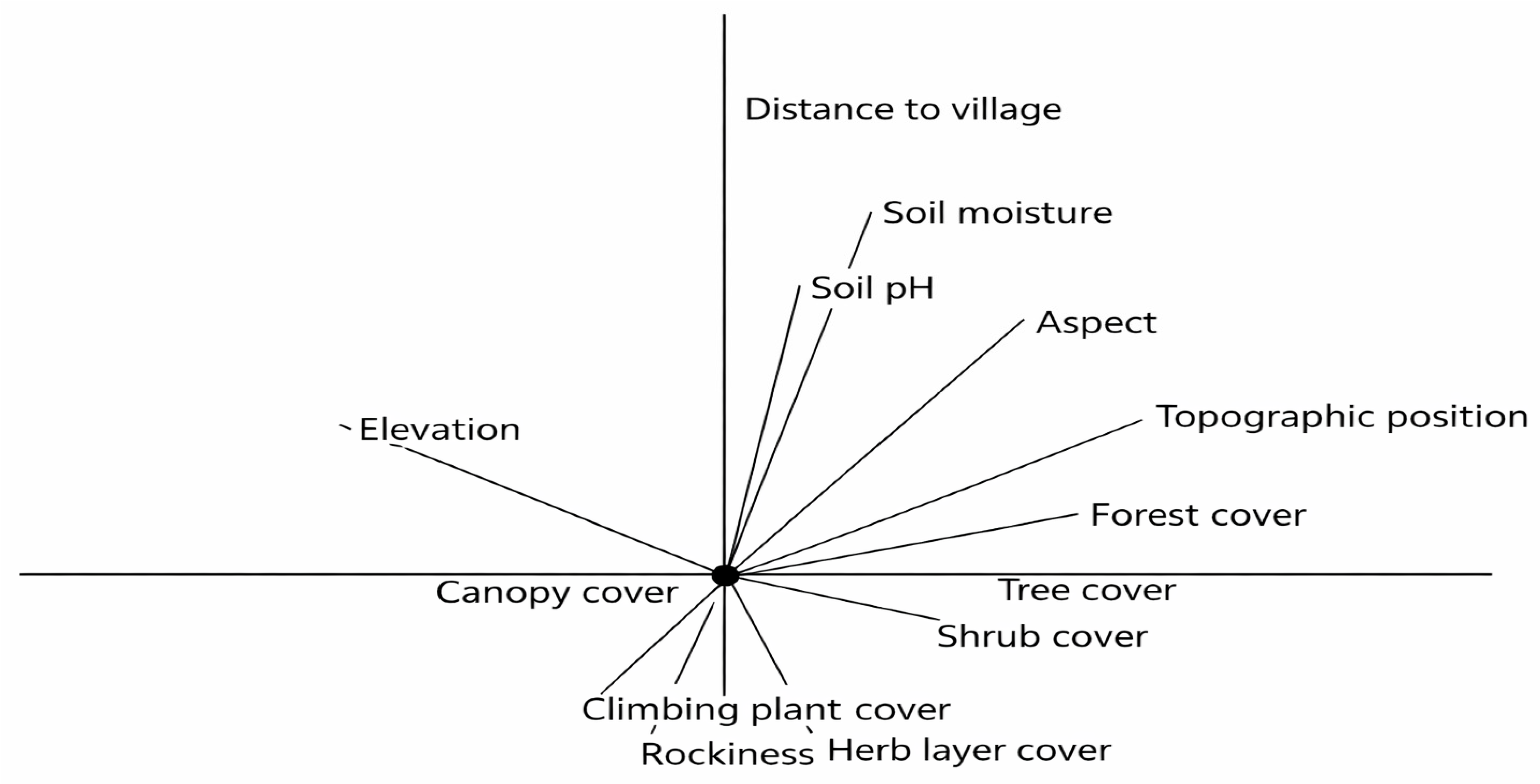
Figure 10. Relationship between ecological and environmental factors and Paphiopedilum hirsutissimum Stein in Than Sa–Phuong Hoang Nature Reserve.
Diversity 18 00228 g010
Figure 11. Relationships between species and Paphiopedilum hirsutissimum Stein in the Than Sa–Phuong Hoang Nature Reserve.
Diversity 18 00228 g011
The PCA results (Figure 9 and Figure 10) indicate that the distribution of P. hirsutissimum Stein is strongly influenced by environmental variables such as canopy cover, humidity, and soil conditions. Positive associations with canopy cover and soil moisture suggest that the species prefers stable, shaded environments with high humidity. In contrast, negative associations with exposed habitats and lower moisture conditions indicate limited tolerance to environmental stress. These findings highlight the sensitivity of P. hirsutissimum Stein to habitat disturbance and emphasize the importance of conserving suitable limestone forest habitats.
These results demonstrate that environmental factors play a critical role in shaping the distribution and regeneration of P. hirsutissimum in the study area. The species exhibits strong habitat specificity, particularly in limestone forest ecosystems with stable microclimatic conditions. This highlights the importance of protecting limestone habitats and maintaining suitable environmental conditions to ensure the long-term conservation of this endangered species.

4. Discussion

The research results show that the Than Sa–Phuong Hoang Nature Reserve has a high level of plant diversity, with the presence of many species of conservation value recorded in the Vietnamese Red Book. This result is consistent with previous studies in the limestone mountainous areas of northern Vietnam, which are considered centers of biodiversity with a high proportion of endemic and rare species [6].
However, the study also indicates that the distribution and regeneration capacity of species are uneven among forest types, clearly reflecting the dependence of plants on specific ecological conditions. Differences in regeneration capacity among forest types suggest that environmental factors such as canopy cover, soil thickness, moisture content, and topography play a decisive role in species survival and development. The results of multivariate analyses (Bray–Curtis, NMDS, and PCA) further demonstrate clear differentiation of plant communities according to habitat conditions, consistent with previous studies in tropical forest ecosystems [13,14,15]. The differences in regeneration capacity among forest types show that environmental factors such as canopy cover, soil thickness, moisture content, and topography play a decisive role in the survival and development of species. The results of multivariate analysis (Bray–Curtis, NMDS, PCA) demonstrated that the structure of plant communities showed a clear differentiation according to habitat conditions, similar to published studies on tropical forest ecology [8,13]. This indicates that conservation cannot be applied uniformly but requires strategies tailored to each type of ecosystem. For the three target species (Curculigo orchioides, Parashorea chinensis, and Paphiopedilum hirsutissimum), the results indicate a high sensitivity to environmental changes and human disturbances. In particular, natural regeneration capacity is limited in areas affected by overexploitation and land-use change. These findings are consistent with previous studies [1,2], which reported that many threatened species remain vulnerable despite occurring within protected areas. Furthermore, community research showed that local people’s awareness significantly influences the exploitation and conservation of forest resources. Although people have a certain understanding of the value of forest tree species, livelihood needs remain the main reason for overexploitation. This result is also consistent with studies on community-based conservation in Vietnam [5,14] emphasizing the role of socio-economic factors in natural resource management. From the above results, it can be seen that plant conservation in the Than Sa–Phuong Hoang Nature Reserve needs to be approached in a comprehensive manner, combining in situ and ex situ conservation, while strengthening the participation of local communities. The application of IUCN assessment criteria at the local level is also necessary to accurately determine the threat level and conservation priorities for each species [15]. These results highlight that integrating IUCN Red List criteria with local ecological data can enhance the prioritization of conservation actions and improve the effectiveness of species management strategies in the study area. Overall, the study has provided important scientific evidence on the relationship between species and the environment, as well as the regeneration status of rare plant species. This is an important basis for developing effective management and conservation solutions, contributing to the protection of biodiversity in the study area in the context of environmental change and increasing development pressures.

5. Conclusions

This study confirms that the Than Sa–Phuong Hoang Nature Reserve harbors high plant biodiversity, with 1234 recorded species. However, regeneration capacity and species distribution differ significantly among forest types and are strongly influenced by key ecological factors, including canopy cover, soil conditions, topography, and human disturbance. The three target species (Curculigo orchioides Gaertn, Parashorea chinensis, and Paphiopedilum hirsutissimum Stein) exhibit strong dependence on stable microhabitat conditions and show limited regeneration under disturbed environments, indicating high sensitivity to environmental changes and anthropogenic pressure. These findings highlight the role of environmental filtering in shaping plant communities and emphasize the importance of habitat-specific conservation strategies. Effective conservation in the study area should focus on protecting critical habitats, reducing human disturbance, and enhancing sustainable resource management to support the long-term persistence of endangered plant species.

Limitations

This study has several limitations. First, the sampling design was limited to 15 plots, which may not fully capture the spatial heterogeneity of the entire reserve. Second, the study was conducted within a single protected area, which may limit the generalization of the findings. Third, temporal variation was not considered, as data were collected during a single survey period. Future studies should expand both spatial and temporal scales to better understand long-term ecological dynamics.

Author Contributions

Conceptualization, T.T.H.D. and V.H.H. methodology, V.H.H.; investigation, C.H.N.; resources, C.H.N.; writing—original draft preparation, V.H.D.; writing—review and editing, T.T.H.D. All authors have read and agreed to the published version of the manuscript.

Funding

This research received no external funding.

Institutional Review Board Statement

Not applicable.

Data Availability Statement

The original contributions presented in this study are included in the article. Further inquiries can be directed to the corresponding author.

Acknowledgments

The authors would like to express their sincere gratitude to the management board of the Than Sa–Phuong Hoang Nature Reserve for facilitating the field investigation and data collection. We also thank the local forest rangers and residents of Nghinh Tuong, Than Sa, and Sang Moc communes for their support and valuable information during the research. This research was conducted within the framework of the project “Research on the Conservation of Some Endangered Forest Tree Species in the Than Sa–Phuong Hoang Nature Reserve, Thai Nguyen Province”. The research results are part of the academic requirements for training and completing the author’s doctoral program.

Conflicts of Interest

The authors declare no conflict of interest.

References

  1. Rodrigues, A.S.L.; Akçakaya, H.R.; Andelman, S.J.; Bakarr, M.I.; Boitani, L.; Brooks, T.M.; Chanson, J.S.; Fishpool, L.D.C.; DA Fonseca, G.A.B.; Gaston, K.J.; et al. Global gap analysis: Priority regions for expanding the global protected-area network. BioScience 2004, 54, 1092–1100. [Google Scholar] [CrossRef]
  2. Rodrigues, A.; Pilgrim, J.; Lamoreux, J.; Hoffmann, M.; Brooks, T. The value of the IUCN Red List for conservation. Trends Ecol. Evol. 2006, 21, 71–76. [Google Scholar] [CrossRef] [PubMed]
  3. IUCN. The IUCN Red List of Threatened Species. Version 2024-1. Available online: https://www.iucnredlist.org (accessed on 10 March 2026).
  4. National Assembly of Vietnam. Law on Biodiversity No. 20/2008/QH12, Dated 13 November 2008; National Assembly of Vietnam: Hanoi, Vietnam, 2008.
  5. Do, T.H.; Nguyen, C.H. Community-based forest resource use and conservation in Northern Vietnam. J. Environ. Manag. 2024. [Google Scholar]
  6. Thoa, N.T. Analysis of biodiversity indices of woody plant species in limestone forests at Than Sa–Phuong Hoang Nature Reserve, Thai Nguyen Province. J. For. Sci. Vietnam 2013, 4, 2961–2967. [Google Scholar]
  7. Martin, G.J. Ethnobotany: A Methods Manual; Chapman & Hall: London, UK, 1997. [Google Scholar]
  8. Hoft, M.; Barik, S.K.; Lykke, A.M. Quantitative Ecology and Biodiversity; Aarhus University Press: Aarhus, Denmark, 1999. [Google Scholar]
  9. Chi, V.V. Dictionary of Vietnamese Medicinal Plants; Medical Publishing House: Hanoi, Vietnam, 2021. [Google Scholar]
  10. Ly, T.D. 1900 Useful Plant Species in Vietnam; The Gioi Publishing House: Hanoi, Vietnam, 1993. [Google Scholar]
  11. Government of Vietnam. Decree No. 06/2019/ND-CP on Management of Endangered, Precious and Rare Forest Flora and Fauna; Government of Vietnam: Hanoi, Vietnam, 2019.
  12. Government of Vietnam. Decree No. 32/2006/ND-CP, Dated 30 March 2006, on Management of Endangered, Precious and Rare Forest Plants and Animals; Government of Vietnam: Hanoi, Vietnam, 2006.
  13. Clarke, K.R.; Warwick, R.M. Change in Marine Communities: An Approach to Statistical Analysis and Interpretation; PRIMER-E Ltd.: Plymouth, UK, 2001. [Google Scholar]
  14. Truong, D.D. Community awareness and participation in biodiversity conservation at Phong Nha–Ke Bang National Park, Vietnam. Biodiversitas 2021, 23, 581–592. [Google Scholar] [CrossRef]
  15. IUCN. Guidelines for Using the IUCN Red List Categories and Criteria; Version 15.1; IUCN Standards and Petitions Committee: Gland, Switzerland, 2023. [Google Scholar]
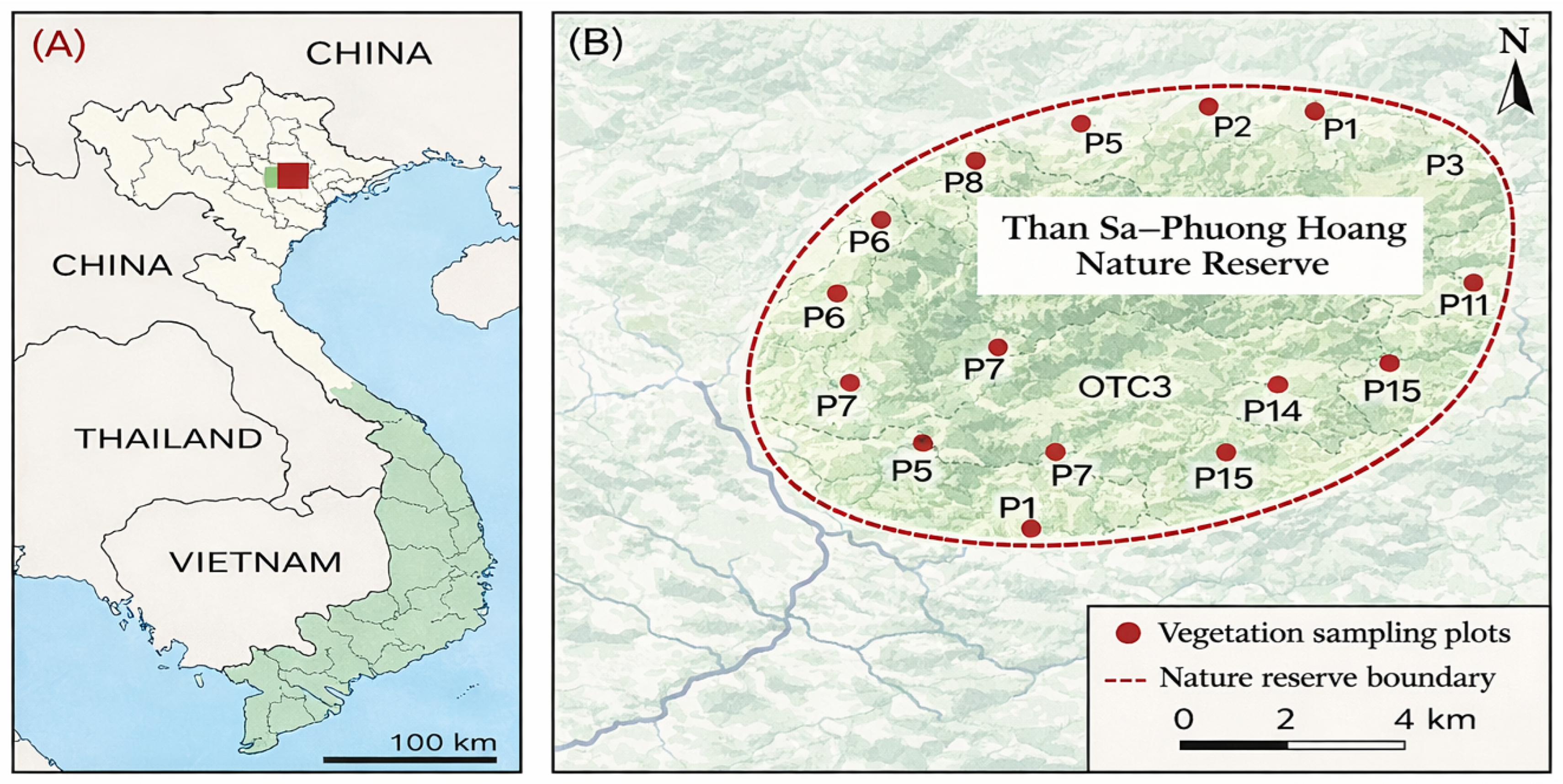
Figure 1. The location of the study area in northern Vietnam: (A) geographic location of Thai Nguyen Province; (B) 7 communes and 1 town, including Than Sa, Thuong Nung, Sang Moc, Nghinh Tuong, Vu Chan, Phu Thuong, Cuc Duong, and the former Dinh Ca town, with a total area of 18,858.9 hectares, of which 52,267.15 hectares are natural land.
Diversity 18 00228 g001
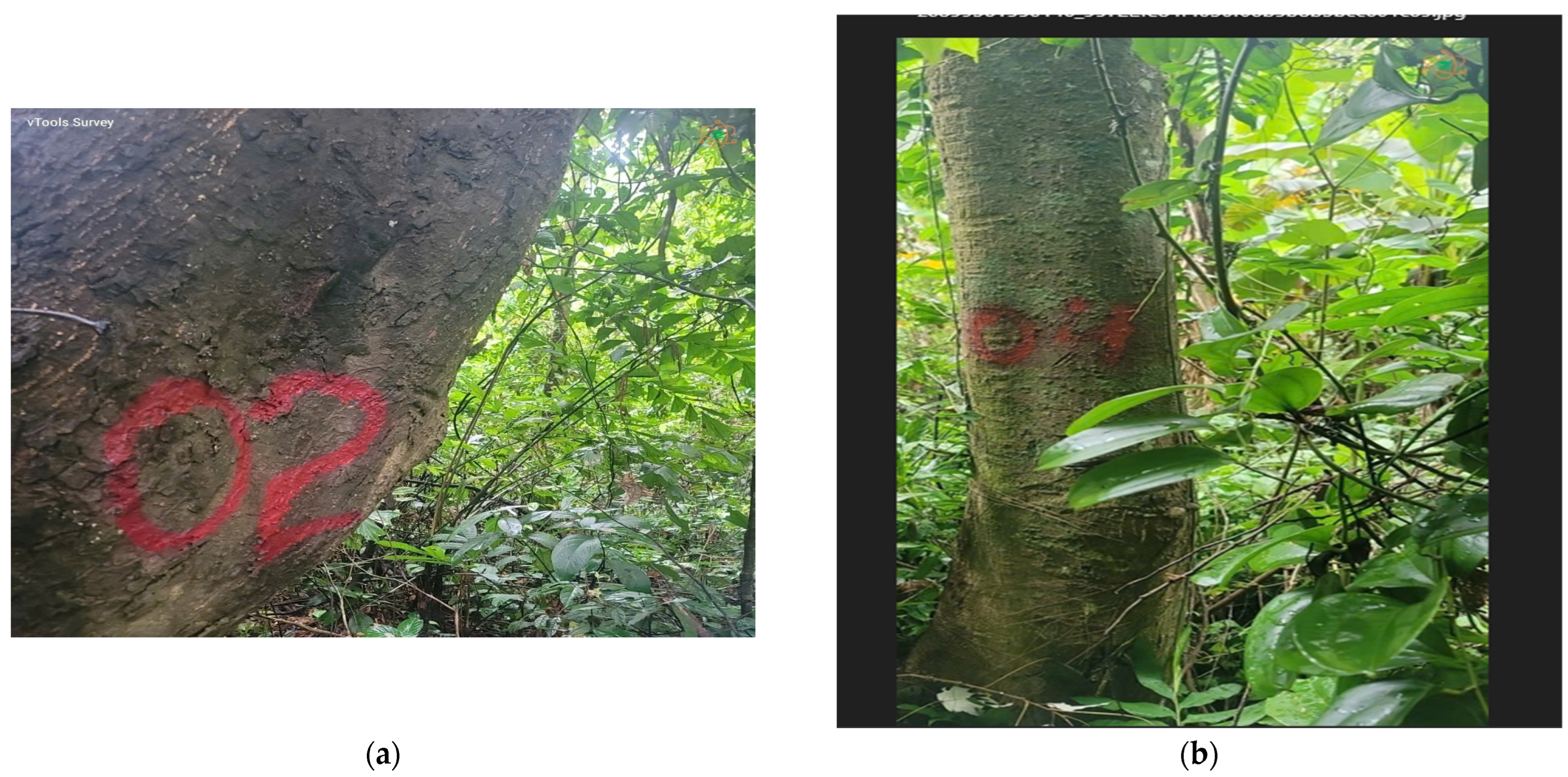
Figure 2. Field sampling and plot marking in the Than Sa–Phuong Hoang Nature Reserve: (a) marked tree within a standard plot; (b) tree marking used to identify sampling locations in the field. Photos taken during field surveys.
Diversity 18 00228 g002
Figure 3. Cluster analysis of ecological and environmental factors associated with Parashorea chinensis based on Bray–Curtis similarity using the group-average linkage method.
Diversity 18 00228 g003
Figure 4. Cluster analysis (or community structure) of plant species composition in the Than Sa–Phuong Hoang Nature Reserve.
Diversity 18 00228 g004
Figure 6. Cluster analysis of ecological and environmental factors associated with Curculigo orchioides Gaertn, based on Bray–Curtis similarity using the group-average linkage method.
Diversity 18 00228 g006
Figure 7. Relationship between ecological and environmental factors and Curculigo orchioides Gaertn in Than Sa–Phuong Hoang Nature Reserve.
Diversity 18 00228 g007
Figure 8. PCA ordination showing the relationship between Curculigo orchioides Gaertn and environmental variables in the Than Sa–Phuong Hoang Nature Reserve.
Diversity 18 00228 g008
Table 1. Plant species composition of Than Sa–Phuong Hoang Nature Reserve.
Plant ScienceNumber of FamiliesNumber of GeneraNumber of Species
1- Lycopodiophyta 235
2- Polypodiophyta 193770
3- Psilotophyta 111
4- Pinophyta 336
5- Magnoliophyta 1466161152
Total1716601234
Table 2. Families with the largest number of species in Than Sa–Phuong Hoang Nature Reserve.
STTFamilySpecies
Scientific NameNumberPercent (%)
1Araceae292.35
2Fabaceae302.43
3Lauraceae322.59
4Urticaceae342.76
5Moraceae352.84
6Asteraceae362.92
7Orchidaceae393.16
8Rubiaceae524.21
9Poaceae534.29
10Euphorbiaceae574.62
Total39732.17
Bold values indicate the total number of species and percentage. (Source: Than Sa–Phuong Hoang Nature Reserve 2024).
Table 3. List of endangered forest tree species in Than Sa–Phuong Hoang Nature Reserve according to the Vietnam Red Book.
NoPlant ScientificClass
1Actinodaphne ellipticibacca Kosterm.VU
2Aglaia spectabilis Jain & Bennet.VU
3Annamocarya sinensis J.LeroyEN
4Anoectochilus calcareus Aver.EN
5Aquilaria crassna Pierre ex Lecomte.EN
6Ardisia sylvestris Pitard.VU
7Aristolochia indica L.VU
8Asarum balansae Franch.EN
9Balanophora laxiflora HemsleyEN
10Bursera tonkinensis Guillaum.VU
11Calamus platyacanthus Warb. & Becc.VU
12Calamus poilanei ConrardEN
13Canarium tramdenum Dai. & Yakovl.VU
14Castanopsis cerebrina BarnettEN
15Castanopsis tessellata Hickel. & CamusVU
16Chukrasia tabularis A.Juss.VU
17Cinnamomum balansae H. LecomteVU
18Cycas micholitzii DyerVU
19Dipterocarpus retusus Blume.VU
20Disporopsis longifolia Craib.VU
21Drynaria bonii H.ChristVU
22Embelia parviflora Wall. ex A. DC.VU
23Excentrodendron tonkinense Chang.EN
24Goniothalamus macrocalyx BânVU
25Gymnostemma pentaphyllum Makino.EN
26Hainania trichosperma Merr.EN
27Lithocarpus bacgiangensis A. CamusVU
28Lithocarpus balansae A. CamusVU
29Lithocarpus bonnetii A.CamusVU
30Madhuca pasquieri H.J. Lam.EN
31Markhamia stipulata (Wall) SchumVU
32Melientha suavis Pierre.VU
33Michelia balansae DandyVU
34Parashorea chinensis H.WangVU
35Peliosanthes teta Andr.VU
36Vatica subglabra Merr.EN
37Xylopia pierrei HanceVU
Table 4. List of endangered forest tree species in Than Sa–Phuong Hoang Nature Reserve according to IUCN assessment.
NoPlant ScientificClass
1Cycas micholitzii DyerVU
2Dipterocarpus retusus Blume.EN
3Goniothalamus macrocalyx BânVU
4Madhuca pasquieri H.J. Lam.VU
5Parashorea chinensis H.WangEN
6Vatica subglabra Merr.EN
7Xylopia pierrei HanceVU
8Hopea chinensis (Merr.) Hand.-Mazz.CR
Table 5. List of endangered forest tree species in Than Sa–Phuong Hoang Nature Reserve according to Decree 06/2019/ND-CP.
NoPlant ScientificClass
1Cyathea chinensis Copel.IIA
2Cyathea gigantea HolttumIIA
3Cyathea contaminans CopIIA
4Drynaria bonii H.ChristIIA
5Cycas diannanensis Z.T.Guan & G.D.TaoIIA
6Cycas brachycanthaIIA
7Cycas micholitzii DyerIIA
8Excentrodendron tonkinense (A. Chevalier) Hung T. Chang & R. H. MiaoIIA
9Cinnamomum balansae H. LecomteIIA
10Garcinia fagraeoidesA.Chev.IIA
11Fibraurae recissa PierreIIA
12Fibraurae tinctoria Lour.IIA
13Stephania japonica MiersIIA
14Stephania rotunda Lour.IIA
15Calamus platyacanthus Warb. & Becc.IIA
16Calamus poilanei ConrardIIA
17Disporopsis longifolia Craib.IIA
18Anoectochilus calcareus Aver.IA
19Anthogonium gracile Wall. & Lindl.IIA
20Arundina graminifolia Hochr.IIA
21Bulbophyllum sigaldiae GuillaumIIA
22Bulbophyllum simondii GagnepIIA
23Bulbophyllum stenobulbon Parish & Reichb. FIIA
24Calanthe clavata LindlIIA
25Calanthe densiflora LindlIIA
26Calanthe herbacea Lindl.IIA
27Calanthe triplicata AmesIIA
28Cherirostylis spathulata J.J. SmithIIA
29Corymborkis veratrifolia BlumeIIA
30Dendrobium brymerianum Rchb.f.IIA
31Dendrobium chlorostylum Gagnep.IIA
32Dendrobium chryseum Rolfe.IIA
33Dendrobium devonianum Paxt.IIA
34Dendrobium fimbriatum Hook. f.IIA
35Dendrobium lindleyi Steud.IIA
36Didymoplexiopsis khiriwongensis Seidenf.IIA
37Epipogium roseum (D. Don) Lind.IIA
38Gastrochilus yunnanensis Schltr.IIA
39Goodyera fumata ThwaitesIIA
40Goodyera procera Hook.IIA
41Habenaria poilanei Gagnep.IIA
42Liparis cordifolia Hoook.f.IIA
43Liparis penduliflora SzlachIIA
44Liparis petelotii GagnepIIA
45Liparis petiolata Hunt & SummIIA
46Liparis piriformis SzlachIIA
47Ludisia discolor (Ker Gawl.) A.Rich.IIA
48Nervilia fordii Schltr.IIA
49Oberonia emarginata King & Pantl.IIA
50Oberonia ensiformis Lindl.IIA
51Paphiopedilum henryanum BraemIIA
52Paphiopedilum hirsutissimum SteinIIA
53Spiranthes sinensis AmesIIA
54Vrydagzynea albida BlumeIIA
55Zeuxine abbreviata Hook.f.IIA
56Zeuxine nervosa Benth. ex C.B.Clarke.IIA
Disclaimer/Publisher’s Note: The statements, opinions and data contained in all publications are solely those of the individual author(s) and contributor(s) and not of MDPI and/or the editor(s). MDPI and/or the editor(s) disclaim responsibility for any injury to people or property resulting from any ideas, methods, instructions or products referred to in the content.