Article

Vascular Plant Diversity and Distribution Patterns in Kazakhstan

by
Ainur Kairatovna Shaimoldina
1,2,3,
Bektemir B. Osmonali
4,
Yixin Zhou
1,2,3,
Hafiz Muhammad Wariss
1,2,
Suliya Ma
1,2,5,* and
Wenjun Li
1,2,3,*
1
State Key Laboratory of Ecological Safety and Sustainable Development in Arid Lands, Xinjiang Institute of Ecology and Geography, Chinese Academy of Sciences, Urumqi 830011, China
2
China-Tajikistan Belt and Road Joint Laboratory on Biodiversity Conservation and Sustainable Use, Chinese Academy of Sciences, Urumqi 830011, China
3
University of Chinese Academy of Sciences, Beijing 101408, China
4
Institute of Botany and Phytointroduction, Almaty 050040, Kazakhstan
5
School of Architecture, Inner Mongolia University of Technology, No.49 Ai Min Road, Hohhot 010051, China
*
Authors to whom correspondence should be addressed.
Diversity 2026, 18(4), 213; https://doi.org/10.3390/d18040213
Submission received: 10 March 2026 / Revised: 1 April 2026 / Accepted: 4 April 2026 / Published: 6 April 2026
(This article belongs to the Section Plant Diversity)

Abstract

Kazakhstan harbors the richest flora in Central Asia. However, its current plant diversity faces significant challenges. We present an updated checklist of vascular plants for Kazakhstan, comprising 6035 taxa from 134 families and 1016 genera. This includes 485 endemic taxa (8.0% of the flora) from 38 families and 147 genera, and 359 threatened taxa (6.0%) from 66 families and 203 genera. Among them, the genera with the most endangered species are Tulipa, Astragalus, and Allium. Based on the latest available data, we describe and analyze the diversity and distribution of vascular plants at a phytogeographic regional scale of 29 regions and 7 subregions. Our analyses specifically quantify patterns of species richness, phylogenetic diversity, and the spatial distribution of both threatened and endemic species. Furthermore, floristic similarity analysis revealed clear patterns of species turnover: high similarity between adjacent mountain regions and low similarity between mountains and arid western regions. Analysis revealed five key biodiversity hotspots, including the Karatau Mountains and Western Tien Shan, which host high concentrations of threatened species yet have limited protected area coverage. Our findings underscore the need to align national and international conservation assessments, expand protected area networks, and enhance cross-border collaboration. These results provide important guidance for the conservation and sustainable management of plant diversity in Kazakhstan.

1. Introduction

Central Asia is a center of temperate plant diversity, with approximately 9643 vascular plant species, characterized by remarkably high endemism (35.4%), underscoring its uniqueness and global conservation significance [1,2]. Kazakhstan, situated at the biogeographic crossroads of Europe and Asia, occupies a key position within the mountains of Central Asian biodiversity hotspots [3,4]. It is the largest country in Central Asia and possesses the richest vascular flora. This richness stems from high habitat heterogeneity, creating distinct ecological transitions between the cold-temperate and temperate zones of Northern Eurasia and the warmer Irano-Turanian region, which encompasses southern Kazakhstan and is influenced by a Mediterranean climate. This combination of sharply contrasting climatic zones and vast landscapes results in the exceptional diversity of the country’s vascular plants [2,5]. Given its exceptional biological wealth, plants in Kazakhstan are of enormous ecological, economic, and cultural importance, serving as critical components of ecosystems, sources of traditional medicine, livestock fodder, and indicators of environmental health. Therefore, conserving this botanical heritage is vital to upholding the country’s biodiversity, ecosystem services, and natural heritage.
Historically, floristic investigations began in the 18th century, with Alexander von Bunge’s 1851 publication Contributions to the Knowledge of the Flora Native to Russia and the Steppes of Central Asia [2,6], which established a foundation for Central Asian botanical exploration. Complementary regional syntheses, such as “Conspectus Florae Asiae Mediae” (1968–1993), further expanded knowledge of the Central Asian flora [7,8,9,10,11,12,13,14,15]. The latest contribution (volume XI), published by Khassanov in 2015 [16], comprises 9341 vascular plant species, and was later updated to 9643 species by Li and Tojibaev [1].
At the national level, the Soviet-era Flora of Kazakhstan, published as a ten-volume series between 1956 and 1966, provided a comprehensive catalog of the country’s vascular plant species, comprising 5631 taxa, and continues to serve as an invaluable baseline for modern research [17,18,19,20,21,22,23,24,25]. Following Kazakhstan’s independence in 1991, a new flora project was initiated, resulting in the publication of the Flora of Kazakhstan [26,27] and notably, the first national vascular plant checklist—Checklist of Vascular Plants in Kazakhstan—published in 1999 by Abdulina, comprising 5658 taxa [28]. Most recently, Ma et al. (2024) [2] further updated this number to 5695 species. Knowledge of vascular plants in Kazakhstan has continued to expand since the publication of the major floras and checklists [5,29,30]. In recent decades, numerous new species, new national records, and updated distribution data have been published [31,32,33,34], reflecting the increase in field research and growing taxonomic attention to the flora of Kazakhstan. Concurrently, advances in phylogenetic systematics have led to substantial taxonomic changes across many families, genera, and species, rendering some aspects of previous treatments obsolete. Given that the latest checklist was published about 26 years ago, [28] it is no longer fully reflects modern taxonomic concepts and international standards. Therefore, an updated, detailed checklist is urgently needed as a foundational dataset for diversity pattern analysis and conservation prioritization across Kazakhstan, incorporating recent discoveries and contemporary phylogenetic approaches.
In parallel with floristic documentation, conservation efforts have been advanced through the establishment of National Red Data Books (NRL) [35,36]. The most recent edition, published in 2014, lists 370 threatened species (359 are considered valid in this study), serving as a critical tool for identifying endangered taxa and informing conservation policies. These assessments underscore both the urgency of protecting threatened species and the broader socio-economic value of Kazakhstan’s flora [36]. While the NRL provides essential insights at the country level, a comprehensive understanding of conservation priorities also requires alignment with global assessment frameworks, especially the IUCN Red List, which is the most widely recognized framework for documenting and assessing extinctions at the global level [37,38,39]. However, dissimilarities have been noted between national and IUCN assessments, as confirmed by comparative studies of regional Red Lists [40,41]. Consequently, despite this extraordinary diversity of Kazakhstan’s flora, inconsistencies between national and global assessment frameworks persist, and reliable information on the distribution patterns and geographic hotspots of threatened species remains lacking.
The aim of this study is to present updated and more comprehensive information on the vascular plant diversity in Kazakhstan. We provide a revised national checklist, considering the recent taxonomic composition with a focus on endemic and threatened species. Utilizing compiled distributional data, we model large-scale spatial patterns in species richness, endemism, and threatened taxa and identify key hotspot areas of threatened plant species. Together, these analyses comprise an enhanced framework on the flora of Kazakhstan for better-informed plant diversity conservation.

2. Methods

2.1. Study Area

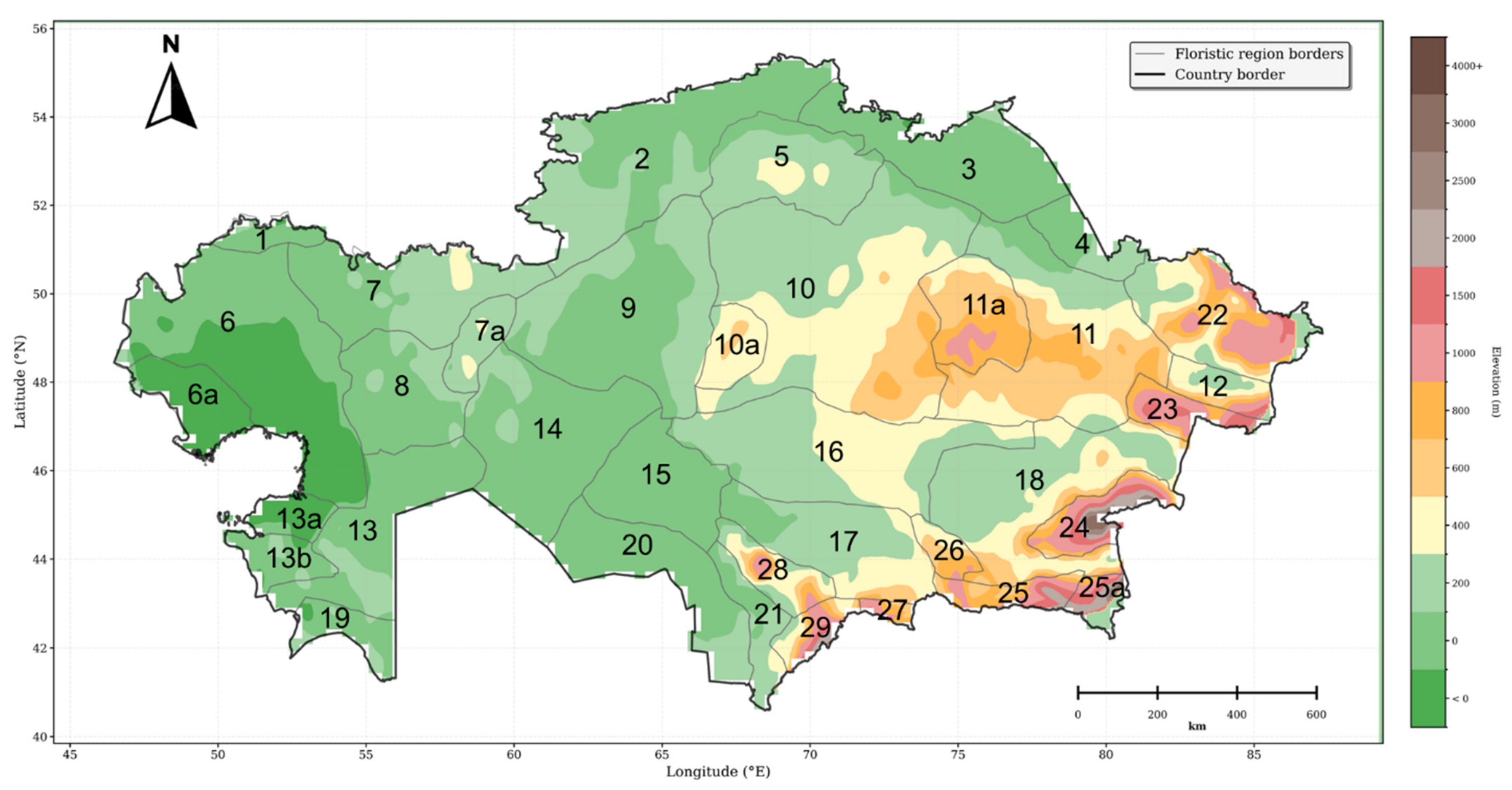
This study focuses on Kazakhstan (40°34′–55°26′ N; 46°29′–87°18′ E), a vast, landlocked nation in central Eurasia, occupying approximately 2.72 million square kilometers, and 29 phytogeographical regions (1–29) and 7 subregions (6a, 7a, 10a, 11a, 13a, 13b, 25a) (Figure 1). The country’s extensive territory, characterized by a maximum east–west extent of around 3000 km and a north–south width of about 1700 km, encompasses a wide range of biomes [17,42]. The landscape is dominated by desert (44%) and semi-desert (14%), with significant areas of steppes (26%) and forests (5.5%). The climate is sharply continental, with significant seasonal and diurnal temperature fluctuations [43]. Kazakhstan shares borders with Russia to the north and northwest, China to the east, Kyrgyzstan and Uzbekistan to the south, and Turkmenistan to the southwest, positioning it as a critical biogeographical region [44].

2.2. Species Data Compilation

2.2.1. Data Sources: Checklist and Distribution Data

Species and distribution data were compiled from multiple authoritative sources to ensure taxonomic accuracy and spatial reliability. Primary sources included: (1) the Flora of Kazakhstan [17,18,19,20,21,22,23,24,25]; (2) the Checklist of Vascular Plants of Kazakhstan [28]; (3) the latest checklist of Central Asia [1]; (4) species from herbaria (Herbarium of the Institute of Botany and Phytointroduction (AA), the Herbarium of M. Utemisov Western Kazakhstanian State University (PPIU), the International Phytochemistry Research and Production Institute (KG), the Kostanay State Pedagogical Institute (KSPI), and the S. Amanjolov East-Kazakhstan State University (UKSPI)); (5) the Red Book of Kazakhstan [36] (6) species taxonomic revisions and distributions [10,11,13,15,45,46,47,48,49]; (7) recently published books and articles [29,34,50,51,52,53,54,55,56,57,58,59,60,61,62,63,64,65,66,67,68,69,70,71,72,73,74,75,76,77,78,79,80,81,82,83,84,85,86,87,88,89,90,91,92,93,94,95,96] and new species that were found in the International Plant Name Index (IPNI) [97]; (8) georeferenced specimen records from the Global Biodiversity Information Facility [98]; and (9) spatial data on threatened species distributions published by the IUCN Red List [99]. Taxonomic nomenclature was standardized using the Plants of the World Online [100] and The World Checklist of Vascular Plants (WCVP) [101]. The taxonomic treatments for all families and genera were updated based on contemporary systematic studies, incorporating newly described species and nomenclatural changes. The systematic orders and circumscription of families follow the APG IV classification system for angiosperms [102], the PPG I system for lycophytes and ferns [103], and the gymnosperm classification proposed by Christenhusz et al. [104].

2.2.2. Analytical Method

Species richness and phylogenetic diversity indices were calculated and analyzed in R 4.3.1 using the V. PhyloMaker2 and picante packages [105,106].
GIS-based spatial analysis was conducted using ArcGIS 10.8 to map the distribution patterns of species richness, phylogenetic diversity, and endemic and threatened species richness at the phytogeographic region scale, and to evaluate the alignment between threatened plant diversity and the existing protected area network in Kazakhstan.
The floristic similarity among the regions of Kazakhstan was evaluated using the Sørensen similarity index based on species presence–absence data. This index measures the degree of similarity between species assemblages by comparing the number of shared species relative to the total number of species recorded in two regions. The index ranges from 0, indicating no shared species, to 1, indicating identical species composition. A similarity matrix was generated for all floristic regions of Kazakhstan to examine patterns of species overlap across the country.

2.2.3. Results Visualization

Spatial results were displayed in ArcGIS using species richness maps and overlay analyses, illustrating the species richness of threatened and endemic vascular plants across phytogeographical regions and the degree of overlap between high-diversity areas and current protected areas. In addition, beta diversity patterns based on the Sørensen similarity index were visualized using the Matplotlib v. 3.10.1 library in Python v. 3.13.12.

3. Results

3.1. Taxonomic Composition of Vascular Plants

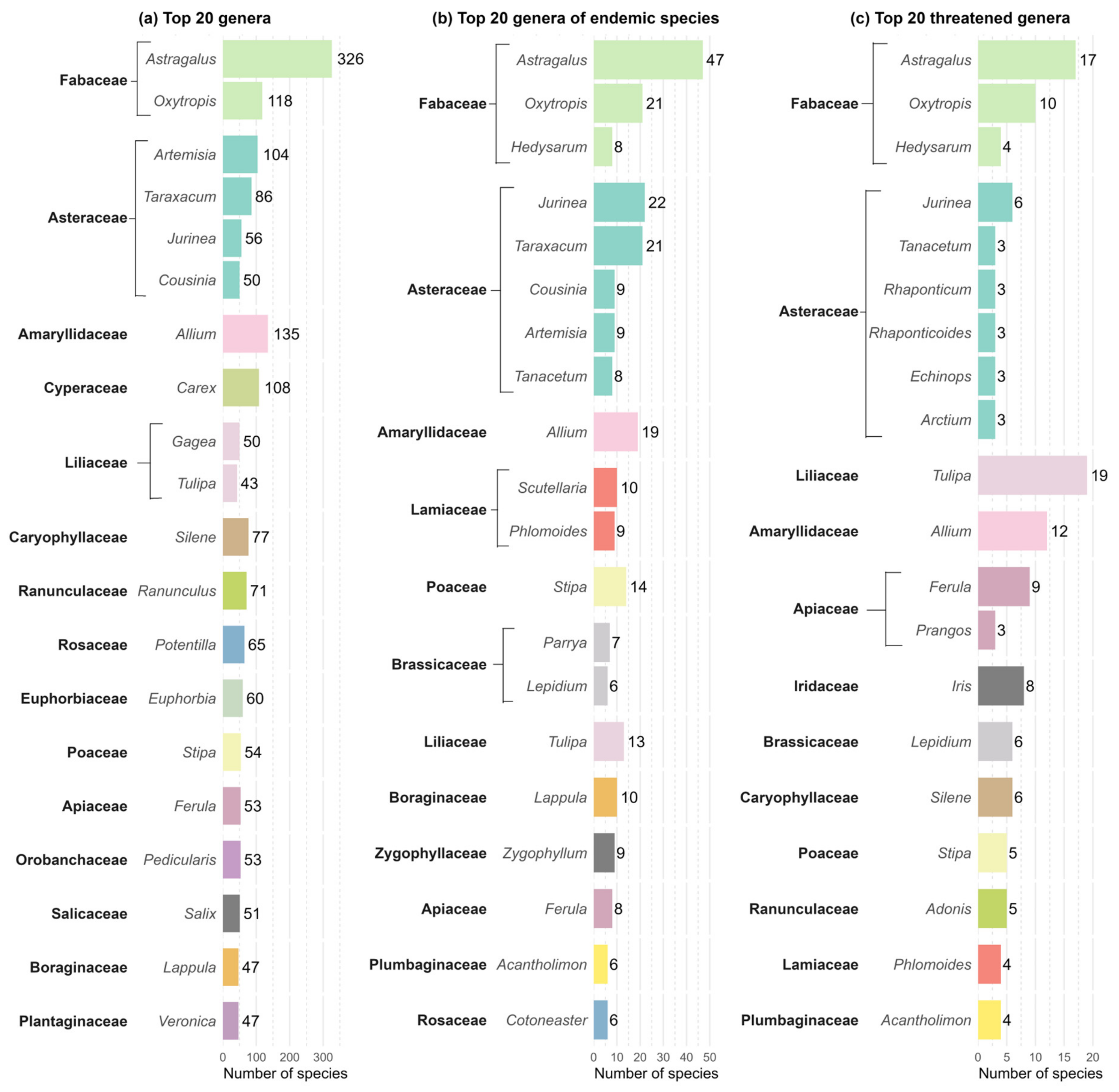
After a comprehensive synthesis of all available resources, our results revealed that the vascular flora of Kazakhstan comprises 6035 taxa distributed across 1016 genera and 134 families (see Supplementary Material S1). The species numbers have been compiled from published literature and classified. This diverse collection includes 117 angiosperm families, 13 fern families, 3 gymnosperm families, and 1 lycopodiophyte family. At the family level, the top ten families with the richest species are Asteraceae, Fabaceae, Poaceae, Brassicaceae, Amaranthaceae, Lamiaceae, Apiaceae, Rosaceae, Caryophyllaceae, and Ranunculaceae. The ten largest genera in terms of species number are Astragalus L., Allium L., Oxytropis DC., Carex L., Artemisia L., Taraxacum F.H.Wigg., Silene L., Ranunculus L., Potentilla L., Euphorbia L. (Figure 2a).

3.2. Endemic Species in Kazakhstan

In this study, we focused exclusively on strictly endemic species—those occurring only within the territory of Kazakhstan—and did not include sub-endemic taxa (species whose distribution extends beyond Kazakhstan but remains relatively limited in adjacent areas). Of the 6035 vascular plant taxa documented, 485 were assessed as endemic species, representing 8.0% of the total vascular flora of Kazakhstan. These endemic species, all belonging to angiosperms, are distributed across 38 families and 147 genera. The five families with the highest number of endemic species are Asteraceae, Fabaceae, Lamiaceae, Brassicaceae, and Apiaceae, which together account for 58.7% of all endemic species. At the generic level, Astragalus, Jurinea, Taraxacum, Oxytropis, and Allium are the five genera with the most endemic species, comprising 26.8% of the total endemic flora (Figure 2b). The families and genera with the highest numbers of endemic species are largely consistent with those that dominate the overall flora.

3.3. Threatened Species in Kazakhstan

The threatened vascular flora of Kazakhstan, according to National Red List (2014 edition), consists of 359 taxa belonging to 66 families and 203 genera, representing 6.0% of the total vascular flora. This group includes 61 families of angiosperms, 2 families of ferns, 2 families of gymnosperms, and 1 family of lycophytes. The five families with the highest number of threatened species are Asteraceae, Fabaceae, Apiaceae, Liliaceae, and Brassicaceae, which collectively contain 45% of all threatened species. The top 5 genera with the highest number of threatened species are Tulipa, Astragalus, Allium, Ferula, and Oxytropis, making up 19% of the total threatened flora (Figure 2c). Under the updated taxonomic classification, 37 taxa are classified as Critically Endangered (CR), 259 as Endangered (EN), and 63 as Vulnerable (VU). However, according to the IUCN (June 2025) classification of Kazakhstan’s vascular flora, only 20 taxa have been assessed as threatened, including 6 species categorized as Critically Endangered (CR), 8 as Endangered (EN), and 6 as Vulnerable (VU). In addition, 339 species are classified as Least Concern (LC), 14 as Near Threatened (NT), and 30 as Data Deficient (DD).

3.4. Distribution Patterns of Vascular Species

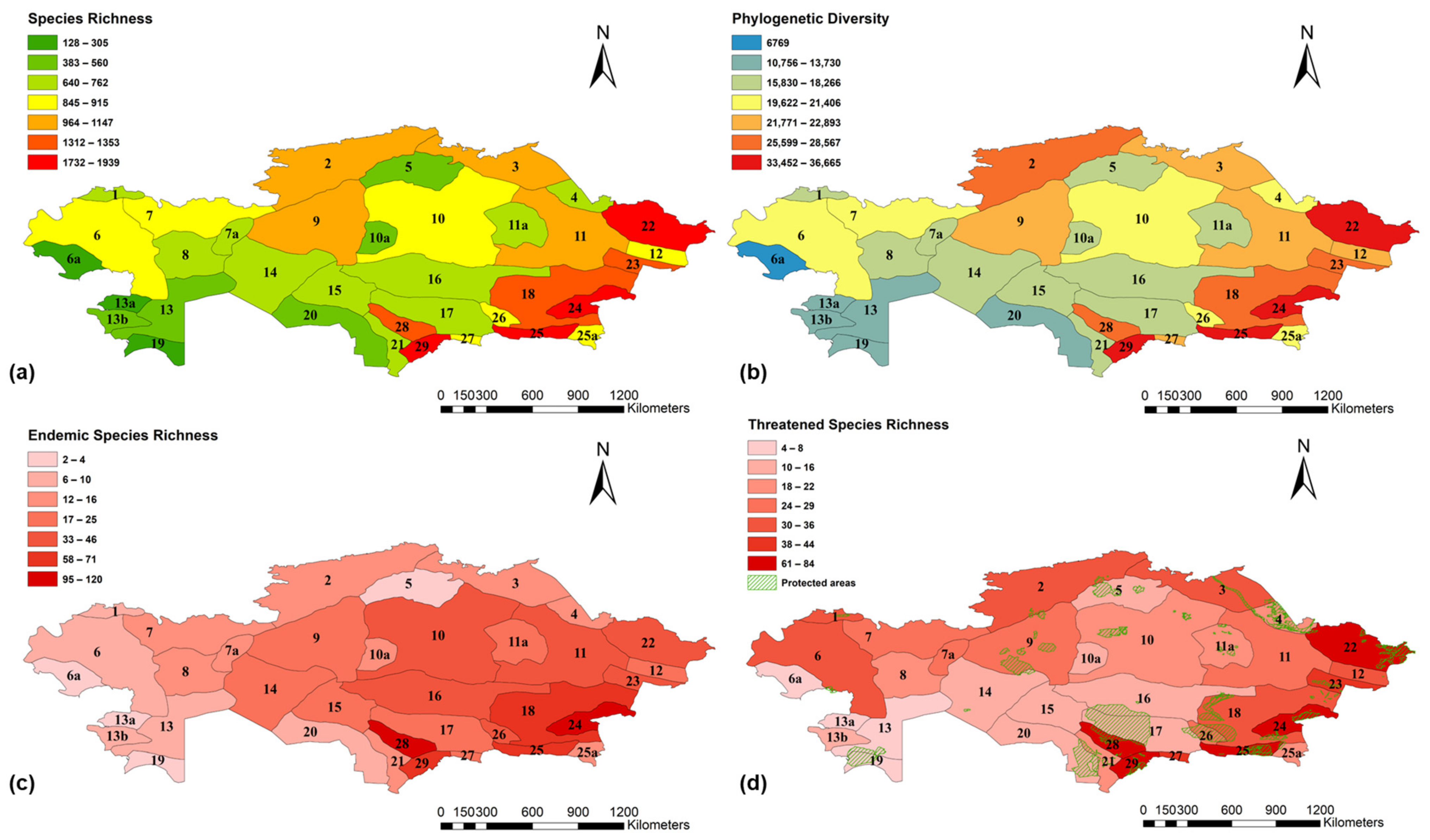
The analysis of vascular plant diversity across 29 phytogeographical regions and 7 subregions revealed clear differences in species richness (Figure 3a) and Faith’s phylogenetic diversity (Figure 3b). We successfully compiled regional occurrence data for 5712 of the 6035 vascular plant taxa included in the national flora, allowing us to assess their spatial representation across Kazakhstan (approximately 5.4% of the total flora not included). Species richness exhibited a distinct geographical gradient, with the highest values concentrated in the southern and southeastern mountain systems. The Dzungarian Alatau showed the greatest species richness (1939 species), followed by the Western Tian Shan (1740 species), Trans-Ili Kungey Alatau (1739 species), and Altai (1732 species), highlighting these regions as primary biodiversity centers. Moderate richness occurred in Karatau (1353 species), Tarbagatai (1313 species), and Balkhash-Alakol (1312 species), reflecting their transitional position between mountain and steppe zones. In contrast, central, northern, and western regions such as Tobol-Ishim (1147 species), Turgay (970 species), and Irtysh (964 species) displayed lower but still notable diversity. The Caspian, Aktobe, and Semipalatinsk regions represented mid-range richness areas, while the arid western deserts—Betpak-Dala, Moiynkum, Aral, and Kyzylorda—had reduced values. The lowest richness was observed in the Mangyshlak, Southern Ustyrt, Buzachi, and Bukeev regions, corresponding to the most arid landscapes.
Patterns of Faith’s phylogenetic diversity (PD) closely mirrored those of species richness, with the highest PD observed in the Dzungarian Alatau (36665.07), Altai (35733.59), Trans-Ili Kungey Alatau (33452.1), and Western Tian Shan (33561.59). These regions represent key centers of phylogenetic diversity due to their complex topography and climatic heterogeneity. Moderately high PD values were recorded in Karatau (28567.49), Tarbagatai (27873.85), and Balkhash-Alakol (26163.75). Northern regions, such as Tobol-Ishim (25598.73) and Irtysh (22893.49), also exhibited relatively elevated diversity. Intermediate PD values characterized Kyrgyz Alatau, Zaysan, and Eastern Upland, whereas the lowest values occurred in the western plateaus and deserts, particularly Southern Ustyrt (11109.13), Buzachi (10756.2), and Bukeev (6768.893).
Endemism showed a similar spatial pattern, with the highest concentration in the southern and southeastern mountains (Figure 3c). Karatau had the most endemic species (120 taxa), followed by Dzungarian Alatau (95 taxa), Western Tian Shan (70 taxa), and Trans-Ili Kungey Alatau (71 taxa). Moderate endemism was observed in the Balkhash-Alakol (58 taxa), Tarbagatai (44 taxa), and Altai (46 taxa) regions, while the central and steppe regions, including Betpak-Dala (39 taxa) and the Chu-Ili Range (33 taxa), exhibited intermediate levels. The number of endemic taxa decreased toward the arid lowlands and northern plains, reaching its lowest point in Northern Ustyrt (6 taxa), Bukeev (4 taxa), Buzachi (3 taxa), and Southern Ustyrt (2 taxa).
The distribution of threatened plant species largely paralleled that of endemics and overall diversity (Figure 3d). The Karatau region harbored the highest number of threatened taxa (84 taxa), followed by Altai (71 taxa), Western Tian Shan (74 taxa), Trans-Ili Kungey Alatau (70 taxa), and Dzungarian Alatau (61 taxa). Moderate concentrations occurred in Tarbagatai (44 taxa), Kyrgyz Alatau (38 taxa), Tobol-Ishim (36 taxa), and Zaysan (35 taxa), reflecting transitional mountain–steppe habitats. Steppe and semi-desert regions such as the Syrt (33 taxa), Caspian Region (32 taxa), and Balkhash-Alakol (33 taxa) also contained notable numbers of threatened species. In contrast, desert and lowland territories, including Betpak-Dala, Aral, and Moiynkum, supported fewer threatened taxa, with the lowest numbers recorded in Bukeev (5 taxa), Buzachi (5 taxa), and Southern Ustyrt (4 taxa).
As shown in Figure 3d, there is significant geographic disparity in the distribution of threatened plant species within protected areas. The mountains with the highest concentrations of threatened taxa—Karatau, Western Tien Shan, Altai, Dzungarian Alatau, and Trans-Ili Kungei Alatau—host several national parks and nature reserves; however, the proportion of protected areas is very low compared to their exceptional biodiversity. Most regions with moderate levels of threatened species richness are partially protected by scattered nature reserves that ineffectively conserve plant diversity. Several large areas in central and western Kazakhstan, where threatened species are few, rely primarily on extensive zoological reserves rather than botanical protected areas. Some floristic regions, namely Bukeev, Aktobe, Mugojary, Emba, the Eastern Uplands, and Kyrgyz Alatau, have no formally protected areas.
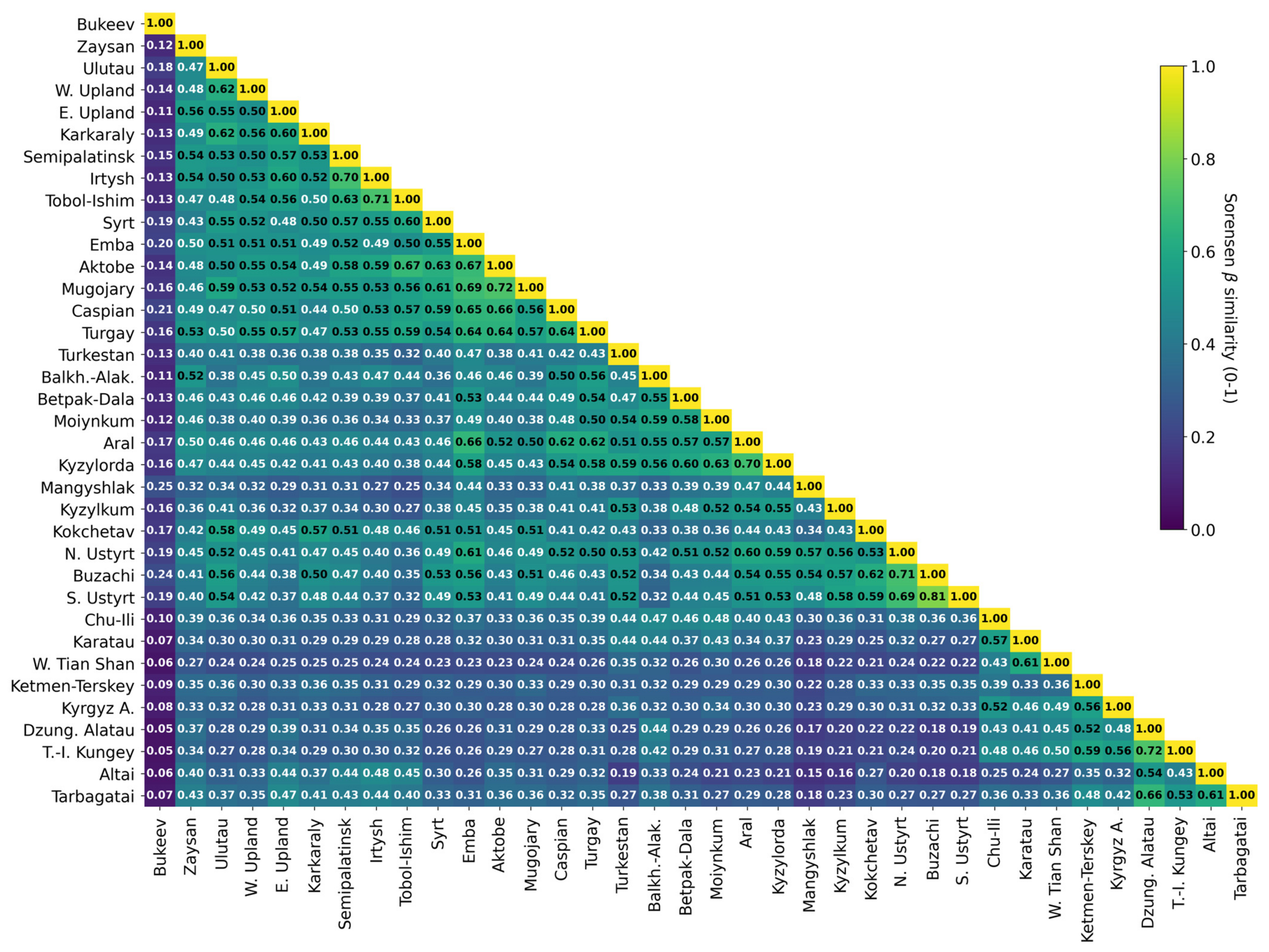
The Sørensen similarity analysis revealed low to high floristic similarity among many regions of Kazakhstan (Figure 4). The similarity values ranged from 0.05 to 0.81, with a mean value of approximately 0.39, indicating a generally moderate overall overlap in species composition among regional floras. Higher similarity values were observed between geographically adjacent regions, particularly within mountain systems and neighboring steppe zones, reflecting similar environmental conditions and historical floristic connections. In contrast, lower similarity values were recorded between ecologically contrasting regions, such as desert and high-mountain areas, indicating stronger differentiation in species composition. The Sørensen similarity analysis revealed clear contrasts between the most and least similar regional floras. The five highest similarity values were observed between Buzachi–Southern Ustyrt (approximately 0.81), Dzungarian Alatau–Trans-Ili Kungey Alatau and Aktobe–Mugojary (both approximately 0.72), as well as Irtysh–Tobol-Ishim and Buzachi–Northern Ustyrt (both approximately 0.71). These high values indicate strong overlap in species composition between geographically or ecologically similar regions. In contrast, the five lowest similarity values were recorded between Bukeev and several mountain or continental interior regions, including Trans-Ili Kungey Alatau, Dzungarian Alatau, Western Tian Shan, Altai, and Tarbagatai, with Sørensen similarity values ranging from approximately 0.05 to 0.07. These low values reflect substantial differences in species composition between these regions.

4. Discussion

Kazakhstan harbors the highest vascular plant diversity among Central Asian countries, with 6035 species, followed by Tajikistan (4542 species), Uzbekistan (4222 species), Kyrgyzstan (4036 species), and Turkmenistan (3005 species). In terms of endemism, Kazakhstan, with 485 endemic taxa, was slightly less than Tajikistan (505), and followed by Uzbekistan (301), Kyrgyzstan (326), and Turkmenistan (175) [1,2]. Floristic similarities between countries reflect their biogeographic affinities: neighboring countries such as Tajikistan and Uzbekistan, as well as Kazakhstan and Kyrgyzstan, share a greater number of species, highlighting the interconnected nature of Central Asian mountain systems. These also highlight Kazakhstan’s exceptional floristic richness and its central role in regional biodiversity patterns.
According to our research, these unique plants in Kazakhstan grow predominantly in the mountains, particularly in Karatau, Dzungarian Alatau, and Trans-Ili and Kungey Alatau ridges. For these regions, phylogenetic studies provide crucial information for understanding the evolution of relationships within such a diverse group. Especially, endemic and threatened species have a distinct phylogenetic structure; evolutionary uniqueness and extinction are unevenly distributed across several key families, Asteraceae Bercht. & J.Presl, Fabaceae Lindl., Apiaceae Lindl., Liliaceae Juss. and Brassicaceae Burnett, as similar patterns are observed across the Irano-Turanian floristic provinces [107]. Among these lineages, Fabaceae is very important because it has many endemic genera and contributes significantly to threatened taxa, which is globally recognized for its high diversification in dry continental habitats [108]. Genera like Astragalus (Fabaceae), Tulipa (Liliaceae), and Allium (Amaryllidaceae) are key indicators of this pattern, having undergone concentrated diversification in Kazakhstan’s mountainous and xeric landscapes [109,110,111].
The genera Allium L., Astragalus L., and Tulipa L. contain the highest number of threatened species among the vascular plant genera in the flora of Kazakhstan, primarily due to habitat destruction, overgrazing, infrastructure development, and unregulated harvesting [112]. For example, Tulipa greigii Regel and T. biflora Pall. grow in fragile ecosystems and are threatened by trampling and soil compaction due to intensive grazing. Similar trends are observed in the Allium genus, including Allium karataviense Regel and A. pskemense B.Fedtsch., resulting in population declines [36]. The same situation holds for Astragalus L., which is highly rich in species in Kazakhstan; many of its species have very narrow distributions [12], including Astragalus dshimensis Gontsch. and A. tscharynensis Popov. Owing to their restricted ranges, these species are particularly vulnerable to habitat disturbances, including infrastructure development and livestock overgrazing. Such pressures further fragment populations into small and isolated patches, reducing genetic diversity and increasing extinction risk, a pattern well documented for plant species with extremely small populations [113]. Furthermore, infrastructure expansion, urban development, road construction, and agricultural land conversion threaten species like Tulipa biebersteiniana Schult. & Schult.f and T. brachystemon Regel, which are losing their natural habitats at an alarming rate [36]. A study in Uzbekistan found that urbanization expansion has destroyed 40% of T. greigii habitats, particularly in resource-rich areas, contributing to soil contamination and landscape fragmentation, which directly impacts the species during 2013–2017 [114]. This trend is basically the fragmentation of habitats due to infrastructural development that stands out as a major threat to rare threatened species across Central Asia [115]. Similarly, beyond habitat loss, unregulated harvesting for commercial purposes poses a major threat. Many of Kazakhstan’s tulips, such as Tulipa alberti Regel, T. biflora Pall., and T. suaveolens Roth, are heavily collected for the ornamental plant trade, leading to population decline. This pressure is a primary reason for the threat of 50% wild tulip species in Central Asia [36,116]. Similarly, wild Allium species, including Allium aflatunense B.Fedtsch. and A. microdictyon Prokh., are overharvested for food and medicine. The intensive collection of A. microdictyon has resulted in significant declines, with only about 60% of plants capable of regenerating, requiring several years for full recovery [117].
We found that 359 taxa are identified as threatened in Kazakhstan’s National Red List (NRL), whereas only 20 taxa have been assessed as threatened in the IUCN Red List. This highlights a major gap in global conservation awareness and prioritization for Kazakhstan’s unique vascular flora. In some cases, species receive a higher threat category in the IUCN Red List than in the National Red List because of differences in assessment periods, available data, and methodological approaches. This gap signals an urgent need for harmonization between national and global databases regarding current risks to prioritize conservation action [118].
Among Kazakhstan’s phytogeographical regions, five areas—Karatau, Western Tian Shan, Trans-Ili Kungey Alatau, Altai, and Dzungarian Alatau—frequently appear as hotspots for threatened plant species, underscoring their critical importance for national and regional conservation planning. These areas serve as evolutionary cradles and contemporary refugia but face challenges to their conservation. The Western Tian Shan, which crosses Kazakhstan, Kyrgyzstan, and Uzbekistan, is among the world’s recognized global biodiversity hotspots because of its complex topography, diversity in climate, and long biogeographical isolation that has given rise to high levels of endemism and species richness [119]. Its cross-border location makes it more dependent on trilateral cooperation for the effective protection of migratory as well as range-restricted species. Likewise, the Altai and Dzungarian Alatau mountain systems, which extend into Russia, China, and Mongolia, represent transitional zones between the Central Asian deserts and the boreal forest biomes of Siberia. These regions support a complex ecological mosaic and harbor numerous relict and endemic species, many of which are threatened [120]. Current conservation approaches are largely oriented at the national level and are therefore less effective when applied within a broader, integrated habitat conservation framework. The Karatau mountain range, although located entirely within Kazakhstan, forms part of the western foothills of the Tien Shan and is characterized by a unique flora adapted to limestone substrates [121]. In contrast, the Trans-Ili Kungey-Alatau mountain range shares floristic similarities with other Tien Shan subranges and is increasingly exposed to anthropogenic pressures, particularly in areas surrounding major urban centers such as Almaty [122].
The cluster analysis based on the Sørensen similarity index revealed clear patterns of floristic relationships among the regions of Kazakhstan. Regions located within similar ecological and geographical zones tended to cluster together, indicating that environmental conditions and geographic proximity strongly influence species composition. Mountain regions, including those associated with the Altai, Tarbagatai, and Tian Shan systems, exhibited relatively high floristic similarity. These regions share similar climatic conditions, altitudinal gradients, and habitat heterogeneity, which support comparable assemblages of vascular plant species. Mountain ecosystems are also known to harbor a high proportion of endemic and relict species, contributing to their distinct floristic composition [5,123]. In contrast, desert and semi-desert regions of western and southern Kazakhstan formed separate clusters characterized by lower similarity with mountain floras. These regions are dominated by xerophytic vegetation adapted to arid climatic conditions, which leads to a different taxonomic structure compared with more humid mountain environments [124]. Transitional regions located between steppe and desert zones showed intermediate similarity values, reflecting the gradual turnover of species across ecological gradients.

5. Conclusions

Our analysis presents a contemporary reassessment of Kazakhstan’s vascular plant diversity and distribution, revealing several important phytogeographic and conservation patterns. Key aspects of biodiversity—including species richness, endemism, threatened taxa, and phylogenetic diversity—are closely aligned, with southern and southeastern mountains (namely Karatau, Western Tian Shan, Trans-Ili Kungey-Alatau, Altai, and Dzungarian Alatau), serving as centers of evolutionary history and taxonomic accumulation. Finally, a structural conservation gap exists: regions with high concentrations of threatened species are partially protected, while other important areas remain unprotected. These findings provide new insights into the processes shaping plant diversity in Kazakhstan and highlight priority areas for conservation planning.

Supplementary Materials

The following supporting information can be downloaded at: https://www.mdpi.com/article/10.3390/d18040213/s1, Table S1: Checklist of vascular plants of Kazakhstan.

Author Contributions

A.K.S. performed the research, data collection, and analysis, inferred the results, and wrote the manuscript. B.B.O. contributed to the editing. Y.Z. contributed to data visualization. H.M.W. contributed to the review and editing of the manuscript, and S.M. contributed to the review and performed data collection. W.L. contributed to project design, funding acquisition, review, and editing of the manuscript. All authors have read and agreed to the published version of the manuscript.

Funding

This research was funded by the Shanghai Cooperation Organization Partnership and International Technology Cooperation Plan of Science and Technology Projects (2025E01056), the Third Xinjiang Scientific Expedition (2022xjkk1505), and was sponsored by ANSO Scholarship for Young Talents.

Data Availability Statement

All Red List assessments carried out for this study are available in the web portal of the IUCN Red List “https://www.iucnredlist.org/ (accessed on 12 December 2025)”, NRL (Red Book 2014), and Supplementary Material is available in the Supporting Information as Table S1.

Acknowledgments

The authors would like to acknowledge the CAS Research Center for Ecology and Environment of Central Asia (RCEECA).

Conflicts of Interest

The authors declare no conflicts of interest.

References

  1. Li, W.; Tojibaev, K.S. Checklist of Vascular Plants in Central Asia; EDP Sciences: Les Ulis, France, 2024. [Google Scholar]
  2. Ma, S.; Li, W.; Tojibaev, K.S.; Turginov, O.; Yang, W.; Ma, K. Regionwide and Nationwide Floristic Richness Reveal Vascular Plant Diversity in Central Asia. Plants 2024, 13, 2275. [Google Scholar] [CrossRef] [PubMed]
  3. Mittermeier, R.; Turner, W.; Larsen, F.; Brooks, T.; Gascon, C. Global Biodiversity Conservation: The Critical Role of Hotspots; Springer: Berlin/Heidelberg, Germany, 2011; pp. 3–22. [Google Scholar]
  4. Zhang, Y.; Zhang, D.; Li, W.; Li, Y.; Zhang, C.; Guan, K.; Pan, B. Characteristics and utilization of plant diversity and resources in Central Asia. Reg. Sustain. 2020, 1, 1–10. [Google Scholar] [CrossRef]
  5. Kubentayev, S.A.; Alibekov, D.T.; Perezhogin, Y.V.; Lazkov, G.A.; Kupriyanov, A.N.; Ebel, A.L.; Izbastina, K.S.; Borodulina, O.V.; Kubentayeva, B.B. Revised checklist of endemic vascular plants of Kazakhstan. PhytoKeys 2024, 238, 241–279. [Google Scholar] [CrossRef] [PubMed]
  6. Li, W.; Tojibaev, K.; Ebadi, A.; Shomurodov, K.; Luo, M.; Feng, Y.; Ma, K. Mapping Asia Plants: Current status of floristic information for Central Asian flora. Glob. Ecol. Conserv. 2020, 24, e01220. [Google Scholar] [CrossRef]
  7. Kovalevskaya, S. Manual of Vascular Plants of Central Asia. Critical Synopsis of the Flora of Central Asia; Science Publishers: Tashkent, Uzbekistan, 1971; Volume 2, p. 365. [Google Scholar]
  8. Kovalevskaya, S. Manual of Vascular Plants of Central Asia. Critical Synopsis of the Flora of Central Asia; Science Publishers: Tashkent, Uzbekistan, 1968; Volume 1, p. 229. [Google Scholar]
  9. Bondarenko, O.; Nabiev, M. Manual of Vascular Plants of Central Asia. Critical Synopsis of the Flora of Central Asia; Science Publishers, Uzbek Academy of Sciences: Tashkent, Uzbekistan, 1972; Volume 3, p. 268. [Google Scholar]
  10. Pakhomova, M. Manual of Vascular Plants of Central Asia. Critical Synopsis of the Flora of Central Asia; Science Publishers: Tashkent, Uzbekistan, 1974; Volume 4, p. 273. [Google Scholar]
  11. Pakhomova, M. Manual of Vascular Plants of Central Asia. Critical Synopsis of the Flora of Central Asia; Science Publishers, Uzbek Academy of Sciences: Tashkent, Uzbekistan, 1976; Volume 5, p. 274. [Google Scholar]
  12. Kamelin, R.; Kovalevskaya, S.; Nabiev, M.M. Manual of Vascular Plants of Central Asia. Critical Synopsis of the Flora of Central Asia; Science Publishers, Uzbek Academy of Sciences: Tashkent, Uzbekistan, 1981; Volume 6, p. 396. [Google Scholar]
  13. Adylov, T. Manual of Vascular Plants of Central Asia. Critical Synopsis of the Flora of Central Asia; Science Publishers, Uzbek Academy of Sciences: Tashkent, Uzbekistan, 1987; Volume 9, p. 400. [Google Scholar]
  14. Adylov, T. Manual of Vascular Plants of Central Asia. Critical Synopsis of the Flora of Central Asia; Science Publishers, Uzbek Academy of Sciences: Tashkent, Uzbekistan, 1983; Volume 7, p. 416. [Google Scholar]
  15. Nabiev, M. Manual of Vascular Plants of Central Asia. Critical Synopsis of the Flora of Central Asia; Science Publishers, Uzbek Academy of Sciences: Tashkent, Uzbekistan, 1986; Volume 8, p. 192. [Google Scholar]
  16. Khassanov, F. Conspectus Florae Asiae Mediae; Fan: Tashkent, Uzbekistan, 2015. [Google Scholar]
  17. Pavlov, N. Flora of Kazakhstan; Academy of Sciences of the Kazakh SSR: Alma-Ata, Kazakhstan, 1956; p. 354. [Google Scholar]
  18. Pavlov, N. Flora of Kazakhstan; Academy of Sciences of the Kazakh SSR: Alma-Ata, Kazakhstan, 1958; p. 292. [Google Scholar]
  19. Pavlov, N. Flora of Kazakhstan; Academy of Sciences of the Kazakh SSR: Alma-Ata, Kazakhstan, 1960; p. 460. [Google Scholar]
  20. Pavlov, N. Flora of Kazakhstan; Academy of Sciences of the Kazakh SSR: Alma-Ata, Kazakhstan, 1961; p. 548. [Google Scholar]
  21. Pavlov, N. Flora of Kazakhstan; Academy of Sciences of the Kazakh SSR: Alma-Ata, Kazakhstan, 1961; p. 515. [Google Scholar]
  22. Pavlov, N. Flora of Kazakhstan; Academy of Sciences of the Kazakh SSR: Alma-Ata, Kazakhstan, 1963; p. 465. [Google Scholar]
  23. Pavlov, N. Flora of Kazakhstan; Academy of Sciences of the Kazakh SSR: Alma-Ata, Kazakhstan, 1964; p. 497. [Google Scholar]
  24. Pavlov, N. Flora of Kazakhstan; Academy of Sciences of the Kazakh SSR: Alma-Ata, Kazakhstan, 1965; p. 447. [Google Scholar]
  25. Pavlov, N. Flora of Kazakhstan; Academy of Sciences of the Kazakh SSR: Alma-Ata, Kazakhstan, 1966; p. 640. [Google Scholar]
  26. Baitenov, M.S. Flora of Kazakhstan: Illustrated Key of Families and Genera; Gylym: Almaty, Kazakhstan, 1999; p. 397. [Google Scholar]
  27. Baitenov, M.S. Flora of Kazakhstan: Genus Complex of Flora; Gylym: Almaty, Kazakhstan, 2001; p. 280. [Google Scholar]
  28. Abdulina, S.A. Checklist of Vascular Plants of Kazakhstan; Institute of Botany and Plant Introduction: Almaty, Kazakhstan, 1999; p. 187. [Google Scholar]
  29. Alibekov, D.; Kubentayev, S.; Baasanmunkh, S.; Mukhtubayeva, S.; Tustubayeva, S.; Kubentayeva, B.; Suleimen, Y.; Choi, H.J. The first complete checklist of vascular plants in the Akmola region, Kazakhstan: A key to understanding biodiversity importance. J. Asia-Pac. Biodivers. 2025, 18, 618–627. [Google Scholar] [CrossRef]
  30. Perezhogin, Y.V.; Borodulina, O.V.; Erokhin, N.G.; Kubentayev, S.A. Floral finds on the territory of Kazakhstan. Fundam. Exp. Biol. 2023, 111, 138–146. [Google Scholar] [CrossRef]
  31. Ebel, A.; Kupriyanov, A.; Khrustaleva, I.; Pyak, A.; Gudkova, P.; Nobis, M. New Records to the Vascular Flora of Kazakhstan (Central Asia). Pol. Bot. J. 2015, 60, 191–195. [Google Scholar] [CrossRef][Green Version]
  32. Imanbayeva, A.A.; Ishmuratova, M.Y.; Gassanova, G.G. Geographical innovations in the flora of the Mangystau region. BIO Web Conf. 2020, 24, 00028. [Google Scholar] [CrossRef]
  33. Karabalayeva, D.; Курманбаева, М.; Kusmangazinov, A.; Osmonali, B.; Zhumagul, M. Floristic checklist and distribution of Trollius species (Ranunculaceae) in Kazakhstan. Biodiversitas. J. Biol. Divers. 2025, 26, 4103–4123. [Google Scholar] [CrossRef]
  34. Bibigul, Z.; Natalia, T.; Mikhail, K.; Dinara, S.; Gulmira, A.; Khan, S.M.; Manan, F. Flora Checklist in the Bayanaul State National Nature Park, Kazakhstan with Special Focus on New Species of Conservation Interest. Plants 2025, 14, 1119. [Google Scholar] [CrossRef]
  35. Bikov, B. Red Data Book of Kazakh SSR. Rare and Endangered Species of Animals and Plants. Part 2. Plants; Nauka: Alma-Ata, Kazakhstan, 1981; p. 260. [Google Scholar]
  36. Baitulin, I.O. The Red Book of Kazakhstan (Plants); Art Print XXI: Astana, Kazakhstan, 2014; Volume 2.1, p. 452. [Google Scholar]
  37. Betts, J.; Young, R.P.; Hilton-Taylor, C.; Hoffmann, M.; Rodríguez, J.P.; Stuart, S.N.; Milner-Gulland, E.J. A framework for evaluating the impact of the IUCN Red List of threatened species. Conserv. Biol. 2020, 34, 632–643. [Google Scholar] [CrossRef] [PubMed]
  38. Mace, G.M.; Collar, N.J.; Gaston, K.J.; Hilton-Taylor, C.; Akçakaya, H.R.; Leader-Williams, N.; Milner-Gulland, E.J.; Stuart, S.N. Quantification of Extinction Risk: IUCN’s System for Classifying Threatened Species. Conserv. Biol. 2008, 22, 1424–1442. [Google Scholar] [CrossRef] [PubMed]
  39. Rodrigues, A.S.L.; Pilgrim, J.D.; Lamoreux, J.F.; Hoffmann, M.; Brooks, T.M. The value of the IUCN Red List for conservation. Trends Ecol. Evol. 2006, 21, 71–76. [Google Scholar] [CrossRef] [PubMed]
  40. Popov, I.; Fadeeva, A.; Palenova, E.; Shamilishvily, G.; Gorin, K.; Burdo, A.; Melchakova, E.; Trofimova, Y.; Sukristik, V.; Morova, N.; et al. Effectiveness of “Тhe IUCN red list of threatened species” application on a regional scale: Current state of the “Red Data books” of Russia. Biol. Commun. 2017, 62, 57–60. [Google Scholar] [CrossRef]
  41. Brito, D.; Ambal, R.G.; Brooks, T.; Silva, N.D.; Foster, M.; Hao, W.; Hilton-Taylor, C.; Paglia, A.; Rodríguez, J.P.; Rodríguez, J.V. How similar are national red lists and the IUCN Red List? Biol. Conserv. 2010, 143, 1154–1158. [Google Scholar] [CrossRef]
  42. Dimeyeva, L.A.; Sitpayeva, G.T.; Sultanova, B.M.; Ussen, K.; Islamgulova, A.F. High-Altitude Flora and Vegetation of Kazakhstan and Climate Change Impacts. In Climate Change Impacts on High-Altitude Ecosystems; Öztürk, M., Hakeem, K.R., Faridah-Hanum, I., Efe, R., Eds.; Springer International Publishing: Cham, Switzerland, 2015; pp. 1–48. [Google Scholar]
  43. Climate in Kazakhstan. Available online: https://www.climatestotravel.com/climate/kazakhstan (accessed on 9 October 2025).
  44. Allworth, E.; Hambly, G.R.; Sinor, D.; Smith, D.R. Kazakhstan. Available online: https://www.britannica.com/place/Kazakhstan (accessed on 23 March 2026).
  45. Czerepanov, S. Vascular Plants of the USSR; Science: Leningrad, Russia, 1981; p. 510. [Google Scholar]
  46. Czerepanov, S. Vascular Plants of Russia and Adjacent States (the Former USSR); Mir I Semiya Publishing House: St. Petersburg, Russia, 1995; p. 516. [Google Scholar]
  47. Goloskokov, V.; Polyakov, P.; Roldugin, I. Illustrated Identifier to Plants of Kazakhstan; Science: Alma-Ata, Kazakhstan, 1969; Volume 1, p. 644. [Google Scholar]
  48. Baytenov, M.; Vasilieva, A.; Gamayunova, A. Illustrated Identifier of Plants of Kazakhstan; Science: Alma-Ata, Kazakhstan, 1972; Volume 2, p. 571. [Google Scholar]
  49. Tsvelev, N. Cereals of the USSR; Nauka: Alma-Ata, Kazakhstan, 1976; p. 788. [Google Scholar]
  50. Koltunova, A.M.; Bolbotov, G.A.; Kutsev, M.G. Sanguisorba azovtsevii, a new species for the flora of Kazakhstan. Turczaninowia 2024, 27, 19. [Google Scholar] [CrossRef]
  51. Ivashchenko, A.A.; Abidkulova, K.T. Hieracium pilosella L.—A new adventive species for the flora of the Tian Shan (Kazakhstan). Turczaninowia 2021, 24, 21–24. [Google Scholar] [CrossRef]
  52. Bolbotov, G.A.; Shmakov, A.I.; Uvarova, O.V.; Smirnov, S.V.; Kechaykin, A.A. New findings in the flora of Kazakhstan and Altai Territory. Turczaninowia 2023, 26, 82–87. [Google Scholar] [CrossRef]
  53. Bolbotov, G.A.; German, D.A.; Gudkova, P.D.; Shmakov, A.I.; Anisimov, A.V.; Golyakov, P.V.; Smirnov, S.V.; Kechaykin, A.A. New records in the flora of Siberia and Kazakhstan. Turczaninowia 2024, 27, 114–123. [Google Scholar] [CrossRef]
  54. Kubentayev, S.; Efimov, P.; Fateryga, A. Epipactis persica (Orchidaceae), a new taxon for the flora of Kazakhstan, Kyrgyzstan and China. Nat. Conserv. Res. 2024, 9, 115–117. [Google Scholar] [CrossRef]
  55. Kupriyanov, A.N.; Sultangazina, G.Z.; Simanchuk, Y.A.; Bugubayeva, A. Addition to the flora of Kazakhstan. Turczaninowia 2024, 27, 17. [Google Scholar] [CrossRef]
  56. Kupriyanov, A.N. Synopsis of the Flora of the Kazakh Uplands; Academic Publishing House “Geo”: Novosibirsk, Russia, 2020; p. 422. [Google Scholar]
  57. Sumbembayev, A.A.; Kotukhov, Y.A.; Danilova, A.N.; Aitzhan, M. Endemic and Endangered Vascular Flora of Kazakhstan’s Altai Mountains: A Baseline for Sustainable Biodiversity Conservation. Sustainability 2025, 17, 7283. [Google Scholar] [CrossRef]
  58. Dubynin, A.; Dimeyeva, L.; Epiktetov, V.; Курмантаева, А. Checklist of Vascular Plants of the Important Plant Area “Chu-Ili Landscapes” (IPA-KZ-IS). 2025. Available online: https://www.gbif.org/dataset/5924cdad-e1f1-412c-a3ea-7405a3bfbf2a (accessed on 5 March 2026).
  59. Nelina, N.V. Acalypha australis L.—A new adventive species for the flora of Kazakhstan. Bot. Res. Sib. Kazakhstan 2020, 26, 48–49. [Google Scholar]
  60. Perezhogin, Y.V.; Kulikov, P.V. New species of flora of Kazakhstan. Bull. Orenbg. State Univ. 2017, 3, 78–80. [Google Scholar]
  61. Klinkova, G.Y. New and rare aquatic and semi-aquatic species in the flora of Western Kazakhstan. Bull. Udmurt Univ. Ser. Biol. Geosci. 2012, 3, 155–158. [Google Scholar]
  62. Perezhogin, Y.V.; Kulikov, P.V.; Kurlov, S.I. Addition to the flora of Kazakhstan. Bot. J. 2015, 100, 501–503. [Google Scholar]
  63. Ebel, A.; Kupriyanov, A.; Khrustaleva, I. Contribution to the flora of Southern Kazakhstan (alien plants). Syst. Notes Mater. P. N. Krylov Herb. Tomsk State Univ. 2024, 129, 3–8. [Google Scholar]
  64. Laktionov, A.P.; Bobrov, A.A.; Mesterazi, A.; Meshcheryakova, N.O.; Nurmukhambetova, D.E.; Pifko, D. New, critical and rare taxa the flora of Northern and Eastern Caspian region. Nat. Sci. 2013, 44, 16–22. [Google Scholar]
  65. Perezhogin, Y.V. Floristic findings on territories of Kostanay region. Bull. Kostanay State Pedagog. Inst. 2020, 2, 73–78. [Google Scholar]
  66. Perezhogin, Y.V.; Erokhin, N.G. Floristic findings on territories of Kostanay region (part 2). Bull. Kostanay State Pedagog. Inst. 2020, 1, 35–40. [Google Scholar]
  67. Kupriyanov, A.N.; Khrustaleva, I.A. New plants for the flora of Kazakhstan. Syst. Notes Mater. P. N. Krylov Herb. Tomsk State Univ. 2018, 118, 40–49. [Google Scholar] [CrossRef]
  68. Perezhogin, Y.V.; Kurlov, S.I. Addition to the flora of the state nature reserve «Altyn dala» (Kazakhstan). Bot. J. 2016, 101, 302–308. [Google Scholar]
  69. Ebel, A.L.; Kupriyanov, A.N.; Khrustaleva, I.A. Annotated checklist of the flora of the Boraldai branch of the Syrdarya-Turkestan State Regional Natural Park (Kazakhstan). Bot. Res. Sib. Kazakhstan 2023, 29, 3–24. [Google Scholar]
  70. Dimeeva, L.A.; Salmukhanbetova, Z.K.; Sultanova, B.M.; Ussen, K. Floristic study in the Northern Aral region. Probl. Bot. South. Sib. Mong. 2021, 20, 90–102. [Google Scholar]
  71. Rogozhina, Y.O.; Tretyakova, A.S.; Knyazev, M.S. Floristic findings in the Auliekulsky district (Kostanay region, Republic of Kazakhstan). Phytodivers. East. Eur. 2018, 12, 95–105. [Google Scholar]
  72. Ivashchenko, A.A. List of the flora of the Sairam-Ugam State National Natural Park (Kazakhstan). Bot. Res. Sib. Kazakhstan 2020, 26, 52–63. [Google Scholar]
  73. Ishmuratova, M.Y.; Myrzaly, G.Z.; Ivlev, V.I.; Matveev, A.N. Flora of the Ulytau Mountains (Central Kazakhstan): Collective Monograph; Bolashak-Baspa: Karaganda, Kazakhstan, 2016; p. 127. [Google Scholar]
  74. Kechaykin, A.; Batkin, A.; Sitpayeva, G.; Vesselova, P.; Osmonali, B.; Shmakov, A. New data on genus Potentilla L. (Rosaceae Juss.) in the flora of Kazakhstan. Turczaninowia 2020, 23, 32–40. [Google Scholar] [CrossRef]
  75. Kechaykin, A.; Bolbotov, G.; Zaykov, V.; Shmakov, A. Notes on Potentilla (Rosaceae) of Altai. 7. New findings in the flora of Kazakhstan. Turczaninowia 2020, 23, 10–16. [Google Scholar] [CrossRef]
  76. Kirschner, J.; Štěpánek, J.; Buryy, V.V. Towards a revision of Taraxacum sect. Borealia (Compositae, Crepidinae) in Siberia and the continental Far East, with special reference to the dandelions of the Altai and Kamchatka. Phytotaxa 2025, 679, 1–147. [Google Scholar] [CrossRef]
  77. Petr, A.K.; Gleb, A.B. Two new species of Pedicularis (Orobanchaceae) from Eastern Kazakhstan. Turczaninowia 2025, 28, 162–174. [Google Scholar] [CrossRef]
  78. Kubentayev, S.; Levichev, I.; Baasanmunkh, S.; Klichowska, E.; Alibekov, D.; Choi, H.J.; Nobis, M. Gagea kotuchovii (Liliaceae) a new species from the Karatau Mountains (western Tian Shan, Kazakhstan) evidenced by morphological and molecular analyses. PLoS ONE 2025, 20, e0336223. [Google Scholar] [CrossRef] [PubMed]
  79. Friesen, N.; Lazkov, G.; Levichev, I.G.; Leweke, M.; Abdildanov, D.; Turdumatova, N.; Murtazaliev, R.; Dzumanov, S.; Sitpayeva, G.T.; Vesselova, P.; et al. Taxonomy and dated molecular phylogeny of Allium oreophilum sensu lato (A. subg. Porphyroprason) uncover a surprising number of cryptic taxa. TAXON 2025, 74, 1035–1053. [Google Scholar] [CrossRef]
  80. Banaev, E.V.; Tomoshevich, M.A.; Khozyaykina, S.A.; Erst, A.A.; Erst, A.S. Integrative Taxonomy of Nitraria (Nitrariaceae), Description of the New Enigmatic Species and Key to All Currently Known Species. Plants 2023, 12, 593. [Google Scholar] [CrossRef] [PubMed]
  81. Alexandr, P.S.; Maria, A.K.; Maria, N.L. A new Kalidium species (Amaranthaceae s. l.) from northern Central Asia. Turczaninowia 2022, 25, 24–33. [Google Scholar] [CrossRef]
  82. Kupriyanov, A.; Ebel, A.; Khrustaleva, I. Rhaponticoides zaissanica (Asteraceae)—A new species from Kazakhstan. Sist. Zametki Po Mater. Gerbariya im. P.N. Krylova Tomsk. Gos. Univ. 2020, 121, 24–31. [Google Scholar]
  83. Ebel, A.; Kupriyanov, A.; Lashchinskiy, N.; Khrustaleva, I. Notes on Pseuderemostachys sewerzovii and a new species of Phlomoides (Lamiaceae) from South Kazakhstan. Sist. Zametki Po Mater. Gerbariya im. P.N. Krylova Tomsk. Gos. Univ. 2019, 119, 25–35. [Google Scholar] [CrossRef]
  84. Knyazev, M.S. A new species of genus Luzula DC. (Juncaceae). Novit. Syst. Pl. Vasc. 2009, 40, 35–38. [Google Scholar] [CrossRef]
  85. Knyazev, M.S. Materials to the review of genus Astragalus section Helmia (Fabaceae). Novit. Syst. Plant. Vasc. 2017, 48, 89–97. [Google Scholar] [CrossRef]
  86. Kupriyanov, A. Artemisia saurensis Kupr., a new species from the Saur (Kazakhstan). Syst. Notes Mater. P. N. Krylov Herb. Tomsk State Univ. 2018, 117, 12–15. [Google Scholar] [CrossRef]
  87. Knyazev, M.S.; Krivenko, D.A.; Philippov, E.G. New species of the geuns Astragalus (Fabaceae) from Central Kazakhstan. Bot. J. 2019, 104, 792–796. [Google Scholar] [CrossRef]
  88. Kupriyanov, A.; Alibekov, D. Achillea × kasakhstanica (Asteraceae), a new species from Kazakh Uplands. Bot. J. 2019, 104, 155–158. [Google Scholar]
  89. Ovchinnikova, S.V. Critical notes on kinship group Lappula subcaespitosa (Boraginaceae). Flora Asian Russ. Bull. Cent. Sib. Bot. Gard. SB RAS 2021, 1, 3–16. [Google Scholar] [CrossRef]
  90. Knyazev, M.S. Review of some species of Scutellaria supina s.l. affinity (Lamiaceae). Bot. J. 2021, 106, 585–594. [Google Scholar]
  91. Ovchinnikova, S.V. Synopsis of Buglossoides species (Boraginaceae) of Eastern Europe, Asia minor and middle Asia. Flora Asian Russ. Bull. Cent. Sib. Bot. Gard. SB RAS 2025, 18, 6–19. [Google Scholar]
  92. Kupriyanov, A.; Kulemin, Y. Achillea tianschanica Kupr. et Kulemin—A new species from Western Tien Shan and Syrdarya Karatau, Kazakhstan. Syst. Notes Mater. P. N. Krylov Herb. Tomsk State Univ. 2021, 1232, 3–12. [Google Scholar]
  93. Rukšāns, J.; Zubov, D. Fritillaria kolbintsevii (subgen. Fritillaria; Liliaceae): A new fritillary species from Zhetysu area of south-eastern Kazakhstan. Int. Rock Gard. 2021, 141, 16–17. [Google Scholar]
  94. Rukšāns, J.; Zubov, D. Two new Tulipa species from sect. Biflores (subgen. Eriostemones, Liliaceae) described from Iran, Zagros Mountains and Kazakhstan. Zhetysu. Int. Rock Gard. 2022, 148, 2–51. [Google Scholar]
  95. Kirschner, J.; Štepánek, J. Towards a revision of Taraxacum sect. Macrocornuta (Asteraceae, Crepidinae), an Irano-Turanian group with prevailing sexual reproduction. Phyton 2023, 62–63, 47–74. [Google Scholar] [CrossRef]
  96. Melnikov, D.G.; Korolyuk, A.Y.; Laktionov, A.P. New species of Agropyron (Poaceae) from Southern Siberia and Eastern Kazakhstan. Novit. Syst. Plant. Vasc. 2024, 55, 5–10. [Google Scholar] [CrossRef]
  97. IPNI. The Royal Botanic Gardens, Kew, Harvard University Herbaria & Libraries and Australian National Herbarium International Plant Names Index. 2026. Available online: http://www.ipni.org (accessed on 26 March 2026).
  98. GBIF.org. GBIF Home Page. Available online: https://www.gbif.org/ (accessed on 9 October 2025).
  99. IUCN. The IUCN Red List of Threatened Species. Available online: https://www.iucnredlist.org/ (accessed on 12 December 2025).
  100. POWO. Plants of the World Online. Available online: https://powo.science.kew.org/ (accessed on 23 March 2026).
  101. Govaerts, R. WCVP: World Checklist of Vascular Plants. Available online: http://sftp.kew.org/pub/data-repositories/WCVP/ (accessed on 23 March 2026).
  102. The Angiosperm Phylogeny Group; Chase, M.W.; Christenhusz, M.J.M.; Fay, M.F.; Byng, J.W.; Judd, W.S.; Soltis, D.E.; Mabberley, D.J.; Sennikov, A.N.; Soltis, P.S.; et al. An update of the Angiosperm Phylogeny Group classification for the orders and families of flowering plants: APG IV. Bot. J. Linn. Soc. 2016, 181, 1–20. [Google Scholar] [CrossRef]
  103. Schuettpelz, E.; Schneider, H.; Smith, A.; Hovenkamp, P.; Prado, J.; Rouhan, G.; Salino, A.; Sundue, M.; Almeida, T.; Parris, B.; et al. A community-derived classification for extant lycophytes and ferns. J. Syst. Evol. 2016, 54, 563–603. [Google Scholar] [CrossRef]
  104. Christenhusz, M.; Reveal, J.; Farjon, A.; Gardner, M.; Mill, R.; Chase, M. A new classification and linear sequence of extant gymnosperms. Nov. Magnolia Press Phytotaxa 2010, 19, 55–70. [Google Scholar] [CrossRef]
  105. Jin, Y.; Qian, H.V. PhyloMaker2: An updated and enlarged R package that can generate very large phylogenies for vascular plants. Plant Divers. 2022, 44, 335–339. [Google Scholar] [CrossRef] [PubMed]
  106. Kembel, S.W.; Cowan, P.D.; Helmus, M.R.; Cornwell, W.K.; Morlon, H.; Ackerly, D.D.; Blomberg, S.P.; Webb, C.O. Picante: R tools for integrating phylogenies and ecology. Bioinformatics 2010, 26, 1463–1464. [Google Scholar] [CrossRef]
  107. Noroozi, J.; Talebi, A.; Doostmohammadi, M.; Manafzadeh, S.; Asgarpour, Z.; Schneeweiss, G.M. Endemic diversity and distribution of the Iranian vascular flora across phytogeographical regions, biodiversity hotspots and areas of endemism. Sci. Rep. 2019, 9, 12991. [Google Scholar] [CrossRef]
  108. Schmid, R.; Lewis, G.; Schrire, B.; Mackinder, B.; Lock, M. Legumes of the World. Taxon 2006, 55, 251. [Google Scholar] [CrossRef]
  109. Friesen, N.; Fritsch, R.; Blattner, F.R. Phylogeny and New Intrageneric Classification of Allium (Alliaceae) Based on Nuclear Ribosomal DNA ITS Sequences. Aliso 2006, 22, 372–395. [Google Scholar] [CrossRef]
  110. Kubentayev, S.A.; Baasanmunkh, S.; Alibekov, D.T.; Tojibaev, K.S.; Nyamgerel, N.; Ivashchenko, A.A.; Tsegmed, Z.; Epiktetov, V.G.; Sitpayeva, G.T.; Izbastina, K.S.; et al. Revisiting the genus Tulipa (Liliaceae) in Kazakhstan, the country with the richest tulip diversity worldwide. PhytoKeys 2024, 250, 95–163. [Google Scholar] [CrossRef]
  111. Hardion, L.; Dumas, P.-J.; Abdel Samad, F.; Bou Dagher Kharrat, M.; Surina, B.; Affre, L.; Médail, F.; Bacchetta, G.; Baumel, A. Geographical isolation caused the diversification of the Mediterranean thorny cushion-like Astragalus L. sect. Tragacantha DC. (Fabaceae). Mol. Phylogenet. Evol. 2016, 97, 187–195. [Google Scholar] [CrossRef]
  112. Kamp, J.; Koshkin, M.A.; Bragina, T.M.; Katzner, T.E.; Milner-Gulland, E.J.; Schreiber, D.; Sheldon, R.; Shmalenko, A.; Smelansky, I.; Terraube, J.; et al. Persistent and novel threats to the biodiversity of Kazakhstan’s steppes and semi-deserts. Biodivers. Conserv. 2016, 25, 2521–2541. [Google Scholar] [CrossRef]
  113. Cogoni, D.; Fenu, G.; Dessì, C.; Deidda, A.; Giotta, C.; Piccitto, M.; Bacchetta, G. Importance of Plants with Extremely Small Populations (PSESPs) in Endemic-Rich Areas, Elements Often Forgotten in Conservation Strategies. Plants 2021, 10, 1504. [Google Scholar] [CrossRef]
  114. Dekhkonov, D.; Asatulloev, T.; Akbarov, F.; Tojiboeva, U.; Peruzzi, L.; Tojibaev, K. Conservation strategy and diversity of Tulipa (Liliaceae) in Uzbekistan. Plant Divers. Cent. Asia 2023, 2, 40–81. [Google Scholar] [CrossRef]
  115. Wilson, B.; Dolotbakov, A.; Burgess, B.J.; Clubbe, C.; Lazkov, G.; Shalpykov, K.; Ganybaeva, M.; Sultangaziev, O.; Brockington, S.F. Central Asian wild tulip conservation requires a regional approach, especially in the face of climate change. Biodivers. Conserv. 2021, 30, 1705–1730. [Google Scholar] [CrossRef]
  116. Wilson, B.; Sultangaziev, O. IUCN Species Survival Commission Wild Tulip Specialist Group established. Oryx 2024, 58, 557. [Google Scholar] [CrossRef]
  117. Tagimanova, D.S.; Raiser, O.; Danilova, A.; Turzhanova, A.; Khapilina, O. Micropropagation of Rare Endemic Species Allium microdictyon Prokh. Threatened in Kazakhstani Altai. Horticulturae 2024, 10, 943. [Google Scholar] [CrossRef]
  118. Miller, R.M.; Rodríguez, J.P.; Aniskowicz-Fowler, T.; Bambaradeniya, C.; Boles, R.; Eaton, M.A.; Gärdenfors, U.; Keller, V.; Molur, S.; Walker, S.; et al. National threatened species listing based on IUCN criteria and regional guidelines: Current status and future perspectives. Conserv. Biol. 2007, 21, 684–696. [Google Scholar] [CrossRef]
  119. UNDP Independent Evaluation Office. Conservation of Globally Important Biodiversity and Associated Land and Forest Resources of Western Tian Shan Mountain Ecosystems to Support Sustainable Livelihoods. Available online: https://erc.undp.org/evaluation/evaluations/detail/9855 (accessed on 9 October 2025).
  120. WWF. Altai-Sayan Ecoregion Conservation Strategy; WWF: Gland, Switzerland, 2021. [Google Scholar]
  121. Ivashchenko, A.A. Implementation of R. V. Kamelin’s proposals for the protection and monitoring of the flora of Syrdarya Karatau: Results and prospects. Прoблемы бoтаники Южнoй Сибири и Мoнгoлии 2024, 23, 105–112. [Google Scholar]
  122. Imankulova, S.K.; Shalabayev, K.I.; Mussaev, K.L.; Issabekov, B.M.; Amanbekova, D.M. Dynamics of Vegetation of High Mountain Areas of the Northern Tian Shan under Different Protection and Economic Use Regimes. J. Environ. Manag. Tour. 2020, 11, 1277–1288. [Google Scholar] [CrossRef]
  123. Kamelin, R.V. Florogenetic Analysis of the Native Flora of Mountainous Middle Asia; Nauka, Akademia nauk SSSR. Botanicheskii institut: Alma-Ata, Kazakhstan, 1973. [Google Scholar]
  124. Akzhigitova, N.; Brekle, Z.; Volkova, E.; Winkler, G.; Vukhrer, B.; Ogar, Y.; Rachkovskaya, I.; Safronova, I.; Khramtsov, V.; Makulbekova, G.; et al. Botanical Geography of Kazakhstan and Middle Asia (Desert Region); Komarov Botanical Institute: St. Petersburg, Russia, 2003; p. 424. [Google Scholar]
Figure 1. Map of the floristic division of Kazakhstan [17]: 1—Syrt; 2—Tobol-Ishim; 3—Irtysh; 4—Semipalatinsk pine forest; 5—Kokchetav; 6—Caspian Region; 6a—Bukeev; 7—Aktobe; 7a—Mugojary; 8—Emba; 9—Turgay; 10—Western Upland; 10a—Ulutau; 11—Eastern Upland; 11a—Karkaraly; 12—Zaysan; 13—Northern Ustyrt; 13a—Buzachi; 13b—Mangyshlak; 14—Aral Region; 15—Kyzylorda; 16—Betpak-Dala; 17—Moiynkum; 18—Balkhash-Alakol; 19—Southern Ustyrt; 20—Kyzylkum; 21—Turkestan; 22—Altai; 23—Tarbagatai; 24—Dzungarian Alatau; 25—Trans-Ili Kungey Alatau; 25a—Ketmen-Terskey Alatau; 26—Chu-Ili Range; 27—Kyrgyz Alatau; 28—Karatau; 29—Western Tian Shan. From 1 to 29 are phytogeographical regions, and 6a, 7a, 10a, 11a, 13a, 13b, 25a are subregions.
Diversity 18 00213 g001
Figure 2. The top 20 genera with the highest species richness, endemic species, and threatened species in Kazakhstan and their corresponding families. Bar charts showing the (a) species richness, (b) endemic species richness, and (c) threatened species richness for the top 20 genera in Kazakhstan’s vascular flora. Each bar is color-coded by family, demonstrating the taxonomic distribution of diversity across different plant lineages. Genera are ranked in descending order of species number within each category
Diversity 18 00213 g002
Figure 3. Geographic distribution patterns of vascular plant diversity indices in Kazakhstan. Spatial distribution maps of (a) Species Richness (SR), (b) Phylogenetic Diversity (PD), (c) Endemic Species Richness (ESR) across Kazakhstan’s phytogeographic regions, and (d) threatened plant species richness distribution and protected areas.
Diversity 18 00213 g003
Figure 4. Sørensen β similarity heatmap of vascular plants between floristic regions.
Diversity 18 00213 g004
Disclaimer/Publisher’s Note: The statements, opinions and data contained in all publications are solely those of the individual author(s) and contributor(s) and not of MDPI and/or the editor(s). MDPI and/or the editor(s) disclaim responsibility for any injury to people or property resulting from any ideas, methods, instructions or products referred to in the content.