Article

Living on the Edge: Challenges for Freshwater Mussel Conservation in Mediterranean-Type Temporary Streams


by
María G. Álvarez
1,*,
Filipe Rolo
2,
Francisco Godinho
3,
Paulo Pinheiro
3,
María Gil
1,
Daniel Pires
2,
Filipe Banha
4,5,
Mafalda Gama
4,5,
Pedro Anastácio
4,6,
Carla Sousa-Santos
1,
Cristina Silva Lima
7,
Ana Cristina Cardoso
8 and
Joaquim Reis
1,2,*
1
MARE—Marine and Environmental Sciences Centre/ARNET–Aquatic Research Network, Faculdade de Ciências da Universidade de Lisboa, Campo Grande, 1749-016 Lisbon, Portugal
2
BIOTA—Estudos e Divulgação em Ambiente, Lda., ABC—Convento de São Miguel das Gaeiras, 2510-718 Óbidos, Portugal
3
AQUALOGUS—Engenharia e Ambiente, Lda., Rua do Mar da China, No. 1 Escritório 2.4, Parque das Nações, 1990-137 Lisbon, Portugal
4
MARE—Marine and Environmental Sciences Centre/ARNET–Aquatic Research Network, Universidade de Évora, 7000-671 Évora, Portugal
5
Institute for Research and Advanced Training (IIFA), Universidade de Évora, 7004-516 Évora, Portugal
6
Departamento de Paisagem, Ambiente e Ordenamento, Universidade de Évora, 7004-516 Évora, Portugal
7
MARE—Marine and Environmental Sciences Centre/ARNET–Aquatic Research Network, ISPA Instituto Universitário, Rua Jardim do Tabaco 34, 1149-041 Lisbon, Portugal
8
ICNF—Instituto da Conservação da Natureza e das Florestas, 7750-350 Mértola, Portugal
*
Authors to whom correspondence should be addressed.
Diversity 2026, 18(3), 189; https://doi.org/10.3390/d18030189
Submission received: 16 February 2026 / Revised: 12 March 2026 / Accepted: 17 March 2026 / Published: 20 March 2026
(This article belongs to the Special Issue Ecology and Conservation of Freshwater Mollusks)

Abstract

Mediterranean temporary streams are characterized by high hydrological variability that climate change is expected to intensify, increasing drought frequency and severity. These conditions represent a major threat to freshwater mussels, an imperiled group with limited mobility and strict habitat and host requirements. This study explored key factors shaping freshwater mussel community structure, including the spatial distribution, species composition and abundance of coexisting species, in two temporary streams of the Guadiana river basin (southwestern Iberian Peninsula). Pool systems in both streams were characterized and compared under average dry season and extreme drought conditions using aerial imagery, whereas mussel abundance patterns and host–mussel relationships were assessed in the larger and more hydrologically stable stream. Results showed that drought severity had different effects on pool refugia persistence, longitudinal distribution and host fish availability between streams. The smaller stream experienced extensive pool desiccation during extreme drought, causing widespread mussel mortality, whereas the larger stream retained numerous pools that allowed mussel persistence. Mussel abundance showed no relationship with pool size. However, Unio tumidiformis abundance was positively associated with native fish abundance, particularly in upstream reaches. These results highlight hydrological stability and host availability as key drivers of freshwater mussel persistence in Mediterranean temporary streams.

1. Introduction

Mediterranean-type streams are naturally prone to high variability in hydrological conditions, experiencing severe droughts in summer, which reduce flow to isolated pools, and substantial flooding in winter [1,2]. Moreover, total flow also varies markedly between wet and dry years particularly in southern basins and temporary rivers, where the relation between the mean annual flow (m3/s) of wet and dry years can vary by more than 200× [3,4]. Climate change is driving a trend towards rising temperatures and declining rainfall, which is expected to exacerbate the frequency and intensity of drought in this area [5,6,7,8]. While freshwater organisms inhabiting Mediterranean-type ecosystems have developed strategies that enable them to successfully cope with the extreme events characteristic of the region [9], the increasing unpredictability of water availability can disrupt species dispersal, reproduction, and survival, ultimately increasing the risk of local extinctions [10].
Freshwater mussels (order Unionida) are widely distributed around the world and considered the most imperiled group of mollusks, facing multiple threats such as habitat degradation, invasive species proliferation, and climate change [11]. In the Iberian Peninsula, water scarcity has become one of the main pressures affecting freshwater ecosystems [12]. It results from the combined overexploitation of water resources (superficial and groundwater), often linked to agricultural intensification, and climate change, which has increased the frequency and severity of extreme events such as droughts. These pressures have contributed to the loss and degradation of riverine habitats, increased water pollution, and the spread of alien invasive species. Consequently, Iberian freshwater mussels face a situation of extreme vulnerability [13,14]. Despite their vulnerability, they continue to play a crucial role in freshwater ecosystems by filtering water, cycling nutrients, and stabilizing sediments [15,16]. Freshwater mussels have a unique life cycle and reproductive strategy, which includes an obligatory parasitic stage (glochidia) that usually depends on fish as hosts [17]. The glochidia encyst on a suitable host, where they metamorphose into juveniles before detaching, drifting through the water column, and eventually settling on the streambed as sedentary filter feeders [18]. Because adult freshwater mussels have extremely limited mobility, effective dispersal occurs mainly during the parasitic larval stage and shortly after juvenile release, being strongly dependent on host fish movement and hydrological conditions such as stream flow [19]. As a consequence of this restricted mobility and their reliance on specific host fish for reproduction and dispersal, freshwater mussels are particularly vulnerable to environmental disturbances. They are among the organisms most severely affected by environmental changes that increase the frequency and intensity of droughts, as their survival depends on permanent water bodies and the persistence of stable host fish populations [20,21,22], being remarkable bioindicators and important sentinel species [23,24]. In fact, mussels cannot withstand long periods of desiccation, making recurring drying streambeds one of the primary drivers of their patchy distribution in temporary Mediterranean-type streams. In these systems, mussel beds are typically found at the locations of permanent water pools, where their probability of survival is higher [23].
In the Iberian Peninsula, a severe decline in the number of known populations of all species has been recently reported [13,25]. Unio tumidiformis Castro, 1985, an Iberian protected endemic species that lives exclusively in Mediterranean-type streams, has lost 80% of its known populations in the last 20 years [13], and distribution models projecting species distributions according to IPCC climate predictions show a future decline of all species, including the potential extinction of U. tumidiformis in the next 15 years [14,21]. Notwithstanding, local-scale studies assessing the effects of drought on the community structure of freshwater mussels in the Iberian Peninsula remain scarce, despite being essential for the development of effective conservation strategies in such water-stressed environments.
The main objective of this study was to explore the key factors influencing freshwater mussel community structure, defined here as the spatial distribution, species composition, and abundance of coexisting species, which reflect how mussel assemblages are organized along stream systems and respond to environmental and biological drivers [26]. Specific objectives were (1) to characterize, in different hydrological years, the dry-season pool system where freshwater mussel communities dwell; (2) to assess the importance of fish hosts in determining the distribution and abundance of mussels along streams; and (3) to examine the vulnerability of freshwater mussels to extreme drought events.

2. Materials and Methods

2.1. Study Area

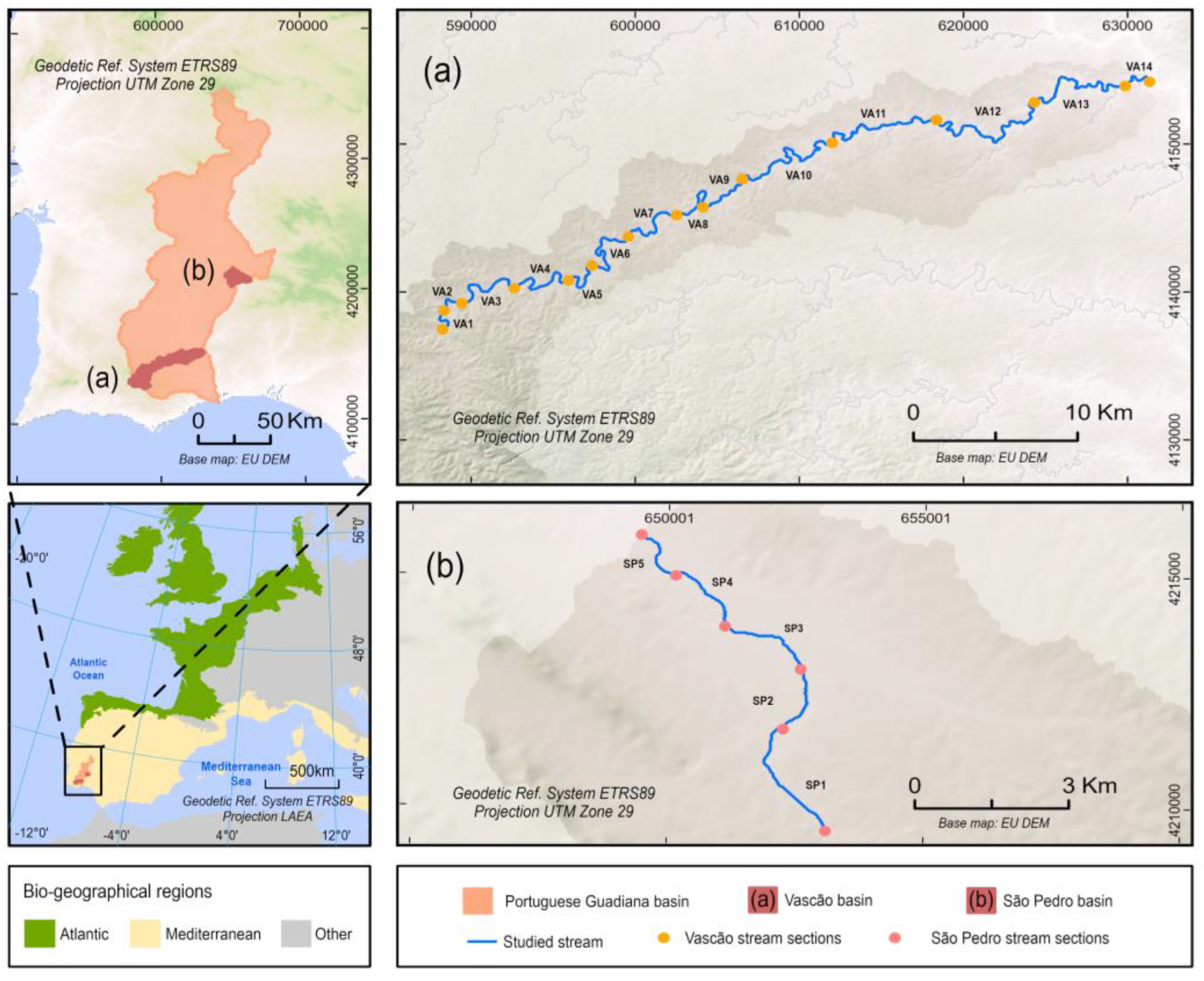
This study was conducted in two natural watercourses belonging to the Guadiana river basin, located in the Southwest of the Iberian Peninsula (Figure 1): the Vascão stream, which is about 105 km long and has a drainage area of 470 km2, discharging into the Guadiana River about 47 km from its mouth; and the São Pedro stream, a small 10 km long tributary in the Ardila stream basin, a tributary of the Guadiana river, having a drainage area of 45 km2. The climate in this region is typically Mediterranean, with annual rainfall showing a considerable inter- and intra-annual variation [27]. Most of the annual precipitation (about 80%) occurs between October and March, while in the summer months (June–August), it is practically non-existent. This climatic pattern significantly influences the hydrological regime of streams within the region, particularly smaller streams such as those examined as case studies, which exhibit pronounced seasonality. During the dry season, streamflow may cease entirely, resulting in the loss of connectivity and fragmentation into isolated pools, whereas winter rainfall events can generate rapid flow increases and occasional flooding [1,2]. Data from the Vascão gauging station (available at the Portuguese Information Systems on Water Resources, SNIRH, http://snirh.apambiente.pt, accessed on 2 February 2026), with complete monthly flow records for 29 years, showed mean annual flow varying from 0.27 m3/s year (in 2004) to 8.5 m3/s (in 1969) and with all but one year (1961) presenting zero flow months, varying from 1 to 5 months/year. No gauging station exists in the São Pedro stream, but the hydrological regime should be even more variable.
In addition to this pronounced seasonality, the study period was selected within years of contrasting drought severity (2005–2007 for the São Pedro stream and 2017–2020 for the Vascão stream). According to the Portuguese Institute for Sea and Atmosphere, 2005 was the driest year recorded in Portugal since 1931, with most of the territory receiving less than 60% of the 1961–1990 climatological average, particularly in southern Portugal, where the Guadiana basin is located [27]. In contrast, 2007 showed slightly wetter conditions, with an unusually high summer precipitation that partially alleviated drought conditions [27]. Similarly, 2017 recorded precipitation totals of about 60% of the 1971–2000 climatological average, whereas 2020 reached approximately 85% of the same reference, indicating substantially less severe dry conditions [27]. Such interannual contrasts are consistent with the high hydroclimatic variability described for the Lower Guadiana basin and with broader long-term trends indicating increasing drought tendency across the Iberian Peninsula and southern Europe, associated with rising temperatures and increasing atmospheric evaporative demand [28,29,30].

2.2. Data Collection and Sampling

Data collection was conducted within the scope of two research projects that required complete surveys along the two studied streams: Atlas of Freshwater Bivalves from Portugal (POA 1.100021) for the São Pedro stream and MUSSELFLOW (PTDC/BIA-EVL/29199/2017) for the Vascão stream. Data were collected, respectively, in 2005 and 2020, following the specific requirements of each project.

2.3. Pool Inventory

We characterized the pool systems of both streams using aerial orthophotos obtained from Google Earth. To ensure that mussel data reflected pool conditions, we used imagery acquired within five years of the fieldwork surveys. This period is shorter than the lifespan of the shortest-lived mussel species in the region (Unio tumidiformis), ensuring that mussel populations’ structure responded to these conditions. Climatic data from 2005 to 2023 were used to assess annual precipitation patterns [27]. These data were crossed with the available Google Earth imagery to identify, for each system, the images showing the lowest water levels within this period (“extreme drought”: 2005 for São Pedro and 2017 for Vascão). Using the same criterion, an average-precipitation year was selected (2007 for São Pedro and 2020 for Vascão). For each stream and hydrological condition (extreme drought and average dry season), all pools were identified and georeferenced. Pool length (used as a measure of pool size) and pool distance to the stream mouth were calculated using a Geographic Information System (QGIS Development Team. 2025, version 3.40.5. QGIS Geographic Information System. QGIS Association. https://www.qgis.org). Pool inventories were subsequently used to define sampling sections (Figure 1), each consisting of a stream reach containing a variable number of pools and clearly separated from adjacent sections by at least 100 m of completely dry streambed.

2.4. Mussel Sampling

Due to the harsh dry conditions encountered during mussel sampling in the São Pedro stream, extremely dense and small mussel beds were found, caused by the retraction of the water level, limiting methodological options. Mussels were therefore sampled using a total of 13 quadrats, 1 m2 in area each, distributed randomly along the stream [31]. Individuals inside quadrats were identified at the species level, counted, and measured (maximum shell length). The abundance at each section was calculated as the average number of mussels per quadrat.
In the Vascão stream, mussel beds were usually scattered in much lower densities on larger pools; hence, an alternative sampling method was applied, consisting of a random search carried out by two researchers, with a sampling effort of 30 min per pool [31]. Pools were selected based on the analysis of multi-year aerial imagery, prioritizing those that consistently persisted over several years. Whenever possible, a visual search was performed using an aquascope or snorkeling (according to depth), but at various sections, given the high turbidity of the water, it was necessary to replace this method by hand searching the streambed. The individuals collected were counted, identified at the species level, and measured (maximum shell length). Abundance at each section was calculated as average Captures per Unit Effort (CPUEs) across all pools, given as the average number of mussels captured per 30 min by two researchers.
Once the data recording was finished, the mussels were returned to their original location.

2.5. Fish Sampling

Fish sampling was conducted only in the Vascão stream, in 2020, where one fish sampling site was considered within each study section. Because mussel species are long-lived, changes in their fish host populations only reflected in the mussel population several years later, as adult mussels can persist for several years after recruitment has ceased [32]. For this reason, one may consider that a certain mussel population reflects, among other factors, the fish host populations that occurred during a period as long as the longevity of the target mussel species. Taking this into account, fish data from the annual monitoring program conducted in the Vascão stream by the Portuguese National Authority for Nature Conservation were used to check consistency of fish assemblages up to ten years prior to mussel data collection, which matches the lowest known longevity of any mussel species in the area [1].
The fish community was characterized in each stream section according to the sampling protocol established in Portugal by the Water National Authority [33]. Fish were sampled on 100 m long stretches of stream for a minimum of 20 min by using single-pass electrofishing. The electrofishing devices Hans Grassl™ IG200, Schönau am Königssee, Germany and SAMUS 725MP, Olomoucm, Czech Republic were manipulated by wading upstream in a zigzag direction during daylight. Voltage was selected according to the characteristics of the sampling site, particularly the conductivity and water depth. Specimens were identified to species level, counted and released back into the stream, except for exotic species that were sacrificed according to instructions of ICNF (Portuguese National Authority for Nature Conservation). Fish abundance was quantified as catch-per-unit-effort, CPUE (individuals collected per 100 m2).

2.6. Data Analyses

Overall, non-parametric statistics were used because the assumptions for parametric tests were not fulfilled. Differences in pool length among stream sections were evaluated with Kruskal–Wallis tests for each stream and year, and overall differences between streams were assessed using Mann–Whitney tests. Summary statistics were computed for each stream, period and section to characterize the spatial distribution of pool dimensions. To evaluate temporal changes in pool dimensions at specific locations, the Wilcoxon signed-rank test was used to compare pool lengths between average dry season and extreme drought. To test whether the relative size rankings of pools were preserved across years, Spearman’s rank correlation was performed between the pool’s length in both periods. This assessed whether larger pools in the average dry year tended to remain among the largest during the extreme drought conditions, thus evaluating spatial consistency in potential refuge.
Because mussel abundance was obtained using different sampling approaches in each watercourse, analyses were conducted separately for the two streams. Mussel presence and abundance were examined across the sampled sections to describe spatial variation within each stream. Formal statistical analyses were performed only for the Vascão stream because data availability for the São Pedro Stream was limited.
The relationship between species-specific mussel abundance per section, calculated as the average abundance across all pools within each section, and the average pool length was evaluated for both hydrological periods, since pool length represents a proxy for water permanence. In addition, the relationships between mussel abundance and key environmental variables, including distance from the stream mouth and the abundance of different host-fish groups, were assessed.
All previous statistical analyses were performed using R software (version 4.3.0, R Core Team, Vienna, Austria, 2023).
Finally, Canonical Correspondence Analysis (CCA), run with CANOCO [34,35,36], was used to explore the influence of several explanatory variables on the structure of the freshwater mussel community in the Vascão stream. This analysis is inherently correlative and therefore useful for describing patterns and exploring potential underlying mechanisms, but it does not allow causal relationships to be inferred. For the analysis, two matrices were developed: mussel abundance × pool (dependent variable) and explanatory variables × pool (independent variables). Mussel abundance data were log transformed [y = log(y + 1)] to reduce the influence of species in extremely high abundance [35]. The following explanatory variables were initially considered: pool length during average dry season and extreme drought conditions (m), abundance of Squalius spp. (CPUE), abundance of Luciobarbus spp. (CPUE), abundance of native fish species (CPUE), abundance of exotic fish species (CPUE), and distance to mouth (m). The variables gathered from the fish sampling for each section were used to characterize all the pools in that section.
The best predictors of mussel community variation were selected by a forward selection procedure, a multivariate extension of the stepwise regression method, with a significance cut-off point of 0.05. Variation explained in the CCA was obtained by dividing the canonical eigenvalues of the CCA (trace) by the total inertia, that is, the sum of all eigenvalues of a correspondence analysis of the mussel abundance matrix. Monte Carlo simulation tests of both the first axis eigenvalue and trace (1000 permutations) were used to evaluate the statistical significance of the association under analysis.

3. Results

3.1. Pool System Characteristics

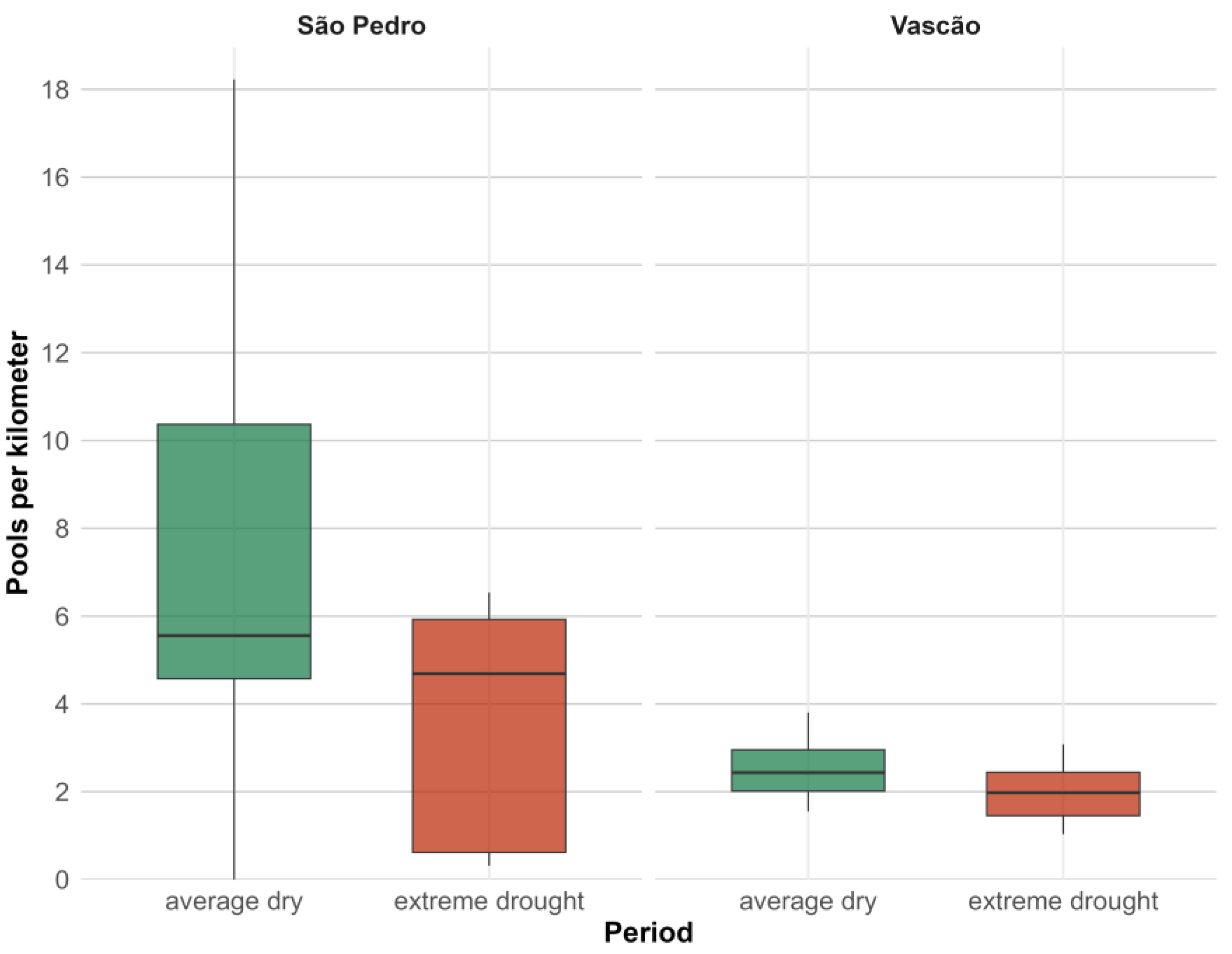
Pool number, length, and distance to mouth varied among streams, sections, and periods. The number of pools per km in an average year was smaller in the Vascão stream (1 to 3.8, average ± SD = 0.71) than in the São Pedro stream (0 to 18.2, average ± SD, = 5.33) and decreased during the extreme drought in both watercourses (Figure 2). Considering the pools identified during the average year as a reference, 49 out of 78 pools (63%) dried out in the São Pedro Stream during the extreme drought, while only 36 out of 195 pools (18%) dried out in the Vascão stream.
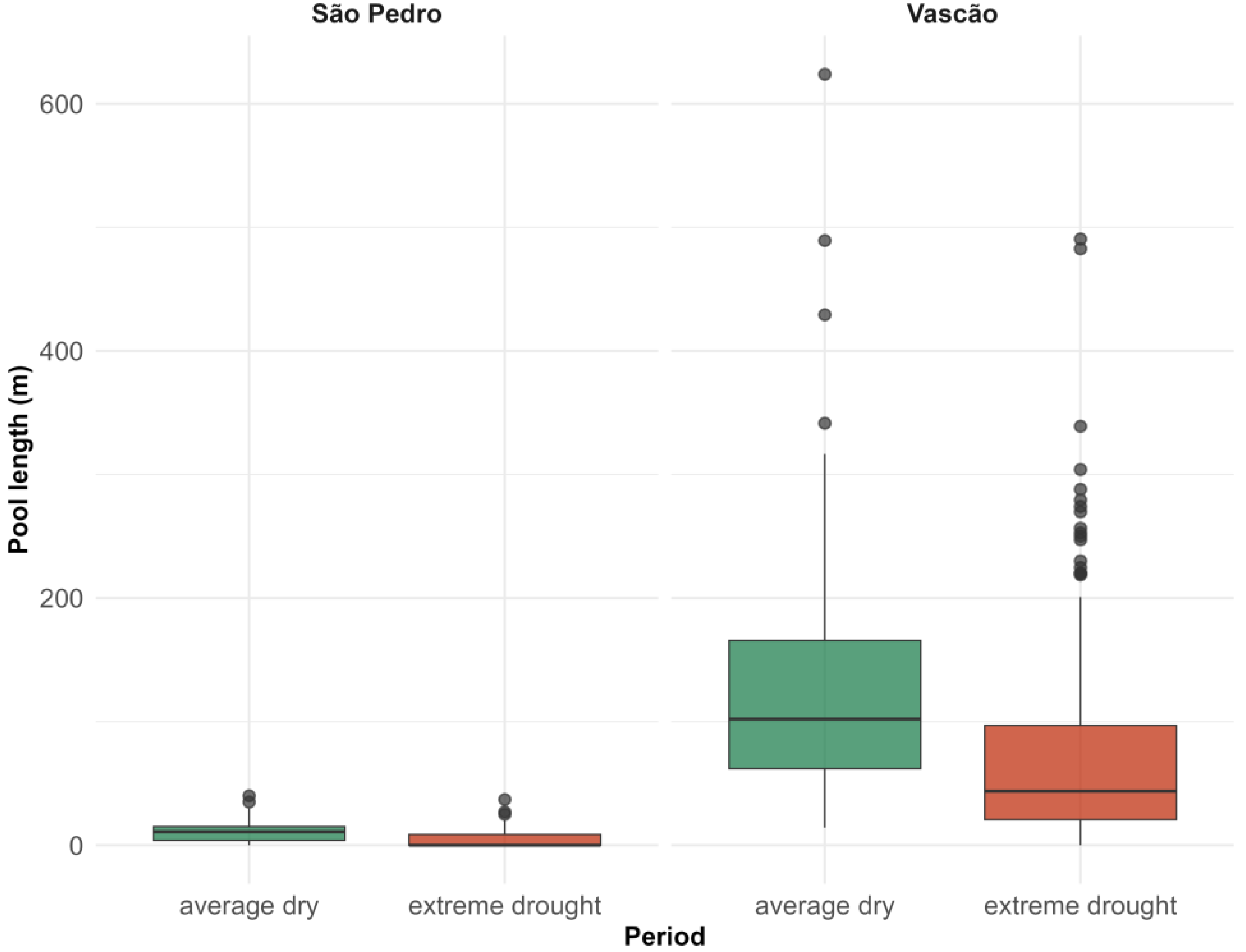
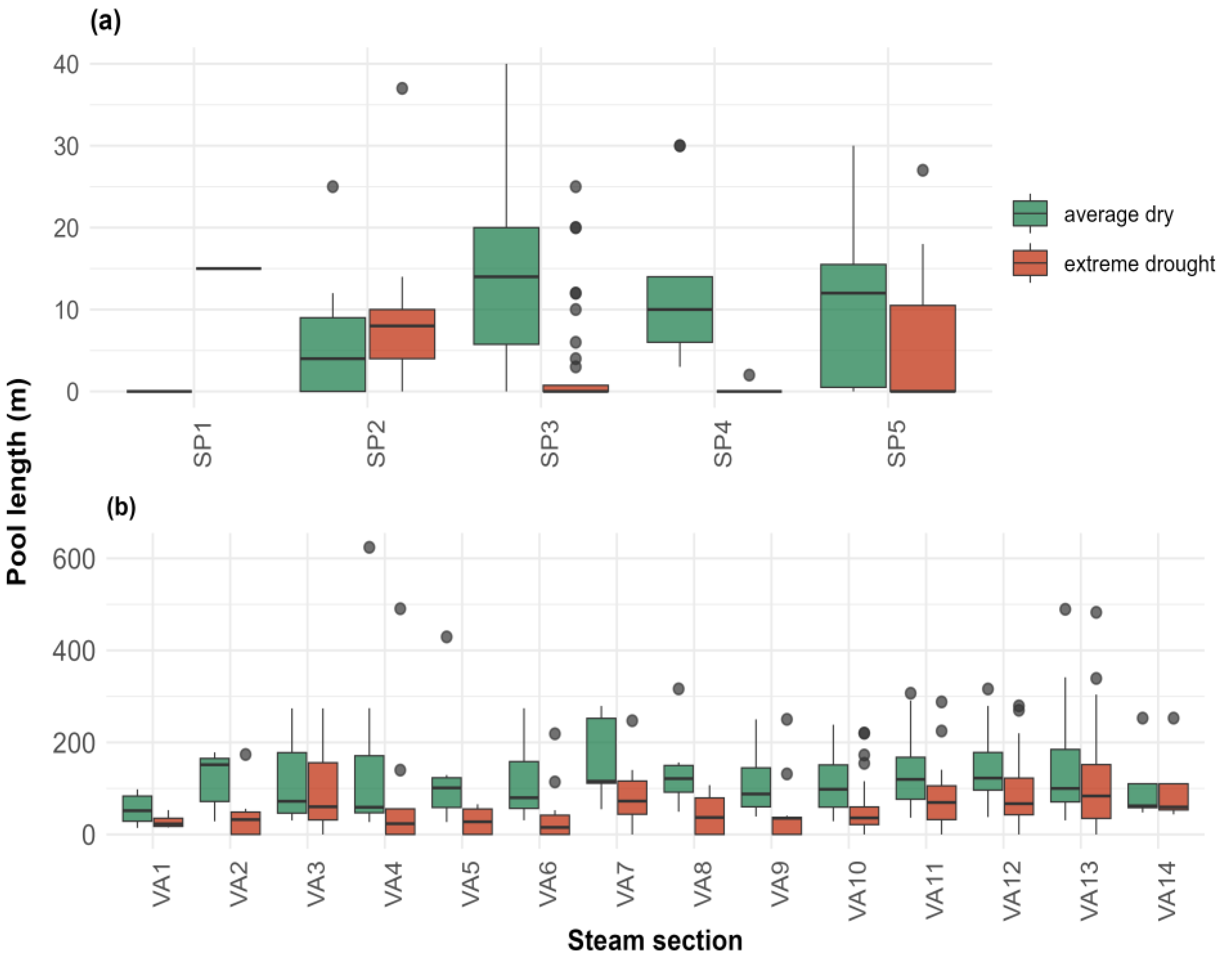
Pools in the Vascão stream were significantly longer than those in the São Pedro stream in both seasons (average dry season U = 83, p < 0.001; extreme drought U = 2055, p < 0.001). Pool length during the extreme drought showed a significant reduction compared to the average dry season in both watercourses (Vascão: U = 27,627, p < 0.001; São Pedro: U = 4585, p < 0.01) (Figure 3). Pool length also varied along each stream, although with no clear spatial trend (Figure 4).
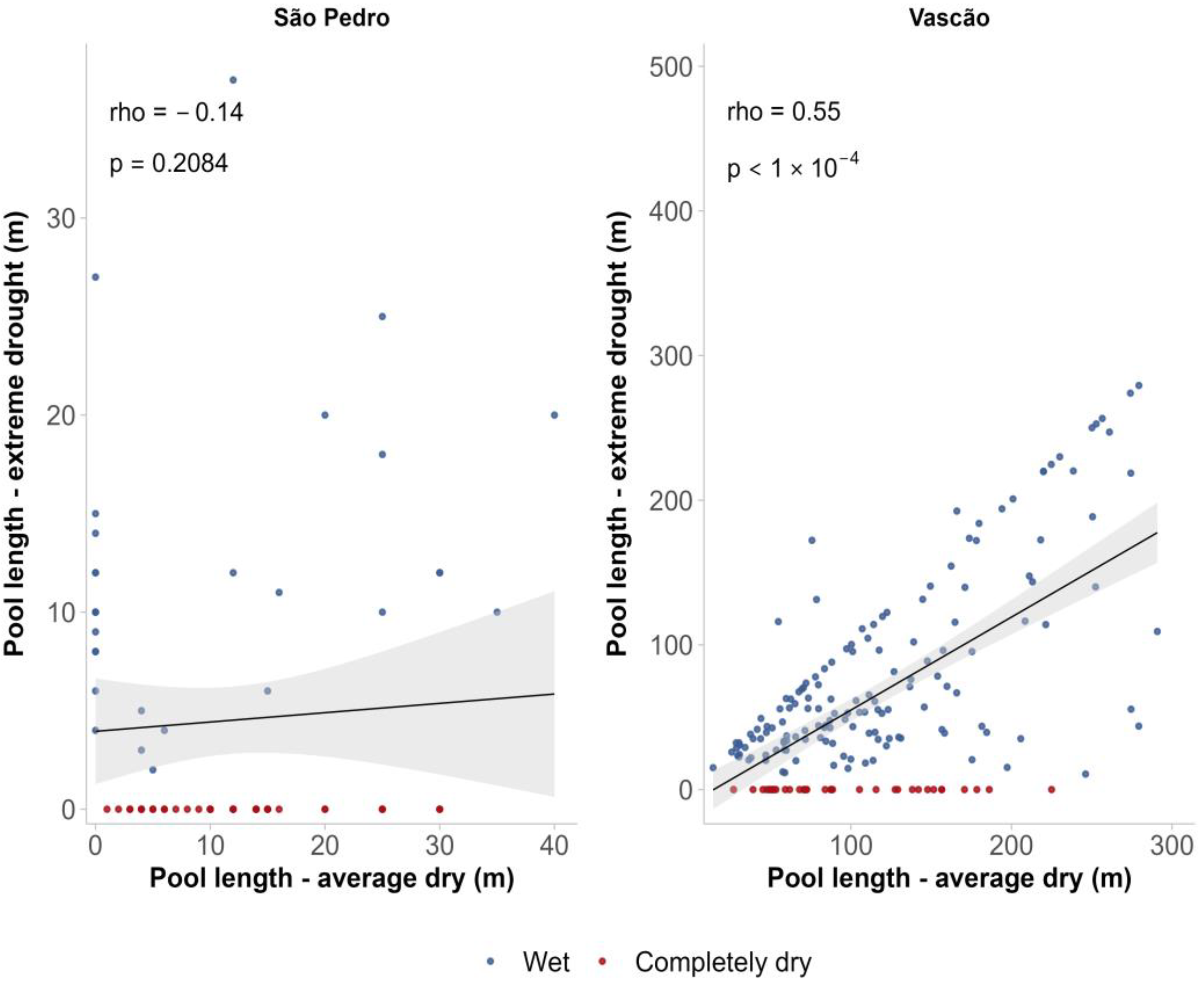
Correlations between pool length during the two sampling periods showed no association in the São Pedro stream (rho = −0.144, p = 0.2084), while a positive relationship was found in the Vascão stream (rho = 0.555, p < 1 × 10⁻⁴) (Figure 5).

3.2. Freshwater Mussel Abundance

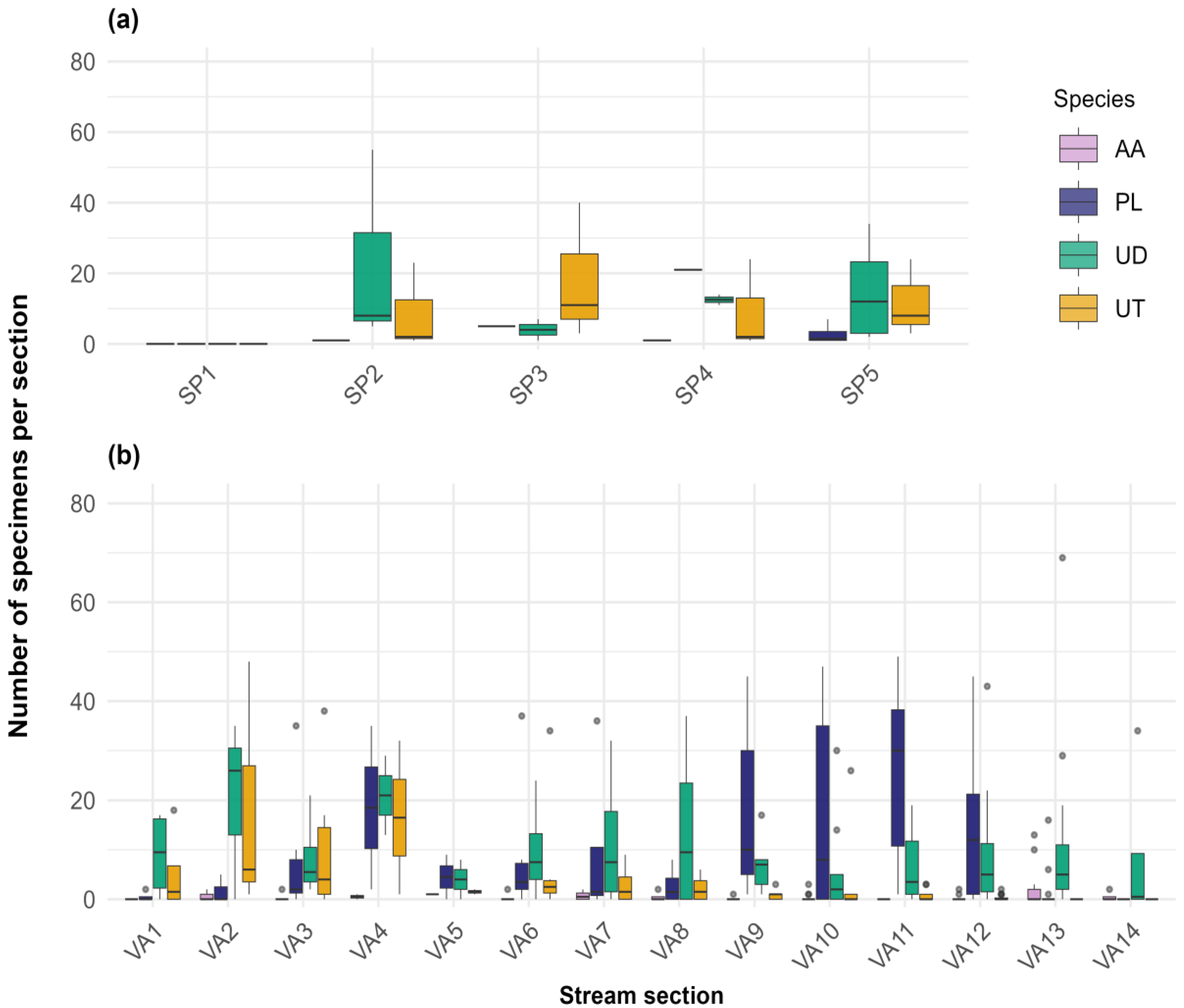
Mussel species showed distinct distribution and abundance patterns between streams and among stream sections (Figure 6). In the S. Pedro stream (Figure 6a), Unio delphinus was present in all sections but at relatively low abundances, whereas Unio tumidiformis dominated most sections, particularly in the middle and downstream reaches. Potomida littoralis occurred mainly in intermediate sections, while Anodonta anatina was rare. In the Vascão stream (Figure 6b), species showed a more heterogeneous longitudinal pattern: U. tumidiformis was most abundant in upstream sections, P. littoralis reached its highest abundances in upper–middle sections, and U. delphinus became more abundant toward downstream sections. Anodonta anatina remained scarce across the whole stream.
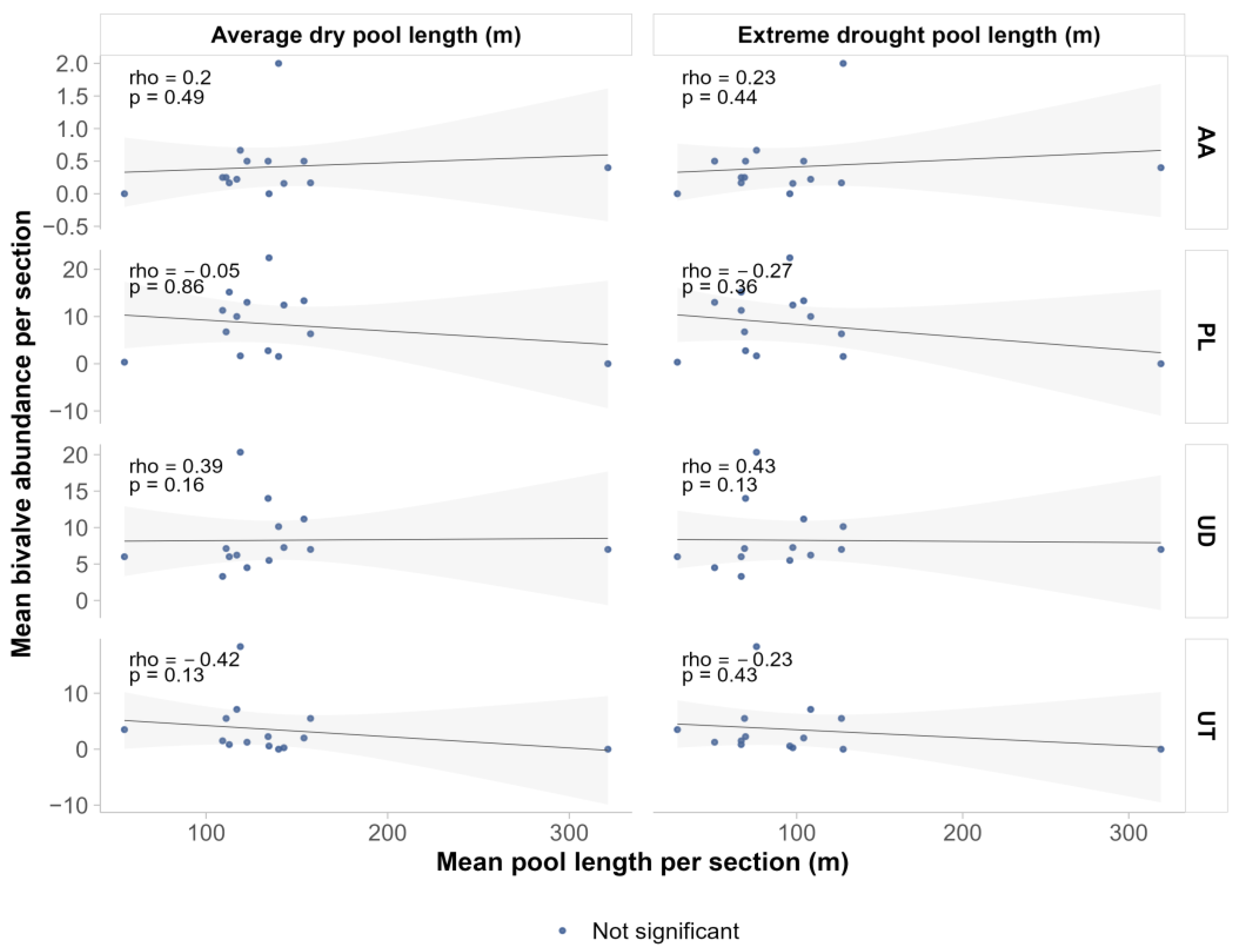
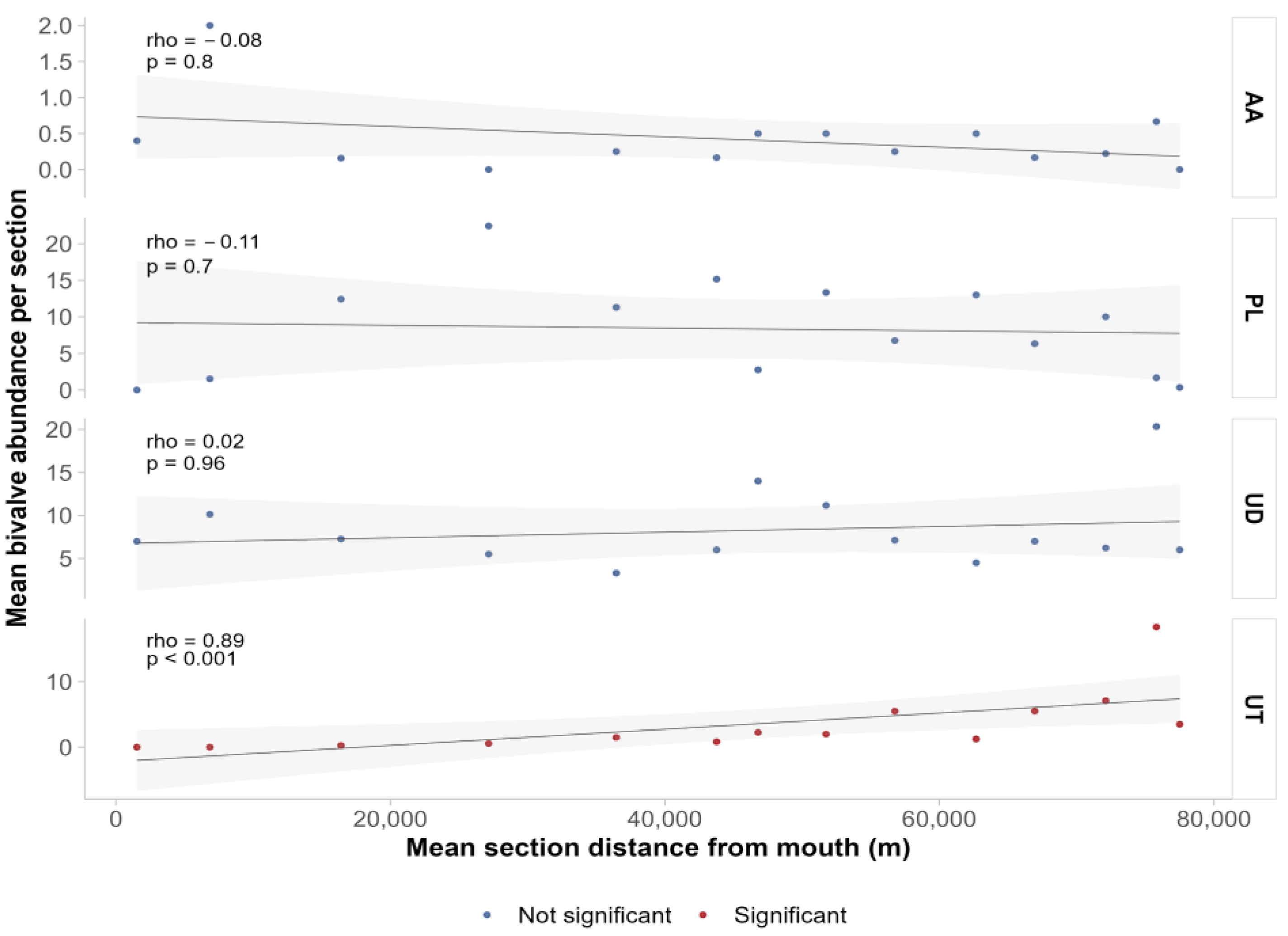
No significant correlations were detected between mean bivalve abundance and either average or extreme pool length for any of the four species in the Vascão stream (Figure 7). Unio tumidiformis showed a strong and statistically significant positive Spearman correlation with distance from the mouth (rho = 0.89, p < 0.001), with higher abundance values associated with the headwaters (Figure 8). No significant correlations were observed for Anodonta anatina, Potomida littoralis or Unio delphinus.

3.3. Fish Hosts

Fish collections at the 14 sampling sites in the Vascão stream included a total of 13 taxa, comprising both native (from higher to lower total catch: Luciobarbus spp., Squalius alburnoides, Iberochondrostoma lemmingii, Squalius pyrenaicus, Pseudochondrostoma willkommii, Cobitis paludica, Anaecypris hispanica, Anguilla anguilla, Salariopsis fluviatilis) and exotic species (from higher to lower total catch: Micropterus nigricans, Lepomis gibbosus, and Australoherus facetus).
Native species were clearly dominant in the fish assemblages, representing 92.9% of the total fish sampled. The proportion of native species in the collections varied among sampling sites, from 50% to 100%, with an average proportion of 89.4%.
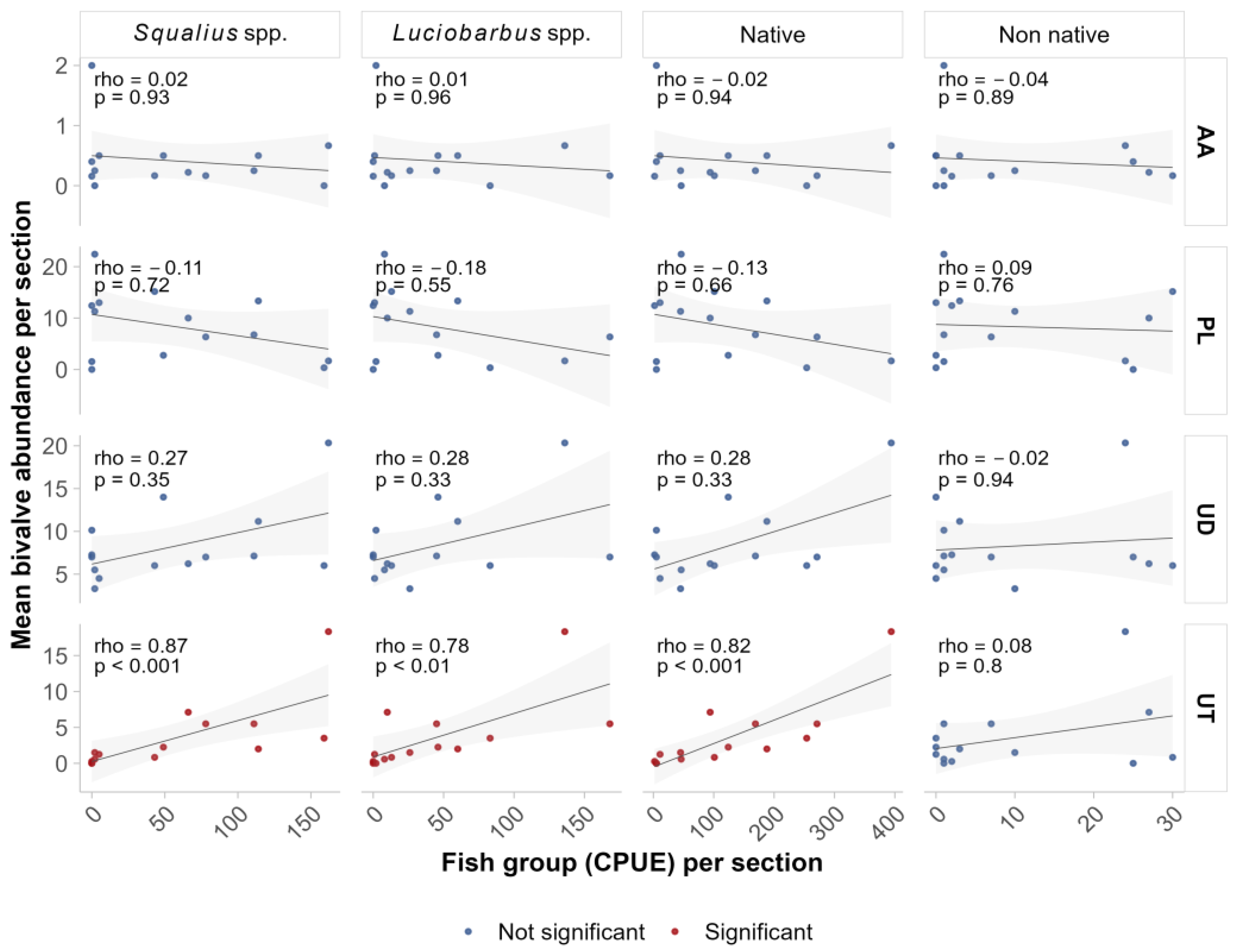
Regarding the relationship between the abundance of freshwater mussels and host fish (CPUE) in the Vascão stream (Figure 9), only U. tumidiformis showed a positive correlation with fish groups. This species showed strong positive Spearman correlations with Squalius spp. (ρ = 0.87, p < 0.001), Luciobarbus spp. (ρ = 0.78, p < 0.001), and with all native fish species grouped (ρ = 0.82, p < 0.001).

3.4. Integrative Analysis

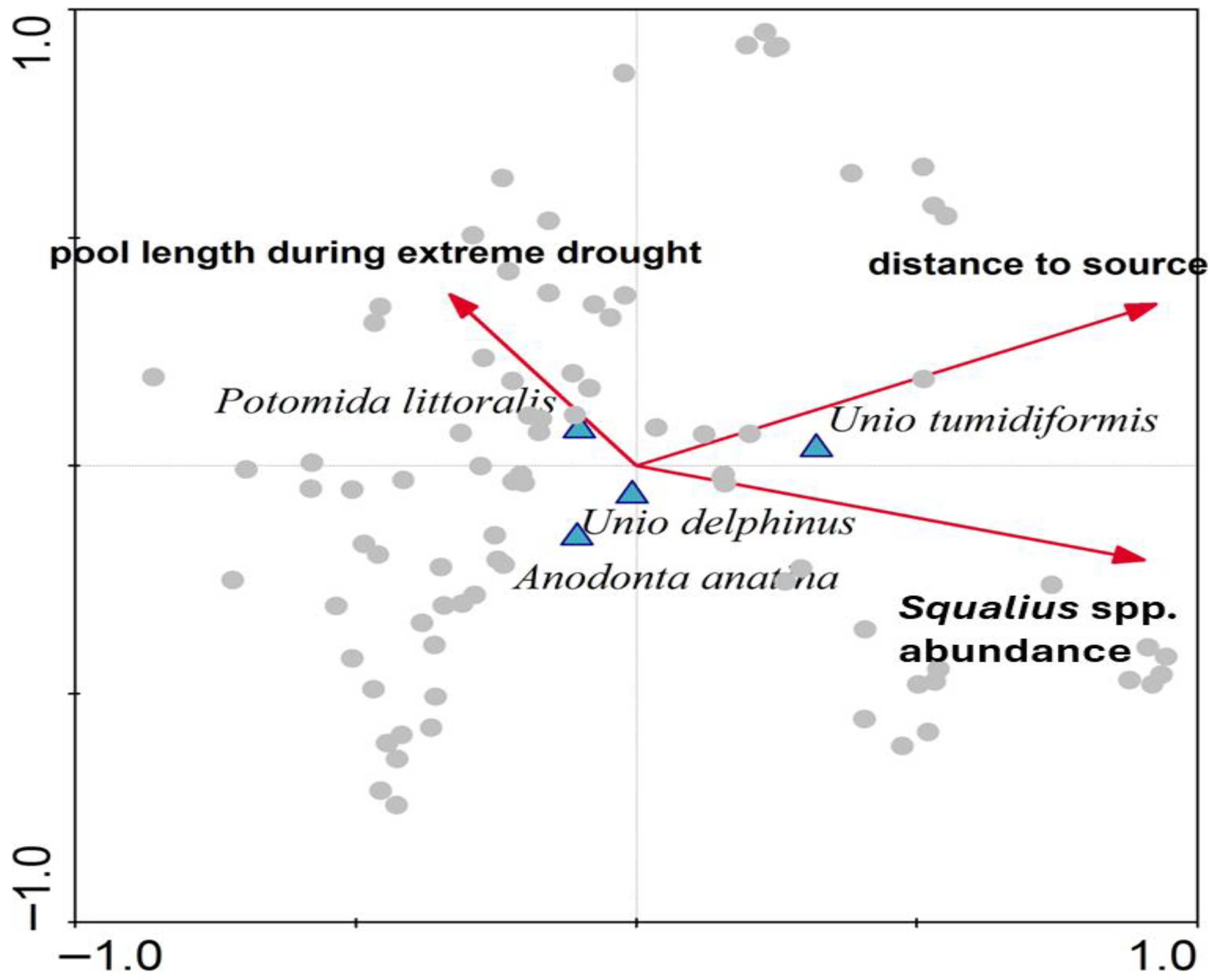
The first two axes of the CCA diagram are depicted in Figure 10. From all the explanatory variables, three were retained by the forward selection procedure, accounting for 25% of the total variation in the species abundance in pools (Monte Carlo permutation test, p < 0.01). The first axis (19.5% of the total variation) was mainly related to distance to the stream mouth and Squalius spp. abundance, with pools further from the stream mouth (i.e., closer to the stream source) and with higher Squalius spp. abundance related to higher U. tumidiformis abundance.
The second axis (5.5% of the total variation) was particularly influenced by pool length during extreme drought conditions, with P. littoralis presenting higher abundances at the larger pools. The other species presented an intermediate behavior in relation to the selected explanatory variables.

4. Discussion

This study shows that in some cases, the size of pools in temporary Mediterranean-type streams is a good proxy for how long they will hold water for, as indicated by the direct correlation of the size of pools in the Vascão stream between both seasons. This is not the case, however, for the S. Pedro stream. These facts are not surprising, as the location and duration of pools are determined by a combination of multiple factors, including substrate permeability, riparian vegetation, bedrock presence, groundwater upwelling, river geomorphology and human water withdrawal [37]. In fact, water upwellings and bedrock are relatively common in the Vascão river, while human pressure from agriculture and cattle origin are greater in the S. Pedro stream, accounting from some of the differentiated results despite sharing many features, including climate, geology and slope.
Our results for Iberian streams align with global research showing that freshwater mussels are highly vulnerable to drought due to their limited mobility, and susceptibility to emersion, hypoxia, and habitat desiccation that causes mass mortality events [26,38,39]. Differences in the pool system features of the two watercourses studied support eco-hydraulic conditions as a fundamental driver of mussel distribution and survival. The São Pedro stream, a much smaller and unstable watercourse, experienced a complete drying out of many pools during the extreme drought event in 2005, leading to mass mortality of the whole mussel community in that system, which is yet to recover 20 years on [13]. The complete extirpation of the mussel community was caused by the combination of dry pools and high temperature and low oxygen of the remaining ones (unpublished data). Furthermore, our data showed that the pools present during the extreme drought were not all permanent, as some were dry during the normal dry season, as reflected in the lack of correspondence between the length of the pools in both periods at this stream. This situation illustrates how the absence of stable refugia can drive local extinctions in these small, temporary streams with high hydrological variability [37]. In contrast, the larger Vascão stream, which showed more scattered but larger and more stable pools (as shown by their persistence and length correlation between studied seasons), provided better refugia for mussels, allowing populations to persist despite the dry conditions of more demanding meteorological years. This suggests that the size and stability, rather than the quantity of pools, may be the most relevant feature for the long-term freshwater mussel viability in Mediterranean-type streams. In fact, local mussel mass mortality events are known to be common in the Vascão stream during extreme drought events, according to periodic monitoring conducted by the Portuguese National Authority for Nature Conservation, but the populations can recover quickly from mussel beds that persist in permanent pools.
The abundance and distribution of freshwater mussels along the Vascão stream were not significantly associated with pool size for any of the studied species, with both average dry and extreme drought and pool length showing weak and non-significant correlations with mean bivalve abundance across sections. These results are partially due to the fact that the analyzed metric was standardized and not dependent on pool size (CPUE), but also suggest that pool size alone does not act as a primary driver of mussel spatial patterns in this system, and that other environmental variables, likely related to habitat quality, hydrological stability, and biotic interactions, may play a more decisive role in shaping mussel assemblage structure in intermittent Mediterranean streams [2,11,14,15]. This is not unlike mussel spatial patterns in other fluvial systems, which respond to a complex and interactive set of variables whose individual effects are difficult to access [26], and that may include fish host distribution and abundance, refuge availability from high flow events, etc.
Even though freshwater mussel distribution is known to be strongly related to their host fish distribution [40], the presence and abundance of fish species along the Vascão stream seems to be only related to the distribution of U. tumidiformis. This is not surprising, as this is known to be the most host-specialized species in these systems, using exclusively fish that belong to the genus Squalius spp. [1]; the other three mussel species are known to be able to use a wide range of native fish host species, widely distributed along the studied systems, which partially explains the lack of relation between them. Surprisingly, no mussel species seems to correlate with the presence and abundance of invasive fish species, although their relevance in the Vascão stream is smaller than in other Guadiana tributaries [41,42,43]. Moreover, A. anatina and U. delphinus are known to be able to use non-native fish species as hosts, although the success of glochidia attachment and transformation is lower than on native hosts [44]. In fact, a considerable proportion of the spatial variation in mussel assemblages in the Vascão stream remained unexplained by the selected variables in the CCA. In ecological studies, multivariate direct gradient analyses often account for relatively low proportions of the total biological variation due to the intrinsic complexity and noise of ecological datasets, while still revealing ecologically meaningful patterns [45]. The low proportion of explained variation may also indicate that additional drivers not included in the analysis influenced mussel assemblages, such as local groundwater inputs maintaining refugial habitats during drought or water quality conditions. Further studies are needed to assess the role of additional environmental and biotic factors affecting the persistence of these vulnerable taxa.
Severe droughts have been known to cause significant mortalities by exposing mussels to air or inadequate habitats [38,39], eliminating whole populations, which occurred in the São Pedro stream, where the lack of hydrological refugia led to mussel die-off along the whole of the stream. Recolonization of such areas can only occur after the rewatering of dry streams, allowing the access of host fish to areas previously devoid of water that act as sinks for multiple sources located either upstream or downstream, as the process of hydrological re-connectivity takes place [46]. In recent years, some specimens of U. delphinus have been recorded from the S. Pedro stream (unpublished data), showing some degree of recovery, at least of the most host-generalist species, likely originating from the river Toutalga where it flows to. The mortality events may also be partially compensated for by high recruitment patterns that originate from the higher infestation rates of fish hosts trapped in reduced pools, provided some adult mussels are present [47], as seems to be the case in the Vascão river. Likewise, it has been shown that other aquatic macroinvertebrates are very resilient and able to recover if they are not eliminated in hydrological highly variable streams [37,48]. This follows a “boom and bust” pattern described in temporary and intermittent streams [49]. Also, these recurrent cyclic patterns of water availability can also leave marks on the genetic diversity of strictly freshwater species, especially due to isolation, genetic drift and bottleneck effects, as suggested for the sympatric fish Anaecypris hispanica [50]. Despite the capacity of many of these species to cope with environmental variability, the increased frequency and severity of dry events [7,9,51,52] has, consequently, led to an increase in mussel mortality because more pools dry out during summer. Mass mortalities such as the ones in the S. Pedro stream have been recorded in similar sized systems, leading to the local extirpation of several populations [39]. This is particularly worrying for U. tumidiformis, as very few and isolated populations remain, making its natural recovery by migration from other streams impossible. In fact, Lopes-Lima et al. (2023) [13] state that 80% of the populations of the species known at the beginning of the century in Portugal have already disappeared, with droughts being one of the main reasons suggested by the authors.
The above considerations emphasize the need to protect the fluvial ecosystem as a whole, ensuring the integrity of the natural flow regimes and the fish communities, in order to achieve efficient conservation of freshwater mussels. In particular, permanent water refuges must be insured to allow the survival of the mussels (and their hosts) during dry periods, as desiccation seems to be a major threat for almost all known populations.
Artificial habitats such as reservoirs and canals are known to provide refuge to mussels during drought in a few cases [53,54]. However, this seems a side effect with little impact on the protection of the fluvial ecosystem as a whole, essential for long-term conservation of freshwater mussels.
Maintaining and restoring riparian vegetation to provide shaded refuges during droughts and stabilize stream banks, enforcing strict water policies in dry seasons, implementing stream engineering to enhance permanent water refuges, and restoration of connectivity and natural flow are important strategies for conserving freshwater mussels in Mediterranean systems. Additionally, captive rearing of juvenile mussels for population reinforcement or reintroduction, once original threats have been addressed, is vital for the recovery of species like Unio tumidiformis [14] and should be prioritized to prevent further decline.

Author Contributions

Conceptualization, M.G.Á. and J.R.; sampling, M.G.Á., F.R., J.R., F.G., P.P., M.G. (Mafalda Gama), D.P., M.G. (María Gil), F.B., C.S.-S. and C.S.L. formal analysis, M.G.Á. and F.G.; data curation, M.G.Á.; writing—original draft preparation M.G.Á., J.R., F.G. and P.P.; writing—review and editing, M.G.Á., J.R., F.G., P.P., F.R., M.G. (Mafalda Gama), D.P., M.G. (María Gil), F.B., P.A., C.S.-S., C.S.L. and A.C.C. All authors have read and agreed to the published version of the manuscript.

Funding

This research was funded by the Portuguese Foundation for Science and Technology (FCT) (Project MUSSELFLOW, contract PTDC/BIA-EVL/29199/2017; strategic project UID/04292/2025 awarded to MARE and through project LA/P/0069/2020 granted to the Associated Laboratory ARNET). FCT also supported F.B. through an individual contract (CEEC/01896/2021) and J.R. and M.G.A. under the Ph.D. grants SFRH/BD/12687/2003 and 2022.13463.BDANA, respectively.

Data Availability Statement

The raw data supporting the conclusions of this article will be made available by the authors on request.

Acknowledgments

We thank Maria João Collares-Pereira and Rafael Araujo for guidance in sampling and species identification in the São Pedro stream and the Natural Park of the Guadiana Valley for all assistance provided during sampling in the Vascão river.

Conflicts of Interest

The authors declare no conflicts of interest.

References

  1. Reis, J.; Araujo, R. Life History of the Freshwater Mussel Unio tumidiformis (Bivalvia: Unionidae) in a Temporary Mediterranean-Type Stream. Invertebr. Biol. 2016, 135, 31–45. [Google Scholar] [CrossRef] [Scilit]
  2. Gama, M.; Banha, F.; Moreira, C.; Gama, H.; Graça, M.; Anastácio, P. Patterns of Distribution of Bivalve Populations in a Mediterranean Temporary River. Diversity 2020, 12, 158. [Google Scholar] [CrossRef] [Scilit]
  3. Barbosa, A.B.; Domingues, R.B.; Galvão, H.M. Environmental Forcing of Phytoplankton in a Mediterranean Estuary (Guadiana Estuary, South-Western Iberia): A Decadal Study of Anthropogenic and Climatic Influences. Estuaries Coasts 2010, 33, 324–341. [Google Scholar] [CrossRef] [Scilit]
  4. Ramos, C.; Reis, E. As Cheias No Sul de Portugal Em Diferentes Tipos de Bacias Hidrográficas. Finisterra 2001, 36, 61–82. [Google Scholar] [CrossRef] [Scilit]
  5. Lange, M.A. Climate Change in the Mediterranean: Environmental Impacts and Extreme Events. In Mediterranean Yearbook 2020; Energy, Environment and Water Research Center, The Cyprus Institute IEMed Mediterranean: Barcelona, Spain, 2020; pp. 30–45. [Google Scholar]
  6. Pereira, S.C.; Carvalho, D.; Rocha, A. Temperature and Precipitation Extremes over the Iberian Peninsula under Climate Change Scenarios: A Review. Climate 2021, 9, 139. [Google Scholar] [CrossRef] [Scilit]
  7. IPCC. Summary for Policymakers. In Climate Change 2023: Synthesis Report. Contribution of Working Groups I, II and III to the Sixth Assessment Report of the Intergovernmental Panel on Climate Change; Lee, H., Romero, J., Eds.; Intergovernmental Panel on Climate Change: Geneva, Switzerland, 2023; pp. 1–34. [Google Scholar] [CrossRef] [Scilit]
  8. Cushway, K.C.; Geist, J.; Schwalb, A.N. Surviving Global Change: A Review of the Impacts of Drought and Dewatering on Freshwater Mussels. Biol. Rev. 2025, 100, 275–307. [Google Scholar] [CrossRef] [Scilit]
  9. Magalhães, M.F.; Beja, P.; Schlosser, I.J.; Collares-Pereira, M.J. Effects of Multi-Year Droughts on Fish Assemblages of Seasonally Drying Mediterranean Streams. Freshw. Biol. 2007, 52, 1494–1510. [Google Scholar] [CrossRef] [Scilit]
  10. Wiens, J.J. Climate-Related Local Extinctions Are Already Widespread among Plant and Animal Species. PLoS Biol. 2016, 14, e2001104. [Google Scholar] [CrossRef] [Scilit]
  11. Lopes-Lima, M.; Sousa, R.; Geist, J.; Aldridge, D.C.; Araujo, R.; Bergengren, J.; Bespalaya, Y.; Bódis, E.; Burlakova, L.; Van Damme, D.; et al. Conservation Status of Freshwater Mussels in Europe: State of the Art and Future Challenges. Biol. Rev. 2017, 92, 572–607. [Google Scholar] [CrossRef] [Scilit]
  12. Carles, I.; Caiola, N. Impacts of Water Scarcity and Drought on Iberian Aquatic Ecosystems. In Drought in Arid and Semi-Arid Regions: A Multi-Disciplinary and Cross-Country Perspective; Schwabe, K., Albiac, J., Connor, J.D., Hassan, R.M., González, L.M., Eds.; Springer: Dordrecht, The Netherlands, 2013; pp. 169–184. ISBN 978-94-007-6636-5. [Google Scholar]
  13. Lopes-Lima, M.; Reis, J.; Alvarez, M.G.; Anastácio, P.M.; Banha, F.; Beja, P.; Castro, P.; Gama, M.; Gil, M.G.; Gomes-dos-Santos, A.; et al. The Silent Extinction of Freshwater Mussels in Portugal. Biol. Conserv. 2023, 285, 110244. [Google Scholar] [CrossRef] [Scilit]
  14. Reis, J.; Perea, S.; Gama, M.; Mendes, S.L.; Sousa, V.C.; Lima, C.; Banha, F.; Gil, M.; Alvarez, M.G.; Anastácio, P.; et al. Conservation Challenges Imposed by Evolutionary History and Habitat Suitability Shifts of Endangered Freshwater Mussels under a Global Climate Change Scenario. Diversity 2024, 16, 209. [Google Scholar] [CrossRef] [Scilit]
  15. Vaughn, C.C. Ecosystem Services Provided by Freshwater Mussels. Hydrobiologia 2018, 810, 15–27. [Google Scholar] [CrossRef] [Scilit]
  16. Atkinson, C.L.; Hopper, G.W.; Kreeger, D.A.; Lopez, J.W.; Maine, A.N.; Sansom, B.J.; Schwalb, A.; Vaughn, C.C. Gains and Gaps in Knowledge Surrounding Freshwater Mollusk Ecosystem Services. Freshw. Mollusk Biol. Conserv. 2023, 26, 20–31. [Google Scholar] [CrossRef] [Scilit]
  17. Barnhart, M.C.; Haag, W.R.; Roston, W.N. Adaptations to Host Infection and Larval Parasitism in Unionoida. J. N. Am. Benthol. Soc. 2008, 27, 370–394. [Google Scholar] [CrossRef] [Scilit]
  18. Modesto, V.; Ilarri, M.; Souza, A.T.; Lopes-Lima, M.; Douda, K.; Clavero, M.; Sousa, R. Fish and Mussels: Importance of Fish for Freshwater Mussel Conservation. Fish Fish. 2018, 19, 244–259. [Google Scholar] [CrossRef] [Scilit]
  19. Irmscher, P.; Vaughn, C.C. Effects of Juvenile Settling and Drift Rates on Freshwater Mussel Dispersal. Am. Midl. Nat. 2018, 180, 258–272. [Google Scholar] [CrossRef] [Scilit]
  20. Mouthon, J. Molluscs and Biodegradable Pollution in Rivers: Studies into the Limiting Values of 11 Physico-Chemical Variables. Hydrobiologia 1996, 319, 57–63. [Google Scholar] [CrossRef] [Scilit]
  21. da Silva, J.P.; Gonçalves, D.V.; Lopes-Lima, M.; Anastácio, P.M.; Banha, F.; Frimpong, E.; Gama, M.; Miranda, R.; Reis, J.; Filipe, A.F.; et al. Predicting Climatic Threats to an Endangered Freshwater Mussel in Europe: The Need to Account for Fish Hosts. Freshw. Biol. 2022, 67, 842–856. [Google Scholar] [CrossRef] [Scilit]
  22. Cushway, K.C.; Harris, A.E.; Piercy, C.D.; Mitchell, Z.A.; Schwalb, A.N. Go with the Flow: Impacts of High and Low Flow Conditions on Freshwater Mussel Assemblages and Distribution. PLoS ONE 2024, 19, e0296861. [Google Scholar] [CrossRef] [Scilit]
  23. Englund, V.P.M.; Heino, M.P. Valve Movement of the Freshwater Mussel Anodonta Anatina: A Reciprocal Transplant Experiment between Lake and River. Hydrobiologia 1996, 328, 49–56. [Google Scholar] [CrossRef] [Scilit]
  24. Chen, L.-Y.; Heath, A.G.; Neves, R. An Evaluation of Air and Water Transport of Freshwater Mussels (Bivalvia: Unionidae). Am. Malacol. Bull. 2001, 16, 147–154. [Google Scholar]
  25. Sociedad Española de Malacología. Informe de Progreso n.º 4 del Proyecto PRTR-ESMOLINCO. Mejora del Conocimiento del Estado de Conservación de los Moluscos e Invertebrados Costeros de España, Informes Sexenales del Artículo 17 (Directiva Hábitats) y Artículo 24 (Especies Invasoras) y Actualización del Atlas y Libro Rojo de los Invertebrados Amenazados de España (Especies Vulnerables); Original report; TRAGSATEC: Madrid, Spain, 2024; 35p. [Google Scholar]
  26. Strayer, D.L. Freshwater Mussel Ecology: A Multifactor Approach to Distribution and Abundance; University of California Press: Berkeley, CA, USA, 2008; Volume 1, ISBN 9780520942523. [Google Scholar]
  27. IPMA. Boletim Climatológico Anual de Portugal Continental. 2005–2023. Available online: https://www.ipma.pt/pt/publicacoes/ (accessed on 5 February 2026).
  28. Páscoa, P.; Gouveia, C.M.; Russo, A.; Trigo, R.M. Drought Trends in the Iberian Peninsula over the Last 112 Years. Adv. Meteorol. 2017, 2017, 4653126. [Google Scholar] [CrossRef] [Scilit]
  29. Spinoni, J.; Vogt, J.V.; Naumann, G.; Barbosa, P.; Dosio, A. Will Drought Events Become More Frequent and Severe in Europe? Int. J. Climatol. 2018, 38, 1718–1736. [Google Scholar] [CrossRef] [Scilit]
  30. Pulido-Calvo, I.; Gutiérrez-Estrada, J.C.; Sanz-Fernández, V. Drought and Ecological Flows in the Lower Guadiana River Basin (Southwest Iberian Peninsula). Water 2020, 12, 677. [Google Scholar] [CrossRef] [Scilit]
  31. Strayer, D.L.; Smith, D.R. A Guide to Sampling Freshwater Mussel Populations; American Fisheries Society: Nashville, TN, USA, 2003. [Google Scholar]
  32. Ma, L.; Beatty, S.J.; Morgan, D.L.; Lymbery, A.J. Population Structure and Microhabitat Preference of a Threatened Freshwater Mussel, Westralunio carteri, in South-Western Australia. Hydrobiologia 2022, 849, 3227–3244. [Google Scholar] [CrossRef] [Scilit]
  33. Inag, I.P. Manual Para a Avaliação Biológica Da Qualidade Da Água Em Sistemas Fluviais Segundo a Directiva Quadro Da Água—Protocolo de Amostragem e Análise Para a Fauna Piscícola; Instituto da Água, Ministério do Ambiente e ordenamento do Território. 2008. Available online: https://apambiente.pt/dqa/assets/Protocolo_Amostragem_Macrófitos2017_rev18.pdf (accessed on 5 February 2026).
  34. Ter Braak, C.J.F. The Analysis of Vegetation-Environment Relationships by Canonical Correspondence Analysis. Theory Models Veg. Sci. 1987, 69, 69–77. [Google Scholar] [CrossRef] [Scilit]
  35. Ter Braak, C.J.F. CANOCO—A FORTRAN Program for Canonical Community Ordination by [Partial] [Detrended] [Canonical] Correspondence Analysis, Principal Components Analysis and Redundancy Analysis (Version 2.1); Wageningen University: Wageningen, The Netherlands, 1988. [Google Scholar]
  36. Ter Braak, C.J.F.; Smilauer, P. CANOCO Reference Manual and User’s Guide to Canoco for Windows: Software for Canonical Community Ordination (Version 4); Centre for Biometry: Wageningen, The Netherlands, 1998. [Google Scholar]
  37. Bonada, N.; Cañedo-Argüelles, M.; Gallart, F.; von Schiller, D.; Fortuño, P.; Latron, J.; Llorens, P.; Múrria, C.; Soria, M.; Vinyoles, D.; et al. Conservation and Management of Isolated Pools in Temporary Rivers. Water 2020, 12, 2870. [Google Scholar] [CrossRef] [Scilit]
  38. Lopez, J.W.; DuBose, T.P.; Franzen, A.J.; Atkinson, C.L.; Vaughn, C.C. Long-Term Monitoring Shows That Drought Sensitivity and Riparian Land Use Change Coincide with Freshwater Mussel Declines. Aquat. Conserv. 2022, 32, 1571–1583. [Google Scholar] [CrossRef] [Scilit]
  39. Cossey, D.A.; Urbańska, M.; Sousa, R.; Geist, J.; Labecka, A.M.; Atasaral, Ş.; Bonk, M.; Bylyna, L.; Collas, F.P.L.; Daill, D.; et al. Distribution, Scale, and Drivers of Mass Mortality Events in Europe’s Freshwater Bivalves. Conserv. Biol. 2025, e70192. [Google Scholar] [CrossRef] [Scilit]
  40. Schwalb, A.N.; Cottenie, K.; Poos, M.S.; Ackerman, J.D. Dispersal Limitation of Unionid Mussels and Implications for Their Conservation. Freshw. Biol. 2011, 56, 1509–1518. [Google Scholar] [CrossRef] [Scilit]
  41. Godinho, F.N.; Ferreira, M.T.; Santos, J.M. Variation in Fish Community Composition along an Iberian River Basin from Low to High Discharge: Relative Contributions of Environmental and Temporal Variables. Ecol. Freshw. Fish 2000, 9, 22–29. [Google Scholar] [CrossRef] [Scilit]
  42. Corbacho, C.; Sánchez, J.M. Patterns of Species Richness and Introduced Species in Native Freshwater Fish Faunas of a Mediterranean-Type Basin: The Guadiana River (Southwest Iberian Peninsula). River Res. Appl. 2001, 17, 699–707. [Google Scholar] [CrossRef] [Scilit]
  43. Morán-López, R.; Da Silva, E.; Pérez-Bote, J.L.; Corbacho Amado, C. Associations between Fish Assemblages and Environmental Factors for Mediterranean-Type Rivers during Summer. J. Fish Biol. 2006, 69, 1552–1569. [Google Scholar] [CrossRef] [Scilit]
  44. Huber, V.; Geist, J. Host Fish Status of Native and Invasive Species for the Freshwater Mussel Anodonta anatina (Linnaeus, 1758). Biol. Conserv. 2019, 230, 48–57. [Google Scholar] [CrossRef] [Scilit]
  45. Šmilauer, P.; Lepš, J. Multivariate Analysis of Ecological Data Using Canoco 5; Cambridge University Press: Cambridge, UK, 2014; pp. 1–362. [Google Scholar] [CrossRef] [Scilit]
  46. Poff, N.L.; Ward, J.V. Implications of Streamflow Variability and Predictability for Lotic Community Structure: A Regional Analysis of Streamflow Patterns. Can. J. Fish. Aquat. Sci. 2011, 46, 1805–1818. [Google Scholar] [CrossRef] [Scilit]
  47. Reis, J. Animal Systematics, Biology and Conservation of Unio tumidiformis Castro, 1885 (Unionidae: Bivalvia) in the South-West of the Iberian Peninsula; Universidade de Lisboa: Lisbon, Portugal, 2010. [Google Scholar]
  48. Boulton, A.J. Parallels and Contrasts in the Effects of Drought on Stream Macroinvertebrate Assemblages. Freshw. Biol. 2003, 48, 1173–1185. [Google Scholar] [CrossRef] [Scilit]
  49. Arthington, A.H.; Balcombe, S.R. Extreme Flow Variability and the “boom and Bust” Ecology of Fish in Arid-Zone Floodplain Rivers: A Case History with Implications for Environmental Flows, Conservation and Management. Ecohydrology 2011, 4, 708–720. [Google Scholar] [CrossRef] [Scilit]
  50. Sousa-Santos, C.; Robalo, J.I.; Francisco, S.M.; Carrapato, C.; Cardoso, A.C.; Doadrio, I. Metapopulations in Temporary Streams—The Role of Drought–Flood Cycles in Promoting High Genetic Diversity in a Critically Endangered Freshwater Fish and Its Consequences for the Future. Mol. Phylogenet. Evol. 2014, 80, 281–296. [Google Scholar] [CrossRef] [Scilit]
  51. Schönwiese, C.-D.; Rapp, J. Climate Trend Atlas of Europe Based on Observations 1891–1990, 1st ed.; Springer: Dordrecht, The Netherlands, 1997; Volume VIII, ISBN 978-94-015-8818-8. [Google Scholar]
  52. Millán, M.M.; Estrela, M.J.; Miró, J. Rainfall Components: Variability and Spatial Distribution in a Mediterranean Area (Valencia Region). J. Clim. 2005, 18, 2682–2705. [Google Scholar] [CrossRef] [Scilit]
  53. Chester, E.T.; Robson, B.J. Anthropogenic Refuges for Freshwater Biodiversity: Their Ecological Characteristics and Management. Biol. Conserv. 2013, 166, 64–75. [Google Scholar] [CrossRef] [Scilit]
  54. Sousa, R.; Halabowski, D.; Labecka, A.M.; Douda, K.; Aksenova, O.; Bespalaya, Y.; Bolotov, I.; Geist, J.; Jones, H.A.; Konopleva, E.; et al. The Role of Anthropogenic Habitats in Freshwater Mussel Conservation. Glob. Chang. Biol. 2021, 27, 2298–2314. [Google Scholar] [CrossRef] [Scilit]
Figure 1. Location of the Vascão (a) and São Pedro (b) streams within the Guadiana basin, in the Iberian Peninsula. Sampling sections are numbered according to river code (SP for São Pedro, VA for Vascão) from upstream to downstream. Each section includes a variable number of pools.
Diversity 18 00189 g001
Figure 2. Distribution of pool density (pools km−1) in the São Pedro stream (left) and the Vascão stream (right) during the average dry season (green) and the extreme drought (red). Boxes represent the interquartile range (Q1–Q3), the horizontal line indicates the median, and whiskers extend to values within 1.5 times the interquartile range.
Diversity 18 00189 g002
Figure 3. Distribution of pool length (m) in the São Pedro stream (left) and the Vascão stream (right) during the average dry season (green) and the extreme drought (red). Boxes represent the interquartile range (Q1–Q3), the horizontal line indicates the median, and whiskers extend to values within 1.5 times the interquartile range.
Diversity 18 00189 g003
Figure 4. Pool length (m) by stream section along the São Pedro stream (a) and the Vascão stream (b) during the average dry (green) and extreme drought (red) periods. Boxes represent the interquartile range (Q1–Q3), the horizontal line indicates the median, whiskers extend to values within 1.5 times the interquartile range, and points indicate outliers. Stream sections are numbered according to stream code (SP for São Pedro, VA for Vascão), from the upstream section to the section closest to the stream mouth.
Diversity 18 00189 g004
Figure 5. Relationship between pool lengths during average dry season and extreme drought in the São Pedro and Vascão streams. Each point represents an individual pool; red points indicate pools that completely dried during the extreme drought conditions. Lines represent linear regressions with 95% confidence intervals. The dashed 1:1 line denotes equal pool length between periods. The Spearman correlation coefficient (rho) and its significance level (p) are shown for each stream.
Diversity 18 00189 g005
Figure 6. Distribution of freshwater mussel abundance (number of individuals captured) by stream section in the São Pedro stream (a) and the Vascão stream (b). Boxes represent the interquartile range (Q1–Q3), the horizontal line indicates the median, whiskers extend to values within 1.5 times the interquartile range, and points indicate outliers. Stream sections are numbered according to stream code (SP for São Pedro, VA for Vascão), from upstream to downstream. Colors indicate mussel species: Anodonta anatina (AA, pink boxes), Potomida littoralis (PL, blue boxes), Unio delphinus (UD, green boxes), and Unio tumidiformis (UT, yellow boxes).
Diversity 18 00189 g006
Figure 7. Relationship between mean freshwater mussel abundance and mean pool length in sampling sections of the Vascão stream during the average dry season (left) and extreme drought (permanent pools) (right). Spearman’s rank correlation coefficients (rho) and associated p-values are shown for each species/season. The black line represents the correlation trend with a 95% confidence interval (shaded area). (AA—Anodonta anatina, PL—Potomida littoralis, UD—Unio delphinus, UT—U. tumidiformis).
Diversity 18 00189 g007
Figure 8. Relationship between mean freshwater mussel abundance and mean section distance from the stream mouth in the Vascão stream. Each point represents the mean abundance recorded in one stream section, ordered longitudinally from upstream to downstream (VA1–VA14), where VA1 corresponds to the most upstream section and VA14 to the section closest to the stream mouth. The black line represents the correlation trend, and the shaded area indicates the 95% confidence interval. Red points indicate statistically significant correlations (p < 0.05). (AA—Anodonta anatina, PL—Potomida littoralis, UD—Unio delphinus, UT—U. tumidiformis).
Diversity 18 00189 g008
Figure 9. Relationship between mussel abundance and fish abundance in the Vascão stream, grouped by functional categories: native species, Squalius spp., Luciobarbus spp., and non-native species. Each panel shows Spearman’s rank correlation coefficient (rho) and associated p-value for each site. The black line represents the correlation trend with a 95% confidence interval (shaded area). Red points indicate significant correlations (p < 0.05). (AA—Anodonta anatina, PL—Potomida littoralis, UD—Unio delphinus, UT—U. tumidiformis).
Diversity 18 00189 g009
Figure 10. Canonical Correspondence Analysis (CCA) using pool data for mussel abundance and selected explanatory variables in the Vascão stream. The gray points represent the sampling sites, while the blue triangles indicate the position of different mussel species: Potomida littoralis, Unio tumidiformis, Unio delphinus, and Anodonta anatina. Red vectors represent environmental variables, including pool length during extreme drought, distance to source, and Squalius spp. abundance. The orientation and length of the vectors indicate the strength and direction of the relationships with the species distribution across the sites.
Diversity 18 00189 g010
Disclaimer/Publisher’s Note: The statements, opinions and data contained in all publications are solely those of the individual author(s) and contributor(s) and not of MDPI and/or the editor(s). MDPI and/or the editor(s) disclaim responsibility for any injury to people or property resulting from any ideas, methods, instructions or products referred to in the content.