Article

Plant Diversity Changes During the Middle Miocene in the Lunpola Basin, Tibetan Plateau

1
Key Laboratory of Land Surface Pattern and Simulation, Institute of Geographic Sciences and Natural Resources Research, Chinese Academy of Sciences, Beijing 100101, China
2
University of Chinese Academy of Sciences, Beijing 100049, China
3
State Key Laboratory of Lithospheric and Environmental Coevolution, Institute of Geology and Geophysics, Chinese Academy of Sciences, Beijing 100029, China
*
Author to whom correspondence should be addressed.
Diversity 2026, 18(3), 187; https://doi.org/10.3390/d18030187
Submission received: 25 February 2026 / Revised: 17 March 2026 / Accepted: 18 March 2026 / Published: 19 March 2026
(This article belongs to the Section Plant Diversity)

Abstract

The Tibetan Plateau (TP) experienced significant climatic transitions and tectonic uplift during the Middle Miocene. Little is known about plant diversity changes and their relationship with climatic and tectonic processes in spite of extensive reconstructions of vegetation change over this period. Based on palynological assemblages spanning ~15–12 Ma from the Lunpola Basin, we quantitatively reconstruct the evolution of plant diversity around the Middle Miocene Climatic Transition (MMCT) in the central TP. Plant taxa richness and evenness of three groups of tree, shrub and herb, and pteridophyte are estimated using Hill numbers methods. Three distinct diversity phases are identified. From ~15 to 14.2 Ma, plant richness gradually increased while evenness decreased, possibly due to the development of vertical vegetation zones driven by the uplift of the central TP. From ~14.2 to 13.8 Ma, richness dropped sharply in response to rapid climatic deterioration in the MMCT. From ~13.8 to 12 Ma, both richness and evenness increased under fluctuations, associated with paleo-lake shrinkage and expansion of lakeside wetlands caused by persistent plateau uplift and climatic aridification. Long-term changes in plant diversity within the Lunpola Basin were influenced by global climate changes, the uplift of central TP, and regional hydrological dynamics during the Middle Miocene. Our findings provide paleoecological insights into the coevolution of TP growth, climate change, hydrological process, and biodiversity of alpine ecosystem.

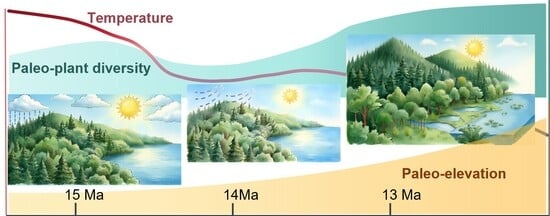
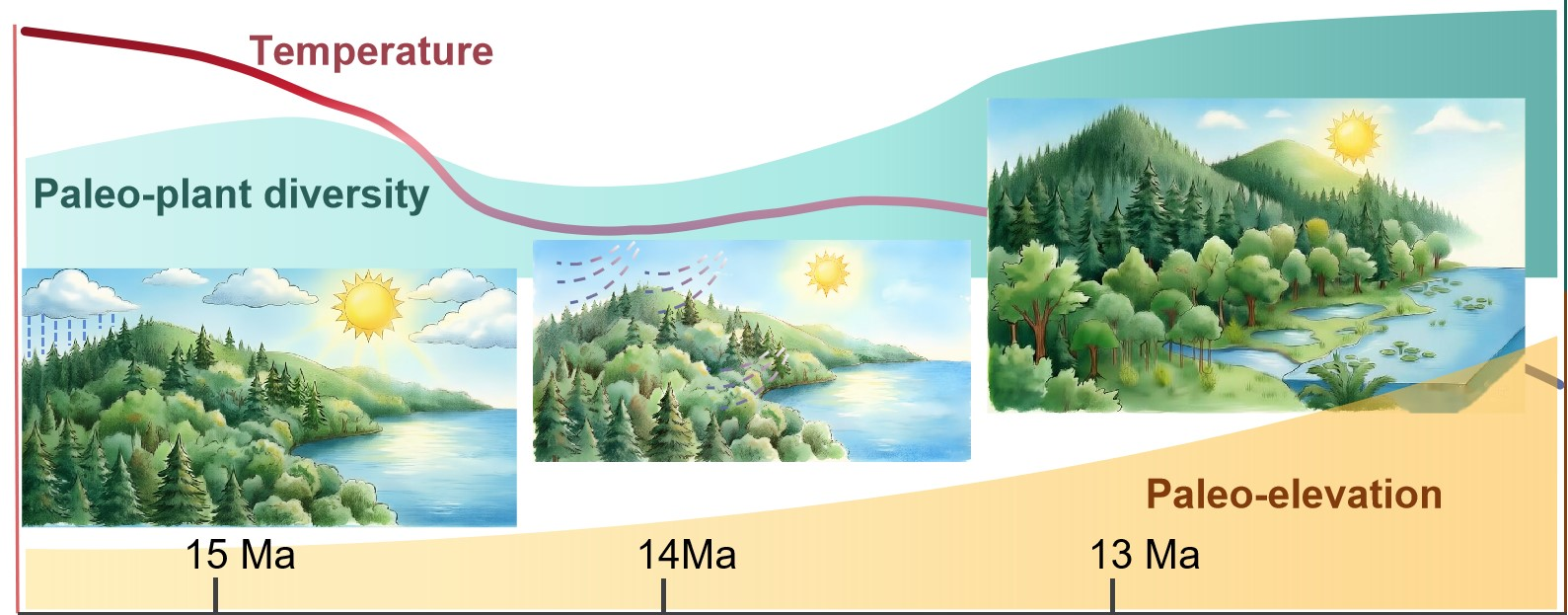
Graphical Abstract

1. Introduction

The Middle Miocene represents a critical transition in the Earth’s climate history [1]. During this period, the global climate evolved from the warm and humid condition in the Middle Miocene Climatic Optimum (MMCO), through the Middle Miocene Climate Transition (MMCT), and toward progressive cooling and aridification [2,3]. This period coincided with a major phase of tectonic uplift of the Tibetan Plateau (TP), which influenced the alpine environment and ecosystem [4,5]. Previous studies indicated that the Lunpola Basin, located in the hinterland of the TP, remained at a relatively low level of elevation during the Middle Miocene (~3000–3600 m), and subsequently went through an uplift of 1200 m since the late Miocene [6,7,8]. Sediment records from the Lunpola Basin covering the Middle Miocene can offer us important information about the responses of vegetation ecosystem to the growth of TP and global climate change [7].
Plant diversity plays an essential role in maintaining ecosystem function and services [9]. It is influenced by climate and environmental conditions at regional and local scales, and interactions among plant communities and species [10,11]. Quantitative analyses of palynological diversity using pollen and spore assemblages have the potential to enhance our understanding of past plant diversity dynamics [12]. Previous studies on the relationship between modern plant diversity and topsoil palynological diversity, and long-term palynological diversity changes have validated the reliability of palynological diversity as an effective proxy for plant diversity. Investigations on pollen and spore assemblages and contemporary plant diversity demonstrated that palynological diversity exhibits a strong positive correlation with plant diversity across multiple spatial scales [13,14,15,16]. Reconstructions of past palynological diversity revealed pronounced sensitivities to climatic and environmental changes in terms of vegetation community structure and diversity [17,18,19]. However, long-term reconstructions of plant diversity on the TP are still lacking, with most of them focusing on the Holocene or modern process [16,18,19,20,21].
The aim of this study is to reconstruct plant diversity changes on the central TP during the Middle Miocene (~15–12 Ma) based on fossil pollen and spore records from the Lunpola Basin [7], and to explore their potential driving mechanisms. In this paper, we analyze the succession of major plant taxa and quantitatively reconstruct plant diversity changes over time, encompassing both richness and evenness. Then, we further correlate plant diversity records to the reconstructed paleoelevation of the central TP, global climate curves and regional environmental changes. Our study therefore contributes to the understanding of how TP plant diversity responds to tectonic uplift of the plateau and climate changes and offers insights for biodiversity conservation in the future from the perspective of paleoecology.

2. Materials and Methods

2.1. Geological Background and Palynological Data

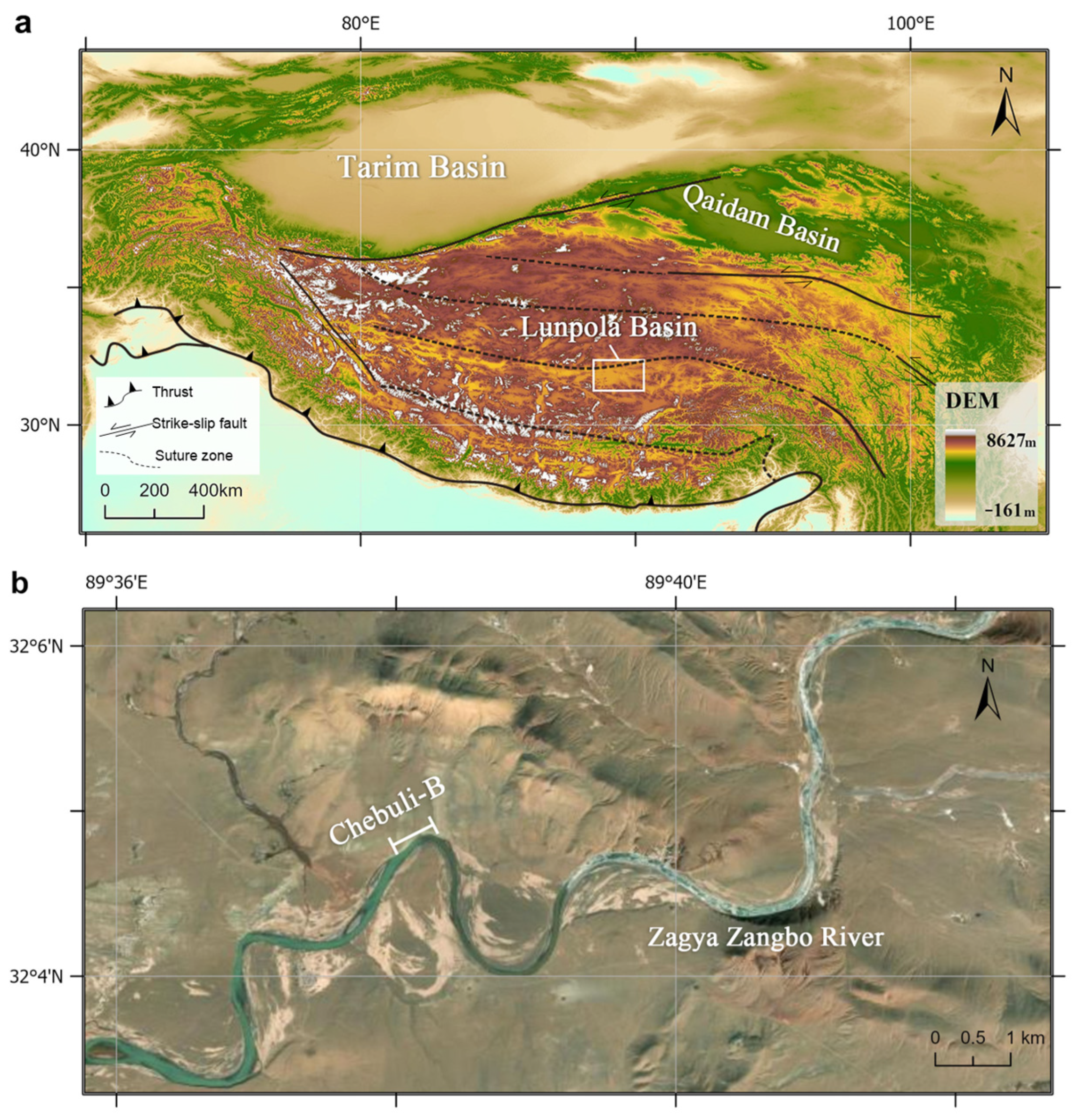
The Lunpola Basin is located in the Bangong–Nujiang Suture Zone of the central TP formed by the Mesozoic collision of the Lhasa and Qiangtang blocks (Figure 1a). It is a huge Cenozoic sedimentary basin with an elevation range of 4600–4800 m [7]. The Cenozoic deposits in the basin mainly consist of two units: the Niubao Formation in the lower part, and the Dingqing Formation in the upper part [7]. Within the basin, the Dingqing Formation of Neogene sediments is well exposed in the Chebuli area on the bank of Zagya Zangbo River, with a maximum thickness of up to 1000 m.
A number of plant and vertebrate fossil records within the Lunpola Basin have provided critical constraints on the basin’s paleoelevation history with estimated elevations of ~2000–2700 m during the Late Eocene, ~3000–3200 m during the late Oligocene to Early Miocene, and ~3400 m by the early Late Miocene [22]. They also revealed transitions from tropical–subtropical forest in the late Early Eocene, to subtropical open forest in the late Eocene, and to warm-temperate mixed coniferous and broad-leaved forests in the Middle Miocene [7,22]. For example, recent fossil phytolith records from the Lunbori section revealed a subtropical broad-leaved forest during the Middle Eocene, an open woodland with abundant herbaceous plants during the Late Eocene, and a mixed coniferous and broad-leaved forest during the Late Oligocene–Early Miocene [23]. Macro-fossils from the Niubao Formation include a total of 70 plant fossil taxa identified in Jianglang biota (~47 Ma) [24], and abundant spiny plant fossils of ancient subtropical forests from Dayu and Xiede (~39 Ma) [25]. Fossil palm leaves from the lower Dingqing Formation (described as Sabalites tibetensis T. Su et Z.K. Zhou sp. nov.) are dated to ~25.5 Ma [26]. A fossil climbing perch (Eoanabas thibetana gen. et sp. Nov.) and diverse subtropical flora from the central TP are dated to ~26–23.5 Ma [27]. Mammalian remains of Plesiaceratherium (~18–16 Ma), whose extant relatives live in subtropical to tropical environments, was discovered in the upper part of the Dingqing Formation at the Lunbori [28]. In addition, fossil pollen records from other TP basins (e.g., Wulan Basin on the northeastern TP [29]) suggested a relatively low elevation during the Middle Miocene, and an uplift of >1200 m thereafter [7]. Integrated modeling and fossil evidences further indicated that differential orographic process of TP had probably driven the evolution of vegetation ecosystem through its modulation on monsoonal precipitation [30].
Figure 1. Location of the Lunpola Basin, central TP (a) and the Chebuli-B section (b). Regional geological background is modified from Ref. [7]. DEM data are adopted from the GEBCO 2025 Grid [31].
Diversity 18 00187 g001
This study conducts quantitative reconstructions of paleo-plant diversity dynamics in response to persistent plateau uplift, global climate and vegetation changes in the Lunpoa Basin during the Middle Miocene. Fossil assemblages of pollen and spores used here were obtained from the upper part of the Dingqing Formation at the Chebuli-B section (32°4.71′ N, 89°37.93′ E) (Figure 1b), which is composed of gray-green bedded lacustrine mudstone and siltstone, with minor dark brown to light brown mudstone and occasional dark shales (Supplementary Figure S1). The age–depth model was constrained by U-Pb zircon ages of detrital zircons for limiting the maximum depositional age, and linear age interpolations between every two neighboring tie points of the paleomagnetic polarity time-scale [6,7].
A total of 40 bulk sediment samples, each weighing 50 g, were processed for palynological analysis using standard hydrochloric and hydrofluoric acid digestion [7]. These fossil assemblages are rich in pollen and spores (mean 227 grains/sample, ranging from 125 to 312 grains) belonging to 72 morphological types. The plates illustrating fossil pollen and spores from Dingqing Formation in Lunpola Basin have been published previously [6,7] and adopted here as a reference. All 40 fossil pollen and spore assemblages were employed in the calculation of palynological diversity indices, covering ~15–12 Ma (Supplementary Figure S2).

2.2. Palynological Diversity Indices

2.2.1. Hill Numbers

Hill numbers are used to estimate palynological diversity. In the last ten years, an increasing number of studies have utilized Hill numbers to reconstruct palynological and plant diversity in different regions of the TP [15,20,32]. The calculation of Hill numbers converts common diversity indices such as Shannon–Wiener index and Simpson index, which belong to generalized entropy, into an “effective number of species” [33]. This conversion addresses the mathematical nonlinearity of these indices and facilitates intuitive comparison of diversity metrics [33,34]. Hill numbers are defined as [35]:
D q   =   ( i   =   1 s p i q ) 1 / ( 1     q )   ,   ( q     1 )
where S is the number of species in the sample, pi is the relative abundance of the i-th species (i = 1, 2, 3 … S), and the parameter q is called the order of diversity, which determines the sensitivity of the metrics to the relative abundance of species in community [35,36]. When q = 0, 0D is completely insensitive to species abundance and represents species richness. Here, 0D is denoted as N0.
As q approaches 1, its limit exists and is:
D 1 =   l i m q 1 D q   =   e x p ( i   =   1 s p i l o g p i )   =   e x p ( H )
This is the exponential form of Shannon–Wiener index, also known as Shannon diversity. In this case, 1D weights all species by their abundance without bias toward rare or common species. In this study, 1D is denoted as N1.
When q = 2:
D 2   =   1 / i   =   1 s p i 2
2D is the inverse of Simpson index, known as Simpson diversity, and sensitive to common or dominant species. Here, 2D is denoted as N2.
When assessing diversity of a single community, i.e., one fossil assemblage, zero-order diversity (N0), first-order diversity (N1), and second-order diversity (N2) should be calculated simultaneously [35]. Then, the degree of community dominance can be judged by the differences between these numbers [35]. The rarefaction method for Hill numbers is used to eliminate the bias from different sample sizes among different fossil assemblages [36].
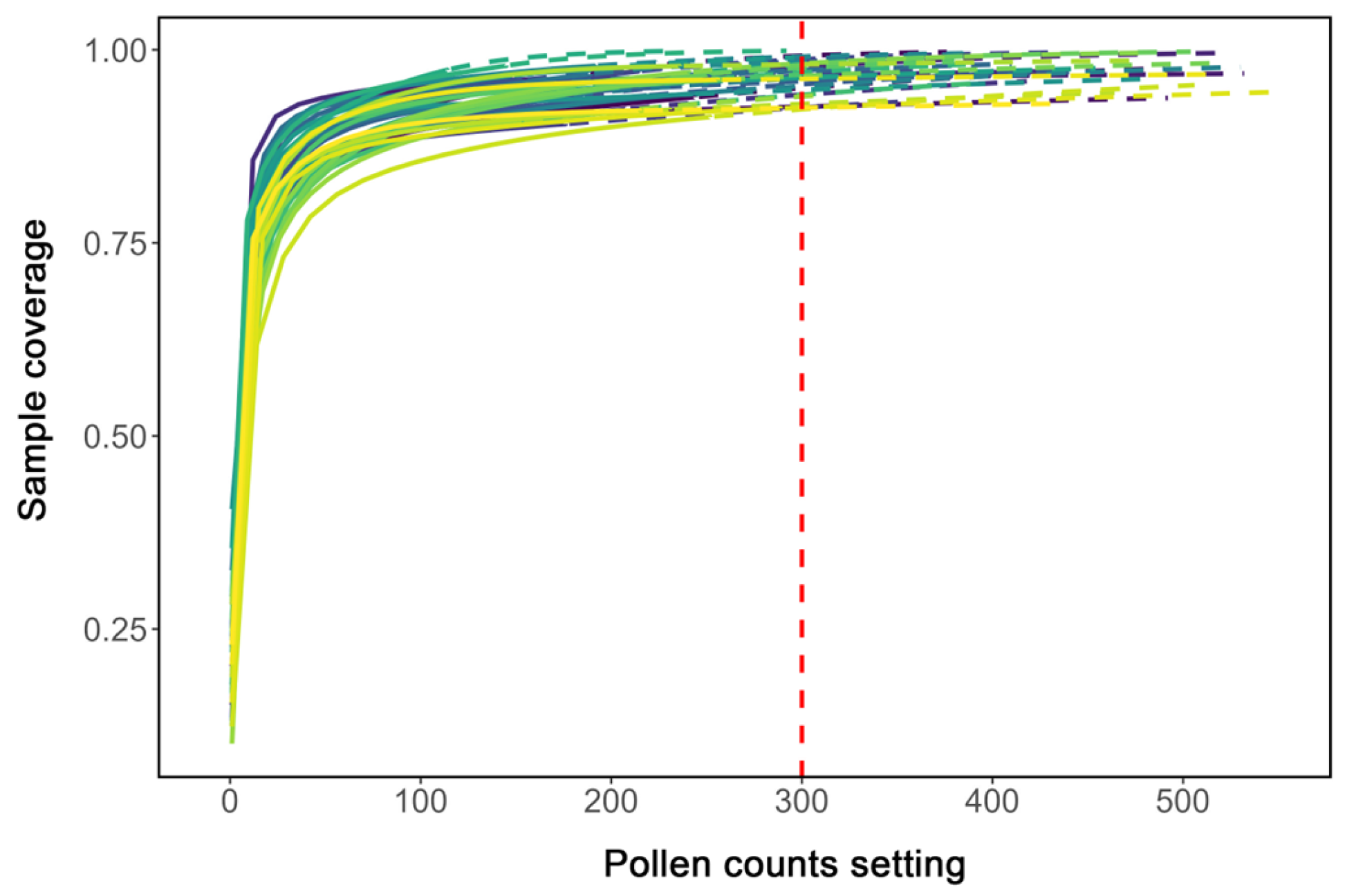
In this study, the standard count of pollen and spores for each sample is set to 300 grains, in consideration of the original counts of fossil assemblages (125–312 grains) and the trend of sample coverage with different sample sizes (i.e., sample completeness) (Figure 2). Due to the absence of clear attributes for their vegetation types or definite classifications, 10 out of 72 taxa were excluded from diversity calculation (Supplementary Table S1). Ultimately, a total of 62 pollen and spore taxa were included in the diversity calculation. In order to explore the changes in different vegetation types, pollen and spore types are categorized into three groups of tree, shrub and herb, and pteridophyte. Their palynological richness (N0tree, N0shrub&herb, and N0pteridophyte, respectively) was calculated by dividing richness of the total taxa (N0total) into portions based on the relative abundance of each group in the assemblage (Supplementary Table S2).

2.2.2. Palynological Evenness

Palynological evenness is estimated based on Hill numbers [37]:
E = (N2 − 1)/(N1 − 1)
As a modification of Hill ratio N2/N1, it could resolve potential ambiguities arising from an extremely small number of species or a highly uneven distribution. Being independent of species richness (N0) and largely insensitive to rare species, this evenness index possesses relatively clear ecological relevance [14,34,37].
All diversity calculations are performed in R 4.3.3, using the package iNEXT (v3.0.1) [38]. LOWESS smoothing method is applied to display the long-term trends.

2.3. Time Series Analysis

To track the underlying orbital periodicity, we conducted continuous wavelet transform (CWT) analysis on plant diversity and paleoclimate records. The Morlet wavelet was employed for an optimal balance between time and frequency localizations [39]. Before the analyses, all datasets were resampled to a uniform time step of their mean temporal intervals using linear interpolation. CWT analysis is performed with the Python package PyWavelets/pywt (v1.9.0) [40].

3. Results

3.1. Pollen and Spore Taxa Presence in the Middle Miocene

Fossil palynological assemblages in the upper Dingqing Formation of Chebuli-B section during ~15–12 Ma comprise 72 pollen and spore taxa [7].
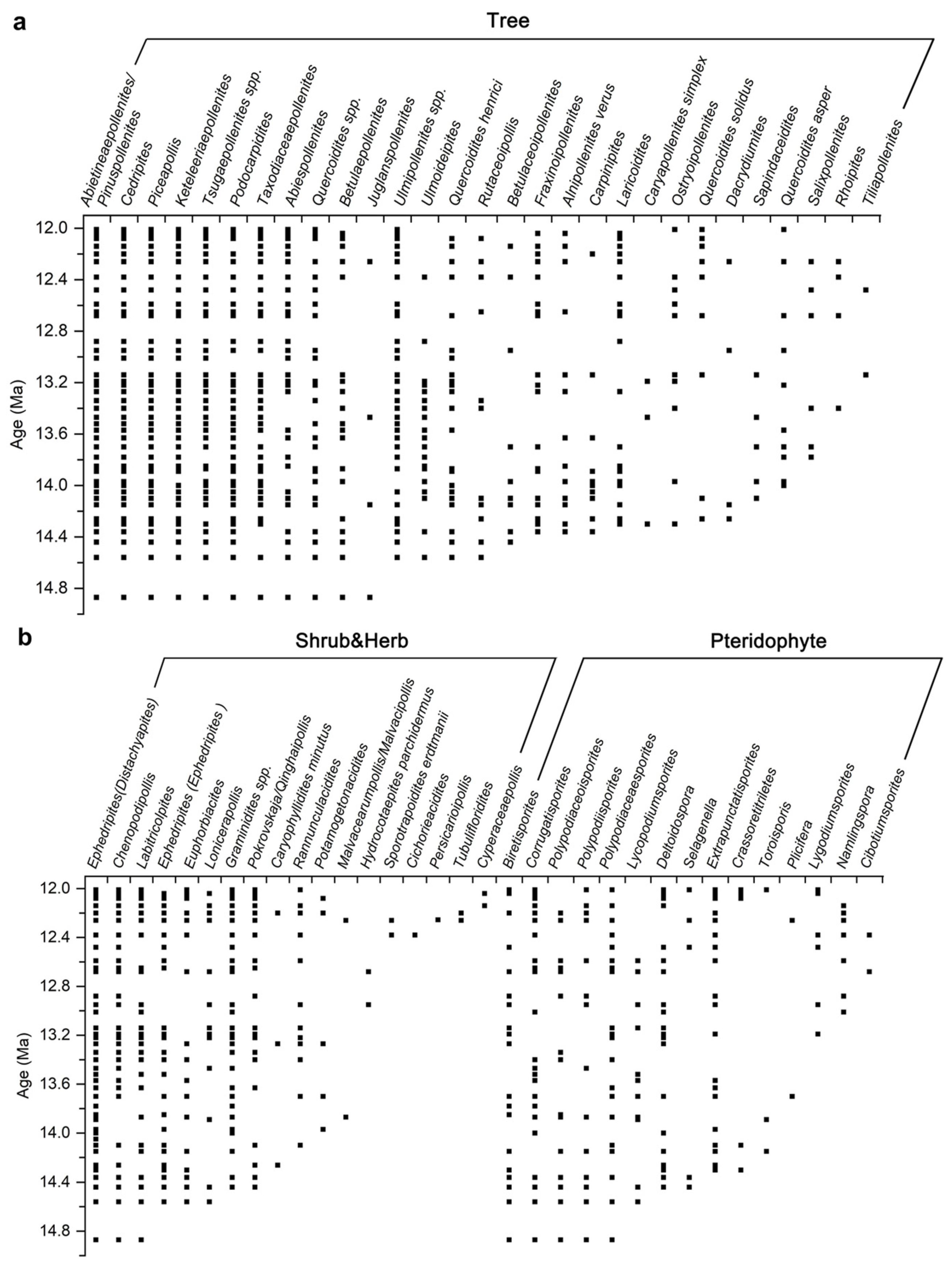
From the perspective of taxa composition, nine tree taxa were consistently present throughout the whole record, including Abietineaepollenites/Pinuspollenites, Cedripites, Piceapollis, Abiespollenites, Keteleeriapollenites, Tsugaepollenites spp., Podocarpidites, Taxodiaceaepollenites, and Quercoidites spp. (Figure 3a). After ~13 Ma, three arboreal taxa, Carpinipites, Caryapollenites simplex and Sapindaceidites, were almost absent. For shrub and herb taxa (Figure 3b), eight taxa were consistently present, while four other taxa, including Sporotrapoidites erdtmanii, Cichorieacidites, Tubulifloridites, and Cyperaceaepollis, appeared after ~12.5 Ma. The abundances of pteridophyte spores were always relatively low (Figure 3b). After ~13.5 Ma, three pteridophyte taxa appeared, including Lygodiumsporites, Namlingspora, and Cibotiumsporites.

3.2. Changes in Palynological Diversity Indices

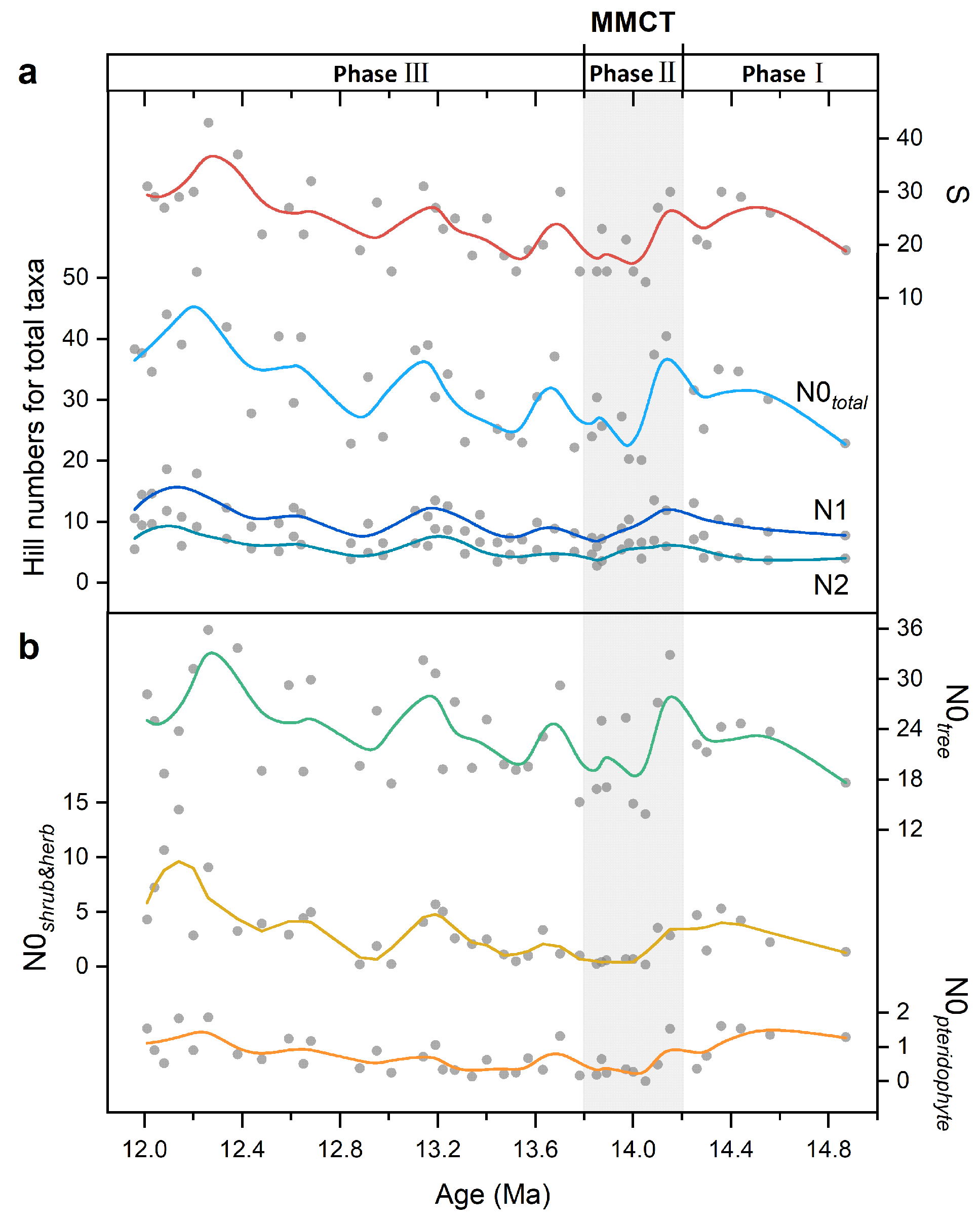
Results of palynological diversity estimation based on Hill numbers and rarefaction analysis indicate that N0total varies between 20 and 52, showing overall consistency with the trend of S (range of 13–43) (Figure 4a). In addition, values of N1 and N2 show synchronous variation at a relatively low level (range of 2–19), compared to N0total. Their difference remained relatively stable (average value of ~4.4).
Palynological diversity indices of N0total, N0tree, N0shrub&herb and N0pteridophyte exhibit broadly similar trends from ~15 to 12 Ma. Three diversity phases are identified based on their variations. In Phase I (~15–14.2 Ma), values of N0total, N0tree, N0shrub&herb and N0pteridophyte initially increased from the beginning. In Phase II (~14.2–13.8 Ma), they markedly decreased until reaching a minimum at around ~14.3–14.2 Ma (minimum values of 25.2, 21.3, 1.5 and 0.4, respectively). In Phase III (~13.8–12 Ma), they gradually recovered and reached maximum values at ~12.3–12.1 Ma (maximum of 51, 35.9, 14.4 and 1.9, respectively). During this period, palynological evenness and richness exhibited nearly parallel trajectories. In detail, the variation amplitudes in richness indices among different vegetation types were quite different (Figure 4b). N0tree remained the highest level (range of 18–36) compared to the other two vegetation types and comprised the majority of N0total throughout the temporal sequence. N0shrub&herb exhibited a significant increase from a minimum of ~0.2 to a maximum of ~14, while both values and amplitudes of N0pteridophyte were very low (range of 0–2).

3.3. Results of Continuous Wavelet Transform Analysis

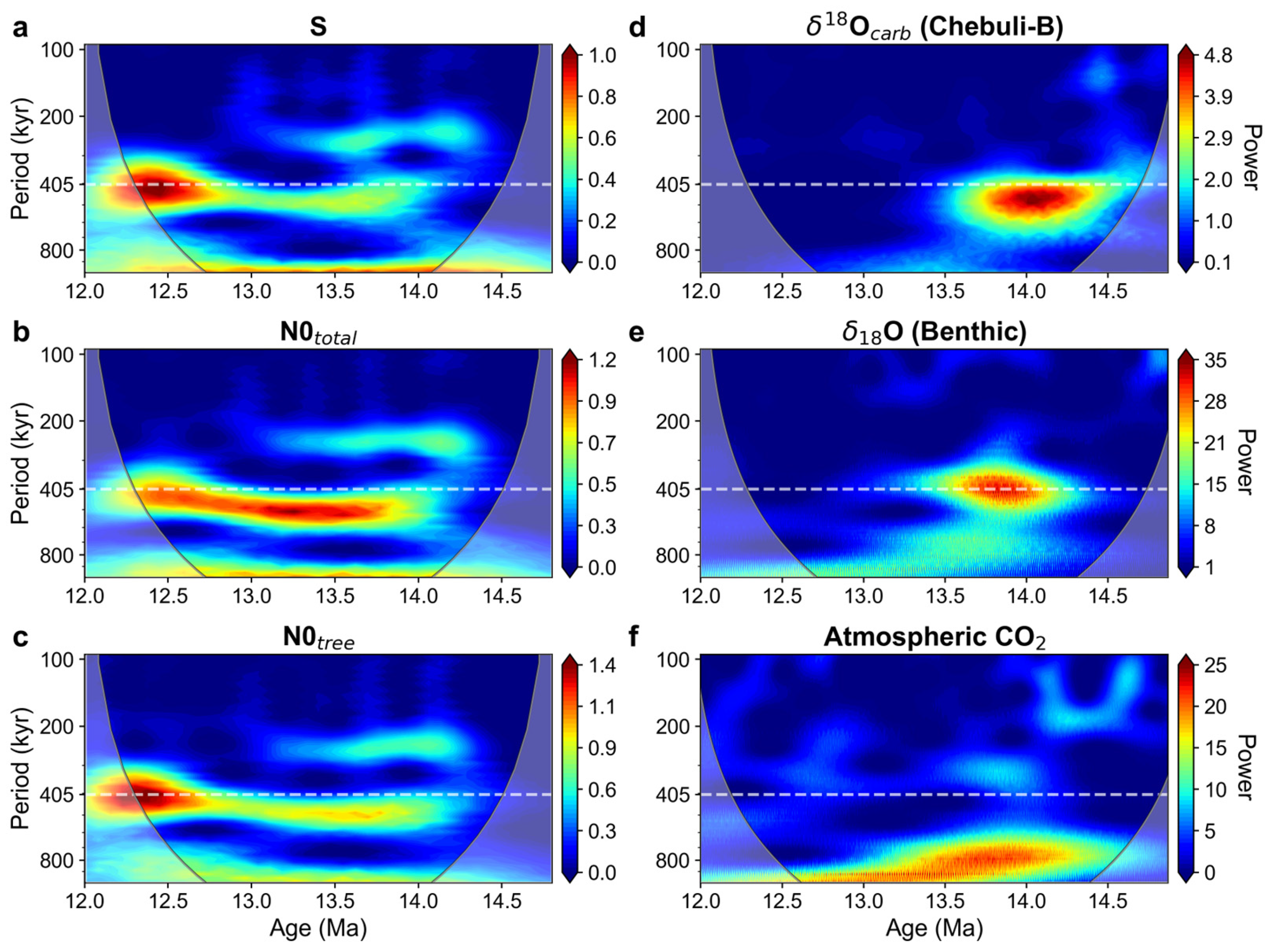
The results of CWT analysis suggest that major palynological diversity (Figure 5a–c), carbonate oxygen isotope records during 15–12 Ma from upper Dingqing Formation at the Chebuli-B section (Figure 5d), and paleoclimate records of marine benthic foraminifera oxygen isotope records [41] (Figure 5e) are characterized by significant ~405-kyr quasi-periodic oscillations, compared with weak ~405 kyr periodicity in the reconstructed atmospheric CO2 concentration curve [42] (Figure 5f). Specifically, ~405 kyr periodicity predominantly occurred between ~14–12.0 Ma in our palynological diversity records (Figure 5a–c).

4. Discussion

4.1. Plant Diversity and Vegetation Regime in the Lunpola Basin During 15–12 Ma

Paleoelevation reconstructions of the Lunpola Basin indicate that the paleo-lake surface elevation had reached ~3100–3400 m during the Middle Miocene [7], and vertical vegetation zones had developed within the Lunpola Basin catchment [43]. Fossil pollen and spore assemblages in this study primarily came from the vertical vegetation zones and thus could represent vegetation regimes of the Lunpola Basin catchment during ~15–12 Ma. Paleovegetation reconstructions in the Lunpola catchment suggest a predominance of mixed coniferous–broadleaf forest under the dominance of coniferous components [7] (Supplementary Figure S2). In detail, Abietineaepollenites/Pinuspollenites (mean percentage ~34.8%), Cedripites (~15.4%) and Piceapollis pollen (~8.4%) constituted the majority of fossil assemblages. Broadleaf trees such as Quercoidites, were relatively sparse (percentages < 5.7%, mean ~1.35%). Among shrub and herb taxa, Ephedripites (Distachyapites) (maximum percentage 9%, mean ~3%) and Chenopodipollis (maximum percentage 15%, mean ~3%) were predominant. Pteridophyte spores were abundant in taxa number, although their percentages were generally low throughout the studied period (Figure 3b).
Reconstructions of palynological diversity provide many implications of plant diversity changes in the Lunpola Basin during ~15–12 Ma, although biases exist from differential preservation and sedimentation processes of pollen and spores in sedimentary records [18]. The results of estimated Hill numbers show consistency with the variations in taxa number encountered in identification (Figure 4a). It is suggested that Hill numbers are reliable plant diversity indicators with the capability of mitigating identification-related biases and capturing comprehensive ecological information. According to the estimated Hill numbers, plant richness indicated by N0total was significantly higher than N1 and N2 (Figure 4a). This indicates the presence of a large number of relatively rare plant species with low abundances in the Lunpola catchment [35]. In addition, the abundances of common plant species throughout the studied period were suggested to be relatively even, as indicated by the close values between N1 and N2. In conclusion, vegetation in the Lunpola catchment during ~15–12 Ma was dominated by a number of key species from coniferous forest, including ancient relatives of Abies, Cedrus and Picea, accompanied by relatively rare species with low abundance, such as relative species of Quercus, Ephedra, Chenopodium, and some pteridophyte species.

4.2. Drivers of Middle Miocene Plant Diversity Changes in the Lunpola Basin

Long-term changes in plant diversity in the Lunpola Basin during the Middle Miocene were jointly influenced by the interaction of multiple factors, including climate change, vegetation change, and tectonic uplift of the central TP [10,11].
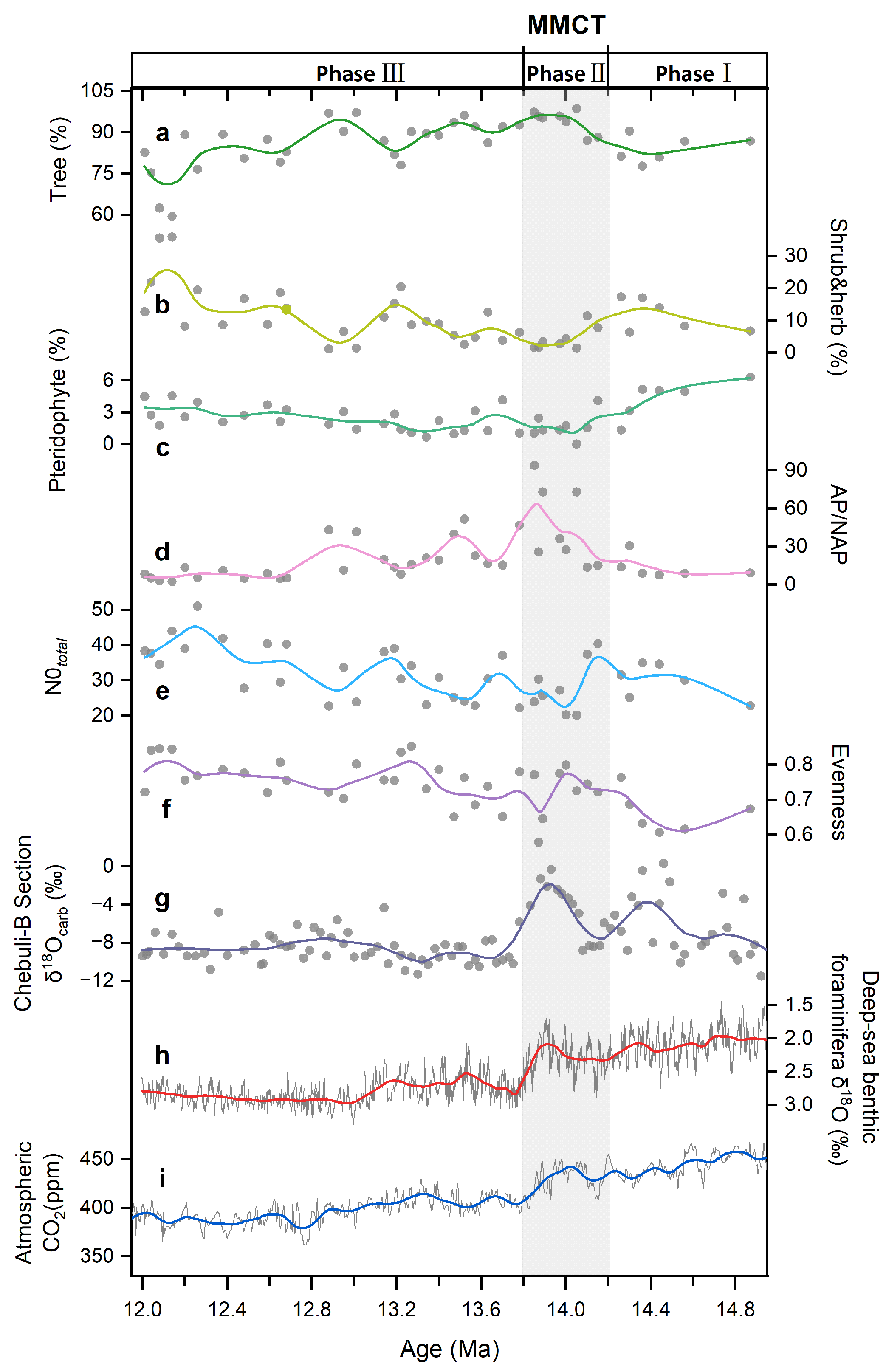
During Phase I (~15–14.2 Ma), the terminal stage of the MMCO [3], both plant richness and evenness showed an increasing trend (Figure 6e,f), due to the immigration of a large number of low-abundance species, including broadleaf tree taxa of Ulmipollenites spp., Ulmoideipites, Betulaceoipollenites, Quercoidites henrici and Rutaceoipollis, shrub/herb taxa of Ephedripites (Ephedripites), Euphorbiacites, Lonicerapollis, Graminidites spp., Pokrovskaja/Qinghaipollis, Caryophyllidites minutus and Rannunculacidites, and pteridophytic taxa such as Deltoidospora, Selagenella, Extrapunctatisporites, Crassoretitriletes and Toroisporis (Figure 3, Supplementary Figure S2). Vegetation diversification in this interval was probably driven by tectonic uplift of the central TP plate [5].
Previous studies have found that montane uplift and consequent formation of vertical vegetation zones would lead to an increase in biodiversity, which could be documented in the lowland basin sediments [44]. Sedimentary records from the southern TP indicated that sharp increases in in situ speciation rates in the Himalayas from ~17 Ma to 14 Ma should be driven by rapid tectonic uplift prior to 15 Ma [45,46]. According to paleontological and sedimentological evidence from the Chebuli-B section, the paleoelevation of the Lunpola Basin gradually reached the level of ~3100–3600 m during ~15–12 Ma [7]. Therefore, the uplift of central TP during the Middle Miocene not only promoted the development of alpine environments with high-elevation mountains and deep valleys, but also provided more thermal niches along the elevation gradient within the catchment of Lunpola Basin [5]. Consequently, numerous low-abundance species could gradually immigrate into the catchment, and occupy montane regions at higher elevations, ultimately resulting in heightened plant richness and evenness.
During Phase II (~14.2–13.8 Ma), plant richness sharply decreased, whereas evenness increased during the MMCT (Figure 6e,f). During this period, the global climate experienced pronounced cooling of about ~2–3 °C [41,47], as indicated by significant drops in deep-sea oxygen isotope records [41] (Figure 6h) and atmospheric CO2 concentrations [42] (Figure 6i). Once rapid climatic deterioration during the MMCT exceeded the tolerance limits of some thermophilic and hygrophilous plant groups of the Lunpola catchment, their habitats would severely degrade under cold and dry conditions, and consequently their extinction or emigration rates would increase, resulting in a major loss in plant richness during this climatic transition [48] (Figure 6e).
Notably, three coniferous plant taxa, including Abietineaepollenites/Pinuspollenites, Cedripites and Piceapollis, took up the predominance (mean percentage > 70%) during the MMCT. During the same interval, the AP/NAP ratio could increase dramatically in spite of total plant richness collapse (Figure 6d). Tree richness still maintained a significant advantage over shrub/herb taxa (Figure 4b). These changes in vegetation composition and plant diversity indicate that a large number of plant species disappeared from the catchment during the MMCT, mainly including low-abundance and non-dominant species, including thermophilic tree taxa such as Rutaceoipollis, Quercoidites solidus, and Dacrydiumites (Figure 3a) [49], as well as a number of shrub/herb and hygrophilous pteridophyte taxa such as Chenopodipollis, Lonicerapollis, Pokrovskaja/Qinghaipollis, Lygodium–sporites, Selaginella, and Crassoretitriletes (Figure 3b).
During Phase III (~13.8–12 Ma), plant richness and evenness in the Lunpola Basin catchment gradually increased under fluctuations (Figure 6e). Although tree richness increased along with those of shrub/herb and pteridophyte taxa (Figure 4b), the proportions of forest decreased markedly as indicated by declines in tree pollen (Figure 6a). Grassland vegetation gradually thrived in the catchment at the expense of forests (Figure 6b), and the landscape shifted from closed to relatively open as indicated by decreasing AP/NAP ratios (Figure 6d).
The climatic cooling and aridification since the MMCT, widely recorded in the central [7] and other regions of the TP [5], had probably driven the changes in plant diversity and vegetation regimes after ~13.8 Ma. The increasingly colder and drier climatic conditions and the related downward shifts in vertical vegetation zones could further restrict the lives of thermophilic/hygrophilic tree species. Tree taxa of Carpinipites and Caryapollenites simplex whose modern relatives generally grow at elevations below 3000 m, and Sapindaceidites whose modern relatives widely distribute in tropical and subtropical regions [50], became essentially absent after ~13 Ma (Figure 3a). On the contrary, grassland vegetation became flourishing and diversified (Figure 4b and Figure 6b), possibly due to the persistent climatic deterioration (Figure 6h,i), heightened vegetation openness and related improvement in the light conditions for understory vegetation [51]. During this period, drought-tolerant Chenopodipollis increased rapidly to over 10% (Supplementary Figure S2), accompanied by the appearance of some pioneering and drought-tolerant herb taxa such as Cichorieacidites and Tubulifloridites [52] (Figure 3b).
In fact, cyclic variations in plant diversity records during ~15–12 Ma are dominated by the eccentricity cycles of ~405 kyr (Figure 5a–c), correlating well to global paleoclimate records [41], although other orbital periods such as the 100-kyr eccentricity periodicity are absent due to relatively coarse temporal resolution. This periodicity feature further demonstrates that global climate change driven by the Earth’s orbital variation was the primary controlling factor for the long-term changes in plant diversity, which were also modulated by tectonic movement during the Middle Miocene.
In addition, the paleo-lake level of the Lunpola Basin declined under the cooling and aridification climate, resulting in the expansion of shallow-water environments such as wetlands and marshes (Figure 6g) [7,19], and the rise in environmental heterogeneity. Consequently, plant richness would increase [53]. For example, palynological records show that hygrophilous herb taxa like Cyperaceaepollis, and pteridophytic taxa like Lygodiumsporites [54,55] emerged in the catchment of Lunpola Basin after ~13 Ma [7] (Figure 3b). In conclusion, the combined effects of forest retreat, grassland expansion, and increased wetland/marsh habitats under cooling and aridification since the MMCT provided new opportunities for plant speciation and colonization [48,53]. During the long-term evolution after the MMCT, vegetation in the Lunpola Basin catchment gradually adapted to the alpine environment under cold/dry climate with synchronous increases in plant richness and evenness (Figure 6e,f).

5. Conclusions

Based on fossil pollen and spore assemblages from the upper Dingqing Formation of Chebuli-B section in the Lunpola Basin, long-term variations in plant diversity and the potential driving mechanisms during ~15–12Ma in the central TP were reconstructed using estimates of Hill numbers and associated evenness measures.
Three distinct diversity phases were identified. During Phase I (~15–14.2 Ma), plant richness gradually increased whereas evenness decreased at the terminal stage of MMCO, possibly due to the intensified development of vertical vegetation zones during the tectonic uplift of the central TP. In Phase II (~14.2–13.8 Ma), plant richness dropped markedly to its lowest level while evenness recovered, probably caused by rapid climatic deterioration during the MMCT, which constrained plant species distributions. In Phase III (~13.8–12 Ma), plant richness and evenness increased under fluctuations, closely related to climatic cooling/aridification and lake level decline.
Our findings suggest that global climate changes, the uplift of central TP and regional hydrological dynamics of the Lunpola Basin catchment had influenced plant diversity and vegetation regime during the Middle Miocene. These results explore the underlying mechanism for long-term evolution of plant diversity on the central TP and therefore provide insights for a better understanding of the relationships between tectonic movement, climate, and biodiversity of alpine ecosystems.

Supplementary Materials

The following supporting information can be downloaded at: https://www.mdpi.com/article/10.3390/d18030187/s1, Figure S1: Results of magnetostratigraphy and lithological profile of Chebuli-B Section, and sampling points for pollen analysis in this study; Figure S2: Percentage diagram of major pollen and spore types from the upper part of the Dingqing Formation at the Chebuli-B section during 15–12 Ma; Table S1: Ten pollen and spore types excluded from plant diversity calculations; Table S2: Summary of palynological diversity and selected percentage data from the upper part of the Dingqing Formation at the Chebuli-B section (Lunpola Basin) during 15–12 Ma.

Author Contributions

Conceptualization, project administration, and funding acquisition, Q.L.; methodology and writing—original draft preparation, Q.L. and B.W.; formal analysis and visualization, B.W.; investigation, J.S.; resources, data curation, writing—review and editing, and supervision, Q.L. and J.S. All authors have read and agreed to the published version of the manuscript.

Funding

This research was funded by the National Key Research and Development Program of China (2022YFF0801503), and the National Natural Science Foundation of China (42277454 and 41977395).

Institutional Review Board Statement

Not applicable.

Data Availability Statement

Estimated palynological diversity data of this study are included in the article and Supplementary Materials.

Acknowledgments

The authors thank Jianguo Li, Weiguo Liu, Brian F. Windley, Alex Farnsworth, Chunsheng Jin, Zhiliang Zhang, and Wenjiao Xiao for raw data, age models, and/or discussions.

Conflicts of Interest

The authors declare no conflicts of interest.

Abbreviations

The following abbreviations are used in this manuscript:
MMCTMiddle Miocene Climatic Transition
MMCOMiddle Miocene Climatic Optimum
TPTibetan Plateau
CWTContinuous Wavelet Transform

References

  1. Holbourn, A.; Kuhnt, W.; Schulz, M.; Erlenkeuser, H. Impacts of orbital forcing and atmospheric carbon dioxide on Miocene ice-sheet expansion. Nature 2005, 438, 483–487. [Google Scholar] [CrossRef]
  2. Zachos, J.; Pagani, M.; Sloan, L.; Thomas, E.; Billups, K. Trends, rhythms, and aberrations in global climate 65 Ma to present. Science 2001, 292, 686–693. [Google Scholar] [CrossRef]
  3. Shevenell, A.E.; Kennett, J.P.; Lea, D.W. Middle Miocene Southern Ocean cooling and Antarctic cryosphere expansion. Science 2004, 305, 1766–1770. [Google Scholar] [CrossRef]
  4. Spicer, R.A.; Farnsworth, A.; Su, T. Cenozoic topography, monsoons and biodiversity conservation within the Tibetan Region: An evolving story. Plant Divers. 2020, 42, 229–254. [Google Scholar] [CrossRef]
  5. Ding, W.; Ree, R.H.; May, M.R.; Brun, P.; Hagen, O.; Karger, D.N.; Skeels, A.; Pellissier, L.; Xing, Y.; Zimmermann, N.E. The asynchronous rise of Northern Hemisphere alpine floras reveals general responses of biotic assembly to orogeny and climate change. Sci. Adv. 2025, 11, eadz1888. [Google Scholar] [CrossRef]
  6. Sun, J.M.; Xu, Q.H.; Liu, W.M.; Zhang, Z.Q.; Xue, L.; Zhao, P. Palynological evidence for the latest Oligocene-early Miocene paleoelevation estimate in the Lunpola Basin, central Tibet. Paleogeogr. Paleoclimatol. Paleoecol. 2014, 399, 21–30. [Google Scholar] [CrossRef]
  7. Sun, J.M.; Li, J.G.; Liu, W.G.; Windley, B.F.; Farnsworth, A.; Jin, C.S.; Zhang, Z.L.; Xiao, W.J. Middle Miocene paleoenvironmental change and paleoelevation of the Lunpola Basin, Central Tibet. Glob. Planet. Change 2023, 220, 104009. [Google Scholar] [CrossRef]
  8. Deng, T.; Wang, X.M.; Wu, F.X.; Wang, Y.; Li, Q.; Wang, S.Q.; Hou, S.K. Review: Implications of vertebrate fossils for paleo-elevations of the Tibetan Plateau. Glob. Planet. Change 2019, 174, 58–69. [Google Scholar] [CrossRef]
  9. Cardinale, B.J.; Duffy, J.E.; Gonzalez, A.; Hooper, D.U.; Perrings, C.; Venail, P.; Narwani, A.; Mace, G.M.; Tilman, D.; Wardle, D.A.; et al. Biodiversity loss and its impact on humanity. Nature 2012, 486, 59–67. [Google Scholar] [CrossRef]
  10. Qian, H.; Ricklefs, R.E. Large-scale processes and the Asian bias in species diversity of temperate plants. Nature 2000, 407, 180–182. [Google Scholar] [CrossRef]
  11. Hawkins, B.A.; Field, R.; Cornell, H.V.; Currie, D.J.; Guégan, J.F.; Kaufman, D.M.; Kerr, J.T.; Mittelbach, G.G.; Oberdorff, T.; O’Brien, E.M.; et al. Energy, water, and broad-scale geographic patterns of species richness. Ecology 2003, 84, 3105–3117. [Google Scholar] [CrossRef]
  12. Birks, H.J.B.; Felde, V.A.; Bjune, A.E.; Grytnes, J.A.; Seppä, H.; Giesecke, T. Does pollen-assemblage richness reflect floristic richness? A review of recent developments and future challenges. Rev. Palaeobot. Palynol. 2016, 228, 1–25. [Google Scholar] [CrossRef]
  13. Odgaard, B.V. Fossil pollen as a record of past biodiversity. J. Biogeogr. 1999, 26, 7–17. [Google Scholar] [CrossRef]
  14. Felde, V.A.; Peglar, S.M.; Bjune, A.E.; Grytnes, J.A.; Birks, H.J.B. Modern pollen-plant richness and diversity relationships exist along a vegetational gradient in southern Norway. Holocene 2016, 26, 163–175. [Google Scholar] [CrossRef]
  15. Chi, C.T.; Xiao, X.Y.; Wang, J.J.; Ke, R.; Jia, B.Y. The vertical distribution of modern pollen in the southeastern edge of the Tibetan Plateau, China. Palynology 2024, 48, 109117. [Google Scholar] [CrossRef]
  16. Liao, M.N.; Jin, Y.L.; Li, K.; Liu, L.N.; Wang, N.N.; Ni, J.; Cao, X.Y. Modern pollen-plant diversity relationship in open landscapes of Tibetan Plateau. Paleogeogr. Paleoclimatol. Paleoecol. 2024, 641, 112131. [Google Scholar] [CrossRef]
  17. Jaramillo, C.; Rueda, M.J.; Mora, G. Cenozoic plant diversity in the Neotropics. Science 2006, 311, 1893–1896. [Google Scholar] [CrossRef]
  18. Li, Q. Temporal and spatial variations of pollen diversity in the Namco basin of central Tibet Plateau and implications for alpine vegetation restoration. Sci. China Earth Sci. 2018, 48, 315–330. [Google Scholar] [CrossRef]
  19. Liang, Y.; Quan, C.; Li, Y.X.; Liu, W.G.; Liu, Z.H. Mid-Miocene lake level fluctuations in the Lunpola basin, central Tibetan Plateau. Front. Earth Sci. 2021, 9, 808266. [Google Scholar] [CrossRef]
  20. Zhang, Y.Q.; Wang, Y.B.; Liu, X.Q. Late Holocene vegetation diversity change and potential response to climate variations on the northern Qinghai-Tibetan Plateau. Quat. Int. 2024, 695, 45–54. [Google Scholar] [CrossRef]
  21. Ren, W.H.; Zhang, X.Q.; Liang, C.; Li, Q.; Qin, F.; Yi, G.T. Holocene vegetation dynamics and abrupt biodiversity shifts in the Zoige Basin, Northeastern Tibetan Plateau. Paleogeogr. Paleoclimatol. Paleoecol. 2025, 675, 113079. [Google Scholar] [CrossRef]
  22. Sun, J.M.; Li, J.G.; Liu, W.G.; Jin, C.S. Research progress on the age, paleoenvironment, and paleo-elevation of Cenozoic strata in the Lunpola Basin, Central Tibetan Plateau. Chin. Sci. Bull. 2024, 69, 2463–2479. [Google Scholar] [CrossRef]
  23. Zhang, X.W.; Liu, J.; Spicer, R.A.; Gao, Y.; Yao, X.R.; Qin, X.Y.; Zhou, Z.K.; Su, T. Vegetation history of the central Tibetan region during the late Oligocene–Early Miocene. J. Syst. Evol. 2025, 63, 39–52. [Google Scholar] [CrossRef]
  24. Su, T.; Spicer, R.A.; Wu, F.X.; Farnsworth, A.; Huang, J.; Del Rio, C.; Deng, T.; Ding, L.; Deng, W.Y.D.; Huang, Y.J.; et al. A Middle Eocene lowland humid subtropical “Shangri-La” ecosystem in central Tibet. Proc. Natl. Acad. Sci. USA 2020, 117, 32989–32995. [Google Scholar] [CrossRef]
  25. Zhang, X.W.; Gélin, U.; Spicer, R.A.; Wu, F.X.; Farnsworth, A.; Chen, P.R.; Del Rio, C.; Li, S.F.; Liu, J.; Huang, J.; et al. Rapid Eocene diversification of spiny plants in subtropical woodlands of central Tibet. Nat. Commun. 2022, 13, 3787. [Google Scholar] [CrossRef]
  26. Su, T.; Farnsworth, A.; Spicer, R.A.; Huang, J.; Wu, F.X.; Liu, J.; Li, S.F.; Xing, Y.W.; Huang, Y.J.; Deng, W.Y.D.; et al. No high Tibetan Plateau until the Neogene. Sci. Adv. 2019, 5, eaav2189. [Google Scholar] [CrossRef]
  27. Wu, F.X.; Miao, D.S.; Chang, M.; Shi, G.L.; Wang, N. Fossil climbing perch and associated plant megafossils indicate a warm and wet central Tibet during the late Oligocene. Sci. Rep. 2017, 7, 878. [Google Scholar] [CrossRef]
  28. Deng, T.; Wang, S.Q.; Xie, G.P.; Li, Q.; Hou, S.K.; Sun, B.Y. A mammalian fossil from the Dingqing Formation in the Lunpola Basin, northern Tibet, and its relevance to age and paleo-altimetry. Chin. Sci. Bull. 2012, 57, 261–269. [Google Scholar] [CrossRef]
  29. Li, X.M.; Chen, J.Y.; Cao, Z.D.; Liu, L.M.; Zhang, S.H.; Zhang, Y.Z.; Wei, L.J.; Xie, S.P. Miocene evolution of vegetation, climate, and elevation in the Wulan Basin of northeast Tibetan Plateau based on a CRACLE analysis of palynological assemblages. Palaeogeogr. Palaeoclimatol. Palaeoecol. 2024, 656, 112563. [Google Scholar] [CrossRef]
  30. Li, S.F.; Valdes, P.J.; Farnsworth, A.; Davies-Barnard, T.; Su, T.; Lunt, D.J.; Spicer, R.A.; Liu, J.; Deng, W.Y.D.; Huang, J.; et al. Orographic evolution of northern Tibet shaped vegetation and plant diversity in eastern Asia. Sci. Adv. 2021, 7, eabc7741. [Google Scholar] [CrossRef]
  31. GEBCO Bathymetric Compilation Group. The GEBCO_2025 Grid. 2025. Available online: https://www.bodc.ac.uk/data/published_data_library/catalogue/10.5285/37c52e96-24ea-67ce-e063-7086abc05f29 (accessed on 1 November 2025).
  32. Liang, C.; Zhao, Y.; Qin, F.; Cui, Q.Y.; Li, Q.; Li, H.; Zhang, Z.Y. Complex responses of vegetation diversity to Holocene climate change in the eastern Tibetan Plateau. Veg. Hist. Archaeobot. 2019, 28, 379–390. [Google Scholar] [CrossRef]
  33. Hill, M.O. Diversity and Evenness: A unifying notation and its consequences. Ecology 1973, 54, 427–432. [Google Scholar] [CrossRef]
  34. Jost, L. The relation between evenness and diversity. Diversity 2010, 2, 207–232. [Google Scholar] [CrossRef]
  35. Jost, L. Entropy and diversity. Oikos 2006, 113, 363–375. [Google Scholar] [CrossRef]
  36. Chao, A.; Gotelli, N.J.; Hsieh, T.C.; Sander, E.L.; Ma, K.H.; Colwell, R.K.; Ellison, A.M. Rarefaction and extrapolation with Hill numbers: A framework for sampling and estimation in species diversity studies. Ecol. Monogr. 2014, 84, 45–67. [Google Scholar] [CrossRef]
  37. Alatalo, R.V. Problems in the measurement of evenness in ecology. Oikos 1981, 37, 199–204. [Google Scholar] [CrossRef]
  38. Hsieh, T.C.; Ma, K.H.; Chao, A. iNEXT: An R package for rarefaction and extrapolation of species diversity (Hill numbers). Methods Ecol. Evol. 2016, 7, 1451–1456. [Google Scholar] [CrossRef]
  39. Torrence, C.; Compo, G.P. A practical guide to wavelet analysis. Bull. Amer. Meteor. Soc. 1998, 79, 61–78. [Google Scholar] [CrossRef]
  40. Lee, G.R.; Gommers, R.; Wasilewski, F.; Wohlfahrt, K.; O’Leary, A. PyWavelets: A Python package for wavelet analysis. J. Open Source Softw. 2019, 36, 1237. [Google Scholar] [CrossRef]
  41. Westerhold, T.; Marwan, N.; Drury, A.J.; Liebrand, D.; Agnini, C.; Anagnostou, E.; Barnet, J.S.K.; Bohaty, S.M.; De Vleeschouwer, D.; Florindo, F.; et al. An astronomically dated record of Earth’s climate and its predictability over the last 66 million years. Science 2020, 369, 1383–1387. [Google Scholar] [CrossRef]
  42. van de Wal, R.S.W.; de Boer, B.; Lourens, L.J.; Köhler, P.; Bintanja, R. Reconstruction of a continuous high-resolution CO2 record over the past 20 million years. Clim. Past 2011, 7, 1459–1469. [Google Scholar] [CrossRef]
  43. Xie, G.; Li, J.F.; Yao, Y.F.; Wang, S.Q.; Sun, B.; Ferguson, D.K.; Li, C.S.; Li, M.; Deng, T.; Wang, Y.F. Palynological evidence reveals vegetation succession in the central Qinghai-Tibet Plateau during the Late Oligocene to Early Miocene. J. Syst. Evol. 2025, 63, 53–61. [Google Scholar] [CrossRef]
  44. Marder, E.; Smiley, T.M.; Yanites, B.J.; Kravitz, K. Direct effects of mountain uplift and topography on biodiversity. Science 2025, 387, 1287–1291. [Google Scholar] [CrossRef]
  45. Ding, L.; Spicer, R.A.; Yang, J.; Xu, Q.; Cai, F.L.; Li, S.; Lai, Q.Z.; Wang, H.Q.; Spicer, T.E.V.; Yue, Y.H.; et al. Quantifying the rise of the Himalaya orogen and implications for the South Asian monsoon. Geology 2017, 45, 215–218. [Google Scholar] [CrossRef]
  46. Ding, W.; Ree, R.H.; Spicer, R.A.; Xing, Y.W. Ancient orogenic and monsoon-driven assembly of the world’s richest temperate alpine flora. Science 2020, 369, 578–581. [Google Scholar] [CrossRef]
  47. The Cenozoic CO2 Proxy Integration Project (CenCO2PIP) Consortium. Toward a Cenozoic history of atmospheric CO2. Science 2023, 382, 1136. [Google Scholar] [CrossRef]
  48. Badgley, C.; Smiley, T.M.; Terry, R.; Davis, E.B.; DeSantis, L.R.G.; Fox, D.L.; Hopkins, S.S.B.; Jezkova, T.; Matocq, M.D.; Matzke, N.; et al. Biodiversity and topographic complexity: Modern and geohistorical perspectives. Trends Ecol. Evol. 2017, 32, 211–226. [Google Scholar] [CrossRef]
  49. Tang, L.Y.; Liu, J.L. Discovery of Dacrydium pollen in the Quaternary of Yunnan. Acta Micropalaeontol. Sin. 1987, 4, 126–128. [Google Scholar]
  50. Wang, F.; Qian, N.; Zhang, Y.; Yang, H. Pollen Flora of China, 2nd ed.; Science Press: Beijing, China, 1997; pp. 93–95, 217, 375–383. [Google Scholar]
  51. Barbier, S.; Gosselin, F.; Balandier, P. Influence of tree species on understory vegetation diversity and mechanisms involved—A critical review for temperate and boreal forests. For. Ecol. Manag. 2008, 254, 1–15. [Google Scholar] [CrossRef]
  52. Peng, H. The analysis of the flora of Compositae in China, the lift of Qinghai-Tibet Plateau and the distribution of some taxa of the subfamily Cichorioideae. J. Yunnan Univ. 2001, 23, 11–15. [Google Scholar]
  53. Stein, A.; Gerstner, K.; Kreft, H. Environmental heterogeneity as a universal driver of species richness across taxa, biomes and spatial scales. Ecol. Lett. 2014, 17, 866–880. [Google Scholar] [CrossRef] [PubMed]
  54. Karrenberg, S.; Edwards, P.J.; Kollmann, J. The life history of Salicaceae living in the active zone of floodplains. Freshw. Biol. 2002, 47, 733–748. [Google Scholar] [CrossRef]
  55. Li, Y.G.; Zhou, Y.D.; Liu, F.; Liu, X.; Wang, Q.F. Diversity patterns of wetland angiosperms in the Qinghai-Tibet Plateau, China. Diversity 2022, 14, 777. [Google Scholar] [CrossRef]
Figure 2. Sample completeness curves for fossil pollen and spore assemblages. Each colored curve represents a sample. Solid curves represent the rarefaction results, and dashed curves represent extrapolation results. The vertical red line denotes estimated richness at the standardized counts of 300 grains.
Diversity 18 00187 g002
Figure 3. Presence of fossil pollen and spore taxa in the upper Dingqing Formation, Chebuli-B section. (a) Tree taxa; (b) shrub and herb taxa and pteridophyte taxa.
Diversity 18 00187 g003
Figure 4. Change in palynological diversity indices based on Hill numbers. (a) Taxa number in pollen and spore counting (S), Hill numbers of N0total, N1, N2 for the total taxa; (b) palynological richness for three vegetation types (N0tree, N0shrubs&herb, and N0pteridophyte). Gray column highlights the MMCT. Long-term trends of diversity indices are smoothed with LOESS method (span = 0.2).
Diversity 18 00187 g004
Figure 5. Results of continuous wavelet transform analysis for palynological diversity indices and paleoclimate records from 15 to 12 Ma. (ac) Results for S, N0total, and N0tree (resampling step of 73.3 kyr); (d) results for carbonate oxygen isotope records of the Chebuli-B section in the Lunpola Basin [7] (resampling step of 29.6 kyr); (e) results for marine benthic foraminifera oxygen isotope [41]; (f) Results for reconstructed atmospheric CO2 concentrations [42]. The white dashed lines highlight the ~405-kyr long-eccentricity period. Shaded areas indicate the cone of influence from edge effects.
Diversity 18 00187 g005
Figure 6. Paleovegetation regimes in the Lunpola Basin and regional paleoclimate records during 15–12 Ma. (ad) Percentages of tree pollen, shrub and herb pollen and fern spores, and AP/NAP, percentage ratio of arboreal and non-arboreal pollen in the Lunpola Basin [7]; (e) N0total, estimated richness of the total taxa; (f) estimated palynological evenness; (g) δ18Ocarb, carbonate oxygen isotope records of the same section [7]; (h) δ18O records of deep-sea benthic foraminifera [41]; (i) reconstructed atmospheric CO2 concentrations [42]. Long-term trends of curves are smoothed with LOESS method (span = 0.2).
Diversity 18 00187 g006
Disclaimer/Publisher’s Note: The statements, opinions and data contained in all publications are solely those of the individual author(s) and contributor(s) and not of MDPI and/or the editor(s). MDPI and/or the editor(s) disclaim responsibility for any injury to people or property resulting from any ideas, methods, instructions or products referred to in the content.