
Ensemble Species Distribution Modeling Reveals Stable High-Suitability Areas and Conservation Priorities for Stephania tetrandra in China Under CMIP6 Scenarios


Abstract
1. Introduction
2. Materials and Methods
2.1. Study Species and Taxonomic Note
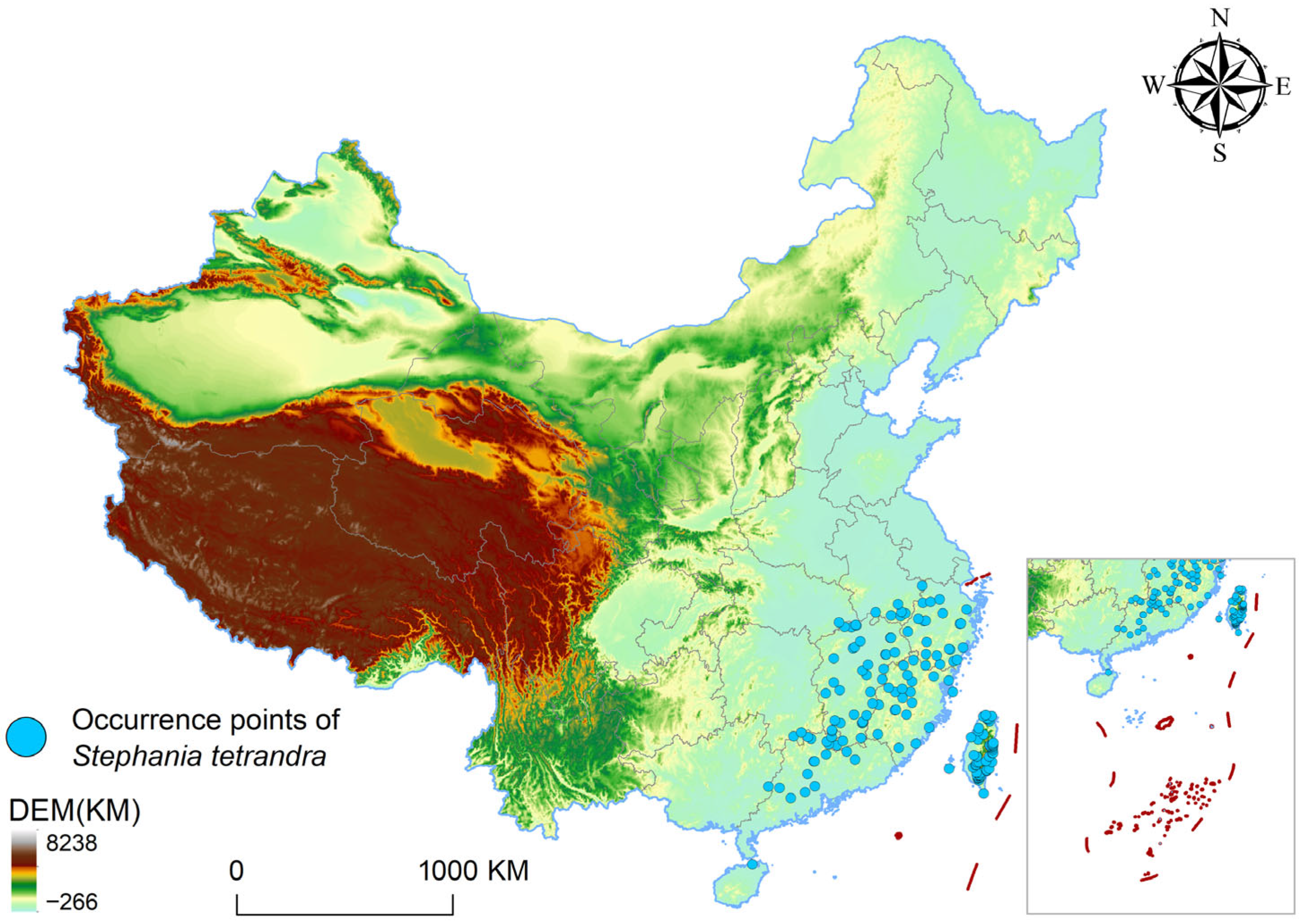
2.2. Occurrence Data
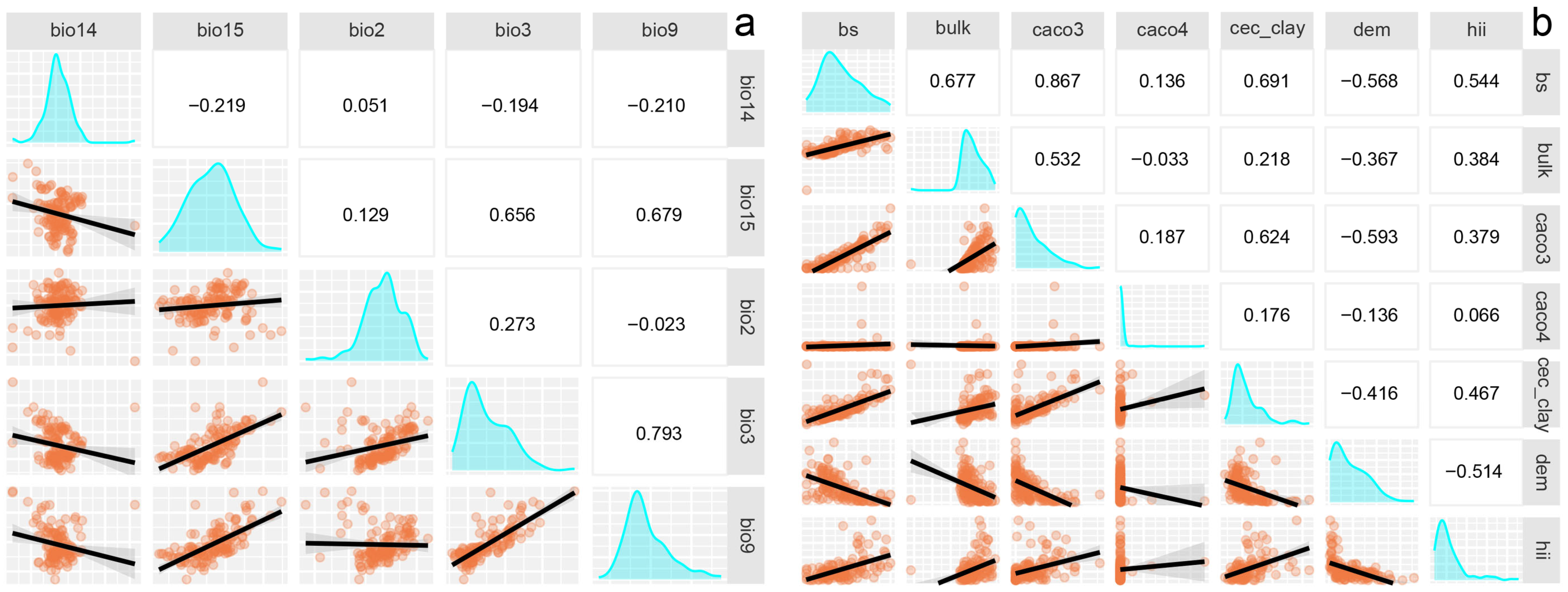
2.3. Environmental Predictors and Collinearity Control
2.4. Species Distribution Modeling Framework
2.5. Future Climate Scenarios and Time Slices
2.6. Extrapolation Diagnostics
2.7. Range Change Quantification
2.8. Software Environment
3. Results
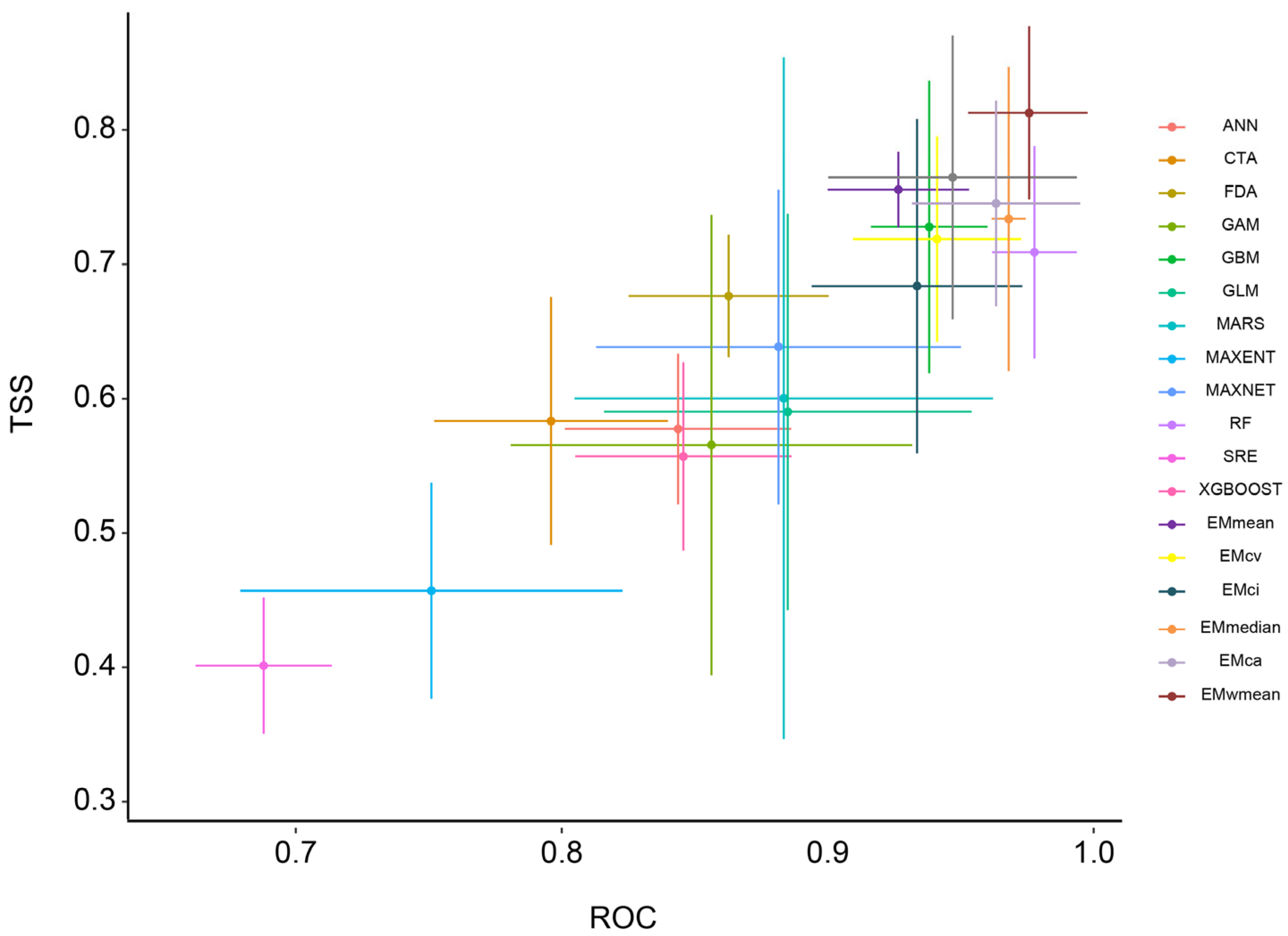
3.1. Model Performance and Ensemble Selection
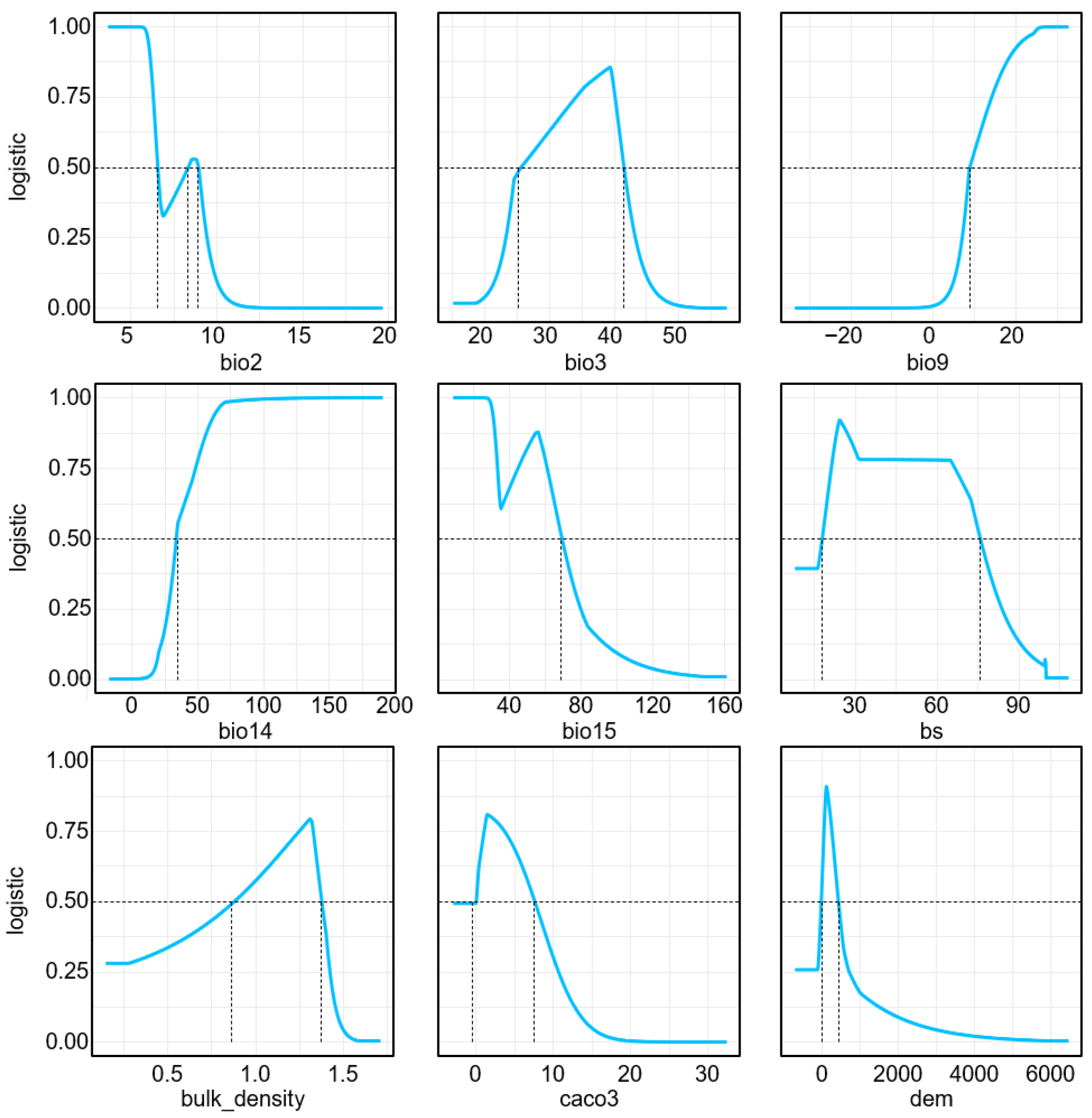
3.2. Key Predictors and Response Curves
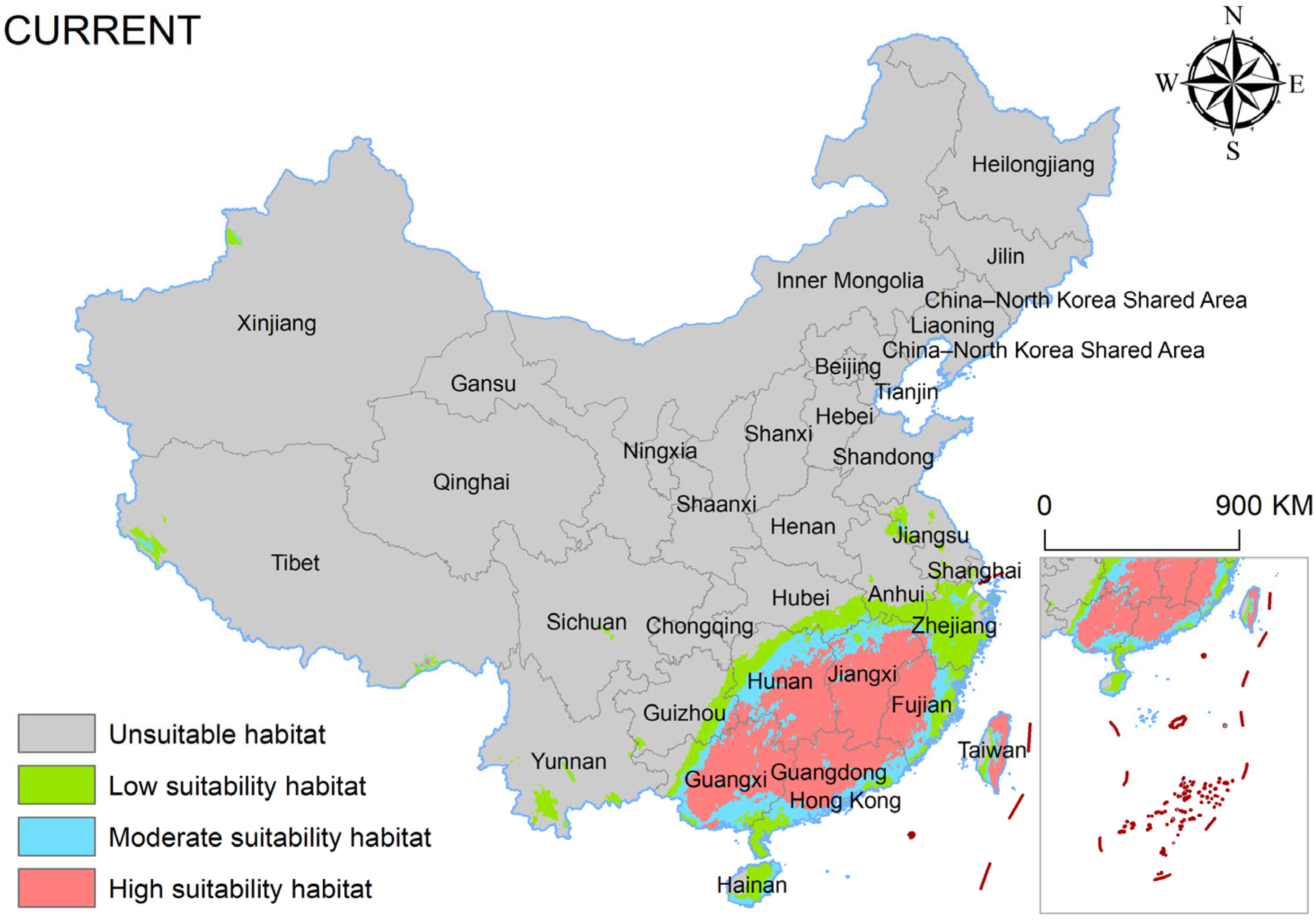
3.3. Current Habitat Suitability Pattern
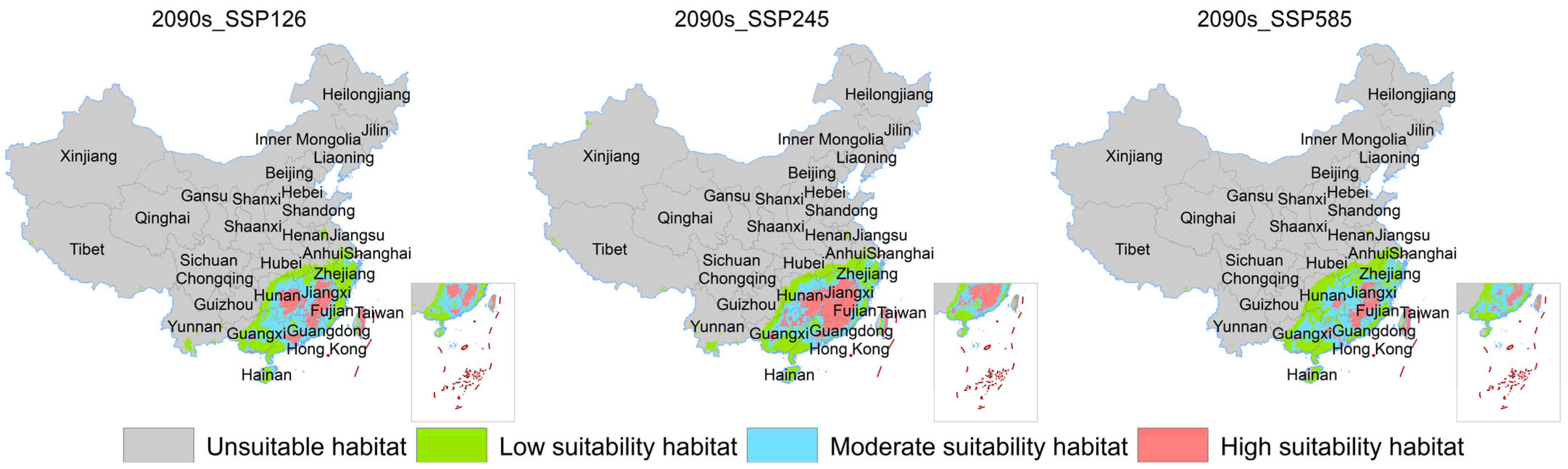
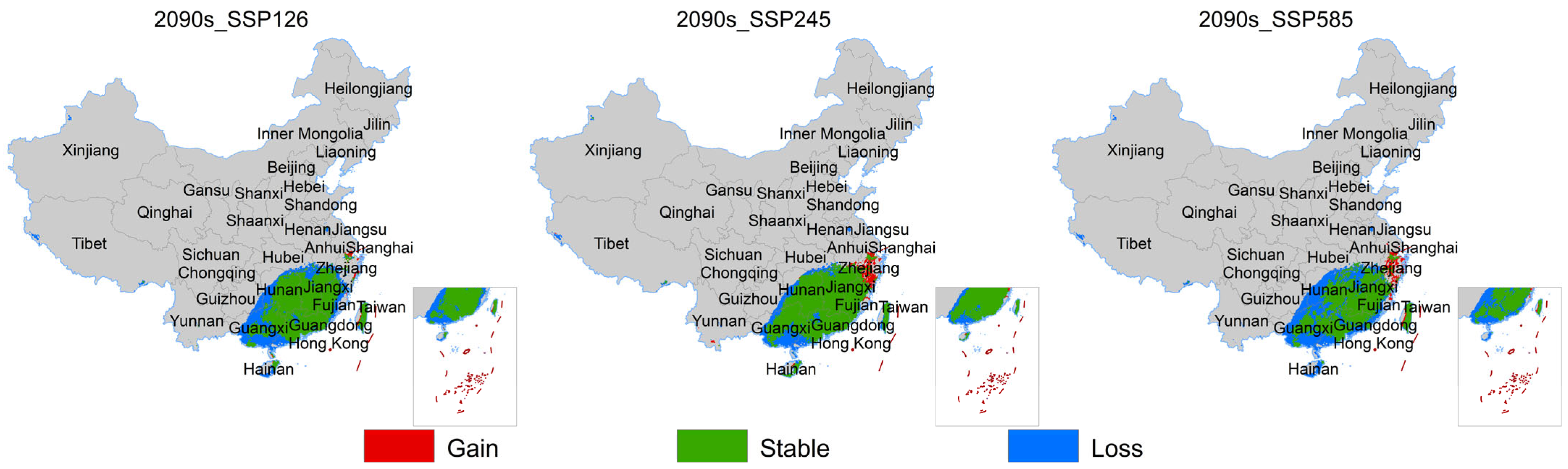
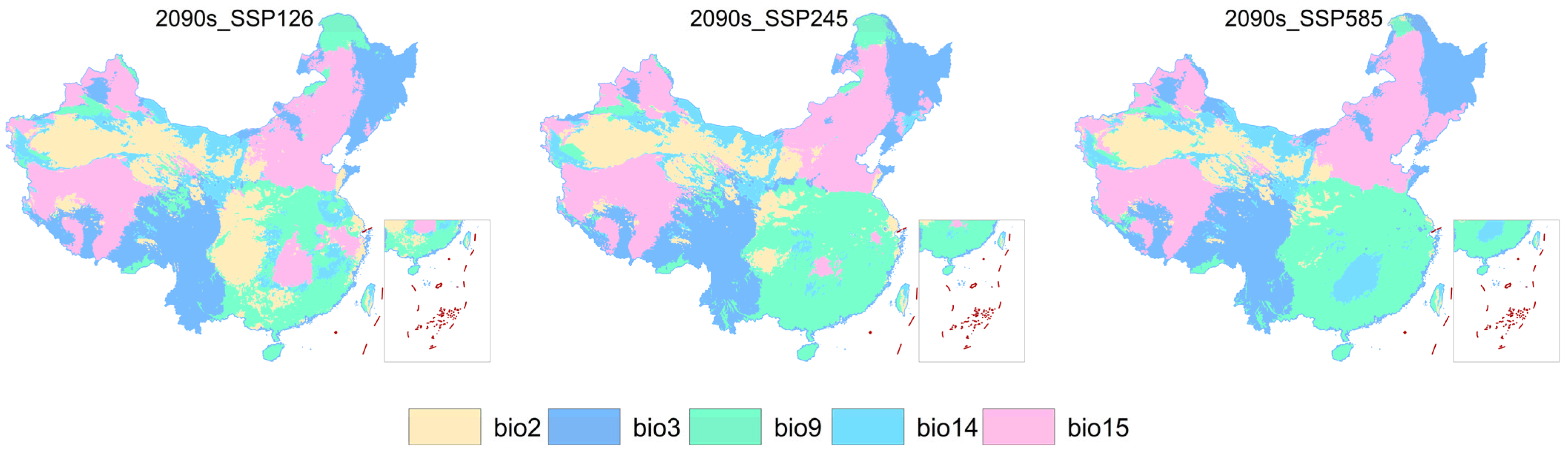
3.4. Future Projections and Habitat Change Types
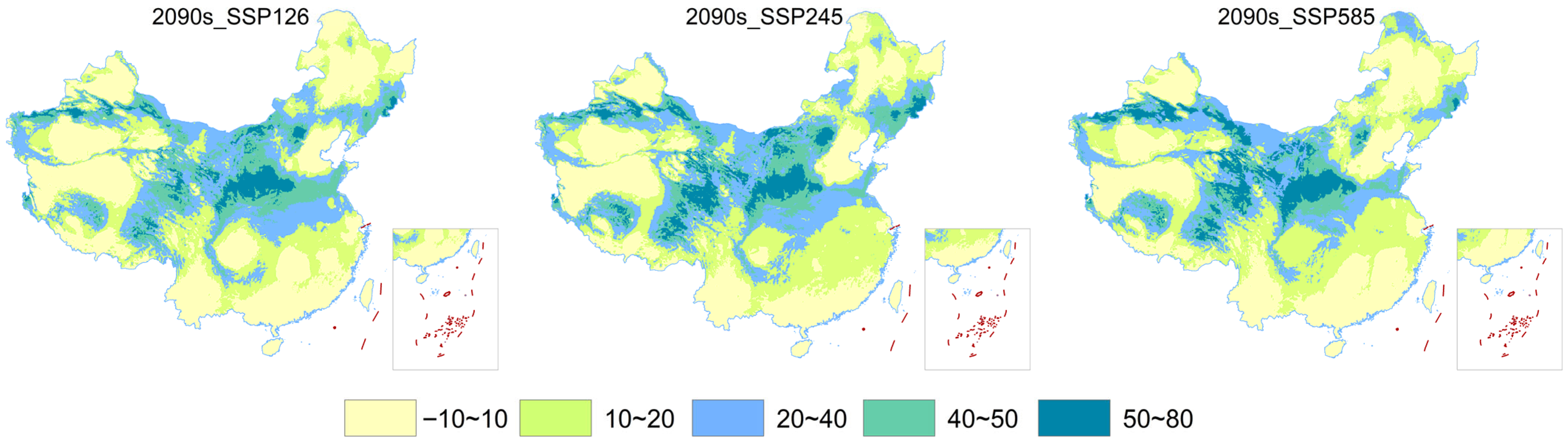
3.5. Extrapolation Risk (MESS/MoD)
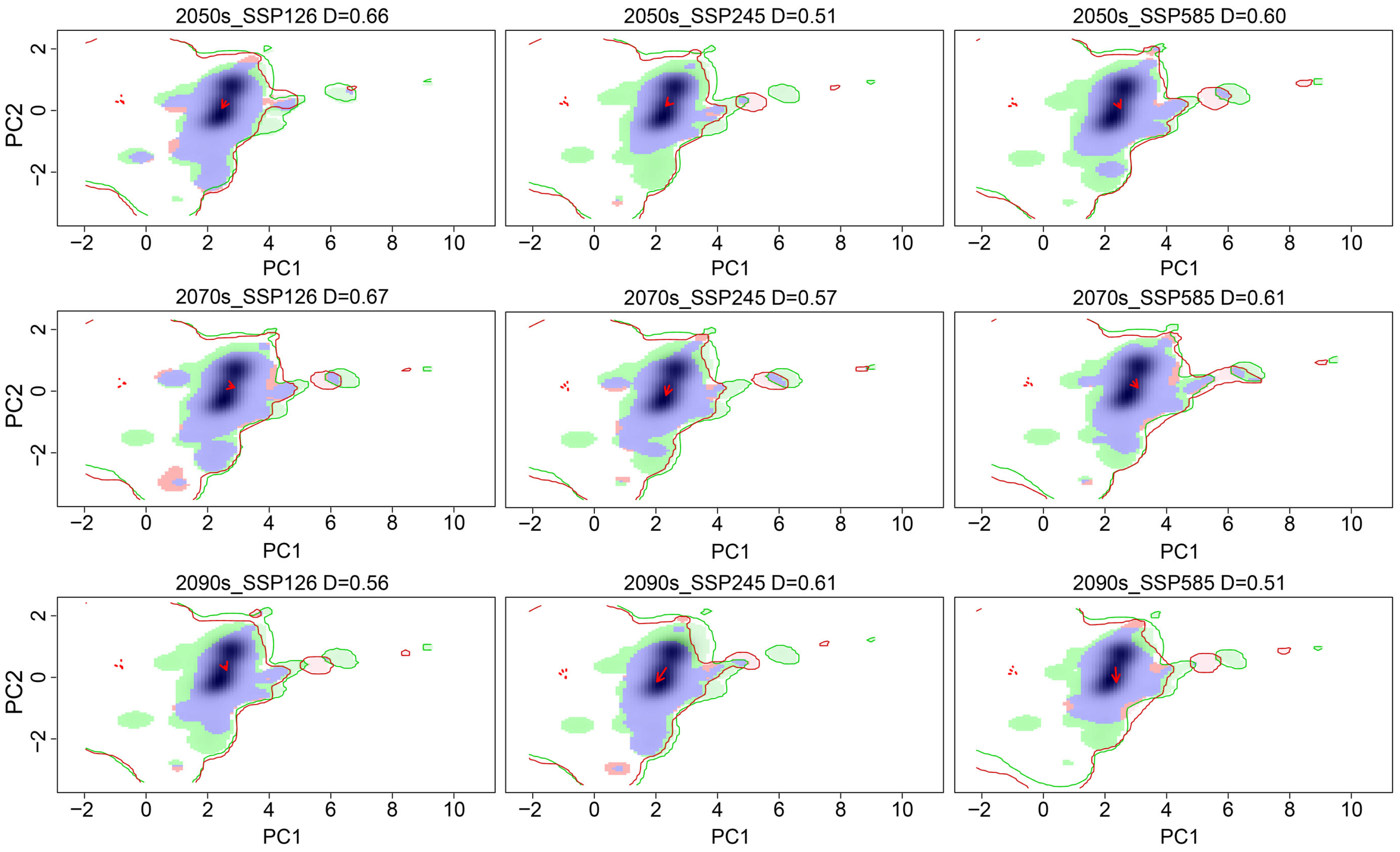
3.6. Niche Dynamics
4. Discussion
4.1. Reliability and Interpretation of the Ensemble Projections
4.2. Climate-Edaphic Constraints and Threshold Effects Shaping Suitability
4.3. Present-Future Redistribution: Core Stability, Degradation, and Fragmentation Under High Emissions
4.4. Novel Climate Space and Niche Reorganization: Implications for Conservation and Germplasm Prioritization
4.5. Limitations and Ecological Realism of Modeled Suitability
5. Conclusions
Supplementary Materials
Author Contributions
Funding
Data Availability Statement
Acknowledgments
Conflicts of Interest
References
- IPCC. Climate Change 2021: The Physical Science Basis; Cambridge University Press: Cambridge, UK, 2021. [Google Scholar] [CrossRef]
- Pecl, G.T.; Araújo, M.B.; Bell, J.D.; Blanchard, J.; Bonebrake, T.C.; Chen, I.-C.; Clark, T.D.; Colwell, R.K.; Danielsen, F.; Evengård, B.; et al. Biodiversity redistribution under climate change: Impacts on ecosystems and human well-being. Science 2017, 355, eaai9214. [Google Scholar] [CrossRef] [PubMed]
- Urban, M.C. Accelerating extinction risk from climate change. Science 2015, 348, 571–573. [Google Scholar] [CrossRef]
- Davis, C.C.; Choisy, P. Medicinal plants meet modern biodiversity science. Curr. Biol. 2024, 34, R158–R173. [Google Scholar] [CrossRef]
- Chen, S.-L.; Yu, H.; Luo, H.-M.; Wu, Q.; Li, C.-F.; Steinmetz, A. Conservation and sustainable use of medicinal plants: Problems, progress, and prospects. Chin. Med. 2016, 11, 37. [Google Scholar] [CrossRef]
- Chi, X.; Zhang, Z.; Xu, X.; Zhang, X.; Zhao, Z.; Liu, Y.; Wang, Q.; Wang, H.; Li, Y.; Yang, G.; et al. Threatened medicinal plants in China: Distributions and conservation priorities. Biol. Conserv. 2017, 210, 89–95. [Google Scholar] [CrossRef]
- Jiang, Y.; Liu, M.; Liu, H.; Liu, S. Stephania tetrandra S. Moore: A review of its phytochemistry, pharmacology, and clinical applications. Phytochem. Rev. 2020, 19, 1171–1198. [Google Scholar] [CrossRef]
- Wang, Y.; Liu, H.; Zhao, D.; Wang, S.; Wang, J.; Chi, X.; Zhang, C.; Wang, T.; Lyu, C.; Kang, C.; et al. Assessment of suitable cultivation area for Paris polyphylla var. chinensis and var. yunnanensis under anthropogenic disturbance based on ensemble modeling and germplasm identification. BMC Plant Biol. 2026, 26. [Google Scholar] [CrossRef]
- Wang, Y.; Liu, K.; Li, M.; Bai, Y.; Zhang, C.; Yan, B.; Dong, W.; Zhang, Y.; Sun, J. Original species identification of Epimedii Folium (Epimedium) and their distributional responses to climate change. Sci. Tradit. Chin. Med. 2025, 3, 178–185. [Google Scholar] [CrossRef]
- Elith, J.; Leathwick, J.R. Species distribution models: Ecological explanation and prediction across space and time. Annu. Rev. Ecol. Evol. Syst. 2009, 40, 677–697. [Google Scholar] [CrossRef]
- Phillips, S.J.; Anderson, R.P.; Schapire, R.E. Maximum entropy modeling of species geographic distributions. Ecol. Model. 2006, 190, 231–259. [Google Scholar] [CrossRef]
- Araújo, M.B.; New, M. Ensemble forecasting of species distributions. Trends Ecol. Evol. 2007, 22, 42–47. [Google Scholar] [CrossRef] [PubMed]
- Thuiller, W.; Lafourcade, B.; Engler, R.; Araújo, M.B. BIOMOD—A platform for ensemble forecasting of species distributions. Ecography 2009, 32, 369–373. [Google Scholar] [CrossRef]
- Hao, T.; Elith, J.; Guillera-Arroita, G.; Lahoz-Monfort, J.J. A review of evidence about use and performance of species distribution modelling ensembles like BIOMOD. Divers. Distrib. 2019, 25, 839–852. [Google Scholar] [CrossRef]
- Lian, L.; Peng, H.-W.; Erst, A.S.; Ortiz, R.D.C.; Jabbour, F.; Chen, Z.-D.; Wang, W. Bayesian tip-dated phylogeny and biogeography of Cissampelideae (Menispermaceae): Mitigating the effects of homoplastic morphological characters. Cladistics 2024, 40, 391–410. [Google Scholar] [CrossRef]
- Wu, M.; Bai, Y.; Huang, L.; Dong, Z.; Li, Y.; Yan, G.; Xie, Y. SSR Marker–Based Genetic Diversity and Relationship Analyses of Stephania tetrandra S. Moore. Plant Mol. Biol. Report. 2024, 42, 675–687. [Google Scholar] [CrossRef]
- Fick, S.E.; Hijmans, R.J. WorldClim 2: New 1-km spatial resolution climate surfaces for global land areas. Int. J. Climatol. 2017, 37, 4302–4315. [Google Scholar] [CrossRef]
- Dormann, C.F.; Elith, J.; Bacher, S.; Buchmann, C.; Carl, G.; Carré, G.; Marquéz, J.R.G.; Gruber, B.; Lafourcade, B.; Leitão, P.J.; et al. Collinearity: A review of methods to deal with it and a simulation study evaluating their performance. Ecography 2013, 36, 27–46. [Google Scholar] [CrossRef]
- Eyring, V.; Bony, S.; Meehl, G.A.; Senior, C.A.; Stevens, B.; Stouffer, R.J.; Taylor, K.E. Overview of the Coupled Model Intercomparison Project Phase 6 (CMIP6) experimental design and organization. Geosci. Model Dev. 2016, 9, 1937–1958. [Google Scholar] [CrossRef]
- O’NEill, B.C.; Tebaldi, C.; van Vuuren, D.P.; Eyring, V.; Friedlingstein, P.; Hurtt, G.; Knutti, R.; Kriegler, E.; Lamarque, J.-F.; Lowe, J.; et al. The Scenario Model Intercomparison Project (ScenarioMIP) for CMIP6. Geosci. Model Dev. 2016, 9, 3461–3482. [Google Scholar] [CrossRef]
- Riahi, K.; Van Vuuren, D.P.; Kriegler, E.; Edmonds, J.; O’Neill, B.C.; Fujimori, S.; Bauer, N.; Calvin, K.; Dellink, R.; Fricko, O.; et al. The Shared Socioeconomic Pathways and their energy, land use, and greenhouse gas emissions implications: An overview. Glob. Environ. Change 2017, 42, 153–168. [Google Scholar] [CrossRef]
- Liu, C.; White, M.; Newell, G. Selecting thresholds for the prediction of species occurrence with presence-only data. J. Biogeogr. 2013, 40, 778–789. [Google Scholar] [CrossRef]
- Marmion, M.; Parviainen, M.; Luoto, M.; Heikkinen, R.K.; Thuiller, W. Evaluation of consensus methods in predictive species distribution modelling. Divers. Distrib. 2009, 15, 59–69. [Google Scholar] [CrossRef]
- Allouche, O.; Tsoar, A.; Kadmon, R. Assessing the accuracy of species distribution models: Prevalence, kappa and the true skill statistic (TSS). J. Appl. Ecol. 2006, 43, 1223–1232. [Google Scholar] [CrossRef]
- Brun, P.; Thuiller, W.; Chauvier, Y.; Pellissier, L.; Wüest, R.O.; Wang, Z.; Zimmermann, N.E. Model complexity affects species distribution projections under climate change. J. Biogeogr. 2020, 47, 130–142. [Google Scholar] [CrossRef]
- Zurell, D.; Franklin, J.; König, C.; Bouchet, P.J.; Dormann, C.F.; Elith, J.; Fandos, G.; Feng, X.; Guillera-Arroita, G.; Guisan, A.; et al. A standard protocol for reporting species distribution models. Ecography 2020, 43, 1261–1277. [Google Scholar] [CrossRef]
- Roberts, D.R.; Bahn, V.; Ciuti, S.; Boyce, M.S.; Elith, J.; Guillera-Arroita, G.; Hauenstein, S.; Lahoz-Monfort, J.J.; Schröder, B.; Thuiller, W.; et al. Cross-validation strategies for data with temporal, spatial, hierarchical, or phylogenetic structure. Ecography 2017, 40, 913–929. [Google Scholar] [CrossRef]
- Elith, J.; Kearney, M.; Phillips, S. The art of modelling range-shifting species. Methods Ecol. Evol. 2010, 1, 330–342. [Google Scholar] [CrossRef]
- Gallou, A.; Jump, A.S.; Lynn, J.S.; Field, R.; Irl, S.D.H.; Steinbauer, M.J.; Beierkuhnlein, C.; Chen, J.-C.; Chou, C.-H.; Hemp, A.; et al. Diurnal temperature range as a key predictor of plants’ elevation ranges globally. Nat. Commun. 2023, 14, 7890. [Google Scholar] [CrossRef]
- Grossiord, C.; Buckley, T.N.; Cernusak, L.A.; Novick, K.A.; Poulter, B.; Siegwolf, R.T.W.; Sperry, J.S.; McDowell, N.G. Plant responses to rising vapor pressure deficit. New Phytol. 2020, 226, 1550–1566. [Google Scholar] [CrossRef] [PubMed]
- Chen, W.-Y.; Su, T. Asian monsoon shaped the pattern of woody dicotyledon richness in humid regions of China. Plant Divers. 2020, 42, 148–154. [Google Scholar] [CrossRef]
- Wang, X.; Luo, M.; Song, F.; Wu, S.; Chen, Y.D.; Zhang, W. Precipitation Seasonality Amplifies as Earth Warms. Geophys. Res. Lett. 2024, 51, e2024GL109132. [Google Scholar] [CrossRef]
- Bontpart, T.; Gérard, F.; Vile, D.; Lacombe, B.; Weiss, A.; Reichheld, J.-P.; Mari, S. Growing on calcareous soils and facing climate change. Trends Plant Sci. 2024, 29, 1319–1330. [Google Scholar] [CrossRef]
- Jacobsen, A.G.R.; Jervis, G.; Xu, J.; Topping, J.F.; Lindsey, K. Root growth responses to mechanical impedance are regulated by a network of ROS, ethylene and auxin signalling in Arabidopsis. New Phytol. 2021, 231, 225–242. [Google Scholar] [CrossRef] [PubMed]
- Beyer, R.M.; Manica, A. Historical and projected future range sizes of the world’s mammals, birds, and amphibians. Nat. Commun. 2020, 11, 5633. [Google Scholar] [CrossRef]
- Trisos, C.H.; Merow, C.; Pigot, A.L. The projected timing of abrupt ecological disruption from climate change. Nature 2020, 580, 496–501. [Google Scholar] [CrossRef]
- Morelli, T.L.; Barrows, C.W.; Ramirez, A.R.; Cartwright, J.M.; Ackerly, D.D.; Eaves, T.D.; Ebersole, J.L.; Krawchuk, M.A.; Letcher, B.H.; Mahalovich, M.F.; et al. Climate-change refugia: Biodiversity in the slow lane. Front. Ecol. Environ. 2020, 18, 228–234. [Google Scholar] [CrossRef]
- Warren, R.; Price, J.; Graham, E.; Forstenhaeusler, N.; VanDerWal, J. The projected effect on insects, vertebrates, and plants of limiting global warming to 1.5 °C rather than 2 °C. Science 2018, 360, 791–795. [Google Scholar] [CrossRef]
- IPCC. Summary for Policymakers. In Climate Change 2022: Impacts, Adaptation and Vulnerability (AR6 WGII); Cambridge University Press (IPCC): Cambridge, UK, 2023. [Google Scholar] [CrossRef]
- Mesgaran, M.B.; Cousens, R.D.; Webber, B.L. Here be dragons: A tool for quantifying novelty due to covariate range and correlation change when projecting species distribution models. Divers. Distrib. 2014, 20, 1147–1159. [Google Scholar] [CrossRef]
- Yates, K.L.; Bouchet, P.J.; Caley, M.J.; Mengersen, K.; Randin, C.F.; Parnell, S.; Fielding, A.H.; Bamford, A.J.; Ban, S.; Barbosa, A.M.; et al. Outstanding challenges in the transferability of ecological models. Trends Ecol. Evol. 2018, 33, 790–802. [Google Scholar] [CrossRef]
- Broennimann, O.; Fitzpatrick, M.C.; Pearman, P.B.; Petitpierre, B.; Pellissier, L.; Yoccoz, N.G.; Thuiller, W.; Fortin, M.-J.; Randin, C.; Zimmermann, N.E.; et al. Measuring ecological niche overlap from occurrence and spatial environmental data. Glob. Ecol. Biogeogr. 2012, 21, 481–497. [Google Scholar] [CrossRef]
- Warren, D.L.; Glor, R.E.; Turelli, M. ENMTools: A toolbox for comparative studies of environmental niche models. Ecography 2010, 33, 607–611. [Google Scholar] [CrossRef]
- Hoban, S.; Archer, F.I.; Bertola, L.D.; Bragg, J.G.; Breed, M.F.; Bruford, M.W.; Coleman, M.A.; Ekblom, R.; Funk, W.C.; Grueber, C.E.; et al. Global genetic diversity status and trends: Towards a suite of Essential Biodiversity Variables for genetic composition. Biol. Rev. 2022, 97, 1511–1538. [Google Scholar] [CrossRef] [PubMed]
- Castañeda-Álvarez, N.P.; Khoury, C.K.; Achicanoy, H.A.; Bernau, V.; Dempewolf, H.; Eastwood, R.J.; Guarino, L.; Harker, R.H.; Jarvis, A.; Maxted, N.; et al. Global conservation priorities for crop wild relatives. Nat. Plants 2016, 2, 16022. [Google Scholar] [CrossRef] [PubMed]


Disclaimer/Publisher’s Note: The statements, opinions and data contained in all publications are solely those of the individual author(s) and contributor(s) and not of MDPI and/or the editor(s). MDPI and/or the editor(s) disclaim responsibility for any injury to people or property resulting from any ideas, methods, instructions or products referred to in the content. |
© 2026 by the authors. Licensee MDPI, Basel, Switzerland. This article is an open access article distributed under the terms and conditions of the Creative Commons Attribution (CC BY) license.
Share and Cite
Wang, J.; Wang, Y.; Wang, S.; Yuan, Q. Ensemble Species Distribution Modeling Reveals Stable High-Suitability Areas and Conservation Priorities for Stephania tetrandra in China Under CMIP6 Scenarios. Diversity 2026, 18, 179. https://doi.org/10.3390/d18030179
Wang J, Wang Y, Wang S, Yuan Q. Ensemble Species Distribution Modeling Reveals Stable High-Suitability Areas and Conservation Priorities for Stephania tetrandra in China Under CMIP6 Scenarios. Diversity. 2026; 18(3):179. https://doi.org/10.3390/d18030179
Chicago/Turabian StyleWang, Jingyi, Yiheng Wang, Sheng Wang, and Qingjun Yuan. 2026. "Ensemble Species Distribution Modeling Reveals Stable High-Suitability Areas and Conservation Priorities for Stephania tetrandra in China Under CMIP6 Scenarios" Diversity 18, no. 3: 179. https://doi.org/10.3390/d18030179
APA StyleWang, J., Wang, Y., Wang, S., & Yuan, Q. (2026). Ensemble Species Distribution Modeling Reveals Stable High-Suitability Areas and Conservation Priorities for Stephania tetrandra in China Under CMIP6 Scenarios. Diversity, 18(3), 179. https://doi.org/10.3390/d18030179