
Review

Bibliometric Analysis of Global Remote Sensing of Plateau Wetland Research Trends from 1982 to 2024

1
Yunnan Key Laboratory of Plateau Wetland Conservation, Restoration and Ecological Services, Southwest Forestry University, Kunming 650224, China
2
National Plateau Wetlands Research Center, Southwest Forestry University, Kunming 650224, China
3
College of Ecology and Environment (College of Wetlands), Southwest Forestry University, Kunming 650224, China
4
State Key Laboratory of Resources and Environmental Information System, Institute of Geographic Sciences and Natural Resources Research, Chinese Academy of Sciences, Beijing 100101, China
*
Author to whom correspondence should be addressed.
These authors contributed equally to this work.
Diversity 2026, 18(3), 176; https://doi.org/10.3390/d18030176
Submission received: 11 February 2026 / Revised: 10 March 2026 / Accepted: 10 March 2026 / Published: 12 March 2026

Abstract

Wetlands, frequently termed the “kidneys of the Earth,” represent one of the most vital global ecosystems. Despite their limited spatial extent, plateau wetlands function as unique ecological units that play a pivotal role in the global carbon cycle, water resource regulation, and biodiversity conservation, while exhibiting acute sensitivity to climate change. Advances in remote sensing technology—characterized by macro-scale cover-age, temporal efficiency, and non-invasive operations—have established it as a corner-stone for the dynamic monitoring and analysis of these environments. This study presents a bibliometric synthesis of 2138 publications (1982–2024) retrieved from the Web of Science Core Collection. We systematically evaluated publication trajectories, international collaborative networks, disciplinary shifts, core journals, and the spatiotemporal evolution of research hotspots. Our findings reveal an exponential growth in scholarly output alongside a marked diversification of research fields. Geographically, research is predominantly clustered around the Tibetan Plateau, flanked by the Alps and the Himalayas, with sparse representation in other regions. Future endeavors should prioritize underrepresented low-latitude and remote regions through strengthened international synergy and the integration of emerging technologies, such as UAVs and hyperspectral sensors.

1. Introduction

Wetlands constitute one of the Earth’s three primary ecosystems, providing indispensable ecological services such as water conservation, purification, flood mitigation, climate regulation, and biodiversity preservation [1,2,3]. Plateau wetlands, situated in high-altitude regions, represent a unique wetland category and are among the most biodiverse ecosystems per unit area [4]. Frequently characterized as the “Earth’s Water Tower,” these wetlands are integral to maintaining water resources, modulating regional hydrological balances, improving water quality, and bolstering ecosystem stability [5,6]. Furthermore, they serve as critical barometers for global carbon cycling and climatic shifts [7,8,9]. It is imperative to note that in the unique geographical context of high-altitude environments, plateau wetlands do not exist in isolation. Rather, they are inextricably interconnected with alpine shallow lakes, permafrost degradation processes (e.g., thermokarst), and glacial hydrological networks. Therefore, investigating plateau wetlands necessitates a broadened, holistic conceptual framing that integrates the entire plateau wetland–lake–cryosphere system. This interconnected system serves as the foundational scope for our subsequent bibliometric analysis.
Historically, prior to the proliferation of remote sensing technology, monitoring plateau wetlands necessitated intensive ground surveys and manual documentation. Such approaches were inherently labor-intensive, spatially restricted, and plagued by challenges regarding data precision and latency [10,11]. However, the advent of sophisticated remote sensing technologies—specifically high-resolution multispectral sensors and Synthetic Aperture Radar (SAR)—has fundamentally transformed environmental assessment efficiencies. Consequently, plateau wetland research has transitioned into a novel paradigm [12,13]. Remote sensing is now indispensable for quantifying critical parameters, including land-cover dynamics, vegetation indices [14], surface temperatures [15], and hydrological states. Its capacity to provide synoptic, real-time, and non-invasive observations has significantly advanced our comprehension of the spatiotemporal patterns, ecological processes, and underlying drivers of plateau wetlands. At present, remote sensing stands as the most robust instrument for elucidating the dynamics of these unique ecosystems [16,17].
Remote sensing technology has emerged as a transformative paradigm for monitoring a multifaceted array of environmental variables within plateau ecosystems. Satellite platforms, characterized by their synoptic coverage and multitemporal revisit capabilities, provide a robust framework for tracking diverse ecological indicators in these high-altitude wetlands. Current applications encompass the precise quantification of water level fluctuations [18,19], lake extent dynamics [20,21,22], and water quality metrics [23,24], alongside the assessment of soil organic carbon stocks [25,26], vegetation phenology [27,28], snow cover variations [14,29], regional climate shifts [30,31], and precipitation regimes [32,33]. By yielding high-fidelity biophysical parameters, satellite-derived datasets serve as the data-intensive foundation for these investigations [34]. To date, informatics-driven research in this domain has predominantly concentrated on the spatiotemporal evolution of plateau lacustrine and fluvial systems. High-spatial-resolution imagery, in particular, has proven indispensable for the precision mapping and characterization of these fragile water bodies [35]. The synthesis of longitudinal and multi-scale remote sensing data enables researchers to decode the complex ecological processes of plateau wetlands, significantly advancing the systemic understanding of these unique global ecosystems [36,37].
Bibliometrics, initially conceptualized by Pritchard [38], serves as a rigorous informatics framework for deciphering the evolution of scientific research. Its theoretical bedrock is constructed upon three classical laws: Lotka’s Law [39], Bradford’s Law [40], and Zipf’s Law [41], which collectively facilitate the mathematical modeling of academic productivity and information distribution. As a sophisticated research evaluation methodology, bibliometric analysis integrates mathematical, statistical, and computational approaches to perform a systematic characterization of metadata retrieved from global citation indices. This quantitative paradigm distills complex bibliographical data—including author productivity, keyword ontologies, and international collaborative architectures—into intuitive knowledge maps that elucidate developmental trajectories and emerging research frontiers [42,43].
High-fidelity data sourced from online scientific citation databases enable a comprehensive assessment of both current states and future trajectories within a research domain [44]. While bibliometric approaches have been extensively deployed in remote sensing reviews across diverse disciplines [45], their application in the nexus of plateau wetland informatics remains underdeveloped. Over the past five decades, RS technology has been a cornerstone of wetland research [16], particularly on the Tibetan Plateau. However, existing reviews in this area predominantly offer qualitative syntheses, leaving a notable void in systematic bibliometric mapping that integrates the triad of remote sensing, wetlands, and plateau geography [46,47]. To date, no study has employed a quantitative informatics approach to decode the large-scale temporal evolution or the underlying knowledge structures of RS applications in plateau wetlands. Consequently, this study represents the inaugural bibliometric investigation specifically designed to characterize the literature landscape and collaborative dynamics of this interdisciplinary field.
This study deploys a systematic bibliometric methodology to scrutinize the longitudinal developmental trajectory of global remote sensing research, focusing on plateau wetlands, utilizing high-fidelity metadata retrieved from the Web of Science spanning 1982 to 2024. By multidimensionally analyzing publication dynamics, authorial and national affiliations, international collaboration architectures, core scholarly outlets, keyword co-occurrence evolution, and geographic literature distribution, we delineate critical research hotspots and identify nascent frontiers within this interdisciplinary domain. These findings are anticipated to provide a comprehensive scientific benchmark and strategic roadmaps to inform future research priorities and technological integration in plateau wetland conservation.

2. Materials and Methods

2.1. Literature Search Strategy

Data acquisition for this investigation was systematically performed using the Science Citation Index Expanded (SCI-Expanded) database within the Web of Science (WoS) Core Collection. To ensure a robust balance between recall and precision, the Boolean search strategy was finalized through iterative comparative testing and refinement. The comprehensive search string was designed to intersect three primary thematic domains: plateau/high-altitude geography, wetland ecosystems, and remote sensing methodologies.
The finalized search query was executed as follows:
TS = ((“High Altitud*” or Plateau* or “Qinghai–Tibet*” or “Tibetan Plateau” or “Tibet Plateau” or “Qinghai-Xizang Plateau” or “Yunnan-Guizhou Plateau” or “Loess Plateau” or “Pamir Plateau” or Alpine) AND (Wetland* or Marsh* or Swamp* or Bog or Fen or Peatland* or “Peat Land” or “Peat Soil” or Mire* or Riparian or “Water Bod*” or Lake* or Pond* or Reservoir or Inundat* or Floodplain*) AND (“Remote Sens*” or Satellit* or “Space Borne” or “Aerial Photograph*” or “Aerial Survey” or “Aerial Imag*” or “UAV” or “UAS” or “Unmanned Aerial Vehicle” or “Drone” or “Hyperspectral” or “Multispectral” or Radar or SAR or “Synthetic Aperture Radar” or “Optical Remot*” or “Geographic Information System” or GIS or “Spatial Analysis”))
The search originally retrieved documents from the WoS SCI-Expanded up to 3 September 2025. However, to prevent partial-year data from skewing the longitudinal trend interpretation, publications from 2025 were manually filtered out. Consequently, a refined dataset of 2138 documents published within the complete years from 1982 to 2024 was retained for analysis. All identified metadata were exported in plain text format, selecting the “Full Record and Cited References” option to support subsequent quantitative bibliometric analysis and network mapping.
It should be noted that in the context of high-altitude geography, plateau wetlands are inextricably linked with alpine lakes and glacial hydrological networks. Therefore, broad ecosystem terms (e.g., ‘Lake’, ‘Reservoir’) were intentionally included in the search string alongside strict wetland terms. This approach ensures the capture of literature focusing on cryosphere-linked environmental monitoring, which represents the ecological foundation and physical drivers of plateau wetland dynamics.

2.2. Bibliometric Analysis

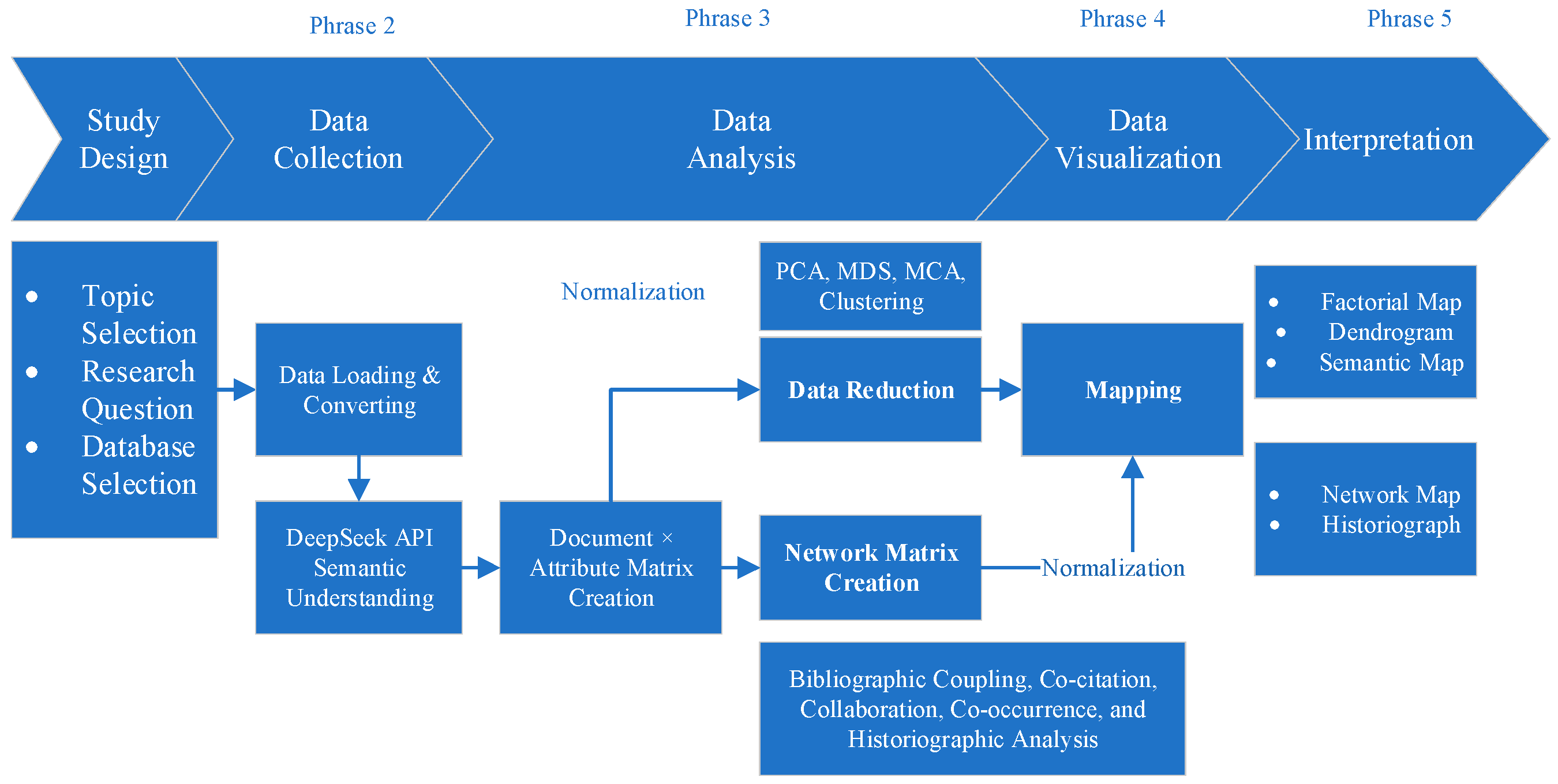
The bibliometric analysis in this study was implemented within the R computational environment using the bibliometrix package (version 5.2.1), following a standardized five-stage scientometric mapping protocol: research design, data collection, data analysis, data visualization, and interpretation [48]. The complete methodological framework is illustrated in Figure 1. During the research design phase, remote sensing of plateau wetlands was established as the primary thematic focus, with metadata retrieved from the WoS SCI-Expanded database.
In the data collection stage, an initial corpus of 2349 publications was retrieved. After a rigorous peer-review screening and the application of WoS document type filters, 2138 high-quality articles published between 1982 and 2024 were retained for downstream analysis. This systematic filtering protocol ensures the reliability of scientific communication and supports the derivation of robust, evidence-based conclusions [49]. The identified records were integrated into the Biblioshiny web interface and converted into a structured bibliometrix RData format for optimized processing. To ensure internal validity, duplicate records were inherently avoided by exporting directly from the centralized WoS search results. Moreover, author name variations and institutional inconsistencies were automatically standardized and harmonized utilizing the built-in parsing algorithms of the bibliometrix package. To further enhance analytical reliability, a semantic understanding protocol using the DeepSeek API (version 3.1) was implemented to perform intelligent synonym merging for keywords and abstracts, thereby reducing thematic fragmentation.
For the analysis and visualization phases, we utilized a diverse informatics stack, including bibliometrix (version 5.2.1) for descriptive statistics and the tidyverse (version 2.0.0) (specifically ggplot2 (version 4.0.1)), alongside VOSviewer (version 1.6.20) for heuristic mapping. These tools facilitated the generation of publication trajectories, co-citation networks, and complex illustrative charts. Finally, in the interpretation phase, the underlying knowledge structures revealed through advanced data reduction techniques were critically examined and contextualized within the ecological domain.

3. Results and Discussion

3.1. Descriptive Bibliometric Analysis

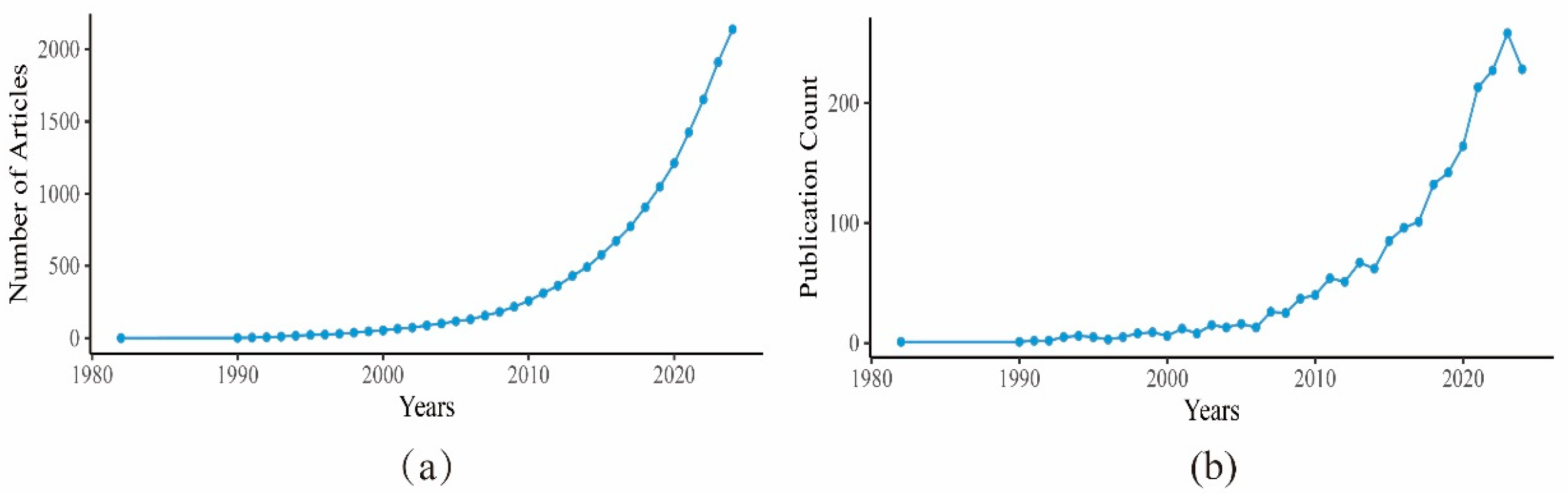
The longitudinal scientific output of remote sensing research on plateau wetlands is illustrated in Figure 2. While the field’s inception within the WoS SCI-Expanded database dates back to 1982 with a solitary inaugural publication, annual output began to consistently escalate starting in 1990. Post-2014, the volume of literature underwent a regime shift, exhibiting a rapid and sustained exponential growth trend. Notably, more than 65% of the total corpus was generated between 2017 and 2024, culminating in a peak of 258 articles in 2023, which represents a robust annual growth rate of 13.7%.
Table 1 provides a comprehensive synthesis of the 2138 records identified between 1982 and 2024. The academic impact of the field is evidenced by an average of 30.99 citations per document. The research landscape is characterized by a diverse community of 7550 authors, including 51 single-authored documents. On average, each publication involves approximately 5.64 co-authors, yielding a collaboration index of 0.28. This specific metric, automatically generated by the bibliometrix package, is calculated as the ratio of total multi-authored articles to the total number of authors in multi-authored papers. This fractional value indicates an average of 0.28 multi-authored papers per author, reflecting a highly collaborative but widely distributed research network where many authors contribute to distinct collaborative subgroups [50]. Furthermore, the presence of 5671 unique author keywords and 4958 Keywords Plus reflects intense research engagement and a continuous expansion of thematic dimensions and cross-disciplinary synergy within the domain.

3.2. Research Countries and Disciplines

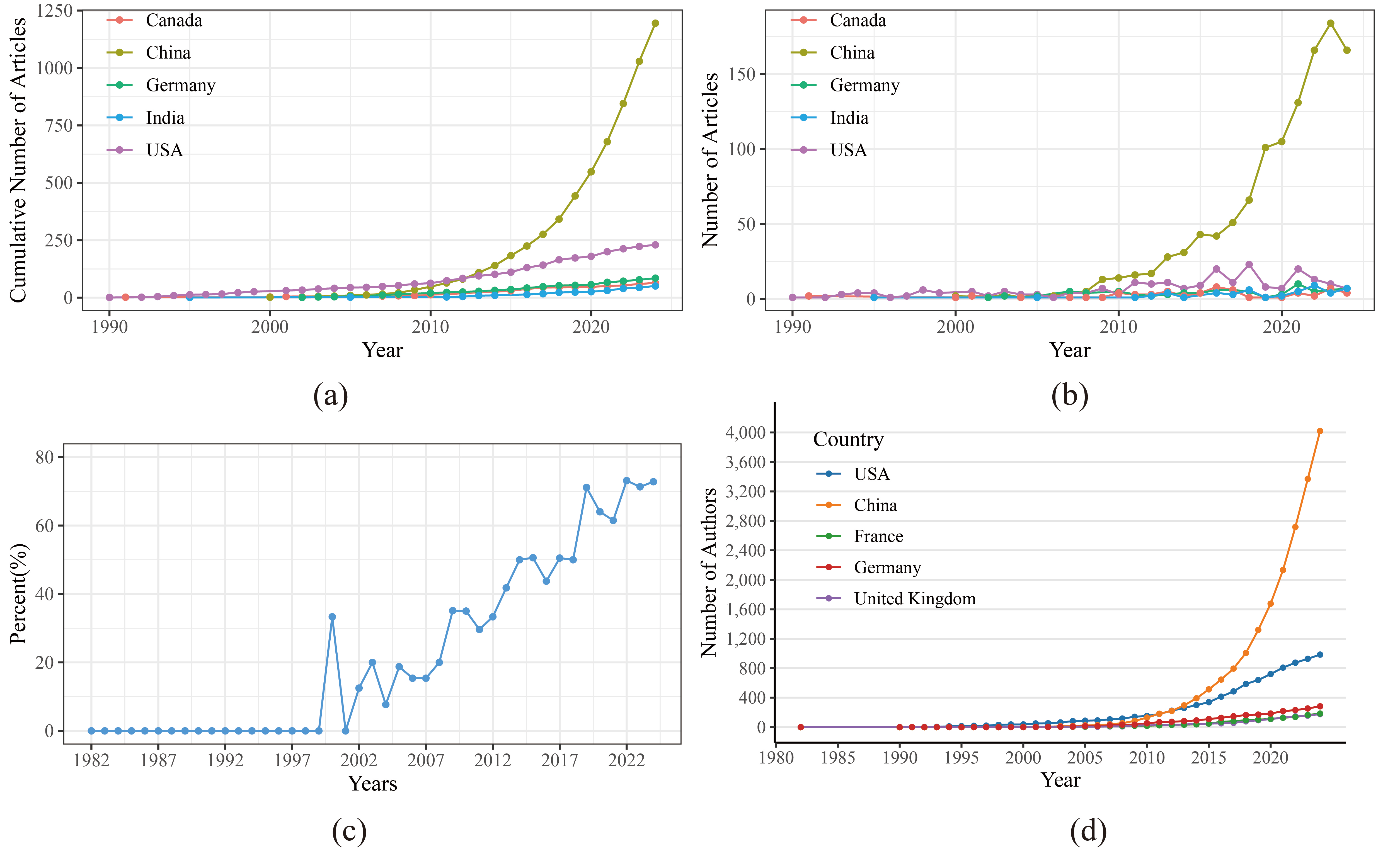
Analysis of the geographical distribution reveals that 90 countries have contributed to the corpus of plateau wetland remote sensing research. The most prolific nations include China (1195 publications), the USA (230), Germany (85), Canada (64), and India (51), as depicted in Figure 3a. Since 2009, China has exhibited a marked ascendant trajectory in annual scholarly output, consistently outpacing other nations. This surge in productivity led to China surpassing the United States in total annual scientific output by 2013. Consequently, China’s relative contribution to global research in this domain has expanded monotonically, reaching 73.1% of the total annual output by 2022.
Furthermore, authorship demographics serve as a robust proxy for national research capacity [51]. Among the 7550 identified authors, the top five countries by authorial affiliation are China (4020), the USA (985), Germany (283), France (185), and the United Kingdom (177), as illustrated in Figure 3d. China’s overwhelming dominance in authorship—significantly exceeding other high-output nations—underscores its strategic depth and intensive commitment to this field. However, this regional dominance should be interpreted with nuance; it reflects a convergence of rapidly advancing national research capacity and the undeniable ecological reality that China hosts the vast majority of the world’s high-altitude wetlands (e.g., the Tibetan Plateau). Thus, the exceptionally high publication volume is driven by both intense scientific investment and the geographical proximity to the core study subject. This research momentum is particularly noteworthy given that only a solitary study was identified globally prior to 1990.
The geographic impetus for this growth is clear: global plateau wetlands cover an estimated 20–25 million hectares, with China hosting the largest wetland expanse in Asia, approximately 451,084 km2 [52]. Since a substantial portion of these inland wetlands is concentrated on the Tibetan Plateau, China’s research trajectory is intrinsically linked to its ecological landscape. Following China’s accession to the Ramsar Convention in 1992 [53], the synergy of evolving national conservation priorities and 21st-century technological strides has catalyzed the integration of remote sensing. This paradigm shift has enabled the longitudinal monitoring of plateau wetlands—particularly in logistically challenging and inaccessible regions—facilitating the acquisition of large-scale, high-resolution data that has propelled the field into an era of sustained rapid development [54].
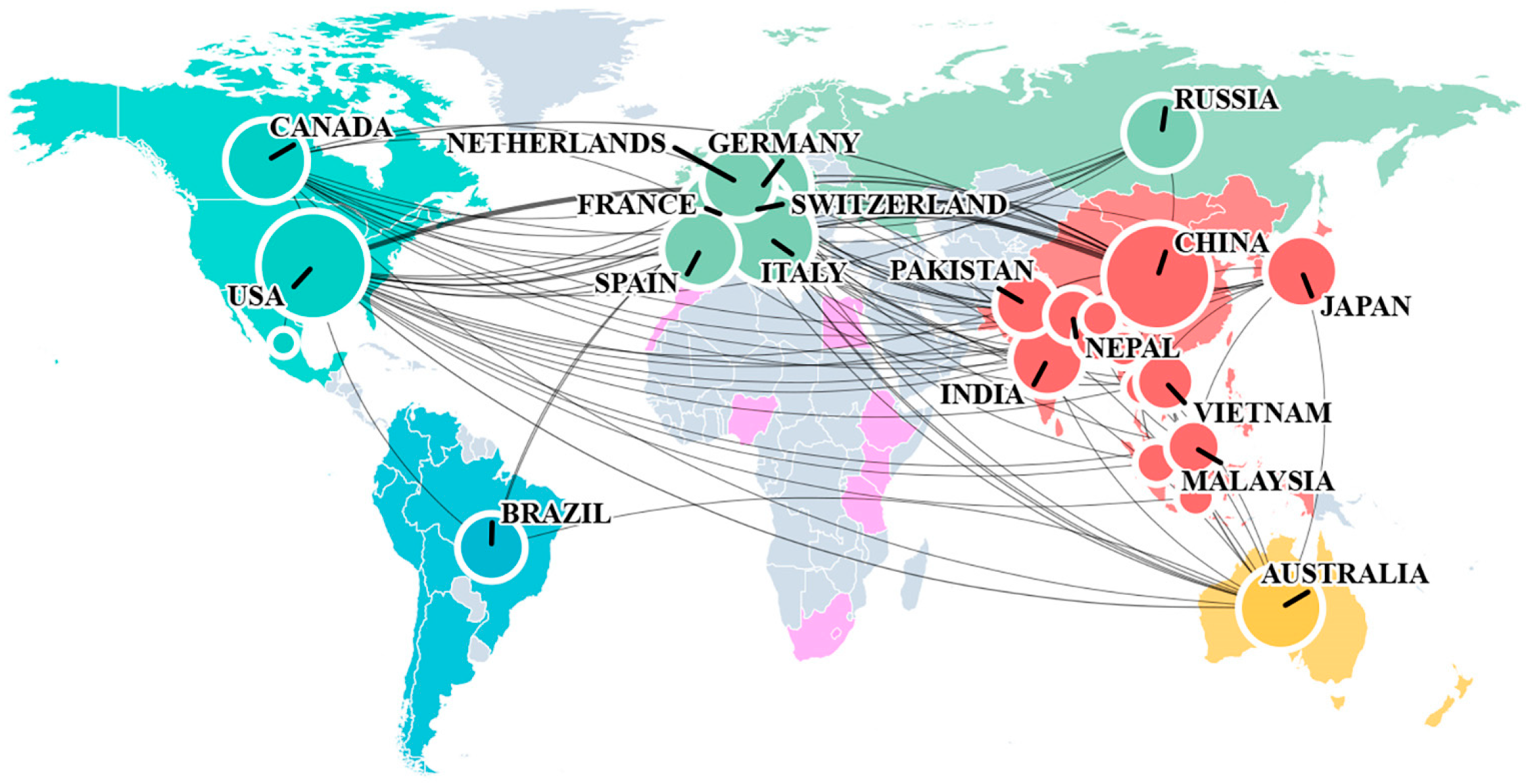
International collaboration has emerged as the dominant paradigm for scientific production within this domain, with cooperation networks providing a sophisticated informatics lens for quantifying cross-border partnerships and the structural evolution of the field. Elucidating these network topologies is critical for revealing the underlying architecture of global scientific exchange and the relative research influence of participating nations [52,53]. Figure 4 illustrates the global research cooperation network for plateau wetland remote sensing, specifically filtering for collaborative dyads within the 70th percentile of intensity. In this spatial visualization, node diameters correspond to the depth of national research engagement, while edge weights quantify the magnitude of knowledge exchange and collaborative frequency, thereby delineating pivotal actors and knowledge-sharing hubs. Quantitatively, the United States maintains the most expansive network with 54 partner nations, followed closely by China (53), Germany (43), the United Kingdom (39), and France (36). Collaborative activities in other nations are comparatively localized, with partner counts remaining below 30. Notably, the bilateral synergy between China and the United States exhibits a collaboration frequency of 197, a value that markedly eclipses all other international pairings. Regionally, research activity is distributed across Asia (13 countries), Europe (7), North America (3), Oceania (1), and South America (1). Based on network linkage intensity and geographic clustering, the domain is characterized by significant spatial heterogeneity, with primary concentrations in Asia and Europe. Specifically, Asian research efforts are anchored to the Tibetan Plateau, whereas European investigations predominantly focus on the Alps.

3.3. WOS Research Areas

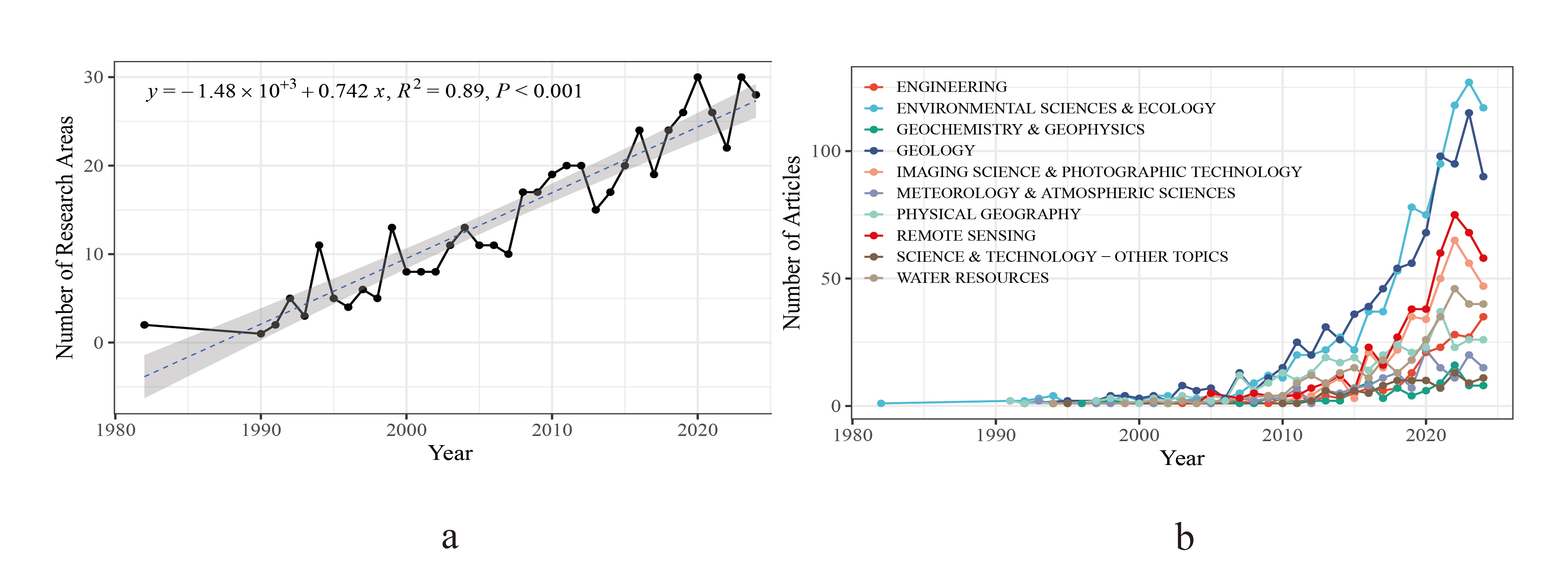
Clarivate’s taxonomic classification of WoS research areas provides a structured framework for assigning each publication to at least one specific category [55]. The longitudinal distribution of these categories offers a quantitative lens into the thematic evolution of plateau wetland remote sensing. Notably, the disciplinary breadth has expanded significantly, from a mere 4 categories in 1982 to 28 in 2024. The top ten most productive research domains are identified as: Environmental Sciences & Ecology, Geology, Remote Sensing, Imaging Science & Photographic Technology, Physical Geography, Water Resources, Engineering, Meteorology & Atmospheric Sciences, Science & Technology—Other Topics, and Geochemistry & Geophysics. Collectively, these primary domains represent 94.29% of the total corpus (2016 out of 2138 publications). The temporal evolution of these top ten disciplines, as illustrated in Figure 5b, highlights distinct shifts in research priorities over time. Prior to 2010, the scientific focus was predominantly centered on Geology and Environmental Sciences & Ecology, which combined accounted for less than 10% of the cumulative publications before that year.
Following the adoption of the global Sustainable Development Goals (SDGs) in 2015 and simultaneous breakthroughs in remote sensing technology [56,57], scholarly output transitioned into a phase of exponential growth. From a citation impact perspective, studies within Environmental Sciences & Ecology, Geology, and Remote Sensing that address plateau lake dynamics [58], the Tibetan Plateau [59], and cryospheric components (glaciers and permafrost) have achieved the highest academic visibility [60,61]. Collectively, the research landscape in plateau wetland remote sensing manifests a clear trajectory toward interdisciplinary diversification and systematic complexity.

3.4. Most Influential Source Journals

Scholarly contributions to the remote sensing of plateau wetlands are distributed across 450 distinct journals. The annual diversity of publication venues has expanded significantly, rising from a solitary inaugural paper in 1982 to 104 sources in recent years. Quantitatively, the five most prolific journals contributed 437 papers, accounting for 20.43% of the total scientific output. Conversely, the publication landscape exhibits significant fragmentation; 219 journals (48.67%) published only a single paper in this domain, while a vast majority (360 journals, or 80.00%) published five or fewer articles.
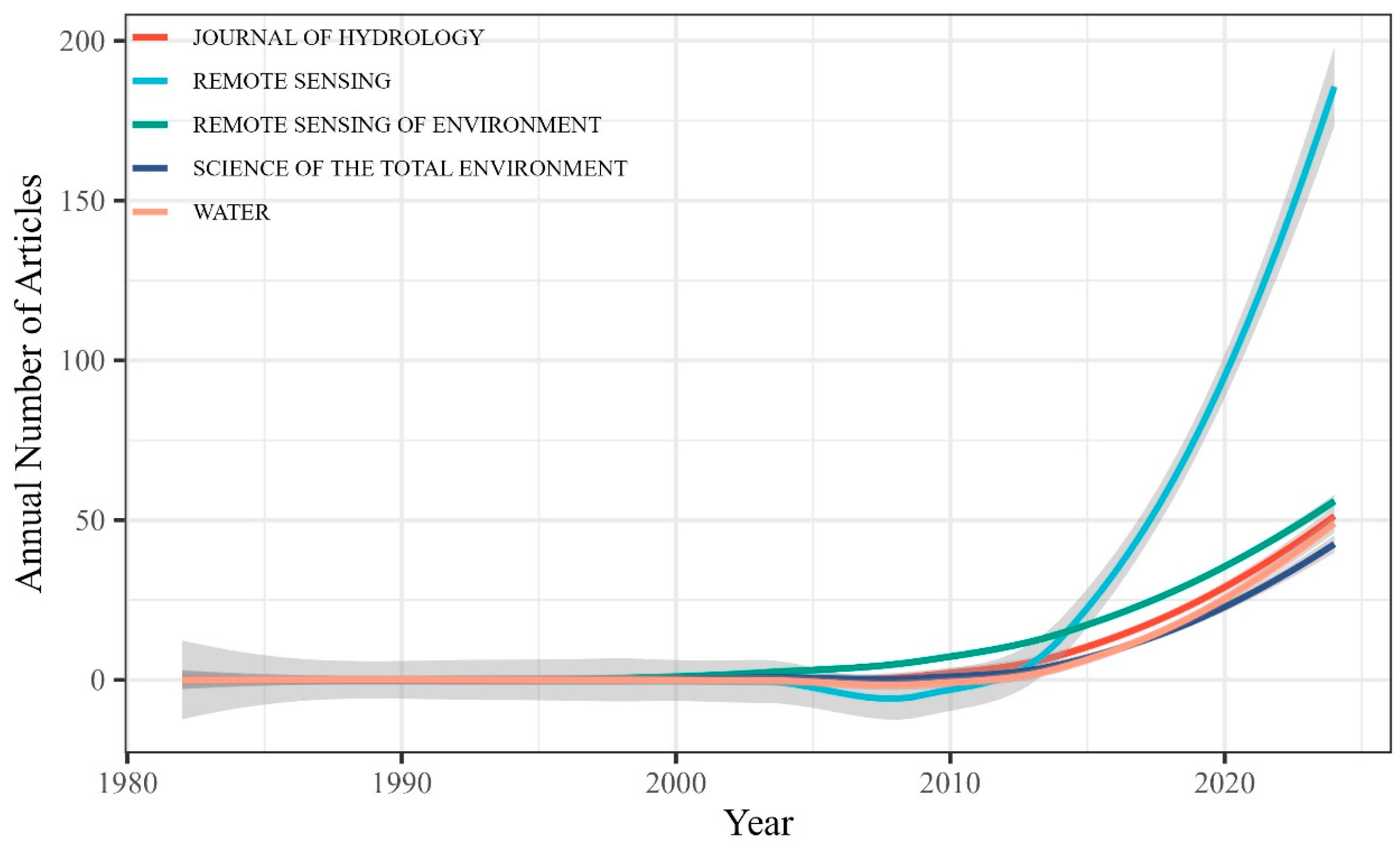
As illustrated in Figure 6, the top five journals by publication volume are Remote Sensing (212 papers), Journal of Hydrology (62), Remote Sensing of Environment (60), Water (54), and Science of the Total Environment (49). While Remote Sensing manifested the highest growth rate in annual publication volume, Remote Sensing of Environment maintains the highest local citation count, indicating superior scholarly impact per document within this specialized field. In accordance with Bradford’s Law [40,62], the source journals for plateau wetland research are characterized by a relatively dispersed distribution. Based on citation frequency and statistical partitioning, Journal of Hydrology, Remote Sensing, Water, and Remote Sensing of Environment are identified as the core source journals, having played a pivotal role in advancing the informatics and dynamic monitoring of plateau wetlands (Table 2).

3.5. Most Influential Publication

This section identifies the most influential publications in the field of remote sensing for plateau wetlands from 1982 to 2024. The assessment is based on a comprehensive analysis of citation metrics, including the global citation count (GC), local citation count (LC), global citation count per year (GCP), normalized global citation count (NGC) (Table 3), normalized local citation count (NLC), the LC/GC ratio (Table 4), and the difference between local and global citations. It is important to acknowledge the inherent temporal citation bias, as purely citation-based indicators inevitably favor older publications over recent breakthroughs. To mitigate this, normalized metrics such as GCP were equally emphasized in our assessment. The results reveal that the core publications, as viewed through both global and local citation lenses, are predominantly concentrated on the Tibetan Plateau and other high-altitude regions in Asia. The research theme is centrally focused on “lake dynamic monitoring,” while the technical applications are characterized by “the integration of multi-source remote sensing data and the development of innovative methodologies.” This pattern highlights a distinct regional and technology-oriented focus within the most influential works in this domain.
This section systematically identifies the seminal publications defining the trajectory of plateau wetland remote sensing from 1982 to 2024. The assessment is predicated on a multi-dimensional analysis of citation metrics, encompassing Global Citation count (GC), Local Citation count (LC), Global Citations per Year (GCP), and normalized indicators such as NGC and NLC, as well as the LC/GC ratio [63,64]. Our results reveal that foundational literature, evaluated through both global and local citation lenses, exhibits a pronounced geographical clustering around the Tibetan Plateau and adjacent high-altitude Asian regions. Thematic trajectories are centrally anchored in “lake dynamic monitoring,” underpinned by a technological convergence characterized by multi-source remote sensing data integration and the synthesis of innovative algorithmic methodologies. This distinctive pattern underscores a specialized regional and technology-driven paradigm prevalent within the field’s most impactful scholarship.
Our bibliometric analysis identifies the publication with the second-highest GC and third-highest LC as the most comprehensively influential work in this domain. This seminal geosciences review furnishes a systematic integration of research regarding “lake responses to climate change on the Tibetan Plateau”. By synthesizing nearly five decades of longitudinal satellite observations, in situ field data, and 220 core references, it rigorously delineates the evolutionary patterns and driving mechanisms of plateau lakes under varying climatic scenarios. The study elaborates on lake dynamics as a critical component of plateau wetland ecosystems, highlighting the application of optical remote sensing (e.g., Landsat series) [65], radar, and laser altimetry (e.g., CryoSat-2, ICESat) [66] in monitoring lake changes [67,68]. According to comparative analysis using GC, GCP, and NGC metrics, the second-most influential publication (ranked first by GC) systematically synthesizes climate and cryosphere changes on the Tibetan Plateau before 2010. Utilizing meteorological station observations, reanalysis data, and remote sensing, it underscores the role of optical remote sensing in monitoring vegetation, snow cover, and glacier extent at high altitudes. This work serves as a foundational reference for understanding Tibetan Plateau climate change and has paved the way for subsequent research in high-altitude regions [31]. Among the top 10 publications ranked by global citations, five focus on environmental changes and remote sensing monitoring of plateau wetlands—primarily on the Tibetan Plateau—with an emphasis on lake dynamics. Three additional articles address high-altitude mountain regions, bringing the total to eight studies centered on wetland environmental factors (e.g., lakes and rivers) in Asian plateaus and mountains. Due to the vast and inaccessible terrain characteristic of high-altitude Asia, remote sensing offers an effective approach for collecting spatially distributed data [57]. Collectively, these seminal publications demonstrate the critical utility of satellite imagery, high-resolution optical data, and LiDAR remote sensing in advancing research on plateau wetlands.
Based on the metrics of LC and the LC/GC ratio (which measures the concentration of influence within the field), the paper with LC = 142 and LC/GC = 44.38% ranks first in influence among locally cited literature. This study was the first to integrate multi-source satellite data (Landsat, ICESat) to construct a water balance model for Tibetan Plateau lakes, quantifying the contribution of glacial meltwater to lake expansion and providing a paradigm for subsequent research on plateau lake-climate interactions [17]. Another paper, with LC = 77 and LC/GC = 56.20%, has the highest concentration of influence in the field. It innovatively applied CryoSat-2 Synthetic Aperture Radar (SAR) interference mode data to invert water levels of 70 large lakes, filling the technical gap in monitoring lake dynamics in high-altitude remote areas. This method has been widely referenced in subsequent studies for analyzing hydrological processes in permafrost wetlands [69], providing key data support for understanding the response of high-altitude lakes to climate change. Among the top 10 papers ranked by local citation count, four focus on remote sensing data processing and validation. The paper ranked ninth locally (LC = 75) proposed a wetland boundary extraction algorithm that combines high-resolution optical remote sensing (Sentinel-2) with SAR, effectively addressing data interference issues in wetland monitoring under cloudy conditions on the Tibetan Plateau [70]. Another study by Phan et al. (2012), published in the International Journal of Applied Earth Observation and Geoinformation (LC = 83), utilized ICESat data as a benchmark to validate the accuracy of optically derived lake water levels, thereby providing a critical calibration basis for the fusion of multi-source remote sensing data [71].
The LC/GC ratio of local citations is generally higher than 30% and significantly exceeds the field average (approximately 22%). The research outcomes deeply address the core demands of plateau wetland remote sensing—not only overcoming the technical challenges of “data acquisition difficulties in high-altitude remote areas” but also focusing on the scientific core of “wetland ecological process evolution under climate change.” This work serves as a critical bridge connecting remote sensing technology innovation with plateau wetland ecological research, exerting direct and profound guiding influence on subsequent research directions and methodological choices in the field.
Table 3. Top 10 publications ranked by global citation count.
PaperDOIGCGCPNGC
Kang SC, 2010, Environ Res Lett [31]10.1088/1748-9326/5/1/01510194258.911.2
Zhang GQ, 2020, Earth-Sci Rev [67]10.1016/j.earscirev.2020.10326941268.713.9
Kokelj SV, 2013, Permafrost Periglac [12]10.1002/ppp.177939330.27.6
Zhang GQ, 2019, Remote Sens Environ [10]10.1016/j.rse.2018.11.03832346.17.78
Song CQ, 2013, Remote Sens Environ [17]10.1016/j.rse.2013.03.01332024.66.19
Li SY, 2013, PloS One [72]10.1371/journal.pone.005316330223.25.84
Wang YB, 2010, Earth-Sci Rev [73]10.1016/j.earscirev.2010.09.00428617.93.39
Nie Y, 2017, Remote Sens Environ [20]10.1016/j.rse.2016.11.00828231.36.31
Veblen TT, 1994, J Ecol [74]10.2307/22613922768.634.79
Scherler D, 2008, Remote Sens Environ [57]10.1016/j.rse.2008.05.01827615.35.3
Abbreviations: DOI: Digital Object Identifier; GC: Global Citations; GCP: Global Citations per Year; NGC: Normalized Global Citations.
Table 4. Top 10 publications ranked by local citation count.
DocumentDOIYearLCGCLC/GC (%)NLC
Song CQ, 2013, Remote Sens Environ [17]10.1016/j.rse.2013.03.013201314232044.417
Song CQ, 2014, Water Resour Res [9]10.1002/2013WR01472420149722642.99.9
Zhang GQ, 2020, Earth-Sci Rev [67]10.1016/j.earscirev.2020.10326920209641223.328
Lei YB, 2014, Climatic Change [30]10.1007/s10584-014-1175-320149423939.39.6
Lei YB, 2013, J Hydrol [75]10.1016/j.jhydrol.2013.01.00320138720542.410
Phan VH, 2012, Int J Appl Earth Obs [71]10.1016/j.jag.2011.09.01520128316749.713
Zhang GQ, 2019, Remote Sens Environ [10]10.1016/j.rse.2018.11.03820197932324.515
Jiang LG, 2017, J Hydrol [69]10.1016/j.jhydrol.2016.11.02420177713756.212
Qiao BJ, 2019, Remote Sens Environ [70]10.1016/j.rse.2018.12.03720197518041.714
Zhu LP, 2010, Chinese Sci Bull [76]10.1007/s11434-010-0015-820107121233.510
Abbreviations: DOI: Digital Object Identifier; GC: Global Citations; LC: Local Citations; NLC: Normalized Local Citations.

3.6. Analysis of Historical and Current Research Hotspots

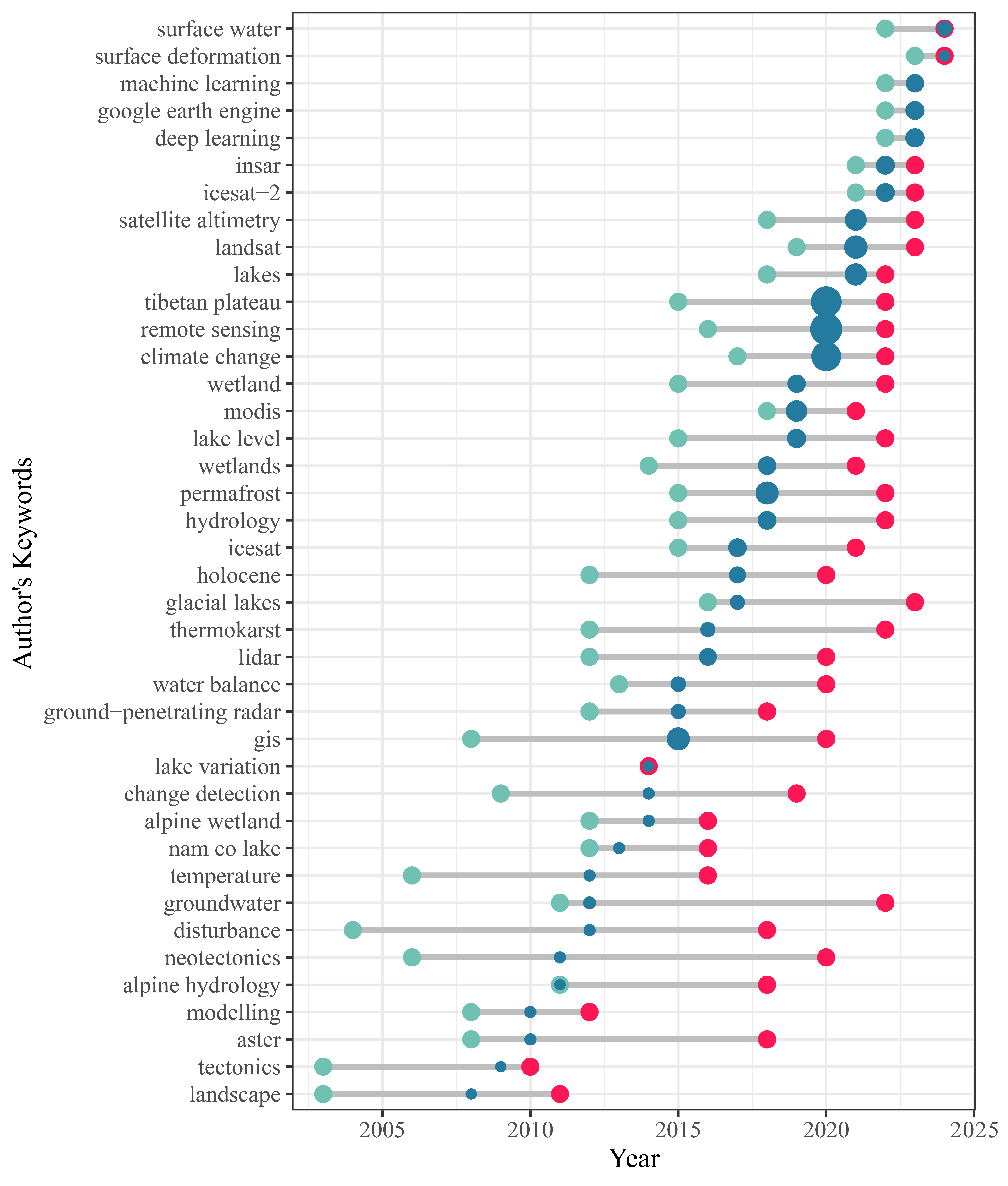
In this study, we identified 5671 author keywords based on 2138 papers published between 1982 and 2024. Figure 7 illustrates the temporal trends of these author keywords, with the x-axis representing the publication year and the y-axis listing the keywords. In each row, the first dot (green) indicates the first quartile of the publication year, the second dot (blue) represents the median publication year, and the third dot (red) shows the third quartile of the publication year. The size of the middle dots corresponds to the number of publications. The keywords with the longest continuous attention were neotectonics and disturbance. These two keywords first appeared in 2006 and 2004, respectively, and remained active over a span of 14 years, reflecting the long-term and sustained academic focus on tectonic activity and environmental disturbances as key drivers of plateau wetland evolution. Neotectonics primarily relates to the geological context and tectonic control mechanisms underlying the formation of plateau wetlands [77,78], while disturbance encompasses disruptive impacts on wetland ecosystems, such as those caused by climate change and human activities [79,80]. The persistent prominence of these keywords underscores the enduring research interest in understanding the complex interactions between natural dynamics and external disturbances in the formation and evolution of plateau wetlands, providing critical theoretical support for interpreting their dynamic changes.
The size of the second dot reflects the frequency of the keyword, with larger dots indicating higher occurrence rates. Based on frequency ranking in descending order, the top 10 keywords are: remote sensing, Tibetan Plateau, climate change, Landsat, permafrost, GIS, lakes, satellite altimetry, MODIS, and lake level. Among these, remote sensing appears with the highest frequency, serving as the core technical methodology in plateau wetland research. It provides an economically efficient approach for developing wetland hydrological models and analyzing seasonal variation trends [80,81]. The Tibetan Plateau was the primary focus of global plateau wetland remote sensing research, representing 885 of the 2138 articles published from 1982 to 2024 [82]. Climate change represents a fundamental environmental driver shaping wetland evolution on the plateau [83,84]. The sensors Landsat and MODIS emerge as two crucial satellite data sources. Landsat serves as the benchmark dataset for long-term change analyses, including lake dynamics, glacier retreat, and wetland degradation [46,85]. Meanwhile, MODIS, with its high temporal resolution, plays a pivotal role in capturing seasonal dynamics and rapid processes in wetland systems [86]. The frequent co-occurrence of satellite altimetry and lake level indicates that precise monitoring of lake water storage changes constitutes a current research priority. These two elements form an essential technical framework for hydrological monitoring [87,88]. Additionally, lakes represent the most extensively studied landscape type, while permafrost receives sustained research attention as a critical factor controlling hydrological processes and ecosystem stability in plateau wetlands [89,90]. The term GIS (Geographic Information System), as the most fundamental platform for spatial data management and analysis, demonstrates through its high frequency the indispensable supporting role it plays in remote sensing and geospatial data processing for plateau wetland research [91,92].
As shown in Figure 7, a more rightward position of the third dot (red) indicates a more recent publication year for the corresponding keyword, while a larger size of the second dot (blue) reflects a higher number of publications. Analysis of research trends reveals that Tibetan Plateau and climate change have become key focal areas in remote sensing studies of plateau wetlands in recent years. The Tibetan Plateau, with an average elevation exceeding 4000 m and an area of approximately 2.5 × 10⁶ km2, represents the highest and most extensive plateau on Earth, often referred to as the “Third Pole” [31,93]. In recent years, publications featuring the keyword Tibetan Plateau have increased rapidly. From 2018 to 2022, 311 articles were published using this keyword, accounting for 35.4% of the total (878 articles during 2018–2022). This region has become a central area for plateau wetland research in Asia and globally [94]. Meanwhile, climate change serves as a direct indicator of ecological and environmental shifts in high-altitude regions and is considered a primary driver of various environmental factor changes in plateau wetlands. The Tibetan Plateau is recognized as one of the most climate-sensitive regions worldwide [95]. Research related to climate change primarily focuses on wetland soil organic carbon content [96,97], lake dynamics [67,98], and NDVI variations [14] in the Tibetan Plateau and other high-altitude mountainous areas.
Analysis of keyword trends within the field reveals a notable shift in research focus on plateau wetland remote sensing over recent years. Early studies predominantly addressed natural drivers such as landscape and tectonics, whereas recent research has progressively shifted toward emerging themes including climate-change, lakes, and machine learning. Geographically, the center of research activity has transitioned from early leadership by the USA to a current predominance of contributions from China. In particular, the Tibetan Plateau, representing high-altitude and alpine wetland regions, has emerged as a globally recognized hotspot for related studies. Thematic priorities in plateau wetland research have evolved from foundational topics such as landscape, neotectonics, and alpine hydrology [99] to more recent, environmentally focused directions like lake level, climate-change, and surface water dynamics. Methodologically, continuous advances in remote sensing have transformed observational approaches—from earlier techniques such as modelling, GIS, ground-penetrating radar [100], and LiDAR [101]—toward more integrated and sophisticated technological frameworks. These include satellite altimetry [87], Interferometric Synthetic Aperture Radar (InSAR) [102], ICESat-2 [103], and cloud-based platforms such as Google Earth Engine [104]. These novel technologies have significantly enhanced the spatiotemporal resolution, temporal coverage, and accuracy of datasets available for plateau wetland remote sensing. Such progress has not only deepened research content and diversified methodologies but also fostered interdisciplinary integration and technological convergence. Collectively, these developments establish a robust data and methodological foundation supporting wetland conservation and global change response studies in plateau regions.

3.7. Distribution of Research

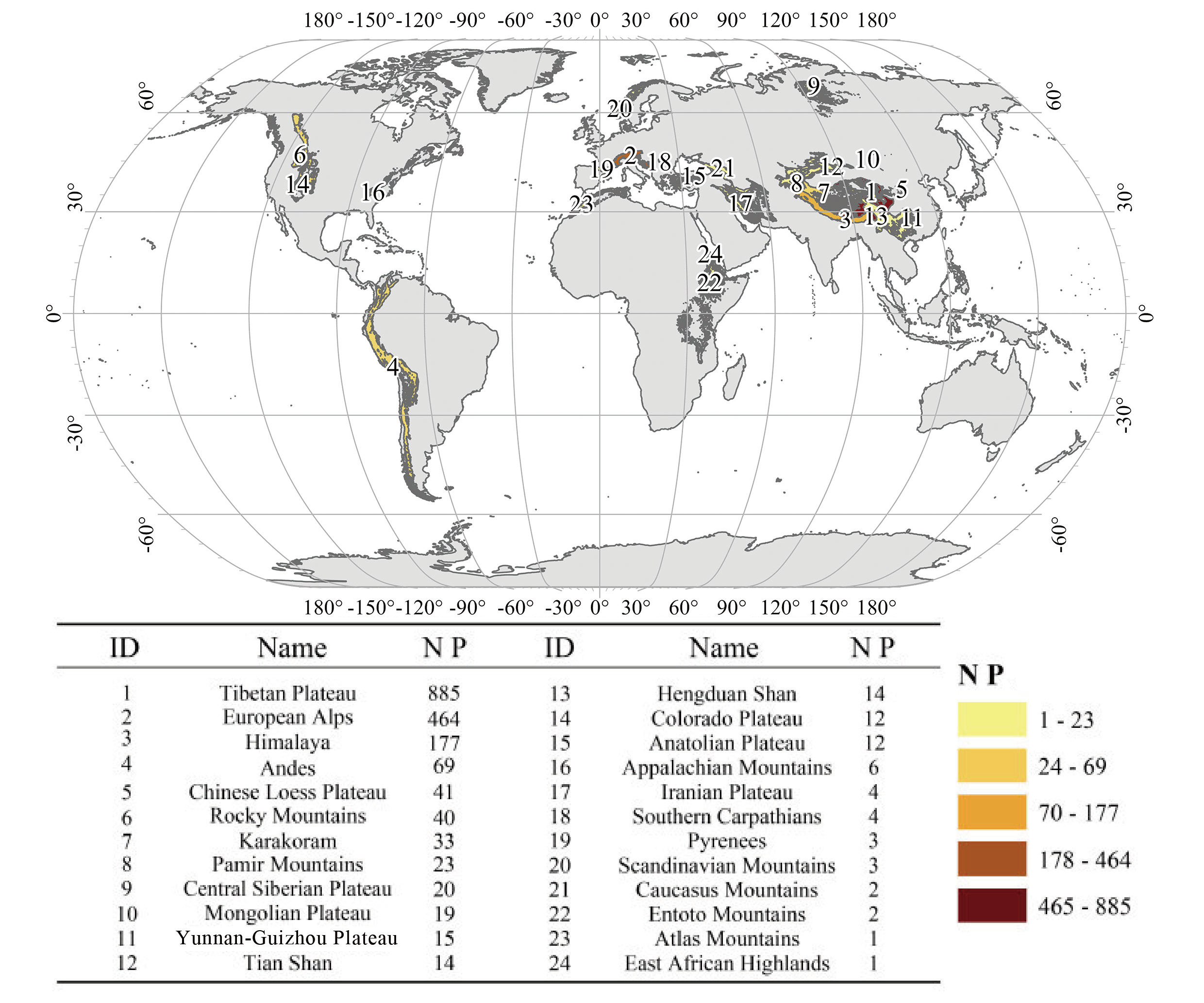
Global research on the remote sensing of plateau wetlands exhibits pronounced spatial heterogeneity, with research intensity intrinsically linked to ecological strategic value, geographical accessibility, and regional scientific investment. The spatial variation in the Number of Publications (NP) across diverse regions serves as a quantitative proxy for this imbalanced distribution of research focus, as illustrated in Figure 8.
In terms of cumulative scholarly output, the five most prominent regions are the Tibetan Plateau, European Alps, Himalaya, Andes, and the Chinese Loess Plateau. The Tibetan Plateau functions as the global epicenter for this field, with 885 publications accounting for 41.4% of the total literature (2138 articles). Conceptually recognized as the “Asian Water Tower,” this region hosts the world’s most extensive high-altitude wetland complexes, which are vital for global carbon sequestration and wildlife habitat maintenance. It serves as a key region for global carbon and water cycles as well as biodiversity conservation, while also acting as a sensitive indicator of climate change [98,105]. As a sensitive barometer for climate change, its unique cryospheric and hydrological characteristics provide diverse testbeds for advanced remote sensing applications, including the monitoring of glacier-permafrost dynamics and the simulation of lake-level fluctuations [98]. Its unique characteristics provide diverse scenarios for remote sensing applications, such as monitoring glacier and permafrost dynamics [60] and simulating lake level changes [106], making it a long-standing focus of international research [9].
The European Alps rank second, with 464 publications (21.7% of the total). This region serves as a representative area for remote sensing studies of high-latitude plateau and mountain wetlands—such as peatlands and alpine lakes—with research often centered on the impacts of climate change on high-altitude ecosystems and related conservation strategies [107,108].
The Himalaya, as the world’s highest mountain range, spans multiple countries and features high elevations and complex terrain. It has become an important area for transboundary wetland monitoring [109] and glacial lake outburst flood risk assessment [110]. Collaborative efforts among international research teams have further boosted its scientific output.
The Andes represent a key region for plateau wetland remote sensing in the Americas. Research there focuses on the hydrological dynamics of tropical high-altitude wetlands and vegetation phenology changes [111]. By utilizing multispectral and SAR technologies [112], studies have developed effective methods for high-resolution seasonal wetland monitoring in frequently cloud-covered mountainous environments, addressing long-standing challenges in data acquisition for tropical montane cloud forest regions [13,113].
Research on the Chinese Loess Plateau primarily addresses artificial wetlands, employing multi-source remote sensing data and quantitative analysis to reveal changes in wetland area, type transitions, landscape patterns, and spatial centroid shifts. These studies provide a scientific basis for wetland conservation in arid and semi-arid regions [1].
Other plateaus and mountainous areas, such as the Rocky Mountains, Karakoram, and Pamir Mountains, have relatively low publication numbers (NP ≤ 40). Research in these regions often focuses on localized wetland issues—such as alpine mire dynamics in the Rockies and proglacial wetland evolution in the Karakoram—yet remains limited in coverage and depth due to remote geography and challenges in data acquisition [114,115].
Meanwhile, regions like the Atlas Mountains and the East African Highlands have only one documented publication each, highlighting significant research gaps in remote sensing of plateau wetlands within low-latitude arid and semi-arid zones. These areas present substantial potential for future scientific exploration.

4. Conclusions and Future Directions

4.1. Synthesis of Research Trajectories

Our systematic evaluation of global scientific literature reveals that remote sensing research on plateau wetlands has transitioned into a phase of exponential growth, characterized by a marked expansion in disciplinary diversification. From 1982 to 2024, the annual scholarly output experienced a regime shift, surging from a solitary inaugural publication to a peak of 258 articles in 2023, and maintaining a robust volume of 228 articles in 2024. Research participation has become increasingly globalized, with China, the U.S., Germany, Canada, and India emerging as the primary contributors to the field. China maintains the lead in total scientific output, while the United States exhibits the most expansive international collaborative network. Notably, the bilateral synergy between these two nations represents the strongest research partnership in this domain. Thematic categories have proliferated from 4 to 28, with Environmental Sciences & Ecology, Geology, and Remote Sensing constituting 94.29% of the total corpus. Influential journals, including Remote Sensing, Journal of Hydrology, and Remote Sensing of Environment, continue to serve as the core drivers of academic advancement.

4.2. Geographic Patterns and Technological Maturity

The research trends identified in this study underscore a continuous broadening of research foci and thematic complexity. The field has witnessed increasing maturity in monitoring techniques, supported by evolving data products that offer enhanced spatiotemporal resolutions and extended longitudinal coverage. Geographically, the research landscape is anchored by the Tibetan Plateau—functioning as the global epicenter—flanked by the Alps and the Himalayas, while remaining fragmented in other regions. This spatial configuration highlights the substantial potential for expanding remote sensing applications in underrepresented high-altitude areas. Future research should prioritize enhancing coverage in low-latitude and remote regions through strengthened international synergy and the integration of emerging informatics platforms, such as UAV-borne sensors and hyperspectral imaging.

4.3. Critical Limitations and Informatics Frontiers

Despite the rapid progression documented in this synthesis, current research is constrained by both domain-specific technological hurdles and methodological limitations of bibliometrics.
Domain-Specific Constraints: From a technical perspective, remote sensing applications encounter substantial accuracy bottlenecks. Persistent cloud cover, high-altitude precipitation, and atmospheric interference frequently impede the precision of wetland boundary extraction and water-level inversion [116]. Furthermore, a significant geospatial imbalance persists; studies on low-latitude arid zones and the Southern Hemisphere remain scarce due to formidable challenges in geographical accessibility. The current absence of standardized methodologies for robust multi-source data fusion represents another technical hurdle for large-scale ecological datasets [117].
Methodological Limitations: Beyond observational constraints, this study identifies inherent limitations within the bibliometric framework itself. As previously mentioned, relying exclusively on the WoS database and English literature may underrepresent localized research published in native languages. Additionally, current natural language processing (NLP) algorithms exhibit limited precision when extracting highly specialized domain terminology (such as “thermokarst” or “active layer thickness”), which may lead to the inadvertent omission of nascent research themes from the scientific map [118].
Furthermore, relying exclusively on the WoS Core Collection and excluding non-English publications introduces an inherent linguistic and regional bias. A substantial body of regional studies, particularly those focusing on the Tibetan Plateau and published in Chinese databases (e.g., CNKI), were omitted. While this exclusion may marginally affect the global representativeness of the absolute publication volume, the WoS SCI-Expanded remains the most authoritative and globally recognized index, ensuring that the analyzed corpus represents the most impactful and internationally visible research in the field.
Addressing these dual constraints suggests that future trajectories must transcend traditional boundaries by fostering a deeper integration between domain-specific ecological imperatives and cutting-edge data extraction technologies.

Author Contributions

Conceptualization, Y.X. and J.Y.; methodology, Y.X. and K.Z.; software, Y.X. and K.Z.; validation, Y.X., K.Z., H.J. and J.Y.; formal analysis, Y.X. and K.Z.; investigation, D.C., Z.X., W.W., Y.S., Y.Z., M.S., R.Z., W.C., J.B. and F.Y.; resources, J.Y. and F.Y.; data curation, Y.X., K.Z., D.C. and Z.X.; writing—original draft preparation, Y.X.; writing—review and editing, Y.X., K.Z., H.J. and J.Y.; visualization, Y.X. and K.Z.; supervision, J.Y.; project administration, J.Y.; funding acquisition, J.Y. All authors have read and agreed to the published version of the manuscript.

Funding

This work was supported by the Research Start-up Fund of Southwest Forestry University.

Data Availability Statement

The code for data processing and generating the figures in this paper is available at: https://github.com/TianyaImpression/PaperProject/tree/b5383c546e2522f855e4df284745119802d6b4f6/Bibliometric%20Analysis%20of%20Global%20Remote%20Sensing%20of%20Plateau%20Wetland%20Research%20Trends%20from%201982%20to%202024 (accessed on 1 March 2026). Further inquiries can be directed to the corresponding author.

Acknowledgments

During the preparation of this manuscript, the authors used DeepSeek V3 API for the purpose of filtering and merging synonyms in the bibliometric analysis, and Gemini 3 Pro for language polishing and refinement of the manuscript text. The authors have reviewed and edited all outputs and take full responsibility for the final content of this publication.

Conflicts of Interest

The authors declare no conflicts of interest.

References

  1. Xue, Z.; Wang, Y.; Huang, R.; Yao, L. Study on Wetland Evolution and Landscape Pattern Changes in the Shaanxi Section of the Loess Plateau in the Past 40 Years. Land 2024, 13, 1268. [Google Scholar] [CrossRef]
  2. Song, A.; Liang, S.; Li, H.; Yan, B. Effects of Biodiversity on Functional Stability of Freshwater Wetlands: A Systematic Review. Front. Microbiol. 2024, 15, 1397683. [Google Scholar] [CrossRef] [PubMed]
  3. Delle Grazie, F.M.; Gill, L.W. Review of the Ecosystem Services of Temperate Wetlands and Their Valuation Tools. Water 2022, 14, 1345. [Google Scholar] [CrossRef]
  4. Li, X.; Xue, Z.; Gao, J. Dynamic Changes of Plateau Wetlands in Madou County, the Yellow River Source Zone of China: 1990–2013. Wetlands 2016, 36, 299–310. [Google Scholar] [CrossRef]
  5. Zhang, Y.; Yan, J.; Cheng, X.; He, X. Wetland Changes and Their Relation to Climate Change in the Pumqu Basin, Tibetan Plateau. Int. J. Environ. Res. Public Health 2021, 18, 2682. [Google Scholar] [CrossRef]
  6. Liu, S.; Dong, Y.; Sun, Y.; Wang, Q. Multi-Scale Ecological Restoration Strategies to Enhance Water Conservation in Ruoergai on the Qinghai–Tibet Plateau. Plants 2025, 14, 1085. [Google Scholar] [CrossRef] [PubMed]
  7. Moser, K.A.; Baron, J.S.; Brahney, J.; Oleksy, I.A.; Saros, J.E.; Hundey, E.J.; Sadro, S.; Kopáček, J.; Sommaruga, R.; Kainz, M.J.; et al. Mountain Lakes: Eyes on Global Environmental Change. Global Planet. Change 2019, 178, 77–95. [Google Scholar] [CrossRef]
  8. Bracht-Flyr, B.; Fritz, S.C. Synchronous Climatic Change Inferred from Diatom Records in Four Western Montana Lakes in the U.S. Rocky Mountains. Quat. Res. 2012, 77, 456–467. [Google Scholar] [CrossRef]
  9. Song, C.; Huang, B.; Richards, K.; Ke, L.; Hien Phan, V. Accelerated Lake Expansion on the Tibetan Plateau in the 2000s: Induced by Glacial Melting or Other Processes? Water Resour. Res. 2014, 50, 3170–3186. [Google Scholar] [CrossRef]
  10. Zhang, G.; Yao, T.; Chen, W.; Zheng, G.; Shum, C.K.; Yang, K.; Piao, S.; Sheng, Y.; Yi, S.; Li, J.; et al. Regional Differences of Lake Evolution across China during 1960s–2015 and Its Natural and Anthropogenic Causes. Remote Sens. Environ. 2019, 221, 386–404. [Google Scholar] [CrossRef]
  11. Owusu, C.; Masto, N.M.; Kalyanapu, A.J.; Murdock, J.N.; Cohen, B.S. Shallow Water Depth Estimation of Inland Wetlands Using Landsat 8 Satellite Images. Remote Sens. 2024, 16, 2986. [Google Scholar] [CrossRef]
  12. Kokelj, S.V.; Jorgenson, M.T. Advances in Thermokarst Research. Permafr. Periglac. Process. 2013, 24, 108–119. [Google Scholar] [CrossRef]
  13. Adeli, S.; Salehi, B.; Mahdianpari, M.; Quackenbush, L.J.; Brisco, B.; Tamiminia, H.; Shaw, S. Wetland Monitoring Using SAR Data: A Meta-Analysis and Comprehensive Review. Remote Sens. 2020, 12, 2190. [Google Scholar] [CrossRef]
  14. Zhou, Y.; Liu, F.; Zhang, G.; Wang, J.; Zhou, Y.; Liu, F.; Zhang, G.; Wang, J. Response of the Normalized Difference Vegetation Index (NDVI) to Snow Cover Changes on the Qinghai–Tibet Plateau. Remote Sens. 2024, 16, 2140. [Google Scholar] [CrossRef]
  15. Sobrino, J.A.; Jiménez-Muñoz, J.C.; Paolini, L. Land Surface Temperature Retrieval from LANDSAT TM 5. Remote Sens. Environ. 2004, 90, 434–440. [Google Scholar] [CrossRef]
  16. Guo, M.; Li, J.; Sheng, C.; Xu, J.; Wu, L.; Guo, M.; Li, J.; Sheng, C.; Xu, J.; Wu, L. A Review of Wetland Remote Sensing. Sensors 2017, 17, 777. [Google Scholar] [CrossRef]
  17. Song, C.; Huang, B.; Ke, L. Modeling and Analysis of Lake Water Storage Changes on the Tibetan Plateau Using Multi-Mission Satellite Data. Remote Sens. Environ. 2013, 135, 25–35. [Google Scholar] [CrossRef]
  18. Ran, Q.; Aires, F.; Ciais, P.; Qiu, C.; Wang, Y. A Neural Network Classification Framework for Monthly and High Spatial Resolution Surface Water Mapping in the Qinghai–Tibet Plateau from Landsat Observations. J. Hydrometeorol. 2023, 24, 1635–1657. [Google Scholar] [CrossRef]
  19. Ping, Y.; Naiang, W.; Liang, L.; Caihong, M.; Guozhu, L. Detection of Ecological Environment in Qinghai Lake Basin by Remote Sensing and GIS. In Proceedings of the 2006 IEEE International Symposium on Geoscience and Remote Sensing, Denver, CO, USA, 31 July–4 August 2006; pp. 3290–3292. [Google Scholar] [CrossRef]
  20. Nie, Y.; Sheng, Y.; Liu, Q.; Liu, L.; Liu, S.; Zhang, Y.; Song, C. A Regional-Scale Assessment of Himalayan Glacial Lake Changes Using Satellite Observations from 1990 to 2015. Remote Sens. Environ. 2017, 189, 1–13. [Google Scholar] [CrossRef]
  21. Tao, S.; Fang, J.; Zhao, X.; Zhao, S.; Shen, H.; Hu, H.; Tang, Z.; Wang, Z.; Guo, Q. Rapid Loss of Lakes on the Mongolian Plateau. Proc. Natl. Acad. Sci. USA 2015, 112, 2281–2286. [Google Scholar] [CrossRef] [PubMed]
  22. Xu, F.; Zhang, G.; Woolway, R.I.; Yang, K.; Wada, Y.; Wang, J.; Crétaux, J.-F. Widespread Societal and Ecological Impacts from Projected Tibetan Plateau Lake Expansion. Nat. Geosci. 2024, 17, 516–523. [Google Scholar] [CrossRef]
  23. Ming, D.; Wang, L.; Dai, L.; Zhang, Q.; Liang, T. Evaluation of Water Environment Quality in a Typical Wetland on the Qinghai-Tibet Plateau Using Positive Matrix Factorization and Self-Organizing Map. J. Clean. Prod. 2024, 479, 144069. [Google Scholar] [CrossRef]
  24. Wang, S.; Li, J.; Zhang, B.; Spyrakos, E.; Tyler, A.N.; Shen, Q.; Zhang, F.; Kuster, T.; Lehmann, M.K.; Wu, Y.; et al. Trophic State Assessment of Global Inland Waters Using a MODIS-Derived Forel-Ule Index. Remote Sens. Environ. 2018, 217, 444–460. [Google Scholar] [CrossRef]
  25. Du, L.; Liu, S.; Ding, Y.; Pan, X.; Li, K.; Yang, J.; Xu, Y.; Zhou, J.; Ye, Y.; Yang, Y.; et al. Restoration from Grazing on the Tibetan Plateau: Pathway-Specific Soil MAOC Sequestration in Meadow and Peat Wetlands. J. Environ. Manag. 2024, 372, 123366. [Google Scholar] [CrossRef]
  26. Zhang, P.; Zhao, C.; Huang, C.; Li, G.; Wu, X.; Wang, S.; Liu, D. Changes in Soil Organic Carbon Content under Different Inundation Gradients in Peat Bogs on the China’s Qinghai-Tibet Plateau. Wetlands 2023, 43, 104. [Google Scholar] [CrossRef]
  27. Gao, B.; Liu, E.; Yang, Y.; Yang, M.; Yao, Y.; Guan, L.; Feng, Y. Quantitative Contributions of Climate Change and Human Activities to Vegetation Dynamics in the Zoige Plateau from 2001 to 2020. J. Mt. Sci. 2024, 21, 3031–3046. [Google Scholar] [CrossRef]
  28. Chen, Y.; Sun, L.; Xu, J.; Liang, B.; Wang, J.; Xiong, N. Wetland Vegetation Changes in Response to Climate Change and Human Activities on the Tibetan Plateau during 2000–2015. Front. Ecol. Evol. 2023, 11, 1113802. [Google Scholar] [CrossRef]
  29. Gao, X.; Feng, Q.; Liu, W.; Deng, X.; Zhu, M.; Zhang, B.; Xue, J. Evaluating the Snow Cover Service Value on the Qinghai-Tibet Plateau. Remote Sens. 2024, 16, 2600. [Google Scholar] [CrossRef]
  30. Lei, Y.; Yang, K.; Wang, B.; Sheng, Y.; Bird, B.W.; Zhang, G.; Tian, L. Response of Inland Lake Dynamics over the Tibetan Plateau to Climate Change. Clim. Change 2014, 125, 281–290. [Google Scholar] [CrossRef]
  31. Kang, S.; Xu, Y.; You, Q.; Flügel, W.-A.; Pepin, N.; Yao, T. Review of Climate and Cryospheric Change in the Tibetan Plateau. Environ. Res. Lett. 2010, 5, 15101. [Google Scholar] [CrossRef]
  32. Jiang, L.; Wang, S.; Pang, Z.; Wang, C.; Meng, F.; Lan, Z.; Zhou, X.; Li, Y.; Zhang, Z.; Luo, C.; et al. Abiotic and Biotic Controls of Soil Dissolved Organic Nitrogen along a Precipitation Gradient on the Tibetan Plateau. Plant Soil 2021, 459, 65–78. [Google Scholar] [CrossRef]
  33. Zhang, N.; Jiang, H.; Zhou, Z.; Wang, Y.; Qi, D.; Zhou, S.; Ma, J.; Chen, K. Response of the nosZ-Type Denitrifying Microbial Community and Metabolic Characteristics to Precipitation Changes in the Alpine Wetland. Front. Microbiol. 2025, 16, 1581432. [Google Scholar] [CrossRef]
  34. Tian, Y.; Peters-Lidard, C.D. A Global Map of Uncertainties in Satellite-Based Precipitation Measurements. Geophys. Res. Lett. 2010, 37, L24407. [Google Scholar] [CrossRef]
  35. Huang, M.; Gong, J.; Shi, Z.; Zhang, L. River Bed Identification for Check-Dam Engineering Using SPOT-5 Image in the HongShiMao Watershed of the Loess Plateau, China. Int. J. Remote Sens. 2009, 30, 1853–1865. [Google Scholar] [CrossRef]
  36. Crétaux, J.-F.; Abarca-del-Río, R.; Bergé-Nguyen, M.; Arsen, A.; Drolon, V.; Clos, G.; Maisongrande, P. Lake Volume Monitoring from Space. Surv. Geophys. 2016, 37, 269–305. [Google Scholar] [CrossRef]
  37. Zhao, F.; Feng, S.; Xie, F.; Zhu, S.; Zhang, S. Extraction of Long Time Series Wetland Information Based on Google Earth Engine and Random Forest Algorithm for a Plateau Lake Basin—A Case Study of Dianchi Lake, Yunnan Province, China. Ecol. Indic. 2023, 146, 109813. [Google Scholar] [CrossRef]
  38. Pritchard, A. Statistical Bibliography or Bibliometrics. J. Doc. 1969, 25, 348. [Google Scholar]
  39. Smolinsky, L. Discrete Power Law with Exponential Cutoff and Lotka’s Law. J. Informetr. 2019, 13, 462–463. [Google Scholar] [CrossRef]
  40. Venable, G.T.; Shepherd, B.A.; Loftis, C.M.; McClatchy, S.G.; Roberts, M.L.; Fillinger, M.E.; Tansey, J.B.; Klimo, P. Bradford’s Law: Identification of the Core Journals for Neurosurgery and Its Subspecialties. J. Neurosurg. 2016, 124, 569–579. [Google Scholar] [CrossRef] [PubMed]
  41. Bolea, S.C.; Pirnau, M.; Bejinariu, S.-I.; Apopei, V.; Gifu, D.; Teodorescu, H.-N. Some Properties of Zipf’s Law and Applications. Axioms 2024, 13, 146. [Google Scholar] [CrossRef]
  42. Huang, L.; Xia, Z.; Cao, Y. A Bibliometric Analysis of Global Fine Roots Research in Forest Ecosystems during 1992–2020. Forests 2022, 13, 93. [Google Scholar] [CrossRef]
  43. Li, Y.; Hou, Z.; Zhang, L.; Qu, Y.; Zhou, G.; Lin, J.; Li, J.; Huang, K. Long-Term Spatio-Temporal Changes of Wetlands in Tibetan Plateau and Their Response to Climate Change. Int. J. Appl. Earth Obs. Geoinf. 2023, 121, 103351. [Google Scholar] [CrossRef]
  44. Xu, Y.; Yang, Y.; Chen, X.; Liu, Y. Bibliometric Analysis of Global NDVI Research Trends from 1985 to 2021. Remote Sens. 2022, 14, 3967. [Google Scholar] [CrossRef]
  45. Zhang, H.; Huang, M.; Qing, X.; Li, G.; Tian, C. Bibliometric Analysis of Global Remote Sensing Research during 2010–2015. ISPRS Int. J. Geo-Inf. 2017, 6, 332. [Google Scholar] [CrossRef]
  46. Zhao, M.; Zhang, G.; Han, X.; Zhou, T.; Xu, F.; Tang, C. Spatial and Temporal Changes of Wetlands on the Tibetan Plateau between 1990 and 2020. IEEE J. Sel. Top. Appl. Earth Obs. Remote Sens. 2025, 18, 769–784. [Google Scholar] [CrossRef]
  47. Zhao, Z.; Zhang, Y.; Liu, L.; Liu, F.; Zhang, H. Recent Changes in Wetlands on the Tibetan Plateau: A Review. J. Geogr. Sci. 2015, 25, 879–896. [Google Scholar] [CrossRef]
  48. Aria, M.; Cuccurullo, C. Bibliometrix: An R-Tool for Comprehensive Science Mapping Analysis. J. Informetr. 2017, 11, 959–975. [Google Scholar] [CrossRef]
  49. Secinaro, S.; Brescia, V.; Calandra, D.; Biancone, P. Employing Bibliometric Analysis to Identify Suitable Business Models for Electric Cars. J. Clean. Prod. 2020, 264, 121503. [Google Scholar] [CrossRef]
  50. Elango, B.; Rajendran, P. Authorship Trends and Collaboration Pattern in the Marine Sciences Literature: A Scientometric Study. Int. J. Inf. Dissem. Technol. 2012, 2, 166–169. [Google Scholar]
  51. Chankseliani, M.; Lovakov, A.; Pislyakov, V. A Big Picture: Bibliometric Study of Academic Publications from Post-Soviet Countries. Scientometrics 2021, 126, 8701–8730. [Google Scholar] [CrossRef]
  52. Mao, D.; Wang, Z.; Du, B.; Li, L.; Tian, Y.; Jia, M.; Zeng, Y.; Song, K.; Jiang, M.; Wang, Y. National Wetland Mapping in China: A New Product Resulting from Object-Based and Hierarchical Classification of Landsat 8 OLI Images. ISPRS J. Photogramm. Remote Sens. 2020, 164, 11–25. [Google Scholar] [CrossRef]
  53. Lin, Y.; Cui, Q.; Li, H.; He, C. Assessment of Importance of 64 Ramsar Sites in China for Waterfowl. Global Ecol. Conserv. 2022, 33, e01950. [Google Scholar] [CrossRef]
  54. Gong, P.; Niu, Z.; Cheng, X.; Zhao, K.; Zhou, D.; Guo, J.; Liang, L.; Wang, X.; Li, D.; Huang, H.; et al. China’s Wetland Change (1990–2000) Determined by Remote Sensing. Sci. China Earth Sci. 2010, 53, 1036–1042. [Google Scholar] [CrossRef]
  55. Zhang, Y.; Chen, Y. Research Trends and Areas of Focus on the Chinese Loess Plateau: A Bibliometric Analysis during 1991–2018. Catena 2020, 194, 104798. [Google Scholar] [CrossRef]
  56. Hák, T.; Janoušková, S.; Moldan, B. Sustainable Development Goals: A Need for Relevant Indicators. Ecol. Indic. 2016, 60, 565–573. [Google Scholar] [CrossRef]
  57. Scherler, D.; Leprince, S.; Strecker, M.R. Glacier-Surface Velocities in Alpine Terrain from Optical Satellite Imagery—Accuracy Improvement and Quality Assessment. Remote Sens. Environ. 2008, 112, 3806–3819. [Google Scholar] [CrossRef]
  58. Zhu, L.; Ju, J.; Qiao, B.; Liu, C.; Wang, J.; Yang, R.; Ma, Q.; Guo, L.; Pang, S. Physical and Biogeochemical Responses of Tibetan Plateau Lakes to Climate Change. Nat. Rev. Earth Environ. 2025, 6, 284–298. [Google Scholar] [CrossRef]
  59. Gao, Z.; Zhang, C.; Liu, W.; Niu, F.; Wang, Y.; Lin, Z.; Yin, G.; Ding, Z.; Shang, Y.; Luo, J. Extreme Degradation of Alpine Wet Meadow Decelerates Soil Heat Transfer by Preserving Soil Organic Matter on the Qinghai–Tibet Plateau. J. Hydrol. 2025, 653, 132748. [Google Scholar] [CrossRef]
  60. Chang, Y.; Ding, Y.; Zhang, S.; Zhao, Q.; Jin, Z.; Qin, J.; Shangguan, D. Quantifying the Response of Runoff to Glacier Shrinkage and Permafrost Degradation in a Typical Cryospheric Basin on the Tibetan Plateau. Catena 2024, 242, 108124. [Google Scholar] [CrossRef]
  61. Gao, M.; Chen, X.; Li, G.; Wang, J.; Dong, J. Impacts of Elevational Variability of Climate and Frozen Ground on Streamflow in a Glacierized Catchment in Tibetan Plateau. J. Hydrol. 2023, 619, 129312. [Google Scholar] [CrossRef]
  62. Yang, J.-M.; Tseng, S.-F.; Won, Y.-L. A Bibliometric Analysis on Data Mining Using Bradford’s Law. In Proceedings of the 3rd International Conference on Intelligent Technologies and Engineering Systems (ICITES2014); Juang, J., Ed.; Springer: New York, NY, USA, 2016; Volume 345, pp. 613–620. [Google Scholar]
  63. Garfield, E. Introducing Citation Classics: The Human Side of Scientific Reports. Essays Inf. Sci. 1977, 3, 1–2. [Google Scholar]
  64. Batista-Canino, R.M.; Santana-Hernández, L.; Medina-Brito, P. A Scientometric Analysis on Entrepreneurial Intention Literature: Delving Deeper into Local Citation. Heliyon 2023, 9, e13046. [Google Scholar] [CrossRef] [PubMed]
  65. Sun, C.; Li, J.; Liu, Y.; Pan, T.; Shi, K.; Cai, X. Synthesizing Landsat Images Using Time Series Model-Fitting Methods for China’s Coastal Areas against Sparse and Irregular Observations. GISci. Remote Sens. 2024, 61, 2421574. [Google Scholar] [CrossRef]
  66. Feng, Y.; Yang, L.; Zhan, P.; Luo, S.; Chen, T.; Liu, K.; Song, C. Synthesis of the ICESat/ICESat-2 and CryoSat-2 Observations to Reconstruct Time Series of Lake Level. Int. J. Digit. Earth 2023, 16, 183–209. [Google Scholar] [CrossRef]
  67. Zhang, G.; Yao, T.; Xie, H.; Yang, K.; Zhu, L.; Shum, C.K.; Bolch, T.; Yi, S.; Allen, S.; Jiang, L.; et al. Response of Tibetan Plateau Lakes to Climate Change: Trends, Patterns, and Mechanisms. Earth Sci. Rev. 2020, 208, 103269. [Google Scholar] [CrossRef]
  68. Song, C.; Ye, Q.; Cheng, X. Shifts in Water-Level Variation of Namco in the Central Tibetan Plateau from ICESat and CryoSat-2 Altimetry and Station Observations. Sci. Bull. 2015, 60, 1287–1297. [Google Scholar] [CrossRef]
  69. Jiang, L.; Nielsen, K.; Andersen, O.B.; Bauer-Gottwein, P. Monitoring Recent Lake Level Variations on the Tibetan Plateau Using CryoSat-2 SARIn Mode Data. J. Hydrol. 2017, 544, 109–124. [Google Scholar] [CrossRef]
  70. Qiao, B.; Zhu, L.; Yang, R. Temporal-Spatial Differences in Lake Water Storage Changes and Their Links to Climate Change throughout the Tibetan Plateau. Remote Sens. Environ. 2019, 222, 232–243. [Google Scholar] [CrossRef]
  71. Phan, V.H.; Lindenbergh, R.; Menenti, M. ICESat Derived Elevation Changes of Tibetan Lakes between 2003 and 2009. Int. J. Appl. Earth Obs. Geoinf. 2012, 17, 12–22. [Google Scholar] [CrossRef]
  72. Li, S.; Xia, X.; Tan, X.; Zhang, Q. Effects of catchment and riparian landscape setting on water chemistry and seasonal evolution of water quality in the upper Han River basin, China. PLoS ONE 2013, 8, e53163. [Google Scholar] [CrossRef] [PubMed]
  73. Wang, Y.; Liu, X.; Herzschuh, U. Asynchronous evolution of the Indian and East Asian Summer Monsoon indicated by Holocene moisture patterns in monsoonal central Asia. Earth-Sci. Rev. 2010, 103, 135–153. [Google Scholar] [CrossRef]
  74. Veblen, T.T.; Hadley, K.S.; Nel, E.M.; Kitzberger, T.; Reid, M.; Villalba, R. Disturbance regime and disturbance interactions in a Rocky Mountain subalpine forest. J. Ecol. 1994, 125–135. [Google Scholar] [CrossRef]
  75. Lei, Y.; Yao, T.; Bird, B.W.; Yang, K.; Zhai, J.; Sheng, Y. Coherent lake growth on the central Tibetan Plateau since the 1970s: Characterization and attribution. J. Hydrol. 2013, 483, 61–67. [Google Scholar] [CrossRef]
  76. Zhu, L.; Xie, M.; Wu, Y. Quantitative analysis of lake area variations and the influence factors from 1971 to 2004 in the Nam Co basin of the Tibetan Plateau. Chin. Sci. Bull. 2010, 55, 1294–1303. [Google Scholar] [CrossRef]
  77. Mietton, M.; Gunnell, Y.; Nicoud, G.; Ferry, L.; Razafimahefa, R.; Grandjean, P. ‘Lake’ Alaotra, Madagascar: A Late Quaternary Wetland Regulated by the Tectonic Regime. Catena 2018, 165, 22–41. [Google Scholar] [CrossRef]
  78. Rossetti, D.F.; Valeriano, M.M.; Gribel, R.; Cohen, M.C.L.; Tatumi, S.H.; Yee, M. The Imprint of Late Holocene Tectonic Reactivation on a Megafan Landscape in the Northern Amazonian Wetlands. Geomorphology 2017, 295, 406–418. [Google Scholar] [CrossRef]
  79. Mortsch, L.D. Assessing the Impact of Climate Change on the Great Lakes Shoreline Wetlands. Clim. Change 1998, 40, 391–416. [Google Scholar] [CrossRef]
  80. Ostad-Ali-Askari, K. Review of the Effects of the Anthropogenic on the Wetland Environment. Appl. Water Sci. 2022, 12, 260. [Google Scholar] [CrossRef]
  81. Alawadi, W.A.; Raheem, Z.A.H.A.; Yaseen, D.A. Use of Remote Sensing Techniques to Assess Water Storage Variations and Flood-Related Inflows for the Hawizeh Wetland. Environ. Monit. Assess. 2023, 195, 1246. [Google Scholar] [CrossRef] [PubMed]
  82. Ding, B.; Feng, L.; Ba, S.; Jiang, X.; Liu, G.; Liu, W. Temperature Drives Elevational Diversity Patterns of Different Types of Organisms in Qinghai-Tibetan Plateau Wetlands. iScience 2023, 26, 107252. [Google Scholar] [CrossRef]
  83. Kangalawe, R.Y.M. Climate Change Impacts on Water Resource Management and Community Livelihoods in the Southern Highlands of Tanzania. Clim. Dev. 2017, 9, 191–201. [Google Scholar] [CrossRef]
  84. Lee, S.-Y.; Ryan, M.E.; Hamlet, A.F.; Palen, W.J.; Lawler, J.J.; Halabisky, M. Projecting the Hydrologic Impacts of Climate Change on Montane Wetlands. PLoS ONE 2015, 10, e0136385. [Google Scholar] [CrossRef]
  85. Zhu, L.; Ke, Y.; Hong, J.; Zhang, Y.; Pan, Y. Assessing Degradation of Lake Wetlands in Bashang Plateau, China Based on Long-Term Time Series Landsat Images Using Wetland Degradation Index. Ecol. Indic. 2022, 139, 108903. [Google Scholar] [CrossRef]
  86. Di Vittorio, C.A.; Georgakakos, A.P. Land Cover Classification and Wetland Inundation Mapping Using MODIS. Remote Sens. Environ. 2018, 204, 1–17. [Google Scholar] [CrossRef]
  87. Yanez, C.; Li, W.; Cardellach, E.; Raynal, M.; Picot, N.; Martin-Neira, M.; Borde, F. Lake Water Level Estimation from Grazing GNSS-Reflectometry and Satellite Radar Altimetry over the Great Lakes. IEEE Geosci. Remote Sens. Lett. 2024, 21, 1–5. [Google Scholar] [CrossRef]
  88. Hu, Y.; Zhou, Q.; Li, T.; Wang, H.; Jiang, L.; Shen, X. Accurate Estimation of Lake Levels by the Spatio-Temporal Modeling of Satellite Altimetry Data. Remote Sens. Environ. 2023, 295, 113681. [Google Scholar] [CrossRef]
  89. Chen, H.; Bittner, D.; Yin, W.; Thompson, L.; Campbell, G.; Hastings, A.; Abdalla, M. Dynamics of Methane Flux in Permafrost-Affected Wetlands: A Meta-Analysis of Permafrost Continuity Effects and Hydrological Controls. Environ. Pollut. 2025, 385, 127040. [Google Scholar] [CrossRef]
  90. Quinton, W.L.; Hayashi, M.; Chasmer, L.E. Peatland Hydrology of Discontinuous Permafrost in the Northwest Territories: Overview and Synthesis. Can. Water Resour. J. 2009, 34, 311–328. [Google Scholar] [CrossRef]
  91. Li, X.-Y.; Ma, Y.-J.; Xu, H.-Y.; Wang, J.-H.; Zhang, D.-S. Impact of Land Use and Land Cover Change on Environmental Degradation in Lake Qinghai Watershed, Northeast Qinghai-Tibet Plateau. Land Degrad. Dev. 2009, 20, 69–83. [Google Scholar] [CrossRef]
  92. Wu, Y.; Duguay, C.R.; Xu, L. Assessment of Machine Learning Classifiers for Global Lake Ice Cover Mapping from MODIS TOA Reflectance Data. Remote Sens. Environ. 2021, 253, 112206. [Google Scholar] [CrossRef]
  93. Yanai, M.; Li, C.; Song, Z. Seasonal Heating of the Tibetan Plateau and Its Effects on the Evolution of the Asian Summer Monsoon. J. Meteorol. Soc. Jpn. Ser. II 1992, 70, 319–351. [Google Scholar] [CrossRef]
  94. Ran, Y.; Li, X.; Cheng, G. Climate Warming over the Past Half Century Has Led to Thermal Degradation of Permafrost on the Qinghai–Tibet Plateau. Cryosphere 2018, 12, 595–608. [Google Scholar] [CrossRef]
  95. Gao, Y.; Zhou, X.; Wang, Q.; Wang, C.; Zhan, Z.; Chen, L.; Yan, J.; Qu, R. Vegetation Net Primary Productivity and Its Response to Climate Change during 2001–2008 in the Tibetan Plateau. Sci. Total Environ. 2013, 444, 356–362. [Google Scholar] [CrossRef]
  96. Jiang, M.; Li, H.; Zhang, W.; Liu, J.; Zhang, Q. Effects of Climate Change and Grazing on the Soil Organic Carbon Stock of Alpine Wetlands on the Tibetan Plateau from 2000 to 2018. Catena 2024, 238, 107870. [Google Scholar] [CrossRef]
  97. Zhang, S.; Zhong, H.; Huang, L.; Kong, Z.; Wu, L. Recovery of Soil Organic Carbon Storage Driven by Microbial Communities during Long-Term Natural Restoration in Wetland Ecosystems. Ecol. Eng. 2024, 199, 107170. [Google Scholar] [CrossRef]
  98. Mao, D.; Wang, Z.; Yang, H.; Li, H.; Thompson, J.R.; Li, L.; Song, K.; Chen, B.; Gao, H.; Wu, J. Impacts of Climate Change on Tibetan Lakes: Patterns and Processes. Remote Sens. 2018, 10, 358. [Google Scholar] [CrossRef]
  99. Carlson, B.Z.; Hébert, M.; Van Reeth, C.; Bison, M.; Laigle, I.; Delestrade, A. Monitoring the Seasonal Hydrology of Alpine Wetlands in Response to Snow Cover Dynamics and Summer Climate: A Novel Approach with Sentinel-2. Remote Sens. 2020, 12, 1959. [Google Scholar] [CrossRef]
  100. Paz, C.; Alcalá, F.J.; Carvalho, J.M.; Ribeiro, L. Current Uses of Ground Penetrating Radar in Groundwater-Dependent Ecosystems Research. Sci. Total Environ. 2017, 595, 868–885. [Google Scholar] [CrossRef] [PubMed]
  101. Takhtkeshha, N.; Mandlburger, G.; Remondino, F.; Hyyppä, J. Multispectral Light Detection and Ranging Technology and Applications: A Review. Sensors 2024, 24, 1669. [Google Scholar] [CrossRef]
  102. Zhang, B.; Hestir, E.; Yunjun, Z.; Reiter, M.E.; Viers, J.H.; Schaffer-Smith, D.; Sesser, K.; Oliver-Cabrera, T. Automated Reference Points Selection for InSAR Time Series Analysis on Segmented Wetlands. IEEE Geosci. Remote Sens. Lett. 2024, 21, 4008705. [Google Scholar] [CrossRef]
  103. Dietrich, J.T.; Reese, A.R.; Gibbons, A.; Magruder, L.A.; Parrish, C.E. Analysis of ICESat-2 Data Acquisition Algorithm Parameter Enhancements to Improve Worldwide Bathymetric Coverage. Earth Space Sci. 2024, 11, e2023EA003270. [Google Scholar] [CrossRef]
  104. Gorelick, N.; Hancher, M.; Dixon, M.; Ilyushchenko, S.; Thau, D.; Moore, R. Google Earth Engine: Planetary-Scale Geospatial Analysis for Everyone. Remote Sens. Environ. 2017, 202, 18–27. [Google Scholar] [CrossRef]
  105. Ran, Q.; Aires, F.; Ciais, P.; Qiu, C.; Hu, R.; Fu, Z.; Xue, K.; Wang, Y. The Status and Influencing Factors of Surface Water Dynamics on the Qinghai-Tibet Plateau During 2000–2020. IEEE Trans. Geosci. Remote Sens. 2023, 61, 4200114. [Google Scholar] [CrossRef]
  106. Tang, Y.; Huo, J.; Zhu, D.; Yuan, Z. Simulation of the Water Storage Capacity of Siling Co Lake on the Tibetan Plateau and Its Hydrological Response to Climate Change. Water 2022, 14, 3175. [Google Scholar] [CrossRef]
  107. Schirpke, U.; Ebner, M. Exposure to Global Change Pressures and Potential Impacts on Ecosystem Services of Mountain Lakes in the European Alps. J. Environ. Manag. 2022, 318, 115606. [Google Scholar] [CrossRef] [PubMed]
  108. Drollinger, S.; Knorr, K.-H.; Knierzinger, W.; Glatzel, S. Peat Decomposition Proxies of Alpine Bogs along a Degradation Gradient. Geoderma 2020, 369, 114331. [Google Scholar] [CrossRef]
  109. Rashid, I.; Aneaus, S.; Dar, S.A.; Javed, O.; Khanday, S.A.; Bhat, S.U. A Novel GIS-Based Multicriteria Analysis Approach for Ascertaining the Catchment-Scale Degradation of a Himalayan Wetland. Environ. Res. 2023, 229, 115967. [Google Scholar] [CrossRef]
  110. Cheng, X.; Shangguan, D.; Yang, C.; Li, W.; Zhou, Z.; Liu, X.; Li, D.; Zhang, X.; Ding, H.; Liu, Z.; et al. Temporal and Spatial Changes of Glacial Lakes in the Central Himalayas and Their Response to Climate Change Based on Multi-Source Remote Sensing Data. Global Planet. Change 2025, 245, 104675. [Google Scholar] [CrossRef]
  111. Suárez, F.; Sarabia, A.; Sanzana, P.; Latorre, C.; Muñoz, J.F. The Quebrada Negra Wetland Study: An Approach to Understand Plant Diversity, Hydrology, and Hydrogeology of High-andean Wetlands. WIREs Water 2024, 11, e1683. [Google Scholar] [CrossRef]
  112. Zhou, H.; Xiao, X.; Lu, Y. Multi-Modality Translation from SAR Image to Optical Image for Remote Sensing Applications. In Proceedings of the 2021 7th Asia-Pacific Conference on Synthetic Aperture Radar (APSAR), Virtual, 1–5 November 2021; pp. 1–4. [Google Scholar]
  113. Huaraca, L.; Bourrel, L.; Zapata-Ríos, X.; Páez-Bimos, S.; Lahuatte, B.; Galeas, R.; Fuentes, P.; Frappart, F. Multitemporal Monitoring of Ecuadorian Andean High Wetlands Using Radar and Multispectral Remote Sensing. Water 2025, 17, 1637. [Google Scholar] [CrossRef]
  114. Harbert, B.L.; Cooper, D.J. Environmental Drivers of Subalpine and Alpine Fen Vegetation in the Southern Rocky Mountains, Colorado, USA. Plant Ecolog. 2017, 218, 885–898. [Google Scholar] [CrossRef]
  115. Rankl, M.; Braun, M. Glacier Elevation and Mass Changes over the Central Karakoram Region Estimated from TanDEM-X and SRTM/X-SAR Digital Elevation Models. Ann. Glaciol. 2016, 57, 273–281. [Google Scholar] [CrossRef]
  116. Slagter, B.; Tsendbazar, N.-E.; Vollrath, A.; Reiche, J. Mapping Wetland Characteristics Using Temporally Dense Sentinel-1 and Sentinel-2 Data: A Case Study in the St. Lucia Wetlands, South Africa. Int. J. Appl. Earth Obs. Geoinf. 2020, 86, 102009. [Google Scholar] [CrossRef]
  117. Ghamisi, P.; Rasti, B.; Yokoya, N.; Wang, Q.; Hofle, B.; Bruzzone, L.; Bovolo, F.; Chi, M.; Anders, K.; Gloaguen, R.; et al. Multisource and Multitemporal Data Fusion in Remote Sensing: A Comprehensive Review of the State of the Art. IEEE Geosci. Remote Sens. Mag. 2019, 7, 6–39. [Google Scholar] [CrossRef]
  118. Nasar, Z.; Jaffry, S.W.; Malik, M.K. Information Extraction from Scientific Articles: A Survey. Scientometrics 2018, 117, 1931–1990. [Google Scholar] [CrossRef]
Figure 1. Schematic of the bibliometric analysis methodology adapted with permission from Refs. [44,48].
Diversity 18 00176 g001
Figure 2. (a) Scientific production of remote sensing-related literature on plateau wetlands from 1982 to 2024. (b) Annual average number of remote sensing-related literature on plateau wetlands from 1982 to 2024.
Diversity 18 00176 g002
Figure 3. (a) Top five countries by scientific production. (b) Top five countries according to annual scientific production. (c) annual proportion of China’s scientific production. (d) Temporal trend in the number of authors from the top five countries.
Diversity 18 00176 g003
Figure 4. Global map of international research collaboration.
Diversity 18 00176 g004
Figure 5. (a) Number of Web of Science research categories covered by publications related to remote sensing of plateau wetlands. (b) Temporal evolution of the top ten most productive Web of Science research categories in the literature on plateau wetlands.
Diversity 18 00176 g005
Figure 6. Temporal analysis of publication sources in remote sensing of plateau wetlands.
Diversity 18 00176 g006
Figure 7. Temporal trends of author keywords.
Diversity 18 00176 g007
Figure 8. Global distribution of publications on remote sensing of plateau wetlands across major plateaus and mountainous regions.
Diversity 18 00176 g008
Table 1. Key information of plateau wetlands remote sensing-related literature identified by the bibliometric analysis.
Main InformationDescriptionValue
DocumentsTotal number of documents2138
SourcesThe frequency distribution of sources as journals, books, etc.450
TimespanYears of publication1982–2024
ReferencesTotal number of references86,444
Author’s keywords (DE)Total number of author’s keywords5671
Keywords Plus (ID)Total number of phrases that frequently appear in the title of an article’s references4958
AuthorsTotal number of authors7550
Authors of single-authored documentsThe number of single authors per articles51
Authors of multi-authored documentsThe number of authors of multi-authored articles7501
Authors per documentAverage number of authors in each document3.53
Co-Authors per DocumentsAverage number of co-authors in each document5.64
Average citations per documentsAverage number of citations in each document30.99
International co-authorships % 34.89
Collaboration Index 0.28
Table 2. Top ten journals ranked by the number of local citations in remote sensing of plateau wetland related research.
SourceTCNPIFH Index
Remote Sensing of Environment *45126011.4134
Remote Sensing *37132124.0732
Journal of Hydrology *2231626.2128
Science of the Total Environment2009498.0025
Geomorphology2126473.2624
Global and Planetary Change1765223.9721
Cryosphere1697304.1819
Environmental Earth Sciences696292.8118
Hydrological Processes1067292.8718
Water *759543.0217
Abbreviations: X *, the journal is the core resource (classified by Bradford Law) of plateau wetland research; TC, number of total citation; NP, number of scientific productions; IF, impact factor in 2024.
Disclaimer/Publisher’s Note: The statements, opinions and data contained in all publications are solely those of the individual author(s) and contributor(s) and not of MDPI and/or the editor(s). MDPI and/or the editor(s) disclaim responsibility for any injury to people or property resulting from any ideas, methods, instructions or products referred to in the content.