Article

Plastid Genome Characterization and Development of Plastid and Nuclear SNP Markers for Juncus decipiens (Juncaceae)


Department of Life Sciences, Gachon University, 1342, Seongnamdaero, Seongnam-si 13120, Republic of Korea
*
Author to whom correspondence should be addressed.
Diversity 2026, 18(3), 174; https://doi.org/10.3390/d18030174
Submission received: 12 February 2026 / Revised: 5 March 2026 / Accepted: 8 March 2026 / Published: 11 March 2026
(This article belongs to the Section Plant Diversity)

Abstract

Juncus (Juncaceae) comprises over 300 species with high morphological plasticity, and its systematics remain incompletely resolved due to limited genomic resources. Here, we generated complete plastid genomes for two Korean Juncus species (J. decipiens and J. gracillimus) and incorporated plastid coding genes from an additional species to reconstruct phylogenetic relationships and examine plastome evolution within Juncaceae. Comparative analyses revealed substantial plastome size variation across Juncus and Luzula, largely driven by changes in inverted repeat (IR) length, with Luzula plastomes showing pronounced IR expansion. Within Juncus, extensive structural rearrangements were detected, including multiple inversion events, and closely related taxa shared conserved inversion patterns. Phylogenomic analyses recovered well-supported clades that were associated with structural traits such as extreme small single-copy (SSC) contraction and consistent loss of the plastid ndh, some rps and rpl gene families, indicating clade-specific plastome evolution in Juncaceae. To support applied molecular identification, we identified J. decipiens-specific plastid diagnostic SNPs (matK, rpl2) and validated allele-specific PCR markers using individuals from different species within the Juncus genus. In parallel, transcriptome sequencing of J. decipiens generated 133,559 transcripts and 66,324 unigenes, enabling discovery of high-confidence nuclear exonic SNP loci by mapping reads to a J. effusus nuclear genome. Collectively, our results provide new insights into plastome structural evolution and gene loss in Juncus and deliver validated plastid and nuclear markers for authentication and future conservation or utilisation studies on J. decipiens.

1. Introduction

Poales, the order to which Juncaceae belongs, likely originated in Gondwana during the Cretaceous, with major lineages diversifying across southern continents through vicariance and dispersal processes [1]. The genus Juncus L. (Juncaceae) comprises more than 300 species distributed worldwide, primarily in temperate and boreal regions, with ecological importance in wetland and grassland ecosystems [2,3]. Several Juncus species also possess notable medicinal and economic value; for instance, Juncus effusus recognised worldwide, and J. decipiens, used in Asia have been reported to produce phenanthrene derivatives such as juncusol, which show bioactive properties [4,5,6,7]. Despite the ecological and pharmacological significance of the genus, its phylogenetic relationships remain insufficiently resolved, partly due to morphological plasticity and limited genomic resources [8].
Within Poales, the cyperid clade (Cyperaceae–Juncaceae–Thurniaceae) is consistently recovered as monophyletic, yet family-level relationships and circumscription within Juncaceae remain unsettled across plastid and nuclear datasets. Early multilocus plastid studies placed Juncaceae + Cyperaceae as sister to Thurniaceae, highlighting deep morphological convergence and long-branch challenges at the Juncaceae–Cyperaceae interface [9]. Recent phylogenomic syntheses of Poales further stabilised the backbone and supported a distinct cyperid clade, while documenting cytonuclear conflict and reticulation signals that complicate resolution among its families [10,11]. Critically, Brožová et al. (2022) [9] re-examined more than 1000 cyperid accessions using combined plastid (rbcL, trnL, trnL–F) and nuclear (ITS) datasets, and proposed splitting a paraphyletic Juncus into several segregate genera to restore monophyly, sparking renewed taxonomic debate within Juncaceae [12]. Parallel advances in Cyperaceae phylogenomics have yielded a new family-wide classification with stronger tribal and subtribal resolution [13], while expanding plastome sampling has revealed striking structural dynamics, including inverted repeat (IR) boundary shifts and exceptionally expanded plastomes in Poales and genera such as Eleocharis [14,15].
While Brožová et al. (2022) [9] advanced Juncaceae systematics by analysing selected plastid markers together with the nuclear ITS marker across 1000 accessions, their approach highlighted the limitations of single- or few-locus datasets for resolving complex intrageneric relationships. Recently, Mata-Sucre et al. (2024) [16] introduced a repeat-based phylogenomic strategy, showing that repetitive genomic elements provide strong phylogenetic signal and can clarify previously ambiguous relationships within the monocentric genus Juncus. This innovative approach underscores the potential of genome-wide datasets for tackling long-standing systematic problems and further emphasises the need for plastome-scale resources to complement repeat- and nuclear-based frameworks. Together, these developments provide the comparative framework for plastome-scale analyses in Juncus, complementing our new plastid genomes and enabling sharper assessments of Juncaceae–Cyperaceae relationships.
The plastid genome (plastome) has been widely utilised as a valuable resource for reconstructing phylogenetic relationships, resolving taxonomic controversies, and developing molecular markers across angiosperms [17,18,19,20]. Due to its generally conserved structure, uniparental inheritance, and moderate evolutionary rate, the plastome provides a reliable framework for studying plant evolution at both deep and shallow taxonomic levels [21,22]. In recent decades, advances in next-generation sequencing have enabled the rapid assembly of complete plastomes, which has greatly enhanced phylogenomic research in diverse plant lineages [23,24,25]. The importance of comparative micromorphological traits provides diagnostic characters for species delimitation and subgeneric classification in Korean Juncus [26].
Recent plastome-based phylogenomic studies in monocots have revealed novel insights into lineage diversification, gene loss, and structural rearrangements [27,28,29,30,31]. However, Juncaceae plastomes remain underrepresented in comparative analyses, and no comprehensive phylogenomic framework has yet been established for Juncus. Generating complete plastid genome data from multiple Juncus species will not only improve our understanding of intrageneric relationships but also provide molecular resources for identifying single-nucleotide polymorphisms (SNPs) and developing markers relevant to both phylogenetics and applied plant research.
Therefore, this study aimed to assemble and characterise the complete plastid genomes of Juncus decipiens and J. gracillimus, to investigate plastome structural variation within Juncaceae, including inverted repeat (IR) dynamics, inversion events, and gene-content changes, and to reconstruct phylogenetic relationships using plastome-scale data. Specifically, we addressed the following questions: (1) What structural variations and gene-content changes characterise Juncus plastomes compared with related taxa within Juncaceae? (2) Whether plastome-scale data can improve phylogenetic resolution within the genus and clarify its placement within the family? and (3) Whether plastid and nuclear genomic resources can be used to develop reliable molecular markers for species identification of J. decipiens. In addition, we generated transcriptome sequences for J. decipiens and identified nuclear exonic SNP loci by mapping transcript reads to the available whole nuclear genome of J. effusus, with the goal of developing validated plastid and nuclear markers for molecular authentication and future genetic studies of the focal species J. decipiens.

2. Materials and Methods

2.1. Plant Materials and DNA Sequencing

Plant material of Juncus decipiens and J. gracillimus was obtained from voucher specimens deposited in the National Institute of Biological Resources (NIBR), Republic of Korea. The voucher information used in this study is as follows: J. decipiens (NIBRVP0000847228) and J. gracillimus (NIBRVP0000847227), both collected from Pyeongchang-gun, Jinbu-myeon, Dongsan-ri, Gangwon-do, Republic of Korea. Species identification was confirmed based on morphological characteristics according to standard taxonomic references (Supplementary Figure S1 and Table S1) [9,32].
Leaf tissues were obtained from the voucher material and used for DNA and RNA extraction. Total genomic DNA was extracted using the CTAB method following the protocol [33]. DNA quantity and quality were assessed using a Qubit 4.0 fluorometer (Thermo Fisher Scientific, Waltham, MA, USA) and agarose gel electrophoresis. Paired-end libraries with an average insert size of ~350 bp were constructed according to Illumina standard protocols and sequenced on the Illumina Mi-seq platform (Illumina, Seoul, Republic of Korea), generating 150 bp paired-end reads. For each species, approximately [5–7 Gb] of raw data were obtained. Raw reads were filtered to remove adapters and low-quality bases using Trimmomatic v0.39 [34], and high-quality clean reads were used for downstream plastome assembly and annotation.

2.2. Plastome Assembly and Annotation

High-quality clean reads obtained from each Juncus species were used for plastome assembly. De novo assembly was performed using GetOrganelle v1.7.5 [35], which applies an iterative seed-and-extend approach to recover circular chloroplast genome contigs from low-coverage whole-genome sequencing data. The completeness and accuracy of assemblies were confirmed by mapping raw reads back to the assembled plastomes using Bowtie2 v2.5.0 [36], followed by visual inspection in Geneious Prime v2023.0 [37]. The boundaries of the large single-copy (LSC), small single-copy (SSC), and inverted repeat (IR) regions were manually checked and adjusted by comparing read-depth profiles. Plastome annotation was conducted using GeSeq [38] with default parameters, supported by BLAT searches against reference plastomes of related Juncaceae species. Protein-coding genes, transfer RNAs (tRNAs), and ribosomal RNAs (rRNAs) were annotated, and tRNA structures were validated with tRNAscan-SE v2.0 [39]. Circular plastome maps were generated using OGDRAW v1.3.1 [40]. The annotated plastome sequences were deposited in GenBank under accession numbers [PX899747–PX899748].

2.3. Phylogenomic Analysis

Protein-coding sequences (CDSs) were extracted from the annotated plastomes of Juncus decipiens, J. gracillimus, and J. papillosus, together with representative plastomes of Juncaceae and related monocot taxa obtained from GenBank (Table 1). Individual CDSs were aligned using MAFFT v7.490 [41] under the L-INS-i algorithm, and poorly aligned regions were trimmed with trimAl v1.4 [2]. Alignments were concatenated into a supermatrix using PhyloSuite v1.2.2 [42]. PartitionFinder v2.1.1 [43] was employed to select the best-fit partitioning scheme and nucleotide substitution models under the Bayesian information criterion (BIC). Maximum-likelihood (ML) analyses were conducted with IQ-TREE v2.2.0 [44]. Branch support was assessed using ultrafast bootstrap (UFBoot) with 1000 replicates. Model selection was performed with ModelFinder, integrated into IQ-TREE [44]. Trees were visualised and edited in FigTree v1.4.4 [45].

2.4. Juncus-Based Marker Selection and SNP Discovery from Transcriptome Data

To identify nuclear markers and single-nucleotide polymorphisms (SNPs) suitable for phylogenetic and marker development in Juncus, we generated transcriptome data from fresh leaf tissues of J. decipiens. Total RNA was extracted using the RNeasy Plant Mini Kit (Qiagen, Hilden, Germany), and RNA integrity was verified using a Bioanalyser 2100 system (Agilent Technologies, Santa Clara, CA, USA). Sequencing libraries were prepared with the Illumina TruSeq RNA-Sample Preparation Kit and sequenced on the Illumina NovaSeq 6000 platform, producing 150 bp paired-end reads (SRA accession: PRJNA1404445). Raw reads were quality-filtered with Trimmomatic v0.39 [34], and clean reads were assembled de novo using Trinity v2.14.0 [46]. Transcript assemblies were functionally annotated against the NCBI non-redundant protein (nr) database and Swiss-Prot using BLASTx (BLAST+ v2.12.0) (E-value cutoff 1 × 10⁻⁵). For SNP discovery, the reference genome of J. effuses (PRJEB55668) and high-quality transcriptomic reads of J. decipiens were mapped back to the assembled transcriptome using HISAT2 v2.2.1 [47], and variants were called using SAMtools v1.15 and BCFtools v1.15 [48]. SNPs were filtered based on minimum depth (≥10×), base quality (≥30), and biallelic status. Candidate nuclear markers were selected based on the following criteria: (i) presence in J. decipiens transcriptomes, (ii) moderate evolutionary rate for phylogenetic resolution, Primer pairs for selected loci were designed using Primer3 v2.6.0 [49], and candidate regions were validated by PCR amplification and Sanger sequencing in additional Juncus species (Supplementary Tables S1 and S2). Overall, raw Juncus decipiens RNA-Seq reads were aligned to the J. effusus reference genome (JAMRDH01 assembly) using HISAT2 v2.2.1 with default parameters. The resulting SAM file was converted to BAM, sorted, and indexed using SAMtools v1.9. PCR duplicates were removed using samtools markdup. Variant calling was performed with bcftools v1.7, using mpileup to generate genotype likelihoods followed by bcftools call for SNP identification. The final exonic SNP set was obtained by filtering for variants located within annotated coding regions using genome annotation files and standard bcftools filtering criteria. A total of 490,904 exonic SNPs were retained for downstream analyses.

2.5. Plastid and Nuclear SNP Selection for Marker Development

To develop J. decipiens-specific molecular markers, we applied two complementary strategies targeting both the plastid and nuclear genomes. First, plastid diagnostic sites were identified by screening molecular diagnostic characters (MDCs) using FastaChar v0.2.4 [50] based on a multiple sequence alignment of 78 plastid protein-coding genes across congeneric species. Candidate species-specific variants were confirmed in J. decipiens by Sanger sequencing of individuals collected from different geographic regions. After validation, three informative plastid coding regions (matK and rpl2) were selected for marker development (Supplementary Table S2). Allele-specific primers were designed following a previously reported “On/Off” PCR strategy, enabling clear discrimination of J. decipiens through presence/absence amplification patterns. PCR reactions were conducted in a 25 μL volume using EmeraldAmp® GT PCR Master Mix (2×) (Takara Bio Inc., Shiga, Japan) with 30–50 ng of genomic DNA template. Primer sequences, reaction mixtures, and thermal cycling conditions are provided in Supplementary Table S2. In addition, nuclear marker loci were established using transcriptome-derived candidate genes. Nuclear loci containing J. decipiens-specific polymorphisms were identified from transcriptome sequencing data and subsequently validated across individuals. These nuclear markers were designed to complement plastid-based identification and improve discrimination among closely related taxa. Marker specificity and applicability were further evaluated using samples of related species collected from multiple locations. PCR amplicons were resolved on 1.5% agarose gels and visualised after electrophoresis.

3. Results

3.1. Plastid Genome Size Variation in Juncus

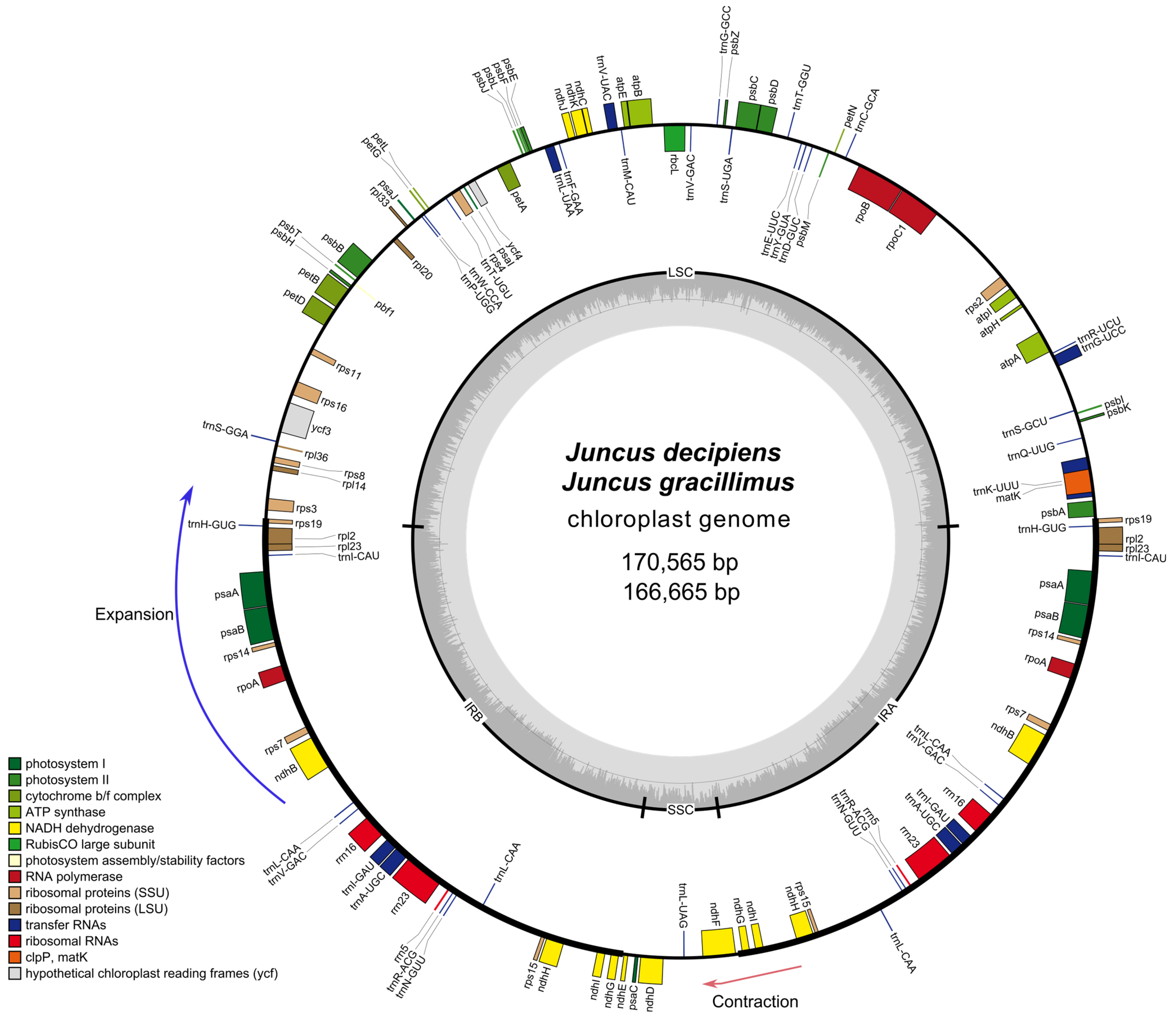
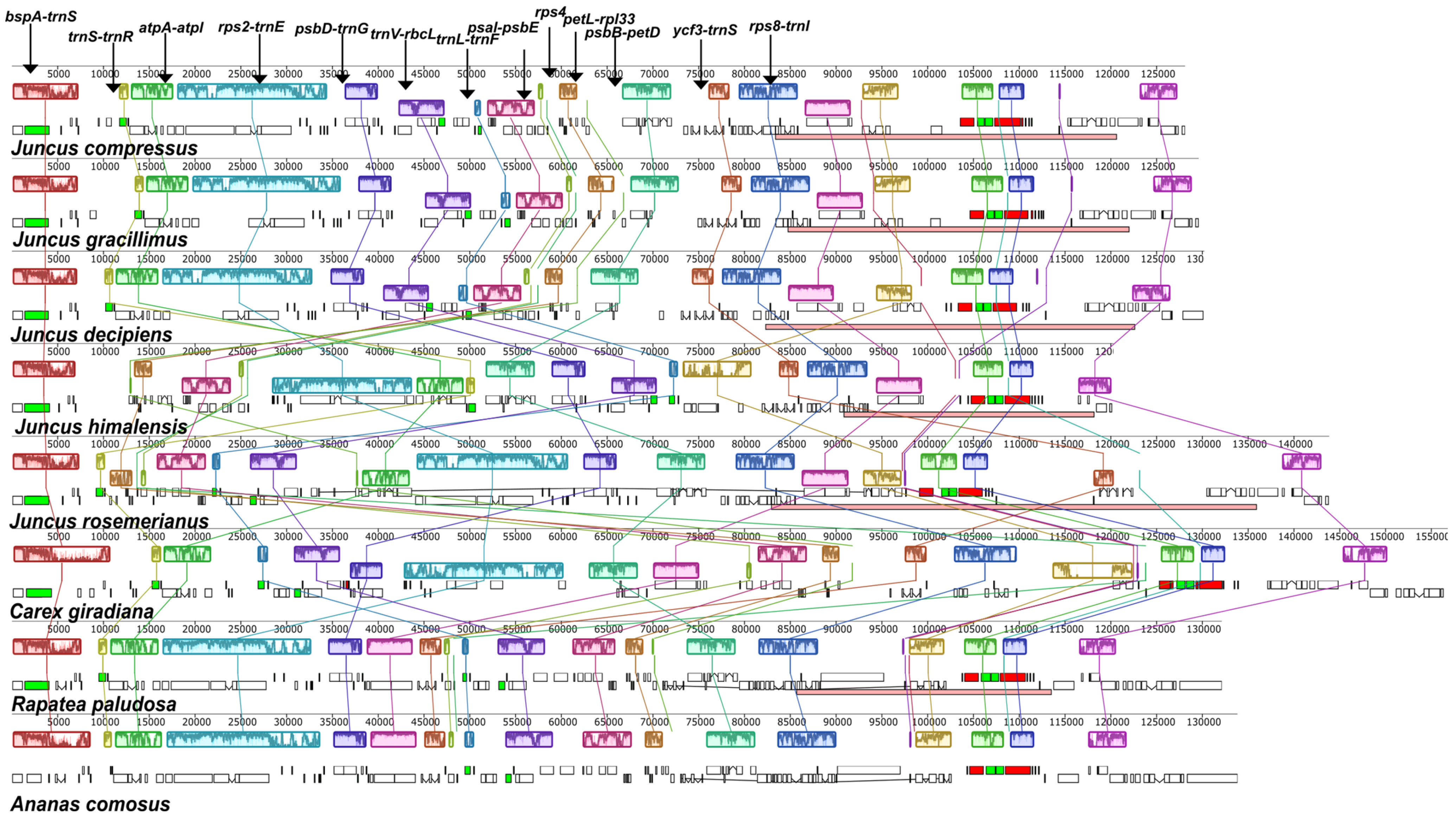
Complete plastid genomes of Juncus and Luzula species showed considerable variation in genome size, ranging from 147,183 bp in Juncus validus to 201,321 bp in Luzula sylvatica (Table 1). Despite this size variation, all plastomes exhibited the typical quadripartite structure composed of a large single-copy (LSC) region, a small single-copy (SSC) region, and two inverted repeat (IR) regions. In this study, plastid genomes of Juncus decipiens and Juncus gracillimus, both of which occur naturally in Korea, were analysed in detail. The plastome of J. decipiens was 170,565 bp in length, comprising an LSC region of 82,314 bp, an SSC region of 7541 bp, and IR regions of 40,355 bp. Similarly, J. gracillimus had a plastome size of 166,885 bp, with an LSC of 84,753 bp, an SSC of 7568 bp, and IR regions of 37,282 bp. The overall genome organisation and regional lengths of these two species were highly comparable, indicating strong structural conservation of plastid genomes within these lineages. Across the genus Juncus, plastome sizes were generally similar to those observed in J. decipiens and J. gracillimus, with moderate variation primarily associated with differences in IR length rather than changes in LSC or SSC regions (Figure 1). In contrast, plastomes of Luzula species were markedly larger, exceeding 199 kb, largely due to extensive IR expansion. In addition to gene loss, plastid genome comparison revealed extensive structural rearrangements across the genus Juncus. A total of 12 inversion events were identified within Juncus, indicating a highly rearranged plastid genome architecture relative to reference taxa (Figure 2). Juncus compressus, J. gracillimus, and J. decipiens shared an identical inversion pattern, reflecting strong structural conservation within these lineages. In contrast, J. himalensis exhibited five inversions, and J. roemerianus showed four inversions when compared with plastid genomes of Rapatea (Rapateaceae) and Ananas (Bromeliaceae).

3.2. Phylogenetic Relationships and Plastid Gene Loss in Juncus

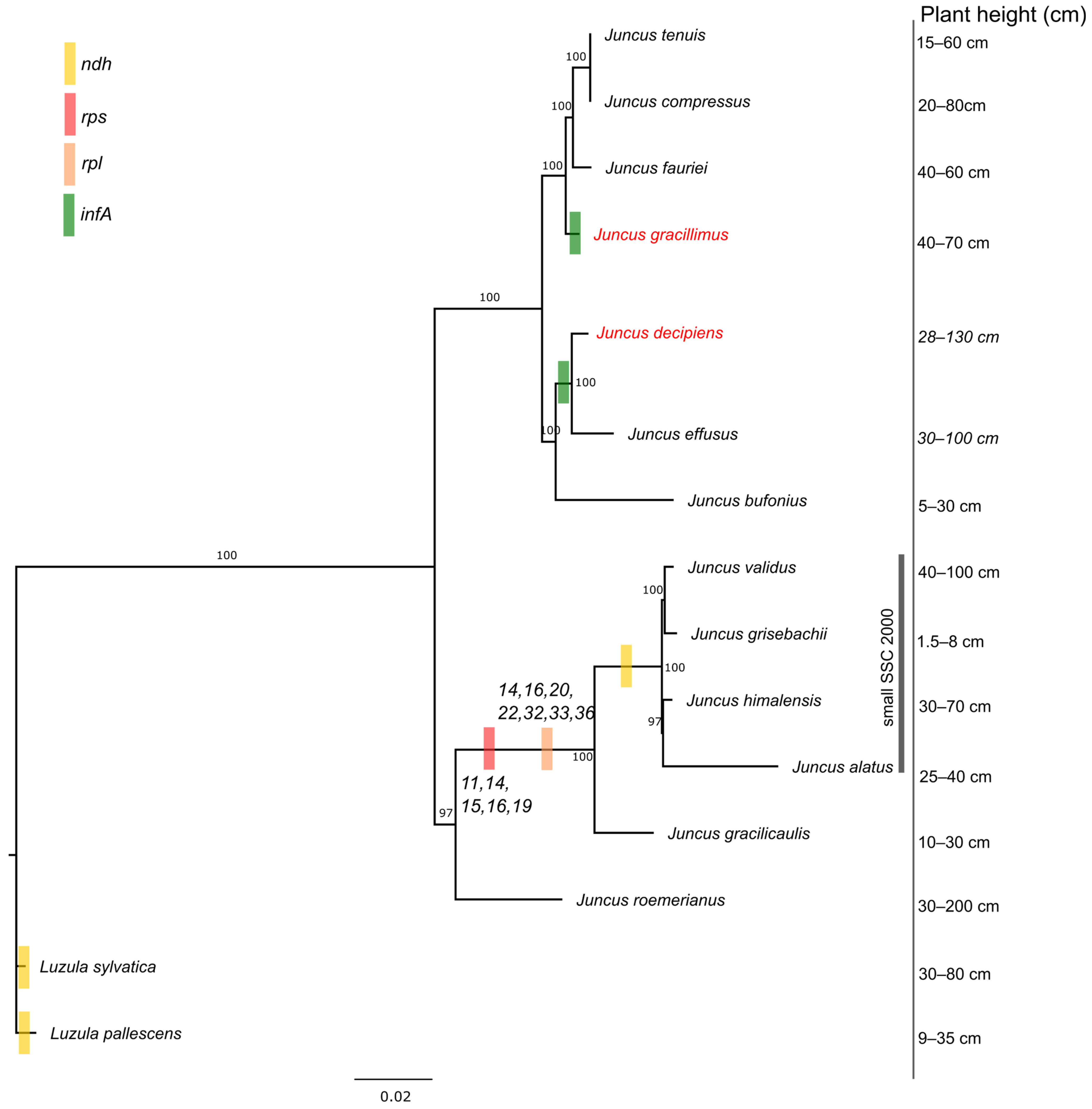
Phylogenetic reconstruction based on plastid genome sequences resolved species of Juncus into well-supported clades and revealed clear associations between phylogenetic position, plastid genome structure, and gene loss patterns (Figure 3). Within the genus, Juncus validus, J. grisebachii, J. himalensis, and J. alatus formed a distinct clade characterised by a markedly reduced-SSC region, with lengths of approximately 2000 bp, substantially smaller than those of typical angiosperm plastomes.
Comparative analysis of plastid gene content showed that complete loss of the ndh gene family was shared by this clade and was also observed in the outgroup genus Luzula. This consistent absence of ndh genes across Juncus and Luzula indicates that ndh gene loss represents a widespread and conserved evolutionary feature within Juncaceae, rather than a lineage-specific event restricted to a single clade. Beyond ndh gene loss, additional and more lineage-specific patterns of plastid gene reduction were detected within Juncus. Juncus gracilicaulis, which is phylogenetically close to the reduced-SSC clade, showed further loss of multiple ribosomal protein genes, including members of the rps and rpl gene families (Figure 3). In contrast, Juncus gracillimus, J. decipiens, and J. effusus retained most ribosomal protein genes but consistently exhibited loss of the infA gene, suggesting an alternative trajectory of plastid gene evolution in these lineages. Overall, plastid genome evolution in Juncus is characterised by shared ndh gene loss across Juncaceae, combined with clade-specific reductions in SSC length and differential loss of rps, rpl, and ndh genes, closely mirroring phylogenetic relationships within the genus.

3.3. Transcriptome Assembly and Functional Annotation of Juncus decipiens

To support gene discovery and downstream functional analyses, we generated a de novo transcriptome assembly for J. decipiens (Table 2). The assembly produced a total of 133,559 transcripts, which were clustered into 66,324 unigenes, with an N50 length of 2157 bp. Functional annotation showed that 38,154 unigenes had significant similarity matches in the Swiss-Prot database, while 32,227 and 46,241 unigenes were assigned to the Pfam and KEGG databases, respectively (Table 2). These results indicate a high-quality transcriptome assembly with broad functional representation, providing a strong resource for transcript-based gene identification and pathway-level interpretation in J. decipiens.

3.4. SNP Marker Against Whole-Genome of J. effusus

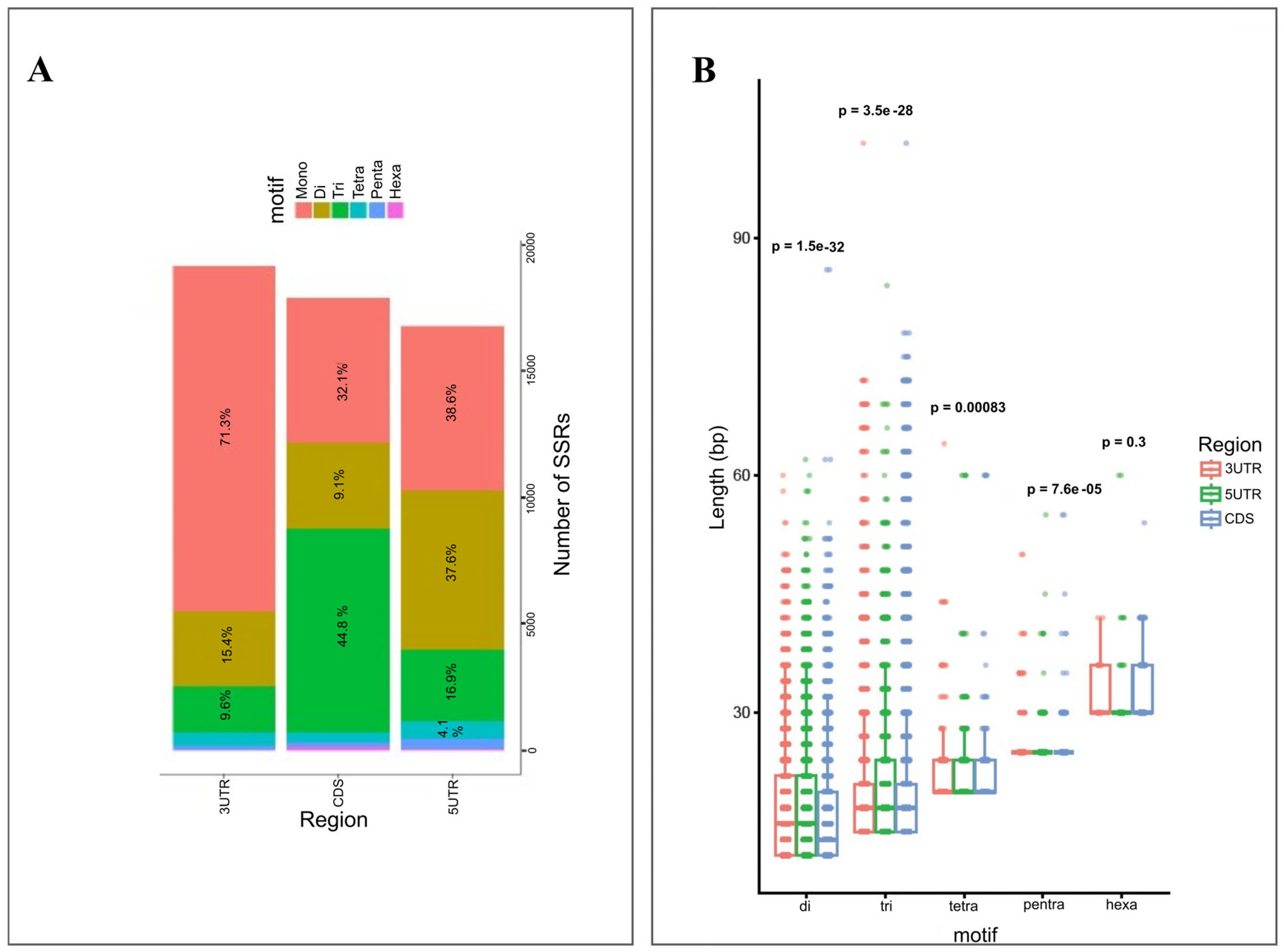
Mapping of J. decipiens reads to the J. effusus reference genome revealed a total of 490,904 exonic SNPs distributed across the assembly. SNP density varied substantially among scaffolds. The largest scaffolds—such as JAMRDH010000001.1, JAMRDH010000002.1, and JAMRDH010000005.1—harboured the highest numbers of exonic SNPs (approximately 17,000–43,000 SNPs each). In contrast, many smaller scaffolds contained only a few (1–10) exonic SNPs. The top 20 SNP-rich scaffolds accounted for a major proportion of all exonic variation, indicating that genomic regions corresponding to chromosome-scale or gene-rich scaffolds contribute disproportionately to interspecific divergence between J. decipiens and J. effusus (Supplementary Figure S2). A total of 490,904 high-quality exonic SNPs were detected in J. decipiens by aligning transcriptome reads to the J. effusus reference genome. To identify the most reliable candidates for species-specific marker development, SNPs were filtered to retain only high-quality, homozygous, non-indel variants. From this set, the top 10 SNPs with the highest QUAL scores (QUAL = 228 for all markers) were selected for detailed marker characterisation (Table 3). All selected SNPs were located on the large genomic scaffold JAMRDH010000001.1, consistent with its greater size and gene density. For each SNP, 500 bp flanking sequences (±250 bp) were extracted from the J. effusus reference genome, centring the variant at position 251 within the sequence (Table 3). Inspection of alleles confirmed that the reference allele (REF) corresponded to J. effusus, whereas the alternate allele (ALT) represented the J. decipiens-specific variant. These SNPs were strongly supported by sequencing depth (DP = 76–245, except one with DP = 16 but QUAL = 228) and balanced forward–reverse read distributions, indicating high-confidence in allele calls. Collectively, these ten high-confidence, exonic, homozygous SNPs were identified as candidate loci for molecular marker development and were used for downstream primer design for PCR validation and genotyping assays (Supplementary Figure S2). The distribution and length characteristics of SNP-associated motifs across genomic regions were further analysed (Figure 4). SNPs were unevenly distributed among coding sequences (CDS), 5′UTR, and 3′UTR regions, with non-coding regions generally showing higher variation compared with coding regions (Figure 4A). Differences in motif lengths among genomic regions were also observed, with several categories showing statistically significant variation, as indicated by p-values (Figure 4B). These results indicate region-specific patterns of sequence variation within the nuclear genome.

3.5. SNP Marker Analysis

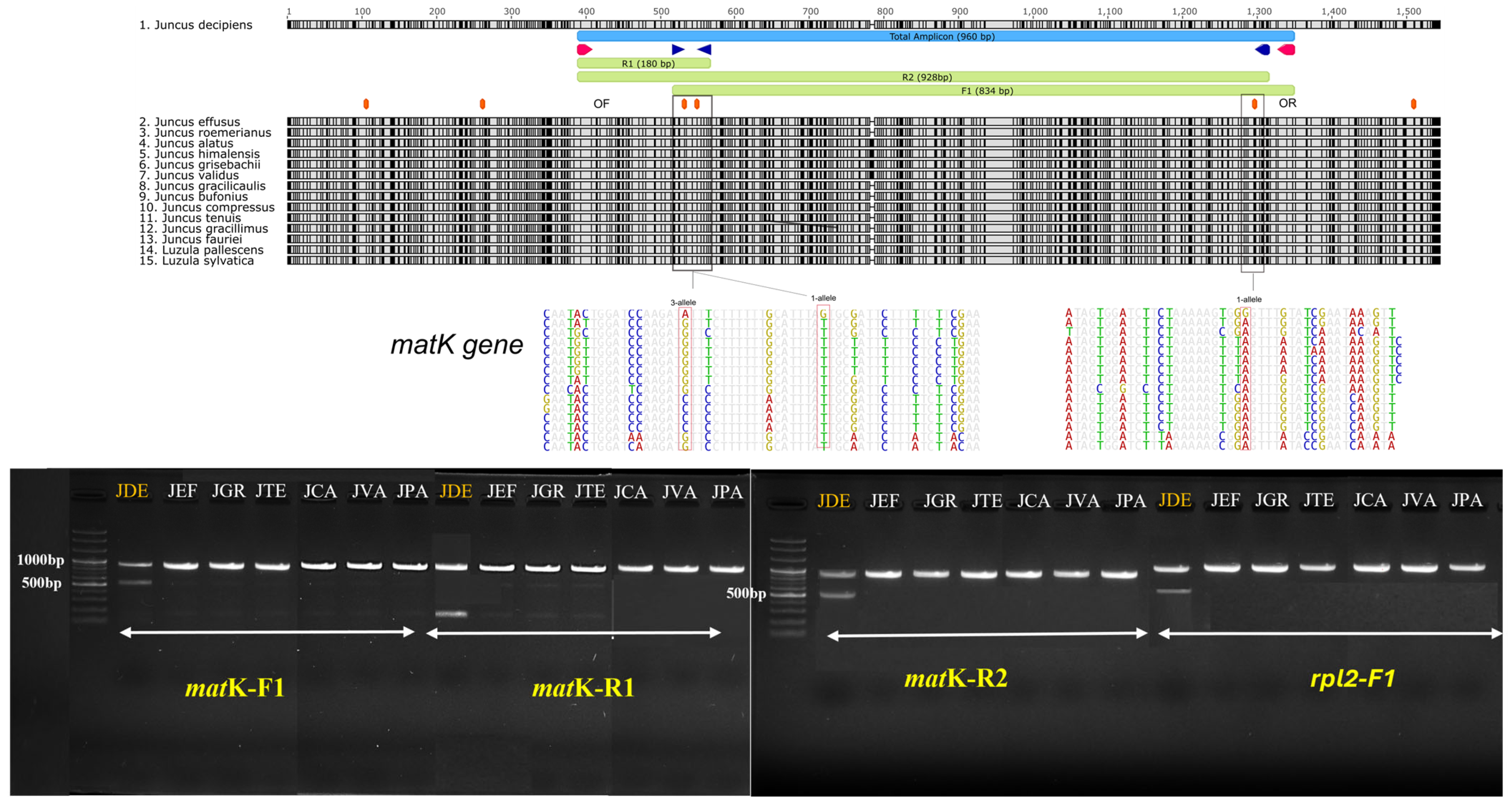
Using plastid markers, we generated species-informative SNP profiles for Juncus decipiens and evaluated their potential for medicinal authentication and molecular identification. For the plastid matK region, we amplified three fragments using one forward primer and two reverse primers, producing amplicons of 832 bp (F1–R1), 936 bp (F1–R2), and 186 bp (matK-R1 fragment (Figure 5). In addition, the plastid rpl2 locus yielded a clear amplification product of 677 bp. These plastid loci contained diagnostic SNP sites that supported reliable discrimination of J. decipiens from related taxa. To further strengthen species resolution beyond plastid variation, we selected candidate SNPs from the top 20 polymorphic sites detected in nuclear loci derived from transcriptome-based data of J. decipiens. From these, the top 10 SNP sites were prioritised for experimental validation. Primer pairs were designed to generate PCR products in the range of 450–500 bp, allowing direct confirmation through gel electrophoresis and downstream Sanger sequencing. To improve amplification performance and suitability for broader SNP screening, shorter primer sets targeting 250–300 bp regions were subsequently developed based on J. decipiens nuclear SNP positions. These nuclear SNP primers were tested across J. decipiens and six additional Juncus species to evaluate cross-species transferability and marker specificity. The amplified SNP-containing regions were then subjected to Sanger sequencing to confirm the nucleotide substitutions and to determine whether SNPs discovered from J. decipiens could be consistently detected in other Juncus species. Collectively, these results demonstrate that plastid markers (matK and rpl2) combined with validated nuclear SNP loci provide an effective framework for developing SNP-based molecular tools for Juncus species identification and future marker expansion.

3.6. Validation of Transcriptomic SNP Marker

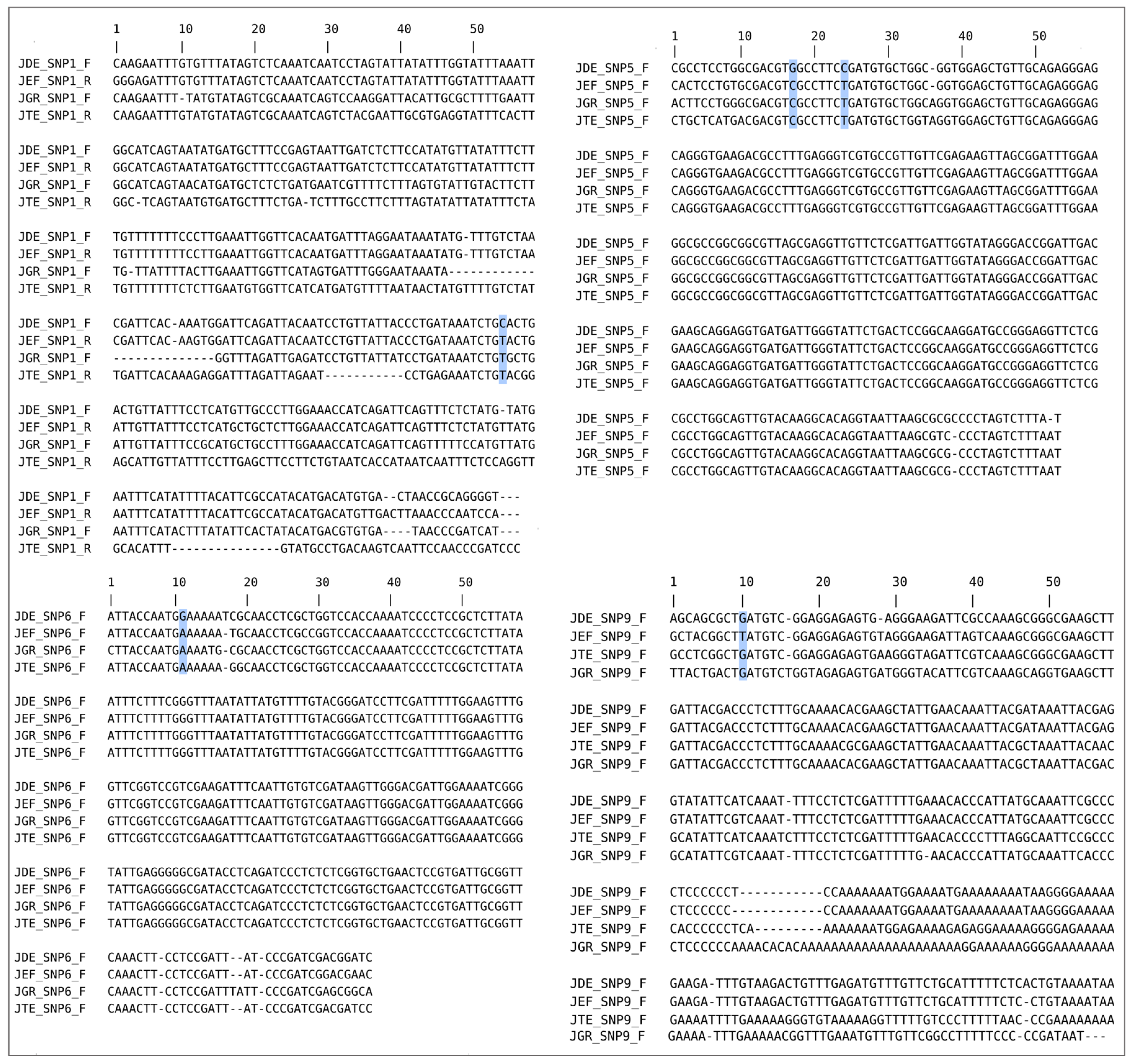
Primer pairs were designed for all ten SNP loci and initially tested in J. decipiens for PCR amplification and sequence confirmation (Supplementary Figures S2 and S3). Subsequently, these markers were evaluated across three additional Juncus species to assess transferability and diagnostic performance. Of the ten primer sets, four markers produced consistent amplification and clear, interpretable Sanger sequencing results across species comparisons. Sequence chromatograms confirmed the expected SNP substitutions at these validated loci: SNP1 (C→T), SNP5 (C→T), SNP6 (G→A), and SNP9 (G→T) (Figure 6). These four validated SNP sites correspond to the polymorphic positions highlighted in Table 3, demonstrating that they represent stable and detectable species-level variation suitable for downstream genotyping assays. Overall, the successful validation of these four loci demonstrates that the SNP discovery pipeline reliably identified high-confidence exonic substitutions and confirms their utility as robust targets for species discrimination and molecular marker development in Juncus.

4. Discussion

In this study, we generated complete plastid genome sequences for Juncus decipiens and J. gracillimus plastid coding genes for comparative phylogenomic inference. Plastomes are widely regarded as robust molecular resources for resolving phylogenetic relationships, detecting lineage-specific structural variation, and developing diagnostic loci because of their compact size, conserved gene content, uniparental inheritance, and relatively stable substitution rates across angiosperms. Our plastome-based results therefore contribute to a needed genomic baseline for Juncaceae, a family that remains underrepresented in plastome comparisons relative to other Poales lineages.

4.1. Plastome Evolution in Juncaceae: Structural Dynamics and Gene Loss

In this study, comparative plastome analyses revealed lineage-specific structural rearrangements and gene-content variation within Juncaceae. Plastomes are often structurally conserved across angiosperms; however, Poales contain several lineages with striking plastome rearrangements, gene loss, and boundary shifts [51,52]. Gene loss, particularly of the ndh gene suite, has been repeatedly reported in Poales and is especially frequent in some Juncaceae species [51]. Recent broad plastome comparative analyses likewise indicate that gene loss is a major feature in Poales plastome evolution and can occur even outside parasitic plants [53,54]. In addition, previous plastome-scale research has shown that structural variation and gene order changes can track lineage history and provide phylogenetic signals beyond simple substitution-based markers [12,14]. In particular, repeated loss or degradation of ndh genes, which encode subunits of the plastid NADH dehydrogenase-like (NDH) complex, has been widely reported across land plants and is often interpreted as reflecting relaxed functional constraint or altered photosynthetic requirements [55]. In Poales, comparative plastome studies have shown that gene and intron losses are common and lineage-dependent, highlighting the dynamic nature of plastome evolution within the order and emphasising the need to account for gene-content variation when selecting loci for phylogenetic reconstruction and marker development. Therefore, detection of ndh gene loss/pseudogenization, and occasional changes involving ribosomal protein genes (rpl, rps), should be interpreted as informative structural characters that may accompany lineage diversification and contribute to plastome divergence patterns observed across Poales and related monocot groups [27,56]. Furthermore, the plastid and nuclear SNP resources generated in this study may facilitate the future development of more universal diagnostic markers for species within the genus Juncus, particularly with expanded taxon sampling.
Our comparative plastome analyses of J. decipiens and J. gracillimus add to the emerging evidence that Juncaceae plastomes can display lineage-specific structural patterns. Such plastome rearrangements likely reflect a combination of repeat-mediated recombination and relaxed structural constraints, and they may contribute to the difficulty of using small plastid fragments for stable phylogenetic placement in the group [25,57]. Thus, increasing plastome sampling across the genus will be essential for determining whether rearrangements correlate with major clades, ecological transitions, or life-history traits.

4.2. Plastome Structure Provides a Genomic Framework for Juncus Systematics

The plastome-scale phylogenetic analyses presented here improved resolution within Juncus and clarified relationships within Juncaceae. Phylogenetic relationships within Juncus have historically been difficult to resolve, and the traditional classification into two subgenera and multiple sections was often based on pragmatic morphological groupings rather than clear evolutionary lineages [58]. This difficulty largely reflects extensive morphological plasticity and repeated trait reductions across the family, which can obscure true relationships and produce misleading morphological similarity among unrelated taxa [59]. In response to these long-standing challenges, Proćków & Drábková (2023) [59] proposed a major nomenclatural revision of Juncus and recognised six new genera, supported by combined morphological and molecular phylogenetic evidence, demonstrating that morphology alone is insufficient for stable generic delimitation in Juncaceae. However, conserved epidermal and stomatal features in Korean Juncus contrast with taxonomically informative variation in guard cell length and epicuticular wax characters, which aid species delimitation alongside molecular markers [26].

4.3. Plastome and Nuclear Molecular Markers for J. decipiens

We developed and validated both plastid and nuclear SNP markers for J. decipiens, demonstrating their utility for species identification. Molecular evidence has increasingly been essential for clarifying Juncaceae systematics, as relationships within Cyperaceae (Cyperales) have been complicated by morphological convergence and character reduction [60]. Early phylogenetic analyses of Juncaceae relied heavily on plastid markers, including the coding gene rbcL, which has provided key backbone information for broader monocot and cyperid-level relationships [33,61]. Within Juncaceae, plastid datasets based on rbcL and additional plastid regions have contributed to improved clade-level resolution, including studies emphasising relationships among Juncus and Luzula [62,63]. Additional plastid regions, such as the trnL intron and trnL–trnF intergenic spacer, have also been informative for defining major clades and detecting structural mutations that support deeper groupings in the family [23,64,65].
However, plastid markers alone are often insufficient for resolving complex intrageneric patterns and can fail to capture evolutionary processes such as reticulation or incomplete lineage sorting. Nuclear datasets, especially ITS, have therefore played a complementary role by providing additional phylogenetic signal and higher variation for species-level inference in Juncaceae [66]. Moreover, comparative studies across plastid and nuclear loci have highlighted the presence of incongruence and complex evolutionary histories in the family, reinforcing the importance of using multi-locus evidence when interpreting relationships [67,68,69]. Large-scale sampling efforts combining plastid markers and nuclear ITS have further expanded taxon representation and clarified broad cyperid-level relationships, while also revealing limitations of short plastid loci for resolving paraphyletic patterns within Juncus [9,57].
Recent advances further support this interpretation. Mata-Sucre et al. (2023) demonstrated that repeat-based phylogenomics can provide strong phylogenetic signal in Juncus, generating topologies congruent with nuclear rDNA but not always matching plastome-based trees [16]. Collectively, these results support the conclusion that promising species delimitation and identification in Juncus benefit from combining morphology with stronger molecular and genomic tools. In this context, the present development of high-confidence exonic SNP markers provides a practical extension of earlier marker-based approaches by enabling species discrimination using short, diagnostic variants that can be efficiently validated through PCR and Sanger sequencing. Such SNP-based marker resources can therefore complement plastid and nuclear phylogenetic frameworks and support accurate identification in groups where morphology is evolutionarily labile and repeated reductions are common [9,59]. Therefore, the plastome-scale framework presented here should be interpreted as a critical but partial view of the evolutionary history of Juncus, and it is best integrated with nuclear and repeatome-based approaches to obtain a stable classification.
A major applied outcome of this work is the development of plastid diagnostic loci for J. decipiens, which is widely used as a medicinal plant in Korea [4,5]. Marker development based on plastid and nuclear single-copy genes and diagnostic SNPs is increasingly used for species identification and quality control, particularly when morphology is insufficient for distinguishing closely related taxa [14,19]. To identify J. decipiens-specific sites, we applied the Molecular Diagnostic Character (MDC) framework using FastaChar, which identifies “pure diagnostic sites” with fixed differences between a query taxon and reference taxa [18]. This approach has proven effective in plastome-based discrimination studies, including in Korean figs (Ficus) where diagnostic SNPs from plastid coding genes were translated into practical PCR markers [70]. By validating candidate sites through Sanger sequencing across individuals from different regions and implementing allele-specific PCR (“On/Off” detection), we ensured that the selected plastid markers are stable, reproducible, and suitable for routine authentication. Such plastid-based markers are particularly attractive for medicinal materials because they can be applied to processed tissues and mixed samples where well-defined morphological identification is impossible.
Plastid markers are powerful for authentication but provide only a maternal lineage history and may not fully resolve recent divergence or hybridisation. Therefore, the inclusion of nuclear loci is essential for robust species discrimination and for capturing biparentally inherited variation.

4.4. Transcriptome-Based SNP Markers and Their Implications in J. decipiens

In this study, transcriptome sequencing enabled the discovery of nuclear exonic SNPs by mapping J. decipiens reads to a reference genome assembly of J. effusus. The resulting exonic SNP landscape showed strong heterogeneity across scaffolds, with a small number of large, gene-rich scaffolds accounting for a substantial portion of detected variation. Such patterns are expected for draft genome assemblies where scaffold size and gene density strongly shape variant yield. From the genome-wide SNP set, we prioritised the highest-confidence variants for marker development by selecting homozygous, non-indel SNPs with maximum QUAL values and clean flanking regions. Because these SNPs were located in exonic regions, they offer practical advantages for PCR assay design and are more likely to be transferable across related taxa. Importantly, nuclear SNP markers can complement plastid MDCs by resolving cases where plastid lineages are shared among closely related species or where introgression leads to plastid capture, phenomena that are plausible in Juncus given the cytonuclear discordance reported in genome-skimming repeat-based analyses [16].
Transcriptome-derived SNP markers provide an efficient genome-wide representation of coding-region variation and have become increasingly valuable for evolutionary and population genomic studies in non-model plant species lacking reference genomes [71,72]. The application of these markers enables the detection of structural variation and presence–absence polymorphisms that often remain difficult to identify in non-model organisms [73]. Furthermore, advances in next-generation sequencing technologies, including high multiplexing capacity and reduced sequencing costs, have greatly facilitated large-scale population genomic studies [74]. These approaches are particularly important for studying threatened or understudied taxa, where identifying both neutral and adaptive genetic variation is essential for effective conservation and management strategies [75]. Within Poales, transcriptomic datasets have also played an important role in evolutionary research by providing large nuclear gene datasets for phylogenetic reconstruction and comparative genomic analyses. For instance, transcriptome sequencing has been used to reconstruct phylogenetic relationships in grasses, highlighting the value of expressed gene datasets for understanding genome evolution within Poales [29,76]. These transcriptome-based approaches complement large-scale phylogenomic studies that have revealed complex histories of genome duplication and diversification across the order.
Overall, this study provides both evolutionary and applied contributions. On the evolutionary side, plastome-scale resources from Juncaceae remain sparse; therefore, new plastomes enable improved comparative analyses of gene content, structural rearrangements, and lineage-specific rate variation across Poales and other members of angiosperms [13,14,51,77,78,79]. On the applied side, marker systems integrating plastid and nuclear loci are urgently needed for medicinal plant authentication, conservation genetics, and germplasm management, particularly for taxa that show morphological similarity and phenotypic plasticity [14,19].
Future work should focus on (i) expanding plastome sampling across major Juncus sections, (ii) integrating plastome phylogenomics with nuclear target capture datasets (e.g., Angiosperms353) [80] to test cytonuclear conflict and improve section-level resolution, and (iii) validating SNP/SSR markers across broader geographic and population sampling to evaluate intraspecific polymorphism and marker stability. In addition, the repeat-based phylogenomic framework proposed by Mata-Sucre et al. (2023) [16] provides an important complementary axis of evidence and should be combined with plastome and nuclear SNP datasets to develop a stable and evolutionarily informed classification of Juncus L.

5. Conclusions

This study provides new genomic insights into the plastome evolution within Juncaceae by generating complete plastid genomes of Juncus decipiens and J. gracillimus. Comparative analyses revealed lineage-specific structural rearrangements, including inversion events and variation in inverted repeat boundaries, highlighting dynamic plastome evolution within the genus. Phylogenomic analyses improved the resolution of relationships within Juncus and contributed to clarifying its placement within the family. In addition, we developed and validated species-specific plastid and nuclear SNP markers for J. decipiens, providing reliable tools for molecular identification and future genetic studies. Together, these findings expand genomic resources for Juncaceae and highlight the utility of combined plastid and nuclear SNP markers for resolving evolutionary relationships and enabling reliable species identification in taxonomically complex plant groups.

Supplementary Materials

The following supporting information can be downloaded at: https://www.mdpi.com/article/10.3390/d18030174/s1, Figure S1. Morphological differentiation among three Juncus species. Representative morphological features of J. decipiens and J. gracillimus. J. decipiens shows a robust, clump-forming habit with stout stems (40–100 cm), flat basal leaves, and a dense, many-flowered inflorescence; capsules are equal to or slightly longer than the tepals. J. gracillimus is slenderer, with thin wiry stems (20–60 cm), reduced filiform leaves, a lax, fewer-flowered inflorescence, and capsules conspicuously longer than the tepals. Supplementary Figure S2. Top 20 scaffolds showing the highest numbers of exonic SNPs in Juncus decipiens relative to the J. effusus reference genome. Supplementary Figure S3. PCR validation of the top 10 genomic SNP markers identified in Juncus decipiens, confirmed by agarose gel electrophoresis. Supplementary Table S1. Details of Juncus samples used in this study, including species abbreviations, voucher information, herbarium sources, and geographic origin. Supplementary Table S2. Details of primer sequences, PCR reaction mixtures, and thermal cycling conditions corresponding to the PCR assays described in the Materials and Methods.

Author Contributions

S.J.C.: performed the experiments, analysed the data, prepared figures and tables, and wrote the original draft. Y.G.K. and J.-Y.K. collected plant materials, designed species sampling, performed experiments, and co-wrote the manuscript. J.-H.K. conceived and designed the study and revised the manuscript. All authors have read and agreed to the published version of the manuscript.

Funding

This research was supported by the Korea Health Industry Development Institute (KHIDI), funded by the Ministry of Health and Welfare, Republic of Korea, under the project “Plastid genome analysis of Korean oriental medicinal plants based on next-generation sequencing” (grant number RS-2023-KH139419).

Institutional Review Board Statement

Not applicable.

Data Availability Statement

All raw sequencing reads are available from the NCBI Sequence Read Archive (SRA) under accession PRJNA1404445. GenBank accession numbers for sequences generated in this study are PX899747–PX899748.

Conflicts of Interest

The authors declare no conflicts of interest.

References

  1. Bremer, K. Gondwanan evolution of the grass alliance of families (Poales). Evolution 2002, 56, 1374–1387. [Google Scholar] [CrossRef] [PubMed]
  2. Kirschner, J.; Novara, L.; Novikov, V.S.; Snogerup, S.; Kaplan, Z. Supraspecific division of the genusJuncus (Juncaceae). Folia Geobot. 1999, 34, 377–390. [Google Scholar] [CrossRef]
  3. Kirschner, J.; Kaplan, Z. Taxonomic and nomenclatural notes on Luzula and Juncus (Juncaceae). TAXON 2001, 50, 1107–1113. [Google Scholar] [CrossRef]
  4. Cho, C.H.; Chae, S.H.; Kim, S.H.; Kim, K.H. Phenolic compounds isolated from Juncus decipiens and their effects on osteoblast differentiation in the mouse mesenchymal stem cell line C3H10T1/2. Nat. Prod. Sci. 2024, 30, 135–142. [Google Scholar] [CrossRef]
  5. Ullah, S.; Amen, Y.; Shimizu, K. Phytochemical, ethnomedicinal uses and pharmacological profile of (Buchenau) Nakai (common rush). Nat. Prod. Res. 2024, 38, 3253–3263. [Google Scholar] [CrossRef]
  6. Ma, W.; Zhang, Y.; Ding, Y.Y.; Liu, F.; Li, N. Cytotoxic and anti-inflammatory activities of phenanthrenes from the medullae of Juncus effusus L. Arch. Pharm. Res. 2016, 39, 154–160. [Google Scholar] [CrossRef]
  7. Bús, C.; Tóth, B.; Stefkó, D.; Hohmann, J.; Vasas, A. Family Juncaceae: Promising source of biologically active natural phenanthrenes. Phytochem. Rev. 2018, 17, 833–851. [Google Scholar] [CrossRef]
  8. Tanaka, N.; Kinjo, J.; Nohara, T.; Ono, M.; Takeuchi, A. Phenanthrene derivatives from Juncus effusus. Phytochemistry 1989, 28, 505–507. [Google Scholar]
  9. Brožová, I.; Kirschner, J.; Kaplan, Z.; Drábková, L. Toward finally unraveling the phylogenetic relationships of Juncaceae with respect to Cyperaceae: Evidence from plastid and nuclear DNA. Mol. Phylogenet. Evol. 2022, 172, 107471. [Google Scholar]
  10. Larridon, I.; Zuntini, A.R.; Léveillé-Bourret, E.; Barrett, R.L.; Starr, J.R.; Muasya, A.M.; Villaverde, T.; Bauters, K.; Brewer, G.E.; Bruhl, J.J.; et al. A new classification of Cyperaceae (Poales) supported by phylogenomic data. J. Syst. Evol. 2021, 59, 852–895. [Google Scholar] [CrossRef]
  11. Silva, A.D.; Alves, M.V.S.; Coan, A. Comparative floral morphology and anatomy of Thurniaceae, an early-diverging family in the cyperids (Poales, Monocotyledons). Plant Syst. Evol. 2020, 306, 53. [Google Scholar] [CrossRef]
  12. Wang, H.; Wu, Z.; Li, T.; Zhao, J. Phylogenomics resolves the backbone of Poales and identifies signals of hybridization and polyploidy. Mol. Phylogenet. Evol. 2024, 200, 108184. [Google Scholar] [CrossRef] [PubMed]
  13. Wu, C.S.; Wang, Y.N.; Liu, S.M.; Chaw, S.M. Extreme plastome expansion and rearrangement in Cyperaceae: Insights from Eleocharis plastid genomes. BMC Genom. 2024, 25, 112. [Google Scholar]
  14. Wu, Z.Q.; Yang, J.-B.; Liu, J.-X.; Li, D.-Z.; Ma, P.-F. Organelle phylogenomics of Poales highlights cyperid clade relationships and cytonuclear discordance. Front. Plant Sci. 2022, 13, 835246. [Google Scholar]
  15. Lee, C.; Ruhlman, T.A.; Jansen, R.K. Unprecedented Intraindividual Structural Heteroplasmy in (Cyperaceae, Poales) Plastomes. Genome Biol. Evol. 2020, 12, 641–655. [Google Scholar] [CrossRef]
  16. Mata-Sucre, Y.; Matzenauer, W.; Castro, N.; Huettel, B.; Pedrosa-Harand, A.; Marques, A.; Souza, G. Repeat-based phylogenomics shed light on unclear relationships in the monocentric genus Juncus L. (Juncaceae). Mol. Phylogenet. Evol. 2023, 189, 107930. [Google Scholar] [CrossRef]
  17. Balslev, H. Juncaceae. Nord. J. Bot. 1996, 16, 473–482. [Google Scholar]
  18. Barrett, C.F.; Baker, W.J.; Comer, J.R.; Conran, J.G.; Lahmeyer, S.C.; Leebens-Mack, J.H.; Li, J.; Lim, G.S.; Mayfield-Jones, D.R.; Perez, L. Plastid genomes reveal support for deep phylogenetic relationships and extensive rate variation among palms and other commelinid monocots. Am. J. Bot. 2016, 103, 1115–1131. [Google Scholar] [CrossRef]
  19. Parks, M.; Cronn, R.; Liston, A. Increasing phylogenetic resolution at low taxonomic levels using massively parallel sequencing of chloroplast genomes. Genome Res. 2009, 19, 1325–1333. [Google Scholar] [CrossRef]
  20. Shaw, J.; Lickey, E.B.; Schilling, E.E.; Small, R.L. Comparison of whole chloroplast genome sequences to choose noncoding regions for phylogenetic studies in angiosperms: The tortoise and the hare III. Am. J. Bot. 2007, 94, 275–288. [Google Scholar] [CrossRef]
  21. Daniell, H.; Lin, C.S.; Yu, M.; Chang, W.J. Chloroplast genomes: Diversity, evolution, and applications in genetic engineering. Trends Plant Sci. 2016, 21, 602–622. [Google Scholar] [CrossRef]
  22. Dong, W.; Xu, C.; Cheng, T.; Zhou, S. Complete chloroplast genome of Sedum sarmentosum and chloroplast genome evolution in Saxifragales. Sci. Rep. 2016, 6, 18750. [Google Scholar] [CrossRef] [PubMed]
  23. Drábková, L.; Kirschner, J.; Vlček, Č. Phylogenetic relationships within Juncaceae: Evidence from nuclear ribosomal ITS and plastid trnL-trnF sequences. Mol. Phylogenet. Evol. 2006, 39, 489–500. [Google Scholar]
  24. Givnish, T.J.; Zuluaga, A.; Spalink, D.; Soto Gomez, M.; Lam, V.K.Y.; Saarela, J.M.; Sass, C.; Iles, W.J.D.; de Sousa, D.J.L.; Leebens-Mack, J.H. Monocot plastid phylogenomics, timeline, net rates of species diversification, and the causes of their present diversity. Nat. Commun. 2018, 9, 683. [Google Scholar]
  25. Jansen, R.K.; Cai, Z.; Raubeson, L.A.; Daniell, H.; dePamphilis, C.W.; Leebens-Mack, J.; Müller, K.F.; Guisinger, M.M.; Kuehl, J.V.; Boore, J.L. Analysis of 81 genes from 64 plastid genomes resolves relationships in angiosperms and identifies genome-scale evolutionary patterns. Methods Enzymol. 2007, 395, 348–384. [Google Scholar] [CrossRef]
  26. Choi, Y.M.; Choi, B.; Lee, C.; Paik, J.H.; Jang, T.S. Leaf Micromorphological Characteristics of Korean Rush and Their Taxonomic Implications Based on Microscopic Analysis. Microsc. Res. Tech. 2025, 88, 1223–1238. [Google Scholar] [CrossRef]
  27. Wicke, S.; Schneeweiss, G.M.; dePamphilis, C.W.; Müller, K.F.; Quandt, D. The evolution of the plastid chromosome in land plants: Gene content, gene order, gene function. Ann. Bot. 2011, 107, 1101–1122. [Google Scholar] [CrossRef]
  28. Zuntini, A.R.; Carruthers, T.; Maurin, O.; Bailey, P.C.; Leempoel, K.; Brewer, G.E.; Epitawalage, N.; Françoso, E.; Gallego-Paramo, B.; McGinnie, C.; et al. Phylogenomics and the rise of the angiosperms. Nature 2024, 629, 843–850. [Google Scholar] [CrossRef]
  29. McKain, M.R.; Tang, H.; McNeal, J.R.; Ayyampalayam, S.; Davis, J.I.; dePamphilis, C.W.; Givnish, T.J.; Pires, J.C.; Stevenson, D.W.; Leebens-Mack, J.H. A Phylogenomic Assessment of Ancient Polyploidy and Genome Evolution across the Poales. Genome Biol. Evol. 2016, 8, 1150–1164. [Google Scholar] [CrossRef]
  30. Orton, L.M.; Barberá, P.; Nissenbaum, M.P.; Peterson, P.M.; Quintanar, A.; Soreng, R.J.; Duvall, M.R. A 313 plastome phylogenomic analysis of Pooideae: Exploring relationships among the largest subfamily of grasses. Mol. Phylogenet. Evol. 2021, 159, 107110. [Google Scholar] [CrossRef]
  31. Do, H.D.K.; Kim, C.; Chase, M.W.; Kim, J.H. Implications of plastome evolution in the true lilies (monocot order Liliales). Mol. Phylogenet. Evol. 2020, 148, 106818. [Google Scholar] [CrossRef] [PubMed]
  32. Wang, N. Resolving deep relationships of Poales using plastid phylogenomics: Cytonuclear conflicts and evolutionary insights. Mol. Phylogenet. Evol. 2024, 189, 107889. [Google Scholar]
  33. Allen, G.C.; Flores-Vergara, M.A.; Krasnyanski, S.; Kumar, S.; Thompson, W.F. A modified protocol for rapid DNA isolation from plant tissues using cetyltrimethylammonium bromide. Nat. Protoc. 2006, 1, 2320–2325. [Google Scholar] [CrossRef] [PubMed]
  34. Bolger, A.M.; Lohse, M.; Usadel, B. Trimmomatic: A flexible trimmer for Illumina sequence data. Bioinformatics 2014, 30, 2114–2120. [Google Scholar] [CrossRef]
  35. Jin, J.J.; Yu, W.B.; Yang, J.B.; Song, Y.; dePamphilis, C.W.; Yi, T.S.; Li, D.Z. GetOrganelle: A fast and versatile toolkit for accurate de novo assembly of organelle genomes. Genome Biol. 2020, 21, 241. [Google Scholar] [CrossRef]
  36. Langdon, W.B. Performance of genetic programming optimised Bowtie2 on genome comparison and analytic testing (GCAT) benchmarks. Biodata Min. 2015, 8, 1. [Google Scholar] [CrossRef]
  37. Kearse, M.; Moir, R.; Wilson, A.; Stones-Havas, S.; Cheung, M.; Sturrock, S.; Buxton, S.; Cooper, A.; Markowitz, S.; Duran, C.; et al. Geneious Basic: An integrated and extendable desktop software platform for the organization and analysis of sequence data. Bioinformatics 2012, 28, 1647–1649. [Google Scholar] [CrossRef]
  38. Tillich, M.; Lehwark, P.; Pellizzer, T.; Ulbricht-Jones, E.S.; Fischer, A.; Bock, R.; Greiner, S. GeSeq—Versatile and accurate annotation of organelle genomes. Nucleic Acids Res. 2017, 45, W6–W11. [Google Scholar] [CrossRef]
  39. Chan, P.P.; Lin, B.Y.; Mak, A.J.; Lowe, T.M. tRNAscan-SE 2.0: Improved detection and functional classification of transfer RNA genes. Nucleic Acids Res. 2021, 49, 9077–9096. [Google Scholar] [CrossRef]
  40. Greiner, S.; Lehwark, P.; Bock, R. OrganellarGenomeDRAW (OGDRAW) version 1.3.1: Expanded toolkit for the graphical visualization of organellar genomes. Nucleic Acids Res. 2019, 47, W59–W64. [Google Scholar] [CrossRef]
  41. Rozewicki, J.; Li, S.L.; Amada, K.M.; Standley, D.M.; Katoh, K. MAFFT-DASH: Integrated protein sequence and structural alignment. Nucleic Acids Res. 2019, 47, W5–W10. [Google Scholar] [CrossRef]
  42. Zhao, D.; Ye, T.; Gao, F.L.; Jakovlic, I.; La, Q.; Tong, Y.D.; Liu, X.; Song, R.; Liu, F.; Lian, Z.M.; et al. PhyloSuite v2: The development of an all-in-one, efficient and visualization-oriented suite for molecular dating analysis and other advanced features. Imeta 2025, 4, e70095. [Google Scholar] [CrossRef] [PubMed]
  43. Lanfear, R.; Frandsen, P.B.; Wright, A.M.; Senfeld, T.; Calcott, B. PartitionFinder 2: New Methods for Selecting Partitioned Models of Evolution for Molecular and Morphological Phylogenetic Analyses. Mol. Biol. Evol. 2017, 34, 772–773. [Google Scholar] [CrossRef] [PubMed]
  44. Minh, B.Q.; Schmidt, H.A.; Chernomor, O.; Schrempf, D.; Woodhams, M.D.; von Haeseler, A.; Lanfear, R. IQ-TREE 2: New Models and Efficient Methods for Phylogenetic Inference in the Genomic Era. Mol. Biol. Evol. 2020, 37, 1530–1534, Erratum in Mol. Biol. Evol. 2020, 37, 2461. [Google Scholar] [CrossRef]
  45. Rambaut, A.; Drummond, A.J. TreeAnnotator v1. 7.0. 2013. Available online: https://beast.community/ (accessed on 3 December 2025).
  46. Grabherr, M.G.; Haas, B.J.; Yassour, M.; Levin, J.Z.; Thompson, D.A.; Amit, I.; Adiconis, X.; Fan, L.; Raychowdhury, R.; Zeng, Q.D.; et al. Full-length transcriptome assembly from RNA-Seq data without a reference genome. Nat. Biotechnol. 2011, 29, 644–652. [Google Scholar] [CrossRef]
  47. Kim, D.; Paggi, J.M.; Park, C.; Bennett, C.; Salzberg, S.L. Graph-based genome alignment and genotyping with HISAT2 and HISAT-genotype. Nat. Biotechnol. 2019, 37, 907–915. [Google Scholar] [CrossRef]
  48. Danecek, P.; Bonfield, J.K.; Liddle, J.; Marshall, J.; Ohan, V.; Pollard, M.O.; Whitwham, A.; Keane, T.; McCarthy, S.A.; Davies, R.M.; et al. Twelve years of SAMtools and BCFtools. Gigascience 2021, 10, giab008. [Google Scholar] [CrossRef] [PubMed]
  49. Koressaar, T.; Lepamets, M.; Kaplinski, L.; Raime, K.; Andreson, R.; Remm, M. Primer3_masker: Integrating masking of template sequence with primer design software. Bioinformatics 2018, 34, 1937–1938. [Google Scholar] [CrossRef]
  50. Merckelbach, L.M.; Borges, L.M. Make every species count: Fastachar software for rapid determination of molecular diagnostic characters to describe species. Mol. Ecol. Resour. 2020, 20, 1761–1768. [Google Scholar] [CrossRef]
  51. Wu, H.; Li, D.Z.; Ma, P.F. Unprecedented variation pattern of plastid genomes and the potential role in adaptive evolution in Poales. BMC Biol. 2024, 22, 97. [Google Scholar] [CrossRef]
  52. Darshetkar, A.M.; Datar, M.N.; Tamhankar, S.; Li, P.; Choudhary, R.K. Understanding evolution in Poales: Insights from Eriocaulaceae plastome. PLoS ONE 2019, 14, e0221423. [Google Scholar] [CrossRef]
  53. Petersen, G. Repeated loss of plastid NDH during evolution of land plants. Ann. Bot 2025, 137, 25–46. [Google Scholar] [CrossRef]
  54. Claude, S.J.; Kamra, K.; Jung, J.; Kim, H.O.; Kim, J.H. Elucidating the evolutionary dynamics of parasitism in Cuscuta: In-depth phylogenetic reconstruction and extensive plastomes reduction. BMC Genom. 2025, 26, 137. [Google Scholar] [CrossRef] [PubMed]
  55. Strand, D.D.; D’Andrea, L.; Bock, R. The plastid NAD(P)H dehydrogenase-like complex: Structure, function and evolutionary dynamics. Biochem. J. 2019, 476, 2743–2756. [Google Scholar] [CrossRef] [PubMed]
  56. Givnish, T.J.; Ames, M.; McNeal, J.R.; McKain, M.R.; Steele, P.R.; dePamphilis, C.W.; Graham, S.W.; Pires, J.C.; Stevenson, D.W.; Zomlefer, W.B.; et al. Assembling the Tree of the Monocotyledons: Plastome Sequence Phylogeny and Evolution of Poales. Ann. Mo. Bot. Gard. 2010, 97, 584–616. [Google Scholar] [CrossRef] [PubMed]
  57. Jones, S.B., Jr.; Jansen, R.K. Chloroplast DNA evidence for monophyly of the cyperids (Juncaceae, Cyperaceae, Thurniaceae) within Poales. Aliso 2007, 23, 211–230. [Google Scholar]
  58. Snogerup, S. A revision of Juncus subgen. Juncus (Juncaceae). Willdenowia 1993, 23, 23–73. [Google Scholar]
  59. Procków, J.; Drábková, L.Z. A revision of the Juncaceae with delimitation of six new genera: Nomenclatural changes in Juncus. Phytotaxa 2023, 622, 17–41. [Google Scholar] [CrossRef]
  60. Simpson, D. Relationships within Cyperales. In Monocotyledons: Systematics and Evolution; Royal Botanic Gardens, Kew: Richmond, UK, 1995; pp. 497–509. [Google Scholar]
  61. Duvall, M.R.; Clegg, M.T.; Chase, M.W.; Clark, W.D.; Kress, W.J.; Hills, H.G.; Eguiarte, L.E.; Smith, J.F.; Gaut, B.S.; Zimmer, E.A.; et al. Phylogenetic Hypotheses for the Monocotyledons Constructed from Rbcl Sequence Data. Ann. Mo. Bot. Gard. 1993, 80, 607–619. [Google Scholar] [CrossRef]
  62. Zaveska Drábková, L.; Kirschner, J.; Seberg, O.; Petersen, G.; Vlcek, C. Phylogeny of the Juncaceae based on rbcL sequences, with special emphasis on Luzula DC. and Juncus L. Plant Syst. Evol. 2003, 240, 133–147. [Google Scholar] [CrossRef]
  63. Zaveska Drábková, L.; Kirschner, J.; Vlcek, C. Phylogenetic relationships within Luzula DC. and Juncus L. (Juncaceae): A comparison of phylogenetic signals of trnL-trnF intergenic spacer, trnL intron and rbcL plastome sequence data. Cladistics 2006, 22, 132–143. [Google Scholar] [CrossRef] [PubMed]
  64. Zaveska Drábková, L.; Kirschner, J.; Vlcek, C.; Paces, V. trnL-trnF intergenic spacer and trnL intron define major clades within Luzula and Juncus (Juncaceae): Importance of structural mutations. J. Mol. Evol. 2004, 59, 1–10. [Google Scholar] [CrossRef] [PubMed]
  65. Drábková, L.; Vlcek, C. The phylogenetic position of Oxychloë (Juncaceae): Evidence from morphology, nuclear and plastid DNA regions. Taxon 2007, 56, 95–102. [Google Scholar]
  66. Roalson, E.H. Phylogenetic relationships in the Juncaceae inferred from nuclear ribosomal DNA internal transcribed spacer sequence data. Int. J. Plant Sci. 2005, 166, 397–413. [Google Scholar] [CrossRef]
  67. Drábková, L.Z. Phylogenetic relationships within Juncaceae: Evidence from five regions of plastid, mitochondrial and nuclear ribosomal DNA with notes on morphology. In Diversity, Phylogeny and Evolution in the Monocotyledonians; Aarhus University Press: Aarhus N, Denmark, 2010; pp. 389–415. [Google Scholar]
  68. Zaveska Drábková, L.; Vlcek, C. Molecular phylogeny of the genus Luzula DC. (Juncaceae, Monocotyledones) based on plastome and nuclear ribosomal regions: A case of incongruence, incomplete lineage sorting and hybridisation. Mol. Phylogenet. Evol. 2010, 57, 536–551. [Google Scholar] [CrossRef]
  69. Zaveska Drábková, L.; Vlcek, C. DNA variation within Juncaceae: Comparison of impact of organelle regions on phylogeny. Plant Syst. Evol. 2009, 278, 169–186. [Google Scholar] [CrossRef]
  70. Jung, J.; Kim, T.H.; Kwon, S.W.; Park, H.J.; Choi, I.S.; Kim, J.H. Identifying Molecular Markers for Thunb. Based on Complete Plastome Sequences of Korean Figs (L., Moraceae). Diversity 2024, 16, 129. [Google Scholar] [CrossRef]
  71. Davey, J.W.; Hohenlohe, P.A.; Etter, P.D.; Boone, J.Q.; Catchen, J.M.; Blaxter, M.L. Genome-wide genetic marker discovery and genotyping using next-generation sequencing. Nat. Rev. Genet. 2011, 12, 499–510. [Google Scholar] [CrossRef]
  72. Arslan, M.; Devisetty, U.K.; Porsch, M.; Grosse, I.; Müller, J.A.; Michalski, S.G. RNA-Seq analysis of soft rush (Juncus effusus): Transcriptome sequencing, de novo assembly, annotation, and polymorphism identification. BMC Genom. 2019, 20, 489. [Google Scholar] [CrossRef]
  73. Unamba, C.I.N.; Nag, A.; Sharma, R.K. Next Generation Sequencing Technologies: The Doorway to the Unexplored Genomics of Non-Model Plants. Front. Plant Sci. 2015, 6, 1074. [Google Scholar] [CrossRef]
  74. Choudhary, S.; Thakur, S.; Najar, R.A.; Majeed, A.; Singh, A.; Bhardwaj, P. Transcriptome characterization and screening of molecular markers in ecologically important Himalayan species (Rhododendron arboreum). Genome 2018, 61, 417–428. [Google Scholar] [CrossRef]
  75. Hung, T.H.; So, T.; Sreng, S.; Thammavong, B.; Boounithiphonh, C.; Boshier, D.H.; MacKay, J.J. Reference transcriptomes and comparative analyses of six species in the threatened rosewood genus. Sci. Rep. 2020, 10, 17749. [Google Scholar] [CrossRef]
  76. Mossion, V.; Dauphin, B.; Grant, J.; Kessler, M.; Zemp, N.; Croll, D. Transcriptome-wide SNPs for Botrychium lunaria ferns enable fine-grained analysis of ploidy and population structure. Mol. Ecol. Resour. 2022, 22, 254–271. [Google Scholar] [CrossRef]
  77. Claude, S.J.; Park, S.; Park, S. Gene loss, genome rearrangement, and accelerated substitution rates in plastid genome of (Hypericaceae). BMC Plant Biol. 2022, 22, 135. [Google Scholar] [CrossRef]
  78. Cauz-Santos, L.A.; da Costa, Z.P.; Callot, C.; Cauet, S.; Zucchi, M.I.; Bergès, H.; van den Berg, C.; Vieira, M.L.C. A Repertory of Rearrangements and the Loss of an Inverted Repeat Region in Chloroplast Genomes. Genome Biol. Evol. 2020, 12, 1841–1857. [Google Scholar] [CrossRef]
  79. Weng, M.L.; Ruhlman, T.A.; Jansen, R.K. Expansion of inverted repeat does not decrease substitution rates in Pelargonium plastid genomes. New Phytol. 2017, 214, 842–851. [Google Scholar] [CrossRef]
  80. Baker, W.J.; Dodsworth, S.; Forest, F.; Graham, S.W.; Johnson, M.G.; McDonnell, A.; Pokorny, L.; Tate, J.A.; Wicke, S.; Wickett, N.J. Exploring Angiosperms353: An open, community toolkit for collaborative phylogenomic research on flowering plants. Am. J. Bot. 2021, 108, 1059–1065. [Google Scholar] [CrossRef]
Figure 1. Plastome organisation showing the quadripartite structure (LSC, SSC, and two IRs) of Juncus decipiens and Juncus gracillimus. The total genome sizes differ between the two species, primarily due to variation in inverted repeat (IR) length (J. decipiens: 40,355 bp; J. gracillimus: 37,282 bp).
Diversity 18 00174 g001
Figure 2. Mauve plastome alignment showing conserved synteny and multiple inversions in Juncus compared with Rapatea (Rapateaceae) and Ananas (Bromeliaceae), with Carex (Cyperaceae) included as an outgroup. Locally collinear blocks are indicated by coloured regions, with blocks above the centre line representing the same orientation and those below indicating inversions. Small arrows mark inversion or rearrangement breakpoints, and the corresponding gene names are shown to indicate genes located near the breakpoint regions.
Diversity 18 00174 g002
Figure 3. Phylogenetic relationships within Juncus inferred from plastome coding sequences. Nu-mbers at the nodes indicate bootstrap support values. Selected morphological traits (length of grass) and plastid gene losses are mapped onto the tree branches. Gene loss events (e.g., ndh, rps, and rpl genes) are indicated beside the corresponding lineages.
Diversity 18 00174 g003
Figure 4. (A) Distribution of SSR motif types (mono-, di-, tri-, etc.) across transcript regions (CDS, 5′UTR, and 3′UTR) in J. decipiens transcriptome data. (B) Statistical significance (p-values) of SSR motif distribution and PCR amplicon length across the regions.
Diversity 18 00174 g004
Figure 5. Gel electrophoresis of matK and rpl2 plastid SNP markers in Juncus species, designed from J. decipiens and validated by PCR amplification. JDE—J. decipeiens, JEF—J. effusus, JGR—J. gracillimus, JTE—J. tenius, JCA—J. canadensis, JVA—J. vallidus and JPA—J. papillosus (Supplementary Tables S1 and S2).
Diversity 18 00174 g005
Figure 6. Transcriptome-derived SNP sites from nuclear loci identified by mapping J. decipiens reads to the Juncus effusus reference genome, with Sanger sequencing validation across four Juncus species. JDE—J. decipeiens, JEF—J. effusus, JGR—J. gracillimus, JTE—J. tenius.
Diversity 18 00174 g006
Table 1. Plastome statistics of Juncus species, including the two newly assembled genomes (denoted by *) and GenBank accessions, with total length and sizes of the LSC, SSC, and IR regions.
SpeciesAccessionTotalLSCIRSSC
Juncus alatus Franch. & Sav.NC_061306150,90787,53430,6562061
Juncus bufonius L.OZ263736166,99676,06541,8247283
Juncus compressus KunthNC_061308165,37683,38637,2607470
Juncus decipiens (Bachenau) Nakai *PX899747170,56582,31440,3557541
Juncus effusus L.NC_059754170,61280,66940,4798985
Juncus fauriei H.Lév. & VaniotPP790565185,38891,05543,4027529
Juncus gracilicaulisA.Camus *NC_061309158,31481,14437,1972776
Juncus gracillimus (Buchenau) V.I.Krecz. & Gontsch.PX899748166,88584,75337,2827568
Juncus grisebachii BachenauNC_061347150,84188,92829,9761961
Juncus himalensis KlotzschNC_061310147,66590,86027,3912023
Juncus roemerianus ScheeleNC_071363196,85282,94453,0037902
Juncus tenuis Willd.NC_061311167,50383,68638,1617495
Juncus validus Conville.NC_071364147,18387,21528,9612046
Luzula pallescens Sw.OZ187636199,81276,59358,5436133
Luzula sylvatica (Huds.) GaudinOX326963201,32177,92558,6056248
Table 2. Summary statistics of the Juncus decipiens transcriptome assembly and functional annotation.
SpeciesUnigenesTranscriptsN50Swiss-ProtPfamKEGG
J. decipiens66,324133,559215738,15432,22746,241
Table 3. Summary table of the 10 selected nuclear SNP markers from J. effusus scaffolds, including genomic positions mapped from the J. decipeiens transcriptome to the nuclear genome.
Marker IDScaffoldGenomic PositionREF (J. effusus)ALT (J. decipiens)
SNP1JAMRDH010000001.110,009,730TC
SNP2JAMRDH010000001.110,077,756AG
SNP3JAMRDH010000001.110,166,829AG
SNP4JAMRDH010000001.11,023,440AG
SNP5JAMRDH010000001.110,306,377TC
SNP6JAMRDH010000001.110,341,429TC
SNP7JAMRDH010000001.11,039,686TC
SNP8JAMRDH010000001.110,409,493TC
SNP9JAMRDH010000001.110,410,732CT
SNP10JAMRDH010000001.110,481,186TC
Disclaimer/Publisher’s Note: The statements, opinions and data contained in all publications are solely those of the individual author(s) and contributor(s) and not of MDPI and/or the editor(s). MDPI and/or the editor(s) disclaim responsibility for any injury to people or property resulting from any ideas, methods, instructions or products referred to in the content.