
Article

Far from Home: Basking Behavior of the Invasive Pond Slider Trachemys scripta (Testudines: Emydidae)

1
Department of Biology, Faculty of Science, Muradiye Campus, Manisa Celal Bayar University, Yunusemre 45140, Türkiye
2
Graduate School of Natural and Applied Sciences, Muradiye Campus, Manisa Celal Bayar University, Yunusemre 45140, Türkiye
3
Akhisar Science and Art Center, Akhisar 45200, Türkiye
*
Author to whom correspondence should be addressed.
Diversity 2026, 18(3), 141; https://doi.org/10.3390/d18030141
Submission received: 16 January 2026 / Revised: 13 February 2026 / Accepted: 16 February 2026 / Published: 27 February 2026
(This article belongs to the Special Issue Climate Change and Invasive Species Impacts on Freshwater Systems)

Abstract

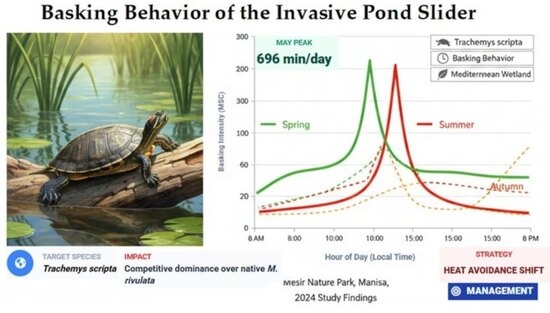
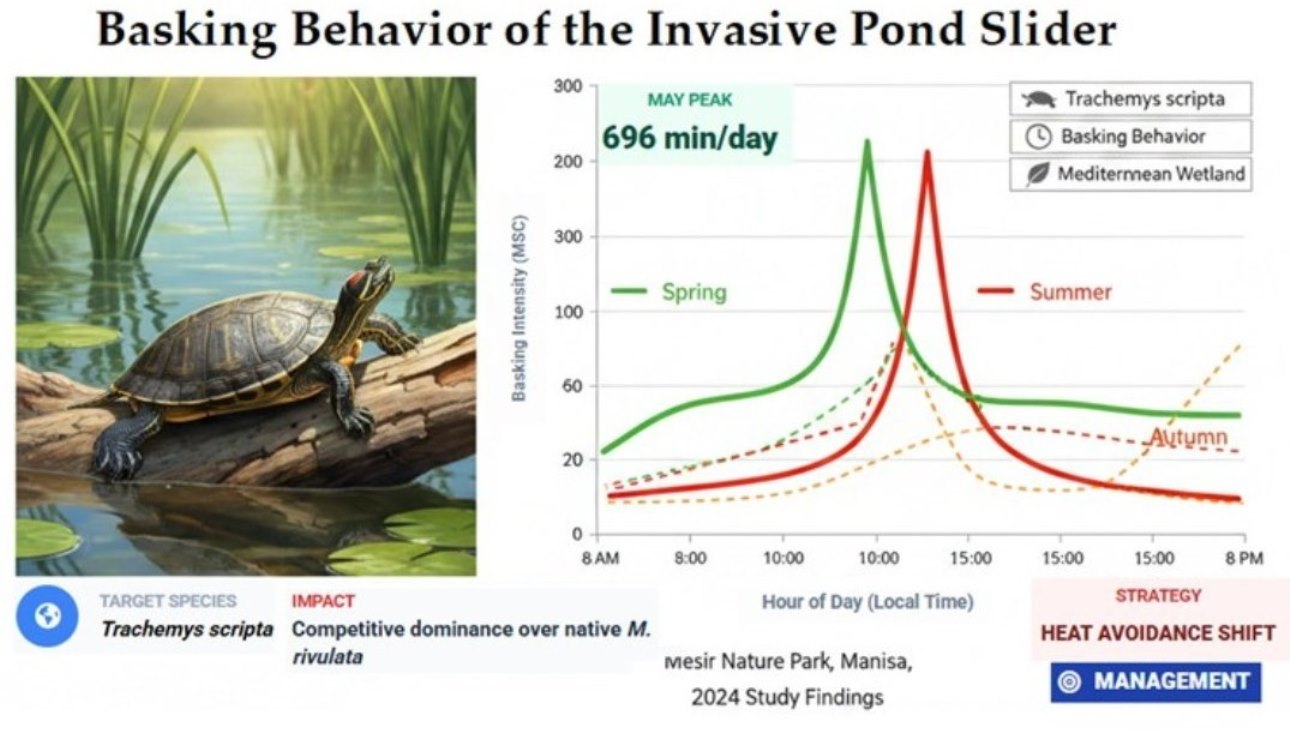
Understanding the ecological behavior of invasive species is essential for assessing their impacts on native biodiversity. This study examines the basking dynamics of the invasive freshwater turtle Trachemys scripta in a Mediterranean wetland within Mesir Nature Park, Türkiye. Data were collected between March and October 2024 using camera traps, yielding 72,456 cumulative basking observations. Principal Component Analysis (PCA) revealed a high degree of environmental synchronization (PC1 = 97.24%), indicating that basking activity is strictly governed by ambient thermal availability. Furthermore, Negative Binomial Regression (NBR) was employed to evaluate temporal shifts and behavioral plasticity. The basking intensity exhibited distinct seasonal transitions, characterized by afternoon peaks during the spring and autumn and an opportunistic shift toward early morning activity during the summer to mitigate thermal constraints. The peak basking duration recorded in May (696.00 ± 10.25 min) and the bimodal activity observed in summer reflect a significant adaptive capacity. These patterns suggest that Mediterranean wetlands provide optimal conditions for the persistence of Trachemys scripta. The species’ ability to effectively track environmental cues and monopolize thermal resources implies a high potential for the ecological displacement of native turtles, particularly Mauremys rivulata. This study provides critical quantitative baseline data in order to inform evidence-based management and control strategies in the Mediterranean region.

Graphical Abstract

1. Introduction

Invasive alien species (IAS) constitute a driver of global biodiversity loss that is comparable to environmental pollution, habitat fragmentation, habitat loss, diseases, unsustainable use, and climate change [1,2,3,4,5]. Interactions between a newly established invasive taxon and the invaded area may lead to ecological damage [6,7], such as alterations in ecosystem structures and functioning [8,9] and negative impacts on ecosystem services. Moreover, a newly introduced invasive taxon may endanger or eliminate native populations through predation, competition for resources, hybridization, and the introduction of pathogens [10,11,12,13,14,15].
Trachemys scripta (Thunberg in Schoepff, 1792), whose native populations are distributed across the southern, central, and southeastern United States as well as northern Mexico, is an invasive species that has become popular in the pet trade [16] and has consequently been introduced into wetlands worldwide. It is recognized as one of the 100 most significant threatening species due to its well-documented negative impacts on native fauna—particularly other turtle species—and the substantial ecological damage it causes [10,17,18,19,20,21]. Naturalized and reproducing populations have been established on every continent except Antarctica, including countries within the Mediterranean Basin [11,14,22,23,24,25,26,27,28,29,30].
In order to effectively conserve native species and to develop robust monitoring strategies, it is necessary to comprehensively assess the ecological preferences of invasive species that become established in invaded areas Studies are available that address the ecological preferences of native freshwater turtle taxa that inhabit the Mediterranean Basin [31,32,33]. However, there remains a clear need for studies focusing on the ecological preferences of naturalized populations of T. scripta occupying the basin [32]. This need is particularly pronounced in biodiversity hotspots such as the Mediterranean Basin, which is characterized by exceptionally high levels of endemism and is simultaneously experiencing severe habitat loss and degradation [6,34,35].
In reptiles, the most commonly observed thermoregulation mechanism relates to the allocation of time for basking in order to increase body temperature [36,37,38,39]. Basking behavior is particularly well developed in the families Emydidae and Geoemydidae [36,40,41], which also include species native to the Mediterranean Basin [42,43]. Considering that the periods most suitable for basking are seasonally limited in Eastern Mediterranean countries, basking becomes a vital activity in regions where average temperatures fall below minimum thermal requirements [10].
Studies emphasizing the importance of basking behavior for the conservation of native species have also indicated that restrictions caused by invasive species can severely impair the efficiency of thermoregulation and physiological functions in native taxa [4,44,45] Specifically, [44,46,47] demonstrated that T. scripta elegans is more aggressive during basking interactions, frequently displacing native species from optimal sun-exposed substrates. This physical displacement forces native turtles to utilize suboptimal thermal sites or reduce their total basking time, thereby impairing critical physiological functions such as digestion and metabolic rate [10,17]. It has been reported that in newly invaded habitats, T. scripta aggressively monopolizes optimal basking sites of the native Emys orbicularis and also establishes dominance over this species with respect to food resources [10,11,17,45]. While previous studies have documented these competitive outcomes in controlled settings, there is a lack of field data quantifying the seasonal and diel basking dynamics of invasive populations in their naturalized habitats.
This study investigates the diel and seasonal basking dynamics of a naturalized T. scripta population in a Mediterranean wetland in Manisa, western Türkiye.

2. Materials and Methods

2.1. Study Area

The study was conducted in a 7.4-hectare wetland within Mesir Nature Park, situated at the foothills of Mount Spil in Manisa Province, Türkiye (elevation: 100-240 m a.s.l.). The region is characterized by a Mediterranean climate, providing a suitable thermal environment for ectothermic vertebrates. This site was selected due to its relatively undisturbed nature, being free from intensive human recreational activities that could otherwise suppress or alter natural basking patterns [46].
The wetland is primarily fed by the Bozköy Stream and lies within a narrow valley. The shoreline consists of a mosaic of bare soil and riparian vegetation, including pine trees, willow (Salix spp.), oleander, and thorny shrubs, which provide varying degrees of canopy cover. While aquatic vegetation remains sparse, the habitat supports the native turtle, Mauremys rivulata. However, this ecosystem has been extensively invaded by Trachemys scripta, which now exists at high densities.
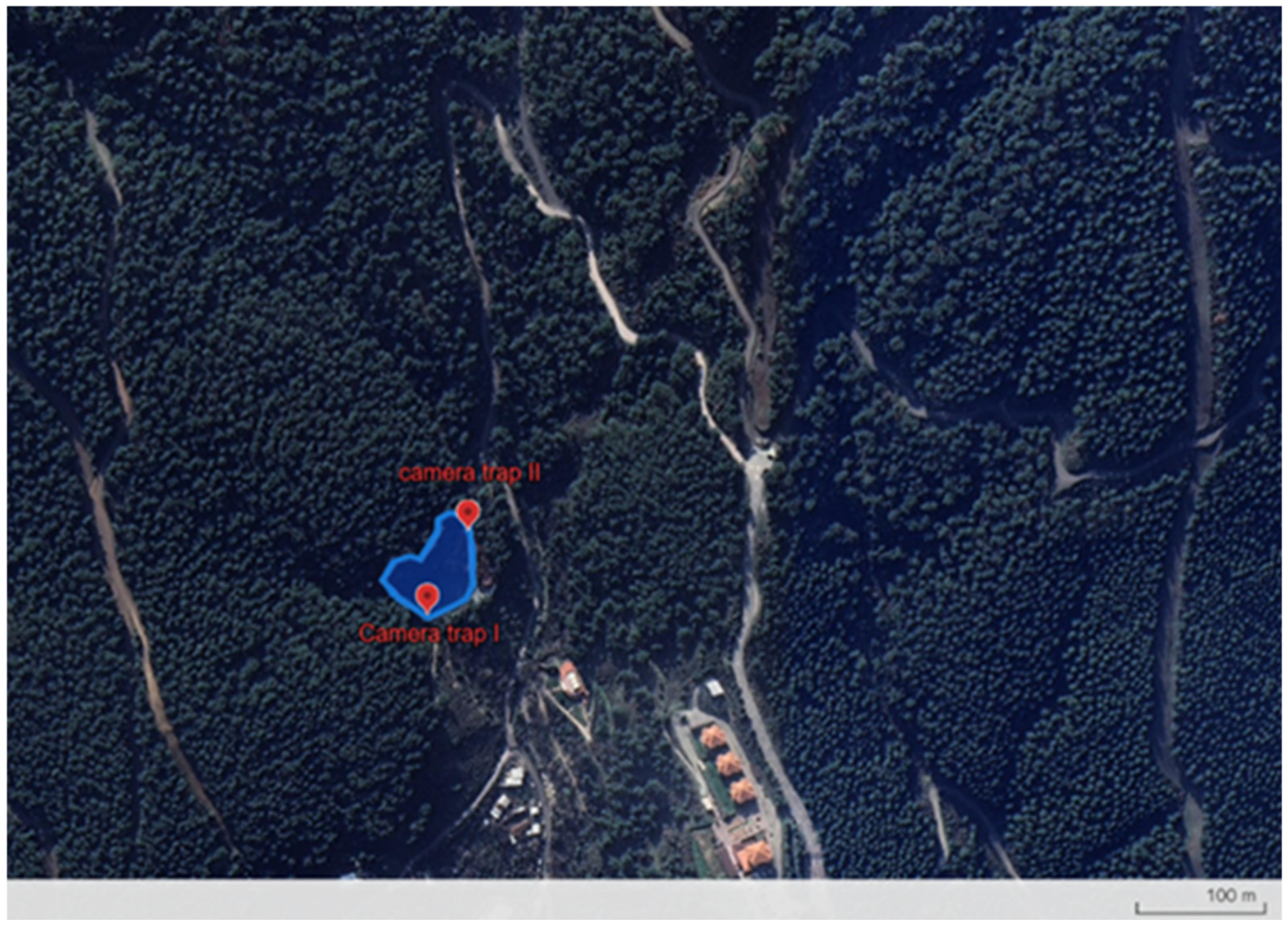
Although the exact introduction date of T. scripta is unknown, the presence of numerous large adults indicates a long-standing establishment. Records from the Amphibians and Reptiles Monitoring and Photography Society in Türkiye (TurkHerptil) confirm the species’ presence since at least 2016, suggesting a naturalization period of nearly a decade. Previous morphological assessments at this site documented 245 distinct individuals [26], confirming an established population sufficient for high-frequency behavioral monitoring. The spatial arrangement of the study area and camera trap locations is detailed in Figure 1.

2.2. Environmental Monitoring

To precisely correlate basking behavior with environmental thermal conditions, ambient temperatures were recorded using a two-channel HOBO Pendant MX data logger. The device’s internal sensor measured air temperature (AT), while a synchronized external probe was submerged at a constant depth of 10 cm to record water surface temperature (WT). The logger was positioned in a shaded and ventilated housing to prevent direct solar radiation bias, with both channels programmed to record data at 10 min intervals throughout the study period (March-October 2024). This dual-channel synchronization provided a high-resolution thermal profile of the wetland’s microclimate.

2.3. Basking Observation Methods

Basking activity was monitored using a camera trap technique [48,49,50], selected for its non-invasive nature and high-resolution data acquisition [48]. Two HorusCam Wireless 4G units (12 MP resolution, 118° field of view) were strategically deployed at two primary observation points (Camera Trap I and II) identified during preliminary surveys as the most frequently utilized basking sites (Figure 1). These sites provided stable substrates and optimal solar exposure, whereas other areas were excluded due to dense vegetation or lack of suitable substrates.
The cameras were oriented to optimize the angle of solar incidence relative to the basking substrates to prevent lens glare and ensure clear visual coverage. The units were placed 3–5 m from the substrates and configured for a 1 min time-lapse interval, recording daily from sunrise to sunset for 22 days per month. This standardized protocol yielded a total of 176 sampling days and 72,456 cumulative observations. By pooling data from fixed locations throughout the study, we mitigated localized micro-environmental biases (e.g., shifting shadows) and ensured that temporal shifts in activity were attributable to environmental and biological factors.
From a total of 72,456 raw time-lapse frames, a refined dataset of 8600 high-quality images was selected for analysis. This selection excluded suboptimal frames (e.g., those with environmental obstructions or lens glare) to ensure high confidence in the Maximum Simultaneous Count (MSC) calculations and to maintain a standardized observational resolution across all sampling days.

2.4. Ethological Criteria and Indexing

“Actively basking” was defined as an individual being completely emerged from the water and remaining stationary on a substrate (shoreline, logs, or rocks) for at least one consecutive minute, with its plastron and limbs exposed to ambient solar radiation. The start and end times of each distinct basking session were recorded to calculate the duration of uninterrupted basking events. Due to the lack of individual marking, the data represent discrete basking events rather than cumulative daily durations per individual.
To account for seasonal fluctuations in daylight and ensure comparability across the study period, we utilized the Maximum Simultaneous Count (MSC) method [25]. For each observation hour (06:00–21:00), the highest number of T. scripta individuals observed basking concurrently was recorded. This MSC index served as the primary measure of Basking Activity Intensity (BAI), reflecting the population’s synchronized response to the daily thermal peak (Table 1). All images were reviewed by a single observer (PhD student Çetin Çelik) to eliminate inter-observer bias. Although individual identification was not possible, the high density of observations is supported by concurrent morphological surveys documenting at least 245 distinct individuals at the site [26].
To capture the full daily activity profile and mitigate the bias of temporal outliers, the MSC was calculated for each hour rather than as a single daily peak. This hourly resolution allowed the Negative Binomial Regression to differentiate between days with sustained activity and those with isolated peaks, providing a true representation of Basking Activity Intensity (BAI).
The deployment of two camera traps was considered representative of the 7.4-hectare wetland due to the basin’s compact, semi-oval morphology and the concentration of stable basking substrates along specific shoreline segments. Preliminary surveys indicated that turtle activity was non-randomly distributed, with the majority of the population utilizing these two primary sites for optimal solar exposure. By focusing high-resolution monitoring on these ‘hotspots’ rather than low-activity zones (e.g., areas with dense emergent vegetation or steep, shaded banks), we ensured a robust quantification of the population’s peak basking dynamics while minimizing the inclusion of suboptimal habitats that do not support significant thermoregulatory behavior.

2.5. Statistical Analyses

Data were first tested for normality using the Kolmogorov-Smirnov test. The results (K-S statistic = 0.284, df = 175, p < 0.001) indicated a non-normal distribution, justifying the use of a Generalized Linear Model (GLM) framework. To analyze the influence of months and seasons on basking duration and intensity, we employed Negative Binomial Regression (NBR) [51,52]. This model was specifically selected to address the overdispersion inherent in wildlife count data, where the variance typically exceeds the mean [45,53].
The overall significance of the NBR model was evaluated using the likelihood ratio chi-square test to ensure the global fit of the temporal predictors. Following the overall analysis, post hoc pairwise comparisons were conducted with Bonferroni correction to identify specific differences between months. Results are reported as estimated marginal means (EMMs) ± standard error (SE), as this approach provides robust estimates that account for the variability within each sampling period [53].
To quantify the multivariate relationship between environmental drivers and basking behavior, a Principal Component Analysis (PCA) was performed. The analysis integrated mean air temperature (AT), mean water temperature (WT), and Basking Activity Intensity (BAI; represented as the hourly MSC). Before the PCA, data suitability was confirmed via the Kaiser-Meyer-Olkin (KMO) measure of sampling adequacy and Bartlett’s Test of Sphericity. Following Kaiser’s criterion, only components with eigenvalues > 1 were retained. All statistical procedures were executed in SPSS (Version 20.0), with the significance level set at p < 0.05. A comprehensive daily summary of the environmental thermal profiles and corresponding basking metrics for all 176 sampling days is available in the Supplementary Materials (Table S1).

3. Results

Individual Basking Behavior
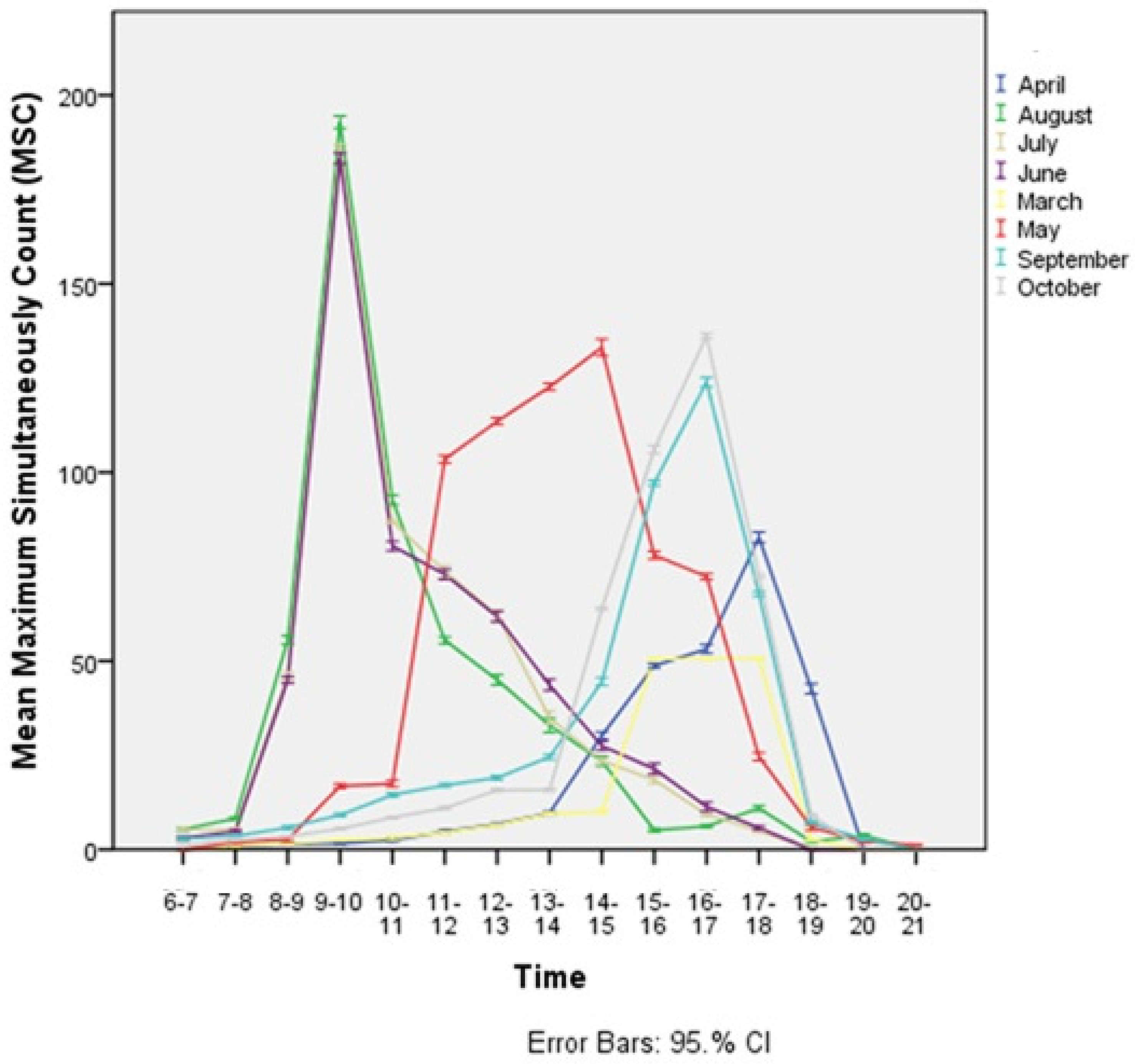
The basking intensity of T. scripta exhibited significant temporal fluctuations throughout the study period. While a unimodal activity pattern with a single afternoon peak was dominant during the spring (March–May), a distinct shift to a bimodal pattern was observed in the summer months (June–August) to mitigate high midday temperatures (Figure 2, Table S2).
Based on the Negative Binomial Regression (NBR) model, the estimated marginal mean (EMM) for the individual basking duration was calculated as 192.00 ± 15.2 min. Significant statistical differences in individual basking durations were detected across months (p < 0.001, Table 2). Contrary to the initial observations of session frequency, the NBR model revealed that cumulative daily basking durations were lowest during the early spring (March, EMM = 193.10 ± 6.63 min) and reached their maximum during late spring and early summer (May, EMM = 696.00 ± 10.25 min; June, EMM = 560.91 ± 12.05 min), (Table S4).
The Negative Binomial Regression (NBR) model revealed that the month had a highly significant overall effect on the basking intensity of T. scripta (likelihood ratio x2 = 28.057, df = 7, p < 0.001). While the pairwise comparisons and estimated marginal means are detailed in Table 2, the specific model parameters and coefficients are presented in Table 3. This omnibus test confirms that the observed temporal and seasonal variations in basking activity are statistically robust and driven by environmental transitions rather than random fluctuations. Consequently, posthoc pairwise comparisons were performed to identify specific differences between months.
In the Mediterranean spring (March–April), individuals exhibited consistent basking peaks during mid-to-late afternoon hours. However, as the season progressed into summer (July–August), although the total daily duration remained long, the activity pattern underwent a significant temporal shift toward the early morning hours (08:00–10:00) to avoid thermal stress. By September and October, basking durations stabilized (EMM ≈ 440–450 min), with activity peaks returning to the afternoon. These shifts indicate that T. scripta dynamically adjusts its daily basking investment and timing to compensate for seasonal fluctuations in solar radiation and ambient temperature.
Basking activity exhibited significant seasonal variations in terms of timing, intensity, and strategy (Table 4). In the early active season (March-April), activity peaked from mid-to-late afternoon (14:00–18:00). Conversely, during the hottest summer months (June–August), basking shifted to early morning hours (08:00–10:00) to avoid extreme midday temperatures. With the increasing day length in May and August, basking events were recorded as late as 21:00 (see Table 2).
Basking intensity, as measured by the Maximum Simultaneous Count (MSC), reached its peak during the summer, reflecting the population’s high thermal investment. The MSC reached 199 individuals in August, maintaining consistently high levels in June (189) and July (190). According to the NBR model, seasonal comparisons revealed that summer (EMM = 552.50 ± 23.52 min) exhibited a statistically significantly higher cumulative basking duration compared to both spring (391.38 ± 16.67 min) and autumn (445.91 ± 23.25 min) (p < 0.05). March represented the lowest baseline duration of the season (EMM = 193.10 min), while May served as a transitional period where individuals engaged in the highest frequency of short-duration basking sessions. These results, presented as estimated marginal means in Table 2 and Table 3, clearly demonstrate the significant behavioral plasticity of T. scripta in response to thermal shifts in the Mediterranean climate.
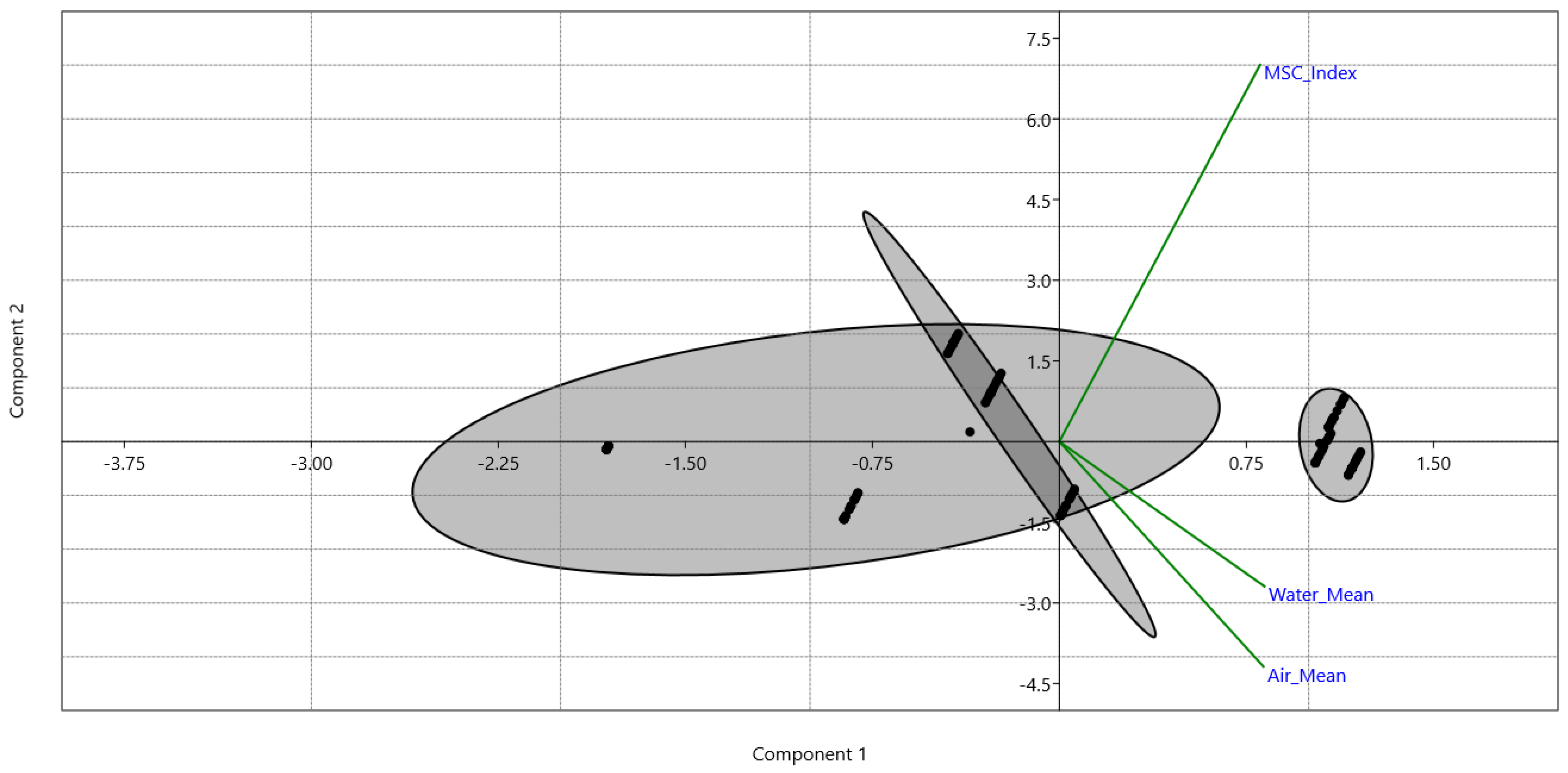
A Principal Component Analysis (PCA) was performed to evaluate the multivariate relationships between the environmental temperatures and turtle activity. The analysis revealed that the first two components (PC1 and PC2) accounted for 99.86% of the total variance (Table 5).
The PCA biplot (Figure 3) demonstrates a high degree of collinearity between air and water temperatures. The vectors for the mean air temperature (0.990) and mean water temperature (0.995) nearly overlap and are aligned along the positive axis of PC1 (Table 5). This close alignment indicates that air and water temperatures change in synchronization within the study area. Furthermore, the length of these vectors suggests that they are the primary environmental drivers contributing to 97.24% of the explained variance in the first component (detailed eigenvalues and variable loadings are presented in Table S3).
The Basking Activity Intensity (BAI), which represents the peak hourly count of individuals, exhibited exceptionally high positive loading on PC1 (0.973), along with the water temperature (0.995) and air temperature (0.990). These results indicate that nearly all the variation in basking density is driven by environmental thermal gradients (Table 5). The score plot (Figure 3) further illustrates this relationship, demonstrating distinct clusters of observations. Specifically, a separate cluster along the positive axis of PC1 (scores 67–132) corresponds to periods of peak thermal availability, where the highest number of individuals were recorded simultaneously.

4. Discussion

Invasive species are a major concern because their omnivorous feeding habits and ability to adapt to a wide range of habitats can have a negative impact on native fauna [17,35,44]. In regions invaded by Trachemys scripta, this species has been proven to compete with native turtles, such as Emys orbicularis, M. capsica, and Mauremys leprosa, for food resources and basking sites [10,11,17,45]. In particular, in Türkiye, it has been reported that T. scripta competes with the native species E. orbicularis and M. rivulata, particularly in the Anamur region, and places significant pressure on E. orbicularis in regard to food and sunbathing spots [14,23].
While no direct data were collected on M. rivulata within the scope of this study, our new findings quantitatively reveal the strategy that equips T. scripta with this competitive advantage. The exceptionally high environmental synchronization of 97.24 observed in our PCA results (Table 5) proves that this invasive species exploits basking opportunities to the fullest by instantly tracking environmental thermal shifts. Furthermore, the peak basking duration in May (696.00 ± 10.25 min), identified by our NBR model, along with the ability to shift activities to the early morning (08:00-10:00) during summer, indicates a high degree of behavioral plasticity [42,43]. Unlike the midday peaks observed in temperate Illinois [4,18] or the even, day-long distribution seen in tropical Panama [54,55], our population finely tunes its activity to exploit the specific ‘thermal windows’ of the Mediterranean region [43,54]. This adaptation is consistent with the opportunistic thermoregulation described by [56,57]. Our findings in the Mediterranean climate of Manisa reveal a dynamic intermediate strategy that reflects the species’ significant behavioral plasticity.
The integration of our PCA and NBR results offers a comprehensive framework for interpreting the complex thermal strategy of T. scripta in its invaded range. For instance, the significant peak in the cumulative basking duration in May (696.00 ± 10.25 min) represents a strategic investment in heat gain in order to accelerate physiological processes, such as digestion and egg development, following emergence from hibernation [17,58]. While the PCA demonstrates that the turtles are highly synchronized with the environment, the NBR results clarify that they are not merely passive recipients of heat. Conversely, the shift to early morning basking (08:00–10:00) during the hottest months of summer (July–August) serves as a key mechanism to avoid lethal thermal stress; this behavior has also been observed in native populations exposed to high levels of solar radiation [46]. T. scripta shifts its activity forward to avoid extreme midday temperatures while maintaining a high overall insolation count (as evidenced by the 199 MSCs in August). The dominance of T. scripta in Mediterranean wetland ecosystems may be explained by this species’ considerable behavioral flexibility [10,14,45,59].
The basking dynamics quantified in this study offer a data-driven framework for managing and controlling T. scripta in Mediterranean wetlands. The strong predictability of basking peaks (a correlation of 0.973 between the temperature and MSC) enables conservation authorities to optimize removal efforts. Based on our findings, we suggest concrete strategies for the management of T. scripta in Mediterranean wetlands. First, basking trap deployment should be prioritized during May, as this month recorded the highest basking duration (696.00 ± 10.25 min) and intensity, maximizing the probability of capture. Second, during the summer months (June–August), removal efforts should focus exclusively on the early morning hours (07:00–10:00) to align with the bimodal activity shift observed in the population. Traps left out during the midday thermal peaks in summer are likely to be less effective, as individuals retreat to the water to avoid overheating. These time-restricted interventions would optimize labor efficiency and minimize the potential bycatch of native M. rivulata. Furthermore, as [26] reported a significant population density of at least 245 individuals in Mesir Nature Park, habitat restoration efforts must focus on increasing the availability of basking substrates in order to mitigate the direct pressure on the native M. rivulata [10,21,30,60,61].
In conclusion, the invasive success of T. scripta in western Anatolia is rooted in its ability to combine strict environmental synchronization with dynamic behavioral plasticity. This highly optimized thermal budgeting could enable the species to survive, thrive, and achieve numerical dominance in Mediterranean wetlands. To safeguard native biodiversity, it is imperative to implement these targeted, evidence-based control measures while maintaining public awareness to prevent further illegal releases [26,32,62,63].

Supplementary Materials

The following supporting information can be downloaded at: https://www.mdpi.com/article/10.3390/d18030141/s1, Table S1: Daily summary of environmental temperatures (mean air and water temperature) and basking activity metrics (Maximum Simultaneous Count, MSC; Total Daily Basking Sighting Count) for the Trachemys scripta population recorded over 176 sampling days (March–October 2024) in Manisa, Türkiye. Table S2: Hourly distribution of the mean Basking Activity Intensity (Maximum Simultaneous Count, MSC) of the Trachemys scripta population across different months (March–October 2024) in Manisa, Türkiye. Table S3: Results of the Principal Component Analysis (PCA) showing eigenvalues, percentage of explained variance, and variable loadings for environmental temperatures and Basking Activity Intensity (MSC Index) of the Trachemys scripta population. Table S4: Seasonal comparison of daily basking durations of the Trachemys scripta population based on Estimated Marginal Means (EMM) derived from the Negative Binomial Regression (NBR) model.

Author Contributions

Conceptualization: M.A. and Ç.Ç.; Design: M.A. and Ç.Ç.; Supervision: M.A. and Ç.Ç.; Methodology: M.A. and Ç.Ç.; Resources: M.A. and Ç.Ç.; Data Collection and/or Processing: M.A. and Ç.Ç.; Visualization: M.A. and Ç.Ç.; Literature Search: M.A. and Ç.Ç.; Writing—original draft: M.A. and Ç.Ç.; Writing—review and editing: M.A. and Ç.Ç. All authors have read and agreed to the published version of the manuscript.

Funding

This research was funded by Manisa Celal Bayar University (Project No: 2024-021).

Institutional Review Board Statement

Ethical approval for this study was not required since no animals were trapped, handled, or marked in any way.

Data Availability Statement

The data presented in this study are available upon request from the corresponding author.

Acknowledgments

The data obtained in this study were produced within the scope of a project entitled “Morphological and Molecular Analysis of the Pond Turtle, Trachemys scripta (Thunberg in Schoepff, 1792), Living in Manisa Province (Türkiye)” supported by the Manisa Celal Bayar University Scientific Research Projects Coordination Unit. Project Number: 2024-021.

Conflicts of Interest

The authors declare no conflicts of interest.

References

  1. Araújo, D.; Davids, K.; Hristovski, R. The ecological dynamics of decision making in sport. Psychol. Sport Exerc. 2006, 7, 653–676. [Google Scholar] [CrossRef]
  2. Christopoulos, A.; Zevgolis, Y.G. A new invasion of the common slider on a Mediterranean island (Lesvos, Greece): A potential threat to native terrapin populations? Diversity 2022, 14, 1018. [Google Scholar] [CrossRef]
  3. Whitfield Gibbons, J.; Scott, D.E.; Ryan, T.J.; Buhlmann, K.A.; Tuberville, T.D.; Metts, B.S.; Greene, J.L.; Mills, T.; Leiden, Y.; Poppy, S.; et al. The global decline of reptiles, déjà vu amphibians. BioScience 2000, 50, 653–666. [Google Scholar] [CrossRef]
  4. Michaelides, G.; Kati, V. Diversity patterns and conservation management of the lizard community in a Mediterranean reserve, Cyprus. J. Biol. Res. 2009, 12, 211–220. [Google Scholar]
  5. Mack, R.N.; Simberlff, D.; Lonsdale, W.M.; Evans, H.; Clout, M.; Bazzaz, F.A. Biotic invasions: Causes, epidemiology, global consequences, and control. Ecol. Appl. 2000, 10, 689–710. [Google Scholar]
  6. Ayaz, D.; Bayrakcı, Y.; Çiçek, K.; Ihlow, F.; Tok, C.V.; Fritz, U. On the brink of extinction: Results of a 20-year quest for Eiselt’s pond turtle (Emys orbicularis eiselti) in southeastern Turkey. Chelonian Conserv. Biol. 2021, 20, 222–230. [Google Scholar]
  7. Rödder, D.; Schmidtlein, S.; Veith, M.; Lötters, S. Alien invasive slider turtle in unpredicted habitat: A matter of niche shift or of predictors studied? PLoS ONE 2009, 4, e7843. [Google Scholar]
  8. Charles, H.; Dukes, J.S. Impacts of invasive species on ecosystem services. In Biological Invasions; Nentwig, W., Ed.; Springer: Berlin/Heidelberg, Germany, 2007; Volume 193, pp. 217–237. [Google Scholar]
  9. Pejchar, L.; Mooney, H.A. Invasive species, ecosystem services and human well-being. Trends Ecol. Evol. 2009, 24, 497–504. [Google Scholar] [CrossRef]
  10. Cadi, A.; Joly, P. Competition for basking places between the endangered European pond turtle (Emys orbicularis galloitalica) and the introduced red-eared turtle (Trachemys scripta elegans). Can. J. Zool. 2003, 81, 1392–1398. [Google Scholar]
  11. Arvy, C.; Servan, J. Imminent competition between Trachemys scripta and Emys orbicularis in France. Proc. Emys Symp. 1998, 96, 33–40. [Google Scholar]
  12. Ayaz, D.; Çiçek, K.; Tok, C.V.; Mutlu, H.S.; Cumhuriyet, O.; Bayrakcı, Y.; Kumaş, M. Conservation activities for European pond turtles (Emys orbicularis) in Turkey. Herpetol. Notes 2013, 6, 143–144. [Google Scholar]
  13. Ayaz, D.; Fritz, U.; Atatür, M.K.; Mermer, A.; Çiçek, K.; Afsar, M. Aspect of population structure of the European pond turtle (Emys orbicularis) in Lake Yayla, Western Anatolia. J. Herpetol. 2008, 42, 518–522. [Google Scholar] [CrossRef]
  14. Çiçek, K.; Ayaz, D. Does the red-eared slider (Trachemys scripta elegans) breed in Turkey? Hyla Herpetol. Bull. 2015, 2015, 4–10. [Google Scholar]
  15. Fritz, U.; Stuckas, H.; Vargas-Ramírez, M.; Hundsdörfer, A.K.; Maran, J.; Päckert, M. Molecular phylogeny of Central and South American slider turtles: Implications for biogeography and systematics. J. Zool. Syst. Evol. Res. 2012, 50, 125–136. [Google Scholar]
  16. Bringsøe, H. 2006 NOBANIS—Invasive Alien Species Fact Sheet—Trachemys Scripta. Online Database of the North European and Baltic Network on Invasive Alien Species. Available online: https://www.academia.edu/8565969/NOBANIS_Invasive_Alien_Species_Fact_Sheet_Trachemys_scripta (accessed on 15 February 2026).
  17. Cadi, A.; Joly, P. Impact of the introduction of the red-eared slider (Trachemys scripta elegans) on survival rates of the European pond turtle (Emys orbicularis). Biodivers. Conserv. 2004, 13, 2511–2518. [Google Scholar] [CrossRef]
  18. Kraus, F. Impacts from invasive reptiles and amphibians. Annu. Rev. Ecol. Evol. Syst. 2015, 46, 75–97. [Google Scholar] [CrossRef]
  19. Kraus, F. Alien Reptiles and Amphibians: A Scientific Compendium and Analysis; Springer: Berlin/Heidelberg, Germany, 2009. [Google Scholar] [CrossRef]
  20. Lowe, S.; Browne, M.; Boudjelas, S.; De Poorter, M. 100 of the World’s Worst Invasive Alien Species: A Selection From the Global Invasive Species Database; Invasive Species Specialist Group: Rome, Italy, 2000. [Google Scholar]
  21. Vamberger, M.; Ihlow, F.; Asztalos, M.; Dawson, J.; Jasinski, S.E.; Praschag, P.; Fritz, U. So different, yet so alike: North American slider turtles (Trachemys scripta). Vertebr. Zool. 2020, 70, 87–96. [Google Scholar]
  22. Çiçek, K.; Cumhuriyet, O. Amphibians and reptiles of the Mediterranean Basin. In Mediterranean Identities: Environment, Society, Culture; Fuerst-Bjelis, B., Ed.; IntechOpen: London, UK, 2017. [Google Scholar] [CrossRef]
  23. Eldeleklioğlu, M.A.; Çiftçi, N.; Ayas, D. Yabancı tür Trachemys scripta elegans (Wied-Neuwied, 1839)’ın Mersin-Anamur tatlısu sistemlerinde dağılım durumu ile morfometrik özelliklerinin belirlenmesi. Mediterr. Fish. Aquac. Res. 2023, 6, 10–25. [Google Scholar]
  24. Koç-Gür, H.; Bülbül, U.; Kutrup, B. A breeding population of the exotic species Trachemys scripta (Thunberg in Schoepff, 1792) in Trabzon Province of Turkey. In Academic Research and Reviews in Science and Mathematics; Duvar Publishing: Istanbul, Turkey, 2021; pp. 21–34. [Google Scholar]
  25. Ryan, G.E.; Nicholson, E.; Eames, J.C.; Gray, T.N.E.; Loveridge, R.; Mahood, S.P.; Sum, P.; McCarthy, M.A. Simultaneous-count models to estimate abundance from counts of unmarked individuals with imperfect detection. Conserv. Biol. 2019, 33, 697–708. [Google Scholar] [CrossRef]
  26. Durmuş, P. Morphological and Molecular Investigation of Pond Slider, Trachemys Scripta (Thunberg in Schoepff, 1792) Living in Manisa Province (Turkey). Master’s Thesis, Manisa Celal Bayar Üniversitesi, Manisa, Turkey, 2025. [Google Scholar]
  27. Taşkavak, E.; Balatlı, R.; Filiz, H. Is the Gediz River Basin suitable for breeding and populating of the red-eared slider, Trachemys scripta elegans? Special emphasis to some observations on the overwintering hatchlings of terrapins at Western Turkey. In Proceedings of the International Biodiversity & Ecology Sciences Symposium (Bioeco2019), Istanbul, Turkey, 26–28 September 2019; Palas Academic Organization and Trade Corporation: İskenderun–Hatay, Turkey, 2019; Publication No. 1; pp. 206–213. [Google Scholar]
  28. Uysal, İ.; Tosunoğlu, M.; Özdilek, Ş.; Gül, Ç. A record and distribution of exotic species Trachemys scripta in the streams of Çanakkale (Turkey). Turk. J. Biosci. Collect. 2018, 2, 12–19. [Google Scholar]
  29. Yakin, B.Y.; Çiçek, K.; Bayrakci, Y.; Günay, U.K.; Afsar, M.; Ayaz, D.; Tok, C.V. On the occurrence of the pond slider turtle Trachemys scripta from southwestern Turkiye. J. Wildl. Biodivers. 2024, 8, 89–98. [Google Scholar]
  30. Ayaz, D.; Fritz, U.; Tok, C.V.; Mermer, A.; Tosunoğlu, M.; Afsar, M.; Çiçek, K. Population estimate and body size of European pond turtle (Emys orbicularis) from Pazarağaç (Afyonkarahisar/Turkey). Biologia 2007, 62, 225–227. [Google Scholar] [CrossRef]
  31. Ayaz, D. Göller Bölgesi ve Doğu Akdeniz Bölgesi Emys orbicularis (Testudinata: Emydidae) ve Mauremys rivulata (Testudinata: Bataguridae) Türlerinin Sistematik Durumu, Morfolojisi, Dağılışı, Üreme ve Beslenme Biyolojisi Üzerine Araştırmalar. Ph.D. Thesis, Ege Üniversitesi, Bornova, Turkey, 2003. [Google Scholar]
  32. Mantziou, G.; Rifai, L. Mauremys rivulata—Western Caspian turtle, Balkan terrapin. Chelonian Res. Monogr. 2014, 5, 080.1–080.9. [Google Scholar]
  33. Ficetola, G.F.; Rödder, D.; Padoa-Schioppa, E. Trachemys scripta (Slider terrapin). In A Handbook of Global Freshwater Invasive Species; Francis, R.A., Ed.; Taylor & Francis: Oxfordshire, UK, 2012; pp. 331–339. [Google Scholar]
  34. Crump, M.L.; Scott, N.J., Jr. Visual encounter surveys. In Measuring and Monitoring Biological Diversity: Standard Methods for Amphibians; Heyer, W.R., Donnelly, M.A., McDiarmid, R.W., Hayek, L.C., Foster, M.S., Eds.; Smithsonian Institution Press: Washington, DC, USA, 1994; pp. 84–92. [Google Scholar]
  35. Mollot, G.; Pantel, J.H.; Romanuk, T.N. The effects of invasive species on the decline in species richness: A global meta-analysis. Adv. Ecol. Res. 2017, 56, 61–83. [Google Scholar]
  36. Pough, F.H.; Andrews, R.M.; Cadle, J.E.; Crump, M.L.; Savitzky, A.H.; Wells, K.D. Herpetology; Prentice Hall: Hoboken, NJ, USA, 1998. [Google Scholar]
  37. Lillywhite, H.B. How Snakes Work: Structure, Function and Behavior of the World’s Snakes; Oxford University Press: Oxford, UK, 2014. [Google Scholar]
  38. Crawford, K.M.; Spotila, J.R.; Standora, E.A. Operative environmental temperatures and basking behavior of the turtle Pseudemys scripta. Ecology 1983, 64, 989–999. [Google Scholar] [CrossRef]
  39. Auth, D.L. Behavioral ecology of basking in the yellow-bellied turtle, Chrysemys scripta scripta (Schoepff). Bull. Fla. State Mus. Biol. Sci. 1975, 20, 1–45. [Google Scholar]
  40. Boyer, D.R. Ecology of the basking habit in turtles. Ecology 1965, 46, 99–118. [Google Scholar] [CrossRef]
  41. Ernst, C.H.; Lovich, J.E. Turtles of the United States and Canada; JHU Press: Baltimore, MD, USA, 2009. [Google Scholar]
  42. Searle, S.R.; Speed, F.M.; Milliken, G.A. Population marginal means in the linear model: An alternative to least squares means. Am. Stat. 1980, 34, 216–221. [Google Scholar] [CrossRef]
  43. Nekrasova, O.; Tytar, V.; Pupins, M.; Čeirāns, A. Range expansion of the alien red-eared slider Trachemys scripta in Eastern Europe. BioInvasions Rec. 2022, 11, 287–295. [Google Scholar]
  44. Hutchison, V.H.; Maness, J.D. The role of behavior in temperature acclimation and tolerance in ectotherms. Am. Zool. 1979, 19, 367–384. [Google Scholar]
  45. Tatum, A. Thermal Tolerance Determination of the Red-Eared Slider, Trachemys Scripta Elegans. Master’s Thesis, University of West Florida, Pensacola, FL, USA, 2020. [Google Scholar]
  46. Polo-Cavia, N.; López, P.; Martín, J. Competitive interactions during basking between native and invasive freshwater turtles. Biol. Invasions 2010, 12, 2141–2152. [Google Scholar] [CrossRef]
  47. Bulté, G.; Blouin-Demers, G. Estimating the energetic cost of basking in freshwater turtles. Physiol. Biochem. Zool. 2010, 83, 16–26. [Google Scholar]
  48. Aresco, J.J. The effect of sex-specific terrestrial movements and habitat edge on the survival of freshwater turtles across a supervised highway. Biol. Conserv. 2005, 123, 37–44. [Google Scholar]
  49. Soto, I.; Cuthbert, R.N.; Kouba, A.; Capinha, C.; Turbelin, A.; Hudgins, E.J.; Diagne, C.; Courchamp, F. Global economic costs of herpetofauna invasions. Sci. Rep. 2022, 12, 10829. [Google Scholar] [CrossRef]
  50. Rovero, F.; Zimmerman, F.; Berzi, D.; Meek, P. Which camera trap for which question? A guide to selecting and using camera traps in ecology and conservation. Hystrix Ital. J. Mammal. 2013, 24, 19–28. [Google Scholar] [CrossRef]
  51. McCallum, J. Changing use of camera traps in mammalian field research: Habitats, taxa and study types. Mammal. Rev. 2013, 43, 196–206. [Google Scholar] [CrossRef]
  52. Burton, A.C.; Neilson, E.; Moreira, D.; Ladle, A.; Steenweg, R.; Fisher, J.T.; Bayne, E.; Boutin, S. Wildlife camera trapping: A review and recommendations for linking surveys to ecological processes. J. Appl. Ecol. 2015, 52, 675–685. [Google Scholar] [CrossRef]
  53. Platt, S.G.; Fontenot, L.W. The red-eared slider, Trachemys scripta, in South Korea. Bull. Chic. Herpetol. Soc. 1992, 27, 113–114. [Google Scholar]
  54. Dreslik, M.J.; Kuhns, A.R. Early season basking in the red-eared slider, Trachemys scripta. Trans. Ill. State Acad. Sci. 2000, 93, 215–220. [Google Scholar]
  55. Peterman, W.E.; Ryan, T.J. Basking behavior of emydid turtles in an urban landscape. Northeast. Nat. 2009, 16, 629–636. [Google Scholar] [CrossRef]
  56. Seidel, M.E.; Ernst, C.H. A systematic review of the turtle family Emydidae. Vertebr. Zool. 2017, 67, 1–122. [Google Scholar] [CrossRef]
  57. Spotila, J.R.; Foley, R.E.; Schubauer, J.P.; Semlitsch, R.D.; Crawford, K.M.; Standora, E.A.; Gibbons, J.W. Opportunistic behavioral thermoregulation of turtles, Pseudemys scripta. Herpetologica 1984, 40, 299–308. [Google Scholar]
  58. Moll, E.O.; Legler, J.M. The life history of a neotropical slider turtle, Pseudemys scripta, in Panama. Bull. Los Angeles Cty. Mus. Nat. Hist. 1971, 11, 1–102. [Google Scholar]
  59. Taniguchi, M.; Lovich, J.E.; Mine, K.; Ueno, S.; Kamezaki, N. Unusual population attributes of invasive red-eared slider turtles in Japan. Aquat. Invasions 2017, 12, 97–108. [Google Scholar] [CrossRef]
  60. Selman, W.; Qualls, C.P. Basking ecology of the yellow-blotched sawback (Graptemys flavimaculata). Chelonian Conserv. Biol. 2011, 10, 188–197. [Google Scholar] [CrossRef]
  61. Mooney, H.A.; Cleland, E.E. The evolutionary impact of invasive species. Proc. Natl. Acad. Sci. USA 2001, 98, 5446–5451. [Google Scholar] [CrossRef]
  62. Lovich, J.E.; Ennen, J.R. A quantitative analysis of the state of knowledge of turtles of the United States and Canada. Amphib. Reptil. 2013, 34, 11–23. [Google Scholar] [CrossRef]
  63. Luiselli, L.; Starita, A.; Carpaneto, G.M.; Segniagbeto, G.H.; Amori, G. A Short Review of the International Trade of Wild Tortoises and Freshwater Turtles Across the World and Throughout Two Decade. Diversity 2023, 15, 652. [Google Scholar] [CrossRef]
Figure 1. A satellite view of the study area in Manisa Province, western Türkiye. The blue outline indicates the 7.4-hectare wetland fed by the Bozköy Stream. Red markers denote the strategic locations of Camera Trap I and Camera Trap II, positioned at distinct basking substrates to ensure a comprehensive sampling of the population’s activity patterns.
Diversity 18 00141 g001
Figure 2. Diel and monthly patterns of basking intensity in Trachemys scripta (March–October 2024). The Y-axis represents the Mean Basking Intensity (MSC), derived from cumulative 1 min time-lapse observations. The data illustrate the shift from unimodal (spring) to bimodal (summer) activity patterns. Error bars represent the 95% confidence interval (CI). The X-axis represents the time of day in a 24 h format (local time, UTC+3).
Diversity 18 00141 g002
Figure 3. Principal Component Analysis (PCA) biplot illustrating the relationship between environmental temperatures and the basking activity of Trachemys scripta in Manisa, Türkiye. The green vectors represent the variable loadings for the mean air temperature (C), mean water temperature (C), and Basking Activity Intensity (BAI). The horizontal axis (PC1) and vertical axis (PC2) account for 97.24% and 2.63% of the total variance, respectively. Score points represent daily observations from March to October, with ellipses highlighting distinct clusters that reflect the population’s synchronized response to the thermal gradient.
Diversity 18 00141 g003
Table 1. Summary of camera trap sampling effort and environmental monitoring (March-October 2024). (Abbreviations: SDs: sampling days; RT: recording time window; TS (n): total sightings; DS (M±SD): daily sightings’ mean ± standard deviation; MSC: Maximum Simultaneous Count; AT: air temperature; WT: water temperature; SD: standard deviation).
MonthSDRTTS (n)DS
(M ± SD)
MSC
(Max)
AT (°C)
(M ± SD)
WT (°C)
(M ± SD)
March2207:00–19:004.248193.09 ± 6.635114.11 ± 2.3813.91 ± 1.11
April2207:00–19:006.271285.05 ± 13.478821.13 ± 2.5518.94 ± 0.80
May2207:00–21:0015.312696.00 ± 10.2513922.59 ± 2.7420.86 ± 0.74
June2206:00–18:0012.34560.91 ± 12.0518932.47 ± 3.4826.97 ± 1.20
July2206:00–19:0012.251556.86 ± 7.8919032.90 ± 3.1728.17 ± 1.04
August2206:00–20:0011.874539.73 ± 10.5919932.44 ± 3.3826.77 ± 1.10
September2206:00–20:009.68440.00 ± 7.9412926.36 ± 2.7423.08 ± 0.70
October2206:00–19:009.94451.82 ± 6.8113920.84 ± 2.8819.78 ± 0.10
Total176-81.916465.43 ± 152.2619925.36 ± 7.0722.54 ± 4.80
Table 2. Estimated marginal means (EMMs) of daily basking durations based on Negative Binomial Regression (NBR) analysis. Values are presented as EMM ± standard error (SE). Means followed by the same lowercase letter (a, b, c, d, e, f, g) are not significantly different (p > 0.05) according to Bonferroni-adjusted pairwise comparisons. Note: Means followed by the same letter are not significantly different (p > 0.05) per Bonferroni adjustment. SG: significance group; Mi: minute.
MonthEMM (Mi)(SE)SG
March193.106.63a
April285.0513.47b
September440.007.94c
October451.826.81d
August539.7310.59e
July556.867.89f
June560.9112.05f
May696.0010.25g
Table 3. Parameter estimates of the Negative Binomial Regression (NBR) model for the effects of months on basking intensity (T. scripta). a This parameter is set to zero because it is redundant; September serves as the reference category in the model.
ParameterBStd. ErrorWald χ2dfp-Value95% Wald CI
(Intercept)4.822.14506.921<0.001[4.40, 5.23]
March−8973.038.7213[−1.49, −0.30]
April−4033.031.771183[−0.99, 0.19]
May743.02601806[−0.51, 0.66]
June3913.021.671196[−0.20, 0.98]
July4063.021.801179[−0.18, 0.99]
August4423.022.131144[−0.15, 1.03]
September0 a-----
October953.02981754[−0.49, 0.68]
Table 4. Seasonal comparison of daily basking durations based on estimated marginal means (EMMs) (duration in min) from the NBR model. SE: standard error; SG: significance group. Note: Different lowercase letters (a, b) indicate statistically significant differences between groups (p < 0.05) based on Bonferroni-adjusted pairwise comparisons. Seasons sharing the same letter do not differ significantly.
SeasonEMM (SE)SG
Spring (Mar–May)391.3816.67a
Autumn (Sep–Oct)445.9123.25a
Summer (Jun–Aug)552.5023.52b
Table 5. Eigenvalues, explained variance, and variable loadings for the principal components. Bold values in the table indicate high variable loadings (e.g., >0.90) that contribute significantly to the respective principal components.
VariablesPC 1PC 2PC 3
Eigenvalue291.700.0780.004
% Variance97.232.620.13
Cumulative %97.2399.86100
Variable Loadings:
Water_0.99−0.08−0.04
Air0.99−0.130.04
MSC_Index0.970.2290.007
Disclaimer/Publisher’s Note: The statements, opinions and data contained in all publications are solely those of the individual author(s) and contributor(s) and not of MDPI and/or the editor(s). MDPI and/or the editor(s) disclaim responsibility for any injury to people or property resulting from any ideas, methods, instructions or products referred to in the content.