Article

Artificial Intelligence-Assisted Daytime Video Monitoring for Bird, Insect, and Other Wildlife Interactions with Photovoltaic Solar Energy Facilities


1
Environmental Science Division, Argonne National Laboratory, Lemont, IL 60439, USA
2
Strategic Security Sciences Division, Argonne National Laboratory, Lemont, IL 60439, USA
*
Author to whom correspondence should be addressed.
Diversity 2026, 18(2), 95; https://doi.org/10.3390/d18020095 (registering DOI)
Submission received: 21 November 2025 / Revised: 27 January 2026 / Accepted: 28 January 2026 / Published: 3 February 2026

Abstract

Studying bird, insect, and other wildlife interactions with photovoltaic (PV) solar energy facilities is difficult due to limited multi-season, multi-site data. Researchers can address such data gaps by combining passive monitoring and artificial intelligence (AI). As a part of the development of AI-enabled avian–solar monitoring software, we collected over 19,000 h of daytime videos at five PV sites across three U.S. regions between 2019 and 2024. We applied a moving object detection and tracking (MODT Version 1) AI model we developed earlier to 4373 h of the footage to extract moving objects in video frames, and human reviewers interpreted the model output and identified 68,646 bird, 25,968 insect, and 169 other wildlife instances to generate the training/validation dataset. We analyzed the data by site, region, and season, considering ground cover and landscapes. Songbirds were most common, with raptors as the next most frequent group. Most notably, no bird collisions were confirmed in our observations collected from the videos. Birds most often flew over or near panels, with the highest observations in the Midwest and Northeast (approximately 30 observations per hour on average) and fewer in the desert Southwest. Other behaviors included perching, foraging, and nesting. Bird abundance peaked during breeding and migration seasons. AI-assisted video monitoring proved effective for non-invasively studying flying wildlife at solar facilities to inform ecologically mindful energy development.

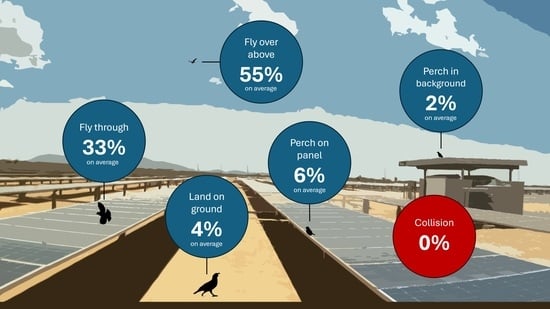
Graphical Abstract

1. Introduction

Ground-mounted utility-scale solar energy development has expanded exponentially across the globe in the last decade [1], driven by declining costs in photovoltaic (PV) technologies and the international demand for low-carbon electricity sources [2]. Given the large land use requirements for utility-scale PV solar energy [3], this global energy transition represents a growing form of land cover change. As land-based PV solar installations proliferate, they increasingly overlap with habitats used by diverse wildlife species, raising questions about how these facilities alter ecological processes, community composition, and species behavior. Minimizing negative ecological impacts is critical to ensuring that long-term solar energy development aligns with biodiversity conservation goals [4].
Birds have emerged as a focal taxon for assessing the ecological consequences of solar energy expansion. Birds are highly mobile, occupy a broad range of ecological niches, and serve as sensitive indicators of environmental change [5]. The impacts of PV solar development on birds are context dependent, and could be positive or negative as a result of multiple factors related to the siting and design of PV facilities [6]. For example, habitat loss and fragmentation could negatively impact bird populations when open or semi-natural landscapes are converted into fenced, graded, or otherwise modified PV arrays, thereby reducing the availability of foraging and nesting areas [7,8]. Collision and disorientation risk could also negatively impact bird populations. At PV facilities, highly reflective solar panels can mimic the spectral and polarized light characteristics of water, leading to the so-called “lake effect,” in which birds attempt to land on or near arrays, resulting in injury or mortality [8,9,10,11,12].
Not all PV solar development poses net negative effects on bird populations. Properly sited and managed PV facilities can provide birds with structures to roost and nest, and fenced footprints can offer foraging and nesting areas protected from large predators [13,14]. In addition to offering perching and foraging places, vegetative ground cover can support insect populations, resulting in increased food sources for insectivore birds [6]. Emerging design concepts such as ecovoltaics—the intentional integration of ecological principles into solar facility planning and management—offer opportunities to create or restore habitat within solar landscapes [6,15]. Although birds may be attracted to ecovoltaic solar developments, these novel ecosystems may act as ecological traps if bird populations using these sites experience reduced survival or reproduction.
Despite the growing awareness of these complex interactions, major knowledge gaps persist regarding how birds perceive, navigate, and behaviorally respond to PV solar infrastructure. Most existing monitoring programs emphasize carcass detection or species presence–absence surveys [16], providing limited insight into the behavioral mechanisms that underlie attraction, avoidance, or collision risk. Understanding these mechanisms is essential for developing effective mitigation measures and designing solar facilities that minimize ecological conflict. However, extreme seasonal temperature, large facility footprints, restricted site access, and high costs complicate the in situ observation of bird behavior at PV solar facilities, imposing a challenge in data collection aimed at gaining such understanding. Advances in remote sensing technologies, such as imaging (e.g., photography and videography), radar, and acoustic recording, in conjunction with artificial intelligence (AI) models, offer promising avenues for collecting much-needed facility-level bird behavioral data, providing new insights into avian–solar interactions.
As a part of the development of our AI-enabled avian–solar interaction monitoring software (https://www.anl.gov/evs/avian–solar (accessed on 25 December 2025); https://rewi.knack.com/rewi-research-hub#search-for-technologies/technology-profile/68ff9b6c6564ae0300f4117e/ (accessed on 1 January 2026)), we prepared a dataset to train and validate the AI models. The training/validation dataset was generated by extracting moving objects in video footage using an existing AI model followed by the human interpretation of the moving object type and of bird activity. The resulting dataset comprised a large number of observations, providing an unprecedented opportunity for examining bird activities and other wildlife occurrences at PV solar facilities over multiple seasons across multiple sites. Thus, the objective of this study was to gain insights into bird interactions with PV solar facilities and other wildlife occurrences at the sites across seasons and regions using the AI-assisted video observations in conjunction with descriptive analyses. This study aimed to address the following questions. (1) What patterns of bird occurrences and their interactions with PV solar energy facilities can we observe by region, site, and season? (2) Can we confirm bird collisions with PV facility infrastructure in our video-based observations? (3) Are video observations suitable for collecting data of insects and other wildlife occurrences at PV sites? Our objectives also included identifying limitations in our dataset to determine critical tasks and analyses for monitoring birds, insects, and other wildlife at PV facilities. By addressing these questions, this study also demonstrates the use of AI-assisted video-based monitoring for birds and other wildlife on PV solar energy facility infrastructure as a way to fill existing data gaps.

2. Materials and Methods

2.1. Study Area

Study sites include five PV solar facilities consisting of two sites in central Arizona (desert Southwest region), two sites in central Illinois (Midwest region), and one site in central Massachusetts (Northeast region; Figure 1). The primary reasons for the site selection were regional and landscape variation, and the availability of site access and personnel support. All solar sites had less than 10 years of operation prior to video collection. Desert Southwest 1 facility (DS1, ~10 MWac) is situated in a low-to-medium development area and open space. Croplands and a riparian corridor are present within a 5 km radius. It is adjacent to scrublands. The ground cover of this 5-year-old facility comprises bare ground, and there is no noticeable vegetation throughout the year. Desert Southwest 2 facility (DS2, ~15 MWac) is surrounded largely by shrublands/scrublands and some barren land. A few sizable areas of dense shrub growth and a golf course are present within 1km. The ground of the facility is covered by natural vegetation, such as grasses, forbs, and low-statured shrubs. Midwest 1 site (MW1, ~1 MWac) is situated within developed areas and open space. Large deciduous forests and wetland habitats are present within 1 km and a river within 2 km. The ground of the site is covered with gravel with extremely sparse vegetation. Midwest 3 facility (MW3, ~20 MWac) is predominantly surrounded by croplands (maize–soybean rotation) typical of Midwest agricultural landscapes. The site is located adjacent to a riparian corridor. The ground of the site is covered with natural vegetation, including grasses and forbs, which are occasionally mowed. Northeast 1 site (NE1, ~4 MWac) is surrounded by extensive deciduous and mixed forests with wetlands. Pasture/hay are cultivated within a 5 km radius area. The ground is covered with natural vegetation, such as grasses and forbs, which are mowed periodically.

2.2. Instrumentation and Data

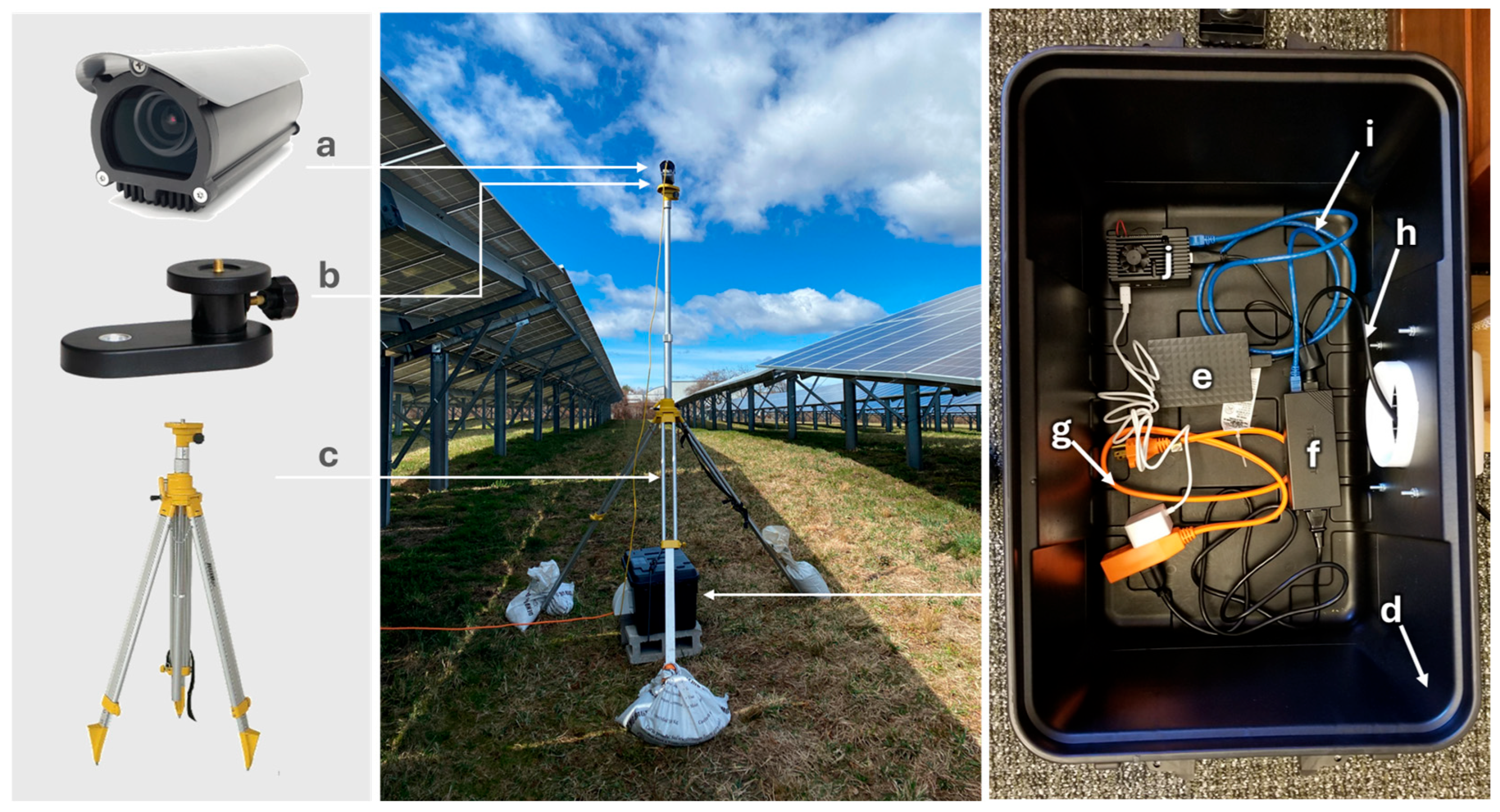
The primary data for this study are daytime video recordings collected at the aforementioned five PV solar energy facilities. At all sites, we collected video recordings using our custom system consisting of a high-definition video camera and supporting electronics (Figure 2; Table A1). The Sighthound Compute Camera 4 (SCC4; https://www.sighthound.com/products/hardware (accessed on 11 November 2025); Figure 2a) is a true-color or visible-spectrum 4K, 12-bit HDR camera system equipped with a Sony IMX 334 8.3 MP image sensor paired with a Theia TL410P motorized varifocal 4K lens at a focal length of 4-to-10 mm, capable of producing an 83-to-33-degree horizontal, 60-to-25-degree vertical, and 106-to-42-degree diagonal field of view. Each camera was set to collect videos at a rate of 30 frames per second. The software that controls the continuous video recordings and storage was executed on a single board computer (Figure 2j). All electronic components were housed in an enclosure to protect them from elements (Figure 2d–j). The system continuously recorded videos throughout the day and stored them in 5 min segments on an external USB hard drive over an extended period of time.
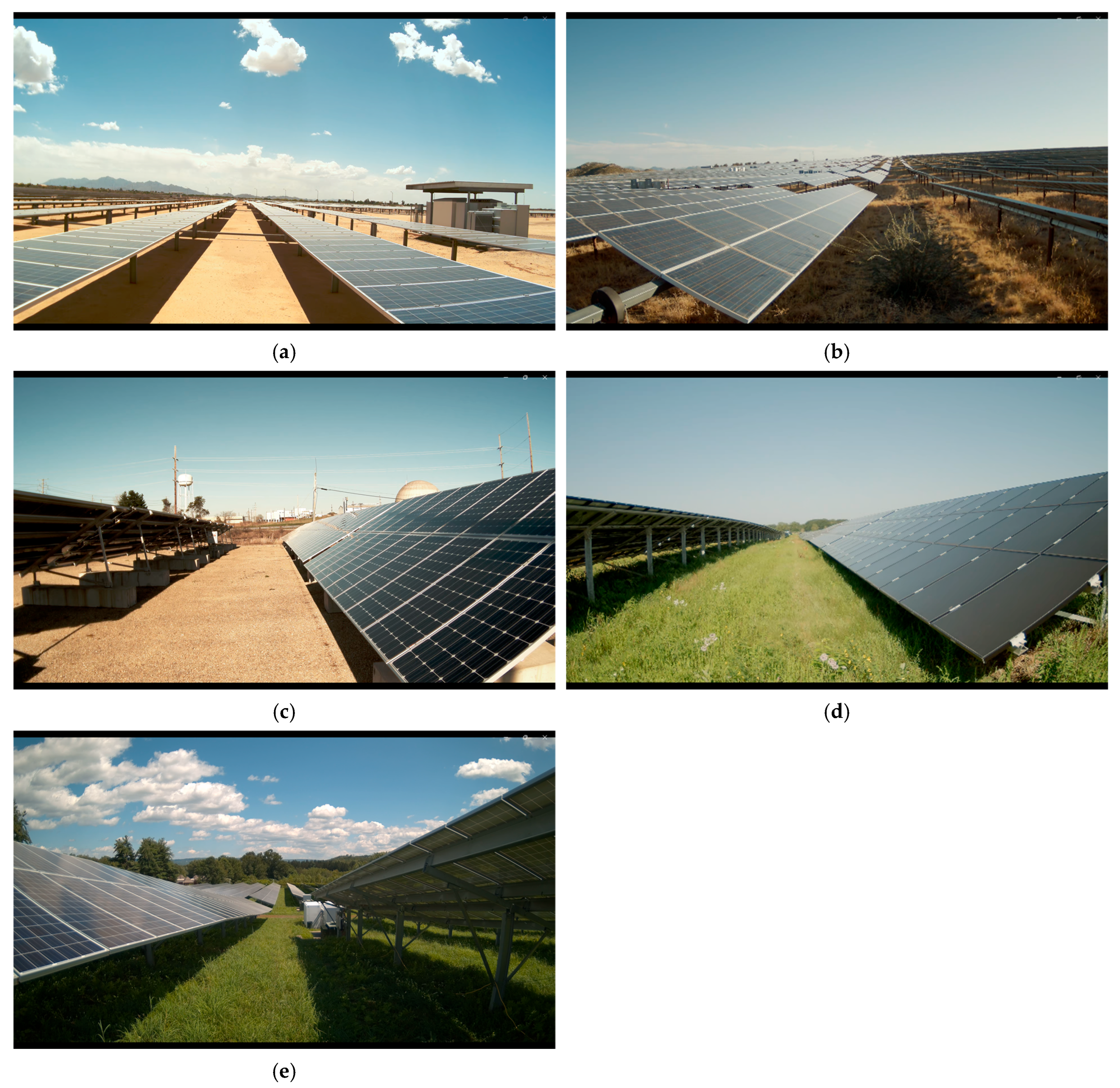
Using the camera systems, we conducted video data collection at PV solar energy facilities located in the desert Southwest, Midwest, and Northeast regions of the United States from August 2019 to June 2024 (Table 1). The primary purpose of video collection was to generate training data for AI models designed to monitor daytime bird interactions with PV solar infrastructure (https://www.anl.gov/evs/avian–solar (accessed on 25 December 2025)). To standardize the camera setup and the video recordings for consistency across the sites, we opted to place each camera near the middle of the site, avoiding edges. Each camera was set up to include at least two panel rows within the frame, with the ground visible at the bottom and the sky at the top (Figure 3), optimizing the detection of bird collisions. For each camera, the vertical angle was leveled to the ground and the horizontal angle was parallel to the panel row. To capture a diverse range of birds and their activity, we rotated a limited number of cameras (13 units) among the five study sites, as determined by the timing and duration of partnerships, personnel/resource availability, weather conditions, and unforeseen logistical constraints. This resulted in varied timelines and durations of video collection at each location. While recordings were made continuously during both daytime and nighttime, only daytime videos proved useful for analysis; thus, analyses of bird activities, and insect and other wildlife occurrences during nighttime fell outside the scope of this study.

2.3. Collecting Daytime Observations of Birds, Insects, and Other Wildlife

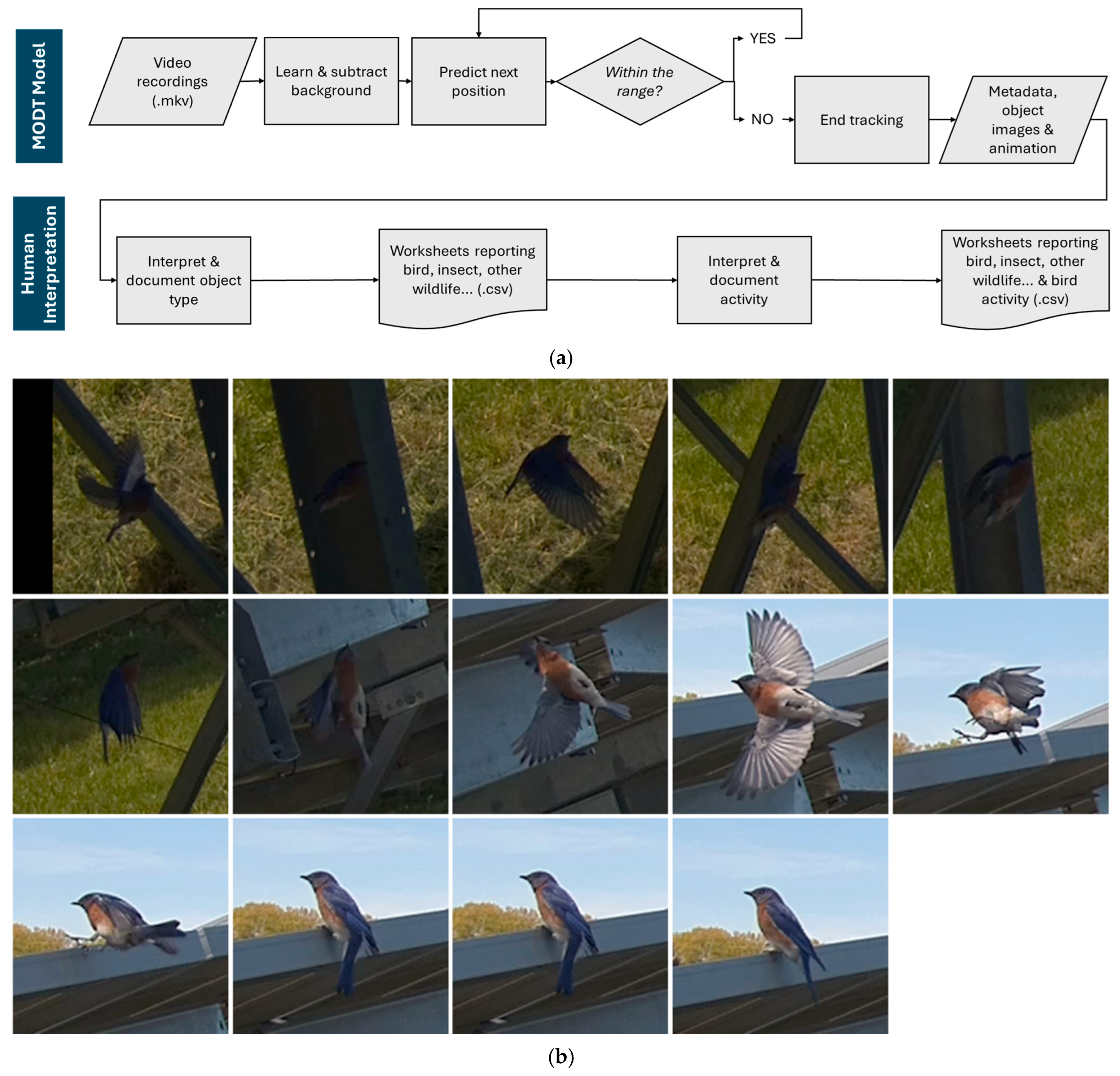
Observations of birds and their activity, insects, and other wildlife from the video recordings were collected in the process of generating training data for our previous study (https://www.anl.gov/evs/avian-solar (accessed on 25 December 2025)) using a combination of an AI model, which extracted moving objects in daytime videos regardless of object type (Figure 4a; top), and human interpretation to determine the type of each extracted object as well as the activity type of the observed birds (Figure 4a; bottom; Video S1). The primary purpose of this process was to obtain training data for avian–solar monitoring software development. Thus, the video selection was nearly exclusively based on a first-come-first-serve basis earlier in the project to generate sufficient training data. As software development progressed, we processed additional videos to augment regional, landscape, and seasonal variability. Our video processing was exclusively for daytime; thus, nighttime videos were not included in our analysis. Videos exhibiting significant issues, such as a lack of focus, extended periods of heavy rain, snow, condensation, or snow cover on the lens, or extremely low ambient lighting (e.g., dawn, and dusk) were excluded from processing.

2.3.1. Extracting Moving Objects from Videos Using an AI Model

During the development of our avian–solar interaction monitoring software, we developed the moving object detection and tracking (MODT) AI model to locate the segments of videos that contain potential birds and other wildlife, and output time sequence images of moving objects (known as ‘tracks’) along with their metadata (Figure 4a; top). Because PV solar facility infrastructure provided a relatively static background for our video recordings, we applied background subtraction, a commonly used computer vision technique [18], as the basis for detecting moving objects. This approach identifies the static background that exists over the individual frames of the video and subtracts it from subsequent frames to output only the segments that are different to identify moving objects [18]. We chose the Mixture of Gaussians (MOG2) background subtraction algorithm because of its comprehensive ability to handle varying background scenes and lighting conditions [18,19,20].
The MODT model detects and tracks moving objects based on the changes in the pixel values of video frames and spatial flows or movements of those changes over time. The model predicts the location of an object in subsequent frames to improve the accuracy of tracking the same object over time while requiring each object to continue its movement in a minimum of ten consecutive frames to be considered a moving object. This criterion prevents high-frequency movements from being detected as moving objects, such as random noise and object vibration. At the same time, the model allows a moving object not to appear in several subsequent frames and to resume tracking when it reappears if the location of the reappearance makes sense for the same object. This flexibility substantially reduces unexpected breaks within the single motion path of an object and helps to extract complex bird movements in a single continuous track. Although it is informal, exclusively for birds, the agreement of the moving object detection between the interactive video review by humans and the MODT model was 81.9%. While MODT missed approximately 7% of bird observations, human video reviewers also missed approximately 11% of bird observations detected by MODT (unpublished data).
The primary purpose of implementing the MODT AI model for generating the training dataset for the avian-solar interaction monitoring software for our previous study was to detect all moving objects in videos, regardless of object type, with limited false negative detection of target objects. In our avian–solar interaction monitoring software, non-target objects are removed by the subsequent object classification AI model; thus, the MODT was intentionally built to over-detect moving objects in video recordings. The benefits of this model are that (1) human interpreters do not need to watch tens of thousands of video footage to extract observations of birds, insects, and other wildlife, and (2) the over-detection of moving objects minimizes the false negatives of those biological objects. In the case of detecting birds, our earlier examination has confirmed that the MODT model is capable of detecting large (~110 cm), medium (~50 cm), and small (~25 cm) birds at approximately 400 m, 200 m, and 60 m ranges, respectively. Using the MODT model, we extracted tracks of moving objects, consisting of time sequence images of moving objects for the study sites and seasons (Figure 4b; Video S1), along with metadata (i.e., x/y coordinates, relative size, and speed).

2.3.2. Extracting of Daytime Observations of Bird, Insect, and Other Wildlife from the MODT AI Model Output

Trained human interpreters reviewed the tracks extracted by the MODT model and documented object types, including “insect,” “other wildlife,” “human,” “aircraft,” “car,” and “plant” (Figure 4a; bottom). When interpreters determined that the object in the observation was a bird, they then documented the activities using six categories: “fly over above,” “fly through,” “perch on panel,” “land on ground,” “perch in background,” and “collision” (Table 2). If a single track included more than one type of activity, all types were documented. All the interpretations went through a review process to ensure the reliability of each interpretation. Each object interpretation was independently reviewed by Reviewer #1 and the observation was finalized if they agreed with the object interpretations. If Reviewer #1 was uncertain or disagreed, the interpretation was sent to Reviewer #2 for a final determination. In other words, disagreements were resolved by a senior reviewer (Reviewer #2), and the final label was used for the final dataset. This process ensured consistency but precluded the calculation of inter-observer agreement metrics. A similar process was applied for bird activity interpretation. Because of unfamiliarity, the interpretation of collision required attention. Interpreters were instructed to flag by tentatively labeling ‘collision’ when birds appeared to contact infrastructure, except for deliberate perching, and reviewers reviewed those flagged observations (and corresponding video footage as needed) to determine activity types. Each bird observation was ultimately confirmed by a minimum of four individuals (or sometimes six individuals) before making it to our final dataset. The resulting dataset was served as training data for the software monitoring daytime avian interactions with PV solar energy facilities and also used for the analyses in this study.
Although it was outside the scope of this study, to gain additional insights, one interpreter also documented species, order, and/or type of bird with support from biologists and ornithologists from academia, private industry, federal agencies, and research institutions. The experts trained the interpreter to identify bird taxonomy based on the region, landscape, season, relative body size and shape, field mark, and flight pattern. Taxonomic identification went through multiple iterations among these. Bird observations were left undetermined when none of the experts were able to identify with confidence. We used this taxonomic identification as ancillary information to describe the apparent patterns of bird occurrences and their behaviors.

2.4. Analyzing Daytime Observations of Birds, Insects, and Other Wildlife

All labeled observations generated for the previous study were stratified into bird, insect, or other wildlife categories. For each group, we analyzed the raw observation counts by site and season. For birds and insects, we standardized the observations for an hourly rate for each site across seasons using bootstrap resampling with replacement (n = 100) and assessed the statistical significance across the sites and seasons using analysis of variance (ANOVA), followed by the Bonferroni post hoc test in R [21]. For bird activity types, we transformed the raw counts into proportions by dividing them by the total number of bird observations at each site or season. We compared the standardized observation rates for bird activity types separately by site and across seasons using chi-square goodness-of-fit tests in R [21]. Due to the lack of replication in camera configurations, we conducted the statistical analyses described above primarily to determine whether birds, insects, and bird activities occurred equally at each site and season, instead of making statistical comparisons between sites or seasons. We describe the general patterns and differences in bird/insect occurrence and bird activity across the sites and seasons, but we avoid making inferences. For the purposes of this study, the seasons were defined as follows: spring (March through May), summer (June through August), fall (September through November), and winter (December through February).
Where possible, we also documented bird behaviors that did not fit within our activity classification scheme described in Table 2 to gain further insight into their use of PV solar sites. The activity categories used in this study were intentionally broad; however, the ability to describe specific bird behaviors observed in the videos is essential for understanding the impacts of PV solar energy facilities on bird populations.

3. Results

3.1. Daytime Birds Observations Collected from the Videos

We applied the MODT AI model to 4373 h of daytime footage from five study sites located across three regions of the United States: the desert Southwest, Midwest, and Northeast. From a total of 201,262 moving object observations extracted by the model, human interpreters extracted 68,646 as bird observations, representing approximately 34% of all observations. The independent review of ten randomly selected video files for each site and season (bird observations per video file ranging from 36 to 301) confirmed the accuracy of all the bird observations extracted using our AI-assisted method (Figure S1).
Out of 68,646 total bird observations, NE1 showed the highest number across all seasons with 38,394 observations from 1392 h of daytime video footage, and DS1 followed with 12,642 observations from 1939 h of footage (Table 3). DS2 was the lowest, with 2979 observations from 325 h of footage. The Midwest sites had similar overall counts: around 7300 observations each from 159 h and 558 h of footage for MW1 and MW3, respectively. When aggregating the data from all sites, the largest number of bird observations were collected in spring (34,706) from 1637 h of footage, followed by fall (24,716) from 1819 h of footage, summer (7248) from 352 h of footage, and winter (1976) from 565 h of footage, which had the lowest count. Greater numbers of bird observations were nearly exclusively extracted for the sites and seasons with more hours of video processing than those with fewer hours of video processing (Table 3). In addition, as ancillary information, 65–85% of total bird observations were identified for broad taxonomic categories (e.g., songbird, waterbird, raptor, wading bird, and dove/pigeon), and a minimum of 25% of total bird observations were identified at a species level across all the sites and seasons (Table A2). Bird observations with no taxonomic determination were included in the analysis.
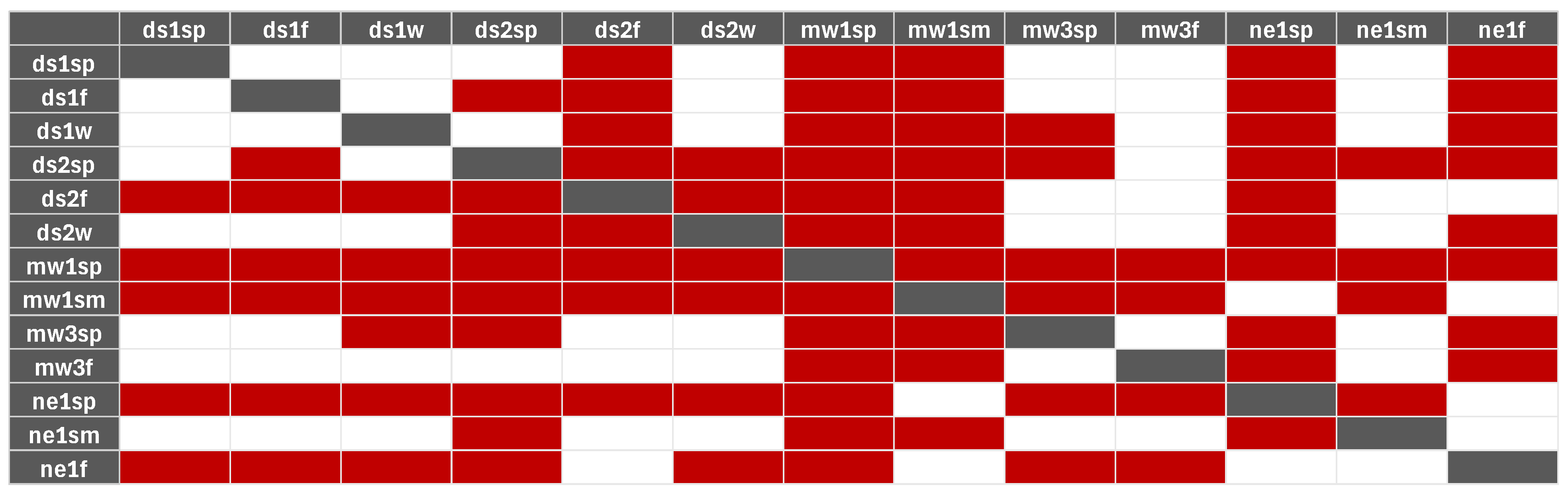
The rates of bird observation reveal geographical and seasonal variation (Table 3). The rates of bird observations at MW1 were higher than nearly any other site. In particular, MW1 in spring at 65.3 per hour was the highest of all sites and seasons. The rate in summer at MW1 (37.1 per hour) was also higher than nearly all other sites and seasons, except for NE1 in spring and fall (42.0 and 38.4 per hour, respectively). The bird observation rates at both desert Southwest sites were mostly comparable across the seasons analyzed (3.1–6.9 per hour), except for DS2 in fall. The rate for DS2 in fall (14.3 per hour) was noticeably higher than any seasons at DS1 and spring and winter in DS2. While the bird observation rates at MW1 and NE1 were mostly higher than the desert Southwest sites, the rates at MW3 (6.5–14.7 per hour) were not significantly different from those in the desert regions in many cases.

3.2. Daytime Bird Activities

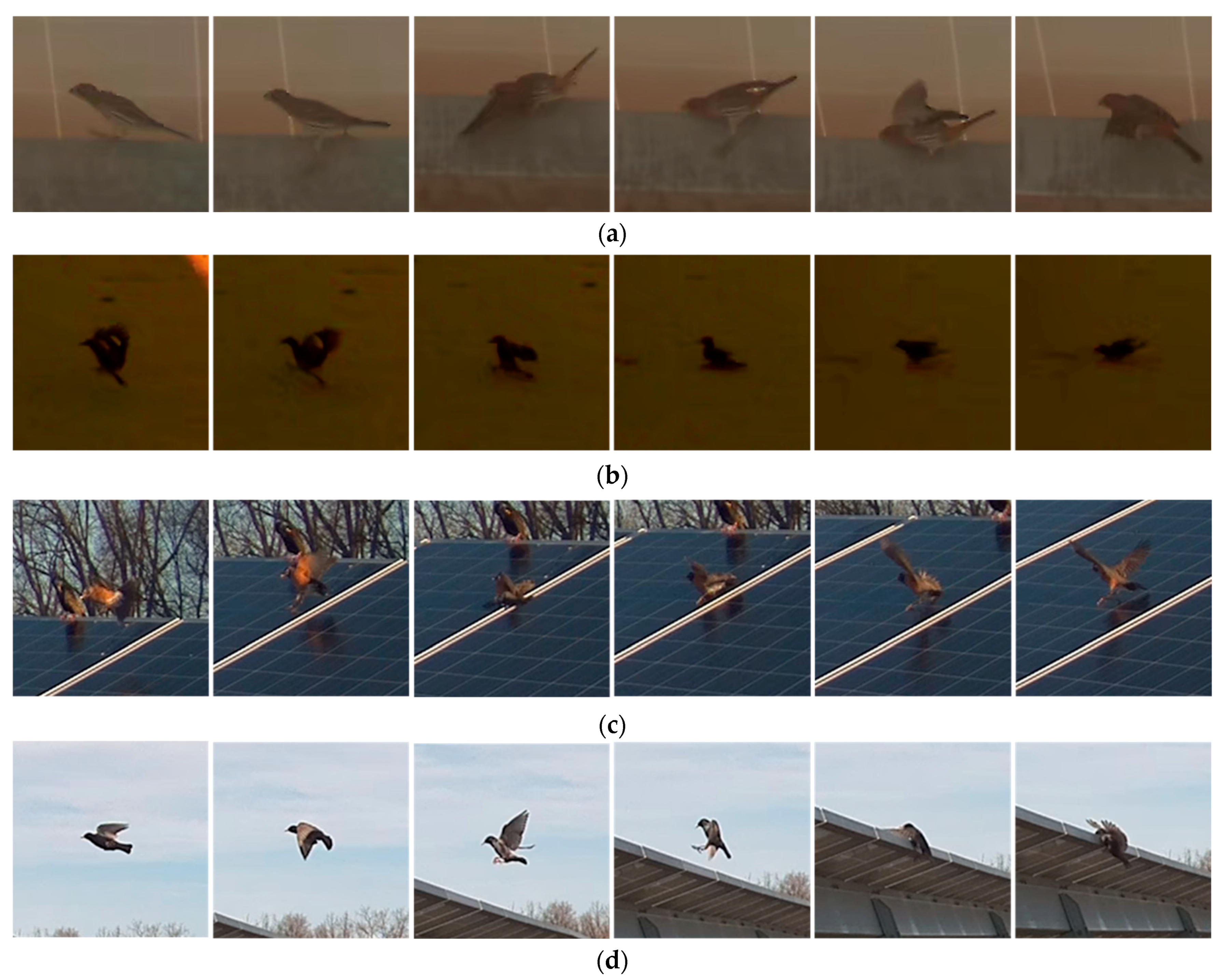
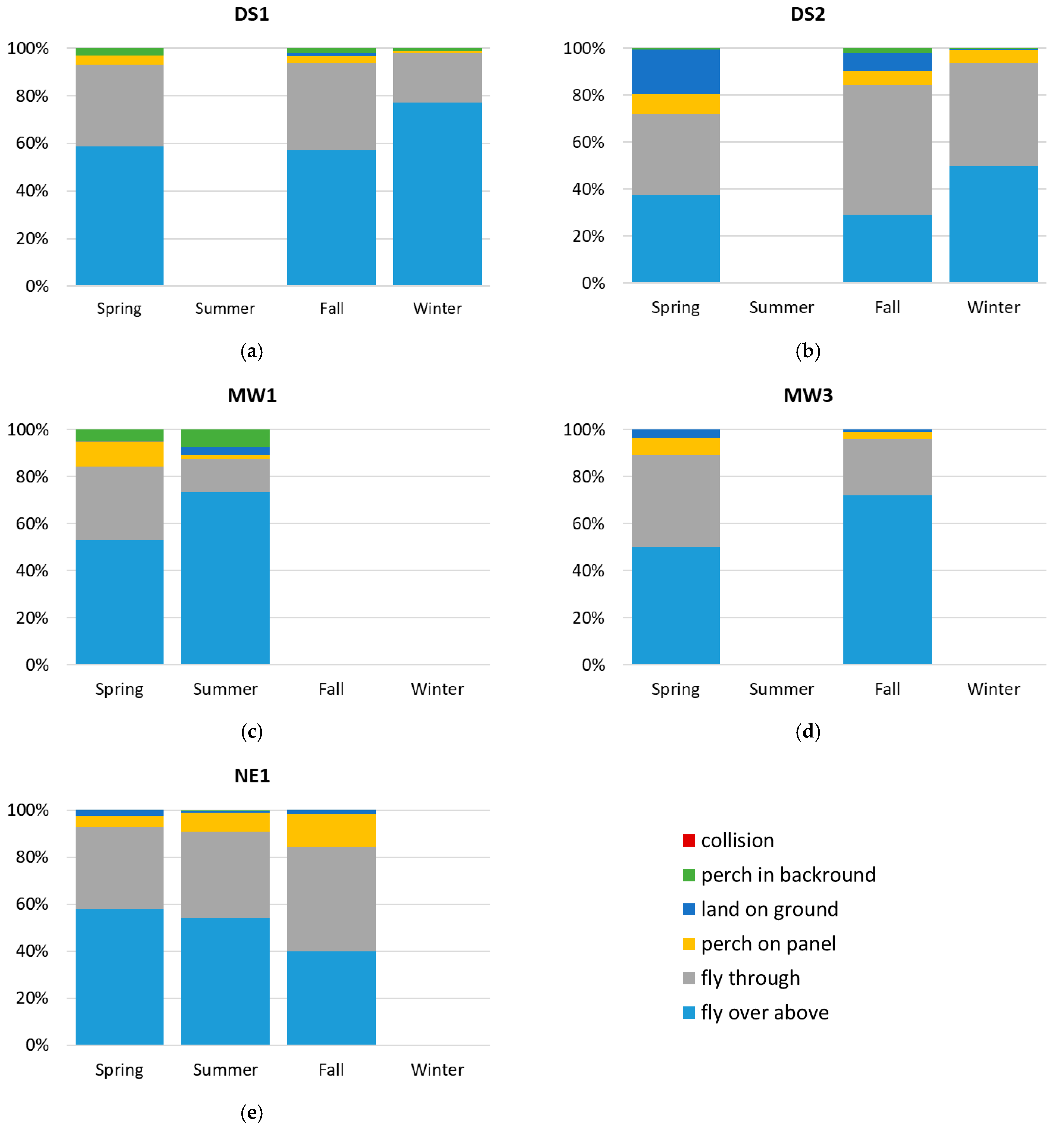
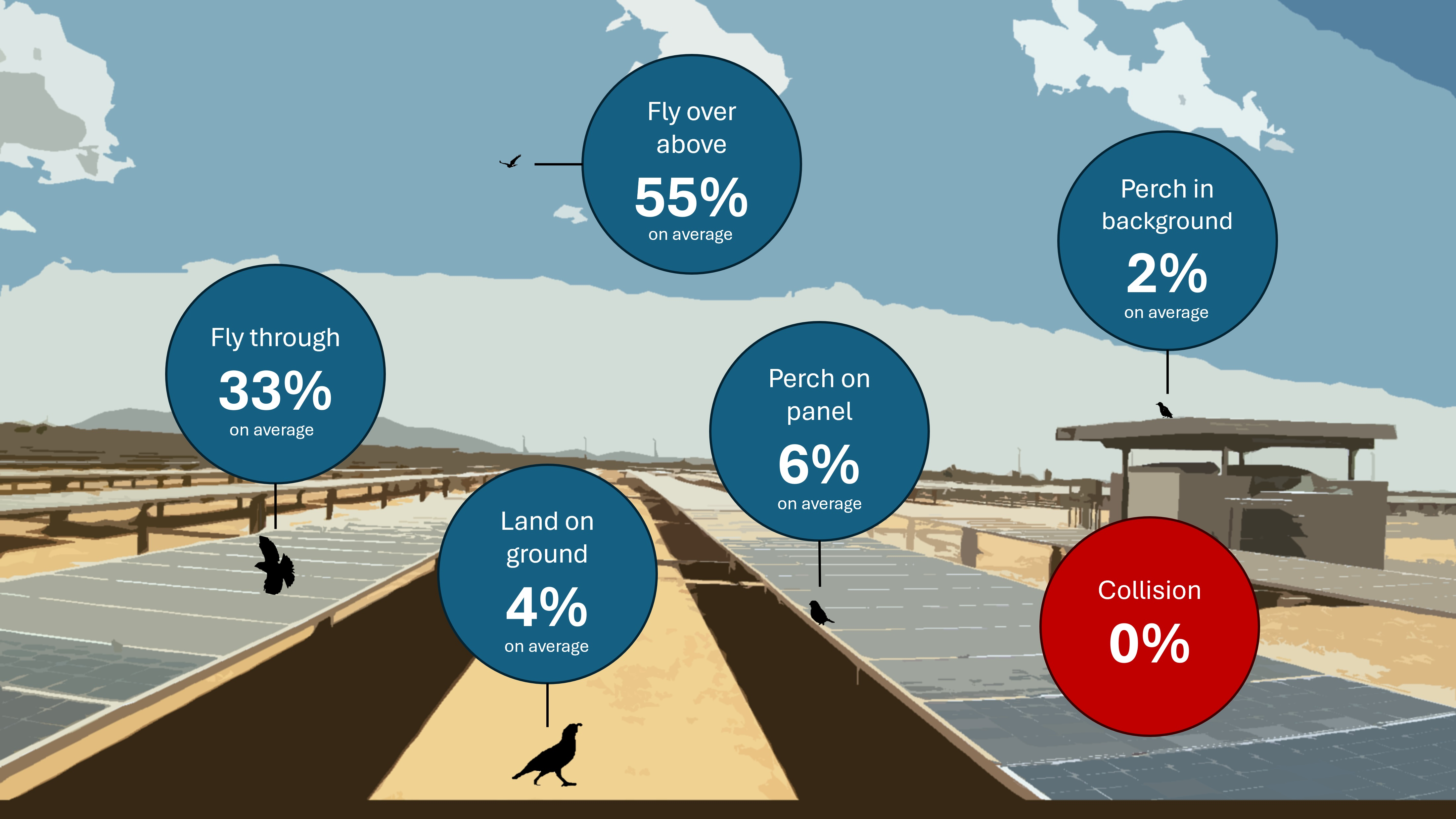
The results of the chi-square goodness-of-fit tests showed that the activity proportions were not equally distributed by site and season (p < 0.001; Table A3). Each bird observation could feature more than one activity type, as interpreters recorded all activities identified within each observation. The most common activity across the sites was flying high above the sky, “fly over above,” indicating no interactions with PV facility infrastructure (Figure 5). Birds showed this behavior either for all or part of their flight path, accounting for approximately 54% of observations on average. Flying near the panels, “fly through,” was also common, accounting for approximately 33% on average. The frequency of perching, including “perch on panel” and “perch in background,” and landing varied notably by site and season. Importantly, no collisions were confirmed at any site during any season throughout the data analyzed. While birds sometimes lost their balance—nearly falling off panel frames (Figure A2a; Video S2), stumbling upon landing (Figure A2b; Video S3), slipping on panels (Figure A2c; Video S4), or failing to perch on the panel (Figure A2d; Video S5), no fatalities or injuries were observed in the video footage.
Although flying high above the sky (i.e., “fly over above”) was most common across the sites, there were notable geographical variability in other bird activities. At DS1, birds most frequently flew over the facility across all seasons, accounting for approximately 58% of observations in both spring and fall, and peaking at 77% during winter (Figure 5a). In spring and fall, birds flew near panels in 35–37% of observations and perched on panels or transformer structure 5–7% of cases. During winter, bird activity shifted, with most birds flying over the site and approaching the facility less often; flying through the facility was observed in 21% of observations, while other activities near the facility, such as perching and landing, were each observed in 1% or less of cases. Birds commonly seen at this site were songbirds, such as flycatchers (family Tyrannidae), finches (family Fringillidae), and mourning doves (Zenaida macroura). Raptors, almost exclusively northern harriers (Circus hudsonius), were seen descending toward the site and often flying directly above the panels. Waterbirds (order Anseriformes) such as geese and ducks were occasionally observed flying high overhead. Notably, Gila woodpeckers (Melanerpes uropygialis) were frequently seen flying and perching under the panels only during winter.
At DS2, the most notable activity was landing on ground during spring, differing from the other sites, accounting for 19% of all observed behaviors (Figure 5b). In spring, birds were most commonly flying far or near, each approximating a third of total observed activities. Perching on panels was limited (8%). In fall, birds flew near panels more frequently (55%) than flying high above the facility (29%). In winter, birds were constantly flying, suggested by large proportions of flying through and flying over above the facility (44–50%). Overall, birds approached and used the PV facility at DS2 more frequently than at DS1 in every season. Similarly to DS1, the most common birds at this site were songbirds, both small birds (e.g., meadowlarks [Sturnella spp.] and flycatchers) and large birds, such as common ravens (Corvus corax) and American crows (Corvus brachyrhynchos). In particular, meadowlarks were often seen landing and spending time on the ground.
At MW1, flying high above the facilities was the dominant activity during both spring and summer (“fly over above” was 53% in spring and 73% in summer; Figure 5c). In the spring, birds flew through 31% of the time and perched on panels 11% of the time. Although this was limited, birds also perched on power poles and powerlines (i.e., “perch in background”) 5% of the time. During summer, aside from the predominance of flying over above (73%), flying through accounted for 14%, with perching in background and landing on ground making up 7% and 4% of bird observations, respectively (Figure 5c). Nearly all panel perching involved songbirds, including small songbirds, such as house finches (Haemorhous mexicanus), American robins (Turdus migratorius), American crows, and common ravens.
At MW3, birds were most commonly flying high above the site both in spring and fall, similar to many other sites (Figure 5d). In the spring, half of the observations were flying high above the facility, while flying through the facility accounted for 39%. Both perching and landing made up 11% of the activities. During fall, flying over above the facility increased to 72%, followed by flying through at 24%, and perching on panels and landing on the ground each comprised 4% of observed activities. They were mostly songbirds, such as American robins, red-winged blackbirds (Agelaius phoeniceus), and eastern kingbirds (Tyrannus tyrannus). Waterbirds, including geese and ducks, were occasionally seen flying close to the panels, and eagles (Aquila spp.) were observed high in the sky, though their appearances were rare.
At NE1, bird activity was consistently dominated by flying above the facility and flying near facility infrastructure across all seasons, with “fly through” peaking in the fall (Figure 5e). In the spring, flying both far and near panels accounted for the majority of observations (“fly over above” accounted for 58%; “fly through” accounted for 35%), while minor activities such as perching on panels (5%) and landing on ground (2%) were also observed. Similar activity trends were observed during summer. While similar rates of flying continued into fall (“fly over above” accounted for 39% of observations and “fly through” 44%), perching on panels was highest (13%) among all sites and seasons. Unlike other sites, birds approached and utilized the NE1 site at a consistent rate throughout the year (42–58%). Birds flying high above the facility were often hawks (order Accipitriformes), vultures (order Cathartiformes), and large songbirds, such as crows and ravens, while those flying near panels were largely small songbirds, such as European starlings (Sturnus vulgaris), eastern bluebirds (Sialia sialis), song sparrows (Melospiza melodia), and house finches, and occasional woodpeckers (order Piciformes).

3.3. Other Daytime Bird Behavioral Observations

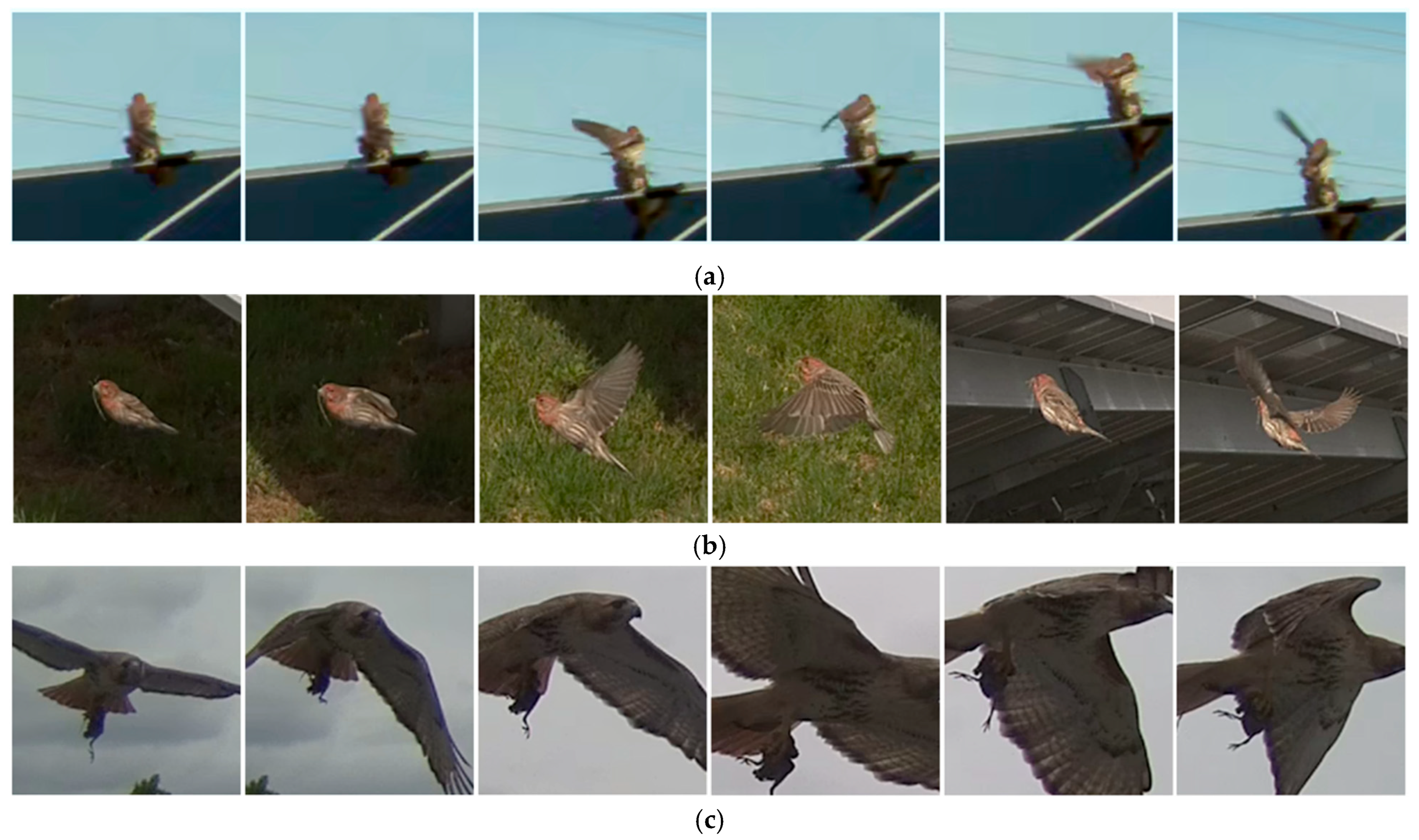
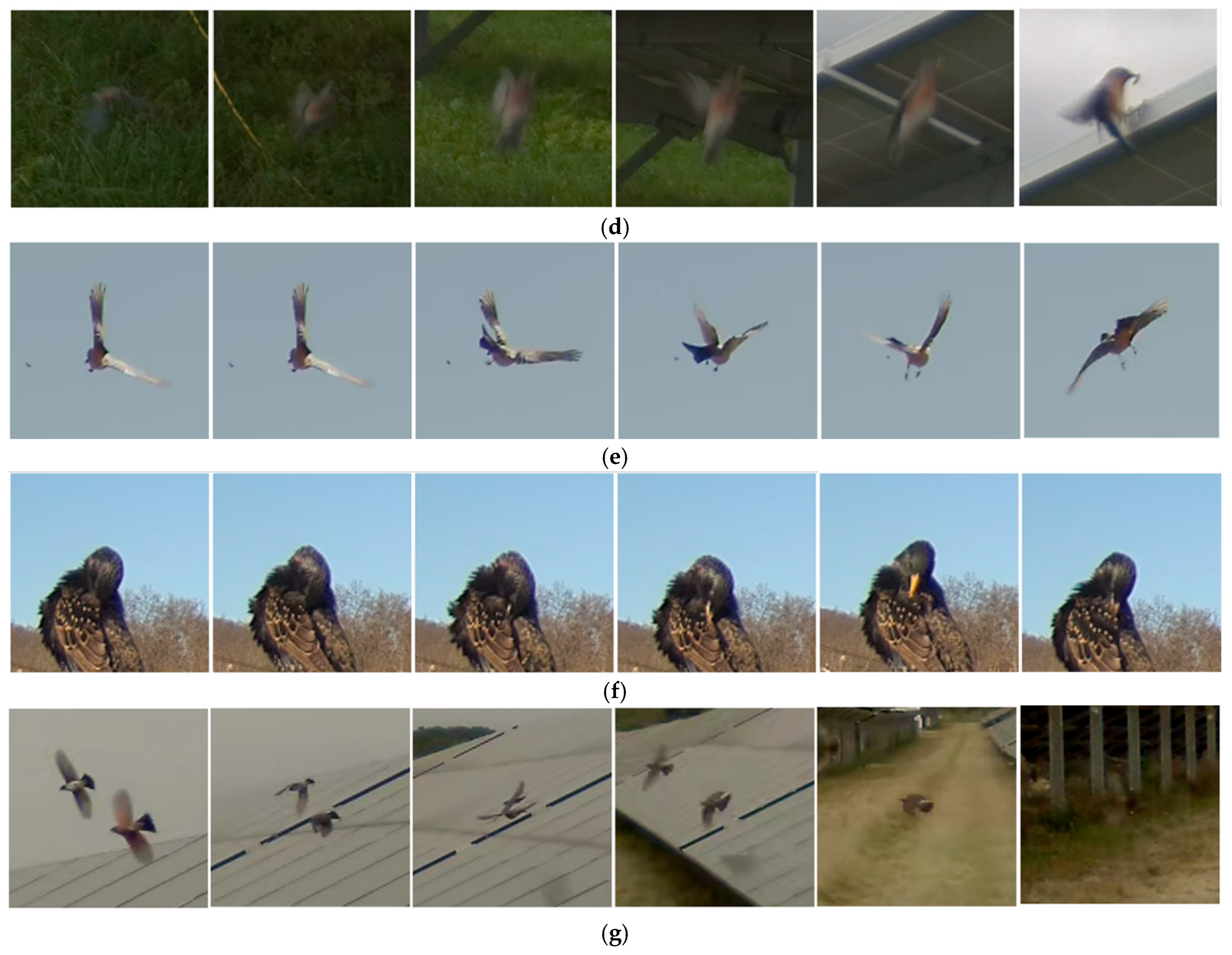
We observed five descriptive bird behavior types that were not considered for the broad six activity types, which included mating, nesting, foraging, self-maintenance, and territorial behaviors (Table 4; Figure 6).
We observed only a few instances of songbirds exhibiting mating behavior, which includes courtship displays, allopreening, and copulation, and these were limited to MW1 and NE1 during the spring (Figure 6a; Video S6). Nesting behavior, such as carrying nesting material, food, or a fecal sac, and entering or exiting nest sites (Figure 6b; Video S7), was more common than mating behavior. We most often observed such behavior at NE1, with occasional occurrences at DS1 and MW1. Nesting behaviors were nearly exclusively exhibited by songbirds, including European starlings and eastern bluebirds at NE1 and say’s phoebes (Sayornis saya) at DS1. At NE1, we also recorded three observations of a raptor carrying its prey, which appeared to be a small bird (Figure 6c; Video S8). Though limited to one site, this case gives insight into bird mortality at PV facilities. All the nesting behaviors took place during the spring and summer.
Foraging behavior was observed both on the ground and in mid-air. Ground foraging was common at DS2 by meadowlarks, MW3 by American robins, and NE1 by European starlings, for example. As the vegetation grew taller, ground foraging observations became less frequent, but we were aware that ground forging continued as we observed birds appearing from vegetation carrying caterpillars or worms in their bills (Figure 6d; Video S9). Aerial foraging was observed almost exclusively at DS1 during the fall, where say’s phoebe was the most commonly seen species engaging in this behavior (Figure 6e; Video S10).
Self-maintenance or comfort behaviors, including preening and bill wiping, were most frequently observed at NE1 by European starlings (Figure 6f; Video S11), with fewer instances at DS1, MW1, and MW3. Territorial or aggressive behaviors—most commonly characterized by one bird chasing another—were seen during spring at MW3 and NE1, and during fall at DS1 (Figure 6g; Video S12). Such interactions occurred both among songbirds and between individuals of different species, with birds either chasing or flying into one another.

3.4. Daytime Insects and Other Wildlife Observations

In addition to birds, observations collected from the video recordings contained insects and other wildlife.

3.4.1. Insects

The total number of insect observations collected from 4373 h of daytime video recordings across all sites and seasons amounts to 25,968 (Table 5). Seasonally, the vast majority of insect observations were collected in fall (16,849 from 1819 h of footage), followed by spring (5115 from 1637 h of footage). Fewer insect observations were collected in winter (1884) and summer (2120) from limited hours of footage (565 and 352 h, respectively). When considering the total observations by site, DS1 had the highest number of observations overall (12,202 from 1939 h of footage; Table 5). MW1 recorded the lowest total observations at 1106 collected from 159 h of footage. The number of insect observations also highlight significant seasonal variation across the sites (Table 5). The DS1 total was heavily influenced by the 9600 observations in fall. Similarly, the highest insect observation at MW3 occurred in fall (4737). In contrast, the NE1 total showed its highest counts in spring (2355) and summer (1231) (Table 5).
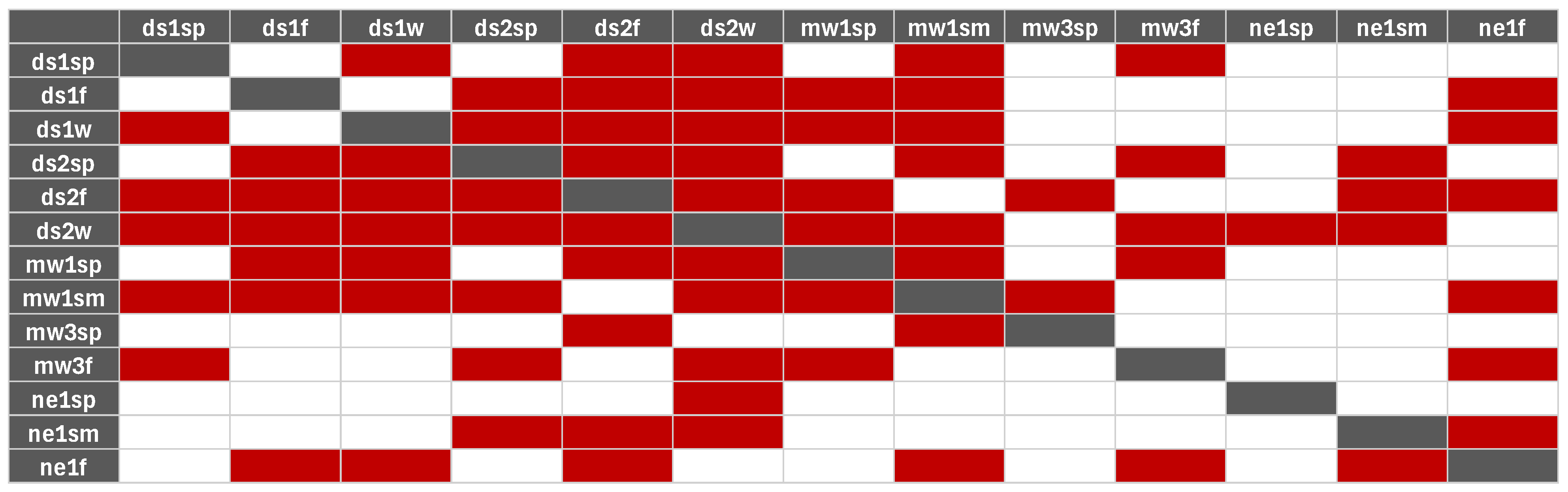
The insect observation rates ranged from 0.7 per hour at DS2 in winter to 17.5 per hour at MW1 in summer (Table 5). DS2 exhibited significant seasonal variability in insect observation (2.5, 25.7, and 0.7 per hour in spring, fall, and winter, respectively), which was not seen at DS1 located in the same region. MW1 also showed differences in insect observations rates between spring (2.4 per hour) and summer (17.5 per hour). At DS2, the insect observation rates in winter (0.7 per hour) and in fall (25.7 per hour) were significantly lower and higher, respectively, than the rates at many other sites and seasons. In spring and summer, differences in insect observation rates were insignificant across the sites analyzed.
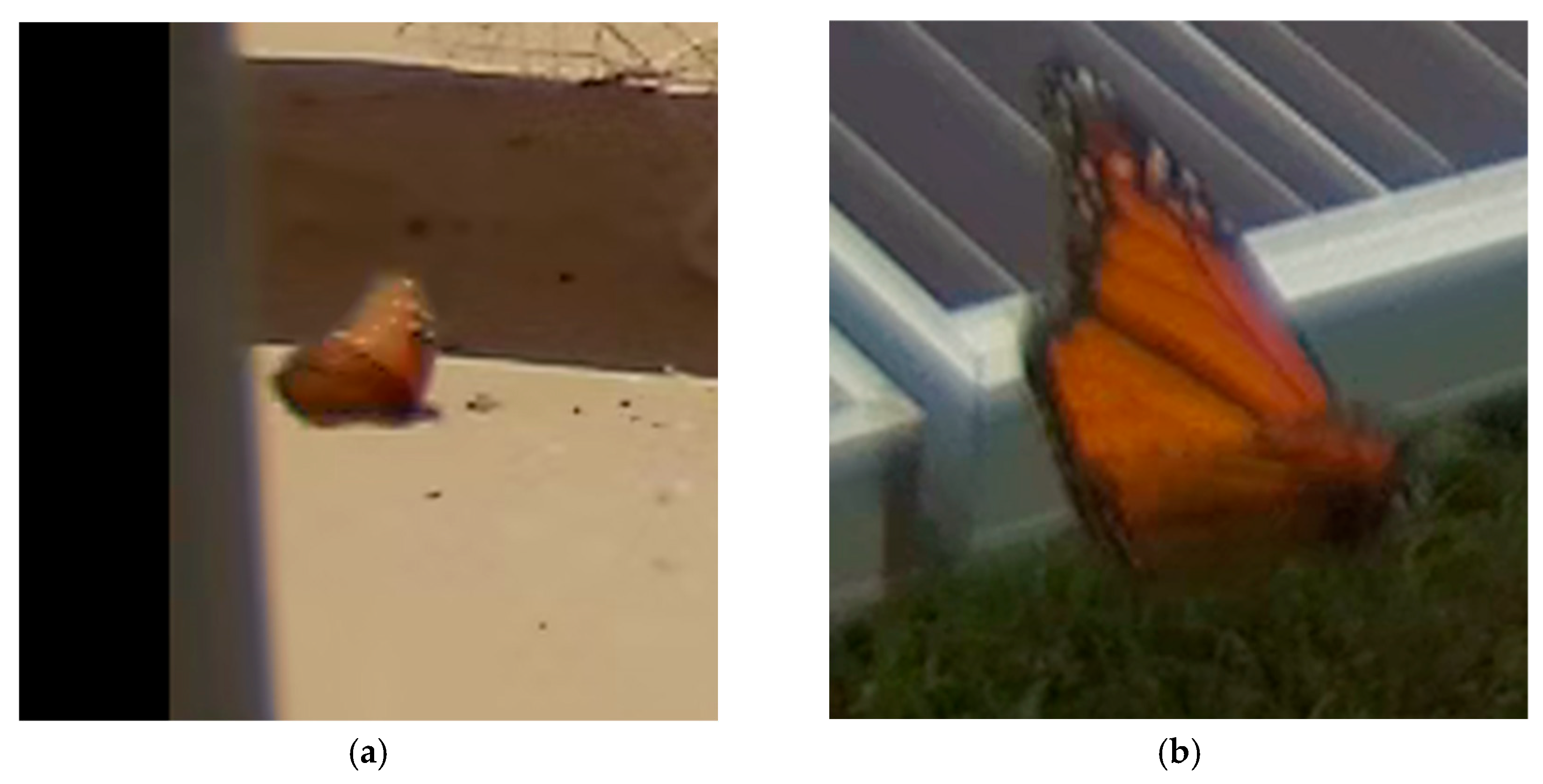
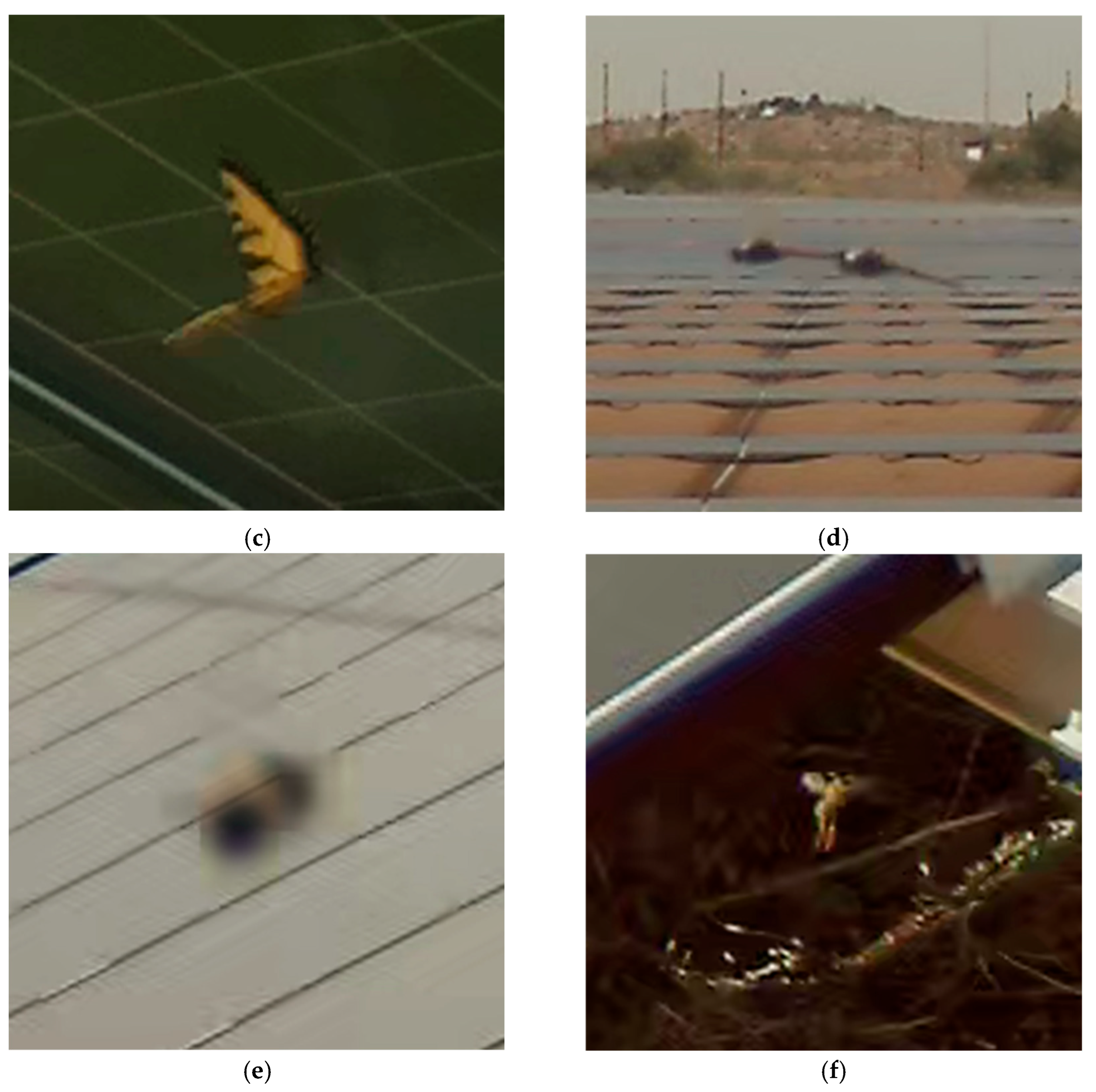
Insects observed were mostly butterflies (order Lepidoptera) and dragonflies (order Odonata) with some bees and wasps (order Hymenoptera) (Figure 7). Swarms of small insects with undetermined taxa were also observed. For butterflies, we recognized distinct wing colors, shapes, and patterns that could potentially help identify taxa or groups. Some insect species could be identified (e.g., the monarch butterfly [Danaus plexippus]), but accurate species identification for many individuals was unlikely (Figure 7a–c; Videos S13–S15). At both desert Southwest sites, butterflies and dragonflies were most common. At DS1, we observed several dragonflies exhibiting mating behavior over panels (i.e., two individuals connected while flying; Figure 7d and Video S16). Insect observations at the site also contained bees (Figure 7e; Video S17) and wasps but they were rare. At certain dates, the number of insect observations in the desert Southwest region exceeded the number of bird observations. In the Midwest region, MW3, with natural vegetation cover, including forbs, had notably higher rates of insect observations (4.5–15.1 per hour) than MW1, with gravel cover (2.4–17.5 per hour) (Table 5). At MW3, wasps (Figure 7f; Video S18) were the most common, followed by grasshoppers (order Orthoptera). Bee and butterfly observations were rare. Common insects observed at NE1 were dragonflies and butterflies, and they were seen throughout the seasons. Unlike the desert Southwest region, all the dragonflies seen at NE1 were flying solo; no mating behavior was observed in our dataset. Bees and wasps were also observed but rarely.

3.4.2. Other Wildlife

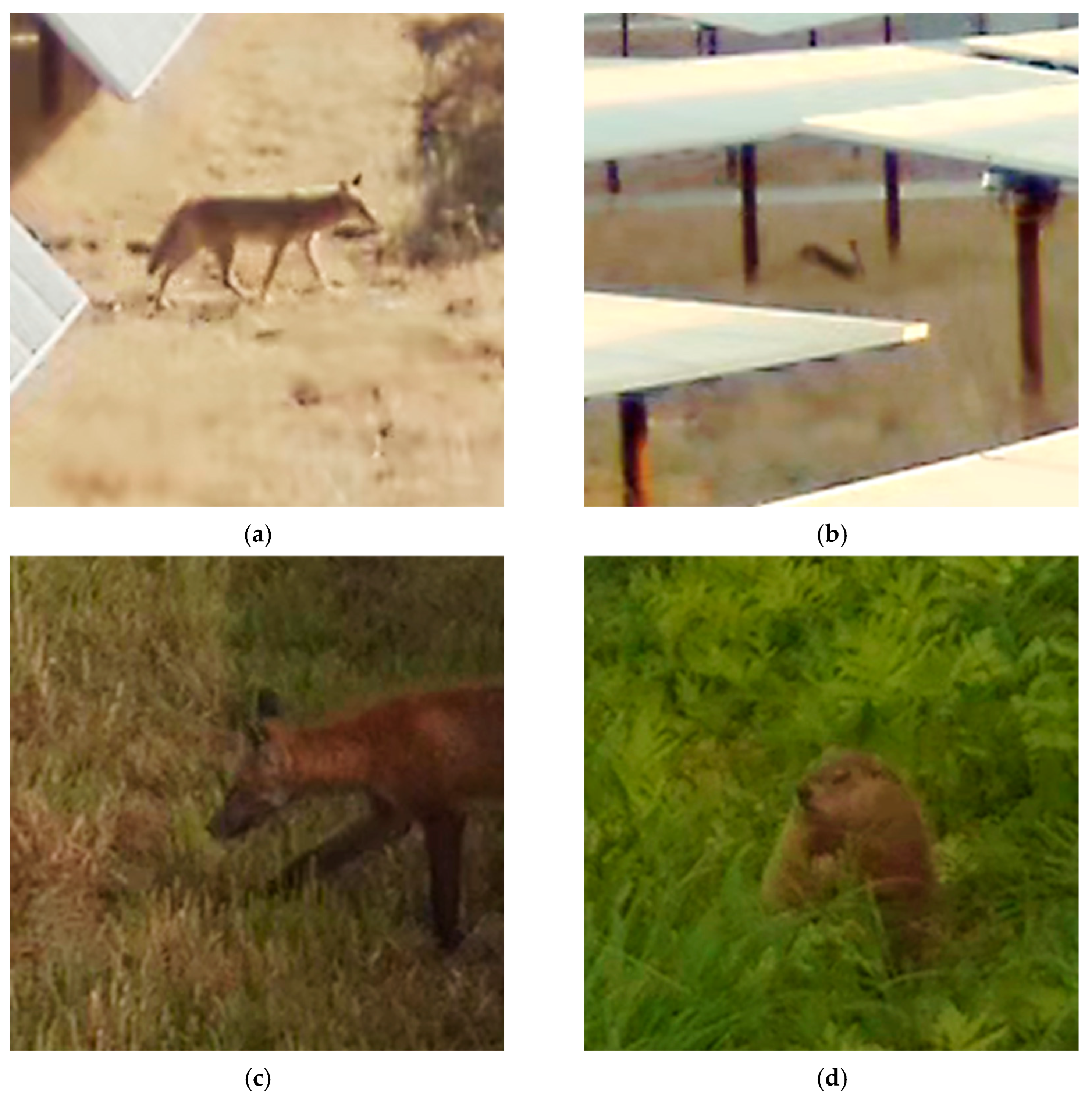
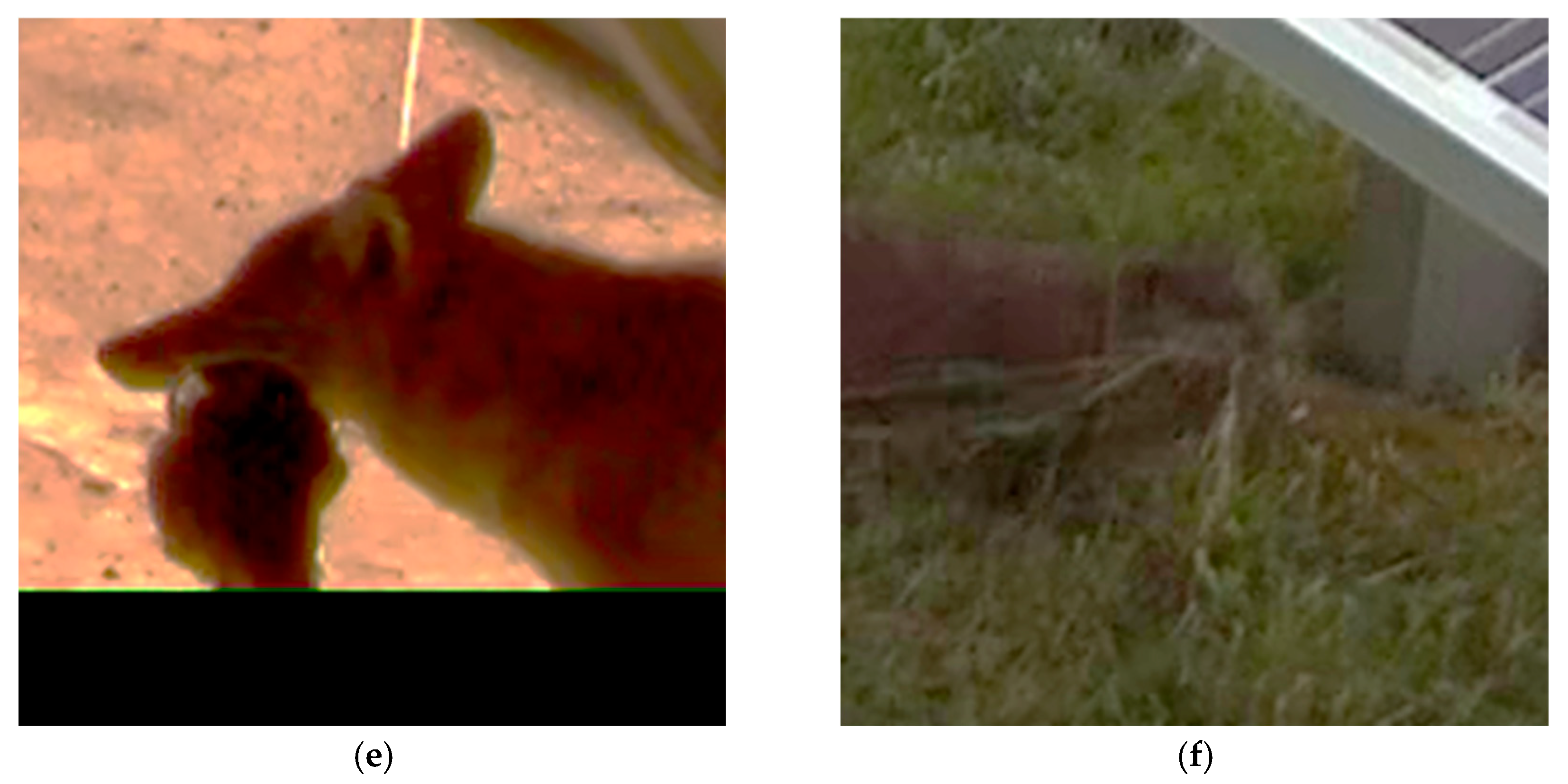
Other wildlife observation counts (Table 6) highlight their relative rarity compared to insects in our dataset (Table 5). Across all sites, a total of 169 observations of other wildlife were collected, all of which were mammals, while no other terrestrial vertebrates, such as reptiles or amphibians, were observed in the dataset analyzed in this study. Most mammal observations were made in fall (86) and spring (71), from over 1500 h of footage in each season, and only a handful observed in summer (8) and winter (4), from fewer than 500 h of footage in each season (Table 6). DS1 led in total observations of 64 from 1939 h of footage. Despite the limited hours of footage, MW1 and DS2 had 39 and 34 mammal observations from 159 and 325 h of footage, respectively. In contrast, NE1 had only 32 mammal observations from nearly 1400 h of footage, and MW3 had zero observations in 558 h of footage. The highest counts for a single site and season were 62 at DS1 in fall from nearly 1200 h of footage, followed by 37 at MW1 in spring from approximately 110 h of footage. In the DS region, coyotes (Canis latrans; Figure 8a and Video S19) and black-tailed jackrabbits (Lepus californicus; Figure 8b and Video S20) were observed, whereas juvenile red foxes (Vulpes vulpes; Figure 8c and Video S21) and groundhogs (Marmota monax; Figure 8d and Video S22) were seen at NE1. Most mammals were simply walking or running across the sites, with a few rare instances of coyotes carrying prey (Figure 8e; Video S23) and groundhogs transporting plant material (Figure 8f; Video S24). Notably, no episodes of predators hunting or carrying birds were observed.

4. Discussion

4.1. MODT AI Model and Human Interpretation

Moving object observations extracted by the MODT AI model consisted of 34% bird observations, 13% insect observations, and less than 0.1% other wildlife observations, leaving the remaining 53% of observations as non-target or irrelevant objects. Although having such a high rate of non-target objects may seem inefficient, this demonstrated the MODT model properly served its intended purpose, described earlier, by over-detecting moving objects to minimize the false negative detection of targets. As our avian–solar interaction monitoring software requires non-target observations for training data to accurately differentiate birds from many other objects, the proportional composition of bird, insect, other wildlife, and non-target object observations represents a perfectly reasonable performance for the MODT model. Operationally, when exclusively monitoring birds, the use of our subsequent AI model that differentiates birds from other moving objects would improve efficiency significantly (https://www.anl.gov/evs/avian–solar (accessed on 25 December 2025)).
Observations collected from videos using MODT combined with human interpretation have unique characteristics. The MODT model detects moving objects based on the changes in pixel values and tracks their movements by following the spatial flow of those changes, creating ‘tracks.’ Because an object must move over a minimum of ten consecutive frames (i.e., 1/3 s) to be detected by the model, objects with extremely brief appearances in video footage are unlikely to be detected. Likely examples are birds flying right in front of the camera (e.g., <50 cm) and those flying and appearing only briefly at a corner or edge of the frame. Therefore, despite being the most commonly observed activity across the sites and seasons, flying may be underestimated in our observations.
A track created by MODT ends when an object stops or moves out of the frame. A new track is created when the object starts moving again. Thus, the video-based observations collected using our AI-assisted method contained fragments representing part of a bird activity or movement instead of complete trajectory. After human interpretation, these observations still represent target objects, such as birds and insects. Therefore, the number of tracks represents the count of continuous movements, rather than the count of individuals, which creates discrepancies in the data collected using these methods. Fragments can also be caused by objects moving directly toward or away from the camera over a relatively long period of time, resulting in a lack of spatial flow in some parts of the flight trajectory. Visual obstacles (e.g., panels and other infrastructure) combined with complex movement could also result in fragmented observations. These patterns were consistent or uniform across the sites and seasons.

4.2. Bird Occurrence and Activity

Our study revealed relative bird abundance at and responses to PV facilities, as well as their seasonal and regional differences. Geographically, birds were often more abundant at the sites in Midwest and Northeast (6.5–65.3 per hour) regions than those in the desert Southwest region (3.1–14.3 per hour) (Table 3). This can be explained by the fact that forests and wetlands are more desirable habitats for many birds than arid landscapes. These smaller sites, less than 3 hectares, also likely alleviated the adverse effects of manmade features, becoming a part of the landscape. In the Midwest and Northeast, birds appeared most abundant during spring (14.7–65.3 observations per hour) (Table 3), which overlaps with breeding season and spring migration.
Bird activities seen in our observations were likely influenced by multiple factors, including ground cover, surrounding landscape, and birds’ life cycles, resulting in geographical and seasonal variability. At the sites with vegetative ground cover (i.e., DS2, MW3, and NE1), birds landed on the ground more frequently in spring than any other season, regardless of the region (Figure 5). These were often ground-foraging birds at all sites, suggesting the possible explanation of seasonally varying food availability. Our observations likely underestimated birds landing on the ground at MW3 and NE1 in late spring and summer because the height of vegetation concealed birds near the ground, even though we assumed birds landed on the ground when they disappeared into and appeared from dense vegetation. Such underestimation at DS2 is expected to be minimal because of its sparse vegetation cover.
Despite their contrasting footprint size and nearby habitat, NE1 and DS2 share similar seasonal bird activity patterns. In both sites, birds approached the facilities more frequently in fall than spring (Figure 5). As fall migration generally includes more young birds than spring migration, it makes sense that birds would use the facilities for resting more frequently in the fall than in the spring. These sites also showed a higher number of occurrences of perching on panels or the background in fall than in spring. This is likely because fall marks the end of the breeding season for many songbirds, so those with established territories nearby may spend more time perching at the PV facilities rather than just flying through.
Birds’ adaptation to PV solar facilities during the breeding season has been reported [14,22]. Our study supported these findings. We observed high bird abundance and occurrences of breeding and nesting behaviors during breeding season at many sites. These observations are based on the available data for this study; thus, additional video processing and analysis, particularly during breeding seasons, would allow for the further comparison of bird behavior across the sites/regions. Quantitative analysis of breeding and nesting behavior using a combination of nest surveys and video-based observations could provide further evidence of these findings.
Songbirds were the most frequent visitors to PV solar facilities, regardless of the region and season, which is consistent with prevailing understandings. Raptors were also common, and some descended toward facilities. Doves and pigeons were present. Waterbirds were rare in our study, even though they have been identified as one of the most impacted taxa by PV solar development and have been extensively studied in the desert Southwest region [9,10,11]. We observed an unexpected number and variety of woodpeckers at multiple sites in multiple seasons. We recognized far more species in the observations collected from video footage than we initially expected. These species were identified based on distinct plumage, field mark, shape of body parts, and/or flight pattern, which were interpretable in the observations collected from video recordings. Waterbirds and raptors were easily distinguishable from songbirds and other taxonomic groups by their flight style and wing stroke even if they appear very small in videos. Because the larger the object, the greater the detection range, small birds (e.g., songbirds) were likely underrepresented in our observations, which further supports the dominance of songbirds at PV facilities. Songbirds flying close to the camera were easy to identify by species, and species of raptors and waterbirds could often be identified even when flying at a distance. However, female songbirds on cloudy days or in the shade were challenging to identify, as their less distinctive appearance tended to blend into the background. Since the varying difficulty in species identification can introduce bias, it is important to interpret the video-based observations with caution. Although our study did not break down our analysis by species level, the taxonomic analysis of our data would greatly enhance our overall understanding of birds’ interactions with PV solar energy facilities.

4.3. Bird Mortality, Lake Effect Hypothesis, and Limitations of Current Study

Bird mortality at PV solar energy facilities remains a major concern among solar stakeholders. Although more than a decade of fatality surveys and studies has shed light on the magnitude and patterns of bird mortality in the Southwestern United States, the full geographic extent and primary causes are still unclear. Our study aimed to describe patterns, occurrences, and activities observed in an unprecedented amount of video-based observation, which already existed for another study, and to gain insights rather than making inferences regarding the risk of bird mortality at PV facilities across the U.S. regions. In our study, we did not confirm any bird collisions, given our operational definition (see Section 2) and within the detection limits of our system, at any of the study sites in our observations extracted from the video recordings. The detection ranges of the MODT AI model were approximately 60 m for a small bird (~25 cm) and 400 m for a large bird (~110 cm). Once detected, the observations went through multiple interpretations and reviews to determine object types and bird activity types; thus, we are confident that our observations do not contain bird collisions. However, hypothetically, birds colliding with infrastructure at a corner or edge of camera’s field of view, appearing in footage less than one third of a second would be undetected by the MODT AI model.
Birds appeared to be fully aware of infrastructure and actively used PV sites as if they were part of their habitat in our observations. Songbirds often showed complex flight paths, flying near, under, and above panels without collisions. We observed birds losing balance while perching on panels or other infrastructure, but no high-risk maneuvers were observed. Although there were only three instances, we observed a raptor carrying its prey, a small bird, offering valuable insight into one possible cause of bird mortality at PV solar energy facilities. Cataloging bird behaviors observed in the video recordings, such as collision avoidance, can provide us with further details of collision risks. Existing studies showed higher bird fatalities during fall than during spring at Southwestern facilities [9,10,11], and the rates of bird observations also showed greater bird abundance in fall than in spring in the region. A higher abundance during fall may contribute to a higher fatality rate during the season, but such a relationship was unsubstantiated in this study.
The lake effect hypothesis, which primarily concerns waterbirds [8,9,10], was not strongly supported by our data, as waterbirds were rarely observed and only occasionally seen flying above solar panels. Over 2000 h of videos during spring and fall migration seasons for the desert Southwest region were processed, and we rarely saw waterbirds in the observations for the region. Because of their relative body size and consistent flight path in the sky, waterbirds were less likely missed by the MODT AI model than small songbirds, exhibiting varying flight patterns. Thus, it is reasonable to assume that not many waterbirds flew over the field of view of the cameras in daytime during late September 2020–early January 2021, early March–mid-April 2021, and late September–late November 2021. Manually reviewing videos collected during dawn and dusk, as well as processing videos from 2022 and 2023 can provide additional observations to strengthen or refine our findings.
The most notable limitations of our study for understanding bird mortality and the lake effect hypothesis were a lack of nighttime observations and no quantification of birds’ descending behavior toward PV facilities; thus, this study was unable to offer insights into nighttime collisions or potential bird attraction to PV facilities. Nocturnal migrants, including songbirds and waterbirds, are considered to be the most vulnerable to solar facilities [23]. Nighttime bird mortality is largely unknown because of the difficulty in collecting proper observations. The monitoring of bird mortality, including collisions, around the clock requires a coupled remote sensing approach with radar, thermal infrared, optical systems, and acoustic recorders. While radar can track birds descending toward PV facilities [24], optical and thermal imaging technologies can differentiate birds from insects, track them at the facilities, and can help determine their fate. An optical imaging system (e.g., video camera) could help identify bird taxa but only during the day. Capturing vocalizations of nocturnal migrants using an acoustic recorder could be a sensible alternative for taxonomic identification during the night [25].

4.4. Insect and Other Wildlife Occurrences

Our study also revealed the utility and limitation of our method for insect monitoring. Compared to cool months, insects appear abundant in warm months in the desert Southwest (9.8–25.7 per hour in fall) and Midwest (17.5 per hour at MW1 in summer, 15.1 per hour at MW3 in fall) (Table 5), but the seasonal breakdown adopted in this study was too coarse to substantiate this apparent correlation. Despite the contrasting ground cover, insect abundance at the two Midwest sites was not significantly different in spring (2.4–4.5 per hour) or the summer and fall, respectively (15.1–17.5 per hour). Although this pattern does not correspond to the common understanding of vegetative ground cover supporting insects compared to non-vegetative ground cover at a glance, vegetation on the adjacent banks and ponding from rain may compensate for the gravel cover at MW1, thus supporting insects. Understanding the interactions of vegetation, insects, and birds at PV sites, in conjunction with microhabitat and surrounding landscapes, would inform the successful implementation of ecovoltaics. We were able to identify some recorded insect species, including the monarch butterfly (Danaus plexippus), a species of conservation concern throughout North America. These observations suggest the potential of video-based monitoring systems to understand monarch migration phenology and habitat use at ecovoltaic sites, which can inform conservation actions.
The only observations of other wildlife in our study consisted of mammals, and they were limited. Our video-based observations of wildlife on the ground are limited primarily because of visual obstacles. Other technologies, such as camera traps, and potentially thermal cameras, are far superior to the video-based method used in this study for data collection. Our study suggests that video-based observations are more suitable for flying animals, such as birds and insects, which mostly occur in areas with fewer visual obstacles. With further evaluation, the AI-assisted video-based monitoring can be incorporated into formal data collection protocols for those taxa.

4.5. Limitations and Disclaimers

The data used in this study were derived from imbalanced sources. Video collection was opportunistic and video processing was prioritized for spring and fall, corresponding to the peak bird migration seasons to develop avian–solar monitoring software focusing on bird collision detection. While this seasonal bias also maximized our chances to collect multiple bird activity types, it had a considerable influence on the raw observation counts as the greater the hours of video processed, the greater the bird observations collected. This pattern was consistent across the seasons at each site (Table 3). Therefore, we relied on hourly rates to interpret occurrence and activity patterns. The seasonal bias in video processing may also have influenced the hourly rates of observation. Given the magnitude of birds occurring and/or passing through the regions, higher bird observation rates during the migration seasons (i.e., spring and fall) than the non-migration seasons (i.e., summer and winter) at each site may be expected. However, the impacts of seasonal bias of video processing on the observation rates were not examined in this study; thus, they remain uncertain.
Although missing or fragmented observations may be viewed as errors, they are systematic bias regardless of sites or seasons. Thus, they can be considered characteristics of the AI-assisted video-based observations, such as the use of MODT. Studying wildlife occurrences and behaviors across multiple locations over multiple years requires a vast number of observations collected using a common method, which necessitates automation. Field observations by humans are often accurate and detailed, providing counts of individuals and the duration an individual engages in certain behavior, but it would be challenging to collect such data simultaneously across multiple locations and/or over extended periods of time. Video recordings are suitable for observing multiple locations over a long time, but documenting observations via manual video review is time consuming and costly. An AI model, such as the MODT AI model, can automatically clip videos for moving objects from tens of thousands of hours of video footage, although the output contains missing or fragmented observations. Because of these varying strengths and weaknesses of different data collection methods, understanding how these data streams relate to each other is the key to integrated data analyses if we are to advance our understanding of solar–wildlife interactions.

4.6. Recommendations for Operational Use of AI-Assisted Daytime Video Monitoring for Birds and Insects

During learning about the occurrences of bird, insect, and other wildlife activity at PV facilities across multiple U.S. regions using the existing video-based observations, we identified several critical tasks and analyses for the future use of our AI-assisted video-based method for daytime monitoring. For example, documenting the camera setup specifications (e.g., distance from panel row, camera height, and angle of camera), which we lacked for the existing dataset, would help in determining the sources of uncertainty and variability in the MODT output across time and space, describing the implications of those specifications, and making comparative analysis more robust than that of the current study. Comparing the proportions of bird and insect observations to the total observations collected by MODT across sites and seasons would aid understanding of bias and efficiency. The rates of fragmentation and missed observation by the MODT AI model and how they affect per-hour counts should be examined. Because those rates and their effects could vary by site and season, having such understanding would increase the value of findings of AI-assisted video monitoring.
The MODT AI model, which relies on object movement for collecting observations, likely underestimates the observations of still objects and those with subtle movements, such as birds perching on panels over an extended period of time, birds foraging on the ground with little movement, and insects spending time on flowers. Although these birds and insects are likely detected when they come into the frame, quantifying the durations of no or subtle movement would require interactively viewing video recordings depending on research objectives.
All the final decisions on observations for the data used in this study were centralized for consistency; thus, we did not report the agreement between interpreters for object types and bird activity types. However, when final decisions are made by multiple interpreters, cross-interpreter agreement should be closely monitored and reported, and bias in results should be corrected. This is particularly important when making inferences. For data quality and assurance, future protocols could include a pilot phase where multiple interpreters label a common subset to calculate and report Cohen’s Kappa or similar metrics for key categories prior to the inception of full-scale labeling.
Studying bird collisions at PV facilities is extremely challenging due to the infrequent and unpredictable nature of the phenomena compared to other activities (e.g., flying and perching). However, further experimental studies are valuable in understanding the effectiveness and limitations of an AI-assisted method for bird collision monitoring. The investigation should address the efficacy of the method, including the minimum bird size, bird type, collision type (e.g., collision with panel surface, frame edge, and backside of panel), collision outcome (e.g., fatal, injured and flew away, and injured and walked away), and relative position of the detectable collisions within the frame.

5. Conclusions

To our knowledge, this is the first analysis of birds’ interactions with and the occurrence of insects and other wildlife at PV facilities across multiple regions and seasons that utilizes a large number of observations collected from extensive daytime video recordings using a combination of artificial and human intelligence. Because the data used in this study were opportunistically collected and processed using a novel approach, we aimed to provide insights through descriptive analysis rather than providing inferences.
Our comparison of bird observations across the five PV solar energy facilities in the desert Southwest, Midwest, and Northeast region of the United States showed great bird abundance at the sites outside of arid regions, more specifically at those surrounded by forests (i.e., MW1 and NE1). In the desert Southwest, seasonal variation in bird abundance was observed at DS2, characterized by natural vegetation cover surrounded by scrublands, but not at DS1, characterized by bare ground cover with limited desirable habitat nearby. Birds were most commonly flying above the facilities regardless of region or site. In spring, (often ground-foraging) birds frequently landed on the ground where vegetation cover was available. At DS2 and NE1, despite their contrasting landscapes, birds approached facility infrastructure and vegetation on site more frequently in fall than in spring. During the breeding season, high bird abundance and a high number of occurrences of breeding and nesting behaviors were often observed.
While diverse bird activities and behaviors were observed, bird collisions were not confirmed in the data analyzed in this study. We analyzed over 4000 h of video footage at five sites over the 4-year period. Our video collection was opportunistic and processed unsystematically across the sites and seasons. Our observations were also limited to daytime. Thus, it is possible that bird collisions occurred during periods when videos were not collected, during nighttime, or have yet to be observed in unprocessed videos.
Our study revealed that bird and insect observations across the five sites showed geographical and seasonal variability, while other wildlife observations, exclusively mammals, were too few to reveal any locational or seasonal patterns. This suggests that video-based observations are suitable for flying wildlife, such as birds and insects, but not for wildlife on or near the ground because of visual obstacles.
Understanding the intricate interactions between wildlife and PV solar energy facilities is limited by the inability to observe occurrences and behavior of wildlife around solar infrastructure in a sufficient amount and in sufficient detail for rigorous analysis. Video-based observation is a non-invasive alternative to field surveys, which provides holistic data on natural wildlife behavior. Automatically extracting and identifying moving objects, specifically biological movements, from high-volume video data using AI technology contributes to tremendous advancements in observational data collection. With further demonstrations, video-based observations can become a mainstream method for bird and insect monitoring at PV facilities, in combination with field surveys, wildlife camera traps, and acoustic recordings. Further combining spatially explicit models, telemetry, and environmental covariates can help link observed behaviors to underlying ecological drivers, bridging the gap between observational data and predictive impact assessment.

Supplementary Materials

The following supporting information can be downloaded at https://www.mdpi.com/article/10.3390/d18020095/s1, Figure S1: Error matrices of bird observations collected from daytime video recordings using the MODT AI model followed by human interpretation; Video S1: animated image sequence of an adult male eastern bluebird (Sialia sialis) resulted from the moving object detection and tracking (MODT) model; Video S2: house finch (Haemorhous mexicanus) missing a step while walking on the panel rack at the desert Southwest 1 site (DS1); Video S3: Gila woodpecker (Melanerpes uropygialis) failing to land on the ground at DS1; Video S4: American robin (Turdus migratorius) slipping over the solar panel at the Northeast 1 site (NE1); Video S5: European starling (Sturnus vulgaris) failing to perch slamming the body against the panel edge at NE1; Video S6: house finches mating on the panel at the Midwest 1 site; Video S7: house finches carrying nest material at NE1; Video S8: red-tailed hawk (Buteo jamaicensis) carrying a small bird at NE1; Video S9: eastern bluebird carrying food at NE1; Video S10: say’s phoebe (Sayornis saya) catching an insect in mid-air at DS1: Video S11: European starling preening on the panel at NE1; Video S12: American robin chasing eastern kingbird (Tyrannus tyrannus) at the Midwest 3 (MW3) site; Video S13: monarch butterfly (Danaus plexippus) recorded at DS1; Video S14: monarch butterfly recorded at NE1; Video S15: butterfly (order Lepidoptera) recorded at NE1; Video S16: mating dragonflies (order Odonata) over panels at DS1; Video S17: bumblebee (Bombus sp.) recorded at MW3; Video S18: wasp (order Hymenoptera) recorded at MW3; Video S19: coyote (Canis latrans) roaming across the desert Southwest 2 site (DS2); Video S20: black-tailed jackrabbit (Lepus californicus) running across DS2; Video S21: immature red fox (Vulpes vulpes) walking across NE1; Video S22: groundhog (Marmota monax) sitting in vegetation at NE1; Video S23: coyotes carrying prey at DS1; and Video S24: groundhog carrying twigs at NE1.

Author Contributions

Conceptualization, Y.H. and A.Z.S.; methodology, Y.H., A.Z.S. and P.F.T.; software, A.Z.S.; formal analysis, Y.H. and P.F.T.; investigation, Y.H.; resources, Y.H. and A.Z.S.; data curation, Y.H., A.Z.S. and L.J.W.; writing—original draft preparation, Y.H., A.Z.S., P.F.T. and L.J.W.; writing—review and editing, P.F.T., A.Z.S., L.J.W. and Y.H.; supervision, Y.H.; project administration, Y.H.; and funding acquisition, Y.H. and A.Z.S. All authors have read and agreed to the published version of the manuscript.

Funding

Funding for this research was provided by the U.S. Department of Energy, Energy Efficiency and Renewable Energy, Solar Energy Technologies Office under award #36473.

Data Availability Statement

Data inquiries can be directed to the corresponding author.

Acknowledgments

The authors thank the solar facility representatives for their participation in the study. We also thank Steve Roof, Sara Draper, and students at Hampshire College; Timothy Randhir, Alexis Laskowski, and Grace Shiffrin at University of Massachusetts Amherst; Audrey Hunt and Heidi Hartmann at Argonne National Laboratory; and a number of unnamed solar facility personnel for their dedication to instrument maintenance and video retrieval. We appreciate Kathy Gorgan, Kasia Salim, and Julie Smagacz for their assistance with video sorting. We also appreciate Sighthound for its hardware expertise and software integration. We are grateful for Argonne’s Laboratory Computing Research Center (LCRC) and Argonne Leadership Computing Facility (ALCF); their computational resources were indispensable for executing our AI model and manage sheer volume of data. We thank our interpreters for their tireless effort for interpreting model output, including David Bell, Jason Bromberek, Kevin Byrne, Scott Ehling, Susan Gregurich, Kathy Grey, Xi Hui Jiang, Jeri Knepper, Chuck Kozlowski, Darlyn Lutes, Susan Nelson, Susan Sarvey, George Tsigolis, Monica White, and Jacqueline Wrzesinski. Sincere thanks to Craig Stacey for his support in developing and maintaining the website, making our model output available for the interpreters. Finally, we thank Kirk LaGory, Alexis Laskowski, Amanda Klehr, David King, for identifying bird taxonomy and behavior.

Conflicts of Interest

The authors declare no conflicts of interest.

Abbreviations

The following abbreviations are used in this manuscript:
AIArtificial intelligence
ANOVAAnalysis of variance
Aug.August
BBird
CACalifornia
Dec.December
dfDegree of freedom
DS1Desert Southwest 1 site
DS2Desert Southwest 2 site
FLFlorida
ftFeet
hHour
HHuman interpretation
inInch
Jun.June
kmKilometer
lbPound
Mar.March
MODTMoving object detection and tracking
MW1Midwest 1 site
MW3Midwest 3 site
MWacMegawatt of alternating current
NBNot bird
NE1Northeast 1 site
NJNew Jersey
PoEPower over ethernet
PVPhotovoltaic
QtQuart
sSecond
Sep.September
TBTerabyte
USAUnited States of America
VAVirginia

Appendix A

Table A1. Equipment and materials used to collect video recordings.
ItemSpecification
Video cameraSighthound Compute Camera 4 (Sighthound. Inc., Longwood, FL, USA; https://www.sighthound.com/products/hardware)
PlatformTripod (Johnson, New Brunswick, NJ, USA, 118 1/8 In, Mfr. Model # 40-6330); Tripod adapter (Johnson Level & Tool 40-6863, 5/8″-11 to 1/4″-20 Thread); Sandbag (50 lb); and Cinder block
Data storage unitSeagate 4TB portable hard drive (one drive per week, Fremont, CA, USA); Single board computer (Raspberry pi [varying models]), GeekPi Raspberry Pi 4 Armor Case with Fan; TRENDnet Gigabit PoE injector (Torrance, CA, USA); Ethernet cables (Cat6 Ethernet Cable, 10 ft with a dust cap and 3 ft); Extension cords (indoor-rated 3 ft, outdoor-rated 100 ft); Enclosure (56 Qt trunk); Exhaust cap (Dundas Jafine ProMax 4″); and Bungee cord (48 in)
Table A2. Proportional breakdown of bird taxonomic identification by site.
Taxonomic LevelDesert
Southwest
1
Desert
Southwest
2
Midwest
1
Midwest
3
Northeast
1
Average
Species15.2%14.3%16.3%17.4%65.4%25.7%
Genus/family26.9%28.8%20.1%16.1%66.6%31.7%
Order59.2%66.9%50.3%61.9%82.3%64.1%
Broad category74.5%78.9%65.7%65.8%85.9%74.1%
Undetermined 125.5%21.1%34.3%34.2%14.1%25.9%
1 Bird observations that were not identified at any taxonomic level were included as birds in the analysis.
Figure A1. Statistical significance of bird observation rates across the sites and seasons. Pairs of site–season are indicated in red where their observation rates were significantly different. Significance was evaluated based on analysis of variance (ANOVA) at α = 0.05, followed by a Bonferroni post hoc test.
Diversity 18 00095 g0a1
Table A3. Results of the chi-square goodness-of-fit test to determine if the proportion of avian activity types were equally distributed by site and season.
Site and SeasondfStatisticp-Value
Desert Southwest 1
All seasons combined529,328.9<0.001
fall521,047.7<0.001
spring53581.2<0.001
winter55355.4<0.001
Desert Southwest 2
All seasons combined54678.1<0.001
fall54040.9<0.001
spring5252.6<0.001
winter5599.1<0.001
Midwest 1
All seasons combined514,880.5<0.001
spring51031.6<0.001
summer55398.7<0.001
Midwest 3
All seasons combined515,894.7<0.001
fall55803.1<0.001
summer510,873.6<0.001
Northeast 1
All seasons combined563,180.3<0.001
fall520,171.8<0.001
spring538,345.1<0.001
summer56829.5<0.001
Figure A2. Examples of observations of birds losing balance on solar panels or on the ground collected from the video recordings: (a) house finch (Haemorhous mexicanus) missing a step while walking on the panel rack at DS1, (b) Gila woodpecker (Melanerpes uropygialis) failing to land on the ground at DS1, (c) American robin (Turdus migratorius) slipping over the solar panel at NE1, and (d) European starling (Sturnus vulgaris) failing to perch slamming the body against the panel edge at NE1. Animated image sequences are provided in Videos S2–S5.
Diversity 18 00095 g0a2
Figure A3. Statistical significance of insect observation rates across the sites and seasons. Pairs of site–season are indicated in red where their observation rates were significantly different. Significance was evaluated based on analysis of variance (ANOVA) at α = 0.05, followed by a Bonferroni post hoc test.
Diversity 18 00095 g0a3

References

  1. International Energy Agency. Renewables 2024—Analysis and Forecast to 2030. 2024. Available online: https://www.iea.org/reports/renewables-2024 (accessed on 29 October 2025).
  2. Nijsse, F.J.M.M.; Mercure, J.-F.; Ameli, N.; Larosa, F.; Kothari, S.; Rickman, J.; Vercoulen, P.; Pollitt, H. The momentum of the solar energy transition. Nat. Commun. 2023, 14, 6542. [Google Scholar] [CrossRef] [PubMed]
  3. U.S. Department of Energy. Solar Futures Study; Department of Energy, Office of Energy Efficiency and Renewable Energy: Washington, DC, USA, 2021. Available online: https://www.energy.gov/eere/solar/solar-futures-study (accessed on 15 January 2025).
  4. Hernandez, R.R.; Easter, S.B.; Murphy-Mariscal, M.L.; Maestre, F.T.; Tavassoli, M.; Allen, E.B.; Barrows, C.W.; Belnap, J.; Ochoa-Hueso, R.; Ravi, S.; et al. Environmental impacts of utility-scale solar energy. Renew. Sustain. Energy Rev. 2014, 29, 766–779. [Google Scholar] [CrossRef]
  5. Rosenberg, K.V.; Dokter, A.M.; Blancher, P.J.; Sauer, J.R.; Smith, A.C.; Smith, P.A.; Stanton, J.C.; Panjabi, A.; Helft, L.; Parr, M.; et al. Decline of the north American avifauna. Science 2019, 366, 120–124. [Google Scholar] [CrossRef] [PubMed]
  6. Walston, L.J.; Hartmann, H.M.; Fox, L.; Stanger, M.E.; Steele, S.E.; Narváez, N.R.; Szoldatits, K.E.; Hogstrom, I.; Macknick, J. Ecovoltaic solar energy development can promote grassland bird communities. J. Appl. Ecol. 2025, 62, 3341–3354. [Google Scholar] [CrossRef]
  7. Gómez-Catasús, J.; Morales, M.B.; Giralt, D.; González del Portillo, D.; Manzano-Rubio, R.; Solé-Bujalance, L.; Sardà-Palomera, F.; Traba, J.; Bota, G. Solar photovoltaic energy development and biodiversity conservation: Current knowledge and research gaps. Conserv. Lett. 2024, 17, e13025. [Google Scholar] [CrossRef]
  8. Karban, C.C.; Lovich, J.E.; Grodsky, S.M.; Munson, S.M. Predicting the effects of solar energy development on plants and wildlife in the Desert Southwest, United States. Renew. Sustain. Energy Rev. 2024, 205, 114823. [Google Scholar] [CrossRef]
  9. Kagan, R.A.; Viner, T.C.; Trail, P.W.; Espinoza, E.O. Avian mortality at solar energy facilities in southern California: A preliminary analysis. Natl. Fish Wildl. Forensics Lab. 2014, 28, 1–28. [Google Scholar]
  10. Kosciuch, K.; Riser-Espinoza, D.; Gerringer, M.; Erickson, W. A summary of bird mortality at photovoltaic utility scale solar facilities in the Southwestern US. PLoS ONE 2020, 15, e0232034. [Google Scholar] [CrossRef] [PubMed]
  11. Kosciuch, K.; Riser-Espinoza, D.; Moqtaderi, C.; Erickson, W. Aquatic habitat bird occurrences at photovoltaic solar energy development in Southern California, USA. Diversity 2021, 13, 524. [Google Scholar] [CrossRef]
  12. Walston, L.J.; Rollins, K.E.; LaGory, K.E.; Smith, K.P.; Meyers, S.A. A preliminary assessment of avian mortality at utility-scale solar energy facilities in the United States. Renew. Energy 2016, 92, 405–414. [Google Scholar] [CrossRef]
  13. Jarčuška, B.; Gálffyová, M.; Schnürmacher, R.; Baláž, M.; Mišík, M.; Repel, M.; Fulín, M.; Kerestúr, D.; Lackovičová, Z.; Mojžiš, M.; et al. Solar parks can enhance bird diversity in agricultural landscape. J. Environ. Manag. 2024, 351, 119902. [Google Scholar] [CrossRef] [PubMed]
  14. Klehr, A.L.; Laskowski, A.N.; King, D.I. Eastern Bluebirds (Sialia sialis) nesting in photovoltaic solar energy facilities in eastern New York. Northeast. Nat. 2024, 31, N30–N34. [Google Scholar] [CrossRef]
  15. Sturchio, M.A.; Knapp, A.K. Ecovoltaic principles for a more sustainable, ecologically informed solar energy future. Nat. Ecol. Evol. 2023, E7, 1746–1749. [Google Scholar] [CrossRef]
  16. Huso, M.M.; Dietsch, T.; Nicolai, C. Mortality Monitoring Design for Utility-Scale Solar Power Facilities; U.S. Geological Survey Open-File Report 2016-1087; U.S. Geological Survey: Reston, VA, USA, 2016; 44p. [CrossRef]
  17. U.S. Geological Survey. Annual NLCD Collection 1 Science Products (ver. 1.1, June 2025). In U.S. Geological Survey Data Release; U.S. Geological Survey: Reston, VA, USA, 2024. [Google Scholar] [CrossRef]
  18. Cheung, S.C.S.; Kamath, C. Robust background subtraction with foreground validation for urban traffic video. EURASIP J. Adv. Signal Process. 2005, 2005, 726261. [Google Scholar] [CrossRef]
  19. Zivkovic, Z. Improved adaptive Gaussian mixture model for background subtraction. In Proceedings of the 17th International Conference on Pattern Recognition (ICPR), Cambridge, UK, 26 August 2004; Volume 2, pp. 28–31. [Google Scholar] [CrossRef]
  20. Zivkovic, Z.; Van Der Heijden, F. Efficient adaptive density estimation per image pixel for the task of background subtraction. Pattern Recognit. Lett. 2006, 27, 773–780. [Google Scholar] [CrossRef]
  21. R Core Team. R: A Language and Environment for Statistical Computing; R Foundation for Statistical Computing: Vienna, Austria, 2025; Available online: https://www.R-project.org/ (accessed on 23 December 2025).
  22. Golawski, A.; Mitrus, C.; Jankowiak, Ł. Increased bird diversity around small-scale solar energy plants in agricultural landscape. Agric. Ecosyst. Environ. 2025, 379, 109361. [Google Scholar] [CrossRef]
  23. Conkling, T.J.; Vander Zanden, H.B.; Allison, T.D.; Diffendorfer, J.E.; Dietsch, T.V.; Duerr, A.E.; Fesnock, A.L.; Hernandez, R.R.; Loss, S.R.; Nelson, D.M.; et al. Vulnerability of avian populations to renewable energy production. R. Soc. Open Sci. 2022, 9, 211558. [Google Scholar] [CrossRef] [PubMed]
  24. Diehl, R.; Robertson, B.; Kosciuch, K. Investigating the “Lake Effect” Influence on Avian Behavior from California’s Utility-Scale Photovoltaic Solar Facilities; California Energy Commission: Sacramento, CA, USA, 2021; Publication Number: CEC-500-2024-055.
  25. Evans, W.R.; Mellinger, D.K. Monitoring grassland birds in nocturnal migration. Stud. Avian Biol. 1999, 19, 219–229. [Google Scholar]
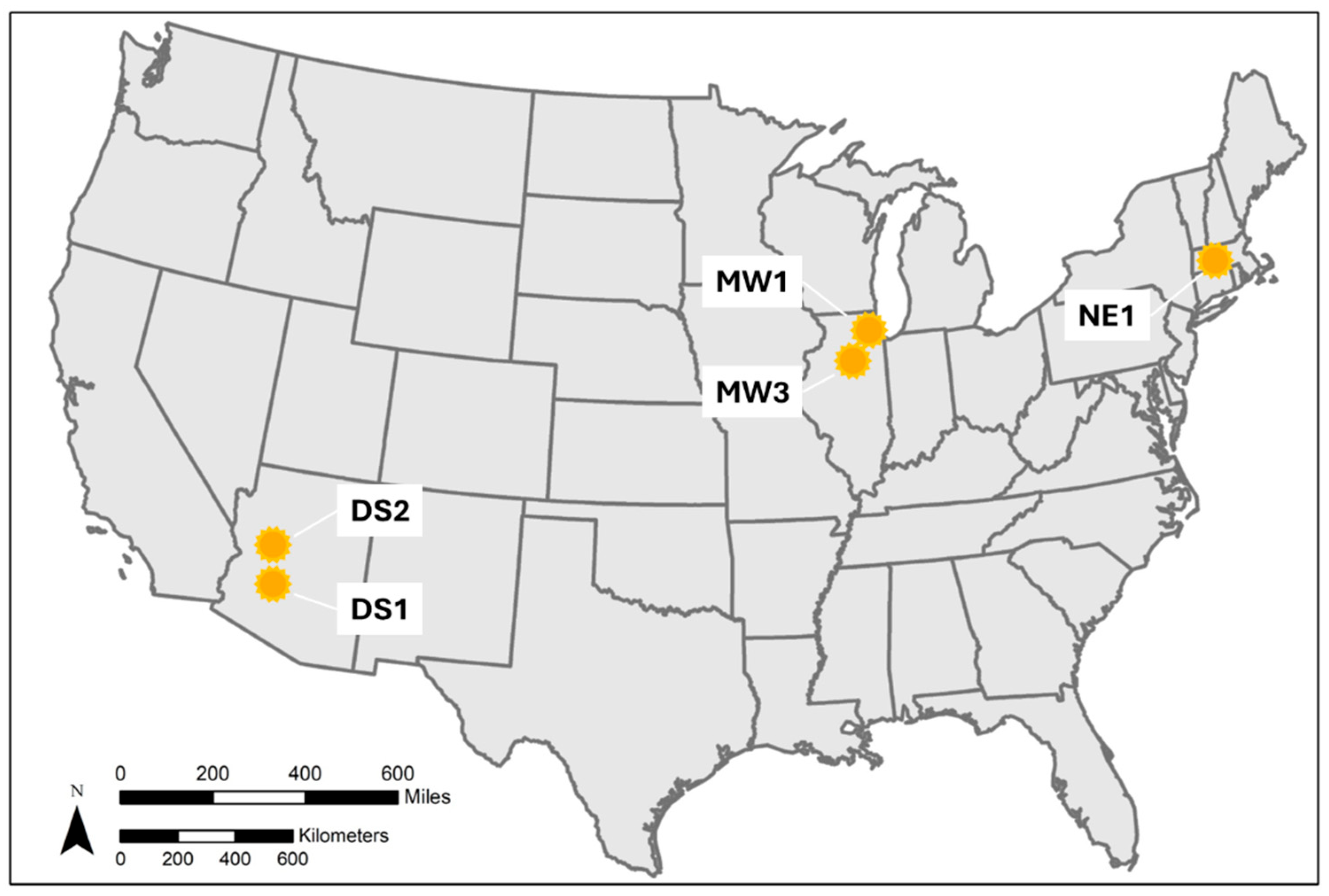
Figure 1. Map of study areas.
Diversity 18 00095 g001
Figure 2. The camera system and the associated components for recording bird activities at photovoltaic solar energy facilities. (a) Sighthound Compute Camera 4, (b) tripod adapter, (c) tripod, (d) enclosure, (e) portable external hard drive, (f) power-over-ethernet injector with power cord, (g) extension cord, (h) cat6 cable with dust caps, (i) ethernet cable, and (j) raspberry Pi and USB power cord. Specifications of instrumentations are provided in Table A1.
Diversity 18 00095 g002
Figure 3. Examples of video frames captured at the (a) desert Southwest 1, (b) desert Southwest 2, (c) Midwest 1, (d) Midwest 3, and (e) Northeast 1 sites.
Diversity 18 00095 g003
Figure 4. Overview of observation collection: (a) workflow and (b) resulting image sequence of an adult male eastern bluebird (Sialia sialis), output from the moving object detection and tracking (MODT) model. An animated image sequence is provided in Video S1.
Diversity 18 00095 g004
Figure 5. Composition of bird activity observations extracted from the daytime videos by site and season. (a) Desert Southwest 1 (DS1), (b) desert Southwest 2 (DS2), (c) Midwest 1 (MW1), (d) Midwest 3 (MW3), and (e) Northeast 1 (NE1) sites. No collisions were confirmed in bird observations collected from our video recordings. A lack of observation for some sites–seasons was due to a lack of available video recordings.
Diversity 18 00095 g005
Figure 6. Examples of bird behaviors observed in the daytime video recordings: (a) house finches (Haemorhous mexicanus) mating on the panel and (b) carrying nest material, (c) red-tailed hawk (Buteo jamaicensis) carrying a small bird, (d) say’s phoebe (Sayornis saya) catching an insect in mid-air, (e) eastern bluebird (Sialia sialis) carrying food, (f) European starling (Sturnus vulgaris) preening on the panel, and (g) American robin (Turdus migratorius) chasing eastern kingbird (Tyrannus tyrannus). Animated image sequences are provided in Videos S6–S12.
Diversity 18 00095 g006aDiversity 18 00095 g006b
Figure 7. Examples of insect observations collected from the daytime video recordings: (a,b) monarch butterfly (Danaus Plexippus), (c) unknown butterfly (order Lepidoptera), (d) mating dragonflies (order Odonata) over panels, (e) bumblebee (Bombus sp.), and (f) wasp (order Hymenoptera). Animated image sequences are provided in Videos S13–S18.
Diversity 18 00095 g007aDiversity 18 00095 g007b
Figure 8. Examples of mammals observations collected from the daytime video recordings: (a) coyote (Canis latrans) roaming on site, (b) black-tailed jackrabbit (Lepus californicus) running across the site, (c) immature red fox (Vulpes vulpes) walking across the site, (d) groundhog (Marmota monax) sitting in vegetation, (e) coyotes carrying prey, and (f) groundhog carrying twigs. Animated image sequences are provided in Videos S19–S24.
Diversity 18 00095 g008aDiversity 18 00095 g008b
Table 1. Summary of photovoltaic solar energy facilities analyzed in this study.
Desert
Southwest
1
Desert
Southwest
2
Midwest
1
Midwest
3
Northeast
1
Site specification
Area (hectares)~30~40<1~50~3
Capacity (MWac)1015<1203.5
Year of operation (years) 159798
Axis typeSingle axisSingle axisFixed tiltFixed tiltFixed tilt
Video collected (hours) 212,156311321932153809
Video processed (hours)19393251595581392
Start of video collectionSeptember 2020September 2020August 2019March 2021August 2023
End of video collectionDecember 2023September 2022May 2020May 2023June 2024
Land cover composition within a 5 km radius area 3
Open water0.6%0.0%3.5%0.1%0.8%
Developed, open space20.6%0.8%17.5%1.9%8.4%
Developed, low intensity18.2%1.8%25.9%5.3%5.2%
Developed, medium intensity19.7%0.3%19.3%0.4%1.8%
Developed, high intensity2.7%0.0%4.9%0.0%0.6%
Barren land0.0%15.2%0.3%0.0%0.4%
Deciduous forest0.0%0.0%10.2%2.6%31.7%
Evergreen forest0.0%0.0%1.2%0.0%3.0%
Mixed forest0.0%0.0%1.6%0.1%14.4%
Shrub/scrub9.1%81.9%0.7%0.0%0.1%
Grasslands/herbaceous0.0%0.0%0.5%0.2%0.4%
Pasture/hay0.0%0.0%0.6%2.9%17.1%
Cultivated crops29.0%0.0%0.3%86.1%3.2%
Woody wetlands0.1%0.0%9.5%0.3%12.2%
Emergent herbaceous wetlands0.0%0.0%4.0%0.1%0.7%
1 Years of operation prior to video collection. 2 The variation in total recording hours by site is due to several factors, including the timing and duration of partnerships, personnel/resource availability, weather conditions, and unforeseen logistical constraints. Total recording hours do not include nighttime recordings but may include daytime footage with quality issues, such as out of focus, infrared filter issue, condensation, or snow cover on lens. 3 U.S. Geological Survey’s National Land Cover Database 2020–2023 [17] was used for calculation.
Table 2. Definitions of bird activity classes.
Bird Activity ClassDefinition
Fly over aboveFlying above the solar panels high enough that no track images contain solar panel(s).
Fly throughFlying right above, between, and under solar panels. At least one track image contains a portion of solar panel.
Perch on panelFlying in and landing on any part of the solar panels, including supporting infrastructure, or perching on a panel and flying away.
Land on groundFlying in and landing on the ground or being on the ground and flying away.
Perch in backgroundFlying in and landing on any background object/infrastructure (e.g., powerline, building, and tree) or perching on the background object and flying away.
Collision *Forcibly colliding with any part of the solar panels, including surface, edge, corner, and foundation, in a manner different from perching behavior. It is likely the bird will fall to the ground after the collision, but it is possible that a disoriented bird will fly away.
* Collision was to be recorded only for observations where a bird made contact with PV infrastructure (panel, frame, and racking) in a manner distinct from deliberate perching or landing.
Table 3. Summary of daytime video recordings processed and bird observations collected by site and seasons using the moving object detection and tracking artificial-intelligence model 1.
SeasonDesert
Southwest
1
Desert
Southwest
2
Midwest
1
Midwest
3
Northeast
1
Total
Video
recording processed (hours)
Spring298641093877791637
Summernana50na302352
Fall1199138na1713111819
Winter442123nanana565
Total193932515955813924373
Bird
observation collected
Spring14882425467528722,22234,706
Summernana1950na52987248
Fall94872428na192710,87424,716
Winter1667309nanana1976
Total12,64229797417721438,39468,646
Average rate of bird observation (per hour) [standard error] 2Spring6.6
[1.06]
3.1
[0.52]
65.3
[4.34]
14.7
[2.92]
42.0
[2.80]
na
Summernana37.1
[2.27]
na11.9
[2.65]
na
Fall6.9
[0.97]
14.3
[1.32]
na6.5
[1.56]
36.4
[6.83]
na
Winter3.3
[0.43]
6.1
[0.91]
nananana
1 No video recordings were available for the following site-seasons: Desert Southwest 1, Desert Southwest 2, and Midwest 3 in summer; Midwest 1 in fall and winter; and Midwest 3 and Northeast 1 in winter. 2 Average rates and standard errors of bird observation were calculated using bootstrap resampling (n = 100) with replacement. Statistical significance was evaluated with analysis of variance (ANOVA) at α = 0.05, followed by Bonferroni post hoc test. The results are presented in Figure A1.
Table 4. Bird behaviors seen in observations that were not considered for the broad activity types.
Bird BehaviorDescription
MatingDisplaying courtship, allopreening, and/or (attempted) copulation.
NestingCarrying nesting material, food, or a fecal sac. Entering/exiting nest sites.
ForagingSearching and/or gathering food on the ground and in mid-air.
Self-maintenancePreening and/or wiping bill.
Territorial/aggressiveDisplaying defensive or aggressive postures (e.g., puffing feathers) or direct confrontations (e.g., chasing).
Table 5. Summary of insect observations collected from the daytime videos by site and season 1.
SeasonDesert
Southwest
1
Desert
Southwest
2
Midwest
1
Midwest
3
Northeast
1
Total or
Average
Insect
observation collected
Spring745107217169123555115
Summernana889012312120
Fall96001948na473756416,849
Winter185727nanana1884
Total12,202208211066428415025,968
Average rate of insect observation (per hour) [standard error] 2Spring3.5
[0.72]
2.5
[0.44]
2.4
[0.35]
4.5
[1.07]
12.1
[2.83]
na
Summernana17.5
[1.15]
na8.3
[1.58]
na
Fall9.8
[1.69]
25.7
[2.83]
na15.1
[2.82]
1.5
[0.44]
na
Winter7.7
[0.98]
0.7
[0.14]
nananana
1 No video recordings were available for the following site-seasons: Desert Southwest 1, Desert Southwest 2, and Midwest 3 in summer; Midwest 1 in fall and winter; and Midwest 3 and Northeast 1 in winter. 2 Average rates and standard errors of insect observation were calculated using bootstrap resampling (n = 100) with replacement. Statistical significance was evaluated with analysis of variance (ANOVA) at α = 0.05, followed by a post hoc test. The results are presented in Figure A3.
Table 6. Summary of other wildlife observations collected from the daytime videos by site and season.
SeasonDesert
Southwest
1
Desert
Southwest
2
Midwest
1
Midwest
3
Northeast
1
Total
Other wildlife
observation collected
Spring2173701571
Summernana2na68
Fall6213na01186
Winter04nanana4
Total643439032169
Disclaimer/Publisher’s Note: The statements, opinions and data contained in all publications are solely those of the individual author(s) and contributor(s) and not of MDPI and/or the editor(s). MDPI and/or the editor(s) disclaim responsibility for any injury to people or property resulting from any ideas, methods, instructions or products referred to in the content.