Article

Tocotrienol-Dominated Profiles in Ilex Genus (Aquifoliaceae) Seeds and Their Relationship to Plant Phylogeny


Institute of Horticulture, Graudu 1, LV-3701 Dobele, Latvia
*
Author to whom correspondence should be addressed.
Diversity 2026, 18(2), 91; https://doi.org/10.3390/d18020091
Submission received: 7 January 2026 / Revised: 25 January 2026 / Accepted: 26 January 2026 / Published: 2 February 2026
(This article belongs to the Section Phylogeny and Evolution)

Abstract

Most research on tocochromanols suggests that tocotrienols (T3) are rarely found in nature, especially in dicotyledonous species. The present study investigates species from the Ilex (holly) genus, the sole surviving genus in the Aquifoliaceae family. The study tested 29 species or hybrids from botanical gardens across Eurasia and the US. A direct ultrasound-assisted extraction in ethanol (UAEE) protocol was validated and used to extract tocochromanols. Tocochromanol recovery from seeds via UAEE ranged between 96–100%, compared to saponification. α-T3 and γ-T3 accounted for an average of 91% of all tocochromanols determined in Ilex species. The highest tocochromanol content was found in I. crenata and I. serrata (8.11 and 6.66 mg 100 g−1 dry weight, respectively). A total of 19 of 29 species in the Aquifoliaceae family were dominated by α-T3. Differences between plant type (shrub/tree) and seasonality (deciduous/evergreen) were not statistically significant, and appear to be mainly influenced by other factors. Linear discriminant analysis identified I. crenata, I. asprella, I. × meserveae, I. vomitoria, and I. geniculata (all shrubby) as divergent.

1. Introduction

The holly (Ilex) genus is the only surviving genus in the Aquifoliaceae family, spread across all green continents and containing 570 species [1]. Few Ilex species are widely cultivated. The species may be deciduous or evergreen, and may grow as shrubs or trees. Most notably, I. aquifolia is cultivated as an ornamental plant, I. paraguariensis (yerba mate) leaves are often used in recreational and medicinal tea due to the presence of caffeine [2], while I. guayusa, I. kaushue, and I. vomitoria are used more locally. Besides caffeine, these species also contain theobromine and theophylline, while other Ilex species do not, or their content has not been analyzed [3,4]. These species are distributed and used across China and Vietnam (Ilex kudingcha and I. latifolia), South America (I. paraguariensis and I. guayusa) and the Southeastern United States (I. vomitoria). Besides alkaloids, hollies also produce chlorogenic acids, their derivatives, and other polyphenolic compounds [5,6]. Some Ilex species are used as minor sources of timber, but are not widely cultivated for this purpose [3]. The Food and Agriculture Organization of the United Nations (FAO) estimates the mate leaf production quantity to be around 1.88 million tons in 2023, with the largest producer being Argentina (0.98 million tons, value imputed by receiving agency), followed by Brazil (0.07 million tons, official figure) and Paraguay (0.02 million tons, official figure) [7].
Holly berries and their pulp are not commonly used in food, pharmacy, and cosmetics due to their toxicity. Holly has been one of the most common causes of plant poisoning, the primary toxin being saponic glycosides and illicin, which irritate the gastrointestinal tract, and a handful of berries can be fatal in children [8]. However, toxic component concentrations are lower in the seeds of some species [9], or have not been investigated.
Tocochromanols are a group of lipophilic prenyllipid antioxidant compounds that consist of a chromane ring and branched aliphatic tail of various lengths that can be saturated or unsaturated. The most common tocochromanols are tocopherols (Ts) and tocotrienols (T3s). Their chromane ring structure is analogous, but tocopherols have a saturated tail, while tocotrienol tails have three unsaturated bonds, as suggested by the name [10]. These compounds are widely used in food in free and esterified form as lipophilic antioxidants [11]. Because they also act as antioxidants in the body, much research has been devoted to the beneficial effect of tocotrienol and tocopherol supplementation on bone [12], neurological [13], and skin health [14].
According to existing research, α-T and γ-T are the most prevalent in nature, while tocotrienols and other tocopherols are less common, especially in dicotyledonous plants [15]. Domination of tocotrienols have been observed in seeds and their oils in some species of several dicot families, such as Apiaceae, Clusiaceae, Euphorbiaceae, Ranunculaceae, and others [15,16,17,18]. However, a large number of different species have been analyzed only in the Apiaceae family [16,17,19]. Phylogeny is related to the appearance of different phytochemicals within and between plant families, for instance alkaloids in the nightshade (Solanaceae), non-protein amino acids in the legume (Fabaceae), iridoids and sesquiterpenes in the mints (Lamiaceae) [20], pyrrolizidine alkaloids in the borage (Boraginaceae) [21], petroselinic acids and a tocotrienol-dominated tocochromanol profile in the parsley (Apiaceae) [16,17,19,21], and naphthodianthrones, phloroglucinol derivatives, xanthones, and other rare phenolic compounds [22], and elevated levels of tocotrienols in photosynthetic tissues [23,24,25] in the Hypericum genus. Nonetheless, any chemotaxonomic inference must account for the spatial and temporal distribution of the metabolites in question, as well as for the multiple factors that govern their accumulation—most notably the ontogenetic stage, diurnal rhythms, and seasonal dynamics. While emerging evidence indicates that selected classes of secondary metabolites may indeed offer diagnostic utility at lower taxonomic levels, such conclusions warrant a cautious interpretation until broader sampling and controlled comparisons are available [22]. Chemotaxonomic classification within the genus Ilex has been advanced by exploiting the diagnostic value of leaf secondary metabolites. Integrative chemotaxonomic and metabolomic approaches have revealed a tight affinity among caffeine-producing Ilex taxa, supporting their close relatedness [26]. Complementarily, 1D- and 2D-NMR-based metabolomics has further demonstrated that Ilex species can be reliably discriminated on the basis of characteristic chemical fingerprints, including xanthines, phenolic compounds, phenylpropanoids, flavonoids, oleanane- and ursane-type saponins, arbutin, and dicaffeoylquinic acids [27].
α-T has been reported as the predominant tocochromanol in green tissues, while seeds mainly accumulate γ-T, and tocotrienols have mostly been found in seeds [28]. Soon after this observation, chemotaxonomic associations related to tocotrienol occurrence were observed in monocotyledons, but were suggested to be largely absent in dicotyledons [18]. Recent evidence, however, challenges this dichotomy: seeds of dicot families such as Apiaceae [16,17,19] and Vitaceae [29] have been shown to display tocotrienol dominance over tocopherols, and additional families—including Ericaceae [15,30] and Ranunculaceae [18,31]—warrant screening of other families.
Papers on tocochromanols and chemotaxonomy usually have a single biological representative for species, genus, and often even family [15,17,18,19,32,33], and sourcing sufficient sample pools is a very common issue for drawing conclusions on the prevalence of tocochromanols in plants. Lipid analysis in the Ilex genus has been limited to determining fatty acid composition—Ilex aquifolium and I. × meserveae leaves predominantly contain linolenic, palmitic, and linoleic acid [34], and the seeds of I. verticillata predominantly contain linoleic and oleic acid [35]. To our knowledge, there are no publications investigating tocochromanol content in the holly family. In our preliminary works, we followed a pragmatic chemotaxonomic premise: if two species within the same family “family 1”—here, “species 1” and “species 2”—consistently display tocotrienol predominance over tocopherols in their seeds, then other congeneric or confamilial taxa “species 3”, “species 4”, …, “species n” are likely to share this trait. Applying this rationale proved useful for identifying tocotrienol-dominated seed tocochromanol profiles in the Vitaceae family [29] and documenting tocotrienol accumulation in the leaves of Hypericum and Clusia species [23,24]. In cooperation with botanical gardens around the world, seeds of 29 Aquifoliaceae species were investigated to verify the role of chemotaxonomical tools in searching for new species rich in tocotrienols using greener protocols—a rapid ultrasound-assisted extraction in ethanol (UAEE) assay. The present report aims to contribute to extending knowledge of tocotrienol-dominated plant families.

2. Materials and Methods

2.1. Reagents

Potassium hydroxide, pyrogallol, sodium chloride (reagent grade), n-hexane, methanol, ethyl acetate, and ethanol (HPLC grade) were obtained from Sigma-Aldrich (Steinheim, Germany). The 96.2% ethanol was received from SIA Kalsnavas Elevators (Jaunkalsnava, Latvia). The eight tocochromanol standards α, β, γ, and δ homologue of tocopherols and tocotrienols (>95%, HPLC) were purchased from LGC Standards (Teddington, Middlesex, UK) and Merck (Darmstadt, Germany).

2.2. Plant Material

Plant material from the Aquifoliaceae family, i.e., 71 seed samples belonging to 29 species, was obtained from botanical gardens across the world, mainly Eurasia (Belgium, Czech Republic, Germany, Estonia, Spain, Georgia, Poland, Portugal, Taiwan) and the USA, sent via mail, as part of seed exchange programs between botanical gardens. The Aquifoliaceae family was one of over a hundred families investigated as part of this project. The full list of botanical gardens that supported this project can be found in the Supplementary Materials. Species verification of the provided plant material (seeds) was performed by the staff of the donor botanical garden, which shared their genotype resources. To reduce the impact of factors such as risk of misidentified species, crossbreeding, environmental factors, and others, origin (botanical garden) diversification was prioritized alongside species diversity. Synonymic species were checked using online databases, such as wikispecies.com (classification into subfamilies) and worldfloraonline.com (synonymic species), using the consensus or most recent reference available. Original species names and the number of replications for each species provided by the botanical garden are given in Supplementary Materials. Seeds were obtained and analyzed between 2019 and 2024.
A small number of seeds was collected and air-dried at ambient temperature to retain viability before this research period, but they do not affect the results, as the seeds provided by botanical gardens are from the preceding vegetative season. The seeds were catalogued as they were received and cleaned from other plant part residues if required. Seeds were frozen at −80 °C for 1–3 h, and freeze-dried using a FreeZone freeze-dry system (Labconco, Kansas City, MO, USA) at a temperature of −51 ± 1 °C and <0.01 mbar for 24–48 h, depending on the size and number of seeds. Lyophilized seeds contained 3–7% moisture. Due to the generally limited seed mass, an average moisture content value of 5% was used as the default/constant to calculate tocochromanol for all samples. Dry seeds (0.1–1 g) were powdered using an MM 400 mixer mill (Retsch, Haan, Germany) and tocochromanols were extracted within the same day using ultrasound-assisted extraction in 96.2% ethanol (UAEE), as described below in Section 2.3.2 (all samples), and Section 2.3.1 for five selected samples (recovery study).

2.3. Tocochromanol Extraction

2.3.1. Saponification

The saponification protocol for the powdered seed samples (0.05–0.10 g) was performed in the presence of 2% pyrogallol (an antioxidant) in ethanol (w/v) and 60% aqueous potassium hydroxide (w/v), incubated in a water bath at 80 °C for 25 min. After saponification, tocochromanols were extracted three times using n-hexane:ethyl acetate solution (9:1, v/v). The details of the saponification step and subsequent tocochromanol extraction are reported earlier [36]. The organic solvent was evaporated, dissolved in 1 mL of ethanol, transferred to 2 mL glass vials, and analyzed immediately by a reversed-phase liquid-chromatography system with fluorescence detection (RPLC-FLD).

2.3.2. Ultrasound-Assisted Extraction in Ethanol (UAEE)

The greener method was adopted from a developed protocol for extraction of tocochromanols in cranberry (Vaccinium macrocarpon) seeds [36]. Briefly, the powdered seeds (0.05–0.10 g) were placed in a 15 mL tube and supplemented with 96.2% ethanol (v/v) (5 mL), mixed (1 min) at 3500 rpm using a vortex, and treated by an ultrasound of nominal ultrasonic power 160 W and ultrasound frequency 35 kHz using a Sonorex RK 510 H ultrasonic bath (Bandelin Electronic, Berlin, Germany) at 60 °C for 15 min. Immediately after completion of the ultrasonic step, the samples were mixed (1 min) as before, centrifuged at 11,000× g at 21 °C for 5 min, transferred directly to a 2 mL glass vial, and analyzed in a RPLC-FLD system.

2.3.3. Method Validation

Since the extraction of tocopherols and tocotrienols from all tested seeds using UAEE differs from most studies investigating tocochromanol content in plant material, the results were compared with the standard saponification protocol. Recovery (%) tests of tocopherols and tocotrienols from the seeds of five selected species of genus Ilex (I. aquifolium, I. verticillata, I. laevigata, I. serrata, and I. latifolia) (5 × 3 UAEE vs. 5 × 3 saponification) were performed. Measurement repeatability (%) for both extraction protocols was evaluated. Repeatability (coefficient of variation) was calculated based on the independent determinations of a sample by analyzing three replicates on the same day. Error of measurement (standard deviation) was calculated based on the independent determinations of a sample by analyzing three replicates on the same day.

2.4. Tocochromanol Determination by Reversed-Phase Liquid Chromatography with Fluorescent Detection (RPLC-FLD)

Determination of four tocopherols and four tocotrienols was done according to a reported method using authentic standards and calculated using calibration curves produced earlier [37]. Separation was performed on a Luna PFP column (3 µm, 150 × 4.6 mm) (Phenomenex, Torrance, CA, USA) using 93% methanol (v/v) as mobile phase with 1 mL/min flow rate and a 40 °C column-oven temperature. Measurements were done on a LC 10 series (Shimadzu, Kyoto, Japan) system equipped with a RF-10AXL fluorescence detector using the following detection parameters of excitation and emission: λex = 295 nm and λem = 330 nm, respectively.

2.5. Statistical Analysis

The results of all the performed experiments of different species seed samples obtained from different botanical gardens (biological replications) are presented as means ± standard deviation (n = 2–6). Analytical results are presented as species mean tocochromanol content ± standard deviation. The species were grouped into evergreen or deciduous plants, and grouped by plant shape (tree/small shrub-like tree/shrub) based on online consensus. Multivariate analysis of variance (MANOVA) with linear discriminant post-hoc test was used to determine statistically significant differences between species and plant groups. Because the data was not normally distributed, the Kruskal–Wallis test was used as well. Differences were considered statistically significant at p < 0.05, and Bonferroni p-adjustment was used in both cases. Principal component analysis (PCA) was further used to determine the main discriminating factors (tocochromanols). Base and opensource R (R 4.3.2) packages were used: stats for multivariate analysis of variance (MANOVA) and MASS for linear discriminant analysis (LDA) post-hoc, agricolae for multivariate analysis of covariance (MANCOVA) and with Tukey’s post-hoc test and Kruskal–Wallis test, and factoextra for PCA and k-means cluster analysis, while ggplot2, ggthemes, gghighlight, scales, forcats, dplyr, and tidyr were used for data frame reshaping and visualization in Rstudio software (“Cucumberleaf Sunflower” Release (20de3565, 23 September 2025) for windows).

3. Results and Discussion

3.1. Saponification and UAEE Recovery and Measurement Repeatability

Saponification is the most common sample preparation protocol for tocopherol and tocotrienol analysis. It has the highest tocochromanol recovery [37], but requires long preparation time, uses nauseating solvents such as hexane and ethyl acetate, and does not distinguish between free and esterified tocochromanols [38]. The present study used a simplified UAEE of tocochromanols, which is more time- and cost-effective. The method has proven suitable for cranberry seed [36] and grape seed (Vitis spp.) [39] tocochromanol analysis, and provided recovery similar to a saponification protocol. However, the results cannot be compared directly and a pilot study with saponification is advisable when investigating new plant material. Esterified tocochromanols can be a minor or major fraction in plant material, their proportion ranging from almost none to almost all of the tocochromanols in the plant matrix [40]. Additionally, tocochromanols can be physically bound in the plant material [38].
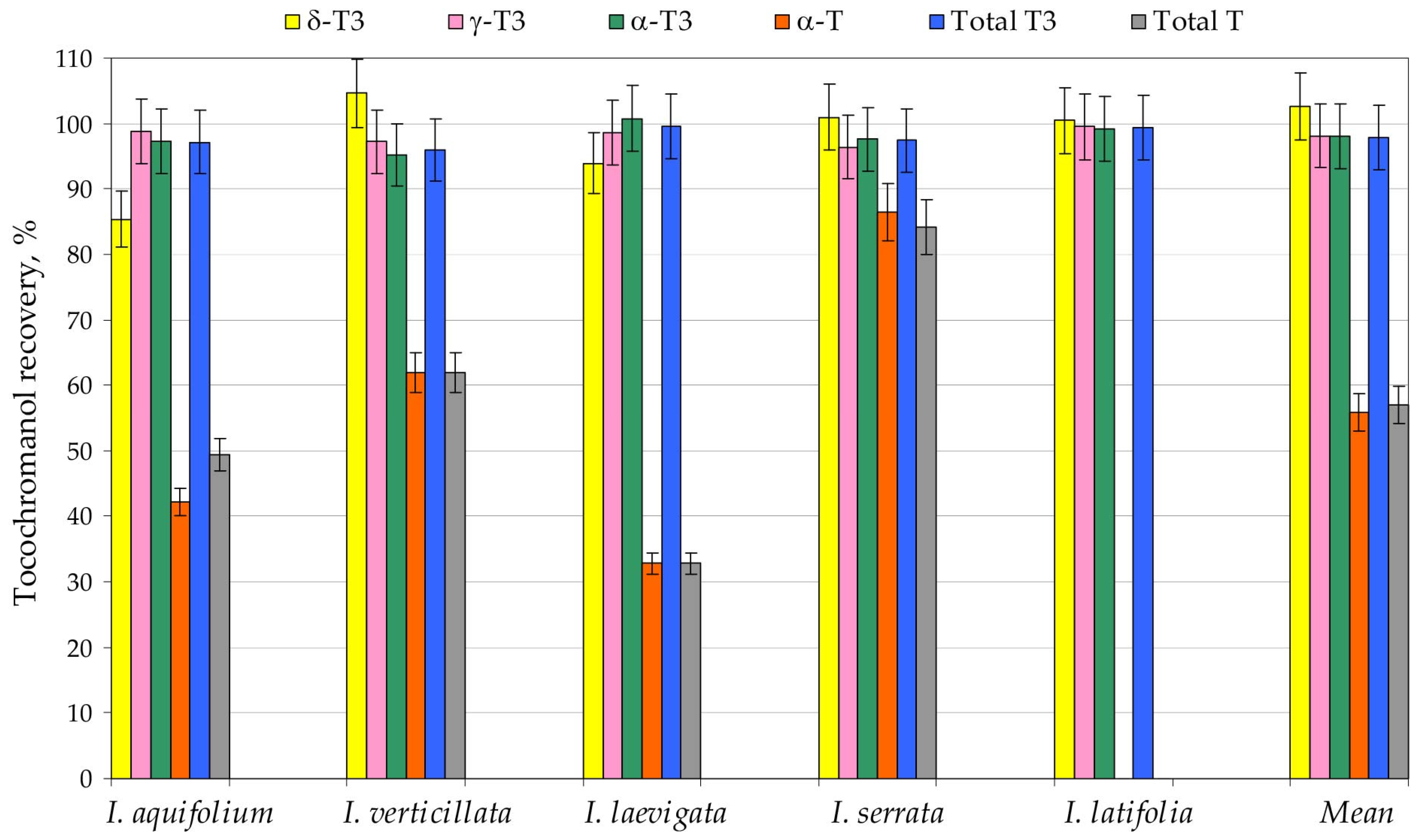
Therefore, the seeds from five Ilex species (I. aquifolium, I. verticillata, I. laevigata, I. serrata, and I. latifolia) were prepared using UAEE and the saponification protocol. Recovery (relative to saponification protocol) of individual tocochromanols using UAEE is as follows: 95–101% for α-T3, 96–99% for γ-T3, and 85–105% for δ-T3 (detected in all five samples), 42–86% for α-T (detected in four samples), and 70–76% for γ-T (detected in two samples). β-T, δ-T and β-T3 were not detected in any of the five samples. Total tocopherol and tocotrienol recovery ranged between 49–84% and 96–100%, or 70% and 98% on average, respectively (Figure 1, Table S1, Supplementary Materials).
Higher recovery in saponified samples can be explained by releasing tocochromanols from ester or glucoside derivatives, or non-extractable, physically bonded tocochromanols [38]. Lower extractability of tocopherols can be a result of higher esterified tocopherol proportion, and lower solubility in ethanol, especially α-T [39]. Due to the low tocopherol content, challenges in bound tocochromanol analysis, and measurement error, the current study did not attempt to characterize these structures. Both analytical methods exhibited good and comparable repeatability.
Generally, the lowest repeatability was observed for minor tocochromanols. Since tocotrienols demonstrated higher concentrations across the family, their repeatability was on average over three times greater (coefficient of variation) than that of tocopherols (Supplementary Materials). The recovery and repeatability of the UAEE protocol is suitable for application in comparative research on Aquifoliaceae family samples with 94–99%. This is an average of 97% recovery of total tocochromanols compared to a saponification protocol, demonstrating its suitability for daily sample screening.

3.2. Tocochromanol Profile

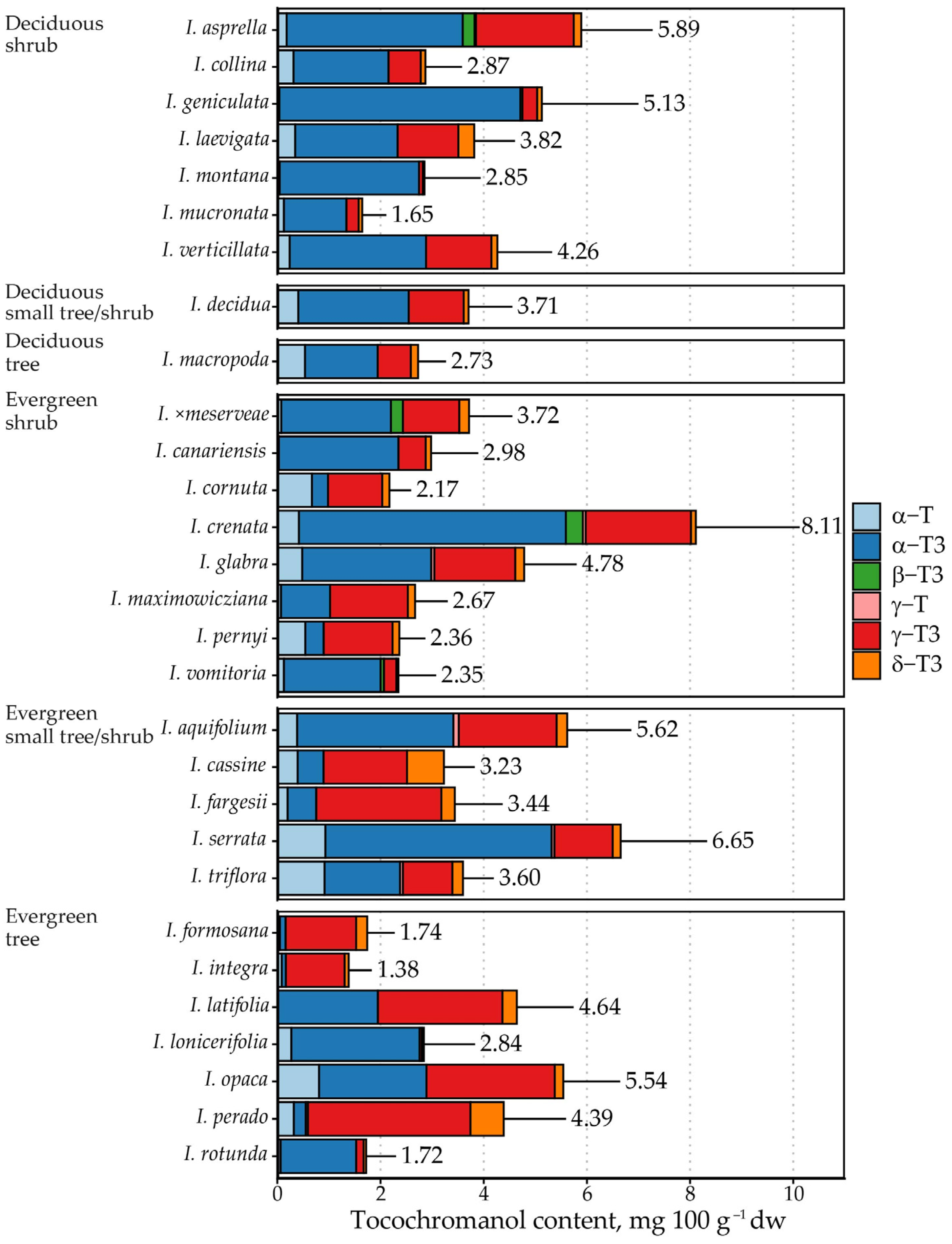
Tocopherol and tocotrienol content were analyzed in 71 seed samples from 29 species, as provided in Table 1.
The samples included one hybrid species—Ilex × mucronata. All samples were tocotrienol-dominated. The highest tocochromanol content was observed in I. crenata, followed by I. serrata (8.11 and 6.66 mg 100 g−1 dw, respectively) and the lowest in I. integra (1.39 mg 100 g−1 dw). The seeds contained predominantly α-T3 and γ-T3. In most of the species, α-T3 occurred in greater quantities, while I. fargesii, I. formosana, I. integra, I. maximowicziana, I. perado, and I. pernyi were γ-T3 dominated, and I. latifolia and I. opaca showed similar proportions of both homologues. The highest mean α-T3 content was observed in I. crenata, I. geniculata and I. rotunda (5.18, 4.67, and 4.38 mg 100 g−1 dw, which constituted 63.8, 91.0, and 65.8% of total tocochromanols, respectively). In the case of γ-T3, the highest content was recorded in I. perado followed by I. opaca, I. fargesii, and I. latifolia (3.15, 2.49, 2.43 and 2.42 mg 100 g−1 dw). The lowest tocotrienol and highest tocopherol proportion was observed in I. cornuta (69.5 and 30.5%, respectively). None of the tested samples contained δ-T or β-T, while β-T3 and γ-T were detected in minor amounts in some species only. Tocotrienols dominated over tocopherols in all 29 species, with tocotrienol-to-tocopherol ratios ranging widely across genotypes (2.3–232.0). The balance between the two main tocotrienols was nuanced: α-T3 exceeded γ-T3 in the majority of genotypes (n = 19), whereas γ-T3 dominance was observed in fewer cases (n = 10) (Table 1).
The seeds of the analyzed Ilex species were grown in different locations across the globe and several vegetative seasons (2019–2024), under different meteorological conditions and soil types and compositions, which affect tocochromanol biosynthesis [41,42,43,44] through the upregulated synthesis of other metabolites such as plastochromanol-8 or quinones, or chlorophyll degradation for subsequent α-T production [45]. Tocochromanol concentrations can fluctuate significantly during fruit maturation [46,47] and can differ between species [48,49,50] and fruit and seed maturation stages [51,52,53], and extraction protocols affect analysis has a great impact on results [38]. Previous studies have observed that genetic factors (heritability) had a stronger effect on rapeseed and lupin tocochromanols than their growing conditions [54,55]; population affected palm oil composition slightly less than the larger geographic region from which it was sourced [56]. Species as well as source diversity were prioritized, and samples were collected across several growing seasons to reduce the impact of genetic variability and environmental stressors.
The estimated annual global yield of I. paraguariensis (yerba mate) fruit was upwards of 1700 t in 2013 [57]. In the decade between 2013 and 2023, the estimated yerba mate production has doubled, while the harvested area has increased by about 10% [7]. Ilex paraguariensis berries are not widely processed, and seed oil is not available on the market. The main practical limitations to I. paraguariensis seed oil production is the amount that can realistically be obtained with low oil content—about 4.2% [57]. Each fruit typically yields only one small seed, and they are frequently reserved for propagation and environmental conservation-oriented purposes [58]. Ilex is not primarily cultivated for seeds and oil. The tocochromanol content is much lower than palm oil, annatto seeds, cereal bran, and wheat germ oil [15,59], but is closer to grapeseed oil, which mostly contains γ-T3 [52], and is made economically feasible by large-scale processing in the food and beverage industry [15,51].

3.3. Tocochromanol Composition as Shaped by Phylogeny

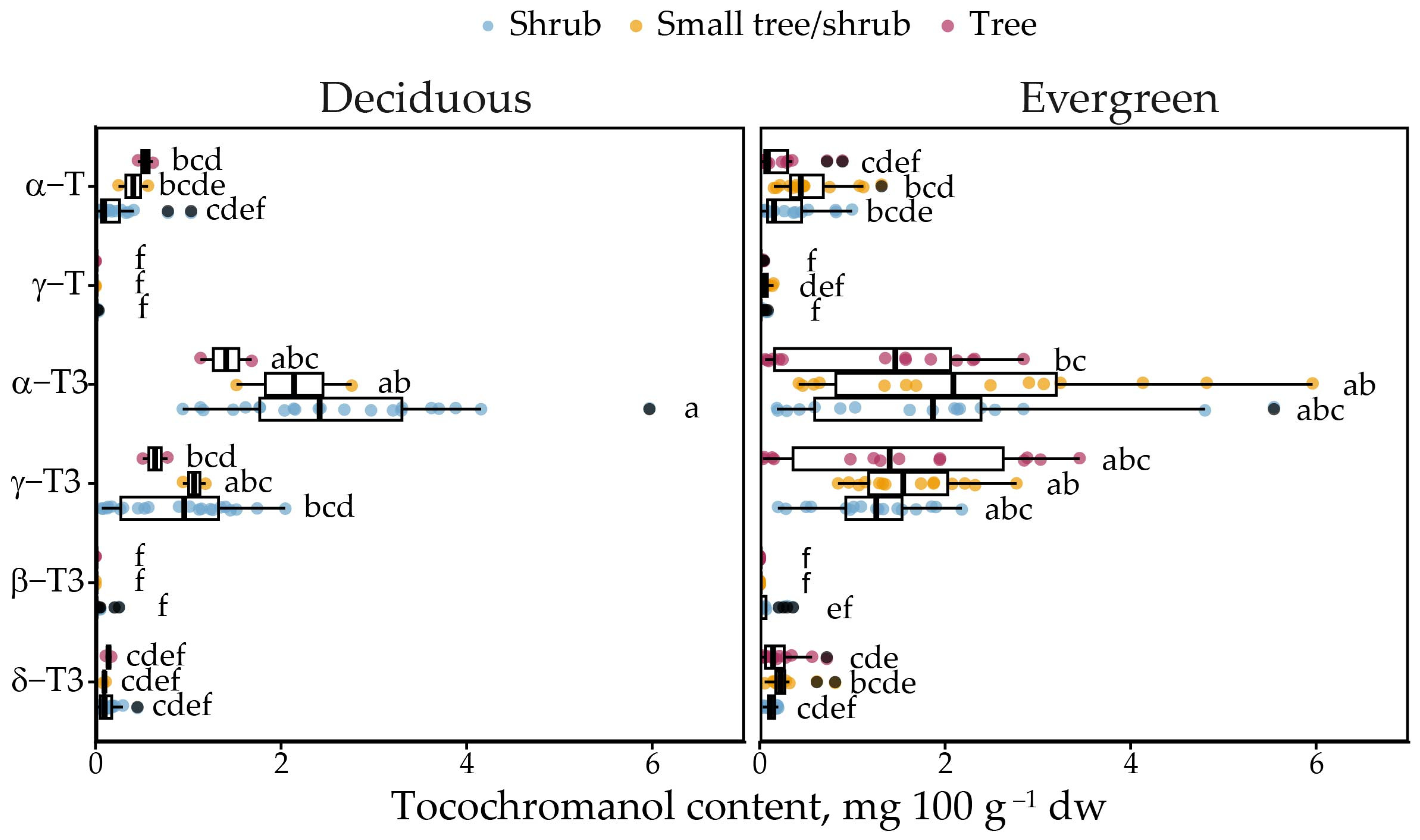
Ilex species can be shrubs, shrubby trees, or deciduous or evergreen trees. Evergreen (45 out of 71 samples) and shrub (39 of 71 samples) species were more represented in the sample set. The family contains a single genus, and is not subdivided. As depicted in Figure 2, the tocochromanol profile is largely similar between the different groups; however, deciduous species had slightly higher α-T3 than γ-T3 content. Due to the low number of representatives, deciduous small tree/shrub and tree species present lower variability than can likely be observed in nature.
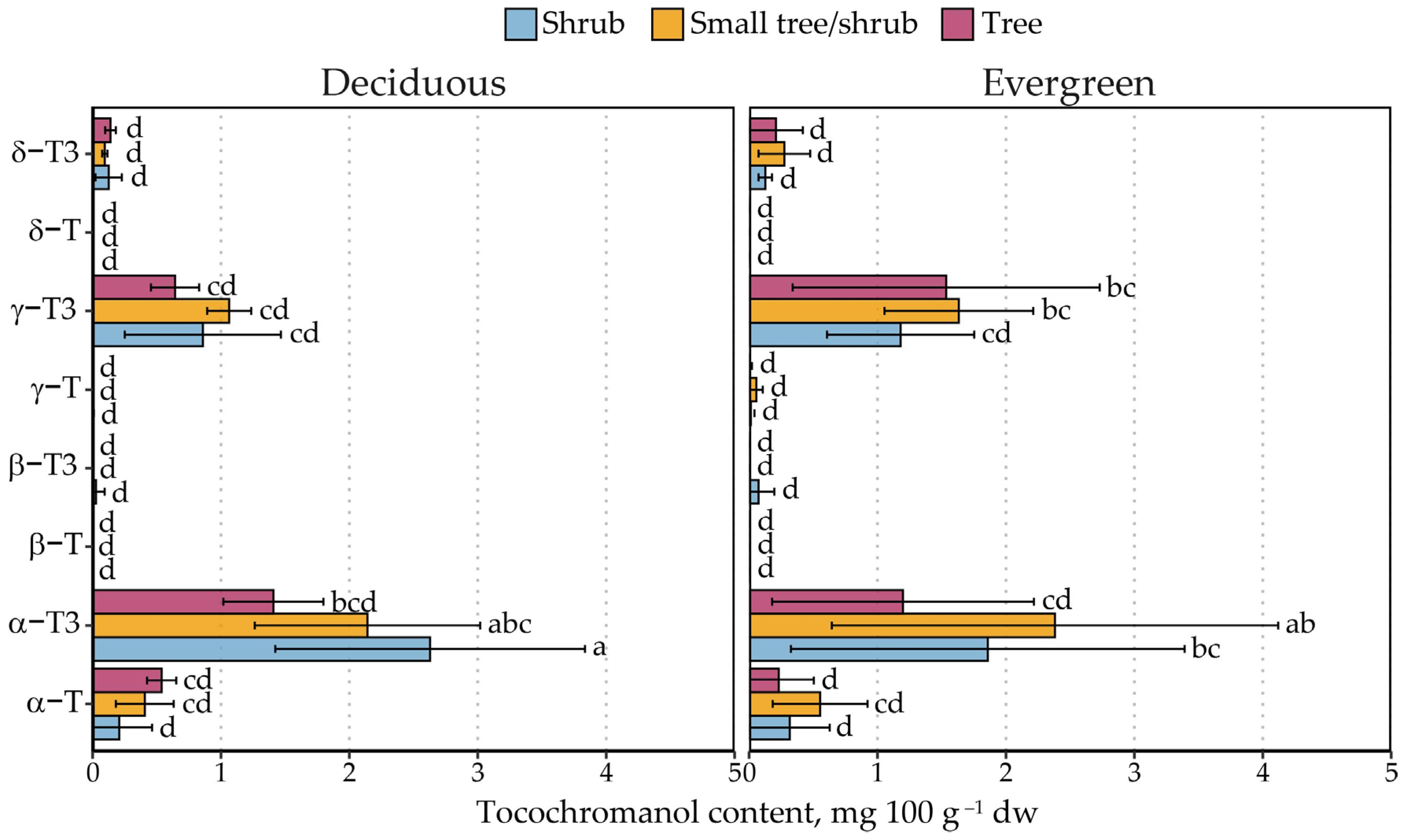
MANCOVA identified species (p < 0.001), plant shape (p < 0.001), and leaf seasonality (p = 0.02) as significant factors. While both shape and seasonality had a significant effect on seed tocochromanol content, leaf seasonality affected tocochromanol profiles to a lesser degree. However, results may differ if leaf tocochromanol contents are investigated. β-T3 (p = 0.03 and p = 0.09, respectively), γ-T3 (p = 0.02 and p = 0.04, respectively) and γ-T3 (p < 0.001 and p = 0.03, respectively) were strongly affected by both factors, while γ-T3, α-T3, and α-T were only different between plant shapes (p = 0.01, p = 0.02, and p = 0.007, respectively). There was no significant interaction between plant shape and seasonality (p = 0.1 > 0.05). The mean values within groups are presented in Figure 3 along with homogenous groups identified by MANCOVA and the Tukey HSD test.
Leaf tocochromanol profile and content are dynamic and shaped by multiple abiotic factors [25,60,61,62,63,64]. Overall, leaf tocochromanols tend to rise as development progresses [62], and differ between leaves of different position and age [25] and leaf and plant size [60,64]. Usually, α-T is dominant in leaves, but γ-T is predominant, or a similar concentration of γ-T and δ-T can be observed as well [60]. Tocotrienols are generally rarely detected in leaves. Exceptions include Hypericum and Clusia species [23,25,62], and Vellozia gigantea [64].
Analogous to leaves, seed tocochromanol accumulation increases as maturation progresses, e.g., in Japanese quince (Chaenomeles japonica) and grape (Vitis vinifera) [47,65]. Tocotrienol-dominated mature seeds, such as grapes, contain mainly tocopherols in early development, and tocotrienol content increases logarithmically in mid to late stages [47]. This is consistent with one of the critical functions of tocopherols, especially α-tocopherol: embryo protection against reactive oxygen radicals during early seed development [66]. Seed tocochromanol profiles remain responsive to abiotic factors, like temperature and water status [67,68].
While total tocochromanol contents differed significantly between species, they predominantly contained either α-T3 or γ-T3, and some had higher β-T3 or δ-T3 proportions (Figure 4). Of these, β-T3 appeared only in shrubs, while δ-T3 was present in evergreen as well as deciduous shrubs, small trees, and trees.
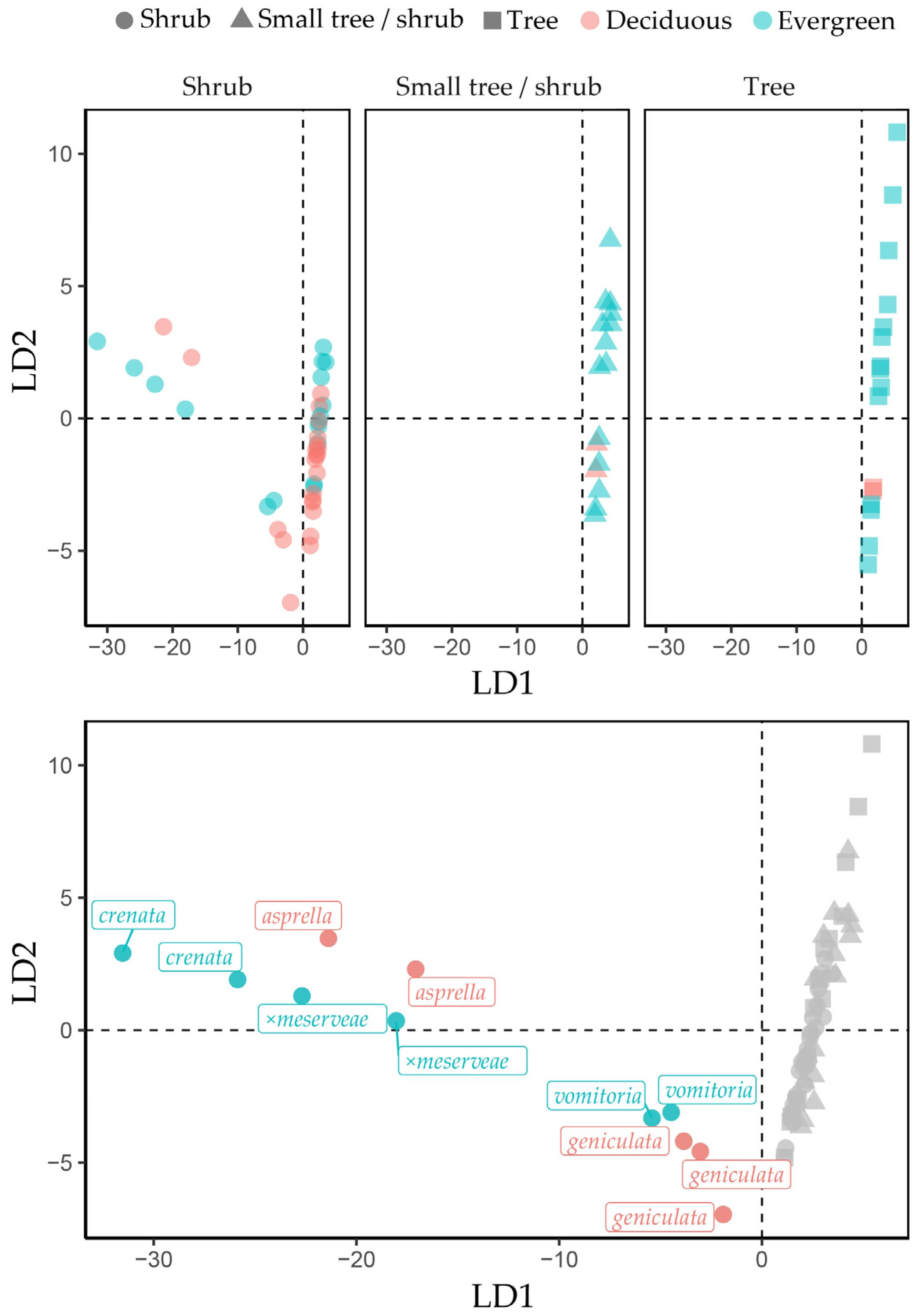
As expected, tocochromanol contents differed significantly between species (p < 0.001). Linear discriminant post-hoc test (Figure 5) reveals four devious species: Ilex × meserveae, I. asprella, I. crenata, and I. geniculata, all of which are shrubby, but I. asprella and I. geniculata are deciduous, while Ilex × meserveae and I. crenata are evergreen. The differentiating factor between these and other tested samples is the presence of β-T3 and higher α-T3 content. Although β-T3 was observed in I. vomitoria seeds, α-T3 content was lower than in the other four outliers. There was no strong correlation between tocochromanols within the dataset, only slight correlation between γ-T3 and δ-T3 (ρ = 0.592, p < 0.001). In the deviant species identified by LDA, there were several significant correlations: γ-T3 and β-T3 (ρ = 0.930, p < 0.001), α-T3 and δ-T3 (ρ = −0.703, p < 0.05), γ-T and γ-T3 (ρ = 0.834, p < 0.001), and γ-T and β-T3 (ρ = 0.776, p < 0.05). The rest of the dataset had significant correlation only between γ-T3 and δ-T3 (ρ = 0.629, p < 0.001), the precursors of α-T3 and β-T3, respectively, but no significant correlation between α-T3 and β-T3. There were no significant correlations between intermediary and final tocochromanols, nor between the γ–α or δ–β pathway products.
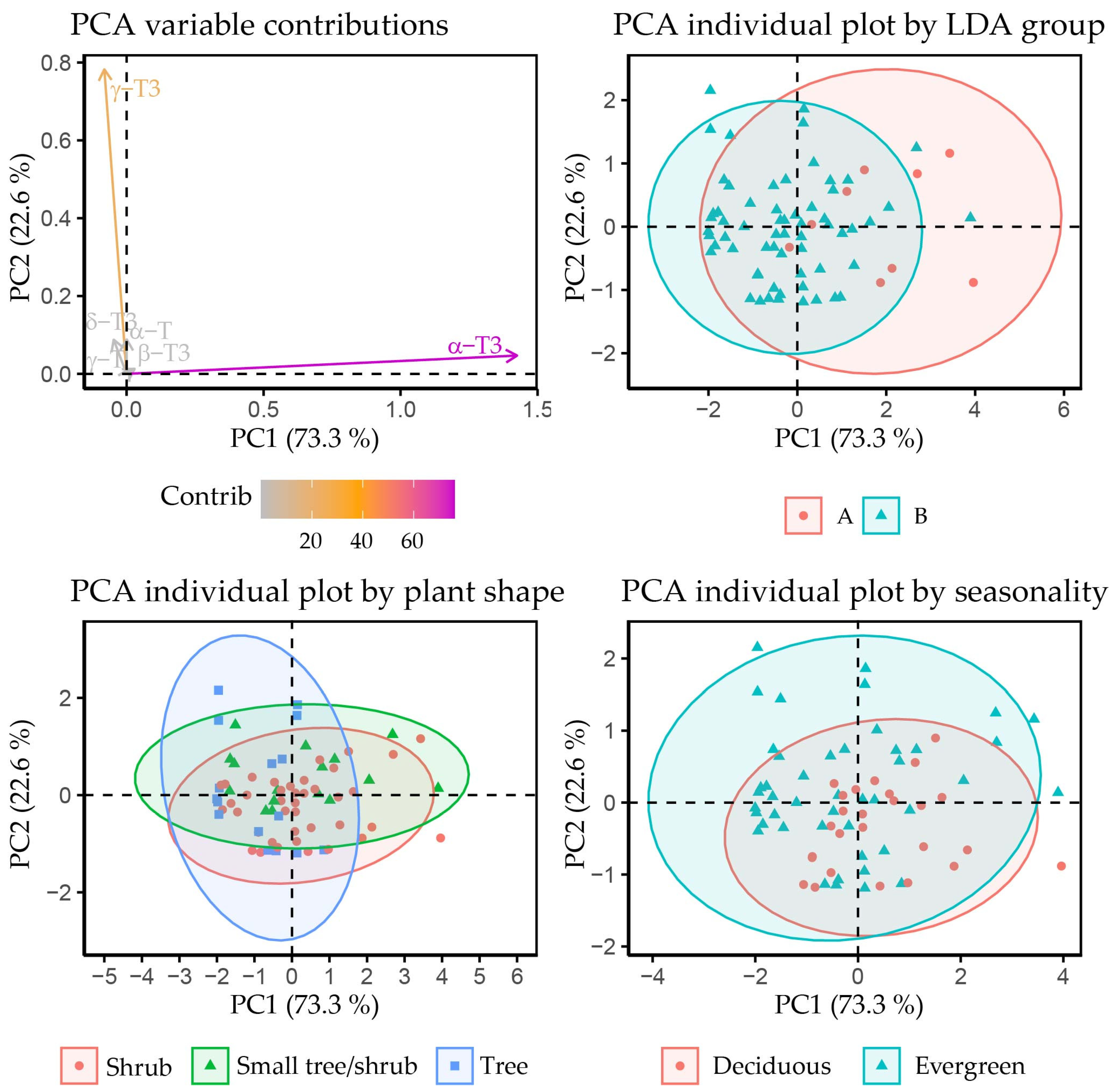
Principal component analysis (PCA) confirmed α-T3 and β-T3 as separating variables and α-T3 as the main contributor (Figure 6). The groups identified by linear discriminant analysis are distinguished in the PCA biplot as well. Because plant shape and seasonality populations overlap in the plots, additional broad metabolite analyses would be required to understand the differentiation, as only eight common compounds occurred in the seeds.
The dominance of tocotrienols over tocopherols in plant seeds is a relatively rare trait among dicotyledonous species [38]. However, recent findings suggest that the apparent scarcity of tocotrienol-rich seeds may not reflect biological rarity, but rather methodological limitations—compound misidentification, unsubstantiated statements, lack of tocotrienol standards during compound detection, or insufficient screening efforts [38]. A notable limitation of earlier research has been the limited representation of species within individual plant families. Despite this, recent investigations into the Apiaceae family strongly support the role of phylogenetic lineage in shaping tocotrienol dominance in the seeds of Apiaceae species [16,17,19]. Aquifoliaceae is yet another dicotyledonous plant family with distinct tocotrienol accumulation in the seeds. While it is the only major cultivated family in the Aquifoliales branch, the Campanulid branch to which it belongs contains a wide variety of plant families, including Apiaceae (tocotrienol-dominated) and other families that almost exclusively accumulate tocopherols [15,69].

4. Conclusions

The seeds of Ilex genus species are consistently tocotrienol-dominated, specifically α-T3 and γ-T3, with α-T3 as the main tocochromanol in 19 of 29 investigated species. Large-scale screening demonstrates consistent preferential tocotrienol accumulation, while the composition of the tocochromanol profile differed between plant types, and significant variation could be observed in species with a larger number of biological replicates. These observations suggest underreported tocotrienol production in other families. However, the physiological and genetic reasons behind accumulating tocotrienols in Aquifoliaceae seeds remain to be studied, and deeper analysis of the relationship between the genetic and tocochromanol profile similarity was beyond the author’s expertise.
UAEE had good and excellent recovery of total tocopherols (70%) and tocotrienols (98%), respectively, compared to a saponification protocol, demonstrating its suitability for daily sample screening or potential extraction. Relatively low tocotrienol content in the studied material constrains its feasibility as a novel plant source of these valuable phytochemicals, but the current findings supplement knowledge of a more widespread presence of tocotrienols in dicotyledonous plant seeds than previously assumed.

Supplementary Materials

The following supporting information can be downloaded at: https://www.mdpi.com/article/10.3390/d18020091/s1, Table S1: Repeatability (%) for the determination of tocopherols and tocotrienols in the seeds of Aquifoliaceae family.

Author Contributions

D.L.: Conceptualization, Investigation, Resources, Data Curation, Validation, Software, Visualization, Writing—Original Draft, Writing—review and editing; I.M.: Resources, Formal analysis; K.D.: Resources, Formal analysis, Data Curation; P.G.: Conceptualization, Methodology, Investigation, Visualization, Supervision, Writing—Original Draft, Writing—review and editing, Funding acquisition. All authors have read and agreed to the published version of the manuscript.

Funding

This research was funded by the Latvian Council of Science Project “Dicotyledonous plant families and green tools as a promising alternative approach to increase the accessibility of tocotrienols from unconventional sources”, Project No. lzp-2020/1-0422.

Institutional Review Board Statement

Not applicable.

Data Availability Statement

Data are contained within the article and Supplementary Materials. Further inquiries can be directed to the corresponding author.

Acknowledgments

I would like to recognize Georgijs Baškirovs for contribution to the sample analysis and data handling, and Arturs Stalažs for support in the collection of seeds. We were able to perform this research due to the generous support from over 150 botanical gardens around the world, in the form of seed donations. A list of botanical gardens that support this project is provided in the Supplementary Materials.

Conflicts of Interest

The authors declare no conflicts of interest.

Abbreviations

RP-HPLCreverse-phase liquid chromatography
dwdry weight
Ttocopherol
T3tocotrienol
PFPpentafluorophenyl

References

  1. Royal Botanic Gardens, Kew. Available online: https://powo.science.kew.org/taxon/urn:lsid:ipni.org:names:60437220-2 (accessed on 18 December 2025).
  2. Heck, C.I.; De Mejia, E.G. Yerba Mate Tea (Ilex paraguariensis): A comprehensive review on chemistry, health implications, and technological considerations. J. Food Sci. 2007, 72, R138–R151. [Google Scholar] [CrossRef] [PubMed]
  3. Yao, X.; Zhang, F.; Corlett, R.T. Utilization of the hollies (Ilex L. spp.): A review. Forests 2022, 13, 94. [Google Scholar] [CrossRef]
  4. Noriega, P.; Moreno, E.; Falcón, A.; Quishpe, V.; del Carmen, N.P. Guayusa (Ilex guayusa Loes.) ancestral plant of Ecuador: History, traditional uses, chemistry, biological activity, and potential industrial uses. Molecules 2025, 30, 2837. [Google Scholar] [CrossRef] [PubMed]
  5. Gan, R.-Y.; Zhang, D.; Wang, M.; Corke, H. Health benefits of bioactive compounds from the genus Ilex, a source of traditional caffeinated beverages. Nutrients 2018, 10, 1682. [Google Scholar] [CrossRef]
  6. Thuong, P.T.; Su, N.D.; Ngoc, T.M.; Hung, T.M.; Dang, N.H.; Thuan, N.D.; Bae, K.; Oh, W.K. Antioxidant activity and principles of Vietnam bitter tea Ilex kudingcha. Food Chem. 2009, 113, 139–145. [Google Scholar] [CrossRef]
  7. FAOSTAT. FAO Statistical Database. Available online: http://www.fao.org (accessed on 11 November 2025).
  8. Petersen, D.D. Common plant toxicology: A comparison of national and Southwest Ohio data trends on plant poisonings in the 21st century. Toxicol. Appl. Pharmacol. 2011, 254, 148–153. [Google Scholar] [CrossRef]
  9. Barnea, A.; Harborne, J.B.; Pannell, C. What parts of fleshy fruits contain secondary compounds toxic to birds and why? Biochem. Syst. Ecol. 1993, 21, 421–429. [Google Scholar] [CrossRef]
  10. Birringer, M.; Siems, K.; Maxones, A.; Frank, J.; Lorkowski, S. Natural 6-hydroxy-chromanols and-chromenols: Structural diversity, biosynthetic pathways and health implications. RSC Adv. 2018, 8, 4803–4841. [Google Scholar] [CrossRef]
  11. Pandya, J.K.; DeBonee, M.; Corradini, M.G.; Camire, M.E.; McClements, D.J.; Kinchla, A.J. Development of vitamin E-enriched functional foods: Stability of tocotrienols in food systems. Int. J. Food Sci. Technol. 2019, 54, 3196–3204. [Google Scholar] [CrossRef]
  12. Georgousopoulou, E.N.; Panagiotakos, D.B.; Mellor, D.D.; Naumovski, N. Tocotrienols, health and ageing: A systematic review. Maturitas 2017, 95, 55–60. [Google Scholar] [CrossRef]
  13. Sen, C.K.; Khanna, S.; Roy, S. Tocotrienols in health and disease: The other half of the natural vitamin E family. Mol. Asp. Med. 2007, 28, 692–728. [Google Scholar] [CrossRef]
  14. Ghazali, N.I.; Mohd Rais, R.Z.; Makpol, S.; Chin, K.Y.; Yap, W.N.; Goon, J.A. Effects of tocotrienol on aging skin: A systematic review. Front. Pharmacol. 2022, 13, 1006198. [Google Scholar] [CrossRef] [PubMed]
  15. Siger, A.; Górnaś, P. Free tocopherols and tocotrienols in 82 plant species’ oil: Chemotaxonomic relation as demonstrated by PCA and HCA. Food Res. Int. 2023, 164, 112386. [Google Scholar] [CrossRef] [PubMed]
  16. Ivanov, S.A.; Aitzetmüller, K. Untersuchungen über die tocopherol-und tocotrienolzusammensetzung der samenöle einiger vertreter der familie Apiaceae. Lipid Fett 1995, 97, 24–29. [Google Scholar] [CrossRef]
  17. Bagci, E. Fatty acids and tocochromanol patterns of some Turkish Apiaceae (Umbelliferae) plants; a chemotaxonomic approach. Acta Bot. Gall. 2007, 154, 143–151. [Google Scholar] [CrossRef]
  18. Horvath, G.; Wessjohann, L.; Bigirimana, J.; Jansen, M.; Guisez, Y.; Caubergs, R.; Horemans, N. Differential distribution of tocopherols and tocotrienols in photosynthetic and non-photosynthetic tissues. Phytochemistry 2006, 67, 1185–1195. [Google Scholar] [CrossRef]
  19. Górnaś, P. Domination of tocotrienols over tocopherols in seed oils of sixteen species belonging to the Apiaceae family. J. Food Compos. Anal. 2025, 142, 107535. [Google Scholar] [CrossRef]
  20. Wink, M. Evolution of secondary metabolites from an ecological and molecular phylogenetic perspective. Phytochemistry 2003, 64, 3–19. [Google Scholar] [CrossRef]
  21. Hajib, A.; El Harkaoui, S.; Choukri, H.; Khouchlaa, A.; Aourabi, S.; El Menyiy, N.; Bouyahya, A.; Matthaeus, B. Apiaceae family an important source of petroselinic fatty acid: Abundance, biosynthesis, chemistry, and biological proprieties. Biomolecules 2023, 13, 1675. [Google Scholar] [CrossRef]
  22. Crockett, S.L.; Robson, N.K.B. Taxonomy and chemotaxonomy of the genus Hypericum. Med. Aromat. Plant Sci. Biotechnol. 2011, 5, 1–13. [Google Scholar]
  23. Mišina, I.; Lazdiņa, D.; Górnaś, P. Tocochromanols in the leaves of plants in the Hypericum and Clusia genera. Molecules 2025, 30, 709. [Google Scholar] [CrossRef] [PubMed]
  24. Lazdiņa, D.; Mišina, I.; Górnaś, P. Tocotrienols in eleven species of Hypericum genus leaves. Molecules 2025, 30, 662. [Google Scholar] [CrossRef] [PubMed]
  25. Lazdiņa, D.; Miķelsone, I.; Mišina, I.; Dukurs, K.; Benítez-González, A.M.; Stinco, C.M.; Meléndez-Martínez, A.J.; Górnaś, P. Species- and age-dependent prenyllipid accumulation in Hypericum species’ leaves. Plants 2025, 14, 2239. [Google Scholar] [CrossRef] [PubMed]
  26. Negrin, A.; Long, C.; Motley, T.J.; Kennelly, E.J. LC-MS metabolomics and chemotaxonomy of caffeine-containing holly (Ilex) species and related taxa in the Aquifoliaceae. J. Agric. Food Chem. 2019, 67, 5687–5699. [Google Scholar] [CrossRef]
  27. Kim, H.K.; Khan, S.; Wilson, E.G.; Kricun, S.D.P.; Meissner, A.; Goraler, S.; Deelder, A.M.; Choi, Y.H.; Verpoorte, R. Metabolic classification of South American Ilex species by NMR-based metabolomics. Phytochemistry 2010, 71, 773–784. [Google Scholar] [CrossRef]
  28. Munné-Bosch, S.; Alegre, L. The function of tocopherols and tocotrienols in plants. Crit. Rev. Plant Sci. 2002, 21, 31–57. [Google Scholar] [CrossRef]
  29. Lazdiņa, D.; Mišina, I.; Dukurs, K.; Górnaś, P. Seed tocochromanol-based chemotaxonomy of Euroasian grapevine (Vitaceae) species. J. Food Compos. Anal. 2026, 150, 108893. [Google Scholar] [CrossRef]
  30. Yang, B.; Ahotupa, M.; Määttä, P.; Kallio, H. Composition and antioxidative activities of supercritical CO2-extracted oils from seeds and soft parts of northern berries. Food Res. Int. 2011, 44, 2009–2017. [Google Scholar] [CrossRef]
  31. Grygier, A.; Chakradhari, S.; Rudzińska, M.; Wroniak, M.; Segliņa, D.; Patel, K.S.; Soliven, A.; Górnaś, P. Comparative analysis of lipophilic phytochemicals in seed oils of six aromatic plant species. Eur. Food Res. Technol. 2025, 251, 2993–3005. [Google Scholar] [CrossRef]
  32. Fernández-Marín, B.; Míguez, F.; Méndez-Fernández, L.; Agut, A.; Becerril, J.M.; García-Plazaola, J.I.; Kranner, I.; Colville, L. Seed carotenoid and tocochromanol composition of wild Fabaceae species is shaped by phylogeny and ecological factors. Front. Plant Sci. 2017, 8, 1428. [Google Scholar] [CrossRef]
  33. Siles, L.; Cela, J.; Munné-Bosch, S. Vitamin E analyses in seeds reveal a dominant presence of tocotrienols over tocopherols in the Arecaceae family. Phytochemistry 2013, 95, 207–214. [Google Scholar] [CrossRef]
  34. Zwyrzykowska-Wodzińska, A.; Jarosz, B.; Okińczyc, P.; Szperlik, J.; Bąbelewski, P.; Zadák, Z.; Jankowska-Mąkosa, A.; Knecht, D. GC-MS and PCA analysis of fatty acid profile in various Ilex species. Molecules 2024, 29, 4833. [Google Scholar] [CrossRef] [PubMed]
  35. Breuer, B.; Stuhlfauth, T.; Fock, H.; Huber, H. Fatty acids of some cornaceae, hydrangeaceae, aquifoliaceae, hamamelidaceae and styracaceae. Phytochemistry 1987, 26, 1441–1445. [Google Scholar] [CrossRef]
  36. Górnaś, P.; Lazdiņa, D.; Mišina, I.; Sipeniece, E.; Segliņa, D. Cranberry (Vaccinium macrocarpon Aiton) seeds: An exceptional source of tocotrienols. Sci. Hortic. 2024, 331, 113107. [Google Scholar] [CrossRef]
  37. Górnaś, P.; Siger, A.; Czubinski, J.; Dwiecki, K.; Segliņa, D.; Nogala-Kalucka, M. An alternative RP-HPLC method for the separation and determination of tocopherol and tocotrienol homologues as butter authenticity markers: A comparative study between two European countries. Eur. J. Lipid Sci. Technol. 2014, 116, 895–903. [Google Scholar] [CrossRef]
  38. Górnaś, P.; Baškirovs, G.; Siger, A. Free and esterified tocopherols, tocotrienols and other extractable and non-extractable tocochromanol-related molecules: Compendium of knowledge, future perspectives and recommendations for chromatographic techniques, tools, and approaches used for tocochromanol determination. Molecules 2022, 27, 6560. [Google Scholar]
  39. Górnaś, P.; Mišina, I.; Waśkiewicz, A.; Perkons, I.; Pugajeva, I.; Segliņa, D. Simultaneous extraction of tocochromanols and flavan-3-ols from the grape seeds: Analytical and industrial aspects. Food Chem. 2025, 462, 140913. [Google Scholar] [CrossRef]
  40. Krauß, S.; Darwisch, V.; Vetter, W. Occurrence of tocopheryl fatty acid esters in vegetables and their non-digestibility by artificial digestion juices. Sci. Rep. 2018, 8, 7657. [Google Scholar] [CrossRef]
  41. Espinoza, A.; San Martín, A.; López-Climent, M.; Ruiz-Lara, S.; Gómez-Cadenas, A.; Casaretto, J.A. Engineered drought-induced biosynthesis of α-tocopherol alleviates stress-induced leaf damage in tobacco. J. Plant Physiol. 2013, 170, 1285–1294. [Google Scholar] [CrossRef]
  42. Spicher, L.; Almeida, J.; Gutbrod, K.; Pipitone, R.; Dörmann, P.; Glauser, G.; Rossi, M.; Kessler, F. Essential role for phytol kinase and tocopherol in tolerance to combined light and temperature stress in tomato. J. Exp. Bot. 2017, 68, 5845–5856. [Google Scholar] [CrossRef]
  43. Rastogi, A.; Yadav, D.K.; Szymańska, R.; Kruk, J.; Sedlářová, M.; Pospíšil, P. Singlet oxygen scavenging activity of tocopherol and plastochromanol in Arabidopsis thaliana: Relevance to photooxidative stress. Plant Cell Environ. 2014, 37, 392–401. [Google Scholar] [CrossRef]
  44. Kumar, A.; Prasad, A.; Sedlářová, M.; Ksas, B.; Havaux, M.; Pospíšil, P. Interplay between antioxidants in response to photooxidative stress in Arabidopsis. Free Radic. Biol. Med. 2020, 160, 894–907. [Google Scholar] [CrossRef] [PubMed]
  45. Mène-Saffrané, L.; DellaPenna, D. Biosynthesis, regulation and functions of tocochromanols in plants. Plant Physiol. Biochem. 2010, 48, 301–309. [Google Scholar] [CrossRef] [PubMed]
  46. Ribalta-Pizarro, C.; Muñoz, P.; Munné-Bosch, S. Differential tissue-specific accumulation and function of tocochromanols in grape berries. Plant Physiol. Biochem. 2023, 199, 107705. [Google Scholar] [CrossRef] [PubMed]
  47. Horvath, G.; Wessjohann, L.; Bigirimana, J.; Monica, H.; Jansen, M.; Guisez, Y.; Caubergs, R.; Horemans, N. Accumulation of tocopherols and tocotrienols during seed development of grape (Vitis vinifera L. cv. Albert Lavallée). Plant Physiol. Biochem. 2006, 44, 724–731. [Google Scholar] [CrossRef]
  48. Shiozaki, S.; Murakami, K. Lipids in the seeds of wild grapes native to Japan: Vitis coignetiae and Vitis ficifolia var. ganebu. Sci. Hortic. 2016, 201, 124–129. [Google Scholar] [CrossRef]
  49. Sabir, A.; Unver, A.; Kara, Z. The fatty acid and tocopherol constituents of the seed oil extracted from 21 grape varieties (Vitis spp.). J. Sci. Food Agric. 2012, 92, 1982–1987. [Google Scholar] [CrossRef]
  50. Górnaś, P.; Rudzińska, M.; Grygier, A.; Lācis, G. Diversity of oil yield, fatty acids, tocopherols, tocotrienols, and sterols in the seeds of 19 interspecific grapes crosses. J. Sci. Food Agric. 2019, 99, 2078–2087. [Google Scholar] [CrossRef]
  51. Fernandes, L.; Casal, S.; Cruz, R.; Pereira, J.A.; Ramalhosa, E. Seed oils of ten traditional Portuguese grape varieties with interesting chemical and antioxidant properties. Food Res. Int. 2013, 50, 161–166. [Google Scholar] [CrossRef]
  52. Wie, M.; Sung, J.; Choi, Y.; Kim, Y.; Jeong, H.S.; Lee, J. Tocopherols and tocotrienols in grape seeds from 14 cultivars grown in Korea. Eur. J. Lipid Sci. Technol. 2009, 111, 1255–1258. [Google Scholar] [CrossRef]
  53. Zhao, L.; Yagiz, Y.; Xu, C.; Fang, X.; Marshall, M.R. Identification and characterization of vitamin E isomers, phenolic compounds, fatty acid composition, and antioxidant activity in seed oils from different muscadine grape cultivars. J. Food Biochem. 2017, 41, e12384. [Google Scholar] [CrossRef]
  54. Siger, A.; Michalak, M.; Lembicz, J.; Nogala-Kałucka, M.; Cegielska-Taras, T.; Szała, L. Genotype× environment interaction on tocochromanol and plastochromanol-8 content in seeds of doubled haploids obtained from F1 hybrid black× yellow seeds of winter oilseed rape (Brassica napus L.). J. Sci. Food Agric. 2018, 98, 3263–3270. [Google Scholar] [CrossRef]
  55. Siger, A.; Michalak, M.; Bąkowska, E.; Dwiecki, K.; Nogala-Kałucka, M.; Grześ, B.; Piasecka-Kwiatkowska, D. The effect of the genotype-environment interaction on the concentration of carotenoids, tocochromanol, and phenolic compounds in seeds of Lupinus angustifolius breeding lines. J. Food Compos. Anal. 2023, 123, 105511. [Google Scholar] [CrossRef]
  56. Morcillo, F.; Vaissayre, V.; Serret, J.; Avallone, S.; Domonhédo, H.; Jacob, F.; Dussert, S. Natural diversity in the carotene, tocochromanol and fatty acid composition of crude palm oil. Food Chem. 2021, 365, 130638. [Google Scholar] [CrossRef] [PubMed]
  57. Cogoi, L.; Giacomino, M.S.; Pellegrino, N.; Anesini, C.; Filip, R. Nutritional and phytochemical study of Ilex paraguariensis fruits. J. Chem. 2013, 2013, 750623. [Google Scholar] [CrossRef]
  58. Palavicini, S.M.S.; Puton, B.M.S.; Jacques, R.A.; Valduga, E.; Backes, G.T.; Paroul, N.; Steffens, C.; Cansian, R.L. Bioactive compounds of Ilex paraguariensis: A critical update on extraction, gastrointestinal stability, and technological applications. J. Food Sci. 2025, 90, e70679. [Google Scholar] [CrossRef]
  59. Schwartz, H.; Ollilainen, V.; Piironen, V.; Lampi, A.-M. Tocopherol, tocotrienol and plant sterol contents of vegetable oils and industrial fats. J. Food Compos. Anal. 2008, 21, 152–161. [Google Scholar] [CrossRef]
  60. Szymańska, R.; Kruk, J. Tocopherol content and isomers’ composition in selected plant species. Plant Physiol. Biochem. 2008, 46, 29–33. [Google Scholar] [CrossRef]
  61. Hansen, U.; Schneiderheinze, J.; Stadelmann, S.; Rank, B. The α-tocopherol content of leaves of pedunculate oak (Quercus robur L.)-variation over the growing season and along the vertical light gradient in the canopy. J. Plant Physiol. 2003, 160, 91–96. [Google Scholar] [CrossRef]
  62. Miķelsone, I.; Sipeniece, E.; Segliņa, D.; Górnaś, P. Tocopherol and tocotrienol content in the leaves of the genus Hypericum: Impact of species and drying technique. Plants 2025, 14, 1079. [Google Scholar] [CrossRef]
  63. Górnaś, P.; Šnē, E.; Siger, A.; Segliņa, D. Sea buckthorn (Hippophae rhamnoides L.) leaves as valuable source of lipophilic antioxidants: The effect of harvest time, sex, drying and extraction methods. Ind. Crops Prod. 2014, 60, 1–7. [Google Scholar] [CrossRef]
  64. Morales, M.; Garcia, Q.S.; Siqueira-Silva, A.I.; Silva, M.C.; Munné-Bosch, S. Tocotrienols in Vellozia gigantea leaves: Occurrence and modulation by seasonal and plant size effects. Planta 2014, 240, 437–446. [Google Scholar] [CrossRef]
  65. Mišina, I.; Sipeniece, E.; Rudzińska, M.; Grygier, A.; Radzimirska-Graczyk, M.; Kaufmane, E.; Segliņa, D.; Lācis, G.; Górnaś, P. Associations between oil yield and profile of fatty acids, sterols, squalene, carotenoids, and tocopherols in seed oil of selected Japanese quince genotypes during fruit development. Eur. J. Lipid Sci. Technol. 2020, 122, 1900386. [Google Scholar] [CrossRef]
  66. Chen, D.; Li, Y.; Fang, T.; Shi, X.; Chen, X. Specific roles of tocopherols and tocotrienols in seed longevity and germination tolerance to abiotic stress in transgenic rice. Plant Sci. 2016, 244, 31–39. [Google Scholar] [CrossRef]
  67. Britz, S.J.; Kremer, D.F. Warm temperatures or drought during seed maturation increase free α-tocopherol in seeds of soybean (Glycine max [L.] Merr.). J. Agric. Food Chem. 2002, 50, 6058–6063. [Google Scholar] [CrossRef]
  68. Chennupati, P.; Seguin, P.; Liu, W. Effects of high temperature stress at different development stages on soybean isoflavone and tocopherol concentrations. J. Agric. Food Chem. 2011, 59, 13081–13088. [Google Scholar] [CrossRef]
  69. Panfili, G.; Niro, S.; Bufano, A.; D’Agostino, A.; Fratianni, A.; Paura, B.; Falasca, L.; Cinquanta, L. Bioactive compounds in wild Asteraceae edible plants consumed in the Mediterranean diet. Plant Foods Hum. Nutr. 2020, 75, 540–546. [Google Scholar] [CrossRef] [PubMed]
Figure 1. The recovery (%) of tocochromanols—total tocopherols (Ts) and tocotrienols (T3s)—from seeds of five Aquifoliaceae species using the UAEE protocol. Recovery (%) was calculated as an average value for three sample replications, assuming the saponification protocol as 100% recovery of tocochromanols. UAEE, ultrasound-assisted extraction in ethanol.
Diversity 18 00091 g001
Figure 2. Tocochromanol content, mg 100 g−1 dw, in Ilex species, faceted by plant shape and seasonality. Letters denote statistically homogenous groups according to the Kruskal–Wallis test, colored points represent individual sample values, and darker points represent outlier values in the subset.
Diversity 18 00091 g002
Figure 3. Mean tocochromanol contents in plant groups by plant shape and leaf seasonality. Letters denote statistically homogenous groups according to MANCOVA.
Diversity 18 00091 g003
Figure 4. Mean tocochromanol proportion in Ilex species, faceted by seasonality and plant shape.
Diversity 18 00091 g004
Figure 5. Linear discriminant plot based on MANOVA model with highlighted outlier species.
Diversity 18 00091 g005
Figure 6. PCA biplot of variables and individuals, grouped by plant shape. Variable vector opacity denotes contribution to primary components, while LDA-identified groups, plant shape and leaf seasonality are denoted by point shape and colour within respective plot.
Diversity 18 00091 g006
Table 1. Tocochromanol content in Ilex species seeds, mg 100 g−1 dw seeds.
SpeciesLeaf
Seasonality
Plant Typeδ-T3γ-T3α-T3α-TTotalRatio α/γ-T3Ratio T3s/Ts
I. aquifolium (n = 5)evergreentree/shrub0.20 ± 0.071.90 ± 0.393.03 ± 1.160.39 ± 0.145.62 ± 1.411.610.5
I. asprella (n = 2)deciduousshrub0.15 ± 0.051.90 ± 0.223.42 ± 0.290.19 ± 0.055.89 ± 0.651.825.9
I. canariensis (n = 2)evergreenshrub0.10 ± 0.010.53 ± 0.042.32 ± 0.310.03 ± 0.012.98 ± 0.344.498.3
I. cassine (n = 2)evergreentree/shrub0.72 ± 0.131.62 ± 0.370.50 ± 0.110.40 ± 0.113.23 ± 0.720.37.1
I. collina (n = 4)deciduousshrub0.09 ± 0.080.63 ± 0.471.84 ± 1.020.32 ± 0.482.87 ± 1.422.98.0
I. cornuta (n = 2)evergreenshrub0.14 ± 0.041.05 ± 0.060.32 ± 0.160.67 ± 0.212.17 ± 0.470.32.3
I. crenata (n = 2)evergreenshrub0.09 ± 0.032.04 ± 0.205.18 ± 0.530.42 ± 0.058.11 ± 0.812.515.9
I. decidua (n = 2)deciduoustree/shrub0.10 ± 0.021.07 ± 0.182.14 ± 0.880.41 ± 0.233.71 ± 1.292.08.1
I. fargesii (n = 2)evergreentree/shrub0.26 ± 0.032.43 ± 0.490.56 ± 0.130.20 ± 0.033.44 ± 0.680.216.3
I. formosana (n = 2)evergreentree0.21 ± 0.101.37 ± 0.190.11 ± 0.040.05 ± 0.021.75 ± 0.320.133.8
I. geniculata (n = 3)deciduousshrub0.09 ± 0.050.29 ± 0.174.67 ± 1.130.04 ± 0.055.13 ± 1.0316.1127.3
I. glabra (n = 2)evergreenshrub0.17 ± 0.011.57 ± 0.42.50 ± 0.480.48 ± 0.484.79 ± 1.321.67.9
I. integra (n = 2)evergreentree0.08 ± 0.011.14 ± 0.230.08 ± 0.030.09 ± 0.021.39 ± 0.230.114.4
I. laevigata (n = 3)deciduousshrub0.31 ± 0.141.18 ± 0.21.99 ± 0.200.34 ± 0.073.82 ± 0.351.710.2
I. latifolia (n = 2)evergreentree0.28 ± 0.092.42 ± 0.671.94 ± 0.520.02 ± 0.024.65 ± 1.290.8232.0
I. lonicerifolia (n = 2)evergreentree0.04 ± 0.010.05 ± 0.012.49 ± 0.510.27 ± 0.042.84 ± 0.5849.89.6
I. macropoda (n = 2)deciduoustree0.14 ± 0.040.65 ± 0.191.41 ± 0.390.54 ± 0.112.73 ± 0.742.24.1
I. maximowicziana (n = 2)evergreenshrub0.14 ± 0.041.51 ± 0.250.95 ± 0.110.07 ± 0.012.67 ± 0.420.637.1
I. × meserveae (n = 2)evergreenshrub0.19 ± 0.011.10 ± 0.232.13 ± 0.370.08 ± 0.023.72 ± 0.661.945.8
I. montana (n = 2)deciduousshrub0.03 ± 0.010.08 ± 0.012.70 ± 0.380.05 ± 0.022.86 ± 0.3733.856.2
I. mucronata (n = 2)deciduousshrub0.07 ± 0.010.24 ± 0.091.21 ± 0.380.13 ± 0.061.65 ± 0.565.011.7
I. opaca (n = 2)evergreentree0.16 ± 0.032.49 ± 0.772.09 ± 0.330.81 ± 0.115.54 ± 1.240.85.9
I. perado (n = 2)evergreentree0.65 ± 0.113.15 ± 0.420.23 ± 0.030.32 ± 0.044.39 ± 0.610.110.9
I. pernyi (n = 3)evergreenshrub0.13 ± 0.071.34 ± 0.310.36 ± 0.210.54 ± 0.42.37 ± 0.510.33.4
I. rotunda (n = 2)evergreentree0.05 ± 0.010.14 ± 0.011.46 ± 0.160.07 ± 0.021.73 ± 0.1210.423.6
I. serrata (n = 3)evergreentree/shrub0.16 ± 0.091.13 ± 0.174.38 ± 1.470.93 ± 0.506.66 ± 1.143.95.8
I. triflora (n = 2)evergreentree/shrub0.21 ± 0.040.96 ± 0.161.47 ± 0.160.92 ± 0.233.60 ± 0.111.52.7
I. verticillata (n = 6)deciduousshrub0.12 ± 0.071.27 ± 0.232.64 ± 0.760.24 ± 0.284.27 ± 0.712.116.8
I. vomitoria (n = 2)evergreenshrub0.04 ± 0.010.24 ± 0.061.88 ± 0.360.13 ± 0.042.35 ± 0.477.817.2
Data is presented as means ± standard deviation. The number of analyzed samples is provided after the species (n = number of samples in species). β-T3 was detected only in some species (mg 100 g−1 dw): 0.23 ± 0.03 in I. asprella, 0.33 ± 0.04 in I. crenata, 0.04 ± 0.01 in I. geniculata, 0.24 ± 0.04 in I. meserveae and 0.07 ± 0.01 in I. vomitoria; while γ-T (mg 100 g−1 dw): 0.1 ± 0.04 in I. aquifolium, 0.03 ± 0.01 in I. asprella, 0.06 ± 0.01 in I. crenata, 0.06 ± 0.04 in I. glabra, 0.05 ± 0.01 in I. perado, 0.05 ± 0.03 in I. serrata, 0.06 ± 0.02 in I. triflora. T, tocopherol; T3, tocotrienol; dw, dry weight.
Disclaimer/Publisher’s Note: The statements, opinions and data contained in all publications are solely those of the individual author(s) and contributor(s) and not of MDPI and/or the editor(s). MDPI and/or the editor(s) disclaim responsibility for any injury to people or property resulting from any ideas, methods, instructions or products referred to in the content.