Review

A Review on the Trophic Shifts Among Habitat Types of the Red Fox (Vulpes vulpes Linnaeus) and Insights on Its Role as Bioindicator in Mediterranean Landscapes


by
Salvatore Rizzo
1,2,
Rafael Silveira Bueno
1,2,3,* and
Tommaso La Mantia
1,2
1
Department of Agricultural Food and Forest Sciences, University of Palermo, Viale delle Scienze, 90128 Palermo, Italy
2
NBFC—National Biodiversity Future Center, 90133 Palermo, Italy
3
Department of Earth and Marine Sciences, University of Palermo, Via Archirafi 36, 90123 Palermo, Italy
*
Author to whom correspondence should be addressed.
Diversity 2026, 18(2), 62; https://doi.org/10.3390/d18020062 (registering DOI)
Submission received: 7 November 2025 / Revised: 21 January 2026 / Accepted: 21 January 2026 / Published: 24 January 2026
(This article belongs to the Section Biodiversity Loss & Dynamics)

Abstract

The red fox (Vulpes vulpes) is a widely distributed and highly adaptive small carnivore known by its generalist diet, which includes small mammals, invertebrates, and fruits. Despite its ecological relevance, how habitat heterogeneity affects its diet across the Mediterranean, a biodiversity hotspot shaped by long-term human disturbance, remains insufficiently synthesized. In this review, we synthesized and analyzed published studies that reported habitat-specific data on the red fox diet in the Mediterranean. Only 12 studies met the selection criteria, and no study directly compared two different habitats. The studied areas covered three dominant habitats: forests, scrublands (garrigue), and agroecosystems, and diet items were grouped in 7 categories: birds, carcasses, fruits, invertebrates, lagomorphs, small mammals, and reptiles. Overall diet composition varied significantly, with invertebrates and fruits being the most frequent diet items. In turn, lagomorphs and reptiles were the least frequent. In turn, diet composition varied little across habitats, indicating that diet variation follows specific local resource abundance regardless of habitat type. Despite the analytical limitations associated with the limited availability of habitat-explicit studies. The results highlight the pronounced dietary plasticity of the red fox and its capacity to integrate resource availability across heterogeneous Mediterranean landscape mosaics. This trophic adaptability and top predator role support various ecosystem functions such as controlling invertebrate and small mammal populations, dispersing seeds, and cycling nutrients, reinforcing the potential of the red fox as functional bioindicator in the Mediterranean. Therefore, sustainable land management, especially in agricultural areas, and restoration efforts for degraded areas should consider the beneficial roles of generalist carnivores like the red fox.

1. Introduction

The red fox (Vulpes vulpes) is the most adaptable carnivore in the Mediterranean, thriving across forests, scrublands, and agricultural mosaics [1]. Mediterranean landscapes are long-standing socio-ecological systems formed by the interplay between climate and centuries of human land use. These processes have created diverse mosaics of natural and semi-natural habitats, characterized by high spatial fragmentation, seasonal resource fluctuations, and recurrent disturbances, including fires, overgrazing, rural abandonment, climate variability, and uncontrolled recreation. These factors influence wildlife ecological processes. In such environments, habitat types are rarely discrete units but rather form continuous ecological gradients within complex landscape mosaics, where one or more habitat components may be dominant. Within these heterogeneous landscapes, the home range size of the red fox typically ranges from approximately 86 to 485 hectares when estimated using the minimum convex polygon, while 95% harmonic mean estimates range between 62 and 461 hectares [2]. Foxes are predominantly nocturnal and crepuscular, although a non-negligible level of diurnal activity may occur, and no significant sex-related differences in home range size have been reported [2]. This high mobility implies that trophic information derived from red foxes does not represent fine-scale habitat use but rather integrates resource availability across dominant landscape components, providing a landscape-level signal of ecological conditions.
In regions such as Sicily, landscapes shaped by centuries of agro-pastoral activity are now facing increasing biodiversity loss; bird population trends, for example, reveal a decline in the ecological integrity of agricultural and agroforestry systems where land abandonment and recurrent disturbances are ongoing [3,4]. In these human-modified environments, landscape heterogeneity and disturbance regimes strongly influence the availability and accessibility of food resources for wildlife.
As a generalist and opportunistic feeder, the red fox adapts its diet to local food availability, vegetation structure, and species interactions [5]. This dietary plasticity makes the species an ideal model for understanding how habitat conditions and ecological disturbances influence foraging strategies [6]. Although recent reviews have assembled information on red fox feeding ecology [7,8], most of the studies analysed employ linear transect methodologies pooling data across different habitats, limiting the ability to disentangle trophic patterns associated with specific ecological contexts. This gap highlights the need for integrative analyses to clarify how disturbance regimes, resource availability, and vegetation structure shape feeding strategies in Mediterranean landscapes.
Changes in land use, fire events, and seasonal dynamics are also known to influence dietary patterns [9]. This review therefore examines the available literature to assess whether variation in the red fox diet is associated with complex landscape contexts characterised by dominant habitat components (e.g., forests, agroecosystems, scrublands), rather than assuming strict habitat-specific resource use. By synthesising habitat-explicit studies, we aim to evaluate how trophic patterns reflect ecological conditions at the landscape scale and to discuss how the dietary ecology of the red fox can inform biodiversity conservation and landscape management in Mediterranean environments.

2. Materials and Methods

This article is based on a review of published studies that reported quantitative data on the feeding ecology of red fox in Mediterranean ecosystems. Peer-reviewed articles were retrieved from Scopus and Google Scholar using the query: “Vulpes vulpes” or “red fox” or “fox” and “diet” or “feed” and “Mediterranean” or “Mediterranean area” or “Mediterranean ecosystem”.
The selection criterion was that dietary data had to derive from studies where the sampling procedure distinguished diet across different habitat types, allowing us to analyse the relationship between habitat and specific diet composition. Although research on the diet of the red fox is relatively common, most studies use linear transect methodologies that encompass multiple habitat types, thereby providing general patterns rather than habitat-specific insights. Therefore, studies that pooled data across multiple habitats within a single transect, and thus did not permit a clear habitat–diet comparison, were excluded.
From an initial screening of 43 papers, just 12 provided specific quantitative information on trophic composition across at least one Mediterranean habitat type (e.g., agroecosystems, forest mosaics, or Mediterranean scrub/garrigue) [Table 1].
In the reviewed studies, dietary data were mainly obtained by collecting and analysing faecal samples along linear transects, a widely used non-invasive method for assessing trophic composition.
All studies were weighted equally, regardless of sample size, and for each we extracted the reported frequencies of occurrence for the main food categories: fruit, invertebrates, small mammals, lagomorphs, birds, carcasses, reptiles/amphibians. In some cases, these analyses were complemented by stomach content examinations, which provided additional validation of the identified food categories.
Descriptive statistics were used to examine the diet composition at each site. The mean frequency of occurrence (FO%) was calculated for each trophic category, and standard error (±SE) was used to represent variability. We also calculated the Shannon diversity index for each study area, using the FO% of each trophic category.
To test for differences in FO% among trophic categories across all sites and within habitat contexts, we used a non-parametric Kruskal–Wallis test. When significant differences were detected, we used the post hoc Dunn test to check for between category differences. For the Shannon index, which was normally distributed (Shapiro–Wilk p = 0.25), we performed a t-test comparing forests and agroecosystems, excluding the garrigue because there was only one site. All analyses and figures were produced in R (v4.5.2) using the packages dplyr, tidyr, vegan and ggplot2.

3. Results

The 12 studies that matched our criteria (Table 2) were conducted across three main Mediterranean habitat types—forests, agroecosystems, and garrigue—and were geographically concentrated mainly in Italy, with additional contributions from Spain, Portugal, and Tunisia (Figure 1). The red fox diet is highly heterogeneous, with the seven trophic groups represented in most studies. Invertebrates and fruits were the most frequent items overall and across habitats, whereas reptiles and lagomorphs were less frequent (Table 2).
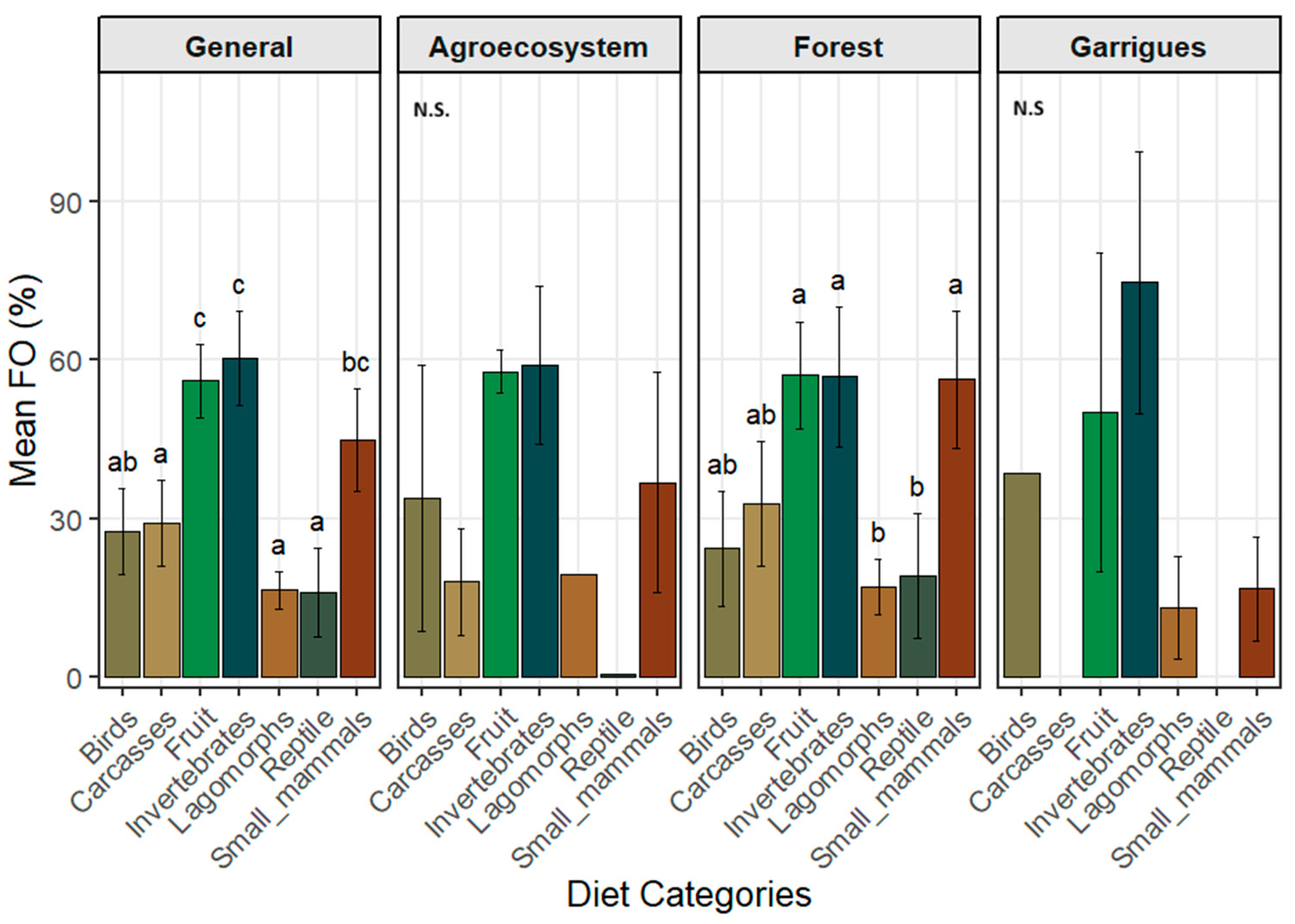
Significant differences among trophic categories were detected when considering all studies combined (Kruskal–Wallis χ2 = 35.75, p < 0.001), and the post hoc Dunn test indicated significant differences among trophic categories (Figure 2). When analyses were conducted separately by habitat context, significant differences among trophic categories were detected within forest habitats (χ2 = 17.62, p = 0.007). Post hoc comparisons showed that invertebrates and fruits differed significantly from lagomorphs and reptiles/amphibians (Figure 2). No significant differences among trophic categories were detected within agroecosystems or garrigue habitats, and no trophic category FO differed between forest and agroecosystems (p > 0.05).
The average Shannon diversity index for trophic items was 1.26 (±0.10), ranging from 0.69 (Siena–Forest) to 1.56 (Pisa–Agriculture). However, no significant differences were found between forest and agricultural habitats (t-test = −0.53, p = 0.61).

4. Discussion

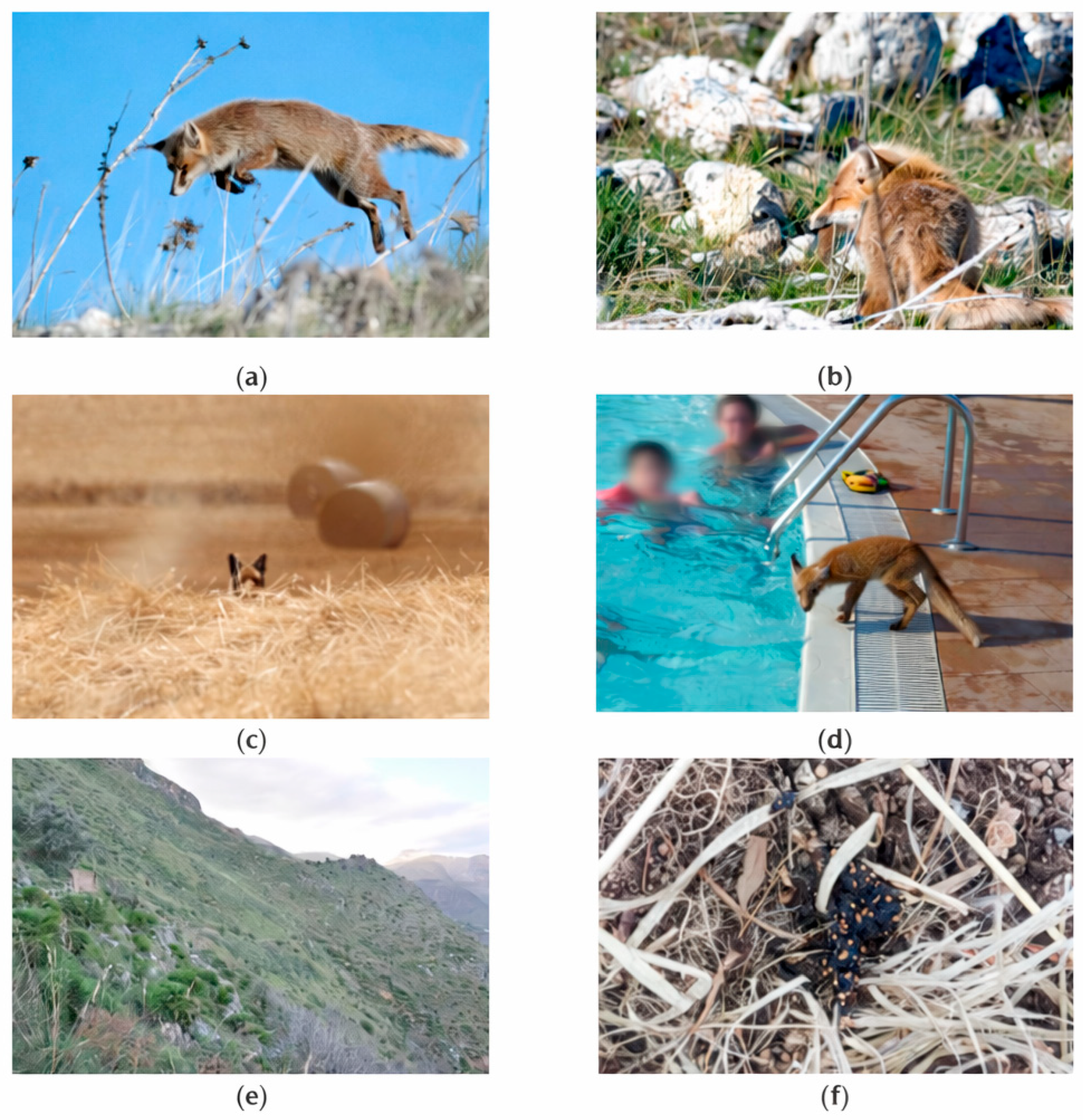
Numerous studies have examined the diet of the red fox in Mediterranean regions of Europe. Overall, variation in dietary preferences among red foxes in the Mediterranean reflects both ecological factors and the influence of human activity, which shapes their foraging behaviour and food availability (Figure 3). However, our review emphasizes that most studies did not clearly separate the diet data by specific habitats, which constrains the ability to discern trophic variation linked to specific ecological conditions [22]. A main challenge is that in Mediterranean habitat patches, especially forests, areas are often not sufficiently large to permit clear differentiation, especially considering the relatively extensive daily movements and the sizable home range of the species. However, is still possible to perform such comparisons in some regions, for example, comparing the larger forest patches remaining inside protected areas with the agricultural matrix in the surroundings. The analyses presented herein reveal a persistent research gap: despite the red fox being one of the most extensively studied carnivores, comparable, habitat-specific dietary data remain limited in the Mediterranean region, particularly within agroecosystems.
In agroecosystems, the studies reviewed show that diets are mainly composed of fruit and small mammals. Birds are a moderate part of the diet, with carcasses, lagomorphs, and reptiles appearing only occasionally. In forest-heavy landscapes, all trophic categories are evenly represented, with no major differences between fruits, invertebrates, and small mammals. However, lagomorphs and reptiles are less common. These trends suggest that forests offer a wider variety of exploitable food sources than simpler landscapes. In contrast, the Mediterranean garrigue system shows a clear trophic shift, with invertebrates representing the primary food item, followed by fruits and small mammals. This pattern is associated with the ecological conditions frequently characterizing garrigue landscapes, including open vegetation structure and high prey accessibility, which strongly influence resource availability [23,24]. Although trophic items in agroecosystems had a higher Shannon index, there were no significant differences when compared to forests. Collectively, these findings imply that the red fox’s diet is mainly influenced by habitat conditions like vegetation structure, prey accessibility, and disturbance levels, rather than strict habitat categories. Its foraging behavior is closely tied to local resource availability and seasonal changes, with fruit and invertebrates more available in warmer months, and vertebrate prey taken opportunistically [25,26]. In agricultural areas, the high intake of invertebrates, fruit, and small mammals indicates that traditional land management—such as diversified crops, hedgerows, and orchards—helps sustain food resources and ecological connectivity for generalist carnivores, also supporting services like seed dispersal and rodent control [27,28,29]. However, this also raises conservation concerns, as the use of insecticides and fungicides may negatively impact red fox populations, similar to effects observed in bird species.
A review synthesizing data on the biogeographical patterns of the red fox diet in the Iberian Peninsula [30] analysed studies that reported differences across three habitats: forests, scrublands, and agricultural/dehesas. They observed that the frequency of occurrence varied significantly only for two groups: lagomorphs and small mammals. Lagomorphs were more common in scrub habitats, while small mammals appeared more often in forests. Our review, which includes the studies from their review that meet our criteria but also incorporates additional studies not considered before, partially supports these findings. Specifically, we observed a higher presence of small mammals in forest habitats, though no clear differences emerged for lagomorphs.
In degraded landscapes such as garrigue or recently abandoned agricultural areas, trophic data from red fox diets may provide useful insights for adaptive management strategies. This aligns with Action 10 of the Italian National Forestry Strategy [31], which emphasises the importance of integrated monitoring of wildlife–forest interactions. Support for this interpretation is provided by the most recent and comprehensive global review of red fox diet [7], which demonstrates that diet composition varies along geographical and climatic gradients (latitude, altitude, temperature, and precipitation) as well as with the degree of anthropization, measured through indices such as the Human Footprint Index. For instance, in more disturbed areas (e.g., cities, agroecosystems), the consumption of birds and fruit increases, linked to the availability of synanthropic, cultivated, or ornamental species. In turn, in less anthropized areas (e.g., forest and mountain environments), the consumption of medium and large mammals prevails, often in the form of carcasses (wild or domestic). Importantly, however, this review does not treat habitats as discrete typological units but rather emphasizes the role of environmental gradients in shaping dietary responses, a conclusion consistent with the landscape-scale interpretation adopted in the present review.
Studies confirm that fox predation on species of hunting interest, such as rabbits, is low. Unfortunately, in the past, foxes were the target of targeted eradication campaigns, often carried out with poison, which had cascading effects on other species, for example, leading to the extinction of griffon vultures (Gyps fulvus) in Sicily [32]. Even today, poisons are still being used illegally, leading to the death of the Egyptian vulture (Neophron percnopterus), a small vulture on the verge of extinction in Italy. Awareness and information campaigns are needed, as the fox, due to its feeding habits, is actually a species of great benefit to farmers. Moreover, the widespread inclusion of fruits in the red fox diet underscores their important role in seed dispersal and plant regeneration [28,29]. Recent network analyses demonstrate how red foxes help spread seeds across diverse landscapes, improving the effectiveness of seed dispersal [26]. Finally, while not directly addressed by the studies reviewed here, the ecological role of the red fox in urban and peri-urban environments warrants further investigation. In these contexts, foxes may help restore lost ecological interactions by preying on small mammals, such as rats, and by rewiring seed dispersal networks, following patterns already documented for other species recolonizing urban landscapes [25].

5. Conclusions

The red fox shows marked dietary plasticity in Mediterranean environments, with foraging behaviour shaped more by local ecological conditions than by broad habitat categories. This trophic flexibility reflects the species’ ability to exploit heterogeneous landscape mosaics and to integrate resource availability across dominant habitat components, rather than relying on strictly habitat-specific food sources (Figure 3). This adaptive foraging strategy contributes to several key ecosystem functions, including the regulation of invertebrate and small mammal populations, seed dispersal, and nutrient cycling. These roles support its potential as a functional bioindicator for biodiversity monitoring and land-use planning in Mediterranean socio-ecological systems [7,30].
Our results are intended to stimulate further research to clarify fine-scale trophic shifts in relation to ecological conditions, while also providing insights for the sustainable management of Mediterranean ecosystems. The practical value of these findings lies in their alignment with the EU Biodiversity Strategy for 2030 and the proposed Nature Restoration Law. As the red fox also acts as an effective seed dispersal vector [26], as well as insects and small mammal predators [7], understanding what it eats and, particularly, where specifically it feeds provides an opportunity to identify how this species can function as a natural agent of restoration. By integrating fox-mediated dispersal into restoration strategies, managers can promote vegetation recovery, enhance ecological connectivity, and support long-term resilience in degraded Mediterranean landscapes in line with the new European legislative framework.
Future studies should therefore:
-
expand habitat-explicit dietary studies across underrepresented Mediterranean regions to address current geographical gaps;
-
quantify the effectiveness of seed dispersal by red foxes through integrated approaches combining faecal analysis, genetic identification of dispersed seeds, and monitoring of seedling recruitment;
-
link trophic networks with restoration objectives by evaluating how fox-mediated seed dispersal and predation on seed predators and small herbivores influence vegetation recovery in forest habitats and agroecosystem mosaics;
-
assess how management interventions—such as silvicultural practices, ecological corridor creation, hedgerow planting, and agroforestry systems—interact with disturbance regimes to enhance the reciprocal benefits of red fox conservation and ecosystem functioning across Mediterranean landscapes.

Author Contributions

Conceptualization and methodology T.L.M., R.S.B. and S.R.; formal analysis S.R. and R.S.B.; investigation e data curation T.L.M., R.S.B. and S.R.; writing—original draft preparation S.R., R.S.B. and T. L. M.; writing—review and editing, S.R., R.S.B. and T.L.M. All authors have read and agreed to the published version of the manuscript.

Funding

This work was supported by the National Biodiversity Future Center Project (NBFC), identification code CN00000033, CUP B73C22000790001 (Spoke 3-Biodiversity).

Institutional Review Board Statement

Not applicable.

Data Availability Statement

Dataset available on request from the authors.

Acknowledgments

We would like to thank the Dipartimento Sviluppo Rurale e Territoriale della Regione Siciliana (Department of Rural and Territorial Development of the Sicilian Region) for its support for research activities in Sicilian protected areas. We would like to thank Giuseppe Romano for his help with field research and Bruno Massa for his continuous support and encouragement. We also thank the editors and the two anonymous reviewers for constructive comments and suggestions that improved the manuscript.

Conflicts of Interest

The authors declare no conflicts of interest.

References

  1. Sillero, C.; Hoffmann, M.; Macdonald, D. Canids: Foxes, Wolves, Jackals and Dogs. Status Survey and Conservation Action Plan; IUCN: Gland, Switzerland, 2004. [Google Scholar]
  2. Cavallini, P.; Lovari, S. Home range, habitat selection and activity of the red fox in a Mediterranean coastal ecotone. Acta Theriol. 1994, 39, 279–287. [Google Scholar] [CrossRef]
  3. Massa, B.; La Mantia, T. Forestry, Pasture, Agriculture and Fauna Correlated to Recent Changes in Sicily. Forest@ 2007. Available online: http://www.sisef.it/forest@/ (accessed on 1 October 2025).
  4. Bianchetto, E.; Buscemi, I.; Corona, P.; Giardina, G.; La Mantia, T.; Pasta, S. Fitting the Stocking Rate with Pastoral Resources to Manage and Preserve Mediterranean Forestlands: A Case Study. Sustainability 2015, 7, 7232. [Google Scholar] [CrossRef]
  5. Bueno, R.S.; García, D.; Galetti, M.; La Mantia, T. Past cover modulates the intense and spatially structured natural regeneration of woody vegetation in a pastureland. Plant Ecol. 2020, 221, 205–218. [Google Scholar] [CrossRef]
  6. Rosalino, L.; Santos-Reis, M. Fruit consumption by carnivores in Mediterranean Europe. Mammal Rev. 2009, 39, 67–78. [Google Scholar] [CrossRef]
  7. Soe, E.; Davison, J.; Süld, K.; Valdmann, H.; Laurimaa, L.; Saarma, U. Europe-wide biogeographical patterns in the diet of an ecologically and epidemiologically important mesopredator, the red fox Vulpes vulpes: A quantitative review. Mammal Rev. 2017, 47, 198–211. [Google Scholar] [CrossRef]
  8. Castañeda, I.; Doherty, T.S.; Fleming, P.A.; Stobo-Wilson, A.M.; Woinarski, J.C.Z.; Newsome, T.M. Variation in red fox Vulpes vulpes diet in five continents. Mammal Rev. 2022, 52, 353–368. [Google Scholar] [CrossRef]
  9. Baldeschi, B.; Tomassini, O.; Bedini, G.; Petroni, G.; Giunchi, D.; Massolo, A. An attempt to evidence post-fire adaptation of red fox diet in a Mediterranean area. Ethol. Ecol. Evol. 2024, 36, 367–386. [Google Scholar] [CrossRef]
  10. Ciampalini, B.; Lovari, S. Food habits and trophic niche overlap of the badger and the red fox in a Mediterranean coastal area. Z. Säugetierkd. 1984, 50, 226–234. [Google Scholar]
  11. Bassi, E.; Donaggio, E.; Marcon, A.; Scandura, M.; Apollonio, M. Trophic niche overlap and wild ungulate consumption by red fox and wolf in a mountain area in Italy. Mamm. Biol. 2012, 77, 369–376. [Google Scholar] [CrossRef]
  12. Cavallini, P.; Volpi, T. Variation in the diet of the red fox in a Mediterranean area. Rev. Écol. 1996, 51, 321–326. [Google Scholar] [CrossRef]
  13. Dell’Arte, G.L.; Leonardi, G. Effects of habitat composition on the use of resources by the red fox in a semi-arid environment of North Africa. Acta Oecol. 2005, 27, 77–83. [Google Scholar] [CrossRef]
  14. Serafini, P.; Lovari, S. Food habits and trophic niche overlap of the red fox and the stone marten in a Mediterranean rural area. Acta Theriol. 1993, 38, 233–244. [Google Scholar] [CrossRef]
  15. Padial, J.M.; Avila, E.; Sanchez, J.M. Feeding habits and overlap among red fox (Vulpes vulpes) and stone marten (Martes foina) in two Mediterranean mountain habitats. Mamm. Biol. 2002, 67, 137–146. [Google Scholar] [CrossRef]
  16. Patalano, M.; Lovari, S. Food habits and trophic niche overlap of the Wolf (Canis lupus L. 1758) and the Red fox (Vulpes vulpes L. 1758) in a Mediterranean mountain area. Rev. Écol. 1993, 48, 3–8. [Google Scholar] [CrossRef]
  17. Carvalho, J.; Gomes, Y. Food habits and trophic niche overlap of the red fox, European wild cat and common genet in the Peneda-Gerês National Park. Galemys 2001, 13, 41–56. [Google Scholar]
  18. Fais, I.; Costanzo, M.; Massa, B. First data on the feeding habits of the Red fox (Vulpes vulpes L.) in Sicily. Hystrix Ital. J. Mammal. 1991, 3, 43–49. [Google Scholar]
  19. Massa, B. Atlante Iconografico Della Fauna Vertebrata Della Riserva Naturale Orientata Dello Zingaro (Sicilia); Azienda Foreste Demaniali della Regione Siciliana: Palermo, Italy, 1989. [Google Scholar]
  20. Siracusa, A.; Dell’Arte, G.L. Dieta della volpe (Vulpes vulpes) (Mammalia Carnivora) in agroecosistemi del Parco dell’Etna. Nat. Sicil. 2006, 30, 421–434. [Google Scholar]
  21. Romano, G. Il Ruolo della Volpe Nella Ricostituzione dei Sistemi Naturali (The Role of the Fox in the Restoration of Natural Systems). Tesi di Laurea, University of Palermo, Palermo, Italy, 2016. [Google Scholar]
  22. Bullock, J.; Aronson, J.; Newton, A.; Pywell, R.; Benayas, J. Restoration of ecosystem services and biodiversity: Conflicts and opportunities. Trends Ecol. Evol. 2011, 26, 541–549. [Google Scholar] [CrossRef]
  23. Jones, E.; Harris, N. Forecasting habitat suitability across large carnivore ranges with climate and land use change. Ecol. Indic. 2025, 170, 113815. [Google Scholar] [CrossRef]
  24. Blondel, J.; Aronson, J. Biology and Wildlife of the Mediterranean Region; Oxford University Press: Oxford, UK, 1999. [Google Scholar]
  25. La Mantia, T.; Bueno, R.S. Colonization of Eurasian jay Garrulus glandarius and holm oaks Quercus ilex: The establishment of ecological interactions in urban areas. Avocetta 2016, 40, 85–87. [Google Scholar] [CrossRef]
  26. Bueno, R.S.; García, D.; Galetti, M.; La Mantia, T. Trophic and spatial complementarity on seed dispersal services by birds, wild mammals, and cattle in a Mediterranean woodland pasture. Glob. Ecol. Conserv. 2021, 27, e01880. [Google Scholar] [CrossRef]
  27. La Mantia, T.; Rühl, J.; Massa, B.; Pipitone, S.; Verde, G.; Bueno Da Silveira, R. Vertebrate-mediated seed rain and artificial perches contribute to overcome seed dispersal limitation in a Mediterranean old field. Restor. Ecol. 2019, 27, 1309–1319. [Google Scholar] [CrossRef]
  28. Herrera, C. Frugivory and Seed Dispersal by Carnivorous Mammals, and Associated Fruit Characteristics, in Undisturbed Mediterranean Habitats. Oikos 1989, 55, 250–262. [Google Scholar] [CrossRef]
  29. Jordano, P.; García, C.; Godoy, J.A.; García-Castaño, J.L. Differential contribution of frugivores to complex seed dispersal patterns. Proc. Natl. Acad. Sci. USA 2007, 104, 3278–3282. [Google Scholar] [CrossRef] [PubMed]
  30. Díaz-Ruiz, F.; Delibes-Mateos, M.; García-Moreno, J.L.; López-Martín, J.M.; Ferreira, C.; Ferreira, C.; Ferreras, P. Biogeographical Patterns in the Diet of an Opportunistic Predator: The Red Fox Vulpes Vulpes in the Iberian Peninsula. Mammal Rev. 2013, 43, 59–70. [Google Scholar] [CrossRef]
  31. MiPAAF. Strategia Forestale Nazionale per il 2022–2042; Ministero delle Politiche Agricole Alimentari e Forestali: Roma, Italia, 2022. Available online: https://www.politicheagricole.it (accessed on 1 October 2025).
  32. Priolo, A. Distrutti i Grifoni delle Caronie? Riv. Ital. Orn. 1967, 37, 7–11. [Google Scholar]
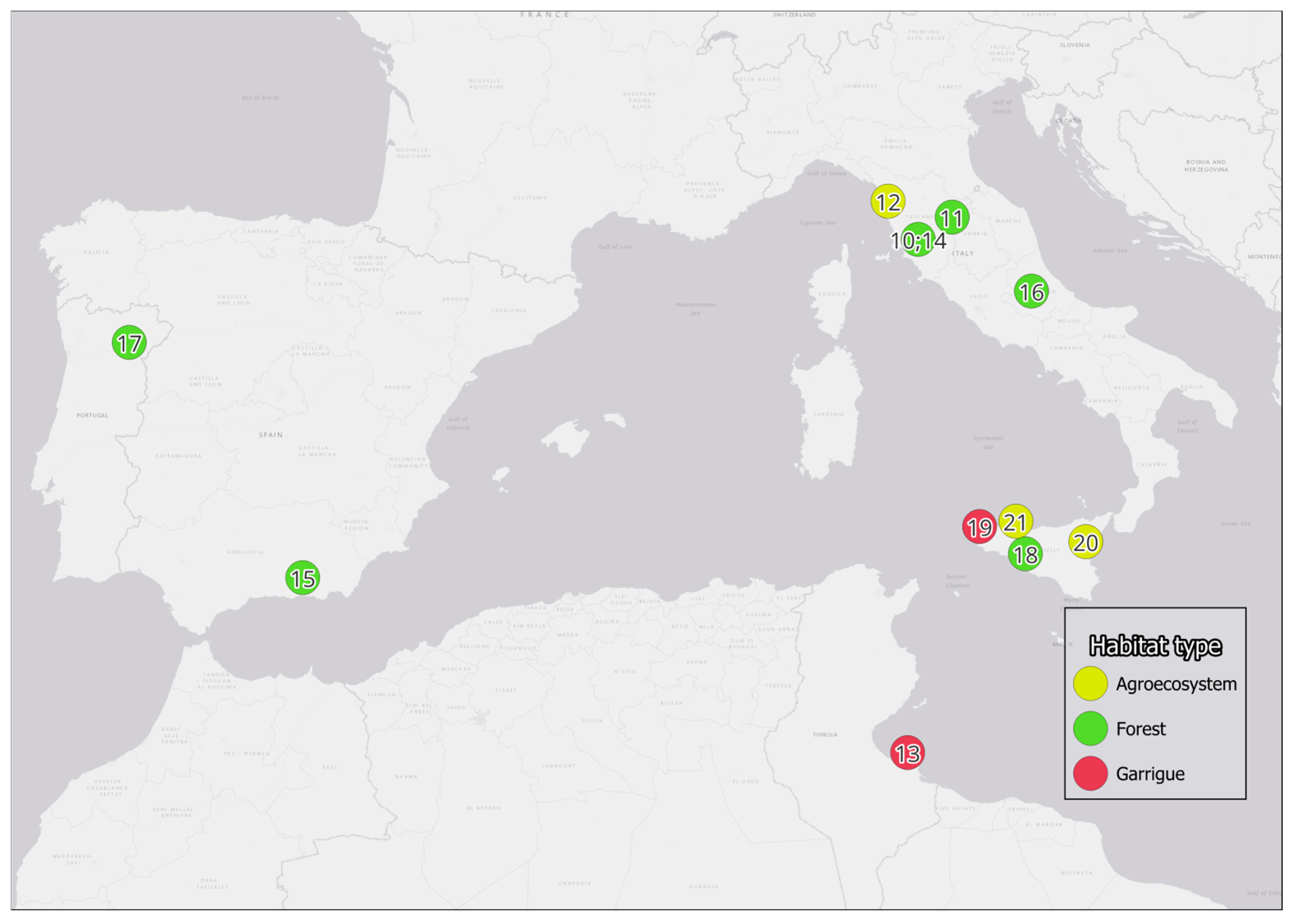
Figure 1. Geographic distribution of the study areas included in the review.
Diversity 18 00062 g001
Figure 2. Mean frequency of occurrence (FO%) of trophic categories in the diet of the red fox across three Mediterranean habitat contexts: forests, agroecosystems, and garrigue. Same letters indicate no significant differences (p > 0.05) across trophic items after post-hoc test. N.S. = non-significant.
Diversity 18 00062 g002
Figure 3. Some images of a red fox hunting in open habitat (a) (Photo Andrea La Mantia), fox hunting a mouse (b) (Photo Andrea La Mantia), fox concealed in cereal stubble (c) (Photo Andrea La Mantia), foxes behavioural plasticity in anthropic environments (d) (Photo G. Leto), typical Mediterranean garrigue of northern Sicily (e) (Photo Tommaso La Mantia), red fox faeces containing seeds in an agricultural areas (f) (Photo Rafael da Silveira Bueno).
Diversity 18 00062 g003
Table 1. Summary table of articles selected in the review.
HabitatCountryStudy AreaReference
ForestItalySiena[10]
ForestItalyArezzo[11]
AgroecosystemItalyPisa[12]
AgroecosystemTunisiaIsland of Djerba[13]
ForestItalySiena[14]
ForestSpainSierra Nevada[15]
ForestItalyAbruzzo[16]
ForestPortugalGeres[17]
ForestItalyPalermo[18]
GarrigueItalyTrapani[19]
AgroecosystemItalyMt. Etna[20]
AgroecosystemItalyPalermo[21]
Table 2. Mean (±SE) frequency of occurrence (%) and Shannon diversity index of trophic categories in the red fox diet overall and by habitat context. Data derived from published studies conducted in Mediterranean environments (n = 12 studies).
Trophic CategoryOverallForestAgroecosystemGarrigues
Invertebrates61.8 ± 29.362.1 ± 32.659.0 ± 26.374.7 ± 34.9
Fruits56.0 ± 23.756.7 ± 26.257.9 ± 6.950.2 ± 42.6
Small mammals45.1 ± 33.156.6 ± 34.236.9 ± 32.116.7 ± 13.8
Birds27.0 ± 28.324.9 ± 30.833.9 ± 35.238.6 ± 27.3
Carcasses19.0 ± 18.132.3 ± 31.618.1 ± 17.4
Lagomorphs16.3 ± 11.017.7 ± 11.419.4 ± 0.013.3 ± 13.8
Reptiles10.4 ± 25.319.4 ± 30.70.7 ± 0.0
Shannon index1.26 ± 0.101.22 ± 0.131.34 ± 0.171.19
Disclaimer/Publisher’s Note: The statements, opinions and data contained in all publications are solely those of the individual author(s) and contributor(s) and not of MDPI and/or the editor(s). MDPI and/or the editor(s) disclaim responsibility for any injury to people or property resulting from any ideas, methods, instructions or products referred to in the content.