Article

Zooplankton Indicators of Ecological Functioning Along an Urbanisation Gradient

by
Larisa I. Florescu
1,
Mirela M. Moldoveanu
1,*,
Cristina A. Dumitrache
1,2 and
Rodica D. Catana
1
1
Institute of Biology Bucharest of Romanian Academy, 296 Splaiul Independentei, 060031 Bucharest, Romania
2
School of Advanced Studies of the Romanian Academy (SCOSAAR), 010071 Bucharest, Romania
*
Author to whom correspondence should be addressed.
Diversity 2026, 18(1), 58; https://doi.org/10.3390/d18010058
Submission received: 29 October 2025 / Revised: 19 December 2025 / Accepted: 20 January 2026 / Published: 22 January 2026
(This article belongs to the Section Freshwater Biodiversity)

Abstract

Zooplankton is an essential functional component of the aquatic food web, reflecting, through its structure and biomass, the impact of anthropogenic pressures on ecosystems. In this study, we investigated the traits of the Rotifera and Crustacea communities along a rural–urban gradient in the Colentina River system. The results revealed a partial separation between rotifers and crustaceans, with distinct distributions determined by trophic conditions and habitat type. Trophic indices (Carlson’s TSI, TSIROT, TSICR) indicated increased eutrophication in peri-urban and urban areas (Fundeni, Plumbuita) compared to rural reference ecosystems (Colentina, Crevedia). The relationships between Resource Use Efficiency (RUE) and trophic indices were positive and significant in rural areas, indicating a balanced ecosystem, but were decoupled in urbanised sectors, where high RUE values were driven by increased biomass of opportunistic species, whereas TSI indicated eutrophic conditions. The results confirm the role of zooplankton as a sensitive bioindicator, capable of capturing both the impact of eutrophication and the capacity of urbanised ecosystems to maintain trophic functionality. The integration of zooplankton-based metrics into monitoring schemes offers a complementary perspective on ecological resilience in aquatic ecosystems under urban pressures.

1. Introduction

Under anthropogenic alterations to urban aquatic ecosystems, the effects on the structure and functioning of zooplankton communities are significant. In these habitats, zooplankton play an essential ecological role, with variations in the composition, abundance, and dominance of specific taxa, especially rotifers and crustaceans. Due to its key position in the aquatic trophic network, it is a suitable model for analysing the efficiency of energy transfer and the functioning of trophic networks.
The rapid and intense response of zooplankton to environmental changes, such as increases in nutrient levels, phytoplankton biomass, and water quality, reflects both bottom-up and top-down processes. Studies have shown that pressures generated by urbanisation and eutrophication favour especially small rotifer and crustacean species to the detriment of large zooplankton species with higher turnover, as a result of altered food sources, unstable environmental conditions, etc. These changes have altered the resource transfer within food webs, making zooplankton a sensitive indicator of habitat and ecosystem conditions by linking primary producers to higher consumers [1].
Under the influence of anthropogenic pressures, the community undergoes structural and functional homogenization dominated by tolerant species (e.g., small filter-feeding rotifers such as Keratella spp.), with the reduction in large, specialised species (microcrustaceans) due to excess nutrients, increased temperatures during warm periods, and the physicochemical changes that derive from these conditions. In urban-agricultural basins, hybrid pressures increase sucking rotifers and protozoa, but decrease total biomass, confirming the urban tolerance hypothesis [2,3]. These support significant changes in the structure and functionality of the community [4,5,6].
Zooplankton is a reliable biological indicator of trophic status that integrates short-term fluctuations in environmental conditions with long-term trends in the ecosystem. Through its major components, such as crustaceans and rotifers, it complements physicochemical and phytoplankton-based assessments, enhancing the detection of ecological transitions between natural and urbanised systems [7,8,9]. Thus, the approach used in studies of trophic state indices derived from zooplankton parameters supports the ability to assess ecological functioning and to detect early signals of eutrophication and habitat degradation [10,11,12,13]. Crustaceans and rotifers, as central components of zooplankton, exhibit different adaptations to trophic conditions and disturbance levels, and variations in their composition may indicate ecological transitions between natural and urbanised areas [14]. Trophic indices (TSI) are valuable tools in aquatic ecology for assessing the trophic state and productivity of water bodies. The most used, the Carlson Trophic State Index (Carlson’s TSI), uses chlorophyll a, total phosphorus (TP) concentrations, or water transparency (Secchi depth) to quantify the degree of eutrophication. On the other hand, the use of phytoplankton-based indices provides an overview of primary productivity, which, together with indicators from other higher trophic levels, such as zooplankton, offers a more nuanced and precise perspective on the functioning and resilience of food webs under the complex pressures of urbanisation. Thus, assessing the differences between Carlson’s TSI and zooplankton TSI (TSIROT—Rotifera Trophic Index and TSICR—Crustacea Trophic Index) not only provides essential aspects of trophic status but also provides a practical perspective on bottom-up and top-down changes in water bodies. In conclusion, the article proposes using discrepancies between trophic indices not only to classify lakes but also as a diagnostic tool to indicate the most effective management approach [15].
In urban hydro-social systems, where anthropogenic pressures are intense and cumulative, RUE assessment provides meaningful information on ecosystem stability and resilience, as well as their ability to maintain key ecological processes. According to Hodapp et al. [5], the concept of resource use efficiency provides a functional interpretation of aquatic community dynamics. It helps to understand how urbanisation shapes the structure and function of freshwater ecosystems. Additionally, the relationship between RUE (Resource Use Efficiency) and trophic status among primary consumers may reflect the influence of phytoplankton on zooplankton. Zooplankton resource use efficiency (RUE) is expressed as the ratio of zooplankton to phytoplankton biomass. It reflects the zooplankton community’s ability to convert available primary resources (phytoplankton) into its own biomass, providing a measure of trophic efficiency in aquatic ecosystems [16,17]. Also, analysing the functional traits of zooplankton contributes to understanding how communities respond to the multiple pressures of urbanisation and to identifying the mechanisms that drive variations in ecosystem functioning [18,19].
This study tracks the distribution of zooplankton in an urban river and investigates how the community’s structure and traits are influenced by the degree of anthropogenic influence. The objectives of the study are: 1. Characterise the structure and traits of the zooplankton community from a taxonomic and functional perspective; 2. Investigation of spatial variations in communities and the identification of the habitat-specific indicator species; 3. To assess the trophic indices (Carlson’s TSI, TSIROT, TSICR) and compare according to the ecosystem types; 4. To assess Resource Use Efficiency (RUE) for rotifers and crustaceans. 5. To investigate the relationship between RUE and trophic indices by habitat type.

2. Materials and Methods

2.1. Study Area and Sampling Sites

The Colentina River crosses Bucharest and has been subject to major hydrotechnical works since 1933 to meet urban water management needs. The modifications aimed to regulate the course, stabilise the banks, drain wetlands, and create a chain of 15 anthropogenic lakes with multiple roles: recreational, ecological, and functional (water supply, sewage, irrigation) [20]. An intense increase in population density characterises urbanisation along the Colentina River, changes in land use, and the expansion of urban infrastructure, all of which directly influence the ecological state of aquatic ecosystems. The modifications made to the Colentina River, especially its lower sector that crosses the Bucharest region, were not limited to the simple expansion of human settlements but involved a significant change in the hydrographic system, demonstrating an evolution from a natural river with an extended meadow to a highly regulated watercourse [21]. The most significant intervention, directly correlated to the needs of the growing city, was the creation, starting with the first half of the 20th century, of the chain of reservoirs, an artificial system of 15 lakes, with hydrotechnical, recreational and flow regulation functions [20]. These developments, although essential for managing urban hydrological risks, have disrupted the river’s longitudinal continuity and substantially altered aquatic ecology. The continuous development of residential areas adjacent to the lakes, especially after the 2000s, represents a constant source of anthropogenic pressure, manifested by the input of pollutants (nutrients and organic substances) that directly affect water quality [22,23]. Urbanisation along the Colentina River coincides with a clear transition from rural to peri-urban and urban areas, reflected by significant changes in land use, the expansion of impervious surfaces, and an increase in population density. Studies on the urban landscape of Bucharest show that urban sectors are characterised by a high level of artificialization, with increased proportions of built-up areas and a significant decrease in green spaces, phenomena associated with the degradation of aquatic ecosystems and the intensification of nutrient loading. In contrast, rural and periurban areas upstream maintain a less fragmented land structure and reduced anthropogenic pressure, which provides a suitable ecological gradient for assessing the impact of urbanisation on zooplankton communities [20].
Thus, the Colentina River crosses areas with different characteristics: unmodified riverine areas influenced by rural areas, followed by peri-urban and urban areas with lakes, which provide an ideal framework for assessing anthropogenic impacts along a spatial gradient. This diversity of local influences and hydro-morphological features allowed the assessment and comparative analysis of the effects of human activity on rotifer and crustacean communities in a spatial gradient.
The study was conducted along the Colentina River between March and November 2019, with monthly measurements, resulting in 81 zooplankton samples. The stations were selected to reflect a gradient of anthropogenic influences (Table 1 and Figure 1):
  • Station 0 (Cernica river natural sector)—rural area with natural characteristics, low anthropogenic influences;
  • Station 1 (Crevedia)—rural area with natural features, low anthropogenic influences;
  • Stations 2 and 3 (Mogoșoaia Lake)—peri-urban area with modified course in the lake, with mixed influences;
  • Stations 4 and 5 (Plumbuita Lake)—urban area, strongly influenced by human activity;
  • Stations 6 and 7 (Fundeni Lake)—urban area, strongly influenced by human activity;
  • Station 8 (Cernica Lake)—peri-urban area, with cumulative influences;
  • Station 9 (Cernica Natural Channel)—rural area, low anthropogenic influences.
To characterise the spatial anthropogenic gradient along the Colentina River system, a degree of urbanisation was estimated using Google Earth Pro 2025, with a 500 m buffer zone for each sampling station. For each sampling point, the proportion of anthropogenic structures was visually quantified using satellite imagery. The results showed a clear rural–urban-periurban gradient, ranging from <10% in the upstream rural sites (Stations 0–1), to >70–85% in the lakes in central Bucharest (Stations 4–7), and decreasing again towards the periurban-forest section of Cernica (Stations 8–9) (Table 1).
The locations enable comparative analysis of the impacts of natural and anthropogenic factors on zooplankton communities, highlighting differences across rural, peri-urban, and urban areas.

2.2. Environmental Parameters

Physico-chemical parameter measurements were performed in the water column using a Hanna Instruments HI 9828 multiparameter probe (Hanna Instruments, Woonsocket, RI, USA). Thus, in situ measurements were made of dissolved oxygen, temperature, redox potential (ORP), Total Dissolved Solids (TDS), pH, Conductivity and turbidity. Light intensity was determined using a Lutron LX 1102 luxmeter (Lutron Electronics Co., Inc., Coopersburg, PA, USA). Water depth was estimated with a Secchi disc, and current velocity (m/s) was measured with a Geopacks flowmeter (Geopacks Instrumentation, Pune, India).
For nutrient analysis, water samples were collected in plastic containers and kept cold before being analysed in the laboratory. A volume of 200 mL was filtered through Whatman GF/F filters (65 μm diameter; Cytiva, Whatman, MA, USA). Nutrient concentrations were determined spectrophotometrically using the modified Berthelot method for NH4+, and for NO3, NO2, for PO43− and Ptotal—total phosphorus, the procedure described by Tartari and Mosello [24,25].

2.3. Zooplankton Sampling and Analysis

Zooplankton samples were collected from the water column using a 4 L Patalas-Schindler trap by successive filtration through a 50 μm net. The volume of filtered water per station varied between 20 and 40 L, adjusted according to the water load/turbidity, and preserved in 4% formalin. In the lab, the samples were settled for two weeks, concentrated by filtration, and then homogenised. For the microscopical analysis, 1 mL aliquots-3 subsamples were analysed using a Zeiss inverted microscope Axiovert 40C (Zeiss, Oberkochen, Baden-Württemberg, Germany) and a Kolkwitz counting chamber (Hydro-Bios GmbH, Altenholz, Schleswig-Holstein, Germany). Zooplankton were identified to genus/species level for Rotifera [26] and Cladocera [27], while Copepoda were identified to group and developmental stage (nauplii, copepodites, adults) [28,29,30]. Zooplankton densities were assessed according to [30] and used to calculate biomass.
The biomass estimation for each zooplankton group was conducted as follows:
The biomass of rotifers was estimated using a volumetric method [31,32,33]. For the biomass estimation of cladocerans and copepods, a volumetric method was applied. Linear dimensions of species were measured and used to calculate body volumes [34]. The mean volume of each species, determined from measurements of 20 individuals per species, was expressed in wet weight and multiplied by its density. The resulting biomass for each group was expressed in µg × 10−3 wet weight L−1.

2.4. Trophic State Indices

The trophic indices were determined based on zooplankton densities (ind.L−1), according to the Ejsmont-Karabin methodologies for TSIROT [8] and for TSICR [9], according to the following formulas.

2.4.1. Rotifera Trophic Index

TSIROT = 5.38 Ln(N) + 19.28
where N is the rotifer density (ind.L−1).
TSIROT < 45 → Mesotrophic
TSIROT 45–55 → Meso-eutrophic
TSIROT 55–65 → Eutrophic
TSIROT > 65 → Hypertrophic

2.4.2. Crustacea Trophic Index

TSICR = 25.5 N0.142
where N is the total crustacean density (ind.L−1).
TSICR < 45 → Mesotrophic
TSICR 45–55 → Meso-eutrophic
TSICR 55–65 → Eutrophic
TSICR > 65 → Hypertrophic

2.4.3. Carlson’s Trophic State Index (CTSI)

CTSI [35] is a widely used ecological tool for assessing the trophic status of lakes. The method is based on the concentration of chlorophyll a, a direct indicator of algal biomass, to estimate the productivity and health of the aquatic ecosystem according to the formula:
TSI(CHLa) = 9.81 ln(CHLa) + 30.6
Based on the TSI value, the lakes are classified as follows:
CTSI < 40 → Oligotrophic
CTSI 41–50 → Mesotrophic
CTSI 51–70 → Eutrophic
CTSI > 70 → Hypereutrophic
Phytoplankton biomass was assessed in situ using a BBE-Moldaenke FluoroProbe (BBE Moldaenke GmbH, Kiel, Germany), which allows biomass quantification by measuring the concentration of chlorophyll a. Biomass values were expressed in μgL−1 of chlorophyll a.

2.5. Resource Use Efficiency (RUE)

The resource efficiency of zooplankton (RUE) was determined as the ratio of the biomass of zooplankton to the biomass of phytoplankton. This index reflects the zooplankton community’s capacity to convert the available primary phytoplankton resource into its own biomass [36].
RUE = Z o o p l a n k t o n   B i o m a s s   w e t w e i g h t / L P h y t o p l a n k t o n   B i o m a s s   w e t w e i g h t / L

2.6. Statistical Analysis

Principal component analysis (PCA) is a multivariate technique used in ecology to reduce dimensionality and identify dominant ecological gradients [37]. The method was used to rank biological communities and to interpret their relationships with the investigated ecosystem types, without imposing constraints on the data distribution.
Analysis of covariance (ANCOVA) is an extension of analysis of variance (ANOVA) that allows comparing the means of a response variable across groups while adjusting for the influence of one or more continuous covariates. The method assumes that the relationship between the covariate and the dependent variable is linear and constant between groups. The analysis assessed whether ecosystem type and phytoplankton trophic state influenced the trophic conditions of the zooplankton community. ANOSIM (Analysis of Similarities) is a nonparametric statistical test used to assess differences in zooplankton communities between sample groups. It is based on a dissimilarity matrix (the Bray–Curtis distance was selected) and compares the average ranks of dissimilarities within groups with those between groups. R ranges from −1 to +1, with values close to +1 indicating a clear separation between groups and values close to 0 suggesting a lack of significant differences. The method was applied to evaluate the spatial structural differences in the two communities, rotifers and crustaceans.
Similarity Percentages (SIMPER) is an analytical method used to identify the contribution of each species to the differences in community composition between groups of samples. It is based on the Bray–Curtis dissimilarity index, which calculates the average contribution of each species to the total dissimilarity between groups. Based on the SIMPER analysis, discriminant specificities were highlighted, namely those that contribute most to the differences observed between groups. The analysis was applied as a complement to the ANOSIM test [38].
The Indicator Value (IndVal) method is used in ecology to identify indicator species significantly associated with specific habitat groups or ecological conditions. It combines two essential components: Specificity (A)—the proportion of the total abundance of a species that is found in a particular group of sites, and Fidelity (B)—the proportion of sites in that group where the species is present.
The indicator value is calculated as:
IndValij = 100 × Aij × Bij
where IndValij—is the indicator value of species i for group j.
This value ranges from 0 to 100 and is statistically tested using permutations (usually 999 or more) to assess the significance of the association [39].
To assess the relationships between biological variables and environmental parameters that characterised the investigated areas, a Redundancy Analysis (RDA) was applied. RDA is a multivariate technique that allows the quantification of the proportion of variation in biological indices explained by the set of environmental factors included in the model. The indices TSIROT, TSICR, as well as RUEROT and RUECR, were considered response variables, and environmental factors and ecosystems were used as explanatory variables, to identify the degree to which these predictors explain the observed biological variation. A permutation test was used to assess the significance of the models and canonical axes [40].
Statistical analyses were performed on data transformed to ln(x + 1) using the programmes Past (Version 4.16c) [41] and XLSTAT Pro 2014 (Addinsoft, Paris, France) [42].

3. Results

3.1. Environmental Conditions

The Colentina river water bodies exhibited a gradient in recorded physicochemical parameters from rural to peri-urban/urban (Table 2). The depth generally decreased downstream, with minimum values in Fundeni and Cernica Lake, while the flow velocity was reduced in most of the river course. Conductivity, TDS and ORP increased from upstream to downstream, highlighting an accumulation of dissolved salts as the system crossed the urbanised areas. ORP values starting from Mogoșoaia were negative, suggesting a higher organic load. Also, the results indicated a gradual enrichment in nutrients. Phosphorus compounds had a generally increasing trend along the course, reaching maximum values in Cernica (Ptotal = 0.74 mgL−1, PO43− = 0.17 mgL−1). In contrast, ammonium (NH4+) showed two significant peaks at Mogoșoaia and Cernica (NH4+ = 0.28–0.29 mgL−1). Nitrite (NO2) remained almost constant, fluctuating between 0.03 and 0.05 mg L−1, with slight variations attributed to local nitrification processes. Nitrate NO3 decreased strongly from Colentina to Plumbuita (from 3.81 mgL−1 to 1.93 mgL−1), after which they increased again towards Fundeni and Cernica lake (up to 3.34 mgL−1).

3.2. Indicator Species and Habitat-Specific Patterns in Zooplankton Communities

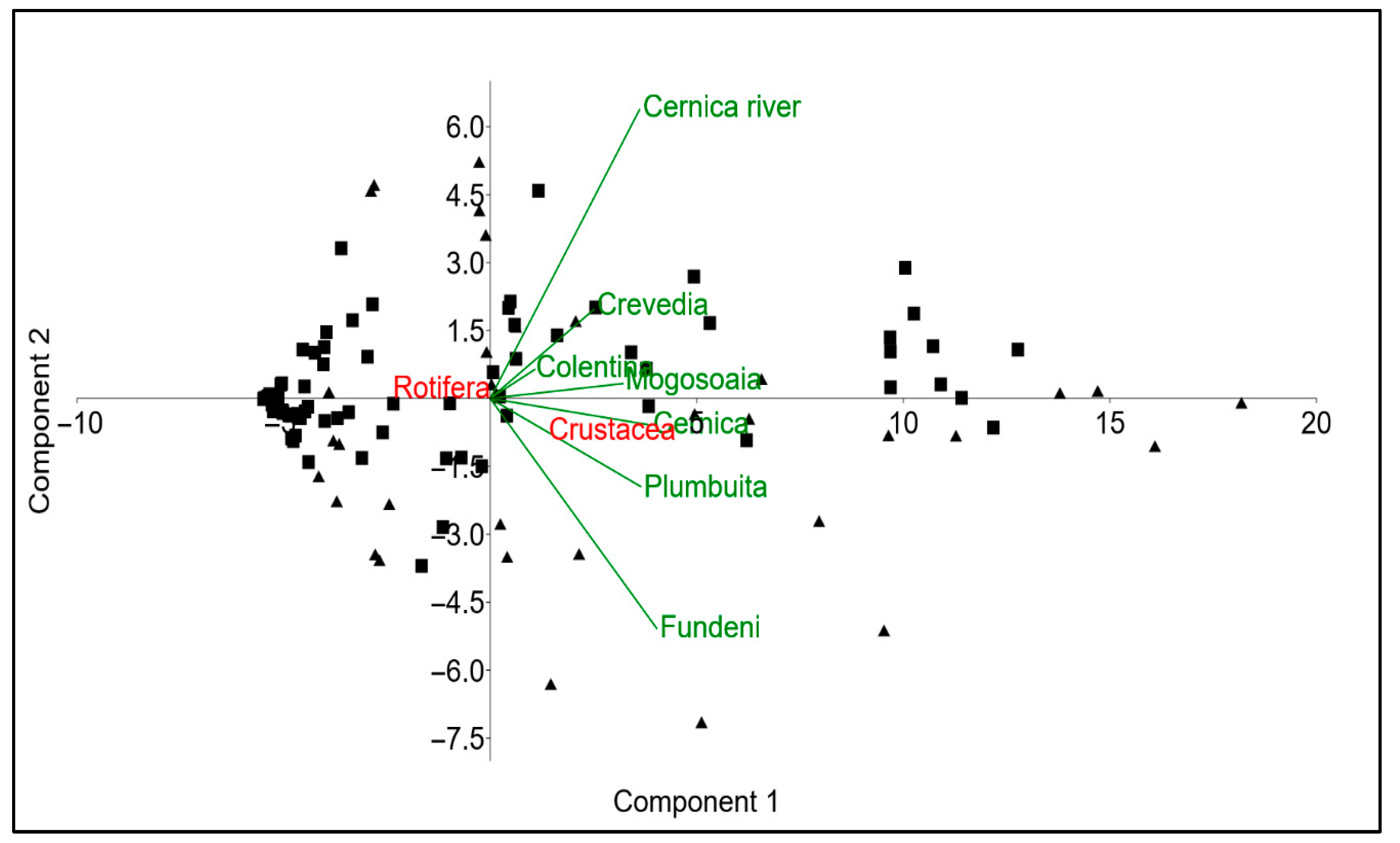
The PCA of rotifer and crustacean species composition shows a mixed distribution along the Colentina River, with stations clustering by position on the urban–rural gradient (Figure 2). The first and second axes explain 73.62% and 7.94% of the variation in zooplankton assemblage and indicate that in the Cernica river sector (located high on Component 2), the zooplankton communities were distinct from the rest of the sections. At the other extreme, Lake Fundeni (located low on Component 2) also indicated a distinct taxonomic composition. In contrast, the biplot shows a clustering of Lakes Crevedia, Colentina, and Mogoșoaia, reflecting structural similarity among the communities, and is joined by Lake Plumbuita, which has intermediate features. The corresponding vectors of the two taxonomic groups (Rotifera and Crustacea) had distinct orientations, indicating a spatial separation of the communities in response to local conditions. Rotifers were positioned in the upper part of Component 2, associated with Mogosoaia, Colentina, and Crevedia. At the same time, most crustaceans were found below Component 2 and slightly to the right of Component 1, indicating associations with the urban lakes Fundeni and Plumbuita.
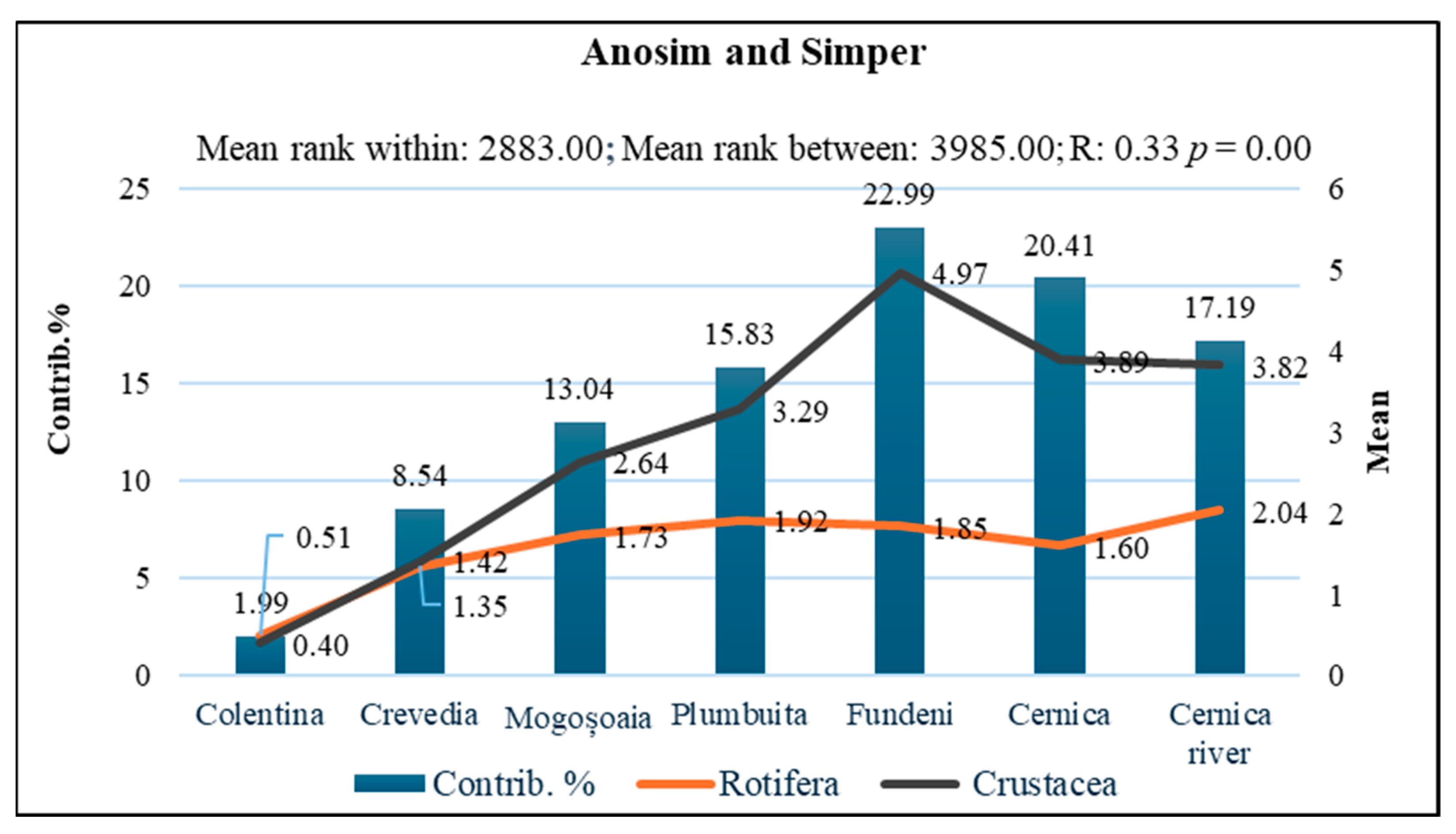
The spatial distribution of the rotifer and crustacean communities showed a moderate separation between the two taxonomic groups (ANOSIM; r = 0.33; p = 0.00), suggesting differences in habitat preferences or ecological strategies. The mean rank values were higher between groups than within them (mean rank within = 2883; mean rank between = 3985) (Figure 3), indicating a clear delimitation of the ecological niches occupied between rotifers and crustaceans, which can be associated with factors such as resource availability, physico-chemical conditions of the environment or biotic interactions. In addition, the SIMPER analysis (Overall average dissimilarity = 121.7) showed the level of difference between communities. The highest values of total dissimilarity were found in Fundeni (22.99%), Cernica (20.41%) and the Cernica river section (17.19%), accounting for over 60% of the differences observed between groups (columns, Figure 3). In contrast, the lowest contribution (1.99%) was found in the reference station (Colentina). The structural differences were mainly due to crustacean variability, with rotifers showing lower spatial variation, thereby highlighting a wider ecological tolerance (lines of mean values, Figure 3).
This spatial differentiation of communities, determined by the varied contributions of taxa to total dissimilarity, reflects an ecological structuring influenced by species tolerance and adaptability.
Using Indicator species analysis (IndVal), an increase in the number of indicator species was observed from upstream to downstream. The indicator value (%) for most species fell within a moderate range (7.99–48.27%), suggesting that the fidelity and specificity of these species to the analysed habitats were limited (Table 3). In the Colentina River sector, no species with significant results were identified. In the Crevedia branch, Brachionus plicatilis (29.59%) and Bdelloidea sp. (30.69%) were dominant, suggesting a clear association with this segment. In Mogoșoaia Lake, seven rotifer species with significant values were identified, of which Brachionus angularis (27.45%), Brachionus quadridentatus (16.37%) and Colurella obtusa (16.67%) were essential indicators. In Plumbuita Lake, four species of rotifers and two of crustaceans were noted (Table 1), indicating a mixed and diversified community. In Lake Fundeni, the number of significant crustacean taxa has increased, with juvenile stages of copepods (Nauplii—35.08%; Copepodites—23.58%) and cladocerans standing out alongside rotifers, indicating a representative community characteristic of this lake. At Cernica Lake, Pompholyx complanata (46.50%) showed a strong association with the area. At the same time, in the Cernica River section, the highest number of indicator species (15) was recorded, with a good representation of rotifers.
The spatial patterns between the two groups were evident, thus providing additional information about habitat preferences. In this context, the analysis of trophic indices (CTSI, TSIROT, TSICR) helps understand how the trophic gradient shapes zooplankton communities.
Habitat-Specific Relationships Between Trophic State indices and RUE as zooplankton functional traits
The Carlson index and biological indices (TSIROT, TSICR) showed an increase in trophic status from rural to urban areas, with maximum values in Fundeni and Plumbuita (Table 4). The Carlson’s index indicated eutrophic conditions, with increases toward hypertrophy in most lakes. In contrast, rotifers placed the lakes between mesotrophic and eutrophic, while crustacean TSIs tended to indicate a slightly lower trophic status (Table 2). In rural areas upstream such as Colentina (CTSI = 51.7 ± 5.28, TSIROT = 34.21 ± 7.83, TSICR = 27.94 ± 2.98) and Crevedia (CTSI = 68.1 ± 13.32, TSIROT = 50.96 ± 5.75, TSICR = 37.81 ± 5.12), the indices indicated moderate eutrophic conditions. In contrast, ecosystems under the influence of more intense human activities in the peri-urban areas of Mogoșoaia (CTSI = 72.43 ± 3.5, TSIROT = 54.55 ± 4.62, TSICR = 44.26 ± 14.76) and urban areas of Fundeni (CTSI = 71.97 ± 3.08, TSIROT = 55.63 ± 5, TSICR = 55.77 ± 11.22) showed clear trends of increasing eutrophication.
The ANCOVA analysis highlighted significant influences of the type of area (rural, peri-urban and urban) and of the trophic conditions, expressed by the Carlson’s TSI index, on the variation in the trophic indices of rotifers and crustaceans. The increasing trend of TSIROT along the river course reflected variations similar to those of the CTSI, indicating a significant influence of trophic conditions (ANCOVA F(3,84) = 19.26, p < 0.0001), without significant differences between the analysed areas. Regarding crustaceans, the type of area was the determining factor in TSICR variations (ANCOVA, F(3,84) = 3.63, p < 0.03; Tukey’s post hoc test indicated a significant difference between urban and rural areas, p = 0.02). The values of the trophic indices highlighted increasing trends of eutrophication from rural to urban sectors, correlated with the intensification of anthropogenic pressure, and this trend was also reflected in the efficiency of resource use of the two zooplankton components.
The Resource Use Efficiency index increased for both groups from the entry point in the rural Colentina river section to the extreme upstream (Cernica river) (Table 5). In peri-urban ecosystems transitioning between natural and anthropogenic systems, SD values indicated high variability, with periods of high nutrient uptake followed by periods of decline. The highest values were recorded in urban ecosystems such as Fundeni (RUECR = 9.31) and Plumbuita (RUEROT = 9.02). At Cernica Lake, efficiency remained high, a sign of a productive ecosystem, as did the natural outlet sector from Bucharest, the Cernica River section. However, both zooplankton groups showed significant spatial differences, RUEROT (ANCOVA F(3,84) = 3.57, p < 0.01) and RUECR (ANCOVA F(3,84) = 6.46, p < 0.001), especially between urban and rural areas (Tukey’s post hoc test: rotifers p = 0.01, crustacea < 0.0001).
Investigation of resource use efficiency (RUE) in relation to trophic indices (TSIROT, TSICR, and CTSI) using Pearson correlations revealed significant (p < 0.05) habitat-specific associations across habitat types (rural, peri-urban, urban), indicating differentiated ecosystem functioning. Thus, in rural environments, the relationships between RUE and trophic indices indicated an efficient use of available resources under moderate trophic conditions. The responses of both groups to trophic changes were strong (RUEROT and TSIROT: r = 0.82; RUECR and TSICR: r = 0.61), suggesting rapid and efficient adaptation of the communities to available resources. Also, advantageous interactions were identified between the two groups (r = 0.55). In peri-urban areas, the observed trends reflected the instability of these ecosystems. Thus, the relationship between RUEROT and TSIROT decreased slightly (r = 0.75) and was negatively associated with eutrophic conditions (r = −0.50). These trends were also observed in urban areas, indicating the persistence of the adverse effects of trophic stress. In contrast, the ability of crustaceans to develop in urban areas was also reflected in their functionality; thus, the coefficient of determination showed a slight increase from rural (r = 0.61) < peri-urban (r = 0.62) < urban (r = 0.79).
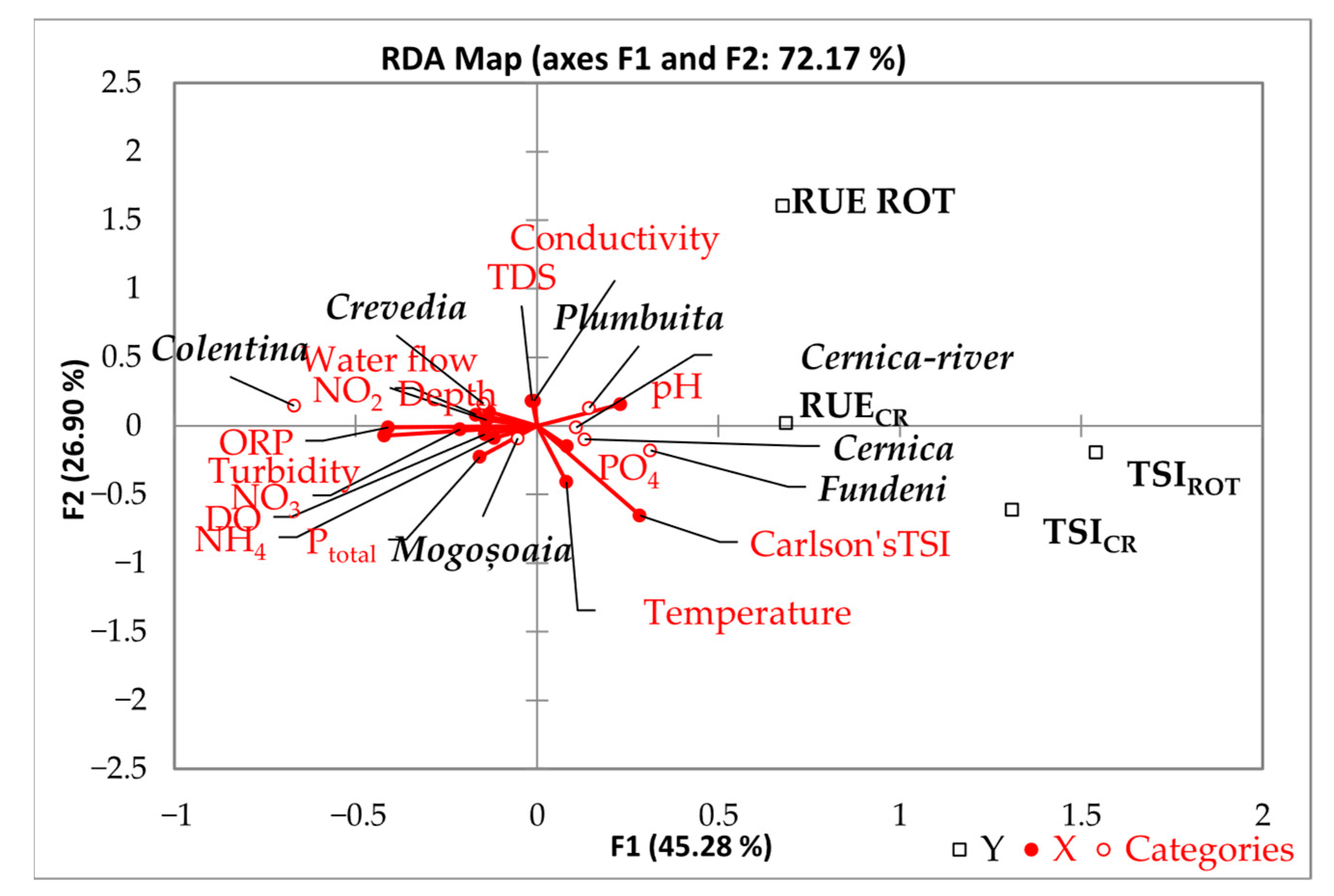
RDA revealed strong influences of environmental parameters on ecosystem functioning, with the first two axes explaining 72.17% of the total variation (Figure 4). The first axis (F1, 45.28%) was associated with the trophic index TSI, capturing the trophic-urbanisation gradient. In contrast, the second axis (F2, 26.90%) was associated with resource use efficiency (RUE), reflecting the functional variation in ecosystems. On the F1 axis, TSI (TSI_ROT, TSI_CR, Carlson’s TSI) correlated with parameters such as TDS, conductivity and temperature, indicating increased trophic conditions under urbanisation. In contrast, lower TSI values were associated with flow, ORP, dissolved oxygen and inorganic nutrients, parameters suggesting a more dynamic and less disturbed condition. On the F2 axis, RUE (especially RUEROT) separated ecosystems with high resource use efficiency from those that were intensely eutrophic. The distinct positioning of RUE compared to TSI indicates that functional efficiency does not increase linearly with eutrophication but reaches a maximum under intermediate anthropogenic pressure, characteristic of peri-urban areas. The association of ecosystems with these results confirms the differences between the types of influences. Urban ecosystems, represented by the Fundeni and Plumbuita lakes, exhibited high TSI values, indicating pronounced trophic states and strong urbanisation-related effects, with reduced resource-use efficiency. On the other hand, peri-urban ecosystems, Mogoșoaia and Cernica-lake, had intermediate values for both TSI and RUE, illustrating the transition between rural and urban areas and demonstrating optimal functional efficiency under moderate anthropogenic pressure. Rural ecosystems, Colentina and Crevedia, and the Cernica-river sector presented moderate TSI values, correlated with flow and oxygenation parameters, but lower RUE, suggesting a natural, dynamic functioning with efficient nutrient recycling, without maximising resource use.

4. Discussion

Along the Colentina River, zooplankton exhibited a gradient in community structural composition, consistent with both local conditions and anthropogenic influences, assessed by the physicochemical parameters recorded along the Colentina River (Table 2). The progressive increase in nutrient (Ptotal, PO4, NH4) concentrations, conductivity, and phytoplankton biomass (as indicated by the increasing CTSI) along the Colentina river course from rural to urban sectors leads to eutrophic conditions that alter trophic coupling between primary producers and consumers. Also, the negative ORP values recorded downstream from Mogoșoaia suggest a reduction in water quality, conditions associated with organic enrichment. Such conditions favour fast-growing opportunistic species with a high biomass turnover, with effects on RUE values without implying an efficient or stable energy transfer [43,44]. This increase in RUE reflects accelerated biomass conversion under nutrient enrichment rather than an improvement in ecosystem efficiency.
These conditions promoted a shift in community composition from species with high turnover rates, such as rotifers (adapted to lentic conditions), towards crustaceans that can efficiently exploit abundant phytoplankton in the urban lotic ecosystems, resulting in elevated RUE values. These changes can be explained by the adaptive response of species to food resources that appear with eutrophication [45]. Thus, in the distribution of the communities, our results showed a partial separation between Rotifera and Crustacea, in accordance with ecosystem types (Figure 2). The rotifers were better represented in sectors with rural influence, whereas crustaceans showed greater tolerance for urbanised areas. Most IndVal values were moderate (8–48%), reflecting the dominance of euritolerant and opportunistic taxa in eutrophic urban waters [9,46]. The very high scores (>40%; Table 3) for rotifers such as Trichocerca sp. and Pompholyx sp. indicate close associations with eutrophic and heavily polluted habitats [47]. Analysis of IndVal index values revealed a gradual increase in the number of indicator species from upstream to downstream, culminating in the Cernica sector, where the highest proportion of indicator species (up to 48.27%) was identified. This pattern corresponds to the typical longitudinal gradient of urban rivers, where water retention, nutrient accumulation, and habitat heterogeneity increase in the lacustrine and lower reaches [48,49,50]. The upstream Colentina sector, which lacks significant indicator species, may represent a more homogeneous environment with reduced niche differentiation. These features of the Colentina sector, together with the moderate IndVal for species such as Brachionus plicatilis and Bdelloidea sp. in the Crevedia Branch, suggest a less distinct zooplankton community in these systems. Brachionus plicatilis, a common rotifer often found in eutrophic waters, may indicate some degree of nutrient enrichment or other stressors. Bdelloidea are also known for their resilience and ability to colonise diverse habitats, including those with fluctuating conditions. The limited fidelity of these species suggests a more transitional or less stable environment than in the downstream lakes [27,51]. Downstream, in periurban and urban areas (Mogoșoaia, Plumbuita, Fundeni), the number of indicator species increased, supported by the emergence of more stable lacustrine conditions. Mogoșoaia, dominated by rotifers (Brachionus angularis, B. quadridentatus, Colurella obtusa), indicates meso-eutrophic conditions and habitats with aquatic vegetation and stagnant waters. Plumbuita presented a mixture of rotifers and cladocerans (Brachionus calyciflorus, Trichocerca cylindrica, Diaphanosoma sp., Scapholeberis mucronata), indicating conditions similar to those in other studies, organic loading, and diversified microhabitats [14,52]. Fundeni, the increase in the share of crustaceans (Daphnia cucullata, Moina micrura, juvenile stages of copepods) reflects the development of a more complex trophic chain and more stable conditions [53]. In the downstream sector of Lake Cernica, the dominance of Pompholyx complanata (46.5%) highlights a strong eutrophic signal, associated with tolerance to organic loading [8]. The Cernica River recorded the highest richness of indicator species (15 taxa) (Table 3), with high IndVal values for Trichocerca similis (48.27%) and T. pusilla (42.63%). The Colentina gradient demonstrates the transition from disturbed, species-poor conditions upstream to complex communities downstream, dominated by tolerant species. The heterogeneous community, including cladocerans (Bosmina sp., Daphnia galeata), suggests a habitat mosaic with strong anthropogenic influences and trophic accumulations [54]. Thus, the increased contribution of crustaceans in intermediate lakes suggests partial or complete ecological stabilisation, but anthropogenic pressure remains evident. The IndVal results indicate low ecological dependence, highlighting the generalist character of many taxa and the need to complement IndVal interpretation with other environmental indicators to provide a robust assessment of communities. On the other hand, the increase in resource-use efficiency along the stream, as indicated by the rise in the number of significant species (IndVal), suggests that zooplankton communities have adapted to use available resources more efficiently. Furthermore, the trends indicated broader ecological change (Figure 3), as evidenced by ANOSIM and SIMPER analyses, with shifts in composition and survival strategies. This adaptability may enhance the resilience of zooplankton populations, allowing them to thrive in fluctuating conditions. The significant differences highlighted by ANOSIM and SIMPER analyses showed moderate separation between rotifers and crustaceans and greater variability between groups, indicating distinct responses to trophic and habitat factors. Crustaceans contributed most to these differences through high variability in abundance and structure in response to changes in trophic and habitat conditions. This trend is consistent with the observations of Jeppesen [7] and Seda and Devetter [55], which show that cladocerans and copepods respond rapidly to changes in transparency, predation pressure, and trophic level. In contrast, rotifers showed a more uniform distribution and lower variation, confirming their broader ecological tolerance and their role as general indicators of eutrophication [8]. Thus, the statistically detected differentiation reflects not only distinct community structures but also divergent adaptive strategies: opportunistic rotifers, capable of colonising rapidly and persisting in variable conditions, compared to crustaceans, which are more sensitive to trophic and habitat fluctuations but play a stronger role in modulating food webs. These results support the complementary use of the two groups as bioindicators, where rotifers provide a robust picture of the degree of eutrophication, and crustaceans signal more finely environmental changes and anthropogenic pressures.
These structural features were reflected in variations in the TSIROT and TSICR indices. CTSI values ranged from moderately eutrophic conditions in rural lakes (Colentina: 51.7 ± 5.28) to marked eutrophication in urban lakes (Table 4), consistent with studies showing higher TSI values in urban systems under anthropogenic pressure [56,57,58,59,60]. The relative stability of the rural areas in the upper reaches of the river (Colentina, Crevedia) underlines their role as reference areas. Noteworthy, peri-urban lakes showed marked eutrophic trends (Mogoșoaia: 72.43 ± 3.5), reflecting cumulative influences from both rural and urban environments, an intermediate positioning that makes them vulnerable to multiple pressures [48,49,50]. CTSI highlighted typical features of urban waters, indicating algal blooms and reduced water quality. At the same time, rotifer-based indices indicated mesotrophic–eutrophic conditions, demonstrating resilience and the capacity to mitigate effects at the primary producer level. The sensitivity of rotifers stems from their short generation times, rapid reproduction, and dependence on bacteria and algae. The close correlation between TSIROT and CTSI reinforces the value of rotifers as bioindicators of eutrophication [52,59,61,62].
In our study, crustacean communities in urban areas demonstrated surprising resilience, likely due to their ability to exploit modified or artificial microhabitats (Table 4). This contrasts with populations from non-urban riverine regions, which showed greater sensitivity to habitat degradation. Such findings suggest that, despite anthropogenic pressures, urban environments may offer stable structural refuges that support crustacean persistence [63]. Lower TSICR observed in rural and natural river sections and higher in urban lakes reflects the ecological preferences of cladocerans and copepods for environments with higher trophic availability, where communities can more efficiently exploit accessible resources. In natural sections of the river, where trophic stress was minimal, crustaceans were not pressured to optimise feeding efficiency.
Natural conditions in natural ecosystems support a more diverse and stable food web, with abundant phytoplankton and detritus, allowing zooplankton to thrive without intense competition for resources. In contrast, TSICR occurred when trophic stress forced crustacean communities to adapt by maximising their feeding strategies to survive. However, shifts toward higher trophic efficiency in stressed environments, such as those caused by anthropogenic factors, can signal habitat degradation. Species that are typically less competitive may be outcompeted by more adaptable ones, leading to declines in community health and biodiversity. Also, in urban riparian habitats, a greater number of rotifer species was observed in less polluted localities, whereas cladocerans and copepods were present even in the most urbanised sampling locality. Crustacean communities exhibit diverse trophic strategies that influence their ecological roles and competitive success [64]. Thus, ecological dynamics in natural rural river sections differ significantly from those in more disturbed areas, with TSICR values serving as indicators of trophic status and community trophic strategies. Such changes are consistent with studies reporting higher zooplankton diversity and abundance in natural floodplains and river-connected habitats. In contrast, in disturbed or nutrient-limited systems, resource constraints and competition restructure community composition and trophic strategies.
The application of RUE at the zooplankton level enabled us to identify patterns of zooplankton biomass conversion along spatial gradients, reflecting the ecosystem functioning under different anthropogenic pressures. The gradients in resource availability and competition shaped the dynamics of zooplankton communities. In rural environments, aquatic systems exhibit typical trends in which nutrient availability increases productivity with high efficiency. This direct relationship suggests a predictable functioning of the phytoplankton–zooplankton food chain, in which primary productivity stimulates rotifer abundance and function. In peri-urban ecosystems in transition, large deviations (SD) in the indices indicated instability, characterised by alternating periods of increased nutrient uptake and decline phases, reflecting a reduced capacity of the system to self-regulate. Imbalances can result from fluctuating nutrient inputs and intermittent pollution events, disrupting the balance of biological communities (Table 4). Recent studies show that nutrient pollution-induced imbalances affect plankton composition and increase ecological instability [65]. In addition, accelerated urbanisation and land-use changes contribute to increasing nutrient concentrations in aquatic ecosystems, amplifying the risks of eutrophication and environmental degradation [66]. Our results align with previous studies showing that eutrophication alters the community composition and functional traits of aquatic organisms [67,68].
Thus, the high RUE observed in urban ecosystems, such as Fundeni and Plumbuita (Table 5), indicates that the zooplankton species in these areas exhibit a superior capacity to exploit available resources and tolerance to high nutrient loads and potential stressors associated with urban environments. The response of zooplankton in urban areas does not necessarily reflect a healthy ecosystem. Still, it confirms the adaptation of communities dominated by opportunistic species, which rapidly convert available resources into biomass [67,68,69,70]. This adaptation may signal trophic imbalances and functional restructuring of food webs [7]. While crustaceans demonstrate resilience and high efficiency in resource exploitation, rotifers remain sensitive indicators of trophic stress. The study by Obertegger and Manca [71] suggests that changes in competition with crustaceans in zooplankton and the decrease in phytoplankton abundance influenced the dominance of rotifer functional groups. In addition, community responses vary with seasonal dynamics, highlighting complex interactions among these groups and their responses to variations in environmental conditions [72]. The high values of resource use efficiency (RUE) recorded in several urban lakes reflected an increase in zooplankton biomass turnover under nutrient-enriched conditions, rather than an improvement in ecosystem efficiency. Similar patterns have been reported in eutrophic systems, where high resource availability supports opportunistic taxa capable of rapid biomass production [73].
In addition, the significant spatial differences in the relationships between RUE and trophic indices in urban and rural areas further support the idea that human impact is a primary factor in these functional changes. Analysis of the relationship between RUE and trophic indices (TSIROT, TSICR, and CTSI) revealed significant differences across habitat types, indicating differentiated ecosystem functioning that depends on the degree of anthropisation. In rural areas, strong positive correlations between RUE and TSI (rotifera r = 0.82; crustacea r = 0.60, p < 0.05) as well as positive interactions between groups (r = 0.55; p < 0.05) showed efficient use of resources under moderate trophic conditions and highlighted the features of a balanced ecosystem [74]. In contrast, the increase in the degree of anthropisation (periurban and urban) reflected ecosystem instability and vulnerability to trophic changes. The rapid response of rotifers to variations in trophic state underpins the comparison between these trophic indices and classical trophic state variables (Chlorophyll a). In contrast, crustaceans demonstrated resilience; RUECR was strongly influenced by TSICR (r = 0.79), but did not correlate with Carlson’s TSI, reflecting superior tolerance to eutrophic conditions [8,75].
The differences observed between the two zooplankton groups suggest functional variability in community structure, depending on local conditions. In Fundeni and Cernica, crustaceans recorded higher average RUE values than rotifers, suggesting greater ecological adaptability under trophic stress. While crustaceans were more efficient in urbanised environments, rotifers had a more moderate trend. Plumbuita showed the best RUE conditions. These variations in the relationship between TSI and RUE across degrees of anthropisation highlight that resource-use efficiency does not reflect only absolute trophicity but also the response to ecological pressure. In areas with chronic trophic stress (e.g., urban), efficient organisms are no longer necessarily the most sensitive (rotifers), but rather the most tolerant and resilient (crustaceans). RUE thus becomes a functional indicator not only of the “quantity” of trophism, but of the quality of the environment and the adaptability of the ecosystem. In contrast, anthropogenic influences in peri-urban and urban areas have increased eutrophication and ecological stress, reducing rotifers’ capacity to function. Crustaceans have demonstrated greater resilience to trophic disturbances and higher efficiency. In these communities, TSI Carlson did not show a direct link with TSICR. Still, higher TSICR values were positively correlated with RUECR (r = 0.61), indicating an essential role for crustaceans in stabilising the food web and increasing its efficiency. In urban areas, higher trophic levels increase stress on rotifers, reducing their share, but their functional role remains essential. Crustaceans become decoupled from the trophic level, but they contribute consistently to the energy flow. A decoupling between trophic levels and the zooplankton community is observed, with the two groups playing a compensatory role. Urbanisation disrupts simple trophic–zooplankton relationships, yet communities maintain their functionality.
Integrating physico-chemical and biological trophic indices provides a more complete assessment of trophic status. Rotifer-based indices can serve as early signals of eutrophication, while crustacean-based indices better capture habitat quality and food web dynamics [76,77]. The RDA (Figure 4) results highlighted that the zooplankton biological indices TSI and RUE responded to multiple environmental gradients in the Colentina River system that characterised the investigated areas.
Our results showed a tendency for spatial separation of the two parameters, indicating that biomass status and assimilation efficiency were not entirely congruent at the zooplankton level. While the TSI indicators quantified aspects of nutrient enrichment and phytoplankton biomass, RUE reflected how efficiently zooplankton biomass was produced relative to available resources, integrating both community structure and the functional exploitation of primary productivity. Such differentiation between compositional and functional indicators has been observed in other aquatic systems, where eutrophication and environmental filters produce distinct community responses that influence multivariate analyses (e.g., nutrient gradients shape structural parameters assessed by trophic state indices, while functional responses, such as biomass turnover and energy transfer, may diverge depending on habitat stability and food web complexity). In urban freshwater systems, structural indicators of trophic state and functional indicators of resource use may capture complementary but distinct aspects of ecosystem change, with implications for monitoring and assessment [15,78].
Overall, the two major groups responded differently to trophic and anthropogenic gradients. Rotifers exhibited rapid trophic responses, were sensitive to nutrient enrichment, and served as early indicators of eutrophication, while crustaceans showed greater structural resilience and functional adaptability, especially in urbanised and lacustrine environments, where they efficiently exploited abundant food resources and contributed to energy transfer within the food web.

5. Conclusions

The environmental parameters presented a clear increasing gradient from the rural Colentina–Crevedia sector to the peri-urban and urban ecosystems, indicating changes associated with anthropogenic activities. This gradient showed reduced environmental conditions consistent with eutrophic trophic states. In rural sectors, they supported an efficient use of resources by zooplankton, reflecting more stable ecosystems. In contrast, in urban lakes, the deterioration of ecological conditions favoured the development of opportunistic zooplankton communities, as reflected by RUE, which remains high but is partially reduced by TSI. Both indices suggest that functional efficiency is maintained under conditions of trophic stress. These results highlight that environmental parameters not only describe the urbanisation gradient but also directly control both the intensity of eutrophication and the responses of rotifer and crustacean communities, thereby explaining the importance of integrating trophic indices and RUE in assessing the functioning of urban ecosystems. Also, the analysis of indicator species reveals clear patterns of habitat-specific specialisation along the rural–urban gradient.
In rural areas (Colentina, Crevedia, Cernica-river), rotifers predominate with species adapted to dynamic conditions: Brachionus plicatilis, Bdelloidea sp., and Trichocerca spp. The transition to peri-urban areas (Mogoșoaia, Cernica) highlights diversification, with species such as Brachionus angularis, B. quadridentatus, Colurella obtusa, and Pompholyx complanata, signalling a transition to lacustrine habitats with intermediate anthropogenic pressure. In intensely anthropised urban areas (Plumbuita, Fundeni), crustaceans become dominant, represented by early naupliar and copepodite stages, as well as by tolerant cladoceran species, Diaphanosoma brachyurum and Bosmina longirostris, together with the rotifer Brachionus calyciflorus, indicating adaptation to advanced eutrophication. This taxonomic succession (rotifers to mixed structure to crustaceans) validates the role of indicator species in detecting ecological thresholds of urbanisation and supports their use in zonal biomonitoring.
In conclusion, in the rural areas (Colentina, Crevedia, Cernica-river), the RUE-TSI relationships were strongly positive (r = 0.82 RUEROT−TSIROT; r = 0.61 RUECR−TSICR), indicating balanced ecosystems. In peri-urban areas, the correlations weaken (r = 0.75 RUEROT−TSIROT, negative with CTSI, r = −0.50), reflecting instability. In urban areas, they decouple from CTSI but remain positive within-group (r = 0.79 RUECR−TSICR), signalling opportunistic adaptation under trophic stress. Zooplankton indices provide a superior assessment of trophic resilience compared to CTSI, and their integration into monitoring is recommended. Both rotifers and crustaceans maintain their essential functional roles, as evidenced by the positive correlations between their specific indices (TSIROT, TSICR) and resource use efficiency (RUE).
These results show that while trophic status assessed at the phytoplankton level provides a partial and insufficient picture of ecosystem state, the use of zooplankton indices more accurately reflects ecological processes and food web resilience. Therefore, integrating zooplankton indices provides a more sensitive and relevant approach for assessing the functioning of aquatic ecosystems under urbanisation pressure. The approach using trophic indices at the phytoplankton and zooplankton levels is particularly useful in urban ecosystems, where multiple predatory types act simultaneously.

Author Contributions

Conceptualisation, M.M.M. and L.I.F.; methodology, M.M.M., L.I.F., R.D.C. and C.A.D.; formal analysis, L.I.F.; investigation, M.M.M., L.I.F., R.D.C.; data curation, L.I.F.; M.M.M., R.D.C., C.A.D., writing—original draft preparation; writing—review and editing, M.M.M., L.I.F., R.D.C.; visualisation, L.I.F.; supervision, M.M.M.; project administration, M.M.M. All authors have read and agreed to the published version of the manuscript.

Funding

This research was funded by project no. RO1567-IBB02/2025 of the Institute of Biology Bucharest of Romanian Academy and RO1567-IBB06/2025.

Data Availability Statement

The original contributions presented in this study are included in the article. Further inquiries can be directed to the corresponding author.

Acknowledgments

We thank the referees for their valuable comments.

Conflicts of Interest

The authors declare no conflicts of interest.

References

  1. Villalba Duré, G.A.; Simões, N.R.; Magalhães Braghin, L.S.; Ribeiro, S.M.M.S. Effect of eutrophication on the functional diversity of zooplankton in shallow ponds in Northeast Brazil. J. Plankton Res. 2021, 43, 894–907. [Google Scholar] [CrossRef]
  2. Shen, J.; Qin, G.; Yu, R.; Zhao, Y.; Yang, J.; An, S.; Liu, R.; Leng, X.; Wan, Y. Urbanization has changed the distribution pattern of zooplankton species diversity and the structure of functional groups. Ecol. Indic. 2021, 120, 106944. [Google Scholar] [CrossRef]
  3. Wang, Q.; Feng, K.; Du, X.; Yuan, J.; Liu, J.; Li, Z. Effects of land use and environmental gradients on the taxonomic and functional diversity of rotifer assemblages in lakes along the Yangtze River, China. Ecol. Indic. 2022, 142, 109199. [Google Scholar] [CrossRef]
  4. Lomartire, S.; Marques, J.C.; Gonçalves, A.M.M. The role of zooplankton in estuarine ecosystem functioning and resilience. Mar. Environ. Res. 2021, 165, 105241. [Google Scholar] [CrossRef]
  5. Hodapp, D.; Hillebrand, H.; Striebel, M. Unifying the concept of resource use efficiency in ecology. Front. Ecol. Evol. 2019, 6, 233. [Google Scholar] [CrossRef]
  6. Cavan, E.L.; Henson, S.A.; Belcher, A.; Sanders, R. Role of Zooplankton in Determining the Efficiency of the Biological Carbon Pump. Biogeosciences 2017, 14, 177–186. [Google Scholar] [CrossRef]
  7. Jeppesen, E.; Nõges, P.; Davidson, T.A.; Haberman, J.; Nõges, T.; Blank, K.; Lauridsen, T.L.; Søndergaard, M. Zooplankton as indicators in lakes: A science-based plea for including zooplankton in the ecological quality assessment of lakes according to the European Water Framework Directive (WFD). Hydrobiologia 2011, 676, 279–297. [Google Scholar] [CrossRef]
  8. Ejsmont-Karabin, J. The usefulness of zooplankton as indicators of lake ecosystem health: The Rotifer trophic state index. Pol. J. Ecol. 2012, 60, 339–350. [Google Scholar]
  9. Ejsmont-Karabin, J.; Karabin, A. The suitability of crustacean zooplankton as lake ecosystem indicators: Crustacean trophic state index. Pol. J. Ecol. 2013, 61, 561–573. [Google Scholar]
  10. Dodson, S.I.; Arnott, S.E.; Cottingham, K.L. The relationship in lake communities between primary productivity and species richness. Ecology 2000, 81, 2662–2679. [Google Scholar] [CrossRef]
  11. Karabin, A. Ecological characteristics of lakes in northeastern Poland versus their trophic gradient. X. Variability of crustacean zooplankton indices used in lake classification. Ekol. Pol. 1985, 33, 567–590. [Google Scholar]
  12. Liu, P.; Xu, S.; Lin, J.; Li, H.; Lin, Q.; Han, B.-P. Urbanization Increases Biotic Homogenization of Zooplankton Communities in Tropical Reservoirs. Ecol. Indic. 2020, 110, 105899. [Google Scholar] [CrossRef]
  13. Albert, M.R.; Chen, G.; MacDonald, G.K.; Vermaire, J.C.; Bennett, E.M.; Gregory-Eaves, I. Phosphorus and land-use changes are significant drivers of cladoceran community composition and diversity: An analysis over spatial and temporal scales. Can. J. Fish. Aquat. Sci. 2010, 67, 1262–1272. [Google Scholar] [CrossRef]
  14. Sládeček, V. Rotifers as indicators of water quality. Hydrobiologia 1983, 100, 169–201. [Google Scholar] [CrossRef]
  15. Karpowicz, M.; Kuczyńska-Kippen, N.; Sługocki, Ł.; Czerniawski, R.; Bogacka-Kapusta, E.; Ejsmont-Karabin, J. Zooplankton as indicators of lake trophic status: Novel universal metrics from 224 temperate lakes. Ecol. Indic. 2025, 179, 114236. [Google Scholar] [CrossRef]
  16. Ma, M.; Li, J.; Lu, A.; Zhu, P.; Yin, X. Effects of phytoplankton diversity on resource use efficiency in a eutrophic urban river of Northern China. Front. Environ. Sci. 2024, 12, 1389220. [Google Scholar] [CrossRef]
  17. Tian, W.; Zhang, H.; Zhang, J.; Zhao, L.; Miao, M.; Huang, H. Biodiversity effects on resource use efficiency and community turnover of plankton in Lake Nansihu, China. Environ. Sci. Pollut. Res. Int. 2017, 24, 11279–11288. [Google Scholar] [CrossRef]
  18. Barnett, A.J.; Beisner, B.E. Zooplankton biodiversity and lake trophic state: Explanations invoking resource abundance and distribution. Ecology 2007, 88, 1675–1686. [Google Scholar] [CrossRef]
  19. Litchman, E.; Ohman, M.D.; Kiørboe, T. Trait-Based Approaches to Zooplankton Communities. J. Plankton Res. 2013, 35, 473–484. [Google Scholar] [CrossRef]
  20. Zaharia, L.; Ioana-Toroimac, G.; Cocoș, O.; Ghiță, F.A.; Mailat, E. Urbanization effects on the river systems in the Bucharest City Region (Romania). Ecosyst. Health Sustain. 2016, 2, e01247. [Google Scholar] [CrossRef]
  21. Radu, M.; Stoiculescu, R.C. Landscape changes in Colentina River Basin (between Buftea and the confluence with Dâmbovița) as reflected in cartographic documents (1791–2000). Present Environ. Sustain. Dev. 2010, 4, 299–309. [Google Scholar]
  22. Iojă, C.; Onose, D.; Cucu, A.; Ghervase, L. Changes in water quality in the lakes along Colentina River under the influence of the residential areas in Bucharest. Sel. Top. Energy Environ. Sustain. Dev. Landscaping 2010, 164–169. [Google Scholar]
  23. Ionescu, P.; Radu, V.M.; Diacu, E.; Marcu, E. Assessment of water quality in the lakes along Colentina River. In Advanced Engineering Forum; Trans Tech Publications Ltd.: Bäch, Switzerland, 2015; Volume 13, pp. 194–199. [Google Scholar]
  24. Krom, M.D. Spectrophotometric determination of ammonia: A study of a modified Berthelot reaction using salicylate and dichloroisocyanurate. Analyst 1980, 105, 305–316. [Google Scholar] [CrossRef]
  25. Tartari, G.; Mosello, R. Metodologie analitiche e controlli di qualità nel laboratorio chimico dell’Istituto Italiano di Idrobiologia. In Documenta Dell’Istituto Italiano di Idrobiologia; Verbania Pallanza: Verbania, Italy, 1997; Volume 60, pp. 1–160. [Google Scholar]
  26. Rudescu, L. Rotatoria. The Fauna of Romania. Trochelminthes; Romanian Academy Publishing House: Bucharest, Romania, 1960. (In Romanian) [Google Scholar]
  27. Negrea, Ş. Cladocera. In Romanian Fauna; Romanian Academy Publishing House: Bucharest, Romania, 1983. (In Romanian) [Google Scholar]
  28. Damian-Georgescu, A. Romanian Fauna. Crustacea; Copepoda. Cyclopidae; Romanian Academy Publishing House: Bucharest, Romania, 1963; Volume IV. (In Romanian) [Google Scholar]
  29. Damian-Georgescu, A. Romanian Fauna. Crustacea; Copepoda. Calanoida; Romanian Academy Publishing House: Bucharest, Romania, 1966; Volume IV. (In Romanian) [Google Scholar]
  30. McCauley, E. The estimation of abundance and biomass of zooplankton in samples. In A Manual on Methods for the Assessment of Secondary Productivity in Freshwaters, 2nd ed.; Downing, J.A., Rigler, F.H., Eds.; Blackwell Scientific: Oxford, UK, 1984; pp. 228–265. [Google Scholar]
  31. Ruttner-Kolisko, A. Suggestions for biomass calculation of plankton rotifers. Arch. Hydrobiol. Beih. Ergebn Limnol. 1977, 8, 71–76. [Google Scholar]
  32. Bottrell, H.H.; Duncan, A.; Gliwicz, Z.M.; Grygierek, E.; Herzig, A.; Hillbricht-Ilkowska, A.; Kurasawa, H.; Larsson, P.; Weglenska, T. A review of some problems in zooplankton production studies. North-West. J. Zool. 1976, 24, 419–456. [Google Scholar]
  33. Ejsmont-Karabin, J. Empirical equations for biomass calculation of planktonic rotifers. Pol. Arch. Hydrobiol. 1998, 45, 513–522. [Google Scholar]
  34. Dumont, H.J.; van de Velde, I.; Dumont, S. The dry weight estimate of biomass in a selection of Cladocera, Copepoda and Rotifera from the plankton, periphyton, and benthos of continental waters. Oecologia 1975, 19, 75–97. [Google Scholar] [CrossRef] [PubMed]
  35. Carlson, R.E. A trophic state index for lakes. Limnol. Oceanogr. 1977, 22, 361–369. [Google Scholar] [CrossRef]
  36. Filstrup, C.T.; Hillebrand, H.; Heathcote, A.J.; Harpole, W.S.; Downing, J.A. Cyanobacteria dominance influences resource use efficiency and community turnover in phytoplankton and zooplankton communities. Ecol. Lett. 2014, 17, 464–474. [Google Scholar] [CrossRef] [PubMed]
  37. Janžekovič, F.; Novak, T. Analyze Ecological Niches. In Principal Component Analysis: Multidisciplinary Applications; InTech: Rijeka, Croatia, 2012; p. 127. [Google Scholar] [CrossRef]
  38. Hammer, Ø.; Harper, D.A.T. Paleontological Data Analysis; John Wiley & Sons: Hoboken, NJ, USA, 2024. [Google Scholar]
  39. Dufrêne, M.; Legendre, P. Species assemblages and indicator species: The need for a flexible asymmetrical approach. Ecol. Monogr. 1997, 67, 345–366. [Google Scholar] [CrossRef]
  40. Legendre, P.; Legendre, L. Numerical Ecology, 3rd English ed.; Elsevier: Amsterdam, The Netherlands, 2012. [Google Scholar]
  41. Hammer, Ø.; Harper, D.A.T.; Ryan, P.D. PAST: Paleontological Statistics Software Package for Education and Data Analysis. Palaeontol. Electron. 2001, 4, 9. [Google Scholar]
  42. Addinsoft. XLSTAT-Pro: Data Analysis and Statistical Solution for Microsoft Excel; Addinsoft: Paris, France, 2013. [Google Scholar]
  43. Rose, V.; Rollwagen-Bollens, G.; Bollens, S.M.; Zimmerman, J. Effects of Grazing and Nutrients on Phytoplankton Blooms and Microplankton Assemblage Structure in Four Temperate Lakes Spanning a Eutrophication Gradient. Water 2021, 13, 1085. [Google Scholar] [CrossRef]
  44. Yuan, L.L.; Pollard, A.I. Changes in the relationship between zooplankton and phytoplankton biomasses across a eutrophication gradient. Limnol. Oceanogr. 2018, 63, 2493–2507. [Google Scholar] [CrossRef]
  45. Umi, W.A.D.; Yusoff, F.M.; Balia Yusof, Z.N.; Ramli, N.M.; Sinev, A.Y.; Toda, T. Composition, Distribution, and Biodiversity of Zooplanktons in Tropical Lentic Ecosystems with Different Environmental Conditions. Arthropoda 2024, 2, 33–54. [Google Scholar] [CrossRef]
  46. Duggan, I.C.; Green, J.D.; Thomasson, K. Do Rotifers Have Potential as Bioindicators of Lake Trophic State? Verh. Int. Ver. Limnol. 2001, 27, 3497–3502. [Google Scholar] [CrossRef]
  47. Gannon, J.E.; Stemberger, R.S. Zooplankton (especially crustaceans and rotifers) as indicators of water quality. Trans. Am. Microsc. Soc. 1978, 97, 16–35. [Google Scholar] [CrossRef]
  48. Ward, J.V.; Tockner, K. Biodiversity: Towards a unifying theme for river ecology. Freshw. Biol. 2001, 46, 807–819. [Google Scholar] [CrossRef]
  49. Allan, J.D. Landscapes and riverscapes: The influence of land use on stream ecosystems. Annu. Rev. Ecol. Evol. Syst. 2004, 35, 257–284. [Google Scholar] [CrossRef]
  50. Attayde, J.L.; Bozelli, R.L. Assessing the indicator properties of zooplankton assemblages to disturbance gradients by canonical correspondence analysis. Can. J. Fish. Aquat. Sci. 1998, 55, 1789–1797. [Google Scholar] [CrossRef]
  51. Fontaneto, D.; De Smet, W.H.; Ricci, C. Rotifers in saltwater environments: Re-evaluation of an inconspicuous taxon. J. Mar. Biol. Assoc. UK 2006, 86, 623–656. [Google Scholar] [CrossRef]
  52. Haberman, J.; Haldna, M. Indices of zooplankton community as valuable tools in assessing the ecological status of eutrophic lakes: Long-term study of Lake Võrtsjärv. J. Limnol. 2014, 73, 263–273. [Google Scholar] [CrossRef]
  53. Cowles, T.J.; Olson, R.J.; Chisholm, S.W. Food Selection by Copepods: Discrimination on the Basis of Food Quality. Mar. Biol. 1988, 100, 41–49. [Google Scholar] [CrossRef]
  54. Rosińska, J.; Kowalczewska-Madura, K.; Kozak, A.; Romanowicz-Brzozowska, W.; Gołdyn, R. Were There Any Changes in Zooplankton Communities Due to the Limitation of Restoration Treatments? Limnol. Rev. 2021, 21, 91–104. [Google Scholar] [CrossRef]
  55. Seda, J.; Devetter, M. Zooplankton community structure along a trophic gradient in a canyon-shaped dam reservoir. J. Plankton Res. 2000, 22, 1829–1840. [Google Scholar] [CrossRef][Green Version]
  56. Escober, E.J.; Espino, M.P. A new trophic state index for assessing eutrophication of Laguna de Bay, Philippines. Environ. Adv. 2023, 13, 100410. [Google Scholar] [CrossRef]
  57. Opiyo, S.; Getabu, A.M.; Sitoki, L.M.; Shitandi, A.; Ogendi, G.M. Application of the Carlson’s trophic state index for the assessment of trophic status of Lake Simbi ecosystem, a deep alkaline-saline lake in Kenya. Int. Fish. Aquat. Stud. 2019, 7, 327–333. [Google Scholar] [CrossRef]
  58. Shrestha, S.; Malla, R. Carlson’s trophic state index for the assessment of trophic state of Phewa, Begnas and Rupa Lakes in Kaski District, Nepal. J. Environ. Sci. 2022, 46, 46–57. [Google Scholar]
  59. Stanachkova, M.; Dashinov, D.; Traykov, I. Comparison of the zooplankton-based RCC to Carlson’s trophic state indices and water quality parameters. IOP Conference Series, Earth and Environmental Science. IOP Publ. 2024, 1305, 012007. [Google Scholar] [CrossRef]
  60. Lin, J.-L.; Karangan, A.; Huang, Y.M.; Kang, S.-F. Eutrophication factor analysis using Carlson trophic state index (CTSI) towards non-algal impact reservoirs in Taiwan. Sustain. Environ. Res. 2022, 32, 25. [Google Scholar] [CrossRef]
  61. Lodi, S.; Vieira, L.C.G.; Velho, L.F.M.; Bonecker, C.C.; de Carvalho, P.; Bini, L.M. Zooplankton community metrics as indicators of eutrophication in urban lakes. Nat. Conserv. 2011, 9, 87–92. [Google Scholar] [CrossRef]
  62. Harman, C.D.; Bayne, D.R.; West, M.S. Zooplankton trophic state relationships in four Alabama–Georgia reservoirs. Lake Reserv. Manag. 1995, 11, 299–309. [Google Scholar] [CrossRef]
  63. Mashkova, I.V.; Kostryukova, A.; Shchelkanova, E.; Trofimenko, V. Zooplankton as indicator of trophic status of lakes in Ilmen State Reserve, Russia. Biodivers. J. Biol. Divers. 2021, 22, 1122–1129. [Google Scholar] [CrossRef]
  64. Vanjare, A.I.; Shinde, Y.S.; Padhye, S. Faunistic overview of the freshwater zooplankton from the urban riverine habitats of Pune, India. J. Threat. Taxa 2023, 15, 23879–23888. [Google Scholar] [CrossRef]
  65. Tong, Y.; Wang, X.; Elser, J.J. Unintended nutrient imbalance induced by wastewater effluent inputs to receiving water and its ecological consequences. Front. Environ. Sci. Eng. 2022, 16, 149. [Google Scholar] [CrossRef]
  66. Nie, J.; Feng, H.; Witherell, B.B.; Alebus, M.; Mahajan, M.D.; Zhang, W.; Yu, L. Causes, assessment, and treatment of nutrient (N and P) pollution in rivers, estuaries, and coastal waters. Curr. Pollut. Rep. 2018, 4, 154–161. [Google Scholar] [CrossRef]
  67. Carpenter, S.R.; Caraco, N.F.; Correll, D.L.; Howarth, R.W.; Sharpley, A.N.; Smith, V.H. Nonpoint pollution of surface waters with phosphorus and nitrogen. Ecol. Appl. 1998, 8, 559–568. [Google Scholar] [CrossRef]
  68. Smith, V.H.; Tilman, G.D.; Nekola, J.C. Eutrophication: Impacts of excess nutrient inputs on freshwater, marine, and terrestrial ecosystems. Environ. Pollut. 1999, 100, 179–196. [Google Scholar] [CrossRef]
  69. Ptacnik, R.; Solimini, A.G.; Andersen, T.; Tamminen, T.; Brettum, P.; Lepistö, L.; Willén, E.; Rekolainen, S. Diversity predicts stability and resource use efficiency of phytoplankton communities. Proc. Natl. Acad. Sci. USA 2008, 105, 5134–5138. [Google Scholar] [CrossRef]
  70. Guo, C.; Zhu, M.; Xu, H.; Zhang, Y.; Qin, B.; Zhu, G. Spatiotemporal dependency of resource use efficiency on phytoplankton diversity in Lake Taihu. Limnol. Ocean. 2022, 67, 830–842. [Google Scholar] [CrossRef]
  71. Obertegger, U.; Manca, M. Response of rotifer functional groups to changing trophic state and crustacean community. J. Limnol. 2011, 70, 231–238. [Google Scholar] [CrossRef]
  72. Sahuquillo, M.; Miracle, M.R. Crustacean and rotifer seasonality in a Mediterranean temporary pond with high biodiversity (Lavajo de Abajo de Sinarcas, Eastern Spain). Limnetica 2010, 29, 75–92. [Google Scholar] [CrossRef]
  73. Chen, Q.; Zhang, J.; Liu, Y.; Jiang, H.; Liu, G.; Yin, X. Nutrient-Driven Shifts in Zooplankton Structural–Functional Dynamics across Different Types of Freshwater Systems. Water Biol. Secur. 2025, 100449. [Google Scholar] [CrossRef]
  74. McQueen, D.J.; Post, J.R.; Mills, E.L. Trophic relationships in freshwater pelagic ecosystems. Can. J. Fish. Aquat. Sci. 1986, 43, 1571–1581. [Google Scholar] [CrossRef]
  75. Kolarova, N.; Napiórkowski, P. Are rotifer indices suitable for assessing the trophic status in slow-flowing waters of canals? Hydrobiologia 2024, 851, 3013–3023. [Google Scholar] [CrossRef]
  76. Lan, B.; He, L.; Huang, Y.; Guo, X.; Xu, W.; Zhu, C. Tempo-spatial variations of zooplankton communities in relation to environmental factors and the ecological implications: A case study in the hinterland of the Three Gorges Reservoir area, China. PLoS ONE 2021, 16, e0256313. [Google Scholar] [CrossRef]
  77. Jurczak, T.; Wojtal-Frankiewicz, A.; Frankiewicz, P.; Kaczkowski, Z.; Oleksińska, Z.; Bednarek, A.; Zalewski, M. Comprehensive approach to restoring urban recreational reservoirs. Part 2—Use of zooplankton as indicators for the ecological quality assessment. Sci. Total Environ. 2019, 653, 1623–1640. [Google Scholar] [CrossRef]
  78. Bowszys, M.; Dunalska, J.A.; Jaworska, B. Zooplankton response to organic carbon level in lakes of differing trophic states. Knowl. Manag. Aquat. Ecosyst. 2014, 412, 10. [Google Scholar] [CrossRef]
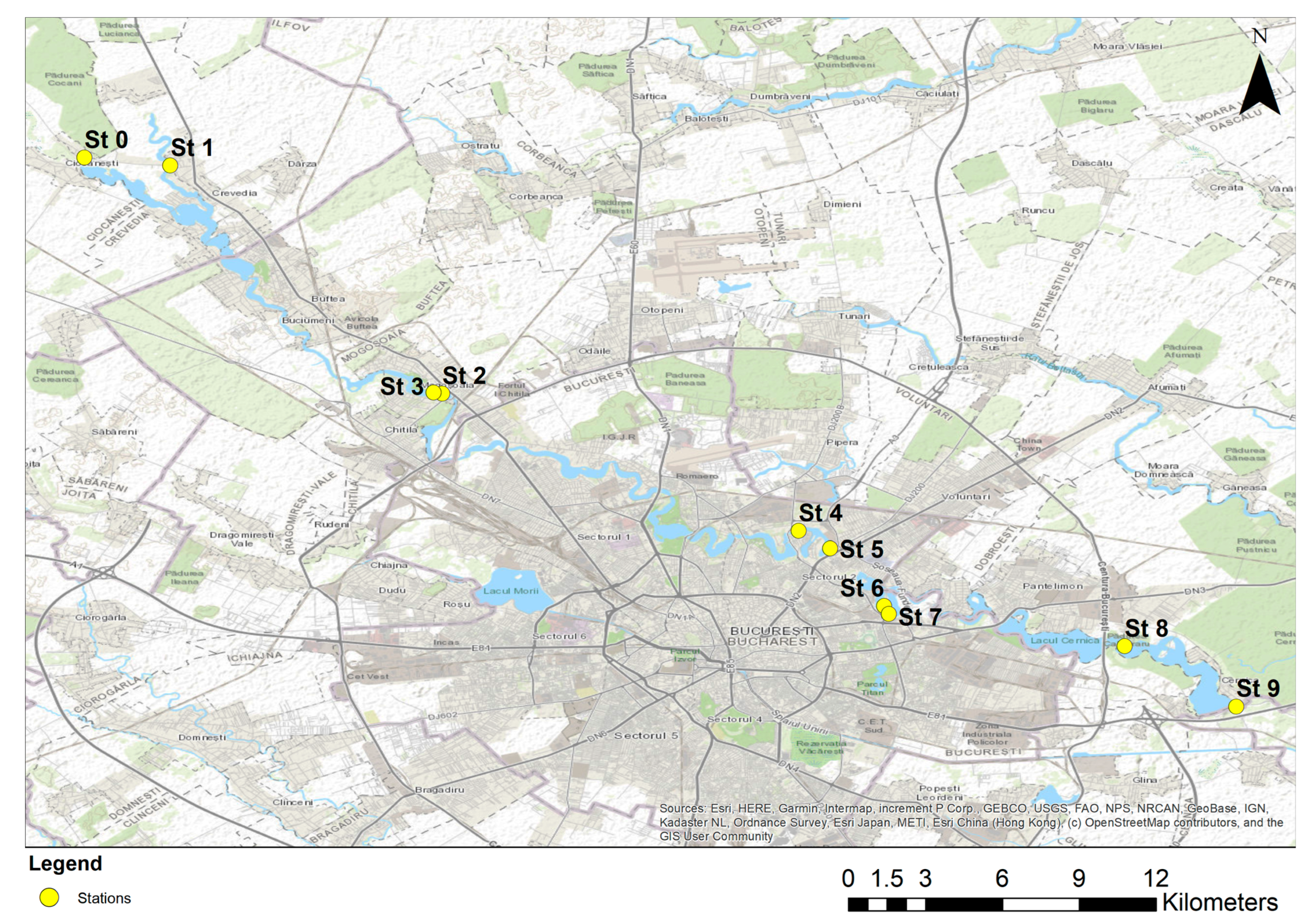
Figure 1. Study site map of the Colentina River with sampling points.
Diversity 18 00058 g001
Figure 2. Principal Component Analysis (PCA) biplot illustrating the relationships between zooplankton community structure (black triangles—rotifers, black squares—crustaceans) and ecosystems along the Colentina river chain lakes. Red vectors indicate zooplankton groups; green vectors indicate sampling sites.
Diversity 18 00058 g002
Figure 3. One-way ANOSIM and SIMPER results of zooplankton groups along the Colentina River.
Diversity 18 00058 g003
Figure 4. RDA biplot of trophic status (TSI), resource use efficiency (RUE), and environmental variables across urban, periurban, and rural ecosystems.
Diversity 18 00058 g004
Table 1. The sampling points and estimated degree of urbanisation along the Colentina River System (r—rural, pu—periurban, u—urban).
StationArea TypeCoordinates (Lat, Lon)Ecosystem% Estimated Urbanisation DegreeAnthropization Level
S0r44°36′22.6″ N, 25°52′36.6″ EColentina river5–10%Low
S1r44°26′48.6″ N, 26°02′45.0″ ECrevedia branch10–20%Low–Medium
S2pu44°31′23.9″ N, 26°00′09.3″ EMogoșoaia lake30–40%Medium
S3pu44°31′25.4″ N, 25°59′58.54″ EMogoșoaia lake30–40%Medium
S4u44°28′30.4″ N, 26°07′40.0″ EPlumbuita60–70%High
S5u44°28′08.5″ N, 26°08′19.9″ EPlumbuita70–80%High
S6u44°26′55.6″ N, 26°09′28.3″ EFundeni70–85%High
S7u44°26′45.8″ N, 26°09′34.2″ EFundeni75–85%High
S8pu44°26′04.8″ N, 26°14′32.3″ ECernica lac20–35%Medium
S9r44°24′48.5″ N, 26°16′53.7″ ECernica river10–20%Low–Medium
Table 2. Physico-chemical and biological water variables assessed along the Colentina River.
ParametersColentina River SectorCrevediaMogoșoaiaPlumbuitaFundeniCernicaCernica River Sector
Depth (m)0.861.631.110.920.590.420.49
Transparency (m)0.460.480.500.570.480.410.38
Turbidity38.4818.6917.7918.5819.1819.4221.75
Temperature (°C)16.5719.3919.6720.6020.1819.4019.67
pH8.078.598.708.688.628.608.57
Water flow (m/s)0.100.060.060.060.060.050.14
Conductivity (mS/cm)497.00463.00442.72482.11512.83535.78523.22
DO (mg O2L−1)15.926.867.576.9812.879.409.31
ORP28.058.05−2.01−20.00−24.02−19.90−16.47
TDS248.25243.88221.39241.00256.28267.89261.67
Ptotal (mg P L−1)0.610.690.710.700.670.740.73
PO43− (mg L−1)0.070.070.090.120.080.170.16
NH4+ (mg L−1)0.210.280.280.240.230.290.26
NO2 (mg L−1)0.050.030.040.030.030.050.03
NO3 (mg L−1)3.812.852.271.932.793.342.75
Table 3. Taxa with significant results (p < 0.05) of the indicator value (IndVal %) for species on the Colentina River (1—Colentina; 2—Crevedia; 3—Mogoșoaia; 4—Plumbuita; 5—Fundeni; 6—Cernica, 7—Cernica river sector).
1234567
Rotifera
Anuraeopsis fissa Gosse, 1851 25.17
Asplanchna brightwelli Gosse, 1850 18.08
Asplanchna herricki Guerne, 1888 19.99
Asplanchna priodonta Gosse, 1850
Bdelloidea g.sp. 30.69
Brachinus falcatus Zacharias 1898 14.3912.91
Brachionus angularis Gosse, 1851 27.45
Brachionus budapestinensis Daday, 1885 21.00
Brachionus calyciflorus Pallas,1766 31.59
Brachionus calyciflorus var. dorcas Ehrenberg, 1838 10.85
Brachionus diversicornis Daday, 1883 21.55 31.88
Brachionus forficula Wierzejski 1891 30.29
Brachionus plicatilis Müller, 1786 29.59
Brachionus quadridentatus Hermann, 1783 16.37
Cephalodella sp. 10.22
Colurella adriatica Ehrenberg, 1831 8.55
Colurella obtusa Gosse, 1886 16.67
Dicranophorus sp. 7.99
Filinia longiseta Ehrenberg, 1834
Hexarthra fenica Levander, 1892 22.22
Keratella cochlearis Gosse, 1851 30.11
Keratella valga Ehrenberg, 1834 16.80
Pompholyx complanata Gosse, 1851 46.5019.96
Pompholyx sulcata Hudson, 1885 20.27
Synchaeta oblonga Ehrenberg, 1832 16.55
Synchaeta stylata Wierzejski, 1893 8.82
Trichocerca cylindrica Imhof, 1891 19.82
Trichocerca dixton-nutalli (Jennings, 1903) 25.78
Trichocerca pusilla Jennings, 1903 42.63
Trichocerca rattus Müller, 1776 15.88
Trichocerca similis Wierzejski, 1893 48.27
Trichocerca stylata Gosse, 1851 11.93
Crustacea
Alona costata Sars, 1862 16.70
Bosmina longirostris (O.F. Müller, 1776) 30.25
Bosmina longispina Leydig, 1860 21.64
Chydorus sphaericus (O.F. Müller, 1776) 16.64
Daphnia cuculata Sars, 1862 19.44
Daphnia galeata Sars, 1863 9.91
Diaphanosoma brachyurum (Liévin 1848) 33.28
Diaphanosoma sp. 12.10
Moina brachiata (Jurine, 1820)
Moina micrura Kurz, 1874 12.63
Scapholeberis mucronata (O. F. Muller, 1776) 14.12
Nauplii 35.08
Copepodites 23.5831.27
Cyclopida g.sp. 20.01
Table 4. Descriptive statistics of the trophic state indices in the water bodies of the Colentina River.
CTSITSIROTTSICR
MinMaxMean
± SD
TSMinMaxMean
± SD
TSMinMaxMean
± SD
TS
Colentinar43.4558.0351.7
± 5.28
E21.6744.7034.21 ± 7.83M24.2432.5727.94
± 2.98
M
Crevediar35.3974.9768.1
± 13.32
E43.4456.8950.96 ± 5.75M31.0544.5737.81
± 5.12
M
Mogoșoaiapu66.1776.0772.43
± 3.5
H44.0761.2954.55 ± 4.62E0.0057.3844.26
± 14.76
M-E
Plumbuitau42.1374.3367.72
± 7.21
E42.4963.1655.03 ± 5.33E36.2965.7149.41
± 7.61
M-E
Fundeniu64.2077.4471.97
± 3.08
H43.4362.0055.63 ± 5E38.6479.4055.77
± 11.22
E
Cernicapu55.4976.4168.83
± 6.23
E45.5661.0053.53 ± 4.07E38.4468.6454.47
± 10.65
E
Cernica (river)r62.5873.4170.06
± 3.79
H55.2466.2159.76 ± 3.91E0.0057.6844.19
± 18.44
M-E
Area type: r—rural, pu—periurban, u—urban; TS—trophic state: M—mesotrophic; M-E—meso-eutrophic; E—eutrophic; H—hypereutrophic.
Table 5. RUE of rotifers and crustaceans in aquatic ecosystems along the Colentina River.
RUEROTRUECR
StatisticMinMaxMean ± SDMinMaxMean ± SD
Colentina0.754.742.87 ± 1.50.422.541.9 ± 0.73
Crevedia2.408.374.56 ± 1.731.986.613.73 ± 1.41
Mogoșoaia2.495.754.43 ± 0.870.516.644.12 ± 2.1
Plumbuita2.839.025.38 ± 1.373.287.695.32 ± 1.27
Fundeni3.206.795.09 ± 1.023.889.315.98 ± 1.67
Cernica2.967.345.52 ± 1.333.438.556.06 ± 1.94
Cernica (river)4.296.825.52 ± 0.830.406.965.00 ± 2.00
Disclaimer/Publisher’s Note: The statements, opinions and data contained in all publications are solely those of the individual author(s) and contributor(s) and not of MDPI and/or the editor(s). MDPI and/or the editor(s) disclaim responsibility for any injury to people or property resulting from any ideas, methods, instructions or products referred to in the content.