Article

High-Resolution Integrative Delimitation of Intertidal Limpets via Multi-Locus Barcodes and SEM Morphology


1
Faculty of Biology, Shenzhen MSU-BIT University, No. 1, International University Park Road, Dayun New Town, Longgang District, Shenzhen 518172, China
2
Faculty of Biology, Lomonosov Moscow University, 1 Leninskie Gory, Bld 12, Moscow 119234, Russia
*
Author to whom correspondence should be addressed.
These authors contributed equally to this work.
Diversity 2026, 18(1), 52; https://doi.org/10.3390/d18010052
Submission received: 16 December 2025 / Revised: 31 December 2025 / Accepted: 12 January 2026 / Published: 19 January 2026
(This article belongs to the Section Marine Diversity)

Abstract

Limpets are marine gastropod molluscs well adapted to intertidal rocky environments, yet their taxonomic resolution remains challenging due to extensive morphological convergence and the presence of cryptic species. In this study, we applied an integrative taxonomic framework combining multi-locus DNA barcoding and fine-scale morphological characterization to clarify species boundaries within three families of limpets—Nacellidae, Lottiidae, and Siphonariidae. A total of 132 individuals collected from six coastal sites in Shenzhen and adjacent areas of southern China were analyzed using four markers Cytochrome c oxidase subunit I (COI), 16S ribosomal RNA (16S rRNA), Cytochrome b (Cytb) and 28S ribosomal RNA (28S rRNA), together with scanning electron microscopy (SEM) observations of radular morphology. Molecular analyses identified nine distinct species across five genera. Kimura two-parameter distance analyses revealed clear barcode gaps in 16S rRNA, Cytb, and 28S rRNA genes, particularly among Cellana and Nipponacmea, whereas COI exhibited stronger discriminatory power within Siphonaria. Moreover, our study provides newly 16S, 28S references for Nipponacmea formosa and Cytb references for Nipponacmea formosa, Lottia luchuana, Siphonaria atra, Siphonaria sirius, Siphonaria sp. and Siphonaria sirius, enriching the public references and explaining the lack of corresponding records in previous BLAST searches. In addition, we identified misannotated COI references in NCBI which were labelled as Nipponacema schrenckii but belong to Cellana toreuma, highlighting inconsistencies in existing reference data rather than issues with our samples. SEM-based radular features displayed consistent interspecific variation that corroborated molecularly defined clades, offering comprehensive search of the NCBI reliable morphological evidence for species delimitation. Collectively, our findings highlight the value of integrating lineage-specific molecular markers with detailed morphological analyses to resolve taxonomic ambiguities in morphologically conservative marine gastropods. Furthermore, this approach strengthens molecular reference resources essential for future biodiversity and evolutionary research on intertidal limpets.

1. Introduction

Limpets, a polyphyletic assemblage of intertidal gastropods, play crucial ecological roles in coastal ecosystems and have long attracted attention in taxonomic and evolutionary studies [1,2,3], while also serving as a molluscan model organism for genetic and developmental research [4]. Recent taxonomic advances, including the discovery and description of new intertidal limpets from Japan, Taiwan, and nearby regions, further highlight the continuing diversity and evolutionary significance of limpets [5,6]. However, species delimitation in limpets remains challenging because of extensive morphological convergence and the presence of cryptic species [7,8]. This challenge is most clearly demonstrated by the distinction between true limpets and false limpets: though sharing the conical shell form, true limpets (Patellogastropoda) are ancient, gill-breathing marine gastropods, while false limpets (Siphonariidae) are derived pulmonates adapted to air breathing via a mantle-cavity lung. This physiological divergence, which provides false limpets with greater desiccation tolerance, is anatomically marked by a defining siphonal groove in the shell—a feature absent in true limpets, underscoring a profound instance of convergence [9]. Traditional morphological approaches often fail to discriminate different taxa, particularly in groups such as Patelloida, Cellana, and Siphonaria, because features of their shells are evolutionarily labile and prone to homoplasy [7]. As a result, accurate identification and assessment of the diversity of limpets demand a more robust, integrative methodology.
DNA barcoding has become a widely adopted molecular tool for species identification and delineation, particularly in taxonomically challenging groups [10]. It involves the use of standardized gene regions to generate molecular signatures for individual taxa [10,11]. In molluscs, several mitochondrial and nuclear loci have demonstrated high discriminatory power and are frequently used in integrative taxonomy [12].
In this study, we employed four commonly used DNA barcode markers: mitochondrial cytochrome c oxidase subunit I (COI), 16S ribosomal RNA (16S rRNA), cytochrome b (Cyt b), and nuclear 28S ribosomal RNA (28S rRNA). The COI gene is the most established animal barcode, known for its high variability and effectiveness in distinguishing closely related marine invertebrates [13,14]. 16S rRNA provides complementary phylogenetic signal and is particularly useful in resolving relationships at higher taxonomic levels or when COI shows saturation [15,16]. Cytb, another mitochondrial gene, offers additional resolution in certain molluscan lineages due to its moderate mutation rate [15,17]. Meanwhile, 28S rRNA, a nuclear-encoded marker, evolves more slowly and is valuable for corroborating mitochondrial results and mitigating potential biases [17,18,19].
While single-locus barcoding can be effective for species identification, its resolution is often limited by locus-specific evolutionary constraints, such as substitution saturation or incomplete lineage sorting [10]. Multiple DNA barcode markers enhance taxonomic resolution by integrating complementary genetic signals and minimizing biases associated with individual genes [20]. In order to enhance the accuracy of DNA-based species delimitation, mitochondrial barcodes should be supplemented with nuclear markers. This approach mitigates the limitations of single-locus analyses and helps detect potential mito-nuclear incongruence, particularly in recently diverged or cryptic taxa [15,21,22].
While molecular data are essential, morphological traits—particularly internal features such as radular morphology—remain valuable for species delimitation [23]. In limpets, external characters like shell shape are often influenced by environmental variation and are thus unreliable. In contrast, radular traits observed via scanning electron microscopy (SEM) offer stable diagnostic features for distinguishing closely related or cryptic species. Integrating multi-locus genetic data with such morphological evidence has proven effective in several recent studies, enabling more robust taxonomic resolution [24,25,26,27].
To clarify species boundaries among intertidal limpets of the orders Patellida and Siphonariida from six coastal sites in South China, we employed an integrative taxonomic framework. We combined four DNA barcode markers with SEM analysis of radular morphology to resolve taxonomic identities and uncover potential cryptic lineages. This multi-locus and morphological approach allowed us to assess the relative discriminatory power of each marker across genera, detect previously unrecognized genetic diversity, and ultimately identify species with high confidence. Moreover, our study also provides more accurate reference sequences for public databases, enhancing their utility for future biodiversity and phylogenetic studies.

2. Materials and Methods

2.1. Sample Acquisition and Preprocessing

Sample collections were conducted across six coastal sites in Shenzhen and its neighboring cities, Huizhou and Shanwei in China. Sites were selected based on the presence of extensive intertidal zones with abundant rocky substrates, relatively pristine marine environments, and minimal anthropogenic disturbance. Sampling was performed during low tide, when water levels were below 50 cm, to optimize exposure of the intertidal habitat. A systematic strategy was employed to cover the full extent of the rocky intertidal zone, with preference given to larger-sized individuals to obtain sufficient biological material. Immediately after collection, muscle tissues were dissected on-site and preserved at −20 °C to maintain sample integrity.

2.2. Genomic DNA Extraction

Genomic DNA was extracted from approximately 50 mg of limpet muscle tissue using a modified CTAB protocol [28]. Samples were first incubated in 500 μL of STE buffer (100 mM NaCl, 10 mM Tris-HCl, 1 mM EDTA, pH 8.0), followed by the addition of 125 μL of 10% SDS and 5 μL of proteinase K. The mixture was incubated at 60 °C for 90 min in a water bath to ensure complete lysis and protein digestion. After incubation, samples were centrifuged at 5000 rpm for 5 min at room temperature, and the supernatant was transferred to a fresh tube.
To the supernatant, 100 μL of 5 M NaCl and 80 μL of CTAB/NaCl solution were added, followed by incubation at 65 °C for 30 min. An equal volume of chloroform:isoamyl alcohol (24:1, v/v) was then added, and the mixture was centrifuged at 6000 rpm for 5 min. The upper aqueous phase was transferred to a new tube and extracted twice with an equal volume of phenol, each followed by centrifugation at 6000 rpm for 5 min. This was followed by a final chloroform:isoamyl alcohol extraction step under the same conditions.
DNA was precipitated by adding an equal volume of isopropanol to the final supernatant and incubating at room temperature for 30 min. The precipitated DNA was pelleted by centrifugation at 12,000 rpm for 10 min, then washed twice with 150–500 μL of 80% ethanol, each followed by centrifugation at 12,000 rpm for 5 min. The DNA pellet was air-dried until all ethanol had evaporated and finally resuspended in ~30 μL of TE buffer (10 mM Tris-HCl, 1 mM EDTA, pH 8.0). DNA quality and concentration were assessed using a spectrophotometer (Thermo Fisher Scientific, Waltham, MA, USA).

2.3. SEM Images Acquisition and Processing

Radulae were dissected from the buccal mass under a binocular microscope (Zeiss, Oberkochen, Germany), cleaned with a diluted NaOH solution, and rinsed thoroughly with double-distilled water. The samples were air-dried overnight, mounted on glass slides, sputter-coated with gold at 60 mA, and examined under a scanning electron microscope KYKY-EM6200 (KYKY Technology, Beijing, China) operated at 15–16 kV under vacuum.

2.4. PCR Reactions and Pre-Sequencing Preparation

The mtDNA cytochrome c oxidase I (COI), cytochrome b (Cytb), the large-subunit ribosomal RNA (16S rRNA) and small-subunit ribosomal RNA (28S rRNA) were used as molecular markers in this study. PCR products of each gene were amplified with universal primers (Table S1). PCR amplification was performed in a reaction volume of 25 μL containing 9.5 μL ddH2O, 1 μL of each primer, 12.5 μL of Taq polymerase Takara, and 1 μL of template DNA (100 μg). The amplification cycle consisted of an initial denaturation for 3 min at 94 °C, followed by 30 cycles of denaturation for 45 s at 94 °C, annealing for 90 s at a gene-specific annealing temperature (50 °C for COI, 52 °C for Cytb, 51 °C for the 16S and 48 °C for 28S) and extension for 120 s at 72 °C, followed by a 5 min final extension at 72 °C.

2.5. Sequence Data Filtering and BLASTn

Sanger sequencing results were quality-filtered to remove ambiguous reads, including those with overlapping peaks or other anomalies. High-quality sequences were subsequently subjected to batch BLASTn (v. 2.17.0) searches against the NCBI (National Center for Biotechnology Information) nucleotide database. Corresponding species identifications were retrieved in bulk using the Batch Entrez tool (https://www.ncbi.nlm.nih.gov/sites/batchentrez, accessed on 14 October 2025).

2.6. Genetic Distance Calculation and Hierarchical Clustering

To assess the genetic divergence among samples, aligned DNA barcode sequences were processed using the ape package [29] in R (v. 4.4.2) in HPC (High performance computing). For each marker, pairwise genetic distances were calculated using the Kimura 2-parameter (K80) substitution model via the dist.dna() function. For the COI gene, the resulting distance matrix was subjected to hierarchical clustering using the hclust() function with the complete linkage method. This approach groups sequences based on the furthest distance between any pair of samples across clusters, allowing for robust discrimination among lineages. The clustering order derived from the COI marker was subsequently applied to the distance matrices of other barcode genes to ensure consistent comparison across locations.

2.7. Multiple Sequence Alignment and Phylogenetic Tree Construction

Genetic analysis was performed using Galaxy Pasteur (https://galaxy.pasteur.fr/, accessed on 17 October 2025). Multiple sequence alignment was performed using MAFFT v7 [30] with the—auto strategy for optimal alignment accuracy in HPC. Phylogenetic inference was carried out using the maximum likelihood (ML) method, with bootstrap support values calculated from 1000 replicates (BS = 1000) to assess the robustness of the tree topology.

3. Results

3.1. Cross-Regional Sampling of Limpets in Shenzhen and Adjacent Coastal Cities

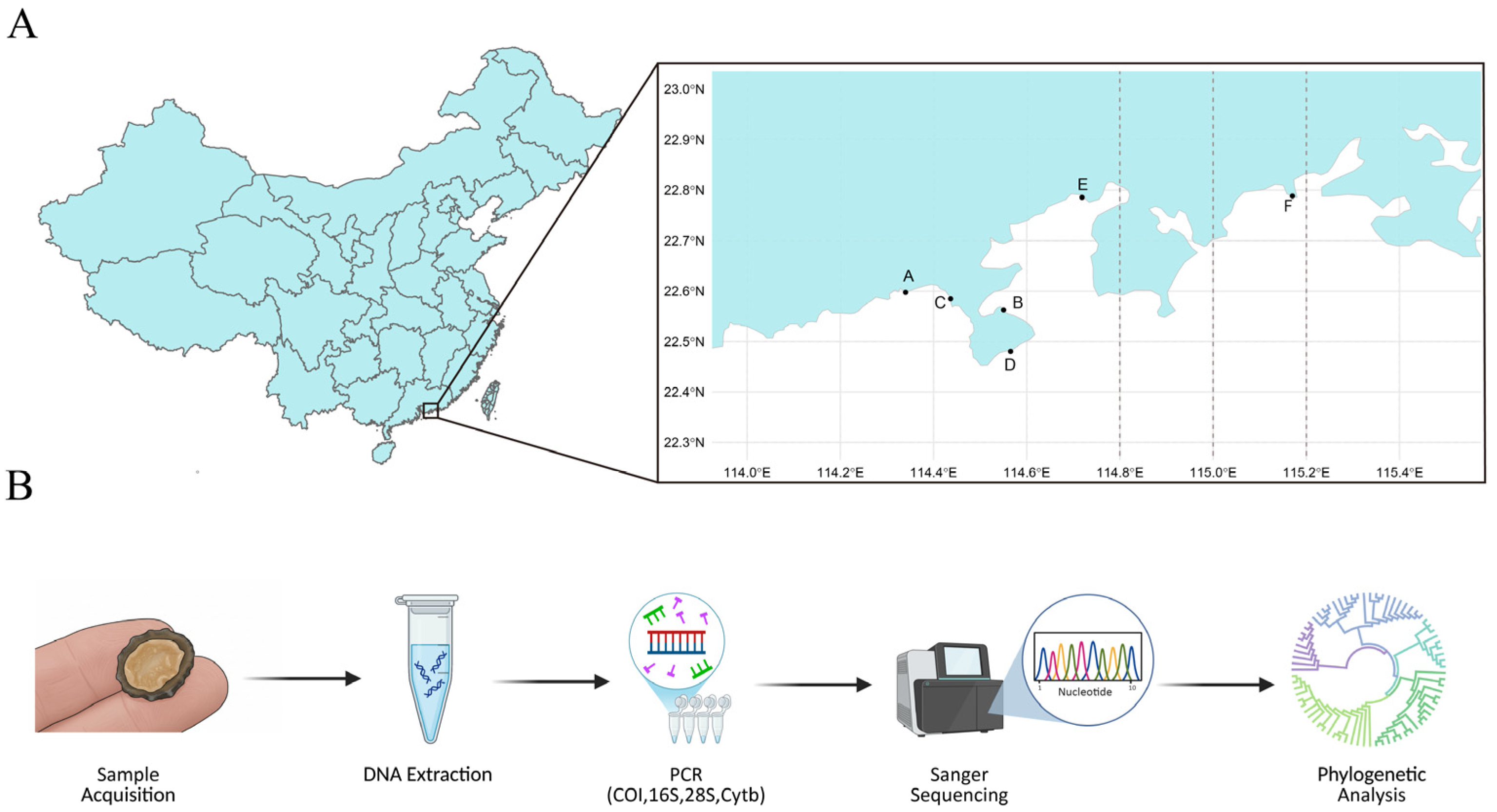
Following standardized sampling protocols, a substantial number of limpet specimens were collected at each site in Shenzhen, Huizhou and Shantou cities. After rigorous screening based on shell size and external morphological features, 36, 32, 36, 10, 2, and 16 high-quality specimens were retained from the six respective sites (Figure 1A) for subsequent experimental assays and phylogenetic analysis (Figure 1B). Although all sampling procedures strictly adhered to standardized workflows, seasonal variation and tidal conditions limited the number of individuals obtainable at certain sites; nevertheless, every retained sample was carefully examined to ensure cleanliness and high sample quality.

3.2. Conflicting Species Delimitations Within Different DNA Markers

From six sampling sites, 132 individuals were collected. These samples were subjected to PCR amplification and subsequent sequencing, and valid sequences of all four barcode genes were obtained from 92 of them for further analysis. Initially, the BLAST-based species identifications obtained using all four DNA barcode genes CO1, 16S rRNA, 28S rRNA and Cytb yielded e-values well below the commonly accepted threshold of 0.05, indicating highly reliable and accurate sequence alignments (Figure S1).
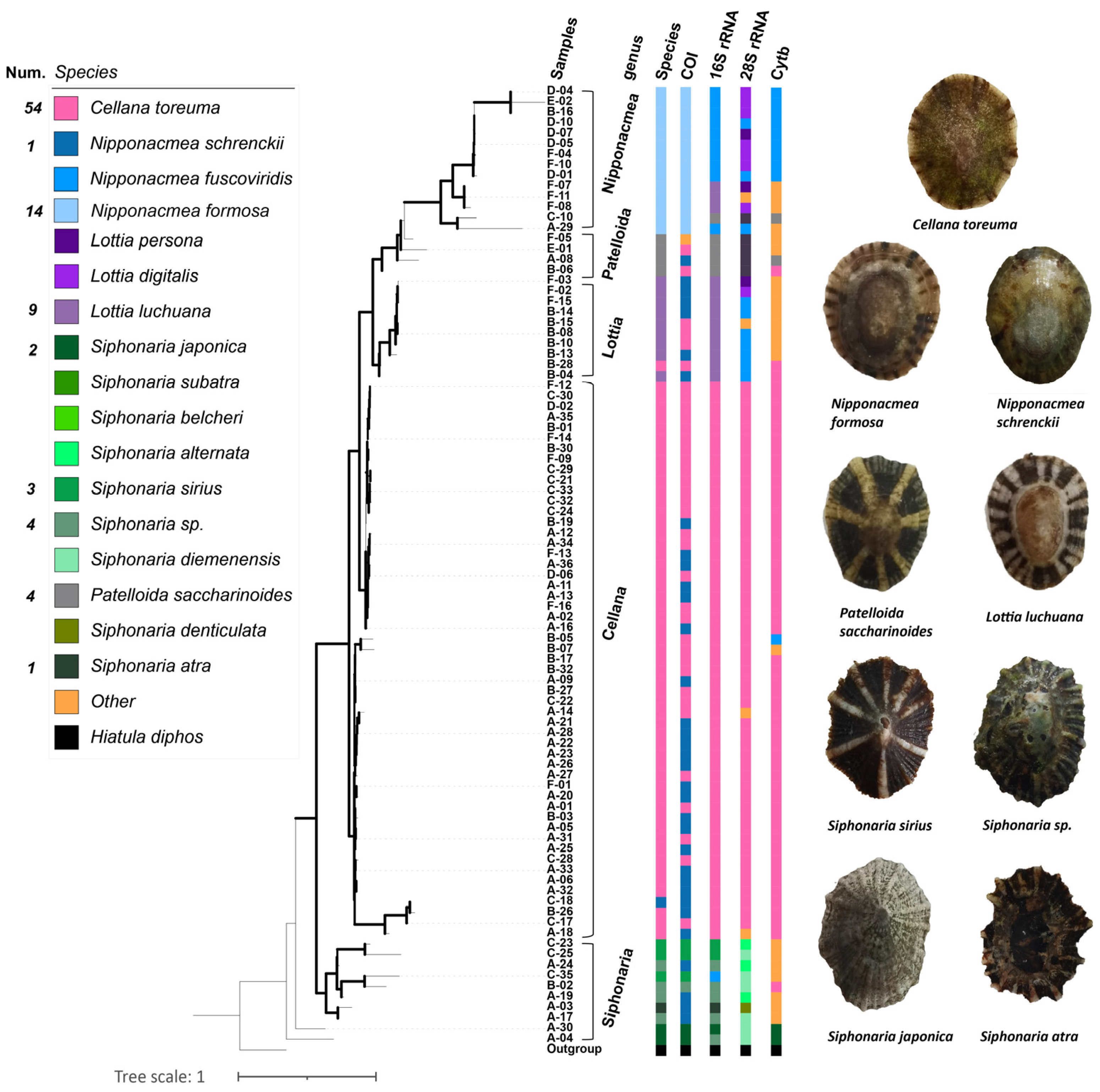
Species identification results based on each barcode gene were visualized in the outer four concentric layers of the phylogenetic tree (Figure 2). NCBI BLAST results revealed a high frequency of discordant species assignments among different barcodes for the same specimens. Specifically, out of these 92 valid specimens, 66 samples exhibited inconsistent identifications results across the four markers. In total, nine confirmed limpet species—Cellana toreuma, Nipponacmea formosa, Nipponacmea schrenckii, Patelloida saccharinoides, Lottia luchuana, Siphonaria sirius, Siphonaria sp., Siphonaria japonica, and Siphonaria atra—belonging to three families (Nacellidae, Lottiidae, and Siphonariidae) and five genera (Cellana, Lottia, Nipponacmea, Patelloida and Siphonaria) were successfully identified through integrative analyses combining morphological characteristics and multi-locus DNA barcoding (Figure 2).
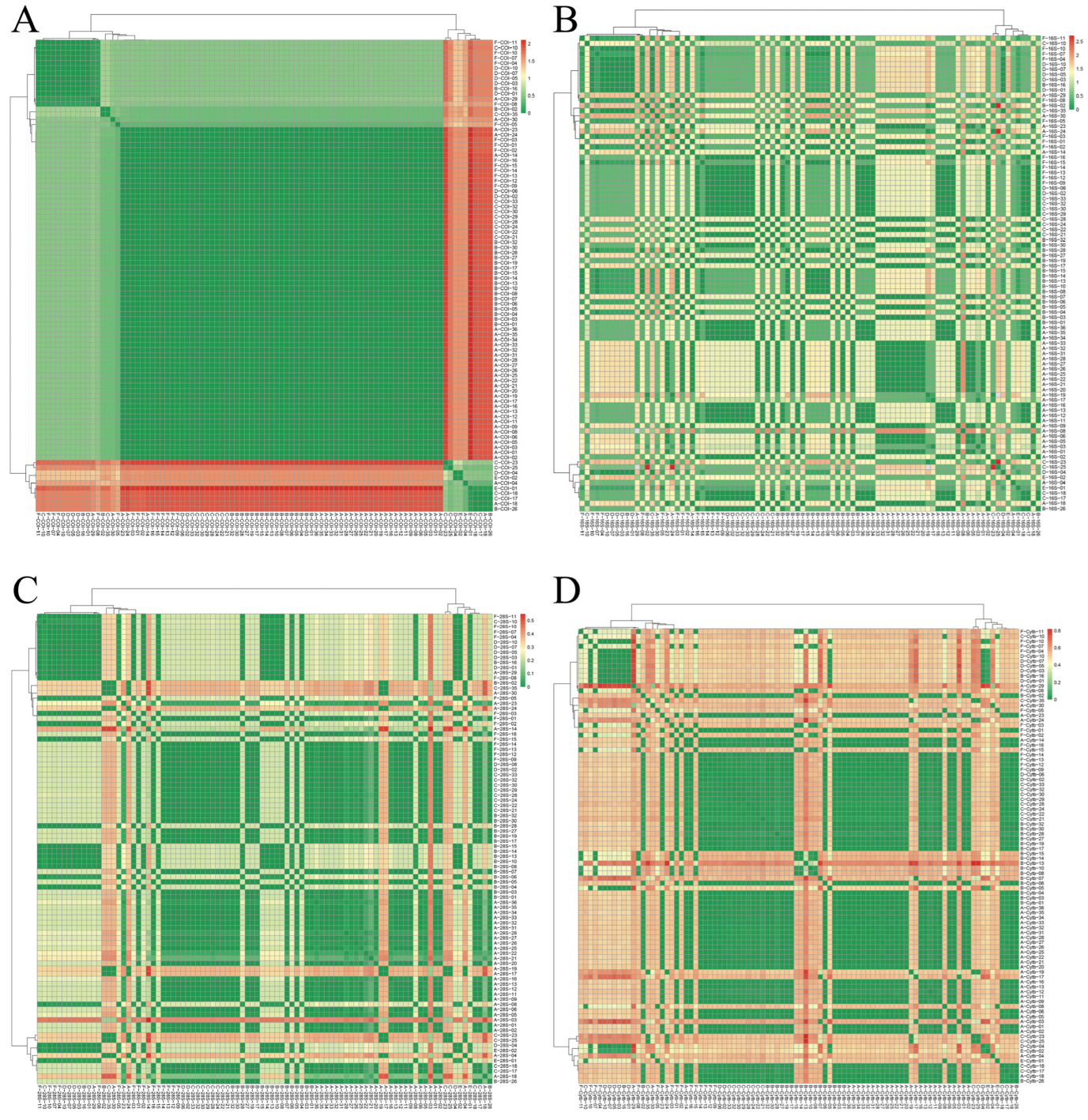
Among the four DNA barcodes evaluated, the COI gene—commonly regarded as a universal barcode—successfully identified 45 out of 92 specimens in full agreement with the final integrative species assignments. However, a notable proportion of misassignments occurred between C. toreuma and N. schrenckii, likely due to both the high conservation of the COI gene and possible inconsistencies in publicly available reference sequences. This issue did not arise from our samples but rather from inconsistencies in publicly available reference data. Upon re-examining the COI reference sequences in NCBI, we found that accessions HM180721.1–HM180724.1, although annotated as N. schrenckii, in fact correspond to C. toreuma. The misannotated accessions in database caused the observed mis-assignments. Pairwise K2P distances were calculated between with correct references and the misannotated NCBI accessions were extremely low (0–0.003), indicating no meaningful genetic divergence and confirming that these records represent the same species (Figure S2). Consistently, all misannotated references (highlighted in bold) clustered together with verified C. toreuma references in the ML phylogeny (Figure S3). To resolve these misassignments, we incorporated diagnostic morphological characters, through which all problematic samples were consistently identified as C. toreuma. In contrast, COI exhibited perfect discrimination power toward Nipponacmea formosa, correctly identifying all 12 specimens without conflict (Figure 2), supporting the recognition of the Taiwanese and southern Chinese populations as N. formosa rather than N. fuscoviridis [7]. Pairwise K2P distances were calculated for all COI sequences and subsequently visualized in the form of a heatmap (Figure 3A). Analysis of K2P distances revealed that 75 samples exhibited COI gene distances below 0.05, encompassing all instances of misidentification between C. toreuma and N. formosa Overall, the COI marker exhibited strong discriminatory power within genus Cellana, but showed limited taxonomic resolution in Patelloida, and Lottia, correctly identifying only four Siphonaria specimens and failing to accurately assign any Patelloida or Lottia individuals.
Within the four DNA barcode genes evaluated, the 16S rRNA gene exhibited the highest identification success rate. Of the 92 specimens analyzed, 83 were successfully assigned to species based on 16S data alone, representing the highest resolution among all markers. Notably, 16S rRNA was able to resolve species-level distinctions between C. toreuma and N. schrenckii. The 16S marker provided powerful resolution for species within the genus Siphonaria (Figure 2) and several reference sequences were annotated as different species (e.g., KR132994.1–KR132995.1). Moreover, the 16S marker demonstrated superior discriminatory power for genus Patelloida and Lottia (Figure S4). Similarly, the K2P distances for the 16S gene support this conclusion (Figure 3B). Most values range from 1.0 to 1.5, indicating substantial divergence and thereby facilitating species identification by BLAST (v. 2.17.0). These results suggest that the 16S rRNA gene harbors substantial interspecific variation and displays clearer divergence patterns both within and between species, making it a robust and suitable marker for genus Lottia, Cellana and Patelloida species identification.
The 28S rRNA gene successfully identified 56 out of the 92 specimens, representing a moderate level of resolution compared to other 3 barcodes. Notably, it demonstrated strong discriminatory power for C. toreuma, effectively distinguishing it from N. schrenckii and thereby avoiding misidentifications arising from erroneous reference records in public databases. However, similar to COI, the 28S rRNA gene exhibited limited resolution for species within the genera Siphonaria and Lottia. In the single-gene ML tree, several references annotated as N. fuscoviridis, L. digitalis and L. persona also clustered together (Figure S5). This reduced effectiveness is likely due to the relatively conserved nature of the 28S rRNA sequences within and among these genera, resulting in insufficient sequence divergence for accurate species-level discrimination. This is also supported by the K2P analysis (Figure 3C), where interspecific distances were all below 0.5, a level insufficient to reliably distinguish species.
Cytb barcode gene demonstrated a relatively high accuracy, correctly identifying 64 out of 92 specimens. However, similar to COI and 28S, it showed limited discriminatory power for species within the genera Lottia, Siphonaria and even in some cases yielded evidently erroneous assignments (Figure 2). Unlike the other three gene barcodes, Cytb yielded BLAST hits to 22 species outside of gastropod limpets (e.g., Dinophilus vorticoides). Even after repeated BLAST searches, we were unable to match the sequences to any limpet species (Figure S6). A comprehensive search of the NCBI database further revealed that Cytb records for several relevant species (N. formosa, L. luchuana, S. atra, S. sp., S. japonica and S. sirius) are currently unavailable, which explains why the corresponding species could not be identified by BLAST search. Importantly, our data helps to fill this gap.
Species identified through our comprehensive analysis could be reliably mapped using at least one barcode gene. However, discrepancies occasionally arose when multiple barcodes for the same gene produced inconsistent results. These inconsistencies likely stem from the small genetic distances between species as well as variable data quality in the NCBI database. Therefore, incorporating evidence from multiple barcodes provides the more robust and accurate species identification.

3.3. SEM-Based Morphological Insights of Patellida and Siphonariida

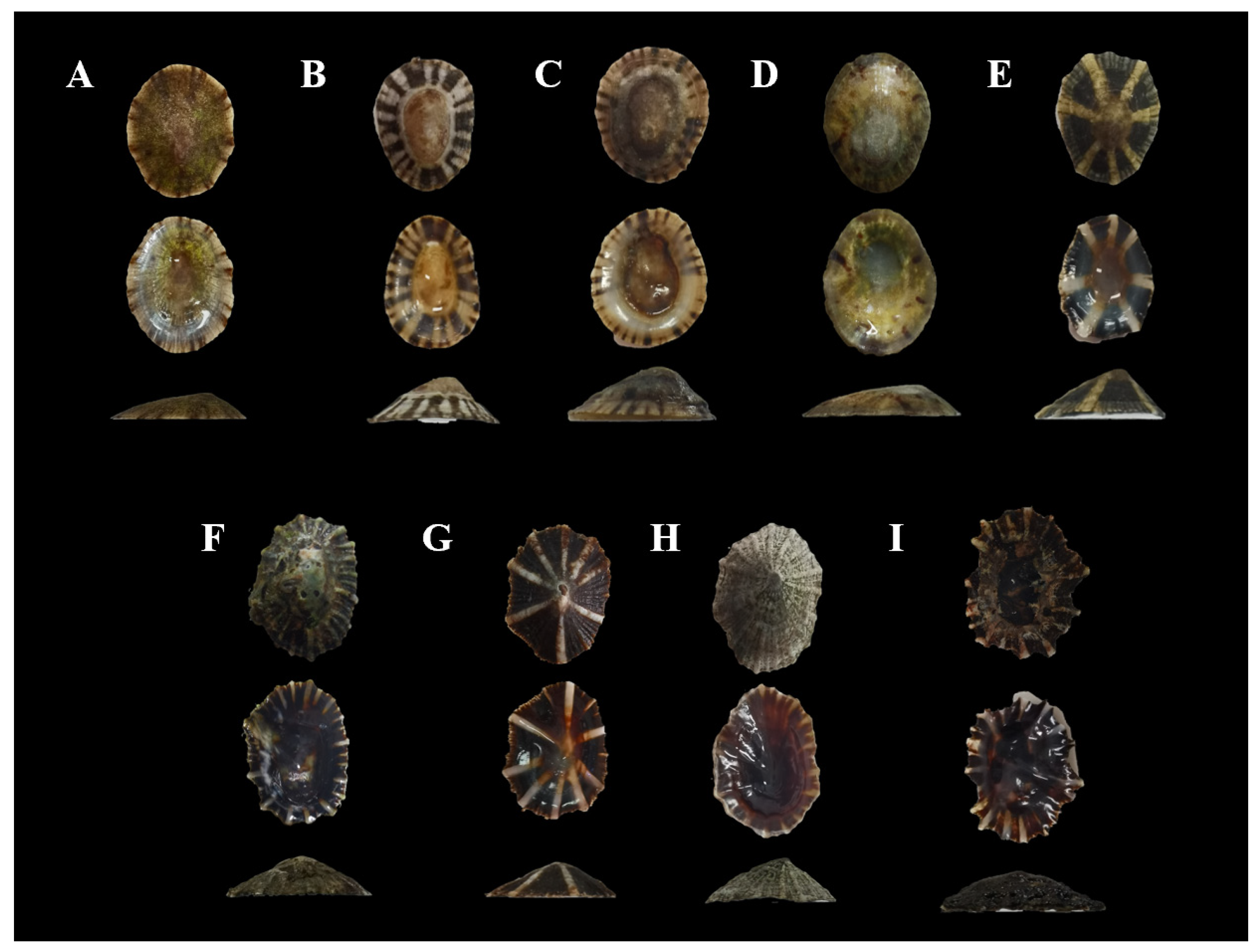
SEM-based morphological analyses were incorporated alongside traditional documentation for further identification. All samples were measured for size parameters (Figure 4, Table S2), and representative individuals from each species were photographed to document external shell morphology (Figure 5). For each species, diagnostic morphological traits were described in detail, highlighting features that clearly distinguish species.
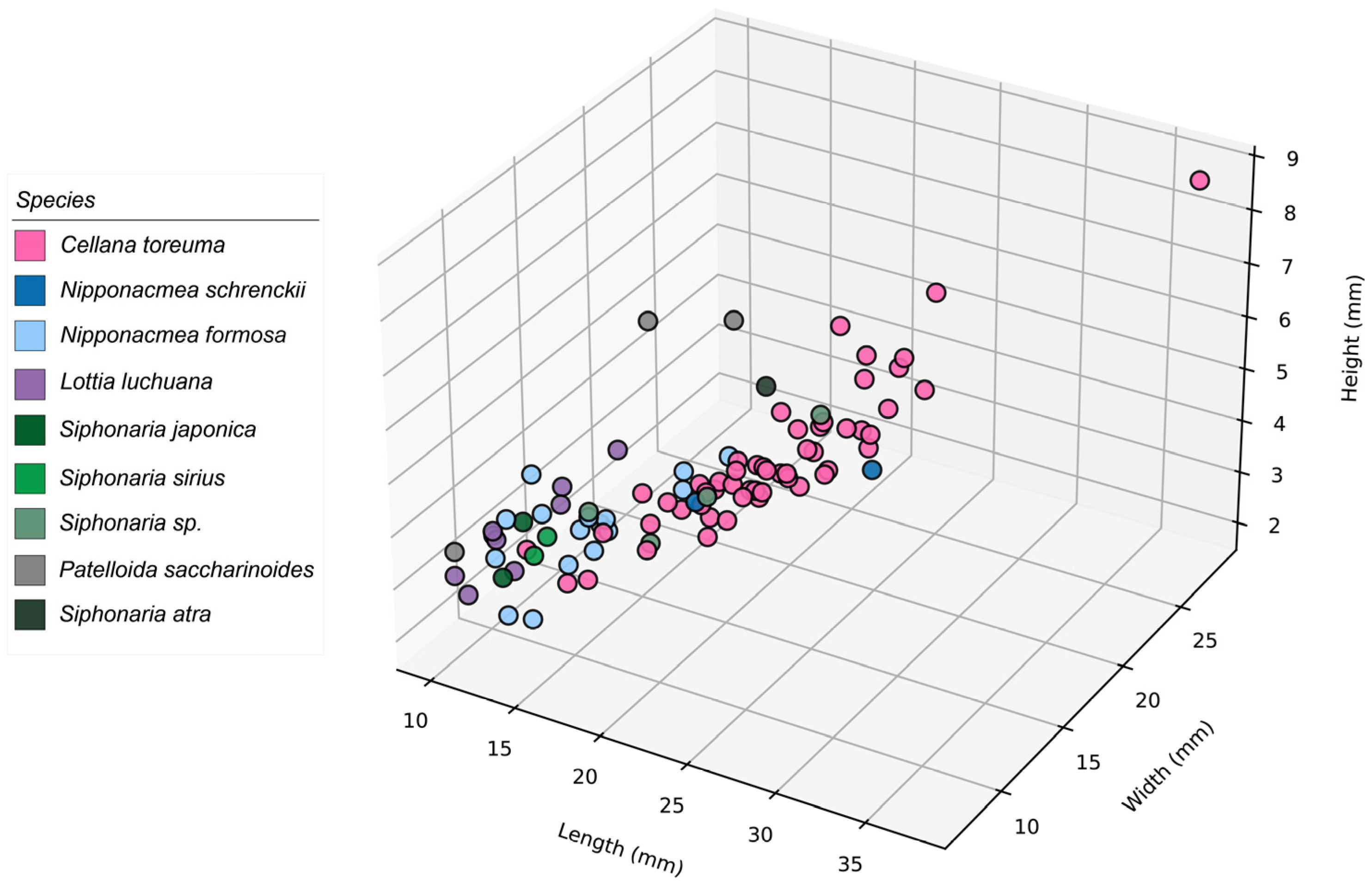
The length, width, and height of each collected samples were measured through vernier caliper to quantify overall shell morphology. The dimensional ratios derived from these parameters revealed distinct morphometric patterns among species (Figure 4). Notably, the proportional differences in shell height relative to length and width provide additional morphological evidence that aids in the preliminary differentiation of species [15]. The individuals belonging to the same species (dots of identical color) tended to cluster closely together in the plot. These findings demonstrate that shell morphometrics, when visualized in three-dimensional space, may serve as an insight for preliminary identification within the Patellogastropoda.
Detailed morphological examination of all collected limpet specimens were conducted, documenting both external and internal shell characteristics (Figure 5, Table 1). Key diagnostic traits, including shell shape, height, coloration, rib morphology, and shell transparency were systematically recorded for each single species. Specimens with an H/L ratio ≥ 0.3 were defined as high-domed, whereas those with an H/L ratio < 0.3 were considered low-domed [31]. Comparative observations were compiled into a comprehensive table to facilitate interspecific comparison. The resulting dataset provides a robust morphological framework and serves as a valuable reference for distinguishing closely related taxa within the families Nacellidae, Lottiidae, and Siphonariidae.
In Nacellidae, the shell of C. toreuma [32] is cap-shaped with a low convex profile, exhibiting an anteriorly positioned apex. The exterior surface is primarily rust-yellow, ornamented with fine radial riblets and irregular purple to brown cloud-like bands that radiate from the apex toward the margin. These radial ribs are delicate yet distinct, giving the shell a subtly sculptured texture. The inner surface is silvery gray with a pronounced nacreous luster, and the shell is relatively thin and translucent. Such a combination of fine radial ribs, low shell height, and irregular color banding distinguishes C. toreuma from other congeners within the genus Cellana, although moderate intraspecific variation in color and rib prominence has been reported [12].
In Lottiidae, species generally show high-domed, oval to irregularly shaped shells, but vary in color and rib expression. L. luchuana is high-domed, which has a brown and beige pattern with irregular dark bands. N. formosa features distinct black radial stripes and a lustrous yellow interior, differing from N. schrenckii [15], which bears diffuse brown cloud-like spots. P. saccharinoides is unique within this family, exhibiting an irregularly hexagonal outline and seven prominent white radial ribs on a gray-green background.
Among Siphonariidae, all examined Siphonaria species possess thin, translucent shells, yet exhibit distinct interspecific variation in outline, rib morphology, and pigmentation patterns. S. sp. displays a broad-ovate, low-domed shell of gray-green coloration, ornamented with fine radial ribs and darker streaks along the surface, while the shell margins appear reddish-brown. S. sirius is elevated and elongated-ovate, characterized by prominent primary and fine secondary ribs, with a distinct dark-to-light gradient across the shell. In contrast, S. japonica possesses a symmetrically ovate, high-domed shell with uniform radial ribs and a striking “stripe + patch” color pattern on a grayish brown to pale background. S. atra is readily distinguished by its broad, low-domed shell with sparse yet robust radial ribs and uniformly dark brown to blackish-brown coloration. These morphological differences—particularly in rib density, shell convexity, and pigmentation—are consistent with diagnostic features previously reported for Siphonaria species [33,34,35], which provide reliable criteria for species delimitation within this genus.
Overall, the most diagnostic characters distinguishing closely related species are color distribution, rib morphology, and shell shape. Species with similar overall shell forms can still be reliably identified by detailed observation of color patterns and rib structures, which provide the most consistent morphological cues for recognizing morphologically similar taxa.
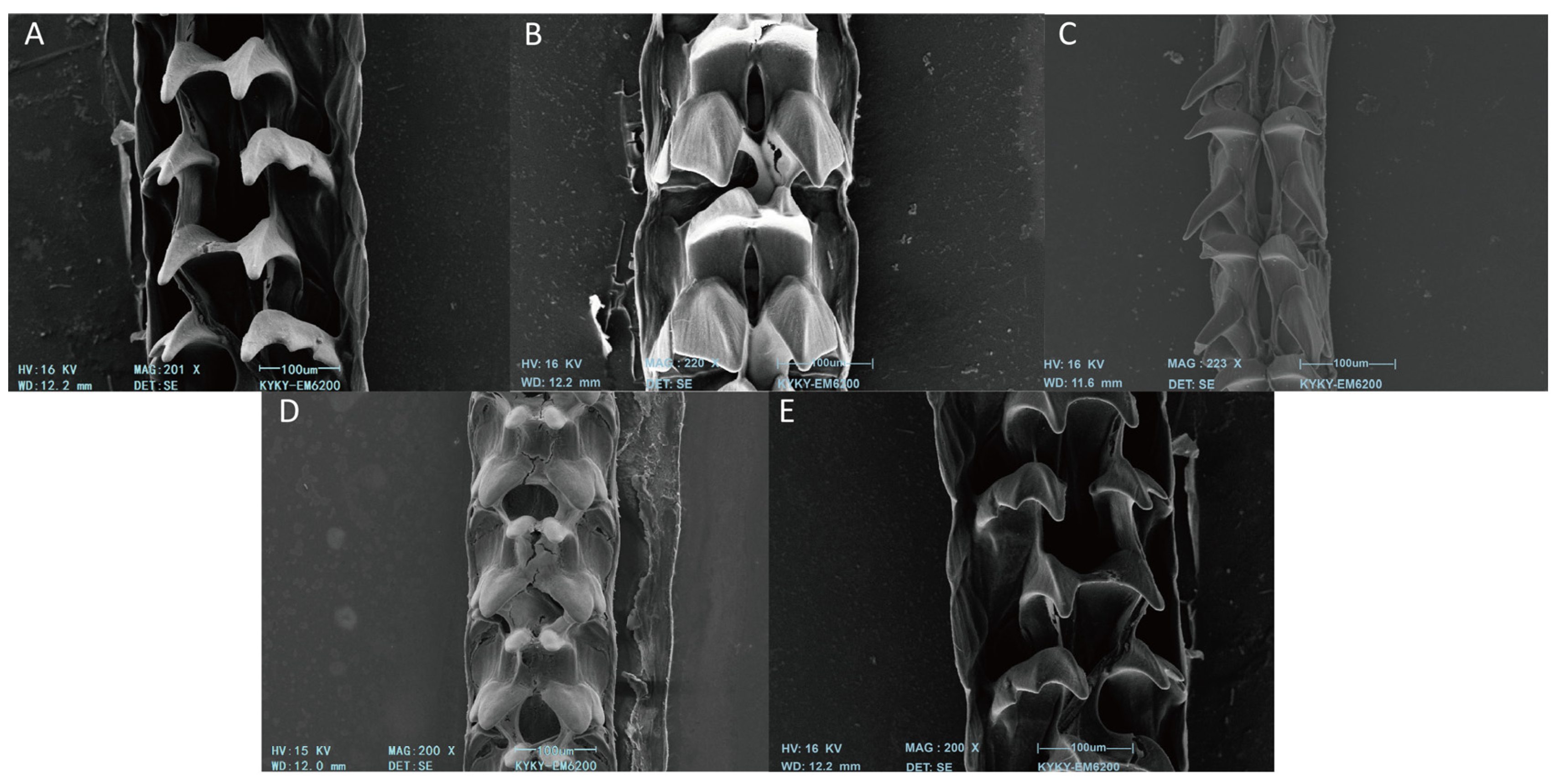
Radular morphology is a valuable diagnostic feature for the classification and differentiation of patellogastropod species [36,37,38]. To obtain detailed structural information, high-resolution scanning electron microscopy (SEM) was employed to examine the radulae of the collected limpets (Figure 6). Due to handling and specimen availability, SEM observations were not obtained for all examined species including genus Siphonaria.
In the SEM images (Figure 6), the radulae of the 5 species (P. saccharinoides, L. luchuana, N. schrenckii, N. formosa, C. toreuma) reveal two distinct morphotypes of radular teeth, consistent with our prior measurements: small anterior teeth (~100 µm) densely packed, and larger posterior teeth (~150 ± 25 µm) sparsely arranged. In P. saccharinoides, the tooth rows appear regular, with a clear delineation between small and large teeth (Figure 6A), comparable to other Patelloida SEM descriptions [6].
In L. luchuana (Figure 6B), the posterior large teeth are more elongate and inclined, with a smoother transition from mid-tooth rows, similar to patterns seen in other Lottia species in prior limpet radula surveys. In N. schrenckii (Figure 6C) and N. formosa (Figure 6D), the larger posterior teeth are more robust and show somewhat steeper spacing, consistent with the known variation within Nipponacmea [15]. For N. formosa, previous studies have used radular sac configuration as an auxiliary morphological character [39].
C. toreuma (Figure 6E) displays relatively broader large teeth, with posterior rows that are more widely spaced, echoing observations in Cellana studies where radula morphology complements species identification [40].

4. Discussion

Our integrative analysis highlights the limitations of single-locus barcoding and emphasizes the value of multi-locus approaches in resolving taxonomic complexity among intertidal limpets. While COI has been widely adopted as the standard DNA barcode, our results demonstrate that COI, 16S, Cytb, and 28S markers often provided clearer interspecific boundaries within Cellana and Nipponacmea, whereas COI retained greater discriminatory power in Siphonaria. This lineage-specific resolution underscores the necessity of tailoring marker choice to evolutionary dynamics rather than relying on a universal standard. Moreover, SEM-based radular traits provided valuable morphological support, reinforcing molecularly defined clades and facilitating the recognition of otherwise cryptic taxa. We acknowledge, however, that our radula imaging has certain limitations: the numbers of central, lateral, and marginal teeth for each species were not fully documented, and images were not always captured from identical angles. Furthermore, high-quality radula preparations could not be obtained for Siphonaria species. Nevertheless, these observations complement and corroborate our multi-locus molecular species identifications, which remain robust. Together, these findings affirm the effectiveness of integrating multi-locus molecular data with fine-scale morphological evidence for species delimitation in morphologically conservative marine gastropods. Also, our results emphasize the need to recognize major evolutionary divisions within “limpets.” True limpets (Patellogastropoda) are gill-breathing marine gastropods, whereas false limpets (Siphonariidae) are air-breathing pulmonates with a characteristic siphonal groove—an instance of morphological convergence that must be considered when interpreting molecular and morphological patterns [9].
What’s more, misannotated reference databases can confound species identification, as exemplified by the misannotations we observed for C. toreuma and N. schrenckii. These cases highlight the necessity and importance of integrating multi-locus DNA barcoding with detailed morphological analyses to achieve accurate species delimitation, particularly in groups with closely related or morphologically similar taxa.
Several constraints inherent to our sampling design should be noted. All specimens were collected from Shenzhen and adjacent coastal sites, which may introduce geographic bias and limit the broader applicability of our findings. The relatively narrow latitudinal and longitudinal range of sampling may not fully capture the extent of genetic and morphological diversity across wider distributions. Future studies incorporating broader geographic coverage will be essential to validate species boundaries, assess phylogeographic structure, and provide a more comprehensive framework for limpets in the region and beyond.

5. Conclusions

By integrating multi-locus barcoding (COI, 16S, Cytb, 28S) with SEM-based radular morphology, this study robustly delineates intertidal limpet species across six coastal sites in southern China. Among 132 individuals analyzed, multiple misidentified lineages were uncovered. Marker-specific resolution varied: 16S, Cytb, and 28S provided clearer interspecific gaps (>10%) for Cellana and Nipponacmea, while 16S and COI were more effective for Siphonaria. SEM analysis further validated molecular clades, revealing consistent radular distinctions among closely related taxa. Furthermore, we also provided reliable Cytb sequences for Lottia luchuana, Siphonaria atra, Siphonaria japonica, Siphonaria sp. and Siphonaria sirius which enriched the public database for future research. Also, several misannotated COI references were identified in NCBI (HM180721.1–HM180724.1) which were labelled as N. schrenckii but belong to C. toreuma. These results underscore the necessity of marker complementarity and morphological integration in resolving taxonomic complexity within morphologically conservative marine gastropods.

Supplementary Materials

The following supporting information can be downloaded at: https://www.mdpi.com/article/10.3390/d18010052/s1, Figure S1: BLAST e-value distribution across four DNA barcode genes (CO1, 16S rRNA, 28S rRNA, Cytb); Figure S2: Heatmap of K2P genetic distances derived from NCBI reference sequences of Nipponacmea schrenckii (Notoacmea schrenckii) and Cellana toreuma; Figure S3–S6: Four ML trees of each marker COI, 16S rRNA, 28S rRNA and Cytb; Table S1: Primers applied in this study; Table S2: Details of sampling sites: locations, coordinates, and counts of collected samples.; Table S3: Shell measurements and morphological ratios of limpets collected from six plots.

Author Contributions

J.L.: Investigation, Writing—original draft, Methodology and Software. K.Z.: Investigation, Writing—original draft, Data curation, SEM imaging and analysis. X.M.: Investigation, Writing—original draft, SEM imaging and analysis. J.Z.: Investigation, Resources. W.G.: Conceptualization, Supervision, SEM imaging and analysis. R.Z.: Writing—review and editing, Project administration, Supervision, Conceptualization. J.L., K.Z. and X.M. contributed equally to this work. R.Z. is the corresponding author. All authors have read and agreed to the published version of the manuscript.

Funding

This research was funded by the Characteristic Innovation Project of Guangdong Provincial Department of Education, 2023KTSCX162.

Data Availability Statement

The original contributions presented in this study are included in the article/Supplementary Material. Further inquiries can be directed to the corresponding author.

Acknowledgments

We gratefully acknowledge Shenzhen MSU-BIT University for providing laboratory facilities and instrument support. We also thank Dimitry Schepetov for valuable scientific guidance and insightful discussions throughout this research.

Conflicts of Interest

The authors declare no conflict of interest.

References

  1. Burgos-Rubio, V.; De La Rosa, J.; Altamirano, M.; Espinosa, F. The Role of Patellid Limpets as Omnivorous Grazers: A New Insight into Intertidal Ecology. Mar. Biol. 2015, 162, 2093–2106. [Google Scholar] [CrossRef]
  2. Wolcott, T.G. Physiological Ecology and Intertidal Zonation in Limpets (Acmaea): A Critical Look at “Limiting Factors”. Biol. Bull. 1973, 145, 389–422. [Google Scholar] [CrossRef]
  3. Suda, C.N.K.; Vani, G.S.; De Oliveira, M.F.; Rodrigues, E.; Rodrigues, E.; Lavrado, H.P. The Biology and Ecology of the Antarctic Limpet Nacella concinna. Polar Biol. 2015, 38, 1949–1969. [Google Scholar] [CrossRef]
  4. Branch, G.; Trueman, E.; Clarke, M. Limpets: Evolution and Adaptation. Mollusca 1985, 10, 187–220. [Google Scholar]
  5. Nakano, T.; Sasaki, T.; Kosuge, T.; Chan, B.K.K. A New Species of the Intertidal Limpet Eoacmaea (Patellogastropoda: Eoacmaeidae) from Yonaguni Island, Japan and Taiwan. Zool. Stud. 2021, 60, e68. [Google Scholar] [CrossRef]
  6. Paran, F.J.; Sasaki, T.; Asakura, A.; Nakano, T. Description of a New Species of the Intertidal Limpet Patelloida (Patellogastropoda: Lottiidae) from Wakayama and Kochi, Japan. Zool. Stud. 2025, 64, e26. [Google Scholar] [CrossRef]
  7. Sung, R.M.; Tsao, Y.-F.; Nakano, T.; Chan, B.K.K. An Integrative Taxonomy Approach in Studying the Biodiversity of Intertidal Limpets in Taiwan. Mar. Biodivers. 2025, 55, 45. [Google Scholar] [CrossRef]
  8. Nakano, T.; Spencer, H.G. Simultaneous Polyphenism and Cryptic Species in an Intertidal Limpet from New Zealand. Mol. Phylogenet. Evol. 2007, 45, 470–479. [Google Scholar] [CrossRef] [PubMed]
  9. Simone, L.R.L.; Seabra, M.I.G.L. Shell and Body Structure of the Plesiomorphic Pulmonate Marine Limpet Siphonaria pectinata (Linnaeus, 1758) from Portugal (Gastropoda: Heterobranchia: Siphonariidae). Folia Malacol. 2017, 25, 147–164. [Google Scholar] [CrossRef][Green Version]
  10. Kress, W.J.; García-Robledo, C.; Uriarte, M.; Erickson, D.L. DNA Barcodes for Ecology, Evolution, and Conservation. Trends Ecol. Evol. 2015, 30, 25–35. [Google Scholar] [CrossRef]
  11. Kress, W.J.; Erickson, D.L. DNA Barcodes: Methods and Protocols; Springer: Berlin/Heidelberg, Germany, 2012; pp. 3–8. [Google Scholar]
  12. Nakano, T.; Ozawa, T. Worldwide Phylogeography of Limpets of the Order Patellogastropoda: Molecular, Morphological and Palaeontological Evidence. J. Molluscan Stud. 2007, 73, 79–99. [Google Scholar] [CrossRef]
  13. Feng, J.; Guo, Y.; Yan, C.; Ye, Y.; Li, J.; Guo, B.; Lü, Z. Comparative Analysis of the Complete Mitochondrial Genomes in Two Limpets from Lottiidae (Gastropoda: Patellogastropoda): Rare Irregular Gene Rearrangement within Gastropoda. Sci. Rep. 2020, 10, 19277. [Google Scholar] [CrossRef]
  14. Nakano, T.; Sasaki, T. Recent Advances in Molecular Phylogeny, Systematics and Evolution of Patellogastropod Limpets. J. Molluscan Stud. 2011, 77, 203–217. [Google Scholar] [CrossRef]
  15. Teruya, S.; Setiamarga, D.H.E.; Nakano, T.; Sasaki, T. Molecular Phylogeny of Nipponacmea (Patellogastropoda, Lottiidae) from Japan: A Re-Evaluation of Species Taxonomy and Morphological Diagnosis. ZooKeys 2022, 1087, 163–198. [Google Scholar] [CrossRef]
  16. Jenkins, B.; Köhler, F. Hidden in Plain Sight: Systematic Review of Indo-West Pacific Siphonariidae Uncovers Extensive Cryptic Diversity Based on Comparative Morphology and Mitochondrial Phylogenetics (Mollusca, Gastropoda). Megataxa 2024, 13, 1–217. [Google Scholar] [CrossRef]
  17. Ekimova, I.; Deart, Y.; Antokhina, T.; Mikhlina, A.; Schepetov, D. Stripes Matter: Integrative Systematics of Coryphellina rubrolineata Species Complex (Gastropoda: Nudibranchia) from Vietnam. Diversity 2022, 14, 294. [Google Scholar] [CrossRef]
  18. Yu, S.-S.; Wang, J.; Wang, Q.-L.; Huang, X.-W.; Dong, Y.-W. DNA Barcoding and Phylogeographic Analysis of Nipponacmea Limpets (Gastropoda: Lottiidae) in China. J. Molluscan Stud. 2014, 80, 420–429. [Google Scholar] [CrossRef]
  19. Mazón-Suástegui, J.M.; Fernández, N.T.; Valencia, I.L.; Cruz-Hernández, P.; Latisnere-Barragán, H. 28S rDNA as an Alternative Marker for Commercially Important Oyster Identification. Food Control 2016, 66, 205–214. [Google Scholar] [CrossRef]
  20. Liu, J.; Jiang, J.; Song, S.; Tornabene, L.; Chabarria, R.; Naylor, G.J.P.; Li, C. Multilocus DNA Barcoding—Species Identification with Multilocus Data. Sci. Rep. 2017, 7, 16601. [Google Scholar] [CrossRef] [PubMed]
  21. Fazekas, A.J.; Burgess, K.S.; Kesanakurti, P.R.; Graham, S.W.; Newmaster, S.G.; Husband, B.C.; Percy, D.M.; Hajibabaei, M.; Barrett, S.C. Multiple Multilocus DNA Barcodes from the Plastid Genome Discriminate Plant Species Equally Well. PLoS ONE 2008, 3, e2802. [Google Scholar] [CrossRef] [PubMed]
  22. Dasmahapatra, K.; Mallet, J. DNA Barcodes: Recent Successes and Future Prospects. Heredity 2006, 97, 254–255. [Google Scholar] [CrossRef] [PubMed]
  23. Yang, J.; Zhang, S. The Radular Morphology of Nassariidae (Gastropoda: Caenogastropoda) from China. Chin. J. Oceanol. Limnol. 2011, 29, 1023–1032. [Google Scholar] [CrossRef]
  24. Lin, X.-L.; Stur, E.; Ekrem, T. DNA Barcodes and Morphology Reveal Unrecognized Species in Chironomidae (Diptera). Insect Syst. Evol. 2018, 49, 329–398. [Google Scholar] [CrossRef]
  25. Will, K.W.; Rubinoff, D. Myth of the Molecule: DNA Barcodes for Species Cannot Replace Morphology for Identification and Classification. Cladistics 2004, 20, 47–55. [Google Scholar] [CrossRef]
  26. Chan, A.; Chiang, L.-P.; Hapuarachchi, H.C.; Tan, C.-H.; Pang, S.-C.; Lee, R.; Lee, K.-S.; Ng, L.-C.; Lam-Phua, S.-G. DNA Barcoding: Complementing Morphological Identification of Mosquito Species in Singapore. Parasites Vectors 2014, 7, 569. [Google Scholar] [CrossRef]
  27. Cao, X.; Liu, J.; Chen, J.; Zheng, G.; Kuntner, M.; Agnarsson, I. Rapid Dissemination of Taxonomic Discoveries Based on DNA Barcoding and Morphology. Sci. Rep. 2016, 6, 37066. [Google Scholar] [CrossRef]
  28. Porebski, S.; Bailey, L.G.; Baum, B.R. Modification of a CTAB DNA Extraction Protocol for Plants Containing High Polysaccharide and Polyphenol Components. Plant Mol. Biol. Report. 1997, 15, 8–15. [Google Scholar] [CrossRef]
  29. Paradis, E.; Schliep, K. Ape 5.0: An Environment for Modern Phylogenetics and Evolutionary Analyses in R. Bioinformatics 2019, 35, 526–528. [Google Scholar] [CrossRef]
  30. Katoh, K.; Standley, D.M. MAFFT Multiple Sequence Alignment Software Version 7: Improvements in Performance and Usability. Mol. Biol. Evol. 2013, 30, 772–780. [Google Scholar] [CrossRef]
  31. Paulo Cabral, J. Shape and Growth in European Atlantic Patella limpets (Gastropoda, Mollusca). Ecological Implications for Survival. Web Ecol. 2007, 7, 11–21. [Google Scholar] [CrossRef]
  32. Reeve, L.A.; Brooks, V.; Reeve, F.; Sowerby, G.B.; George, B.; Sowerby, G.B.; George, B.; Taylor, J.E.; Reeve, B.; Savill, E.; et al. Conchologia Iconica, or, Illustrations of the Shells of Molluscous Animals; Reeve, Brothers: London, UK, 1855; Volume 8. [Google Scholar]
  33. Kim, Y.; Park, J.; Hwang, U.W.; Park, J.-K. Taxonomic Review of Korean Siphonaria Species (Mollusca, Gastropoda, Siphonariidae). Biodivers. Data J. 2025, 13, e139388. [Google Scholar] [CrossRef]
  34. Ruthensteiner, B. Redescription and 3D Morphology of Williamia gussonii (Gastropoda: Siphonariidae). J. Molluscan Stud. 2006, 72, 327–336. [Google Scholar] [CrossRef][Green Version]
  35. Hodgson, A.N. The Biology of Siphonariid Limpets (Gastropoda: Pulmonata). In Oceanography and Marine Biology; CRC Press: Boca Raton, FL, USA, 2002; pp. 253–322. [Google Scholar]
  36. Sasaki, T.; Okutani, T. New Genus Nipponacmea (Gastropoda, Lottiidae): A Revision of Japanese Limpets Hitherto Allocated in Notoacmea. Venus Jpn. J. Malacol. 1993, 52, 1–40. [Google Scholar]
  37. Lindberg, D.R.; McLean, J.H. Tropical Eastern Pacific Limpets of the Family Acmaeidae (Mollusca, Archaeogastropoda): Generic Criteria and Descriptions of Six New Species from the Mainland and the Galápagos Islands. Proc. Calif. Acad. Sci. 1981, 42, 323–339. [Google Scholar]
  38. Ponder, W.F.; Creese, R.G. A Revision of the Australian Species of Notoacmea, Collisella and Patelloida (Mollusca: Gastropoda: Acmaeidae). J. Malacol. Soc. Aust. 1980, 4, 167–208. [Google Scholar] [CrossRef]
  39. Sasaki, T.; Nakano, T. The Southernmost Record of Nipponacmea fuscoviridis (Patellogastropoda: Lottiidae) from Iriomote Island, Okinawa. Venus J. Malacol. Soc. Jpn. 2007, 66, 99–102. [Google Scholar] [CrossRef]
  40. Willassen, E.; Williams, A.; Oskars, T. New Observations of the Enigmatic West African Cellana Limpet (Mollusca: Gastropoda: Nacellidae). Mar. Biodivers. Rec. 2016, 9, 60. [Google Scholar] [CrossRef][Green Version]
Figure 1. Sample position map and bioinformatics workflow. (A) Collection sites of intertidal limpets along the coast of Guangdong Province, southern China. Six coastal locations in Shenzhen and adjacent cities (Huizhou and Shanwei) were sampled for this study: A. Beizaijiao Beach, B. Judiaosha Beach, C. Guanhu Beach, D. Dongchong Beach, E. Reef Park, and F. Baian Beach. Sites were selected based on the presence of extensive intertidal zones with abundant rocky substrates, relatively pristine marine environments, and minimal anthropogenic disturbance. (B) Experimental and computational pipeline of whole research.
Diversity 18 00052 g001
Figure 2. Concatenated Maximum Likelihood Phylogenetic Tree Based on Four Markers. ML phylogenetic tree constructed from the concatenated sequences of four DNA barcode genes (COI, 16S rRNA, 28S rRNA, and Cytb), using 1000 bootstrap replicates for branch support. Branches with bootstrap support values greater than 80% are highlighted in bold. The first color strip represents the final species identification based on integrative approaches. Labels marked as “other” denote obviously incorrect BLAST identification species. The number of final assigned species (Num.) is shown to the left of corresponding color. Hiatula diphos was selected as outgroup.
Diversity 18 00052 g002
Figure 3. Comparative heatmaps of pairwise genetic distances among intertidal limpet samples across four DNA barcode loci. Heatmaps depict pairwise genetic distances estimated under the Kimura 2-parameter (K80) substitution model for (A) COI, (B) 16S rRNA, (C) 28S rRNA, and (D) Cytb sequences. Hierarchical clustering was performed based on COI genetic distances, and the resulting dendrogram was applied to the other three loci (16S rRNA, 28S rRNA, and Cytb) to enable cross-locus comparison of phylogenetic patterns.
Diversity 18 00052 g003
Figure 4. 3-dimensional morphometric plot illustrated the relationships between shell length, width and height. Each point represents an individual sample, and the color corresponds to species assignments that are consistent with the phylogenetic tree.
Diversity 18 00052 g004
Figure 5. High-resolution images of external and lateral morphological features of limpets from multiple perspectives. (A) Cellana toreuma; (B) Lottia luchuana; (C) Nipponacmea formosa; (D) Nipponacmea schrenckii; (E) Patelloida saccharinoides; (F) Siphonaria sp.; (G) Siphonaria sirius; (H) Siphonaria japonica; (I) Siphonaria atra.
Diversity 18 00052 g005
Figure 6. Scanning electron microscopy images of radula from available species. (A) Patelloida saccharinoides. (B) Lottia luchuana. (C) Nipponacmea schrenckii. (D) Nipponacmea formosa. (E) Cellana toreuma.
Diversity 18 00052 g006
Table 1. Comparative morphological characteristics of the examined limpet species across the families Nacellidae, Lottiidae, and Siphonariidae.
FamilySpeciesShapeHeightExterior ShellInterior Shell
ColorRibletsColorTransparency
NacellidaeC. toreumaCap-shapedLow-domedRust yellowFine radial ribs + irregular brown bandsSilvery gray, lustrousTranslucent
LottiidaeL. luchuanaElongated ovalHigh-domedBrown + beigeIrregular dark brown bandsRust yellowSlightly transparent
N. formosaCockle-hat shapedHigh-domedBlack, black-yellowDark black radial stripesYellow, lustrousSlightly transparent
N. schrenckiiOvoidLow-domedLight yellow-brownDark brown spotsLight yellow-brownTranslucent
P. saccharinoidesIrregularly hexagonalHigh-domedGray-green7 white radial ribsLight purpleTranslucent
SiphonariidaeS. sp.Broad-ovateLow-domedGray-greenFine radial ribs + dark streaksReddish-brown marginsTranslucent
S. siriusElevated, elongated-ovateLow-domedDark brownRobust radial ribs + fine secondary ribsDark to light
gradient
Translucent
S. japonicaSymmetrically ovateHigh-domedGrayish-brown to brownUniform radial ribs + bright “stripe + patch”Pale brown to off-whiteTranslucent
S. atraBroad-ovateLow-domedDark brown to blackish-brownSparse robust radial ribs + obvious crenulationDark colorationTranslucent
Disclaimer/Publisher’s Note: The statements, opinions and data contained in all publications are solely those of the individual author(s) and contributor(s) and not of MDPI and/or the editor(s). MDPI and/or the editor(s) disclaim responsibility for any injury to people or property resulting from any ideas, methods, instructions or products referred to in the content.