Article

Exploring Edible Underground Storage Organ Plants in Maha Sarakham Province, Thailand: Diversity, Traditional Uses, and Horticultural Importance


by
Piyaporn Saensouk
1,2,
Surapon Saensouk
1,3,*,
Areerat Ragsasilp
1,4,
Sombat Appamaraka
1,3,
Auemporn Junsongduang
5,
Phiphat Sonthongphithak
1,
Yuefeng Zhang
1,6 and
Tammanoon Jitpromma
1,3
1
Diversity of Family Zingiberaceae and Vascular Plant for Its Applications Research Unit, Mahasarakham University, Kantarawichai District, Maha Sarakham 44150, Thailand
2
Department of Biology, Faculty of Science, Mahasarakham University, Kantarawichai District, Maha Sarakham 44150, Thailand
3
Walai Rukhavej Botanical Research Institute, Mahasarakham University, Kantarawichai District, Maha Sarakham 44150, Thailand
4
Faculty of Environment and Resource Studies, Mahasarakham University, Kantarawichai District, Maha Sarakham 44150, Thailand
5
Program of Biology, Department of Science and Technology, Faculty of Liberal of Art and Science, Roi Et Rajabhat University, Ko Kaeo, Selaphum District, Roi Et 45120, Thailand
6
Agriculture and Food Engineering College, Baise University, Baise 533000, China
*
Author to whom correspondence should be addressed.
Diversity 2025, 17(12), 846; https://doi.org/10.3390/d17120846
Submission received: 24 November 2025 / Revised: 5 December 2025 / Accepted: 6 December 2025 / Published: 9 December 2025
(This article belongs to the Section Plant Diversity)

Abstract

Edible underground storage organ (EUO) plants, including tubers, rhizomes, corms, and root tubers, play a crucial role in food security, nutrition, traditional medicine, and local livelihoods, yet many regions of northeastern Thailand, including Maha Sarakham Province, remain underexplored in ethnobotanical research. This study aimed to document the diversity, traditional uses, and economic importance of EUO plants in the province. Field surveys, local market assessments, and ethnobotanical interviews were conducted, and voucher specimens were collected. Quantitative indices, including the Cultural Food Significance Index (CFSI), Fidelity Level (%FL), and economic value (EV), were applied to evaluate the cultural, medicinal, and economic significance of each species. A total of 53 EUO taxa from 22 families were recorded, representing both wild-harvested and cultivated resources. Dioscoreaceae and Zingiberaceae were among the most species-rich families. Among the EUO plants, Allium ascalonicum L. stood out for its cultural significance, Gloriosa superba L. for its medicinal importance, and Smallanthus sonchifolius (Poepp.) H.Rob. for its economic value. Several other EUO plants exhibited high cultural consensus and consistent use patterns, underscoring their integration into local diets, traditional healthcare, and rural economies. The study demonstrates that EUO plants contribute not only to dietary diversity and cultural identity but also to rural economies. These findings highlight the importance of conserving biological and traditional knowledge and promote sustainable cultivation and horticultural development of priority EUO species to strengthen local food system resilience.

1. Introduction

Underground storage organ plants—comprising bulbs, corms, rhizomes, taproot, roots, tuberous root, and tubers—represent an important yet often underappreciated component of the world’s edible plant resources [1]. These organs serve as reservoirs for carbohydrates and other nutrients, enabling plants to survive adverse conditions and regenerate after dormancy [2]. For humans, they provide essential dietary staples, medicines, and horticultural crops that have sustained societies for millennia [3]. Globally, well-known edible underground storage organ (EUO) plants such as Colocasia esculenta (L.) Schott (taro), Dioscorea spp. (yams), Ipomoea batatas (L.) Lam. (sweet potato), and Manihot esculenta Crantz (cassava) play critical roles in food security, cultural identity, and economic development [4,5,6,7].
In traditional societies, edible underground organs are valued not only for their nutritional content but also for their cultural and medicinal roles. Many species are consumed as staple foods, snacks, or famine foods, while others are integral to traditional medicine and rituals [8,9]. Their underground nature also makes them resilient food sources during droughts or environmental stress, supporting household food security and adaptive strategies in rural areas [10]. Despite their ecological and cultural importance, ethnobotanical documentation of EUO plants remains incomplete, especially for wild or semi-cultivated species that have not been domesticated or commercialized.
Thailand, situated in the center of mainland Southeast Asia, possesses exceptional floristic diversity and deep-rooted ethnobotanical traditions. Edible underground plants form a vital part of Thai culinary and medicinal heritage, often prepared in soups, curries, or preserved as local delicacies [11]. In rural communities, especially in northeastern Thailand (Isan), people continue to gather and cultivate underground plant species for household consumption, traditional medicine, and local trade [12]. However, with the expansion of modern agriculture and declining dependence on forest resources, traditional knowledge associated with these plants is rapidly diminishing [13]. Documenting such knowledge is therefore crucial for both biocultural conservation and sustainable use.
Maha Sarakham Province, located in the Khorat Plateau of northeastern Thailand, provides an excellent setting to explore the ethnobotany of edible underground storage organ plants. The province is characterized by a tropical savanna climate, with distinct wet and dry seasons favoring the growth of geophytic plants that store nutrients underground [14]. The majority of residents engage in subsistence farming, integrating both cultivated and wild edible plants into their agroecosystems. Many EUO species—such as Amorphophallus brevispathus Gagnep., Kaempferia marginata Carey ex Roscoe, and Pueraria candollei Wall. ex Benth.,—are commonly used as food and traditional medicine, reflecting a dynamic relationship between biodiversity, livelihood, and culture [15]. However, there is still limited scientific documentation on the diversity, distribution, and ethnobotanical uses of these plants in the province.
Previous ethnobotanical studies in Thailand have mainly focused on medicinal plants [16], wild edible plant [17], or specific plant families such as Zingiberaceae [18]. Very few have specifically addressed the diversity and utilization of EUO plants [19]. Such a gap limits our understanding of their potential contribution to sustainable agriculture, food resilience, and rural development. Considering the ongoing global challenges of biodiversity loss and climate change, identifying locally adapted and underutilized edible plants is increasingly vital for supporting community resilience and promoting agro-biodiversity [20].
Therefore, this study aims to document and analyze the diversity, traditional uses, and horticultural importance of edible underground storage organ plants in Maha Sarakham Province, Thailand. Specifically, it seeks to (1) record the species used for food and related purposes, (2) describe local knowledge regarding their preparation, cultural significance, and utilization, and (3) assess their potential for sustainable cultivation and horticultural promotion. The results are expected to contribute to the ethnobotanical knowledge base of northeastern Thailand and provide scientific insights that support conservation strategies, local food system enhancement, and the valorization of underutilized plant resources.

2. Materials and Methods

2.1. Study Area

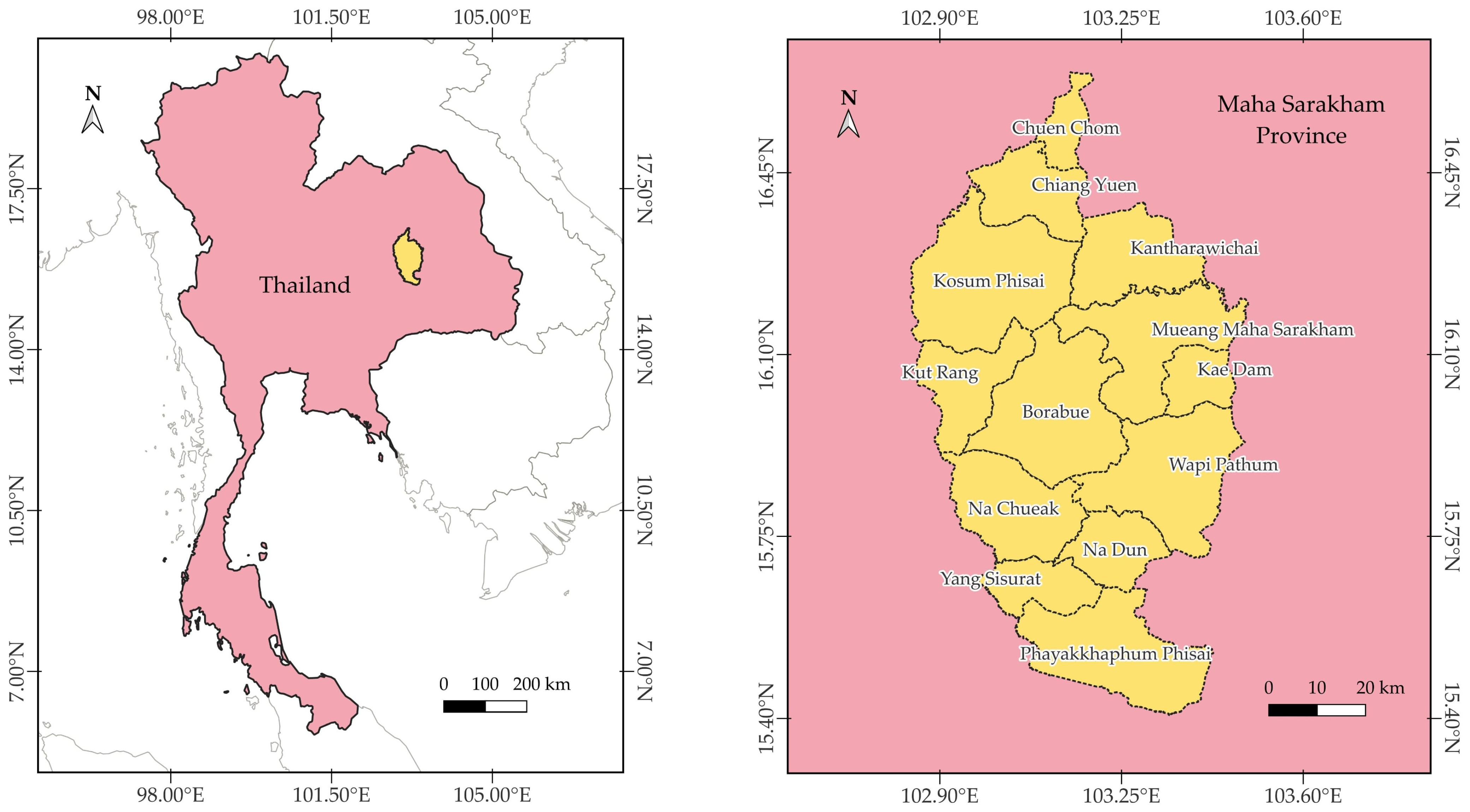
The study was conducted in Maha Sarakham Province, located in northeastern Thailand (approximate coordinates 15°12′–16°36′ N, 102°08′–103°15′ E) (Figure 1). The province covers an area of about 5000 km2 [21]. The topography is predominantly a flat to gently undulating plain of the Khorat Plateau, with elevations generally ranging between 130 and 230 m above sea level [22].
Climatically, Maha Sarakham exhibits a tropical savanna climate (Köppen Aw), with three distinct seasons: a hot/dry season from February–April/May, a wet monsoon season from May/June–October, and a cooler dry season from November–February. Average annual rainfall is approximately 1200–1300 mm, and mean annual temperature is about 26.6 °C, with monthly mean highs exceeding 35 °C in the hot season [22].
Agriculture dominates the land-use in the province, especially rice cultivation across its expansive lowland plains, with smaller patches of upland, secondary forest, fallow lands and wetlands [24]. Given this mixture of agricultural, semi-natural and anthropogenic habitats, the province offers an ideal setting for investigating EUO plants under both wild and cultivated contexts.
Field surveys were conducted across representative districts of the province, sampling both low-lying rice-paddy dominated plains and marginal upland or fallow areas, in order to capture the full breadth of ecological variation, species diversity and cultural practices associated with EUO plants. Local informants—including farmers, foragers and market vendors—were consulted for documentation of traditional knowledge, use-patterns and horticultural practices, thereby ensuring an integrated ecological, ethnobotanical and horticultural perspective to the study.

2.2. Plant Collection and Identification

Data collection was carried out over a 12-month period, from August 2024 to July 2025. The study focused on EUO plants occurring in both wild and cultivated settings, including home gardens, agricultural fields, fallow lands, and local markets across Maha Sarakham Province.
Specimens of all cited EUO species were collected during systematic field excursions and market surveys. For each species, detailed information was recorded, including local names, parts used, preparation methods, and observed traditional uses. Each plant was photographed in its natural or cultivated habitat, with particular attention to its underground organs, before being processed into herbarium vouchers. These vouchers were deposited in the Vascular Plant Herbarium, Mahasarakham University (VMSU), Kantharawichai District, Maha Sarakham Province, for long-term preservation.
Taxonomic identification was performed using standard botanical references, including the Flora of Thailand and other relevant regional taxonomic literature. Scientific names, family assignments, and current nomenclature were further verified through the Plants of the World Online database (https://powo.science.kew.org) (accessed on 15 July 2025) [25] and the World Flora Online (WFO) Plant List (https://wfoplantlist.org/) (accessed on 15 July 2025) [26]. Voucher specimens were annotated with collection data, habitat information, and ethnobotanical details to ensure comprehensive documentation of both botanical and cultural attributes of each EUO species.

2.3. Local Market Survey

To document the diversity, availability, and utilization of EUO plants in Maha Sarakham Province, a systematic survey of local markets was conducted from August 2024 to July 2025. The survey focused on community markets frequently visited by local residents and traders, where wild and cultivated EUO species are commonly sold or displayed, including fresh produce, dried materials, and processed plant products.
Data collection involved direct observation, structured interviews with market vendors, collectors, and local buyers, as well as photographic documentation of plant specimens and their products. For each recorded species, detailed information was obtained on the local name, plant part used, form of sale (whole plant, tuber, rhizome, corm, or processed form), seasonal availability, and local uses. In addition, data on selling price, source of the plant (wild-harvested or cultivated), and quantity sold per month were collected to evaluate the economic significance of each species in local markets.
Market surveys were conducted monthly to capture seasonal variation in species availability, trade frequency, and price fluctuation. All information was recorded in pre-designed data sheets, and the identities of informants were anonymized to ensure ethical compliance and data confidentiality.
This market-based approach provided a comprehensive understanding of the commercial importance, cultural relevance, and seasonal dynamics of EUO plants in Maha Sarakham Province, contributing valuable insight into their role in sustaining local livelihoods and promoting agrobiodiversity conservation.

2.4. Ethnobotanical Data Collection

Ethnobotanical fieldwork was conducted from August 2024 to July 2025 across 13 districts of Maha Sarakham Province, northeastern Thailand. The study employed a qualitative ethnobotanical approach, integrating semi-structured interviews, participant observation, and guided field walks with knowledgeable local informants to document traditional knowledge related to the utilization of EUO plants in both wild and cultivated contexts.
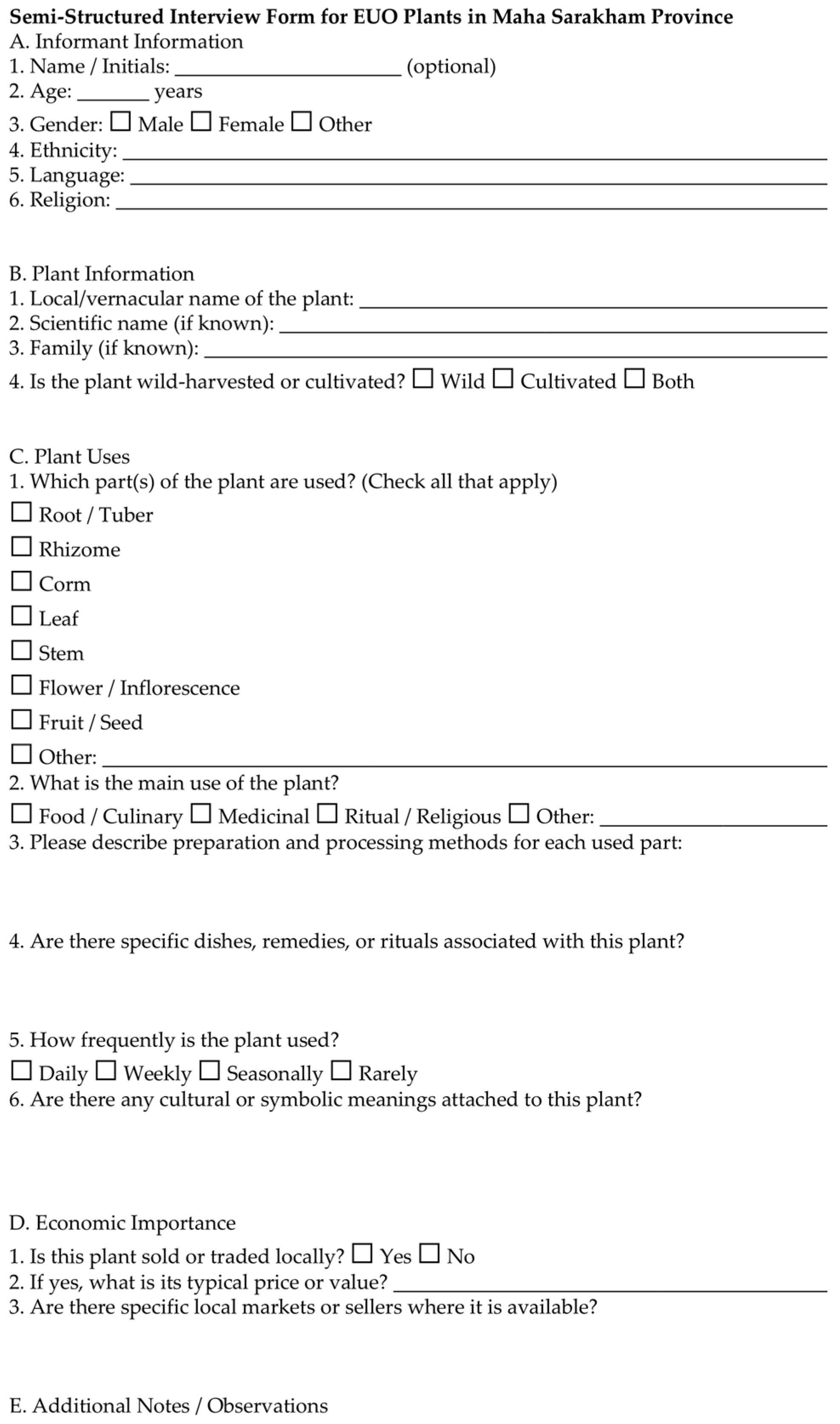
A semi-structured interview form was designed to facilitate comprehensive and systematic data collection. The questionnaire included both open-ended and structured questions focusing on local plant names, specific uses (food, medicinal, ritual, or other purposes), parts used, preparation and processing methods, and associated cultural or symbolic meanings. This design allowed informants to elaborate freely on traditional knowledge and local classification systems of EUO plants (Figure A1).
A total of 60 informants (30 men and 30 women, aged 25–75 years) were selected through purposive [27] and snowball sampling techniques [28], emphasizing local healers, experienced foragers, farmers, and individuals recognized within their communities for traditional plant knowledge (Table 1). Selection criteria included being a resident of the study area for at least 10 years, having direct experience in collecting, cultivating, or utilizing local EUO plants, and showing willingness to share knowledge. Interviews were conducted in Thai or the Isan dialect, depending on the informant’s language preference.
Before each interview, the purpose, methods, and expected outcomes of the study were clearly explained to participants. In accordance with the International Society of Ethnobiology (ISE) Code of Ethics [29] and the Nagoya Protocol on Access and Benefit-Sharing [30], informed consent was obtained from all participants. Informants were assured of confidentiality, voluntary participation, and their right to withdraw at any stage without consequence.
Although this research did not involve sensitive personal data and therefore did not require formal institutional ethical approval, all field activities adhered to international standards of ethical ethnobotanical research, emphasizing respect, transparency, and reciprocal collaboration with local communities.

2.5. Data Analysis

2.5.1. Cultural Food Significance Index (CFSI)

The Cultural Food Significance Index (CFSI) was applied to evaluate the cultural importance of edible EUO and medicinal purposes. The index, originally proposed by Pieroni [31], integrates seven ethnobotanical parameters into a single quantitative measure of a species’ cultural significance, expressed as:
CFSI = QI × AI × FUI × PUI × MFFI × TSAI × FMRI × 10−2
where QI (Quotation Index) represents the proportion of informants who cited a species; AI (Availability Index) reflects the local abundance of the species, ranging from very common (4.0) to rare (1.0); FUI (Frequency of Utilization Index) quantifies how often the species is used, from more than once per week (5.0) to no longer used within 30 years (0.5); PUI (Parts Used Index) measures the diversity of plant parts utilized; MFFI (Multifunctional Food Use Index) evaluates the range of culinary applications such as boiling, roasting, or fermenting; TSAI (Taste Score Appreciation Index) assesses palatability from terrible (4.0) to excellent (10.0); and FMRI (Food–Medicinal Role Index) indicates the degree to which a plant functions as both a food and a medicinal resource, ranging from not recognized (1.0) to very high (5.0).

2.5.2. Cluster Analysis

A clustered heatmap was generated to visualize the relationships among utilization categories and medicinal properties of EUO plants. The analysis was performed using the online bioinformatics platform Bioinformatics (www.bioinformatics.com.cn) [32]. Data were uploaded in matrix format, and the tool’s default parameters were applied, including hierarchical clustering based on Euclidean distance and complete linkage. The resulting heatmap allowed for the identification of similarity patterns and grouping structures among categories.

2.5.3. Informant Consensus Factor (Fic)

The Informant Consensus Factor (Fic) was used to measure the degree of agreement among informants regarding the medicinal uses of EUO plants. This metric identifies ailment categories with high collective recognition and consistent use patterns. Fic was calculated following Heinrich et al. [33] using the equation:
F ic   =   n ur n t n ur 1
where nur is the total number of use reports for each ailment category and nt is the number of species cited in that category. Fic values range from 0 to 1, with values close to 1 indicating strong consensus among informants. High Fic values suggest that specific ailments are well known and treated with widely trusted plant remedies.

2.5.4. Fidelity Level (%FL)

The Fidelity Level (FL) was applied to assess the degree to which a plant species is specifically associated with a particular medicinal use. This index provides insight into the cultural reliability and therapeutic specificity of traditional plant knowledge. FL was calculated according to Friedman et al. [34] using the formula:
FL   =   I p I u   ×   100
where Ip represents the number of informants citing a species for a specific ailment and Iu is the total number of informants who mentioned that species for any medicinal use. Higher FL values indicate that most informants consistently associate the species with a single therapeutic purpose, reflecting strong cultural agreement.

2.5.5. Economic Value Assessment

An Economic Value (EV) assessment was conducted to evaluate the contribution of EUO plants to local livelihoods in Maha Sarakham Province. Quantitative market data were integrated with verified botanical identifications to ensure accurate recognition of traded species. Monthly surveys from August 2024 to July 2025 recorded market prices, sale quantities, and seasonal availability.
The annual economic value of each species was estimated following the method of Phatlamphu et al. [35], using the equation:
EV = AP × SM × SP
where EV denotes the annual economic value (THB), AP is the average market price per kilogram (THB/kg), SM represents the average monthly sales volume (kg), and SP is the number of months each species was available for sale during the study period. The resulting EV reflects the total annual income derived from the trade of EUO species, highlighting their economic significance and role in supporting rural sustainability.

3. Results

3.1. Diversity of EUO Plants in Maha Sarakham Province

A total of 53 taxa belonging to 33 genera and 22 families of EUO plants were recorded in Maha Sarakham Province (Table 2). The family Zingiberaceae was the most represented, accounting for 18 taxa (33.94%), followed by Dioscoreaceae with 7 taxa (13.20%), and Amaryllidaceae and Araceae, each with 3 taxa (5.66%). Families such as Asteraceae, Cyperaceae, Fabaceae, and Smilacaceae were represented by 2 taxa each (3.77%), whereas the remaining 14 families, including Amaranthaceae, Apiaceae, Brassicaceae, Cannaceae, Colchicaceae, Convolvulaceae, Costaceae, Euphorbiaceae, Marantaceae, Menispermaceae, Nelumbonaceae, Orobanchaceae, Solanaceae, and Stemonaceae, were represented by a single taxon each (1.89%).
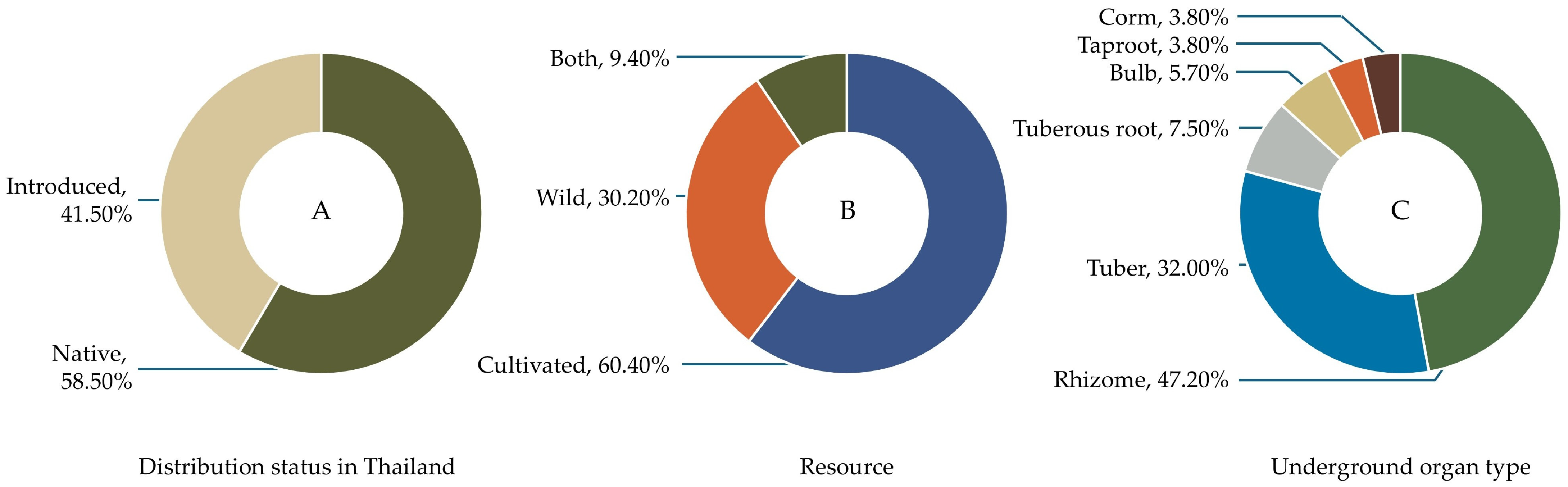
In terms of underground organ types, the majority were rhizomes (25 taxa, 47.20%), followed by tubers (17 taxa, 32.00%), tuberous roots (4 taxa, 7.50%), bulbs (3 taxa, 5.70%), and both corms and taproots (2 taxa each, 3.80%) (Figure 2).
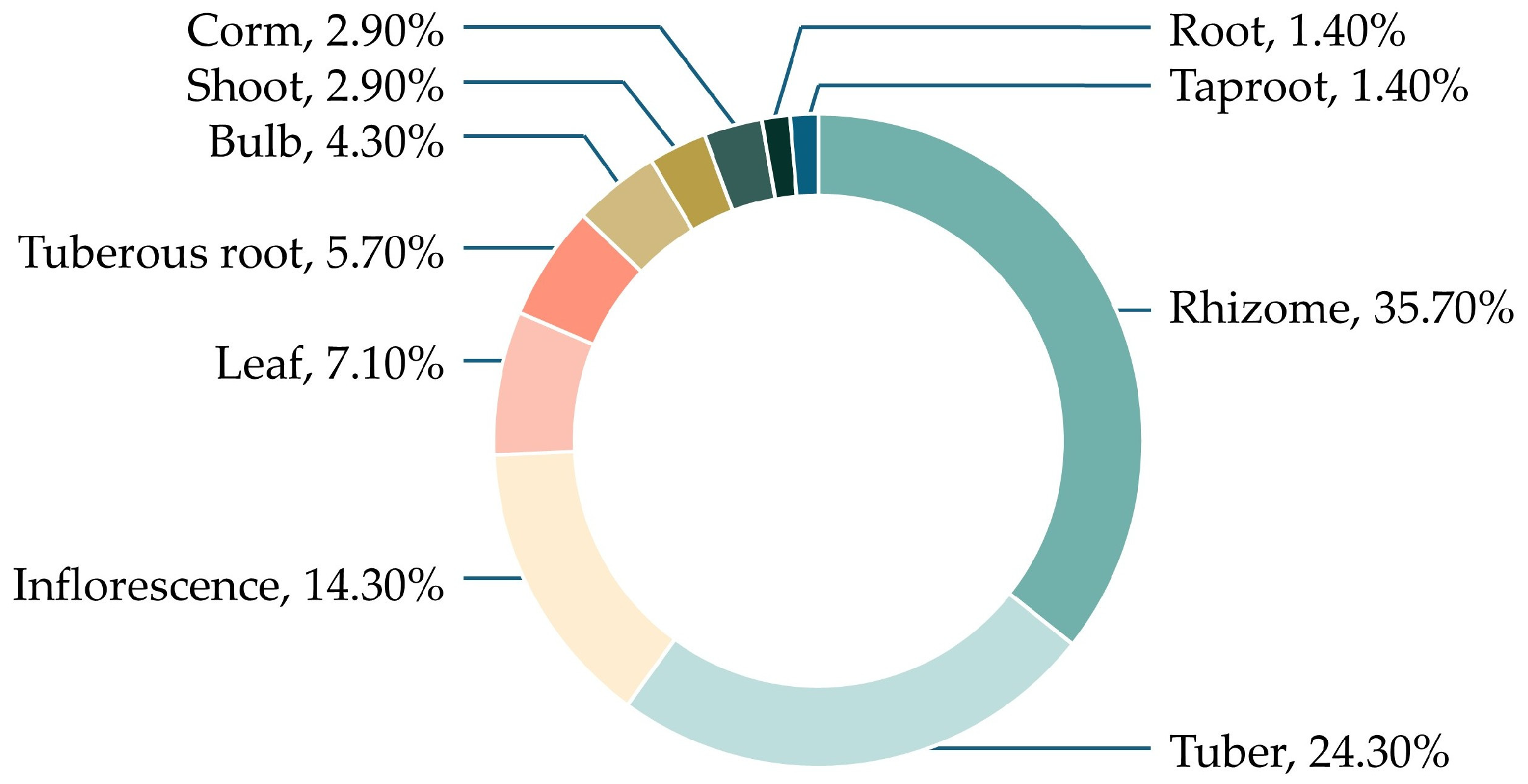
The analysis of plant parts used in EUO species (Figure 3) revealed that the rhizome was the most frequently utilized part, accounting for 35.70% of all uses, followed by tubers (24.30%) and inflorescences (14.30%). Other parts were used less frequently, including leaves (7.10%), tuberous roots (5.70%), bulbs (4.30%), corms (2.90%), shoots (2.90%), roots (1.40%), and taproots (1.40%).

3.2. Utilization of EUO Plants

3.2.1. EUO Plants Used as Beverage

Two EUO taxa were recorded as ingredients in beverages among local communities (Table 1). These taxa belong to the families Amaranthaceae and Apiaceae and are widely integrated into daily diets not only for their flavor but also for their perceived nutritional benefits (Table 2).
Beta vulgaris subsp. vulgaris “Conditiva Group” (Amaranthaceae) was frequently used for preparing blended drinks due to its sweet taste and vibrant coloration. Its tuberous root was also occasionally consumed fresh as a salad vegetable. In contrast, Daucus carota subsp. sativus (Apiaceae) was used more diversely. The taproot was commonly blended into beverages, but it was also eaten fresh in salads, boiled, or incorporated into stir-fried dishes, reflecting its versatility and widespread culinary acceptance.
Overall, these two taxa illustrate how cultivated EUO plants contribute not only to household nutrition but also to culturally embedded beverage practices within the study area.

3.2.2. EUO Plants Used as Condiments or Flavoring

Seven EUO plant species from the families Amaryllidaceae, Orobanchaceae, and Zingiberaceae were recorded as condiments and flavoring materials (Table 2).
In Amaryllidaceae, Allium ascalonicum and A. sativum were the main aromatic plants used in cooking. The bulbs of both species were added to dishes to improve aroma and pungency. A. ascalonicum was used in several ways: its bulbs and leaves were included in pickled vegetables, its inflorescences were added to stir-fried dishes, and its leaves were eaten fresh or cooked. A. sativum was also used for its bulbs in cooked foods and pickling, and its inflorescences were used in stir-fried dishes.
Four species of Zingiberaceae were recorded. The rhizomes of Alpinia galanga and A. siamensis were used to add aroma and pungency to foods, and their inflorescences were eaten fresh or boiled and consumed with chili paste. Boesenbergia rotunda was used mainly for its pungent rhizome. Zingiber officinale was used for its rhizome in cooked foods, dipping sauces, and pickled preparations, and its young leaves were eaten fresh with chili paste.
Aeginetia indica (Orobanchaceae) was the only species in this family. Its inflorescences were squeezed with water and filtered to obtain a natural coloring liquid mixed with sticky rice. The plant was also noted for medicinal use.
These species illustrate the range of EUO plants used to improve aroma, flavor, and color in local cuisine.

3.2.3. EUO Plants Used as Fermented or Preserved

Three species were recorded in the fermented or preserved food category, belonging to the families Amaryllidaceae and Zingiberaceae (Table 2). Both Allium ascalonicum and A. sativum were commonly used in pickled vegetable preparations. In A. ascalonicum, the bulbs and leaves were used for pickling. A. sativum was used primarily for its bulbs for cooking and in pickled vegetables.
Zingiber officinale—The rhizome was used in the preparation of pickled vegetables and were commonly eaten with Sai Krok Isan (Isan sausage).

3.2.4. EUO Plants Used as Medicinal Edible Plants

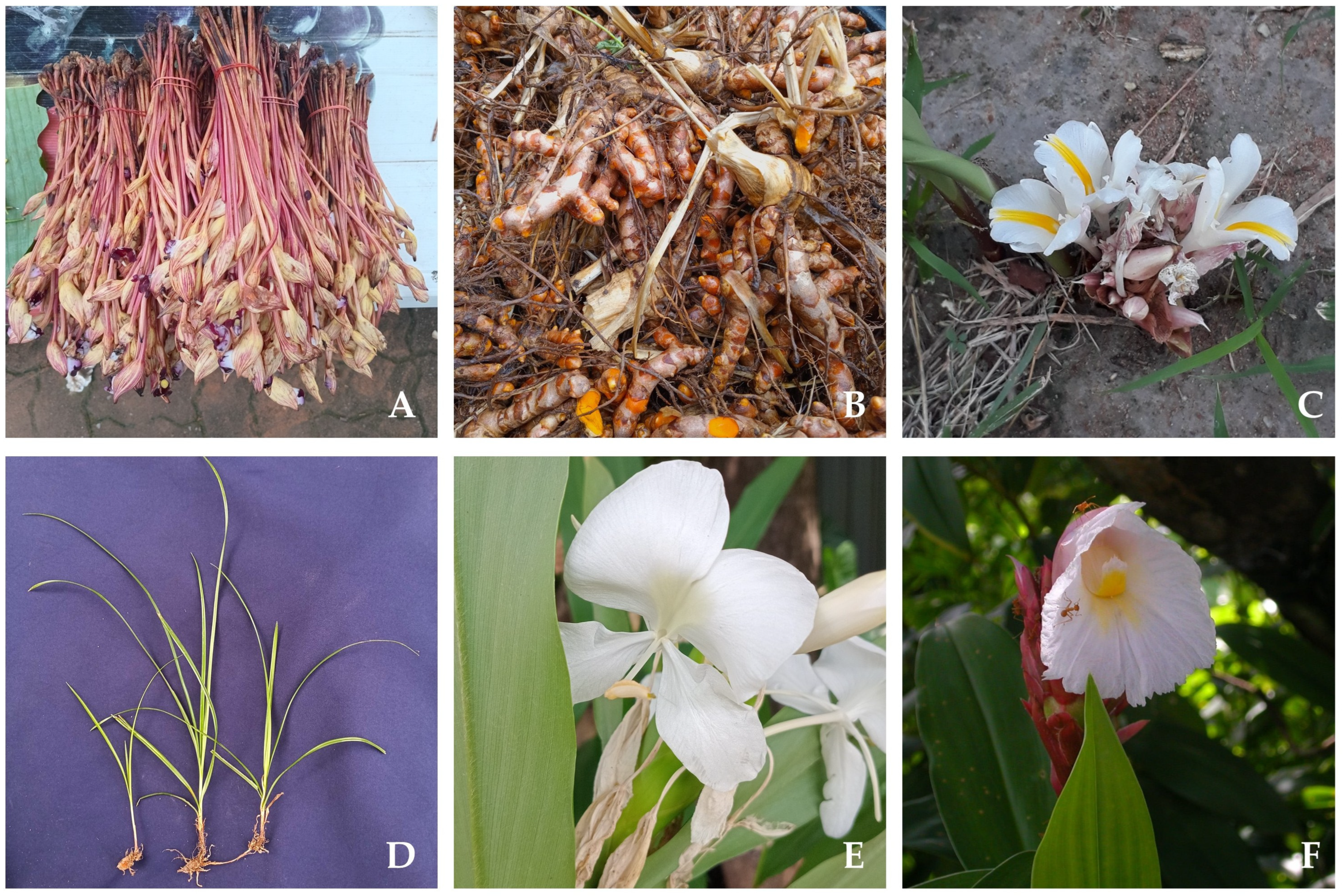
A total of 24 EUO plant species from 11 families were recorded as medicinal edible plants in the study area (Table 2 and Figure 4). The family Zingiberaceae was the most represented, comprising 13 species, followed by Smilacaceae with 2 species. The remaining families—Asteraceae, Colchicaceae, Costaceae, Cyperaceae, Dioscoreaceae, Fabaceae, Menispermaceae, Orobanchaceae, and Stemonaceae—were each represented by a single species. Detailed information on the ethnomedicinal uses of these species is provided in the ethnomedicinal of EUO plants section.

3.2.5. EUO Plants Used as Staple Food

Seven species from four families were recorded as EUO plants used as staple foods (Table 2). In Araceae, Colocasia esculenta “Taro” was used for its corm, which was boiled and consumed as a staple food. In Convolvulaceae, Ipomoea batatas was consumed after boiling, steaming, or roasting, and used as a staple food.
Members of Dioscoreaceae included Dioscorea filiformis, D. hispida, and D. pseudotomentosa, all primarily used as tubers. D. filiformis and D. pseudotomentosa were boiled and consumed as staple food, snacks or used in desserts. D. hispida required peeling, slicing, and soaking in water to reduce irritation before steaming and inclusion in desserts. Tacca leontopetaloides was prepared by peeling, washing, cutting, grinding, and filtering the tubers to obtain starch, which was dried and used in food or dessert preparation.
Finally, Solanaceae was represented by Solanum tuberosum, which was boiled and consumed as a staple food. These species highlight the importance of EUO plants in providing carbohydrates and serving as essential components of the local diet.

3.2.6. EUO Plants Used as Sweets, Desserts, or Snacks

A total of 15 species from 10 families were recorded as EUO plants used as sweets, desserts, or snacks (Table 2). The edible parts were mainly tubers, corms, rhizomes, or pseudostems, and preparation methods included boiling, steaming, roasting, grinding, or processing into starch for later use.
Species from Araceae, Asteraceae, Cannaceae, Convolvulaceae, and Cyperaceae were used individually as snacks or desserts. Colocasia esculenta (Araceae)—corms were boiled or used in desserts. Smallanthus sonchifolius (Asteraceae)—tubers eaten fresh as a snack. Canna indica (Cannaceae)—rhizomes boiled and consumed as a snack or in desserts. Ipomoea batatas (Convolvulaceae)—tubers boiled, steamed, or roasted and used as snacks or in desserts. Eleocharis dulcis (Cyperaceae)—tubers eaten as a snack or included in desserts.
Several Dioscoreaceae species (Dioscorea alata, D. esculenta, D. filiformis, and D. pseudotomentosa)—tubers boiled and consumed as snacks or used in desserts. D. hispida –steamed and used in desserts. Tacca leontopetaloides (Stemonaceae)—tubers processed to obtain starch for use in foods or desserts.
Other families included Euphorbiaceae, Fabaceae, Marantaceae, and Nelumbonaceae. Manihot esculenta (Euphorbiaceae)—tuberous roots boiled or roasted for snacks or desserts; Pachyrhizus erosus (Fabaceae)—tuberous roots eaten fresh or in desserts; Maranta arundinacea (Marantaceae)—rhizomes boiled as a snack; Nelumbo nucifera (Nelumbonaceae)—rhizomes used in desserts or cooked dishes, with pseudostems incorporated into stir-fried preparations.
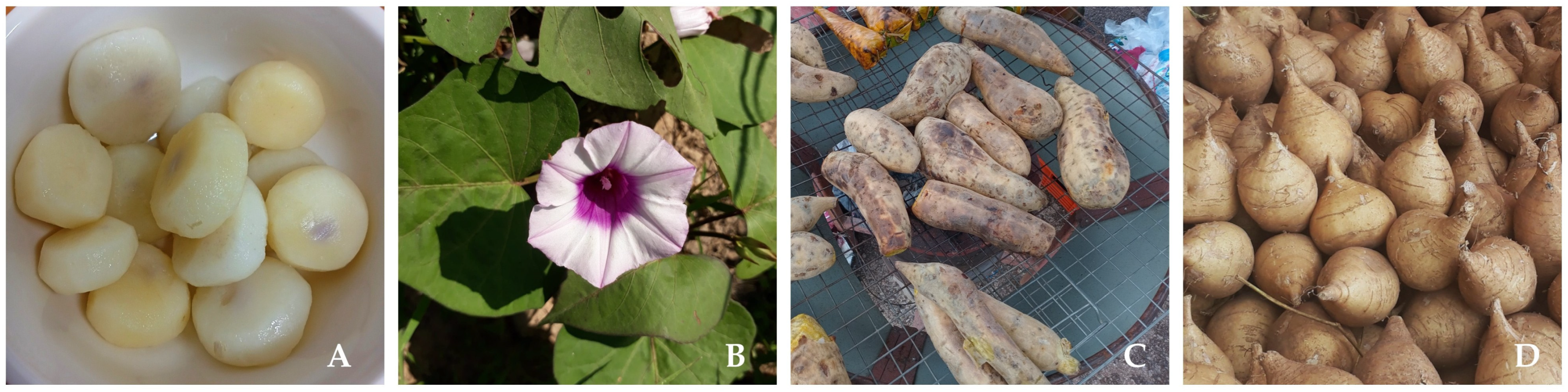
These species illustrate the diversity of EUO plants used for sweets, desserts, and snacks, highlighting both the edible part and preparation methods in local culinary practices (Figure 5).

3.2.7. EUO Plants Used as Vegetables

A total of 19 taxa from 8 families were recorded as EUO plants used as vegetables in local diets (Table 2). The edible parts included tubers, corms, rhizomes, leaves, inflorescences, pseudostems, and bulbs, which were prepared by boiling, roasting, steaming, or incorporating into salads, stir-fried, or spicy dishes.
Araceae was represented by Amorphophallus paeoniifolius—tubers peeled, cut, boiled, and mashed into a jelly-like consistency; and Colocasia esculenta—corms and leaves boiled or roasted to reduce irritation before consumption. In Amaranthaceae and Apiaceae, Beta vulgaris subsp. vulgaris—tuberous roots were consumed fresh or blended into beverages, and Daucus carota subsp. sativus—taproots boiled, used in salads, or stir-fried. Brassicaceae (Raphanus raphanistrum subsp. sativus)—taproots were used in boiled dishes.
Amaryllidaceae species, including Allium ascalonicum, A. cepa, and A. sativum, were used for their bulbs, leaves, and inflorescences, either in cooking to enhance aroma and pungency, for pickled vegetables, or in stir-fried dishes. Costaceae (Hellenia speciosa)—tender pseudostems were boiled, with additional medicinal use. Nelumbonaceae (Nelumbo nucifera)—rhizomes and pseudostems incorporated into desserts, boiled, or stir-fried.
Most species belonged to Zingiberaceae, with rhizomes, leaves, or inflorescences consumed fresh, boiled, or added to spicy salads. Notable examples included Alpinia galanga, A. siamensis, Curcuma angustifolia, C. mangga, C. singularis, Etlingera elatior, Hedychium coronarium, Kaempferia marginata, and Zingiber officinale, many of which were also recognized for medicinal uses. Rhizomes were commonly added to enhance aroma and pungency, while leaves and inflorescences were eaten fresh or boiled with chili paste or incorporated into spicy salads and boiled dishes.
These species highlight the diversity of EUO plants used as vegetables, reflecting the integration of multiple edible parts and preparation methods in local culinary practices.

3.2.8. Toxic or Potentially Harmful of EUO Plants

Several EUO plants documented in this study possess toxic properties or contain bioactive compounds that require specific preparation methods to ensure safe use. Although these species are traditionally consumed or applied for medicinal purposes, improper handling or inadequate processing can lead to adverse effects ranging from mild irritation to severe systemic toxicity. Understanding the toxic parts, types of harmful compounds, and culturally embedded detoxification techniques is therefore essential to ensure both safety and the continuation of traditional knowledge systems. The toxic characteristics and recommended detoxification methods for each species are summarized in Table 3.

3.3. Cultural Food Significance Index (CFSI) of EUO Plants

The quantitative evaluation of 53 EUO taxa in Pa Tio District using the Cultural Food Significance Index (CFSI) revealed clear patterns in their cultural and dietary importance (Table S1). The EUO species were grouped according to their CFSI values to identify those most frequently used and culturally embedded in local food traditions.
Species with the highest importance values (CFSI > 500) included Allium ascalonicum, A. sativum, Alpinia siamensis, Boesenbergia rotunda, Daucus carota subsp. sativus, and Kaempferia marginata and representing primarily vegetables and aromatic rhizomes. These species are central to traditional diets, providing flavor, and nutrition. A. ascalonicum and A. sativum have long been consumed in a variety of dishes, while species such as Alpinia siamensis and Boesenbergia rotunda are commonly used as seasonings and condiments in daily cooking. The high CFSI values of these species were supported by consistently strong scores across contributing indices, including high availability (AI), frequency of utilization (FUI), number of parts used (PUI), multifunctional food use (MFFI), taste appreciation (TSAI), and food–medicinal role (FMRI).
The second highest group (500 > CFSI ≥ 100) included species such as Allium cepa, Alpinia galanga, Curcuma angustifolia, Etlingera elatior, and Zingiber officinale which are frequently consumed as vegetables, flavoring agents, or medicinal edibles. Their moderately high CFSI values reflect substantial cultural and culinary relevance, though they are less ubiquitous than the first group, often due to narrower distribution or less versatile edible parts.
Species with intermediate importance values (100 > CFSI ≥ 10) were primarily consumed as snacks, seasonal vegetables, or for specific medicinal uses. Examples include Amorphophallus paeoniifolius, Dioscorea esculenta, and Tacca leontopetaloides, which serve complementary roles in local diets and traditional medicine.
The lowest CFSI group (CFSI < 10) consisted of species such as Dioscorea alata, D. pseudotomentosa, and Smallanthus sonchifolius, which were generally less preferred, collected from limited habitats, or consumed during periods of food scarcity. Interviews indicated that these species are mostly familiar to older community members and are rarely incorporated into contemporary meals.
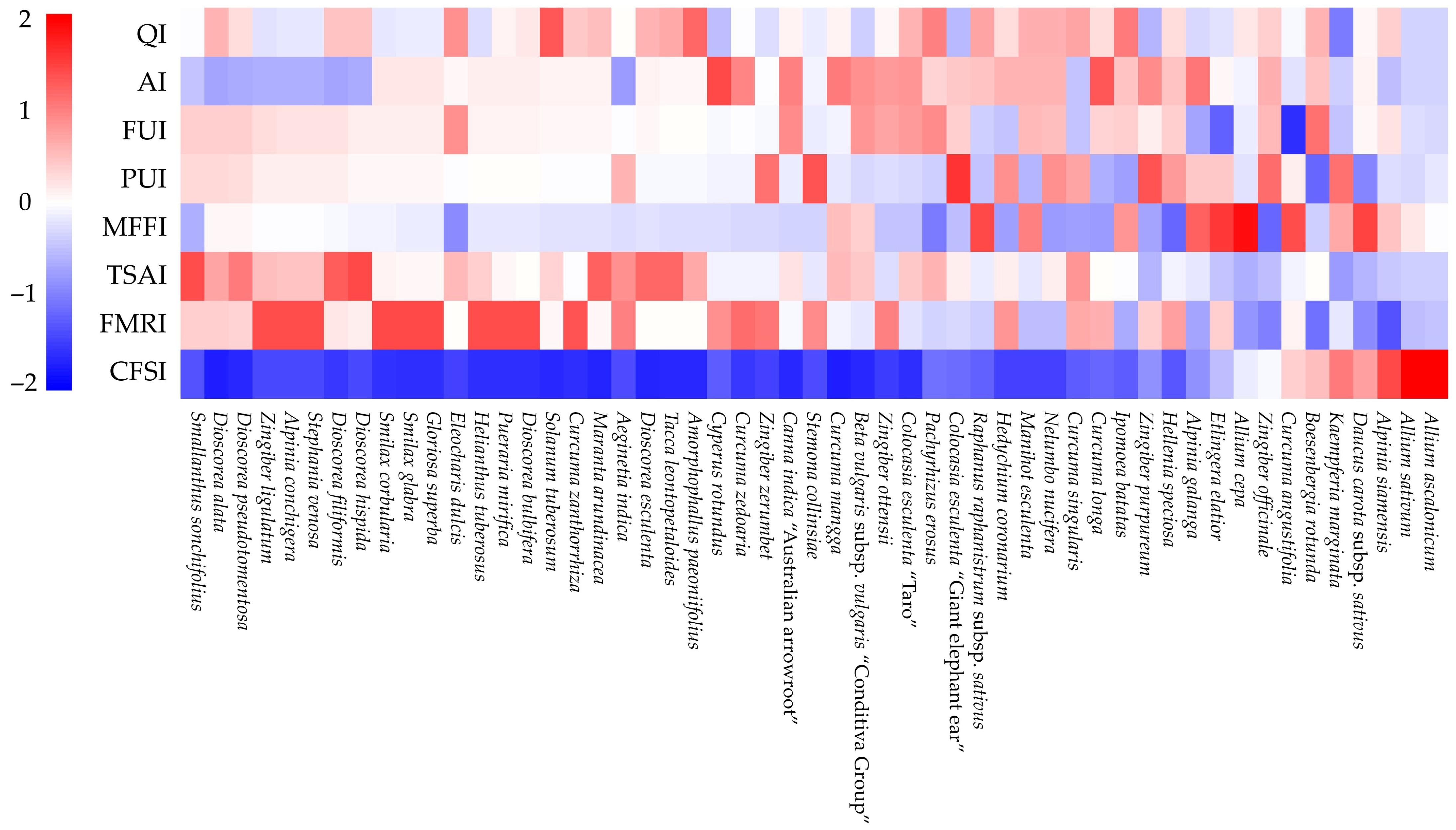
The heat map analysis (Figure 6) illustrated pronounced variation in the component indices, revealing consistent clustering among species with high QI, AI, and FUI values, particularly within the genera Allium, Alpinia, and Curcuma. These species formed distinct high-use clusters, confirming their importance in local food traditions. In contrast, species such as Dioscorea pseudotomentosa, D. alata and Smallanthus sonchifolius clustered at lower values, reflecting restricted or occasional usage patterns.
Interestingly, several species with relatively high PUI and MFFI scores—such as Allium ascalonicum, Colocasia esculenta “Giant elephant ear”, Kaempferia marginata, and Zingiber officinale—demonstrated notable versatility, being consumed in multiple forms including fresh, cooked, powdered, or as herbal infusions. This flexibility likely explains their elevated CFSI values despite moderate availability scores.
Species with low FMRI values generally exhibited weak associations with medicinal uses, which contributed to their overall lower CFSI scores despite being edible. However, some taxa—such as Daucus carota subsp. sativus and Nelumbo nucifera—showed balanced scores across several indices, underscoring their dual role in local dietary practices and folk remedies.
Overall, the integration of these ethnobotanical indices within the CFSI framework provides a comprehensive view of culturally significant edible plants in Pa Tio District. The findings highlight the importance of a small group of multifunctional species while also documenting the diverse yet variable roles of many lesser-used taxa. These insights offer valuable guidance for future research, conservation planning, and the promotion of culturally important food resources in Northeastern Thailand.

3.4. Ethnomedicinal of EUO Plants

3.4.1. Condition of Plants Used and Routes of Administration of EUO Plants Used as Medicine

Among the medicinal EUO plants recorded, fresh materials were used more frequently, accounting for 68.52% of all preparations, while 31.48% were based on dried materials (Table S2).
Regarding routes of administration, oral use was the most common, representing 83.33% of all reported applications. Dermal application accounted for 12.96%, whereas topical administration was the least common at 3.70% (Table S2).

3.4.2. Preparation Methods

The medicinal use of underground plant parts in Maha Sarakham Province involves diverse and well-defined preparation practices (Table S2). Decoction represents the predominant method, particularly for species such as Aeginetia indica, Curcuma singularis, Cyperus rotundus, Etlingera elatior, Gloriosa superba, Hellenia speciosa, Smilax glabra, and Stephania venosa. These preparations generally require boiling fresh or dried rhizomes or tubers and consuming the strained liquid, often with specified dosages that reflect long-standing community knowledge.
Fresh rhizomes of several Zingiberaceae species are commonly pounded or pressed to extract juice for treating gastrointestinal problems and inflammatory conditions. For example, Curcuma longa is processed into fresh juice for oral use, while its dried rhizomes are powdered for topical application. Likewise, Zingiber ottensii and Z. zerumbet are prepared as pounded pastes, sometimes combined with salt or lime water for external treatment of sprains or swelling.
Multiple processing methods are associated with certain taxa. Curcuma zanthorrhiza and C. zedoaria may be administered as decoctions or liquor-based preparations. Zingiber purpureum is notable for its complex polyherbal formulations incorporating peppers, clove, and borneol, prepared as either hot-water infusions or compressed herbal pills. Tonic species such as Pueraria mirifica and Smilax corbularia are typically sun-dried, ground into powder, and formed into boluses.
Some species require minimal preparation; Helianthus tuberosus, for instance, is consumed fresh. Others, such as Stemona collinsiae, involve more specialized techniques for oral or topical use.

3.4.3. Fidelity Level (%FL) of EUO Plants Usad as Medicine

The Fidelity Level (FL, %) was calculated to assess the degree of consensus among informants regarding the medicinal uses of edible EUO plants (Table S2). FL represents the proportion of informants who cite a particular species for its primary therapeutic application, providing insight into the cultural significance and perceived effectiveness of each plant.
Several species exhibited high FL values (>70%), indicating strong agreement among informants on their specific medicinal applications. Gloriosa superba tubers recorded the highest FL (83.3%) for musculoskeletal disorders, particularly for relieving knee pain and rheumatism. Similarly, Zingiber zerumbet rhizomes showed an FL of 80% for gastrointestinal disorders, including bloating and abdominal discomfort. Etlingera elatior rhizomes were highly cited for dermatological conditions (FL = 80%), demonstrating widespread recognition of their topical efficacy.
Species with moderate FL values (40–70%) reflect a somewhat lower consensus, often due to multiple therapeutic uses or local variation in traditional knowledge. For example, Curcuma longa rhizomes had FL values of 60% for gastrointestinal issues and 40% for dermatological applications. Kaempferia marginata rhizomes exhibited FL values ranging from 20% to 46.7% across fever reduction, digestive, and respiratory uses. Pueraria mirifica tubers were reported for general tonic use, breast enhancement, and hair growth, with FL values of 56.25%, 31.25%, and 12.5%, respectively.
Lower FL values (<40%) were observed in species employed for multiple therapeutic purposes, where the consensus for any single use was diluted. For instance, Zingiber purpureum rhizomes had FL values of 60% for gastrointestinal disorders, 26.7% for respiratory ailments, and 13.3% for musculoskeletal conditions. This pattern indicates versatility in usage but less uniformity in informant agreement.
Overall, the FL analysis highlights that certain EUO species are highly recognized for specific medicinal uses, while others serve diverse therapeutic roles, reflecting the richness and complexity of ethnomedicinal knowledge in Maha Sarakham Province. A detailed summary of species used parts, preparation methods, therapeutic uses, and corresponding FL values is provided in Table S1.

3.4.4. Informant Consensus Factor (Fic) of EUO Plants Used as Medicine

The Informant Consensus Factor (Fic) was calculated to evaluate the level of agreement among informants regarding the medicinal uses of EUO plants across eight therapeutic categories (Table 4). Fic values ranged from 0.722 to 1.000, indicating varying but generally strong levels of shared knowledge within the community.
The highest Fic value (1.000) was observed for the cardiovascular system, reflecting complete agreement among informants, although this category was represented by only a single species and three use reports. High Fic values were also recorded for general health (0.905) and obstetrics, gynaecology, and urinary disorders (0.900), suggesting consistent and well-established traditional uses of EUO species for revitalization, postpartum care, and urinary-related conditions.
The categories with the greatest number of use reports, including musculoskeletal and joint diseases (Nur = 54; Fic = 0.868) and gastrointestinal disorders (Nur = 105; Fic = 0.865), also showed high consensus. These findings highlight the importance of EUO plants in alleviating common ailments such as muscle pain, inflammation, digestive discomfort, and abdominal disorders within the local ethnomedicinal system.
Moderate but still substantial consensus was found in infection, parasite, and immune-related conditions (Fic = 0.842) and the integumentary system (Fic = 0.800), indicating that EUO species are also recognized for their antimicrobial, antiparasitic, and dermatological applications. The respiratory system had the lowest consensus (Fic = 0.722), with six taxa reported for 19 use reports, suggesting a broader diversity of species employed for cough, colds, and respiratory discomfort, and consequently lower agreement on specific taxa.

3.5. Economic Value of EUO Plants

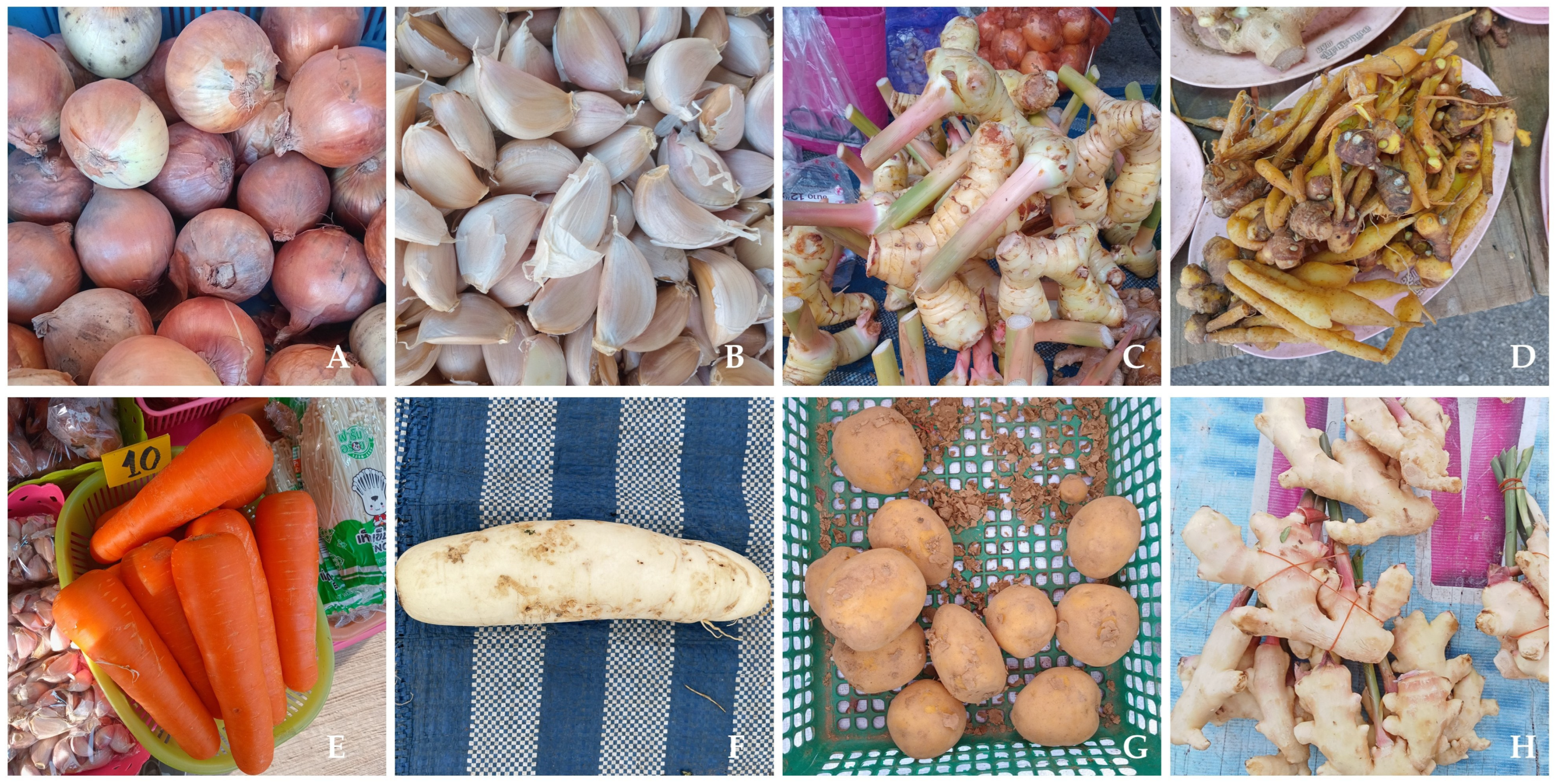
The trade of EUO plants in local markets represents an important source of supplementary income for local vendors. A total of 26 EUO taxa were recorded as being sold (Figure 7 and Table 5), covering a range of plant parts including tubers, corms, rhizomes, bulbs, pseudostems, and taproots. Market prices varied considerably among species, from 10 to 390 THB/kg, depending on plant part, quality, seasonal availability, and consumer preference.
Table 5 presents the economic characteristics of the traded taxa. Those with higher market prices and broad availability generally produced greater estimated yearly incomes (EV) for traders. Smallanthus sonchifolius exhibited the highest EV (37,758 THB/year), followed by Helianthus tuberosus, Boesenbergia rotunda, and Allium sativum, both of which showed stable monthly sales and year-round availability. Notably, the extended selling periods of several species—particularly Allium cepa, Curcuma longa, and Solanum tuberosum—do not strictly reflect their natural phenology. Instead, vendors rely on post-harvest storage, allowing these products to remain available throughout the year despite their limited natural harvest seasons.
These patterns highlight that EUO plants contribute meaningfully to local market economies, offering both continuous and seasonal income opportunities. While a few high-value species dominate annual earnings, many others supplement household income through consistent or periodic trade.

4. Discussion

4.1. Ethnobotanical and Ecological Significance of EUO Plants

The diversity of EUO plants in Maha Sarakham Province reflects complex interactions among ecological availability, cultural preference, and historical cultivation practices. The dominance of Dioscoreaceae, Amaryllidaceae, and Zingiberaceae is consistent with other Asian ethnobotanical studies, where these families are valued for their multi-purpose rhizomes and tubers [42,43]. Beyond nutritional value, their widespread cultivation suggests a long-term coevolutionary relationship between humans and these plants, in which selection pressures favored species with palatable, storable, and medicinally active underground organs [44].
The presence of both native and introduced taxa (58.5% vs. 41.5%) underscores dynamic cultural and agroecological processes in the region [45]. None of the recorded species in this study are invasive. Introduced taxa may fill dietary or medicinal niches not covered by native species, reflecting adaptive strategies for food security under environmental and socio-economic constraints [46]. Their integration into local food systems demonstrates that introduced species can be valuable cultural and nutritional resources without posing ecological risks associated with invasive species.
In addition to native and introduced taxa, one species recorded in this study—Dioscorea pseudotomentosa—is endemic to Thailand. The presence and continued use of an endemic species in local food systems highlights its cultural significance and the community’s reliance on region-specific plant resources. The traditional knowledge associated with its harvesting and utilization may also contribute to its in situ conservation, as locally embedded cultural practices often promote sustainable use of narrowly distributed taxa. However, the restricted geographic range of endemic species underscores the need for careful monitoring and conservation planning, particularly as habitat alteration, land-use change, and modernization may increase pressure on wild populations.
Meanwhile, wild-harvested native species continue to highlight the importance of natural ecosystems as reservoirs of agrobiodiversity, with implications for both conservation and resilience against market or climate pressures [47].
Importantly, the harvesting of underground organs often requires uprooting the entire plant. Consequently, intensive or unregulated collection from wild populations can threaten the persistence of native EUO species, potentially leading to local population declines or even extinction [48]. This raises conservation concerns, particularly for species with limited distribution or slow regeneration rates [49]. Sustainable harvesting practices, including rotational collection, partial harvest, and promotion of cultivation, are therefore essential to balance ethnobotanical use, food security, and biodiversity conservation [50].

4.2. Multifunctionality, Cultural Embeddedness, and Dietary Resilience

The multifunctionality of EUO plants—serving as staple foods, condiments, snacks, beverages, and medicinal resources—demonstrates their integration into a holistic food system in which nourishment and healing are closely intertwined. This multifunctionality enhances dietary resilience by providing diverse macronutrients, micronutrients, and bioactive compounds within a single plant group, reducing reliance on external food sources and supporting household nutrition throughout the year [51]. EUO species are particularly important for food security because their underground organs remain protected in the soil, allowing them to withstand drought, flooding, and other climatic disturbances that commonly affect aboveground crops. Their storability, both in situ and after harvest, provides dependable calorie and nutrient sources during periods of scarcity, aligning with climate-smart agriculture strategies aimed at strengthening community resilience [52].
From an agricultural perspective, many EUO plants are low-input, hardy species that adapt well to marginal soils and variable environmental conditions. Their compatibility with mixed-cropping, agroforestry, and home-garden systems offers opportunities for sustainable agricultural diversification [53]. Encouraging smallholder farmers to cultivate EUO species can reduce the risks associated with monoculture dependence, enhance soil health, and increase the ecological stability of local farming systems [54]. At the same time, several species possess strong market potential, and the development of value-added products—such as dried rhizomes, herbal drinks, and medicinal extracts—could expand rural income opportunities and support community-based enterprises [55].
The cultural embeddedness of EUO plants further reinforces their importance. High CFSI values for species such as Allium ascalonicum and Boesenbergia rotunda indicate that food preference, culinary tradition, and intergenerational knowledge transmission sustain their continued use and cultivation [56]. As keystone cultural plants, EUO species shape dietary identity and strengthen social cohesion through shared preparation practices and ritual uses. This socio-cultural foundation helps maintain agricultural engagement with these species even amid modernization and crop commercialization [57].
Altogether, EUO plants contribute significantly to food security, agricultural sustainability, and cultural continuity. Strengthening support for their cultivation through local extension programs, community seed systems, and improved market access could enhance both livelihood resilience and biodiversity conservation in the region [58].

4.3. Ethnomedicinal Knowledge and Public Health Implications

High FL and Fic values for certain species indicate both specificity and consensus in traditional medicine. This pattern suggests selective retention of knowledge for plants with reliable pharmacological efficacy, reflecting a “cultural pharmacopoeia” shaped by centuries of empirical use [59]. Moreover, the integration of medicinal functions into daily diets reduces dependence on formal healthcare and supports preventative health strategies, particularly in rural communities with limited access to medical infrastructure [60].
Species with lower FL but multiple uses, such as Zingiber purpureum, reflect flexible therapeutic strategies, indicating that ethnomedicinal knowledge balances specificity with redundancy to ensure coverage of multiple ailments. This mirrors patterns in other ethnobotanical contexts, where redundancy and polypharmacy enhance community resilience to disease variability [61].
A notable finding in the current study is that two medicinal EUO species—Cyperus rotundus and Hellenia speciosa—were observed by the authors to appear in palm-leaf manuscripts from the region, demonstrating continuity of traditional knowledge from historical records to contemporary practice. However, many other taxa in these manuscripts remain ambiguous due to archaic language and uncertain identification, and numerous manuscripts, though well-preserved, remain underutilized because of the lack of systematic botanical interpretation [62,63]. This highlights the need for collaborative research involving ethnobotanists, local healers, and manuscript specialists to study and validate these historical records. Integrating ethnobotanical field data with careful taxonomic verification of the manuscripts could provide valuable insights into the continuity of traditional knowledge, clarify historical plant uses, and guide the conservation and sustainable utilization of EUO species in Maha Sarakham Province [64].

4.4. Conservation Implications and Sustainable Management

EUO plants play an important role in household food security in Maha Sarakham Province. Their underground storage organs provide dependable sources of carbohydrates and micronutrients, and they can be kept for long periods without refrigeration. These characteristics make them particularly valuable during times of seasonal scarcity or irregular rainfall, a pattern also noted in studies of other underutilized crops in tropical regions [52]. Because tubers and rhizomes persist below ground, many EUO species can survive drought conditions better than annual vegetables, offering a measure of stability as climatic variability increases [65].
Although several EUO species are traditionally cultivated, the present study found that many tuber- and rhizome-forming plants still produce relatively low yields when grown under local conditions. In some cases, such as certain Dioscorea and Zingiberaceae taxa, the harvested organs remain small or inconsistent in size even after careful cultivation. As a result, local production is often insufficient to meet household demand. This shortfall encourages continued reliance on wild populations, especially in community forests and fallow fields. Because harvesting underground organs typically requires removing the entire plant, excessive collection from the wild may put pressure on natural populations and, over time, increase the risk of local depletion. These observations point to the need for future work on domestication, propagation trials, and improved cultivation practices tailored specifically to EUO species. Strengthening local access to quality planting materials, improving soil and water management practices, and encouraging smallholder experimentation through homegarden trials would help increase overall productivity. Such efforts, combined with community-based conservation of wild stands, would allow EUO plants to contribute more effectively to local food systems while reducing pressure on natural populations [66,67].

4.5. Economic Value and Sustainable Livelihoods

The availability patterns of EUO plants in local markets reveal a complex interplay between plant biology, storage potential, and cultivation constraints. Several species are sold continuously throughout the year despite having distinct natural harvest periods. This year-round availability is largely attributable to the intrinsic durability of their underground organs, which can be stored for extended periods without significant quality loss. Bulbs, rhizomes, and certain tubers—such as those of Allium, Curcuma, and Solanum species—are particularly amenable to long-term storage. Vendors therefore rely on post-harvest storage to maintain a stable market supply, mitigating seasonal shortages and ensuring consistent income. These storage-tolerant species consequently exhibit higher market reliability and play a key role in sustaining household economies [68].
In contrast, a subset of EUO species appears in markets only during specific periods of the year. These seasonal species depend heavily on wild harvesting because they are difficult to cultivate, have narrow ecological requirements, or produce low yields under managed conditions. For example, certain Dioscoreaceae and Zingiberaceae species remain largely reliant on natural populations due to their long maturation times, unpredictable productivity, or sensitivity to soil and microhabitat conditions [69]. The limited ability to cultivate these taxa not only restricts their market presence but also increases extraction pressure on wild stands, raising concerns about long-term sustainability and potential population decline if unmanaged harvesting continues [70].
These contrasting availability patterns underscore the need for targeted research to strengthen future production systems. Studies focusing on propagation methods, phenological responses under cultivation, and improved soil and water management could enhance yields and reduce dependence on wild sources. Developing community-based cultivation models and evaluating the feasibility of small-scale domestication trials would further support local livelihoods while safeguarding natural resources. Ultimately, improving the cultivation and management of both seasonal and year-round EUO species will be critical for ensuring economic stability, promoting resource sustainability, and reducing pressure on forest ecosystems.

4.6. Research Gaps and Future Directions

This study provides an extensive overview of EUO plant diversity, uses, and market roles in Maha Sarakham Province; however, several areas require further investigation to strengthen sustainable management and utilization. Many EUO species, particularly those harvested exclusively from the wild, remain poorly understood in terms of growth behavior, regeneration capacity, and ecological requirements. Detailed ecological and phenological studies are necessary to determine which taxa can be sustainably harvested and which hold potential for small-scale or commercial cultivation.
Economic aspects also warrant deeper analysis. Although this study highlights meaningful income contributions from EUO plants, the broader value chain—including trader networks, storage and transport practices, seasonal price variability, and consumer demand—remains insufficiently documented. Understanding these components would help identify opportunities for improving market efficiency, reducing post-harvest losses, and enhancing household income security.
Taxonomic uncertainties persist for several low-frequency species recorded during fieldwork, particularly those whose vernacular names appear in palm-leaf manuscripts. Because these manuscripts were written in an archaic regional language and employ terminology no longer commonly used, many plant references remain ambiguous. Addressing these uncertainties requires collaborative work among ethnobotanists, palm-leaf manuscript specialists, and local healers, combining field-based observations with historical textual analysis. Such interdisciplinary study would help clarify species identities, verify boundaries, and ensure accurate documentation of culturally significant EUO taxa.
Future research should also examine how environmental and social changes—such as climate variability, declining fallow land, and shifting cultural practices—affect EUO availability and knowledge transmission. Long-term monitoring across multiple districts in Maha Sarakham Province would provide insight into population trends and local adaptation strategies.
Finally, integrating research findings into community-based programs and provincial development plans is essential. Clear guidelines for sustainable harvesting, improved propagation techniques, and value-added processing could support both biodiversity conservation and livelihood enhancement. Strengthening collaboration among researchers, local communities, and agricultural agencies will be key to promoting the long-term sustainability of EUO resources and their contribution to regional food security.

5. Conclusions

This study documented 53 EUO taxa from 22 families in Maha Sarakham Province, highlighting their multifaceted contributions to local diets, medicine, culture, and livelihoods. The results demonstrate that EUO plants are integral to both managed and natural food sources, with most species being cultivated while some continue to be collected from the wild. Rhizomes and tubers were the most commonly used parts, often prepared in diverse ways to provide nutrition, flavor, and health benefits. Certain species, such as Allium ascalonicum L., Gloriosa superba L., and Smallanthus sonchifolius (Poepp.) H.Rob., stood out for their high cultural, medicinal, and economic value, reflecting their importance in local markets, household income, and traditional healthcare practices. Ethnomedicinal knowledge remains strong, particularly for gastrointestinal, musculoskeletal, and general health treatments, highlighting the integration of food and medicine in local diets. The findings emphasize that EUO plants support food security, dietary resilience, agricultural sustainability, and cultural continuity. Sustainable harvesting, domestication, and improved cultivation practices, combined with the preservation and transmission of traditional knowledge, are essential to safeguard these plants. Strengthening local propagation, market access, and community-based conservation efforts will enhance both ecological, economic, and cultural benefits, ensuring that EUO resources continue to contribute to rural livelihoods and regional food system resilience.

Supplementary Materials

The following supporting information can be downloaded at: https://www.mdpi.com/article/10.3390/d17120846/s1, Table S1: Cultural Food Significance Index (CFSI) evaluation of EUO Plants in Maha Sarakham Province; Table S2: Ethnomedicinal of edible underground storage organ (USO) plants in Maha Sarakham Province, including scientific name, fidelity level (FL), used parts, condition of plants used (CoP), preparation method, route of administration (RoA), application, and therapeutic categories.

Author Contributions

Conceptualization, P.S. (Piyaporn Saensouk), S.S. and T.J.; methodology, S.S. and T.J.; software, P.S. (Phiphat Sonthongphithak) and T.J.; validation, P.S. (Piyaporn Saensouk), S.S., A.R., S.A., A.J., P.S. (Phiphat Sonthongphithak), Y.Z. and T.J.; formal analysis, T.J.; investigation, S.S. and T.J.; resources, S.S. and T.J.; data curation, T.J.; writing—original draft preparation, T.J.; writing—review and editing, T.J.; visualization, T.J.; supervision, P.S. (Piyaporn Saensouk) and S.S.; project administration, T.J.; funding acquisition, S.S. All authors have read and agreed to the published version of the manuscript.

Funding

This research was funded by Thailand Science Research and Innovation (TSRI) and Mahasarakham University.

Institutional Review Board Statement

Ethical review and approval were waived for this study due to its minimal-risk nature, involving only anonymous interviews with verbal consent and non-invasive observations in public market settings.

Data Availability Statement

The original contributions presented in this study are included in the article/Supplementary Materials. Further inquiries can be directed to the corresponding author.

Acknowledgments

We gratefully acknowledge the Walai Rukhavej Botanical Research Institute, Mahasarakham University, for providing access to laboratory facilities and technical support throughout the study. We are especially thankful to Saisamorn Jitpromma and Santi Jitpromma for their dedicated assistance during fieldwork. Our deepest gratitude goes to the local communities of Maha Sarakham Province for their warm hospitality and for generously sharing their traditional knowledge regarding the ethnobotanical uses of EUO plants. This work was financially supported by Mahasarakham University and the Thailand Science Research and Innovation (TSRI).

Conflicts of Interest

The authors declare no conflicts of interest.

Appendix A

Semi-Structured interview form for EUO plants.
Figure A1. Semi-Structured interview form for EUO plants in Maha Sarakham Province.
Diversity 17 00846 g0a1

References

  1. Plunkert, M.L.; Martínez-Gómez, J.; Madrigal, Y.; Hernández, A.I.; Tribble, C.M. Tuber, or Not Tuber: Molecular and Morphological Basis of Underground Storage Organ Development. Curr. Opin. Plant Biol. 2024, 80, 102544. [Google Scholar] [CrossRef]
  2. Kondhare, K.R.; Patil, A.B.; Giri, A.P. Auxin: An Emerging Regulator of Tuber and Storage Root Development. Plant Sci. 2021, 306, 110854. [Google Scholar] [CrossRef] [PubMed]
  3. Lullfitz, A.; Knapp, L.; Cummings, S.; Hopper, S.D. First Nations’ Interactions with Underground Storage Organs in Southwestern Australia, a Mediterranean Climate Global Biodiversity Hotspot. Plant Soil 2022, 476, 589–625. [Google Scholar] [CrossRef]
  4. Otekunrin, O.A.; Sawicka, B.; Adeyonu, A.G.; Otekunrin, O.A.; Rachoń, L. Cocoyam [Colocasia esculenta (L.) Schott]: Exploring the Production, Health and Trade Potentials in Sub-Saharan Africa. Sustainability 2021, 13, 4483. [Google Scholar] [CrossRef]
  5. Obidiegwu, J.E.; Lyons, J.B.; Chilaka, C.A. The Dioscorea Genus (Yam)—An Appraisal of Nutritional and Therapeutic Potentials. Foods 2020, 9, 1304. [Google Scholar] [CrossRef]
  6. Sapakhova, Z.; Raissova, N.; Daurov, D.; Zhapar, K.; Daurova, A.; Zhigailov, A.; Zhambakin, K.; Shamekova, M. Sweet Potato as a Key Crop for Food Security under the Conditions of Global Climate Change: A Review. Plants 2023, 12, 2516. [Google Scholar] [CrossRef]
  7. Monteros-Altamirano, Á.; Tapia, C.; Paredes, N.; Alulema, V.; Tacán, M.; Roura, A.; Lima, L.; Sørensen, M. Morphological and Ecogeographic Study of the Diversity of Cassava (Manihot esculenta Crantz) in Ecuador. Agronomy 2021, 11, 1844. [Google Scholar] [CrossRef]
  8. Karle, B.; Rote, K.; Kumari, P.; Gagotia, R.; Choudhari, S.; Manjula, B.L.; Kumar, S. Common Wild Ethnomedicinal Tuberous Plants of Asia. Ecol. Environ. Conserv. 2022, 28, 9. [Google Scholar] [CrossRef]
  9. Karous, O.; Ben Haj Jilani, I.; Ghrabi-Gammar, Z. Ethnobotanical Study on Plant Used by Semi-Nomad Descendants’ Community in Ouled Dabbeb—Southern Tunisia. Plants 2021, 10, 642. [Google Scholar] [CrossRef]
  10. Nanbol, K.; Namo, O. The Contribution of Root and Tuber Crops to Food Security: A Review. J. Agric. Sci. Technol. B 2019, 9, 221–233. [Google Scholar] [CrossRef]
  11. Usawakesmanee, W.; Siripongvutikorn, S.; Anankarnkit, R. Nutritional Values, Bioactive Compounds, and Biological Activities of Some Edible Indigenous Plants from Thailand: A Review. Ital. J. Food Sci. 2025, 37, 164–187. [Google Scholar] [CrossRef]
  12. Junsongduang, A.; Saensouk, S.; Balslev, H. Amnat Charoen Healers in Thailand and Their Medicinal Plants. Plants 2025, 14, 602. [Google Scholar] [CrossRef] [PubMed]
  13. Thammanu, S.; Han, H.; Ekanayake, E.M.B.P.; Jung, Y.; Chung, J. The Impact on Ecosystem Services and the Satisfaction Therewith of Community Forest Management in Northern Thailand. Sustainability 2021, 13, 13474. [Google Scholar] [CrossRef]
  14. Praimee, U.; Wongchantra, P.; Sookngam, K.; Ongon, S.; Junkaew, L.; Phothibat, P.; Bunnaen, W.; Wongchantra, K.; Sommala, L. Wisdom of Utilization of Edible Wild Vegetables and Fruits in the Na Dun Community, Maha Sarakham Province, Thailand. Pak. J. Life Soc. Sci. 2024, 22, 19886–19895. [Google Scholar] [CrossRef]
  15. Saisor, N.; Prathepha, P.; Saensouk, S. Ethnobotanical Study and Utilization of Plants in Khok Nhong Phok Forest, Kosum Phisai District, Northeastern Thailand. Biodiversitas 2021, 22, 4336–4348. [Google Scholar] [CrossRef]
  16. Junsongduang, A.; Kasemwan, W.; Lumjoomjung, S.; Sabprachai, W.; Tanming, W.; Balslev, H. Ethnomedicinal Knowledge of Traditional Healers in Roi Et, Thailand. Plants 2020, 9, 1177. [Google Scholar] [CrossRef]
  17. Shirai, Y.; Rambo, A. Urban Demand for Wild Foods in Northeast Thailand: A Survey of Edible Wild Species Sold in the Khon Kaen Municipal Market. Ethnobot. Res. Appl. 2014, 12, 113–129. [Google Scholar]
  18. Saensouk, S.; Saensouk, P.; Pasorn, P.; Chanshotikul, N. Diversity and traditional uses of Zingiberaceae in Nakhon Phanom Province, Thailand. Food Agric. Sci. Technol. 2018, 4, 47–55. [Google Scholar]
  19. Maneenoon, K.; Sirirugsa, P.; Sridith, K. Ethnobotany of Dioscorea L. (Dioscoreaceae), a Major Food Plant of the Sakai Tribe at Banthad Range, Peninsular Thailand. Ethnobot. Res. Appl. 2008, 6, 385–394. [Google Scholar] [CrossRef]
  20. Kumar, A.; Kumar, S.; Komal; Ramchiary, N.; Singh, P. Role of Traditional Ethnobotanical Knowledge and Indigenous Communities in Achieving Sustainable Development Goals. Sustainability 2021, 13, 3062. [Google Scholar] [CrossRef]
  21. WorldMaps. Map of Maha Sarakham Province, Thailand. Available online: https://www.worldmaps.info/Thailand/maha-sarakham/ (accessed on 12 November 2025).
  22. Nomad Season. Monthly Climate in Maha Sarakham, Thailand. Available online: https://nomadseason.com/climate/thailand/maha-sarakham/maha-sarakham.html (accessed on 12 November 2025).
  23. QGIS Development Team. QGIS Geographic Information System. Open Source Geospatial Foundation Project. 2023. Available online: https://qgis.org (accessed on 24 November 2025).
  24. Srisopa, S.; Luamka, P.; Rattanawan, S.; Somtrakoon, K.; Busababodhin, P. Analyzing Spatial Dependence of Rice Production in Northeast Thailand for Sustainable Agriculture: An Optimal Copula Function Approach. Sustainability 2023, 15, 14774. [Google Scholar] [CrossRef]
  25. Plant of the World Online, Facilitated by the Royal Botanic Gardens, Kew. Available online: https://powo.science.kew.org (accessed on 15 July 2025).
  26. World Flora Online. WFO Plant List. Available online: https://wfoplantlist.org/ (accessed on 15 July 2025).
  27. Tajik, O.; Golzar, J.; Noor, S. Purposive Sampling. Int. J. Educ. Lang. Stud. 2025, 1–9. [Google Scholar] [CrossRef]
  28. Goodman, L.A. Snowball Sampling. Ann. Math. Stat. 1961, 32, 148–170. [Google Scholar] [CrossRef]
  29. International Society of Ethnobiology (ISE). International Society of Ethnobiology Code of Ethics (with 2008 Additions). 2006. Available online: http://ethnobiology.net/code-of-ethics/ (accessed on 20 September 2024).
  30. Secretariat of the Convention on Biological Diversity. Nagoya Protocol on Access to Genetic Resources and the Fair and Equitable Sharing of Benefits Arising from Their Utilization to the Convention on Biological Diversity. United Nations, Montreal. 2011. Available online: https://www.cbd.int/abs/ (accessed on 20 September 2024).
  31. Pieroni, A. Evaluation of the cultural significance of wild food botanicals traditionally consumed in northwestern Tuscany, Italy. J. Ethnobiol. 2001, 21, 89–104. [Google Scholar]
  32. Basic Cluster Heatmap Tool. Available online: https://www.bioinformatics.com.cn (accessed on 21 November 2025).
  33. Heinrich, M.; Ankli, A.; Frei, B.; Weimann, C.; Sticher, O. Medicinal plants in Mexico: Healers’ consensus and cultural importance. Soc. Sci. Med. 1998, 47, 1859–1871. [Google Scholar] [CrossRef]
  34. Friedman, J.; Yaniv, Z.; Dafni, A.; Palewitch, D. A preliminary classification of the healing potential of medicinal plants, based on a rational analysis of an ethnopharmacological field survey among Bedouins in the Negev Desert, Israel. J. Ethnopharmacol. 1986, 16, 275–286. [Google Scholar] [CrossRef]
  35. Phatlamphu, N.; Saensouk, S.; Saensouk, P.; Junsongduang, A.; Setyawan, A.D. Economic value assessment of edible plants in Muang District, Kalasin Province, Thailand. Biodiversitas 2023, 24, 3960–3967. [Google Scholar] [CrossRef]
  36. Subashini, S.; Sathish Kumar, K. Isolation and Characterization of Biogenic Calcium Oxalate Crystals from Amorphophallus paeoniifolius. J. Plant Biochem. Biotechnol. 2019, 28, 382–388. [Google Scholar] [CrossRef]
  37. Zi, H.; Chen, R.; Jia, N.; Ma, Y.; Zhao, C.; Chen, Z.; Zhang, J. Impact of Cooking Duration on Calcium Oxalate Needle-like Crystals in Plants: A Case Study of Vegetable Taro Flowers in Yunnan. Foods 2024, 13, 3730. [Google Scholar] [CrossRef]
  38. Sangkanu, S.; Khanansuk, J.; Phoopha, S.; Udomuksorn, W.; Phupan, T.; Puntarat, J.; Tungsukruthai, S.; Dej-adisai, S. Utility Assessment of Isolated Starch and Extract from Thai Yam (Dioscorea hispida Dennst.) for Cosmetic via In Vitro and In Vivo Studies. Life 2025, 15, 151. [Google Scholar] [CrossRef]
  39. Gunasekaran, K.; Mathew, D.E.; Sudarsan, T.I.; Iyyadurai, R. Fatal Colchicine Intoxication by Ingestion of Gloriosa superba Tubers. BMJ Case Rep. CP 2019, 12, e228718. [Google Scholar] [CrossRef] [PubMed]
  40. Osman, G.; Maleta, W.; Masamba, K.; Ng’ong’ola-Manani, T.; Kalimbira, A.A. Cyanide in Cassava: Unveiling Health Risks in the Lens of Unsustainable Food Systems in Sub-Saharan Africa—A Systematic Review. Front. Sustain. Food Syst. 2025, 9, 1636177. [Google Scholar] [CrossRef]
  41. Nguyen-Thi, C.; Vo-Cong, D.; Giang, L.D.; Dau-Xuan, D. Isolation and Bioactivities of Stemona Alkaloid: A Review. Nat. Prod. Commun. 2024, 19. [Google Scholar] [CrossRef]
  42. Cahyaningsih, A.; Arifiani, K.N.; Aprilia, D.; Nugroho, M.; Setyawan, A. Ethnobotanical Study of the Non-Medicinal Plant by Village Communities in the Karst Area of Pacitan, East Java, Indonesia. Int. J. Trop. Drylands 2022, 6, 1. [Google Scholar] [CrossRef]
  43. Mpofu, M.; Mugumbate, G.; Gomo, C.; Mashingaidze, A.B.; Chikwambi, Z.; Murungweni, C. Tuberous Plants with Active Compounds against Helminths in Livestock: A Systematic Review: The Role of Plants with Medicinal Value to Livestock Production and Health. Ethnobot. Res. Appl. 2022, 24, 1–36. [Google Scholar] [CrossRef]
  44. Ochoa, J.J.; Ladio, A.H. Current Use of Wild Plants with Edible Underground Storage Organs in a Rural Population of Patagonia: Between Tradition and Change. J. Ethnobiol. Ethnomed. 2015, 11, 70. [Google Scholar] [CrossRef]
  45. He, S.; Wang, B. Understanding Agroecology and Its Synergy with National Park Management: A Case Study in Wuyishan of China. Sustain. Futures 2025, 10, 100989. [Google Scholar] [CrossRef]
  46. Zolotnytska, Y.; Krzyżanowski, J.; Wigier, M.; Krupin, V.; Wojciechowska, A. Food Security Strategy for Mercosur Countries in Response to Climate and Socio-Economic Challenges. Sustainability 2025, 17, 7280. [Google Scholar] [CrossRef]
  47. Labrighli, K.; Barone, G.; Moujahdi, C.; El Oualidi, J.; Domina, G. Crop Wild Relatives and Wild Harvested Plants of Morocco: Checklist and Priorities for Conservation. Genet. Resour. Crop Evol. 2025, 72, 8137–8171. [Google Scholar] [CrossRef]
  48. Chen, Y.; Liu, H.; Heinen, J. Challenges in the conservation of an over-harvested plant species with high socioeconomic values. Sustainability 2019, 11, 4194. [Google Scholar] [CrossRef]
  49. Poudeyal, M.R.; Meilby, H.; Hart, R.; Ghimire, S.K. Sustainable harvest of a threatened medicinal herb: Empirical evidence for spatially and temporally specific management of Neopicrorhiza scrophulariiflora. Perspect. Plant Ecol. Evol. Syst. 2024, 64, 125799. [Google Scholar] [CrossRef]
  50. Verpoorte, R. Harvesting practices, risks and sustainability in medicinal and aromatic plant cultivation. Med. Aromat. Plant 2024, 13, 473. [Google Scholar]
  51. Alqethami, A. Ethnobotanical Assessment of the Diversity of Wild Edible Plants and Potential Contribution to Enhance Sustainable Food Security in Makkah, the Kingdom of Saudi Arabia. Diversity 2025, 17, 785. [Google Scholar] [CrossRef]
  52. Chandrasekara, A.; Josheph Kumar, T. Roots and tuber crops as functional foods: A review on phytochemical constituents and their potential health benefits. Int. J. Food Sci. 2016, 2016, 3631647. [Google Scholar] [CrossRef] [PubMed]
  53. Low, G.; Dalhaus, T.; Meuwissen, M.P.M. Mixed farming and agroforestry systems: A systematic review on value chain implications. Agric. Syst. 2023, 206, 103606. [Google Scholar] [CrossRef]
  54. Țopa, D.-C.; Căpșună, S.; Calistru, A.-E.; Ailincăi, C. Sustainable Practices for Enhancing Soil Health and Crop Quality in Modern Agriculture: A Review. Agriculture 2025, 15, 998. [Google Scholar] [CrossRef]
  55. Onomu, A.R.; Taruvinga, A.; Chinyamurindi, W.T. Potential and transformation of indigenous floral foods in Africa: What research tells over the past two decades (2000–2022). Adv. Agric. 2023, 2023, 8877953. [Google Scholar] [CrossRef]
  56. Niamngon, T.; Saensouk, S.; Saensouk, P.; Junsongduang, A. Ethnobotany of the Lao Isan ethnic group in Pho Chai District, Roi Et Province, Northeastern Thailand. Trop. J. Nat. Prod. Res. 2024, 8, 6152–6181. [Google Scholar] [CrossRef]
  57. Mattalia, G.; Mcalvay, A.; Teixidor Toneu, I.; Lukawiecki, J.; Moola, F.; Asfaw, Z.; Cámara-Leret, R.; Diaz, S.; Franco, F.M.; Halpern, B.; et al. Cultural keystone species as a tool for biocultural stewardship: A global review. People Nat. 2024, 7, 947–959. [Google Scholar] [CrossRef]
  58. De Falcis, E.; Gauchan, D.; Nankya, R.; Martinez Cotto, S.; Jarvis, D.I.; Lewis, L.; De Santis, P. Strengthening the economic sustainability of community seed banks: A sustainable approach to enhance agrobiodiversity in the production systems in low-income countries. Front. Sustain. Food Syst. 2022, 6, 803195. [Google Scholar] [CrossRef]
  59. Saensouk, P.; Saensouk, S.; Chanthavongsa, K.; Sonthongphithak, P.; Jitpromma, T. Ornamental Plant Diversity and Traditional Uses in Home Gardens of Kham Toei Sub-District, Thai Charoen District, Yasothon Province, Northeastern Thailand. Diversity 2025, 17, 822. [Google Scholar] [CrossRef]
  60. Saensouk, P.; Saensouk, S.; Mattapha, S.; Chanthavongsa, K.; Jitpromma, T. Diversity and Traditional Uses of Fabaceae Species in Maha Sarakham Province, Thailand. Diversity 2025, 17, 838. [Google Scholar] [CrossRef]
  61. Numpulsuksant, W.; Saensouk, S.; Saensouk, P. Diversity and ethnobotanical study of medicinal plants in Ban Hua Kua, Kae Dam District, Thailand. Biodiversitas 2021, 22, 4349–4357. [Google Scholar] [CrossRef]
  62. Butdisuwan, S.; Babu, B. Preservation and conservation of palm leaf manuscript libraries in Mahasarakham Province, Thailand: A survey. Asian J. Inf. Sci. Technol. 2014, 4, 44–53. [Google Scholar] [CrossRef]
  63. Jarusawat, P.; Cox, A.; Bates, J. Community participation in the management of palm leaf manuscripts as Lanna cultural material in Thailand. J. Doc. 2018, 74, 951–965. [Google Scholar] [CrossRef]
  64. Schultz, F.; Niedenthal, T.; Nicolai-Lorenz, I.; Baez, K.; Iker, T.; Garbe, L.-A. A potion for prolonged life? Germes’ recipe, a secret handwritten note from an 18th-century Swedish physician. J. Ethnobiol. Ethnomed. 2025, 21, 68. [Google Scholar] [CrossRef]
  65. Daryanto, S.; Wang, L.; Jacinthe, P.-A. Drought effects on root and tuber production: A meta-analysis. Agric. Water Manag. 2016, 176, 122–131. [Google Scholar] [CrossRef]
  66. Mabhaudhi, T.; Chimonyo, V.G.P.; Modi, A.T. Status of underutilised crops in South Africa: Opportunities for developing research capacity. Sustainability 2017, 9, 1569. [Google Scholar] [CrossRef]
  67. Oduor, F.; Kaindi, D.M.; Abong, G.; Thuita, F.; Termote, C. Community-based conservation strategies for wild edible plants in Turkana County, Kenya. Conservation 2025, 5, 1. [Google Scholar] [CrossRef]
  68. Luziatelli, G.; Sørensen, M.; Jacobsen, S.-E. Current uses of Andean roots and tuber crops in South American gourmet restaurants. Int. J. Gastron. Food Sci. 2020, 22, 100270. [Google Scholar] [CrossRef]
  69. Cornet, D.; Sierra, J.; Tournebize, R.; Ney, B. Yams (Dioscorea spp.) plant size hierarchy and yield variability: Emergence time is critical. Eur. J. Agron. 2014, 55, 100–107. [Google Scholar] [CrossRef]
  70. Madsen, S.T.; Smith-Hall, C. Wild harvesting or cultivation of commercial environmental products: A theoretical model and its application to medicinal plants. Ecol. Econ. 2023, 205, 107701. [Google Scholar] [CrossRef]
Figure 1. Map of the study area. The left panel shows Maha Sarakham Province highlighted in yellow within Thailand. The right panel presents Maha Sarakham Province divided into its 13 districts. (Map created using QGIS version 3.34 [23], geographic coordinate system: WGS 84, EPSG 4326; designed by Phiphat Sonthongphithak.).
Diversity 17 00846 g001
Figure 2. Pie charts showing the percentage distribution of EUO plants in Maha Sarakham Province, Thailand, according to (A) distribution status in Thailand, (B) resource, and (C) underground organ type.
Diversity 17 00846 g002
Figure 3. Pie charts showing the percentage distribution of plant parts used in EUO plants in Maha Sarakham Province, Thailand.
Diversity 17 00846 g003
Figure 4. Examples of EUO plants used as medicinal edible plants: (A) Aeginetia indica L.; (B) Curcuma longa L.; (C) Curcuma singularis Gagnep.; (D) Cyperus rotundus L.; (E) Hedychium coronarium J.Koenig; (F) Hellenia speciosa (J.Koenig) S.R.Dutta (photographs: (A,B,D,E) by Tammanoon Jitpromma; (C,F) by Surapon Saensouk).
Diversity 17 00846 g004
Figure 5. Examples of EUO plants used as sweets, desserts, or snacks: (A) Eleocharis dulcis (Burm.f.) Trin. ex Hensch. eaten as snack; (B) flower of Ipomoea batatas (L.) Lam.; (C) Ipomoea batatas (L.) Lam. grilled for snack.; (D) Pachyrhizus erosus (L.) Urb. (photographs: (A,C) by Tammanoon Jitpromma; (B,D) by Surapon Saensouk).
Diversity 17 00846 g005
Figure 6. Heatmap of EUO plants in Maha Sarakham Province, Thailand.
Diversity 17 00846 g006
Figure 7. Examples of EUO plants found for sale in local markets: (A) Allium cepa L.; (B) Allium sativum L.; (C) Alpinia siamensis K.Schum.; (D) Boesenbergia rotunda (L.) Mansf.; (E) Daucus carota subsp. sativus (Hoffm.) Schübl. & G.Martens; (F) Raphanus raphanistrum subsp. sativus (L.) Schmalh.; (G) Solanum tuberosum L.; (H) Zingiber officinale Roscoe (photographs by Tammanoon Jitpromma).
Diversity 17 00846 g007
Table 1. Demographic and cultural characteristics of survey locations, including GPS coordinates, gender distribution, ethnicity, language, and religion.
LocationGPS CoordinatesGenderEthnicityLanguageReligion
Latitude (N, S)Longitude (E, W)MF
Borabue District16°2′18″ N103°7′9″ E33Lao IsanIsanTheravāda Buddhism, Christianity
Chiang Yuen District16°24′29″ N103°6′19″ E22Lao IsanIsanTheravāda Buddhism
Chuen Chom District16°31′53″ N103°10′18″ E22Lao IsanIsanTheravāda Buddhism
Kae Dam District16°1′30″ N103°23′6″ E33Lao IsanIsanTheravāda Buddhism
Kantharawichai District16°19′22″ N103°17′48″ E22Lao IsanIsanTheravāda Buddhism, Christianity
Kosum Phisai District16°14′55″ N103°4′1″ E22Lao IsanIsanTheravāda Buddhism
Kut Rang District16°3′6″ N102°59′36″ E22Lao IsanIsanTheravāda Buddhism
Mueang Maha Sarakham District16°11′3″ N103°18′4″ E33Lao IsanIsanTheravāda Buddhism, Christianity
Na Chueak District15°48′0″ N103°1′54″ E33Lao IsanIsanTheravāda Buddhism
Na Dun District15°42′50″ N103°13′37″ E22Lao IsanIsanTheravāda Buddhism
Phayakkhaphum Phisai District15°30′59″ N103°11′37″ E22Lao IsanIsanTheravāda Buddhism
Wapi Pathum District15°50′48″ N103°22′48″ E22Lao IsanIsanTheravāda Buddhism
Yang Sisurat District15°41′24″ N103°6′12″ E22Lao IsanIsanTheravāda Buddhism
Table 2. Edible underground storage organ plants in Maha Sarakham Province, Thailand, with family, scientific name, vernacular name, distribution in Thailand (DiT), resource, under-ground storage organ type (USO), used parts, utilization, preparation methods, and voucher number (VN).
FamilyScientific NameVernacular NameDiTResourceUSOUsed PartsUtilizationMethod of UsesVN
AmaranthaceaeBeta vulgaris subsp. vulgaris “Conditiva Group”บีทรูท (Bit Rut)InCvTuberous rootTrBV, VBBlended into beverages or consumed fresh as salad vegetables.TJ645
AmaryllidaceaeAllium ascalonicum L.หอมแดง (Hom Daeng)InCvBulbBuCFUsed in cooking to enhance aroma and pungency.TJ638
Bu, LfFPUsed for making pickled vegetables.
LfVBEaten fresh or incorporated into stir-fried, boiled, steamed, or fried dishes.
IrVBUsed in stir-fried dishes.
Allium cepa L.หอมหัวใหญ่ (Hom Hua Yai)InCvBulbBuVBUsed in stir-fried and boiled dishes.TJ639
Allium sativum L.กระเทียม (Krathiam)InCvBulbBuCF, FP Used to enhance aroma in cooking and for preparing pickled vegetables.TJ640
IrVBUsed in stir-fried dishes.
ApiaceaeDaucus carota subsp. sativus (Hoffm.) Schübl. & G.Martensแครอท (Carrot)InCvTaprootTtBV, VBBlended into beverages, boiled or consumed fresh in salads, and used in stir-fried or boiled dishes.TJ680
AraceaeAmorphophallus paeoniifolius (Dennst.) Nicolsonอีบุก (I Buk)NtWdTuberTbVBPeeled, cut into small pieces, boiled until cooked, then mashed and allowed to set into a jelly-like consistency before being used in cooking.TJ644
Colocasia esculenta (L.) Schott “Giant elephant ear”ทูน (Thun)NtWdCormCm, LfVBBoiled or roasted prior to cooking to reduce irritation.TJ648
Colocasia esculenta (L.) Schott “Taro”เผือก (Phueak)NtCvCormCmSF, SWUsed in the preparation of desserts or boiled and consumed as a staple food.TJ649
AsteraceaeHelianthus tuberosus L.แก่นตะวัน (Kaen Tawan)InCvTuberTbMEUsed for medicinal purposes.TJ653
Smallanthus sonchifolius (Poepp.) H.Rob.บัวหิมะ (Bua Hima)InCvTuberTbSWEaten fresh as a snack.TJ663
BrassicaceaeRaphanus raphanistrum subsp. sativus (L.) Schmalh.หัวไชเท้า (Hua Chai Thao)InCvTaprootTtVBUsed in boiled dishes.TJ662
CannaceaeCanna indica L. “Australian arrowroot”มันสาคูพุทธรักษา (Man Sakhu Phuttharaksa)InCvRhizomeRmSWBoiled and consumed as a snack or used in the preparation of desserts.TJ647
ColchicaceaeGloriosa superba L.ดองดึง (Dong Dueng)InBtTuberTbMEUsed for medicinal purposes.TJ688
ConvolvulaceaeIpomoea batatas (L.) Lam.มันเทศ (Manthet)InCvTuberTbSF, SWBoiled, steamed, or roasted and consumed as a staple food, snack, or dessert ingredient.TJ655
CostaceaeHellenia speciosa (J.Koenig) S.R.Duttaเอื้องหมายนา (Ueang Mai Yana)NtBtRhizomeShVBThe tender stem is used in boiled dishes. TJ654
RmMEUsed for medicinal purposes.
CyperaceaeCyperus rotundus L.หญ้าแห้วหมู (Ya Haeomu)NtWdTuberTbMEUsed for medicinal purposes.TJ679
Eleocharis dulcis (Burm.f.) Trin. ex Hensch.แห้ว (Haeo)NtCvTuberTbSWConsumed as a snack or used in desserts.TJ686
DioscoreaceaeDioscorea alata L.มันเสา (Man Sao)NtWdTuberTbSWUsed in the preparation of desserts.TJ681
Dioscorea bulbifera L.อีลุมปุมเป้า (I Lum Pum Pao)NtWdTuberTbMEUsed for medicinal purposes.TJ669
Dioscorea esculenta (Lour.) Burkillมันมือเสือ (Man Mue Suea)NtBtTuberTbSWUsed in the preparation of desserts.TJ682
Dioscorea filiformis Blumeมันเทียน (Man Thian)NtWdTuberTbSF, SWBoiled and consumed as a snack or used in the preparation of desserts.TJ683
Dioscorea hispida Dennst.กลอย (Kloi)NtWdTuberTbSF, SWPeeled, sliced thinly, soaked in water to reduce irritation, then steamed and used in desserts.TJ684
Dioscorea pseudotomentosa Prain & Burkillมันแซง (Man Saeng)NtWdTuberTbSF, SWBoiled and consumed as a snack or used in desserts.TJ685
Tacca leontopetaloides (L.) Kuntzeเท้ายายม่อม (Thaoyaimom)NtWdTuberTbSF, SWUsed in food or dessert preparation; preparation method: peeled, washed, cut into small pieces, finely ground, and filtered through muslin cloth to obtain starch water, allowed to settle for 2–3 cycles, and the resulting starch sediment is dried for later use.TJ670
EuphorbiaceaeManihot esculenta Crantzมันสำปะหลัง (Mansampalang)InCvTuberous rootTrSWBoiled or roasted and consumed as a snack or used in desserts.TJ657
FabaceaePachyrhizus erosus (L.) Urb.มันแกว (Man Kaeo)InCvTuberous rootTrSWEaten fresh as a snack or used in desserts.TJ660
Pueraria mirifica Airy Shaw & Suvat.กวาวเครือขาว (Kwao Khruea Khao)NtCvTuberous rootTrMEUsed for medicinal purposes.TJ661
MarantaceaeMaranta arundinacea L.มันสาคู (Man Sakhu)InCvRhizomeRmSWBoiled and consumed as a snack.TJ658
MenispermaceaeStephania venosa (Blume) Spreng.สบู่เลือด (Sabu Lueat)NtCvTuberTbMEUsed for medicinal purposes.TJ668
NelumbonaceaeNelumbo nucifera Gaertn.บัวหลวง (Bua Luang)NtBtRhizomeRm SW, VBRhizome: Used in desserts or incorporated into boiled and stir-fried dishesTJ659
ShVBUsed in stir-fried dishes.
OrobanchaceaeAeginetia indica L.ดอกดิน (Dokdin)NtWdRhizomeIrCFSqueezed with water, filtered to obtain the colored liquid, and mixed with sticky rice to enhance coloration. TJ637
RmMEUsed for medicinal purposes
SmilacaceaeSmilax corbularia Kunthข้าวเย็นเหนือ (Khao Yen Nuea)NtWdRhizomeRmMEUsed for medicinal purposes.TJ664
Smilax glabra Roxb.ข้าวเย็นใต้ (Khao Yen Tai)NtWdRhizomeRmMEUsed for medicinal purposes.TJ665
SolanaceaeSolanum tuberosum L.มันฝรั่ง (Manfarang)InCvTuberTbSFBoiled and consumed as a staple food.TJ666
StemonaceaeStemona collinsiae Craibหนอนตายอยาก (Non Tai Yak)NtWdTuberTb, RtMEUsed for medicinal purposes.TJ667
ZingiberaceaeAlpinia conchigera Griff.ข่าลิง (Kha Ling)NtWdRhizomeRmMEUsed for medicinal purposes.TJ641
Alpinia galanga (L.) Willd.ข่าตาแดง (Kha Tadaeng)NtCvRhizomeRmCF Used in cooking to enhance aroma and pungency.TJ642
IrVBEaten fresh or boiled and consumed as a vegetable with chili paste.
Alpinia siamensis K.Schum.ข่าบ้าน (Kha Ban)NtCvRhizomeRm CFUsed in cooking to enhance aroma and pungency.TJ643
IrVBEaten fresh or boiled and consumed as a vegetable with chili paste.
Boesenbergia rotunda (L.) Mansf.กระชาย (Kra Chai)NtCvRhizomeRmCFUsed in cooking to enhance aroma and pungency.TJ646
Curcuma angustifolia Roxb.กระเจียวแดง (Kra Chiao Daeng)NtBtRhizomeIrVBEaten fresh or boiled as a vegetable with chili paste. TJ650
Ir, RmMEUsed for medicinal purposes.
Curcuma longa L.ขมิ้นชัน (Khamin Chan)InCvRhizomeRmMEUsed for medicinal purposes.TJ651
Curcuma mangga Valeton & Zijpขมิ้นขาว (Khamin Khao)InCvRhizomeRmVBRhizome: Eaten fresh as a vegetable with chili paste.TJ652
Curcuma singularis Gagnep.กระเจียวขาว (Kra Chiao Khao)NtWdRhizomeIrVBEaten fresh or boiled as a vegetable with chili paste. TJ676
RmMEUsed for medicinal purposes.
Curcuma zanthorrhiza Roxb.ว่านชักมดลูก (Wan Chak Motluk)InCvRhizomeRmMEUsed for medicinal purposes.TJ677
Curcuma zedoaria (Christm.) Roscoeขมิ้นอ้อย (Khamin Oi)InCvRhizomeRmMEUsed for medicinal purposes.TJ678
Etlingera elatior (Jack) R.M.Sm.ดาหลา (Da La)NtCvRhizomeIrVBUsed in spicy salad preparations. TJ687
RmMEUsed for medicinal purposes.
Hedychium coronarium J.Koenigสเลเต (Sa Le Te)NtCvRhizomeIrVBUsed in boiled dishes. TJ689
RmMEUsed for medicinal purposes.
Kaempferia marginata Carey ex Roscoeตูบหมูบ (Tup Mup)NtWdRhizomeLfME, VBEaten fresh or incorporated into boiled dishes or spicy salads. TJ656
Rm Used for medicinal purposes.
Zingiber ligulatum Roxb.ขิงแห้ง (Khinghaeng)InCvRhizomeRmMEUsed for medicinal purposes.TJ671
Zingiber officinale Roscoeขิง (Khing)InCvRhizomeRmCF, FP Used in cooking to enhance pungency, incorporated into dipping sauces, and used in the preparation of pickled vegetables.TJ672
LfVBEaten fresh as a vegetable with chili paste.
Zingiber ottensii Valetonไพลดำ (Phlai Dam)InCvRhizomeRmMEUsed for medicinal purposes.TJ673
Zingiber purpureum Roscoeไพล (Phlai)InCvRhizomeRm, LfMEUsed for medicinal purposes.TJ674
Zingiber zerumbet (L.) Roscoe ex Sm.กระทือ (Kra Thue)NtCvRhizomeIrMEEaten as a vegetable with chili paste. TJ675
Rm Used for medicinal purposes.
Abbreviation. Distribution in Thailand: In (introduced), Nt (native). Resource: Bt (both), Cv (cultivated), Wd (wild). Used parts: Bu (bulb), Cm (corm), Ir (inflorescence), Lf (leaf), Rm (rhizome), Rt (root), Sh (shoot), Tb (tuber), Tr (tuberous root), Tt (taproot). Utilization; BV (beverage), CF (condiments and flavoring), FP (fermented or preserved), ME (medicinal edible plant), SF (staple food), SW (sweet, dessert, or snack), VB (vegetable). The recorded EUO plants in Maha Sarakham Province comprised 31 native taxa (58.50%) and 22 introduced taxa (41.50%). Regarding their resource status, 32 taxa (60.40%) were cultivated, 16 taxa (30.20%) were collected from the wild, and 5 taxa (9.40%) occurred in both cultivated and wild habitats (Figure 2).
Table 3. Toxic or potentially harmful properties of EUO plants and traditional detoxification methods.
Scientific NameToxic or Harmful Components and Detoxification Methods
Amorphophallus paeoniifolius (Dennst.) NicolsonThe tuber contains calcium oxalate crystals, which can cause irritation, burning sensation, and swelling of the mouth and throat if consumed raw. Detoxification typically involves peeling, cutting into small pieces, and boiling thoroughly. In some cases, prolonged cooking or combining with acidic or alkaline ingredients (e.g., tamarind, lime water) is used to further reduce irritation [36].
Colocasia esculenta (L.) Schott “Giant elephant ear”Similarly to other Araceae members, the corms and leaves contain calcium oxalate crystals capable of causing mucosal irritation. Traditional preparation involves peeling and boiling or roasting before use, which helps break down oxalate crystals and reduce acridity [37].
Dioscorea hispida Dennst.The tubers contain high levels of alkaloids, including dioscorine, which can cause dizziness, nausea, and neurotoxicity when improperly prepared. Detoxification requires peeling, slicing thinly, and soaking the tubers in running water or repeatedly changing water for several hours to remove toxins, followed by steaming or boiling before consumption [38].
Gloriosa superba L.All parts of the plant contain highly toxic alkaloids, including colchicine, superbrine, gloriosine, chelidonic acid, and salicylic acid, which can induce severe gastrointestinal distress, multi-organ failure, or even death at low doses. Although the tubers have been traditionally reported for medicinal use in some regions, they are not consumed as food due to their extreme toxicity, and no reliable detoxification method is available. Any medicinal application of this species should be conducted only under the supervision of qualified professionals [39].
Manihot esculenta CrantzThe tuberous roots contain cyanogenic glycosides (linamarin and lotaustralin), which release hydrogen cyanide when inadequately processed. Bitter cultivars are especially hazardous. Standard detoxification involves peeling, grating or slicing, followed by washing, soaking, and thorough cooking (boiling or roasting). Sun-drying or fermentation is also employed traditionally to reduce cyanide levels [40].
Stemona collinsiae CraibThe roots contain alkaloids such as stemonine and stemonidine, which may cause nausea or respiratory depression if ingested in large quantities. Although primarily used medicinally rather than as food, proper preparation involves controlled dosing, decoction, and avoidance of raw consumption [41].
Table 4. Informant consensus factor (Fic) of EUO species used as medicine in Maha Sarakham Province, Thailand.
Therapeutic CategoriesNumber of Use Report (Nur)Number of Taxa (Nt)Fic
Cardiovascular System311.000
General Health2230.905
Obstetrics, Gynaecology and Urinary Disorders4150.900
Musculoskeletal and Joint Diseases5480.868
Gastrointestinal Disorder105150.865
Infection, Parasite and Immune System3970.842
Integumentary System2660.800
Respiratory System1960.722
Table 5. Economic value of EUO plants traded in local markets, including scientific name, price (THB/kg), monthly sales volume (kg), availability (Months/Year), and estimated average yearly income per trader (THB/a Trader) (EV).
Scientific NamePrice (THB/kg) *Monthly Sales Volume (kg)Availability (Months/Year)EV
MinMax
Smallanthus sonchifolius (Poepp.) H.Rob.23039020.3637,758.00
Helianthus tuberosus L.10012012.51216,500.00
Boesenbergia rotunda (L.) Mansf.405030.51216,470.00
Allium sativum L.659017.31216,089.00
Curcuma mangga Valeton & Zijp708015.31213,770.00
Curcuma longa L.406020.51212,300.00
Allium ascalonicum L.6511010.61211,130.00
Zingiber officinale Roscoe305020.1129648.00
Beta vulgaris subsp. vulgaris “Conditiva Group”506014.6129636.00
Curcuma zanthorrhiza Roxb.508011128580.00
Dioscorea hispida Dennst.70902058000.00
Nelumbo nucifera Gaertn.508015.287904.00
Amorphophallus paeoniifolius (Dennst.) Nicolson507010.8127776.00
Raphanus raphanistrum subsp. sativus (L.) Schmalh.253023.5127755.00
Alpinia siamensis K.Schum.254019.4127566.00
Curcuma singularis Gagnep.508028.347358.00
Solanum tuberosum L.404514.2127242.00
Pachyrhizus erosus (L.) Urb.102037.2126696.00
Colocasia esculenta (L.) Schott “Taro”203021.2126360.00
Alpinia galanga (L.) Willd.254015.2125928.00
Daucus carota subsp. sativus (Hoffm.) Schübl. & G.Martens182518.2124695.60
Eleocharis dulcis (Burm.f.) Trin. ex Hensch.45501664560.00
Allium cepa L.204011.5124140.00
Curcuma angustifolia Roxb.305025.144016.00
Ipomoea batatas (L.) Lam.102021.6123888.00
Aeginetia indica L.801005.241872.00
* Exchange rate—1 USD = 32.39 THB (as of 22 November 2025).
Disclaimer/Publisher’s Note: The statements, opinions and data contained in all publications are solely those of the individual author(s) and contributor(s) and not of MDPI and/or the editor(s). MDPI and/or the editor(s) disclaim responsibility for any injury to people or property resulting from any ideas, methods, instructions or products referred to in the content.