
Article

Variability of Zooplankton in Two Neighboring Tropical High-Mountain Lakes

Grupo de Investigación en Limnología Tropical, FES Iztacala, Universidad Nacional Autónoma de México, Av. de los Barrios 1, Los Reyes Iztacala, Tlalnepantla 54090, Estado de México, Mexico
*
Author to whom correspondence should be addressed.
Diversity 2024, 16(12), 757; https://doi.org/10.3390/d16120757
Submission received: 10 November 2024 / Revised: 7 December 2024 / Accepted: 11 December 2024 / Published: 12 December 2024
(This article belongs to the Special Issue Diversity, Ecology and Conservation of Zooplankton)

Abstract

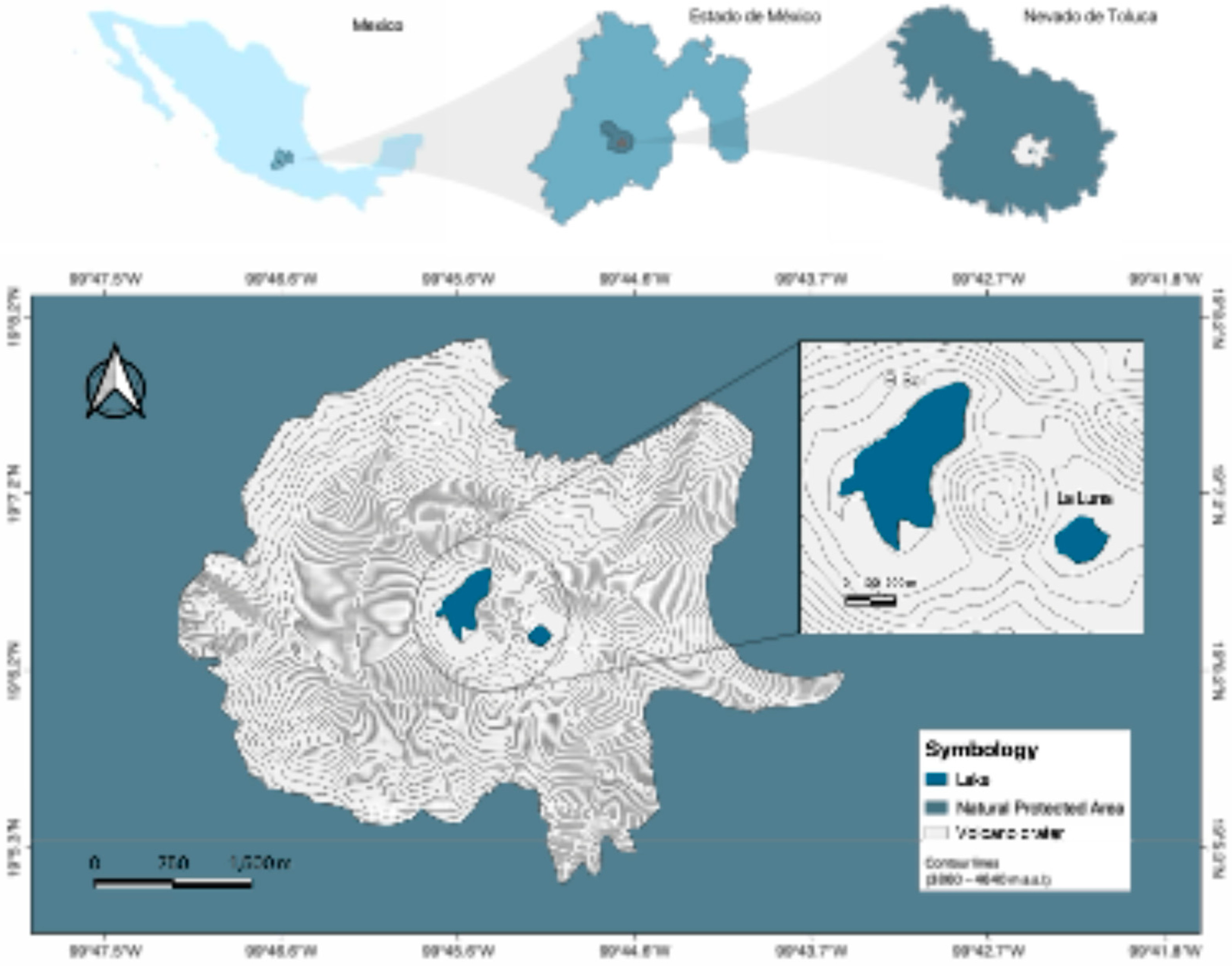
High-mountain lakes (HMLs) El Sol and La Luna are located 600 m apart in the crater of the Nevado de Toluca volcano, yet they display distinct differences in their morphometry and limnology. This study aimed to compare the zooplankton communities in these two lakes. El Sol harbored 31 zooplankton taxa, while La Luna had only 11. Notably, only four taxa were shared. The zooplankton abundance and biomass were lower than those in other tropical HMLs. La Luna’s zooplankton abundance was just 10% of El Sol’s, and its biomass was only 3%. Copepods dominated El Sol, while cladocerans dominated La Luna. The tropical seasonality (rainy and dry) was evident in meteorological and limnological variables but not in zooplankton; no seasonal patterns were observed in taxonomic richness, abundance, or biomass. No specific factors could explain the temporal dynamics in either lake. The extreme conditions in La Luna (e.g., lower pH and increased UV exposure) likely explained the differences between both lakes. The introduction of rainbow trout in El Sol during the 1950s may have also played a role.
Keywords: zooplankton; taxonomic richness; abundance; biomass; physical and chemical characteristics; El Sol and La Luna; Nevado de Toluca; Mexico zooplankton; taxonomic richness; abundance; biomass; physical and chemical characteristics; El Sol and La Luna; Nevado de Toluca; Mexico