
Titanium Dioxide Nanoparticles Are Toxic for the Freshwater Mussel Unio ravoisieri: Evidence from a Multimarker Approach
 , , ,
, , , 
Abstract
1. Introduction
- (i)
- Are TiO2 NPs harmful for the freshwater mussel Unio ravoisieri?
- (ii)
- If positive, how do the biomarkers in Unio ravoisieri tissues respond?
- (iii)
- What are the organs targeted by TiO2 NPs, and what are the thresholds of their toxicity?
2. Materials and Methods
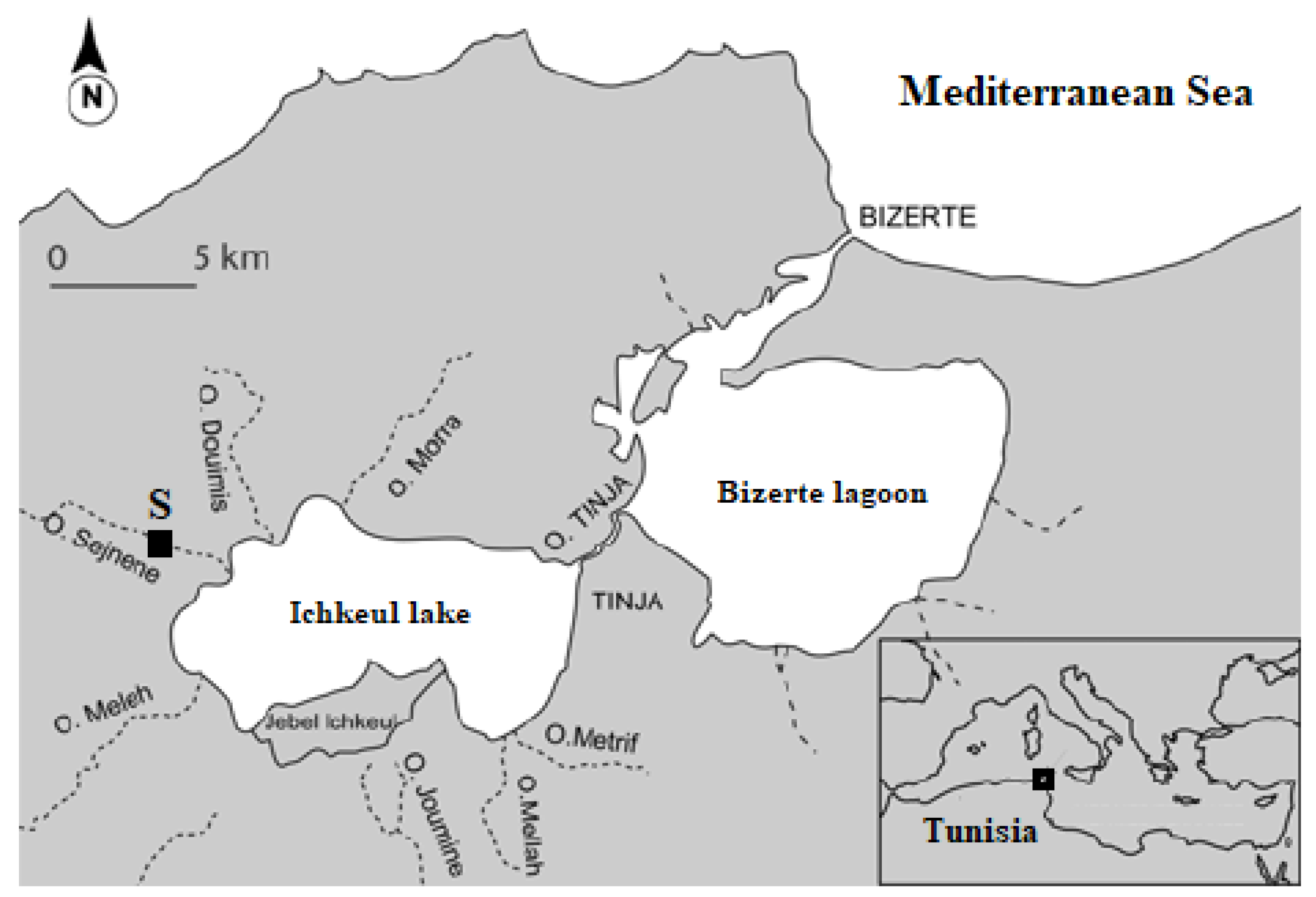
2.1. Sampling Area and Collection Site
2.2. Sampling and Laboratory Conditions
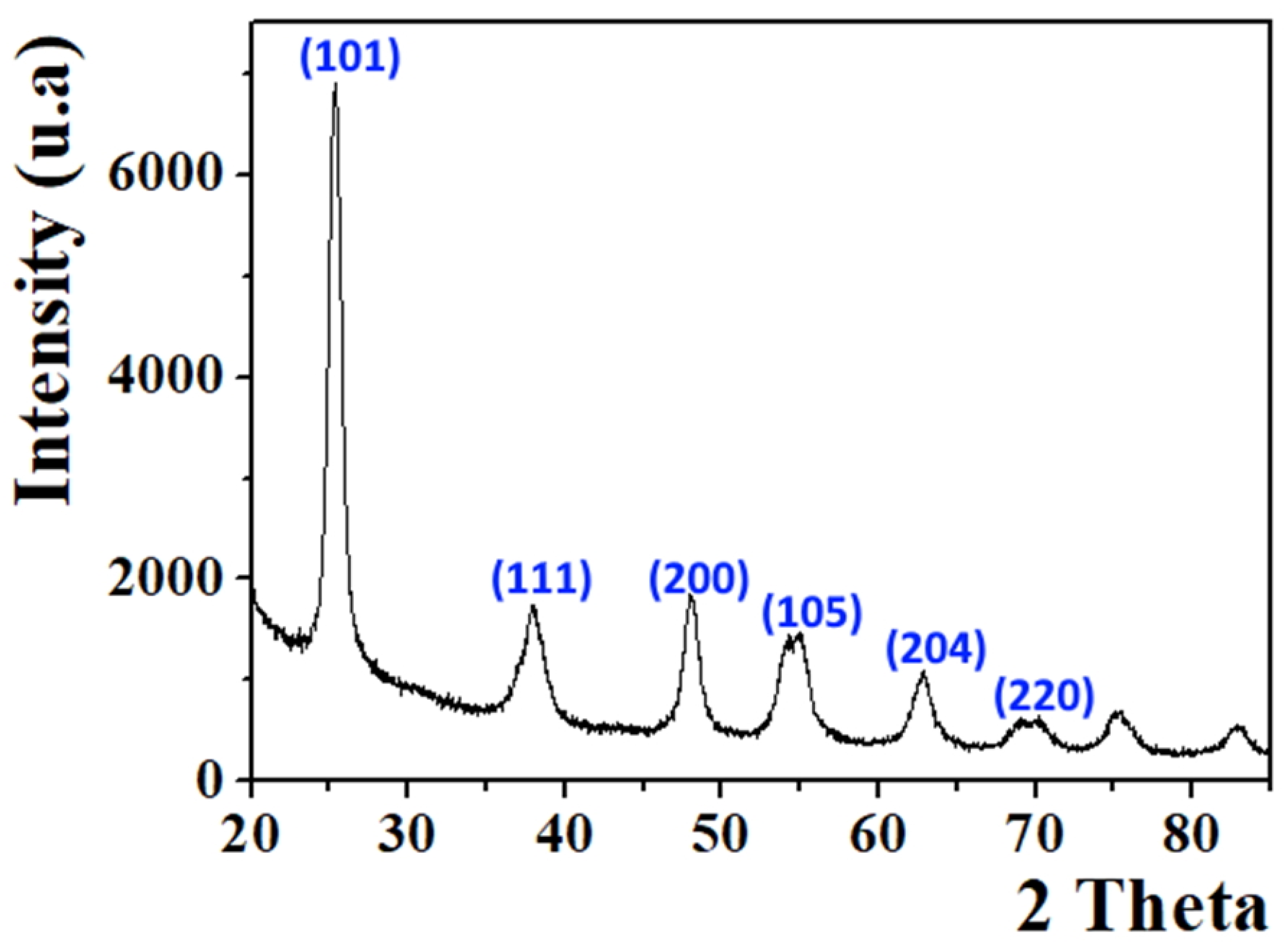
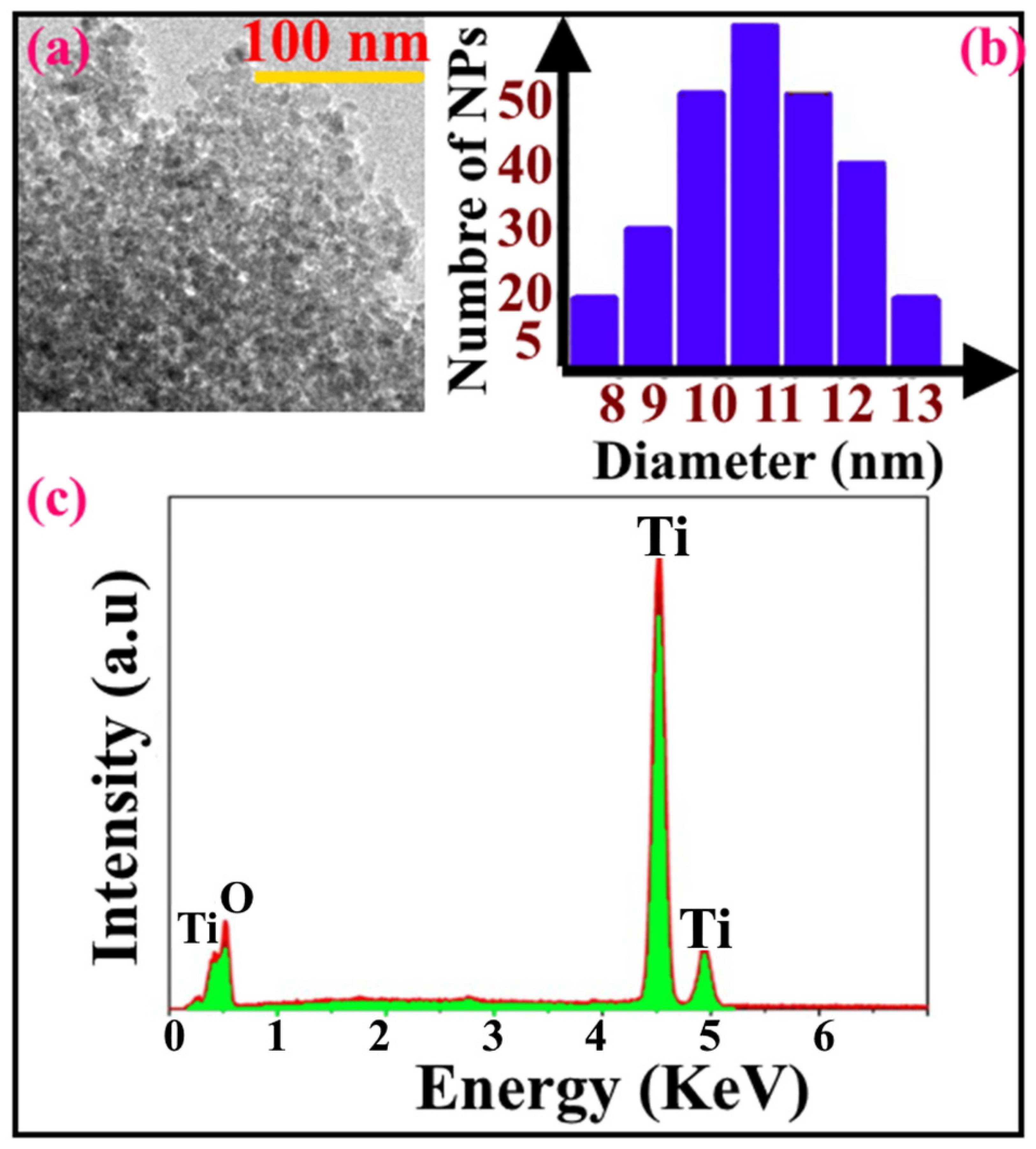
2.3. Synthesis, Structural, and Optical Characterizations and Assessing Concentrations of TiO2 Nanoparticles
2.4. Biochemical Analyses
2.5. Statistical Processing
3. Results
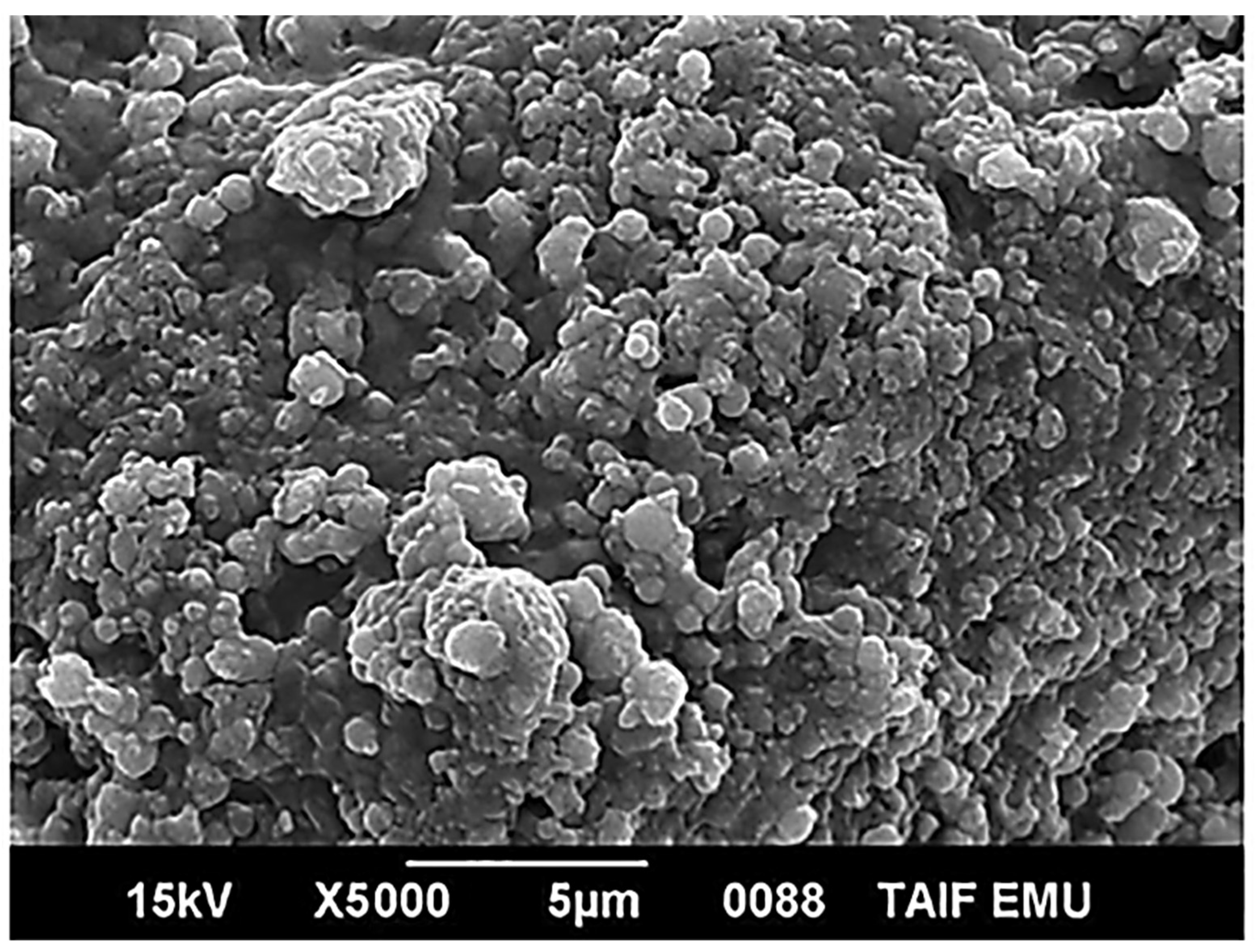
3.1. TiO2 nanoparticles Morphology
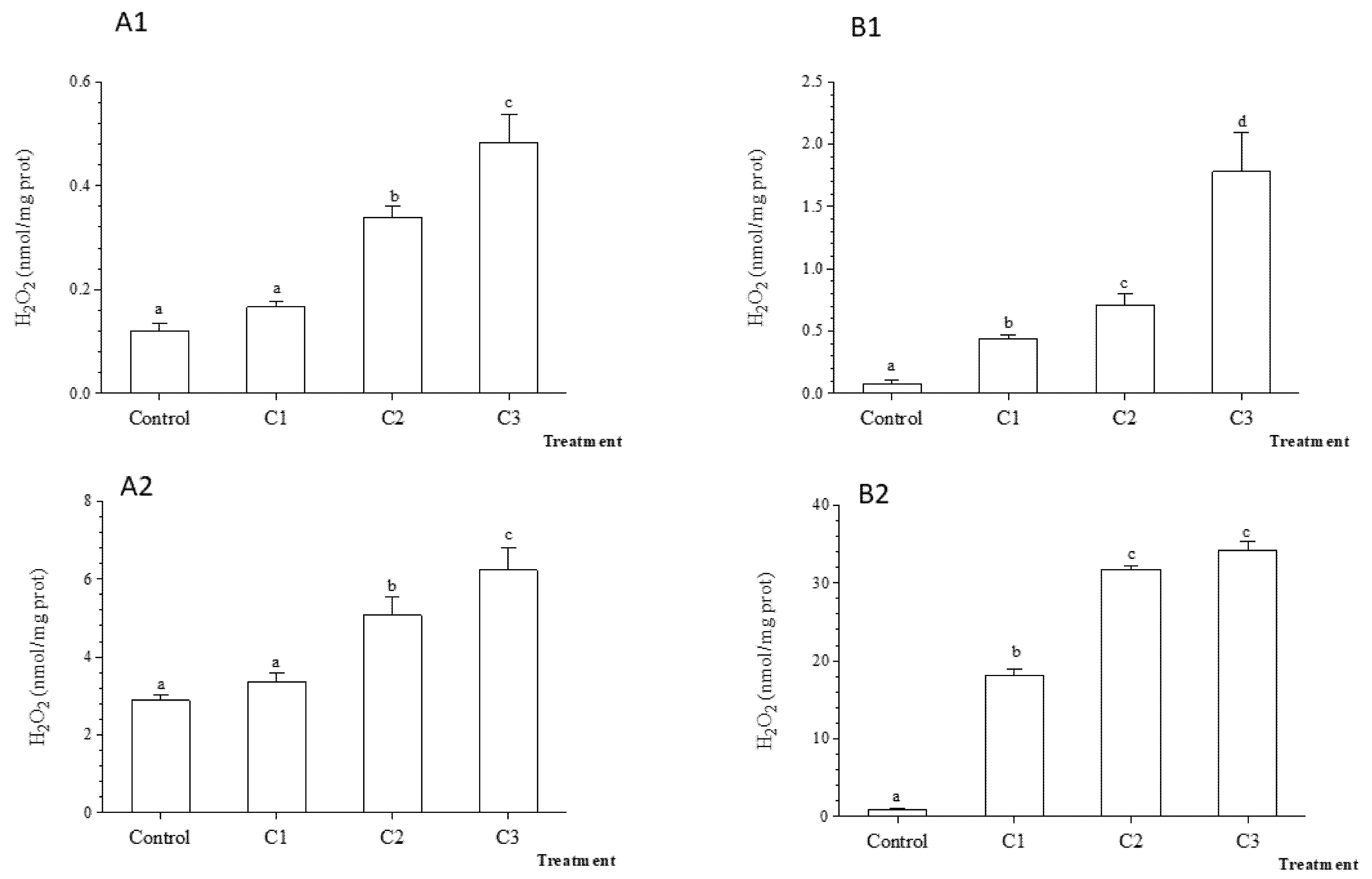
3.2. Hydrogen Peroxide (H2O2) Content
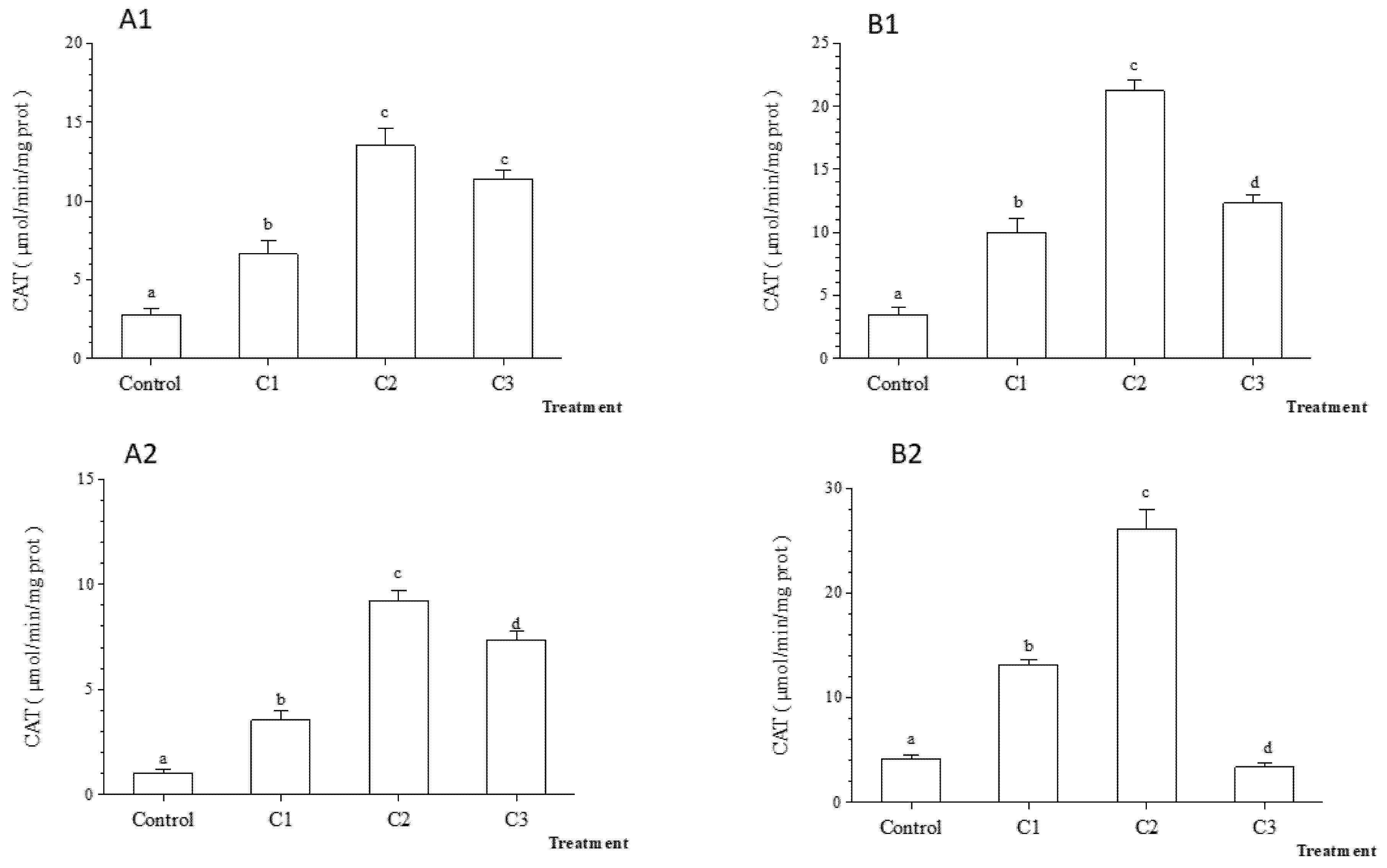
3.3. Catalase (CAT) Activity
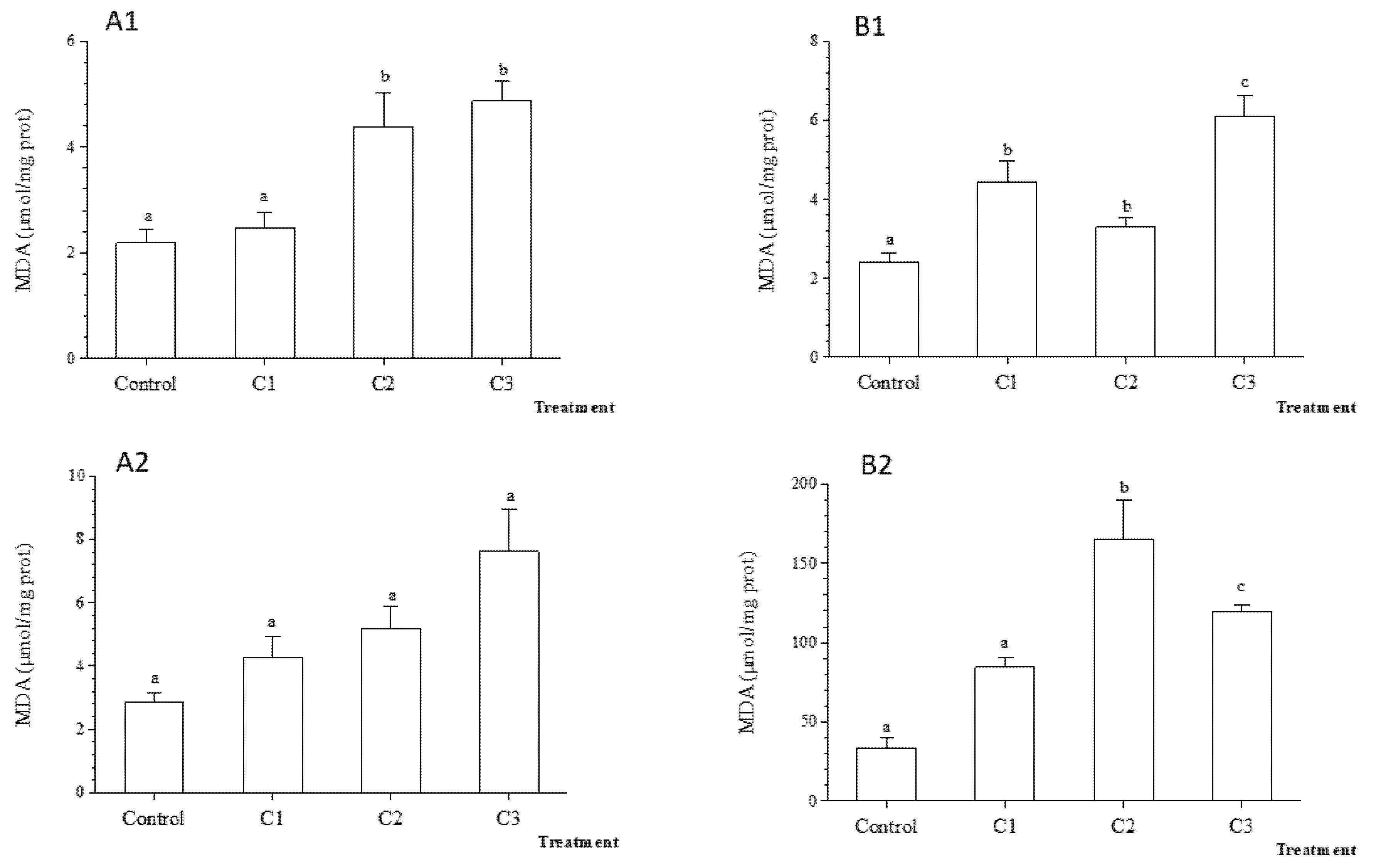
3.4. Malonedialdehyde (MDA) Content
4. Discussion
5. Conclusions
Author Contributions
Funding
Institutional Review Board Statement
Informed Consent Statement
Data Availability Statement
Conflicts of Interest
References
- Zaoui, M.; Sellami, B.; Boufahja, F.; Falodah, F.; Nahdi, S.; Alrezaki, A.; Alwasel, S.; Harrath, A.H. Effects of ferroelectric oxides of barium strontium titanate (Ba0.85Sr0.15TiO3) nanoparticles on Ruditapes decussatus assessed through chemical, physiological, and biochemical methods. Chemosphere 2021, 265, 129078. [Google Scholar] [CrossRef] [Scilit]
- Handy, R.D.; Owen, R.; Valsami-Jones, E. The ecotoxicology of nanoparticles and nanomaterials: Current status, knowledge gaps, challenges, and future needs. Ecotoxicologial 2008, 17, 315–325. [Google Scholar] [CrossRef] [Scilit] [PubMed]
- Haq, S.; Abbasi, F.; Ben Ali, M.; Hedfi, A.; Mezni, A.; Rehman, W.; Waseem, M.; Khan, A.R.; Shaheen, H. Green synthesis of cobalt oxide nanoparticles and the effect of annealing temperature on their physiochemical and biological properties. Mater. Res. Express. 2021, 8, 075009. [Google Scholar] [CrossRef] [Scilit]
- Haq, S.; Dildar, S.; Ben Ali, M.; Mezni, A.; Hedfi, A.; Imran Shahzad, M.; Shahzad, N.; Shah, A. Antimicrobial and antioxidant properties of biosynthesized of NiO nanoparticles using Raphanus sativus (R. sativus) extract. Mater. Res. Express. 2021, 8, 055006. [Google Scholar] [CrossRef] [Scilit]
- Delay, M.; Frimmel, F. Nanoparticles in aquatic systems. Anal. Bioanal. Chem. 2012, 402, 583–592. [Google Scholar] [CrossRef] [Scilit]
- Shah, A.; Tauseef, I.; Ben Ali, M.; Arfat Yameen, M.; Mezni, A.; Hedfi, A.; Haleem, K.S.; Haq, S. In-Vitro and In-Vivo Tolerance and Therapeutic Investigations of Phyto-Fabricated Iron Oxide Nanoparticles against Selected Pathogens. Toxics 2021, 9, 105. [Google Scholar] [CrossRef] [Scilit] [PubMed]
- Amiard-Triquet, C.; Amiard, J.C.; Mouneyrac, C. Aquatic Ecotoxicology Advancing Tools for Dealing with Emerging Risks; Elsevier: Boston, MA, USA, 2015; pp. 53–171. [Google Scholar]
- Bour, A.; Mouchet, F.; Cadarsi, S.; Silvestre, J.; Verneuil, L.; Baqué, D.; Chauvet, E.; Bonzom, J.M.; Pagnout, C.; Clivot, H.; et al. Toxicity of CeO2 nanoparticles on a freshwater experimental trophic chain A study in environmentally relevant conditions through the use of mesocosms. Nanotoxicology 2016, 10, 244–255. [Google Scholar]
- Melvin, S.D. Oxidative stress energy storage and swimming performance of Limnodynastes peronii tadpoles exposed to a sublethal pharmaceutical mixture throughout development. Chemosphere 2016, 150, 790–797. [Google Scholar] [CrossRef] [Scilit]
- Rittschof, D.; McClellan Green, P. Molluscs as multidisciplinary models in environment toxicology. Mar. Pollut. Bull. 2005, 50, 369–373. [Google Scholar] [CrossRef] [Scilit]
- Dellali, M.; Khallouli, A.; Harrath, A.H.; Falodah, F.; Alwasel, S.; Beyrem, H.; Gyedu-Ababio, T.; Rohal-Lupher, M.; Boufahja, F. Effects of Au/TiO2 metallic nanoparticles on Unio ravoisieri: Assessment through an oxidative stress and toxicity biomarkers. Environ. Sci. Pollut. Res. 2021, 28, 18176–18185. [Google Scholar] [CrossRef] [Scilit]
- Dellali, M.; Hedfi, A.; Ben Ali, M.; Noureldeen, A.; Darwish, H.; Beyrem, H.; Gyedu-Ababio, T.; Dervishi, A.; Karachle, P.K.; Boufahja, F. Multi-biomarker approach in Mytilus galloprovincialis and Ruditapes decussatus as a predictor of pelago-benthic responses after exposure to Benzo[a]Pyrene. Comp. Biochem. Physiol. C. Toxicol. Pharmacol. 2021, 249, 109141. [Google Scholar] [CrossRef] [Scilit]
- Van der Oost, R.; Beyer, J.; Vermeulen, N.P.E. Fish bioaccumulation and biomarkers in environmental risk assessment a review. Environ. Toxicol. Pharmacol. 2003, 13, 57–149. [Google Scholar] [CrossRef] [Scilit]
- Gottschalk, F.; Sonderer, T.; Scholz, R.W.; Nowack, B. Modeled environmental concentrations of engineered nanomaterials (TiO2, ZnO, Ag, CNT, fullerenes) for different regions. Environ. Sci. Technol. 2009, 43, 9216–9222. [Google Scholar] [CrossRef] [Scilit] [PubMed]
- Luo, Z.; Wang, Z.; Li, Q.; Pan, Q.; Yan, C.; Liu, F. Spatial distribution, electron microscopy analysis of gtitanium and its correlation to heavy metals: Occurrence and sources of titanium nanomaterials in surface sediments from Xiam en Bay, China. J. Environ. Monit. 2011, 13, 1046–1052. [Google Scholar] [CrossRef] [Scilit]
- Lopes-Lima, M.; Sousa, R.; Geist, J.; Aldridge, D.C.; Araujo, R.; Bergengren, J.; Bespalaya, Y.; Bódis, E.; Burlakova, L.; van Damme, D.; et al. Conservation status of freshwater mussels in Europe: State of the art and future challenges. Biolol. Rev. 2017, 92, 572–607. [Google Scholar] [CrossRef] [Scilit] [PubMed]
- Khalloufi, N.; Toledo, C.; Machordom, A.; Boumaïza, M.; Araujo, R. The unionids of Tunisia: Taxonomy and phylogenetic relationships, with redescription of Unio ravoisieri Deshayes, 1847 and U. durieui Deshayes, 1847. J. Mollu. Stud. 2011, 77, 103–115. [Google Scholar] [CrossRef] [Scilit]
- Khalloufi, N.; Boumaıza, M. Premiere note sur la présence d’Anodonta cygnea (Linnaeus, 1758) (Mollusca, Bivalva, Unionidae) en Tunisie. Zool. Baeti. 2005, 16, 21–29. (In French) [Google Scholar]
- Nakamura, K.; Cañete, J.; Vijuesca, D.; Guillén, N.; Sosa, C.; Sosa, C.; Mesquita-Joanes, F.; Sousa, R.; Ginés, E.; Sorribas, V. Sensitivity of Pseudunio auricularius to metals and ammonia: First evaluation. Hydrobiologia 2021, 848, 2977–2992. [Google Scholar] [CrossRef] [Scilit]
- Mezni, A.; Alghool, S.; Sellami, B.; Ben Saber, N.; Altalhi, T. Titanium dioxide nanoparticles: Synthesis, characterisations and aquatic ecotoxicity effects. Chem. Ecol. 2018, 34, 288–299. [Google Scholar] [CrossRef] [Scilit]
- Keller, A.A.; Wang, H.; Zhou, D.; Lenihan, H.S.; Cherr, G.; Cardinale, B.J.; Miller, R.; Ji, Z. Stability and aggregation of metal oxide nanoparticles in natural aqueous matrices. Environ. Sci. Technol. 2010, 44, 1962–1967. [Google Scholar] [CrossRef] [Scilit]
- Della Torre, C.; Balbi, T.; Grassi, G.; Frenzilli, G.; Bernardeschi, M.; Smerilli, A.; Guidi, P.; Canesi, L.; Nigro, M.; Monaci, F.; et al. Titanium dioxide nanoparticles modulate the toxicological response to cadmium in the gills of Mytilus galloprovincialis. J. Hazard. Mat. 2015, 297, 92–100. [Google Scholar] [CrossRef] [Scilit]
- Bradford, M.M. A rapid and sensitive method for the quantification of microgram quantities of protein utilizing the principle of proteindye binding. Anal. Biochem. 1976, 72, 248–254. [Google Scholar] [CrossRef]
- Aebi, H. Catalase in vitro. Meth. Enzymol. 1984, 105, 121–126. [Google Scholar]
- Beutler, E. Red Cell Metabolism: A Manual Biochemical Methods, 2nd ed.; Grune and Sraton: New York, NY, USA, 1975; p. 160. [Google Scholar]
- Ellman, G.L.; Courtney, K.D.; Andres, V.; Featherstone, R.M. A new and rapid colorimetric determination of acetylcholinesterase activity. Biochem. Pharmacol. 1961, 7, 88–95. [Google Scholar] [CrossRef] [Scilit]
- Gelover, S. Titanium dioxide sol–gel deposited over glass and its application as a photocatalyst for water decontamination. J. Photochem. Photobiol. 2004, 165, 241–246. [Google Scholar] [CrossRef] [Scilit]
- Simonet, B.M.; Valcárcel, M. Monitoring nanoparticles in the environment. Anal. Bioanal. Chem. 2009, 393, 17–21. [Google Scholar] [CrossRef] [Scilit]
- Shi, H. Titanium dioxide nanoparticles: A review of current toxicological data. Part. Fibre. Toxicol. 2013, 10, 1–33. [Google Scholar] [CrossRef] [Scilit]
- Hossain, F. Antimicrobial nanomaterials as water disinfectant applications, limitation and future perspectives. Sci. Total. Environ. 2014, 466, 1047–1059. [Google Scholar] [CrossRef] [Scilit]
- Karakoti, A.S.; Hench, L.L.; Seal, S. The potential toxicity of nanomaterials—The role of surfaces. Jom 2006, 58, 77–82. [Google Scholar] [CrossRef] [Scilit]
- Karlsson, H.L.; Gustafsson, J.; Cronholm, P.; Möller, L. Size-dependent toxicity of metal oxide particles-A comparison between nano- and micrometer size. Toxicol. Lett. 2009, 188, 112–118. [Google Scholar] [CrossRef] [Scilit]
- Sukhanova, A.; Bozrova, S.; Sokolov, P.; Berestovoy, M.; Karaulov, A.; Nabiev, I. Dependence of Nanoparticle Toxicity on Their Physical and Chemical Properties. Nanos. Res. Lett. 2018, 13, 1–21. [Google Scholar] [CrossRef] [Scilit]
- Van Hassel, J.H.; Farris, J.L. A Review of the Use of Unionid Mussels as Biological Indicators of Ecosystem Health in Freshwater Bivalve Ecotoxicology; CRC Press: Boca Raton, FL, USA, 2007; pp. 19–49. [Google Scholar]
- Frank, H.; Gerstmann, S. Declining populations of freshwater pearlmussels (Margaritifera margaritifera) are burdened with heavy metals and DDT/DDE. AMBIO J. Hum. Environ. 2007, 36, 571–574. [Google Scholar]
- Cope, W.G.; Bringolf, R.B.; Buchwalter, D.B.; Newton, T.J.; Ingersoll, C.G.; Wang, N.; Augspurger, T.; Dwyer, F.J.; Barnhart, M.C.; Neves, R.J.; et al. Differential exposure, duration, and sensitivity of unionoidean bivalve life stages to environmental contaminants. J. N. Am. Bentholo. Soc. 2008, 27, 451–462. [Google Scholar] [CrossRef] [Scilit]
- De Castro-Català, N.; Kuzmanovic, M.; Roig, N.; Sierra, J.; Ginebreda, A.; Barceló, D.; Pérez, S.; Petrovic, M.; Picó, Y.; Schuhmacher, M.; et al. Ecotoxcity of sediments in rivers: Invertebrate community, toxicity bioassays and the toxic unit approach as complementary assessment tools. Sci. Tot. Environ. 2016, 540, 297–306. [Google Scholar] [CrossRef] [Scilit]
- Baudrimont, M.; Gonzalez, P.; Mesmer-Dudons, N.; Legeay, A. Sensitivity to cadmium of the endangered freshwater pearl mussel Margaritifera margaritifera from the Dronne River (France): Experimental exposure. Environ. Sci. Pollu. Res. 2020, 27, 3715–3725. [Google Scholar] [CrossRef] [Scilit]
- Viarengo, A.; Canesi, L. Mussels as biological indicators of pollution. Aquaculture 1991, 94, 225–243. [Google Scholar] [CrossRef] [Scilit]
- Dellali, M.; Gnassia Barelli, M.; Roméo, M.; Aissa, P. The use of acetylcholinesterase activity in Ruditapes decussatus and Mytilus galloprovincialis in the biomonitoring of Bizerta lagoon. Comp. Biochem. Physiol. C. 2001, 130, 227–235. [Google Scholar] [CrossRef] [Scilit]
- Garmendia, L.; Soto, M.; Ortiz Zarragoitia, M.; Orbea, A.; Cajaraville, M.P.; Marigómez, I. Application of a battery of biomarkers in mussel digestive gland to assess long-term effects of the prestige oil spill in Galicia and Bay of Biscay: Correlation and multivariate analysis. J. Environ. Monit. 2011, 13, 933–942. [Google Scholar] [CrossRef] [Scilit]
- Costa, P.M.; Carreira, S.; Costa, M.H.; Caeiro, S. Development of histopathological indices in a commercial marine bivalve (Ruditapes decussatus) to determine environmental quality. Aquat. Toxicol. 2013, 126, 442–454. [Google Scholar] [CrossRef] [Scilit]
- Carella, F.; Feist, S.W.; Bignell, J.P.; de Vico, G. Comparative pathology in bivalves: Aetiological agents and disease processes. J. Invertebr. Pathol. 2015, 131, 107–120. [Google Scholar] [CrossRef] [Scilit]
- Khessiba, A.; Hoarau, P.; Gnassia-Barelli, M.; Aissa, P.; Roméo, M. Biochemical response of the mussel Mytilus galloprovincialis from Bizerta (Tunisia) to chemical pollutant exposure. Arch. Environ. Contam. Toxicol. 2001, 40, 222–229. [Google Scholar] [CrossRef] [Scilit]
- Canesi, L. Interactive effects of n-TiO2 and 2,3,7,8-TCDD on the marine bivalve Mytilus galloprovincialis. Aqua. Toxicol. 2014, 153, 53–65. [Google Scholar] [CrossRef] [Scilit]
- RMP Annual Results 2003: Bivalve Bioaccumulation Monitoring Results; San Francisco Estuary Regional Monitoring Program: Richmond, CA, USA, 2003.
- Villela, I.V. DNA damage and repair in haemolymph cells of golden mussel (Limnoperna fortune) exposed to environmental contaminants. Mutat. Res. 2006, 605, 78–86. [Google Scholar] [CrossRef] [Scilit]
- Alazemi, B.M.; Lewis, J.W.; Andrews, E.B. Gill damage in the freshwater fish Gnathonemus ptersii (Family: Mormyridae) exposed to selected pollutants: An ultra structural study. Environ. Technol. 1996, 17, 225–238. [Google Scholar] [CrossRef] [Scilit]
- Barmo, C. In vivo effects of n-TiO2 on digestive gland and immunefunction of the marine bivalve Mytilus galloprovincialis. Aquat. Toxicol. 2013, 132, 133–918. [Google Scholar]
- Libralato, G. Embryotoxicity of TiO2 nanoparticles to Mytilus galloprovincialis (Lmk). Mar. Environ. Res. 2013, 92, 71–78. [Google Scholar] [CrossRef] [Scilit] [PubMed]
- Wang, Y.; Hu, M.; Li, Q.; Li, J.; Lin, D.; Lu, W. Immune toxicity of TiO2 under hypoxia in the green lippedmussel Perna viridis based on flow cytometric analysis of hemocyteparameters. Sci. Total. Environ. 2014, 470, 791–799. [Google Scholar] [CrossRef] [Scilit] [PubMed]
- Lapresta-Fernández, A.; Fernández, A.; Blasco, J. Nanoecotoxicity effects of engineered silver and gold nanoparticles in aquatic organisms. TrAC Trend. Anal. Chem. 2012, 32, 40–59. [Google Scholar] [CrossRef] [Scilit]
- Bhuvaneshwaria, M.; Iswaryaa, V.; Archanaab, S.; Madhuc, G.M.; Suraish Kumarb, G.K.; Nagarajand, R.; Chandrasekarana, N. Cytotoxicity of ZnO NPs towards fresh water algae Scenedesmus obliquus at low exposure concentrations in UV-C, visible and dark conditions. Aqua. Toxicol. 2015, 162, 29–38. [Google Scholar] [CrossRef] [Scilit]
- Klaine, S.J.; Alvarez, P.J.; Batley, G.E.; Fernandes, T.F.; Handy, R.D.; Lyon, D.Y.; Mahendra, S.; McLaughlin, M.J.; Lead, J.R. Nanomaterials in the environment: Behavior, fate, bioavailability, and effects. Environ. Toxicol. Chem. 2008, 27, 1825–1851. [Google Scholar] [CrossRef] [Scilit]
- Xiong, D.; Fang, T.; Yu, L.; Sima, X.; Zhu, W. Effects of nano-scale TiO2, ZnO and their bulk counterparts on zebrafish acute toxicity oxidative stress and oxidative damage. Sci. Tota. Environ. 2011, 409, 1444–1452. [Google Scholar] [CrossRef] [Scilit]
- Faria, M.; Navas, J.M.; Raldua, D.; Soares, A.M.; Barata, C. Oxidative stress effects of titanium dioxide nanoparticle aggregates in zebrafish embryos. Sci. Total. Environ. 2014, 470, 379–389. [Google Scholar] [CrossRef] [Scilit] [PubMed]
- Sadiq, I.M.; Dalai, S.; Chandrasekaran, N.; Mukherjee, A. Ecotoxicity study of titania (TiO2) NPs on two microalgae species: Scenedesmus sp. and Chlorella sp. Ecotoxicol. Environ. Saf. 2011, 74, 1180–1187. [Google Scholar] [CrossRef] [Scilit] [PubMed]
- Kumar, A.; Pandey, A.K.; Singh, S.S.; Shanker, R.; Dhawan, A. Engineered ZnO and TiO2 nanoparticles induce oxidative stress and DNA damage leading to reduced viability of Escherichia coli. Free. Radical. Bio. Med. 2011, 51, 1872–1881. [Google Scholar] [CrossRef] [Scilit]
- Zhu, X.; Zhou, J.; Cai, Z. TiO2 nanoparticles in the marine environment: Impact on the toxicity of tributyltin to abalone (Haliotis diversicolor supertexta) embryos. Environ. Sci. Technol. 2011, 45, 3753–3758. [Google Scholar] [CrossRef] [Scilit] [PubMed]
- Valko, M.; Morris, H.; Cronin, M.T.D. Metals, toxicity and oxidative stress. Curr. Med. Chem. 2005, 12, 1161–1208. [Google Scholar] [CrossRef] [Scilit]
- Liu, J.; Fan, D.; Wang, L.; Shi, L.; Ding, J.; Chen, Y.; Shen, S. Effects of ZnO, CuO, Au, and TiO2 nanoparticles on Daphnia magna and early life stages of zebrafish Danio rerio. Environ. Prot. Eng. 2014, 40, 139–149. [Google Scholar]
- Mohanty, D.; Samanta, L. Multivariate analysis of potential biomarkers of oxidative stress in Notopterus notopterus tissues from Mahanadi River as a function of concentration of heavy metals. Chemosphere 2016, 155, 28–38. [Google Scholar] [CrossRef] [Scilit] [PubMed]
- Hermes Lima, M. Oxygen in biology and biochemistry: Role of free radicals. In Functional Metabolism: Regulation and Adaptation; Storey, K.B., Ed.; Wiley-Liss: Hoboken, NJ, USA, 2005; pp. 319–368. [Google Scholar]
- Girardello, F.; Leite, C.C.; Branco, C.S.; Roesch-Ely, M.; Fernandes, A.N.; Salvador, M.; Henriques, J.A.P. Antioxidant defences and haemocyte internalization in Limnoperna fortunei exposed to TiO2 nanoparticles. Aqua. Toxicol. 2016, 176, 190–196. [Google Scholar] [CrossRef] [Scilit]
- Buffet, P.E.; Amiard Triquet, C.; Dybowska, A.; Risso de Faverney, C.; Guibboli ni, M.; Valsami-Jones, E.; Mouneyrac, C. Fate of isotopically labeled zinc oxide nanoparticles in sediment and effects on two endobenthic species, the clam Scrobicularia plana and the ragworm Hediste diversicolor. Ecotoxicol. Environ. Saf. 2012, 84, 191–198. [Google Scholar] [CrossRef] [Scilit] [PubMed]
- Gagné, F.; Turcotte, P.; Auclair, J.; Gagnon, C. The effects of zinc oxide nanoparticles on the metallome in freshwater mussels. Comp. Biochem. Physiol. 2013, 158, 22–28. [Google Scholar] [CrossRef] [Scilit]
- Renault, S.; Baudrimont, M.; Mesmer Dudons, N.; Gonzalez, P.; Mornet, S.; Brisson, A. Impacts of gold nanoparticle exposure on two freshwater species: A phytoplanktonic alga (Scenedesmus subspicatus) and a benthic bivalve (Corbicula fluminea). Gold. Bull. 2008, 41, 116–126. [Google Scholar] [CrossRef] [Scilit]
- Pan, J.F.; Buffet, P.E.; Poirier, L.; Amiard Triquet, C.; Gilliland, D.; Joubert, Y.; Pilet, P.; Guibbolini, M.; Risso de Faverney, C.; Roméo, M.; et al. Size dependent bioaccumulation and ecotoxicity of gold nanoparticles in an endobenthic invertebrate: The Tellinid clam Scrobicularia plana. Environ. Pollut. 2012, 168, 37–43. [Google Scholar] [CrossRef] [Scilit]
- Ali, D.; Alarifi, S.; Kumar, S.; Ahamed, M.; Siddiqui, M.A. Oxidative stress and genotoxic effect of zinc oxide nanoparticles in freshwater snail Lymnaea luteola. Aqua. Toxicol. 2012, 124, 83–90. [Google Scholar] [CrossRef] [Scilit]
- Basha, P.S.; Rani, A.U. Cadmium-induced antioxidant defense mechanism in freshwater teleost Oreo Chromismoss ambicus (Tilapia). Ecotoxicol. Environ. Saf. 2003, 56, 218–221. [Google Scholar] [CrossRef] [Scilit]
- Ringwood, A.H.; Levi Polyachenko, N.; Carroll, D.L. Fullerene exposures with oysters: Embryonic, adult, and cellular responses. Environ. Sci. Technol. 2009, 43, 7136–7141. [Google Scholar] [CrossRef] [Scilit]
- Zhang, H.; He, X.; Zhang, Z.; Zhang, P.; Li, Y.; Ma, Y.; Kuang, Y.; Zhao, Y.; Chai, Z. Nano-CeO2 exhibits adverse effects at environmental relevant concentrations. Environ. Sci. Technol. 2011, 45, 3725–3730. [Google Scholar] [CrossRef] [Scilit] [PubMed]
- McCarthy, M.P.; Carroll, D.L.; Ringwood, A.H. Tissue specific responses of oysters Crassostrea virginica, to silver nanoparticles. Aquat. Toxicol. 2013, 138, 123–128. [Google Scholar] [CrossRef] [Scilit]
- Gomes, T.N.; Pinheiro, J.P.; Cancio, I.; Pereira, C.G.; Cardoso, C.; Bebianno, M.J.O. Effects of copper nanoparticles exposure in the mussel Mytilus galloprovincialis. Environ. Sci. Technol. 2011, 45, 9356–9362. [Google Scholar] [CrossRef] [Scilit] [PubMed]
- Gomes, T.; Pereira, C.G.; Cardoso, C.; Pinheiro, J.P.; Cancio, I.; Bebianno, M.J. Accumulation and toxicity of copper oxide nanoparticles in the digestive gland of Mytilus galloprovincialis. Aquat. Toxicol. 2012, 118, 72–79. [Google Scholar] [CrossRef] [Scilit] [PubMed]
- Blickley, T.M.; Matson, C.W.; Vreeland, W.N.; Rittschof, D.; Giulio, R.T.D.; McClellan Green, P.D. Dietary CdSe/ZnS quantum dot exposure in estuarine fish: Bioavailability, oxidative stress responses, reproduction, and maternal transfer. Aqua. Toxicol. 2014, 148, 27–39. [Google Scholar] [CrossRef] [Scilit]
- Gomez Olivan, L.M.; Neri Cruz, N.; Galar Martínez, M.; Islas Flores, H.; García Medina, S. Binary mixtures of diclofenac with paracetamol, ibuprofen, naproxen, and acetylsalicylic acid and these pharmaceuticals in isolated form induce oxidative stress on Hyalella azteca. Environ. Monit. Assess. 2014, 186, 7259–7271. [Google Scholar] [CrossRef] [Scilit]
- Sayeed, I.; Parvez, S.; Pandey, S.; Bin Hafeez, B.; Haque, R.; Raisuddin, S. Oxidative stress biomarkers of exposure to deltamethrin in freshwater fish, Channa punctatus Bloch. Ecotoxicol. Environ. Saf. 2003, 56, 295–301. [Google Scholar] [CrossRef] [Scilit]
- Khazri, A.; Sellami, B.; Dellali, M.; Corcellas, C.; Eljarrat, E.; Barceló, D.; Mahmoudi, E. Acute toxicity of cypermethrin on the freshwater mussel Unio gibbus. Ecotoxicol. Environ. Saf. 2015, 115, 6266. [Google Scholar] [CrossRef] [Scilit]
- Giarratano, E.; Gil, M.N.; Malanga, G. Biomarkers of environmental stress in gills of ribbed mussel Aulacomya atra atra (Nuevo Gulf, Northern Patagonia). Ecotoxicol. Environ. Saf. 2014, 107, 111–119. [Google Scholar] [CrossRef] [Scilit]
- Cid, A.; Picado, A.; Correia, J.B.; Chaves, R.; Silva, H.; Caldeira, J.; de Matos, A.P.; Diniz, M.S. Oxidative stress and histological changes following exposure to diamond nanoparticles in the freshwater Asian clam Corbicula fluminea (Muller, 1774). J. Hazard. Mater. 2015, 284, 27–34. [Google Scholar] [CrossRef] [Scilit]
- Hao, L.; Chen, L. Oxidative stress responses in different organs of carp (Cyprinus carpio) with exposure to ZnO nanoparticles. Ecotoxicol. Environ. Saf. 2012, 80, 103–110. [Google Scholar] [CrossRef] [Scilit]
- Xia, B.; Zhu, L.; Han, Q.; Sun, X.; Chen, B.; Qu, K. Effects of TiO2 nanoparticles at predicted environmental relevant concentration on the marine scallop Chlamys farreri: An integrated biomarker approach. Environ. Toxicol. Pharmacol. 2017, 50, 128–135. [Google Scholar] [CrossRef] [Scilit]
- Fulton, M.H.; Key, P.B. Acetylcholinesterase inhibition in estuarine fish and invertebrates as an indicator of organophosphorus insecticide exposure and effects. Environ. Toxicol. Chem. 2001, 20, 37–45. [Google Scholar] [CrossRef]
- Periasamy, A.P.; Umasankar, Y.; Chen, S.M. Nanomaterials-Acetylcholinesterase Enzyme Matrices for Organophosphorus Pesticides Electrochemical Sensors: A Review. Sensors 2009, 9, 4034–4055. [Google Scholar] [CrossRef] [Scilit]
- Hu, Y.L.; Gao, J.Q. Potential neurotoxicity of nanoparticles. Int. J. Pharm. 2010, 394, 115–121. [Google Scholar] [CrossRef] [Scilit]
- Czajka, M.; Sawicki, K.; Sikorska, K.; Popek, S.; Kruszewski, M.; Kapka Skrzypczak, L. Toxicity of titanium dioxide nanoparticles in central nervous system. Toxicol. Vitro. 2015, 29, 1042–1052. [Google Scholar] [CrossRef] [Scilit]
- Minetto, D.; Volpi, G.A.; Libralato, G. Saltwater ecotoxicology of Ag, Au, CuO, TiO2, ZnO and C60 engineered. nanoparticles: An overview. Environ. Internat. 2016, 9293, 189–201. [Google Scholar] [CrossRef] [Scilit]
- Bebianno, M.J.; Geret, F.; Hoarau, P.; Serafim, M.A.; Coelho, M.R.; Gnassia Barelli, M.; Romeo, M. Biomarkers in Ruditapes decussatus: A potential bioindicator species. Biomark 2004, 9, 305–330. [Google Scholar] [CrossRef] [Scilit]
- Katuli, K.K.; Massarsky, A.; Hadadi, A.; Pourmehran, Z. Silver nanoparticles inhibit the gill Na+/K+-ATPase and erythrocyte AChE activities and induce the stress response in adult zebrafish Danio rerio. Ecotoxicol. Environ. Saf. 2014, 106, 173–180. [Google Scholar] [CrossRef] [Scilit]
- Schallreuter, K.U.; Gibbons, N.C.J.; Zothner, C.; Elwary, S.M.; Rokos, H.; Wood, J.M. Butyrylcholinesterase is present in the human epidermis and is regulated by H2O2: More evidence for oxidative stress in vitiligo. Biochem. Biophys. Res. Com. 2006, 349, 931–938. [Google Scholar] [CrossRef] [Scilit]
- Schallreuter, K.U.; Gibbons, N.C.J.; Elwary, S.M.; Parkin, S.M.; John, M.; Wood, J.M. Calcium–activated butyryl cholinesterase in human skin protects acetylcholinesterase against suicide inhibition by neurotoxic organophosphates. Biochem. Biophys. Res. Com. 2007, 355, 1069–1074. [Google Scholar] [CrossRef] [Scilit] [PubMed]
- Falfushynska, H.; Gnatyshyna, L.; Fedoruk, O.; Sokolova, I.M.; Stoliar, M. Endocrine activities and cellular stress responses in the marsh frog Pelophylax ridibundus exposed to cobalt, zinc and their organic nanocomplexes. Aquat. Toxicol. 2016, 170, 62–71. [Google Scholar] [CrossRef] [Scilit] [PubMed]





| Time Slots | T0 | 48 h | 7 Days |
|---|---|---|---|
| Ut | 0 | UD | UD |
| C1 | 10 (a) | 9.023 ± 0.011 (a) | 8.112 ± 0.048 (a) |
| C2 | 100 (b) | 92.571 ± 4.239 (b) | 90.280 ± 2.608 (b) |
| C3 | 1000 (c) | 876.706 ± 10.210 (c) | 843.249 ± 8.335 (c) |
Publisher’s Note: MDPI stays neutral with regard to jurisdictional claims in published maps and institutional affiliations. |
© 2021 by the authors. Licensee MDPI, Basel, Switzerland. This article is an open access article distributed under the terms and conditions of the Creative Commons Attribution (CC BY) license (https://creativecommons.org/licenses/by/4.0/).
Share and Cite
Smii, H.; Khazri, A.; Ben Ali, M.; Mezni, A.; Hedfi, A.; Albogami, B.; Almalki, M.; Pacioglu, O.; Beyrem, H.; Boufahja, F.; et al. Titanium Dioxide Nanoparticles Are Toxic for the Freshwater Mussel Unio ravoisieri: Evidence from a Multimarker Approach. Diversity 2021, 13, 679. https://doi.org/10.3390/d13120679
Smii H, Khazri A, Ben Ali M, Mezni A, Hedfi A, Albogami B, Almalki M, Pacioglu O, Beyrem H, Boufahja F, et al. Titanium Dioxide Nanoparticles Are Toxic for the Freshwater Mussel Unio ravoisieri: Evidence from a Multimarker Approach. Diversity. 2021; 13(12):679. https://doi.org/10.3390/d13120679
Chicago/Turabian StyleSmii, Hanen, Abdelhafidh Khazri, Manel Ben Ali, Amine Mezni, Amor Hedfi, Bander Albogami, Mohammed Almalki, Octavian Pacioglu, Hamouda Beyrem, Fehmi Boufahja, and et al. 2021. "Titanium Dioxide Nanoparticles Are Toxic for the Freshwater Mussel Unio ravoisieri: Evidence from a Multimarker Approach" Diversity 13, no. 12: 679. https://doi.org/10.3390/d13120679
APA StyleSmii, H., Khazri, A., Ben Ali, M., Mezni, A., Hedfi, A., Albogami, B., Almalki, M., Pacioglu, O., Beyrem, H., Boufahja, F., & Dellali, M. (2021). Titanium Dioxide Nanoparticles Are Toxic for the Freshwater Mussel Unio ravoisieri: Evidence from a Multimarker Approach. Diversity, 13(12), 679. https://doi.org/10.3390/d13120679