Short Note

2-Iodopyridin-3-yl acetate

1
“C. D. Neniţescu” Institute of Organic and Supramolecular Chemistry, Romanian Academy, 202 B Splaiul Independenţei, 060023 Bucharest, Romania
2
Department of Inorganic Polymers, Petru Poni Institute of Macromolecular Chemistry, Aleea Grigore Ghica Voda nr. 41A, 700487 Iasi, Romania
*
Authors to whom correspondence should be addressed.
Molbank 2026, 2026(1), M2135; https://doi.org/10.3390/M2135
Submission received: 19 January 2026 / Revised: 30 January 2026 / Accepted: 3 February 2026 / Published: 6 February 2026
(This article belongs to the Section Structure Determination)

Abstract

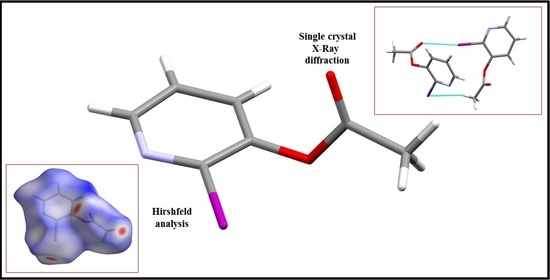
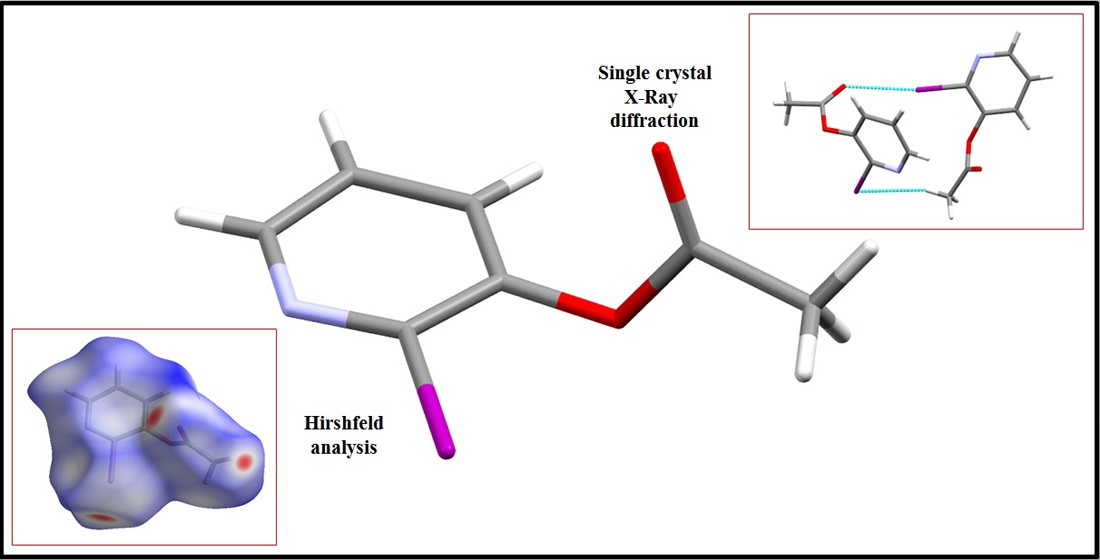
The title compound 2-iodopyridin-3-yl acetate was obtained by acetylation of the OH group of 2-iodo-3-hydroxypyridine. Knowing that the hydroxyl group, as a strong H-bond donor in halogenated hydroxypyridines, usually directs supramolecular packing and might enforce possible halogen–halogen contacts, we crystallized 2-iodo-3-acetoxypyridine with the aim of disrupting the most important H-bond donor and assessing the propensity of the iodine for halogen bond formation. Indeed, in the compound 2-iodopyridin-3-yl acetate, the crystal packing is characterized by infinite 3D chains bonded through I···O=C and C-H···I contacts between adjacent molecules. These chains are interconnected by weak C-H···O contacts, implying the presence of oxygen in the ester. The I···H contact with the C-H axis perpendicular to the electron belt of the iodine atom can enhance the σ-hole of the iodine and act cooperatively in crystal cohesion. No halogen–halogen contacts were present.

Graphical Abstract

1. Introduction

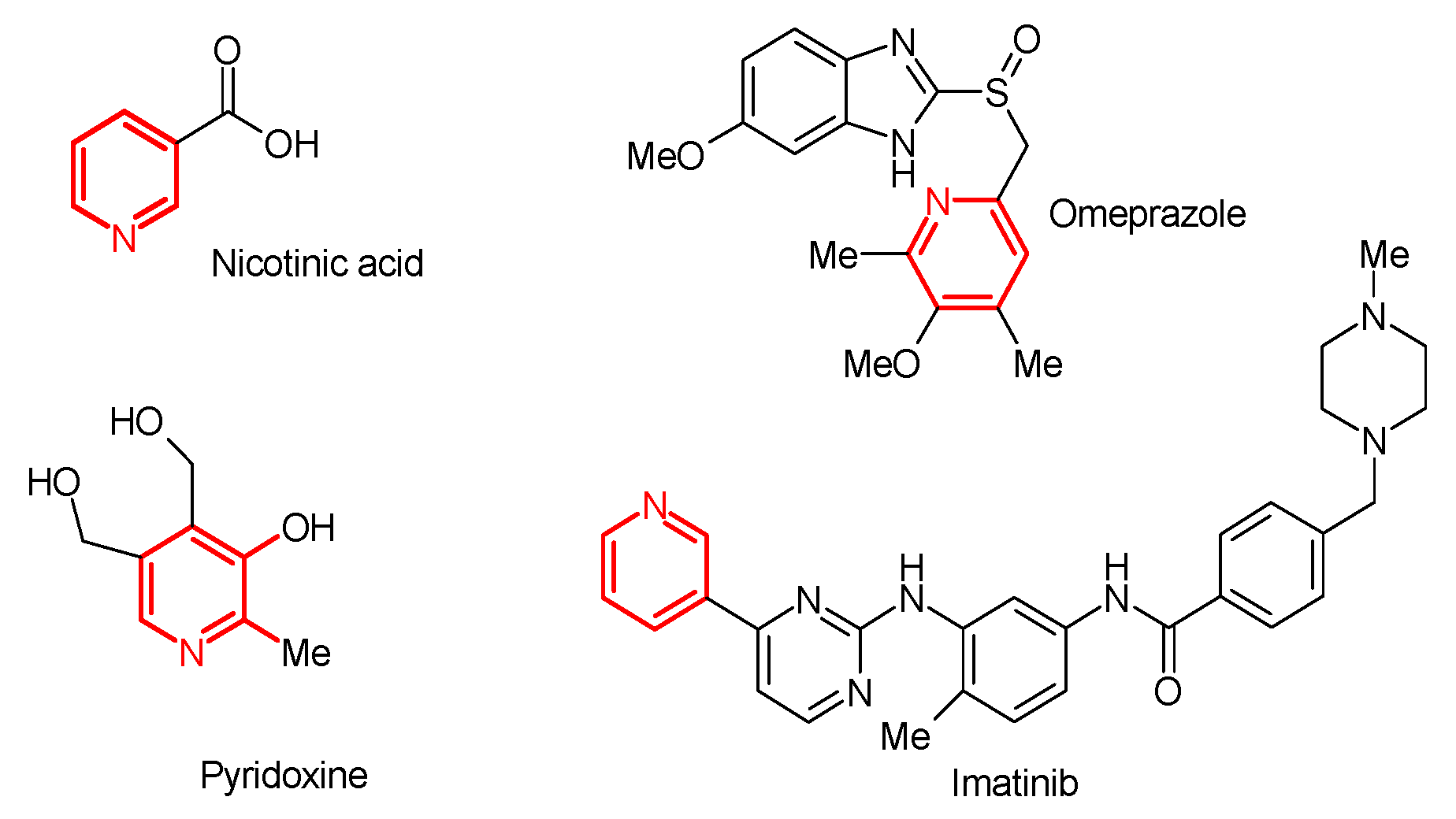
Pyridines are considered to be among the privileged structures in pharmaceutical chemistry [1,2,3] and are present as substructures of important building blocks of living beings [1,4]. Also, substituted pyridines, as single uncondensed molecules, present a wide range of pharmaceutical activities [5,6,7] and are present in the structures of blockbuster drugs (Figure 1) such as omeprazole, imatinib, etc.
Halogenated pyridines are important in pharmaceuticals but the ones containing bromine or iodine atoms, were investigated to a lesser extent [8,9]. However, iodinated pyridines were found to be effective templates for the study of halogen bonds [10,11,12,13,14] and other important supramolecular features.
Our specific interest in studying the tendency of halogen bond formation in nitrogen-containing halogenated heterocycles [15,16,17,18], as well as the above considerations, led us to investigate the supramolecular properties of 2-iodopyridin-3-yl acetate.
Herein we present the synthesis, structural characterization and interesting supramolecular properties of 2-iodopyridin-3-yl acetate.

2. Results and Discussion

A quick search of the 2-halogenated pyridines in the CCDC database gave ~2000 structures. Among these structures, 63 were 2-iodinated pyridines and only eight were 2-iodo-3-ORpyridines. One of these was 2-iodo-3-hydroxypyridine (R = H) [19] and two of them contain the 2-iodo-3-methoxypyridine framework (R = Me) [20,21]. These structures are presented in the Supplementary Material (Table S1). All these structures imply the presence of a halogen bond. Thus, the significance of iodinated pyridines as supramolecular synthons [14,15,16,17,18] and the scarcity of 2-iodinated pyridines with 2-iodo-3-hydroxypyridine as the parent (Table S1) led us to investigate another functionalized analogue: 2-iodopyridin-3-yl acetate.
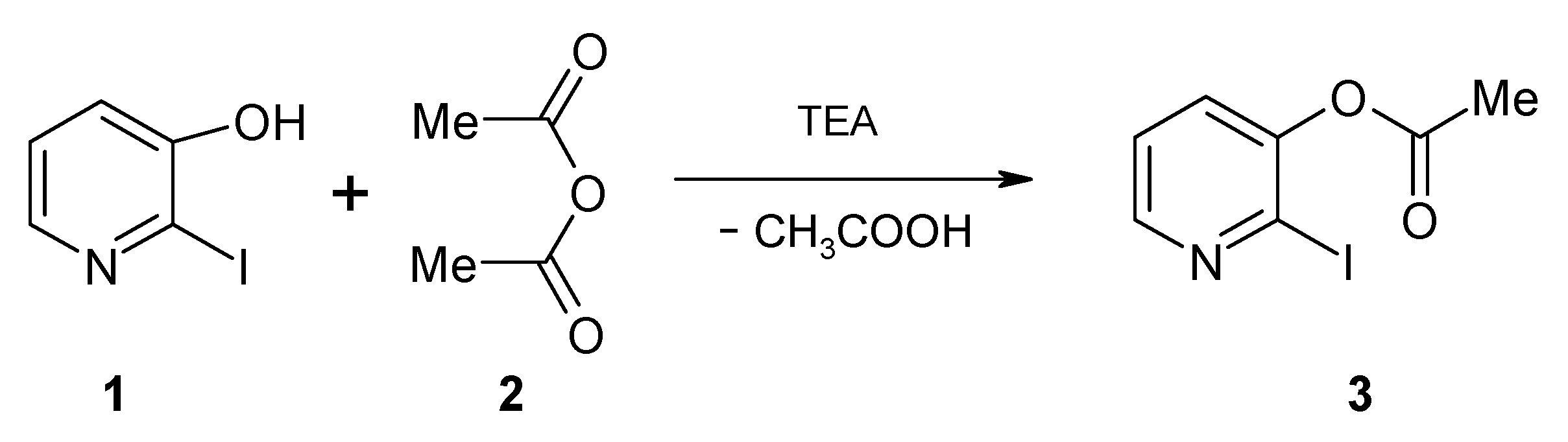
2-iodopyridin-3-yl acetate was synthesized by an adaptation of a known method [22,23] using acetic anhydride instead of acetyl chloride for the O-acylation reaction. Thus, 2-iodo-3-hydroxypyridine was reacted under reflux with acetic anhydride (Scheme 1) in the presence of triethylamine (TEA). The synthesis steps are detailed in the Supplementary Materials.
Compound 3 was structurally investigated by ATR-IR, NMR and X-ray diffraction analysis.

2.1. Structural Description

The IR spectrum of compound 3 (Figure S1) presents specific bands at 1757 cm−1 for the carbonyl C=O group, at 1554 cm−1, attributed to C=C bonds in the pyridine moiety, and at 1438 cm−1, attributed to the C=N bonds. At 1182 cm−1, the simple C-O bond stretch is present.
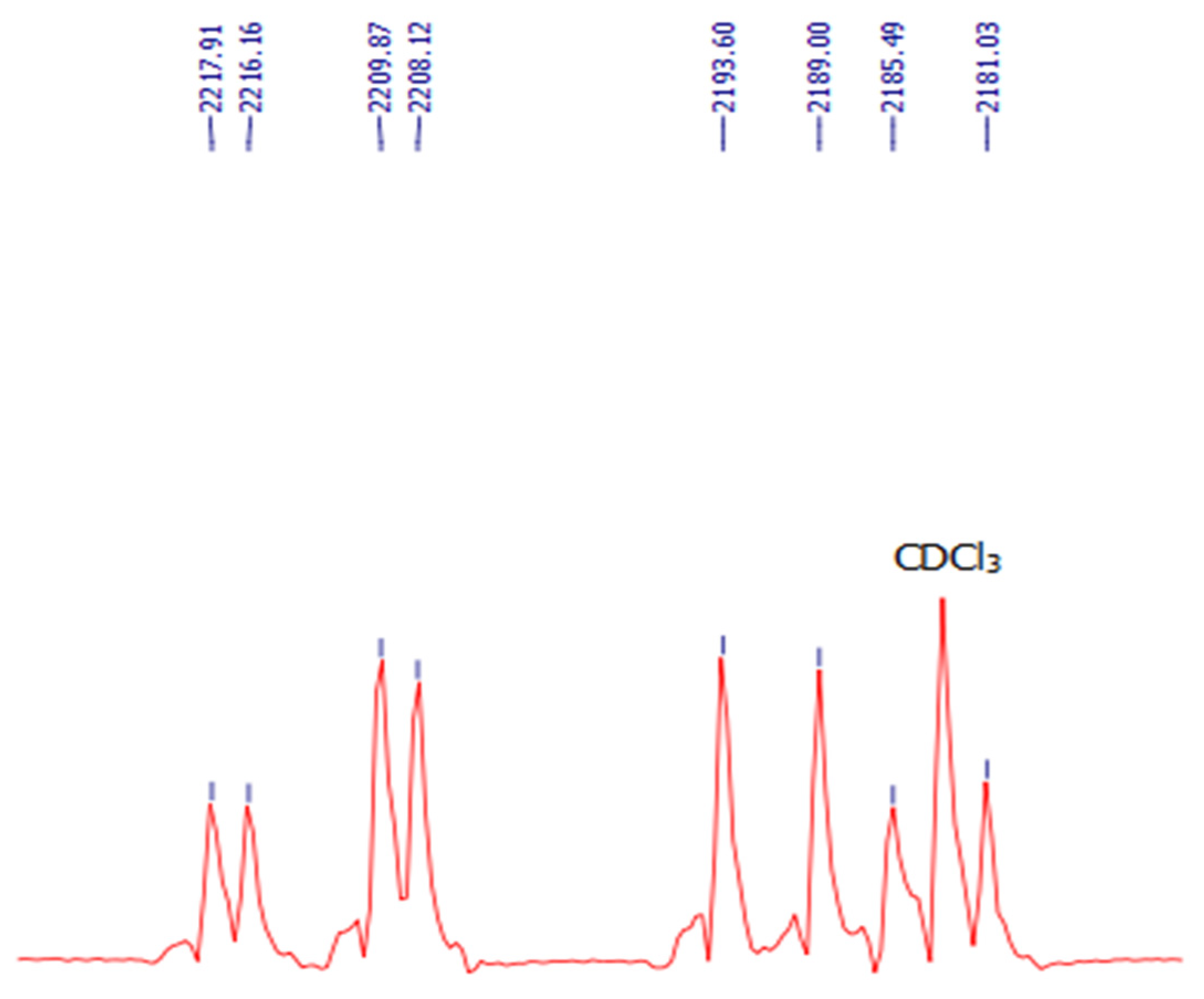
The NMR spectra for compound 3 (Supplementary Material—Figures S2–S4) are in good agreement with the structure. The 1H-NMR spectrum presents the relevant signals for Me hydrogen atoms at 2.40 ppm. The aromatic protons appear as a doublet of doublets with corresponding coupling constants. The protons H-4 and H-5 present an AMX coupling system (Figure 2) with a “roof” shape. The 13C-NMR spectrum presents all the expected signals, with the most shielded aromatic C-2 atom due to direct bonding to iodine at 115 ppm and the most deshielded C=O at 168 ppm. All the signals are in the expected ranges.
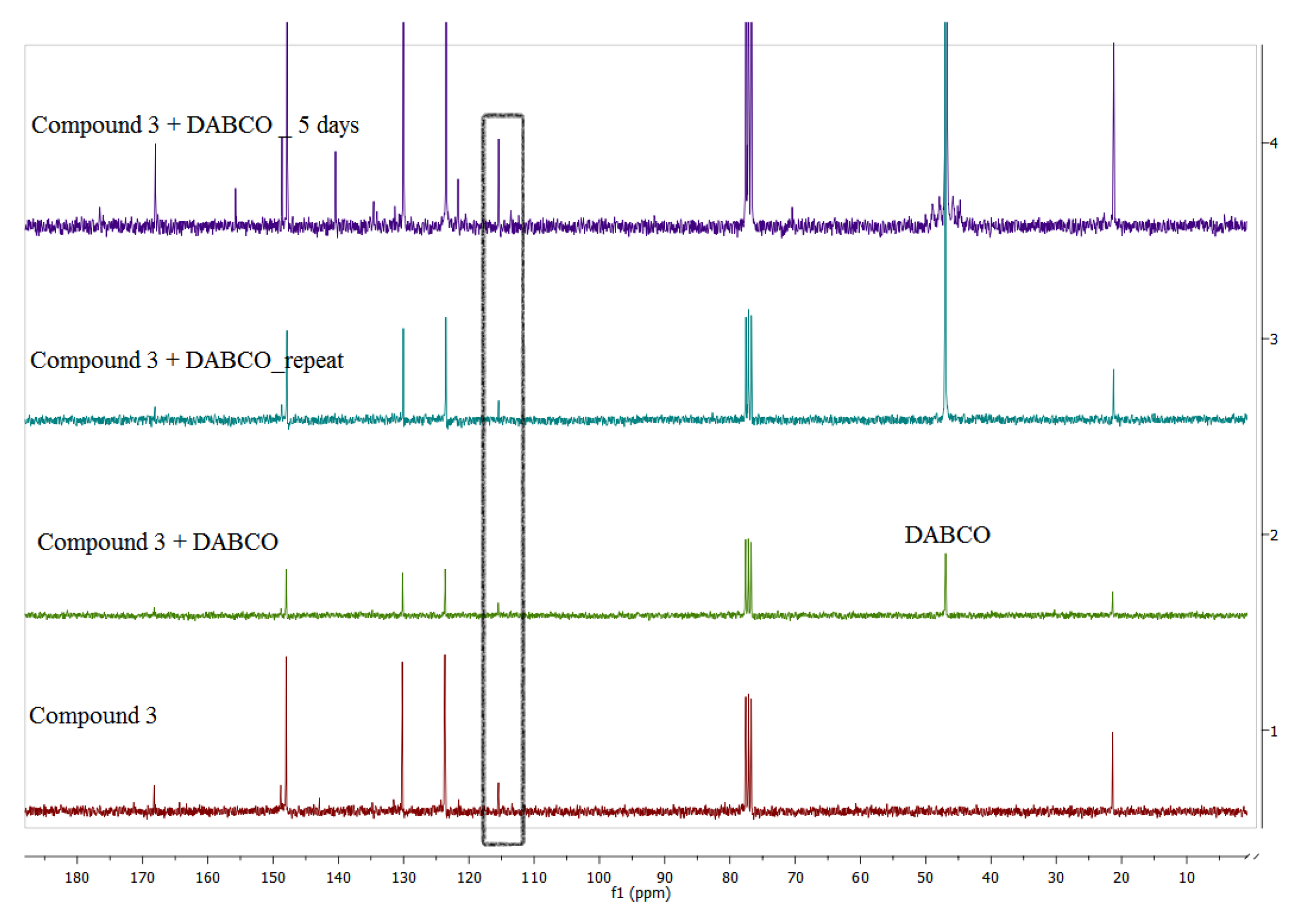
It appears that, in solution and in the presence of DABCO as a base, no halogen bond complex between the iodine and DABCO is formed, as no change in the chemical shift of C-2 was observed [24]. The 13C-NMR spectra are presented in Figure 3.
Even though this first evaluation was not satisfactory, we still performed crystallization experiments and obtained suitable crystals from CH2Cl2/EtOH for the X-ray diffraction analysis.

2.2. X-Ray Diffraction Analysis

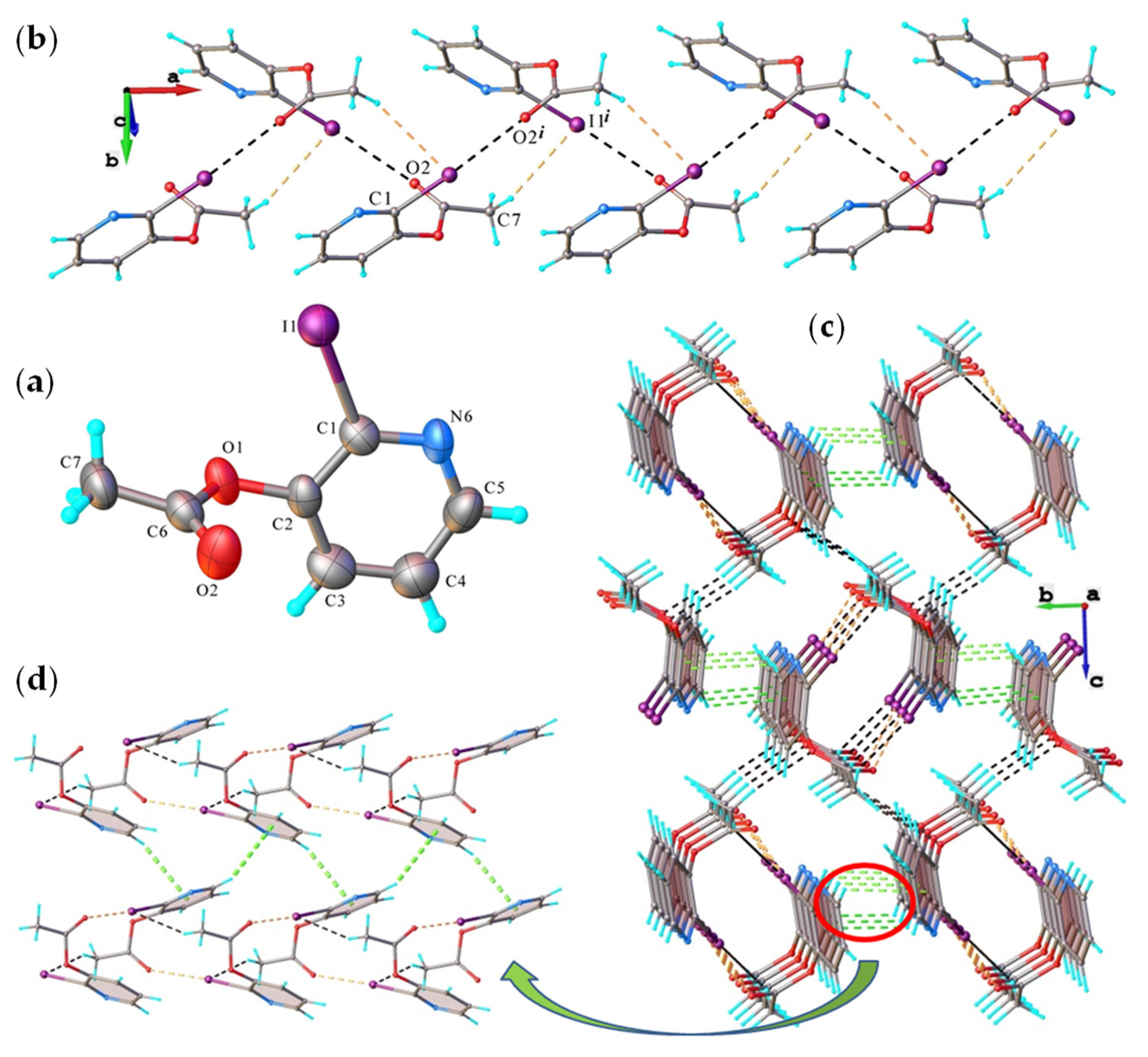
The results of single crystal X-ray diffraction are illustrated in Figure 4 (and reported in Table 1). The values of bond distances and angles are summarized in Table S2. As it turned out, compound 3 crystallizes in the P-1 space group of a triclinic system with one molecule in the asymmetric unit (ASU), as shown in Figure 4a. No co-crystallized interstitial solvate molecules were found in the crystal. The acetoxy group is rotated almost perpendicular with respect to the plane of the pyridine ring with a C6-O1-C2-C3 torsion angle of 84.2°. Despite the absence of conditions for classical hydrogen bonds, there are other specific intermolecular interactions such as C-O···I, C-H···O, C-H···I and C-H···π involving the pyridine ring, which play a crucial role in crystal packing. An iodine atom is involved as a donor in the C1-I1···O2i halogen bond toward the acetoxy oxygen atom (C1-I1 2.11 Å, I1···O2i 3.19 Å, ∠C1-I1-O2 172°, (i) 0.5 + x, 0.5 − y, 0.5 − z). These interactions determined the formation of a 1D array along the a axis, which can be considered the main structural motif of the crystal (Figure 4b). Additionally, the C7-H···I1i (C7-H 0.97 Å, H···I1i 3.18 Å, ∠C7-H-I1 155°) intermolecular hydrogen bonds between the same pairs of neighboring molecules strengthen the 1D supramolecular module. In the crystal, the parallel packed 1D modules further interact through C7-H···O1i hydrogen bonds (C7-H 0.97 Å, H···O1i 2.50 Å, ∠C7-H-O1i 159°, (i) 2 − x, y − 0.5, 1.5 − z) and C7-H···π contacts of 3.28 Å to form a 3D supramolecular network, as illustrated in Figure 4c. The C5-H···π interactions between aromatic C-H groups and pyridine rings, which occur within the 3D network, are illustrated in Figure 4d.

2.3. Hirshfeld Analysis

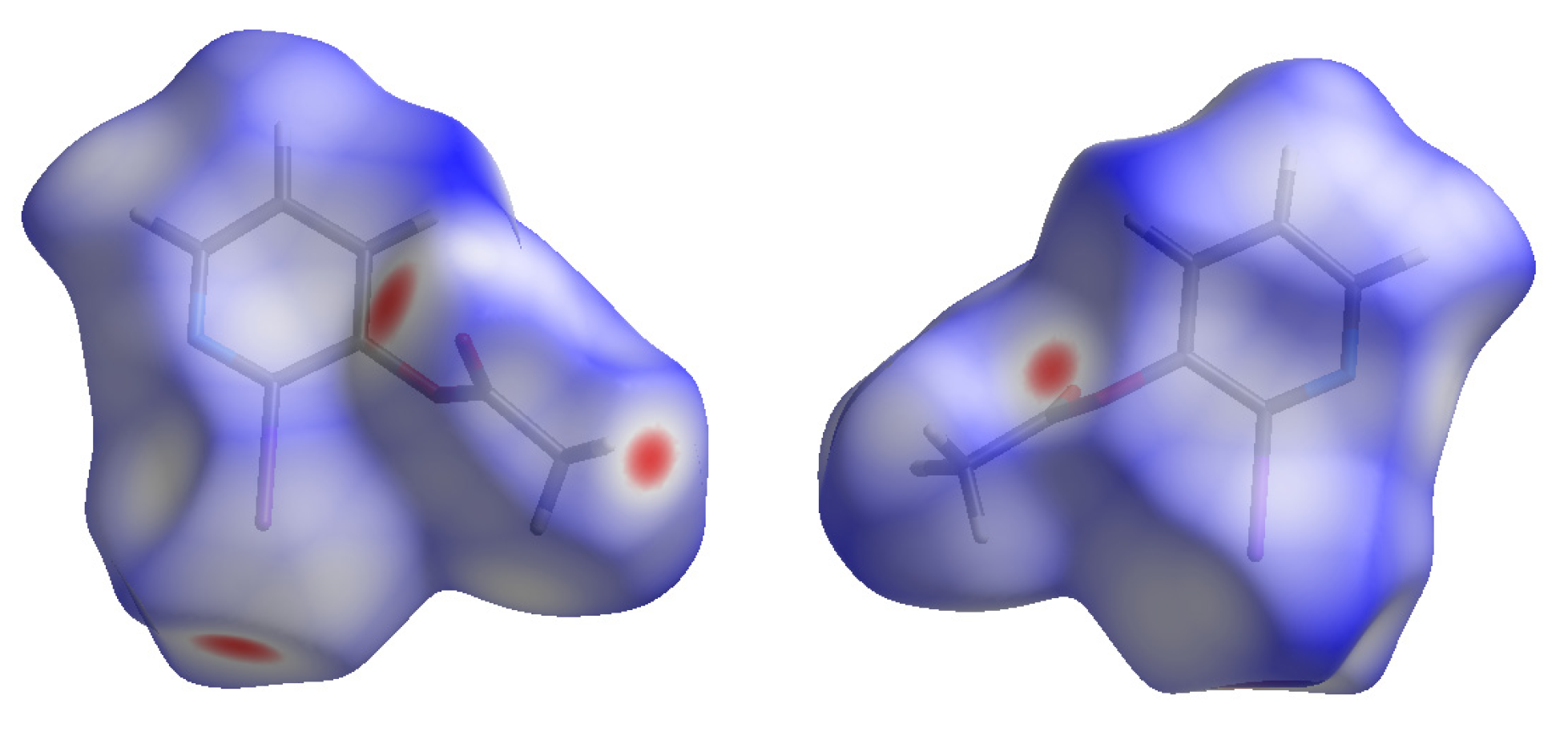
The Hirshfeld analysis reveals the important contacts, and the fingerprint plots present red spots characteristic of contacts with lengths less than the sum of the vdW radii for I1···O2 contacts and for H7B···O1 contacts (Figure 5).
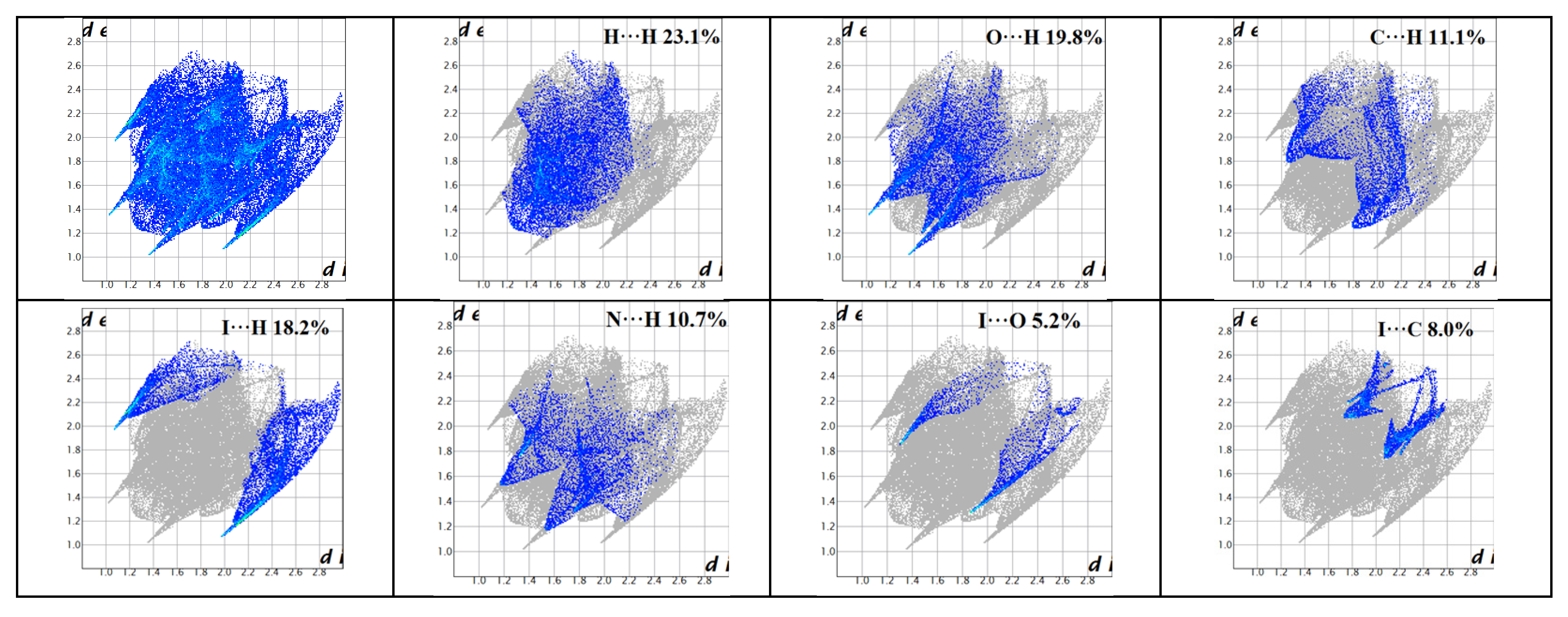
Fingerprint plots reveal that the crystalline network is dominated by H···H dispersive contacts and O···H, I···H and C···H weak contacts (Figure 6). Contacts are reciprocal, as can be observed by the symmetry of the fingerprint plots. N···H contacts of ~10% are present as weak.
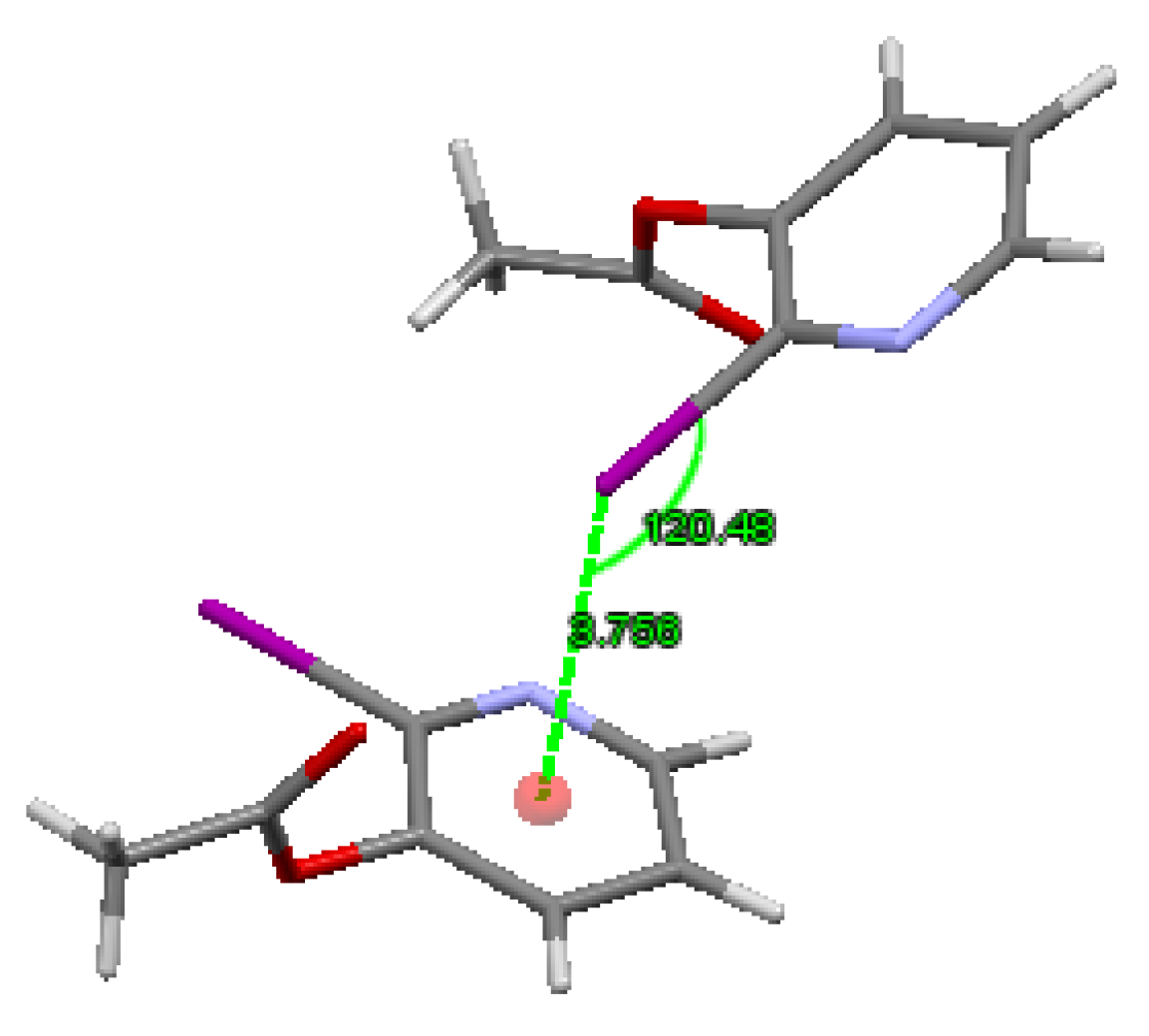
The strong I···O contacts account only for 5.2% of the Hirshfeld surface. It must be noted that fingerprint plots represent a quantitative and not qualitative view of the forces acting in the supramolecular structure. However the 8.0% attributed to I···C contacts suggests we should look at this interaction closely (Figure 7).
The C-I···π contact (I···C) of 3.76 Å (sum of vdW radii of C atom and I atom: 3.55 Å) and an angle of 120° are not quite satisfactory for a strong halogen–π interaction going through the σ-hole of the iodine atom, which would require an angle closer to 180°.
To our knowledge, 2-iodopyridine does not exist in CCDC for use as a comparison. However, the parent compound 2-iodo-3-hydroxypyridine 1 still was crystallized (Ref. code: YELQUC [19]) and a brief comparison can be made. Of course, the hydroxyl group in YELQUC will influence the formation of strong hydrogen bonds with the nitrogen in the pyrimidine ring, and the iodine atom will lack a strong electronegative oxygen such in the case of acetyl. Thus, for compound 1, a type II iodine–iodine bond strengthened by lp-π (lp: lone pair) iodine–pyridine bonds will lead to a stair-like arrangement of the molecules (Supplementary Material—Figure S5) with an enhancing effect on the halogen bond similar to the one discussed by Frontera et al. [25].
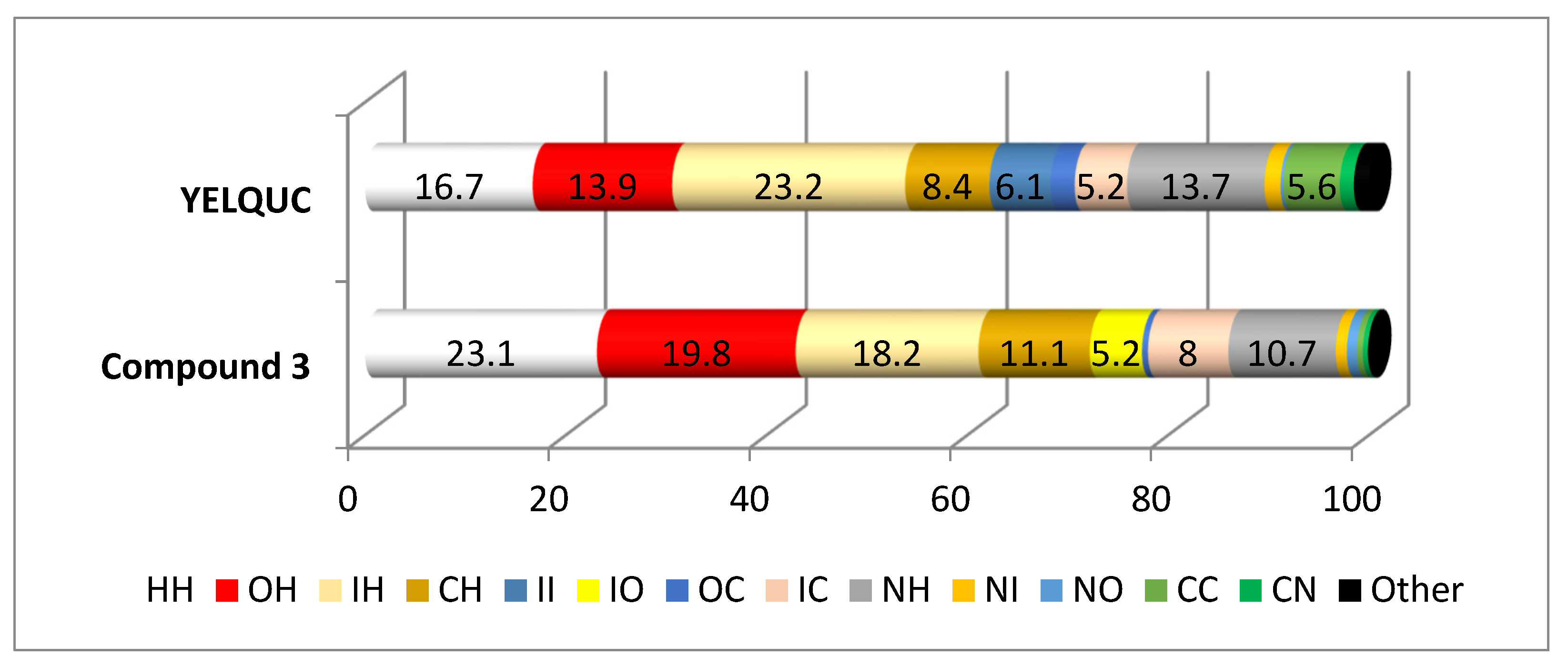
The percentage interactions between the two compounds YELQUC and 3 are presented in Figure 7. The most significant differences between the two molecules are the halogen bond type and the percentage in the supramolecular network, which for molecule 3 are I···O (5.2%) and for YELQUC are I···I (6.1%). For YELQUC we can observe an I···C percentage of 5.2% compared to 8% in 3, but this is due to an lp···π type of contact and not a halogen σ-hole interaction like the one depicted in Figure 6. This latter contact can be enforced by π···π (C···C 5.6%—green color in Figure 8)-type interactions which are not present in compound 3.

3. Materials and Methods

Single-crystal X-ray diffraction data for compound 3 were collected with an XCALIBUR E CCD diffractometer (Rigaku, Tokyo, Japan) equipped with graphite-monochromated MoKα radiation. The unit cell determination and data integration were carried out using the CrysAlisPro (1.171.44.136a)package from Oxford Diffraction [26]. The structure was solved with the SHELXT program using the intrinsic phasing method and refined by the full-matrix least-squares method on F2 with SHELXL [27,28]. Olex2 was used as an interface to the SHELX programs [29]. Non-hydrogen atoms were refined anisotropically. Hydrogen atoms were added in idealized positions and refined using a riding model. The molecular plots were obtained with the Olex2 program. Selected crystallographic data and structure refinement details are provided in Table 2 and the corresponding CIF-file. Deposition Number 2521105 contains the supplementary crystallographic data for this paper. These data are provided free of charge by the joint Cambridge Crystallographic Data Centre and Fachinformationszentrum Karlsruhe at http://www.ccdc.cam.ac.uk/structures (31 December 2025).
NMR spectra were measured on Varian Gemini 300 BB instrument (Palo Alto, CA, USA), operating at 300 MHz for 1H-NMR and 75 MHz for 13C-NMR.
Hirshfeld analysis was done using Crystal Explorer 17 [30]. Fingerprint plots represent statistical contacts distribution and were generated using the external (de) and internal (di) distances from the specific atoms to the Hirshfeld surface [30].

4. Conclusions

In conclusion, 2-iodopyridin-3-yl acetate was synthesized and crystallized with the aim of investigating its supramolecular crystalline structure. The importance of I···O contacts and weak non-classical hydrogen bonds was highlighted together with other secondary interactions. A comparison with the parent 2-iodo-3-hydroxypyridine was made to confirm the propensity of the iodine atom for halogen bond formation.
The halogen bond implying iodine is present in six of the eight 2-iodine derivatives, which might suggest interesting applications for the class of 2-iodo-3-ORpyridines.

Supplementary Materials

The following supporting information can be downloaded. Table S1. The CCDC 2-iodo-3-O-R pyridine structure search: the most relevant: YELQUC, QADVEZ and DUJSAD; Figure S1. ATR-IR spectrum of compound 3; Figure S2. 1H-NMR of compound 3 in CDCl3; Figure S3.13C-NMR of compound 3 in CDCl3; Figure S4. HETCOR of compound 3 in CDCl3; Table S2. Bond Lengths and bond angles for compound 3; Figure S5. Hirshfeld surface of 2-iodo-3-hydroxypyridine (YELQUC); stair-like arrangement generated by I···I of type II bond enhanced by I···π of type lp···π (lp: lone pair) (view from a-axis); O-H···N bond (view from b-axis); insets: corresponding fingerprint plots.

Author Contributions

Conceptualization, M.C., F.D., and M.M.P.; methodology, M.C., and M.M.P.; validation, M.M.P., and F.D.; formal analysis, M.C., M.M.P., and S.S.; investigation, M.C., M.M.P., and S.S.; data curation, M.M.P., and S.S.; writing—original draft preparation, M.C., M.M.P., S.S., and F.D.; writing—review and editing, M.M.P., F.D.; visualization, M.M.P.; supervision, F.D.; project administration, F.D. All authors have read and agreed to the published version of the manuscript.

Funding

This research received no external funding.

Data Availability Statement

The original contributions presented in this study are included in the article/Supplementary Materials. Further inquiries can be directed to the corresponding author(s).

Conflicts of Interest

The authors declare no conflicts of interest.

References

  1. Marinescu, M.; Popa, C.-V. Pyridine Compounds with antimicrobial and antiviral activities. Int. J. Mol. Sci. 2022, 23, 5659. [Google Scholar] [CrossRef] [PubMed]
  2. Ravindar, L.; Hasbullah, S.A.; Rakesh, K.P.; Raheem, S.; Ismail, N.; Ling, L.Y.; Hassan, N.I. Pyridine and pyrimidine hybrids as privileged scaffolds in antimalarial drug discovery: A recent development. Bioorg. Med. Chem. Lett. 2024, 114, 129992. [Google Scholar] [CrossRef]
  3. De, S.; Kumar, A.K.S.K.; Shah, S.K.; Kazi, S.; Sarkar, N.; Banerjee, S.; Dey, S. Pyridine: The scaffolds with significant clinical diversity. RSC Adv. 2022, 12, 15385–15406. [Google Scholar] [CrossRef]
  4. Katoh, A.; Hashimoto, T. Molecular biology of pyridine nucleotide and nicotine biosynthesis. Front. Biosci. 2004, 9, 1577–1586. [Google Scholar] [CrossRef]
  5. Aishwaraya, N.V.S.S.; Matada, G.S.P.; Pal, R.; Aayishamma, I.; Housamani, K.R.; Kumaraswamy, B.; Majunshree, B.V.; Ghara, A. Expanding the potential of pyridine scaffold for targeted therapy of cancer: Biological activity, molecular insights, and structure-activity relationship. J. Mol. Struct. 2025, 1321, 139655. [Google Scholar] [CrossRef]
  6. Wang, S.; Yuan, X.-H.; Wang, S.-Q.; Zhao, W.; Chen, X.-B.; Yu, B. FDA-approved pyrimidine-fused bicyclic heterocycles for cancer therapy: Synthesis and clinical application. Eur. J. Med. Chem. 2021, 214, 113218. [Google Scholar] [CrossRef]
  7. Dwivedi, A.R.; Jaiswal, S.; Kukkar, D.; Kumar, R.; Singh, T.G.; Singh, M.P.; Gaidhane, A.M.; Lakhanpal, S.; Prasad, K.N.; Kumar, B. A decade of pyridine-containing heterocycles in US FDA approved drugs: A medicinal chemistry-based analysis. RSC Med. Chem. 2025, 16, 12–36. [Google Scholar] [CrossRef]
  8. Davis, E.A.; Hammet, M.S.; Scheerer, J.R. Halogenated pyridine derivatives from cycloaddition/cycloreversion of oxazinone and haloalkyne precursors. Tetrahedron Lett. 2025, 170, 155765. [Google Scholar] [CrossRef]
  9. Baumann, M.; Baxendale, I.R. An overview of the synthetic routes to the best selling drugs containing 6-membered heterocycles. Beilstein J. Org. Chem. 2013, 9, 2265–2310. [Google Scholar] [CrossRef] [PubMed]
  10. Bedekovic, N.; Magnabosco, A.; Stilinovic, V.; Cincic, D. Cocrystals of 1,2-diiodotetrafluorobenzene with pyridine derivatives: Pyridine nitrogen as a bifurcated acceptor with ortho-diiodo halogen bond donors. Cryst. Growth Des. 2026, 26, 554–564. [Google Scholar] [CrossRef] [PubMed]
  11. Topic, N.B.; Topic, E.; Fotovic, L.; Stilinovic, V. Isomorphism, polymorphism, and stoichiomorphism of cocrystals derived from 1,4-diiodotetrafluorobenzene and an isomorphous series of N-(4-halobenzyl)-3-halopyridinium halogenides. Cryst. Growth Des. 2024, 24, 1214–1226. [Google Scholar] [CrossRef]
  12. Rautiainen, J.M.; Green, M.; Mahonen, M.; Moilanen, J.O.; Lahtinen, M.; Valkonen, A. Halogen-bonded mono-, di-, and tritopic N-alkyl-3-iodopyridinium salts. Cryst. Growth Des. 2023, 23, 2361–2374. [Google Scholar] [CrossRef]
  13. Fotovic, L.; Bedekovic, N.; Piculjan, K.; Stilinovic, V. Order versus disorder in the cocrystals of m-halogenopyridines with m-halogenobenzoic acids: The effects of the I···O halogen bond. Cryst. Growth Des. 2022, 22, 7508–7517. [Google Scholar] [CrossRef]
  14. Culig, M.; Nemec, V.; Bregovic, N.; Cincic, D. Halopyridinium cations as bifunctional donors of halogen and hydrogen bonds in salts with benzenesulfonic and p-toluenesulfonic acids. CrystEngComm 2025, 27, 7638–7643. [Google Scholar] [CrossRef]
  15. Popa, M.M.; Man, I.C.; Draghici, C.; Shova, S.; Caira, M.R.; Dumitrascu, F.; Dumitrescu, D. Halogen bonding in 5-iodo-1-arylpyrazoles investigated in the solid state and predicted by solution 13C-NMR spectroscopy. CrystEngComm 2019, 21, 7085–7093. [Google Scholar] [CrossRef]
  16. Popa, M.M.; Shova, S.; Man, I.C.; Dumitrascu, F. Halogen bonding in 5-chloropyrazoles: Two new examples and a descriptive CSD investigation. J. Mol. Struct. 2025, 1319, 139384. [Google Scholar] [CrossRef]
  17. Dumitrescu, D.; Shova, S.; Draghici, C.; Popa, M.M.; Dumitrascu, F. Synthesis of 1-(2-Fluorophenyl)pyrazoles by 1,3-Dipolar Cycloaddition of the Corresponding Sydnones. Molecules 2021, 26, 3693. [Google Scholar] [CrossRef]
  18. Cristea, M.; Răducă, M.; Gdaniec, M.; Shova, S.; Banu, N.D.; Dumitrascu, F. Diethyl 3-(4-Bromobenzoyl)-7-(4-pyridyl)indolizine-1,2-dicarboxylate. Molbank 2025, 2025, M2032. [Google Scholar] [CrossRef]
  19. Saha, B.K.; Nangia, A.; Nicoud, J.-F. Using halogen···halogen interactions to direct noncentrosymmetric crystal packing in dipolar organic molecules. Cryst. Growth Des. 2006, 6, 1278–1281. [Google Scholar] [CrossRef]
  20. Hedidi, M.; Bentabed-Ababsa, G.; Derdour, A.; Halauko, Y.S.; Ivashkevich, O.A.; Matulis, V.E.; Chevallier, F.; Roisnel, T.; Dorcet, V.; Mangin, F. Deprotometalation of substituted pyridines and regioselectivity-computed CH acidity relationships. Tetraheron 2016, 72, 2196–2205. [Google Scholar] [CrossRef]
  21. Guo, W.; Liu, X.; Li, L.; Deng, D. 2-Iodo-3-methoxy-6-methylpyridine. Acta Cryst. E Cryst. Commun. 2009, 65, o3269. [Google Scholar] [CrossRef] [PubMed]
  22. Aycock, R.A.; Wang, H.; Jui, N.T. A mild catalytic system for radical conjugate addition of nitrogen heterocycles. Chem. Sci. 2017, 8, 3121–3125. [Google Scholar] [CrossRef] [PubMed]
  23. Thimmaraju, N.; Shamshuddin, S.Z.M.; Pratap, S.R.; Prasad, K.S. Effective synthesis of novel O-acetylated compounds over ZrO2-Al2O3 solid acid. Arab. J. Chem. 2019, 12, 1860–1869. [Google Scholar] [CrossRef]
  24. Draghici, C.; Caira, M.R.; Dumitrescu, D.E.; Dumitrascu, F. Halogen bonds of 4-iodosydnones in solution deduced from 13C-NMR spectra. Rev. Chim. 2018, 69, 843–845. [Google Scholar] [CrossRef]
  25. Gomila, R.M.; Frontera, A.; Bokach, N.A.; Kukushkin, V.Y. Halogens as noncovalent chemical chameleons: Electrophilic-nucleophilic dualism enabling multicenter halogen bond-based assemblies. Coord. Chem. Rev. 2026, 552, 217465. [Google Scholar] [CrossRef]
  26. Rigaku Oxford Diffraction. CrysAlisPro Software System, version 1.171.44.136a; Rigaku Corporation: Oxford, UK, 2015.
  27. Sheldrick, G.M. SHELXT—Integrated Space-Group and Crystal-Structure Determination. Acta Crystallogr. Sect. A Found. Crystallogr. 2015, 71, 3–8. [Google Scholar] [CrossRef]
  28. Sheldrick, G.M. Crystal Structure Refinement with SHELXL. Acta Crystallogr. Sect. C 2015, 71, 3–8. [Google Scholar] [CrossRef] [PubMed]
  29. Dolomanov, O.V.; Bourhis, L.J.; Gildea, R.J.; Howard, J.A.K.; Puschmann, H. OLEX2: A Complete Structure Solution, Refinement and Analysis Program. J. Appl. Crystallogr. 2009, 42, 339–341. [Google Scholar] [CrossRef]
  30. Spackman, P.R.; Turner, M.J.; McKinnon, J.J.; Wolff, S.K.; Grimwood, D.J.; Jayatilaka, D.; Spackman, M.A. CrystalExplorer: A program for Hirshfeld surface analysis, visualization and quantitative analysis of molecular crystals. J. Appl. Cryst. 2021, 54, 1006–1011. [Google Scholar] [CrossRef]
Figure 1. Important essential active compounds and blockbuster drugs incorporating pyridine.
Molbank 2026 m2135 g001
Scheme 1. Synthesis of 2-iodopyridin-3-yl acetate 3.
Molbank 2026 m2135 sch001
Figure 2. Doublet of doublets AMX system formed by H-4 and H-5 in the 1H-NMR spectrum of 3. Peaks are given in Hz.
Molbank 2026 m2135 g002
Figure 3. Stacked 13C-NMR spectra of compound 3 in CDCl3 upon addition of DABCO. Black box: the signal of C-2 at ~115 ppm.
Molbank 2026 m2135 g003
Figure 4. Crystal structure of compound 3. (a) Molecular structure with atom labeling and thermal ellipsoids at 50% level. (b) View of 1D supramolecular module running along a axis. (c) A fragment of the crystal packing showing the assembly of a 1D array into a 3D network. (d) C7-H···π contacts within the 3D network. Hydrogen bonds, halogen bonds and C7-H···π contacts are drawn with black, orange and green dashed lines, correspondingly.
Molbank 2026 m2135 g004
Figure 5. Hirshfeld surface (opposite sides) of compound 3 showing the important contacts with lengths less than the sum of the vdW radii as red spots.
Molbank 2026 m2135 g005
Figure 6. Fingerprint plots depicting the percentage interactions in the supramolecular structure of compound 3.
Molbank 2026 m2135 g006
Figure 7. Possible C-I···π interaction in compound 3.
Molbank 2026 m2135 g007
Figure 8. Percentage interactions extracted from Hirshfeld surfaces of compound 3 and YELQUC.
Molbank 2026 m2135 g008
Table 1. Relevant contacts in the structure of compound 3.
D-X···AD-X (Å)D···A (Å)X···A (Å)DXA (◦)Symmetry Op.
C1-I1···O2=C2.11N/A3.191(8)172.5(3)0.5 + x, 0.5 y, 0.5 z
C7-H7A···I10.974.077(10)3.18155.21/2 + x, 1/2 − y, 1 − z
C7-H7B···O10.973.428(12)2.50159.52 − x, −1/2 + y, 3/2 − z
C3-H3···O2 *0.933.4672.791301 x, −1/2 + y, 3/2 z
C7-H7C···N6 *0.973.3972.791213/2 x, 1 y, −1/2 + z
* distance is 10% larger than the sum of the vdW radii of the respective atoms and less favorable angles.
Table 2. Crystallographic data and refinement details for 3.
Empirical FormulaC7H6INO2
Formula weight263.03
Temperature/K240
Space groupP212121
a7.3660(4)
b8.0857(5)
c14.5894(7)
α/°90
β/°90
γ/°90
Volume/Å3868.93(8)
Z4
ρcalc g/cm32.011
μ/mm−13.636
Crystal size/mm30.06 × 0.06 × 0.02
2Θ range/°5.584 to 49.996
Refs collected3032
Indep. refls1505, 0.0387
Data/restrs/params1505/0/101
GOF on F20.999
R1, wR2 (all data)0.0488, 0.0495
CCDC No.2521105
Disclaimer/Publisher’s Note: The statements, opinions and data contained in all publications are solely those of the individual author(s) and contributor(s) and not of MDPI and/or the editor(s). MDPI and/or the editor(s) disclaim responsibility for any injury to people or property resulting from any ideas, methods, instructions or products referred to in the content.