The Complosome: An Emerging Intracellular Complement Network in Cancer Development and Therapy

 , , ,
, , , 
Abstract
1. Introduction
2. Tumor Microenvironment (TME) as a Complex Ecosystem
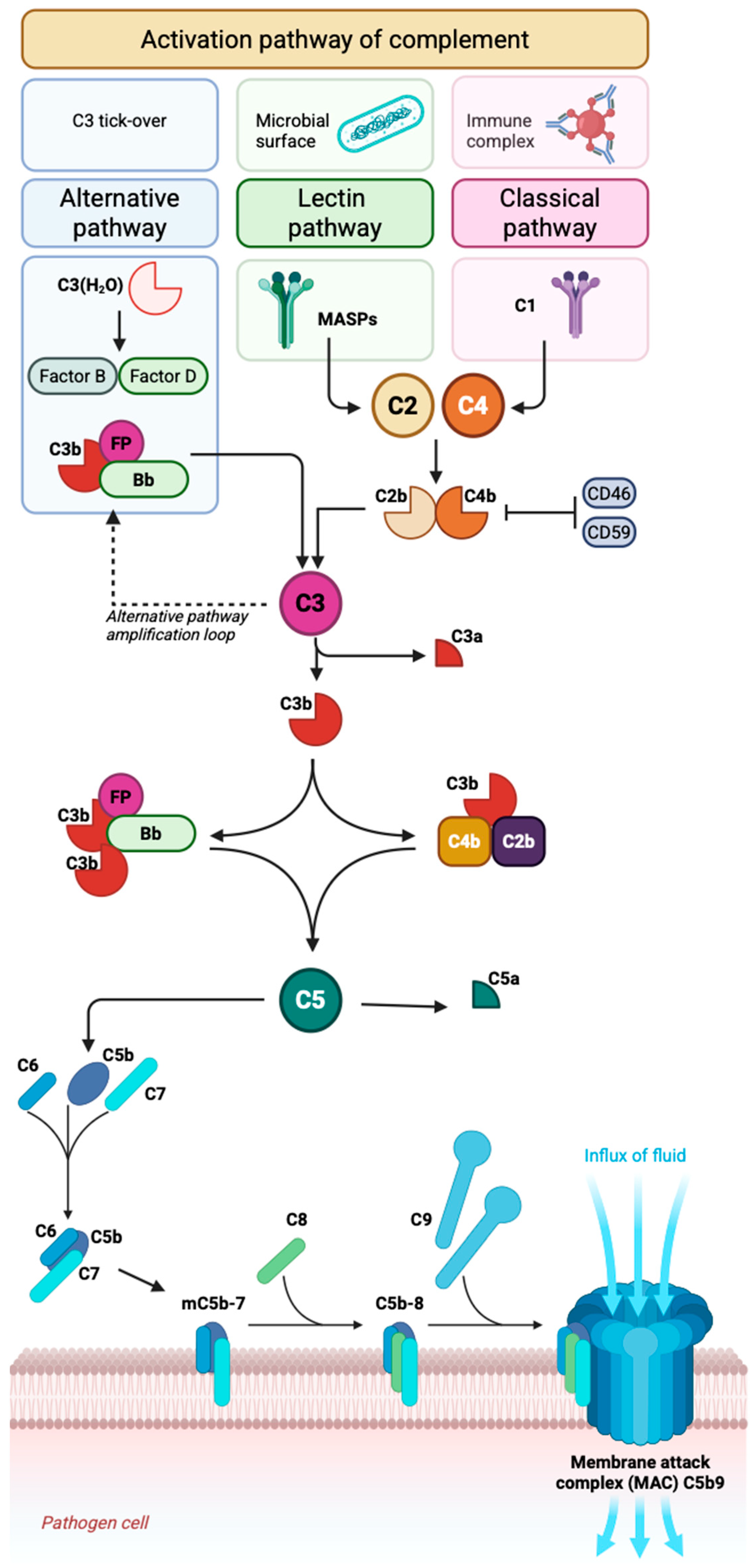
3. Complement Activation: The Classical, the Lectin, and the Alternative Pathway
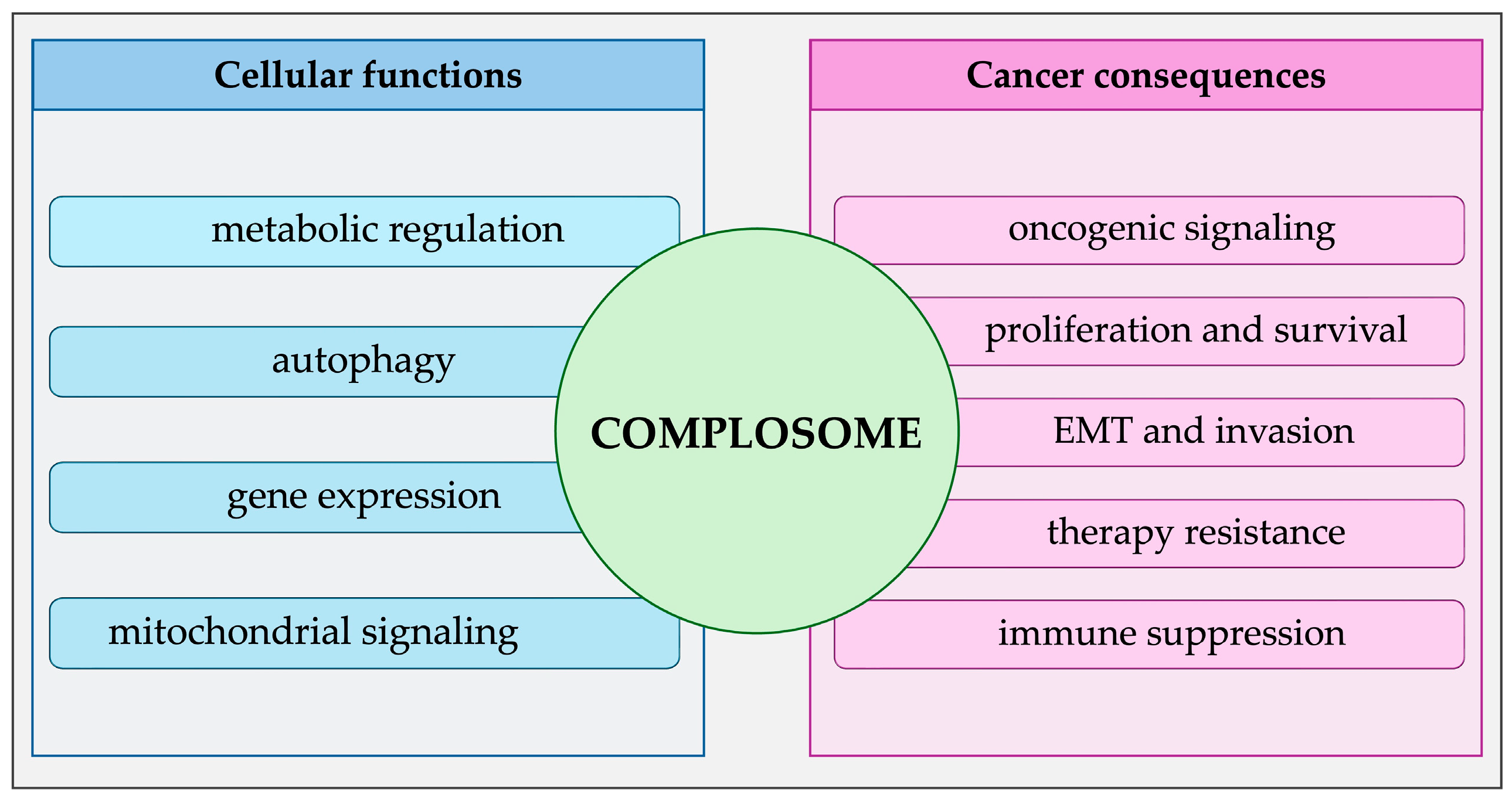
4. The Complosome: An Emerging Intracellular Immune Network Shaping Cellular Homeostasis and Tumor Fate
5. Complosome and Non-Canonical Complement Signaling in Tumor Progression and Immune Evasion
5.1. C1q/C1qR
5.2. C1r/C1s
5.3. Intracellular C3/C3aR
5.4. Extracellular C3/C3aR
5.5. C3a/C3aR
5.6. C3b
5.7. C3d
5.8. C5a
5.9. C3 and C5
5.10. Ficolin-3
5.11. Factor H
5.12. CD46
5.13. CD55, CD59
5.14. Factor I
5.15. Factor B

| Component | Cancer Types | Key Mechanisms | Effects | Pathways |
|---|---|---|---|---|
| C1q/C1qR [78] | MPM | HA degradation into LMW-HA via HYAL2 | Pro-inflammatory, pro-tumorigenic effect on TME | Not determined |
| C1r/C1s [80,81,83] | cSCC, RCC | MMP1, MMP13, MMP10, and MMP12 upregulation; collagen degradation, | Invasion of tumor cells, proliferation, negative prognosis in early stages of RCC | Akt, ERK1/2 |
| C3/C3aR [51,87,88,89] | OSCC, cSCC, RCC, Lung metastasis, TNBC | CAF/PMN-MDSC recruitment; senescence; upregulation of pro-inflammatory mediators; increase in CAS in TNBC; EMT activation | Immunosuppression, metastasis, induction of apoptosis in TNBC, proliferation | NF-κB, STAT6 |
| C3a [90,91,92] | Medulloblastoma, MM, breast cancer | CAF EMT; Sirt1 suppression; cytokines astrocyte/MAPK activation | Metastasis, proliferation, osteoclastogenesis | PI3K/AKT PI3K/PDK1/SGK3, MAPK |
| C3d [94] | Monoclonal gammopathy | MHC I via faulty ribosomes/lncRNAs | Anti-tumor immunity | E2F1 |
| C5a/C5aR [95,96,97,99,100] | mRCC, GC, CRC, lung cancer | PD-L1/EMT; TLR4 and RAGE receptors induction; γδ T-cell chemoattraction, β-catenin stabilization; LCN2-mediated iron transfer | M2 TAMs promotion, tumor evasion, increased proliferation and invasion | ERK1/2 |
| C3/C5 [101] | Ovarian cancer | Adipocyte lipid-induced activation; increased ATF4 level | Proliferation, ISR survival | Src kinase, EGFR, PI3K/AKT |
| Ficolin-3 [102] | Cholangiocarcinoma | MASP/C3b/C5b-9; necroptosis induction | Anti-tumor lysis promotion | RIPK/MLKL |
| Factor H [103] | Glioma | ICOS signaling; cytokine secretion; CTLA-4 and PD-L1 upregulation; PD-1 inhibition | Treg population expansion, tumor evasion | Akt/GSK3 |
| CD46 [105,106,107] | Bladder, Gallbladder cancer | KRT13, GABRP, and C3-α upregulation; transcription factor AP-1 induction; increased c-Jun phosphorylation; increased MMP9 secretion; EGFR resistance | Tumor invasion, lysis protection; | p38 MAPK, AKT |
| CD55/CD59 [109] | NSCLC | EGFR/Wnt/β-catenin-upregulated CD55/CD59 cascade | T-cell/macrophage complement mediated cytotoxicity inhibition, tumor evasion, resistance to anti-PD-1 inhibitors | EGFR/Wnt/β-catenin |
| Factor B [112] | PDAC | Stromal senescence block | Treg cells, PMN-MDSCs, TAMs induction, poor prognosis, increased proliferation | Not determined |
| Component | Cancer Types | Key Mechanisms | Effects | Pathways |
|---|---|---|---|---|
| C1q/C1qR [79] | Colorectal | Caspase-1 cleavage of C1qR blocks mitochondrial import | Increase in aerobic glycolysis and proliferation | Not determined |
| C1r/C1s [82] | cSCC | Stimulation of tumor vascularization and tumor cell viability; inhibition of apoptosis and MMP-9 production | Proliferation/invasion | Akt, ERK1/2 |
| C3/C3aR [32,38,84,85,86] | OSCC, HNSCC, PDAC, Gastric | Stemness/EMT induction; CTSL/NLRP3 activation and C3 enzymatic cleavage; | Migration, inflammasome-mediated metastasis, M2 polarization, tumor evasion, resistance to anti-PD-1 therapy | AKT, JAK2/STAT3, PI3K/AKT/mTOR, S1P/S1PR1/C3/inflammasome, Smad |
| C3b [93] | SCLC | Nuclear SIN3A/HDAC1 suppressing GADD45A | PTX resistance; proliferation | PI3K-AKT |
| C3a [92] | Breast cancer | CAF EMT | Metastasis | PI3K-AKT |
| C5aR1 [28,98] | GBM, CRC | GPX4 m6A; β-catenin stabilization (KCTD5/cullin3) | Ferroptosis inhibition; lipid peroxidation; tumorigenesis; increased tumor cell survival | ERK1/2, METTL3 |
| Factor H [104] | ccRCC, Lung ADC | Not determined | Motility, morphology, poor prognosis, | p53, NF-κB |
| CD55 [108] | Ovarian cancer | Nuclear ZMYND8/EZH2 disruption | Cisplatin resistance, cancer cell stemness, cell proliferation promotion | PRC2/H3K27 |
| Factor I [111] | NSCLC | IRS-1 phosphorylation, GSK3β phosphorylation | Apoptosis resistance, poor prognosis, | JNK/p38/IRS-1, JNK/p38/GSK3 |
| CD59 [110] | Lung cancer | Intracellular Ras retention in Golgi | Increased T-cell activation, anti-tumor response | Ras/MAPK |
6. Conclusions
Author Contributions
Funding
Institutional Review Board Statement
Informed Consent Statement
Data Availability Statement
Conflicts of Interest
References
- Siegel, R.L.; Kratzer, T.B.; Giaquinto, A.N.; Sung, H.; Jemal, A. Cancer Statistics, 2025. CA Cancer J. Clin. 2025, 75, 10–45. [Google Scholar] [CrossRef]
- Elmadani, M.; Mokaya, P.O.; Omer, A.A.A.; Kiptulon, E.K.; Klara, S.; Orsolya, M. Cancer Burden in Europe: A Systematic Analysis of the GLOBOCAN Database (2022). BMC Cancer 2025, 25, 447. [Google Scholar] [CrossRef]
- Cancer Today. Available online: https://gco.iarc.who.int/today/ (accessed on 14 January 2026).
- Kitaw, T.A.; Tilahun, B.D.; Zemariam, A.B.; Getie, A.; Bizuayehu, M.A.; Haile, R.N. The Financial Toxicity of Cancer: Unveiling Global Burden and Risk Factors—A Systematic Review and Meta-Analysis. BMJ Glob. Health 2025, 10, e017133. [Google Scholar] [CrossRef] [PubMed]
- Trouw, L.A.; Daha, M.R. Role of Complement in Innate Immunity and Host Defense. Immunol. Lett. 2011, 138, 35–37. [Google Scholar] [CrossRef]
- Zhang, R.; Liu, Q.; Li, T.; Liao, Q.; Zhao, Y. Role of the Complement System in the Tumor Microenvironment. Cancer Cell Int. 2019, 19, 300. [Google Scholar] [CrossRef]
- Balduit, A.; Agostinis, C.; Bulla, R. Beyond the Norm: The Emerging Interplay of Complement System and Extracellular Matrix in the Tumor Microenvironment. Semin. Immunol. 2025, 77, 101929. [Google Scholar] [CrossRef]
- Ain, D.; Shaikh, T.; Manimala, S.; Ghebrehiwet, B. The Role of Complement in the Tumor Microenvironment. Fac. Rev. 2021, 10, 80. [Google Scholar] [CrossRef]
- Senent, Y.; Tavira, B.; Pio, R.; Ajona, D. The Complement System as a Regulator of Tumor-Promoting Activities Mediated by Myeloid-Derived Suppressor Cells. Cancer Lett. 2022, 549, 215900. [Google Scholar] [CrossRef] [PubMed]
- Xiao, F.; Guo, J.; Tomlinson, S.; Yuan, G.; He, S. The Role of the Complosome in Health and Disease. Front. Immunol. 2023, 14, 1146167. [Google Scholar] [CrossRef]
- Wei, R.; Liu, S.; Zhang, S.; Min, L.; Zhu, S. Cellular and Extracellular Components in Tumor Microenvironment and Their Application in Early Diagnosis of Cancers. Anal. Cell. Pathol. 2020, 2020, 6283796. [Google Scholar] [CrossRef] [PubMed]
- Neophytou, C.M.; Panagi, M.; Stylianopoulos, T.; Papageorgis, P.; Neophytou, C.M.; Panagi, M.; Stylianopoulos, T.; Papageorgis, P. The Role of Tumor Microenvironment in Cancer Metastasis: Molecular Mechanisms and Therapeutic Opportunities. Cancers 2021, 13, 2053. [Google Scholar] [CrossRef]
- Majchrzak, A.; Lewandowski, F.; Hrynkiewicz, R.; Poniewierska-Baran, A.; Bębnowska, D.; Niedźwiedzka-Rystwej, P. Granzyme B and Melittin in Cancer Immunotherapy: Molecular Mechanisms and Therapeutic Perspectives in Head and Neck Cancers. Front. Immunol. 2025, 16, 1628014. [Google Scholar] [CrossRef]
- Verma, N.K.; Wong, B.H.S.; Poh, Z.S.; Udayakumar, A.; Verma, R.; Goh, R.K.J.; Duggan, S.P.; Shelat, V.G.; Chandy, K.G.; Grigoropoulos, N.F. Obstacles for T-Lymphocytes in the Tumour Microenvironment: Therapeutic Challenges, Advances and Opportunities beyond Immune Checkpoint. eBioMedicine 2022, 83, 104216. [Google Scholar] [CrossRef]
- Downs-Canner, S.M.; Meier, J.; Vincent, B.G.; Serody, J.S. B Cell Function in the Tumor Microenvironment. Annu. Rev. Immunol. 2022, 40, 169–193. [Google Scholar] [CrossRef]
- Morcillo-Martín-Romo, P.; Valverde-Pozo, J.; Ortiz-Bueno, M.; Arnone, M.; Espinar-Barranco, L.; Espinar-Barranco, C.; García-Rubiño, M.E. The Role of NK Cells in Cancer Immunotherapy: Mechanisms, Evasion Strategies, and Therapeutic Advances. Biomedicines 2025, 13, 857. [Google Scholar] [CrossRef]
- Basak, U.; Sarkar, T.; Mukherjee, S.; Chakraborty, S.; Dutta, A.; Dutta, S.; Nayak, D.; Kaushik, S.; Das, T.; Sa, G. Tumor-Associated Macrophages: An Effective Player of the Tumor Microenvironment. Front. Immunol. 2023, 14, 1295257. [Google Scholar] [CrossRef] [PubMed]
- Zhang, M.; Qin, H.; Wu, Y.; Gao, Q. Complex Role of Neutrophils in the Tumor Microenvironment: An Avenue for Novel Immunotherapies. Cancer Biol. Med. 2024, 21, 849–863. [Google Scholar] [CrossRef]
- Clayton, G.; Toffoli, E.C.; de Gruijl, T.D.; van Kooyk, Y. Dendritic Cell Immunotherapy Advances for Solid Tumors: Vaccination and Modulation. Cell Rep. Med. 2025, 6, 102412. [Google Scholar] [CrossRef] [PubMed]
- Dysthe, M.; Parihar, R. Myeloid-Derived Suppressor Cells in the Tumor Microenvironment. Adv. Exp. Med. Biol. 2020, 1224, 117–140. [Google Scholar] [CrossRef] [PubMed]
- Li, K.; Wang, R.; Liu, G.-W.; Peng, Z.-Y.; Wang, J.-C.; Xiao, G.-D.; Tang, S.-C.; Du, N.; Zhang, J.; Zhang, J.; et al. Refining the Optimal CAF Cluster Marker for Predicting TME-Dependent Survival Expectancy and Treatment Benefits in NSCLC Patients. Sci. Rep. 2024, 14, 16766. [Google Scholar] [CrossRef]
- Li, J.-J.; Mao, J.-X.; Zhong, H.-X.; Zhao, Y.-Y.; Teng, F.; Lu, X.-Y.; Zhu, L.-Y.; Gao, Y.; Fu, H.; Guo, W.-Y. Multifaceted Roles of Lymphatic and Blood Endothelial Cells in the Tumor Microenvironment of Hepatocellular Carcinoma: A Comprehensive Review. World J. Hepatol. 2024, 16, 537–549. [Google Scholar] [CrossRef]
- de Visser, K.E.; Joyce, J.A. The Evolving Tumor Microenvironment: From Cancer Initiation to Metastatic Outgrowth. Cancer Cell 2023, 41, 374–403. [Google Scholar] [CrossRef]
- Prakash, J.; Shaked, Y. The Interplay between Extracellular Matrix Remodeling and Cancer Therapeutics. Cancer Discov. 2024, 14, 1375–1388. [Google Scholar] [CrossRef]
- de Freitas Oliveira-Tore, C.; de Moraes, A.G.; Plácido, H.M.B.S.; Signorini, N.M.D.L.; Fontana, P.D.; da Piedade Batista Godoy, T.; Boldt, A.B.W.; de Messias, I. Non-Canonical Extracellular Complement Pathways and the Complosome Paradigm in Cancer: A Scoping Review. Front. Immunol. 2025, 16, 1519465. [Google Scholar] [CrossRef]
- Arbore, G.; Kemper, C.; Kolev, M. Intracellular complement—The complosome—In immune cell regulation. Mol. Immunol. 2017, 89, 2–9. [Google Scholar] [CrossRef]
- West, E.E.; Kemper, C. Complosome—The Intracellular Complement System. Nat. Rev. Nephrol. 2023, 19, 426–439. [Google Scholar] [CrossRef]
- Ding, P.; Xu, Y.; Li, L.; Lv, X.; Li, L.; Chen, J.; Zhou, D.; Wang, X.; Wang, Q.; Zhang, W.; et al. Intracellular Complement C5a/C5aR1 Stabilizes β-Catenin to Promote Colorectal Tumorigenesis. Cell Rep. 2022, 39, 110851. [Google Scholar] [CrossRef] [PubMed]
- O’Brien, R.M.; Meltzer, S.; Buckley, C.E.; Heeran, A.B.; Nugent, T.S.; Donlon, N.E.; Reynolds, J.V.; Ree, A.H.; Redalen, K.R.; Hafeez, A.; et al. Complement is increased in treatment resistant rectal cancer and modulates radioresistance. Cancer Lett. 2024, 604, 217253. [Google Scholar] [CrossRef]
- Shi, H.; Liu, L.; Deng, X.; Xing, X.; Zhang, Y.; Rebecca, Y.D.; Han, L. Exosomal biomarkers in the differential diagnosis of ovarian tumors: The emerging roles of CA125, HE4, and C5a. J. Ovarian Res. 2024, 17, 4. [Google Scholar] [CrossRef] [PubMed]
- Cheung, D.; Hassan, M.A.; Huynh, T.; Feng, X.; Wang, H. Shedding light on the role of complement C4 activation in cancer. Hum. Immunol. 2025, 86, 111226. [Google Scholar] [CrossRef] [PubMed]
- Janneh, A.H.; Kassir, M.F.; Atilgan, F.C.; Lee, H.G.; Sheridan, M.; Oleinik, N.; Szulc, Z.; Voelkel-Johnson, C.; Nguyen, H.; Li, H.; et al. Crosstalk between Pro-Survival Sphingolipid Metabolism and Complement Signaling Induces Inflammasome-Mediated Tumor Metastasis. Cell Rep. 2022, 41, 111742. [Google Scholar] [CrossRef]
- Rezola Artero, M.; Minery, A.; Revel, M.; Armento, A.; Jarboui, M.-A.; Boudhabhay, I.; Deus, M.d.C.; Zarantonello, A.; Fleury, E.; Segarra, L.; et al. Intracellular complement Factor H promotes tumor progression through modulation of cell cycle and actin cytoskeleton. Commun. Biol. 2026, 9, 524. [Google Scholar] [CrossRef]
- Fang, C.; Zeng, Z.; Ni, B.; Wen, X.; Fang, Z.; Zou, J.; Zhang, G. Fibroblast PI3K/AKT signaling and extracellular matrix homeostasis: Mechanisms, targets, and delivery challenges. Front. Cell Dev. Biol. 2025, 13, 1681875. [Google Scholar] [CrossRef]
- Kolev, M.; West, E.E.; Kunz, N.; Chauss, D.; Moseman, E.A.; Rahman, J.; Freiwald, T.; Balmer, M.L.; Lötscher, J.; Dimeloe, S.; et al. Diapedesis-Induced Integrin Signaling via LFA-1 Facilitates Tissue Immunity by Inducing Intrinsic Complement C3 Expression in Immune Cells. Immunity 2020, 52, 513–527.e8. [Google Scholar] [CrossRef] [PubMed]
- Rahman, J.; Bibby, J.A.; Singh, P.; Merle, N.S.; West, E.E.; Bohrer, A.; Mayer-Barber, K.; Liu, C.; Brinster, L.R.; Afzali, B.; et al. A CD4+ T cell-intrinsic complement C5aR2-prostacyclin-IL-1R2 axis orchestrates Th1 cell contraction. Immunity 2025, 58, 1438–1455.e10. [Google Scholar] [CrossRef] [PubMed] [PubMed Central]
- Kolev, M.; Markiewski, M.M. Targeting complement-mediated immunoregulation for cancer immunotherapy. Semin. Immunol. 2018, 37, 85–97. [Google Scholar] [CrossRef]
- Zha, H.; Wang, X.; Zhu, Y.; Chen, D.; Han, X.; Yang, F.; Gao, J.; Hu, C.; Shu, C.; Feng, Y.; et al. Intracellular Activation of Complement C3 Leads to PD-L1 Antibody Treatment Resistance by Modulating Tumor-Associated Macrophages. Cancer Immunol. Res. 2019, 7, 193–207. [Google Scholar] [CrossRef]
- Hudgins, H.; Molina, V.; Wiernicki, S.; Okwuegbe, K.; Feng, X.; Wang, H. Targeting C3a and C5a Signaling—A Game Changer for Cancer Therapy? Biology 2025, 14, 1491. [Google Scholar] [CrossRef]
- Corrales, L.; Ajona, D.; Rafail, S.; Lasarte, J.J.; Riezu-Boj, J.I.; Lambris, J.D.; Rouzaut, A.; Pajares, M.J.; Montuenga, L.M.; Pio, R. Anaphylatoxin C5a Creates a Favorable Microenvironment for Lung Cancer Progression. J. Immunol. 2012, 189, 4674–4683. [Google Scholar] [CrossRef]
- Roumenina, L.T.; Daugan, M.V.; Noé, R.; Petitprez, F.; Vano, Y.A.; Sanchez-Salas, R.; Becht, E.; Meilleroux, J.; Le Clec’h, B.; Giraldo, N.A.; et al. Tumor Cells Hijack Macrophage-Produced Complement C1q to Promote Tumor Growth. Cancer Immunol. Res. 2019, 7, 1091–1105. [Google Scholar] [CrossRef] [PubMed]
- Kolev, M.; Das, M.; Gerber, M.; Baver, S.; Deschatelets, P.; Markiewski, M.M. Inside-Out of Complement in Cancer. Front. Immunol. 2022, 13, 931273. [Google Scholar] [CrossRef] [PubMed]
- Vadrevu, S.K.; Chintala, N.K.; Sharma, S.K.; Sharma, P.; Cleveland, C.; Riediger, L.; Manne, S.; Fairlie, D.P.; Gorczyca, W.; Almanza, O.; et al. Complement C5a Receptor Facilitates Cancer Metastasis by Altering T-Cell Responses in the Metastatic Niche. Cancer Res. 2014, 74, 3454–3465. [Google Scholar] [CrossRef]
- Markiewski, M.; DeAngelis, R.; Benencia, F.; Ricklin-Lichtsteiner, S.K.; Koutoulaki, A.; Gerard, C.; Coukos, G.; Lambris, J.D. Modulation of the antitumor immune response by complement. Nat. Immunol. 2008, 9, 1225–1235. [Google Scholar] [CrossRef]
- Liu, J.; Yang, Z.; Liu, F.; Tang, S.; Yang, X.; Zhan, H.; Shen, D.; Zhang, F. Retinoic acid receptor gamma (RARγ) drives M2-like macrophage polarisation via CFI to promote thyroid cancer progression. Int. Immunopharmacol. 2026, 173, 116324. [Google Scholar] [CrossRef]
- Ratajczak, M.Z.; Konopko, A.; Jarczak, J.; Kazek, M.; Ratajczak, J.; Kucia, M. Complosome as a New Intracellular Regulatory Network in Both Normal and Malignant Hematopoiesis. Leukemia 2025, 39, 1571–1577. [Google Scholar] [CrossRef]
- Lee, S.; Yoo, I.; Cheon, Y.; Ka, H. Complement system molecules: Expression and regulation at the maternal-conceptus interface during pregnancy in pigs. Dev. Comp. Immunol. 2024, 159, 105229. [Google Scholar] [CrossRef]
- Hu, Y.; Sarkar, A.; Song, K.; Michael, S.; Hook, M.; Wang, R.; Heczey, A.; Song, X. Selective refueling of CAR T cells using ADA1 and CD26 boosts antitumor immunity. Cell Rep. Med. 2024, 5, 101530. [Google Scholar] [CrossRef]
- Liu, Y.; Huang, C.; Luo, M.; Lu, W.; Zhang, B.; Bai, L.; Zheng, S.; Tan, Y.; Li, S.; Wang, H.; et al. C1q+ Macrophage-Tumor Cell Interaction Promoted Tumorigenesis via GPR17/PI3K/AKT Pathway Induced DNA Hypermethylation in Nasopharyngeal Carcinoma. Adv. Sci. 2025, 12, e2503434. [Google Scholar] [CrossRef] [PubMed]
- Zhang, Y.; Song, Y.; Wang, X.; Shi, M.; Lin, Y.; Tao, D.; Han, S. An NFAT1-C3a-C3aR Positive Feedback Loop in Tumor-Associated Macrophages Promotes a Glioma Stem Cell Malignant Phenotype. Cancer Immunol. Res. 2024, 12, 363–376. [Google Scholar] [CrossRef] [PubMed]
- Zhang, Y.; Wang, X.; Gu, Y.; Liu, T.; Zhao, X.; Cheng, S.; Duan, L.; Huang, C.; Wu, S.; Gao, S. Complement C3 of Tumor-Derived Extracellular Vesicles Promotes Metastasis of RCC via Recruitment of Immunosuppressive Myeloid Cells. Proc. Natl. Acad. Sci. USA 2025, 122, e2420005122. [Google Scholar] [CrossRef]
- Prasad, R.R.; Kumar, S.; Zhang, H.; Li, M.; Hu, C.J.; Riddle, S.; McKeon, B.A.; Frid, M.G.; Hoetzenecker, K.; Crnkovic, S.; et al. An intracellular complement system drives metabolic and proinflammatory reprogramming of vascular fibroblasts in pulmonary hypertension. JCI Insight 2025, 10, e184141. [Google Scholar] [CrossRef] [PubMed] [PubMed Central]
- Xing, F.; Saidou, J.; Watabe, K. Cancer associated fibroblasts (CAFs) in tumor microenvironment. Front. Biosci. (Landmark Ed.) 2010, 15, 166–179. [Google Scholar] [CrossRef]
- Hess, C.; Kemper, C. Complement-Mediated Regulation of Metabolism and Basic Cellular Processes. Immunity 2016, 45, 240–254. [Google Scholar] [CrossRef] [PubMed]
- Suwa, T.; Lee, K.S.; Chai, I.J.; Clark, H.O.L.; MacLean, D.J.; Machado, N.; Rodriguez-Berriguete, G.; Singh, L.; Higgins, G.S.; Hammond, E.M.; et al. UPR-induced intracellular C5aR1 promotes adaptation to the hypoxic tumour microenvironment. Cell Death Dis. 2025, 16, 547. [Google Scholar] [CrossRef]
- Li, X.; Poire, A.; Jeong, K.J.; Zhang, D.; Ozmen, T.Y.; Chen, G.; Sun, C.; Mills, G.B. C5aR1 inhibition reprograms tumor associated macrophages and reverses PARP inhibitor resistance in breast cancer. Nat. Commun. 2024, 15, 4485. [Google Scholar] [CrossRef]
- Clarke, J.M.; Simon, G.R.; Mamdani, H.; Gu, L.; Herndon, J.E.; Stinchcombe, T.E.; Ready, N.; Crawford, J.; Sonpavde, G.; Balevic, S.; et al. Complement factor H targeting antibody GT103 in refractory non-small cell lung cancer: A phase 1b dose escalation trial. Nat. Commun. 2025, 16, 93. [Google Scholar] [CrossRef] [PubMed]
- Bennion, A.; Lysaght, J.; Lynam-Lennon, N. The insider’s perspective: The intracellular complosome and immune cell dynamics in cancer. Clin. Transl. Med. 2026, 16, e70628. [Google Scholar] [CrossRef]
- Kunz, N.; Kemper, C. Complement Has Brains—Do Intracellular Complement and Immunometabolism Cooperate in Tissue Homeostasis and Behavior? Front. Immunol. 2021, 12, 629986. [Google Scholar] [CrossRef]
- Luan, X.; Lei, T.; Fang, J.; Liu, X.; Fu, H.; Li, Y.; Chu, W.; Jiang, P.; Tong, C.; Qi, H.; et al. Blockade of C5a receptor unleashes tumor-associated macrophage antitumor response and enhances CXCL9-dependent CD8+ T cell activity. Mol. Ther. 2023, 32, 469–489. [Google Scholar] [CrossRef]
- Hao, Y.; Li, L.; Lv, X.; Li, L.; Cui, H.; Hu, W.; Ding, P. Complement component C6 deficiency exacerbates colorectal tumorigenesis by abolishing membrane attack complex formation and potentiating M2-like tumor-associated macrophage responses. Int. Immunopharmacol. 2025, 166, 115576. [Google Scholar] [CrossRef] [PubMed]
- Shah, H.K.; Prem, S.; Wu, X.; Liszewski, M.K.; Atkinson, J.P.; Singh, A.K.; Kapoor, V. Complement system in cancer: Friend or foe of immunotherapy. J. Immunother. Cancer 2026, 14, e013290. [Google Scholar] [CrossRef] [PubMed]
- King, B.C.; Blom, A.M. Intracellular Complement: Evidence, Definitions, Controversies, and Solutions. Immunol. Rev. 2023, 313, 104–119. [Google Scholar] [CrossRef]
- Nesargikar, P.N.; Spiller, B.; Chavez, R. The Complement System: History, Pathways, Cascade and Inhibitors. Eur. J. Microbiol. Immunol. 2012, 2, 103–111. [Google Scholar] [CrossRef] [PubMed]
- Geller, A.; Yan, J. The Role of Membrane Bound Complement Regulatory Proteins in Tumor Development and Cancer Immunotherapy. Front. Immunol. 2019, 10, 1074. [Google Scholar] [CrossRef] [PubMed]
- Kinugasa, N.; Higashi, T.; Nouso, K.; Nakatsukasa, H.; Kobayashi, Y.; Ishizaki, M.; Toshikuni, N.; Yoshida, K.; Uematsu, S.; Tsuji, T. Expression of Membrane Cofactor Protein (MCP, CD46) in Human Liver Diseases. Br. J. Cancer 1999, 80, 1820–1825. [Google Scholar] [CrossRef]
- Barilla-LaBarca, M.L.; Liszewski, M.K.; Lambris, J.D.; Hourcade, D.; Atkinson, J.P. Role of Membrane Cofactor Protein (CD46) in Regulation of C4b and C3b Deposited on Cells. J. Immunol. 2002, 168, 6298–6304. [Google Scholar] [CrossRef]
- Ninomiya, H.; Sims, P.J. The Human Complement Regulatory Protein CD59 Binds to the Alpha-Chain of C8 and to the “b”Domain of C9. J. Biol. Chem. 1992, 267, 13675–13680. [Google Scholar] [CrossRef]
- Couves, E.C.; Gardner, S.; Voisin, T.B.; Bickel, J.K.; Stansfeld, P.J.; Tate, E.W.; Bubeck, D. Structural Basis for Membrane Attack Complex Inhibition by CD59. Nat. Commun. 2023, 14, 890. [Google Scholar] [CrossRef]
- Swierzko, A.S.; Szala, A.; Sawicki, S.; Szemraj, J.; Sniadecki, M.; Sokolowska, A.; Kaluzynski, A.; Wydra, D.; Cedzynski, M. Mannose-Binding Lectin (MBL) and MBL-Associated Serine Protease-2 (MASP-2) in Women with Malignant and Benign Ovarian Tumours. Cancer Immunol. Immunother. 2014, 63, 1129–1140. [Google Scholar] [CrossRef]
- de Boer, E.C.; Thielen, A.J.; Langereis, J.D.; Kamp, A.; Brouwer, M.C.; Oskam, N.; Jongsma, M.L.; Baral, A.J.; Spaapen, R.M.; Zeerleder, S.; et al. The Contribution of the Alternative Pathway in Complement Activation on Cell Surfaces Depends on the Strength of Classical Pathway Initiation. Clin. Transl. Immunol. 2023, 12, e1436. [Google Scholar] [CrossRef]
- Merle, N.S.; Church, S.E.; Fremeaux-Bacchi, V.; Roumenina, L.T. Complement System Part I—Molecular Mechanisms of Activation and Regulation. Front. Immunol. 2015, 6, 262. [Google Scholar] [CrossRef]
- Goodrich, A.C.; LeClair, N.P.; Shillova, N.; Morton, W.D.; Wittwer, A.J.; Loyet, K.M.; Hannoush, R.N. Reconstitution of the Alternative Pathway of the Complement System Enables Rapid Delineation of the Mechanism of Action of Novel Inhibitors. J. Biol. Chem. 2024, 300, 107467. [Google Scholar] [CrossRef] [PubMed]
- Singh, P.; Kemper, C. Complement, Complosome, and Complotype: A Perspective. Eur. J. Immunol. 2023, 53, e2250042. [Google Scholar] [CrossRef]
- Negro-Demontel, L.; Maleki, A.F.; Reich, D.S.; Kemper, C. The Complement System in Neurodegenerative and Inflammatory Diseases of the Central Nervous System. Front. Neurol. 2024, 15, 1396520. [Google Scholar] [CrossRef]
- Rahman, J.; Singh, P.; Merle, N.S.; Niyonzima, N.; Kemper, C. Complement’s Favourite Organelle-Mitochondria? Br. J. Pharmacol. 2021, 178, 2771–2785. [Google Scholar] [CrossRef]
- Freiwald, T.; Afzali, B. The Secret Life of Complement: Challenges and Opportunities in Exploring Functions of the Complosome in Disease. J. Clin. Investig. 2025, 135, e188350. [Google Scholar] [CrossRef] [PubMed]
- Balduit, A.; Vidergar, R.; Zacchi, P.; Mangogna, A.; Agostinis, C.; Grandolfo, M.; Bottin, C.; Salton, F.; Confalonieri, P.; Rocca, A.; et al. Complement Protein C1q Stimulates Hyaluronic Acid Degradation via gC1qR/HABP1/P32 in Malignant Pleural Mesothelioma. Front. Immunol. 2023, 14, 1151194. [Google Scholar] [CrossRef]
- Sünderhauf, A.; Raschdorf, A.; Hicken, M.; Schlichting, H.; Fetzer, F.; Brethack, A.-K.; Perner, S.; Kemper, C.; Ghebrehiwet, B.; Sina, C.; et al. GC1qR Cleavage by Caspase-1 Drives Aerobic Glycolysis in Tumor Cells. Front. Oncol. 2020, 10, 575854. [Google Scholar] [CrossRef]
- Riihilä, P.; Viiklepp, K.; Nissinen, L.; Farshchian, M.; Kallajoki, M.; Kivisaari, A.; Meri, S.; Peltonen, J.; Peltonen, S.; Kähäri, V.-M. Tumour-Cell-Derived Complement Components C1r and C1s Promote Growth of Cutaneous Squamous Cell Carcinoma. Br. J. Dermatol. 2020, 182, 658–670. [Google Scholar] [CrossRef]
- Viiklepp, K.; Nissinen, L.; Ojalill, M.; Riihilä, P.; Kallajoki, M.; Meri, S.; Heino, J.; Kähäri, V.-M. C1r Upregulates Production of Matrix Metalloproteinase-13 and Promotes Invasion of Cutaneous Squamous Cell Carcinoma. J. Investig. Dermatol. 2022, 142, 1478–1488.e9. [Google Scholar] [CrossRef]
- Nissinen, L.; Riihilä, P.; Viiklepp, K.; Rajagopal, V.; Storek, M.J.; Kähäri, V.-M. C1s Targeting Antibodies Inhibit the Growth of Cutaneous Squamous Carcinoma Cells. Sci. Rep. 2024, 14, 13465. [Google Scholar] [CrossRef]
- Daugan, M.V.; Revel, M.; Russick, J.; Dragon-Durey, M.-A.; Gaboriaud, C.; Robe-Rybkine, T.; Poillerat, V.; Grunenwald, A.; Lacroix, G.; Bougouin, A.; et al. Complement C1s and C4d as Prognostic Biomarkers in Renal Cancer: Emergence of Noncanonical Functions of C1s. Cancer Immunol. Res. 2021, 9, 891–908. [Google Scholar] [CrossRef] [PubMed]
- Qin, T.X.; Zhu, Y.Y.; Ng, W.H.; Ng, S.K.; Chek, M.F.; Tang, K.D. Adipocytes Promote Cancer Stemness Properties in Oral Squamous Cell Carcinoma through C3/C3AR Axis and Sphingolipid Metabolism. Cancer Lett. 2025, 628, 217848. [Google Scholar] [CrossRef]
- Suzuki, R.; Takagi, T.; Sugimoto, M.; Sato, Y.; Irie, H.; Yomogida, Y.; Ohira, H. Intracellular C3 Modulates EMT via the Akt/Smad Pathway in Pancreatic Cancer Cells. Anticancer. Res. 2022, 42, 5743–5750. [Google Scholar] [CrossRef] [PubMed]
- Yuan, K.; Ye, J.; Liu, Z.; Ren, Y.; He, W.; Xu, J.; He, Y.; Yuan, Y. Complement C3 Overexpression Activates JAK2/STAT3 Pathway and Correlates with Gastric Cancer Progression. J. Exp. Clin. Cancer Res. 2020, 39, 9. [Google Scholar] [CrossRef]
- Zhao, Z.; Xiong, S.; Gao, J.; Zhang, Y.; Guo, E.; Huang, Y. C3+ Cancer-Associated Fibroblasts Promote Tumor Growth and Therapeutic Resistance in Gastric Cancer via Activation of the NF-κB Signaling Pathway. J. Transl. Med. 2024, 22, 1130. [Google Scholar] [CrossRef]
- Zheng, Z.; Li, Y.; Jia, S.; Zhu, M.; Cao, L.; Tao, M.; Jiang, J.; Zhan, S.; Chen, Y.; Gao, P.-J.; et al. Lung Mesenchymal Stromal Cells Influenced by Th2 Cytokines Mobilize Neutrophils and Facilitate Metastasis by Producing Complement C3. Nat. Commun. 2021, 12, 6202. [Google Scholar] [CrossRef]
- Ye, M.; Chen, Y.; Liu, J.; Tian, J.; Wang, X.; Fok, K.L.; Shi, J.; Chen, H. Interfering with CSE1L/CAS Inhibits Tumour Growth via C3 in Triple-Negative Breast Cancer. Cell Prolif. 2022, 55, e13226. [Google Scholar] [CrossRef] [PubMed]
- Jiang, F.; Zhang, Y.; Peng, F.; Liu, H.; Ding, K.; Cao, P.; Liu, X.; Li, L.; Liu, Z.; Fu, R. Complement C3a Promotes the Formation of Osteoclasts by Inhibiting Sirt1 to Activate the PI3K/PDK1/SGK3 Pathway in Patients with Multiple Myeloma. J. Transl. Med. 2025, 23, 338, Correction in J. Transl. Med. 2025, 23, 1329. https://doi.org/10.1186/s12967-025-07335-z. [Google Scholar] [CrossRef]
- Gong, B.; Guo, D.; Zheng, C.; Ma, Z.; Zhang, J.; Qu, Y.; Li, X.; Li, G.; Zhang, L.; Wang, Y. Complement C3a Activates Astrocytes to Promote Medulloblastoma Progression through TNF-α. J. Neuroinflammation 2022, 19, 159. [Google Scholar] [CrossRef]
- Shu, C.; Zha, H.; Long, H.; Wang, X.; Yang, F.; Gao, J.; Hu, C.; Zhou, L.; Guo, B.; Zhu, B. C3a-C3aR Signaling Promotes Breast Cancer Lung Metastasis via Modulating Carcinoma Associated Fibroblasts. J. Exp. Clin. Cancer Res. 2020, 39, 11. [Google Scholar] [CrossRef] [PubMed]
- Wang, X.; Hao, Y.; Chen, J.; Ding, P.; Lv, X.; Zhou, D.; Li, L.; Li, L.; Xu, Y.; Zhu, Y.; et al. Nuclear Complement C3b Promotes Paclitaxel Resistance by Assembling the SIN3A/HDAC1/2 Complex in Non-Small Cell Lung Cancer. Cell Death Dis. 2023, 14, 351. [Google Scholar] [CrossRef]
- Platt, J.L.; Zhao, C.; Chicca, J.; Pianko, M.J.; Han, J.; The, S.; Rao, A.; Keller, E.T.; Garcia de Mattos Barbosa, M.; Naing, L.; et al. Complement C3d Enables Cell-Mediated Immunity Capable of Distinguishing Spontaneously Transformed from Nontransformed Cells. Proc. Natl. Acad. Sci. USA 2024, 121, e2405824121. [Google Scholar] [CrossRef]
- Deng, S.; Jiang, Y.; Luo, L.; Tang, H.; Hu, X.; Wu, C.; Tang, J.; Ge, H.; Gong, X.; Cai, R.; et al. C5a Enhances Inflammation and Chemotaxis of Γδ T Cells in Malignant Pleural Effusion. Int. Immunopharmacol. 2024, 127, 111332. [Google Scholar] [CrossRef] [PubMed]
- Yang, C.; Yang, F.; Chen, X.; Li, Y.; Hu, X.; Guo, J.; Yao, J. Overexpression of Complement C5a Indicates Poor Survival and Therapeutic Response in Metastatic Renal Cell Carcinoma. Int. J. Biol. Markers 2023, 38, 124–132. [Google Scholar] [CrossRef]
- Ni, Q.; Yang, H.; Rao, H.; Zhang, L.; Xiong, M.; Han, X.; Deng, B.; Wang, L.; Chen, J.; Shi, Y. The Role of the C5a-C5aR Pathway in Iron Metabolism and Gastric Cancer Progression. Front. Immunol. 2024, 15, 1522181. [Google Scholar] [CrossRef]
- Meng, X.; Wang, Z.; Yang, Q.; Liu, Y.; Gao, Y.; Chen, H.; Li, A.; Li, R.; Wang, J.; Sun, G. Intracellular C5aR1 Inhibits Ferroptosis in Glioblastoma through METTL3-Dependent m6A Methylation of GPX4. Cell Death Dis. 2024, 15, 729. [Google Scholar] [CrossRef]
- Ding, P.; Li, L.; Li, L.; Lv, X.; Zhou, D.; Wang, Q.; Chen, J.; Yang, C.; Xu, E.; Dai, W.; et al. C5aR1 Is a Master Regulator in Colorectal Tumorigenesis via Immune Modulation. Theranostics 2020, 10, 8619–8632. [Google Scholar] [CrossRef]
- Ortiz-Espinosa, S.; Morales, X.; Senent, Y.; Alignani, D.; Tavira, B.; Macaya, I.; Ruiz, B.; Moreno, H.; Remírez, A.; Sainz, C.; et al. Complement C5a Induces the Formation of Neutrophil Extracellular Traps by Myeloid-Derived Suppressor Cells to Promote Metastasis. Cancer Lett. 2022, 529, 70–84. [Google Scholar] [CrossRef]
- Valdivia, A.; Isac, A.M.; Cardenas, H.; Zhao, G.; Zhang, Y.; Huang, H.; Wei, J.-J.; Cuello-Fredes, M.; Kato, S.; Gómez-Valenzuela, F.; et al. Complement Activation at the Interface between Adipocytes and Cancer Cells Drives Tumor Progression. JCI Insight 2025, 10, e184935. [Google Scholar] [CrossRef] [PubMed]
- Zhang, Z.; Yin, M.; Geng, X.; Zhao, H.; Zhang, S.; Liu, Y.; Liang, Y.; Ji, J.; Zheng, G. Ficolin-3 Activates Complement and Triggers Necroptosis in Cholangiocarcinoma Cells via the RIPK1/RIPK3/MLKL Signaling Pathway. FASEB J. 2025, 39, e70673. [Google Scholar] [CrossRef] [PubMed]
- Smolag, K.I.; Olszowka, J.; Rosberg, R.; Johansson, E.; Marinko, E.; Leandersson, K.; O’Connell, D.J.; Governa, V.; Tuysuz, E.C.; Belting, M.; et al. Complement Factor H Is an ICOS Ligand Modulating Tregs in the Glioma Microenvironment. Cancer Immunol. Res. 2025, 13, 122–138. [Google Scholar] [CrossRef] [PubMed]
- Daugan, M.V.; Revel, M.; Thouenon, R.; Dragon-Durey, M.-A.; Robe-Rybkine, T.; Torset, C.; Merle, N.S.; Noé, R.; Verkarre, V.; Oudard, S.M.; et al. Intracellular Factor H Drives Tumor Progression Independently of the Complement Cascade. Cancer Immunol. Res. 2021, 9, 909–925. [Google Scholar] [CrossRef]
- Nguyen, T.T.; Thanh, H.D.; Do, M.-H.; Jung, C. Complement Regulatory Protein CD46 Manifests a Unique Role in Promoting the Migration of Bladder Cancer Cells. Chonnam Med. J. 2023, 59, 160–166. [Google Scholar] [CrossRef]
- Do, M.-H.; Thanh, H.D.; To, P.K.; Kim, M.S.; Moon, C.; Jung, C. CD46 Protects the Bladder Cancer Cells from Cetuximab-Mediated Cytotoxicity. Sci. Rep. 2022, 12, 22420. [Google Scholar] [CrossRef]
- Thi, T.N.; Thanh, H.D.; Nguyen, V.-T.; Kwon, S.-Y.; Moon, C.; Hwang, E.C.; Jung, C. Complement Regulatory Protein CD46 Promotes Bladder Cancer Metastasis through Activation of MMP9. Int. J. Oncol. 2024, 65, 71. [Google Scholar] [CrossRef]
- Bharti, R.; Dey, G.; Khan, D.; Myers, A.; Huffman, O.G.; Saygin, C.; Braley, C.; Richards, E.; Sangwan, N.; Willard, B.; et al. Cell Surface CD55 Traffics to the Nucleus Leading to Cisplatin Resistance and Stemness by Inducing PRC2 and H3K27 Trimethylation on Chromatin in Ovarian Cancer. Mol. Cancer 2024, 23, 121. [Google Scholar] [CrossRef]
- Shao, F.; Gao, Y.; Wang, W.; He, H.; Xiao, L.; Geng, X.; Xia, Y.; Guo, D.; Fang, J.; He, J.; et al. Silencing EGFR-Upregulated Expression of CD55 and CD59 Activates the Complement System and Sensitizes Lung Cancer to Checkpoint Blockade. Nat. Cancer 2022, 3, 1192–1210. [Google Scholar] [CrossRef]
- Li, L.; Ding, P.; Lv, X.; Xie, S.; Li, L.; Chen, J.; Zhou, D.; Wang, X.; Wang, Q.; Zhang, W.; et al. CD59-Regulated Ras Compartmentalization Orchestrates Antitumor T-Cell Immunity. Cancer Immunol. Res. 2022, 10, 1475–1489. [Google Scholar] [CrossRef] [PubMed]
- Felberg, A.; Bieńkowski, M.; Stokowy, T.; Myszczyński, K.; Polakiewicz, Z.; Kitowska, K.; Sądej, R.; Mohlin, F.; Kuźniewska, A.; Kowalska, D.; et al. Elevated Expression of Complement Factor I in Lung Cancer Cells Associates with Shorter Survival-Potentially via Non-Canonical Mechanism. Transl. Res. 2024, 269, 1–13. [Google Scholar] [CrossRef]
- Shimazaki, R.; Takano, S.; Satoh, M.; Takada, M.; Miyahara, Y.; Sasaki, K.; Yoshitomi, H.; Kagawa, S.; Furukawa, K.; Takayashiki, T.; et al. Complement Factor B Regulates Cellular Senescence and Is Associated with Poor Prognosis in Pancreatic Cancer. Cell. Oncol. 2021, 44, 937–950. [Google Scholar] [CrossRef] [PubMed]
- Mohebnasab, M.; Eriksson, O.; Persson, B.; Sandholm, K.; Mohlin, C.; Huber-Lang, M.; Keating, B.J.; Ekdahl, K.N.; Nilsson, B. Current and Future Approaches for Monitoring Responses to Anti-Complement Therapeutics. Front. Immunol. 2019, 10, 2539. [Google Scholar] [CrossRef]
- Wu, G.; Liu, S.; Hagenstein, J.; Alawi, M.; Hengel, F.E.; Schaper, M.; Akyüz, N.; Liao, Z.; Wanner, N.; Tomas, N.M.; et al. Adeno-Associated Virus-Based Gene Therapy Treats Inflammatory Kidney Disease in Mice. J. Clin. Investig. 2024, 134, e174722. [Google Scholar] [CrossRef] [PubMed]
- Lee, Y.; Kim, D.; Chung, P.E.D.; Lee, M.; Kim, N.; Chang, J.; Lee, B.C. Pre-Clinical Studies of a Novel Bispecific Fusion Protein Targeting C3b and VEGF in Neovascular and Nonexudative AMD Models. Ophthalmol. Ther. 2024, 13, 2227–2242. [Google Scholar] [CrossRef] [PubMed]


| Immune Cell Type | Complosome Driven Mechanism | Functional Outcome |
|---|---|---|
| CD4+/CD8+ T cells [32,42,43,44] | Intracellular C3/C5 signaling alters metabolism; C5aR-driven suppression; MDSC-mediated inhibition | T-cell exhaustion, reduced cytotoxicity, increased Tregs |
| Macrophages (TAMs) [41,45,46,47] | CFI suppresses intracellular C5a; C1q/iC3b skewing; classical pathway activation with tumor cells | M2 polarization, immune checkpoint upregulation, enhanced tumor support |
| MDSCs [44] | C5a enhances ROS/RNS production, increases suppressive capacity | Strong inhibition of T-cell function |
| Diverse immune cells via metabolic control [27,32] | Complosome regulates glycolysis, OXPHOS, mitochondrial homeostasis | Reduced immune effector function in TME; metabolic exhaustion |
| CAR-T cells (engineered) [48] | Increased intracellular complement activation enhances DNA repair and lowers exhaustion | Improved antitumor immunity |
| Immune Cell Type | Key Response to Complosome Signals |
|---|---|
| CD4+/CD8+ T cells [35,51,59,60] | Metabolic rewiring via intracellular C3; suppression/exhaustion via C5a–C5aR1; reduced infiltration from EV-C3 environments |
| Macrophages (TAMs) [50,51,61] | M2 polarization via C3/C3a/C3aR and C5aR1; secretion of immunosuppressive cytokines; recruitment of suppressor cells |
| MDSCs [51,62] | Enhanced recruitment and suppressive activity driven by C5a |
| Diverse immune cells [27,59,63] | Reprogrammed immunometabolism from intracellular complement activity |
Disclaimer/Publisher’s Note: The statements, opinions and data contained in all publications are solely those of the individual author(s) and contributor(s) and not of MDPI and/or the editor(s). MDPI and/or the editor(s) disclaim responsibility for any injury to people or property resulting from any ideas, methods, instructions or products referred to in the content. |
© 2026 by the authors. Licensee MDPI, Basel, Switzerland. This article is an open access article distributed under the terms and conditions of the Creative Commons Attribution (CC BY) license.
Share and Cite
Zadroga, Ł.; Lewandowski, F.; Bębnowska, D.; Majchrzak, A.; Czyż, A.; Niedźwiedzka-Rystwej, P. The Complosome: An Emerging Intracellular Complement Network in Cancer Development and Therapy. Int. J. Mol. Sci. 2026, 27, 4111. https://doi.org/10.3390/ijms27094111
Zadroga Ł, Lewandowski F, Bębnowska D, Majchrzak A, Czyż A, Niedźwiedzka-Rystwej P. The Complosome: An Emerging Intracellular Complement Network in Cancer Development and Therapy. International Journal of Molecular Sciences. 2026; 27(9):4111. https://doi.org/10.3390/ijms27094111
Chicago/Turabian StyleZadroga, Łukasz, Filip Lewandowski, Dominika Bębnowska, Adam Majchrzak, Alina Czyż, and Paulina Niedźwiedzka-Rystwej. 2026. "The Complosome: An Emerging Intracellular Complement Network in Cancer Development and Therapy" International Journal of Molecular Sciences 27, no. 9: 4111. https://doi.org/10.3390/ijms27094111
APA StyleZadroga, Ł., Lewandowski, F., Bębnowska, D., Majchrzak, A., Czyż, A., & Niedźwiedzka-Rystwej, P. (2026). The Complosome: An Emerging Intracellular Complement Network in Cancer Development and Therapy. International Journal of Molecular Sciences, 27(9), 4111. https://doi.org/10.3390/ijms27094111