Detection of Adenoviral E1A Gene in Guthrie Cards for Insights into Pediatric Cancer Origin

 , , ,
, , ,  , and
, and
Abstract
1. Introduction
2. Results
3. Discussion
4. Materials and Methods
4.1. Patients
4.2. Sample Collection
4.3. DNA Extraction
4.4. E1A Detection by PCR and Nested PCR
4.4.1. DNA Quality Control
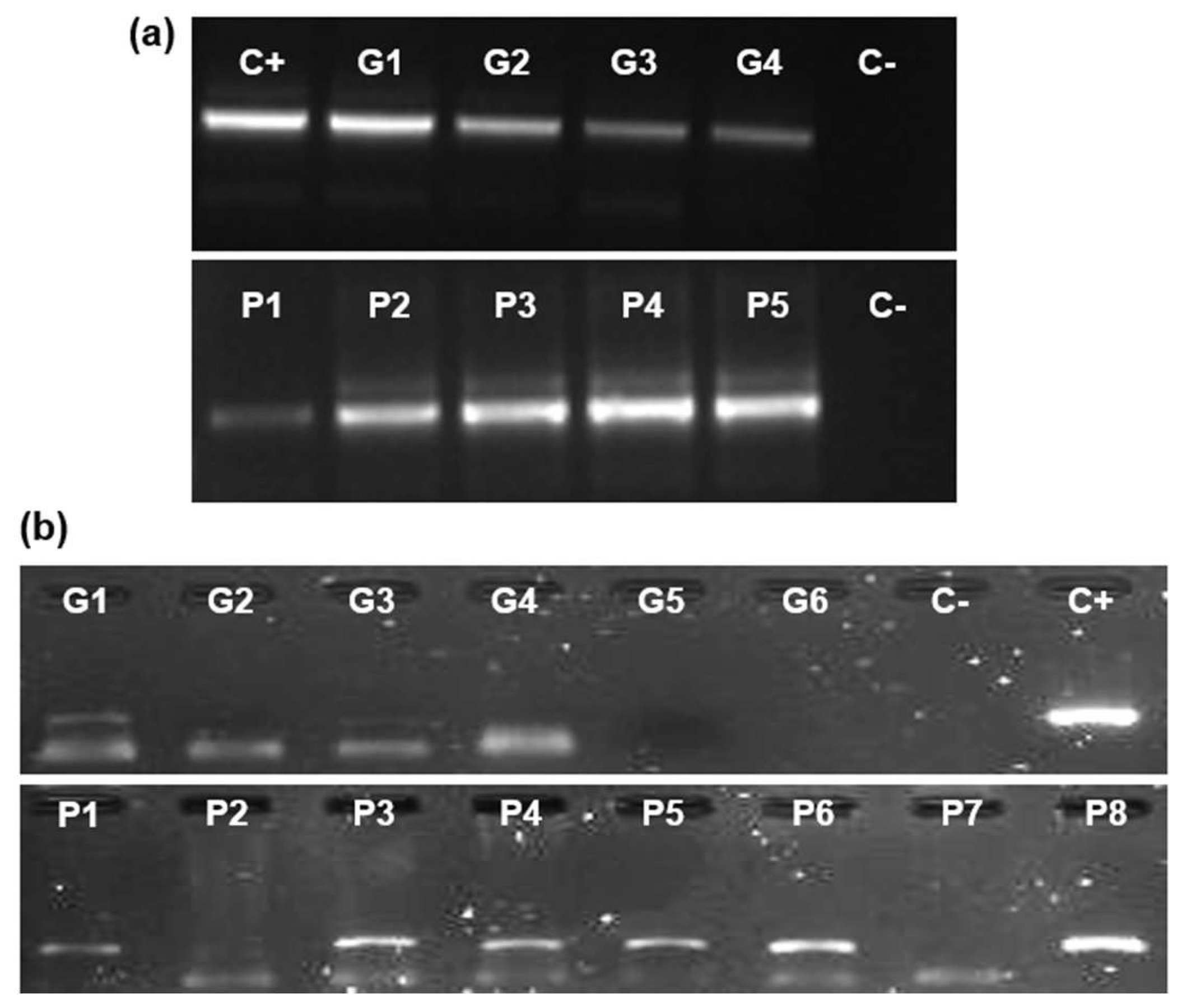
4.4.2. Detection of Adenoviral E1A
4.5. Sequencing of PCR Products
4.6. Statistical Analysis
5. Conclusions
Supplementary Materials
Author Contributions
Funding
Institutional Review Board Statement
Informed Consent Statement
Data Availability Statement
Acknowledgments
Conflicts of Interest
Abbreviations
| ALL | Acute Lymphoblastic Leukemia |
| ATRX | Alpha-thalassemia/mental retardation syndrome X-linked protein |
| ATL | Buffer ATL |
| AW1/AW2 | Wash Buffers 1 and 2 |
| BLAST | Basic Local Alignment Search Tool |
| BLASTn | Basic Local Alignment Search Tool nucleotide |
| BLASTx | Translated nucleotide–protein BLAST |
| bp | Base Pair |
| CBP | CREB-Binding Protein |
| CMV | Cytomegalovirus |
| CNS | Central Nervous System |
| C+/C− | Positive/Negative Control |
| Daxx | Death-domain associated protein |
| DBS | Dried Blood Spot |
| DNA | Deoxyribonucleic Acid |
| dNTP | Deoxynucleotide Triphosphate |
| E1A | Early region 1A |
| E2F | E2F transcription factor family |
| FFPE | Formalin-fixed paraffin-embedded |
| HAdV-C | Human mastadenovirus species C |
| HPV | Human papillomavirus |
| MDA | Multiple-displacement amplification National |
| NCBI | Center for Biotechnology Information |
| Rb | Retinoblastoma protein |
| SV40 | Simian virus 40 |
References
- Zapatka, M.; Borozan, I.; Brewer, D.S.; Iskar, M.; Grundhoff, A.; Alawi, M.; Desai, N.; Sültmann, H.; Moch, H.; PCAWG Pathogens; et al. The landscape of viral associations in human cancers. Nat. Genet. 2020, 52, 320–330, Erratum in Nat. Genet. 2023, 55, 1077. [Google Scholar] [CrossRef] [PubMed]
- De Martel, C.; Georges, D.; Bray, F.; Ferlay, J.; Clifford, G.M. Global burden of cancer attributable to infections in 2018: A worldwide incidence analysis. Lancet Glob. Health 2020, 8, e180–e190. [Google Scholar] [CrossRef] [PubMed]
- Mesri, E.A.; Feitelson, M.A.; Munger, K. Human Viral Oncogenesis: A Cancer Hallmarks Analysis. Cell Host Microbe 2014, 15, 266–282. [Google Scholar] [CrossRef] [PubMed]
- Bangham, C.R.M. HTLV-1 persistence and the oncogenesis of adult T-cell leukemia/lymphoma. Blood 2023, 141, 2299–2306. [Google Scholar] [PubMed]
- Alemany, L.; Brotons, M. Impact of vaccination against human papillomavirus: Towards cervical cancer elimination. Vacunas (Engl. Ed.) 2025, 26, 500485. [Google Scholar] [CrossRef]
- Farbod, Y.; Kankouni, H.; Moini, M.; Fung, S. Hepatitis B-Induced Hepatocellular Carcinoma: Understanding Viral Carcinogenesis and Disease Management. J. Clin. Med. 2025, 14, 2505. [Google Scholar] [CrossRef]
- Solares, S.; León, J.; García-Gutiérrez, L. The Functional Interaction Between Epstein–Barr Virus and MYC in the Pathogenesis of Burkitt Lymphoma. Cancers 2024, 16, 4212. [Google Scholar] [CrossRef]
- Vasconcelos, G.M.; Kang, M.; Pombo-de-Oliveira, M.S.; Schiffman, J.D.; Lorey, F.; Buffler, P.; Wiemels, J.L. Adenovirus detection in Guthrie cards from paediatric leukaemia cases and controls. Br. J. Cancer 2008, 99, 1668–1672. [Google Scholar] [CrossRef]
- Schmidt, J.-A.; Hornhardt, S.; Erdmann, F.; Sánchez-García, I.; Fischer, U.; Schüz, J.; Ziegelberger, G. Risk factors for childhood leukemia: Radiation and beyond. Front. Public Health 2021, 9, 805757. [Google Scholar] [CrossRef] [PubMed]
- MacNeil, K.M.; Dodge, M.J.; Evans, A.M.; Tessier, T.M.; Weinberg, J.B.; Mymryk, J.S. Adenoviruses in medicine: Innocuous pathogen, predator, or partner. Trends Mol. Med. 2023, 29, 4–19. [Google Scholar] [CrossRef] [PubMed]
- Lion, T. Adenovirus infections in immunocompetent and immunocompromised patients. Clin. Microbiol. Rev. 2014, 27, 441–462. [Google Scholar] [CrossRef]
- Soler Wenglein, J.; Scarsella, L.; Kotlewski, C.; Heim, A.; Aydin, M. Current Trends of Human Adenovirus Types Among Hospitalized Children—A Systematic Review. Viruses 2025, 17, 914. [Google Scholar] [CrossRef] [PubMed]
- Kuwano, K.; Kawasaki, M.; Kunitake, R.; Hagimoto, N.; Nomoto, Y.; Matsuba, T.; Nakanishi, Y.; Hara, N. Detection of group C adenovirus DNA in small-cell lung cancer with the nested polymerase chain reaction. J. Cancer Res. Clin. Oncol. 1997, 123, 377–382. [Google Scholar] [CrossRef] [PubMed]
- Javier, R.; Shenk, T. Mammary tumors induced by human adenovirus type 9: A role for the viral early region 4 gene. Breast Cancer Res. Treat. 1996, 39, 57–67. [Google Scholar] [CrossRef]
- Hohlweg, U.; Dorn, A.; Hösel, M.; Webb, D.; Buettner, R.; Doerfler, W. Tumorigenesis by Adenovirus Type 12 in Newborn Syrian Hamsters. In Adenoviruses: Model and Vectors in Virus-Host Interactions: Immune System, Oncogenesis, Gene Therapy; Doerfler, W., Böhm, P., Eds.; Springer: Berlin/Heidelberg, Germany, 2004; pp. 215–244. [Google Scholar]
- Ogawa, K. Embryonal neuroepithelial tumors induced by human adenovirus type 12 in rodents. Acta Neuropathol. 1989, 78, 232–244. [Google Scholar] [CrossRef] [PubMed]
- Bertzbach, L.D.; Ip, W.-H.; Dobner, T. Animal Models in Human Adenovirus Research. Biology 2021, 10, 1253. [Google Scholar] [CrossRef] [PubMed]
- Bertzbach, L.D.; Ip, W.-H.; von Stromberg, K.; Dobner, T.; Grand, R.J. A comparative review of adenovirus A12 and C5 oncogenes. Curr. Opin. Virol. 2024, 67, 101413. [Google Scholar] [CrossRef] [PubMed]
- Ip, W.H.; Dobner, T. Cell transformation by the adenovirus oncogenes E1 and E4. FEBS Lett. 2020, 594, 1848–1860. [Google Scholar] [CrossRef] [PubMed]
- Göttig, L.; Jummer, S.; Staehler, L.; Groitl, P.; Karimi, M.; Blanchette, P.; Kosulin, K.; Branton, P.E.; Schreiner, S. The human adenovirus PI3K-Akt activator E4orf1 is targeted by the tumor suppressor p53. J. Virol. 2024, 98, e01701-23. [Google Scholar] [CrossRef]
- Bogdanovic, G.; Pou, C.; Barrientos-Somarribas, M.; Bjerkner, A.; Honkaniemi, E.; Allander, T.; Andersson, B.; Gustafsson, B. Virome characterisation from Guthrie cards in children who later developed acute lymphoblastic leukaemia. Br. J. Cancer 2016, 115, 1008–1014. [Google Scholar] [CrossRef]
- Maia, R.d.R.P.; Wunsch Filho, V. Infection and childhood leukemia: Review of evidence. Rev. Saude Publica 2013, 47, 1172–1185. [Google Scholar] [CrossRef] [PubMed]
- Hein, D.; Borkhardt, A.; Fischer, U. Insights into the prenatal origin of childhood acute lymphoblastic leukemia. Cancer Metastasis Rev. 2020, 39, 161–171. [Google Scholar] [CrossRef] [PubMed]
- He, J.-R.; Ramakrishnan, R.; Hirst, J.E.; Bonaventure, A.; Francis, S.S.; Paltiel, O.; Håberg, S.E.; Lemeshow, S.; Olsen, S.; Tikellis, G.; et al. Maternal Infection in Pregnancy and Childhood Leukemia: A Systematic Review and Meta-analysis. J. Pediatr. 2020, 217, 98–109.e108. [Google Scholar] [CrossRef] [PubMed]
- Ferreira, D.A.; Tayyar, Y.; Idris, A.; McMillan, N.A.J. A “hit-and-run” affair—A possible link for cancer progression in virally driven cancers. Biochim. Biophys. Acta (BBA) -Rev. Cancer 2021, 1875, 188476. [Google Scholar] [CrossRef] [PubMed]
- Whitehead, T.P.; Wiemels, J.L.; Zhou, M.; Kang, A.Y.; McCoy, L.S.; Wang, R.; Fitch, B.; Petrick, L.M.; Yano, Y.; Imani, P.; et al. Cytokine levels at birth in children who developed acute lymphoblastic leukemia. Cancer Epidemiol. Biomark. Prev. 2021, 30, 1526–1535. [Google Scholar] [CrossRef] [PubMed]
- Gustafsson, B.; Huang, W.; Bogdanovic, G.; Gauffin, F.; Nordgren, A.; Talekar, G.; Ornelles, D.A.; Gooding, L.R. Adenovirus DNA is detected at increased frequency in Guthrie cards from children who develop acute lymphoblastic leukaemia. Br. J. Cancer 2007, 97, 992–994. [Google Scholar] [CrossRef]
- Honkaniemi, E.; Talekar, G.; Huang, W.; Bogdanovic, G.; Forestier, E.; von Doblen, U.; Engvall, M.; Ornelles, D.A.; Gooding, L.R.; Gustafsson, B. Adenovirus DNA in Guthrie cards from children who develop acute lymphoblastic leukaemia (ALL). Br. J. Cancer 2010, 102, 796–798. [Google Scholar] [CrossRef] [PubMed]
- Kosulin, K.; Haberler, C.; Hainfellner, J.A.; Amann, G.; Lang, S.; Lion, T. Investigation of adenovirus occurrence in pediatric tumor entities. J. Virol. 2007, 81, 7629–7635. [Google Scholar] [CrossRef]
- Greaves, M. A causal mechanism for childhood acute lymphoblastic leukaemia. Nat. Rev. Cancer 2018, 18, 471–484, Erratum in Nat. Rev. Cancer 2018, 18, 526.. [Google Scholar] [CrossRef]
- Loeber, J.G.; Platis, D.; Zetterström, R.H.; Almashanu, S.; Boemer, F.; Bonham, J.R.; Borde, P.; Brincat, I.; Cheillan, D.; Dekkers, E.; et al. Neonatal Screening in Europe Revisited: An ISNS Perspective on the Current State and Developments Since 2010. Int. J. Neonatal Screen. 2021, 7, 15. [Google Scholar] [CrossRef]
- Couce, M.L.; Bóveda, M.-D.; Castiñeiras, D.E.; Vázquez-Mosquera, M.-E.; Barbosa-Gouveia, S.; De Castro, M.-J.; Iglesias-Rodríguez, A.J.; Colón, C.; Cocho, J.A.; Sánchez, P. A newborn Screening Programme for Inborn errors of metabolism in Galicia: 22 years of evaluation and follow-up. Orphanet J. Rare Dis. 2024, 19, 202. [Google Scholar] [CrossRef]
- Joo, J.E.; Wong, E.M.; Baglietto, L.; Jung, C.-H.; Tsimiklis, H.; Park, D.J.; Wong, N.C.; English, D.R.; Hopper, J.L.; Severi, G.; et al. The use of DNA from archival dried blood spots with the Infinium HumanMethylation450 array. BMC Biotechnol. 2013, 13, 23. [Google Scholar] [CrossRef]
- Ding, Y.; Owen, M.; Le, J.; Batalov, S.; Chau, K.; Kwon, Y.H.; Van Der Kraan, L.; Bezares-Orin, Z.; Zhu, Z.; Veeraraghavan, N.; et al. Scalable, high quality, whole genome sequencing from archived, newborn, dried blood spots. npj Genom. Med. 2023, 8, 5. [Google Scholar]
- Sok, P.; Lupo, P.J.; Richard, M.A.; Rabin, K.R.; Ehli, E.A.; Kallsen, N.A.; Davies, G.E.; Scheurer, M.E.; Brown, A.L. Utilization of archived neonatal dried blood spots for genome-wide genotyping. PLoS ONE 2020, 15, e0229352. [Google Scholar]
- Hendrix, M.M.; Cuthbert, C.D.; Cordovado, S.K. Assessing the Performance of Dried-Blood-Spot DNA Extraction Methods in Next Generation Sequencing. Int. J. Neonatal Screen. 2020, 6, 36. [Google Scholar] [CrossRef]
- Bækvad-Hansen, M.; Bybjerg-Grauholm, J.; Poulsen, J.B.; Hansen, C.S.; Hougaard, D.M.; Hollegaard, M.V. Evaluation of whole genome amplified DNA to decrease material expenditure and increase quality. Mol. Genet. Metab. Rep. 2017, 11, 36–45. [Google Scholar] [CrossRef]
- Sobol, M.S.; Kaster, A.-K. Back to Basics: A Simplified Improvement to Multiple Displacement Amplification for Microbial Single-Cell Genomics. Int. J. Mol. Sci. 2023, 24, 4270. [Google Scholar] [CrossRef]
- Ghantous, A.; Saffery, R.; Cros, M.-P.; Ponsonby, A.-L.; Hirschfeld, S.; Kasten, C.; Dwyer, T.; Herceg, Z.; Hernandez-Vargas, H. Optimized DNA extraction from neonatal dried blood spots: Application in methylome profiling. BMC Biotechnol. 2014, 14, 60. [Google Scholar] [CrossRef] [PubMed]
- Kumar, A.; Mhatre, S.; Godbole, S.; Jha, P.; Dikshit, R. Optimization of extraction of genomic DNA from archived dried blood spot (DBS): Potential application in epidemiological research & bio banking. Gates Open Res. 2019, 2, 57. [Google Scholar]
- Duintjer, A.J.; Imholz, S.; Pico-Knijnenburg, I.; Heuperman, A.; Hodemaekers, H.; Deutekom, E.S.; Voorhoeve, E.; Dollé, M.E.T.; van der Burg, M. Comparing DNA Isolation and Preparation Protocols for Dried Blood Spots in the Context of Genomic Newborn Screening. Int. J. Neonatal Screen. 2025, 11, 75. [Google Scholar] [CrossRef]
- Okojie, J.; O’Neal, N.; Burr, M.; Worley, P.; Packer, I.; Anderson, D.; Davis, J.; Kearns, B.; Fatema, K.; Dixon, K.; et al. DNA Quantity and Quality Comparisons between Cryopreserved and FFPE Tumors from Matched Pan-Cancer Samples. Curr. Oncol. 2024, 31, 2441–2452. [Google Scholar] [CrossRef]
- Hong, L.; Li, J.; Zeng, W.; Li, Y.; Yu, C.; Zhao, S.; Chen, L.; Feng, Y. The seroprevalence of adenoviruses since 2000. Emerg. Microbes Infect. 2025, 14, 2475831. [Google Scholar] [CrossRef] [PubMed]
- Kajon, A.E. Adenovirus infections: New insights for the clinical laboratory. J. Clin. Microbiol. 2024, 62, e00836-22. [Google Scholar] [CrossRef] [PubMed]
- Radke, J.R.; Cook, J.L. Human adenovirus infections: Update and consideration of mechanisms of viral persistence. Curr. Opin. Infect. Dis. 2018, 31, 251–256. [Google Scholar] [CrossRef]
- Lion, T. Adenovirus persistence, reactivation, and clinical management. FEBS Lett. 2019, 593, 3571–3582. [Google Scholar] [CrossRef]
- Zhou, Y.; Nakajima, R.; Shirasawa, M.; Fikriyanti, M.; Zhao, L.; Iwanaga, R.; Bradford, A.P.; Kurayoshi, K.; Araki, K.; Ohtani, K. Expanding roles of the E2F-RB-p53 pathway in tumor suppression. Biology 2023, 12, 1511. [Google Scholar] [CrossRef]
- Lim, M.D. Dried Blood Spots for Global Health Diagnostics and Surveillance: Opportunities and Challenges. Am. J. Trop. Med. Hyg. 2018, 99, 256–265. [Google Scholar] [CrossRef]
- Malsagova, K.; Kopylov, A.; Stepanov, A.; Butkova, T.; Izotov, A.; Kaysheva, A. Dried Blood Spot in Laboratory: Directions and Prospects. Diagnostics 2020, 10, 248. [Google Scholar] [CrossRef]
- Ornelles, D.A.; Gooding, L.R.; Garnett-Benson, C. Neonatal Infection with Species C Adenoviruses Confirmed in Viable Cord Blood Lymphocytes. PLoS ONE 2015, 10, e0119256. [Google Scholar]
- Canning, J.; Strawbridge, R.J.; Miedzybrodzka, Z.; Marioni, R.E.; Melbye, M.; Porteous, D.J.; Hurles, M.E.; Sattar, N.; Sudlow, C.L.M.; Collins, R.; et al. Methods applied to neonatal dried blood spot samples for secondary research purposes: A scoping review. Crit. Rev. Clin. Lab. Sci. 2024, 61, 685–708. [Google Scholar] [CrossRef]
- Dunn, J.K.E.; Chakraborty, P.; Reuvers, E.; Gallagher, L.; Kernohan, K.D.; Lacaria, M.; Barton, M.; Leifso, K.; Pernica, J.M.; Santander, E.; et al. Outcomes of a Population-Based Congenital Cytomegalovirus Screening Program. JAMA Pediatr. 2025, 179, 332–339. [Google Scholar] [CrossRef] [PubMed]
- Schleiss, M.R.; Osterholm, E.A.; Shanley, R.; Hernandez-Alvarado, N.; Graupmann, E.; Kruc, R.; Jansen, R.; Polonenko, M.; Herd, H.; Fernandez-Alarcon, C.; et al. Dried Blood Spot PCR for Detection of Congenital Cytomegalovirus Infection and Disease. JAMA Netw. Open 2025, 8, e2529837. [Google Scholar] [PubMed]
- Heydarifard, Z.; Zadheidar, S.; Kalantari, S.; Nejati, A.; Achak, F.; Salimi, V.; Mokhtari-Azad, T.; Shafiei-Jandaghi, N.Z. Evaluation of Lytic and Persistent Human Adenovirus Infections in Tonsil Tissue of Children With Tonsillar Hypertrophy: A Matched Case–Control Study. Laryngoscope Investig. Otolaryngol. 2025, 10, e70113. [Google Scholar] [CrossRef]
- Garnett, C.; Talekar, G.; Mahr, J.; Huang, W.; Zhang, Y.; Ornelles, D.; Gooding, L. Latent species C adenoviruses in human tonsil tissues. J. Virol. 2009, 83, 2417–2428. [Google Scholar] [CrossRef]
- Proenca-Modena, J.L.; de Souza Cardoso, R.; Criado, M.F.; Milanez, G.P.; de Souza, W.M.; Parise, P.L.; Bertol, J.W.; de Jesus, B.L.S.; Prates, M.C.M.; Silva, M.L.; et al. Human adenovirus replication and persistence in hypertrophic adenoids and palatine tonsils in children. J. Med. Virol. 2019, 91, 1250–1262. [Google Scholar]
- Lynch, K.L.; Gooding, L.R.; Garnett-Benson, C.; Ornelles, D.A.; Avgousti, D.C. Epigenetics and the dynamics of chromatin during adenovirus infections. FEBS Lett. 2019, 593, 3551–3570. [Google Scholar] [CrossRef]
- Cantarella, S.; Vezzoli, M.; Carnevali, D.; Morselli, M.; Zemke, N.R.; Montanini, B.; Daussy, C.F.; Wodrich, H.; Teichmann, M.; Pellegrini, M.; et al. Adenovirus small E1A directs activation of Alu transcription at YAP/TEAD- and AP-1-bound enhancers through interactions with the EP400 chromatin remodeler. Nucleic Acids Res. 2024, 52, 9481–9500. [Google Scholar]
- Lin, R.-K.; Wang, Y.-C. Dysregulated transcriptional and post-translational control of DNA methyltransferases in cancer. Cell Biosci. 2014, 4, 46. [Google Scholar]
- Ferrari, R.; Pellegrini, M.; Horwitz, G.A.; Xie, W.; Berk, A.J.; Kurdistani, S.K. Epigenetic reprogramming by adenovirus E1A. Science 2008, 321, 1086–1088. [Google Scholar] [CrossRef]
- Ferrari, R.; Gou, D.; Jawdekar, G.; Johnson, S.A.; Nava, M.; Su, T.; Yousef, A.F.; Zemke, N.R.; Pellegrini, M.; Kurdistani, S.K.; et al. Adenovirus Small E1A Employs the Lysine Acetylases p300/CBP and Tumor Suppressor Rb to Repress Select Host Genes and Promote Productive Virus Infection. Cell Host Microbe 2014, 16, 663–676. [Google Scholar]
- Saha, A.; Ganguly, A.; Kumar, A.; Srivastava, N.; Pathak, R. Harnessing Epigenetics: Innovative Approaches in Diagnosing and Combating Viral Acute Respiratory Infections. Pathogens 2025, 14, 129. [Google Scholar] [CrossRef]
- Schreiner, S.; Martinez, R.; Groitl, P.; Rayne, F.; Vaillant, R.; Wimmer, P.; Bossis, G.; Sternsdorf, T.; Marcinowski, L.; Ruzsics, Z.; et al. Transcriptional activation of the adenoviral genome is mediated by capsid protein VI. PLoS Pathog. 2012, 8, e1002549. [Google Scholar]
- Schreiner, S.; Bürck, C.; Glass, M.; Groitl, P.; Wimmer, P.; Kinkley, S.; Mund, A.; Everett, R.D.; Dobner, T. Control of human adenovirus type 5 gene expression by cellular Daxx/ATRX chromatin-associated complexes. Nucleic Acids Res. 2013, 41, 3532–3550. [Google Scholar]
- Sohn, S.Y.; Hearing, P. Adenoviral strategies to overcome innate cellular responses to infection. FEBS Lett. 2019, 593, 3484–3495. [Google Scholar] [CrossRef]
- Panditharatna, E.; Filbin, M.G. The growing role of epigenetics in childhood cancers. Curr. Opin. Pediatr. 2020, 32, 67–75. [Google Scholar] [CrossRef]
- Bolitho, A.; Liu, H. Epigenetic Regulation in Wilms Tumor. Biomedicines 2025, 13, 1678. [Google Scholar] [CrossRef]
- Kawata, K.; Chapman, O.S.; Narumi, S.; Kawauchi, D. Epigenetic modifications and their roles in pediatric brain tumor formation: Emerging insights from chromatin dysregulation. Front. Oncol. 2025, 15, 1569548. [Google Scholar] [CrossRef]
- Lynch, J.P., III; Kajon, A.E. Adenovirus: Epidemiology, global spread of novel serotypes, and advances in treatment and prevention. Semin. Respir. Crit. Care Med. 2016, 37, 586–602. [Google Scholar] [CrossRef]
- Abdullah, O.; Fall, A.; Klein, E.; Mostafa, H.H. Increased circulation of human adenovirus in 2023: An investigation of the circulating genotypes, upper respiratory viral loads, and hospital admissions in a large academic medical center. J. Clin. Microbiol. 2024, 62, e01237-23. [Google Scholar] [CrossRef]
- Nevels, M.; Täuber, B.; Spruss, T.; Wolf, H.; Dobner, T. “Hit-and-Run” Transformation by Adenovirus Oncogenes. J. Virol. 2001, 75, 3089–3094. [Google Scholar] [CrossRef]
- Niller, H.H.; Wolf, H.; Minarovits, J. Viral hit and run-oncogenesis: Genetic and epigenetic scenarios. Cancer Lett. 2011, 305, 200–217. [Google Scholar] [CrossRef]
- Leruez-Ville, M.; Chatzakis, C.; Lilleri, D.; Blazquez-Gamero, D.; Alarcon, A.; Bourgon, N.; Foulon, I.; Fourgeaud, J.; Gonce, A.; Jones, C.E.; et al. Consensus recommendation for prenatal, neonatal and postnatal management of congenital cytomegalovirus infection from the European congenital infection initiative (ECCI). Lancet Reg. Health Eur. 2024, 40, 100892, Erratum in Lancet Reg. Health Eur. 2024, 42, 100974.. [Google Scholar]
- Vedham, V.; Verma, M.; Mahabir, S. Early-life exposures to infectious agents and later cancer development. Cancer Med. 2015, 4, 1908–1922. [Google Scholar] [CrossRef]
- Carmona, A.S.; Kakkar, F.; Gantt, S. Perinatal Cytomegalovirus Infection. Curr. Treat. Options Pediatr. 2022, 8, 395–411. [Google Scholar] [CrossRef]
- Al Beloushi, M.; Saleh, H.; Ahmed, B.; Konje, J.C. Congenital and Perinatal Viral Infections: Consequences for the Mother and Fetus. Viruses 2024, 16, 1698. [Google Scholar] [CrossRef]
- Wiemels, J.L.; Talbäck, M.; Francis, S.; Feychting, M. Early infection with cytomegalovirus and risk of childhood hematologic malignancies. Cancer Epidemiol. Biomark. Prev. 2019, 28, 1024–1027. [Google Scholar]



| Sample | Total Samples | Mean DNA Concentration | Range | A260/A280 Mean | Range |
|---|---|---|---|---|---|
| Guthrie cards | 86 | 15 ng/µL | 9–21 ng/µL | 1.75 | 1.68–1.92 |
| Paraffin-embedded tissues | 95 | 254 ng/µL | 8–500 ng/µL | 1.81 | 1.52–2.10 |
| Sample Type | Total Samples | E1A-Positive n (%) | E1A-Negative n, (%) |
|---|---|---|---|
| Guthrie card | 54 | 23 (43%) | 31 (57%) |
| Guthrie card (control) | 32 | 11 (34%) | 21 (66%) |
| Paraffin | 75 | 31 (41%) | 44 (59%) |
| Paraffin (control) | 20 | 1 (5%) | 19 (95%) |
Disclaimer/Publisher’s Note: The statements, opinions and data contained in all publications are solely those of the individual author(s) and contributor(s) and not of MDPI and/or the editor(s). MDPI and/or the editor(s) disclaim responsibility for any injury to people or property resulting from any ideas, methods, instructions or products referred to in the content. |
© 2026 by the authors. Licensee MDPI, Basel, Switzerland. This article is an open access article distributed under the terms and conditions of the Creative Commons Attribution (CC BY) license.
Share and Cite
Mendoza, G.; Guerrero, R.; Strunk, M.; Calvo, C.; González-Irazabal, Y.; Álvarez, R.; Gomez-Sirvent, J.E.; López-Almaraz, R.; Hernández-Losa, J.; Ramón y Cajal, S.; et al. Detection of Adenoviral E1A Gene in Guthrie Cards for Insights into Pediatric Cancer Origin. Int. J. Mol. Sci. 2026, 27, 4047. https://doi.org/10.3390/ijms27094047
Mendoza G, Guerrero R, Strunk M, Calvo C, González-Irazabal Y, Álvarez R, Gomez-Sirvent JE, López-Almaraz R, Hernández-Losa J, Ramón y Cajal S, et al. Detection of Adenoviral E1A Gene in Guthrie Cards for Insights into Pediatric Cancer Origin. International Journal of Molecular Sciences. 2026; 27(9):4047. https://doi.org/10.3390/ijms27094047
Chicago/Turabian StyleMendoza, Gracia, Rebeca Guerrero, Mark Strunk, Carlota Calvo, Yolanda González-Irazabal, Ramiro Álvarez, Jorge E. Gomez-Sirvent, Ricardo López-Almaraz, Javier Hernández-Losa, Santiago Ramón y Cajal, and et al. 2026. "Detection of Adenoviral E1A Gene in Guthrie Cards for Insights into Pediatric Cancer Origin" International Journal of Molecular Sciences 27, no. 9: 4047. https://doi.org/10.3390/ijms27094047
APA StyleMendoza, G., Guerrero, R., Strunk, M., Calvo, C., González-Irazabal, Y., Álvarez, R., Gomez-Sirvent, J. E., López-Almaraz, R., Hernández-Losa, J., Ramón y Cajal, S., González-Pastor, R., & Martin-Duque, P. (2026). Detection of Adenoviral E1A Gene in Guthrie Cards for Insights into Pediatric Cancer Origin. International Journal of Molecular Sciences, 27(9), 4047. https://doi.org/10.3390/ijms27094047