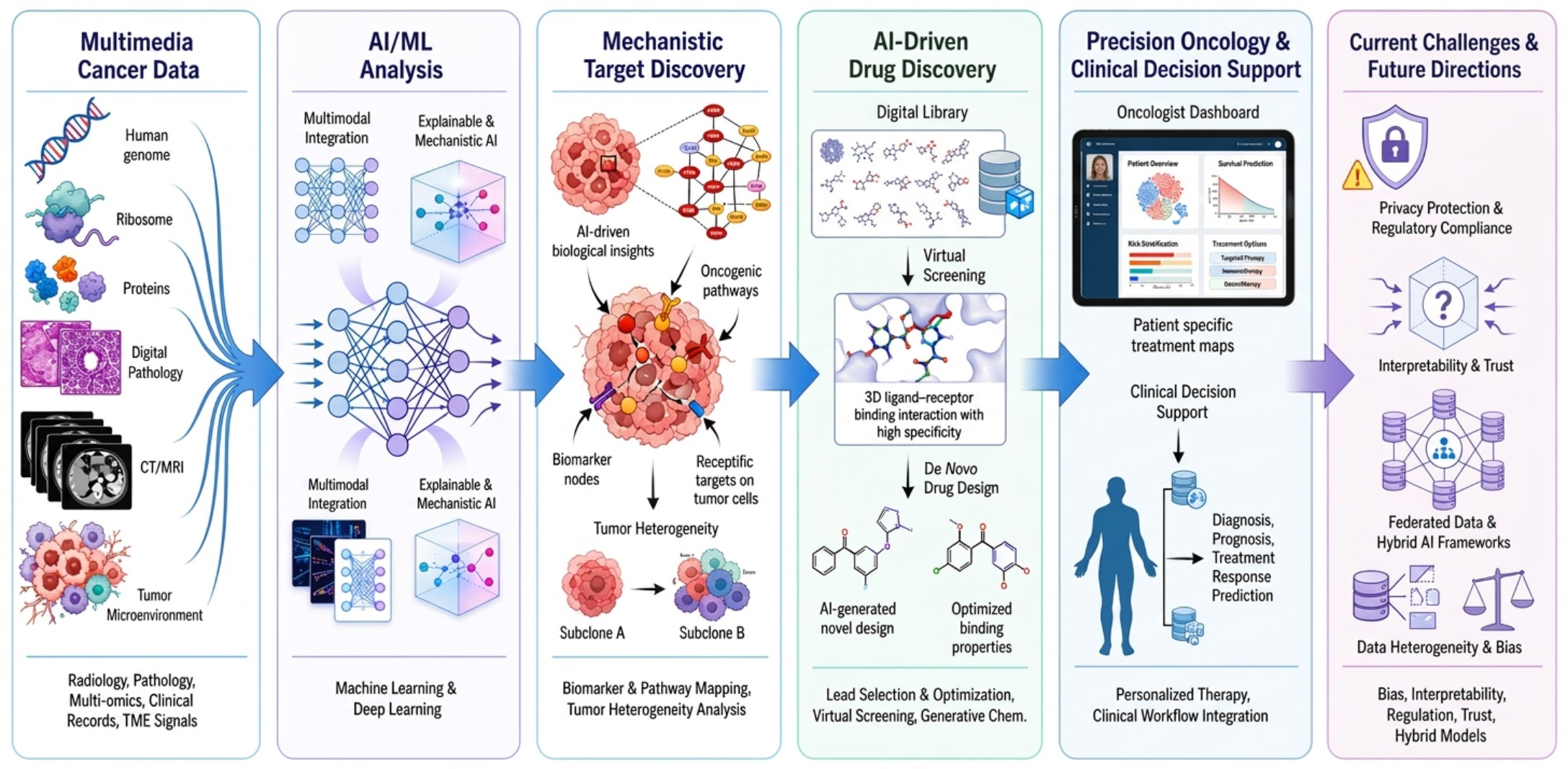
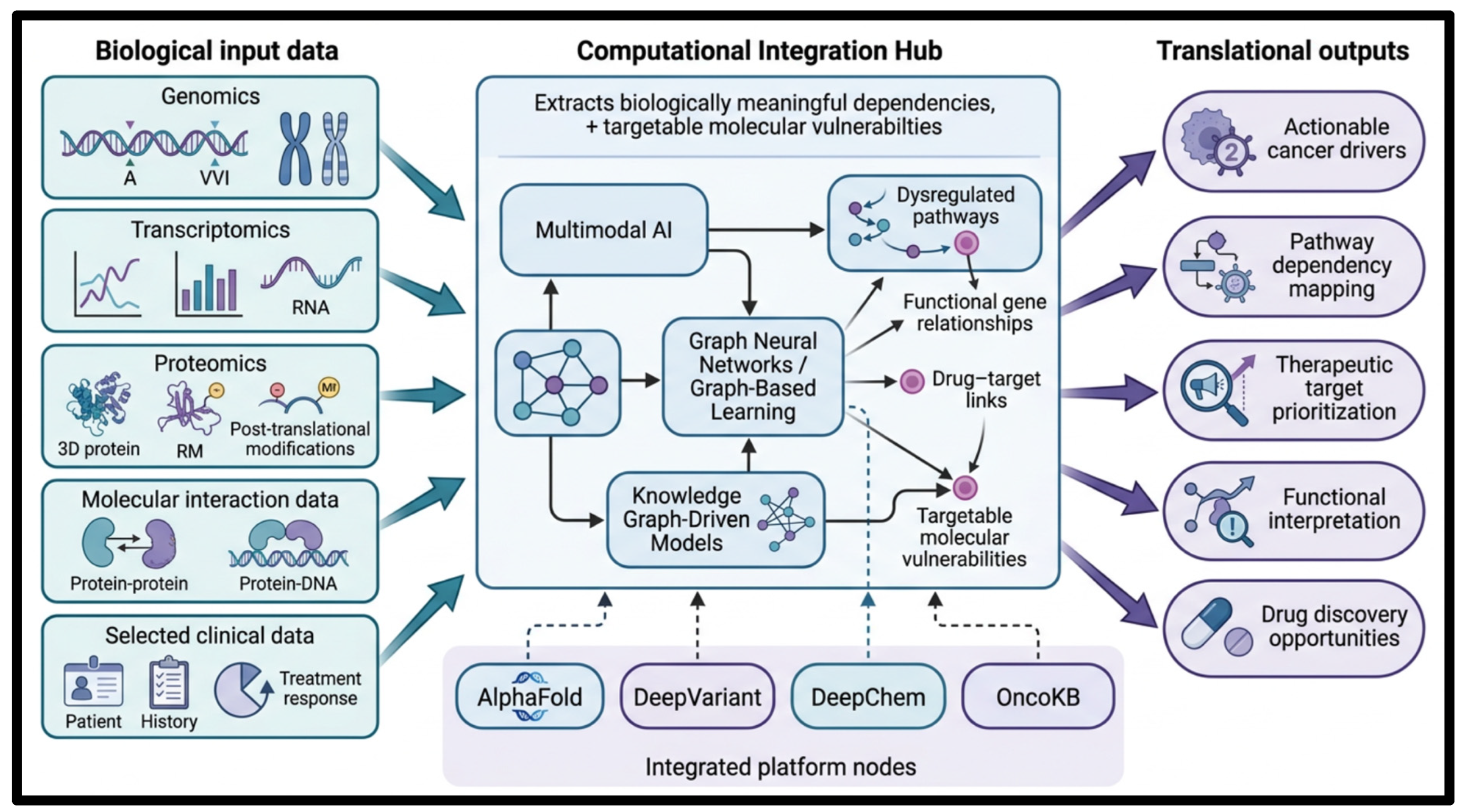
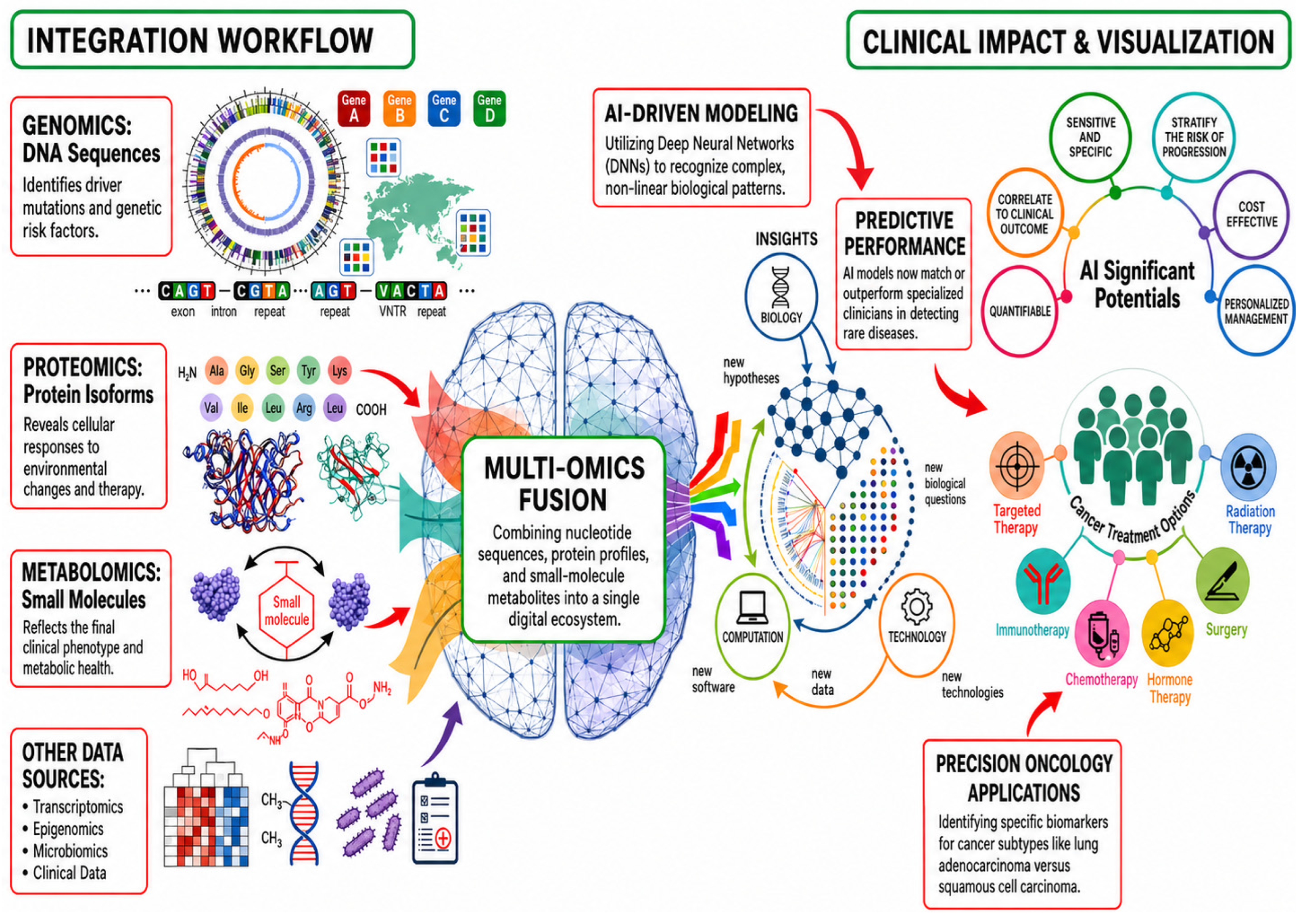
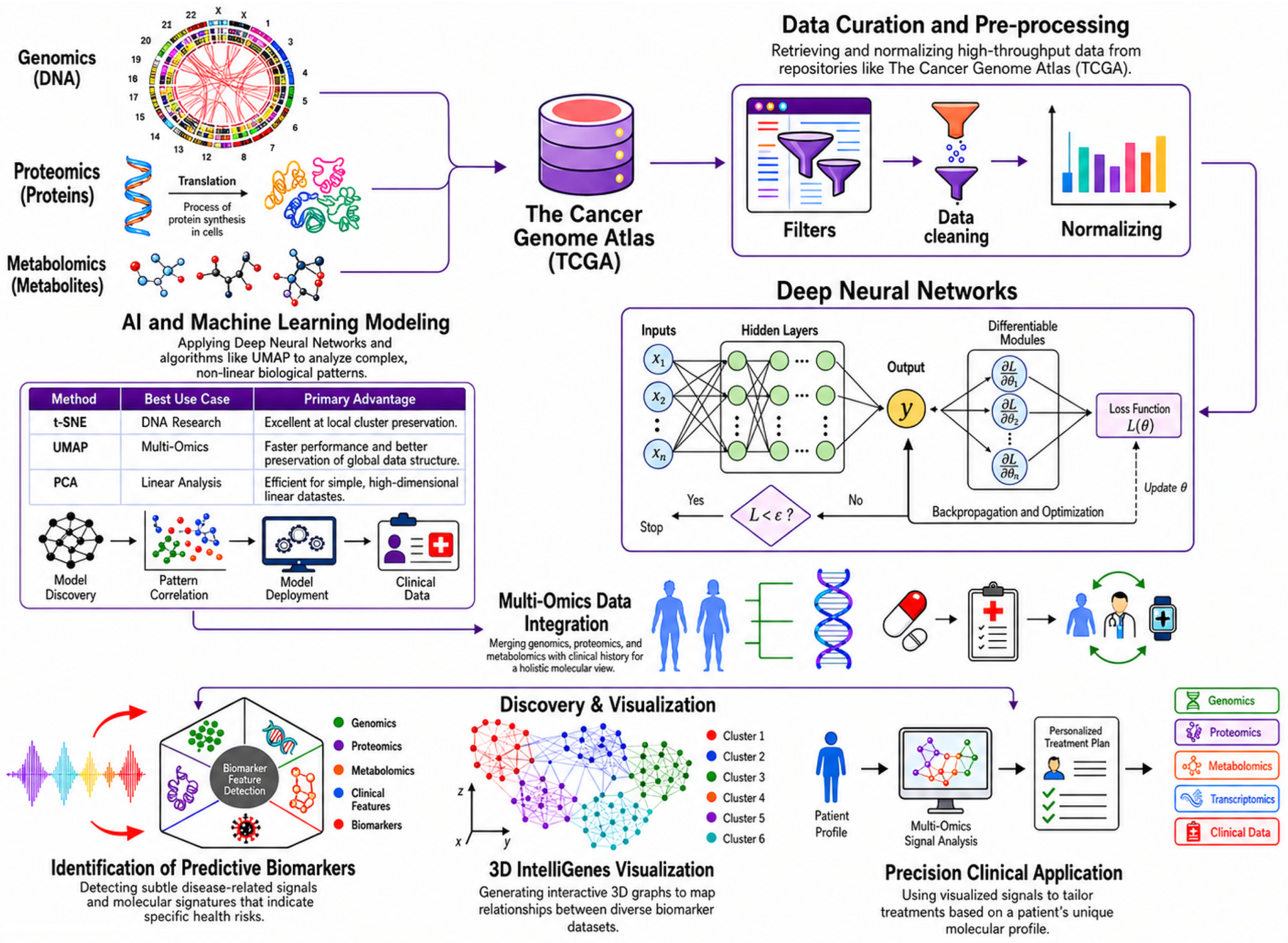
Next-Generation Artificial Intelligence Strategies for Mechanistic Cancer Target Discovery and Drug Development: A State-of-the-Art Review


 ,
,  , ,
, ,  ,
, 
Abstract
1. Introduction
2. AI Foundations for Mechanistic Cancer Target Discovery & Modern Biomedical Research
2.1. Conceptual Definitions and Analytical Scope of AI Approaches
2.2. AI Frameworks Supporting Mechanistic Target Discovery and Therapeutic Prioritization
2.3. Integration of Artificial Intelligence Technologies in Precision Oncology
3. Artificial Intelligence-Driven Decoding of Cancer Biology and Precision Oncology
3.1. AI-Enabled Cancer Genomics and Tumor Heterogeneity as a Basis for Mechanistic Target Discovery

| No. | Cancer Type | Main AI Method(s) | Data Types | Tumor Heterogeneity/Genomics Focus | Key Finding/Unique Contribution | Main Limitation/Challenge | Clinical or Research Relevance | Citation |
|---|---|---|---|---|---|---|---|---|
| 1 | Esophageal cancer | ML, DL, AI-guided multi-omics integration | Genomics, epigenomics, transcriptomics, proteomics, metabolomics, single-cell, and spatial data | Multi-layer tumor heterogeneity across cellular, genetic, and phenotypic levels | Explains how AI can integrate multi-omics to resolve esophageal tumor heterogeneity and support precision oncology workflows | Integration of highly heterogeneous omics layers remains difficult | Useful framework for biomarker discovery and patient-specific stratification | [56] |
| 2 | Breast cancer | Self-supervised DL | H&E histology + spatial omics for training | Tumor microenvironment (TME) heterogeneity | Reports prediction of immune and stromal cell states from routine H&E slides alone, with an AUROC of roughly 0.88–0.97 | Depends on spatial-omics-labeled training data; early-stage evidence | Promising low-cost route for TME profiling without full molecular assays | [54] |
| 3 | Multiple cancers | ML, DL | Genomics, transcriptomics, proteomics, radiomics, and pathology images | Cross-platform precision oncology | Summarizes how AI extracts latent patterns from multi-modal cancer data for diagnosis, prognosis, and treatment-response prediction | Data quality and cross-cohort heterogeneity | Broad precision-medicine overview linking AI to clinical oncology | [31] |
| 4 | Multiple cancers | AI across translational oncology | Multi-omics, single-cell, spatial profiling, clinical data | Translational integration of tumor biology with AI | Highlights AI for target discovery, biomarker identification, patient stratification, and therapy-response prediction | Reproducibility, interpretability, workflow integration | Strong translational perspective for precision oncology | [52] |
| 5 | Multiple cancers | Filter, wrapper, embedded feature-selection methods with ML | High-dimensional omics datasets | Tumor subtype classification | Shows feature selection is central for reducing dimensionality and improving interpretability in subtype classification. | Overfitting and instability across datasets | Better biomarker selection for subtype diagnosis | [49] |
| 6 | Multiple cancers | AI-driven multi-omics language models/DL | Genomics, transcriptomics, multi-omics | Cancer heterogeneity representation learning | Reviews emerging language-model-style frameworks for integrating omics and improving stratification and drug-response prediction | Standardization and evaluation of these models are still immature | Important future direction for foundation-model oncology | [57] |
| 7 | Multiple cancers | ML, DL for multi-omics integration | Genomic, epigenomic, transcriptomic, proteomic, metabolomic data | Early detection, diagnosis, prognosis, treatment | Summarizes how multi-omics AI can link biological mechanisms of heterogeneity to clinical tasks across the cancer-care pathway | Data harmonization and ethical issues | Good umbrella reference for AI-enabled cancer research pipelines | [58] |
| 8 | Colorectal cancer | AI-enabled single-cell and spatial transcriptomic analysis | scRNA-seq, spatial transcriptomics | CRC cellular composition and spatial heterogeneity | Explains how AI helps decode cellular interactions and spatial organization in colorectal cancer | Processing and biological interpretation remain hard | Supports precision exploration of CRC heterogeneity | [53] |
| 9 | Multiple cancers | Predictive modeling, radiogenomics AI | Radiology + genomic phenotypes | Imaging-linked molecular heterogeneity | Reviews how AI-based radiogenomics can link imaging phenotypes to genomic states, prognosis, and recurrence risk | Difficult fusion of imaging and genomics; standardization issues | Important for non-invasive precision oncology | [59] |
| 10 | Breast cancer | Single-cell analytics + interaction modeling | Single-cell RNA-seq breast tumor atlas | Heterogeneity of epithelial–immune interactions | Built a large single-cell breast tumor atlas and derived InteractPrint, which predicts immunotherapy response across breast cancer subtypes | Needs validation across broader clinical cohorts | Strong example of AI/omics translating heterogeneity into response prediction | [60] |
| 11 | Breast cancer | DL | Histopathology slides + spatial transcriptomics for training | Spatial gene-expression heterogeneity | Predicts spatial gene expression directly from H&E and reportedly outperforms earlier ST predictors on validation data | Preprint; not yet the final peer-reviewed journal version of the result shown | Could scale spatial profiling to much larger cohorts | [61] |
| 12 | Triple-negative breast cancer | Radiomic/radiogenomic modeling | Imaging + molecular data | Intertumoral and peritumoral heterogeneity | Identified radiomic features reflecting peritumoral heterogeneity associated with immune suppression and metabolic reprogramming in TNBC | Generalization across scanners and cohorts can be difficult | Useful for non-invasive risk stratification | [62] |
| 13 | Non-small cell lung cancer (NSCLC) | Transformer + graph variational autoencoder | Spatial transcriptomics + morphology images | Tumoral niche heterogeneity | Introduces a framework to identify and characterize tumor niches by combining spatial transcriptomics with morphology | Computational complexity and external validation remain concerns | Helps map functional niches linked to progression and therapy resistance | [63] |
| 14 | General/spatial transcriptomics datasets | Graph neural networks | Spatial transcriptomics with location information | Spatial domain heterogeneity | Proposes a graph-deep-learning framework to improve spatial clustering across heterogeneous spatial transcriptomics datasets | Choice of graph module and scalability still matter | Relevant for discovering spatially distinct tumor regions | [64] |
| 15 | Pan-cancer | Cross-attention transformer multimodal fusion | Histology + genomics | Survival heterogeneity across cancer types | Uses multimodal fusion of pathology and genomic data for pan-cancer survival prediction, aiming to capture complementary phenotype–genotype signals | Multimodal alignment and external validation are challenging | Important for prognosis modeling in precision oncology | [65] |
3.2. AI-Guided Biomarker Discovery and Multi-Omics Data Integration
4. AI-Guided Cancer Mechanistic Target Discovery and Translational Therapeutic Development
4.1. AI for Functional Target Prioritization in Cancer
4.2. Causal AI and Functional Inference in Mechanistic Target Discovery
4.3. AI-Enabled Discovery of Synthetic Lethal Vulnerabilities
4.4. AI in Drug Target Validation, Repurposing, and Combination Therapy
| Concept | Description | Research Significance | Key Applications/Findings | Citations |
|---|---|---|---|---|
| Network Biology & Systems Biology | AI models analyze gene regulatory and protein–protein interaction networks to understand the architecture of cellular systems involved in cancer. | Enables identification of central regulatory nodes and molecular hubs that drive tumor progression. | Discovery of novel anticancer targets and improved understanding of tumor signaling networks. | [2,75] |
| AI-Based Pathway Analysis | ML integrates multi-omics datasets to detect dysregulated signaling pathways in cancer. | Provides systems-level understanding of cancer biology and helps identify molecular pathways suitable for targeted therapy. | Identification of oncogenic regulators and synergistic therapeutic targets in colon and gastric cancers. | [76] |
| Causal AI & Mechanistic Modeling | Use of DAGs, counterfactual reasoning, and causal inference models to identify cause-and-effect relationships in biological networks. | Distinguishes driver mutations from passenger mutations and improves target prioritization. | Identification of causal regulators of tumor progression and key driver genes. | [75] |
| Synthetic Lethality Discovery | AI predicts gene pairs whose combined disruption selectively kills cancer cells. | Enables the development of highly selective targeted therapies with minimal toxicity to healthy cells. | Discovery of synthetic lethal gene interactions for precision oncology strategies. | [77] |
| AI-Driven Drug Target Identification | DL models analyze molecular structures and biological interactions to predict drug-target binding. | Accelerates early-stage drug discovery and improves candidate selection. | Discovery of STK33 inhibitors that induce apoptosis and inhibit tumor cell proliferation. | [11] |
| Multi-Target Drug Discovery | AI models analyze biomarker signatures to design therapies that simultaneously target multiple molecular pathways. | Supports personalized medicine and improved treatment efficacy. | Improved drug response prediction and therapeutic design in colon cancer. | [80] |
| AI-Assisted Drug Combination Screening | Computational models simulate drug interactions within biological networks to identify synergistic combinations. | Helps overcome drug resistance and improve treatment outcomes. | Identification of synergistic targets for PKMYT1 inhibitors in metastatic gastric cancer models. | [76] |
| AI in Drug development Pipeline | AI assists in target identification, virtual screening, toxicity prediction, biomarker discovery, and clinical trial optimization. | Accelerates drug development while reducing cost and experimental workload. | Can support patient stratification, precision oncology strategies, and faster therapeutic development. | [6] |
4.5. Translational Perspective and Remaining Challenges
5. AI-Enabled Translation of Cancer Target Discovery into Therapeutic Development
5.1. From Target Prioritization to Hit Discovery and Lead Optimization
5.2. AI-Guided Drug Repurposing and Rational Therapeutic Design
5.3. Scope and Translational Perspective
| Stage of Drug Development | AI Application | Description of AI Role | Key Methods/Technologies | Representative AI Tools/Platforms | Major Benefits | Key Challenges | Citations |
|---|---|---|---|---|---|---|---|
| Target Discovery | Drug Target Identification | AI analyzes genomic, proteomic, and multi-omics datasets to identify disease-associated genes, proteins, and biological pathways as potential drug targets. AI also predicts protein structures and drug–target interactions. | Multi-omics data integration, ML prediction models, protein structure prediction, network biology, drug–target interaction modeling | AlphaFold 3 v3.0.2, DeepMind AlphaFold DB, DeepChem 2.8.0, Open Targets Platform 26.03, BioBERT v1.1, DrugBank API v1 AI tools | Faster identification of therapeutic targets; improved understanding of disease mechanisms; higher success rate in early-stage discovery | Data quality issues, biased biological datasets, validation difficulties, and model interpretability limitations | [84,85,93] |
| Hit Discovery | Virtual Screening | AI enables screening of millions of chemical compounds against biological targets to identify potential drug candidates. Computational models predict molecular binding affinity and biological activity. | Molecular docking, QSAR modeling, DL prediction models, graph neural networks, and high-throughput virtual screening | AtomNet, DeepChem (2.6.0), Schrödinger AI Platform 2026-1 , AutoDock Vina v1.2.6, MOE (Molecular Operating Environment) | Efficient identification of promising drug candidates; reduced experimental cost; accelerated hit discovery | High computational cost; complex molecular representations; limited interpretability | [82,95] |
| Lead Optimization | AI-Driven Drug Design | AI predicts physicochemical and pharmacokinetic properties such as toxicity, solubility, and binding affinity, enabling optimization of candidate molecules before synthesis. | DL models, molecular property prediction, QSAR models, molecular dynamics simulations, graph neural networks | DeepChem, Chemprop 2.2.3, Schrödinger AI Drug Design Suite, IBM RXN for Chemistry | Faster optimization of lead compounds; reduced experimental trials; improved molecular design | Model explainability limitations; difficulty predicting complex biological interactions | [96,97,98] |
| Drug Development | Drug Repurposing | AI identifies new therapeutic uses for existing drugs by integrating chemical, biological, genomic, and clinical data. This approach is widely used for emerging diseases and rare conditions. | Network-based analysis, ML prediction models, knowledge graph analysis, and multi-omics integration | DrugRepAI, DeepPurpose 0.1.5, RepurposeDB, BenevolentAI Platform | Lower development cost; shorter regulatory pathways; faster therapeutic availability | Data heterogeneity, experimental validation requirements, and regulatory challenges | [81,83,84] |
| Molecular Innovation | Generative AI in Drug Discovery | Generative AI creates novel chemical structures and optimizes molecules with desired pharmacological properties using advanced DL models. | Generative adversarial networks (GANs), variational autoencoders (VAEs), transformer models, reinforcement learning | Insilico Medicine (Chemistry42), DeepGenChem, REINVENT 4.7, MolGAN, Generative Tensorial Reinforcement Learning (GENTRL 0.1) | Enables rapid generation of candidate molecules; accelerated lead discovery; optimization of drug properties | Synthetic feasibility concerns, unrealistic molecule generation, and model interpretability challenges | [82,90,99] |
| Clinical Development | AI-Based Clinical Trial Optimization | AI enhances clinical trial design, patient recruitment, eligibility matching, and outcome prediction using large healthcare datasets and real-world evidence. | Electronic health record analysis, predictive analytics, digital twins, synthetic control arms, ML outcome prediction | Tempus AI, TriNetX, IBM Watson Health, Deep 6 AI, Medidata AI Clinical Platform | Reduced trial duration and cost; improved patient stratification; increased trial success rates | Ethical concerns, patient privacy issues, regulatory barriers, heterogeneous clinical data integration | [91,92,100] |
| Entire Drug Discovery Pipeline | AI-Driven Drug Discovery Ecosystem | AI integrates across the entire pharmaceutical R&D pipeline, from early discovery to clinical development, enabling data-driven decision-making and accelerating therapeutic innovation. | ML, DL, big data analytics, bioinformatics, cheminformatics, knowledge graphs | DeepChem, Insilico Medicine, BenevolentAI, Exscientia, and Recursion Pharmaceuticals Platform | Reduced development timelines and costs; improved precision medicine; enhanced predictive capabilities | Data bias, lack of standardization, reproducibility issues, and regulatory uncertainty | [93,94,101] |
6. Case Studies Linking AI-Based Target Discovery to Therapeutic Development of Cancer
6.1. AI-Guided Target Prioritization and Small-Molecule Discovery
6.2. AI for Multi-Target and Pathway-Oriented Therapeutic Prioritization
6.3. Translational Significance and Remaining Challenges
7. Emerging Directions in AI for Mechanistic and Translational Oncology
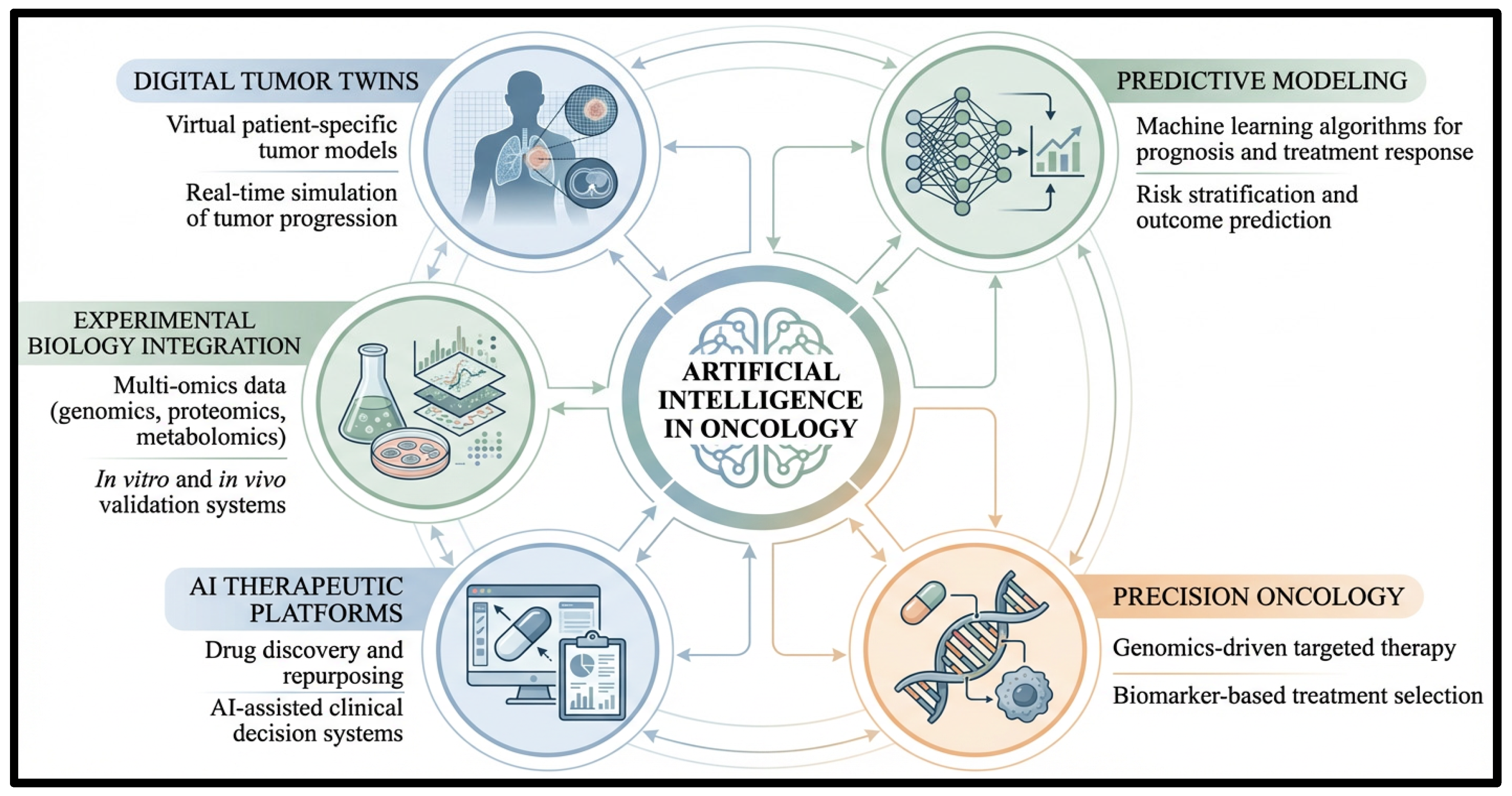
7.1. Digital Tumor Twins for Mechanism-Based Therapeutic Testing
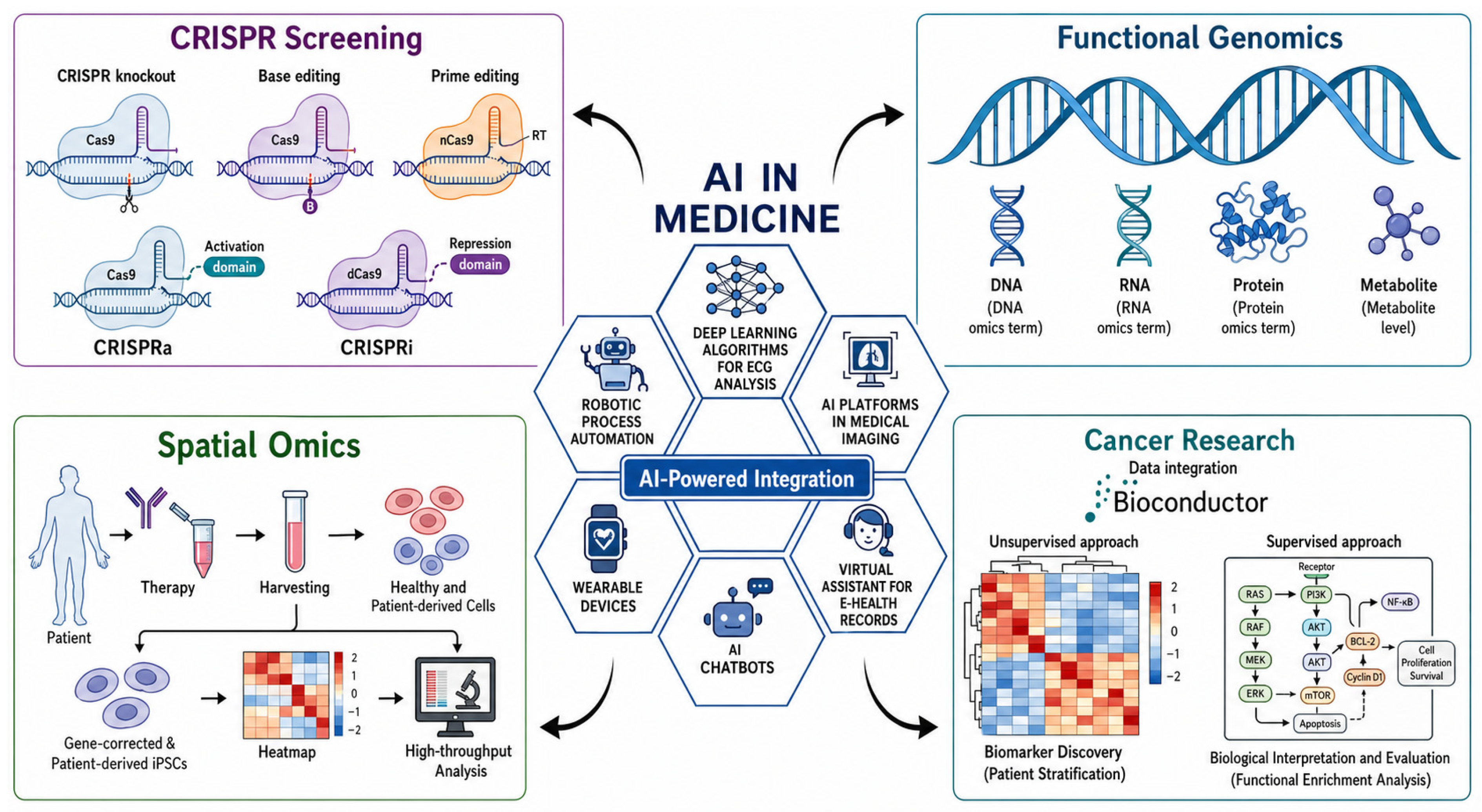
7.2. Integration of AI with Experimental Biology for Target Validation
7.3. Future Mechanistic AI Frameworks for Target Discovery and Therapeutic Design
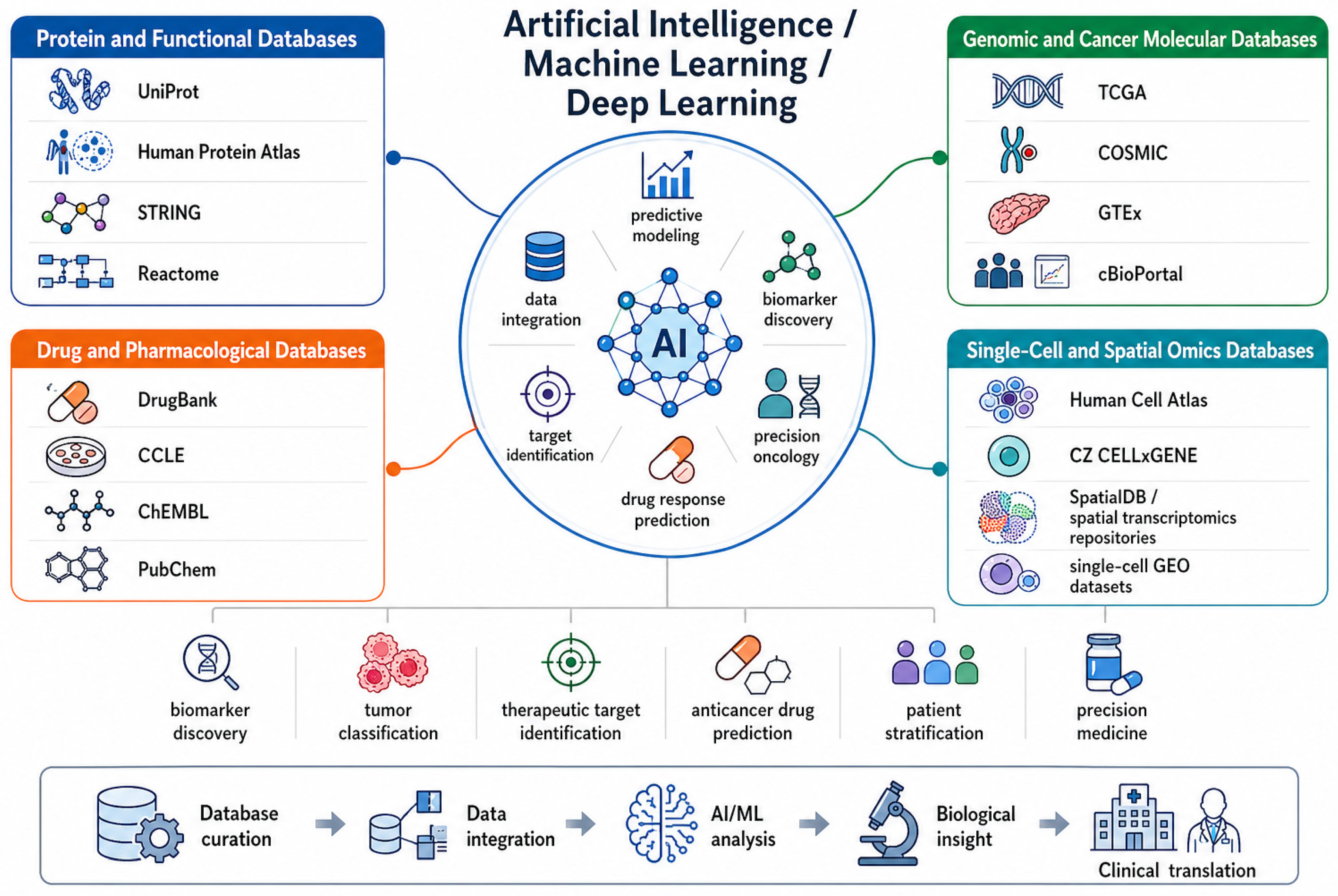
7.4. Public Databases Supporting AI-Driven Cancer Research and Drug Discovery
8. Challenges and Limitations of AI in Cancer Research
8.1. Technical and Methodological Challenges
8.2. Ethical and Regulatory Challenges
9. Future Perspectives of Artificial Intelligence in Cancer Research
10. Conclusions
Author Contributions
Funding
Data Availability Statement
Conflicts of Interest
References
- Di Mauro, A.; Berretta, M.; Santorsola, M.; Ferrara, G.; Picone, C.; Savarese, G.; Ottaiano, A. Towards post-genomic oncology: Embracing cancer complexity via artificial intelligence, multi-targeted therapeutics, drug repurposing, and innovative study designs. Int. J. Mol. Sci. 2025, 26, 7723. [Google Scholar] [CrossRef]
- You, Y.; Lai, X.; Pan, Y.; Zheng, H.; Vera, J.; Liu, S.; Deng, S.; Zhang, L. Artificial intelligence in cancer target identification and drug discovery. Signal Transduct. Target. Ther. 2022, 7, 156. [Google Scholar] [CrossRef]
- Lu, Y.; Huang, W.; Li, Y.; Xu, Y.; Wei, Q.; Sha, C.; Guo, P. Leveraging artificial intelligence in antibody-drug conjugate development: From target identification to clinical translation in oncology. npj Precis. Oncol. 2025, 9, 374. [Google Scholar] [CrossRef]
- Liu, H.; Ma, Y.; Chen, W.; Gu, X.; Sun, J.; Li, P. Strategies for the drug development of cancer therapeutics. Front. Pharmacol. 2025, 16, 1656012. [Google Scholar] [CrossRef]
- Le, M.H.N.; Nguyen, P.K.; Nguyen, T.P.T.; Nguyen, H.Q.; Tam, D.N.H.; Huynh, H.H.; Huynh, P.K.; Le, N.Q.K. An in-depth review of AI-powered advancements in cancer drug discovery. Biochim. Biophys. Acta (BBA)-Mol. Basis Dis. 2025, 1871, 167680. [Google Scholar] [CrossRef]
- Sarvepalli, S.; Vadarevu, S. Role of artificial intelligence in cancer drug discovery and development. Cancer Lett. 2025, 627, 217821. [Google Scholar] [CrossRef]
- Sufyan, M.; Shokat, Z.; Ashfaq, U.A. Artificial intelligence in cancer diagnosis and therapy: Current status and future perspective. Comput. Biol. Med. 2023, 165, 107356. [Google Scholar] [CrossRef] [PubMed]
- Si, H.; Kumar, S.; Lata, S.; Ahmad, A.; Ghosh, S.; Stephansen, K.; Nagarkar, D.; Zhou, E.; Higgs, B.W. Mechanistically explainable AI model for predicting synergistic cancer therapy combinations. Curr. Oncol. 2025, 32, 548. [Google Scholar] [CrossRef] [PubMed]
- Messina, P.; Luciano, B.; Placente, D. Tomorrow’s Healthcare by Nano-Sized Approaches: A Bold Future for Medicine; CRC Press: Boca Raton, FL, USA, 2020. [Google Scholar]
- Sobhani, N.; Kugeratski, F.G.; Venturini, S.; Roudi, R.; Nguyen, T.; D’angelo, A.; Generali, D. AI-based cancer models in oncology: From diagnosis to ADC drug prediction. Cancers 2025, 17, 3419. [Google Scholar] [CrossRef] [PubMed]
- Tran, N.L.; Kim, H.; Shin, C.-H.; Ko, E.; Oh, S.J. Artificial intelligence-driven new drug discovery targeting serine/threonine kinase 33 for cancer treatment. Cancer Cell Int. 2023, 23, 321. [Google Scholar] [CrossRef]
- Albani, F.G.; Alghamdi, S.S.; Almutairi, M.M.; Alqahtani, T. Artificial intelligence-driven innovations in oncology drug discovery: Transforming traditional pipelines and enhancing drug design. Drug Des. Dev. Ther. 2025, 19, 5685–5707. [Google Scholar] [CrossRef]
- Molla, G.; Bitew, M. Revolutionizing personalized medicine: Synergy with multi-omics data generation, main hurdles, and future perspectives. Biomedicines 2024, 12, 2750. [Google Scholar] [CrossRef]
- Zhang, B.; Shi, H.; Wang, H. Machine learning and AI in cancer prognosis, prediction, and treatment selection: A critical approach. J. Multidiscip. Healthc. 2023, 16, 1779–1791. [Google Scholar] [CrossRef]
- Kourou, K.; Exarchos, K.P.; Papaloukas, C.; Sakaloglou, P.; Exarchos, T.; Fotiadis, D.I. Applied machine learning in cancer research: A systematic review for patient diagnosis, classification and prognosis. Comput. Struct. Biotechnol. J. 2021, 19, 5546–5555. [Google Scholar] [CrossRef]
- Tiwari, A.; Mishra, S.; Kuo, T.-R. Current AI technologies in cancer diagnostics and treatment. Mol. Cancer 2025, 24, 159. [Google Scholar] [CrossRef]
- Fountzilas, E.; Pearce, T.; Baysal, M.A.; Chakraborty, A.; Tsimberidou, A.M. Convergence of evolving artificial intelligence and machine learning techniques in precision oncology. Digit. Med. 2025, 8, 75. [Google Scholar] [CrossRef]
- Kumar, A.; Metta, D. AI-driven precision oncology: Predictive biomarker discovery and personalized treatment optimization using genomic data. Int. J. Adv. Res. Publ. Rev. 2024, 1, 21–38. [Google Scholar] [CrossRef]
- Restrepo, J.C.; Dueñas, D.; Corredor, Z.; Liscano, Y. Advances in genomic data and biomarkers: Revolutionizing NSCLC diagnosis and treatment. Cancers 2023, 15, 3474. [Google Scholar] [CrossRef]
- Khalighi, S.; Reddy, K.; Midya, A.; Pandav, K.B.; Madabhushi, A.; Abedalthagafi, M. Artificial intelligence in neuro-oncology: Advances and challenges in brain tumor diagnosis, prognosis, and precision treatment. Precis. Oncol. 2024, 8, 80. [Google Scholar] [CrossRef]
- Shimizu, H.; Nakayama, K.I. Artificial intelligence in oncology. Cancer Sci. 2020, 111, 1452–1460. [Google Scholar] [CrossRef]
- Kumar, V.; Iqbal, M.I.; Rathore, R. Natural Language Processing (NLP) in disease detection—A discussion of how NLP Techniques can be used to analyze and classify medical text data for disease diagnosis. In AI in Disease Detection: Advancements and Applications; Wiley-IEEE Press: Hoboken, NJ, USA, 2025; pp. 53–75. [Google Scholar]
- Sim, J.-A.; Huang, X.; Horan, M.R.; Baker, J.N.; Huang, I.-C. Using natural language processing to analyze unstructured patient-reported outcomes data derived from electronic health records for cancer populations: A systematic review. Expert Rev. Pharmacoeconomics Outcomes Res. 2024, 24, 467–475. [Google Scholar] [CrossRef]
- Vyas, A.; Kumar, K.; Sharma, A.; Verma, D.; Bhatia, D.; Wahi, N.; Yadav, A.K. Advancing the frontier of artificial intelligence on emerging technologies to redefine cancer diagnosis and care. Comput. Biol. Med. 2025, 191, 110178. [Google Scholar] [CrossRef]
- Pecorino, L. Molecular Biology of Cancer: Mechanisms, Targets, and Therapeutics; Oxford University Press: Oxford, UK, 2021. [Google Scholar]
- Hamamoto, R.; Suvarna, K.; Yamada, M.; Kobayashi, K.; Shinkai, N.; Miyake, M.; Takahashi, M.; Jinnai, S.; Shimoyama, R.; Sakai, A.; et al. Application of artificial intelligence technology in oncology: Towards the establishment of precision medicine. Cancers 2020, 12, 3532. [Google Scholar] [CrossRef]
- Rehan, H. Advancing cancer treatment with AI-driven personalized medicine and cloud-based data integration. J. Mach. Learn. Pharma-Ceutical Res. 2024, 4, 1–40. [Google Scholar]
- Marchiano, R.D.M.; Di Sante, G.; Piro, G.; Carbone, C.; Tortora, G.; Boldrini, L.; Pietragalla, A.; Daniele, G.; Tredicine, M.; Cesario, A.; et al. Translational research in the era of precision medicine: Where we are and where we will go. J. Pers. Med. 2021, 11, 216. [Google Scholar] [CrossRef]
- Elemento, O.; Leslie, C.; Lundin, J.; Tourassi, G. Artificial intelligence in cancer research, diagnosis and therapy. Nat. Rev. Cancer 2021, 21, 747–752. [Google Scholar] [CrossRef]
- Bhinder, B.; Gilvary, C.; Madhukar, N.S.; Elemento, O. Artificial intelligence in cancer research and precision medicine. Cancer Discov. 2021, 11, 900–915. [Google Scholar] [CrossRef]
- Liao, J.; Li, X.; Gan, Y.; Han, S.; Rong, P.; Wang, W.; Li, W.; Zhou, L. Artificial intelligence assists precision medicine in cancer treatment. Front. Oncol. 2023, 12, 998222. [Google Scholar] [CrossRef]
- Luchini, C.; Pea, A.; Scarpa, A. Artificial intelligence in oncology: Current applications and future perspectives. Br. J. Cancer 2022, 126, 4–9. [Google Scholar] [CrossRef]
- Hunter, B.; Hindocha, S.; Lee, R.W. The role of artificial intelligence in early cancer diagnosis. Cancers 2022, 14, 1524. [Google Scholar] [CrossRef]
- Bi, W.L.; Hosny, A.; Schabath, M.B.; Giger, M.L.; Birkbak, N.J.; Mehrtash, A.; Allison, T.; Arnaout, O.; Abbosh, C.; Dunn, I.F.; et al. Artificial intelligence in cancer imaging: Clinical challenges and applications. CA A Cancer J. Clin. 2019, 69, 127–157. [Google Scholar] [CrossRef]
- Perez-Lopez, R.; Ghaffari Laleh, N.; Mahmood, F.; Kather, J.N. A guide to artificial intelligence for cancer researchers. Nat. Rev. Cancer 2024, 24, 427–441. [Google Scholar] [CrossRef]
- Murmu, A.; Győrffy, B. Artificial intelligence methods available for cancer research. Front. Med. 2024, 18, 778–797. [Google Scholar] [CrossRef]
- Corti, C.; Cobanaj, M.; Dee, E.C.; Criscitiello, C.; Tolaney, S.M.; Celi, L.A.; Curigliano, G. Artificial intelligence in cancer research and precision medicine: Applications, limitations and priorities to drive transformation in the delivery of equitable and unbiased care. Cancer Treat. Rev. 2023, 112, 102498. [Google Scholar] [CrossRef]
- Prelaj, A.; Miskovic, V.; Zanitti, M.; Trovo, F.; Genova, C.; Viscardi, G.; Rebuzzi, S.; Mazzeo, L.; Provenzano, L.; Kosta, S.; et al. Artificial intelligence for predictive biomarker discovery in immuno-oncology: A systematic review. Ann. Oncol. 2024, 35, 29–65. [Google Scholar] [CrossRef]
- Shmatko, A.; Ghaffari Laleh, N.; Gerstung, M.; Kather, J.N. Artificial intelligence in histopathology: Enhancing cancer research and clinical oncology. Nat. Cancer 2022, 3, 1026–1038. [Google Scholar] [CrossRef]
- Mao, Y.; Shangguan, D.; Huang, Q.; Xiao, L.; Cao, D.; Zhou, H.; Wang, Y.-K. Emerging artificial intelligence-driven precision therapies in tumor drug resistance: Recent advances, opportunities, and challenges. Mol. Cancer 2025, 24, 123. [Google Scholar] [CrossRef]
- Chang, T.-G.; Park, S.; Schäffer, A.A.; Jiang, P.; Ruppin, E. Hallmarks of artificial intelligence contributions to precision oncology. Nat. Cancer 2025, 6, 417–431. [Google Scholar] [CrossRef]
- Dlamini, Z.; Francies, F.Z.; Hull, R.; Marima, R. Artificial intelligence (AI) and big data in cancer and precision oncology. Comput. Struct. Biotechnol. J. 2020, 18, 2300–2311. [Google Scholar] [CrossRef]
- He, X.; Liu, X.; Zuo, F.; Shi, H.; Jing, J. Artificial intelligence-based multi-omics analysis fuels cancer precision medicine. Semin. Cancer Biol. 2023, 88, 187–200. [Google Scholar] [CrossRef]
- Patel, S.K.; George, B.; Rai, V. Artificial intelligence to decode cancer mechanism: Beyond patient stratification for precision oncology. Front. Pharmacol. 2020, 11, 1177. [Google Scholar] [CrossRef]
- Alvarez-Torres, M.d.M.; Fu, X.; Rabadan, R. Illuminating the dark genome in cancer using artificial intelligence. Cancer Res. 2025, 85, 7429. [Google Scholar] [CrossRef]
- Chadha, S.; Mukherjee, S.; Sanyal, S. Advancements and implications of artificial intelligence for early detection, diagnosis and tailored treatment of cancer. Semin. Oncol. 2025, 52, 152349. [Google Scholar] [CrossRef] [PubMed]
- Li, Q.; Geng, S.; Luo, H.; Wang, W.; Mo, Y.-Q.; Luo, Q.; Wang, L.; Song, G.-B.; Sheng, J.-P.; Xu, B. Signaling pathways involved in colorectal cancer: Pathogenesis and targeted therapy. Signal Transduct. Target. Ther. 2024, 9, 266. [Google Scholar] [CrossRef]
- Niu, Z.; Jin, R.; Zhang, Y.; Li, H. Signaling pathways and targeted therapies in lung squamous cell carcinoma: Mechanisms and clinical trials. Signal Transduct. Target. Ther. 2022, 7, 353. [Google Scholar] [CrossRef]
- Wang, J.; Zhang, Z.; Wang, Y. Utilizing feature selection techniques for AI-driven tumor subtype classification: Enhancing precision in cancer diagnostics. Biomolecules 2025, 15, 81. [Google Scholar] [CrossRef] [PubMed]
- Wang, R.C.; Wang, Z. Precision medicine: Disease subtyping and tailored treatment. Cancers 2023, 15, 3837. [Google Scholar] [CrossRef] [PubMed]
- Arzikulov, F.; Komiljonov, A. The role of artificial intelligence in personalized oncology: Predictive models and treatment optimization. Acad. J. Sci. Technol. Educ. 2025, 1, 24–33. [Google Scholar]
- Yates, J.; Van Allen, E.M. New horizons at the interface of artificial intelligence and translational cancer research. Cancer Cell 2025, 43, 708–727. [Google Scholar] [CrossRef]
- Luan, W.-Y.; Zhao, Q.; Zhang, Z.; Xu, Z.-X.; Lin, S.-X.; Miao, Y.-D. Multidimensional decoding of colorectal cancer heterogeneity: Artificial intelligence-enabled precision exploration of single-cell and spatial transcriptomics. World J. Gastrointest. Oncol. 2025, 17, 110661. [Google Scholar] [CrossRef]
- Shin, H.; Lee, D.; Kim, Y.; Lee, D.; Na, K.J.; Cha, C.D.; Park, H.; Choi, H. A self-supervised AI model leveraging spatial omics for analyzing tumor microenvironment heterogeneity in breast cancer only with H&E. Cancer Res. 2025. [Google Scholar]
- Martínez-García, M.; Hernández-Lemus, E. Data integration challenges for machine learning in precision medicine. Front. Med. 2022, 8, 784455. [Google Scholar] [CrossRef] [PubMed]
- Li, J.; Li, L.; You, P.; Wei, Y.; Xu, B. Towards artificial intelligence to multi-omics characterization of tumor heterogeneity in esophageal cancer. Semin. Cancer Biol. 2023, 91, 35–49. [Google Scholar] [CrossRef]
- Jha, M.; Hasija, Y. Development and validation of AI-driven multi-omics language models for cancer genomics: A comprehensive review. Comput. Biol. Chem. 2025, 120, 108662. [Google Scholar] [CrossRef]
- Li, L.; Sun, M.; Wang, J.; Wan, S. Multi-omics based artificial intelligence for cancer research. Adv. Cancer Res. 2024, 163, 303–356. [Google Scholar]
- Saxena, S.; Jena, B.; Gupta, N.; Das, S.; Sarmah, D.; Bhattacharya, P.; Nath, T.; Paul, S.; Fouda, M.M.; Kalra, M.; et al. Role of artificial intelligence in radiogenomics for cancers in the era of precision medicine. Cancers 2022, 14, 2860. [Google Scholar] [CrossRef]
- Xu, L.; Saunders, K.; Huang, S.-P.; Knutsdottir, H.; Martinez-Algarin, K.; Terrazas, I.; Chen, K.; McArthur, H.M.; Maués, J.; Hodgdon, C.; et al. A comprehensive single-cell breast tumor atlas defines epithelial and immune heterogeneity and interactions predicting anti-PD-1 therapy response. Cell Rep. Med. 2024, 5, 101511. [Google Scholar] [CrossRef] [PubMed]
- Shulman, E.D.; Campagnolo, E.M.; Lodha, R.; Stemmer, A.; Cantore, T.; Hu, T.; Nasrallahm, M.; Hoang, D.-T.; Aldape, K.; Ruppin, K. Path2Space: An AI approach for cancer biomarker discovery via histopathology inferred spatial transcriptomics. bioRxiv 2024. [Google Scholar] [CrossRef]
- Jiang, L.; You, C.; Xiao, Y.; Wang, H.; Su, G.-H.; Xia, B.-Q.; Zheng, R.-C.; Zhang, D.-D.; Jiang, Y.-Z.; Gu, Y.-J.; et al. Radiogenomic analysis reveals tumor heterogeneity of triple-negative breast cancer. Cell Rep. Med. 2022, 3, 100694. [Google Scholar] [CrossRef]
- Rabuzin, L. Graph Neural Network-Driven Analysis of Cellular Organization for Non-Small Cell Lung Cancer Precision Oncology. Master’s Thesis, Swiss Federal Institute of Technology Zurich, Zurich, Switzerland, 2024. [Google Scholar]
- Liu, T.; Fang, Z.; Li, X.; Zhang, L.; Cao, D.-S.; Li, M.; Yin, M. Assembling spatial clustering framework for heterogeneous spatial transcriptomics data with GRAPHDeep. Bioinformatics 2024, 40, btae023. [Google Scholar] [CrossRef]
- Hu, Y.; Li, X.; Yi, Y.; Huang, Y.; Wang, G.; Wang, D. Deep learning-driven survival prediction in pan-cancer studies by integrating multimodal histology-genomic data. Brief. Bioinform. 2025, 26, bbaf121. [Google Scholar] [CrossRef]
- Mann, M.; Kumar, C.; Zeng, W.-F.; Strauss, M.T. Artificial intelligence for proteomics and biomarker discovery. Cell Syst. 2021, 12, 759–770. [Google Scholar] [CrossRef] [PubMed]
- Reel, P.S.; Reel, S.; Pearson, E.; Trucco, E.; Jefferson, E. Using machine learning approaches for multi-omics data analysis: A review. Biotechnol. Adv. 2021, 49, 107739. [Google Scholar] [CrossRef]
- Ali, H. Artificial intelligence in multi-omics data integration: Advancing precision medicine, biomarker discovery and genomic-driven disease interventions. Int. J. Sci. Res. Arch. 2023, 8, 1012–1030. [Google Scholar]
- Wei, L.; Niraula, D.; Gates, E.D.H.; Fu, J.; Luo, Y.; Nyflot, M.J.; Bowen, S.R.; El Naqa, I.M.; Cui, S. Artificial intelligence (AI) and machine learning (ML) in precision oncology: A review on enhancing discoverability through multiomics integration. Br. J. Radiol. 2023, 96, 20230211. [Google Scholar] [CrossRef]
- Srivastava, R. Advancing precision oncology with AI-powered genomic analysis. Front. Pharmacol. 2025, 16, 1591696. [Google Scholar] [CrossRef]
- Gaetz, J.; Wall, T.R.; Stylianou, E.S.; Khalil, E.; Levy, O.; Selinger, D.W. Abstract A019: A fully transparent and automatable form of AI for biomarker and new target discovery using diverse multi-omics data. Clin. Cancer Res. 2025, 31, A019. [Google Scholar] [CrossRef]
- Boehm, K.M.; Khosravi, P.; Vanguri, R.; Gao, J.; Shah, S.P. Harnessing multimodal data integration to advance precision oncology. Nat. Rev. Cancer 2022, 22, 114–126. [Google Scholar] [CrossRef] [PubMed]
- DeGroat, W.; Abdelhalim, H.; Peker, E.; Sheth, N.; Narayanan, R.; Zeeshan, S.; Liang, B.T.; Ahmed, Z. Multimodal AI/ML for discovering novel biomarkers and predicting disease using multi-omics profiles of patients with cardiovascular diseases. Sci. Rep. 2024, 14, 26503, Correction in Sci. Rep. 2025, 15, 19417. [Google Scholar] [CrossRef]
- Lan, W.; Liao, H.; Chen, Q.; Zhu, L.; Pan, Y.; Chen, Y.-P.P. DeepKEGG: A multi-omics data integration framework with biological insights for cancer recurrence prediction and biomarker discovery. Brief. Bioinform. 2024, 25, bbae185. [Google Scholar] [CrossRef] [PubMed]
- Pun, F.W.; Ozerov, I.V.; Zhavoronkov, A. AI-powered therapeutic target discovery. Trends Pharmacol. Sci. 2023, 44, 561–572. [Google Scholar] [CrossRef]
- Choi, Y.; Kim, S.; Kim, Y.; Song, Y.; Jang, J.; Donnelly, D.; Rajput, B.; Liu, T.-L.; Baek, K.; Sathe, A.; et al. Discovery of potential synergistic targets for PKMYT1 inhibitor through AI-assisted drug combination screening in an MPS-based vascularized metastatic gastric cancer model. Cancer Res. 2025, 85, 4719. [Google Scholar] [CrossRef]
- Soenens, A.; Miller, D.; Vipond, O.; Skuras, F.; Brennan, A.; Hercot, A. AI driven discovery of novel synthetic lethal gene pairs for targeted cancer therapy. Cancer Res. 2025, 85, 3643. [Google Scholar] [CrossRef]
- Elgawish, M.S.; Almatary, A.M.; Zaitone, S.A.; Salem, M.S. Leveraging artificial intelligence and machine learning in kinase inhibitor development: Advances, challenges, and future prospects. RSC Med. Chem. 2025, 16, 4698–4720. [Google Scholar] [CrossRef]
- Peng, Z.; Ding, Y.; Zhang, P.; Lv, X.; Li, Z.; Zhou, X.; Huang, S. Artificial intelligence application for anti-tumor drug synergy prediction. Curr. Med. Chem. 2024, 31, 6572–6585. [Google Scholar] [CrossRef]
- Liu, T.; Zhong, L.; Sun, X.; He, Z.; Lv, W.; Deng, L.; Chen, Y. Machine learning-driven multi-targeted drug discovery in colon cancer using biomarker signatures. Precis. Oncol. 2025, 9, 297. [Google Scholar] [CrossRef] [PubMed]
- Abbas, M.; Rassam, A.; Karamshahi, F.; Abunora, R.; Abouseada, M. The role of AI in drug discovery. ChemBioChem 2024, 25, e202300816. [Google Scholar] [CrossRef] [PubMed]
- Qureshi, R.; Irfan, M.; Gondal, T.M.; Khan, S.; Wu, J.; Hadi, M.U.; Heymach, J.; Le, X.; Yan, H.; Alam, T. AI in drug discovery and its clinical relevance. Heliyon 2023, 9, e17575. [Google Scholar] [CrossRef]
- Serrano, D.R.; Luciano, F.C.; Anaya, B.J.; Ongoren, B.; Kara, A.; Molina, G.; Ramirez, B.I.; Sánchez-Guirales, S.A.; Simon, J.A.; Tomietto, G.; et al. Artificial intelligence (AI) applications in drug discovery and drug delivery: Revolutionizing personalized medicine. Pharmaceutics 2024, 16, 1328. [Google Scholar] [CrossRef]
- Ocana, A.; Pandiella, A.; Privat, C.; Bravo, I.; Luengo-Oroz, M.; Amir, E.; Gyorffy, B. Integrating artificial intelligence in drug discovery and early drug development: A transformative approach. Biomark. Res. 2025, 13, 45. [Google Scholar] [CrossRef]
- Yang, Y.; Cheng, F. Artificial intelligence streamlines scientific discovery of drug–target interactions. Br. J. Pharmacol. 2025, 183, 1673–1690. [Google Scholar] [CrossRef] [PubMed]
- Vora, N.; Shah, S.; Patel, P.; Shah, M. Artificial intelligence and multi-omics in drug discovery: A deep learning-powered revolution. Cure Care 2025, 1, 100011. [Google Scholar] [CrossRef]
- Korshunova, M.; Ginsburg, B.; Tropsha, A.; Isayev, O. OpenChem: A deep learning toolkit for computational chemistry and drug design. J. Chem. Inf. Model. 2021, 61, 7–13. [Google Scholar] [CrossRef]
- Paul, K.; Gowda, B.J. Artificial Intelligence in Drug Repurposing: Revolutionizing Drug Discovery through Computational Case Studies. Biopress J. Comput. Life Sci. 2025, 1, 139–146. [Google Scholar]
- Jain, P.; Jain, S.K.; Jain, M. Harnessing drug repurposing for exploration of new diseases: An insight to strategies and case studies. Curr. Mol. Med. 2021, 21, 111–132. [Google Scholar] [CrossRef]
- Gupta, R.; Srivastava, D.; Sahu, M.; Tiwari, S.; Ambasta, R.K.; Kumar, P. Artificial intelligence to deep learning: Machine intelligence approach for drug discovery. Mol. Divers. 2021, 25, 1315–1360. [Google Scholar] [CrossRef]
- Dermawan, D.; Alotaiq, N. From lab to clinic: How artificial intelligence (AI) is reshaping drug discovery timelines and industry outcomes. Pharmaceuticals 2025, 18, 981. [Google Scholar] [CrossRef]
- Kucukzeybek, B.B.; Dere, Y.; Sari, A.A.; Ocal, I.; Avcu, E.; Dere, O.; Calli, A.O.; Dinckal, C.; Tunakan, M.; Kucukzeybek, Y. The prognostic significance of CD117-positive mast cells and microvessel density in colorectal cancer. Medicine 2024, 103, e38997. [Google Scholar] [CrossRef]
- Blanco-González, A.; Cabezón, A.; Seco-González, A.; Conde-Torres, D.; Antelo-Riveiro, P.; Piñeiro, Á.; Garcia-Fandino, R. The role of AI in drug discovery: Challenges, opportunities, and strategies. Pharmaceuticals 2023, 16, 891. [Google Scholar] [CrossRef]
- Kolluri, S.; Lin, J.; Liu, R.; Zhang, Y.; Zhang, W. Machine Learning and Artificial Intelligence in Pharmaceutical Research and Development: A Review: Machine Learning and Artificial Intelligence in Pharmaceutical R&D. AAPS J. 2022, 24, 19. [Google Scholar] [PubMed]
- Yang, X.; Wang, Y.; Byrne, R.; Schneider, G.; Yang, S. Concepts of artificial intelligence for computer-assisted drug discovery. Chem. Rev. 2019, 119, 10520–10594. [Google Scholar] [CrossRef]
- Deng, F.; Feng, C.H.; Gao, N.; Zhang, L. Normalization and selecting non-differentially expressed genes improve machine learning modelling of cross-platform transcriptomic data. Trans. Artif. Intell. 2025, 1, 5. [Google Scholar] [CrossRef]
- Wei, F.; Kouro, T.; Nakamura, Y.; Ueda, H.; Iiizumi, S.; Hasegawa, K.; Asahina, Y.; Kishida, T.; Morinaga, S.; Himuro, H.; et al. Enhancing Mass spectrometry-based tumor immunopeptide identification: Machine learning filter leveraging HLA binding affinity, aliphatic index and retention time deviation. Comput. Struct. Biotechnol. J. 2024, 23, 859–869. [Google Scholar] [CrossRef]
- Han, R.; Yoon, H.; Kim, G.; Lee, H.; Lee, Y. Revolutionizing medicinal chemistry: The application of artificial intelligence (AI) in early drug discovery. Pharmaceuticals 2023, 16, 1259. [Google Scholar] [CrossRef]
- Gangwal, A.; Lavecchia, A. Unleashing the power of generative AI in drug discovery. Drug Discov. Today 2024, 29, 103992. [Google Scholar] [CrossRef] [PubMed]
- Malheiro, V.; Santos, B.; Figueiras, A.; Mascarenhas-Melo, F. The potential of artificial intelligence in pharmaceutical innovation: From drug discovery to clinical trials. Pharmaceuticals 2025, 18, 788. [Google Scholar] [CrossRef] [PubMed]
- Walters, W.P.; Murcko, M. Assessing the impact of generative AI on medicinal chemistry. Nat. Biotechnol. 2020, 38, 143–145. [Google Scholar] [CrossRef]
- Garg, P.; Singhal, G.; Kulkarni, P.; Horne, D.; Salgia, R.; Singhal, S.S. Artificial intelligence–driven computational approaches in the development of anticancer drugs. Cancers 2024, 16, 3884. [Google Scholar] [CrossRef]
- Duo, L.; Liu, Y.; Ren, J.; Tang, B.; Hirst, J.D. Artificial intelligence for small molecule anticancer drug discovery. Expert Opin. Drug Discov. 2024, 19, 933–948. [Google Scholar] [CrossRef]
- Poyatos-Racionero, E.; Paniagua-Herranz, L.; Privat, C.; Martín-Hernández, C.; Nieto-Jiménez, C.; Herrero-Igartua, C.; García-Escudero, R.; Gancarski, P.; Lorz, C.; Ocana, A. Validation of an AI-powered computational chemistry workflow for streamlined drug discovery. Mol. Cancer Ther. 2025, 24, C008. [Google Scholar] [CrossRef]
- Zhang, S. Abstract C008: AlphaFold Beyond Folding: Protein Property Prediction and Drug Discovery. Ph.D. Thesis, University of Cambridge, Cambridge, UK, 2026. [Google Scholar]
- Wang, S.; Böhnert, V.; Joseph, A.J.; Sudaryo, V.; Skariah, G.; Swinderman, J.T.; Yu, F.B.; Subramanyam, V.; Wolf, D.M.; Lyu, X.; et al. ENPP1 is an innate immune checkpoint of the anticancer cGAMP–STING pathway in breast cancer. Proc. Natl. Acad. Sci. USA 2023, 120, e2313693120. [Google Scholar] [CrossRef]
- Ren, S.; Cooper, G.F.; Chen, L.; Lu, X. An interpretable deep learning framework for genome-informed precision oncology. Nat. Mach. Intell. 2024, 6, 864–875. [Google Scholar] [CrossRef]
- Wu, Y.; Chen, M.; Qin, Y. Anticancer drug response prediction integrating multi-omics pathway-based difference features and multiple deep learning techniques. PLoS Comput. Biol. 2025, 21, e1012905. [Google Scholar] [CrossRef]
- Cellina, M.; Cè, M.; Khenkina, N.; Sinichich, P.; Cervelli, M.; Poggi, V.; Boemi, S.; Ierardi, A.M.; Carrafiello, G. Artificial intelligence in the era of precision oncological imaging. Technol. Cancer Res. Treat. 2022, 21, 15330338221141793, Correction in Technol. Cancer Res. Treat. 2023, 21, 1–14. [Google Scholar] [CrossRef]
- Li, L.; Doppalapudi, A.; Escamilla, J.; Karithara, A.; Pham, C.; Phillip, A.; Binoy, A.; Gullapalli, S.; Baldado, L.; Bellamkonda, A.; et al. Precision medicine and beyond: Evolving roles of targeted therapy, immunotherapy, and artificial intelligence in oncology. INNOSC Theranostics Pharmacol. Sci. 2025, 8, 35–58. [Google Scholar] [CrossRef]
- Bouriga, R.; Bailleux, C.; Gal, J.; Chamorey, E.; Mograbi, B.; Hannoun-Levi, J.-M.; Milano, G. Advances and critical aspects in cancer treatment development using digital twins. Brief. Bioinform. 2025, 26, bbaf237. [Google Scholar]
- Shen, S.; Qi, W.; Liu, X.; Zeng, J.; Li, S.; Zhu, X.; Dong, C.; Wang, B.; Shi, Y.; Yao, J.; et al. From virtual to reality: Innovative practices of digital twins in tumor therapy. J. Transl. Med. 2025, 23, 348. [Google Scholar] [CrossRef] [PubMed]
- Stahlberg, E.A.; Abdel-Rahman, M.; Aguilar, B.; Asadpoure, A.; Beckman, R.A.; Borkon, L.L.; Bryan, J.N.; Cebulla, C.M.; Chang, Y.H.; Chatterjee, A.; et al. Exploring approaches for predictive cancer patient digital twins: Opportunities for collaboration and innovation. Front. Digit. Health 2022, 4, 1007784. [Google Scholar] [CrossRef] [PubMed]
- D’orsi, L.; Capasso, B.; Lamacchia, G.; Pizzichini, P.; Ferranti, S.; Liverani, A.; Fontana, C.; Panunzi, S.; De Gaetano, A.; Presti, E.L. Recent advances in artificial intelligence to improve immunotherapy and the use of digital twins to identify prognosis of patients with solid tumors. Int. J. Mol. Sci. 2024, 25, 11588. [Google Scholar] [CrossRef] [PubMed]
- Jin, H.; Wang, L.; Bernards, R. Rational combinations of targeted cancer therapies: Background, advances and challenges. Nat. Rev. Drug Discov. 2023, 22, 213–234. [Google Scholar] [CrossRef]
- Morales-Durán, N.; León-Buitimea, A.; Morones-Ramírez, J.R. Unraveling resistance mechanisms in combination therapy: A comprehensive review of recent advances and future directions. Heliyon 2024, 10, e27984. [Google Scholar] [CrossRef]
- Hilal, T.; Gonzalez-Velez, M.; Prasad, V. Limitations in clinical trials leading to anticancer drug approvals by the US Food and Drug Administration. JAMA Intern. Med. 2020, 180, 1108–1115. [Google Scholar] [CrossRef]
- Harkos, C.; Hadjigeorgiou, A.G.; Voutouri, C.; Kumar, A.S.; Stylianopoulos, T.; Jain, R.K. Using mathematical modelling and AI to improve delivery and efficacy of therapies in cancer. Nat. Rev. Cancer 2025, 25, 324–340. [Google Scholar] [CrossRef]
- Mathur, D.; Barnett, E.; Scher, H.I.; Xavier, J.B. Optimizing the future: How mathematical models inform treatment schedules for cancer. Trends Cancer 2022, 8, 506–516. [Google Scholar] [CrossRef]
- Horgan, D.; Baird, A.-M.; Middleton, M.; Mihaylova, Z.; Van Meerbeeck, J.P.; Vogel-Claussen, J.; Van Schil, P.E.; Malvehy, J.; Ascierto, P.A.; Dube, F.; et al. How can the EU beating cancer plan help in tackling lung cancer, colorectal cancer, breast cancer and melanoma? Healthcare 2022, 10, 1618. [Google Scholar] [CrossRef]
- Sherani, A.M.K.; Khan, M.; Qayyum, M.U.; Hussain, H.K. Synergizing AI and healthcare: Pioneering advances in cancer medicine for personalized treatment. Int. J. Multidiscip. Sci. Arts 2024, 3, 270–277. [Google Scholar] [CrossRef]
- Chehelgerdi, M.; Chehelgerdi, M.; Khorramian-Ghahfarokhi, M.; Shafieizadeh, M.; Mahmoudi, E.; Eskandari, F.; Rashidi, M.; Arshi, A.; Mokhtari-Farsani, A. Comprehensive review of CRISPR-based gene editing: Mechanisms, challenges, and applications in cancer therapy. Mol. Cancer 2024, 23, 9, Correction in Mol. Cancer 2024, 23, 43. [Google Scholar] [CrossRef] [PubMed]
- Li, M.; Sun, J.; Shi, G. Application of CRISPR screen in mechanistic studies of tumor development, tumor drug resistance, and tumor immunotherapy. Front. Cell Dev. Biol. 2023, 11, 1220376. [Google Scholar] [CrossRef]
- AlDoughaim, M.; AlSuhebany, N.; AlZahrani, M.; AlQahtani, T.; AlGhamdi, S.; Badreldin, H.; Al Alshaykh, H. Cancer biomarkers and precision oncology: A review of recent trends and innovations. Clin. Med. Insights Oncol. 2024, 18, 11795549241298541. [Google Scholar] [CrossRef] [PubMed]
- Cockburn, J.G.; Mariappan, V.; Loke, M.F.; Al-Maleki, A.R.; Muttiah, B.; Vellasamy, K.M.; Vadivelu, J. Integrative research: Current trends and considerations for biomarker discovery and precision medicine. Microbe 2025, 7, 100368. [Google Scholar] [CrossRef]
- Aktar, N.; Yueting, C.; Abbas, M.; Zafar, H.; Paiva-Santos, A.C.; Zhang, Q.; Chen, T.; Ahmed, M.; Raza, F.; Zhou, X. Understanding of immune escape mechanisms and advances in cancer immunotherapy. J. Oncol. 2022, 2022, 8901326. [Google Scholar] [CrossRef]
- Noorbakhsh, J.; Foroughi Pour, A.; Chuang, J. Emerging AI approaches for cancer spatial omics. GigaScience 2025, 14, giaf128. [Google Scholar] [CrossRef] [PubMed]
- Sarkar, C.; Das, B.; Rawat, V.S.; Wahlang, J.B.; Nongpiur, A.; Tiewsoh, I.; Lyngdoh, N.M.; Das, D.; Bidarolli, M.; Sony, H.T. Artificial intelligence and machine learning technology driven modern drug discovery and development. Int. J. Mol. Sci. 2023, 24, 2026. [Google Scholar] [CrossRef]
- Saraf, S.; De, A.; Tripathy, B. Effective use of computational biology and artificial intelligence in the domain of medical oncology. In Computational Intelligence for Oncology and Neurological Disorders; CRC Press: Boca Raton, FL, USA, 2024; pp. 228–252. [Google Scholar]
- Dankwa-Mullan, I.; Ndoh, K.; Akogo, D.; Rocha, H.A.L.; Juaçaba, S.F. Artificial intelligence and cancer health equity: Bridging the divide or widening the gap. Curr. Oncol. Rep. 2025, 27, 95–111. [Google Scholar] [CrossRef] [PubMed]
- Smiley, A.; Reategui-Rivera, C.M.; Villarreal-Zegarra, D.; Escobar-Agreda, S.; Finkelstein, J. Exploring artificial intelligence biases in predictive models for cancer diagnosis. Cancers 2025, 17, 407. [Google Scholar] [CrossRef]
- Hantel, A.; Walsh, T.P.; Marron, J.M.; Kehl, K.L.; Sharp, R.; Van Allen, E.; Abel, G.A. Perspectives of oncologists on the ethical implications of using artificial intelligence for cancer care. JAMA Netw. Open 2024, 7, e244077. [Google Scholar] [CrossRef] [PubMed]
- Froicu, E.-M.; Creangă-Murariu, I.; Afrăsânie, V.-A.; Gafton, B.; Alexa-Stratulat, T.; Miron, L.; Pușcașu, D.M.; Poroch, V.; Bacoanu, G.; Radu, I.; et al. Artificial intelligence and decision-making in oncology: A review of ethical, legal, and informed consent challenges. Curr. Oncol. Rep. 2025, 27, 1002–1012. [Google Scholar] [CrossRef]
- Du, Z.; Lian, L.; Xi, W.; Zheng, Y.; Yu, G.; Luo, H.-Y.; Qin, P. Artificial intelligence enables the ethical reconstruction and social value realization of global cancer research: From technological innovation to humanistic care. Clin. Cancer Res. 2025, 31, B024. [Google Scholar] [CrossRef]
- Cheng, C.H.; Shi, S.-S. Artificial intelligence in cancer: Applications, challenges, and future perspectives. Mol. Cancer 2025, 24, 274. [Google Scholar] [CrossRef]
- Chamouni, G.; Lococo, F.; Sassorossi, C.; Atuhaire, N.; Ádány, R.; Varga, O. Ethical and legal concerns in artificial intelligence applications for the diagnosis and treatment of lung cancer: A scoping review. Front. Public Health 2025, 13, 1663298. [Google Scholar] [CrossRef]
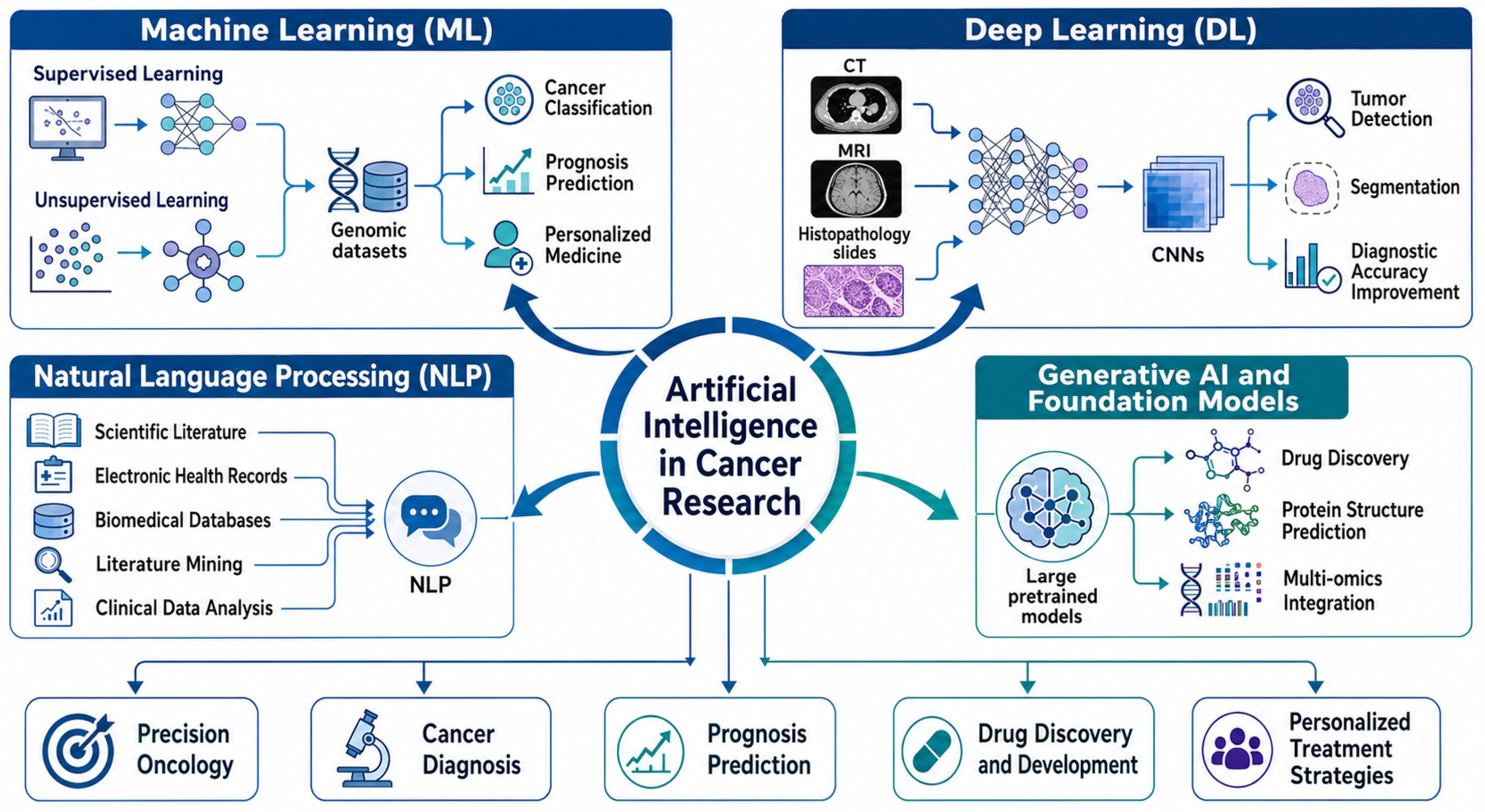


| Methodological Level | AI Model/Platform Category | Core Methods/Models | Major Applications in Cancer Research | Representative Tools/Platforms | Key Benefits | Limitations/Challenges | References |
|---|---|---|---|---|---|---|---|
| Classical ML models | Tree-based, kernel-based, and statistical learning models | Random forests, support vector machines, gradient boosting, logistic regression, clustering | Cancer classification, biomarker discovery, survival prediction, treatment-response modeling | DeepVariant, GATK | Effective for structured clinical and omics data; often more interpretable than deep models | Performance depends on feature engineering and large annotated datasets; risk of bias. | [14,15,16,30] |
| Deep neural network models | Feedforward and sequence/image DL models | Artificial neural networks, convolutional neural networks (CNNs), and recurrent neural networks (RNNs) | Histopathology analysis, tumor detection, medical imaging, and mutation prediction | PathAI, NVIDIA Clara | Automated feature extraction and high predictive performance in complex data | Limited interpretability; high computational demand; dependence on large labeled datasets | [20,21,32] |
| Transformer and foundation models | Large pretrained biological and multimodal models | Transformers, self-supervised learning, transfer learning, large language/biological foundation models | Protein structure prediction, molecular design, drug discovery, and biomedical text mining | AlphaFold, NVIDIA BioNeMo, DeepChem | Captures complex long-range patterns and supports transfer across tasks | High computational cost, model complexity, and limited explainability | [14,24] |
| Graph-based AI models | Network and relational learning models | Graph neural networks, biomedical knowledge graphs, network-based inference | Drug–target interaction prediction, pathway analysis, target prioritization, systems oncology | Knowledge graph AI platforms | Reveals hidden biological relationships and supports network medicine approaches | Integration of heterogeneous data remains challenging | [30] |
| Multimodal integration models | Cross-modal data fusion models | Joint learning from imaging, genomic, transcriptomic, proteomic, and clinical data | Tumor characterization, prognosis prediction, patient stratification, precision oncology | Tempus AI | Enables comprehensive modeling of heterogeneous cancer data | Requires harmonized, large-scale integrated datasets | [31] |
| Domain-specific imaging AI applications | Imaging and pathology AI is built mainly on DL. | CNN-based imaging analytics, radiomics pipelines, digital pathology models | Tumor grading, lesion detection, radiotherapy planning, and histopathology classification | DeepMind Radiotherapy AI, PathAI | Supports non-invasive assessment and improves diagnostic workflow | Imaging variability, standardization issues, and dataset annotation burden | [32,33,34] |
| Language-based AI applications | Clinical and biomedical natural language processing | Text mining, biomedical named-entity recognition, transformer-based language models | Mining literature, clinical notes, reports, and genomic annotations | IBM Watson for Oncology | Extracts insights from large unstructured biomedical text corpora | Data privacy concerns and difficulty handling noisy clinical text | [35,36] |
| Drug discovery AI platforms | AI systems for therapeutic discovery and repurposing | Virtual screening, molecular docking, generative modeling, predictive toxicity modeling | Anticancer drug discovery, drug repurposing, compound prioritization | DeepChem | May improve efficiency in early-stage drug discovery and improve drug–target prediction | Predictions require experimental and clinical validation | [24,30] |
| Clinical decision and translational AI platforms | AI-enabled clinical support systems | Predictive analytics integrating clinical, imaging, and genomic data | Personalized therapy selection, prognosis estimation, and treatment optimization | IBM Watson for Oncology, Tempus AI, OncoKB | Supports data-driven clinical decision-making in precision oncology | Limited real-world validation, interpretability, and regulatory concerns | [37,38,39] |
| Emerging patient-specific simulation platforms | Digital twin and trial-optimization AI | Computational patient modeling, predictive simulation, and patient stratification algorithms | Patient-specific treatment-response prediction, clinical trial design, and recruitment optimization | Digital twin oncology platforms, AI trial analytics platforms | Enables personalized simulation and may improve trial efficiency | High computational complexity, limited validation, and ethical/regulatory barriers | [40,41] |
| Application Area | Case Study/AI Model | Description of AI Approach | Key Outcome/Example | Citations |
|---|---|---|---|---|
| AI-identified drug candidates | AlphaFold + PandaOmics + Chemistry42 (CDK20 inhibitor discovery) | AlphaFold-predicted protein structures were integrated with PandaOmics target identification and Chemistry42 generative AI to design small-molecule inhibitors. | Generated 8918 candidate molecules, synthesized 7 compounds, discovered ISM042-2-001, and optimized to ISM042-2-048 with nanomolar potency for hepatocellular carcinoma. | [75,102] |
| AI-identified drug candidates | Generative AI design of ENPP1 inhibitor (ISM5939) | Multi-omics target ranking and generative chemistry used to design immune-checkpoint inhibitors. | Developed oral ENPP1 inhibitor ISM5939, enhanced STING signaling, and showed synergy with PD-1/PD-L1 immunotherapy. | [6,12] |
| Multi-target drug discovery | ML + Adaptive Bacterial Foraging + CatBoost | Integrated gene expression, mutation profiles, and protein interaction networks for drug target prioritization. | Achieved 98.6% classification accuracy for colon cancer drug-response prediction and candidate selection. | [103] |
| Drug response prediction | ResGitDR (Interpretable DL) | Learns cancer cell state from somatic genome alterations and predicts drug sensitivity. | Improved prediction accuracy compared with traditional genomic models and works on both cell lines and patient data. | [2] |
| Drug response prediction | Deep Neural Networks for therapy response prediction | DNN models trained on pharmacogenomic datasets and clinical cohorts. | Predicted drug response and survival outcomes better than conventional ML approaches. | [12] |
| Drug response prediction | PASO pathway-aware DL | Integrates multi-omics pathway features with drug chemical structures. | Provides biologically meaningful predictions for anticancer drug response in precision oncology. | [12] |
| Precision oncology platform | CAN-Scan platform | ML applied to molecular testing and patient-derived cancer cells. | Identifies chemotherapy resistance mechanisms and suggests alternative therapies for colorectal cancer. | [40] |
| AI-guided biomarker discovery | Predictive Biomarker Modeling Framework (PBMF) | Contrastive learning applied to clinical datasets to identify predictive biomarkers. | Detects biomarkers associated with improved survival and immunotherapy response. | [104] |
| Biomarker discovery using digital pathology | DL on whole-slide pathology images | Computational pathology models extract prognostic biomarkers from histology slides. | Identifies image-derived biomarkers useful for patient stratification and treatment planning. | [103] |
| Tumor microenvironment prediction | DL on digital histopathology | AI predicts tumor microenvironment composition and immunotherapy response. | Enables identification of patients likely to benefit from immune checkpoint therapy. | [103] |
| Clinical biomarker detection | Pathology foundation models for lung cancer | Large-scale foundation models trained on histopathology images. | Demonstrated real-world biomarker detection for lung cancer precision oncology. | [40] |
Disclaimer/Publisher’s Note: The statements, opinions and data contained in all publications are solely those of the individual author(s) and contributor(s) and not of MDPI and/or the editor(s). MDPI and/or the editor(s) disclaim responsibility for any injury to people or property resulting from any ideas, methods, instructions or products referred to in the content. |
© 2026 by the authors. Licensee MDPI, Basel, Switzerland. This article is an open access article distributed under the terms and conditions of the Creative Commons Attribution (CC BY) license.
Share and Cite
Khan, M.S.; Saeed, M.; Arham, M.; Zafar, I.; Hussian, M.; Jamal, A.; Usman, M.; Bahwerth, F.S.; Yang, G.; Kang, K.S. Next-Generation Artificial Intelligence Strategies for Mechanistic Cancer Target Discovery and Drug Development: A State-of-the-Art Review. Int. J. Mol. Sci. 2026, 27, 4028. https://doi.org/10.3390/ijms27094028
Khan MS, Saeed M, Arham M, Zafar I, Hussian M, Jamal A, Usman M, Bahwerth FS, Yang G, Kang KS. Next-Generation Artificial Intelligence Strategies for Mechanistic Cancer Target Discovery and Drug Development: A State-of-the-Art Review. International Journal of Molecular Sciences. 2026; 27(9):4028. https://doi.org/10.3390/ijms27094028
Chicago/Turabian StyleKhan, Muhammad Sohail, Muhammad Saeed, Muhammad Arham, Imran Zafar, Majid Hussian, Adil Jamal, Muhammad Usman, Fayez Saeed Bahwerth, Gabsik Yang, and Ki Sung Kang. 2026. "Next-Generation Artificial Intelligence Strategies for Mechanistic Cancer Target Discovery and Drug Development: A State-of-the-Art Review" International Journal of Molecular Sciences 27, no. 9: 4028. https://doi.org/10.3390/ijms27094028
APA StyleKhan, M. S., Saeed, M., Arham, M., Zafar, I., Hussian, M., Jamal, A., Usman, M., Bahwerth, F. S., Yang, G., & Kang, K. S. (2026). Next-Generation Artificial Intelligence Strategies for Mechanistic Cancer Target Discovery and Drug Development: A State-of-the-Art Review. International Journal of Molecular Sciences, 27(9), 4028. https://doi.org/10.3390/ijms27094028