The Potassium-Uptake Systems, Trk and Kdp, Coordinately Contribute to Growth Regulation and Survival of M. tuberculosis in Ion-Depleted and Acidic Environments
 ,
,  , , and
Abstract
1. Introduction
2. Results
2.1. Construction of the Kdp-Trk (KT)-Triple-Gene Mutant Construction of M. tuberculosis
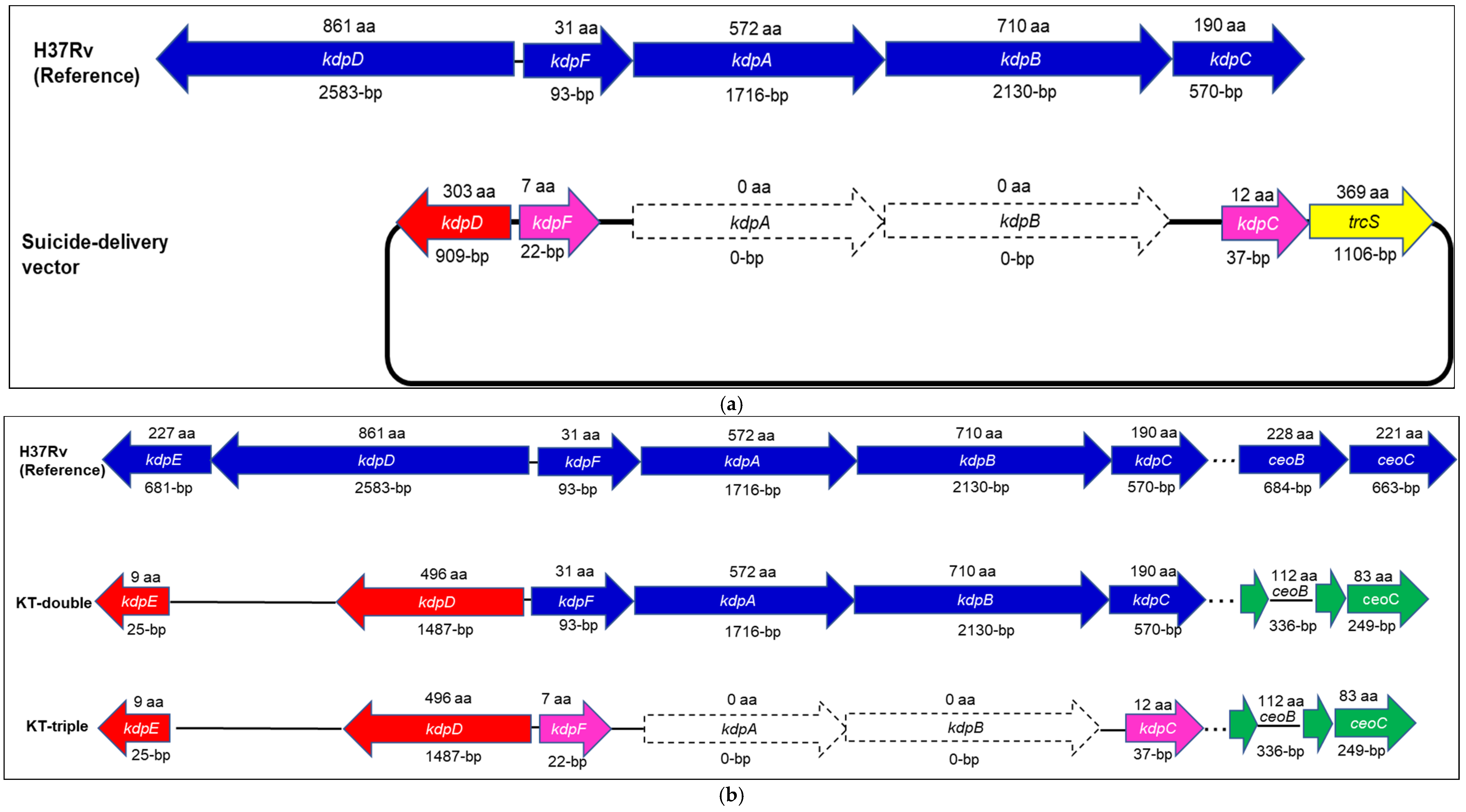
2.1.1. The SDV Construct
2.1.2. The KT-Triple-Gene Knockout
2.2. Inoculum
2.3. Planktonic Growth Analysis
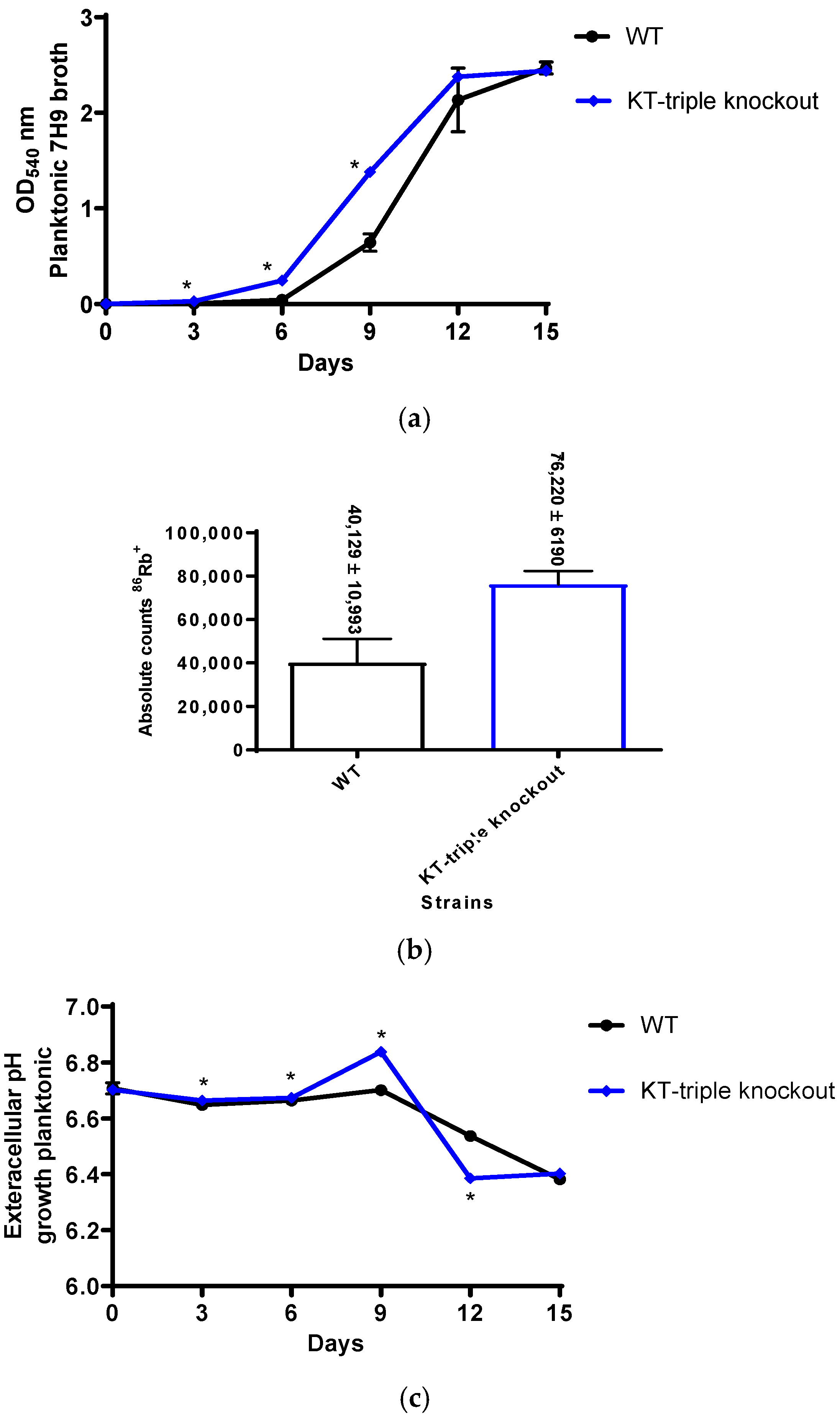
2.3.1. Rates of Planktonic Growth
2.3.2. Rubidium (86Rb+)-Uptake Efficiency
2.3.3. Changes in Extracellular pH Levels During Planktonic Growth
2.4. Biofilm Growth Analysis
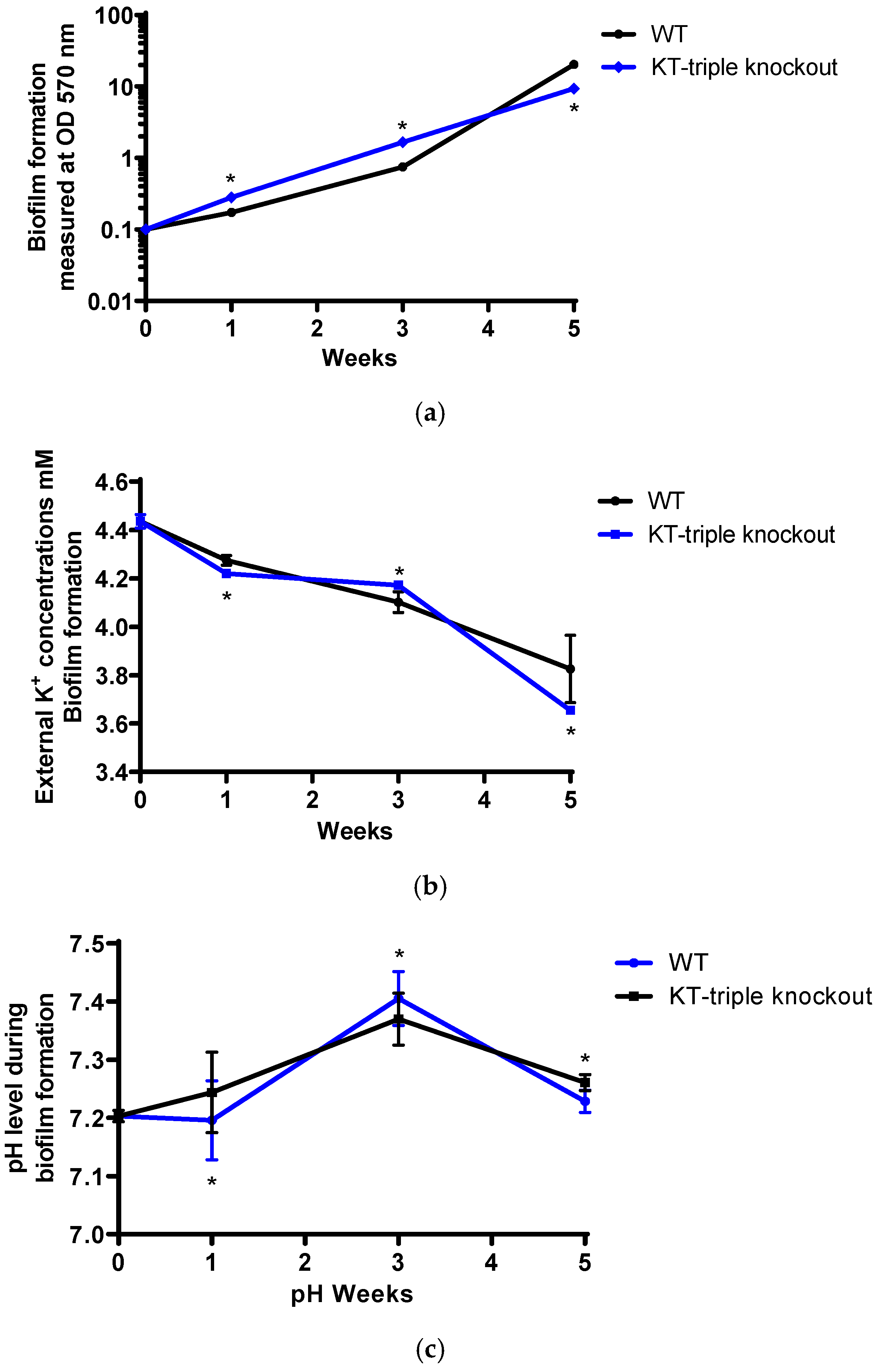
2.4.1. Rates of Biofilm Formation
2.4.2. Changes in Extracellular K+ Concentrations During Biofilm Growth
2.4.3. Changes in Extracellular pH Levels During Biofilm Growth
2.5. Macrophage Intracellular Survival
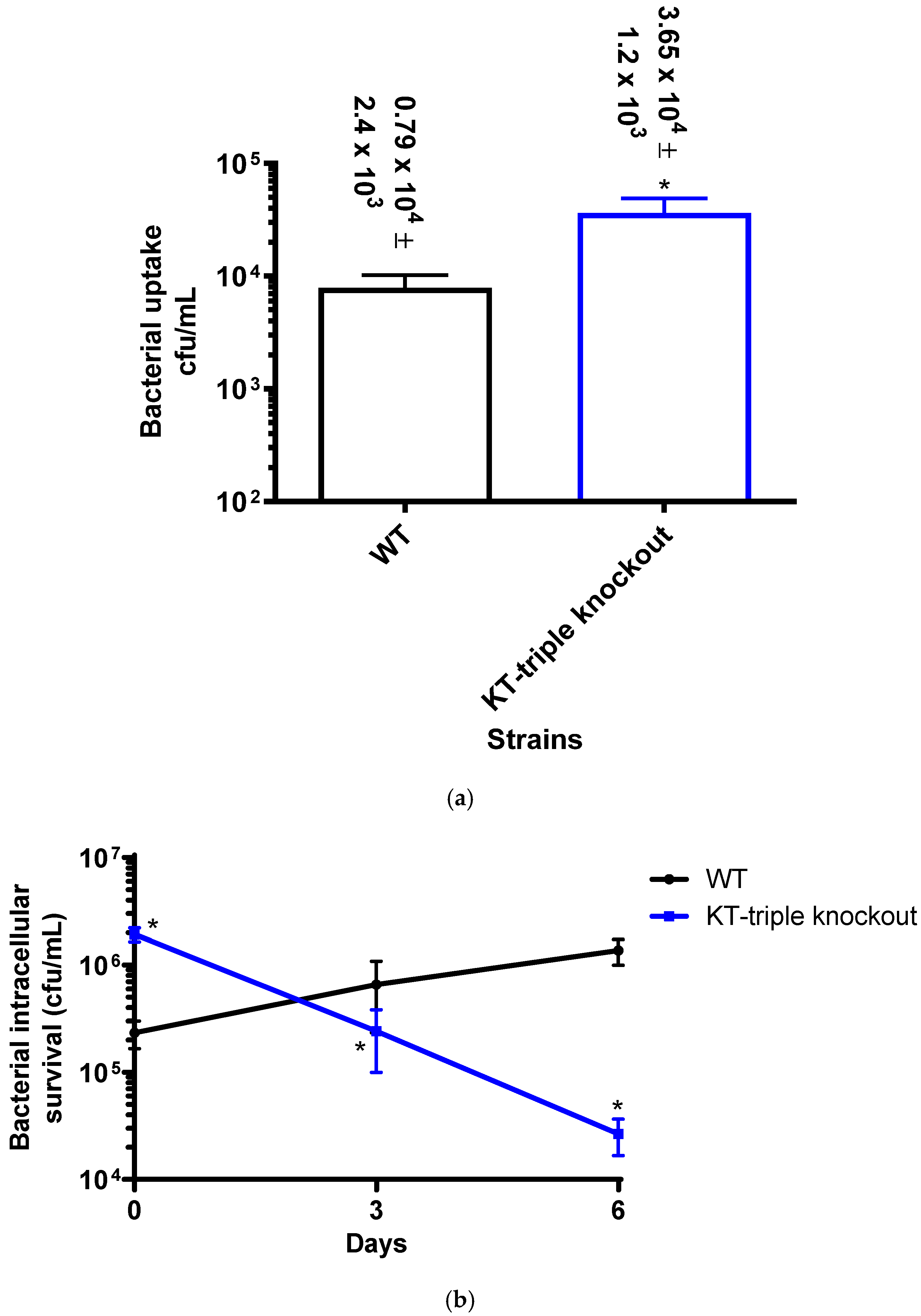
2.5.1. Bacterial Uptake by Macrophages
2.5.2. Intracellular Growth of Internalised Bacteria
3. Discussion
3.1. Planktonic Growth
3.2. Biofilm Cultures
3.3. Macrophages
4. Materials and Methods
4.1. Materials
4.1.1. Bacterial and Plasmid Strains
4.1.2. Growth Media
4.1.3. Antimicrobial Agents, Enzymes, Chemicals and Reagents
4.2. Methods
4.2.1. Construction of the KT-Triple-Gene Knockout Mutant Strain
Construction of SDV
Construction of the M. tuberculosis KT-Triple-Gene Knockout Mutant
4.2.2. PCR Analysis
4.2.3. WGS Analysis
4.2.4. Inoculum Preparation
4.2.5. Planktonic Assays
Preparation of Planktonic Cultures
Rates of Planktonic Growth
Rubidium Uptake
pH Determination of Planktonic Cultures
4.2.6. Biofilm Assays
Preparation of Biofilm Cultures
Rates of Biofilm Growth
Measurement of Extracellular pH Levels and K+ Concentrations
4.2.7. Macrophage Assays
Preparation of Macrophages
Macrophage Infection with M. tuberculosis
Measurement of Intracellular Growth and Survival
Bacterial Uptake Determination
Rates of Intracellular Survival
4.3. Statistical Analysis and Presentation of Data
5. Conclusions
Supplementary Materials
Author Contributions
Funding
Institutional Review Board Statement
Informed Consent Statement
Data Availability Statement
Acknowledgments
Conflicts of Interest
Abbreviations
| ATCC | American Type Culture Collection |
| ATPase | Adenosine triphosphatase |
| CaCl2 | Calcium chloride |
| Cfu/mL | Colony-forming units per millilitre |
| Cpm | Count per minute |
| CV | Crystal violet |
| D | Day |
| DCO | Double cross-over |
| dH2O | Distilled water |
| DNA | Deoxyribonucleic acid |
| E. coli | Escherichia coli |
| EGTA | Ethylene glycol-bis (2-aminoethylene)-N,N,N,N-tetracetic acid |
| EPS | Extracellular polymeric substance |
| FC | Flow cytometry |
| FITC | Fluorescein isothiocyanate |
| H+ | Hydrogen ion, proton |
| K+ | Potassium |
| KONO | Potassium- and nitrogen-free |
| KT-double | KdpDE-Trk-double mutant |
| KT-triple | Kdp-Trk-triple-knockout mutant |
| LA | Luria–Bertani agar |
| LB | Luria–Bertani broth |
| LIC | Ligase-independent cloning |
| M. tuberculosis | Mycobacterium tuberculosis |
| MNL | Mononuclear leukocyte |
| MOI | Multiple of infection |
| NAD+ | Nicotinamide adenine dinucleotide |
| NHLS | National Health Laboratory Services |
| NICD | National Institute of Communicable Diseases |
| OADC | Oleic acid-albumin-dextrose-catalase |
| OD | Optical density |
| P-type, ATPase | Phosphorylated-type ATPase |
| PBS | Phosphate-buffered saline |
| PCR | Polymerase chain reaction |
| PE | Phycoerythrin |
| RPMI | Roswell Park Memorial Institute |
| 86Rb+ | Rubidium-86 |
| SCO | Single cross-over |
| SDS | Sodium dodecyl sulphate |
| SDV | Suicide-delivery vector |
| TCS | Two-component system |
| UV | Ultraviolet |
| Vis | Visible |
| W | Week |
| WGS | Whole-genome sequencing |
| WT | Wild-type |
| X-gal | 5-bromo-4-chloro-3-indolyl-β-D-galactoside |
References
- Kitko, R.D.; Wilks, J.C.; Garduque, G.M.; Slonczewski, J.L. Osmolytes contribute to pH homeostasis of Escherichia coli. PLoS ONE 2010, 5, e10078. [Google Scholar] [CrossRef] [PubMed] [PubMed Central]
- Vandal, O.H.; Nathan, C.F.; Ehrt, S. Acid resistance in Mycobacterium tuberculosis. J. Bacteriol. 2009, 191, 4714–4721. [Google Scholar] [CrossRef]
- Laudouze, J.; Canaan, S.; Gouzy, A.; Santucci, P. Unraveling Mycobacterium tuberculosis acid resistance and pH homeostasis mechanisms. FEBS Lett. 2025, 599, 1634–1648. [Google Scholar] [CrossRef] [PubMed Central]
- Salina, E.G.; Waddell, S.J.; Hoffmann, N.; Rosenkrands, I.; Butcher, P.D.; Kaprelyants, A.S. Potassium availability triggers Mycobacterium tuberculosis transition to, and resuscitation from, non-culturable (dormant) states. Open Biol. 2014, 4, 140106. [Google Scholar] [CrossRef] [PubMed]
- Salina, E.G.; Grigorov, A.S.; Bychenko, O.S.; Skvortsova, Y.V.; Mamedov, I.Z.; Azhikina, T.L.; Kaprelyants, A.S. Resuscitation of dormant “non-culturable” Mycobacterium tuberculosis is characterized by immediate transcriptional burst. Front. Cell. Infect. Microbiol. 2019, 9, 272. [Google Scholar] [CrossRef]
- Bagchi, S.; Sharma, A.K.; Ghosh, A.; Saha, S.; Basu, J.; Kundu, M. RegX3-dependent transcriptional activation of kdpDE and repression of rv0500A are linked to potassium homeostasis in Mycobacterium tuberculosis. FEBS J. 2024, 291, 2242–2259. [Google Scholar] [CrossRef] [PubMed]
- Steel, H.C.; Matlola, N.M.; Anderson, R. Inhibition of potassium transport and growth of mycobacteria exposed to clofazimine and B669 is associated with a calcium-independent increase in microbial phospholipase A2 activity. J. Antimicrob. Chemother. 1999, 44, 209–216. [Google Scholar] [CrossRef] [PubMed][Green Version]
- Cholo, M.C.; van Rensburg, E.J.; Osman, A.G.; Anderson, R. Expression of the genes encoding the Trk and Kdp potassium transport systems of Mycobacterium tuberculosis during growth in vitro. Biomed. Res. Int. 2015, 2015, 608682. [Google Scholar] [CrossRef] [PubMed]
- Baker, J.J.; Dechow, S.J.; Abramovitch, R.B. Acid fasting: Modulation of Mycobacterium tuberculosis metabolism at acidic pH. Trends Microbiol. 2019, 27, 942–953. [Google Scholar] [CrossRef]
- MacGilvary, N.J.; Kevorkian, Y.L.; Tan, S. Potassium response and homeostasis in Mycobacterium tuberculosis modulates environmental adaptation and is important for host colonization. PLoS Pathog. 2019, 15, e1007591. [Google Scholar] [CrossRef] [PubMed] [PubMed Central]
- Rai, R.; Singh, V.; Mathew, B.J.; Singh, A.K.; Chaurasiya, S.K. Mycobacterial response to an acidic environment: Protective mechanisms. Pathog. Dis. 2022, 80, ftac032. [Google Scholar] [CrossRef] [PubMed]
- Cole, S.T.; Brosch, R.; Parkhill, J.; Garnier, T.; Churcher, C.; Harris, D.; Gordon, S.V.; Eiglmeier, K.; Gas, S.; Barry, C.E., III; et al. Deciphering the biology of Mycobacterium tuberculosis from the complete genome sequence. Nature 1998, 393, 537–544. [Google Scholar] [CrossRef]
- Cholo, M.C.; Boshoff, H.I.; Steel, H.C.; Cockeran, R.; Matlola, N.M.; Downing, K.J.; Mizrahi, V.; Anderson, R. Effects of clofazimine on potassium uptake by a Trk-deletion mutant of Mycobacterium tuberculosis. J. Antimicrob. Chemother. 2006, 57, 79–84. [Google Scholar] [CrossRef] [PubMed]
- Cholo, M.C.; van Rensburg, E.J.; Anderson, R. Potassium uptake systems of Mycobacterium tuberculosis: Genomic and protein organisation and potential roles in microbial pathogenesis and chemotherapy. S. Afr. J. Epidemiol. Infect. 2008, 23, 13–16. [Google Scholar] [CrossRef][Green Version]
- Chen, P.; Bishai, W.R. Novel selection for isoniazid (INH) resistance genes supports a role for NAD+-binding proteins in mycobacterial INH resistance. Infect. Immun. 1998, 66, 5099–5106. [Google Scholar] [CrossRef] [PubMed]
- Pedersen, B.P.; Stokes, D.L.; Apell, H.J. The KdpFABC complex—K+ transport against all odds. Mol. Membr. Biol. 2019, 35, 21–38. [Google Scholar] [CrossRef] [PubMed] [PubMed Central]
- Steyn, A.J.; Joseph, J.; Bloom, B.R. Interaction of the sensor module of Mycobacterium tuberculosis H37Rv KdpD with members of the Lpr family. Mol. Microbiol. 2003, 47, 1075–1089. [Google Scholar] [CrossRef]
- Agrawal, R.; Saini, D.K. Rv1027c-Rv1028c encode functional KdpDE two-component system in Mycobacterium tuberculosis. Biochem. Biophys. Res. Commun. 2014, 446, 1172–1178. [Google Scholar] [CrossRef]
- Kundu, M. The role of two-component systems in the physiology of Mycobacterium tuberculosis. IUBMB Life 2018, 70, 710–717. [Google Scholar] [CrossRef]
- Tan, S.; Sukumar, N.; Abramovitch, R.B.; Parish, T.; Russell, D.G. Mycobacterium tuberculosis responds to chloride and pH as synergistic cues to the immune status of its host cell. PLoS Pathog. 2013, 9, e1003282. [Google Scholar] [CrossRef] [PubMed] [PubMed Central]
- Cholo, M.C.; Matjokotja, M.T.; Osman, A.G.; Anderson, R. Role of the kdpDE Regulatory Operon of Mycobacterium tuberculosis in Modulating Bacterial Growth in vitro. Front. Genet. 2021, 12, 698875. [Google Scholar] [CrossRef] [PubMed] [PubMed Central]
- Betts, J.C.; Lukey, P.T.; Robb, L.C.; McAdam, R.A.; Duncan, K. Evaluation of a nutrient starvation model of Mycobacterium tuberculosis persistence by gene and protein expression profiling. Mol. Microbiol. 2002, 43, 717–731. [Google Scholar] [CrossRef] [PubMed]
- Kundu, M.; Basu, J. Applications of Transcriptomics and Proteomics for Understanding Dormancy and Resuscitation in Mycobacterium tuberculosis. Front. Microbiol. 2021, 12, 642487. [Google Scholar] [CrossRef] [PubMed] [PubMed Central]
- Castañeda-García, A.; Do, T.T.; Blázquez, J. The K+ uptake regulator TrkA controls membrane potential, pH homeostasis and multidrug susceptibility in Mycobacterium smegmatis. J. Antimicrob. Chemother. 2011, 66, 1489–1498. [Google Scholar] [CrossRef] [PubMed]
- Kerns, P.W.; Ackart, D.F.; Basaraba, R.J.; Leid, J.; Shirtliff, M.E. Mycobacterium tuberculosis pellicles express unique proteins recognized by the host humoral response. Pathog. Dis. 2014, 70, 347–358. [Google Scholar] [CrossRef]
- Hegde, S.R. Computational Identification of the Proteins Associated With Quorum Sensing and Biofilm Formation in Mycobacterium tuberculosis. Front. Microbiol. 2020, 10, 3011. [Google Scholar] [CrossRef] [PubMed] [PubMed Central]
- Gannoun-Zaki, L.; Alibaud, L.; Carrère-Kremer, S.; Kremer, L.; Blanc-Potard, A.B. Overexpression of the KdpF membrane peptide in Mycobacterium bovis BCG results in reduced intramacrophage growth and altered cording morphology. PLoS ONE 2013, 8, e60379. [Google Scholar] [CrossRef] [PubMed] [PubMed Central]
- Liu, X.; Wang, C.; Yan, B.; Lyu, L.; Takiff, H.E.; Gao, Q. The potassium transporter KdpA affects persister formation by regulating ATP levels in Mycobacterium marinum. Emerg. Microbes Infect. 2020, 9, 129–139. [Google Scholar] [CrossRef] [PubMed] [PubMed Central]
- Singh, A.; Mai, D.; Kumar, A.; Steyn, A.J. Dissecting virulence pathways of Mycobacterium tuberculosis through protein-protein association. Proc. Natl. Acad. Sci. USA 2006, 103, 11346–11351. [Google Scholar] [CrossRef] [PubMed] [PubMed Central]
- Sassetti, C.M.; Boyd, D.H.; Rubin, E.J. Genes required for mycobacterial growth defined by high density mutagenesis. Mol. Microbiol. 2003, 48, 77–84. [Google Scholar] [CrossRef]
- Sassetti, C.M.; Rubin, E.J. Genetic requirements for mycobacterial survival during infection. Proc. Natl. Acad. Sci. USA 2003, 100, 12989–12994. [Google Scholar] [CrossRef] [PubMed] [PubMed Central]
- Assefa, M.; Girmay, G. Mycobacterium tuberculosis Biofilms: Immune Responses, Role in TB Pathology, and Potential Treatment. Immunotargets Ther. 2024, 13, 335–342. [Google Scholar] [CrossRef] [PubMed] [PubMed Central]
- Rengarajan, J.; Bloom, B.R.; Rubin, E.J. Genome-wide requirements for Mycobacterium tuberculosis adaptation and survival in macrophages. Proc. Natl. Acad. Sci. USA 2005, 102, 8327–8332. [Google Scholar] [CrossRef]
- Haydel, S.E.; Clark-Curtiss, J.E. Global expression analysis of two component system regulator genes during Mycobacterium tuberculosis growth in human macrophages. FEMS Microbiol. Lett. 2004, 236, 341–347. [Google Scholar] [CrossRef]
- Parish, T.; Stoker, N.G. Use of a flexible cassette method to generate a double unmarked Mycobacterium tuberculosis tlyA plcABC mutant by gene replacement. Microbiology 2000, 146, 1969–1975. [Google Scholar] [CrossRef]
- Balhana, R.; Stoker, N.G.; Sikder, M.H.; Chauviac, F.X.; Kendall, S.L. Rapid construction of mycobacterial mutagenesis vectors using ligation-independent cloning. J. Microbiol. Methods 2010, 83, 34–41. [Google Scholar] [CrossRef] [PubMed] [PubMed Central]
- Ojha, A.K.; Baughn, A.D.; Sambandan, D.; Hsu, T.; Trivelli, X.; Guerardel, Y.; Alahari, A.; Kremer, L.; Jacobs, W.R., Jr.; Hatfull, G.F. Growth of Mycobacterium tuberculosis biofilms containing free mycolic acids and harbouring drug-tolerant bacteria. Mol. Microbiol. 2008, 69, 164–174. [Google Scholar] [CrossRef] [PubMed] [PubMed Central]
- Cholo, M.C.; Rasehlo, S.S.M.; Venter, E.; Venter, C.; Anderson, R. Effects of Cigarette Smoke Condensate on Growth and Biofilm Formation by Mycobacterium tuberculosis. BioMed Res. Int. 2020, 2020, 8237402. [Google Scholar] [CrossRef] [PubMed] [PubMed Central]
- Mothiba, M.T.; Anderson, R.; Fourie, B.; Germishuizen, W.A.; Cholo, M.C. Effects of clofazimine on planktonic and biofilm growth of Mycobacterium tuberculosis and Mycobacterium smegmatis. J. Glob. Antimicrob. Resist. 2015, 3, 13–18. [Google Scholar] [CrossRef] [PubMed]
- Mashele, S.A.; Steel, H.C.; Matjokotja, M.T.; Rasehlo, S.S.M.; Anderson, R.; Cholo, M.C. Assessment of the efficacy of clofazimine alone and in combination with primary agents against Mycobacterium tuberculosis in vitro. J. Glob. Antimicrob. Resist. 2022, 29, 343–352. [Google Scholar] [CrossRef]
- Chen, Y.; Hagopian, B.; Tan, S. Cholesterol metabolism and intrabacterial potassium homeostasis are intrinsically related in Mycobacterium tuberculosis. PLoS Pathog. 2025, 21, e1013207. [Google Scholar] [CrossRef] [PubMed] [PubMed Central]
- Piddington, D.L.; Kashkouli, A.; Buchmeier, N.A. Growth of Mycobacterium tuberculosis in a defined medium is very restricted by acid pH and Mg2+ levels. Infect. Immun. 2000, 68, 4518–4522. [Google Scholar] [CrossRef]
- Freeman, Z.N.; Drus, S.; Waterfield, N.R. The KdpD/KdpE two-component system: Integrating K+ homeostasis and virulence. PLoS Pathog. 2013, 9, e1003201. [Google Scholar] [CrossRef] [PubMed]
- Faksri, K.; Tan, J.H.; Disratthakit, A.; Xia, E.; Prammananan, T.; Suriyaphol, P.; Khor, C.C.; Teo, Y.Y.; Ong, R.T.; Chaiprasert, A. Whole-Genome Sequencing Analysis of Serially Isolated Multi-Drug and Extensively Drug Resistant Mycobacterium tuberculosis from Thai Patients. PLoS ONE 2016, 11, e0160992. [Google Scholar] [CrossRef] [PubMed] [PubMed Central]
- Vandal, O.H.; Pierini, L.M.; Schnappinger, D.; Nathan, C.F.; Ehrt, S. A membrane protein preserves intrabacterial pH in intraphagosomal Mycobacterium tuberculosis. Nat. Med. 2008, 14, 849–854. [Google Scholar] [CrossRef] [PubMed] [PubMed Central]
- Parish, T.; Smith, D.A.; Kendall, S.; Casali, N.; Bancroft, G.J.; Stoker, N.G. Deletion of two-component regulatory systems increases the virulence of Mycobacterium tuberculosis. Infect. Immun. 2003, 71, 1134–1140. [Google Scholar] [CrossRef]
- Liu, X.; Hu, J.; Wang, W.; Yang, H.; Tao, E.; Ma, Y.; Sha, S. Mycobacterial Biofilm: Mechanisms, Clinical Problems, and Treatments. Int. J. Mol. Sci. 2024, 25, 7771. [Google Scholar] [CrossRef] [PubMed] [PubMed Central]
- Ojha, A.K.; Trivelli, X.; Guerardel, Y.; Kremer, L.; Hatfull, G.F. Enzymatic hydrolysis of trehalose dimycolate releases free mycolic acids during mycobacterial growth in biofilms. J. Biol. Chem. 2010, 285, 17380–17389. [Google Scholar] [CrossRef] [PubMed] [PubMed Central]
- Hostacká, A.; Ciznár, I.; Stefkovicová, M. Temperature and pH affect the production of bacterial biofilm. Folia Microbiol. 2010, 55, 75–78. [Google Scholar] [CrossRef] [PubMed]
- Wagner, D.; Maser, J.; Moric, I.; Boechat, N.; Vogt, S.; Gicquel, B.; Lai, B.; Reyrat, J.-M.; Bermudez, L. Changes of the phagosomal elemental concentrations by Mycobacterium tuberculosis Mramp. Microbiology 2005, 151, 323–332. [Google Scholar] [CrossRef][Green Version]
- Bo, H.; Moure, U.A.E.; Yang, Y.; Pan, J.; Li, L.; Wang, M.; Ke, X.; Cui, H. Mycobacterium tuberculosis-macrophage interaction: Molecular updates. Front. Cell. Infect. Microbiol. 2023, 13, 1062963. [Google Scholar] [CrossRef] [PubMed] [PubMed Central]
- Lenaerts, A.; Barry, C.E., 3rd; Dartois, V. Heterogeneity in tuberculosis pathology, microenvironments and therapeutic responses. Immunol. Rev. 2015, 264, 288–307. [Google Scholar] [CrossRef]
- Mokgobu, M.I.; Cholo, M.C.; Anderson, R.; Steel, H.C.; Motheo, M.P.; Hlatshwayo, T.N.; Tintinger, G.R.; Theron, A.J. Oxidative induction of pro-inflammatory cytokine formation by human monocyte-derived macrophages following exposure to manganese in vitro. J. Immunotoxicol. 2015, 12, 98–103. [Google Scholar] [CrossRef] [PubMed]




| Bacterial and Plasmid Strains | Feature or Genotype | Source |
|---|---|---|
| pNILRB5 | kanR, oriE, sacB, lacZ, PacI site, BsaI and BseRI LIC sites | [36] |
| pRB5kdpDF′ | kanR, oriE, sacB, kdpDF, BseRI LIC site | This study |
| pRB5kdpDFC′ | kanR, oriE, kdpDF, kdpC, PacI site | This study |
| pGOAL17 | PacI cassette (PAg85-lacZ Phsp-sacB), amp | [35] |
| pRB5kdpDFC17′ | pRB5kdpDFC′ with PacI cassette (PAg85-lacZ Phsp-sacB) | This study |
| DH5α−E. coli | F−φ80dlacZΔM15 Δ(lacZYA-argF) U169 deoR, recA1 endA1 hsdR17 (rk−mk+ phoA supE44 λ− thi-1 gyrA96 relA1) | [21] |
| WT H37Rv, American Type Culture Collection (ATCC) 26518 | All genes encoded | ATCC reference strain |
| KdpDE-Trk-double gene knockout | ΔkdpDE, ΔceoBC::hygR | [21] |
| Kdp-Trk-triple-gene knockout | ΔkdpDE, ΔkdpFABC, ΔceoBC::hygR | This study |
| Primers (bp) | Target | Fragment Size |
|---|---|---|
| Forward 5′TACTTCCAATCCATGGCCACGGATAACGTGAACC3′ (34) Reverse 5′TATCCACCTTTACTGCGATGTTGTCGACCGTAGT3′ (34) | kdpDF | 1164 |
| Forward 5′TATCCACCCTTACTGCGTGCTCAGGCTGAACCTC3′ (34) Reverse 5′TACTTCCAATCCATGGCGCCTACCAGGTTGACAG3′ (34) | kdpC-trcS | 1143 |
| Primers (bp) | Fragment Size (bp) | Fragment Size (bp) |
|---|---|---|
| Mutant | Wild-Type | |
| Forward 5′CGGGGAAACAACAGTCGAACT3′ (21) Reverse 5′GCGACTGACATTCCGATC3′ (18) | No fragment | 1041 |
| Forward 5′CGGGGAAACAACAGTCGAACT3′ (21) Reverse 5′CCTGGTCATCAACGCGGTG3′ (19) | 868 | 5014 |
Disclaimer/Publisher’s Note: The statements, opinions and data contained in all publications are solely those of the individual author(s) and contributor(s) and not of MDPI and/or the editor(s). MDPI and/or the editor(s) disclaim responsibility for any injury to people or property resulting from any ideas, methods, instructions or products referred to in the content. |
© 2026 by the authors. Licensee MDPI, Basel, Switzerland. This article is an open access article distributed under the terms and conditions of the Creative Commons Attribution (CC BY) license.
Share and Cite
Osman, A.G.E.; Matjokotja, M.T.; Allam, M.; Ismail, A.; Anderson, R.; Cholo, M.C. The Potassium-Uptake Systems, Trk and Kdp, Coordinately Contribute to Growth Regulation and Survival of M. tuberculosis in Ion-Depleted and Acidic Environments. Int. J. Mol. Sci. 2026, 27, 3962. https://doi.org/10.3390/ijms27093962
Osman AGE, Matjokotja MT, Allam M, Ismail A, Anderson R, Cholo MC. The Potassium-Uptake Systems, Trk and Kdp, Coordinately Contribute to Growth Regulation and Survival of M. tuberculosis in Ion-Depleted and Acidic Environments. International Journal of Molecular Sciences. 2026; 27(9):3962. https://doi.org/10.3390/ijms27093962
Chicago/Turabian StyleOsman, Ayman G. E., Maborwa T. Matjokotja, Mushal Allam, Arshad Ismail, Ronald Anderson, and Moloko C. Cholo. 2026. "The Potassium-Uptake Systems, Trk and Kdp, Coordinately Contribute to Growth Regulation and Survival of M. tuberculosis in Ion-Depleted and Acidic Environments" International Journal of Molecular Sciences 27, no. 9: 3962. https://doi.org/10.3390/ijms27093962
APA StyleOsman, A. G. E., Matjokotja, M. T., Allam, M., Ismail, A., Anderson, R., & Cholo, M. C. (2026). The Potassium-Uptake Systems, Trk and Kdp, Coordinately Contribute to Growth Regulation and Survival of M. tuberculosis in Ion-Depleted and Acidic Environments. International Journal of Molecular Sciences, 27(9), 3962. https://doi.org/10.3390/ijms27093962