Networked Pathological Mechanisms of Central Sympathetic Nervous System Regulation in Heart Failure and Novel Paradigms for Targeted Intervention

Abstract
1. Introduction
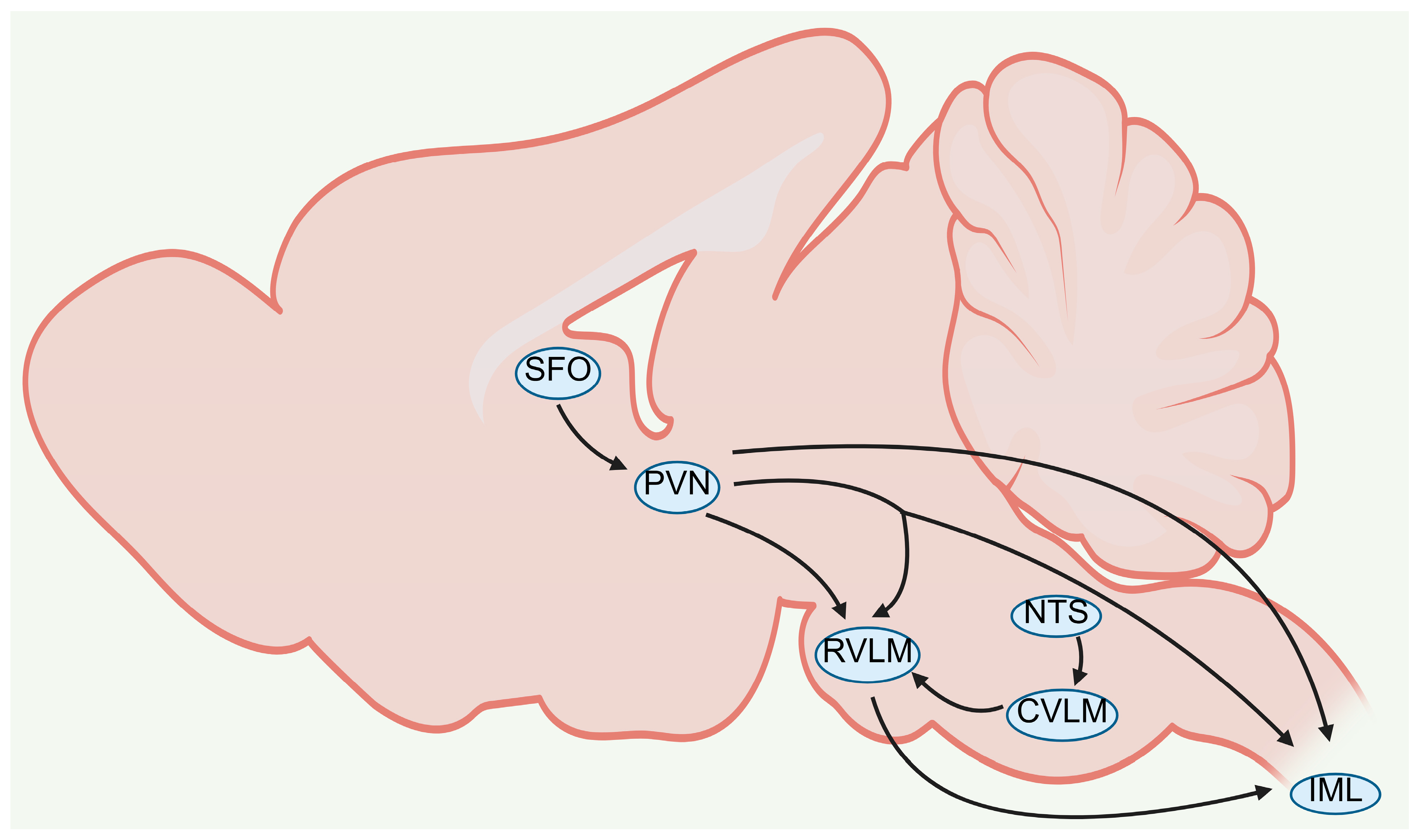
2. Core Nuclei and Neural Circuit Architecture of Central Sympathetic Regulation
3. Networked Pathological Mechanisms of Central Sympathetic Overactivation in Heart Failure (HF)
3.1. Initiation Stage: Peripheral Signal Sensing and Central Initial Activation
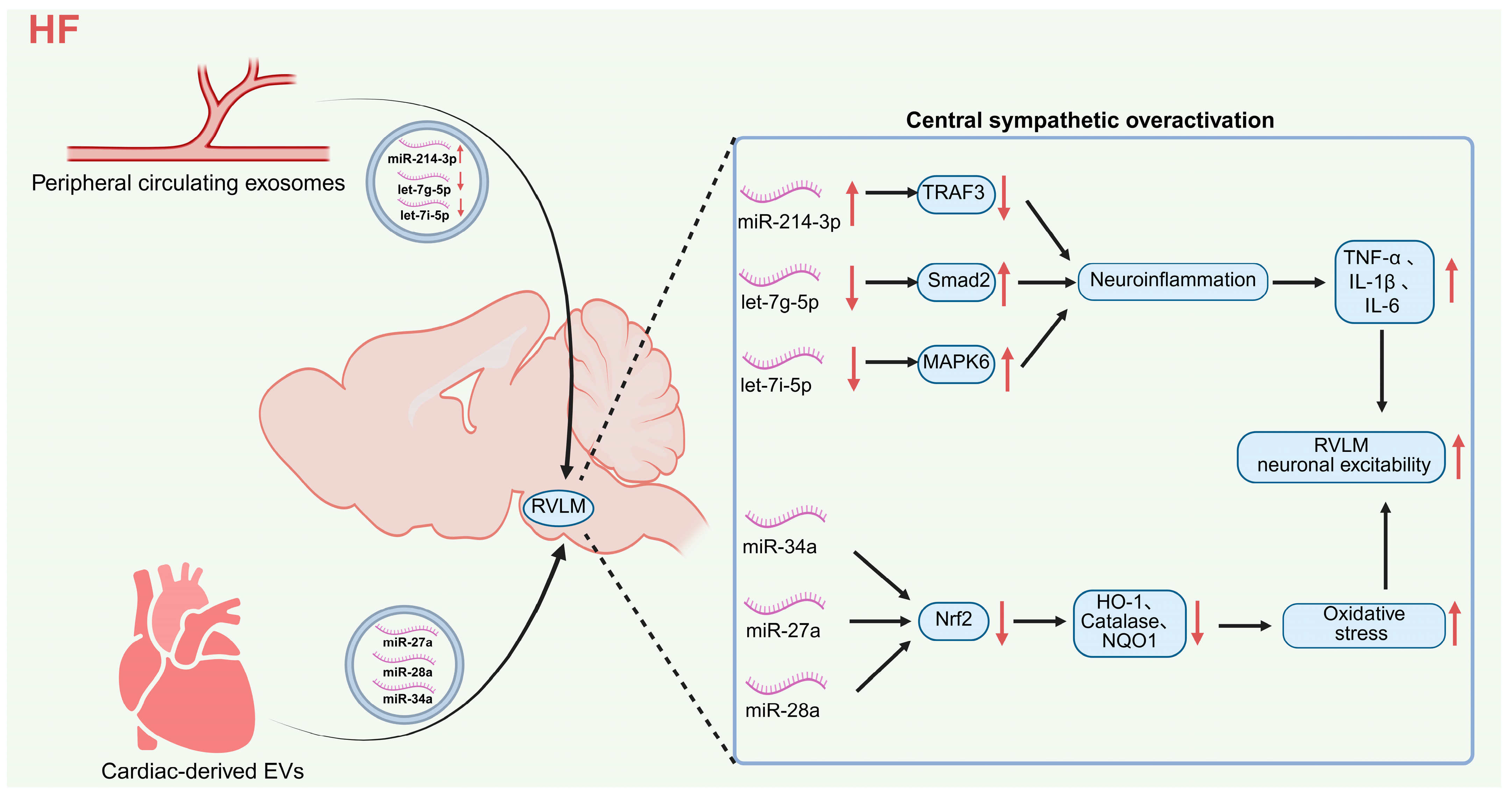
3.1.1. Extracellular Vesicle-Mediated Trans-Organ Signaling: A Critical Bridge in the Pathological Vicious Cycle of the Brain-Heart Axis
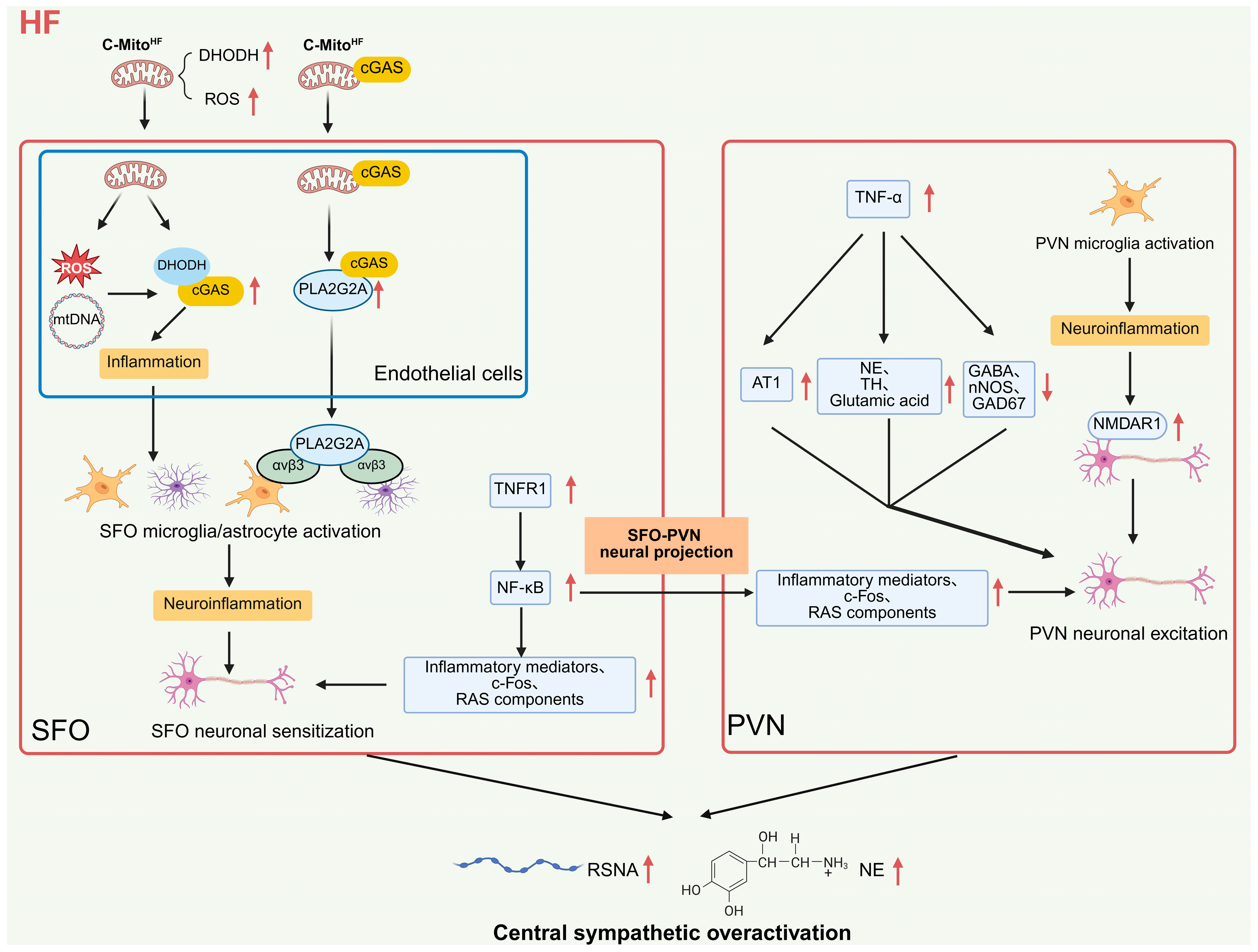
3.1.2. Central Glial Cell Activation and Neuroinflammatory Cascade: A Potential Upstream Contributor to Sympathetic Overactivation
3.2. Amplification Stage: Pathological Cascade and Positive Feedback Amplification
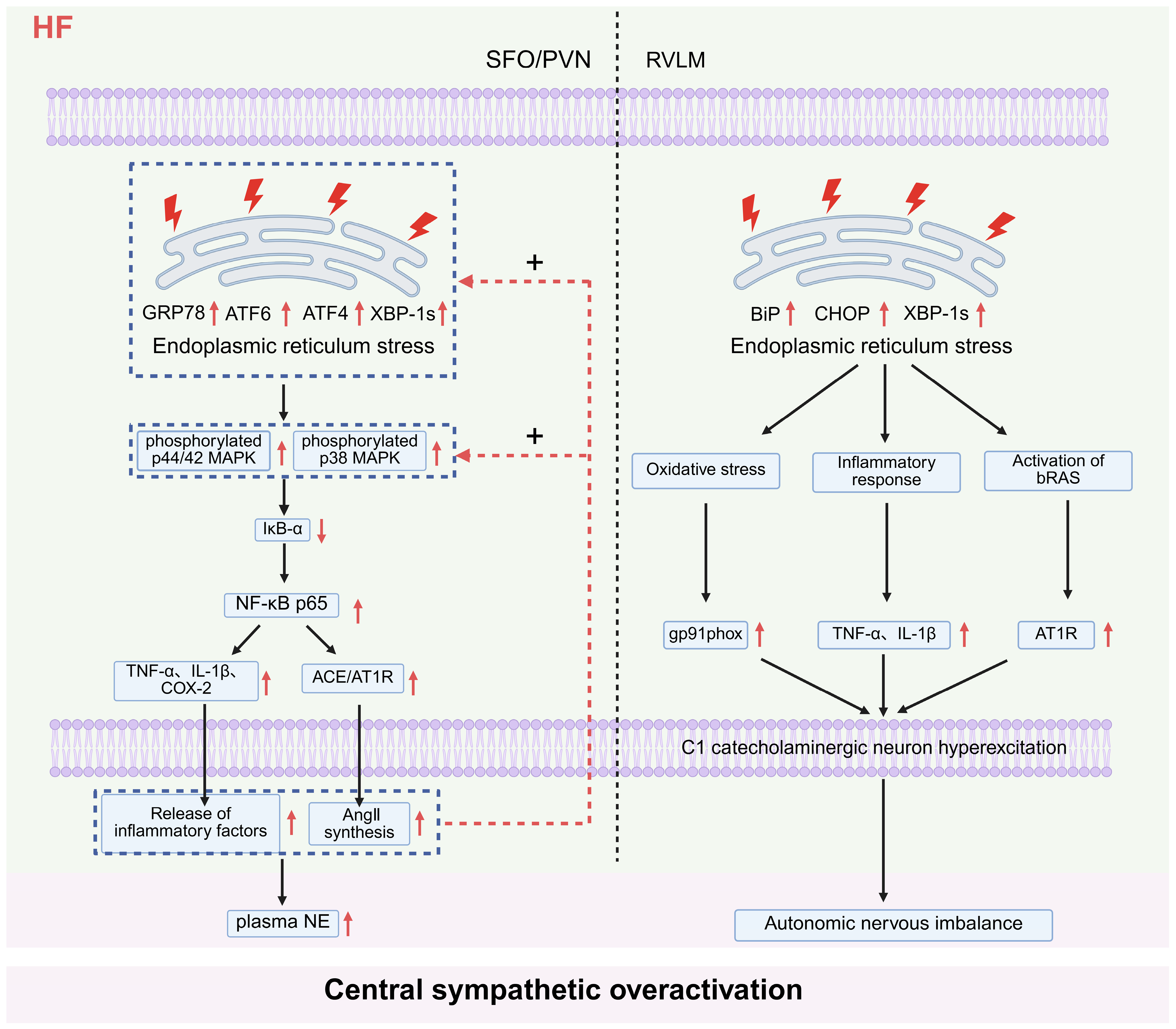
3.2.1. Central Endoplasmic Reticulum Stress (ERS): A Secondary Pathological Amplifier of Sympathetic Overactivation
3.2.2. Central Renin-Angiotensin System (RAS) Imbalance: A Key Neurohumoral Hub for Abnormal Sympathetic Regulation
3.2.3. Abnormal Central Core Signaling Pathways and Transcription Factors: Intermediate and Amplifying Carriers of Pathological Signals
3.2.4. Abnormal Post-Transcriptional and Post-Translational Modifications in the Central Nervous System: Sophisticated Reinforcement Mechanisms Underlying Sympathetic Pathological States
Abnormal Post-Transcriptional Gene Regulation Mediated by Non-Coding RNAs
Functional Imbalance of Protein Post-Translational Modifications
3.3. Execution Stage: Neuronal Microenvironment Disorder and Sympathetic Output
3.3.1. Imbalance of the Functional Microenvironment in Central Neurons: A Direct Manifestation of Sympathetic Neuronal Hyperexcitability
Functional Imbalance of the Neurotransmitter and Receptor System
Abnormal Regulation of Ion Channel Expression and Function
3.4. Crosstalk and Networked Regulation Among Pathological Mechanisms
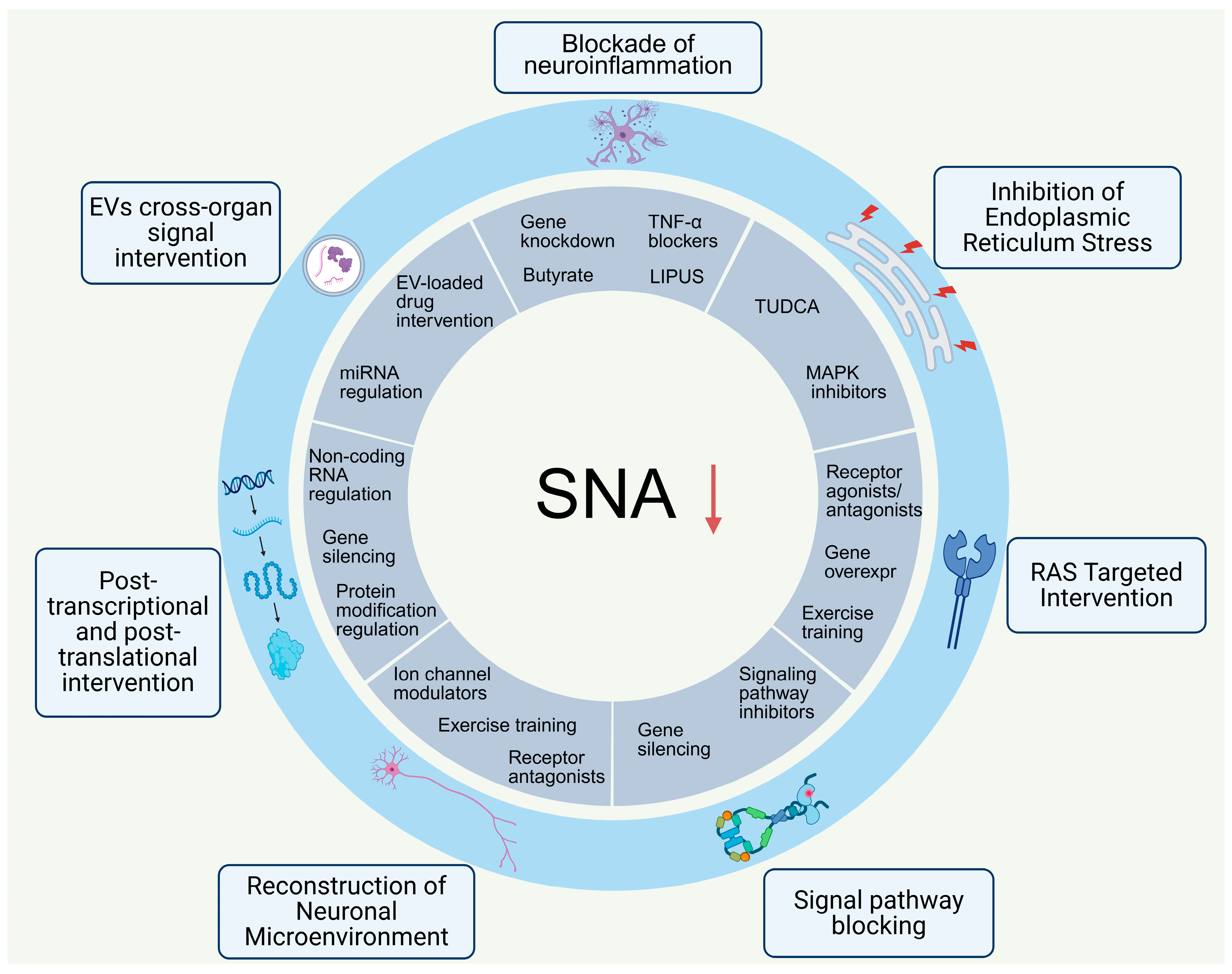
4. Targeted Intervention Strategies and Clinical Translation Potential for Central Sympathetic Hyperactivity in Heart Failure(HF)
4.1. Targeted Intervention of Extracellular Vesicle-Mediated Trans-Organ Signaling
4.2. Targeted Blockade of Central Neuroinflammation and Glial Activation
4.3. Inhibition of Central ERS and Blockade of Secondary Pathological Injury
4.4. Nucleus-Specific Targeted Intervention for Central RAS Imbalance
4.5. Cascade Blockade of Abnormal Central Core Signaling Pathways and Transcription Factors
4.6. Precise Molecular Interventions for Abnormal Central Post-Transcriptional and Post-Translational Modifications
4.6.1. Targeted Reversal of Non-Coding RNA-Mediated Post-Transcriptional Dysregulation
4.6.2. Repair and Regulation of Functional Imbalance in Protein Post-Translational Modifications
4.7. Reconstruction Strategy of Central Neuronal Functional Microenvironment Homeostasis
4.7.1. Repair and Regulation of Neurotransmitter and Receptor System Function
4.7.2. Targeted Correction and Physiological Regulation of Ion Channel Dysfunction
4.8. Translational Hurdles and Limitations of Central Targeted Therapies
5. Research Prospects and Challenges
6. Conclusions
Author Contributions
Funding
Institutional Review Board Statement
Informed Consent Statement
Data Availability Statement
Conflicts of Interest
Abbreviations
| ACE | Angiotensin-converting enzyme |
| ACE2 | Angiotensin-converting enzyme 2 |
| AGT | Angiotensinogen |
| Ang II | Angiotensin II |
| Ang-(1-7) | Angiotensin-(1-7) |
| AP | Area postrema |
| AT1R | Angiotensin II type 1 receptor |
| AT2R | Angiotensin II type 2 receptor |
| cAMP | Cyclic adenosine monophosphate |
| cGAS | Cyclic GMP-AMP synthase |
| CHF | Chronic heart failure |
| CNS | Central nervous system |
| COX-2 | Cyclooxygenase-2 |
| CRH | Corticotropin-releasing hormone |
| CRH-R1 | Corticotropin-releasing hormone receptor 1 |
| CSAR | Cardiac sympathetic afferent reflex |
| CVLM | Caudal ventrolateral medulla |
| DHODH | Dihydroorotate dehydrogenase |
| dsDNA | Double-stranded DNA |
| EGFR | Epidermal growth factor receptor |
| ERS | Endoplasmic reticulum stress |
| EVs | Extracellular vesicles |
| GABA | γ-aminobutyric acid |
| GABRA1 | GABA A receptor α1 subunit |
| GABBR1 | GABAB receptor 1 |
| GAD1 | Glutamate decarboxylase 1 |
| GAD67 | 67 kDa glutamate decarboxylase |
| GAT-3 | GABA transporter 3 |
| gp91phox | NADPH oxidase subunit gp91phox |
| GRP78 | Glucose-regulated protein 78 |
| HF | Heart failure |
| HIF-1α | Hypoxia-inducible factor-1α |
| HoxD10 | Homeobox protein D10 |
| IKKβ | Inhibitor of nuclear factor-κB kinase subunit β |
| IL-1β | Interleukin-1beta |
| IL-6 | Interleukin-6 |
| IML | Intermediolateral column of the spinal cord |
| JNK | c-Jun N-terminal kinase |
| LIPUS | Low-intensity pulsed ultrasound |
| LSG | Left stellate ganglion |
| MAPK | Mitogen-activated protein kinase |
| MasR | Mas receptor |
| miR | MicroRNA |
| miR-7b | MicroRNA-7b |
| miR-133a | MicroRNA-133a |
| miR-214-3p | MicroRNA-214-3p |
| miR-27a | MicroRNA-27a |
| miR-28a | MicroRNA-28a |
| miR-34a | MicroRNA-34a |
| mtDNA | Mitochondrial DNA |
| NAD(P)H | Nicotinamide adenine dinucleotide phosphate |
| NF-κB | Nuclear factor-κB |
| NMDAR1 | N-methyl-D-aspartate receptor 1 |
| NMDA-NR1 | N-methyl-D-aspartate receptor subtype 1 |
| NO | Nitric oxide |
| nNOS | Neuronal nitric oxide synthase |
| NQO1 | NAD(P)H quinone dehydrogenase 1 |
| Nrf2 | Nuclear factor erythroid 2-related factor 2 |
| NTS | Nucleus tractus solitarius |
| p-IKKβ | Phosphorylated inhibitor κB kinase β |
| PKA | Protein kinase A |
| PLA2G2A | Secreted phospholipase A2 group IIA |
| PTGER3 | Prostaglandin E2 receptor 3 (EP3) |
| PVN | Paraventricular nucleus of the hypothalamus |
| RAAS | Renin–angiotensin–aldosterone system |
| RAS | Renin–angiotensin system |
| ROS | Reactive oxygen species |
| RSNA | Renal sympathetic nerve activity |
| RVLM | Rostral ventrolateral medulla |
| SFO | Subfornical organ |
| SGLT2 | Sodium-glucose cotransporter 2 |
| SNA | Sympathetic nerve activity |
| SNS | Sympathetic nervous system |
| Smad2 | SMAD family member 2 |
| TGF-α | Transforming growth factor-α |
| TH | Tyrosine hydroxylase |
| TNF-α | Tumor necrosis factor-α |
| TNFR1 | Tumor necrosis factor receptor 1 |
| Traf3 | TNF receptor-associated factor 3 |
| TUDCA | Tauroursodeoxycholic acid |
| XBP-1s | Spliced X-box binding protein 1 |
References
- Shahim, B.; Kapelios, C.J.; Savarese, G.; Lund, L.H. Global Public Health Burden of Heart Failure: An Updated Review. Card. Fail. Rev. 2023, 9, e11. [Google Scholar] [CrossRef]
- Bozkurt, B.; Ahmad, T.; Alexander, K.; Baker, W.L.; Bosak, K.; Breathett, K.; Carter, S.; Drazner, M.H.; Dunlay, S.M.; Fonarow, G.C.; et al. HF STATS 2024: Heart Failure Epidemiology and Outcomes Statistics An Updated 2024 Report from the Heart Failure Society of America. J. Card. Fail. 2025, 31, 66–116. [Google Scholar] [CrossRef]
- Yan, S.; Deng, P.; Chai, K.; Wang, S.; Hu, K.; Yang, J.; Wang, H. Global, regional, and national burden of heart failure and its risk factors between 1990 and 2021 and projections to 2050: An analysis of the global burden of disease study. Eur. Heart J. Qual. Care Clin. Outcomes 2025, 11, 1144–1154. [Google Scholar] [CrossRef] [PubMed]
- Feng, J.; Zhang, Y.; Zhang, J. Epidemiology and Burden of Heart Failure in Asia. JACC Asia 2024, 4, 249–264. [Google Scholar] [CrossRef] [PubMed]
- Borovac, J.A.; D’Amario, D.; Bozic, J.; Glavas, D. Sympathetic nervous system activation and heart failure: Current state of evidence and the pathophysiology in the light of novel biomarkers. World J. Cardiol. 2020, 12, 373–408. [Google Scholar] [CrossRef]
- Talishinsky, A.; Ajijola, O.A.; Khalsa, S.S. Autonomic Imbalance in Cardiomyopathy and Heart Failure: From Neurobiology to Precision Neuromodulation. Curr. Cardiol. Rep. 2025, 27, 144. [Google Scholar] [CrossRef] [PubMed]
- Du, X. Sympatho-adrenergic mechanisms in heart failure: New insights into pathophysiology. Med. Rev. 2021, 1, 47–77. [Google Scholar] [CrossRef]
- Sales, A.R.K.; Azevedo, L.F.; Silva, T.O.C.; Rodrigues, A.G.; Oliveira, P.A.; Jordão, C.P.; Andrade, A.C.M.; Urias, U.; Guimaraes, G.V.; Bocchi, E.A.; et al. High-Intensity Interval Training Decreases Muscle Sympathetic Nerve Activity and Improves Peripheral Vascular Function in Patients With Heart Failure With Reduced Ejection Fraction. Circ. Heart Fail. 2020, 13, e007121. [Google Scholar] [CrossRef]
- Shi, M.; Yang, Z.; Yin, P.; Zhao, H.; Li, L.; Zhen, Y.; Zhao, Q.; Liu, C. Cardiac and renal sympathetic nerve activation in early-stage HFpEF: Insights from (131)I-MIBG imaging study. Int. J. Cardiovasc. Imaging 2026, 42, 283–292. [Google Scholar] [CrossRef]
- Ogieuhi, I.J.; Anthony, C.S.; Ajekiigbe, V.O.; Jiwo, H.L.; Akinmeji, A.; Olaiya, V.O.; Oyenuga, A.S.; Oladipo, T.C. Greater Splanchnic Nerve Ablation in Heart Failure with Preserved Ejection Fraction: A Mini-Narrative Review of Emerging Evidence. Eur. J. Med. Res. 2025, 30, 1087. [Google Scholar] [CrossRef]
- Okumura, T.; Bando, Y.K.; Isobe, S.; Fujita, N.; Sera, F.; Ikeda, Y.; Yajima, A.; Nagai, T.; Hiraiwa, H.; Morimoto, R.; et al. Effect of tofogliflozin on cardiac sympathetic nerve activity in type 2 diabetes mellitus patients with heart failure (TARGET-HF): Rationale and design of the single-arm intervention trial. Cardiovasc. Diabetol. Endocrinol. Rep. 2025, 11, 47. [Google Scholar] [CrossRef] [PubMed]
- Li, Z.; Sun, X.; Wang, Y.; Zhang, F.; Wang, L.; Ai, C.; Zhang, X.; Yin, X.; Liu, C.; Li, C.; et al. Renal denervation attenuates cardiac dysfunction in HFpEF by inhibiting the ATP-P2X7-NLRP3 inflammasome axis. Basic Res. Cardiol. 2025, 120, 1225–1247. [Google Scholar] [CrossRef] [PubMed]
- Ishibashi, Y.; Kasama, S.; Ishii, H. Cardiac sympathetic activity in patients suffering from heart failure with improved ejection fraction. J. Nucl. Cardiol. 2025, 48, 102196. [Google Scholar] [CrossRef]
- Vona, R.; Cittadini, C.; Mattia, G.; Puglisi, R.; Ascione, B.; Gambardella, L.; Maccari, S.; Marano, G.; Matarrese, P. Seeking Novel Personalized and Sex-Specific Strategies for the Prevention and Treatment of Heart Failure Based on the Assessment of β1-Adrenergic Receptor Desensitization: The Contribution to the HEAL ITALIA Project. Curr. Issues Mol. Biol. 2026, 48, 132. [Google Scholar] [CrossRef]
- Nagatomo, Y.; McNamara, D.M.; Alexis, J.D.; Cooper, L.T.; Dec, G.W.; Pauly, D.F.; Sheppard, R.; Starling, R.C.; Tang, W.H. Myocardial Recovery in Patients With Systolic Heart Failure and Autoantibodies Against β(1)-Adrenergic Receptors. J. Am. Coll. Cardiol. 2017, 69, 968–977. [Google Scholar] [CrossRef]
- Chen, Q.; Huang, Z.; Chen, J.; Tian, X.; Zhang, R.; Liang, Q.; Liu, Z.; Cheng, Y. Notoginsenoside R1 attenuates ischemic heart failure by modulating MDM2/β arrestin2-mediated β2-adrenergic receptor ubiquitination. Biomed. Pharmacother. 2024, 177, 117004. [Google Scholar] [CrossRef]
- Schröper, T.; Mehrkens, D.; Leiss, V.; Tellkamp, F.; Engelhardt, S.; Herzig, S.; Birnbaumer, L.; Nürnberg, B.; Matthes, J. Protective effects of Gα(i3) deficiency in a murine heart-failure model of β(1)-adrenoceptor overexpression. Naunyn Schmiedebergs Arch. Pharmacol. 2024, 397, 2401–2420. [Google Scholar] [CrossRef]
- Kwan, Z.; Paulose Nadappuram, B.; Leung, M.M.; Mohagaonkar, S.; Li, A.; Amaradasa, K.S.; Chen, J.; Rothery, S.; Kibreab, I.; Fu, J.; et al. Microtubule-Mediated Regulation of β(2)AR Translation and Function in Failing Hearts. Circ. Res. 2023, 133, 944–958. [Google Scholar] [CrossRef] [PubMed]
- Tian, X.; Huang, Z.; Wang, Y.; Qi, X.; Wang, D.; Liu, Z.; Cheng, Y. Xinbao Pill attenuated chronic heart failure by suppressing the ubiquitination of β-adrenergic receptors. Phytomedicine 2023, 115, 154830. [Google Scholar] [CrossRef]
- Xu, B.; Li, H. Brain mechanisms of sympathetic activation in heart failure: Roles of the renin-angiotensin system, nitric oxide and pro-inflammatory cytokines (Review). Mol. Med. Rep. 2015, 12, 7823–7829. [Google Scholar] [CrossRef]
- Ziegler, K.A.; Engelhardt, S.; Carnevale, D.; McAlpine, C.S.; Guzik, T.J.; Dimmeler, S.; Swirski, F.K. Neural Mechanisms in Cardiovascular Health and Disease. Circ. Res. 2025, 136, 1233–1261. [Google Scholar] [CrossRef] [PubMed]
- Ikeda, S.; Shinohara, K.; Ono, Y.; Nakashima, H.; Miyamoto, R.; Hara, A.; Kashihara, S.; Matsumoto, S.; Yoshida, D.; Nakashima, R.; et al. Afferent Renal Nerves Drive Sympathoexcitation and Hypertensive Heart Failure. Hypertension 2026, 83, e25247. [Google Scholar] [CrossRef]
- van Weperen, V.Y.H.; Vaseghi, M. The brain-heart axis: Effects of cardiovascular disease on the CNS and opportunities for central neuromodulation. Nat. Rev. Neurosci. 2026, 27, 159–177. [Google Scholar] [CrossRef] [PubMed]
- Guyenet, P.G. The sympathetic control of blood pressure. Nat. Rev. Neurosci. 2006, 7, 335–346. [Google Scholar] [CrossRef]
- Kinsman, B.J.; Nation, H.N.; Stocker, S.D. Hypothalamic Signaling in Body Fluid Homeostasis and Hypertension. Curr. Hypertens. Rep. 2017, 19, 50. [Google Scholar] [CrossRef]
- Kinsman, B.J.; Simmonds, S.S.; Browning, K.N.; Stocker, S.D. Organum Vasculosum of the Lamina Terminalis Detects NaCl to Elevate Sympathetic Nerve Activity and Blood Pressure. Hypertension 2017, 69, 163–170. [Google Scholar] [CrossRef]
- Kumagai, H.; Oshima, N.; Matsuura, T.; Iigaya, K.; Imai, M.; Onimaru, H.; Sakata, K.; Osaka, M.; Onami, T.; Takimoto, C.; et al. Importance of rostral ventrolateral medulla neurons in determining efferent sympathetic nerve activity and blood pressure. Hypertens. Res. 2012, 35, 132–141. [Google Scholar] [CrossRef] [PubMed]
- Braga, V.A.; Medeiros, I.A.; Ribeiro, T.P.; França-Silva, M.S.; Botelho-Ono, M.S.; Guimarães, D.D. Angiotensin-II-induced reactive oxygen species along the SFO-PVN-RVLM pathway: Implications in neurogenic hypertension. Braz. J. Med. Biol. Res. 2011, 44, 871–876. [Google Scholar] [CrossRef]
- Affleck, V.S.; Coote, J.H.; Pyner, S. The projection and synaptic organisation of NTS afferent connections with presympathetic neurons, GABA and nNOS neurons in the paraventricular nucleus of the hypothalamus. Neuroscience 2012, 219, 48–61. [Google Scholar] [CrossRef]
- Chen, Q.H.; Toney, G.M. Identification and characterization of two functionally distinct groups of spinal cord-projecting paraventricular nucleus neurons with sympathetic-related activity. Neuroscience 2003, 118, 797–807. [Google Scholar] [CrossRef]
- Chen, Q.H.; Toney, G.M. In vivo discharge properties of hypothalamic paraventricular nucleus neurons with axonal projections to the rostral ventrolateral medulla. J. Neurophysiol. 2010, 103, 4–15. [Google Scholar] [CrossRef] [PubMed]
- Potts, J.T.; Paton, J.F.; Mitchell, J.H.; Garry, M.G.; Kline, G.; Anguelov, P.T.; Lee, S.M. Contraction-sensitive skeletal muscle afferents inhibit arterial baroreceptor signalling in the nucleus of the solitary tract: Role of intrinsic GABA interneurons. Neuroscience 2003, 119, 201–214. [Google Scholar] [CrossRef]
- Schreihofer, A.M.; Guyenet, P.G. The baroreflex and beyond: Control of sympathetic vasomotor tone by GABAergic neurons in the ventrolateral medulla. Clin. Exp. Pharmacol. Physiol. 2002, 29, 514–521. [Google Scholar] [CrossRef]
- Tagawa, T.; Dampney, R.A. AT(1) receptors mediate excitatory inputs to rostral ventrolateral medulla pressor neurons from hypothalamus. Hypertension 1999, 34, 1301–1307. [Google Scholar] [CrossRef]
- Nunn, N.; Womack, M.; Dart, C.; Barrett-Jolley, R. Function and pharmacology of spinally-projecting sympathetic pre-autonomic neurones in the paraventricular nucleus of the hypothalamus. Curr. Neuropharmacol. 2011, 9, 262–277. [Google Scholar] [CrossRef]
- Tian, C.; Ziegler, J.N.; Zucker, I.H. Extracellular Vesicle MicroRNAs in Heart Failure: Pathophysiological Mediators and Therapeutic Targets. Cells 2023, 12, 2145. [Google Scholar] [CrossRef]
- Wafi, A.M. Nrf2 and autonomic dysregulation in chronic heart failure and hypertension. Front. Physiol. 2023, 14, 1206527. [Google Scholar] [CrossRef]
- Tian, C.; Gao, L.; Rudebush, T.L.; Yu, L.; Zucker, I.H. Extracellular Vesicles Regulate Sympatho-Excitation by Nrf2 in Heart Failure. Circ. Res. 2022, 131, 687–700. [Google Scholar] [CrossRef] [PubMed]
- Ma, A.; Hong, J.; Shanks, J.; Rudebush, T.; Yu, L.; Hackfort, B.T.; Wang, H.; Zucker, I.H.; Gao, L. Upregulating Nrf2 in the RVLM ameliorates sympatho-excitation in mice with chronic heart failure. Free Radic. Biol. Med. 2019, 141, 84–92. [Google Scholar] [CrossRef]
- Xiao, Y.C.; Wang, W.; Gao, Y.; Li, W.Y.; Tan, X.; Wang, Y.K.; Wang, W.Z. The Peripheral Circulating Exosomal microRNAs Related to Central Inflammation in Chronic Heart Failure. J. Cardiovasc. Transl. Res. 2022, 15, 500–513. [Google Scholar] [CrossRef] [PubMed]
- Matsumoto, A.; Takahashi, Y.; Chang, H.Y.; Wu, Y.W.; Yamamoto, A.; Ishihama, Y.; Takakura, Y. Blood concentrations of small extracellular vesicles are determined by a balance between abundant secretion and rapid clearance. J. Extracell. Vesicles 2020, 9, 1696517. [Google Scholar] [CrossRef]
- Pavlova, S.; Mamand, D.R.; Görgens, A.; Zickler, A.M.; Zheng, W.; Liang, X.; Wiklander, O.P.B.; Abedi-Valugerdi, M.; Van Wonterghem, E.; Xie, J.; et al. Systemic Inflammation Modulates Clearance and Drives Extra-Hepatic Distribution of Extracellular Vesicles. J. Extracell. Vesicles 2026, 15, e70256. [Google Scholar] [CrossRef]
- Bolaji, O.; Bahar, Y.; Lohana, S.; Bahar, A.R.; Lawrence, I.; Mazimba, S. The heart-brain axis: Neurocognitive frailty in heart failure. J. Neurol. 2025, 272, 522. [Google Scholar] [CrossRef] [PubMed]
- Roy, B.; Shao, X.; Jobanputra, K.J.; Fonarow, G.C.; Wang, D.J.J.; Woo, M.; Kumar, R. Blood-Brain Barrier Dysfunction in Adults With Heart Failure. J. Neuroimaging 2025, 35, e70068. [Google Scholar] [CrossRef] [PubMed]
- Díaz, H.S.; Toledo, C.; Andrade, D.C.; Marcus, N.J.; Del Rio, R. Neuroinflammation in heart failure: New insights for an old disease. J. Physiol. 2020, 598, 33–59. [Google Scholar] [CrossRef] [PubMed]
- Zhang, S.; Zhao, D.; Yang, Z.; Wang, F.; Yang, S.; Wang, C. Circulating mitochondria promoted endothelial cGAS-derived neuroinflammation in subfornical organ to aggravate sympathetic overdrive in heart failure mice. J. Neuroinflammation 2024, 21, 27. [Google Scholar] [CrossRef]
- Zhang, S.; Huang, Y.; Han, C.; Chen, M.; Yang, Z.; Wang, C. Circulating mitochondria carrying cGAS promote endothelial Secreted group IIA phospholipase A2-mediated neuroinflammation through activating astroglial/microglial Integrin-alphavbeta3 in subfornical organ to augment central sympathetic overdrive in heart failure rats. Int. Immunopharmacol. 2025, 144, 113649. [Google Scholar] [CrossRef]
- Kang, Y.M.; Wang, Y.; Yang, L.M.; Elks, C.; Cardinale, J.; Yu, X.J.; Zhao, X.F.; Zhang, J.; Zhang, L.H.; Yang, Z.M.; et al. TNF-α in hypothalamic paraventricular nucleus contributes to sympathoexcitation in heart failure by modulating AT1 receptor and neurotransmitters. Tohoku J. Exp. Med. 2010, 222, 251–263. [Google Scholar] [CrossRef]
- Yu, Y.; Wei, S.G.; Weiss, R.M.; Felder, R.B. TNF-α receptor 1 knockdown in the subfornical organ ameliorates sympathetic excitation and cardiac hemodynamics in heart failure rats. Am. J. Physiol. Heart Circ. Physiol. 2017, 313, H744–H756. [Google Scholar] [CrossRef]
- Liu, C.; Yu, H.; Xia, H.; Wang, Z.; Li, B.; Xue, H.; Jin, S.; Xiao, L.; Wu, Y.; Guo, Q. Butyrate attenuates sympathetic activation in rats with chronic heart failure by inhibiting microglial inflammation in the paraventricular nucleus. Acta Biochim. Biophys. Sin. 2024, 56, 1823–1832. [Google Scholar] [CrossRef]
- Yang, H.; Hu, Y.; Kong, B.; Zhou, Y.; Shuai, W. Low-intensity pulsed ultrasound treatment mitigates ventricular arrhythmias via inhibiting microglia-mediated neuroinflammation in heart failure rat model. Int. Immunopharmacol. 2024, 126, 111317. [Google Scholar] [CrossRef]
- Wei, S.G.; Yu, Y.; Weiss, R.M.; Felder, R.B. Endoplasmic reticulum stress increases brain MAPK signaling, inflammation and renin-angiotensin system activity and sympathetic nerve activity in heart failure. Am. J. Physiol. Heart Circ. Physiol. 2016, 311, H871–H880. [Google Scholar] [CrossRef]
- Wei, S.G.; Yu, Y.; Weiss, R.M.; Felder, R.B. Inhibition of Brain Mitogen-Activated Protein Kinase Signaling Reduces Central Endoplasmic Reticulum Stress and Inflammation and Sympathetic Nerve Activity in Heart Failure Rats. Hypertension 2016, 67, 229–236, Correction in Hypertension 2018, 72, e32. [Google Scholar] [CrossRef]
- Díaz, H.S.; Andrade, D.C.; Toledo, C.; Schwarz, K.G.; Pereyra, K.V.; Díaz-Jara, E.; Marcus, N.J.; Del Rio, R. Inhibition of Brainstem Endoplasmic Reticulum Stress Rescues Cardiorespiratory Dysfunction in High Output Heart Failure. Hypertension 2021, 77, 718–728. [Google Scholar] [CrossRef] [PubMed]
- Ren, X.; Zhang, F.; Zhao, M.; Zhao, Z.; Sun, S.; Fraidenburg, D.R.; Tang, H.; Han, Y. Angiotensin-(1-7) in Paraventricular Nucleus Contributes to the Enhanced Cardiac Sympathetic Afferent Reflex and Sympathetic Activity in Chronic Heart Failure Rats. Cell. Physiol. Biochem. 2017, 42, 2523–2539. [Google Scholar] [CrossRef] [PubMed]
- Zheng, H.; Liu, X.; Patel, K.P. Angiotensin-converting enzyme 2 overexpression improves central nitric oxide-mediated sympathetic outflow in chronic heart failure. Am. J. Physiol. Heart Circ. Physiol. 2011, 301, H2402–H2412. [Google Scholar] [CrossRef][Green Version]
- Kang, Y.M.; Yang, Q.; Yu, X.J.; Qi, J.; Zhang, Y.; Li, H.B.; Su, Q.; Zhu, G.Q. Hypothalamic paraventricular nucleus activation contributes to neurohumoral excitation in rats with heart failure. Regen. Med. Res. 2014, 2, 2. [Google Scholar] [CrossRef]
- Llewellyn, T.L.; Sharma, N.M.; Zheng, H.; Patel, K.P. Effects of exercise training on SFO-mediated sympathoexcitation during chronic heart failure. Am. J. Physiol. Heart Circ. Physiol. 2014, 306, H121–H131. [Google Scholar] [CrossRef][Green Version]
- Gao, L.; Wang, W.Z.; Wang, W.; Zucker, I.H. Imbalance of angiotensin type 1 receptor and angiotensin II type 2 receptor in the rostral ventrolateral medulla: Potential mechanism for sympathetic overactivity in heart failure. Hypertension 2008, 52, 708–714. [Google Scholar] [CrossRef]
- Wang, W.Z.; Gao, L.; Wang, H.J.; Zucker, I.H.; Wang, W. Interaction between cardiac sympathetic afferent reflex and chemoreflex is mediated by the NTS AT1 receptors in heart failure. Am. J. Physiol. Heart Circ. Physiol. 2008, 295, H1216–H1226. [Google Scholar] [CrossRef] [PubMed]
- Shigematsu, H.; Hirooka, Y.; Eshima, K.; Shihara, M.; Tagawa, T.; Takeshita, A. Endogenous angiotensin II in the NTS contributes to sympathetic activation in rats with aortocaval shunt. Am. J. Physiol. Regul. Integr. Comp. Physiol. 2001, 280, R1665–R1673. [Google Scholar] [CrossRef]
- Yu, Y.; Wei, S.G.; Zhang, Z.H.; Weiss, R.M.; Felder, R.B. ERK1/2 MAPK signaling in hypothalamic paraventricular nucleus contributes to sympathetic excitation in rats with heart failure after myocardial infarction. Am. J. Physiol. Heart Circ. Physiol. 2016, 310, H732–H739. [Google Scholar] [CrossRef]
- Yu, Y.; Wei, S.G.; Weiss, R.M.; Felder, R.B. Silencing Epidermal Growth Factor Receptor in Hypothalamic Paraventricular Nucleus Reduces Extracellular Signal-regulated Kinase 1 and 2 Signaling and Sympathetic Excitation in Heart Failure Rats. Neuroscience 2021, 463, 227–237. [Google Scholar] [CrossRef] [PubMed]
- Yu, Y.; Chen, E.; Weiss, R.M.; Felder, R.B.; Wei, S.G. Transforming Growth Factor-α Acts in Hypothalamic Paraventricular Nucleus to Upregulate ERK1/2 Signaling and Expression of Sympathoexcitatory Mediators in Heart Failure Rats. Neuroscience 2022, 483, 13–23. [Google Scholar] [CrossRef]
- Wang, R.; Zhang, W.; Dong, Z.; Qi, Y.; Hultström, M.; Zhou, X.; Lai, E.Y. c-Jun N-terminal Kinase mediates prostaglandin-induced sympathoexcitation in rats with chronic heart failure by reducing GAD1 and GABRA1 expression. Acta Physiol. 2017, 219, 494–509. [Google Scholar] [CrossRef] [PubMed]
- Kang, Y.M.; Gao, F.; Li, H.H.; Cardinale, J.P.; Elks, C.; Zang, W.J.; Yu, X.J.; Xu, Y.Y.; Qi, J.; Yang, Q.; et al. NF-κB in the paraventricular nucleus modulates neurotransmitters and contributes to sympathoexcitation in heart failure. Basic. Res. Cardiol. 2011, 106, 1087–1097. [Google Scholar] [CrossRef]
- Yu, X.J.; Suo, Y.P.; Qi, J.; Yang, Q.; Li, H.H.; Zhang, D.M.; Yi, Q.Y.; Zhang, J.; Zhu, G.Q.; Zhu, Z.; et al. Interaction between AT1 receptor and NF-κB in hypothalamic paraventricular nucleus contributes to oxidative stress and sympathoexcitation by modulating neurotransmitters in heart failure. Cardiovasc. Toxicol. 2013, 13, 381–390. [Google Scholar] [CrossRef] [PubMed]
- Sharma, N.M.; Cunningham, C.J.; Zheng, H.; Liu, X.; Patel, K.P. Hypoxia-Inducible Factor-1α Mediates Increased Sympathoexcitation via Glutamatergic N-Methyl-d-Aspartate Receptors in the Paraventricular Nucleus of Rats With Chronic Heart Failure. Circ. Heart Fail. 2016, 9, e003423. [Google Scholar] [CrossRef]
- Wang, R.; Huang, Q.; Zhou, R.; Dong, Z.; Qi, Y.; Li, H.; Wei, X.; Wu, H.; Wang, H.; Wilcox, C.S.; et al. Sympathoexcitation in Rats With Chronic Heart Failure Depends on Homeobox D10 and MicroRNA-7b Inhibiting GABBR1 Translation in Paraventricular Nucleus. Circ. Heart Fail. 2016, 9, e002261. [Google Scholar] [CrossRef]
- Sharma, N.M.; Nandi, S.S.; Zheng, H.; Mishra, P.K.; Patel, K.P. A novel role for miR-133a in centrally mediated activation of the renin-angiotensin system in congestive heart failure. Am. J. Physiol. Heart Circ. Physiol. 2017, 312, H968–H979. [Google Scholar] [CrossRef]
- Zhang, S.; Huang, Y.; Han, C.; Wang, F.; Chen, M.; Yang, Z.; Yang, S.; Wang, C. Central SGLT2 mediate sympathoexcitation in hypertensive heart failure via attenuating subfornical organ endothelial cGAS ubiquitination to amplify neuroinflammation: Molecular mechanism behind sympatholytic effect of Empagliflozin. Int. Immunopharmacol. 2025, 145, 113711. [Google Scholar] [CrossRef]
- Sharma, N.M.; Patel, K.P. Post-translational regulation of neuronal nitric oxide synthase: Implications for sympathoexcitatory states. Expert Opin. Ther. Targets 2017, 21, 11–22. [Google Scholar] [CrossRef] [PubMed]
- Wang, R.J.; Zeng, Q.H.; Wang, W.Z.; Wang, W. GABA(A) and GABA(B) receptor-mediated inhibition of sympathetic outflow in the paraventricular nucleus is blunted in chronic heart failure. Clin. Exp. Pharmacol. Physiol. 2009, 36, 516–522. [Google Scholar] [CrossRef]
- Pandit, S.; Jo, J.Y.; Lee, S.U.; Lee, Y.J.; Lee, S.Y.; Ryu, P.D.; Lee, J.U.; Kim, H.W.; Jeon, B.H.; Park, J.B. Enhanced astroglial GABA uptake attenuates tonic GABAA inhibition of the presympathetic hypothalamic paraventricular nucleus neurons in heart failure. J. Neurophysiol. 2015, 114, 914–926. [Google Scholar] [CrossRef]
- Kang, Y.M.; Zhang, A.Q.; Zhao, X.F.; Cardinale, J.P.; Elks, C.; Cao, X.M.; Zhang, Z.W.; Francis, J. Paraventricular nucleus corticotrophin releasing hormone contributes to sympathoexcitation via interaction with neurotransmitters in heart failure. Basic Res. Cardiol. 2011, 106, 473–483. [Google Scholar] [CrossRef]
- Sun, Y.; Sun, B.; He, R. Effect of the changes of NMDA receptor in hypothalamic paraventricular nucleus on cardiac function and sympathetic nervous activity in rats with heart failure. Biochem. Biophys. Res. Commun. 2017, 493, 1336–1341. [Google Scholar] [CrossRef] [PubMed]
- Kleiber, A.C.; Zheng, H.; Schultz, H.D.; Peuler, J.D.; Patel, K.P. Exercise training normalizes enhanced glutamate-mediated sympathetic activation from the PVN in heart failure. Am. J. Physiol. Regul. Integr. Comp. Physiol. 2008, 294, R1863–R1872. [Google Scholar] [CrossRef]
- Gao, L.; Li, Y.; Schultz, H.D.; Wang, W.Z.; Wang, W.; Finch, M.; Smith, L.M.; Zucker, I.H. Downregulated Kv4.3 expression in the RVLM as a potential mechanism for sympathoexcitation in rats with chronic heart failure. Am. J. Physiol. Heart Circ. Physiol. 2010, 298, H945–H955. [Google Scholar] [CrossRef] [PubMed]
- Goes-Santos, B.R.; Rondon, E.; Fonseca, G.W.P.; Sales, A.R.K.; Santos, M.R.; Antunes-Correa, L.M.; Ueno-Pardi, L.M.; Oliveira, P.; Trevizan, P.F.; Mello Franco, F.G.; et al. Physical capacity increase in patients with heart failure is associated with improvement in muscle sympathetic nerve activity. Int. J. Cardiol. 2023, 378, 48–54. [Google Scholar] [CrossRef]
- Adameyko, I.; Bakken, T.; Bhaduri, A.; Chhatbar, C.; Filbin, M.G.; Gate, D.; Hochgerner, H.; Kim, C.N.; Krull, J.; La Manno, G.; et al. Applying single-cell and single-nucleus genomics to studies of cellular heterogeneity and cell fate transitions in the nervous system. Nat. Neurosci. 2024, 27, 2278–2291. [Google Scholar] [CrossRef]
- Tseng, P.T.; Zeng, B.Y.; Hsu, C.W.; Hung, C.M.; Stubbs, B.; Chen, Y.W.; Chen, T.Y.; Lei, W.T.; Chen, J.J.; Shiue, Y.L.; et al. Network meta-analysis on efficacy of nerve stimulation or modulation in patients with heart failure. Heart Rhythm 2026, 23, 623–631. [Google Scholar] [CrossRef] [PubMed]



| Disease Model | Key Brain Region | Core Molecular Changes | Signaling Pathways/Mechanisms | Functional Outcome | References |
|---|---|---|---|---|---|
| CHF rat | PVN | Ang-(1-7) ↑; Mas receptor ↑ | cAMP-PKA; NAD(P)H oxidase-derived superoxide | Enhanced cardiac sympathetic afferent reflex; increased sympathetic activation | [55] |
| CHF rat | PVN | ACE2 ↓; Ang-(1-7) receptor ↓; nNOS ↓ | NO-mediated sympathetic inhibitory pathway impaired | Amplified sympathetic excitation | [56] |
| HF rat | PVN | NF-κB activation; AT1R ↑; ROS ↑ | RAS–inflammatory cytokine crosstalk; positive feedback loop | Neurohumoral excitation; increased central sympathetic activation | [57] |
| CHF rat | SFO | AT1R ↑ | Enhanced tonic activation of Ang II | SFO neuronal activation; increased RSNA and blood pressure | [58] |
| CHF rat | RVLM | AT1R ↑; AT2R ↓ | Loss of AT2R-mediated sympathetic inhibition via arachidonic acid pathway | Dual mechanism leading to sympathetic overactivation | [59] |
| CHF rat | NTS | AT1R ↑ | Enhanced interaction between CSAR and chemoreflex | Amplified sympathetic excitatory effect | [60] |
| HF rat | NTS | ACE ↑, local RAS activation | Endogenous Ang II activates AT1R signaling | Increased RSNA and arterial blood pressure | [61] |
| Disease Model | Key Brain Region | Core Molecular Changes | Signaling Pathways/Mechanisms | Functional Outcome | References |
|---|---|---|---|---|---|
| Myocardial infarction-induced HF rat | PVN | ERK1/2 MAPK ↑ | ERK1/2 pathway mediates upregulation of RAS components and inflammatory mediators | Increased PVN neuronal excitability; elevated plasma norepinephrine; enhanced sympathetic drive | [62] |
| Myocardial infarction-induced HF rat | PVN | EGFR ↑ | EGFR activation promotes downstream ERK1/2 signaling; enhances RAS activity; aggravates neuroinflammation and ERS | Central sympathetic overactivation | [63] |
| Myocardial infarction-induced HF rat | PVN | TGF-α ↑ | TGF-α upregulation induces EGFR phosphorylation and ERK1/2 activation; upregulates proinflammatory cytokines and RAS components | Central sympathetic overactivation | [64] |
| CHF rat | PVN | JNK ↑ | PGE2 acts through EP3 (PTGER3) to activate JNK; downregulates GAD1 and GABRA1; suppresses GABAergic inhibitory tone | Increased sympathetic nerve discharge; central sympathetic overexcitation | [65] |
| Ischemic HF rat | PVN | p-IKKβ ↑; NF-κB p65 ↑ | IKKβ/NF-κB pathway mediates neurotransmitter imbalance and oxidative stress | Increased renal sympathetic nerve activity | [66] |
| Myocardial infarction-induced HF rat | PVN | AT1R ↑; p-IKKβ ↑; NF-κB ↑ | AT1-R/IKKβ/NF-κB crosstalk promotes neurotransmitter imbalance and oxidative stress | Central sympathetic overexcitation | [67] |
| Myocardial infarction-induced CHF rat | PVN | HIF-1α ↑; NMDA-NR1 ↑ | HIF-1α promotes NMDA-NR1 transcription; enhances glutamatergic signaling | Elevated basal sympathetic tone; central sympathetic overexcitation | [68] |
Disclaimer/Publisher’s Note: The statements, opinions and data contained in all publications are solely those of the individual author(s) and contributor(s) and not of MDPI and/or the editor(s). MDPI and/or the editor(s) disclaim responsibility for any injury to people or property resulting from any ideas, methods, instructions or products referred to in the content. |
© 2026 by the authors. Licensee MDPI, Basel, Switzerland. This article is an open access article distributed under the terms and conditions of the Creative Commons Attribution (CC BY) license.
Share and Cite
Li, Z.; Yang, Y.; Wang, R. Networked Pathological Mechanisms of Central Sympathetic Nervous System Regulation in Heart Failure and Novel Paradigms for Targeted Intervention. Int. J. Mol. Sci. 2026, 27, 3924. https://doi.org/10.3390/ijms27093924
Li Z, Yang Y, Wang R. Networked Pathological Mechanisms of Central Sympathetic Nervous System Regulation in Heart Failure and Novel Paradigms for Targeted Intervention. International Journal of Molecular Sciences. 2026; 27(9):3924. https://doi.org/10.3390/ijms27093924
Chicago/Turabian StyleLi, Zhengwei, Yi Yang, and Renjun Wang. 2026. "Networked Pathological Mechanisms of Central Sympathetic Nervous System Regulation in Heart Failure and Novel Paradigms for Targeted Intervention" International Journal of Molecular Sciences 27, no. 9: 3924. https://doi.org/10.3390/ijms27093924
APA StyleLi, Z., Yang, Y., & Wang, R. (2026). Networked Pathological Mechanisms of Central Sympathetic Nervous System Regulation in Heart Failure and Novel Paradigms for Targeted Intervention. International Journal of Molecular Sciences, 27(9), 3924. https://doi.org/10.3390/ijms27093924