Anticancer Activity of the Antimicrobial Myristoylated Peptide Myr-B in HeLa Cells: Cytotoxic, Membrane-Disruptive and Proteomic Insights

 ,
, 
 , , ,
, , ,  and
and
Abstract
1. Introduction
2. Results
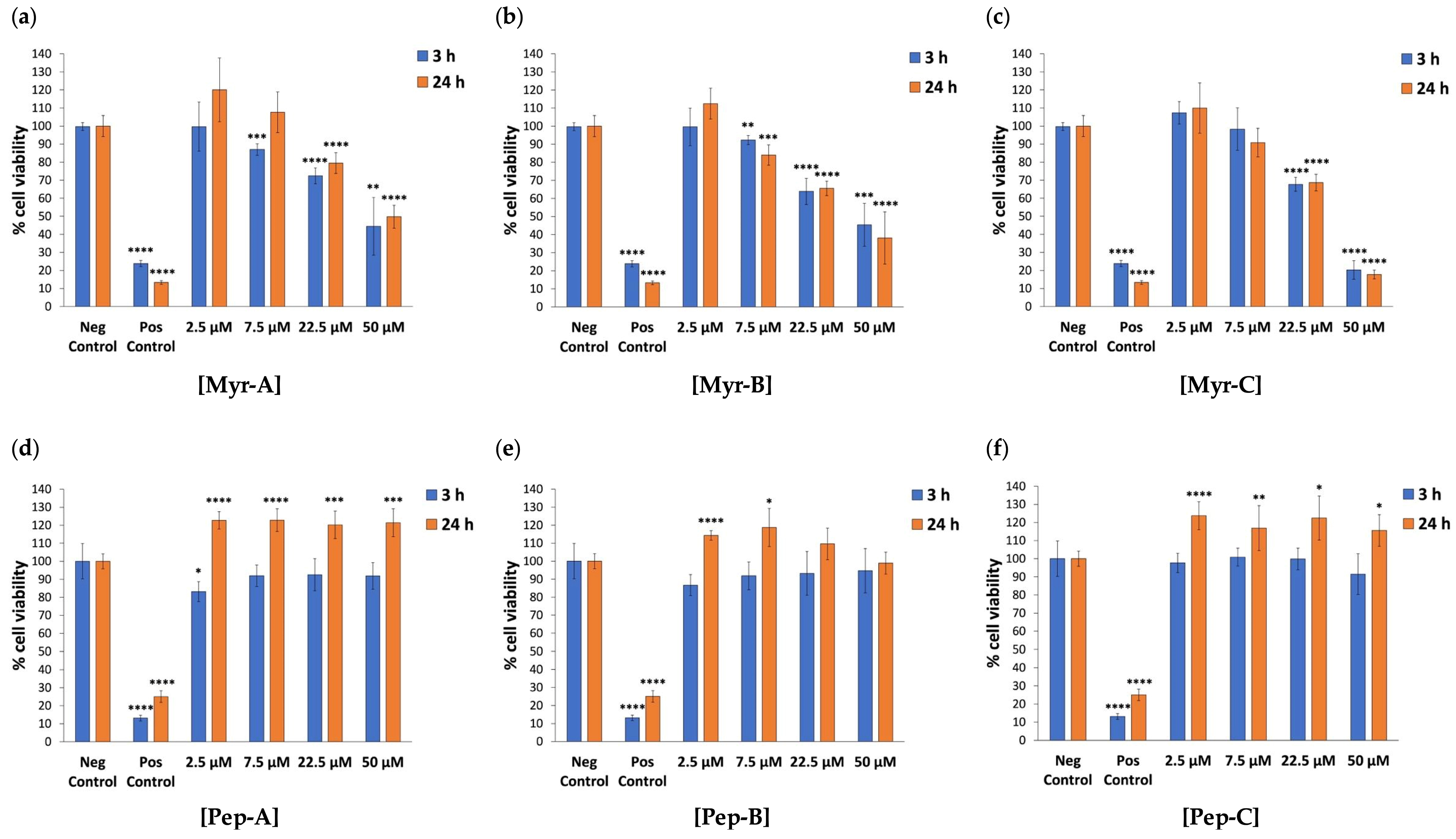
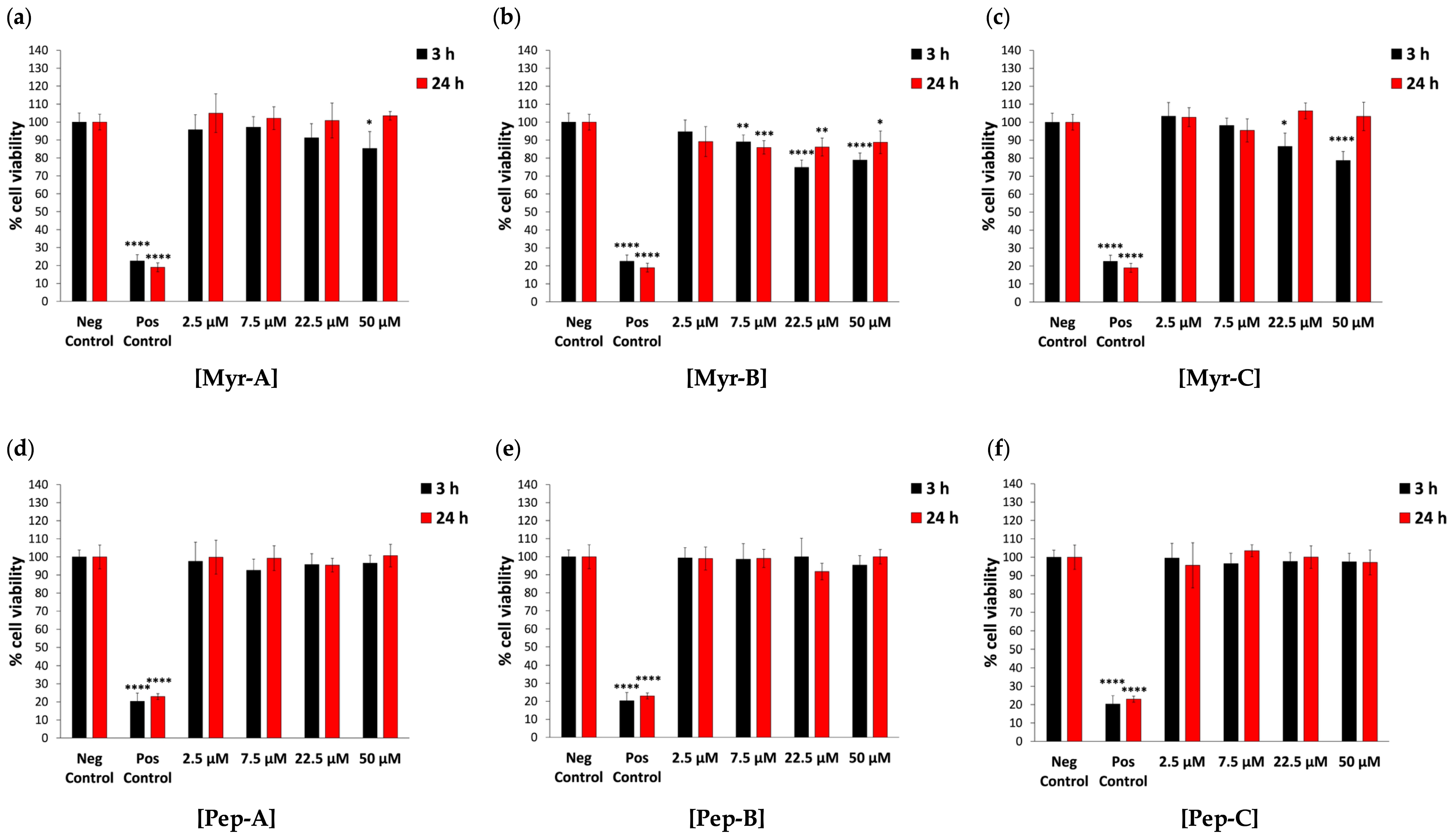
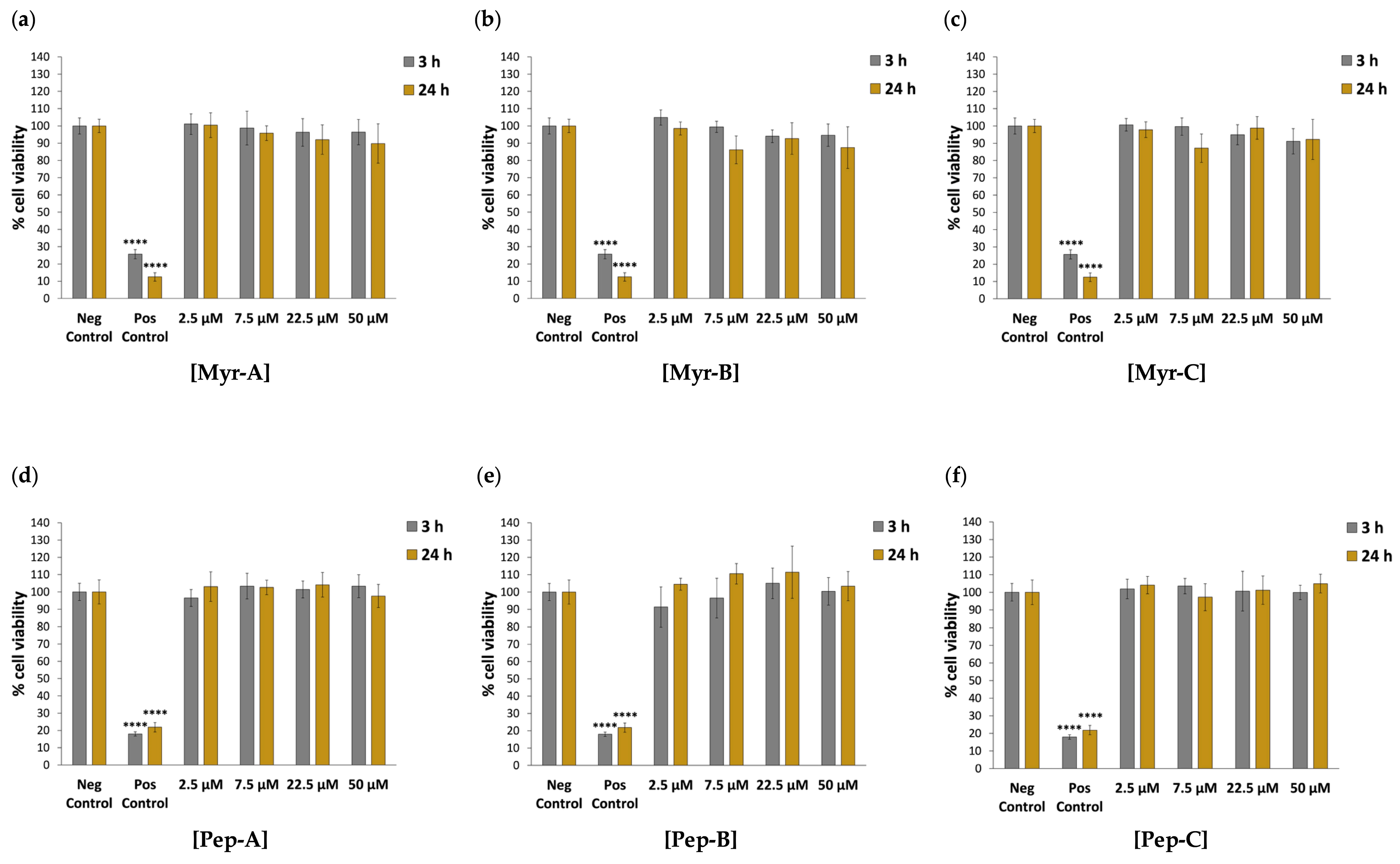
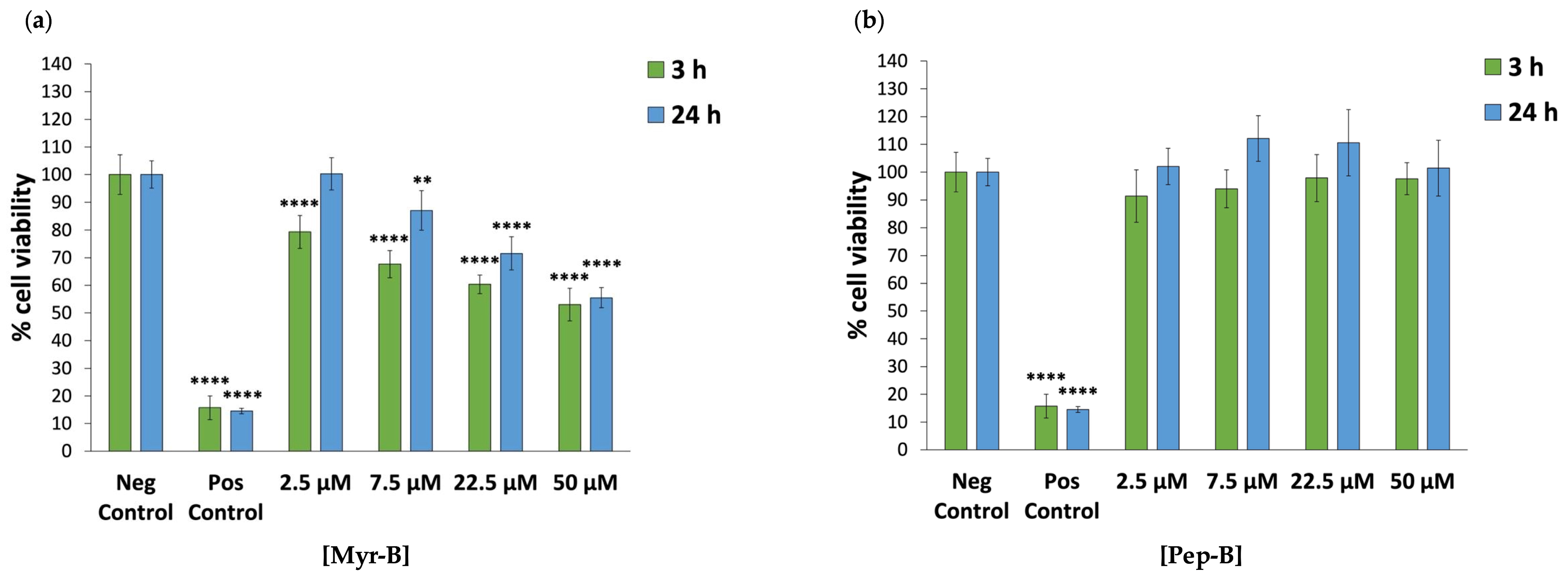
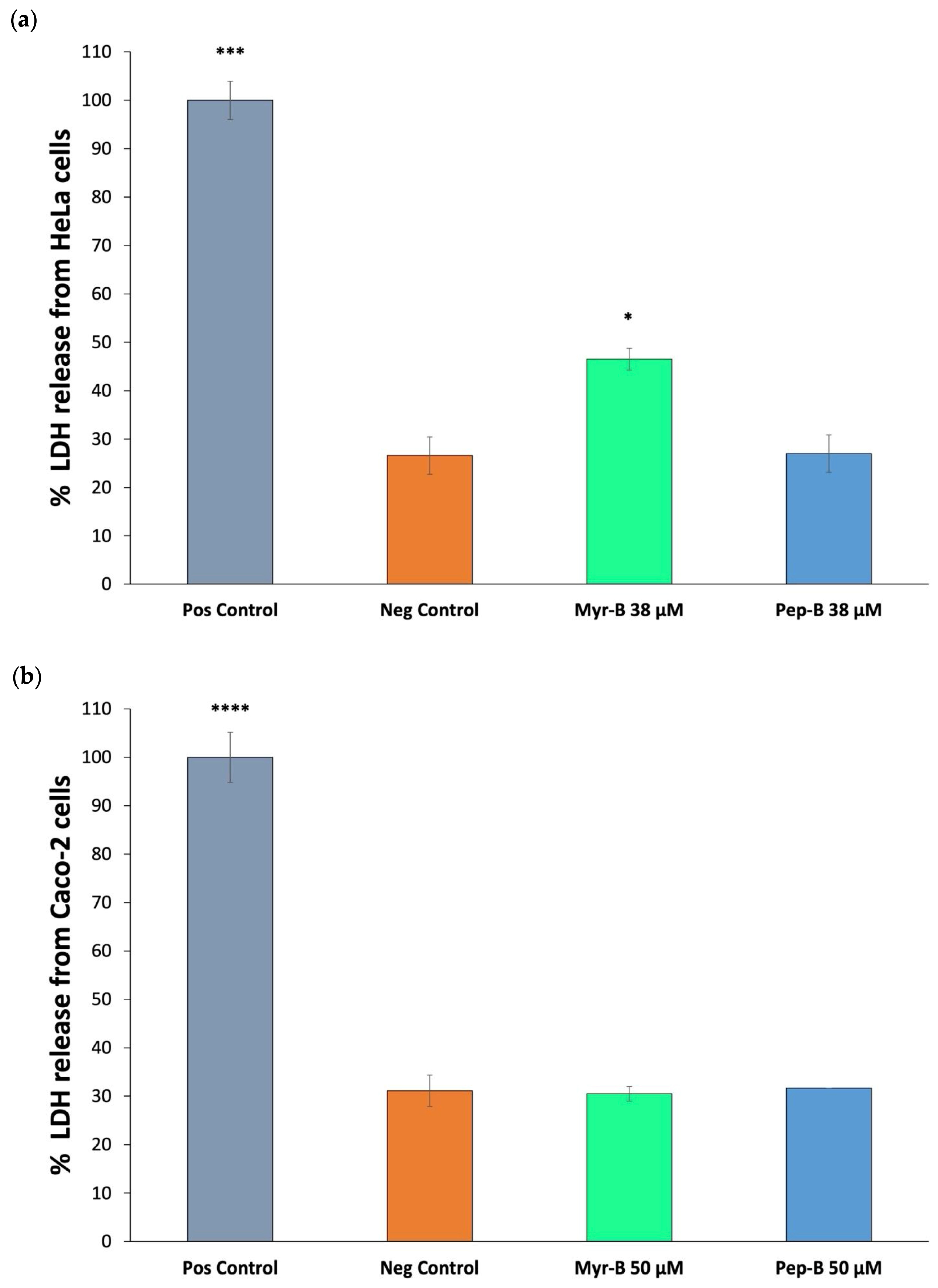
2.1. Cytotoxic Effect of Lipopeptides on Human Cancer Cells
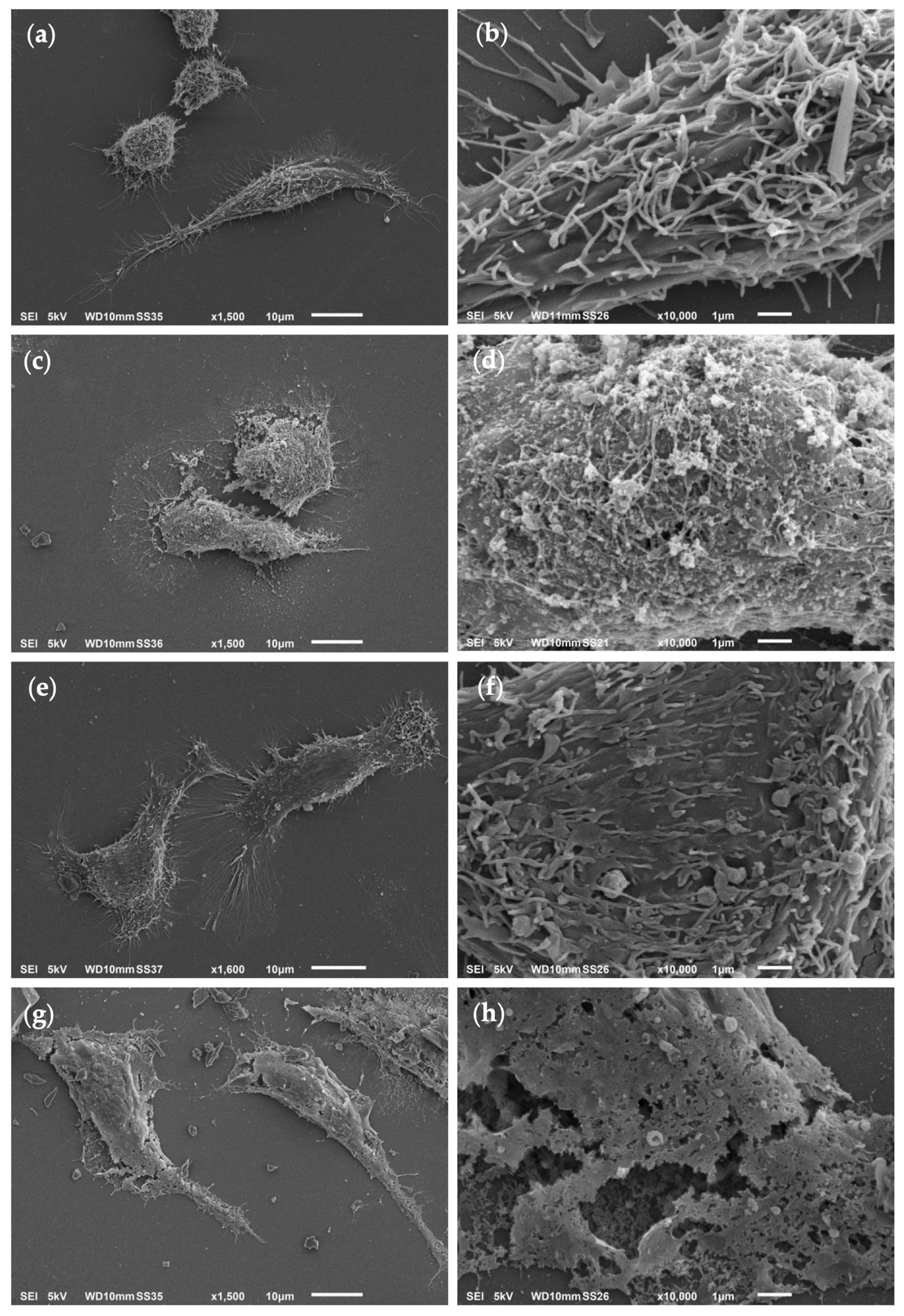
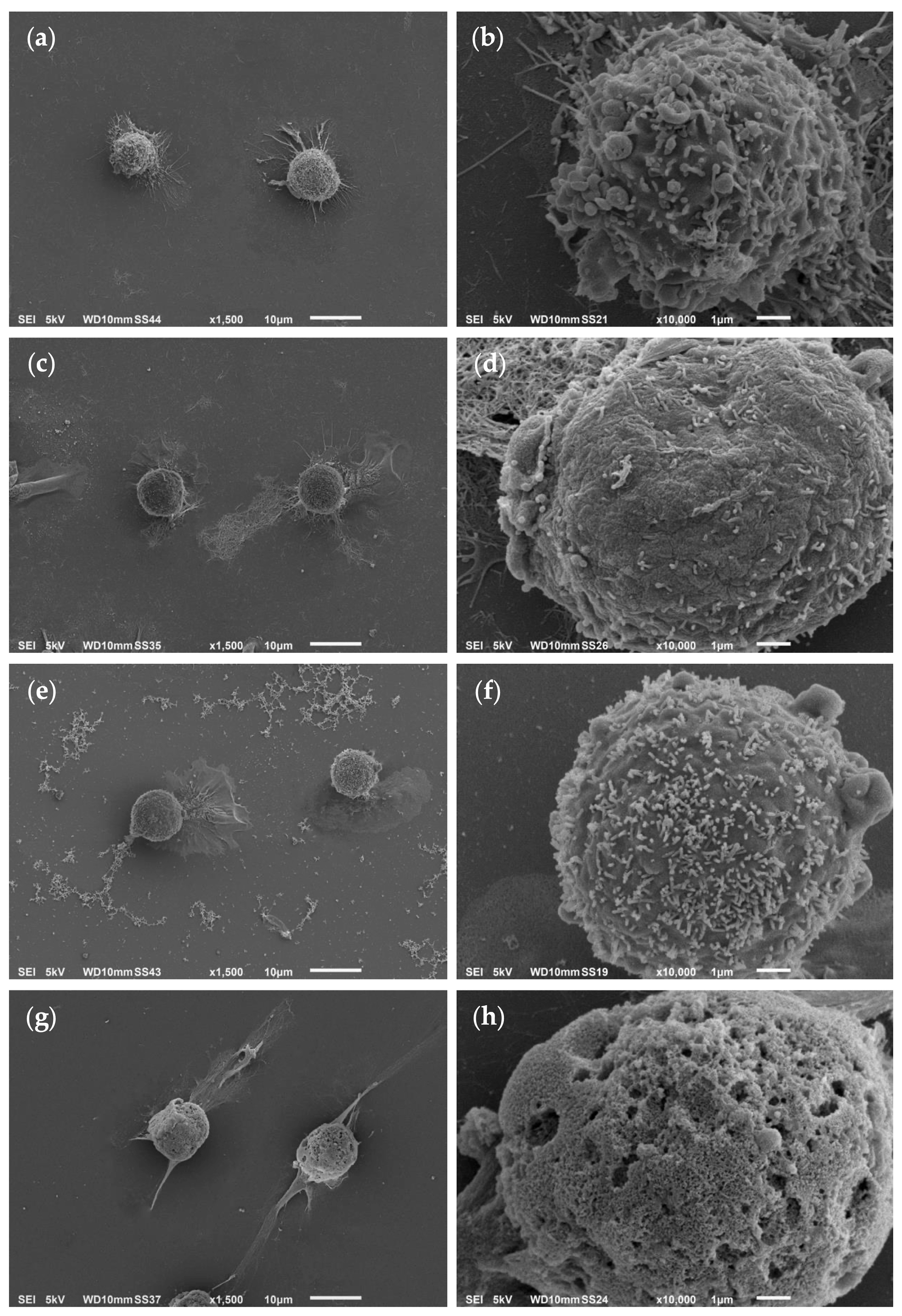
2.2. Assessment of Myr-B Peptide-Induced Cell Membrane Damage and Morphological Changes on Human Cancer Cells
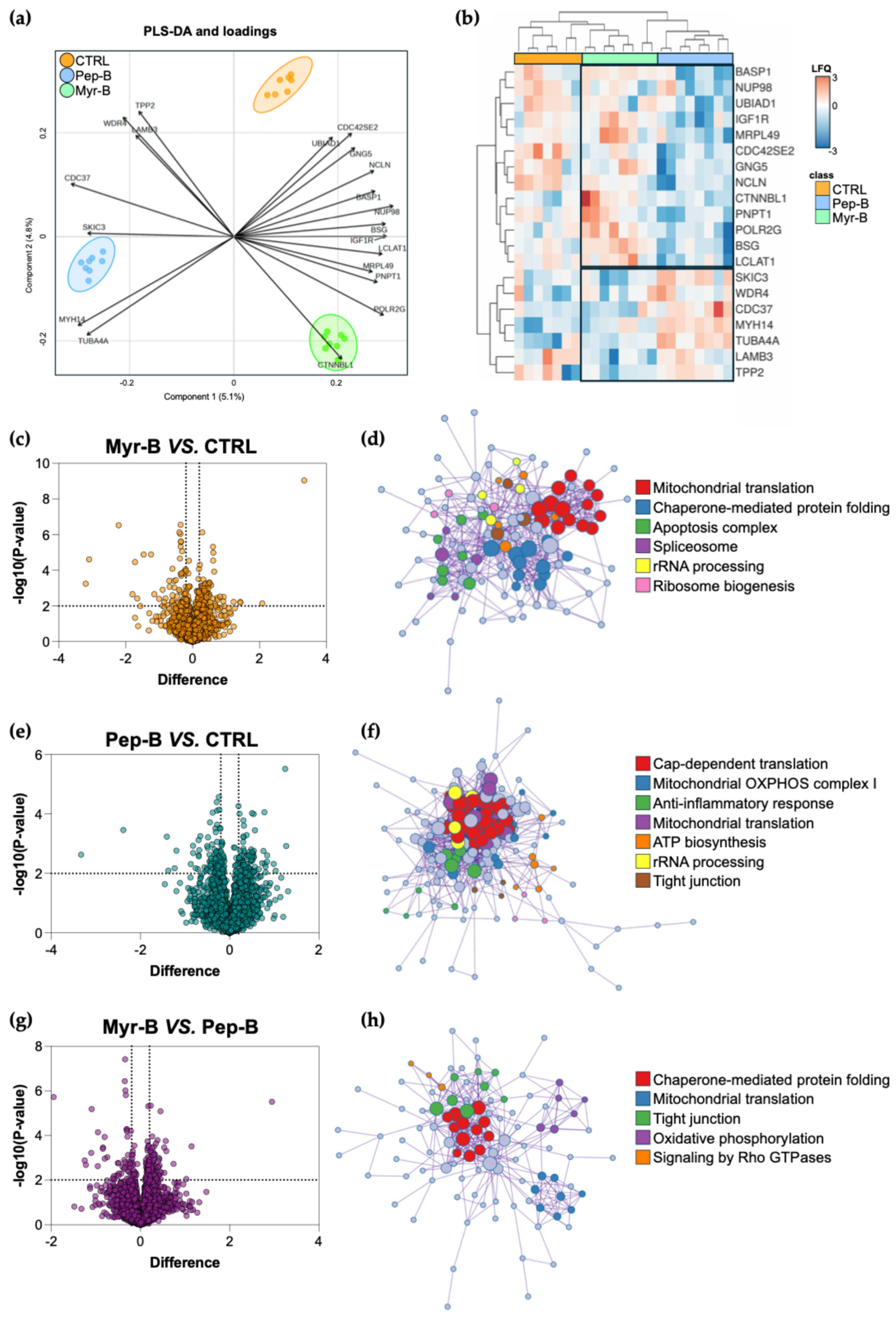
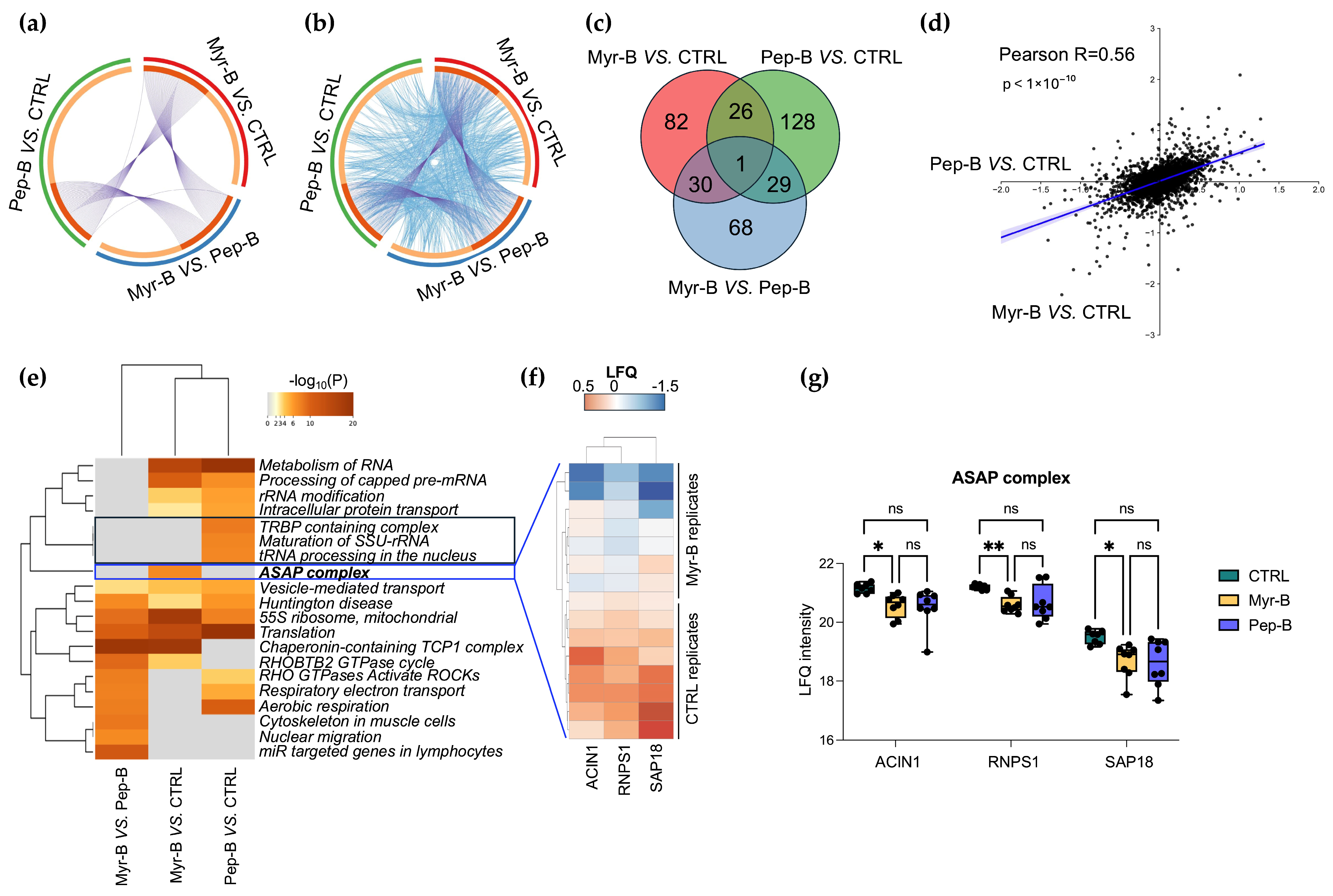
2.3. Label-Free Proteomics of Human Cancer HeLa Cells Treated with Myr-B Peptide
3. Discussion
4. Materials and Methods
4.1. Peptides
4.2. Cell Cultures
4.3. Cytotoxicity Assay
4.4. LDH Measurement
4.5. Scanning Electron Microscopy (SEM)
4.6. Untargeted Proteomics and Bioinformatics Data Analysis
Supplementary Materials
Author Contributions
Funding
Institutional Review Board Statement
Informed Consent Statement
Data Availability Statement
Conflicts of Interest
References
- Yang, R.; Ma, X.; Peng, F.; Wen, J.; Allahou, L.W.; Williams, G.R.; Knowles, J.C.; Poma, A. Advances in Antimicrobial Peptides: From Mechanistic Insights to Chemical Modifications. Biotechnol. Adv. 2025, 81, 108570. [Google Scholar] [CrossRef]
- Qu, B.; Yuan, J.; Liu, X.; Zhang, S.; Ma, X.; Lu, L. Anticancer Activities of Natural Antimicrobial Peptides from Animals. Front. Microbiol. 2024, 14, 1321386. [Google Scholar] [CrossRef]
- Shabir, U.; Ali, S.; Magray, A.R.; Ganai, B.A.; Firdous, P.; Hassan, T.; Nazir, R. Fish Antimicrobial Peptides (AMP’s) as Essential and Promising Molecular Therapeutic Agents: A Review. Microb. Pathog. 2018, 114, 50–56. [Google Scholar] [CrossRef]
- Lucchetti, D.; Rinaldi, R.; Artemi, G.; Salvia, R.; De Stefano, F.; Scieuzo, C.; Falabella, P.; Sgambato, A. Peptide Fractions Extracted from the Hemolymph of Hermetia illucens Inhibit Growth and Motility and Enhance the Effects of Traditional Chemotherapeutics in Human Colorectal Cancer Cells. Int. J. Mol. Sci. 2025, 26, 1891. [Google Scholar] [CrossRef]
- Varela-Quitián, Y.F.; Mendez-Rivera, F.E.; Bernal-Estévez, D.A. Cationic Antimicrobial Peptides: Potential Templates for Anticancer Agents. Front. Med. 2025, 12, 1548603. [Google Scholar] [CrossRef] [PubMed]
- Verma, R.; Yadav, S.; Likhita, J.; Kumar, S.; Shelke, M.; Pal, R.; Prajapati, M.K.; Behera, P.R.; Singh, Y.; Puyam, A.; et al. Deciphering the Molecular Roles of Antimicrobial Peptides in Plant Innate Immunity and Their Potential Applications in Crop Protection. Plant Physiol. Biochem. 2026, 230, 110961. [Google Scholar] [CrossRef] [PubMed]
- Zhang, Q. Antimicrobial Peptides: From Discovery to Developmental Applications. Appl. Environ. Microbiol. 2025, 91, e02115-24. [Google Scholar] [CrossRef]
- Kim, S.H.; Min, Y.-H.; Park, M.C. Antimicrobial Peptides: Current Status, Mechanisms of Action, and Strategies to Overcome Therapeutic Limitations. Microorganisms 2025, 13, 2574. [Google Scholar] [CrossRef]
- Huang, X.; Li, G. Antimicrobial Peptides and Cell-Penetrating Peptides: Non-Antibiotic Membrane-Targeting Strategies Against Bacterial Infections. Infect. Drug Resist. 2023, 16, 1203–1219. [Google Scholar] [CrossRef] [PubMed]
- Gagandeep, K.R.; Balenahalli Narasingappa, R.; Vishnu Vyas, G. Unveiling Mechanisms of Antimicrobial Peptide: Actions beyond the Membranes Disruption. Heliyon 2024, 10, e38079. [Google Scholar] [CrossRef]
- Ma, X.; Wang, Q.; Ren, K.; Xu, T.; Zhang, Z.; Xu, M.; Rao, Z.; Zhang, X. A Review of Antimicrobial Peptides: Structure, Mechanism of Action, and Molecular Optimization Strategies. Fermentation 2024, 10, 540. [Google Scholar] [CrossRef]
- Rima, M.; Rima, M.; Fajloun, Z.; Sabatier, J.-M.; Bechinger, B.; Naas, T. Antimicrobial Peptides: A Potent Alternative to Antibiotics. Antibiotics 2021, 10, 1095. [Google Scholar] [CrossRef]
- Roque-Borda, C.A.; Zhang, Q.; Nguyen, T.P.T.; Nguyen, T.T.H.; Medhi, H.; Rodrigues, H.L.d.S.; Canales Carnero, C.S.; Sutherland, D.; Helmy, N.M.; Araveti, P.B.; et al. Synergistic Combinations of Antimicrobial Peptides and Conventional Antibiotics: A Strategy to Delay Resistance Emergence in World Health Organization Priority Bacteria. Pharmacol. Rev. 2026, 78, 100104. [Google Scholar] [CrossRef]
- Brown, J.S.; Amend, S.R.; Austin, R.H.; Gatenby, R.A.; Hammarlund, E.U.; Pienta, K.J. Updating the Definition of Cancer. Mol. Cancer Res. 2023, 21, 1142–1147. [Google Scholar] [CrossRef]
- Anand, U.; Dey, A.; Chandel, A.K.S.; Sanyal, R.; Mishra, A.; Pandey, D.K.; De Falco, V.; Upadhyay, A.; Kandimalla, R.; Chaudhary, A.; et al. Cancer Chemotherapy and beyond: Current Status, Drug Candidates, Associated Risks and Progress in Targeted Therapeutics. Genes Dis. 2023, 10, 1367–1401, Erratum in Genes Dis. 2024, 11, 101211. https://doi.org/10.1016/j.gendis.2024.101211. [Google Scholar] [CrossRef]
- Kannan, K.; Srinivasan, A.; Kannan, A.; Ali, N. The Underlying Mechanisms and Emerging Strategies to Overcome Resistance in Breast Cancer. Cancers 2025, 17, 2938. [Google Scholar] [CrossRef]
- Tufail, M.; Hu, J.-J.; Liang, J.; He, C.-Y.; Wan, W.-D.; Huang, Y.-Q.; Jiang, C.-H.; Wu, H.; Li, N. Hallmarks of Cancer Resistance. iScience 2024, 27, 109979. [Google Scholar] [CrossRef]
- Hanahan, D. Hallmarks of Cancer—Then and Now, and Beyond. Cell 2026, 189, 2254–2277. [Google Scholar] [CrossRef]
- Vasan, N.; Baselga, J.; Hyman, D.M. A View on Drug Resistance in Cancer. Nature 2019, 575, 299–309. [Google Scholar] [CrossRef]
- Li, J.; Hu, J.; Yang, Y.; Zhang, H.; Liu, Y.; Fang, Y.; Qu, L.; Lin, A.; Luo, P.; Jiang, A.; et al. Drug Resistance in Cancer: Molecular Mechanisms and Emerging Treatment Strategies. Mol. Biomed. 2025, 6, 111. [Google Scholar] [CrossRef]
- Zare-Zardini, H.; Saberian, E.; Jenča, A.; Ghanipour-Meybodi, R.; Jenča, A.; Petrášová, A.; Jenčová, J. From Defense to Offense: Antimicrobial Peptides as Promising Therapeutics for Cancer. Front. Oncol. 2024, 14, 1463088. [Google Scholar] [CrossRef]
- Dong, Z.; Zhang, X.; Zhang, Q.; Tangthianchaichana, J.; Guo, M.; Du, S.; Lu, Y. Anticancer Mechanisms and Potential Anticancer Applications of Antimicrobial Peptides and Their Nano Agents. Int. J. Nanomed. 2024, 19, 1017–1039. [Google Scholar] [CrossRef]
- Tornesello, A.L.; Borrelli, A.; Buonaguro, L.; Buonaguro, F.M.; Tornesello, M.L. Antimicrobial Peptides as Anticancer Agents: Functional Properties and Biological Activities. Molecules 2020, 25, 2850. [Google Scholar] [CrossRef]
- Parchebafi, A.; Tamanaee, F.; Ehteram, H.; Ahmad, E.; Nikzad, H.; Haddad Kashani, H. The Dual Interaction of Antimicrobial Peptides on Bacteria and Cancer Cells; Mechanism of Action and Therapeutic Strategies of Nanostructures. Microb. Cell Fact. 2022, 21, 118. [Google Scholar] [CrossRef]
- Arias, M.; Haney, E.F.; Hilchie, A.L.; Corcoran, J.A.; Hyndman, M.E.; Hancock, R.E.W.; Vogel, H.J. Selective Anticancer Activity of Synthetic Peptides Derived from the Host Defence Peptide Tritrpticin. Biochim. Biophys. Acta (BBA)-Biomembr. 2020, 1862, 183228. [Google Scholar] [CrossRef]
- Trinidad-Calderón, P.A.; Varela-Chinchilla, C.D.; García-Lara, S. Natural Peptides Inducing Cancer Cell Death: Mechanisms and Properties of Specific Candidates for Cancer Therapeutics. Molecules 2021, 26, 7453. [Google Scholar] [CrossRef]
- Ghaly, G.; Tallima, H.; Dabbish, E.; Badr ElDin, N.; Abd El-Rahman, M.K.; Ibrahim, M.A.A.; Shoeib, T. Anti-Cancer Peptides: Status and Future Prospects. Molecules 2023, 28, 1148. [Google Scholar] [CrossRef]
- Lin, L.; Chi, J.; Yan, Y.; Luo, R.; Feng, X.; Zheng, Y.; Xian, D.; Li, X.; Quan, G.; Liu, D.; et al. Membrane-Disruptive Peptides/Peptidomimetics-Based Therapeutics: Promising Systems to Combat Bacteria and Cancer in the Drug-Resistant Era. Acta Pharm. Sin. B 2021, 11, 2609–2644. [Google Scholar] [CrossRef]
- Rinaldi, R.; Laurino, S.; Salvia, R.; Russi, S.; De Stefano, F.; Galasso, R.; Sgambato, A.; Scieuzo, C.; Falco, G.; Falabella, P. Biological Activity of Peptide Fraction Derived from Hermetia illucens L. (Diptera: Stratiomyidae) Larvae Haemolymph on Gastric Cancer Cells. Int. J. Mol. Sci. 2025, 26, 1885. [Google Scholar] [CrossRef]
- Yu, H.-H.; Wu, L.-Y.; Hsu, P.-L.; Lee, C.-W.; Su, B.-C. Marine Antimicrobial Peptide Epinecidin-1 Inhibits Proliferation Induced by Lipoteichoic Acid and Causes Cell Death in Non-Small Cell Lung Cancer Cells via Mitochondria Damage. Probiotics Antimicrob. Proteins 2024, 16, 1724–1733. [Google Scholar] [CrossRef]
- Chen, Y.-P.; Shih, P.-C.; Feng, C.-W.; Wu, C.-C.; Tsui, K.-H.; Lin, Y.-H.; Kuo, H.-M.; Wen, Z.-H. Pardaxin Activates Excessive Mitophagy and Mitochondria-Mediated Apoptosis in Human Ovarian Cancer by Inducing Reactive Oxygen Species. Antioxidants 2021, 10, 1883. [Google Scholar] [CrossRef]
- Hilchie, A.L.; Hoskin, D.W.; Power Coombs, M.R. Anticancer Activities of Natural and Synthetic Peptides. In Antimicrobial Peptides; Advances in Experimental Medicine and Biology; Matsuzaki, K., Ed.; Springer: Singapore, 2019; Volume 1117, pp. 131–147. [Google Scholar] [CrossRef]
- Kotalík, K.; Etrych, T. KLAK Peptide in Anticancer Therapy: Achieving Cancer Cell Apoptosis via Mitochondrial Membrane Disruption Using Homing Domains Introduction and Other Modifications. Eur. J. Med. Chem. 2026, 302, 118339. [Google Scholar] [CrossRef]
- Buonocore, F.; Randelli, E.; Casani, D.; Picchietti, S.; Belardinelli, M.C.; de Pascale, D.; De Santi, C.; Scapigliati, G. A Piscidin-like Antimicrobial Peptide from the Icefish Chionodraco hamatus (Perciformes: Channichthyidae): Molecular Characterization, Localization and Bactericidal Activity. Fish Shellfish Immunol. 2012, 33, 1183–1191. [Google Scholar] [CrossRef]
- Della Pelle, G.; Perà, G.; Belardinelli, M.C.; Gerdol, M.; Felli, M.; Crognale, S.; Scapigliati, G.; Ceccacci, F.; Buonocore, F.; Porcelli, F. Trematocine, a Novel Antimicrobial Peptide from the Antarctic Fish Trematomus bernacchii: Identification and Biological Activity. Antibiotics 2020, 9, 66. [Google Scholar] [CrossRef] [PubMed]
- Shin, S.C.; Ahn, I.H.; Ahn, D.H.; Lee, Y.M.; Lee, J.; Lee, J.H.; Kim, H.-W.; Park, H. Characterization of Two Antimicrobial Peptides from Antarctic Fishes (Notothenia coriiceps and Parachaenichthys charcoti). PLoS ONE 2017, 12, e0170821. [Google Scholar] [CrossRef][Green Version]
- Olivieri, C.; Buonocore, F.; Picchietti, S.; Taddei, A.R.; Bernini, C.; Scapigliati, G.; Dicke, A.A.; Vostrikov, V.V.; Veglia, G.; Porcelli, F. Structure and Membrane Interactions of Chionodracine, a Piscidin-like Antimicrobial Peptide from the Icefish Chionodraco hamatus. Biochim. Biophys. Acta (BBA)-Biomembr. 2015, 1848, 1285–1293. [Google Scholar] [CrossRef] [PubMed]
- Olivieri, C.; Bugli, F.; Menchinelli, G.; Veglia, G.; Buonocore, F.; Scapigliati, G.; Stocchi, V.; Ceccacci, F.; Papi, M.; Sanguinetti, M.; et al. Design and Characterization of Chionodracine-Derived Antimicrobial Peptides with Enhanced Activity against Drug-Resistant Human Pathogens. RSC Adv. 2018, 8, 41331–41346. [Google Scholar] [CrossRef] [PubMed]
- Buonocore, F.; Picchietti, S.; Porcelli, F.; Della Pelle, G.; Olivieri, C.; Poerio, E.; Bugli, F.; Menchinelli, G.; Sanguinetti, M.; Bresciani, A.; et al. Fish-Derived Antimicrobial Peptides: Activity of a Chionodracine Mutant against Bacterial Models and Human Bacterial Pathogens. Dev. Comp. Immunol. 2019, 96, 9–17. [Google Scholar] [CrossRef]
- Bugli, F.; Massaro, F.; Buonocore, F.; Saraceni, P.R.; Borocci, S.; Ceccacci, F.; Bombelli, C.; Di Vito, M.; Marchitiello, R.; Mariotti, M.; et al. Design and Characterization of Myristoylated and Non-Myristoylated Peptides Effective against Candida spp. Clinical Isolates. Int. J. Mol. Sci. 2022, 23, 2164. [Google Scholar] [CrossRef]
- Rounds, T.; Straus, S.K. Lipidation of Antimicrobial Peptides as a Design Strategy for Future Alternatives to Antibiotics. Int. J. Mol. Sci. 2020, 21, 9692. [Google Scholar] [CrossRef]
- Li, C.; Liu, H.; Yang, Y.; Xu, X.; Lv, T.; Zhang, H.; Liu, K.; Zhang, S.; Chen, Y. N-Myristoylation of Antimicrobial Peptide CM4 Enhances Its Anticancer Activity by Interacting with Cell Membrane and Targeting Mitochondria in Breast Cancer Cells. Front. Pharmacol. 2018, 9, 1297. [Google Scholar] [CrossRef] [PubMed]
- Li, N.; Jiang, X.; Ma, X.; Qiu, X.; Chang, H.; Qiao, Y.; Luo, H.; Zhang, Q. Antimicrobial Peptides CS-Piscidin-Induced Cell Death Involves Activation of RIPK1/PARP, and Modification with Myristic Acid Enhances Its Stability and Tumor-Targeting Capability. Discov. Oncol. 2023, 14, 38. [Google Scholar] [CrossRef]
- Liu, Y.; Li, S.; Shen, T.; Chen, L.; Zhou, J.; Shi, S.; Wang, Y.; Zhao, Z.; Liao, C.; Wang, C. N-Terminal Myristoylation Enhanced the Antimicrobial Activity of Antimicrobial Peptide PMAP-36PW. Front. Cell. Infect. Microbiol. 2020, 10, 450. [Google Scholar] [CrossRef]
- Ji, D.; Kamalden, T.A.; del Olmo-Aguado, S.; Osborne, N.N. Light- and Sodium Azide-Induced Death of RGC-5 Cells in Culture Occurs via Different Mechanisms. Apoptosis 2011, 16, 425–437. [Google Scholar] [CrossRef] [PubMed]
- Zuo, Y.; Hu, J.; Xu, X.; Gao, X.; Wang, Y.; Zhu, S. Sodium Azide Induces Mitochondria-mediated Apoptosis in PC12 Cells through Pgc-1α-associated Signaling Pathway. Mol. Med. Rep. 2019, 19, 2211–2219. [Google Scholar] [CrossRef]
- Weyermann, J.; Lochmann, D.; Zimmer, A. A Practical Note on the Use of Cytotoxicity Assays. Int. J. Pharm. 2005, 288, 369–376. [Google Scholar] [CrossRef]
- Chan, F.K.-M.; Moriwaki, K.; De Rosa, M.J. Detection of Necrosis by Release of Lactate Dehydrogenase Activity. In Immune Homeostasis; Methods in Molecular Biology; Snow, A., Lenardo, M., Eds.; Humana Press: Totowa, NJ, USA, 2013; Volume 979, pp. 65–70. [Google Scholar] [CrossRef]
- Abdullah, K.M.; Sharma, G.; Singh, A.P.; Siddiqui, J.A. Nanomedicine in Cancer Therapeutics: Current Perspectives from Bench to Bedside. Mol. Cancer 2025, 24, 169. [Google Scholar] [CrossRef]
- Mantri, S.; Doshi, G.M. Reactivating Apoptotic Pathways in Cancer: A Review of Novel Therapeutic Approaches. Eur. J. Pharmacol. 2025, 1003, 177965. [Google Scholar] [CrossRef]
- Neophytou, C.M.; Trougakos, I.P.; Erin, N.; Papageorgis, P. Apoptosis Deregulation and the Development of Cancer Multi-Drug Resistance. Cancers 2021, 13, 4363. [Google Scholar] [CrossRef]
- Lei, Z.; Tian, Q.; Teng, Q.; Wurpel, J.N.D.; Zeng, L.; Pan, Y.; Chen, Z. Understanding and Targeting Resistance Mechanisms in Cancer. MedComm 2023, 4, e265. [Google Scholar] [CrossRef] [PubMed]
- Liu, B.; Zhou, H.; Tan, L.; Siu, K.T.H.; Guan, X.-Y. Exploring Treatment Options in Cancer: Tumor Treatment Strategies. Signal Transduct. Target. Ther. 2024, 9, 175. [Google Scholar] [CrossRef]
- Gaspar, D.; Veiga, A.S.; Castanho, M.A.R.B. From Antimicrobial to Anticancer Peptides. A Review. Front. Microbiol. 2013, 4, 294. [Google Scholar] [CrossRef] [PubMed]
- Wang, M.; Xia, H.; Wang, C.; Zhang, T.; Zhang, M.; Li, X.; Peng, C.; Jing, T.; Wang, Y.; Peng, L.; et al. From Precision Synthesis to Cross-Industry Applications: The Future of Emerging Peptide Technologies. Pharmacol. Res. 2025, 218, 107839. [Google Scholar] [CrossRef]
- Li, Q.; Chao, W.; Qiu, L. Therapeutic Peptides: Chemical Strategies Fortify Peptides for Enhanced Disease Treatment Efficacy. Amino Acids 2025, 57, 25. [Google Scholar] [CrossRef]
- Gagat, P.; Ostrówka, M.; Duda-Madej, A.; Mackiewicz, P. Enhancing Antimicrobial Peptide Activity through Modifications of Charge, Hydrophobicity, and Structure. Int. J. Mol. Sci. 2024, 25, 10821. [Google Scholar] [CrossRef]
- Mwangi, J.; Kamau, P.; Thuku, R.; Lai, R. Design Methods for Antimicrobial Peptides with Improved Performance. Zool. Res. 2023, 4, 1095–1114. [Google Scholar] [CrossRef]
- Avci, F.G.; Sariyar Akbulut, B.; Ozkirimli, E. Membrane Active Peptides and Their Biophysical Characterization. Biomolecules 2018, 8, 77. [Google Scholar] [CrossRef]
- Giraldo-Lorza, J.M.; Leidy, C.; Manrique-Moreno, M. The Influence of Cholesterol on Membrane Targeted Bioactive Peptides: Modulating Peptide Activity Through Changes in Bilayer Biophysical Properties. Membranes 2024, 14, 220. [Google Scholar] [CrossRef] [PubMed]
- Najm, A.A.; Azfaralarriff, A.; Eziwar Dyari, H.R.; Syed Alwi, S.S.; Khalili, N.; Othman, B.A.; Law, D.; Shahid, M.; Fazry, S. A Systematic Review of Antimicrobial Peptides from Fish with Anticancer Properties. Pertanika J. Sci. Technol. 2022, 30, 1171–1196. [Google Scholar] [CrossRef]
- Malina, A.; Shai, Y. Conjugation of Fatty Acids with Different Lengths Modulates the Antibacterial and Antifungal Activity of a Cationic Biologically Inactive Peptide. Biochem. J. 2005, 390, 695–702. [Google Scholar] [CrossRef] [PubMed]
- Helmy, N.M.; Davani-Davari, D.; Parang, K. Fatty Acid-Conjugated Antimicrobial Peptides: Advances in Design, Activity, and Therapeutic Potential. J. Med. Chem. 2026, 69, 1942–1962. [Google Scholar] [CrossRef] [PubMed]
- Liu, S.; Aweya, J.J.; Zheng, L.; Zheng, Z.; Huang, H.; Wang, F.; Yao, D.; Ou, T.; Zhang, Y. LvHemB1, a Novel Cationic Antimicrobial Peptide Derived from the Hemocyanin of Litopenaeus vannamei, Induces Cancer Cell Death by Targeting Mitochondrial Voltage-Dependent Anion Channel 1. Cell Biol. Toxicol. 2022, 38, 87–110. [Google Scholar] [CrossRef]
- Mahmoud, M.M.; Alenezi, M.; Al-Hejin, A.M.; Abujamel, T.S.; Aljoud, F.; Noorwali, A.; Awad, I.A.; Alkhaled, M.; Yacoub, H.A. Anticancer Activity of Chicken Cathelicidin Peptides against Different Types of Cancer. Mol. Biol. Rep. 2022, 49, 4321–4339. [Google Scholar] [CrossRef] [PubMed]
- Daniluk, K.; Kutwin, M.; Grodzik, M.; Wierzbicki, M.; Strojny, B.; Szczepaniak, J.; Bałaban, J.; Sosnowska, M.; Chwalibog, A.; Sawosz, E.; et al. Use of Selected Carbon Nanoparticles as Melittin Carriers for MCF-7 and MDA-MB-231 Human Breast Cancer Cells. Materials 2019, 13, 90. [Google Scholar] [CrossRef]
- Zhou, H.; Forveille, S.; Sauvat, A.; Yamazaki, T.; Senovilla, L.; Ma, Y.; Liu, P.; Yang, H.; Bezu, L.; Müller, K.; et al. The Oncolytic Peptide LTX-315 Triggers Immunogenic Cell Death. Cell Death Dis. 2016, 7, e2134. [Google Scholar] [CrossRef]
- Ye, K.; Chen, Z.; Xu, Y. The Double-Edged Functions of Necroptosis. Cell Death Dis. 2023, 14, 163. [Google Scholar] [CrossRef]
- Liscano, Y.; Oñate-Garzón, J.; Delgado, J.P. Peptides with Dual Antimicrobial–Anticancer Activity: Strategies to Overcome Peptide Limitations and Rational Design of Anticancer Peptides. Molecules 2020, 25, 4245. [Google Scholar] [CrossRef]
- Yang, L.-B.; Guo, G.; Tian, Z.-Q.; Zhou, L.-X.; Zhu, L.-J.; Peng, J.; Sun, C.-Q.; Huang, M.-J. TMT-Based Quantitative Proteomic Analysis of the Effects of Novel Antimicrobial Peptide AMP-17 against Candida albicans. J. Proteom. 2022, 250, 104385. [Google Scholar] [CrossRef]
- Czaplewska, P.; Bogucka, A.; Macur, K.; Rybicka, M.; Rychłowski, M.; Fiołka, M.J. Proteomic Response of A549 Lung Cancer Cell Line to Protein-Polysaccharide Complex Venetin-1 Isolated from Earthworm Coelomic Fluid. Front. Mol. Biosci. 2023, 10, 1128320. [Google Scholar] [CrossRef]
- Romero-Cordoba, S.L.; Salido-Guadarrama, I.; Rodriguez-Dorantes, M.; Hidalgo-Miranda, A. MiRNA Biogenesis: Biological Impact in the Development of Cancer. Cancer Biol. Ther. 2014, 15, 1444–1455. [Google Scholar] [CrossRef] [PubMed]
- Costanzo, M.; Roviello, G.N. Precision Therapeutics Through Bioactive Compounds: Metabolic Reprogramming, Omics Integration, and Drug Repurposing Strategies. Int. J. Mol. Sci. 2025, 26, 10047. [Google Scholar] [CrossRef] [PubMed]
- Sharifi, H.; Jafari Najaf Abadi, M.H.; Razi, E.; Mousavi, N.; Morovati, H.; Sarvizadeh, M.; Taghizadeh, M. MicroRNAs and Response to Therapy in Leukemia. J. Cell. Biochem. 2019, 120, 14233–14246. [Google Scholar] [CrossRef]
- Son, S.W.; Lee, H.Y.; Moeng, S.; Kuh, H.J.; Choi, S.Y.; Park, J.K. Participation of MicroRNAs in the Treatment of Cancer with Phytochemicals. Molecules 2020, 25, 4701. [Google Scholar] [CrossRef]
- Deka, B.; Singh, K.K. Multifaceted Regulation of Gene Expression by the Apoptosis- and Splicing-Associated Protein Complex and Its Components. Int. J. Biol. Sci. 2017, 13, 545–560. [Google Scholar] [CrossRef][Green Version]
- Murachelli, A.G.; Ebert, J.; Basquin, C.; Le Hir, H.; Conti, E. The Structure of the ASAP Core Complex Reveals the Existence of a Pinin-Containing PSAP Complex. Nat. Struct. Mol. Biol. 2012, 19, 378–386. [Google Scholar] [CrossRef]
- Schwerk, C.; Prasad, J.; Degenhardt, K.; Erdjument-Bromage, H.; White, E.; Tempst, P.; Kidd, V.J.; Manley, J.L.; Lahti, J.M.; Reinberg, D. ASAP, a Novel Protein Complex Involved in RNA Processing and Apoptosis. Mol. Cell. Biol. 2003, 23, 2981–2990. [Google Scholar] [CrossRef] [PubMed]
- Michelle, L.; Cloutier, A.; Toutant, J.; Shkreta, L.; Thibault, P.; Durand, M.; Garneau, D.; Gendron, D.; Lapointe, E.; Couture, S.; et al. Proteins Associated with the Exon Junction Complex Also Control the Alternative Splicing of Apoptotic Regulators. Mol. Cell. Biol. 2012, 32, 954–967. [Google Scholar] [CrossRef]
- Bradley, R.K.; Anczuków, O. RNA Splicing Dysregulation and the Hallmarks of Cancer. Nat. Rev. Cancer 2023, 23, 135–155. [Google Scholar] [CrossRef] [PubMed]
- Bashari, A.; Siegfried, Z.; Karni, R. Targeting Splicing Factors for Cancer Therapy. RNA 2023, 29, 506–515. [Google Scholar] [CrossRef]
- Naro, C.; Ruta, V.; Sette, C. Splicing Dysregulation: Hallmark and Therapeutic Opportunity in Pancreatic Cancer. Trends Mol. Med. 2025, 31, 610–624. [Google Scholar] [CrossRef]
- Imperlini, E.; Celia, C.; Cevenini, A.; Mandola, A.; Raia, M.; Fresta, M.; Orrù, S.; Di Marzio, L.; Salvatore, F. Nano-Bio Interface between Human Plasma and Niosomes with Different Formulations Indicates Protein Corona Patterns for Nanoparticle Cell Targeting and Uptake. Nanoscale 2021, 13, 5251–5269. [Google Scholar] [CrossRef]
- Imperlini, E.; Massaro, F.; Grifoni, A.; Maiurano, F.; Taddei, A.R.; Borocci, S.; Buonocore, F.; Porcelli, F. Membrane Alteration, Anti-Virulence Properties and Metabolomic Perturbation of a Chionodracine-Derived Antimicrobial Peptide, KHS-Cnd, on Two Bacteria Models. Peptides 2024, 182, 171311. [Google Scholar] [CrossRef] [PubMed]
- Roviello, G.N.; Roviello, G.; Musumeci, D.; Capasso, D.; Di Gaetano, S.; Costanzo, M.; Pedone, C. Synthesis and Supramolecular Assembly of 1,3-Bis(1′-Uracilyl)-2-Propanone. RSC Adv. 2014, 4, 28691–28698. [Google Scholar] [CrossRef]
- Imperlini, E.; Colavita, I.; Caterino, M.; Mirabelli, P.; Pagnozzi, D.; Del Vecchio, L.; Di Noto, R.; Ruoppolo, M.; Orrù, S. The Secretome Signature of Colon Cancer Cell Lines. J. Cell. Biochem. 2013, 114, 2577–2587. [Google Scholar] [CrossRef] [PubMed]
- Ruiz-Blázquez, P.; Fernández-Fernández, M.; Pistorio, V.; Martinez-Sanchez, C.; Costanzo, M.; Iruzubieta, P.; Zhuravleva, E.; Cacho-Pujol, J.; Ariño, S.; Del Castillo-Cruz, A.; et al. Cathepsin D Is Essential for the Degradomic Shift of Macrophages Required to Resolve Liver Fibrosis. Mol. Metab. 2024, 87, 101989. [Google Scholar] [CrossRef] [PubMed]
- Costanzo, M.; Cevenini, A.; Kollipara, L.; Caterino, M.; Bianco, S.; Pirozzi, F.; Scerra, G.; D’Agostino, M.; Pavone, L.M.; Sickmann, A.; et al. Methylmalonic Acidemia Triggers Lysosomal-Autophagy Dysfunctions. Cell Biosci. 2024, 14, 63. [Google Scholar] [CrossRef]
- Costanzo, M.; Caterino, M.; Salvatori, I.; Manganelli, V.; Ferri, A.; Misasi, R.; Ruoppolo, M. Proteome Data of Neuroblastoma Cells Overexpressing Neuroglobin. Data Brief 2022, 41, 107843. [Google Scholar] [CrossRef]
- Costanzo, M.; Caterino, M. Targeted Lipidomics Data of COVID-19 Patients. Data Brief 2023, 48, 109089. [Google Scholar] [CrossRef]
- Pang, Z.; Lu, Y.; Zhou, G.; Hui, F.; Xu, L.; Viau, C.; Spigelman, A.F.; MacDonald, P.E.; Wishart, D.S.; Li, S.; et al. MetaboAnalyst 6.0: Towards a Unified Platform for Metabolomics Data Processing, Analysis and Interpretation. Nucleic Acids Res. 2024, 52, W398–W406. [Google Scholar] [CrossRef]
- Costanzo, M.; Miceli, M.; Campesi, I.; Bianco, S.; Mazzarelli, L.L.; Migliorini, S.; Sarno, L.; Malesci, R.; Salomè, S.; Raimondi, F.; et al. Metabolomics Highlights Reduced Glutamate and Acetylcarnitine in the Amniotic Fluid of Cytomegalovirus-Infected Pregnant Women. J. Proteome Res. 2026, 25, 2052–2065. [Google Scholar] [CrossRef]
- Metsalu, T.; Vilo, J. ClustVis: A Web Tool for Visualizing Clustering of Multivariate Data Using Principal Component Analysis and Heatmap. Nucleic Acids Res. 2015, 43, W566–W570. [Google Scholar] [CrossRef] [PubMed]
- Pascovici, D.; Handler, D.C.L.; Wu, J.X.; Haynes, P.A. Multiple Testing Corrections in Quantitative Proteomics: A Useful but Blunt Tool. Proteomics 2016, 16, 2448–2453. [Google Scholar] [CrossRef]
- Zhou, Y.; Zhou, B.; Pache, L.; Chang, M.; Khodabakhshi, A.H.; Tanaseichuk, O.; Benner, C.; Chanda, S.K. Metascape Provides a Biologist-Oriented Resource for the Analysis of Systems-Level Datasets. Nat. Commun. 2019, 10, 1523. [Google Scholar] [CrossRef] [PubMed]
- Perez-Riverol, Y.; Bandla, C.; Kundu, D.J.; Kamatchinathan, S.; Bai, J.; Hewapathirana, S.; John, N.S.; Prakash, A.; Walzer, M.; Wang, S.; et al. The PRIDE Database at 20 Years: 2025 Update. Nucleic Acids Res. 2025, 53, D543–D553. [Google Scholar] [CrossRef] [PubMed]



| IC50 (µM Mean ± SD) | ||
|---|---|---|
| Peptide | 3 h | 24 h |
| Myr-A | 45.73 ± 13.73 | 47.36 ± 0.75 |
| Myr-B | 38.50 ± 3.85 | 41.72 ± 11.34 |
| Myr-C | 33.68 ± 3.46 | 32.12 ± 0.30 |
Disclaimer/Publisher’s Note: The statements, opinions and data contained in all publications are solely those of the individual author(s) and contributor(s) and not of MDPI and/or the editor(s). MDPI and/or the editor(s) disclaim responsibility for any injury to people or property resulting from any ideas, methods, instructions or products referred to in the content. |
© 2026 by the authors. Licensee MDPI, Basel, Switzerland. This article is an open access article distributed under the terms and conditions of the Creative Commons Attribution (CC BY) license.
Share and Cite
Costanzo, M.; Maiurano, F.; Caterino, M.; Taddei, A.R.; Bianco, S.; Picchietti, S.; Buonocore, F.; Imperlini, E. Anticancer Activity of the Antimicrobial Myristoylated Peptide Myr-B in HeLa Cells: Cytotoxic, Membrane-Disruptive and Proteomic Insights. Int. J. Mol. Sci. 2026, 27, 3918. https://doi.org/10.3390/ijms27093918
Costanzo M, Maiurano F, Caterino M, Taddei AR, Bianco S, Picchietti S, Buonocore F, Imperlini E. Anticancer Activity of the Antimicrobial Myristoylated Peptide Myr-B in HeLa Cells: Cytotoxic, Membrane-Disruptive and Proteomic Insights. International Journal of Molecular Sciences. 2026; 27(9):3918. https://doi.org/10.3390/ijms27093918
Chicago/Turabian StyleCostanzo, Michele, Francesco Maiurano, Marianna Caterino, Anna Rita Taddei, Sabrina Bianco, Simona Picchietti, Francesco Buonocore, and Esther Imperlini. 2026. "Anticancer Activity of the Antimicrobial Myristoylated Peptide Myr-B in HeLa Cells: Cytotoxic, Membrane-Disruptive and Proteomic Insights" International Journal of Molecular Sciences 27, no. 9: 3918. https://doi.org/10.3390/ijms27093918
APA StyleCostanzo, M., Maiurano, F., Caterino, M., Taddei, A. R., Bianco, S., Picchietti, S., Buonocore, F., & Imperlini, E. (2026). Anticancer Activity of the Antimicrobial Myristoylated Peptide Myr-B in HeLa Cells: Cytotoxic, Membrane-Disruptive and Proteomic Insights. International Journal of Molecular Sciences, 27(9), 3918. https://doi.org/10.3390/ijms27093918