


Therapeutic Peptides in Aesthetic, Metabolic and Endocrine Conditions: Effects, Safety, Clinical Applications, and Future Perspectives



Abstract
1. Introduction
1.1. Physiology and Development of Peptides
1.1.1. Synthesis and Structure
1.1.2. Cell Signaling Mechanisms
1.1.3. Routes of Administration and Absorption
1.1.4. Metabolism and Half-Life
2. Results
2.1. Classification of Peptides by Mechanism of Action
2.1.1. Metabolic and Incretin Peptides (GLP-1, GIP, Amylin)
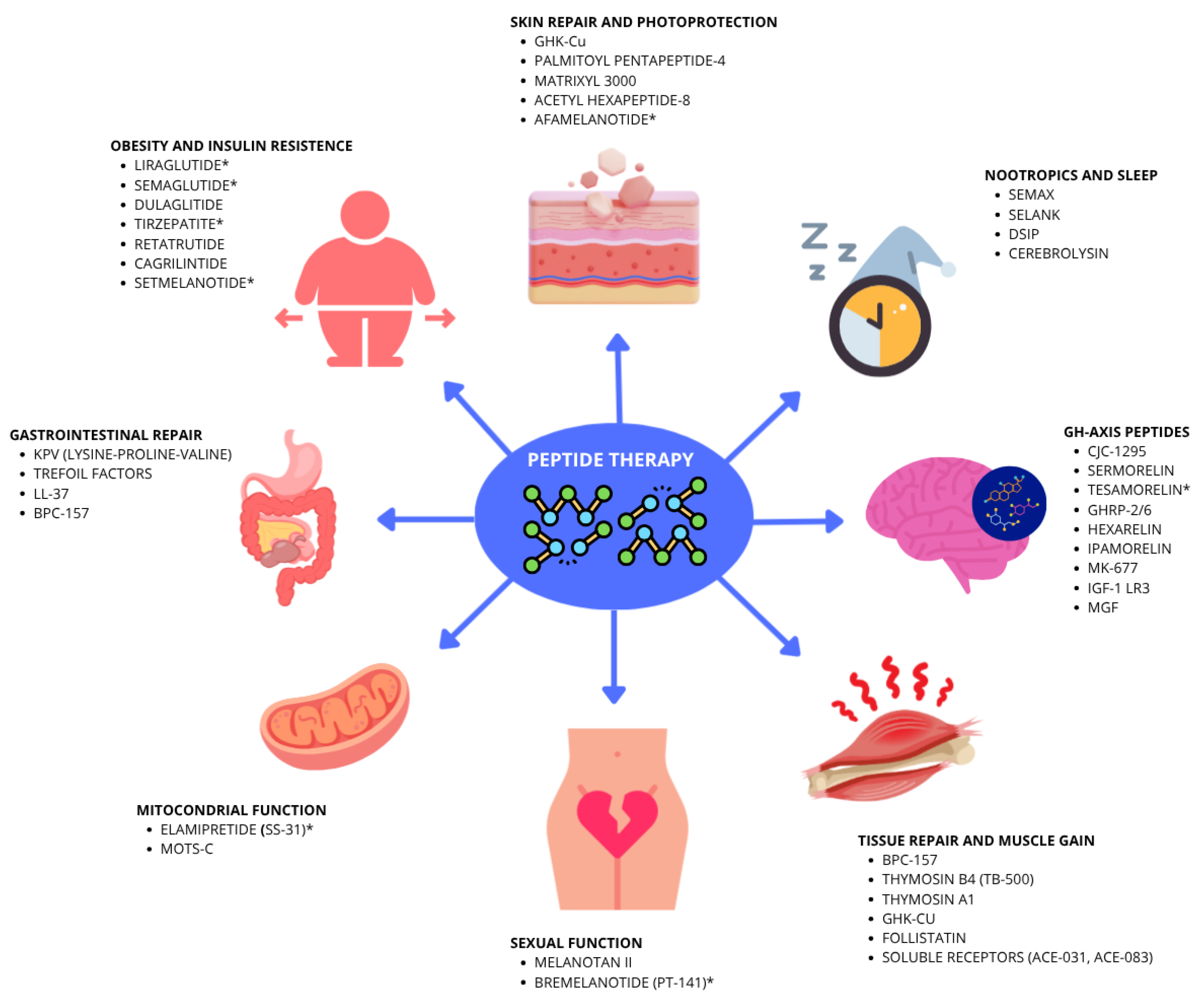
- GLP-1 receptor agonists (GLP-1 RAs): These mimetics of the incretin hormone GLP-1 amplify glucose-dependent insulin secretion, inhibit glucagon secretion, and delay gastric emptying. The result is increased satiety and better glycemic control [12]. These peptides (e.g., liraglutide, semaglutide, dulaglutide, exenatide) act on receptors in the pancreas and on the hypothalamus and vagus nerve, suppressing appetite [7]. In addition to metabolic effects, they have systemic benefits, including reduced inflammation and oxidative stress, improved endothelial function, renal protection, and possibly neuroprotection [29].
- Double/triple agonists (GLP-1 + GIP ± glucagon): They combine multiple incretin and hormonal effects. The main example is tirzepatide (a dual GIP/GLP-1 agonist): it activates both the GIP and GLP-1 receptors, which confer synergism—GIP enhances the action of GLP-1 in the pancreas and the central nervous system, leading to greater appetite reduction and improved insulinemic sensitivity [28]. Emerging tri-hormonal agonists, such as retatrutide, also activate the glucagon receptor, increasing energy expenditure and hepatic lipolysis [25]. These combinations result in even greater weight loss than isolated agonists. Thus, retatrutide can reduce >20% of body weight in 48 weeks—an unprecedented level among anti-obesity pharmacological therapies [30]
- Amylin analogues: Amylin is a hormone co-secreted with insulin by pancreatic beta cells, which contributes to glycemic and satiety control (delays gastric emptying, suppresses postprandial glucagon, and promotes central satiety). The analogue pramlintide has been approved for type 1 and T2DM, but its use for weight loss is limited [4]. New analogues, such as cagrilintide (a long-acting amylin analogue), have been studied for the treatment of obesity. When cagrilintide is combined with semaglutide, an additive effect on weight loss is observed (~15–18% weight reduction in phase 2 studies), suggesting that the coactivation of distinct satiety pathways (GLP-1R and amylin receptor) produces extra benefit [31].
- Indications and Clinical Evidence: Incretin peptides have revolutionized the management of obesity and T2DM. Robust clinical trials document its effectiveness. In the STEP study, semaglutide 2.4 mg weekly was associated with a mean weight loss of ~15% (up to 17% at 68 weeks) [32]. In the SELECT study with obese non-diabetic patients, semaglutide reduced the incidence of major cardiovascular events (infarction, stroke) by ~20% at 5 years [33]. It has also demonstrated renoprotective effects in patients with T2DM and nephropathy [34]. Emerging evidence of cognitive benefit: Alzheimer’s disease models treated with semaglutide showed improved memory and reduced neuroinflammation [13]. Semaglutide is approved globally for T2DM and obesity, due to the high level of evidence [14].
- Tirzepatide (dual GIP/GLP-1): In T2DM, the SURPASS-2 study showed that tirzepatide reduced glycated hemoglobin (HbA1c) by ~2.3% and weight by 11 kg at 72 weeks [35]. In patients with obesity without T2DM, the SURMOUNT-1 study reported an average weight loss of 17.8% at 72 weeks [36]. In addition, improvements in metabolic parameters, such as lipid profile, liver fat (steatosis), and inflammatory markers (CRP), have been observed with tirzepatide [25].
- Retatrutide (tri-agonist): In a phase II trial (Eli Lilly, Indianapolis, IN, USA, 2023), retatrutide achieved an average weight reduction of 22% at 48 weeks—the largest ever recorded pharmacologically to date [30]. These results position retatrutide as a potential next-generation anti-obesity drug; it is in the final stages of study (phase III) and is not yet commercially available (experimental status). Cagrilintide + Semaglutide: a phase III study evaluating this combination reported 20,4% weight loss at 68 weeks—higher than semaglutide alone—with greater satiety and less rebound effect after termination [37]. This combined approach is being studied, indicating a future for multimodal peptide therapies for obesity.
- Liraglutide, dulaglutide, and others: Liraglutide (daily GLP-1 agonist) and dulaglutide (weekly) have also been shown to have cardiovascular benefits in high-risk diabetics. In the LEADER study, liraglutide reduced the rate of major adverse cardiovascular events by 13% compared with placebo [38]. Dulaglutide was associated with a 12% reduction in cardiovascular events in the REWIND study [39]. Weekly exenatide, in turn, had a neutral effect on mortality but still improved glycemic control and provided modest weight loss [40].
- Dosage and Clinical Use: Approved GLP-1 agonists are titrated to improve gastric tolerability. For example, semaglutide for obesity is initiated at 0.25 mg SC weekly and gradually increased to 2.4 mg/week [41]. Liraglutide is administered subcutaneously at 0.6 mg daily for the first week, then increased to 3.0 mg daily. Most common adverse effects include nausea, vomiting, and diarrhea at the beginning of treatment; usually manageable with slow titration. These peptides should not be used by individuals with a history of pancreatitis or medullary thyroid cancer [38,41].
2.1.2. GH-Releasing Peptides: GHRH and GHRPs
- GHRH Analogs: These are peptides that mimic GHRH by directly stimulating GHRH receptors in the pituitary gland. Examples: drug affinity complex: growth hormone-releasing factor (CJC-1295); sermorelin; tesamorelin. They amplify pulsatile GH secretion, especially during sleep [16]. CJC-1295 stands out for containing a modification (DAC—drug affinity complex) that prolongs its half-life (~7–8 days), providing prolonged stimulation of the GH axis [10]. Tesamorelin, in turn, is a high-potency GHRH analog, approved for HIV-associated lipodystrophy because it reduces visceral fat [42].
- GHRPs: These include GHRP-2, GHRP-6, hexarelin, and ipamorelin. Unlike the ones mentioned previously, these peptides do not act on the GHRH receptor, but rather on the ghrelin receptor (GHS-R1a) in the pituitary gland and hypothalamus [10,15,42]. Activation of GHS-R1a triggers the phospholipase C (PLC) pathway, increasing intracellular calcium and releasing GH in an acute, pulsatile manner [15]. Each GHRP has its own profile: GHRP-6 and GHRP-2 are potent but increase prolactin and cortisol (especially GHRP-2); ipamorelin, on the other hand, is more selective, raising GH without elevating adrenocorticotropic hormone (ACTH)/cortisol [15,43]. Early studies showed that ipamorelin was the first GHRP not to stimulate cortisol significantly [15]. In short, GHRPs “mimic” endogenous ghrelin (hunger hormone) without fully reproducing its orexigenic effects—although some may slightly increase appetite [16].
- Oral secretagogue (ghrelin mimetic): MK-677 (Ibutamoren) is a non-peptide compound, but is often lumped together here because it acts as an oral GHS-R1a receptor agonist. It simulates the action of endogenous ghrelin by stimulating sustained GH and IGF-1 secretion for ~24 h with a single daily dose [5]. MK-677 has the advantage of an oral route and a long half-life and is being evaluated as a potential treatment for sarcopenia and growth disorders [23].
- IGF-1 and Derivatives Growth Factors: IGF-1 is the primary anabolic mediator of GH (produced in the liver and peripheral tissues). Synthetic derivatives include IGF-1 LR3 (Long R3 IGF-1, modified to not bind to carrier proteins, with extended half-life) and MGF (Mechano Growth Factor, an isoform of IGF-1 expressed locally in post-exercise muscle) [44,45,46]. These agents act directly on the IGF-1 receptor (a tyrosine kinase), strongly activating the PI3K-Akt-mTOR pathway, thereby promoting protein synthesis, muscle hypertrophy, and cell regeneration [16]. In theory, they could increase lean mass independently of GH secretion. However, the use of IGF-1 and analogs presents challenges, including hypoglycemia and potential pro-tumor effects, and warrants caution [44]. Indications and clinical approach: Analogs of GHRH and GHRPs have been evaluated for the treatment of GH axis disorders, including age-related GH deficiency and frailty syndromes (Table 2). Continued use can elevate IGF-1 and modestly increase lean mass and bone density, but improvements in physical performance are modest [16]. Tesamorelin has been shown to reduce visceral fat in patients with HIV [42], but outside of this context, its benefit is limited. MK-677 increased IGF-1 and appetite in older adults, resulting in a slight gain in muscle mass, but was associated with insulin resistance in some cases [5]. The use of IGF-1, LR3, and MGF is restricted to the experimental field or unauthorized use.
- Safety, limitations, and regulatory status: Lean mass and performance gains with these GH secretagogues are modest and are accompanied by metabolic (e.g., insulin resistance) and endocrine risks [16,23]. In addition, they are banned substances in sports, which restricts their use [10]. In summary, although they activate relevant anabolic pathways, the clinical cost–benefit of these peptides is still controversial, and their practical role is limited to very specific situations [16]. Future research may clarify whether physiological doses of these secretagogues could safely benefit elderly people with GH deficiency or patients with cachexia; for now, their use must be judicious [16,23].
2.1.3. Regenerative and Tissue Repair Peptides
- BPC-157 (Body Protection Compound-157): It is a 15-amino acid peptide originally isolated from human gastric juice. It stood out for its stability in gastric acid for more than 24 h [27]. Its mechanism is multimodal: it stimulates angiogenesis (via increased VEGF and VEGFR2), modulates nitric oxide synthesis, accelerates granulation formation and collagen deposition, and reduces local inflammation [27,61]. Main targets: injured tissues—tendons, muscles, ligaments, bone, peripheral nerves, and gastrointestinal mucosa—according to preclinical evidence [11,62].
- Thymosin β4 (TB-500): Thymosin β4 is a natural 43-amino acid protein produced by the thymus and other cells, with an important role in tissue repair. The synthetic fraction TB-500 corresponds to a key sequence (acetylated) of thymosin β4 responsible for its effects [63,64]. Mechanism: binds to monomeric actin (G-actin) in cells, promoting cell migration, progenitor cell recruitment, and angiogenesis [65]. It also exerts anti-inflammatory and anti-fibrotic effects, reducing aberrant collagen deposition [65]. The TB-500 fragment reproduces some of these effects, focusing on promoting new vessels and cell migration, and has even been used in veterinary medicine (e.g., doping in racehorses) [66].
- Thymosin α1 (Thymosin α1): Another peptide derived from the thymus, with 28 amino acids. Unlike TB-500, its primary effect is immunomodulatory: it activates toll-like receptor 9 (TLR9) and the NF-κB pathway in dendritic cells, thereby increasing the production of Th1 cytokines, interleukin-2 (IL-2), and Interferon-γ (IFN-γ), as well as the activity of cytotoxic T lymphocytes in restoring depressed cellular immunity, and is useful in immunosuppressed conditions [63,64]. It also has antiviral effects and has been used as a vaccine adjuvant. Clinical applications have included chronic hepatitis B and C (to improve antiviral response), certain cancers (to improve antitumor immune response), and, more recently, severe COVID-19 (to reduce sepsis and improve lymphopenia in critically ill patients) [67].
- GHK-Cu: It is a natural tripeptide (Gly-His-Lys) that binds strongly to the copper ion, forming the GHK-Cu complex. It mainly acts in dermal and connective tissue regeneration: GHK-Cu stimulates the production of collagen I and III, elastin, fibronectin, and glycosaminoglycans, in part by activating the growth factor TGF-β1 and the metalloproteinases (MMPs) [68]. It also has antioxidant and anti-inflammatory properties. Gene expression studies (e.g., the Broad Institute’s Connectivity Map) indicate that GHK-Cu can regulate the expression of up to 30% of human genes, thereby reversing the aging phenotype of cells to a more youthful pattern [68]. Targets and indications: improved healing (skin and cornea), regeneration of gastric ulcers, recovery of injured muscles and nerves, and skin anti-aging action [68,69].
- KPV: A short anti-inflammatory peptide derived from Alpha-melanocyte-stimulating hormone (α-MSH). Research primarily in preclinical models links it to gastrointestinal tract protection, promotion of mucosal healing, and enhanced epithelial wound repair. In intestinal epithelial cells and T cells, KPV is taken up via the PepT1 peptide transporter and suppresses NF-κB/MAPK signaling, thereby reducing pro-inflammatory cytokine levels [55,56]. Oral KPV reduces disease severity in colitis, with less histologic damage and lower cytokine expression, indicating improved mucosal integrity [57]. In a colitis-associated cancer model, KPV reduced tumor number and size when PepT1 was present, suggesting anti-inflammatory, barrier-protective effects that secondarily limit carcinogenesis [56].
- LL-37: The only human cathelicidin peptide. Beyond reducing microbial activity, it strongly influences epithelial barrier integrity, intestinal inflammation, and wound repair, making it a promising yet experimental therapeutic target. LL-37 is expressed in the gastrointestinal epithelium and contributes to the maintenance of colon mucosal barrier integrity and microbiota balance, with protective roles against colon tumorigenesis and colitis in animal models [58,59,60]. It enhances intestinal epithelial cell migration, induces protective mucins, and reduces apoptosis via P2X7 and EGFR signaling, helping re-establish barrier integrity after injury 10. Hybrid LL-37-based peptides (e.g., LL-37-TP5, LL-37–Tα1, Cecropin-LL37) reduce LPS- or EHEC-induced intestinal inflammation, restore tight junction proteins (ZO-1, occludin), and improve epithelial barrier function in mice [58,60,70].
- Clinical applications: BPC-157 has been used compassionately in sports medicine to accelerate recovery from musculoskeletal injuries, although it has not yet been approved by regulatory agencies [62]. Clinical trials are underway for conditions such as inflammatory bowel disease and orthopedic injuries. Thymosin β4 was evaluated in small case series of skin and eye lesions, demonstrating accelerated healing of pressure ulcers and corneal lesions [64]. Thymosin α1 is approved in some countries (e.g., Taiwan for hepatitis B) and is being evaluated for severe infections and cancer; in COVID-19, pilot studies have suggested reduced mortality among critically ill patients [68].
- Safety: Regenerative peptides have been well tolerated. BPC-157: no signs of significant toxicity have been reported in animals or in the limited human data; it does not appear mutagenic or immunogenic, and users have reported no consistent adverse effects, at most mild gastrointestinal distress at high oral doses [27]. Thymosin β4: in ulcer studies, there was no difference in adverse events vs. placebo; occasionally, itching or mild burning was observed at the site of topical application [71]. By taking a systemic approach, there have been rare reports of mild headaches. Thymosin α1: may cause transient redness at the injection site; no serious side effects have been reported in published studies [63,64]. GHK-Cu: topical is very safe (with very few cases of irritation); systemic is not yet used clinically, but animal studies have not indicated any relevant toxicity [68].
2.1.4. Aesthetic and Dermatological Peptides (Cosmeceuticals)
- GHK-Cu: As described previously, it is considered the “gold standard” of anti-aging peptides. It promotes the synthesis of collagen I and III, elastin, and other matrix components, stimulates angiogenesis, and acts as an antioxidant [68]. Its ability to modulate gene expression and reverse the aging phenotype in cells makes it a potent global skin rejuvenation agent [68]. Indications: improvement of wrinkles, firmness/sagging, scars, and even hair quality [69].
- Palmitoyl Pentapeptide-4 (Matrixyl®): Known by the KTTKS sequence attached to a palmitic fatty acid. It is a signaling peptide for fibroblasts: upon penetrating the dermis, it activates TGF-β and extracellular matrix signaling pathways, increasing collagen and fibronectin production [72]. One study has shown a reduction in fine wrinkles and lines with topical use over 2–4 months [73]. Because it is a small, lipophilic molecule (5 amino acids), it readily enters the skin. It is among the first and most studied cosmetic peptides, with proven efficacy in humans [73].
- Matrixyl 3000: A combination of two peptides (palmitoyl tripeptide-1 and palmitoyl tetrapeptide-7) that act synergistically by stimulating the extracellular matrix. In a 12-week clinical trial, Matrixyl 3000 demonstrated a significant reduction in wrinkles and lines, confirmed by silicone replication [69]. Increases in collagen I and fibrillin mRNA were also observed in treated skin [69].
- Argirelin (Acetyl Hexapeptide-8): A hexapeptide that mimics the N-terminal domain of SNAP-25, a component of the neurotransmitter release complex. In in vitro studies, concentrations of 0.005–0.05% of argylin inhibited 30–40% of neurotransmitter release at motor synapses, suggesting a “botox-like” effect [73]. Pure 10% Argireline has also been shown to significantly reduce forehead wrinkles when applied 2×/day for 30 days (measured by digital image analysis), with approximately 17–20% reduction in dynamic wrinkles [73]. No significant adverse effects, such as irritation, were observed—reinforcing its safety profile.
- Common Dosage and Formulations: These peptides are often used in cosmetics at relatively low concentrations but are effective when used repeatedly. Typical concentrations and average expected results at 8–12 weeks are summarized in Table 3.
- Safety: Cosmetic peptides have an excellent safety profile. They are non-toxic, non-irritating to most people, and have no measurable systemic effect (due to poor absorption beyond the dermis) [69]. Allergic reactions are very rare and are usually more related to the excipients in the formula than to the peptide itself. Thus, products containing these peptides can be used for extended periods as part of the skincare routine.
2.1.5. Melanocortin Peptides (Sexual Function and Pigmentation)
- Afamelanotide (Melanotan-1): Selective agonist of MC1R. It increases melanocyte eumelanin production, even without sun exposure, resulting in skin tanning and greater photoprotection (melanin absorbs UV radiation and prevents damage) [73]. It also has an anti-inflammatory effect on the skin. Main indication: erythropoietic protoporphyria (EPP), a rare disease in which patients have extreme photosensitivity. In patients with PPE, the administration of afamelanotide increased the duration of pain-free sun exposure and did not elicit neutralizing antibodies after multiple doses, demonstrating immunological safety [73]. Recent studies further suggest that afamelanotide may protect the skin from UV damage beyond tanning by increasing thymine dimer repair and reducing UV-induced reactive oxygen species [74].
- Melanotan II: Non-selective agonist of MC1R, MC3R, and MC4R. Originally developed as a tanning agent, a significant increase in libido and the occurrence of spontaneous erections in men have been observed as side effects. This led to the development of Bremelanotide (PT-141), a derivative specific for sexual function [75]. Melanotan II itself is used recreationally by some users to tan, but it is not medically approved due to adverse events such as nausea and increased blood pressure.
- Bremelanotide (PT-141): Mainly MC3R/MC4R agonist. Approved in the USA (2019) for the treatment of hypoactive sexual desire disorder (HSDD) in premenopausal women. Administered by SC injection on demand, about 30–45 min before intercourse. In studies, ~80% of men with erectile dysfunction had satisfactory erections with PT-141 vs. 30% with placebo, without causing significant hypotension even in nitrate users [75]. In women with HSDD, clinical trials have shown a significant increase in sexual desire and satisfaction with PT-141 compared to placebo [76]. Side effects may include nausea, facial flushing, and a mild increase in blood pressure; however, it is generally well-tolerated.
- Setmelanotide: MC4R agonist approved for monogenic obesity: Pro-opiomelanocortin (POMC), Proprotein convertase 1 (PCSK1), or leptin receptor deficiency. It reduces appetite, induces marked weight loss in these patients, and is associated with improved mood and energy [77,78]. In a study of individuals with congenital MC4R deficiency, setmelanotide led to significant weight loss and reported improvements in mood and vitality [78]. Adverse effects include nausea and darkening of the skin and hair. Setmelanotide exemplifies the principle of “pharmacogenomics”: targeted treatment for specific genetic mutations that cause obesity [77].
- Safety: Melanocortins may elevate blood pressure and cause nausea, especially Melanotan II. Afamelanotide (Melanotan-1) has been evaluated, with few adverse events other than hair darkening and freckling [73]. Bremelanotide can cause nausea in ~40% of users and mild headache, leading some to discontinue. It should not be used by patients with uncontrolled hypertension. Due to the potential for abuse (recreational use for aesthetic or sexual purposes), some of these unapproved peptides (Melanotan II) circulate illegally; its use is discouraged by risks and lack of quality control [79].
2.1.6. Neuromodulator Peptides (Nootropics and Sleep)
- Semax: A synthetic heptapeptide derived from a fragment of ACTH (Met-Glu-His-Phe-Pro-Gly-Pro), developed in Russia. It has significant nootropic and neuroprotective properties but lacks classic stimulant effects. Mechanism: potentiates the signaling of neurotrophic factors—increases the expression and release of Brain-derived neurotrophic factor (BDNF) in the hippocampus and cortex, leading to the activation of TrkB receptors [80]. It also modulates dopamine and serotonin levels in the brain and has a mild anti-inflammatory effect on the central nervous system [20]. Indications studied: sequelae of ischemic stroke, traumatic brain injury (TBI), mild cognitive disorders, depression, and Attention-Deficit/Hyperactivity Disorder [21]. In Russia, it has been used since the 1990s as an adjuvant in recovery from strokes and neurological injuries, and also in anxiety disorders and mild depression [19]. A Russian clinical study reported that intranasal Semax (0.1%) improved post-stroke neurological deficits and modulated inflammatory cytokines (IL-10, TNF-α) better than placebo [19]. In addition, in animal models, Semax accelerated motor recovery after spinal cord injury—an effect partially blocked by μ-opioid antagonist, indicating involvement of this pathway [18].
- Selank: A heptapeptide derived from a fragment of tuftysin (immunomodulatory peptide). It exhibits anxiolytic and nootropic properties without significant sedative effects. Mechanism: Selank is believed to modulate monoamine metabolism, increasing GABA release and regulating the expression of serotonin-related genes [81]. In parallel with Semax, it also elevates BDNF in certain areas (e.g., the prefrontal cortex) and exerts immunomodulatory effects (e.g., balancing Th1/Th2 responses). The result is a reduction in anxiety symptoms and an improvement in cognitive functions under stress, as observed in animal models and clinical reports [82]. In humans, intranasal Selank has been tested in patients with mild generalized anxiety disorder, leading to a significant reduction in anxiety scores after 2 weeks, with no sedative effects [82]. There are also data of improvement in symptoms of mild depression and mental fatigue [20].
- DSIP (Delta Sleep-Inducing Peptide): A natural 9-amino acid peptide found in the hypothalamus and cerebrospinal fluid. It was named for inducing slow-wave (delta) sleep in rabbits upon its discovery. Mechanism: probably acts at multiple sites; it is known to influence GABA and glutamate (NMDA) pathways [24]. The DSIP has a moderate hypnotic effect, promoting deep sleep and regulating circadian rhythms. In addition, it attenuates the stress response by reducing CRH and cortisol release in some contexts and increases GH pulses during sleep [15]. In studies, it exhibited anticonvulsant and neuroprotective effects. However, DSIP is rapidly degraded by specific peptidases in the cerebrospinal fluid (with a half-life of minutes), thereby hindering its therapeutic use [26].
- Cerebrolysin: Composed of a low-molecular-weight peptide mix (<10 kDa) derived from pig brain. It contains peptide fragments that mimic neurotrophic factors, including BDNF. When administered IV, these peptides can partially cross the blood–brain barrier and activate neuronal survival pathways (PI3K/Akt, MAPK) [83]. The result is neuroprotection, synaptogenesis, and improved post-injury plasticity. The drug has been used for decades in countries such as Austria, Russia, and China for recovery from stroke, TBI, and dementia, although it is viewed with skepticism by part of the Western medical community. Meta-analyses suggest modest but significant benefits for post-stroke motor recovery and cognitive function in patients with vascular dementia [83,84].
- Clinical applications: Semax and Selank are approved as drugs in Russia (Semax is officially indicated for stroke and neurological diseases; Selank for mild anxiety). In the rest of the world, they are not approved; they can be obtained from compounding pharmacies or the internet, but without registration with the main agencies [20]. WADA prohibits both, classifying them as peptides acting on the hormonal axis (category S2) or unapproved substances, for their potential neuroenhancement effect (even if there is no direct physical gain, it is considered cognitive doping) [85]. The DSIP was never officially approved; it circulates only as a research peptide, and WADA also prohibits it (S2 category) [85]. Cerebrolysin is approved in ~50 countries (primarily in Eastern Europe and Asia) for the treatment of neurological sequelae but has not been approved by the FDA [85]. Because it is used for medical treatment (e.g., stroke, dementia), it is not classified as a doping agent and would be permitted for athletes if prescribed for a medical condition (it does not qualify as a performance-enhancing agent) [83,84].
- Safety: Semax: It does not exhibit significant toxicity at the doses used; rare adverse events include mild nasal irritation (with intranasal administration) and transient agitation [19]. Selank: It is also considered safe, non-sedative, and non-addictive. Uncommon adverse effects include mild daytime drowsiness or dry mouth; it can be used for weeks to months with no reported complications [82]. DSIP: It is relatively safe, but because it induces sleep, it can cause excessive sleepiness or lethargy the next day if the dose is high. A mild drop in blood pressure (hypotension) has been reported during rapid IV infusion; in theory, prolonged use could suppress hormonal axes, although there is no clear evidence of this [24]. Cerebrolysin: The main adverse events reported are mild headache, nausea, feeling hot, and mild agitation in some patients, all of which are usually transient. Studies showed no increase in serious adverse events compared with placebo; attention should be paid only to the possibility of allergy in individuals sensitive to porcine proteins (the product’s raw material), although anaphylactic reactions are very rare [84].
2.1.7. Myoanabolic Peptides (Myostatin–Follistatin Axis)
- Follistatin: Myostatin is secreted by muscles and circulates inactively bound to carrier proteins. When activated, it binds to activin receptor type 2 B (ACVR2B) on muscle fibers, triggering signaling pathways that inhibit protein synthesis and induce atrophy. Follistatin (FS), in turn, is an endogenous protein that binds to and neutralizes myostatin, activin, and other TGF-β ligands. Synthetic versions include Follistatin-344 (FS344, full isoform) and Follistatin-315 (circulating form) [87,88,89,90,91]. Follistatin is considered the most potent natural myostatin/activin antagonist; increasing its levels leads to overall muscle hypertrophy (as seen in myostatin knockout animal models) [88]. Therefore, experimental strategies, such as gene therapy and follistatin fusion proteins, have been explored to treat muscle diseases [87,89].
- Soluble receptors (ACE-031, ACE-083): These are fusion proteins that contain the extracellular domain of the ACVR2B receptor fused to IgG, acting as “bait” to bind circulating myostatin. ACE-031 was tested in children with Duchenne muscular dystrophy: despite increased lean mass and bone density, the phase II study was interrupted due to vascular adverse effects (telangiectasias, epistaxis), showing that broad systemic blockade of the TGF-β pathway requires caution [92]. More recent versions aim to restrict the action to the target muscle. ACE-083, for example, is applied directly to the desired muscle; in healthy volunteers and patients with neuromuscular diseases, intramuscular injections of ACE-083 increased local muscle volume by 30–50%, but without proportional functional improvement [93]. This suggests that gaining muscle alone is insufficient; it must be functionally integrated.
- Experimental advances: A milestone was the study by Kota et al. (2009) [89]: Rhesus monkeys received an AAV1 vector containing the FS344 gene in the leg muscles; this led to ~15% increase in local muscle mass without adverse systemic effects or changes in FSH levels (activin regulates FSH, and restriction of follistatin’s effect to muscle prevented reproductive impact) [89]. The animals maintained the gains for at least 1 year, demonstrating the durability of the effect [89]. In humans, a small study of patients with Becker muscular dystrophy evaluated intramuscular injections of AAV-follistatin and reported safety and modest strength gains, although no placebo control was included [94].
- Effects on disease models and the elderly: In elderly mice (24 months), delivery of follistatin via a viral vector increased muscle mass and strength, improved fiber size and neuromuscular junctions, and did not increase fat or fibrosis [88]. Improvement in muscle quality, not just quantity, is highlighted, possibly by normalizing trophic factors [88]. In older adults, there are no published clinical trials of follistatin; however, 8 weeks of resistance exercise reduces myostatin levels and increases endogenous follistatin and testosterone [90]. This suggests that, even without pharmacological intervention, exercise training favorably modulates this axis—and that a combined intervention (exercise + myostatin modulator) would be synergistic.
- Safety: In previous clinical trials, follistatin administration did not cause serious adverse events or alter hormones such as Follicle-Stimulating Hormone (FSH), demonstrating its specificity of action [89]. The adverse effects observed with ACE-031 (a systemic soluble receptor) reinforced the need to target therapy specifically to the muscle to avoid effects on other tissues [92]. All of these products are experimental; no myostatin modulator has been approved to date for sarcopenia or muscle gain in healthy humans. However, WADA has already banned any form of manipulation of the myostatin pathway—for example, the use of ACVR2B peptide or follistatin kits is considered doping and punishable [95]. In fact, products labeled as “follistatin peptide”, of dubious origin, have already circulated on the black market [91].
2.1.8. Mitochondrial Peptides
- Elamipretide: It is a tetrapeptide that selectively binds to cardiolipin in the inner mitochondrial membrane, stabilizing cristae, improving mitochondrial bioenergetics (ATP), and alleviating oxidative stress, without affecting normal mitochondria. Key indications include primary mitochondrial myopathy [99,100], Barth Syndrome [100], and heart failure with reduced ejection fraction [98].
- MOTS-c: It acts as a signaling molecule produced by mitochondria that, under increased demand (e.g., stress or exercise), can enter the nucleus, stimulating the regulation of genes related to metabolic flexibility and energy production [101]. Its action promotes glucose uptake, increases fatty acid metabolism, and reduces carbohydrate intake. Clinical studies show therapeutic potential for metabolic syndromes, obesity, and T2DM [101,102,103].
- Clinical applications: Elamipretide is already in phase 1–3 clinical trials and compassionate use, primarily for Barth syndrome, mitochondrial myopathies, and heart failure, with a favorable short-term safety profile and encouraging functional benefits [98,99,100,104]. MOTS-c, on the other hand, currently has no approved therapeutic application or is in late-stage development in humans, but extensive preclinical data support future clinical trials in metabolic diseases, cardiovascular complications, ischemia–reperfusion injuries, and chronic pain. Therefore, more data are needed to support its clinical indication [96,97,99,101,103].
- Safety: Elamipretide shows a generally good safety profile, with adverse effects mainly local (injection site reaction including: erythema, pruritus, pain, swelling, induration, and hematomas generally mild to moderate) and other less common symptoms such as headache, nausea, dizziness, and fatigue [98,99,100]; for MOTS-c, the data are almost exclusively preclinical, with no major signs of toxicity, but without robust evidence in humans [101,102,103]. Reviews of MOTS-c in T2DM emphasize its therapeutic potential but acknowledge the lack of human clinical trials to characterize safety, dosing, and adverse events [105].
3. Materials and Methods
4. Discussion
5. Future Perspectives
6. Conclusions
Author Contributions
Funding
Institutional Review Board Statement
Informed Consent Statement
Data Availability Statement
Conflicts of Interest
References
- Pintea, A.; Manea, A.; Pintea, C.; Vlad, R.-A.; Bîrsan, M.; Antonoaea, P.; Rédai, E.M.; Ciurba, A. Peptides: Emerging Candidates for the Prevention and Treatment of Skin Senescence: A Review. Biomolecules 2025, 15, 88. [Google Scholar] [CrossRef] [PubMed]
- Wang, J.; Wu, Y.; Chen, Z.; Chen, Y.; Lin, Q.; Liang, Y. Exogenous Bioactive Peptides Have a Potential Therapeutic Role in Delaying Aging in Rodent Models. Int. J. Mol. Sci. 2022, 23, 1421. [Google Scholar] [CrossRef] [PubMed]
- Bliss, M. The Discovery of Insulin; University of Chicago Press: Chicago, IL, USA, 1982. [Google Scholar]
- Bailey, C.; Flatt, P.; Conlon, J. An update on peptide-based therapies for type 2 diabetes and obesity. Peptides 2023, 161, 170939. [Google Scholar] [CrossRef] [PubMed]
- Nass, R.; Pezzoli, S.; Oliveri, M.; Patrie, J.; Harrell, F.; Clasey, J.; Heymsfield, S.; Bach, M.; Vance, M.; Thorner, M. Effects of an oral ghrelin mimetic on body composition and clinical outcomes in healthy older adults: A randomized trial. Ann. Intern. Med. 2008, 149, 601–611. [Google Scholar] [CrossRef]
- Nowell, J.; Blunt, E.; Gupta, D.; Edison, P. Antidiabetic agents as potential treatments for Alzheimer’s and Parkinson’s. Ageing Res. Rev. 2023, 84, 101834. [Google Scholar]
- Holst, J.J. GLP-1 physiology in obesity and development of incretin-based drugs for chronic weight management. Nat. Metab. 2024, 6, 1866–1885. [Google Scholar] [CrossRef]
- Mayfield, C.K.; Bolia, I.K.; Feingold, C.L.; Lin, E.H.; Liu, J.N.; Hatch, G.F.R.; Gamradt, S.C.; Weber, A.E. Injectable Peptide Therapy: A Primer for Orthopaedic and Sports Medicine Physicians. Am. J. Sports Med. 2026, 54, 223–229. [Google Scholar] [CrossRef]
- Huang, Y.; Liao, W.; Huang, J.; Lin, Y.; Yang, S.; Huang, C.; Wang, C.; Su, P. Long-term safety and efficacy of glucagon-like peptide-1 receptor agonists in individuals with obesity and without type 2 diabetes: A global retrospective cohort study. Diabetes Obes. Metab. 2024, 26, 5222–5232, Correction in Diabetes Obes. Metab. 2025, 27, 1630. [Google Scholar] [CrossRef]
- Memdouh, S.; Gavrilović, I.; Ng, K.; Cowan, D.; Abbate, V. Advances in the detection of growth hormone releasing hormone synthetic analogs. Drug Test. Anal. 2021, 13, 1871–1887. [Google Scholar] [CrossRef]
- Šebečić, B.; Nikolić, V.; Sikirić, P.; Seiwerth, S.; Šoša, T.; Patrlj, L.; Grabarević, Ž.; Ručman, R.; Petek, M.; Konjevoda, P.; et al. Osteogenic effect of a gastric pentadecapeptide, BPC-157, on the healing of segmental bone defect in rabbits: A comparison with bone marrow and autologous cortical bone implantation. Bone 1999, 24, 195–202. [Google Scholar] [CrossRef]
- Zheng, Z.; Zong, Y.; Ma, Y.; Tian, Y.; Pang, Y.; Zhang, C.; Gao, J. Glucagon-like peptide-1 receptor: Mechanisms and advances in therapy. Signal Transduct. Target. Ther. 2024, 9, 234. [Google Scholar] [CrossRef] [PubMed]
- Urkon, M.; Ferencz, E.; Szász, J.; Szabo, M.; Orbán-Kis, K.; Szatmári, S.; Nagy, E. Antidiabetic GLP-1 receptor agonists have neuroprotective properties in experimental animal models of Alzheimer’s disease. Pharmaceuticals 2025, 18, 614. [Google Scholar] [CrossRef] [PubMed]
- Sidrak, W.; Kalra, S.; Kalhan, A. Approved and emerging hormone-based anti-obesity medications: A review article. Indian J. Endocrinol. Metab. 2024, 28, 445–460. [Google Scholar] [CrossRef] [PubMed]
- Raun, K.; Hansen, B.; Johansen, N.; Thogersen, H.; Madsen, K.; Ankersen, M.; Andersen, P. Ipamorelin, the first selective growth hormone secretagogue. Eur. J. Endocrinol. 1998, 139, 552–561. [Google Scholar] [CrossRef]
- Sun, Y.; Wang, P.; Zheng, H.; Smith, R. Ghrelin stimulation of growth hormone release and appetite is mediated through the growth hormone secretagogue receptor. Proc. Natl. Acad. Sci. 2004, 101, 4679–4684. [Google Scholar] [CrossRef]
- Kurysheva, N.; Shpak, A.; Ioĭleva, E.; Galanter, L.; Nagornova, N.; Shlyshalova, N. Semax in the treatment of glaucomatous optic neuropathy in patients with normalized ophthalmic tone. Vestn. Oftalmol. 2001, 117, 5–8. [Google Scholar]
- Liu, R.; Chen, Y.; Huang, H.; Li, X.; Lv, J.; Jiang, L.; Jiang, H.; Wu, C.; Chen, W.; Xu, H.; et al. Semax peptide targets the μ opioid receptor gene Oprm1 to promote deubiquitination and functional recovery after spinal cord injury in female mice. Br. J. Pharmacol. 2025, 182, 5489–5516. [Google Scholar] [CrossRef]
- Gusev, E.; Skvortsova, V.; Miasoedov, N.; Nezavibat’ko, V.; Vanichkin, A. Effectiveness of semax in acute period of hemispheric ischemic stroke (a clinical and electrophysiological study). Zhurnal Nevrol. I Psikhiatrii Im. SS Korsakova 1997, 97, 26–34. [Google Scholar]
- Dergunova, L.; Filippenkov, I.; Limborska, S.; Myasoedov, N. Pharmacotranscriptomics of peptide drugs with neuroprotective properties. Med. Res. Rev. 2021, 41, 754–769. [Google Scholar] [CrossRef]
- Tsai, S. Semax, an analogue of adrenocorticotropin (4–10), is a potential agent for the treatment of attention-deficit hyperactivity disorder and Rett syndrome. Med. Hypotheses 2007, 68, 1144–1146. [Google Scholar] [CrossRef]
- Ghigo, E.; Arvat, E.; Muccioli, G.; Camanni, F. Growth hormone-releasing peptides. Eur. J. Endocrinol. 1997, 136, 445–460. [Google Scholar] [CrossRef]
- Chapman, I.; Pescovitz, O.; Murphy, G.; Treep, T.; Cerchio, K.; Krupa, D.; Gertz, B.; Polvino, W.; Skiles, E.; Pezzoli, S.; et al. Oral administration of growth hormone (GH) releasing peptide-mimetic MK-677 stimulates the GH/insulin-like growth factor-I axis in selected GH-deficient adults. J. Clin. Endocrinol. Metab. 1997, 82, 3455–3463. [Google Scholar] [PubMed][Green Version]
- Stanojlović, O.; Živanović, D.; Šušić, V. The effects of delta sleep-inducing peptide on incidence and severity in metaphit-induced epilepsy in rats. Pharmacol. Res. 2002, 45, 241–247. [Google Scholar] [CrossRef] [PubMed]
- Yamamori, D.; Kitao, T.; Masuda, S.; Koike, S.; Kaketaka, T.; Komoda, Y.; Nakano, E.; Konishi, E.; Ibata, T.; Koike, S. Evaluation of the Short-Term Effect of Tirzepatide on Liver Fibrosis Biomarkers Stratified by the Fibrosis-3 Index (FIB-3) in Patients with Type 2 Diabetes Mellitus. Cureus 2025, 17, e97279. [Google Scholar] [CrossRef] [PubMed]
- Nyberg, F.; Thörnwall, M.; Hetta, J. Aminopeptidase in human CSF which degrades delta-sleep inducing peptide (DSIP). Biochem. Biophys. Res. Commun. 1990, 167, 1256–1262. [Google Scholar] [CrossRef]
- Sikiric, P.; Seiwerth, S.; Rucman, R.; Turkovic, B.; Stancic, D.; Brcic, L.; Sever, M.; Klicek, R.; Radic, B.; Drmic, D.; et al. Stable gastric pentadecapeptide BPC 157-NO-system relation. Curr. Pharm. Des. 2014, 20, 1126–1135. [Google Scholar] [CrossRef]
- Campbell, J.; Müller, T.; Finan, B.; DiMarchi, R.; Tschöp, M.; D’Alessio, D. GIPR/GLP-1R dual agonist therapies for diabetes and weight loss—Chemistry, physiology, and clinical applications. Cell Metab. 2023, 35, 1519–1529. [Google Scholar] [CrossRef]
- Abasheva, D.; Ortiz, A.; Fernandez-Fernandez, B. GLP-1 receptor agonists in patients with chronic kidney disease and either overweight or obesity. Clin. Kidney J. 2024, 17, 19–35. [Google Scholar] [CrossRef]
- Jastreboff, A.; Kaplan, L.; Frías, J.; Wu, Q.; Du, Y.; Gurbuz, S.; Coskun, T.; Haupt, A.; Milicevic, Z.; Hartman, M. Triple–hormone-receptor agonist retatrutide for obesity—A phase 2 trial. N. Engl. J. Med. 2023, 389, 514–526. [Google Scholar] [CrossRef]
- Davies, M.; Bajaj, H.; Broholm, C.; Eliasen, A.; Garvey, W.; le Roux, C.; Lingvay, I.; Lyndgaard, C.; Rosenstock, J.; Pedersen, S. Cagrilintide–semaglutide in adults with overweight or obesity and type 2 diabetes. N. Engl. J. Med. 2025, 393, 648–659. [Google Scholar] [CrossRef]
- Wilding, J.; Batterham, R.; Calanna, S.; Davies, M.; Van Gaal, L.; Lingvay, I.; McGowan, B.; Rosenstock, J.; Tran, M.; Wadden, T.; et al. Once-weekly semaglutide in adults with overweight or obesity. N. Engl. J. Med. 2021, 384, 989–1002. [Google Scholar] [CrossRef] [PubMed]
- Lincoff, A.; Brown-Frandsen, K.; Colhoun, H.; Deanfield, J.; Emerson, S.; Esbjerg, S.; Hardt-Lindberg, S.; Hovingh, G.; Kahn, S.; Kushner, R.; et al. Semaglutide and cardiovascular outcomes in obesity without diabetes. N. Engl. J. Med. 2023, 389, 2221–2232. [Google Scholar] [CrossRef] [PubMed]
- Perkovic, V.; Tuttle, K.; Rossing, P.; Mahaffey, K.; Mann, J.; Bakris, G.; Baeres, F.; Idorn, T.; Bosch-Traberg, H.; Lausvig, N.; et al. Effects of semaglutide on chronic kidney disease in patients with type 2 diabetes. N. Engl. J. Med. 2024, 391, 109–121. [Google Scholar] [CrossRef] [PubMed]
- Frías, J.; Davies, M.; Rosenstock, J.; Pérez Manghi, F.; Fernández Landó, L.; Bergman, B.; Liu, B.; Cui, X.; Brown, K. Tirzepatide versus semaglutide once weekly in patients with type 2 diabetes. N. Engl. J. Med. 2021, 385, 503–515. [Google Scholar] [CrossRef]
- Jastreboff, A.; Aronne, L.; Ahmad, N.; Wharton, S.; Connery, L.; Alves, B.; Kiyosue, A.; Zhang, S.; Liu, B.; Bunck, M.; et al. Tirzepatide once weekly for the treatment of obesity. N. Engl. J. Med. 2022, 387, 205–216. [Google Scholar] [CrossRef]
- Garvey, W.; Blüher, M.; Osorto Contreras, C.; Davies, M.; Winning Lehmann, E.; Pietiläinen, K.; Rubino, D.; Sbraccia, P.; Wadden, T.; Zeuthen, N.; et al. Coadministered cagrilintide and semaglutide in adults with overweight or obesity. N. Engl. J. Med. 2025, 393, 635–647. [Google Scholar] [CrossRef]
- Marso, S.; Daniels, G.; Brown-Frandsen, K.; Kristensen, P.; Mann, J.; Nauck, M.; Nissen, S.; Pocock, S.; Poulter, N.; Ravn, L.; et al. Liraglutide and cardiovascular outcomes in type 2 diabetes. N. Engl. J. Med. 2016, 375, 311–322. [Google Scholar] [CrossRef]
- Gerstein, H.; Colhoun, H.; Dagenais, G.; Diaz, R.; Lakshmanan, M.; Pais, P.; Probstfield, J.; Riesmeyer, J.; Riddle, M.; Rydén, L.; et al. Dulaglutide and cardiovascular outcomes in type 2 diabetes (REWIND): A double-blind, randomized placebo-controlled trial. Lancet 2019, 394, 121–130. [Google Scholar] [CrossRef]
- Bergenstal, R.; Li, Y.; Porter, T.; Weaver, C.; Han, J. Exenatide once weekly improved glycaemic control, cardiometabolic risk factors and a composite index of an HbA1c <7%, without weight gain or hypoglycaemia, over 52 weeks. Diabetes Obes. Metab. 2013, 15, 264–271. [Google Scholar]
- Kim, M.; Kim, H. An Overview of Existing and Emerging Weight-Loss Drugs to Target Obesity-Related Complications: Insights from Clinical Trials. Biomol. Ther. 2025, 33, 5–17. [Google Scholar] [CrossRef]
- Stanley, T.; Feldpausch, M.; Oh, J.; Branch, K.; Lee, H.; Torriani, M.; Grinspoon, S. Effect of tesamorelin on visceral fat and liver fat in HIV-infected patients with abdominal fat accumulation: A randomized clinical trial. JAMA 2014, 312, 380–389. [Google Scholar] [CrossRef] [PubMed]
- Pierno, S.; Luca, A.; Desaphy, J.; Fraysse, B.; Liantonio, A.; Didonna, M.; Lograno, M.; Cocchi, D.; Smith, R.; Camerino, D. Growth hormone secretagogues modulate the electrical and contractile properties of rat skeletal muscle through a ghrelin-specific receptor. Br. J. Pharmacol. 2003, 139, 575–584. [Google Scholar] [CrossRef] [PubMed]
- Thomas, A.; Kohler, M.; Schänzer, W.; Delahaut, P.; Thevis, M. Determination of IGF-1 and IGF-2, their degradation products and synthetic analogues in urine by LC-MS/MS. Analyst 2011, 136, 1003–1012. [Google Scholar] [CrossRef] [PubMed]
- Zablocka, B.; Goldspink, P.; Goldspink, G.; Górecki, D. Mechano-Growth Factor: An important cog or a loose screw in the repair machinery? Front. Endocrinol. 2012, 3, 131. [Google Scholar] [CrossRef]
- Fornaro, M.; Hinken, A.; Needle, S.; Hu, E.; Trendelenburg, A.; Mayer, A.; Rosenstiel, A.; Chang, C.; Meier, V.; Billinet, A.; et al. Mechano-growth factor peptide, the COOH terminus of unprocessed insulin-like growth factor 1, has no apparent effect on myoblasts or primary muscle stem cells. Am. J. Physiol. Endocrinol. Metab. 2014, 306, E150–E156. [Google Scholar] [CrossRef][Green Version]
- Sigalos, J.; Pastuszak, A. The Safety and Efficacy of Growth Hormone Secretagogues. Sex. Med. Rev. 2017, 6, 45–53. [Google Scholar] [CrossRef]
- Van Der Lely, A.; Tschöp, M.; Heiman, M.; Ghigo, E. Biological, physiological, pathophysiological, and pharmacological aspects of ghrelin. Endocr. Rev. 2004, 25, 426–457. [Google Scholar] [CrossRef]
- Yuen, K.; Miller, B.; Boguszewski, C.; Hoffman, A. Usefulness and Potential Pitfalls of Long-Acting Growth Hormone Analogs. Front. Endocrinol. 2021, 12, 637209, Erratum in Front. Endocrinol. 2021, 12, 705241. [Google Scholar] [CrossRef]
- Conley, L.; Gaillard, R.; Giustina, A.; Brogan, R.; Wehrenberg, W. Effects of repeated doses and continuous infusions of the growth hormone-releasing peptide hexarelin in conscious male rats. J. Endocrinol. 1998, 158, 367–375. [Google Scholar] [CrossRef]
- Massoud, A.; Hindmarsh, P.; Brook, C. Hexarelin-induced growth hormone, cortisol, and prolactin release: A dose-response study. J. Clin. Endocrinol. Metab. 1996, 81, 4338–4341. [Google Scholar]
- Arvat, E.; Camanni, F.; Ghigo, E. Age-related growth hormone-releasing activity of growth hormone secretagogues in humans. Acta Paediatr. 1997, 86, 92–96. [Google Scholar] [CrossRef]
- Bowers, C.; Alster, D.; Frentz, J. The growth hormone-releasing activity of a synthetic hexapeptide in normal men and short statured children after oral administration. J. Clin. Endocrinol. Metab. 1992, 74, 292–298. [Google Scholar] [PubMed]
- Mericq, V.; Cassorla, F.; Salazar, T.; Avila, A.; Iñiguez, G.; Bowers, C.; Merriam, G. Effects of eight months treatment with graded doses of a growth hormone (GH)-releasing peptide in GH-deficient children. J. Clin. Endocrinol. Metab. 1998, 83, 2355–2360. [Google Scholar] [CrossRef] [PubMed]
- Dalmasso, G.; Charrier-Hisamuddin, L.; Nguyen, H.; Yan, Y.; Sitaraman, S.; Merlin, D. PepT1-mediated tripeptide KPV uptake reduces intestinal inflammation. Gastroenterology 2008, 134, 166–178. [Google Scholar] [CrossRef] [PubMed]
- Viennois, E.; Ingersoll, S.; Ayyadurai, S.; Zhao, Y.; Wang, L.; Zhang, M.; Han, M.; Garg, P.; Xiao, B.; Merlin, D. Critical Role of PepT1 in Promoting Colitis-Associated Cancer and Therapeutic Benefits of the Anti-inflammatory PepT1-Mediated Tripeptide KPV in a Murine Model. Cell. Mol. Gastroenterol. Hepatol. 2016, 2, 340–357. [Google Scholar] [CrossRef]
- Kannengiesser, K.; Maaser, C.; Heidemann, J.; Luegering, A.; Ross, M.; Brzoska, T.; Bohm, M.; Luger, T.; Domschke, W.; Kucharzik, T. Melanocortin-derived tripeptide KPV has anti-inflammatory potential in murine models of inflammatory bowel disease. Inflamm. Bowel Dis. 2008, 14, 324–331. [Google Scholar] [CrossRef]
- Zhang, M.; Liang, W.; Gong, W.; Yoshimura, T.; Chen, K.; Wang, J. The Critical Role of the Antimicrobial Peptide LL-37/CRAMP in Protection of Colon Microbiota Balance, Mucosal Homeostasis, Anti-Inflammatory Responses, and Resistance to Carcinogenesis. Crit. Rev. Immunol. 2019, 39, 83–92. [Google Scholar] [CrossRef]
- Chen, K.; Gong, W.; Huang, J.; Yoshimura, T.; Wang, J. The potentials of short fragments of human anti-microbial peptide LL-37 as a novel therapeutic modality for diseases. Front. Biosci. 2021, 26, 1362–1372. [Google Scholar] [CrossRef]
- Zhang, L.; Wei, X.; Zhang, R.; Si, D.; Petitte, J.; Ahmad, B.; Zhang, M. A Novel Peptide Ameliorates LPS-Induced Intestinal Inflammation and Mucosal Barrier Damage via Its Antioxidant and Antiendotoxin Effects. Int. J. Mol. Sci. 2019, 20, 3974. [Google Scholar] [CrossRef]
- Perovic, D.; Kolenc, D.; Bilic, V.; Somun, N.; Drmic, D.; Elabjer, E.; Buljat, G.; Seiwerth, S.; Sikiric, P. Stable gastric pentadecapeptide BPC 157 can improve the healing course of spinal cord injury and lead to functional recovery in rats. J. Orthop. Surg. Res. 2019, 14, 199. [Google Scholar] [CrossRef]
- Seiwerth, S.; Milavic, M.; Vukojevic, J.; Gojkovic, S.; Krezic, I.; Vuletic, L.; Pavlov, K.; Petrovic, A.; Sikiric, S.; Vranes, H.; et al. Stable Gastric Pentadecapeptide BPC 157 and Wound Healing. Front. Pharmacol. 2021, 29, 627533. [Google Scholar] [CrossRef]
- Goldstein, A.; Sosne, G. Thymosin beta4: A new treatment for ocular and dermal wounds. Ann. N. Y. Acad. Sci. 2012, 1270, 76–84. [Google Scholar]
- Sosne, G.; Qiu, P.; Kurpakus-Wheater, M. Thymosin beta4 in healing pressure ulcers. Ann. N. Y. Acad. Sci. 2012, 1270, 78–84. [Google Scholar]
- Philp, D.; Goldstein, A.; Kleinman, H. Thymosin beta4 promotes angiogenesis, wound healing, and hair follicle development. Mech. Ageing Dev. 2004, 125, 113–115. [Google Scholar] [CrossRef] [PubMed]
- Ho, E.; Kwok, W.; Lau, M.; Wong, A.; Wan, T.; Lam, K.; Schiff, P.; Stewart, B. Doping control analysis of TB-500, a synthetic version of an active region of thymosin β4, in equine urine and plasma by liquid chromatography-mass spectrometry. J. Chromatogr. A 2012, 1265, 57–69. [Google Scholar] [CrossRef] [PubMed]
- Minutolo, A.; Petrone, V.; Fanelli, M.; Maracchioni, C.; Giudice, M.; Teti, E.; Coppola, L.; Sorace, C.; Iannetta, M.; Miele, M. Thymosin alpha 1 restores the immune homeostasis in lymphocytes during Post-Acute sequelae of SARS-CoV-2 infection. Int. Immunopharmacol. 2023, 118, 110055. [Google Scholar] [CrossRef]
- Pickart, L.; Vasquez-Soltero, J.; Margolina, A. GHK peptide as a natural modulator of gene expression. J. Biomater. Sci. Polym. Ed. 2015, 26, 573–584. [Google Scholar]
- Badenhorst, T.; Svirskis, D.; Merrilees, M.; Bolke, L.; Wu, Z. Effects of GHK-Cu on MMP and TIMP Expression, Collagen and Elastin Production, and Facial Wrinkle Parameters. J. Aging Sci. 2016, 4, 166. [Google Scholar] [CrossRef]
- Wei, X.; Zhang, L.; Zhang, R.; Koci, M.; Si, D.; Ahmad, B.; Cheng, J.; Wang, J.; Aihemaiti, M.; Zhang, M. A Novel Cecropin-LL37 Hybrid Peptide Protects Mice Against EHEC Infection-Mediated Changes in Gut Microbiota, Intestinal Inflammation, and Impairment of Mucosal Barrier Functions. Front. Immunol. 2020, 11, 1361. [Google Scholar] [CrossRef]
- Treadwell, T.; Kleinman, H.; Crockford, D.; Hardy, M.; Guarnera, G.; Goldstein, A. The regenerative peptide thymosin β4 accelerates the rate of dermal healing in preclinical animal models and in patients. Ann. N. Y. Acad. Sci. 2012, 1270, 37–44. [Google Scholar] [CrossRef]
- Ramirez, H.; Patel, S.; Pastar, I. The Role of TGFβ Signaling in Wound Epithelialization. Adv. Wound Care 2014, 3, 482–491. [Google Scholar] [CrossRef] [PubMed]
- Homey, B.; Schelonke, K.; Schlegel, C.; Bruch-Gerharz, D.; Weller, K.; Kiefer, L.; Stölzel, U.; Staubach-Renz, P.; Wegner, J.; Keller-Melchior, R.; et al. German Cohort Observational Study to Investigate the Short- and Long-Term Safety and Clinical Effectiveness of Afamelanotide 16 mg (SCENESSE) in Patients with Erythropoietic Protoporphyria (EPP). Photodermatol. Photoimmunol. Photomed. 2025, 41, e13012. [Google Scholar] [CrossRef] [PubMed]
- Böhm, M.; Robert, C.; Malhotra, S.; Clément, K.; Farooqi, S. An overview of benefits and risks of chronic melanocortin-1 receptor activation. J. Eur. Acad. Dermatol. Venereol. 2025, 39, 39–51. [Google Scholar] [CrossRef] [PubMed]
- Molinoff, P.; Shadiack, A.; Earle, D.; Diamond, L.; Quon, C. PT-141: A melanocortin agonist for erectile dysfunction. Ann. N. Y. Acad. Sci. 2003, 994, 96–102. [Google Scholar] [CrossRef]
- Diamond, L.; Earle, D.; Heiman, J.; Rosen, R.; Perelman, M.; Harning, R. An effect on the subjective sexual response in premenopausal women with sexual arousal disorder by bremelanotide (PT-141), a melanocortin receptor agonist. J. Sex. Med. 2006, 3, 628–638. [Google Scholar] [CrossRef]
- Sun, Y.; Abed, M.; Sohouli, M. The effect of melanocortin-4 receptor agonist drugs on obesity and metabolic risk factors: A systematic review and meta-analysis. Diabetol. Metab. Syndr. 2025, 18, 40. [Google Scholar] [CrossRef]
- Wade, K.; Lam, B.; Melvin, A.; Pan, W.; Corbin, L.; Hughes, D.; Rainbow, K.; Chen, J.; Duckett, K.; Liu, X. Loss-of-function mutations in the melanocortin 4 receptor in a UK birth cohort. Nat. Med. 2021, 27, 1088–1109. [Google Scholar] [CrossRef]
- Giannopoulou, E.; Zorn, S.; Schirmer, M.; Brandt-Heunemann, S.; Schnurbein, J.; Nestoris, C.; Moawia, A.; Siebert, R.; Denzer, C.; Wabitsch, M. Monogenic obesity due to MC4R deficiency: Lessons from a multigenerational case. Mol. Cell Pediatr. 2026, 13, 3. [Google Scholar] [CrossRef]
- Dolotov, O.; Seredenina, T.; Levitskaya, N.; Kamensky, L.; Andreeva, L.; Yu, A.; Nagaev, I.; Zolotarev, Y.; Grivennikov, I.; Engele, Y.; et al. The heptapeptide SEMAX stimulates BDNF expression in different areas of the rat brain in vivo. Dokl. Biol. Sci. 2003, 391, 292–295. [Google Scholar] [CrossRef]
- Volkova, A.; Shadrina, M.; Kolomin, T.; Kolomin, T.; Andreeva, L.; Limborska, S.; Myasoedov, N.; Slominsky, P. Selank Administration Affects the Expression of Some Genes Involved in GABAergic Neurotransmission. Front. Pharmacol. 2016, 7, 31. [Google Scholar] [CrossRef]
- Kasian, A.; Kolomin, T.; Andreeva, L.; Bondarenko, E.; Myasoedov, N.; Slominsky, P.; Shadrina, M. Peptide Selank Enhances the Effect of Diazepam in Reducing Anxiety in Unpredictable Chronic Mild Stress Conditions in Rats. Behav. Neurol. 2017, 2017, 5091027. [Google Scholar] [CrossRef]
- Kandasamy, G.; Arumugam, V.; Orayj, K.; Alshahrani, A.; Alanazi, T.; Hmlan, A.; Venugopal, J. Evaluating the Effect of Cerebrolysin as an Adjuvant to Standard Therapy in Patients with Acute Ischemic Stroke: A Prospective Observational Study. Medicina 2025, 61, 1531. [Google Scholar] [CrossRef] [PubMed]
- Cui, S.; Chen, N.; Yang, M.; Guo, J.; Zhou, M.; Zhu, C.; He, L. Cerebrolysin for vascular dementia. Cochrane Database Syst. Rev. 2019, 2019, CD008900. [Google Scholar] [CrossRef] [PubMed]
- Pokrywka, A.; Surała, O.; Grabowska, K.; Przybyła, M.; Granda, D.; Małecki, A.; Faiss, R.; Nowacka-Chmielewska, M. “Brain doping” substances: Prohibited or not in sports? Biol. Sport. 2025, 42, 189–202. [Google Scholar] [CrossRef] [PubMed]
- Lee, Y.; Lehar, A.; Sebald, S.; Liu, M.; Swaggart, K.; Talbot, C.; Pytel, P.; Barton, E.; McNally, E.; Lee, S. Muscle hypertrophy induced by myostatin inhibition accelerates degeneration in dysferlinopathy. Hum. Mol. Genet. 2015, 24, 5711–5719. [Google Scholar] [CrossRef]
- Castonguay, R.; Lachey, J.; Wallner, S.; Strand, J.; Liharska, K.; Watanabe, A.; Cannell, M.; Davies, M.; Sako, D.; Troy, M.; et al. Follistatin-288-Fc fusion protein promotes localized growth of skeletal muscle. J. Pharmacol. Exp. Ther. 2019, 368, 435–445. [Google Scholar] [CrossRef]
- Iyer, C.; Chugh, D.; Bobbili, P.; Blatnik, A.; Crum, A.; Yi, A.; Kaspar, B.; Meyer, K.; Burghes, A.; Arnold, W. Follistatin-induced muscle hypertrophy in aged mice improves neuromuscular junction innervation and function. Neurobiol. Aging 2021, 104, 32–41. [Google Scholar] [CrossRef]
- Kota, J.; Handy, C.; Haidet, A.; Montgomery, C.; Eagle, A.; Rodino-Klapac, L.; Tucker, D.; Shilling, C.; Therlfall, W.; Walker, C.; et al. Follistatin gene delivery enhances muscle growth and strength in nonhuman primates. Sci. Transl. Med. 2009, 1, 6ra15. [Google Scholar] [CrossRef]
- Negaresh, R.; Ranjbar, R.; Baker, J.; Habibi, A.; Mokhtarzade, M.; Gharibvand, M.; Fokin, A. Skeletal muscle hypertrophy, insulin-like growth factor 1, myostatin and follistatin in healthy and sarcopenic elderly men: The effect of whole-body resistance training. Int. J. Prev. Med. 2019, 10, 29. [Google Scholar] [CrossRef]
- Skrzypczak, D.; Skrzypczak-Zielińska, M.; Ratajczak, A.; Szymczak-Tomczak, A.; Eder, P.; Słomski, R.; Dobrowolska, A.; Krela-Kaźmierczak, I. Myostatin and Follistatin-New Kids on the Block in the Diagnosis of Sarcopenia in IBD and Possible Therapeutic Implications. Biomedicines 2021, 9, 1301. [Google Scholar] [CrossRef]
- Campbell, C.; McMillan, H.; Mah, J.; Tarnopolsky, M.; Selby, K.; McClure, T.; Wilson, D.; Sherman, M.; Escolar, D.; Attie, K.M. Myostatin inhibitor ACE-031 treatment of ambulatory boys with Duchenne muscular dystrophy: Results of a randomized, placebo-controlled clinical trial. Muscle Nerve 2017, 55, 458–464. [Google Scholar]
- Pearsall, R.; Davies, M.; Cannell, M.; Li, J.; Widrick, J.; Mulivor, A.; Wallner, S.; Troy, M.; Spaits, M.; Liharska, K.; et al. Follistatin-based ligand trap ACE-083 induces localized hypertrophy of skeletal muscle with functional improvement in models of neuromuscular disease. Sci. Rep. 2019, 9, 11392. [Google Scholar] [CrossRef] [PubMed]
- Mendell, J.R.; Sahenk, Z.; Malik, V.; Gomez, A.M.; Flanigan, K.M.; Lowes, L.P.; Alfano, L.N.; Berry, K.; Meadows, E.; Lewis, S.; et al. A Phase 1/2a Follistatin Gene Therapy Trial for Becker Muscular Dystrophy. Mol. Ther. 2015, 23, 192–201. [Google Scholar] [CrossRef] [PubMed]
- Detection of Doping with Myostatin-Propeptide in Human Urine and Blood. Available online: https://www.wada-ama.org/en/resources/scientific-research/detection-doping-myostatin-propeptide-human-urine-and-blood (accessed on 1 March 2026).
- Tung, C.; Varzideh, F.; Farroni, E.; Mone, P.; Kansakar, U.; Jankauskas, S.S.; Santulli, G. Elamipretide: A Review of Its Structure, Mechanism of Action, and Therapeutic Potential. Int. J. Mol. Sci. 2025, 26, 944. [Google Scholar] [CrossRef] [PubMed]
- Yin, Y.; Li, Y.; Ma, B.; Ren, C.; Zhao, S.; Li, J.; Gong, Y.; Yang, H.; Li, J. Mitochondrial-Derived Peptide MOTS-c Suppresses Ovarian Cancer Progression by Attenuating USP7-Mediated LARS1 Deubiquitination. Adv. Sci. 2024, 11, e2405620. [Google Scholar]
- Daubert, M.; Yow, E.; Dunn, G.; Marchev, S.; Barnhart, H.; Douglas, P.; O’Connor, C.; Goldstein, S.; Udelson, J.; Sabbah, H. Novel Mitochondria-Targeting Peptide in Heart Failure Treatment: A Randomized, Placebo-Controlled Trial of Elamipretide. Circ. Heart Fail. 2017, 10, e004389. [Google Scholar]
- Nhu, N.; Xiao, S.; Liu, Y.; Kumar, V.; Cui, Z.; Lee, S. Neuroprotective Effects of a Small Mitochondrially-Targeted Tetrapeptide Elamipretide in Neurodegeneration. Front. Integr. Neurosci. 2022, 15, 747901. [Google Scholar] [CrossRef]
- Karaa, A.; Haas, R.; Goldstein, A.; Vockley, J.; Weaver, W.; Cohen, B. Randomized dose-escalation trial of elamipretide in adults with primary mitochondrial myopathy. Neurology 2018, 90, e1212–e1221, Correction in Neurology 2018, 91, 986. [Google Scholar]
- Mohtashami, Z.; Singh, M.; Salimiaghdam, N.; Ozgul, M.; Kenney, M. MOTS-c, the Most Recent Mitochondrial Derived Peptide in Human Aging and Age-Related Diseases. Int. J. Mol. Sci. 2022, 23, 11991. [Google Scholar]
- Wan, W.; Zhang, L.; Lin, Y.; Rao, X.; Wang, X.; Hua, F.; Ying, J. Mitochondria-derived peptide MOTS-c: Effects and mechanisms related to stress, metabolism and aging. J. Transl. Med. 2023, 21, 36. [Google Scholar] [CrossRef]
- Dieli-Conwright, C.; Sami, N.; Norris, M.; Wan, J.; Kumagai, H.; Kim, S.; Cohen, P. Effect of aerobic and resistance exercise on the mitochondrial peptide MOTS-c in Hispanic and Non-Hispanic White breast cancer survivors. Sci. Rep. 2021, 11, 16916. [Google Scholar] [CrossRef]
- Sabbah, H. Elamipretide for Barth syndrome cardiomyopathy: Gradual rebuilding of a failed power grid. Heart Fail. Rev. 2021, 27, 1911–1923. [Google Scholar] [CrossRef]
- Fang, T.; Han, J.; Taberner, A.; Pham, T. MOTS-c in type 2 diabetes mellitus: From risk factors to cardiac complications and potential treatment. Life Sci. 2025, 382, 124009. [Google Scholar] [CrossRef]

| Peptide | Molecular Structure | Regulatory Status (Year) | Additional Information |
|---|---|---|---|
| Liraglutide | C172H265N43O51 | FDA-approved (2010) | * The 503B Bulk Drug Substances List (or 503B Bulks List) is an FDA-maintained list of active pharmaceutical ingredients that outsourcing facilities can use for compounding when there is a clinical need. Drugs compounded using these substances can bypass the requirement to use an approved drug as the starting material. |
| Dulaglutide | C2646H4044N704O836S18 | FDA-approved (2014) | |
| Semaglutide | C187H291N45O59 | FDA-approved (2017) | |
| Tirzepatide | C225N348N48O68 | FDA-approved (2022) | |
| Retatrutide | C221H342N46O68 | not yet FDA-approved | |
| Cagrilintide | C194H312N54O59S2 | not yet FDA-approved | |
| Setmelanotide | C49H68N18O9S2 | FDA-approved (2020) | |
| Tesamorelin | C221H366N72O67S | FDA-approved (2010) | |
| Ipamorelin | C38H49N9O5 | FDA 503B * Bulks List (2023) | |
| CJC-1295 | C165H269N47O46 | not yet FDA-approved | ** The 503A bulks list is an FDA-established list of bulk drug substances that, while not approved by the FDA, are approved for use by licensed pharmacists in traditional pharmacy compounding under Section 503A of the Federal Food, Drug, and Cosmetic Act. |
| Sermorelin | C149H246N44O42S | FDA 503B * Bulks List (2020) | |
| Hexarelin | C47H58N12O6 | not yet FDA-approved | |
| MK-677 (Ibutamoren) | C27H36N4O5S | FDA 503A ** Bulks List (2023) | |
| IGF-1 LR3 | C400H625N111O115S9 | not yet FDA-approved | |
| GHRP-6 | C46H56N12O6 | FDA 503B * Bulks List (2023) | |
| GHRP-2 | C45H55N9O6 | FDA 503B * Bulks List (2023) | |
| BPC-157 | C62H98N16O22 | FDA 503A ** Bulks List (2023) | |
| Thymosin β4 | C212H350N56O78S | FDA 503A ** Bulks List (2023) | |
| GHK-Cu | C14H24N6O4Cu1 | FDA 503A ** Bulks List (2023) | |
| KPV | C16H30N4O4 | FDA 503A ** Bulks List (2023) | |
| LL-37 | C205H340N60O53 | FDA 503A ** Bulks List (2023) | |
| Palmitoyl Pentapeptide-4 | C39H75N7O10 | not yet FDA-approved | |
| Matrixyl 3000 | mixture of peptides | not yet FDA-approved | |
| Argirelin | C34H60N14O12S | not yet FDA-approved | |
| Afamelanotide | C78H111N21O19 | FDA-approved (2019) | |
| Melatonan II | C50H69N15O | FDA 503A ** Bulks List (2023) | |
| Bremelanotide | C50H68N14O10 | FDA-approved (2019) | |
| Semax | C37H51N9O10S | FDA 503A ** Bulks List (2023) | |
| Selank | C33H57N11O9 | not yet FDA-approved | |
| DSIP | C35H48N10O15 | not yet FDA-approved | |
| Cerebrolysin | mixture of peptides | not yet FDA-approved | |
| Follistatin-344 | C1640H2520N428O496 | not yet FDA-approved | |
| ACE-031 | C133H227N43O33 | not yet FDA-approved | |
| MOTS-C | C101H152N28O22S2 | FDA 503A ** Bulks List (2023) | |
| Elamipretide | C32H49N9O | FDA-approved (2025) |
| Peptide | Dose and Route | Advantages | Side Effects | References |
|---|---|---|---|---|
| Tesamorelin | 2 mg SC daily | Increases GH/IGF-1; reduces visceral adiposity in HIV patients (FDA-approved) | Injection site reactions; mild edema | [47] |
| Ipamorelin | 0.03–1.0 μg/kg IV or SC | Selective GH release; minimal effect on prolactin/cortisol | Well-tolerated; rare flushing | [22,48] |
| CJC-1295 | 30–60 μg/kg SC weekly | Long-acting GHRH analog; sustained GH/IGF-1 elevation | Mild injection site reactions | [48,49] |
| Sermorelin | 0.2–0.3 mg SC daily | Mimics endogenous GHRH; stimulates pituitary GH release | Flushing; injection site discomfort | [47,48] |
| Hexarelin | 60 μg/kg intranasal TID (children) 0.1–1 μg/kg IV/SC (adults) | Strongest peptide for GH release; increases IGF-1 | Transient cortisol and prolactin rise | [47,50,51] |
| MK-677 (Ibutamoren) | 10–25 mg oral daily | Orally active; increases GH/IGF-1 and lean mass | Increased appetite; mild edema | [47,48,52] |
| IGF-1 LR3 | 20–100 μg/kg SC daily | Direct IGF-1 action: anabolic effects | Hypoglycemia risk | [48] |
| GHRP-6 | 0.1–1 μg/kg IV/SC/oral | Potent GH release; oral activity (low bioavailability) | Mild flushing; increased appetite | [22,53] |
| GHRP-2 | 0.3–3 μg/kg SC or oral | Potent GH secretagogue; increases appetite | Transient hunger; well-tolerated | [47,54] |
| Peptide | Concentration | Formulation | Average Results (8–12 Weeks) |
|---|---|---|---|
| GHK-Cu | 0.01–0.05% | Serum or cream | ~30% wrinkle reduction; +30–35% Firmness |
| Palmitoyl Pentapeptide-4 (Matrixyl) | 0.03–0.1% | Cream/Gel | ~20–30% wrinkle reduction |
| Matrixyl 3000 | 0.05–0.2% | Lotion/serum | ~33% wrinkle reduction |
| Argirelina (Acetyl Hexapeptide-8) | 0.005–0.1% | Light serum/cream | ~25–30% reduction in dynamic wrinkles |
| Novel Peptides (Pal-GHK-R4) | ~0.01–0.05% | Nanoemulsion | +20% hydration; ~30% wrinkle reduction |
Disclaimer/Publisher’s Note: The statements, opinions and data contained in all publications are solely those of the individual author(s) and contributor(s) and not of MDPI and/or the editor(s). MDPI and/or the editor(s) disclaim responsibility for any injury to people or property resulting from any ideas, methods, instructions or products referred to in the content. |
© 2026 by the authors. Licensee MDPI, Basel, Switzerland. This article is an open access article distributed under the terms and conditions of the Creative Commons Attribution (CC BY) license.
Share and Cite
Renke, G.; Chinellato, L. Therapeutic Peptides in Aesthetic, Metabolic and Endocrine Conditions: Effects, Safety, Clinical Applications, and Future Perspectives. Int. J. Mol. Sci. 2026, 27, 3890. https://doi.org/10.3390/ijms27093890
Renke G, Chinellato L. Therapeutic Peptides in Aesthetic, Metabolic and Endocrine Conditions: Effects, Safety, Clinical Applications, and Future Perspectives. International Journal of Molecular Sciences. 2026; 27(9):3890. https://doi.org/10.3390/ijms27093890
Chicago/Turabian StyleRenke, Guilherme, and Lucas Chinellato. 2026. "Therapeutic Peptides in Aesthetic, Metabolic and Endocrine Conditions: Effects, Safety, Clinical Applications, and Future Perspectives" International Journal of Molecular Sciences 27, no. 9: 3890. https://doi.org/10.3390/ijms27093890
APA StyleRenke, G., & Chinellato, L. (2026). Therapeutic Peptides in Aesthetic, Metabolic and Endocrine Conditions: Effects, Safety, Clinical Applications, and Future Perspectives. International Journal of Molecular Sciences, 27(9), 3890. https://doi.org/10.3390/ijms27093890

