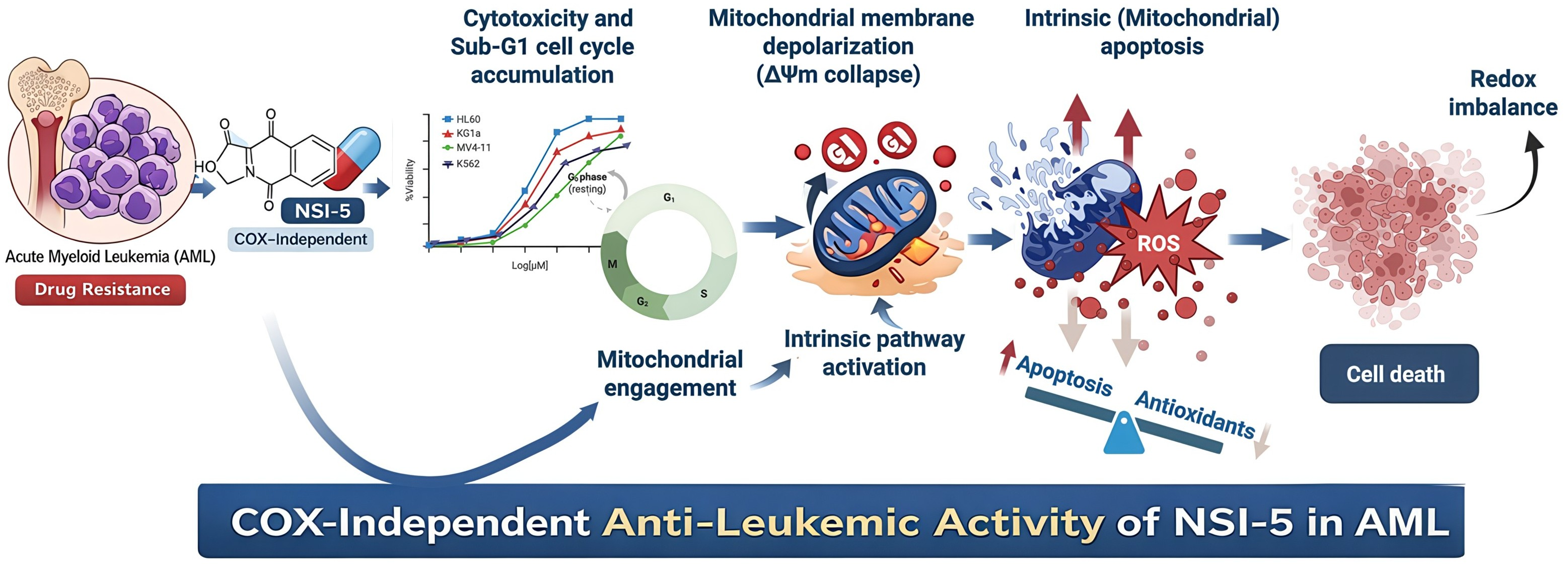


Novel NSAID Analogs Exhibit Anti-Leukemic Activity Through Modulation of Apoptotic and Survival Pathways
 , , ,
, , , 
Abstract
1. Introduction
2. Results
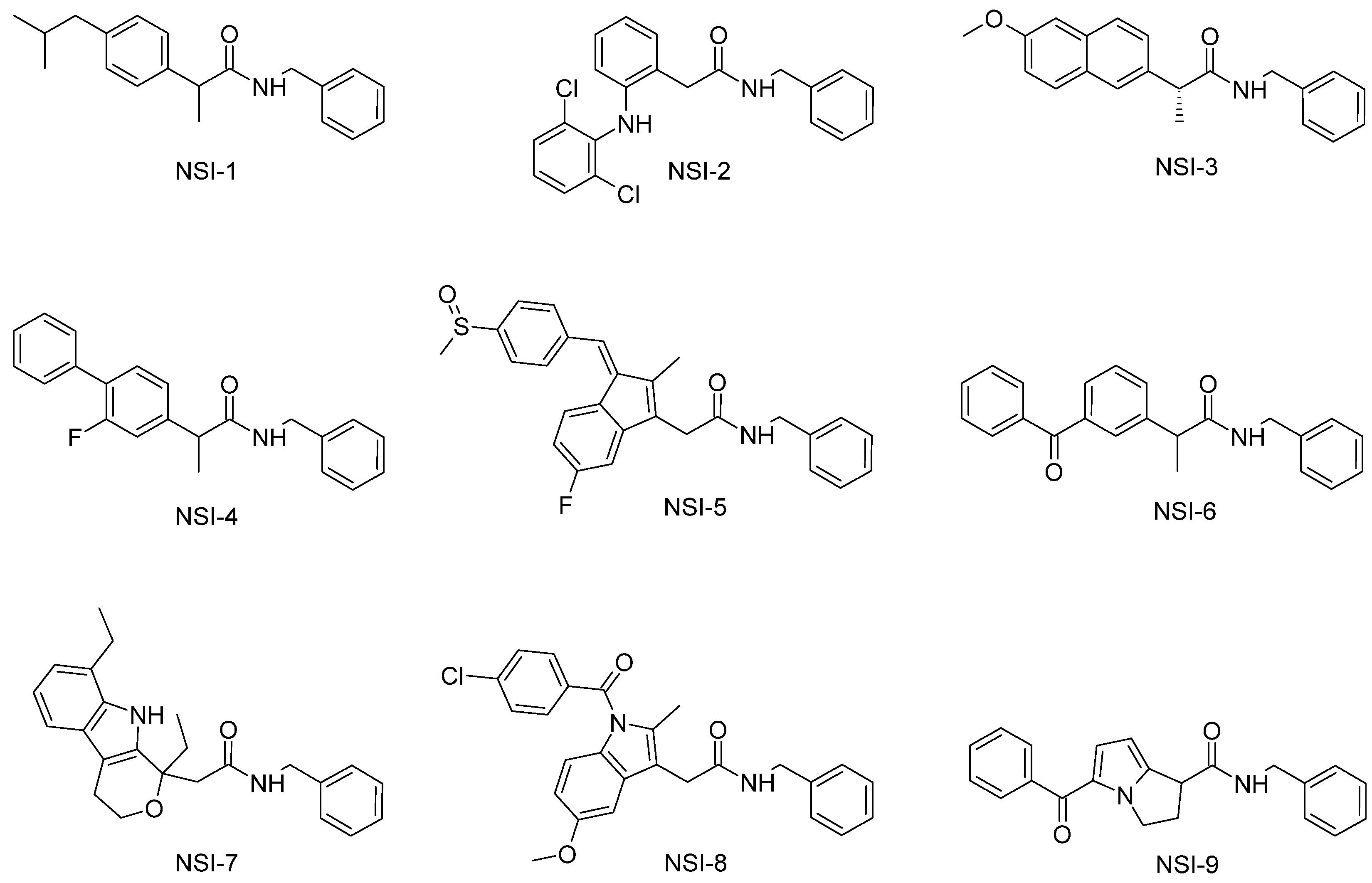
2.1. Synthesis and Characterization of NSAID-Benzylamide Derivatives
2.2. Biological Activity
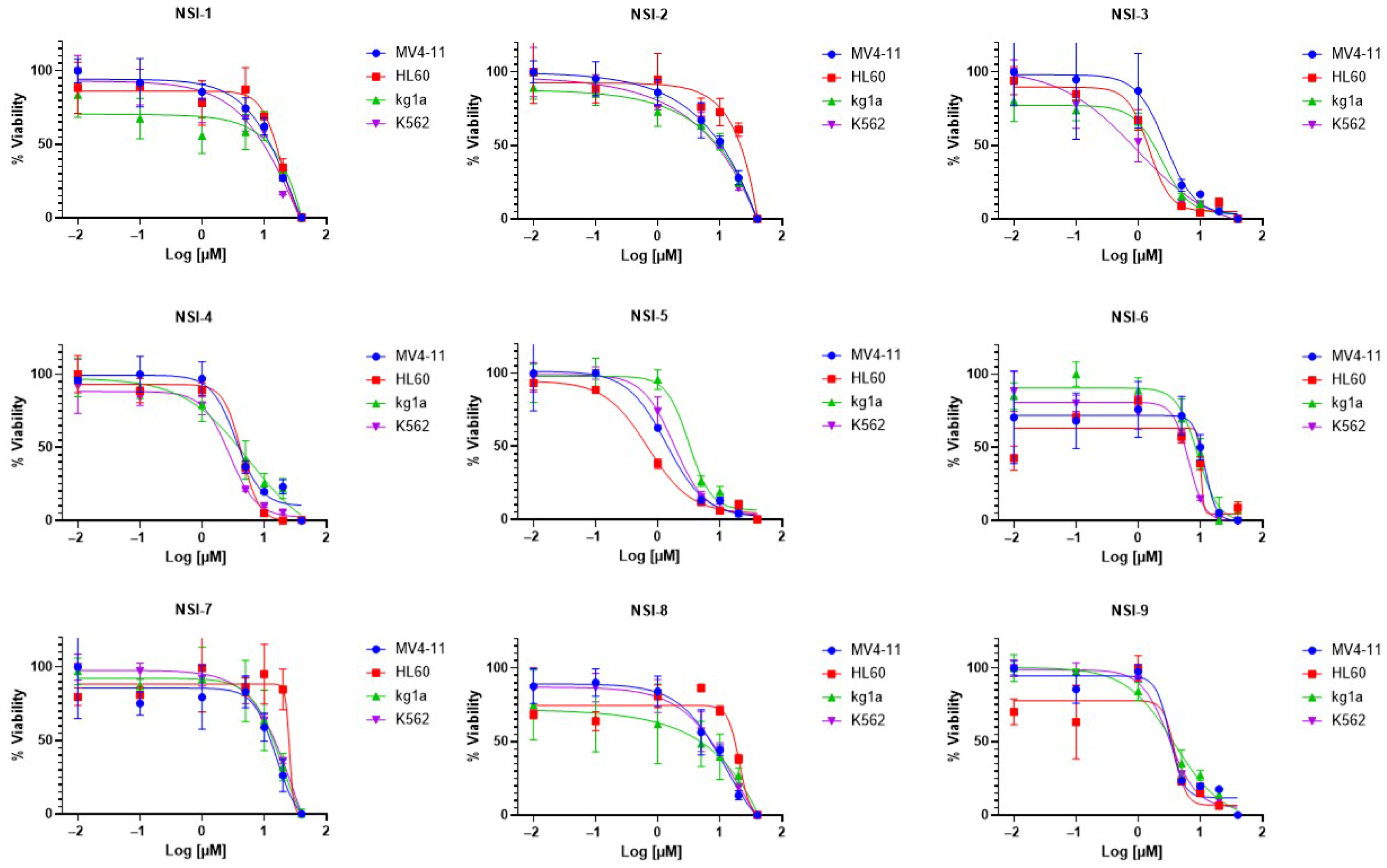
2.2.1. In Vitro Cytotoxic Evaluation of Novel NSAID–Benzylamide Analogs Against Leukemic Cell Lines
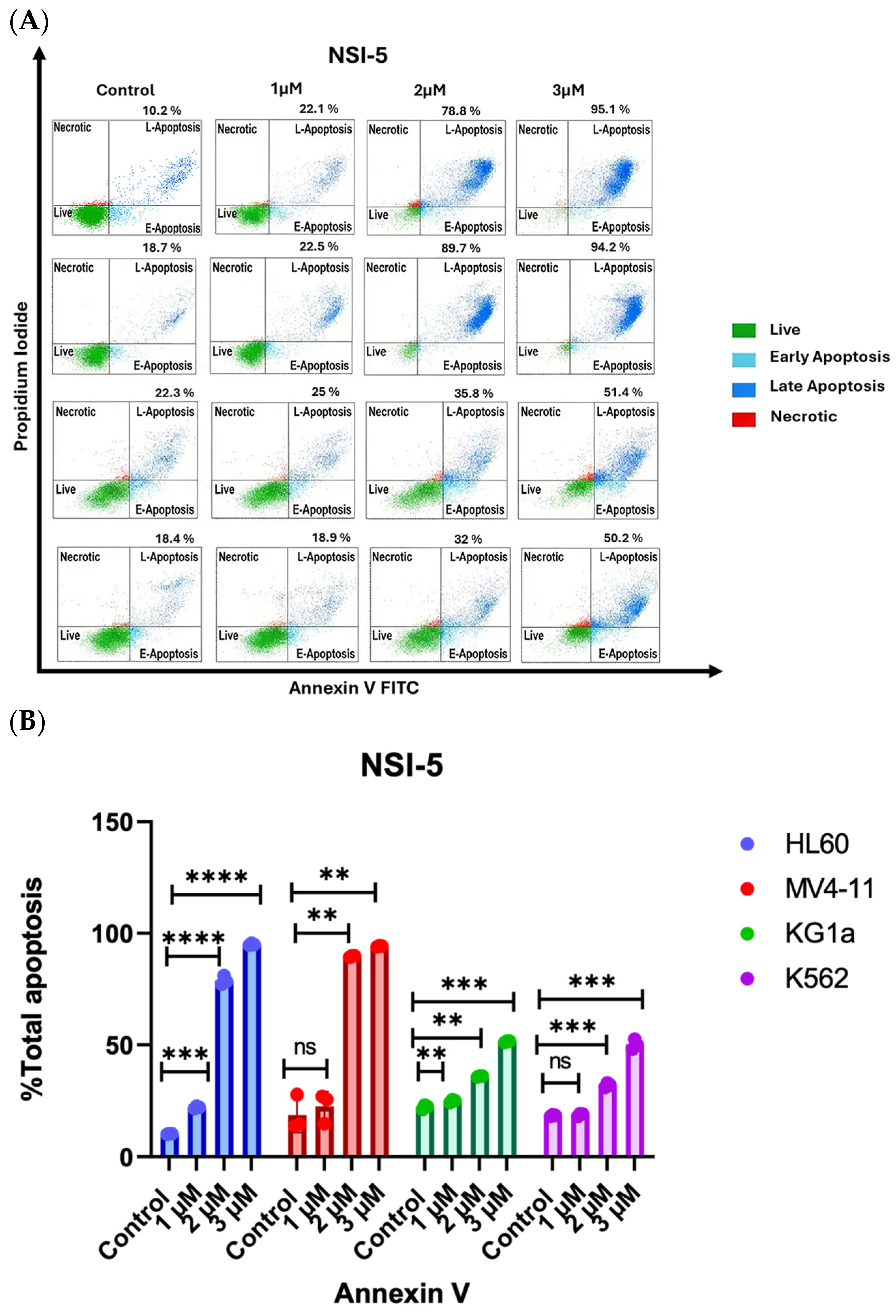
2.2.2. NSI-5 Analogs Induced Apoptosis in Multiple Leukemic Cell Lines in a Dose-Dependent Manner
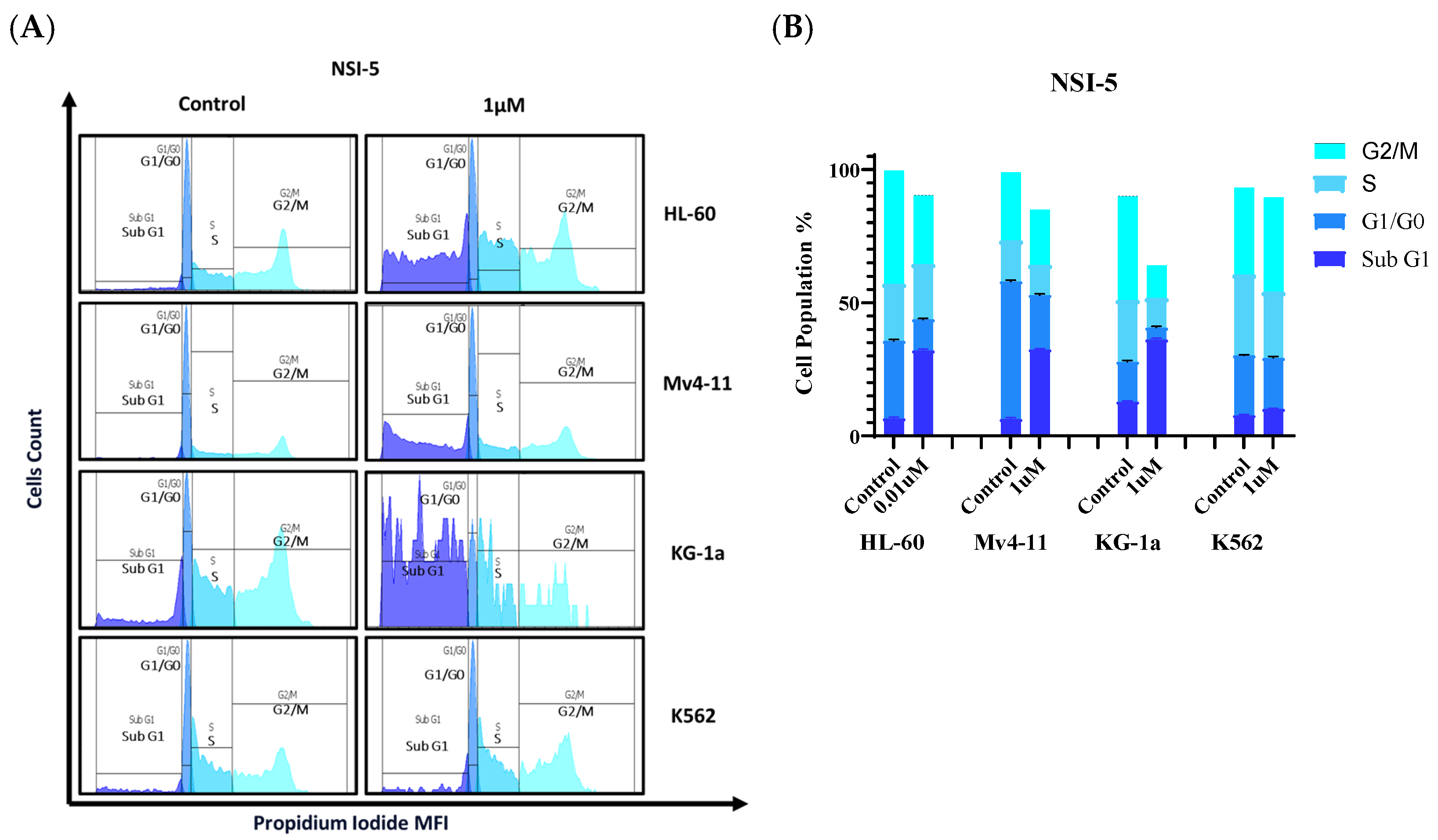
2.2.3. NSI-5 Compound Arrested the Cell Cycle at the Sub-G1 Phase of Leukemic Cell Lines
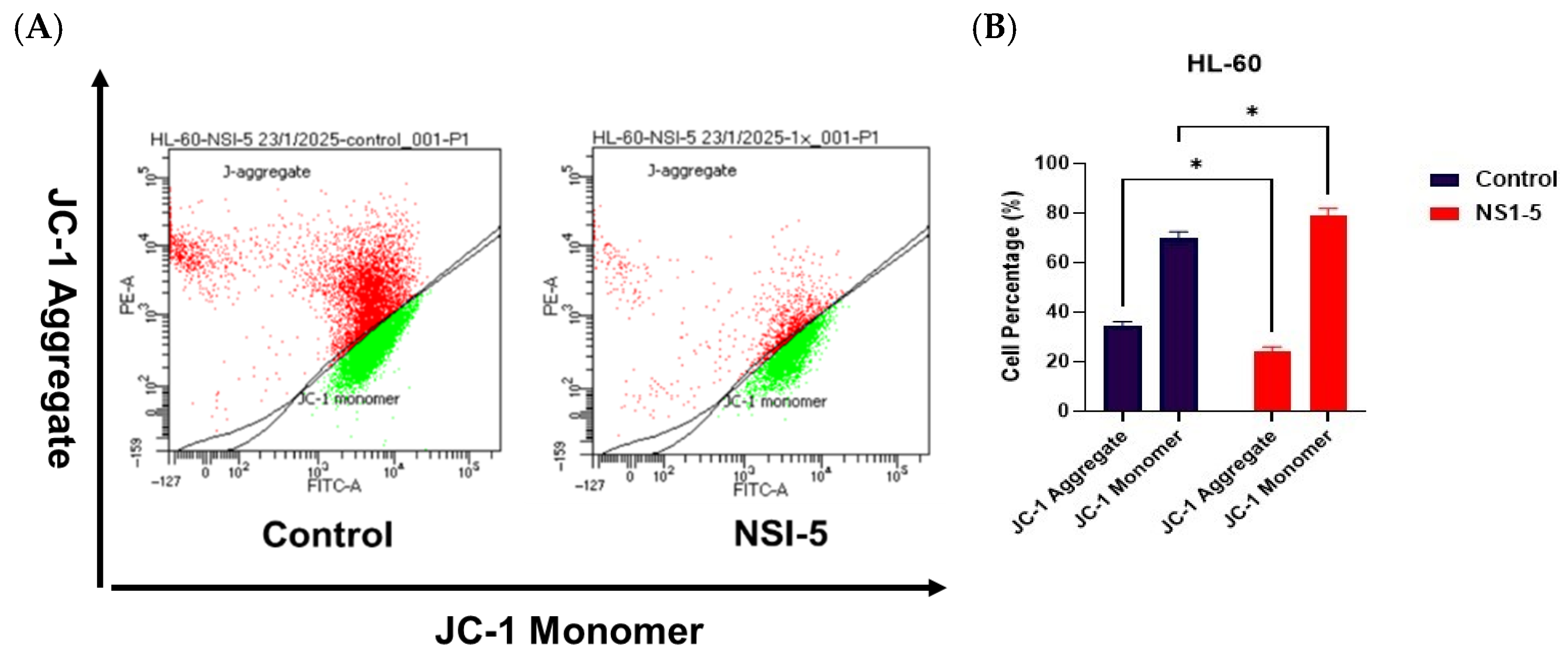
2.2.4. NSI-5 Compound Altered Mitochondrial Membrane Potential (MMP) in Leukemic Cell Lines
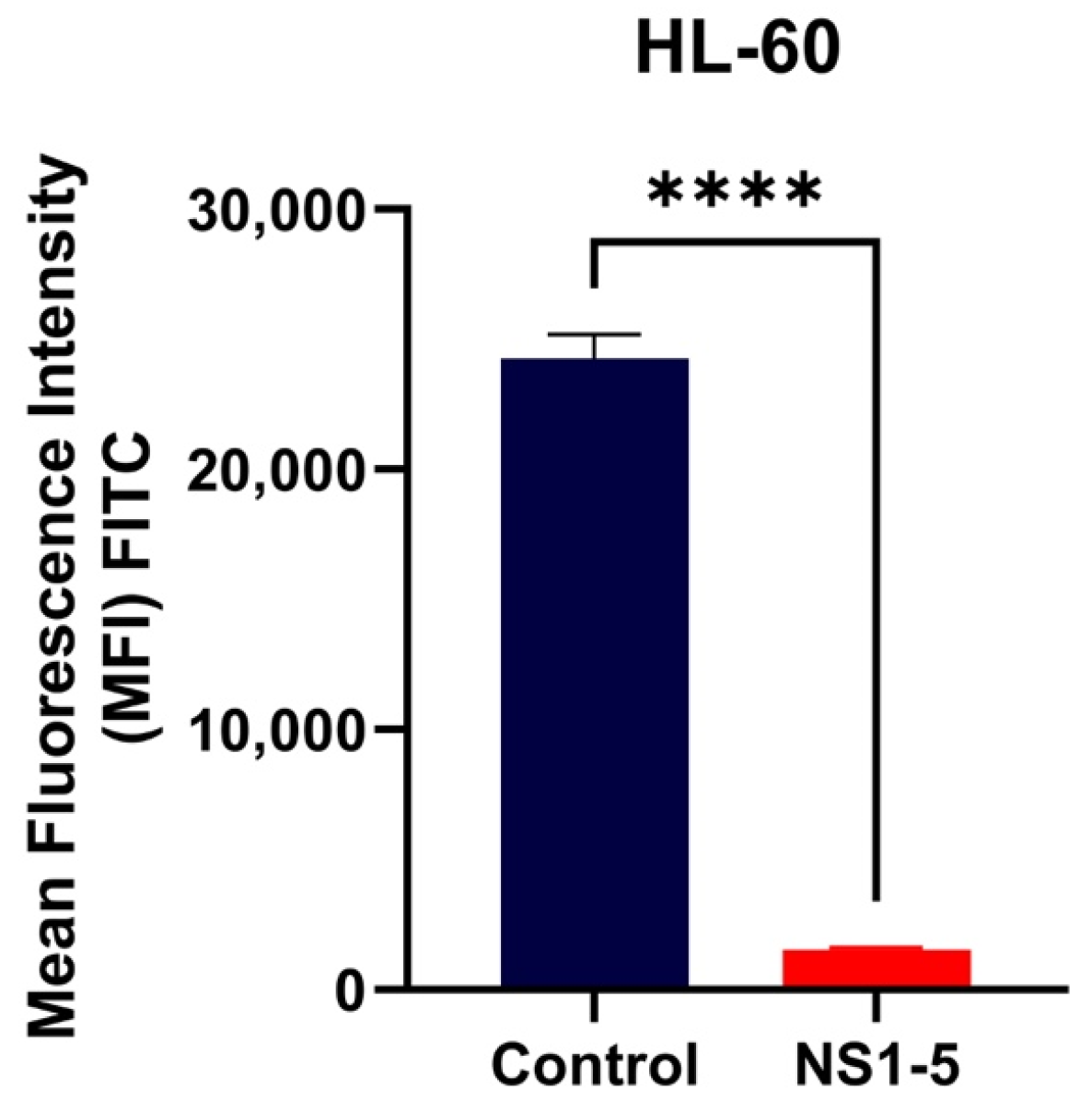
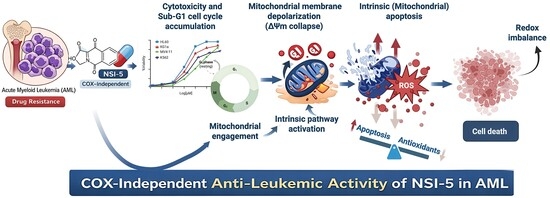
2.2.5. NSI-5 Treatment Suppresses Intracellular ROS Generation in HL-60 Cells
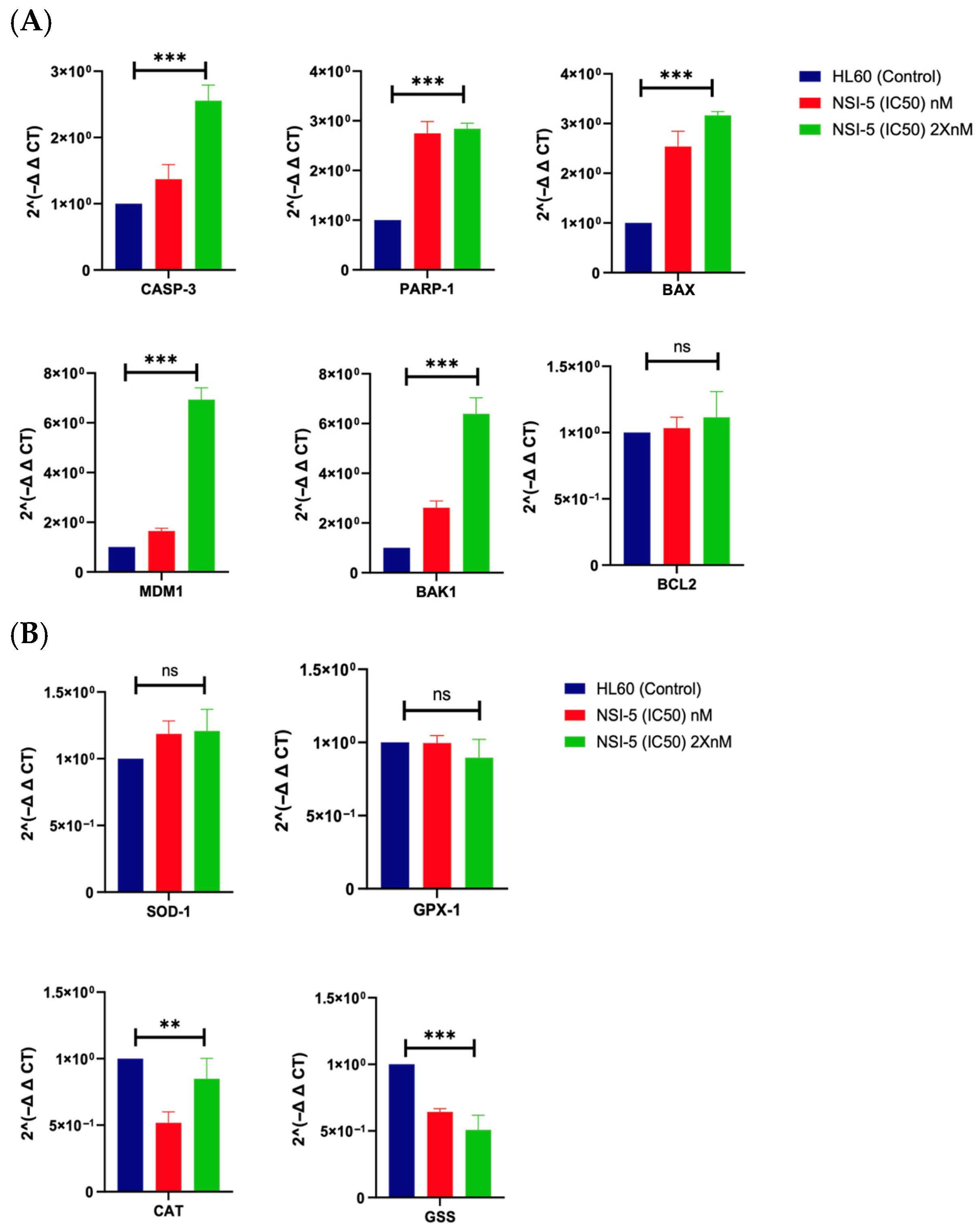
2.2.6. NSI-5 Orchestrates p53-Independent Apoptosis via Mitochondrial Collapse and Antioxidant Depletion in HL-60 Cells
3. Discussion
4. Materials and Methods
4.1. Chemical Synthesis
4.2. General Methods for Synthesis of NSI- (1–9) Derivatives
4.2.1. N-Benzyl-2-(4-isobutylphenyl)propanamide (NSI-1)
4.2.2. N-Benzyl-2-(2-((2,6-dichlorophenyl)amino)phenyl)acetamide (NSI-2)
4.2.3. (R)-N-Benzyl-2-(6-methoxynaphthalen-2-yl)propanamide (NSI-3)
4.2.4. N-Benzyl-2-(2-fluoro-[1,1′-biphenyl]-4-yl)propanamide (NSI-4)
4.2.5. (Z)-N-Benzyl-2-(5-fluoro-2-methyl-1-(4-(methylsulfinyl)benzylidene)-1H-inden-3-yl)acetamide (NSI-5)
4.2.6. 2-(3-benzoylphenyl)-N-Benzylpropanamide (NSI-6)
4.2.7. N-Benzyl-2-(1,8-diethyl-1,3,4,9-tetrahydropyrano[3,4-b]indol-1-yl)acetamide (NSI-7)
4.2.8. N-Benzyl-2-(1-(4-chlorobenzoyl)-5-methoxy-2-methyl-1H-indol-3-yl)acetamide (NSI-8)
4.2.9. 5-Benzoyl-N-Benzyl-2,3-dihydro-1H-pyrrolizine-1-carboxamide (NSI-9)
4.3. Methods for Biological Experiments on Leukemic Cell Lines
4.3.1. Cell Culture
4.3.2. CellTiter-Blue Cell Viability Assay
4.3.3. Detection of Apoptosis Cell Death
4.3.4. Cell Cycle Analysis
4.3.5. Mitochondrial Membrane Potential (MMP) Analysis
4.3.6. Intracellular ROS Measurement
4.3.7. Gene Expression (RT-PCR) Analysis
4.4. Data Analysis
5. Conclusions
Supplementary Materials
Author Contributions
Funding
Institutional Review Board Statement
Informed Consent Statement
Data Availability Statement
Acknowledgments
Conflicts of Interest
References
- Elgenidy, A.; Al-Kurdi, M.A.-M.; Ibrahim, H.A.A.; Gad, E.F.; Awad, A.K.; Caruana, R.; Diacono, S.; Sherif, A.; Elattar, T.; Al-Ghanam, I.E. Mapping the Grounds for Mortalities in Acute Myeloid Leukemia Through Registry Analyses: A Retrospective Cohort Study of Children, Adolescents, and Young Adults Patients. J. Clin. Med. Res. 2024, 16, 310. [Google Scholar] [CrossRef]
- Récher, C. Clinical implications of inflammation in acute myeloid leukemia. Front. Oncol. 2021, 11, 623952. [Google Scholar] [CrossRef]
- Ross, J.A.; Blair, C.K.; Cerhan, J.R.; Soler, J.T.; Hirsch, B.A.; Roesler, M.A.; Higgins, R.R.; Nguyen, P.L. Nonsteroidal anti-inflammatory drug and acetaminophen use and risk of adult myeloid leukemia. Cancer Epidemiol. Biomark. Prev. 2011, 20, 1741–1750. [Google Scholar] [CrossRef] [PubMed]
- Zhang, G.; Tu, C.; Zhang, G.; Zhou, G.; Zheng, W. Indomethacin induces apoptosis and inhibits proliferation in chronic myeloid leukemia cells. Leuk. Res. 2000, 24, 385–392. [Google Scholar] [CrossRef] [PubMed]
- Bellosillo, B.; Piqueé, M.; Barragaán, M.; Castanño, E.; Villamor, N.; Colomer, D.; Montserrat, E.; Pons, G.; Gil, J. Aspirin and salicylate induce apoptosis and activation of caspases in B-cell chronic lymphocytic leukemia cells. Blood J. Am. Soc. Hematol. 1998, 92, 1406–1414. [Google Scholar]
- Sobolewski, C.; Legrand, N. Celecoxib analogues for cancer treatment: An update on OSU-03012 and 2, 5-dimethyl-celecoxib. Biomolecules 2021, 11, 1049. [Google Scholar] [CrossRef]
- Lindhagen, E.; Nissle, S.; Leoni, L.; Elliott, G.; Chao, Q.; Larsson, R.; Åleskog, A. R-etodolac (SDX-101) and the related indole–pyran analogues SDX-308 and SDX-309 potentiate the antileukemic activity of standard cytotoxic agents in primary chronic lymphocytic leukaemia cells. Cancer Chemother. Pharmacol. 2007, 60, 545–553. [Google Scholar] [CrossRef]
- Tacconelli, S.; Bruno, A.; Grande, R.; Ballerini, P.; Patrignani, P. Nonsteroidal anti-inflammatory drugs and cardiovascular safety–translating pharmacological data into clinical readouts. Expert Opin. Drug Saf. 2017, 16, 791–807. [Google Scholar] [CrossRef]
- Thiruchenthooran, V.; Sánchez-López, E.; Gliszczyńska, A. Perspectives of the application of non-steroidal anti-inflammatory drugs in cancer therapy: Attempts to overcome their unfavorable side effects. Cancers 2023, 15, 475. [Google Scholar] [CrossRef]
- Zappavigna, S.; Cossu, A.M.; Grimaldi, A.; Bocchetti, M.; Ferraro, G.A.; Nicoletti, G.F.; Filosa, R.; Caraglia, M. Anti-inflammatory drugs as anticancer agents. Int. J. Mol. Sci. 2020, 21, 2605. [Google Scholar] [CrossRef]
- Tinsley, H.N.; Mathew, B.; Chen, X.; Maxuitenko, Y.Y.; Li, N.; Lowe, W.M.; Whitt, J.D.; Zhang, W.; Gary, B.D.; Keeton, A.B. Novel non-cyclooxygenase inhibitory derivative of Sulindac inhibits breast cancer cell growth in vitro and reduces mammary tumorigenesis in rats. Cancers 2023, 15, 646. [Google Scholar] [CrossRef]
- Mahmud, T.; Scott, D.; Bjarnason, I. A unifying hypothesis for the mechanism of NSAID related gastrointestinal toxicity. Ann. Rheum. Dis. 1996, 55, 211. [Google Scholar] [CrossRef] [PubMed]
- Ullah, N.; Huang, Z.; Sanaee, F.; Rodriguez-Dimitrescu, A.; Aldawsari, F.; Jamali, F.; Bhardwaj, A.; Islam, N.U.; Velázquez-Martínez, C.A. NSAIDs do not require the presence of a carboxylic acid to exert their anti-inflammatory effect–why do we keep using it? J. Enzym. Inhib. Med. Chem. 2016, 31, 1018–1028. [Google Scholar] [CrossRef]
- Gurpinar, E.; Grizzle, W.E.; Piazza, G.A. COX-independent mechanisms of cancer chemoprevention by anti-inflammatory drugs. Front. Oncol. 2013, 3, 181. [Google Scholar] [CrossRef] [PubMed]
- Mathew, B.; Hobrath, J.V.; Connelly, M.C.; Guy, R.K.; Reynolds, R.C. Diverse amide analogs of sulindac for cancer treatment and prevention. Bioorganic Med. Chem. Lett. 2017, 27, 4614–4621. [Google Scholar] [CrossRef]
- Tinsley, H.N.; Gary, B.D.; Thaiparambil, J.; Li, N.; Lu, W.; Li, Y.; Maxuitenko, Y.Y.; Keeton, A.B.; Piazza, G.A. Colon tumor cell growth–inhibitory activity of sulindac sulfide and other nonsteroidal anti-inflammatory drugs is associated with phosphodiesterase 5 inhibition. Cancer Prev. Res. 2010, 3, 1303–1313. [Google Scholar] [CrossRef]
- Mathew, B.; Hobrath, J.V.; Connelly, M.C.; Guy, R.K.; Reynolds, R.C. Amine containing analogs of sulindac for cancer prevention. Open Med. Chem. J. 2018, 12, 1–12. [Google Scholar] [CrossRef] [PubMed]
- Yi, B.; Chang, H.; Ma, R.; Feng, X.; Li, W.; Piazza, G.A.; Xi, Y. Inhibition of breast cancer cell motility with a non-cyclooxygenase inhibitory derivative of sulindac by suppressing TGFβ/miR-21 signaling. Oncotarget 2016, 7, 7979. [Google Scholar] [CrossRef]
- Ren, N.; Chen, H.; Huang, Y.; Jin, J.; Zhang, S.; Yan, R.; Li, M.; Zheng, L.; Zou, S.; Li, Y. MDM1 overexpression promotes p53 expression and cell apoptosis to enhance therapeutic sensitivity to chemoradiotherapy in patients with colorectal cancer. Cancer Biol. Med. 2025, 22, 266–283. [Google Scholar] [CrossRef] [PubMed]
- Bala, I.A.; Omar, A.M.; Muhammad, Y.A.; Malebari, A.M.; Alkhatabi, H.A.; Al-maaqar, S.M.; Asiri, A.M.; El-Shishtawy, R.M. Synthesis, antimicrobial, cytotoxic and in silico studies of pyridine-quinazolin-4 (3H)-one hybrids. J. Mol. Struct. 2025, 1338, 142275. [Google Scholar] [CrossRef]
- Alkhatabi, H.A.; Zohny, S.F.; Shait Mohammed, M.R.; Choudhry, H.; Rehan, M.; Ahmad, A.; Ahmed, F.; Khan, M.I. Venetoclax-resistant MV4-11 leukemic cells activate PI3K/AKT pathway for metabolic reprogramming and redox adaptation for survival. Antioxidants 2022, 11, 461. [Google Scholar] [CrossRef] [PubMed]
- Kumar, R.; Saneja, A.; Panda, A.K. An annexin V-FITC—Propidium iodide-based method for detecting apoptosis in a non-small cell lung cancer cell line. In Lung Cancer: Methods and Protocols; Springer: Berlin/Heidelberg, Germany, 2021; pp. 213–223. [Google Scholar]
- Salanci, Š.; Vilková, M.; Martinez, L.; Mirossay, L.; Michalková, R.; Mojžiš, J. The induction of G2/M phase cell cycle arrest and apoptosis by the chalcone derivative 1C in sensitive and resistant ovarian cancer cells is associated with ROS generation. Int. J. Mol. Sci. 2024, 25, 7541. [Google Scholar] [CrossRef] [PubMed]
- Alzahrani, S.M.; Al Doghaither, H.A.; Alkhatabi, H.A.; Basabrain, M.A.; Pushparaj, P.N. Propranolol and capecitabine synergy on inducing ferroptosis in human colorectal cancer cells: Potential implications in cancer therapy. Cancers 2025, 17, 1470, Erratum in Cancers 2025, 17, 3557. [Google Scholar] [CrossRef]
- Bode, K.; Link, C.; Krammer, P.H.; Weyd, H. Flow-cytometric detection of low-level reactive oxygen species in cell lines and primary immune cells. Bio-Protocol 2020, 10, e3737. [Google Scholar] [CrossRef] [PubMed]



| Compound | MV4-11 | HL-60 | KG1a | K562 |
|---|---|---|---|---|
| NSI-1 | 32.4 ± 0.66 | 18.9 ± 1.10 | >50 | 36.9 ± 0.15 |
| NSI-2 | >50 | >50 | >50 | >50 |
| NSI-3 | 2.8 ± 2.2 | 1.5 ± 0.74 | 2.4 ± 0.35 | 1 ± 1.42 |
| NSI-4 | 3.5 ± 0.56 | 4.3 ± 0.31 | 5.6 ± 0.66 | 2.7 ± 0.21 |
| NSI-5 | 1.3 ± 0.67 | 0.6 ± 0.40 | 1.5 ± 0.73 | 1.3 ± 0.13 |
| NSI-6 | 11.8 ± 3.3 | 10.2 ± 1.39 | 9.1 ± 1.33 | 6.5 ± 0.72 |
| NSI-7 | 15.7 ± 2.80 | 25.4 ± 3.01 | 18.9 ± 1.43 | 32.6 ± 0.46 |
| NSI-8 | 12.2 ± 1.21 | 20.5 ± 0.84 | >50 | 17.8 ± 0.63 |
| NSI-9 | 3.2 ± 0.38 | 3.9 ± 0.77 | 3.8 ± 0.08 | 3.1 ± 0.10 |
| Gene Name | NCBI Gene ID | Primers |
|---|---|---|
| GADPH | 2597 | F: CTGGGCTACACTGAGCACC R: AAGTGGTCGTTGAGGGCAATG |
| Bcl-2 | 596 | F: GGTGGGGTCATGTGTGTGG R: CGGTTCAGGTACTCAGTCATCC |
| Bax | 581 | F: CCCGAGAGGTCTTTTTCCGAG R: CCAGCCCATGATGGTTCTGAT |
| Bak1 | 578 | F: GTTTTCCGCAGCTACGTTTTT R: GCAGAGGTAAGGTGACCATCTC |
| PARP-1 | 142 | F: TGGAAAAGTCCCACACTGGTA R: AAGCTCAGAGAACCCATCCAC |
| MDM1 | 56890 | F: TCAAGGCAGATGTAGAACAAGA R: ACCAAGATGAGAAGGGATGAGA |
| Caspases 3 | 836 | F: AGAGGGGATCGTTGTAGAAGTC R: ACAGTCCAGTTCTGTACCACG |
| SOD-1 | 6647 | F: GGTGGGCCAAAGGATGAAGAG R: CCACAAGCCAAACGACTTCC |
| CAT | 847 | F: TGTTGCTGGAGAATCGGGTTC R: TCCCAGTTACCATCTTCTGTGTA |
| GPX-1 | 2876 | F: CAGTCGGTGTATGCCTTCTCG R: GAGGGACGCCACATTCTCG |
| GSS | 2937 | F: GGAACATCCATGTGATCCGAC R: GCCATCCCGGAAGTAAACCA |
Disclaimer/Publisher’s Note: The statements, opinions and data contained in all publications are solely those of the individual author(s) and contributor(s) and not of MDPI and/or the editor(s). MDPI and/or the editor(s) disclaim responsibility for any injury to people or property resulting from any ideas, methods, instructions or products referred to in the content. |
© 2026 by the authors. Licensee MDPI, Basel, Switzerland. This article is an open access article distributed under the terms and conditions of the Creative Commons Attribution (CC BY) license.
Share and Cite
Alkhatabi, H.A.; Basabrain, M.; Alahmadi, A.G.; Alzahrani, S.M.; Muhammad, Y.A.; Almuhaiyawi, M.; Alreemi, M.M.; Alotibi, R.M.; Alreemi, R.M.; Alkhattabi, H.A.; et al. Novel NSAID Analogs Exhibit Anti-Leukemic Activity Through Modulation of Apoptotic and Survival Pathways. Int. J. Mol. Sci. 2026, 27, 3850. https://doi.org/10.3390/ijms27093850
Alkhatabi HA, Basabrain M, Alahmadi AG, Alzahrani SM, Muhammad YA, Almuhaiyawi M, Alreemi MM, Alotibi RM, Alreemi RM, Alkhattabi HA, et al. Novel NSAID Analogs Exhibit Anti-Leukemic Activity Through Modulation of Apoptotic and Survival Pathways. International Journal of Molecular Sciences. 2026; 27(9):3850. https://doi.org/10.3390/ijms27093850
Chicago/Turabian StyleAlkhatabi, Hind A., Mohammed Basabrain, Alaa G. Alahmadi, Shiekhah M. Alzahrani, Yosra A. Muhammad, Maha Almuhaiyawi, Maha M. Alreemi, Reem M. Alotibi, Roaa M. Alreemi, Heba A. Alkhattabi, and et al. 2026. "Novel NSAID Analogs Exhibit Anti-Leukemic Activity Through Modulation of Apoptotic and Survival Pathways" International Journal of Molecular Sciences 27, no. 9: 3850. https://doi.org/10.3390/ijms27093850
APA StyleAlkhatabi, H. A., Basabrain, M., Alahmadi, A. G., Alzahrani, S. M., Muhammad, Y. A., Almuhaiyawi, M., Alreemi, M. M., Alotibi, R. M., Alreemi, R. M., Alkhattabi, H. A., Hassan, R. N., Al-Bishri, W. M., El-Mezgueldi, M., & Omar, A. M. (2026). Novel NSAID Analogs Exhibit Anti-Leukemic Activity Through Modulation of Apoptotic and Survival Pathways. International Journal of Molecular Sciences, 27(9), 3850. https://doi.org/10.3390/ijms27093850