Nephrotoxicity of Evodiamine in Mice: Mechanistic Insights from Integrated Network Toxicology and Transcriptomic Profiling



Abstract
1. Introduction
2. Results
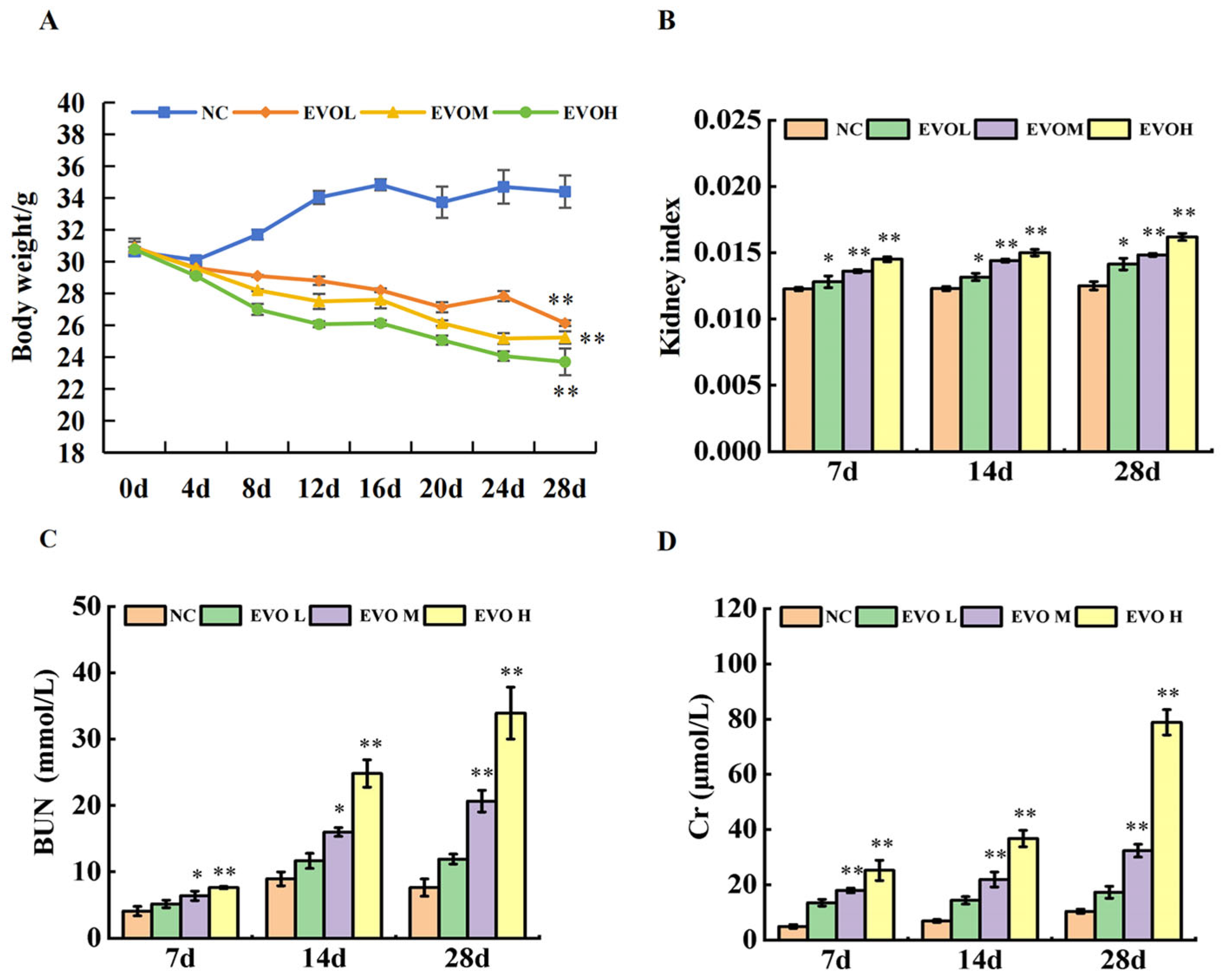
2.1. Toxicity Evaluation of Evodiamine (EVO) In Vivo
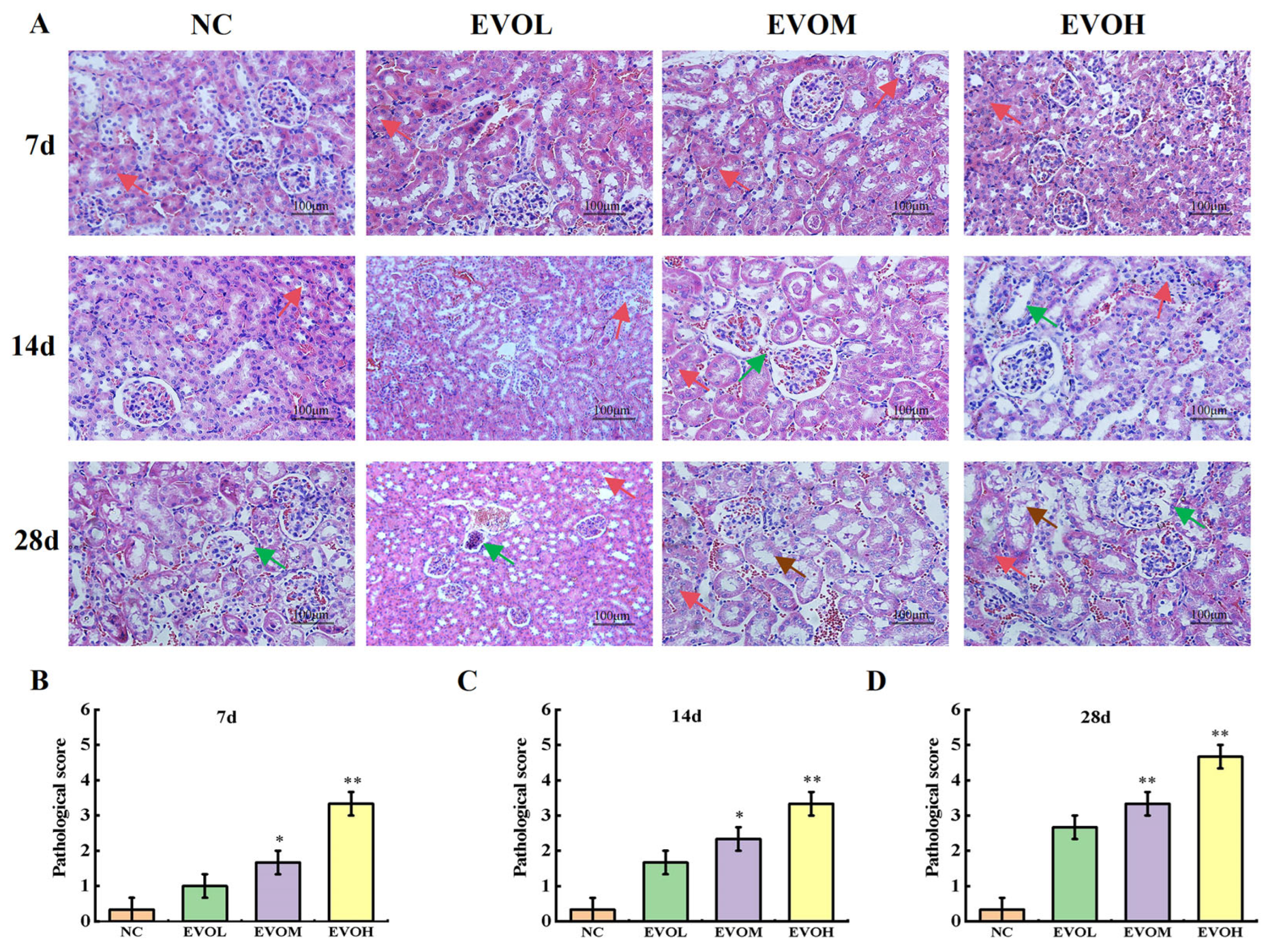
2.2. Histopathological Examination of Mouse Renal Tissues
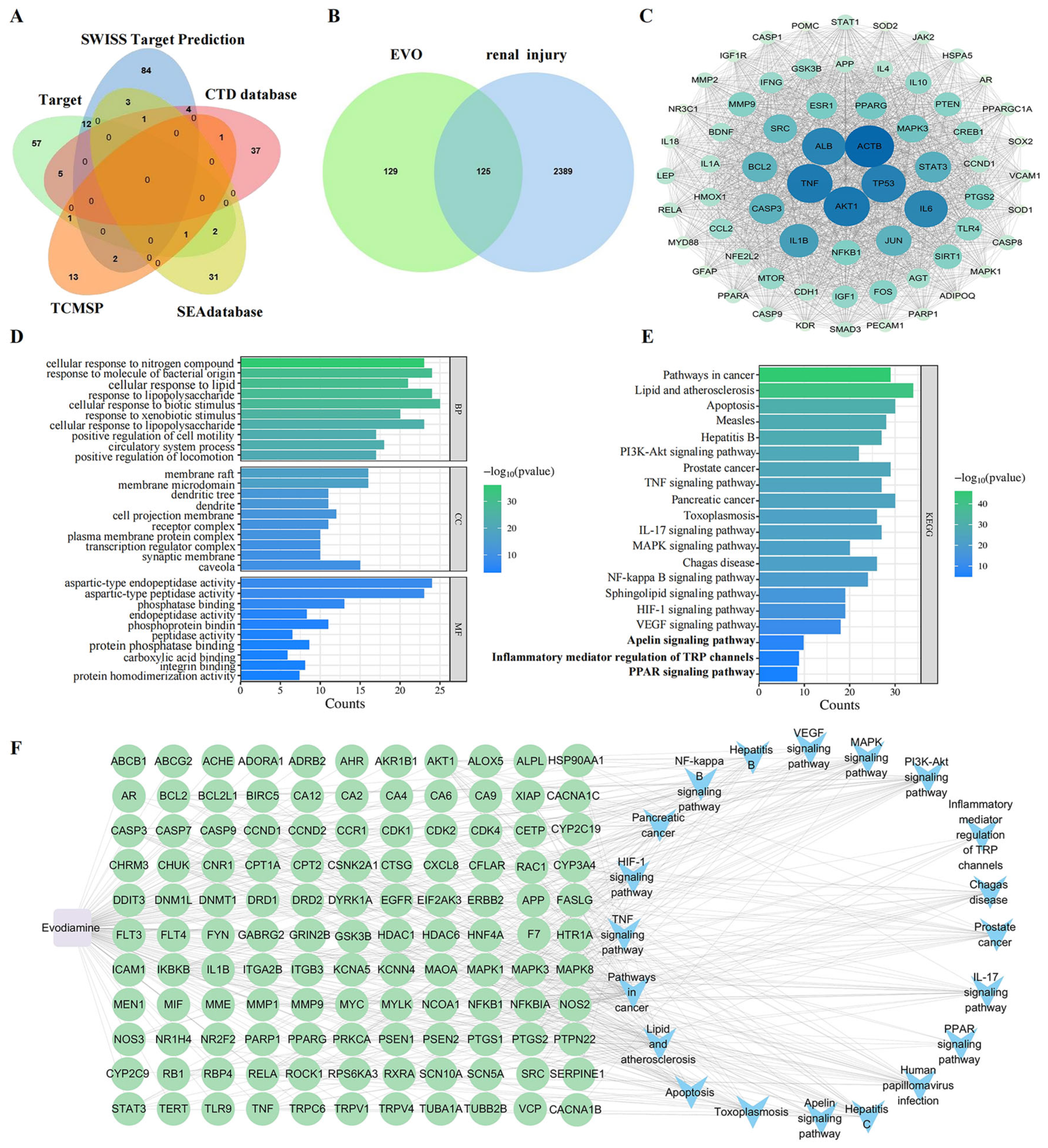
2.3. Targets of EVO-Induced Renal Toxicity
2.3.1. Protein–Protein Interactions (PPI) Network Analysis
2.3.2. Gene Ontology (GO) Functional Enrichment Analysis and Kyoto Encyclopedia of Genes and Genomes (KEGG) Enrichment Analysis
2.3.3. Construction and Analysis of the “EVO-Target-Pathway” Network
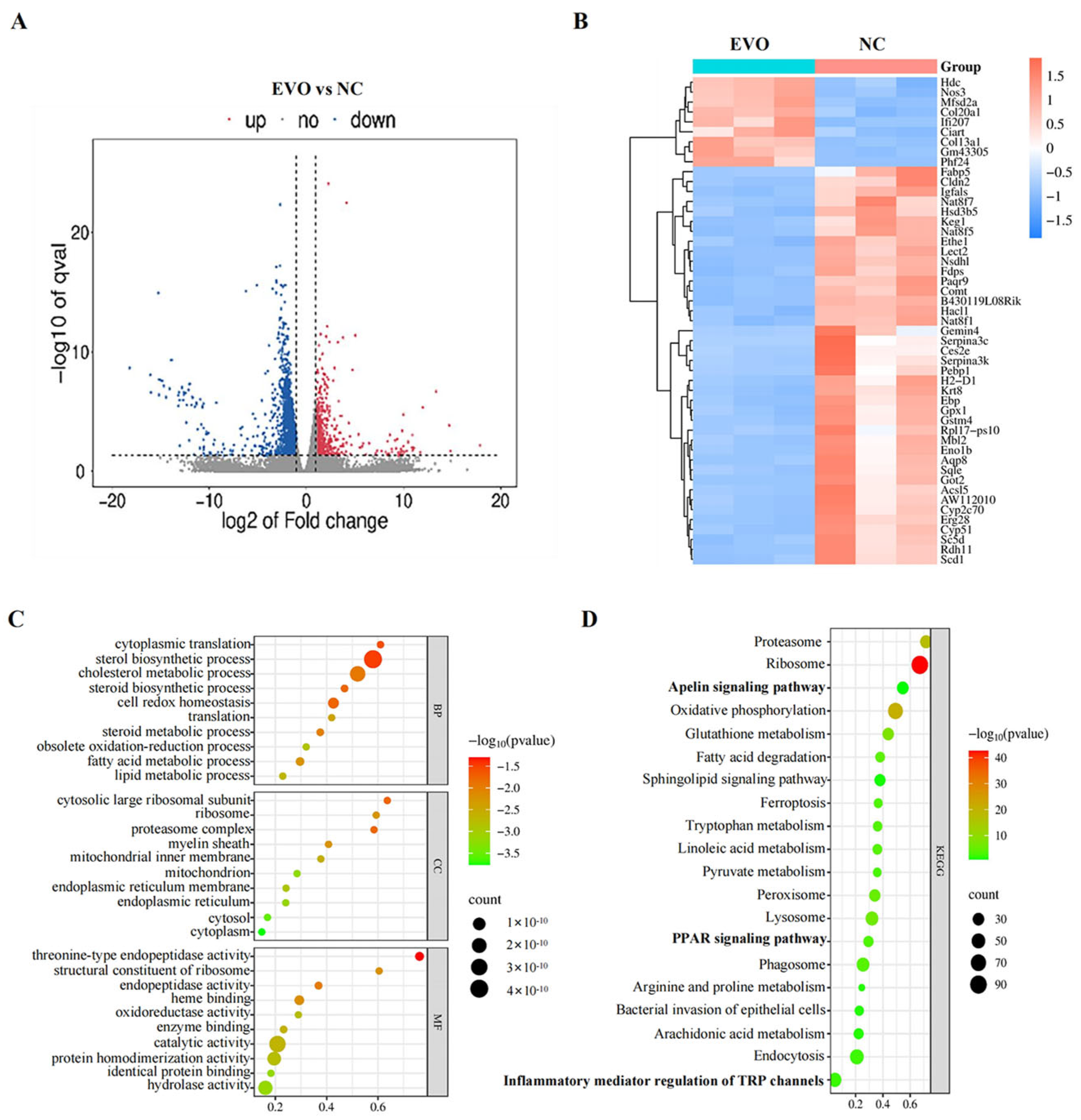
2.4. Exploration of Differentially Expressed Genes (DEGs)
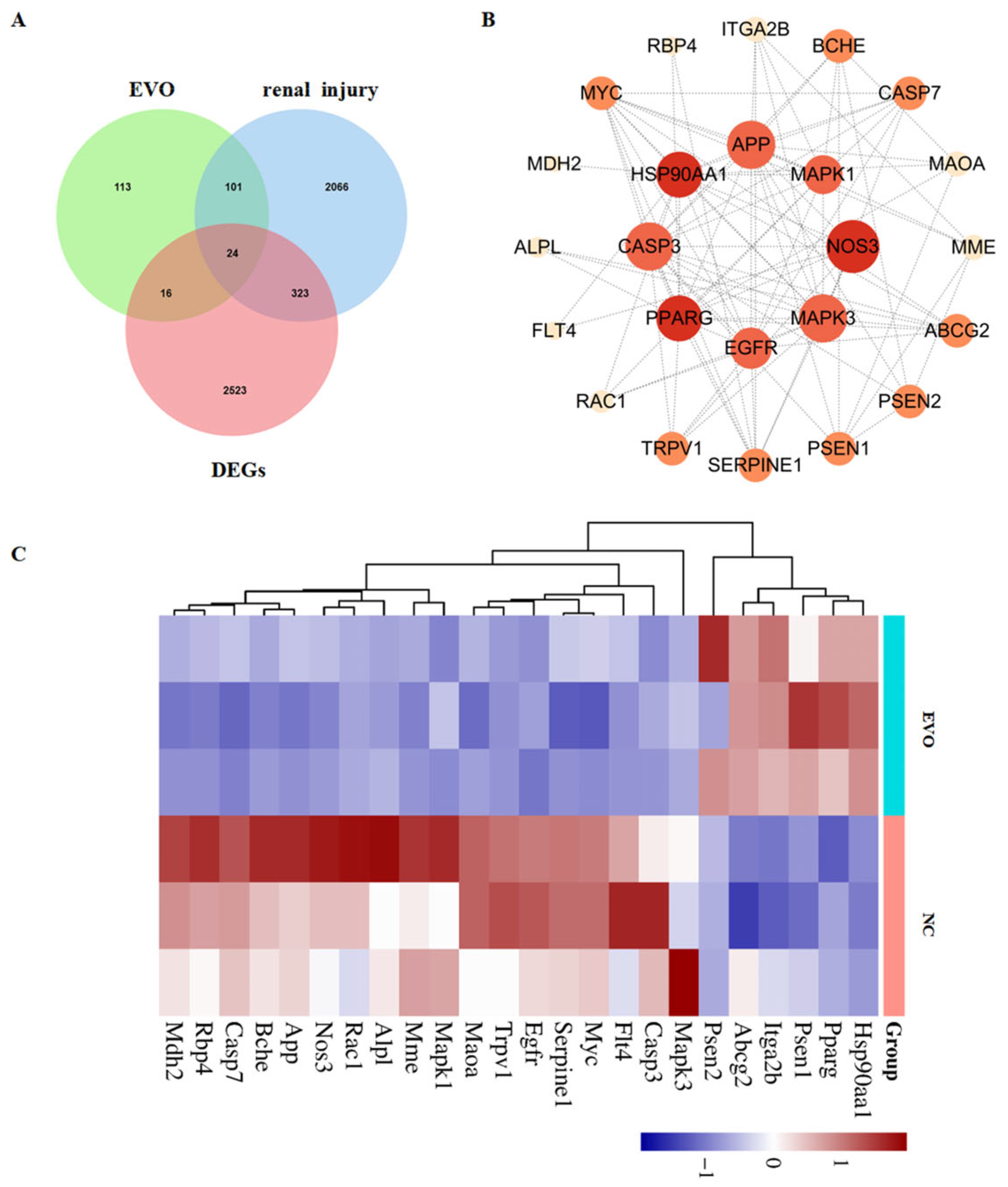
2.5. Integration of Network Toxicology and Transcriptomics Analysis
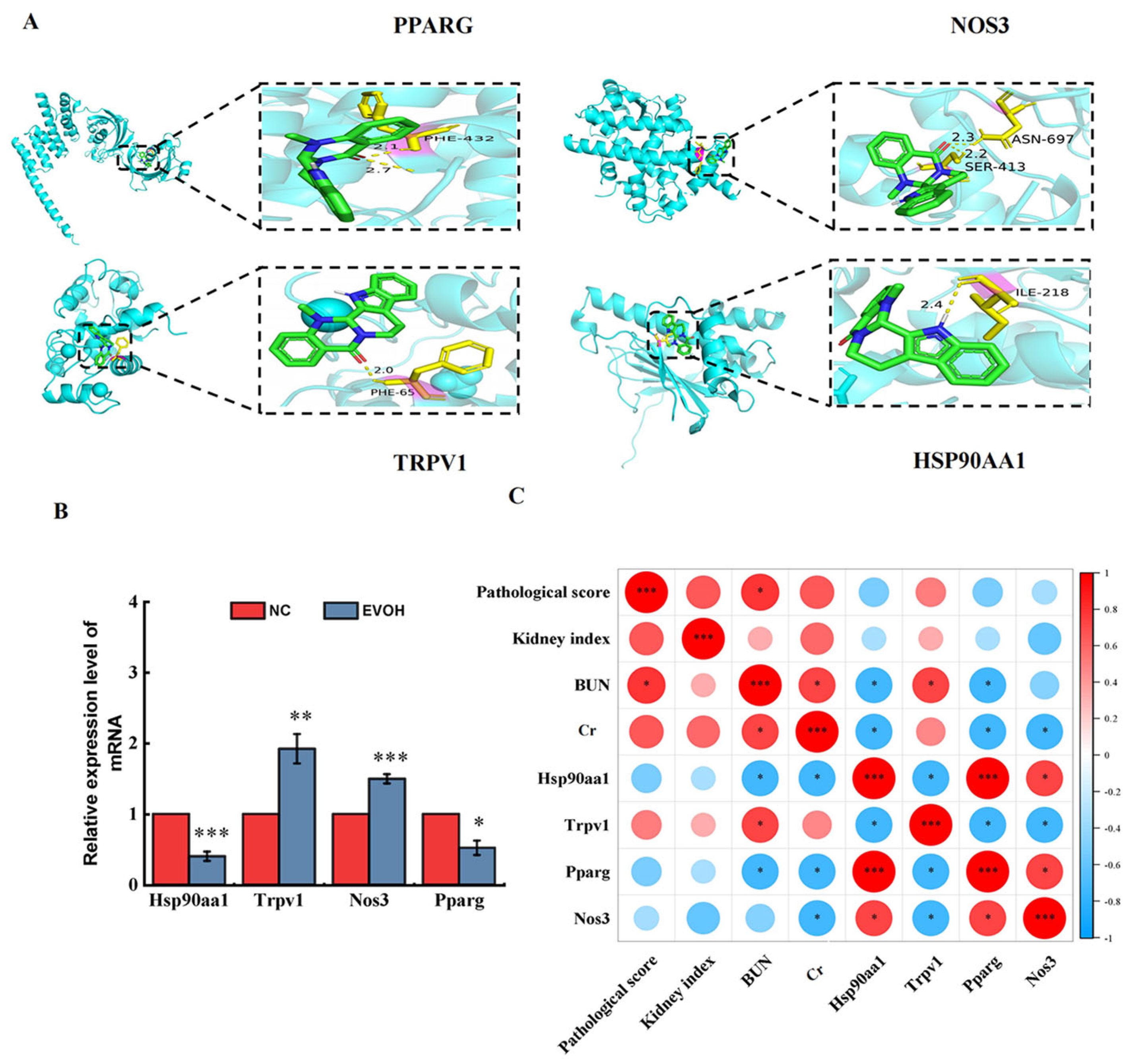
2.6. Validation of the Differentially Expressed Genes
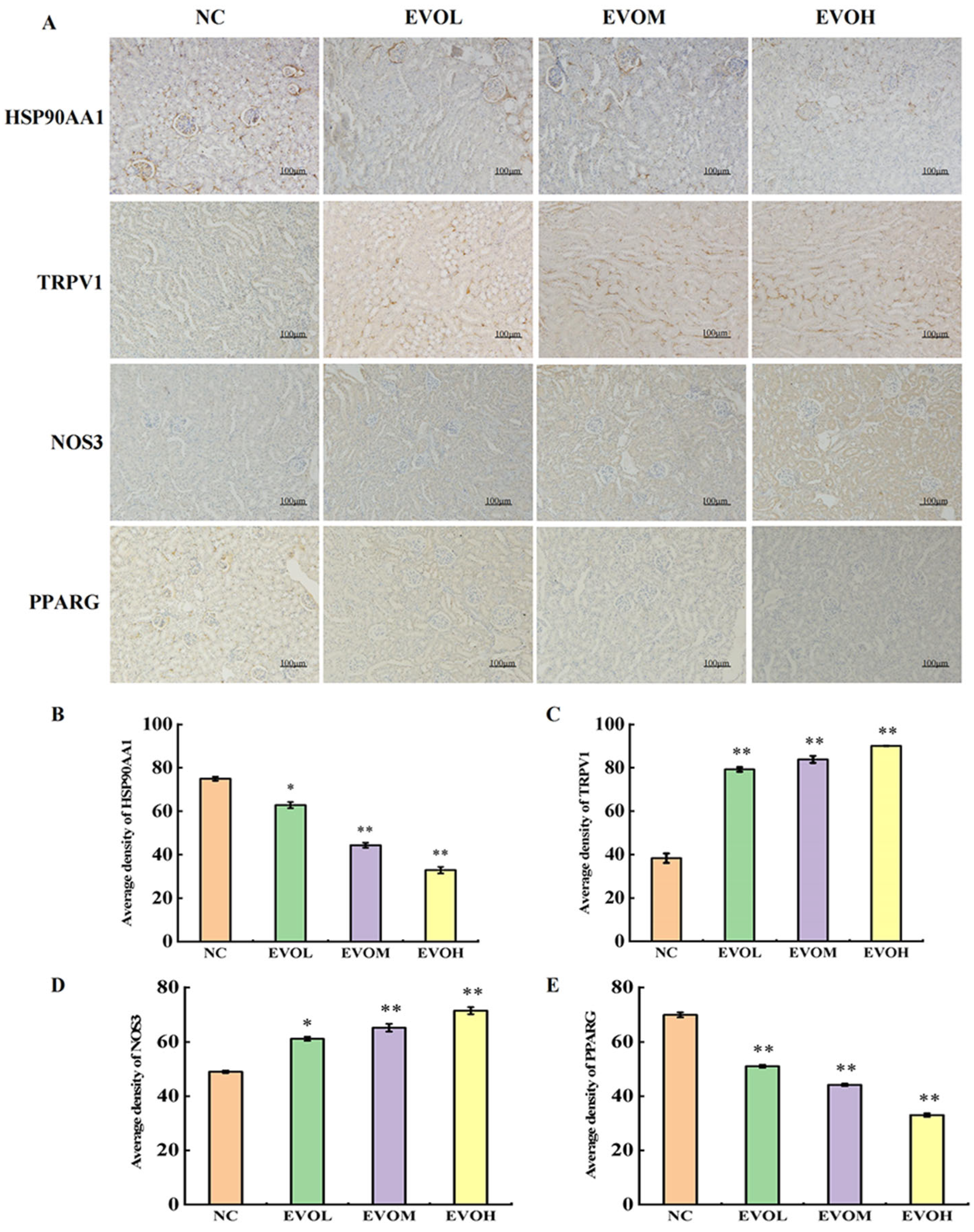
2.7. Investigating the Effect of EVO on Renal-Associated Protein Expression in Mice
3. Discussion
4. Materials and Methods
4.1. Drug and Animal Treatment
4.2. Serum Biochemical Indexes
4.3. Renal Pathological Examination
4.4. Network Toxicology Study of EVO-Induced Renal Injury in Mice
4.4.1. Prediction of Targets for EVO and Renal Injury
4.4.2. Constructing the Protein–Protein Interaction (PPI) Network and Identifying Core Targets
4.4.3. Gene Ontology (GO) Functional Enrichment Analysis and Kyoto Encyclopedia of Genes and Genomes (KEGG) Pathway Enrichment Analysis
4.4.4. Construction of the “EVO-Target-Pathway” Network
4.4.5. Molecular Docking
4.5. RNA Extraction and Transcriptome Sequencing
4.6. Real-Time Quantitative Polymerase Chain Reaction (qRT-PCR) Analysis
4.7. Immunohistochemistry
4.8. Statistical Analysis
5. Conclusions
Supplementary Materials
Author Contributions
Funding
Institutional Review Board Statement
Informed Consent Statement
Data Availability Statement
Conflicts of Interest
Abbreviations
| EVO | Evodiamine |
| CMC-Na | Carboxymethyl cellulose |
| BUN | blood urea nitrogen |
| Cr | creatinine |
| HE | Hematoxylin and Eosin |
| PPI | Protein–Protein Interactions |
| GO | Gene Ontology |
| KEGG | Kyoto Encyclopedia of Genes and Genomes |
| BP | Biological Processes |
| CC | Cellular Components |
| MF | Molecular Function |
| DEGs | Differentially Expressed Genes |
References
- Zhou, Z.; Zhou, Y.; Zhang, Z.; Zhao, M.; Hu, C.; Yang, L.; Zhou, X.; Zhang, X.; Liu, L.; Shen, T. Progress on the effects and underlying mechanisms of evodiamine in digestive system diseases, and its toxicity: A systematic review and meta-analysis. Phytomedicine 2024, 132, 155851. [Google Scholar] [CrossRef] [Scilit]
- Li, M.; Wang, C. Traditional uses, phytochemistry, pharmacology, pharmacokinetics and toxicology of the fruit of Tetradium ruticarpum: A review. J. Ethnopharmacol. 2020, 263, 113231. [Google Scholar] [CrossRef] [Scilit]
- Chen, L.; Hu, Y.; Ye, Z.; Li, L.; Qian, H.; Wu, M.; Qin, K.; Li, N.; Wen, X.; Pan, T.; et al. Major Indole Alkaloids in Evodia Rutaecarpa: The Latest Insights and Review of Their Impact on Gastrointestinal Diseases. Biomed. Pharmacother. 2023, 167, 115495. [Google Scholar] [CrossRef] [Scilit]
- Sun, Q.; Xie, L.; Song, J.; Li, X. Evodiamine: A review of its pharmacology, toxicity, pharmacokinetics and preparation researches. J. Ethnopharmacol. 2020, 262, 113164. [Google Scholar] [CrossRef] [Scilit] [PubMed]
- Lei, Y.; Zhang, W.; Gao, M.; Lin, H. Mechanism of evodiamine blocking Nrf2/MAPK pathway to inhibit apoptosis of grass carp hepatocytes induced by DEHP. Comp. Biochem. Physiol. C Toxicol. Pharmacol. 2023, 263, 109506. [Google Scholar] [CrossRef] [Scilit] [PubMed]
- Li, D.; Li, Y.; Jiang, X.; Liu, W.; Zhao, Q. Evodiamine: A Privileged Structure with Broad-ranging Biological Activities. Mini Rev. Med. Chem. 2022, 22, 2680–2701. [Google Scholar] [CrossRef] [Scilit]
- Zhang, W.; Guo, J.; Wang, D.; Ren, S.; Hua, H.; Morikawa, T.; Pan, Y.; Liu, X. Effect of CYP3A inducer/inhibitor on pharmacokinetics of five alkaloids in Evodiae Fructus. Chem. Biol. Interact. 2020, 327, 109146. [Google Scholar] [CrossRef] [Scilit] [PubMed]
- Liang, J.; Chen, Y.; Ren, G.; Dong, W.; Shi, M.; Xiong, L.; Li, J.; Dong, J.; Li, F.; Yuan, J. Screening Hepatotoxic Components in Euodia rutaecarpa by UHPLC-QTOF/MS Based on the Spectrum-Toxicity Relationship. Molecules 2017, 22, 1264. [Google Scholar] [CrossRef] [Scilit]
- Liu, X.M.; Li, Z.; Xie, X.R.; Wang, J.-Q.; Qiao, X.; Xie, C.-Z.; Xu, J.-Y. Combination of DNA Damage, Autophagy, and ERK Inhibition: Novel Evodiamine-Inspired Multi-Action Pt(IV) Prodrugs with High-Efficiency and Low-Toxicity Antitumor Activity. J. Med. Chem. 2023, 66, 1852–1872. [Google Scholar] [CrossRef] [Scilit]
- Yang, C.Q.; Lai, C.C.; Pan, J.C.; Gao, J.; Shen, B.-Y.; Ru, Y.; Shen, X.; Liu, Y.; Shen, N.-N.; Li, B.-W.; et al. Maintaining calcium homeostasis as a strategy to alleviate nephrotoxicity caused by evodiamine. Ecotoxicol. Environ. Saf. 2024, 281, 116563. [Google Scholar] [CrossRef] [Scilit]
- Yang, W.; Ma, L.; Li, S.; Cui, K.; Lei, L.; Ye, Z. Evaluation of the Cardiotoxicity of Evodiamine In Vitro and In Vivo. Molecules 2017, 22, 943. [Google Scholar] [CrossRef] [Scilit] [PubMed]
- Li, Y.; Zhang, Y.; Wang, Y.; Li, Y.; Yang, F.; Zhang, P.; Zhang, Y.; Liu, C. A strategy for the discovery and validation of toxicity quality marker of Chinese medicine based on network toxicology. Phytomedicine 2019, 54, 365–370. [Google Scholar] [CrossRef] [Scilit]
- Liu, C.; Zhang, C.; Wang, W.; Yuan, F.; He, T.; Chen, Y.; Wang, Q.; Huang, J. Integrated metabolomics and network toxicology to reveal molecular mechanism of celastrol induced cardiotoxicity. Toxicol. Appl. Pharmacol. 2019, 383, 114785. [Google Scholar] [CrossRef] [Scilit]
- Crampon, K.; Giorkallos, A.; Deldossi, M.; Baud, S.; Steffenel, L.A. Machine-learning methods for ligand-protein molecular docking. Drug Discov. Today 2022, 27, 151–164. [Google Scholar] [CrossRef] [Scilit]
- Zhang, X.; Zhang, J.; Zhou, Z.; Xiong, P.; Cheng, L.; Ma, J.; Wen, Y.; Shen, T.; He, X.; Wang, L.; et al. Integrated network pharmacology, metabolomics, and transcriptomics of Huanglian-Hongqu herb pair in non-alcoholic fatty liver disease. J. Ethnopharmacol. 2024, 325, 117828. [Google Scholar] [CrossRef] [Scilit]
- Liu, R.; Yang, C.; Yang, X.; Yu, J.; Tang, W. Network toxicology, molecular docking technology, and experimental verification revealed the mechanism of cantharidin-induced testicular injury in mice. Toxicol. Appl. Pharmacol. 2024, 486, 116921. [Google Scholar] [CrossRef] [Scilit]
- Yang, M.; Mao, K.; Cao, X.; Liu, H.; Mao, W.; Hao, L. Integrated network toxicology, transcriptomics and gut microbiomics reveals hepatotoxicity mechanism induced by benzo[a]pyrene exposure in mice. Toxicol. Appl. Pharmacol. 2024, 491, 117050. [Google Scholar] [CrossRef] [Scilit]
- Yin, B.; Bi, Y.M.; Fan, G.J.; Xia, Y.Q. Molecular Mechanism of the Effect of Huanglian Jiedu Decoction on Type 2 Diabetes Mellitus Based on Network Pharmacology and Molecular Docking. J. Diabetes Res. 2020, 2020, 5273914. [Google Scholar] [CrossRef] [Scilit]
- Zhu, L.Q.; Zhang, L.; Zhang, J.; Chang, G.-L.; Liu, G.; Yu, D.-D.; Yu, X.-M.; Zhao, M.-S.; Ye, B. Evodiamine inhibits high-fat diet-induced colitis-associated cancer in mice through regulating the gut microbiota. J. Integr. Med. 2021, 19, 56–65. [Google Scholar] [CrossRef] [Scilit] [PubMed]
- Ogasawara, M.; Matsubara, T.; Suzuki, H. Inhibitory effects of evodiamine on in vitro invasion and experimental lung metastasis of murine colon cancer cells. Biol. Pharm. Bull. 2001, 24, 917–920. [Google Scholar] [CrossRef] [Scilit] [PubMed]
- Wang, Z.; Lai, C.; Shen, B.; Li, B.; Chen, J.; Shen, X.; Huang, Z.; Yang, C.; Gao, Y. Effects of Evodiamine on Behavior and Hippocampal Neurons through Inhibition of Angiotensin-Converting Enzyme and Modulation of the Renin Angiotensin Pathway in a Mouse Model of Post-Traumatic Stress Disorder. Nutrients 2024, 16, 1957. [Google Scholar] [CrossRef] [Scilit] [PubMed]
- Yamashita, H.; Kusudo, T.; Takeuchi, T.; Qiao, S.; Tsutsumiuchi, K.; Wang, T.; Wang, Y. Dietary supplementation with evodiamine prevents obesity and improves insulin resistance in ageing mice. J. Funct. Foods 2015, 19, 320–329. [Google Scholar] [CrossRef] [Scilit]
- Li, F.; Dong, Y.Z.; Zhang, D.; Zhang, X.M.; Lin, Z.J.; Zhang, B. Molecular mechanisms involved in drug-induced liver injury caused by urate-lowering Chinese herbs: A network pharmacology study and biology experiments. PLoS ONE 2019, 14, e0216948. [Google Scholar] [CrossRef] [Scilit]
- Liu, X.; Zhang, L.; Tang, W.; Zhang, T.; Xiang, P.; Shen, Q.; Ye, T.; Xiao, Y. Transcriptomic profiling and differential analysis reveal the renal toxicity mechanisms of mice under cantharidin exposure. Toxicol. Appl. Pharmacol. 2023, 465, 116450. [Google Scholar] [CrossRef] [Scilit] [PubMed]
- Piao, Y.; Liu, Y.; Xie, X. Change trends of organ weight background data in sprague dawley rats at different ages. J. Toxicol. Pathol. 2013, 26, 29–34. [Google Scholar] [CrossRef] [Scilit]
- Huang, R.; Okyere, S.K.; Shao, C.; Yousif, M.; Liao, F.; Wang, X.; Wen, J.; Wang, J.; Hu, Y. Hepatotoxicity effects of Ageratina adenophora, as indicated by network toxicology combined with metabolomics and transcriptomics. Ecotoxicol. Environ. Saf. 2023, 267, 115664. [Google Scholar] [CrossRef] [Scilit]
- He, S.; Li, A.; Zhang, W.; Zhang, L.; Liu, Y.; Li, K.; Qin, X. An integrated transcriptomics and network pharmacology approach to exploring the mechanism of adriamycin-induced kidney injury. Chem. Biol. Interact. 2020, 325, 109096. [Google Scholar] [CrossRef] [Scilit]
- Qu, T.; Sun, Q.; Tan, B.; Wei, H.; Qiu, X.; Xu, X.; Gao, H.; Zhang, S. Integration of network toxicology and transcriptomics reveals the novel neurotoxic mechanisms of 2, 2′, 4, 4′-tetrabromodiphenyl ether. J. Hazard. Mater. 2024, 486, 136999. [Google Scholar] [CrossRef] [Scilit]
- Yang, S.; Wang, M.; Li, Z.; Luan, X.; Yu, Y.; Jiang, J.; Li, Y.; Xie, Y.; Wang, L. Tripterygium wilfordii Hook.f induced kidney injury through mediating inflammation via PI3K-Akt/HIF-1/TNF signaling pathway: A study of network toxicology and molecular docking. Medicine 2024, 103, e36968. [Google Scholar] [CrossRef] [Scilit]
- Feng, L.L.; Huang, Z.; Nong, Y.Y.; Guo, B.-J.; Wang, Q.-Y.; Qin, J.-H.; He, Y.; Zhu, D.; Guo, H.-W.; Qin, Y.-L.; et al. Evaluation of aristolochic acid Ι nephrotoxicity in mice via 1H NMR quantitative metabolomics and network pharmacology approaches. Toxicol. Res. 2023, 12, 282–295. [Google Scholar] [CrossRef] [Scilit] [PubMed]
- Tang, W.; Xiao, Y.; Li, G.; Zheng, X.; Yin, Y.; Wang, L.; Zhu, Y. Analysis of digital gene expression profiling in the gonad of male silkworms (Bombyx mori) under fluoride stress. Ecotoxicol. Environ. Saf. 2018, 153, 127–134. [Google Scholar] [CrossRef] [Scilit]
- Li, Z.W.; Li, X.; Yu, Q.Y.; Xiang, Z.-H.; Kishino, H.; Zhang, Z. The small heat shock protein (sHSP) genes in the silkworm, Bombyx mori, and comparative analysis with other insect sHSP genes. BMC Evol. Biol. 2009, 9, 215. [Google Scholar] [CrossRef] [Scilit]
- Wang, Y.; Liu, T.; Ma, F.; Lu, X.; Mao, H.; Zhou, W.; Yang, L.; Li, P.; Zhan, Y. A Network Pharmacology-Based Strategy for Unveiling the Mechanisms of Tripterygium Wilfordii Hook F against Diabetic Kidney Disease. J. Diabetes Res. 2020, 2020, 2421631. [Google Scholar] [CrossRef] [Scilit] [PubMed]
- Peng, C.; Zhao, F.; Li, H.; Li, L.; Yang, Y.; Liu, F. HSP90 mediates the connection of multiple programmed cell death in diseases. Cell Death Dis. 2022, 13, 929. [Google Scholar] [CrossRef] [Scilit]
- Zhang, M.Y.; Ma, L.J.; Jiang, L.; Gao, L.; Wang, X.; Huang, Y.-B.; Qi, X.-M.; Wu, Y.-G.; Liu, X.-Q. Paeoniflorin protects against cisplatin-induced acute kidney injury through targeting Hsp90AA1-Akt protein-protein interaction. J. Ethnopharmacol. 2023, 310, 116422. [Google Scholar] [CrossRef] [Scilit]
- Zhang, H.; Huang, J.; Fan, X.; Miao, R.; Wang, Y. HSP90AA1 promotes the inflammation in human gingival fibroblasts induced by Porphyromonas gingivalis lipopolysaccharide via regulating of autophagy. BMC Oral Health 2022, 22, 366. [Google Scholar] [CrossRef] [Scilit]
- Wagner, N.; Wagner, K.D. PPARs and Angiogenesis-Implications in Pathology. Int. J. Mol. Sci. 2020, 21, 5723. [Google Scholar] [CrossRef] [Scilit]
- Huang, S.; Jin, Y.; Zhang, L.; Zhou, Y.; Chen, N.; Wang, W. PPAR gamma and PGC-1alpha activators protect against diabetic nephropathy by suppressing the inflammation and NF-kappaB activation. Nephrology 2024, 29, 858–872. [Google Scholar] [CrossRef] [Scilit] [PubMed]
- Kaur, S.; Nag, A.; Gangenahalli, G.; Sharma, K. Peroxisome Proliferator Activated Receptor Gamma Sensitizes Non-small Cell Lung Carcinoma to Gamma Irradiation Induced Apoptosis. Front. Genet. 2019, 10, 554. [Google Scholar] [CrossRef] [Scilit] [PubMed]
- Li, J.; Wei, H.; Wang, N.; Chen, J.; Zhang, Y.; An, Z.; Song, J.; Niu, T.; Wu, W. Ozone-Induced Lung Injury are Mediated Via PPAR-Mediated Ferroptosis in Mice. Biol. Trace Elem. Res. 2025, 203, 3132–3142. [Google Scholar] [CrossRef] [Scilit]
- Li, S.; Shi, M.; Wan, Y.; Wang, Y.; Zhu, M.; Wang, B.; Zhan, Y.; Ran, B.; Wu, C. Inflammasome/NF-κB translocation inhibition via PPARγ agonist mitigates inorganic mercury induced nephrotoxicity. Ecotoxicol. Environ. Saf. 2020, 201, 110801. [Google Scholar] [CrossRef] [Scilit] [PubMed]
- Wu, H.; Malone, A.F.; Donnelly, E.L.; Kirita, Y.; Uchimura, K.; Ramakrishnan, S.M.; Gaut, J.P.; Humphreys, B.D. Single-Cell Transcriptomics of a Human Kidney Allograft Biopsy Specimen Defines a Diverse Inflammatory Response. J. Am. Soc. Nephrol. 2018, 29, 2069–2080. [Google Scholar] [CrossRef] [Scilit]
- Gan, J.; Ji, X.; Jin, X.; Zhou, M.; Yang, C.; Chen, Z.; Yin, C.; Dong, Z. Silybin protected from avermectin-induced carp (Cyprinus carpio) nephrotoxicity by regulating PPAR-γ-involved inflammation, oxidative stress, ferroptosis and autophagy. Aquat. Toxicol. 2024, 273, 107011. [Google Scholar] [CrossRef] [Scilit] [PubMed]
- Nilius, B.; Owsianik, G.; Voets, T.; Peters, J.A. Transient receptor potential cation channels in disease. Physiol. Rev. 2007, 87, 165–217. [Google Scholar] [CrossRef] [Scilit]
- Zergane, M.; Kuebler, W.M.; Michalick, L. Heteromeric TRP Channels in Lung Inflammation. Cells 2021, 10, 1654. [Google Scholar] [CrossRef] [Scilit] [PubMed]
- Zhong, B.; Ma, S.; Wang, D.H. Knockout of TRPV1 Exacerbates Ischemia-reperfusion-induced Renal Inflammation and Injury in Obese Mice. In Vivo 2020, 34, 2259–2268. [Google Scholar] [CrossRef] [Scilit]
- Delamere, N.A.; Shahidullah, M. Ion Transport Regulation by TRPV4 and TRPV1 in Lens and Ciliary Epithelium. Front. Physiol. 2022, 12, 834916. [Google Scholar] [CrossRef] [Scilit]
- Kasai, A.; Shintani, N.; Oda, M.; Kakuda, M.; Hashimoto, H.; Matsuda, T.; Hinuma, S.; Baba, A. Apelin is a novel angiogenic factor in retinal endothelial cells. Biochem. Biophys. Res. Commun. 2004, 325, 395–400. [Google Scholar] [CrossRef] [Scilit]
- Tatemoto, K.; Takayama, K.; Zou, M.X.; Kumaki, I.; Zhang, W.; Kumano, K.; Fujimiya, M. The novel peptide apelin lowers blood pressure via a nitric oxide-dependent mechanism. Regul. Pept. 2001, 99, 87–92. [Google Scholar] [CrossRef] [Scilit]
- Cox, C.M.; D’Agostino, S.L.; Miller, M.K.; Heimark, R.L.; Krieg, P.A. Apelin, the ligand for the endothelial G-protein-coupled receptor, APJ, is a potent angiogenic factor required for normal vascular development of the frog embryo. Dev. Biol. 2006, 296, 177–189. [Google Scholar] [CrossRef] [Scilit]
- Zhang, X.; Zhu, Y.; Zhou, Y.; Fei, B. Activation of Nrf2 Signaling by Apelin Attenuates Renal Ischemia Reperfusion Injury in Diabetic Rats. Diabetes Metab. Syndr. Obes. 2020, 13, 2169–2177. [Google Scholar] [CrossRef] [Scilit]
- Luo, Z.; Aslam, S.; Welch, W.J.; Wilcox, C.S. Activation of nuclear factor erythroid 2-related factor 2 coordinates dimethylarginine dimethylaminohydrolase/PPAR-γ/endothelial nitric oxide synthase pathways that enhance nitric oxide generation in human glomerular endothelial cells. Hypertension 2015, 65, 896–902. [Google Scholar] [CrossRef] [Scilit]
- Medina, A.M.; Zubero, E.E.; Jiménez, M.A.A.; Barragan, S.A.A.; García, C.A.L.; Ramos, J.J.G.; Gutierrez, J.F.S.; Castillo, Z.G. NOS3 Polymorphisms and Chronic Kidney Disease. J. Bras. Nefrol. 2018, 40, 273–277. [Google Scholar] [CrossRef] [Scilit] [PubMed]
- Abdel-Wahab, B.A.; El-Shoura, E.A.M.; Shafiuddin Habeeb, M.; Zafaar, D. Febuxostat alleviates Arsenic Trioxide-Induced renal injury in Rats: Insights on the crosstalk between NLRP3/TLR4, Sirt-1/NF-κB/TGF-β signaling Pathways, and miR-23b-3p, miR-181a-5b expression. Biochem. Pharmacol. 2023, 216, 115794. [Google Scholar] [CrossRef] [Scilit] [PubMed]
- Farrokh-Eslamlou, N.; Momtaz, S.; Niknejad, A.; Hosseini, Y.; Mahdaviani, P.; Ghasemnejad-Berenji, M.; Abdolghaffari, A.H. Empagliflozin protective effects against cisplatin-induced acute nephrotoxicity by interfering with oxidative stress and inflammation in Wistar rats. Naunyn. Schmiedeberg’s Arch. Pharmacol. 2024, 397, 7061–7070. [Google Scholar] [CrossRef] [Scilit] [PubMed]
- Xiao, Y.; Liu, R.; Tang, W.; Yang, C. Cantharidin-induced toxic injury, oxidative stress, and autophagy attenuated by Astragalus polysaccharides in mouse testis. Reprod. Toxicol. 2024, 123, 108520. [Google Scholar] [CrossRef] [Scilit]



| Target | Target (PDB ID) | Affinity (kcal/mol) |
|---|---|---|
| HSP90AA1 | 3b27 | −6.64 |
| NOS3 | 3N5W | −8.04 |
| PPARG | 6FZY | −8.07 |
| TRPV1 | 3SUI | −6.6 |
| Gene | Primer | Sequence (5′-3′) |
|---|---|---|
| Gapdh | Forward Primer | ATGGCCTTCCGTGTTCCTAC |
| Reverse Primer | AAGTCGCAGGAGACAACCTG | |
| Hsp90aa1 | Forward Primer | GGCAGAGGCTGACAAGAATG |
| Reverse Primer | TCCTGTTAGCATGGGTCTGG | |
| Trpv1 | Forward Primer | TGCTTCAGGGTGGATGAGGT |
| Reverse Primer | CTCCCTGAAACTCGGCCTG | |
| Nos3 | Forward Primer | TCACTATGGCAACCAGCGTC |
| Reverse Primer | AAGAAAAGCTCTGGGTGCGT | |
| Pparg | Forward Primer | GACCACTCGCATTCCTTT |
| Reverse Primer | CCACAGACTCGGCACTCA |
Disclaimer/Publisher’s Note: The statements, opinions and data contained in all publications are solely those of the individual author(s) and contributor(s) and not of MDPI and/or the editor(s). MDPI and/or the editor(s) disclaim responsibility for any injury to people or property resulting from any ideas, methods, instructions or products referred to in the content. |
© 2026 by the authors. Licensee MDPI, Basel, Switzerland. This article is an open access article distributed under the terms and conditions of the Creative Commons Attribution (CC BY) license.
Share and Cite
Zhang, X.; Pan, Y.; Xiao, Y.; Wu, Z.; Yang, H.; Liu, Y.; Wang, Y.; Chen, T.; Tang, W. Nephrotoxicity of Evodiamine in Mice: Mechanistic Insights from Integrated Network Toxicology and Transcriptomic Profiling. Int. J. Mol. Sci. 2026, 27, 3793. https://doi.org/10.3390/ijms27093793
Zhang X, Pan Y, Xiao Y, Wu Z, Yang H, Liu Y, Wang Y, Chen T, Tang W. Nephrotoxicity of Evodiamine in Mice: Mechanistic Insights from Integrated Network Toxicology and Transcriptomic Profiling. International Journal of Molecular Sciences. 2026; 27(9):3793. https://doi.org/10.3390/ijms27093793
Chicago/Turabian StyleZhang, Xuehua, Yue Pan, Yuanyuan Xiao, Ziyan Wu, Huilan Yang, Yanjun Liu, Yan Wang, Tianqi Chen, and Wenchao Tang. 2026. "Nephrotoxicity of Evodiamine in Mice: Mechanistic Insights from Integrated Network Toxicology and Transcriptomic Profiling" International Journal of Molecular Sciences 27, no. 9: 3793. https://doi.org/10.3390/ijms27093793
APA StyleZhang, X., Pan, Y., Xiao, Y., Wu, Z., Yang, H., Liu, Y., Wang, Y., Chen, T., & Tang, W. (2026). Nephrotoxicity of Evodiamine in Mice: Mechanistic Insights from Integrated Network Toxicology and Transcriptomic Profiling. International Journal of Molecular Sciences, 27(9), 3793. https://doi.org/10.3390/ijms27093793