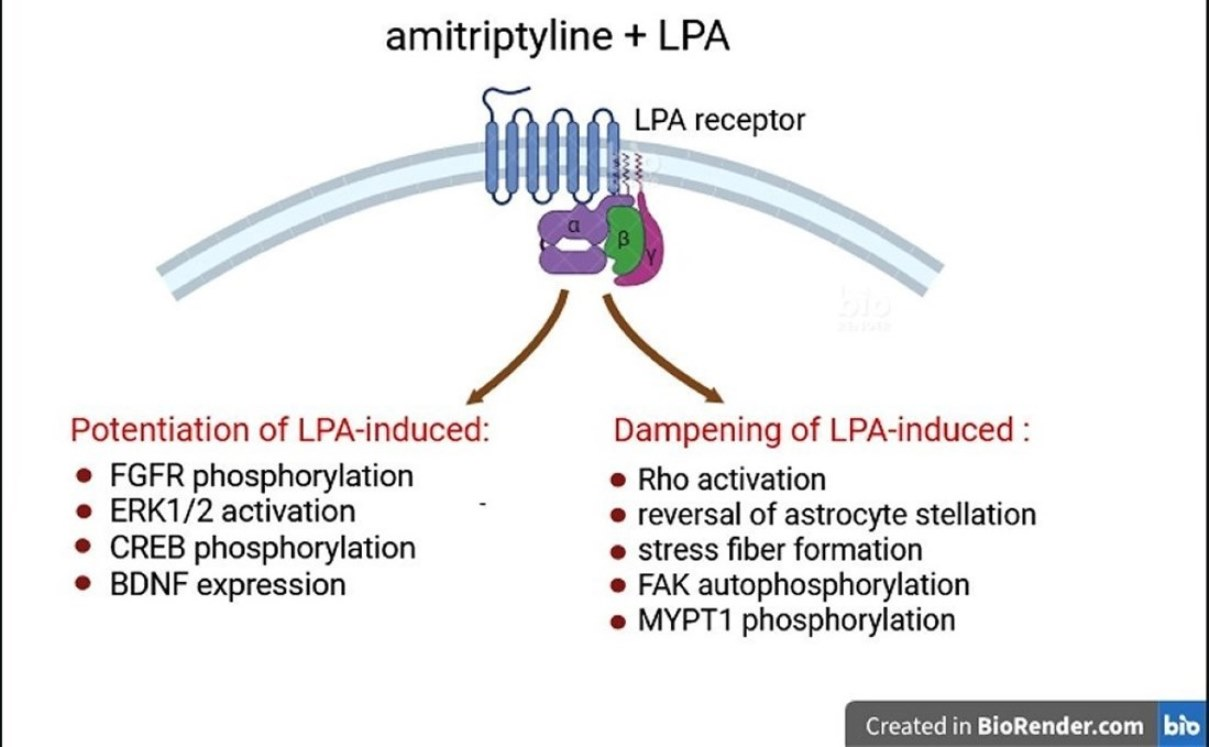
The Antidepressant Amitriptyline Upregulates ERK1/2 Signaling and Inhibits Rho-Mediated Responses Induced by Lysophosphatidic Acid in Astroglial Cells

Abstract
1. Introduction
2. Results
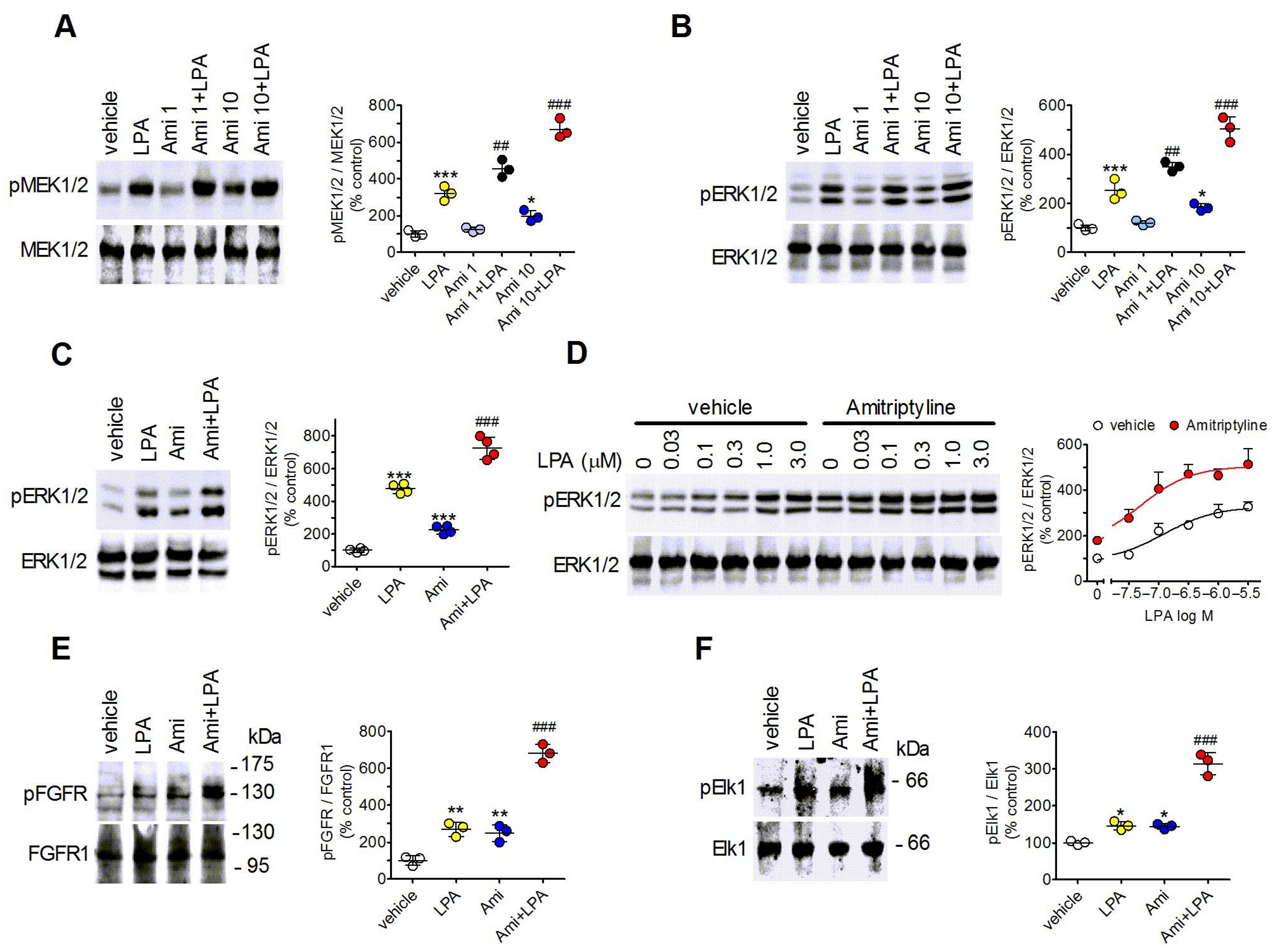
2.1. Amitriptyline Potentiates LPA-Induced ERK1/2 Signaling in Astroglial Cells
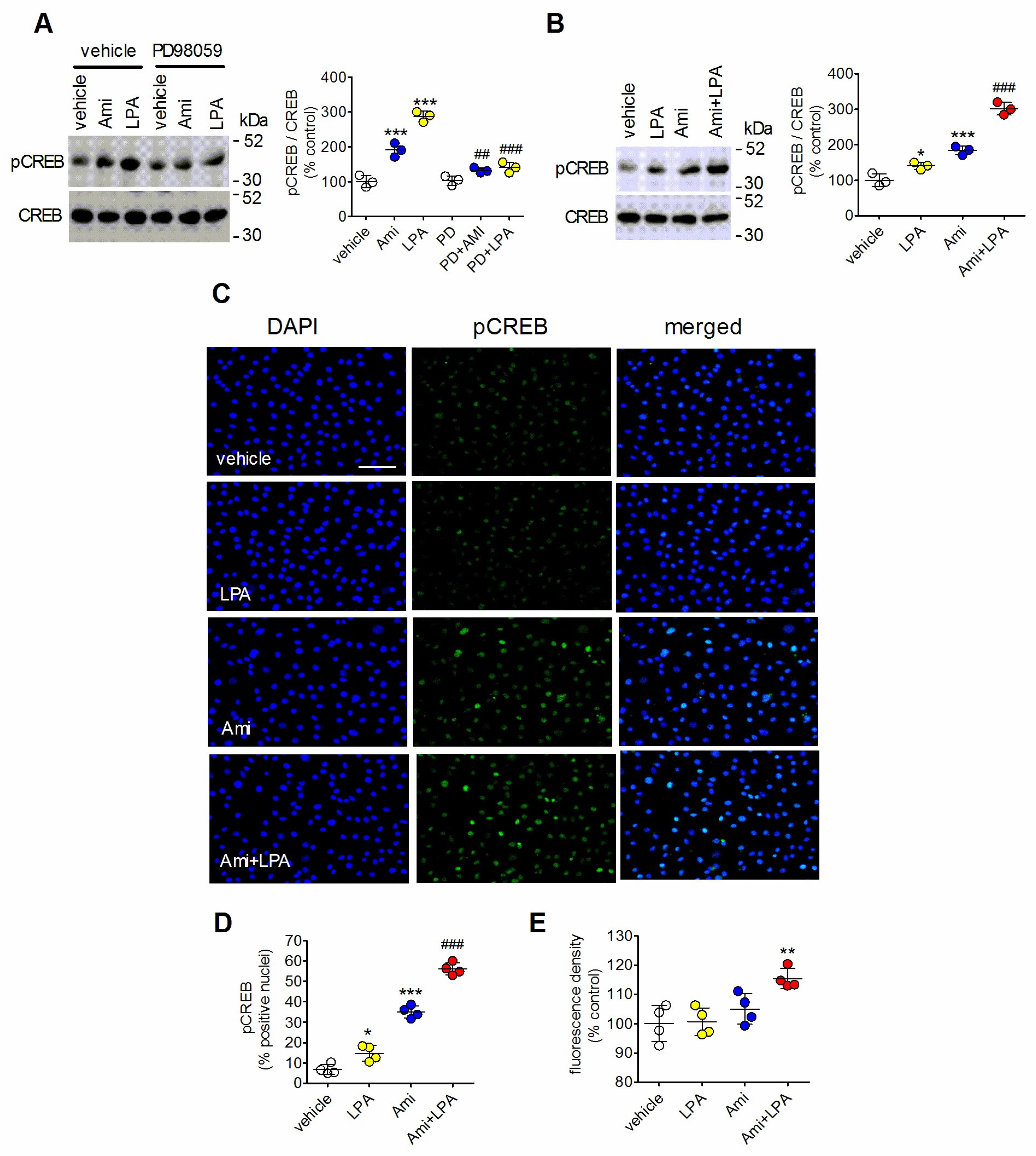
2.2. Synergistic Interaction Between Amitriptyline and LPA in Inducing CREB Phosphorylation
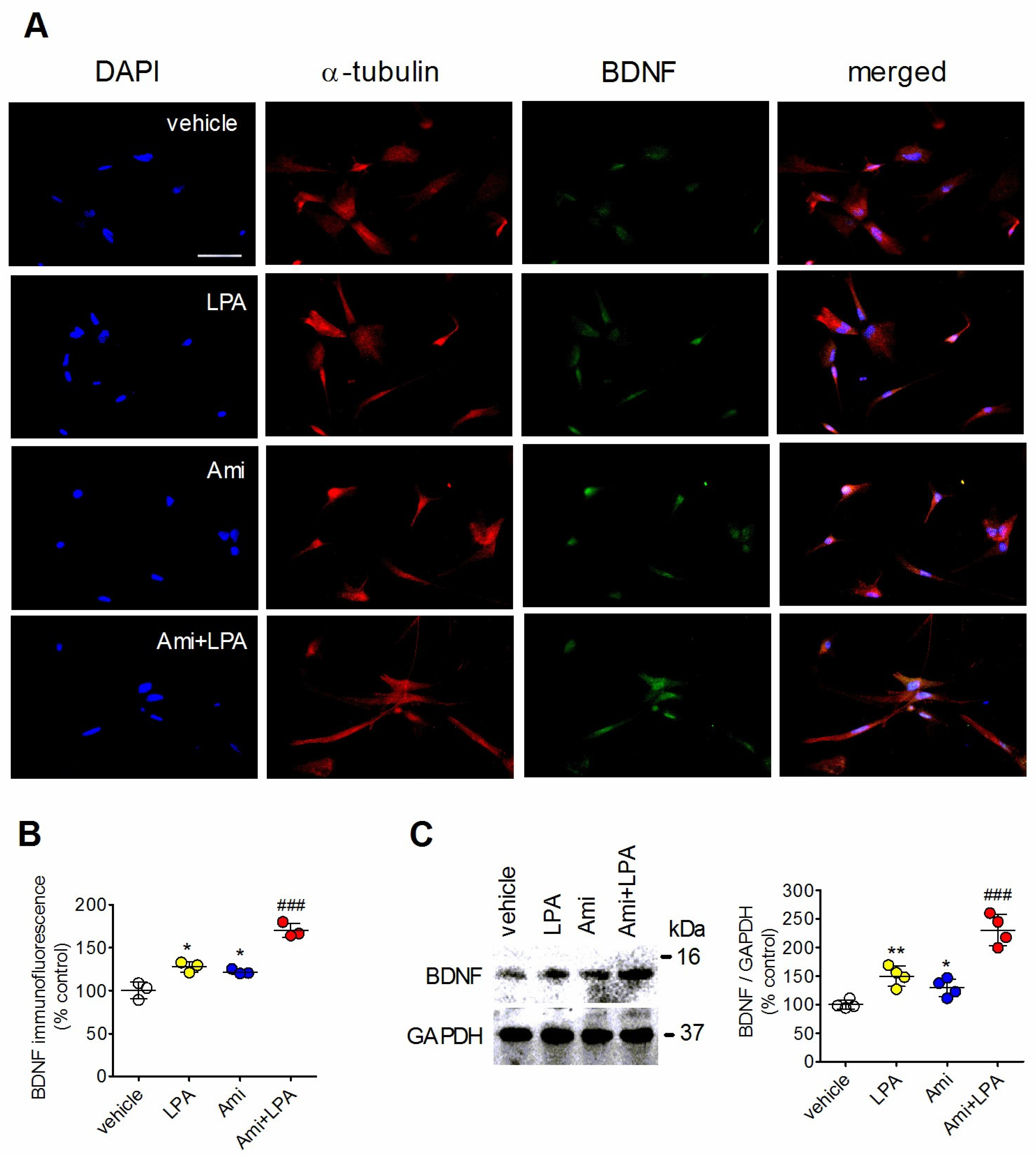
2.3. Amitriptyline Upregulates LPA Induction of BDNF Expression
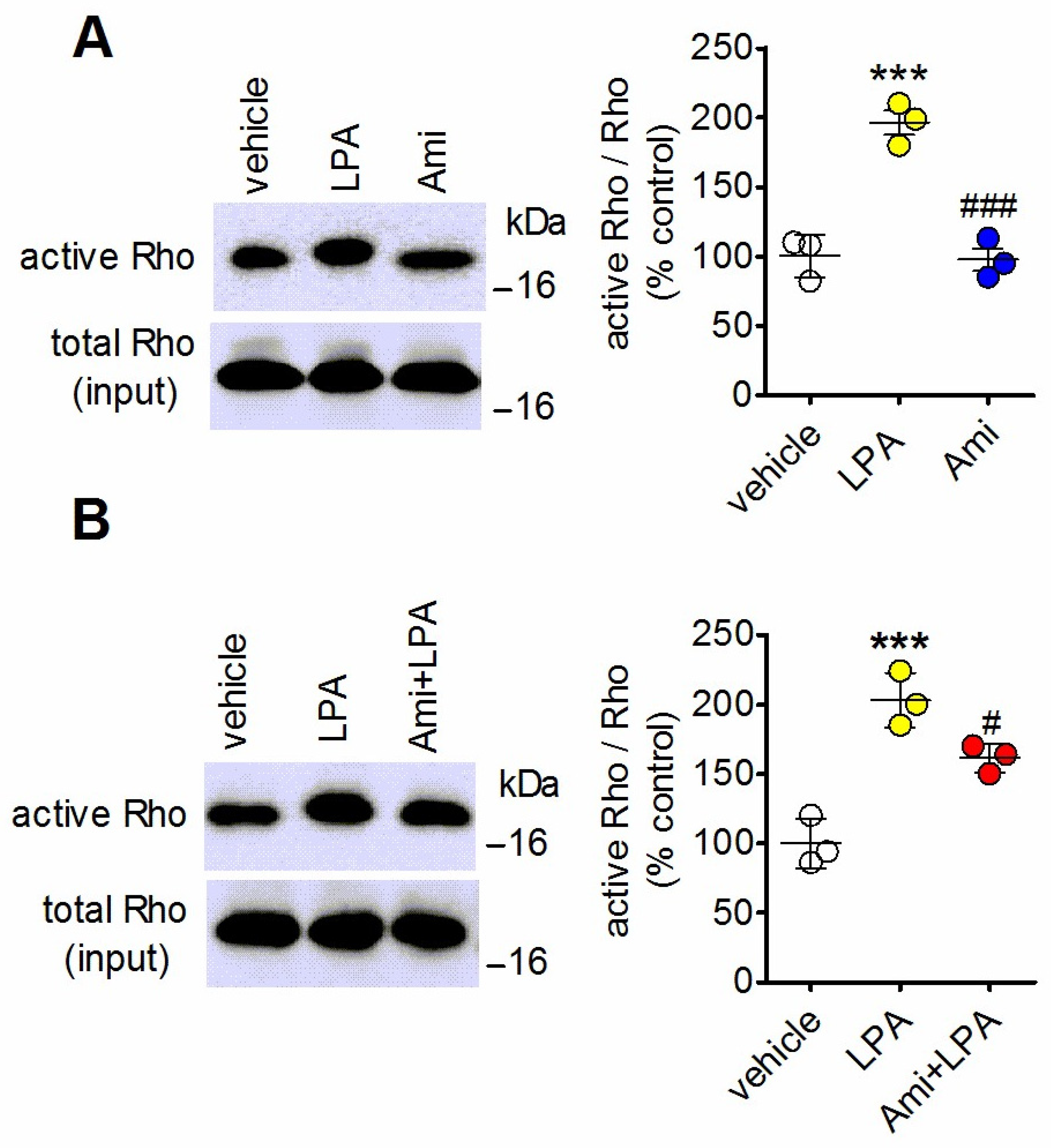
2.4. Amitriptyline Fails to Stimulate Rho and Inhibits Rho Activation Induced by LPA
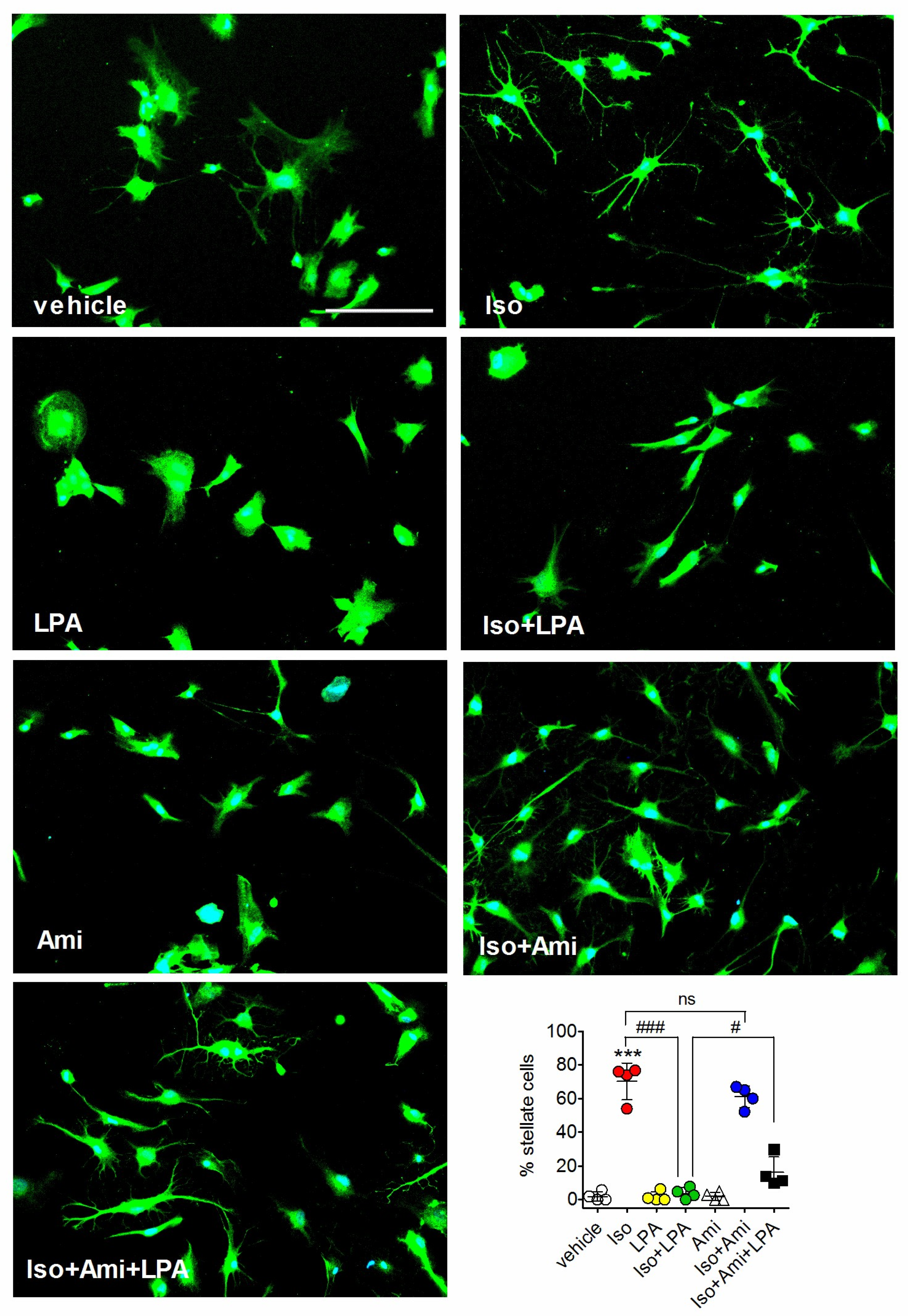
2.5. Amitriptyline Impairs LPA Reversal of Isoproterenol-Induced Morphological Changes in Astrocytes
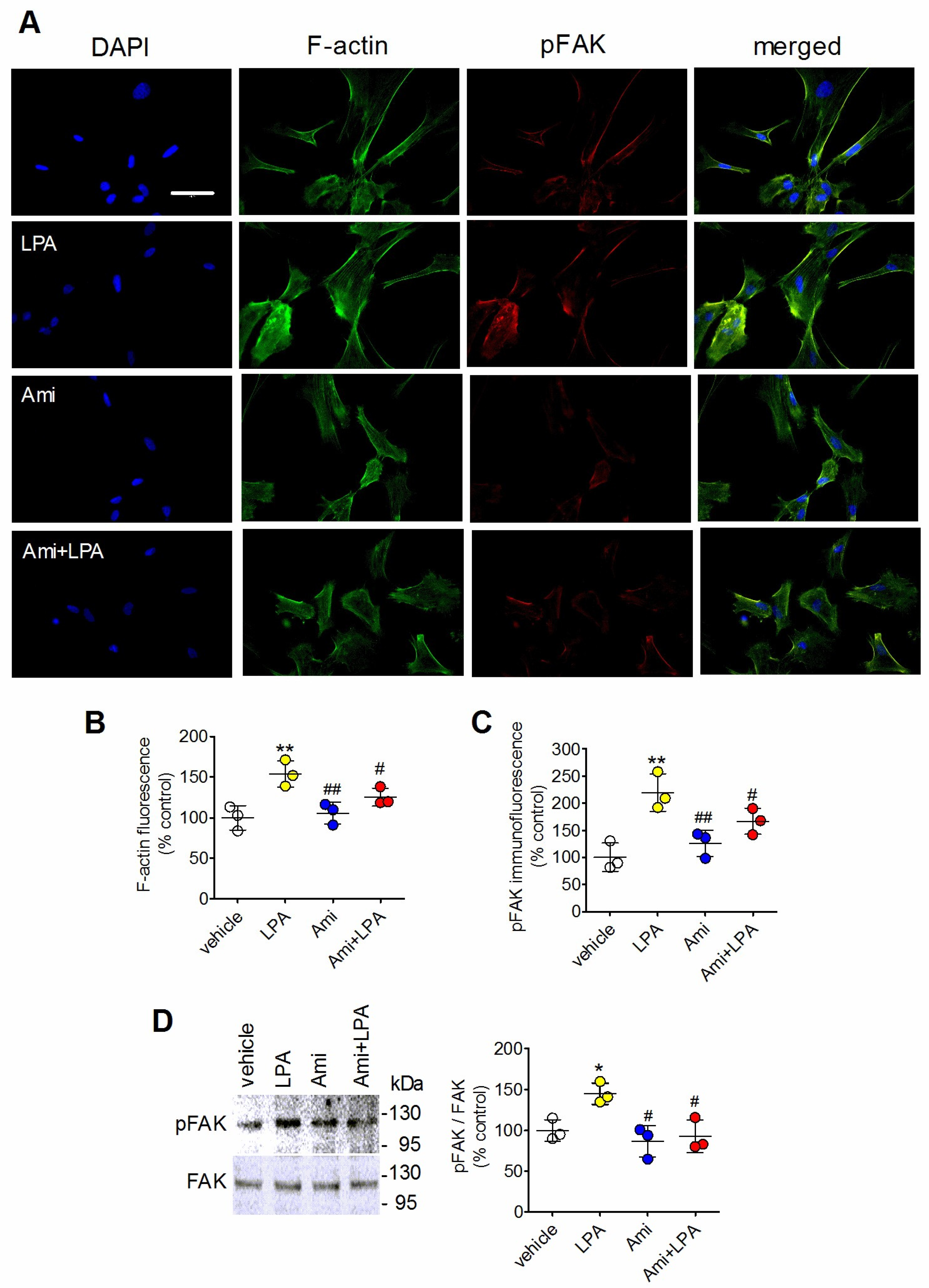
2.6. Amitriptyline Attenuates Stress Fiber Formation and Focal Adhesion Kinase (FAK) Phosphorylation Induced by LPA
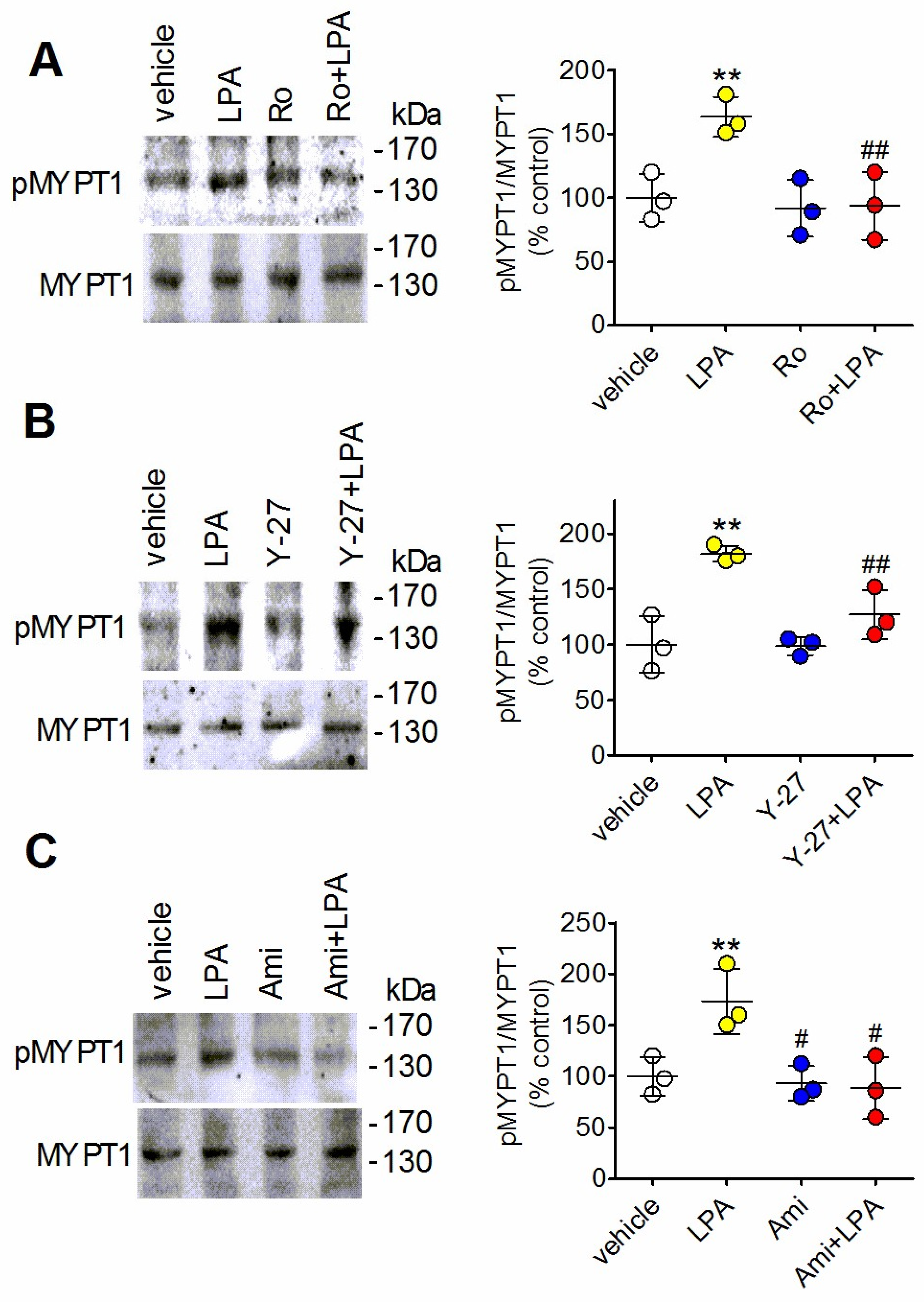
2.7. Amitriptyline Does Not Affect MYPT1 Phosphorylation and Inhibits the Stimulation Induced by LPA
3. Discussion
4. Materials and Methods
4.1. Materials
4.2. Cell Culture
4.3. Cell Treatment
4.4. Rho Activation Assay
4.5. Western Blot Analysis
4.6. Immunofluorescence Microscopy
4.7. Statistical Analysis
Supplementary Materials
Author Contributions
Funding
Institutional Review Board Statement
Informed Consent Statement
Data Availability Statement
Conflicts of Interest
Abbreviations
| AM | AM966 |
| Ami | amitriptyline |
| BDNF | brain-derived neurotrophic factor |
| CREB | cyclic AMP response element binding protein |
| DAPI | 4′-6-diamidino-2-phenylindole |
| DMSO | dimethyl sulphoxide |
| ERK1/2 | extracellular signal-regulated protein kinases 1 and 2 |
| FAK | focal adhesion kinase |
| FGFR | fibroblast growth factor receptor |
| GAPDH | glyceraldehyde-3 phosphate dehydrogenase |
| GFAP | glial fibrillary acidic protein |
| GPCRs | G protein-coupled receptors |
| LPA | lysophosphatidic acid |
| MYPT1 | myosin target subunit of myosin phosphatase isoform 1 |
| PD | PD98059 |
| Ro | Ro-6842262 |
| ROCK | Rho-associated kinase |
| Y-27 | Y-27632 |
References
- Harmer, C.J.; Duman, R.S.; Cowen, P.J. How do antidepressant work? New perspectives for refining future treatment approaches. Lancet Psychiatry 2017, 4, 409–418. [Google Scholar] [CrossRef] [PubMed]
- Gonda, X.; Dome, P.; Neill, J.C.; Tarazi, F.I. Novel antidepressant drugs: Beyond monoamine targets. CNS Spectr. 2023, 28, 6–15. [Google Scholar] [CrossRef]
- Tigyi, G. Aiming drug discovery at lysophosphatidic acid targets. Br. J. Pharmacol. 2010, 161, 241–270. [Google Scholar] [CrossRef]
- Kihara, Y.; Maceyka, M.; Spiegel, S.; Chun, J. Lysophospholipid receptor nomenclature review: IUPHAR Review 8. Br. J. Pharmacol. 2014, 171, 3575–3594. [Google Scholar] [CrossRef]
- Stoddard, N.C.; Chun, J. Promising pharmacological directions in the world of lysophosphatidic acid signaling. Biomol. Ther. 2015, 23, 1–11. [Google Scholar] [CrossRef]
- Nadhan, R.; Nath, K.; Basu, S.; Isidoro, C.; Song, Y.S.; Dhanasekaran, D.N. Decoding lysophosphatidic acid signaling in physiology and disease; mapping the multimodal and multimodal signaling networks. Signal Transduct. Target. Ther. 2025, 10, 337. [Google Scholar] [CrossRef]
- Olianas, M.C.; Dedoni, S.; Onali, P. Antidepressants activate the lysophosphatidic acid receptor LPA1 to induce insulin-like growth factor-1 receptor transactivation, stimulation of ERK1/2 signaling and cell proliferation in CHO-K1 fibroblasts. Biochem. Pharmacol. 2015, 95, 311–323. [Google Scholar] [CrossRef]
- Olianas, M.C.; Dedoni, S.; Onali, P. LPA1 mediates antidepressant-induced ERK1/2 signaling and protection from oxidative stress in glial cells. J. Pharmacol. Exp. Ther. 2016, 359, 340–353. [Google Scholar] [CrossRef]
- Kajitani, N.; Miyano, K.; Okada-Tsuchioka, M.; Abe, H.; Itagaki, K.; Hisaoka-Nakashima, K.; Morioka, N.; Uezono, Y.; Takebayashi, M. Identification of lysophosphatidic acid receptor 1 in astroglial cells as a target for glial cell-derived neurotrophic factor expression induced by antidepressants. J. Biol. Chem. 2016, 291, 27364–27370. [Google Scholar] [CrossRef] [PubMed]
- Olianas, M.C.; Dedoni, S.; Onali, P. LPA1 is a key mediator of intracellular signalling and neuroprotection triggered by tetracyclic antidepressants in hippocampal neurons. J. Neurochem. 2017, 143, 183–197. [Google Scholar] [CrossRef] [PubMed]
- Olianas, M.C.; Dedoni, S.; Onali, P. Inhibition of TNF-α-induced neuronal apoptosis by antidepressants acting through the lysophosphatidic acid receptor LPA1. Apoptosis 2019, 24, 478–498. [Google Scholar] [CrossRef] [PubMed]
- Banks, D.B.; Chan, G.N.Y.; Evans, R.A.; Miller, D.S.; Cannon, R.E. Lysophosphatidic acid and amitriptyline signal through LPA1R to reduce p-glycoprotein transport at the blood-brain barrier. J. Cereb. Blood Flow Metab. 2018, 38, 857–868. [Google Scholar] [CrossRef] [PubMed]
- Olianas, M.C.; Dedoni, S.; Onali, P. Antidepressants induce profibrotic responses via the lysophosphatidic acid receptor LPA1. Eur. J. Pharmacol. 2020, 873, 172963. [Google Scholar] [CrossRef]
- Yung, Y.C.; Stoddard, N.C.; Mirendil, H.; Chun, J. Lysophosphatidic acid signaling in the nervous system. Neuron 2015, 85, 669–682, Correction in Neuron. 2015, 86, 341. https://doi.org/10.1016/j.neuron.2015.03.043. [Google Scholar] [CrossRef]
- Harrison, S.M.; Reavill, C.; Brown, G.; Brown, J.T.; Cluderay, J.E.; Crook, B.; Davies, C.H.; Dawson, L.A.; Grau, E.; Heidbreder, C.; et al. LPA1 receptor-deficient mice have phenotypic changes observed in psychiatric disease. Mol. Cell. Neurosci. 2003, 24, 1170–1179. [Google Scholar] [CrossRef]
- Castilla-Ortega, E.; Hoyo-Becerra, C.; Pedraza, C.; Chun, J.; Rodriguez De Fonseca, F.; Estivill-Torrus, G.; Santin, L.J. Aggravation of chronic stress effects on hippocampal neurogenesis and spatial memory in LPA1 receptor knockout mice. PLoS ONE 2011, 6, e25522, Correction in PloS ONE 2011, 6. https://doi.org/10.1371/annotation/c105dab8-59b8-467a-9223-5bd92936e49a. [Google Scholar] [CrossRef]
- Santin, L.J.; Bilbao, A.; Pedraza, C.; Matas-Rico, E.; Lopez-Barroso, D.; Castilla-Ortega, E.; Sanchez-Lopez, J.; Riquelme, R.; Varela-Nieto, I.; de la Villa, P.; et al. Behavioral phenotype of maLPA1-null mice: Increased anxiety-like behavior and spatial memory deficits. Genes Brain Behav. 2009, 8, 772–784. [Google Scholar] [CrossRef]
- Moreno-Fernandez, R.D.; Perez-Martin, M.; Castilla-Ortega, E.; Rosell Del Valle, C.; Garcia-Fernandez, M.I.; Chun, J.; Estivill-Torrus, G.; Rodriguez de Fonseca, F.; Santin, L.J.; Pedraza, C. maLPA1-null mice as an endophenotype of anxious depression. Transl. Psychiatry 2017, 7, e1077. [Google Scholar] [CrossRef] [PubMed]
- Itagaki, K.; Takebayashi, M.; Abe, H.; Shibasaki, C.; Kajitani, N.; Okada-Tsuchioka, M.; Hattori, K.; Yoshida, S.; Kunugi, H.; Yamawaki, S. Reduced serum and cerebrospinal fluid levels of autotaxin in major depressive disorder. Int. J. Neuropsychoparmacol. 2019, 22, 261–269. [Google Scholar] [CrossRef]
- Omori, W.; Kano, K.; Hattori, K.; Kajitani, N.; Okada-Tsuchioka, M.; Boku, S.; Kunugi, H.; Aoki, J.; Takebayashi, M. Reduced cerebrospynal fluid levels of lysophosphatidic acid docosahexaenoic acid in patients with major depressive disorder and schizophrenia. Int. J. Neuropsychoparmacol. 2021, 24, 948–955. [Google Scholar] [CrossRef]
- Olianas, M.C.; Dedoni, S.; Onali, P. Differential targeting of lysophosphatidic acid LPA1, LPA2, and LPA3 receptor signalling by tricyclic and tetracyclic antidepressants. Eur. J. Pharmacol. 2023, 959, 176064. [Google Scholar] [CrossRef]
- Mohammadi, M.; Dikic, I.; Sorokin, A.; Burgess, W.H.; Jaye, M.; Schlessinger, J. Identification of six novel autophosphorylation sites on fibroblast growth factor receptor 1and elucidation of their importance in receptor activation and signal transduction. Mol. Cell Biol. 1996, 16, 977–989. [Google Scholar] [CrossRef]
- Roux, P.P.; Blenis, J. ERK and p38 MAPK-activated protein kinases: A family of protein kinases with diverse biological functions. Microbiol. Mol. Biol. Rev. 2004, 68, 320–344. [Google Scholar] [CrossRef]
- Chrivia, J.C.; Kwok, R.P.; Lamb, N.; Hagiwara, M.; Montminy, M.R.; Goodman, R.H. Phosphorylated CREB binds specifically to the nuclear protein CBP. Nature 1993, 365, 855–859. [Google Scholar] [CrossRef]
- Zheng, F.; Zhou, X.; Moon, C.; Wang, H. Regulation of brain-derived neurotrophic factor expression in neurons. Int. J. Physiol. Pathophysiol. Pharmacol. 2012, 4, 188–200. [Google Scholar] [PubMed]
- Shapiro, D.L. Morphological and biochemical alterations in foetal rat brain cells cultured in the presence of monobutyryl cyclic AMP. Nature 1973, 241, 203–204. [Google Scholar] [CrossRef] [PubMed]
- Tas, P.W.; Koschel, K. Thrombin reverts the β-adrenergic agonist-induced morphological response in rat glioma C6 cells. Exp. Cell Res. 1990, 189, 22–27. [Google Scholar] [CrossRef]
- Manning, T.J.; Sontheimer, H. Bovine serum albumin and lysophosphatidic acid stimulate calcium mobilization and reversal of cAMP-induced stellation in rat spinal cord astrocytes. Glia 1997, 20, 163–172. [Google Scholar] [CrossRef]
- Suidan, H.S.; Nobes, C.D.; Hall, A.; Monard, D. Astrocyte spreading in response to thrombin and lysophosphatidic acid is dependent on the Rho GTPase. Glia 1997, 21, 244–252. [Google Scholar] [CrossRef]
- Ramakers, G.J.A.; Moolenaar, W.H. Regulation of astrocyte morphology by RhoA and lysophosphatidic acid. Exp. Cell Res. 1998, 245, 252–262. [Google Scholar] [CrossRef] [PubMed]
- Holtje, M.; Hoffmann, A.; Hofmann, F.; Mucke, C.; Groβe, G.; Van Rooijen, N.; Kettenmann, H.; Just, I.; Ahnert-Hilger, G. Role of Rho GTPase in astrocyte morphology and migratory response during in vitro wound healing. J. Neurochem. 2005, 95, 1237–1248. [Google Scholar] [CrossRef]
- Ridley, A.; Hall, A. The small GTP-binding protein rho regulates the assembly of focal adhesions and actin stress fibers in response to growth factors. Cell 1992, 70, 389–399. [Google Scholar] [CrossRef]
- Chrzanowska-Wodnicka, M.; Burridge, K. Rho-stimulated contractility drives the formation of stress fibers and focal adhesions. J. Cell Biol. 1996, 133, 1403–1415. [Google Scholar] [CrossRef] [PubMed]
- Burridge, K.; Wennerberg, K. Rho and Rac take center stage. Cell 2004, 116, 167–179. [Google Scholar] [CrossRef] [PubMed]
- Zeug, A.; Muller, F.E.; Anders, S.; Herde, M.K.; Minge, D.; Ponimaskin, E.; Henneberger, C. Control of astrocyte morphology by Rho GTPases. Brain Res. Bull. 2018, 36, 44–53. [Google Scholar] [CrossRef]
- Ridley, A.; Hall, A. Signal transduction pathways regulating Rho-mediated stress fiber formation: Requirement for a tyrosine kinase. EMBO J. 1994, 13, 2600–2610. [Google Scholar] [CrossRef] [PubMed]
- Katoh, K. Activation of Rho-kinase and focal adhesion kinase regulates the organization of stress fibers and focal adhesions in the central part of fibroblasts. PeerJ 2017, 5, e4063. [Google Scholar] [CrossRef]
- Ito, M.; Nakano, T.; Erdodi, F.; Hartshorne, D.J. Myosin phosphatase: Structure, regulation and function. Mol. Cell Biochem. 2004, 259, 197–209. [Google Scholar] [CrossRef]
- Birukova, A.A.; Smurova, K.; Birukov, K.G.; Usatyuk, P.; Liu, F.; Kaibuchi, K.; Ricks-Cord, A.; Natarajan, V.; Alieva, I.; Garcia, J.G.N.; et al. Microtubule disassembly induces cytoskeletal remodeling and lung vascular barrier dysfunction: Role of Rho-dependent mechanisms. J. Cell Physiol. 2004, 201, 55–70. [Google Scholar] [CrossRef]
- Shano, S.; Moriyama, R.; Chun, J.; Fukushima, N. Lysophosphatidic acid stimulates astrocyte proliferation through LPA1. Neurochem. Int. 2008, 52, 216–220. [Google Scholar] [CrossRef]
- Czeh, B.; Di Benedetto, B. Antidepressants act directly on astrocytes: Evidences and functional consequences. Eur. Neuropsychopharmacol. 2013, 23, 171–185. [Google Scholar] [CrossRef] [PubMed]
- Sanacora, G.; Banasr, M. From pathophysiology to novel antidepressant drugs: Glial contributions to the pathology and treatment of mood disorders. Biol. Psychiatry 2013, 73, 1172–1179. [Google Scholar] [CrossRef]
- Frizzo, M.E.; Ohno, Y. Perisinaptic astrocytes as a potential target for novel antidepressant drugs. J. Pharmacol. Sci. 2021, 145, 60–68. [Google Scholar] [CrossRef]
- Wang, Q.; Jie, W.; Liu, J.-H.; Yang, J.-M.; Gao, T.-M. An astroglial basis of major depressive disorder? An overview. Glia 2017, 65, 1227–1250. [Google Scholar] [CrossRef]
- Lu, C.-L.; Ren, J.; Cao, X. An astroglial basis of major depressive disorder: Molecular, cellular, and circuit features. Biol. Psychiatry 2025, 97, 217–226. [Google Scholar] [CrossRef]
- Pebay, A.; Torrens, Y.; Toutant, M.; Cordier, J.; Glowinski, J.; Tence, M. Pleiotropic effects of lysophosphatidic acid on striatal astrocytes. Glia 1999, 28, 25–33. [Google Scholar] [CrossRef]
- Blendy, J.A. The role of CREB in depression and antidepressant treatment. Biol. Psychiatry 2006, 59, 1144–1150. [Google Scholar] [CrossRef] [PubMed]
- Bjorkholm, C.; Monteggia, L.M. BDNF—A key transducer of antidepressant effects. Neuropharmacology 2016, 102, 72–79. [Google Scholar] [CrossRef]
- Duman, R.S.; Deyama, S.; Fogaca, M.V. Role of BDNF in the pathophysiology and treatment of depression: Activity dependent effects distinguish rapid acting antidepressants. Eur. J. Neurosci. 2021, 53, 126–139. [Google Scholar] [CrossRef]
- Almeida Chiareli, R.; Almeida Carvalho, G.; Lemes Marques, B.; Soares Mota, L.; Oliveira-Lima, O.C.; Mello Gomez, O.; Birbrair, A.; Santiago Gomez, R.; Simao, F.; Klempin, F.; et al. The role of astrocytes in the neurorepair process. Front. Cell Dev. Biol. 2021, 9, 665795. [Google Scholar] [CrossRef]
- Gomez-Casati, M.E.; Murtie, J.C.; Rio, C.; Stankovic, K.; Liberman, M.C.; Corfas, C. Nonneuronal cells regulate synapse formation in the vestibular sensory epithelium via erbB-dependent BDNF expression. Proc. Natl. Acad. Sci. USA 2010, 107, 17005–17010. [Google Scholar] [CrossRef]
- Vignoli, B.; Battistini, G.; Melani, R.; Blum, R.; Santi, S.; Berardi, N.; Canossa, M. Peri-synaptic glia recycles brain-derived neurotrophic factor for LTP stabilization and memory retention. Neuron 2016, 92, 873–887. [Google Scholar] [CrossRef]
- Vaz, S.H.; Jorgensen, T.N.; Cristovao-Ferreira, S.; Duflot, S.; Ribeiro, J.A.; Gether, U.; Sebastiao, A.M. Brain-derived neurotrophic factor (BDNF) enhances GABA transport by modulating the trafficking of GABA transporter-1 (GAT-1) from the plasma membrane of rat cortical astrocytes. J. Biol. Chem. 2011, 286, 40464–40476. [Google Scholar] [CrossRef]
- Rusakov, D.A.; Dityatev, A.E. Brain circuitry outside the synaptic cleft. Philos. Trans. R. Soc. Lond. B Biol. Sci. 2014, 369, 20130591. [Google Scholar] [CrossRef]
- Kalman, D.; Gomperts, S.N.; Hardy, S.; Kitamura, M.; Bishop, J.M. Ras family GTPases control growth of astrocyte processes. Mol. Biol. Cell 1999, 10, 1665–1683. [Google Scholar] [CrossRef]
- Cho, S.; Muthukumar, A.K.; Stork, T.; Coutinho-Budd, J.C.; Freeman, M.R. Focal adhesion molecules regulate astrocyte morphology and glutamate transporters to suppress seizure-like behavior. Proc. Natl. Acad. Sci. USA 2018, 115, 11316–11321. [Google Scholar] [CrossRef]
- Hanifa, M.; Singh, M.; Randhawa, P.K.; Jaggi, A.S.; Bali, A. A focus on Rho-ROCK signaling pathway: An emerging therapeutic target in depression. Eur. J. Pharmacol. 2023, 946, 175648. [Google Scholar] [CrossRef]
- Christopoulos, A. Advances in G protein-coupled receptor allostery: From function to structure. Mol. Pharmacol. 2014, 86, 463–478. [Google Scholar] [CrossRef] [PubMed]
- Suzuki, S.; Tanaka, K.; Kamegawa, A.; Nishikawa, K.; Suzuki, H.; Oshima, A.; Fujiyoshi, Y. Structural insights into the engagement of lysophosphatidic acid receptor 1 with different G proteins. J. Struct. Biol. 2025, 217, 108164. [Google Scholar] [CrossRef] [PubMed]
- Shpakov, A.O. Allosteric regulation of G-protein-coupled receptors: From diversity of molecular mechanisms to multiple allosteric sites and their ligands. Int. J. Mol. Sci. 2023, 24, 6187. [Google Scholar] [CrossRef] [PubMed]
- Baumann, P.; Gaillard, J.-M.; Jonzier-Perey, M.; Gerber, C.; Bouras, C. Evaluation of the levels of free and total amitriptyline and metabolites in the plasma and brain of the rat after long-term administration of doses used in receptor studies. Psychopharmacology 1984, 84, 489–495. [Google Scholar] [CrossRef] [PubMed]
- Glotzbach, R.K.; Preskorn, S.H. Brain concentrations of tryciclic antidepressants: Single-dose kinetics and relationship to plasma concentrations in chronically dosed rats. Psychopharmacology 1982, 78, 25–27. [Google Scholar] [CrossRef] [PubMed]





Disclaimer/Publisher’s Note: The statements, opinions and data contained in all publications are solely those of the individual author(s) and contributor(s) and not of MDPI and/or the editor(s). MDPI and/or the editor(s) disclaim responsibility for any injury to people or property resulting from any ideas, methods, instructions or products referred to in the content. |
© 2026 by the authors. Licensee MDPI, Basel, Switzerland. This article is an open access article distributed under the terms and conditions of the Creative Commons Attribution (CC BY) license.
Share and Cite
Olianas, M.C.; Dedoni, S.; Onali, P. The Antidepressant Amitriptyline Upregulates ERK1/2 Signaling and Inhibits Rho-Mediated Responses Induced by Lysophosphatidic Acid in Astroglial Cells. Int. J. Mol. Sci. 2026, 27, 3660. https://doi.org/10.3390/ijms27083660
Olianas MC, Dedoni S, Onali P. The Antidepressant Amitriptyline Upregulates ERK1/2 Signaling and Inhibits Rho-Mediated Responses Induced by Lysophosphatidic Acid in Astroglial Cells. International Journal of Molecular Sciences. 2026; 27(8):3660. https://doi.org/10.3390/ijms27083660
Chicago/Turabian StyleOlianas, Maria C., Simona Dedoni, and Pierluigi Onali. 2026. "The Antidepressant Amitriptyline Upregulates ERK1/2 Signaling and Inhibits Rho-Mediated Responses Induced by Lysophosphatidic Acid in Astroglial Cells" International Journal of Molecular Sciences 27, no. 8: 3660. https://doi.org/10.3390/ijms27083660
APA StyleOlianas, M. C., Dedoni, S., & Onali, P. (2026). The Antidepressant Amitriptyline Upregulates ERK1/2 Signaling and Inhibits Rho-Mediated Responses Induced by Lysophosphatidic Acid in Astroglial Cells. International Journal of Molecular Sciences, 27(8), 3660. https://doi.org/10.3390/ijms27083660