Review

The Pyrazole Scaffold in Anticancer Drug Discovery: A Review of Synthetic Approaches, Structure–Activity Relationships, and Target-Based Mechanism of Action

by
Krishnapriya K R
1,2,†,
Veda B. Hacholli
3,†,
Marcin Gackowski
4,*,
Dariusz Maciej Pisklak
5,
Abhishek Kumar
1,5,* and
Łukasz Szeleszczuk
5
1
Department of Pharmaceutical Chemistry, NGSM Institute of Pharmaceutical Sciences (NGSMIPS), Nitte (Deemed to be University), Mangalore 575018, Karnataka, India
2
Department of Pharmaceutical Chemistry, Yenepoya Pharmacy College & Research Centre, Yenepoya (Deemed to be University), Mangalore 575018, Karnataka, India
3
Department of Pharmaceutical Chemistry, Faculty of Pharmacy, Nitte College of Pharmaceutical Sciences, Nitte (Deemed to be University), Bengaluru 560064, Karnataka, India
4
Department of Toxicology and Bromatology, Faculty of Pharmacy, L. Rydygier Collegium Medicum in Bydgoszcz, Nicolaus Copernicus University in Torun, A. Jurasza 2 Street, 85089 Bydgoszcz, Poland
5
Department of Organic and Physical Chemistry, Faculty of Pharmacy, Medical University of Warsaw, Banacha 1 Street, 02093 Warsaw, Poland
*
Authors to whom correspondence should be addressed.
These authors contributed equally to this work.
Int. J. Mol. Sci. 2026, 27(8), 3403; https://doi.org/10.3390/ijms27083403
Submission received: 13 March 2026 / Revised: 2 April 2026 / Accepted: 8 April 2026 / Published: 10 April 2026
(This article belongs to the Special Issue Synthesis and Activity Studies of Anticancer Compounds)

Abstract

Pyrazole derivatives have emerged as an important class of heterocyclic compounds in anticancer research due to their structural versatility and broad spectrum of biological activities. This review provides a concise overview of recent advances in the development of pyrazole-based anticancer agents, with emphasis on synthetic strategies, structure–activity relationships, and molecular mechanisms of action. Common synthetic approaches, particularly condensation and cyclization reactions, have enabled the preparation of structurally diverse pyrazole derivatives for biological evaluation. Available evidence indicates that the type and position of substituents within the pyrazole scaffold markedly influence anticancer potency, selectivity, and target affinity. Reported compounds act through multiple mechanisms, including inhibition of cancer-related targets such as tubulin, epidermal growth factor receptor (EGFR), cyclin-dependent kinases (CDKs), Bruton tyrosine kinase (BTK), and deoxyribonucleic acid (DNA)-associated pathways, as well as induction of apoptosis and disruption of cell-cycle progression. Several pyrazole derivatives have shown promising activity in in vitro and in vivo models. Overall, the findings summarized in this review identify the pyrazole scaffold as a valuable platform for the design and optimization of novel anticancer agents and support its continued exploration in medicinal chemistry.

1. Introduction

Ranked as the second most common cause of death worldwide, cancer remains a significant threat to human health. The International Agency for Research on Cancer (IARC) 2022 report documented a global incidence of approximately 20 million newly diagnosed malignancies and 9.7 million cancer-related mortalities, with breast and pulmonary carcinomas representing the most frequently occurring tumor types [1]. Cancer has emerged as one of the leading causes of death globally in the 21st century, with millions of deaths attributable to malignancies of the breast, brain, bladder, prostate, non-small cell lung, kidney, colorectal, oral, oropharyngeal, and skin. “Cancer is a disease where certain cells in the body grow out of control and invade other areas of the body”. A cluster of rapidly proliferating cells that can form a widely dispersed lump or mass is called a tumor or neoplasm. Disease development can result from a multitude of factors, including genetic mutations, environmental influences, lifestyle choices, and infections (caused by bacteria, viruses, or parasites) [2,3,4]. Currently, the primary cancer treatment approaches include immunotherapy, genetic therapy, and targeted molecular therapy. Chemotherapy is one of the most successful cancer treatment methods available. Despite the development of numerous targeted anticancer medicines, the main reasons for clinical use failure are significant adverse events and drug resistance. Thus, finding and creating potent anti-tumor medications remains a challenging task [5,6].
Pyrazole is a heterocyclic compound characterized by a five-membered ring containing three carbon and two nitrogen atoms. It was first introduced by Ludwig Knorr in 1883, and in 1959, 1-pyrazolyl-alanine became the first naturally discovered pyrazole, isolated from watermelon seeds [7]. This ring structure serves as a valuable scaffold for designing compounds with a variety of biological roles [8,9], including antibacterial and antifungal [10,11], antitumor [12,13], anti-inflammatory [14,15] and analgesic [16], antitubercular [17,18], antiviral [19,20], anti-Alzheimer’s [21,22], α-glycosidase inhibitory [23], anti-diabetic [24,25], antileishmanial [26,27], anti-malarial [28,29], antidepressant [30], antihypertensive [31,32], anti-arthritic [33] activities. The anticancer potential of pyrazole was first recognized in the 1970s. Since then, numerous studies have investigated the synthesis, structure–activity relationships, and biological assessment of pyrazole derivatives as anticancer compounds [34]. These studies have shown that pyrazole derivatives can inhibit various kinases, induce apoptosis, and disrupt cell-cycle progression, thereby suppressing cancer cell growth and proliferation [35,36].
Advantages of pyrazole as an anticancer agent
  • High potency and selectivity against specific cancer cell lines [37]
  • Ability to inhibit multiple kinases and signaling pathways [37,38,39,40]
  • Potential for oral administration and good pharmacokinetic profiles [38,39,40]
  • Low toxicity and side effects compared to traditional chemotherapy agents [37]
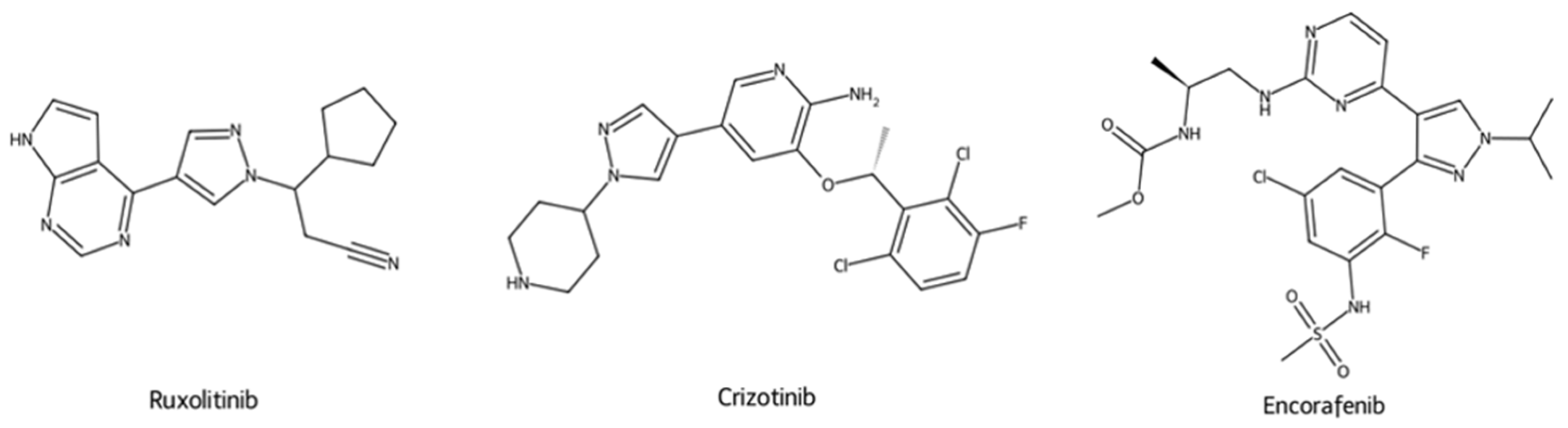
The pyrazole framework serves as the central scaffold of many leading anticancer drugs, contributing significantly to their biological activity and therapeutic efficacy. As shown in Figure 1, several clinically relevant anticancer agents incorporate the pyrazole scaffold, which enhances target selectivity and pharmacological performance through its heterocyclic architecture.
Representative marketed examples further illustrate the translational relevance of the pyrazole scaffold. Ruxolitinib, crizotinib, and encorafenib demonstrate that pyrazole-containing frameworks can be successfully incorporated into clinically used anticancer agents acting through distinct kinase-directed mechanisms, including Janus kinase (JAK) inhibition, inhibition of anaplastic lymphoma kinase (ALK), c-ros oncogene 1 (ROS1), and mesenchymal–epithelial transition factor (MET), as well as inhibition of B-Raf proto-oncogene serine/threonine kinase (BRAF), respectively [38,39,40].
Recent literature reviews have addressed important aspects of pyrazole chemistry and pharmacology, including the role of the pyrazole scaffold in kinase-targeted anticancer design, general synthetic approaches to pyrazole derivatives, their broad biological significance, and recent advances in pyrazole-based anticancer agents. Very recent reviews published in 2025–2026 have further expanded this landscape by emphasizing updated synthetic strategies, hybrid pyrazole systems, and structure–activity relationship trends relevant to anticancer drug discovery [41,42,43,44,45,46,47]. However, these contributions differ in scope, often emphasizing either synthetic methodology or broader pharmacological coverage. In contrast, the present review is specifically focused on the pyrazole scaffold in anticancer drug discovery and integrates synthetic approaches, structure–activity relationships, and target-based mechanisms of action within a single oncology-oriented framework.
This review provides an integrated overview of the anticancer potential of pyrazole derivatives, with particular emphasis on structural features, mechanisms of action, and the available preclinical and clinical evidence. It focuses on pyrazole-based compounds with documented anticancer activity, their interactions with relevant molecular targets and signaling pathways, and the main challenges and future directions associated with their development. By organizing the available literature and identifying the most informative trends, the review aims to serve as a practical resource for researchers and clinicians interested in the therapeutic potential of pyrazoles in oncology.

2. Chemistry and Structure–Activity Relationships of Pyrazoles

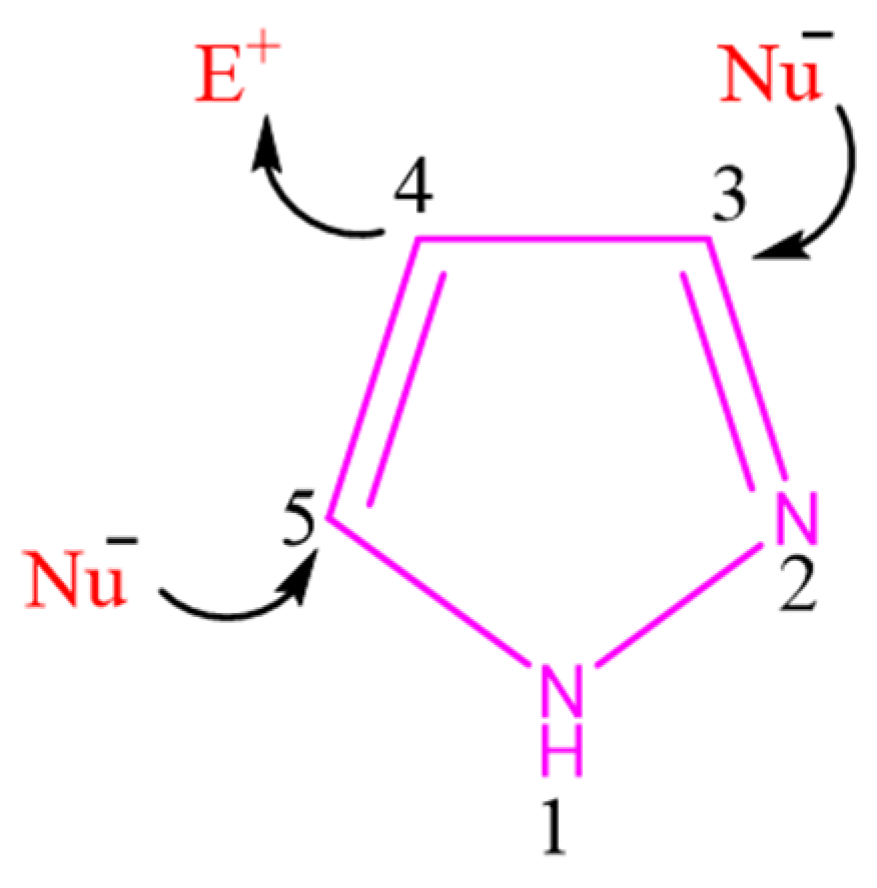
Pyrazole is a five-membered heterocyclic compound containing two adjacent nitrogen atoms, which contribute to its unique electronic configuration and chemical stability. As shown in Figure 2, aromaticity is maintained by a six-π-electron system formed by the two double bonds in the ring and the lone pair of the pyrrole-like nitrogen, whereas the pyridine-like nitrogen remains sp2-hybridized and does not contribute its lone pair to the aromatic sextet. This electronic distribution also gives rise to differentiated reactivity within the ring, with the C3 and C5 positions showing nucleophilic character and the C4 position being relatively electrophilic. Such polarization helps explain the characteristic substitution pattern of pyrazole and its value as a versatile heterocyclic synthon in medicinal chemistry [48,49].
Substitutions on the pyrazole ring significantly impact their chemical and biological properties. N-unsubstituted pyrazole derivatives have amphoteric capabilities and can contribute to and receive hydrogen bonds simultaneously. However, substituting the pyrrole-like nitrogen destroys the heterocycle’s acidic character and hydrogen bond capacity. Pyrazole-containing drugs are more durable against oxygenases and resistant to oxidative metabolism [50,51,52]. More broadly, the relationship between pyrazole substitution patterns and biological activity has been discussed in previous reports [53,54].

3. Synthesis of Pyrazole-Based Derivatives

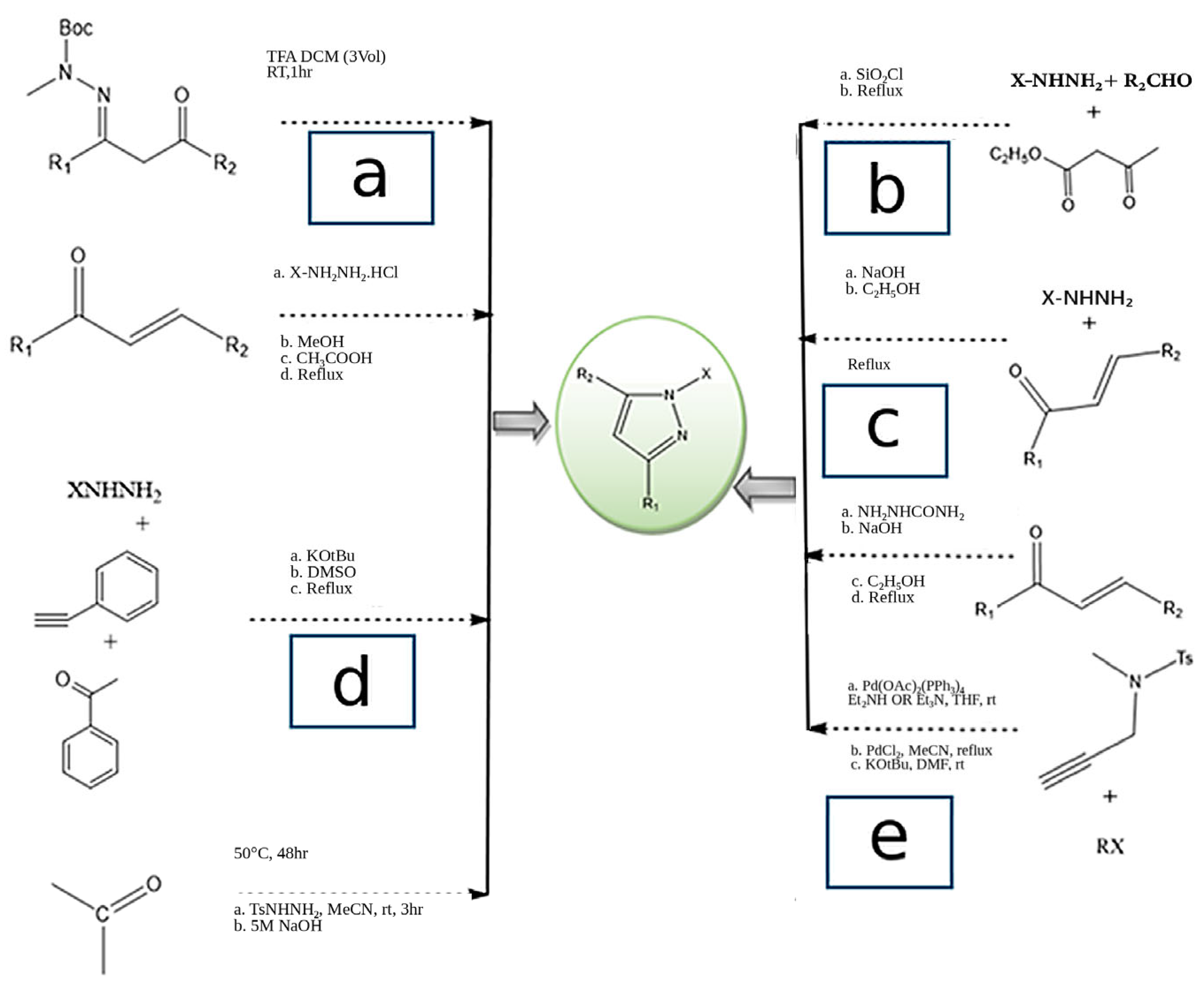
Representative route clusters discussed in this section are summarized in Figure 3 and indicated as 3a–3e, highlighting classical precursor-based assembly (Figure 3a), cyclization of α,β-unsaturated carbonyl systems with hydrazine derivatives (Figure 3b,c), transition-metal-enabled annulation/coupling chemistry within the broader synthetic overview, and carbonyl-based Knoevenagel–Fischer/Michael-type pathways (Figure 3e).

3.1. Classical Methods for Pyrazole Synthesis

Traditional synthetic approaches continue to play a central role in the construction of the pyrazole nucleus. Among these, the Knorr synthesis is one of the most widely used methods, involving the condensation of hydrazine or substituted hydrazines with 1,3-dicarbonyl compounds. This strategy is appreciated for its simplicity and adaptability, allowing the introduction of diverse substituents at different positions of the pyrazole ring. In addition, [3+2] cycloaddition reactions, often described as Pechmann-type syntheses, employ 1,3-dipolar intermediates, such as diazo compounds or nitrile imines, to form pyrazoles via reactions with alkenes or alkynes. These reactions typically proceed under mild conditions and offer good regioselectivity [35,49,55]. A representative classical precursor-based route of this type is shown in Figure 3a.

3.2. Role of Transition-Metal-Catalyzed Approaches

Advances in transition-metal catalysis have significantly expanded the synthetic options for pyrazole derivatives. Palladium-catalyzed coupling and annulation reactions have emerged as powerful one-pot methodologies for the synthesis of substituted pyrazoles. For example, the reaction of N-tosyl-N-propargylhydrazine with aryl iodides or vinyl triflates enables the formation of 3-aryl or vinyl-substituted 1H-pyrazoles [56]. These methods are particularly useful due to their tolerance toward a wide range of functional groups, allowing fine modulation of electronic and pharmacological properties [55]. A representative transition-metal-catalyzed annulation/coupling route is also reflected in the broader synthetic overview presented in Figure 3.

3.3. Diazo-Based and Cycloaddition Strategies

Diazo chemistry has also contributed significantly to the diversification of pyrazole synthesis. Diazo intermediates generated in situ from aldehyde tosylhydrazones readily participate in 1,3-dipolar cycloaddition reactions with acetylene equivalents, such as N-vinylimidazole. These reactions provide regioselectively substituted pyrazoles and are valued for their functional group compatibility and operational convenience, making them attractive for medicinal chemistry applications [49,55]. Related cycloaddition-oriented strategies are exemplified in Figure 3d.

3.4. Condensation and Chalcone-Based Routes

Condensation reactions remain popular because of their operational simplicity and efficiency. The Claisen–Schmidt condensation is commonly employed to prepare α,β-unsaturated intermediates from 1,3-dicarbonyl compounds, which can subsequently cyclize with hydrazines to yield pyrazolines or aromatized pyrazoles [57,58,59]. Similarly, the cyclocondensation of chalcones with hydrazine hydrate under acidic conditions is widely used, particularly because it can be adapted to microwave-assisted or solvent-free conditions to enhance reaction rates and yields. Typical cyclizations of α,β-unsaturated carbonyl systems with hydrazine derivatives are illustrated in Figure 3b,c.

3.5. Knoevenagel–Fischer and Michael Addition Pathways

Additional synthetic routes include the Knoevenagel–Fischer synthesis, in which α,β-unsaturated carbonyl compounds react with hydrazine derivatives in glacial acetic acid to undergo intramolecular cyclization. Michael addition reactions between chalcones and hydrazines under basic conditions, such as triethylamine-mediated cyclization, also provide efficient access to substituted pyrazolines, which can be further oxidized to form pyrazoles [57,60,61]. Representative carbonyl-based pathways of this type are illustrated in Figure 3e.

4. Structure–Activity Relationships of Pyrazole Derivatives

Understanding the structure–activity relationships (SARs) of pyrazole derivatives is essential for enhancing their pharmacological profiles and optimizing their efficacy as anticancer agents. The pyrazole scaffold, characterized by a five-membered heterocyclic ring, offers a versatile template for modifying electronic, steric, and hydrophobic properties, influencing biological activity. A thorough understanding of the SARs that govern pyrazole derivatives will aid the strategic design and synthesis of new analogs with improved effectiveness and selectivity, thereby accelerating the development of pyrazole-based anticancer treatments [44,62].
General structure–activity trends in pyrazole-based anticancer agents should be interpreted with caution, because many reported observations are derived from spe-cific compound series rather than from universally applicable SAR rules. In several pyrazole series, electron-withdrawing substituents, lipophilic aryl groups, and appropriately positioned heterocyclic or linker fragments have been associated with improved antiproliferative activity; however, these effects are strongly dependent on the overall scaffold, substitution pattern, and biological model used for evaluation [63,64,65,66,67,68,69,70,71,72,73,74,75]. Likewise, the influence of steric bulk, lipophilicity, and hydrogen-bonding functionality is context-dependent and may vary across different pyrazole chemotypes. Molecular modeling and docking studies have provided useful mechanistic insights into pyrazole–target interactions, but such findings should be interpreted as supportive rather than universally predictive in the absence of broader experimental validation [64,65,66,68,69,70,71,72,73].
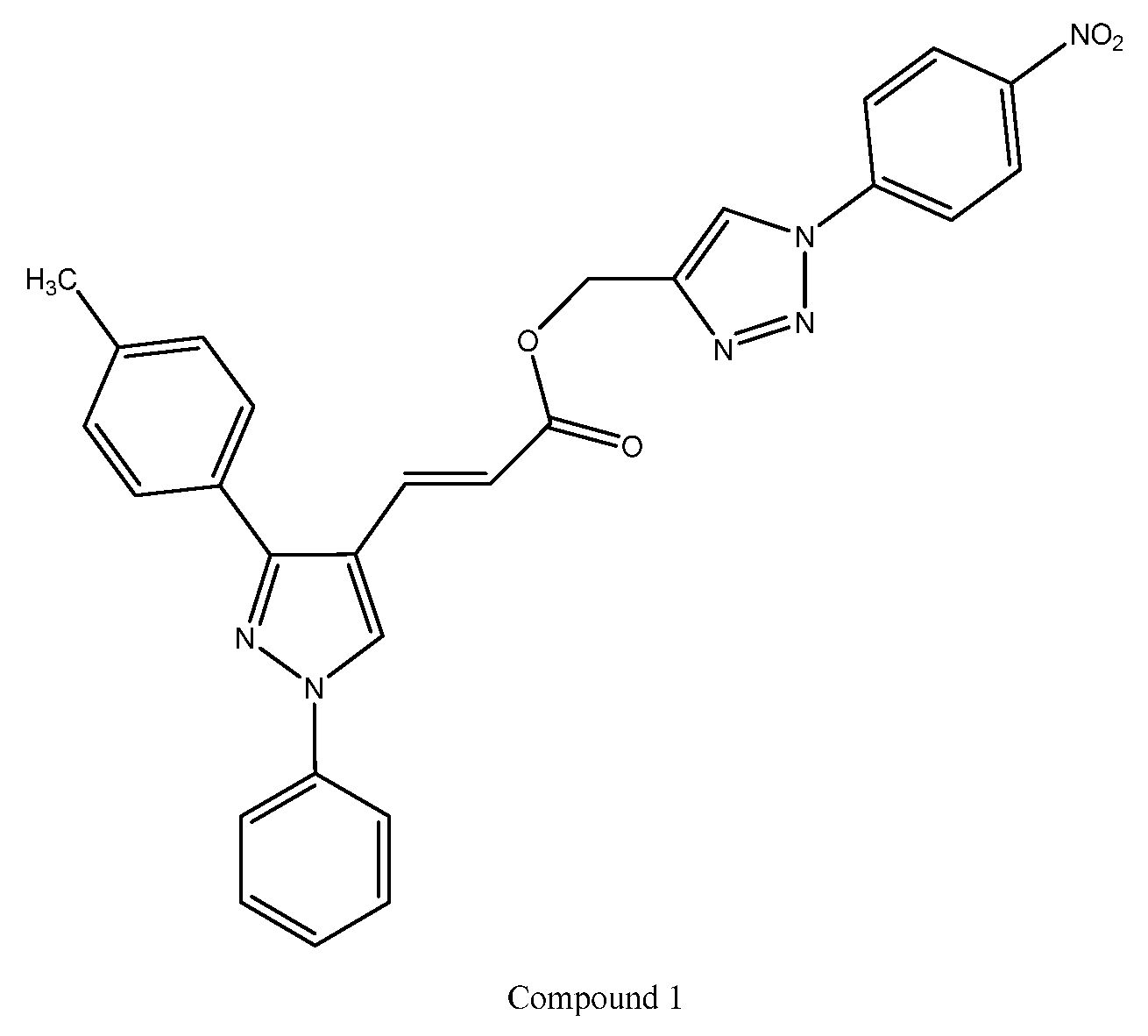
A series of 3-(1,3-diphenyl-1H-pyrazol-4-yl)acrylate derivatives incorporating 1,2,3-triazole linkers was designed and synthesized through a triazole-mediated hybridization strategy to enhance anticancer potential. The synthesized compounds were biologically evaluated for in vitro anticancer activity using the sulforhodamine B (SRB) assay against four human cancer cell lines: MCF-7 (breast), A549 (lung), HCT-116, and HT-29 (colon). Several derivatives demonstrated significant growth inhibition across the tested cell lines. Structure–activity relationship (SAR) analysis revealed that electron-donating substituents such as methyl and methoxy groups at the R-position of the diphenyl pyrazole core markedly improved anticancer activity, whereas unsubstituted analogues showed comparatively weaker effects. In contrast, the introduction of electron-withdrawing groups (fluoro and chloro) at the same position diminished potency; however, when these groups were present on the phenyl ring attached to the triazole moiety, an enhancement in anticancer activity was observed. Among the evaluated derivatives, Compound 1 emerged as the most potent analogue, exhibiting IC50 values of 1.962 μM (A549), 3.597 μM (HCT-116), 1.764 μM (MCF-7), and 4.496 μM (HT-29). As shown in Figure 4, the enhanced cytotoxic activity of Compound 1 may be attributed to the presence of a 1,2,3-triazole linker and an electron-withdrawing nitro-substituted phenyl ring, which improve molecular stability and facilitate stronger interactions with biological targets [63].
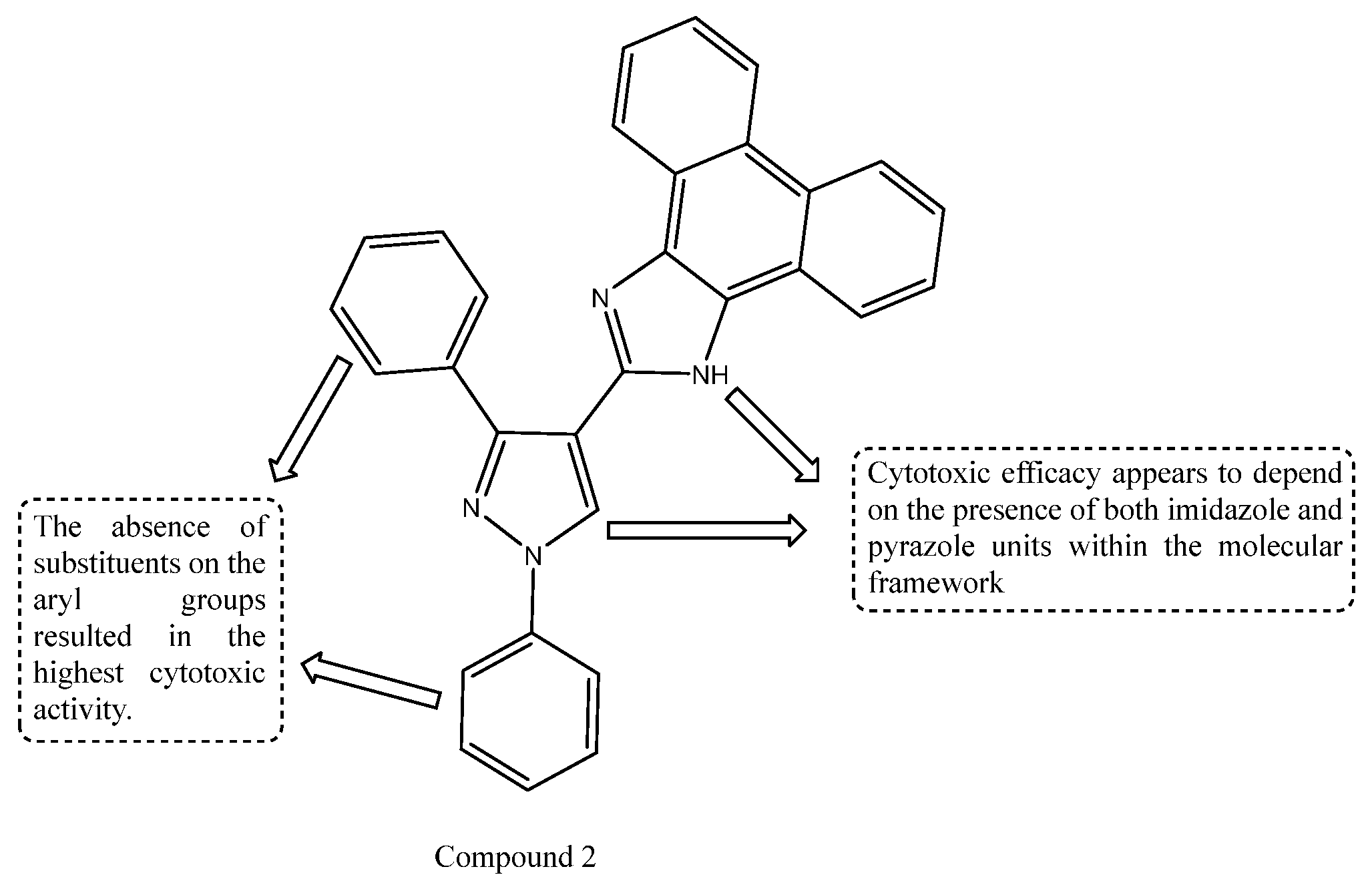
A series of novel pyrazolyl-phenanthroimidazole derivatives was synthesized via a multistep synthetic strategy and fully characterized using standard physical and spectroscopic techniques. The synthesized compounds were evaluated for cytotoxicity against pancreatic cancer cell lines AsPC-1 and SW1990, as well as against normal MRC-5 fibroblast cells. Several derivatives exhibited promising anticancer activity, while maintaining moderate toxicity toward normal cells. Structure–activity relationship (SAR) analysis indicated that the absence of aryl substituents on the imidazole–pyrazole core significantly enhanced cytotoxic activity. Among the series, Compound 2 emerged as the most active analogue, showing IC50 values of 30.3 ± 0.45 µM (AsPC-1) and 32.4 ± 0.65 µM (SW1990), with moderate toxicity toward MRC-5 cells (IC50 = 55.5 ± 3.50 µM). As shown in Figure 5, the enhanced cytotoxic activity may be attributed to the synergistic presence of imidazole and pyrazole moieties within the molecular framework, along with the absence of substituents on the aryl group, which enhances the compound’s biological efficacy [64].
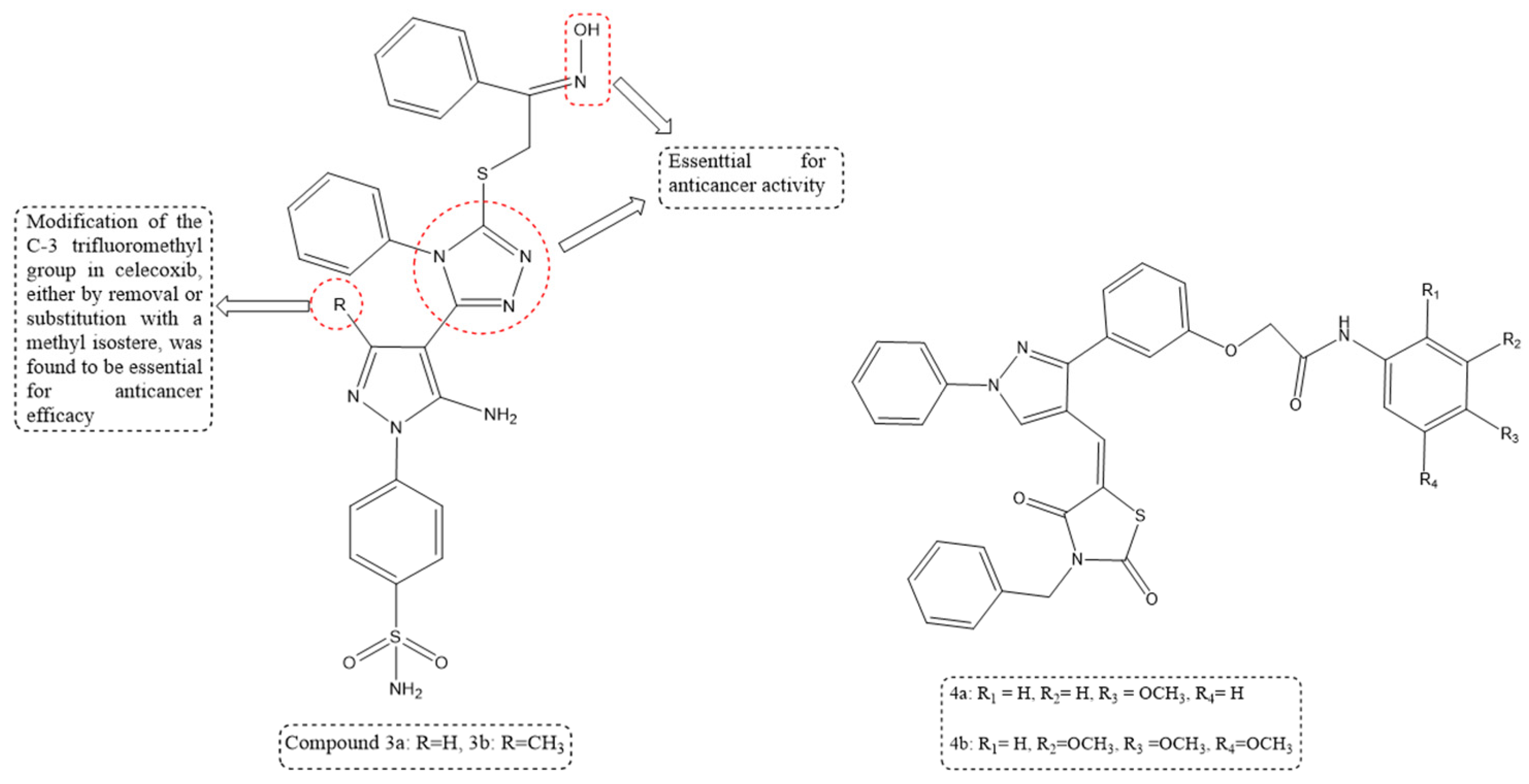
Two new series of pyrazole–1,2,4-triazole hybrid molecules were rationally designed and synthesized through a hybridization strategy inspired by the celecoxib pharmacophore. The synthesized compounds were evaluated for their in vitro anticancer activity against A549 (lung), MCF-7 (breast), HCT-116 (colon), and PC-3 (prostate) cancer cell lines, and most derivatives exhibited strong cytotoxicity. Structure–activity relationship (SAR) analysis highlighted that introduction of a 1,2,4-triazole linker at the C-4 position of the pyrazole ring, replacement or removal of the C-3 trifluoromethyl group with a methyl isostere, and attachment of an oxime NO-donor moiety at the triazole-linked sulfur significantly enhanced anticancer potency and selectivity. Additionally, compounds 3a and 3b induced apoptosis, inhibited cell proliferation, and arrested the cell cycle in PC-3 cells. Among the synthesized hybrids, sulphamoyl-containing derivatives 3a and 3b emerged as the most active compounds, exhibiting IC50 values of 5.34 and 6.48 μM (A549), 4.71 and 5.33 μM (MCF-7), 4.39 and 5.12 μM (HCT-116), and 3.66 and 4.37 μM (PC-3), respectively. As shown in Figure 6, the enhanced anticancer activity of compounds 3a and 3b may be attributed to the presence of the sulphamoyl functional group, which enhances binding to biological targets and increases cytotoxicity against cancer cell lines [65].
A series of (Z)-2-(3-(4-((3-benzyl-2,4-dioxothiazolidin-5-ylidene)methyl)-1-phenyl-1H-pyrazol-3-yl)phenoxy)-N-arylacetamide derivatives were synthesized through efficient multistep synthetic procedures, affording good yields, and were structurally characterized using 1H NMR, 13C NMR, IR spectroscopy, and ESI–MS techniques. The synthesized compounds were evaluated for their in vitro cytotoxic activity against MCF-7 human breast cancer cells over a concentration range of 0.625–10 µM. Several derivatives demonstrated potent anticancer activity, with structure–activity relationship (SAR) analysis revealing that N-aryl acetamide derivatives incorporating heterocyclic cores exhibited enhanced biological activity, primarily due to the amide linkage, which played a crucial role in activity modulation. Substituent variations at positions R1, R2, R3, and R4 significantly influenced lipophilicity, while the pyrazole and 2,4-thiazolidinedione moieties served as essential drug-like scaffolds. Additionally, incorporation of the amide group improved polarity and solubility, thereby reducing molecular aggregation. Among the synthesized series, Compounds 4a and 4b emerged as the most potent analogues, surpassing cisplatin in activity and exhibiting IC50 values of 0.604 µM and 0.665 µM, respectively. As shown in Figure 6, the enhanced anticancer activity may be attributed to the presence of electron-donating methoxy substituents, such as para-methoxy, 3,4-dimethoxy, and 3,4,5-trimethoxy groups, which enhance the compounds’ interactions with biological targets and thereby increase cytotoxicity [66].
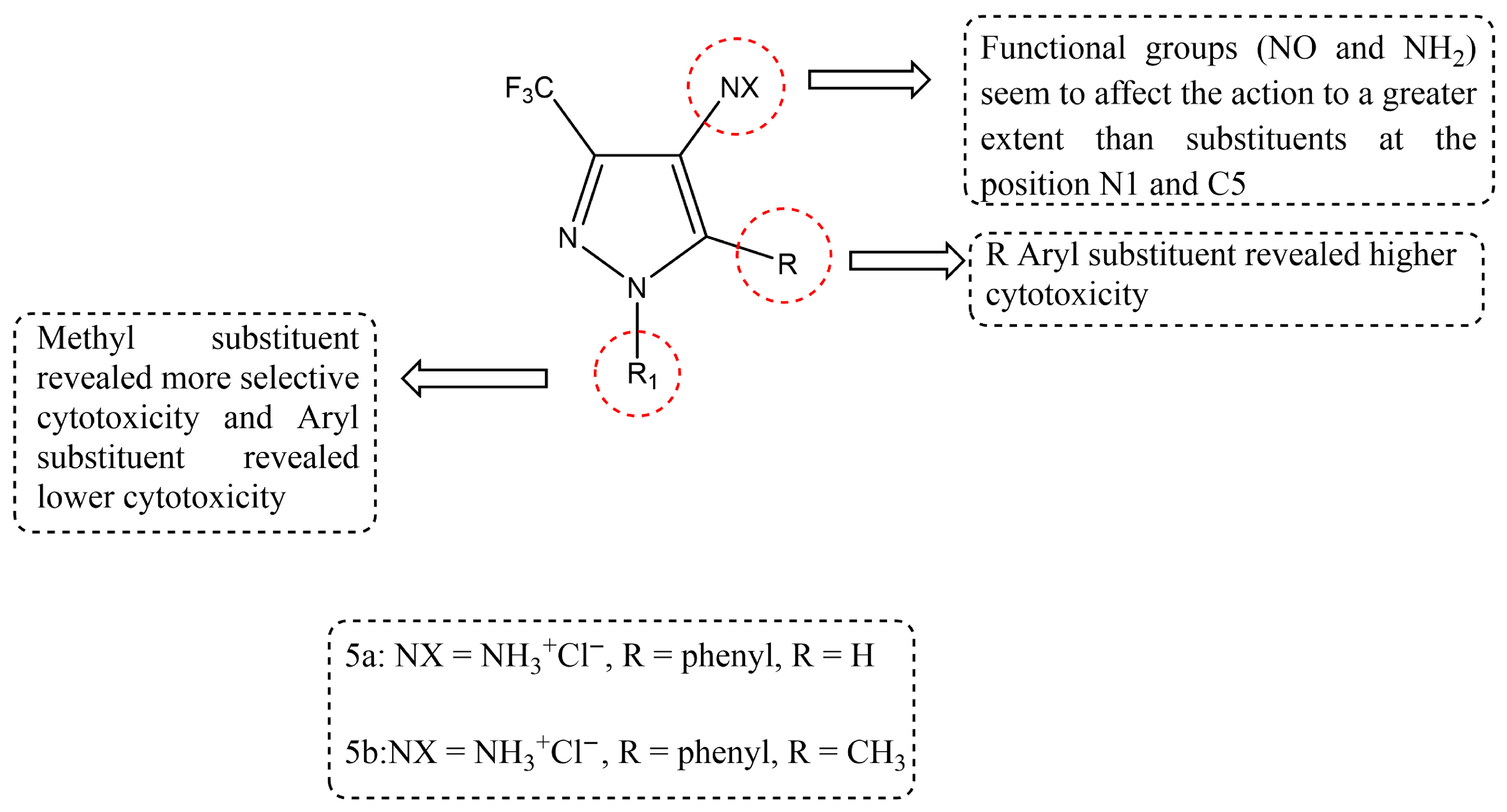
A new set of 4-aminopyrazole derivatives was designed and synthesized through a systematic structural modification approach to explore their anticancer potential. The synthesized compounds were evaluated for their in vitro cytotoxicity against HeLa cells and human dermal fibroblasts, using camptothecin as the reference standard. Several derivatives demonstrated significant cytotoxicity, with structure–activity relationship (SAR) analysis revealing that substituent variations at all three scaffold positions markedly influenced biological activity. In particular, modifications at the R and R1 positions were critical for fine-tuning cytotoxic potency, selectivity, and overall anticancer efficacy. Among the evaluated series, Compound 5b emerged as the most potent analogue, with an IC50 of 0.074 ± 0.005 µM, while Compound 5a also showed notable activity (IC50 = 1.86 ± 0.12 µM), both outperforming the reference drug camptothecin (IC50 = 1.66 ± 0.97 µM). As shown in Figure 7, the enhanced cytotoxic activity of these derivatives may be attributed to the presence of specific functional groups such as NO and NH2 at the N1 and C5 positions, along with methyl substitution, which significantly influence the biological activity of 4-aminopyrazole derivatives [67].
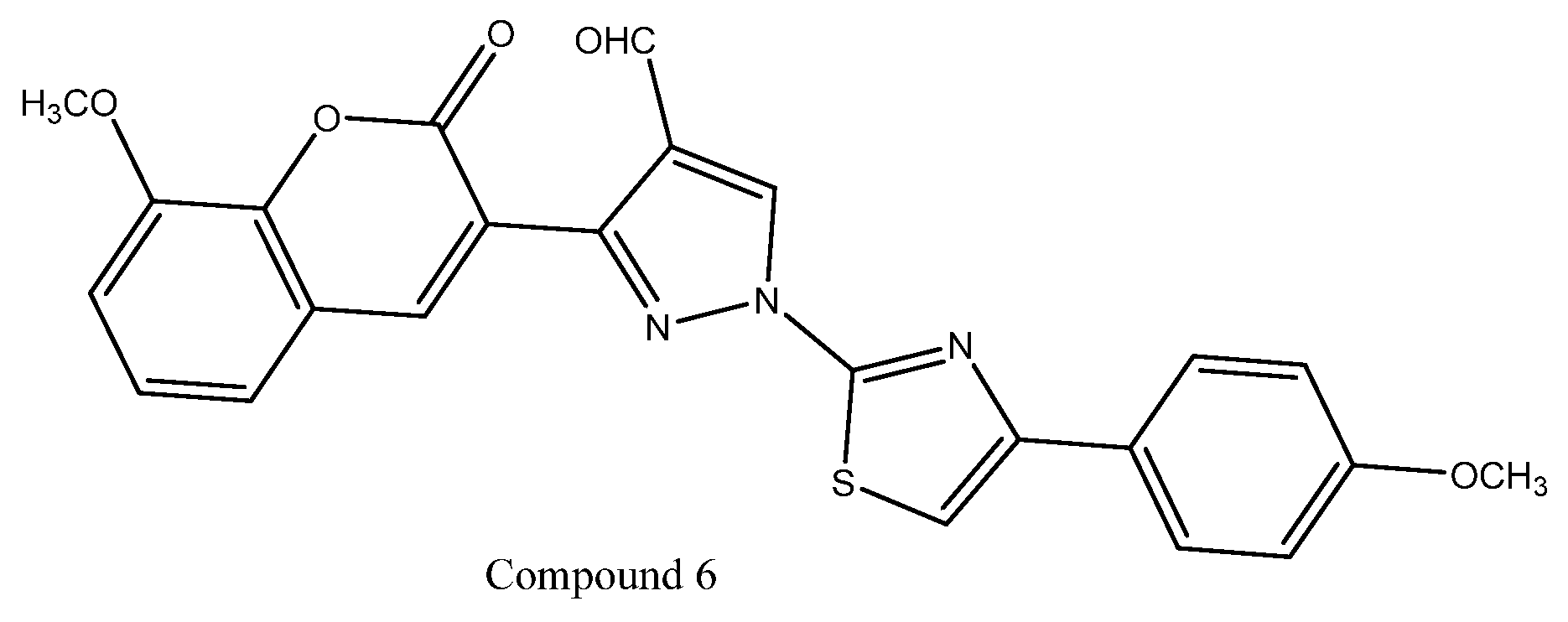
A series of thiazolyl–pyrazole carbaldehyde hybrid compounds was synthesized via a systematic synthetic approach and evaluated for in vitro anticancer activity. The synthesized derivatives were screened for antiproliferative effects against HeLa, MCF-7, and A549 cancer cell lines using nocodazole as the reference standard. Most compounds exhibited mild to weak inhibitory activity, particularly against HeLa cells; however, structure–activity relationship (SAR) analysis revealed that the presence of additional methoxy substituents at the R1, R2, and R3 positions significantly enhanced anticancer potency. Furthermore, incorporation of a δ-lactone ring into the coumarin moiety was identified as a critical structural feature contributing to improved biological activity, whereas replacing the coumarin oxygen atom with an NH group led to a marked reduction in activity. Among the synthesized series, compound 6 emerged as the most potent analogue, exhibiting IC50 values of 9.05 ± 0.04 µM (HeLa), 7.12 ± 0.04 µM (MCF-7), and 6.34 ± 0.06 µM (A549). As shown in Figure 8, the presence of key functional groups in compound 6 may contribute to its enhanced cytotoxic activity against the tested cancer cell lines [68].
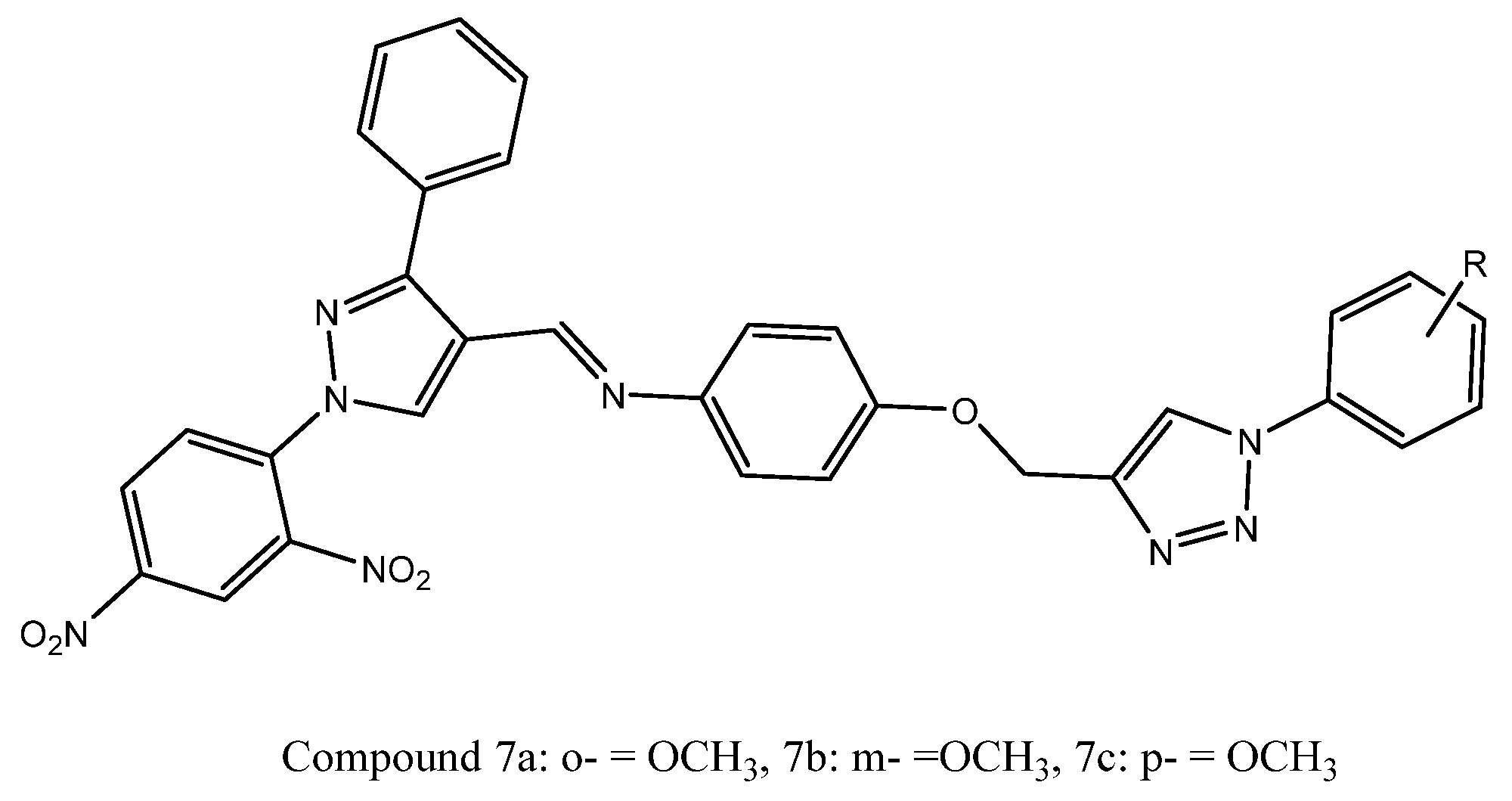
A new series of dinitrophenylpyrazole-linked triazole derivatives was rationally designed and synthesized to explore their anticancer potential. The synthesized compounds were evaluated for in vitro cytotoxicity against MCF-7, HeLa, and Caco-2 cancer cell lines using the MTT assay, with combretastatin-A4 as the reference drug. Several derivatives demonstrated significant cytotoxic effects, particularly against HeLa cells. Structure–activity relationship (SAR) analysis revealed that the presence of methoxy substituents at ortho, meta, or para positions on the phenyl ring markedly enhanced anticancer potency. In contrast, electron-withdrawing substituents, such as chloro and bromo groups, reduced cytotoxic activity. Among the synthesized series, compounds 7a, 7b, and 7c emerged as the most active analogues, exhibiting IC50 values of 4.0, 5.0, and 6.0 µM against HeLa cells, respectively, outperforming combretastatin-A4 (IC50 = 9.0 µM), while compound 7c also showed notable activity against MCF-7 cells with an IC50 value of 8.0 µM. As shown in Figure 9, variations in the methoxy (–OCH3) substitution at the ortho, meta, and para positions influence the cytotoxic activity of the synthesized derivatives [69].
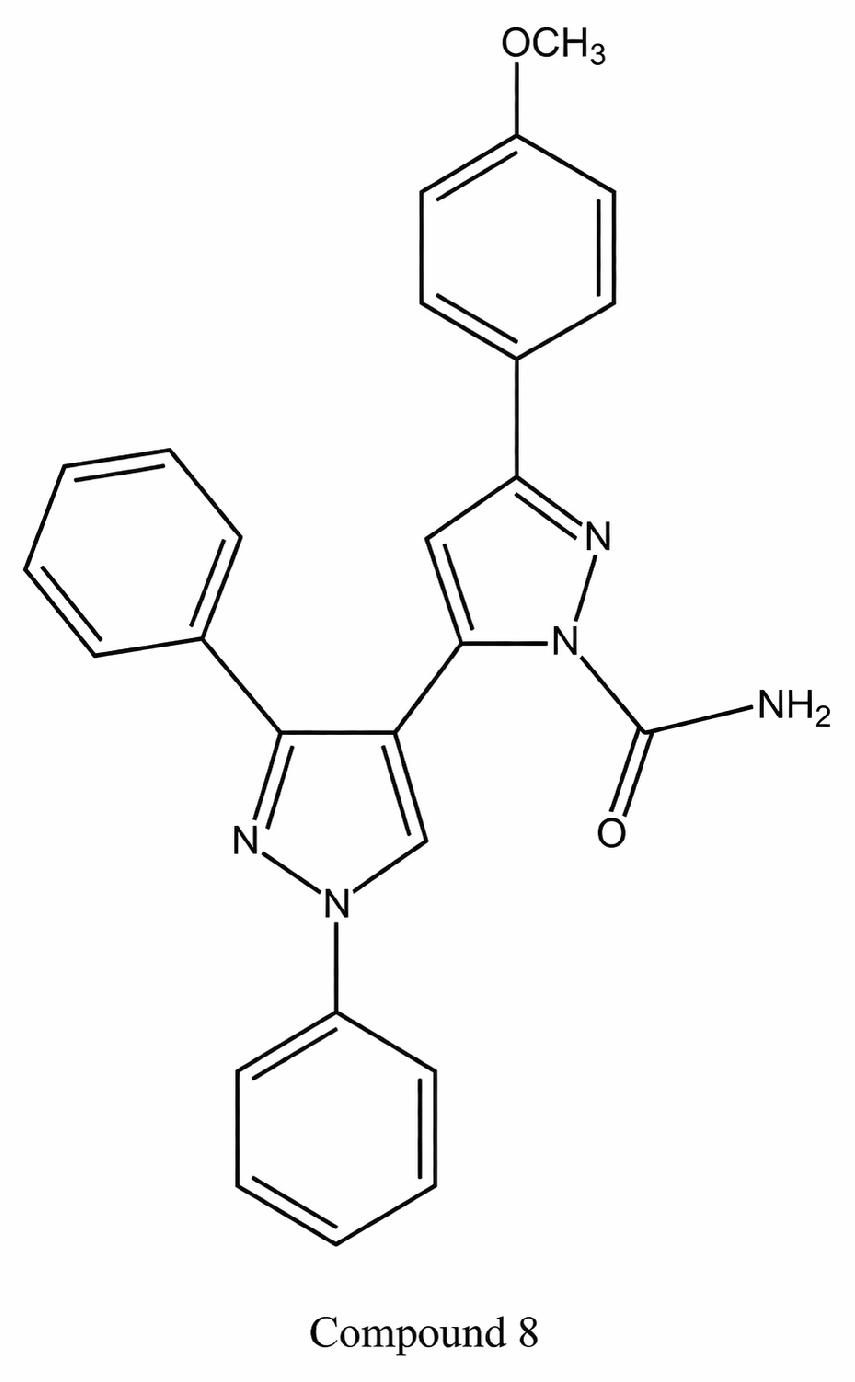
A novel series of pyrazole–pyrazoline hybrid compounds was designed and synthesized to investigate their anticancer potential. The synthesized derivatives were evaluated for in vitro cytotoxicity using the MTT assay against MCF-7, A549, SiHa, COLO205, and HepG2 cancer cell lines, with 5-fluorouracil as the reference standard. Several compounds exhibited significant anticancer activity across multiple cell lines, with structure–activity relationship (SAR) analysis revealing that the absence of substituents on ring B was critical for enhanced potency. In contrast, increased electronegativity at this position led to reduced activity. Furthermore, SAR evaluation of ring C (R1 position) indicated that methoxy substitution markedly improved anticancer activity, whereas electron-withdrawing substituents diminished efficacy. Among the evaluated series, compound 8 emerged as the most potent analogue, displaying IC50 values of 4.94 µM (A549), 4.54 µM (SiHa), 4.86 µM (COLO205), and 2.09 µM (HepG2), along with minimal toxicity toward normal HaCaT cells (IC50 > 50 µM). As shown in Figure 10, the presence of substituted aromatic rings and amide functional groups may contribute to its enhanced anticancer activity and selectivity [70].
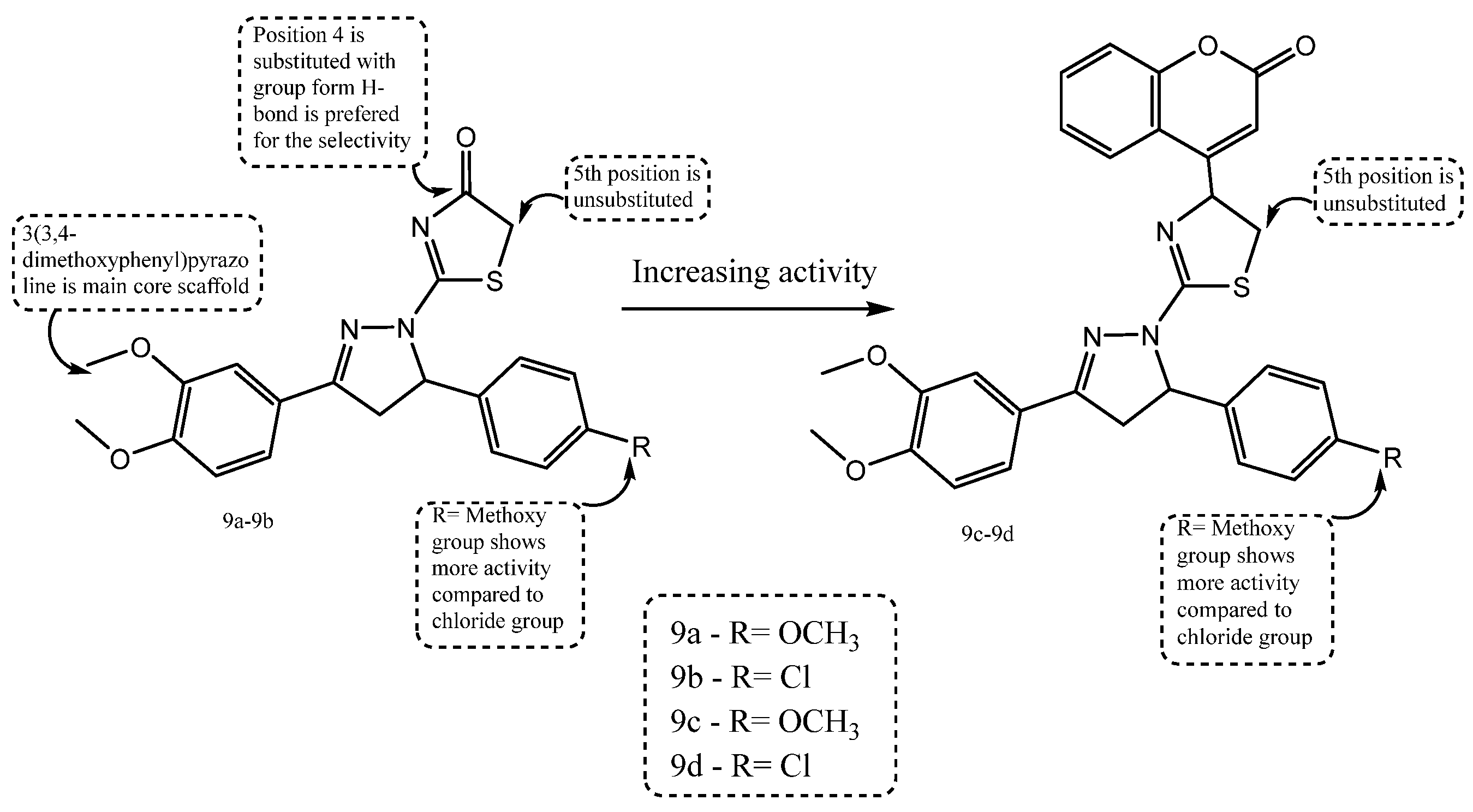
A new series of thiazolyl–pyrazoline-based hybrid compounds, integrating thiazole and pyrazoline pharmacophores, was rationally designed and synthesized to explore dual epidermal growth factor receptor (EGFR) and human epidermal growth factor receptor 2 (HER2) inhibitory anticancer activity. The synthesized set of 18 derivatives was initially evaluated for in vitro anticancer activity against MCF-7 breast cancer cells, and several compounds showed strong cytotoxicity. Subsequent enzyme inhibition assays further assessed their ability to inhibit EGFR and HER2 kinases. Multiple derivatives demonstrated superior anticancer efficacy compared to the reference drug lapatinib, with structure–activity insights highlighting the effectiveness of the thiazolyl–pyrazoline framework in dual kinase inhibition. Among the evaluated series, compounds 9a9d were the most active, with IC50 values ranging from 3.37 to 5.64 µM against MCF-7 cells, all of which outperformed lapatinib (IC50 = 5.88 µM). As shown in Figure 11, compound 9c demonstrated the lowest IC50 value against MCF-7 cells and the most potent dual inhibition of EGFR and HER2 kinases. Notably, compound 9c exhibited EGFR IC50 = 0.005 µM and HER2 IC50 = 0.022 µM, confirming its promise as a dual-target anticancer agent [71].
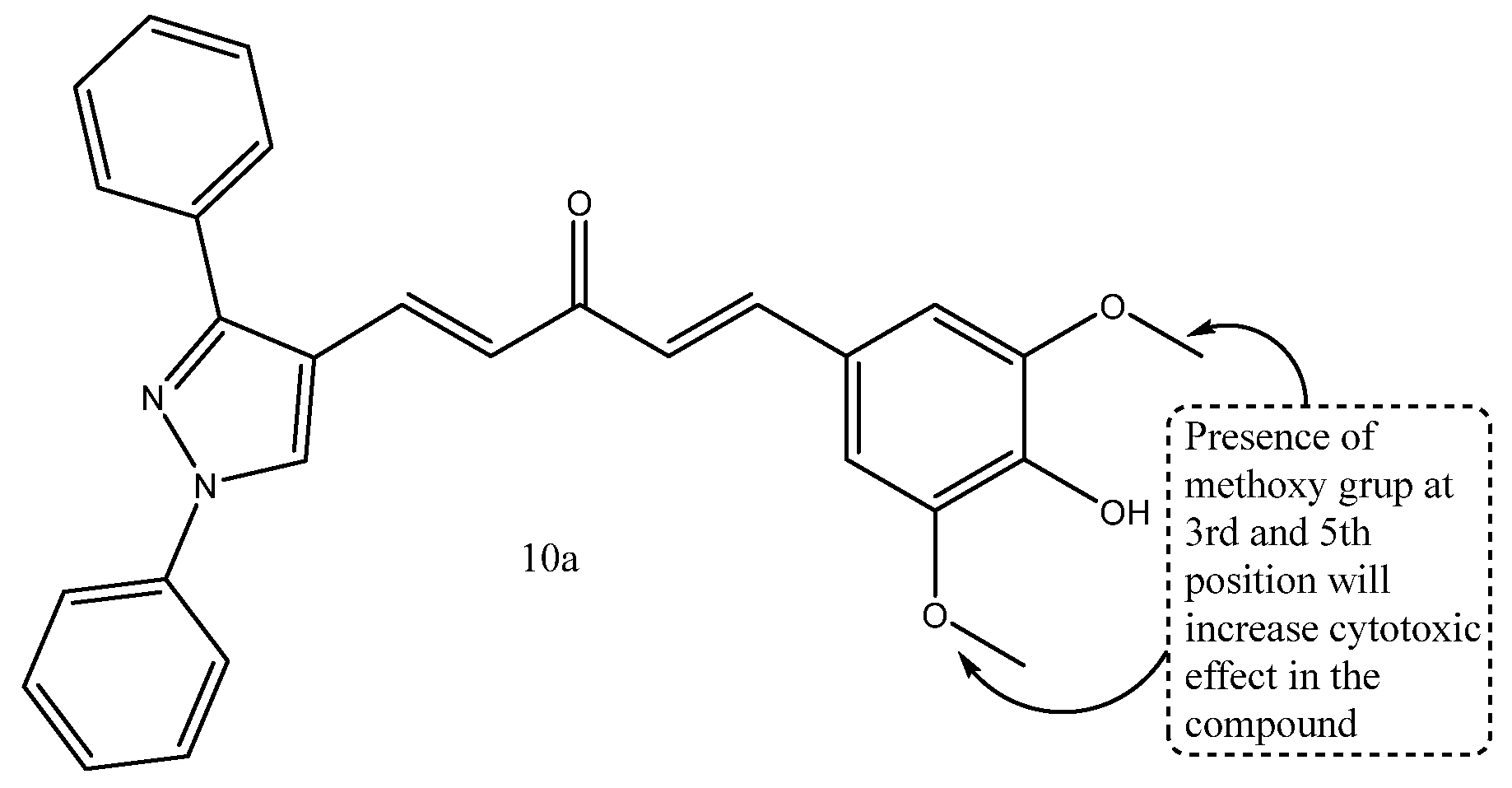
A series of curcumin-1,3-diphenyl-1H-pyrazole hybrid compounds was rationally designed and synthesized to explore their anticancer potential. The synthesized derivatives were evaluated for in vitro cytotoxicity against SW480 (colon), MDA-MB-231 (breast), and A549 (lung) cancer cell lines, and several compounds exhibited significant growth inhibition. Enzyme inhibition studies further assessed their effects on EGFR wild-type (EGFRWT) and mutant (EGFRL858R) kinases, while apoptosis assays were conducted to investigate the underlying mechanism of action. Among the evaluated series, compound 10a emerged as the most potent analogue, displaying IC50 values of 4.86 μM (SW480), 4.89 μM (MDA-MB-231), and 4.44 μM (A549). As shown in Figure 12, compound 10a exhibited consistent cytotoxic activity across the tested cancer cell lines and demonstrated moderate inhibitory activity against EGFR^WT (30%) and EGFR^L858R (41%). Furthermore, it induced apoptotic morphological changes and enhanced caspase-3 activity in SW480 cells, confirming its strong anticancer potential [72].
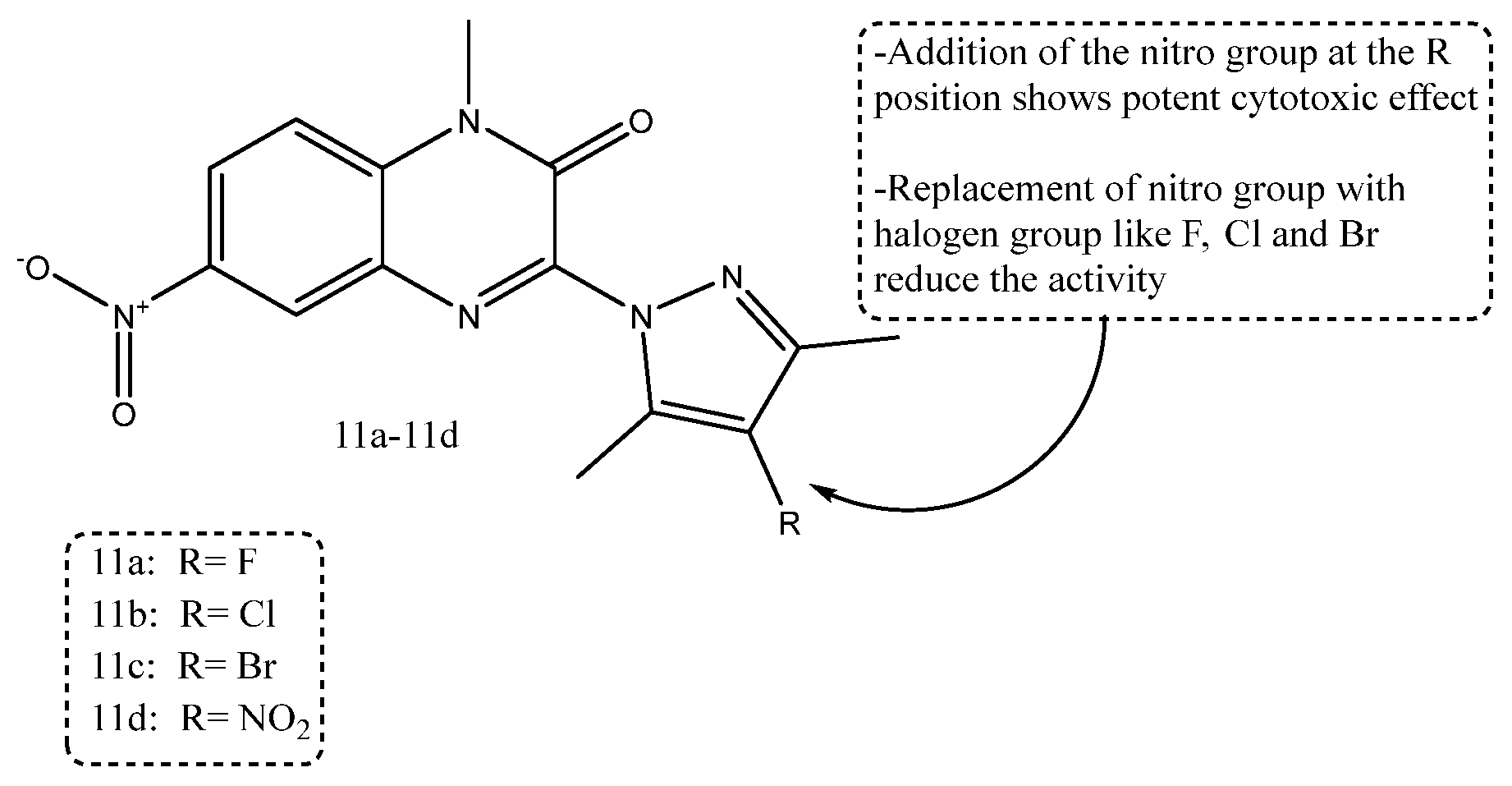
A new series of quinoxalinone-based pyrazole derivatives was rationally designed and synthesized using a multitarget-directed drug design strategy to explore their anticancer potential. The synthesized compounds were evaluated for their in vitro antiproliferative activity against MCF-7, HCT-116, and A549 human cancer cell lines, where several derivatives demonstrated pronounced growth inhibition. In addition, their EGFR-inhibitory activity was assessed to identify a potential molecular target. Among the evaluated series, compounds 11a11d exhibited strong cytotoxic effects, with IC50 values of 3.91, 4.18, 5.07, and 2.04 μM (MCF-7), 4.13, 4.85, 5.96, and 2.69 μM (HCT-116), and 18.16, 16.92, 15.76, and 19.83 μM (A549), respectively. Notably, these compounds also showed potent EGFR inhibition, with IC50 values of 2.89, 3.71, 4.28, and 1.28 μM, all of which exceeded the activity of the reference inhibitor sorafenib (IC50 = 8.16 μM). Among them, compound 11d emerged as the most potent analogue, demonstrating the lowest IC50 values across both cellular and EGFR inhibition assays. As shown in Figure 13, the structure–activity relationship (SAR) analysis indicates that the presence of a nitro group (–NO2) at the R position significantly enhances cytotoxic and EGFR inhibitory activity. In contrast, halogen substitution, such as F, Cl, and Br, reduces potency [73].
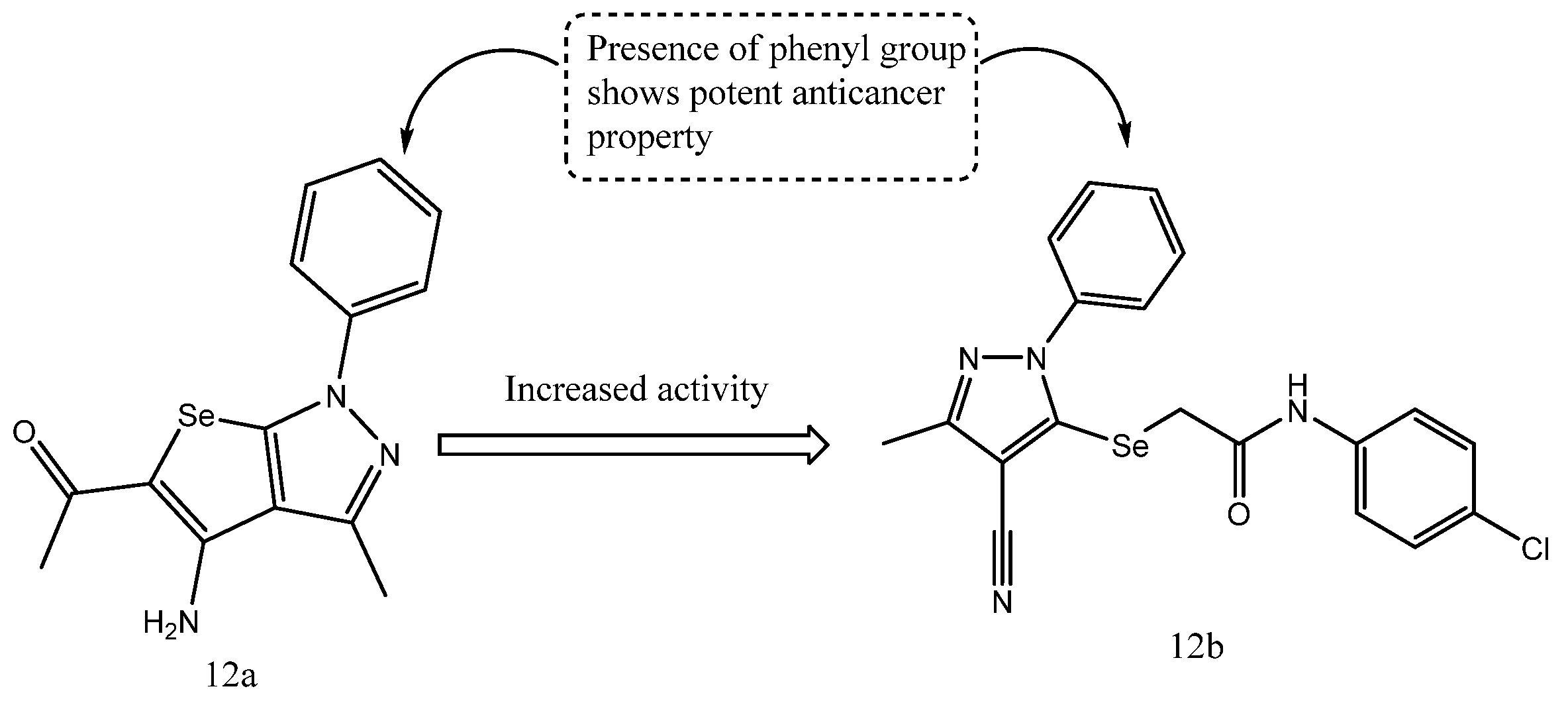
Se-alkylated pyrazole derivatives were prepared as antitumor analogues through alkylation of the pyrazole nucleus and were subsequently evaluated against the HepG2 cell line. Within this series, compounds 12a and 12b showed the strongest cytotoxic activity, with IC50 values of 4.30 μM and 4.49 μM, respectively. Reverse transcription quantitative polymerase chain reaction (RT-qPCR)-based analysis further demonstrated marked down-regulation of S100A4 and MMP-9, suggesting a possible effect on tumor progression. As shown in Figure 14, incorporation of a phenyl moiety appeared to enhance the biological activity of the pyrazolo [3,4-d]pyrimidine derivatives, in line with the observed suppression of metastasis-associated genes. Overall, compound 12a was the most active member of the series and produced the strongest gene-downregulatory effect [74].
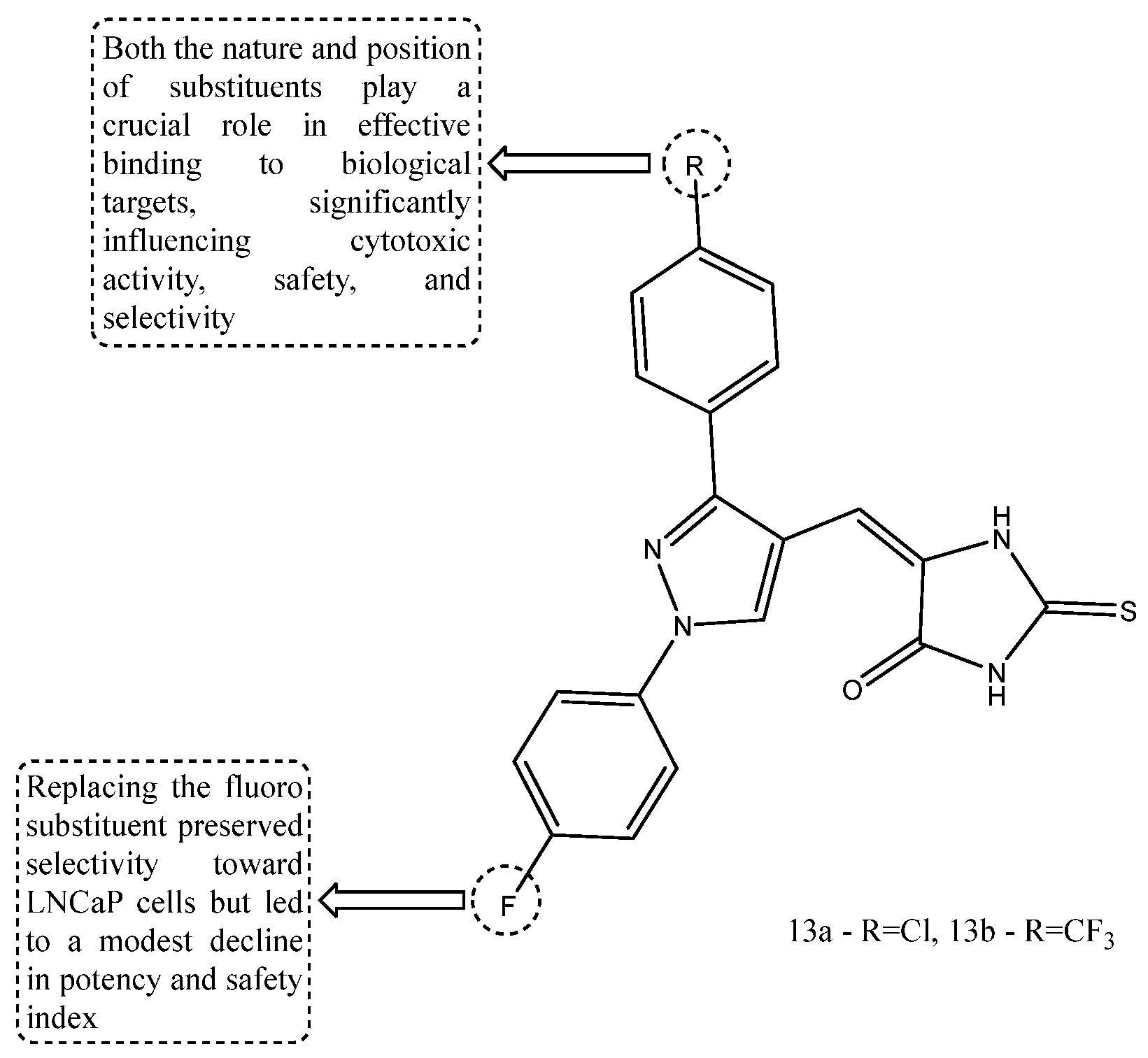
Pyrazolylmethylene-2-thioxo-imidazolidin-4-one derivatives were designed for the evaluation of anticancer activity in prostate cancer using a pharmacophore-based molecular hybridization strategy. The compounds were screened in androgen receptor (AR)-positive LNCaP cells, AR-negative PC-3 cells, and normal WI-38 cells. Compounds 13a and 13b showed the most notable antiproliferative effects, accompanied by apoptosis induction, increased caspase-3 expression, cell-cycle arrest, and inhibition of LNCaP cell proliferation. As illustrated in Figure 15, structure–activity relationship (SAR) analysis indicated that both the presence and the position of electron-withdrawing substituents on the benzene ring strongly influenced cytotoxic potency and selectivity. In particular, compound 13b, bearing fluoro and trifluoromethyl groups, showed the best activity (IC50 = 5.22 ± 0.12 µM), together with high AR selectivity and a favorable safety profile [75].
Taken together, these studies support the pyrazole scaffold as a versatile platform for anticancer design; however, the reported SAR trends should be interpreted with caution. Direct cross-study comparison is limited by differences in cancer cell panels, assay formats, exposure times, reference compounds, and reporting metrics. In addition, some SAR conclusions appear to be series-specific rather than universally transferable across the broader pyrazole chemical space, particularly when comparing hybrid scaffolds and different substitution patterns. Thus, while recurrent motifs such as electron-withdrawing substituents, lipophilic aryl groups, and appropriately positioned heterocyclic linkers often correlate with improved activity, their contribution should be interpreted within the context of each individual chemotype. For ease of comparison, representative pyrazole series, biological models, and recurrent SAR observations discussed in this section are summarized in Table 1.

5. Mechanism of Action of Pyrazoles as Anticancer Agents

5.1. Tubulin Polymerization Inhibition

Microtubules are filamentous polymeric structures within the cytoplasm, consisting of α-tubulin and β-tubulin subunits. They are implicated in carcinogenesis and play a pivotal role in regulating numerous cellular functions, such as cell polarity, morphology, mitosis, intracellular transport, signal transduction, gene expression, and structural integrity [76,77]. Hence, it is now recognized as a vital target in the search for new anticancer agents. Tumor cell proliferation relies heavily on the uninterrupted polymerization and depolymerization of tubulin. Consequently, tubulin polymerization inhibitors have been developed as antimitotic agents and represent a fundamental class of chemotherapeutic compounds due to their ability to disrupt microtubule dynamics and inhibit cancer cell proliferation. Colchicine, the earliest known microtubule-destabilizing agent, inhibits mitosis [78,79].
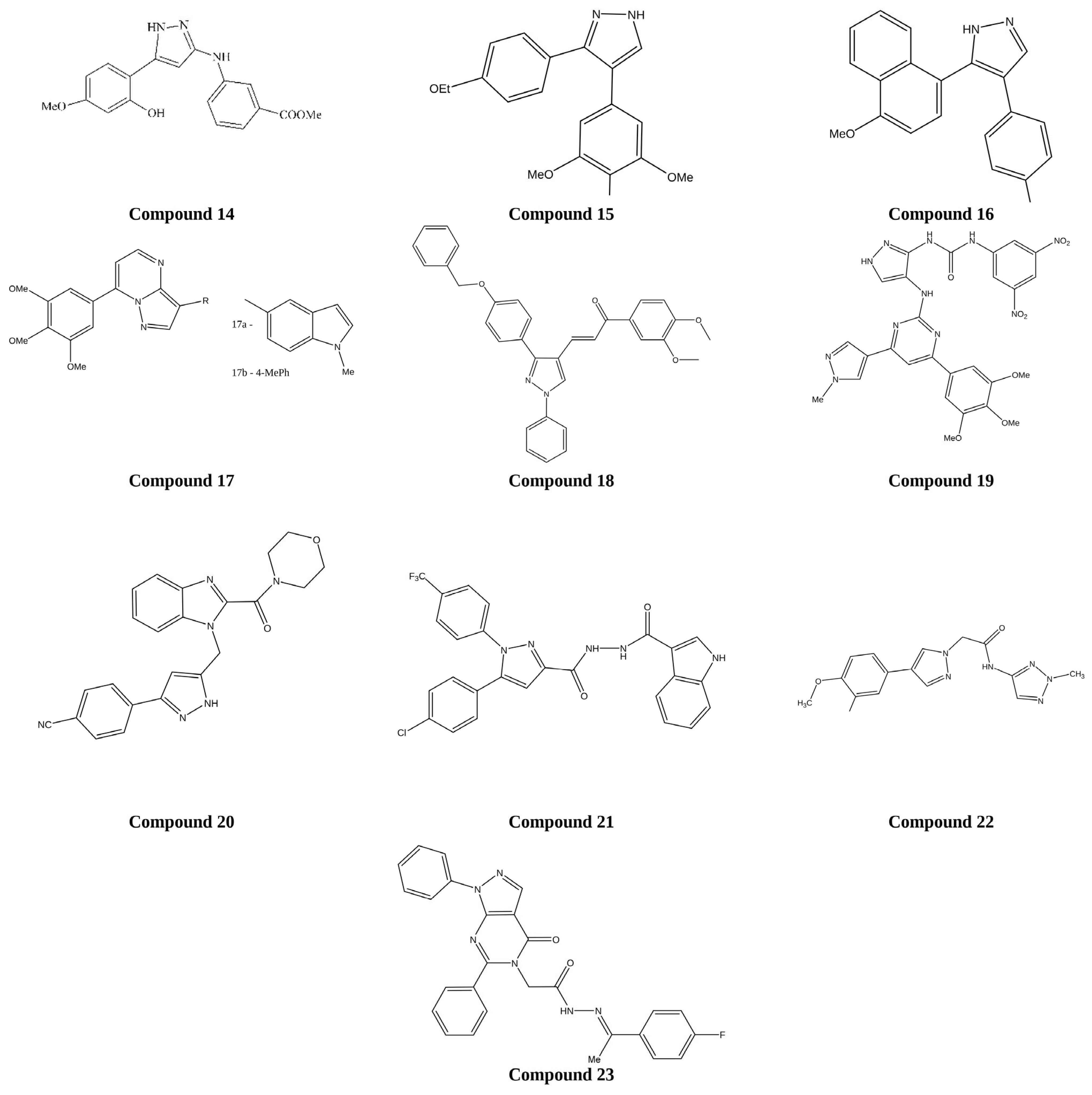
1H-benzofuro[3,2-c]pyrazole derivatives were designed and synthesized as potential tubulin polymerization inhibitors using a fused heterocyclic strategy. The series was evaluated for in vitro anticancer activity against K562, A549, and MCF-7 cell lines, with ABT-751 used as the reference standard. Compound 14 showed the strongest activity in the series and also inhibited tubulin polymerization with an IC50 value of 7.30 µM. As shown in Figure 16, its structural features appear to favor productive interaction with the tubulin binding site, thereby disrupting microtubule assembly and suppressing cancer cell proliferation [80].
A series of 3,4-diaryl pyrazole derivatives inspired by the structure of the tubulin inhibitor Combretastatin A 4 were synthesized using a rational design strategy aimed at targeting the colchicine-binding site of tubulin. Biological evaluation across six human cancer cell lines demonstrated remarkable antiproliferative activity for several analogues. Among the tested compounds, compound 15 emerged as the most potent, exhibiting IC50 values in the ultra-low nanomolar range (0.06–0.25 nM). In vivo studies further confirmed its efficacy, with a 5 mg/kg dose significantly reducing tumor size in a mouse breast cancer model. Mechanistic investigations revealed that compound 15 strongly inhibited tubulin polymerization (IC50 = 0.35 µM) and effectively blocked the colchicine-binding site, producing 96% inhibition at 5 µM and 90% inhibition at 0.5 µM [81].
Pyrazole–naphthalene derivatives were designed and synthesized via molecular hybridization to enhance their anticancer potential by inhibiting tubulin polymerization. The synthesized compounds were evaluated for cytotoxicity against the MCF-7 breast cancer cell line. Among the tested molecules, compound 16 exhibited significantly stronger cytotoxicity than cisplatin, with an IC50 value of 2.78 ± 0.24 µM. Additionally, compound 5 demonstrated tubulin polymerization-inhibitory activity nearly comparable to that of colchicine, with IC50 values of 4.6 µM and 6.7 µM, respectively. Overall, compound 16 was identified as the most potent anticancer agent in the series. As shown in Figure 16, the comparative analysis highlights the enhanced cytotoxicity of compound 16 relative to the reference drug cisplatin, and the notable tubulin inhibition exhibited by compound 5 compared to colchicine [82].
Pyrazolo[1,5-a]pyrimidine derivatives were designed and synthesized as potential tubulin polymerization inhibitors using an appropriate heterocyclic modification strategy. The synthesized compounds were evaluated for antiproliferative activity using the Cell Counting Kit-8 (CCK-8) assay in vitro against five cancer cell lines (HeLa, MCF-7, A549, HCT-116, and B16F10), with colchicine and paclitaxel as reference compounds. Among the tested molecules, compounds 17a and 17b exhibited the most potent cytotoxic activity across the evaluated cell lines, with IC50 values ranging from 0.003 µM to 0.048 µM, and were identified as the most active derivatives in the series. The representative pyrazolo[1,5-a]pyrimidine scaffold shown as compound 17 in Figure 16 reflects the core structural motif of this highly active series and highlights the features associated with the enhanced anticancer potential of compounds 17a and 17b [83].
(E)-3-(3-(4-(benzyloxy)phenyl)-1-phenyl-1H-pyrazol-4-yl)-1-phenylprop-2-en-1-one derivatives were designed and synthesized using an appropriate chalcone-based hybridization strategy to evaluate their anticancer potential via tubulin polymerization inhibition. The synthesized compounds were assessed for cytotoxicity against breast (MCF-7), cervical (SiHa), and prostate (PC-3) cancer cell lines, as well as against normal human embryonic kidney (HEK) cells. Among the tested molecules, compound 18 exhibited the most potent antiproliferative activity, with IC50 values of 2.13 ± 0.80 µM against MCF-7, 4.34 ± 0.98 µM against SiHa, and 4.46 ± 0.53 µM against PC-3 cancer cell lines, while showing no significant toxicity toward normal HEK cells. These findings indicate its selective cytotoxicity toward cancerous cells and identify it as the most active derivative in the series. As shown in Figure 16, the structural framework of compound 18 contributes to its enhanced anticancer efficacy and improved safety profile compared to other evaluated analogues [84].
Pyrimidine–pyrazole-substituted aryl urea derivatives were synthesized as potential antiproliferative agents using a rational hybridization strategy that combines pyrimidine and pyrazole pharmacophores. The synthesized compounds were evaluated for anticancer activity against human cancer cell lines MCF-7, A549, COLO205, and A2780. Several derivatives exhibited significant cytotoxic activity, indicating the effectiveness of this scaffold for anticancer drug development. As shown in Figure 16 among the tested compounds, compound 19 emerged as the most potent analogue, outperforming the reference drug etoposide across all evaluated cell lines with IC50 values ranging from 0.01 to 0.65 µM. Furthermore, molecular docking studies indicated that the active derivative acts as a tubulin inhibitor, occupying the colchicine binding site and supporting its potential anticancer mechanism of action [85].
Morpholine–benzimidazole–pyrazole hybrid derivatives were designed and synthesized via molecular hybridization to evaluate their potential as tubulin polymerization inhibitors for cancer therapy. The synthesized compounds were evaluated for cytotoxicity against MCF-7, PC-3, and A549 cancer cell lines. Among the tested molecules, compound 20 exhibited significantly greater cytotoxicity than the standard drug combretastatin A-4, with IC50 values of 0.042 µM (MCF-7), 0.61 µM (PC-3), and 0.76 µM (A549), along with potent inhibition of tubulin polymerization (IC50 = 0.35 µM). Molecular docking studies further confirmed its strong binding interaction at the α,β-tubulin interface, and compound 20 was identified as the most promising lead molecule in the series for the development of next-generation tubulin-targeting anticancer agents. As shown in Figure 16, the structural configuration of compound 20 contributes to its enhanced binding affinity and superior biological activity compared to the reference compound [86].
Pyrazole–carbohydrazide derivatives incorporating an indole moiety were designed and synthesized using a combretastatin A-4 (CA-4)-inspired molecular hybridization strategy to evaluate their potential to induce mitotic catastrophe via tubulin polymerization inhibition. The synthesized compounds were evaluated for antiproliferative activity against HeLa, HepG2, A549, and MCF-7 cancer cell lines. Among the tested molecules, compound 21 exhibited notable tubulin polymerization inhibitory activity (IC50 = 2.23 µM) along with promising antiproliferative effects, with GI50 values of 6.23 µM (HeLa), 0.71 µM (HepG2), 0.24 µM (A549), and 0.92 µM (MCF-7), and was identified as the most potent derivative in the series. As shown in Figure 16, the structural features of compound 21 enhance its interaction with the tubulin binding site, resulting in effective inhibition of microtubule assembly and cancer cell proliferation [87].
Pyrazole derivatives were designed and synthesized to evaluate their anticancer potential using a targeted molecular modification strategy. The synthesized compounds were biologically assessed for their mechanism of action using differential nuclear staining, whole ribonucleic acid (RNA) sequencing, Connectivity Map (CMap) analysis, and biochemical assays. Among the tested molecules, compound 22 exhibited potent anticancer activity with low cytotoxicity toward non-cancerous cells. It effectively induced apoptosis, triggered cell cycle arrest in the S and G2/M phases, and modulated gene expression in a manner comparable to established tubulin inhibitors. These findings highlight its selective cytotoxic potential and favorable safety profile. As shown in Figure 16, the structural features of compound 22 contribute to its biological behavior, supporting its identification as the most promising candidate in the series for future clinical development as a tubulin-targeting anticancer agent [88].
Pyrazolo[3,4-d]pyrimidine derivatives were designed by incorporating key pharmacophoric features of known EGFR inhibitors in order to enhance targeted anticancer activity. After evaluation against MCF-7 breast cancer cells, compound 23 emerged as the leading analogue, showing an IC50 value of 2.89 µM, close to that of toceranib and lower than that of doxorubicin. Structure–activity relationship (SAR) analysis indicated that the introduction of aryl or heteroaryl groups through a hydrophilic linker improved anticancer potency. Molecular docking also supported strong binding of compound 23 within the EGFR kinase domain, consistent with its profile as the most promising selective EGFR-oriented derivative in the series [52].

5.2. Kinase Inhibition

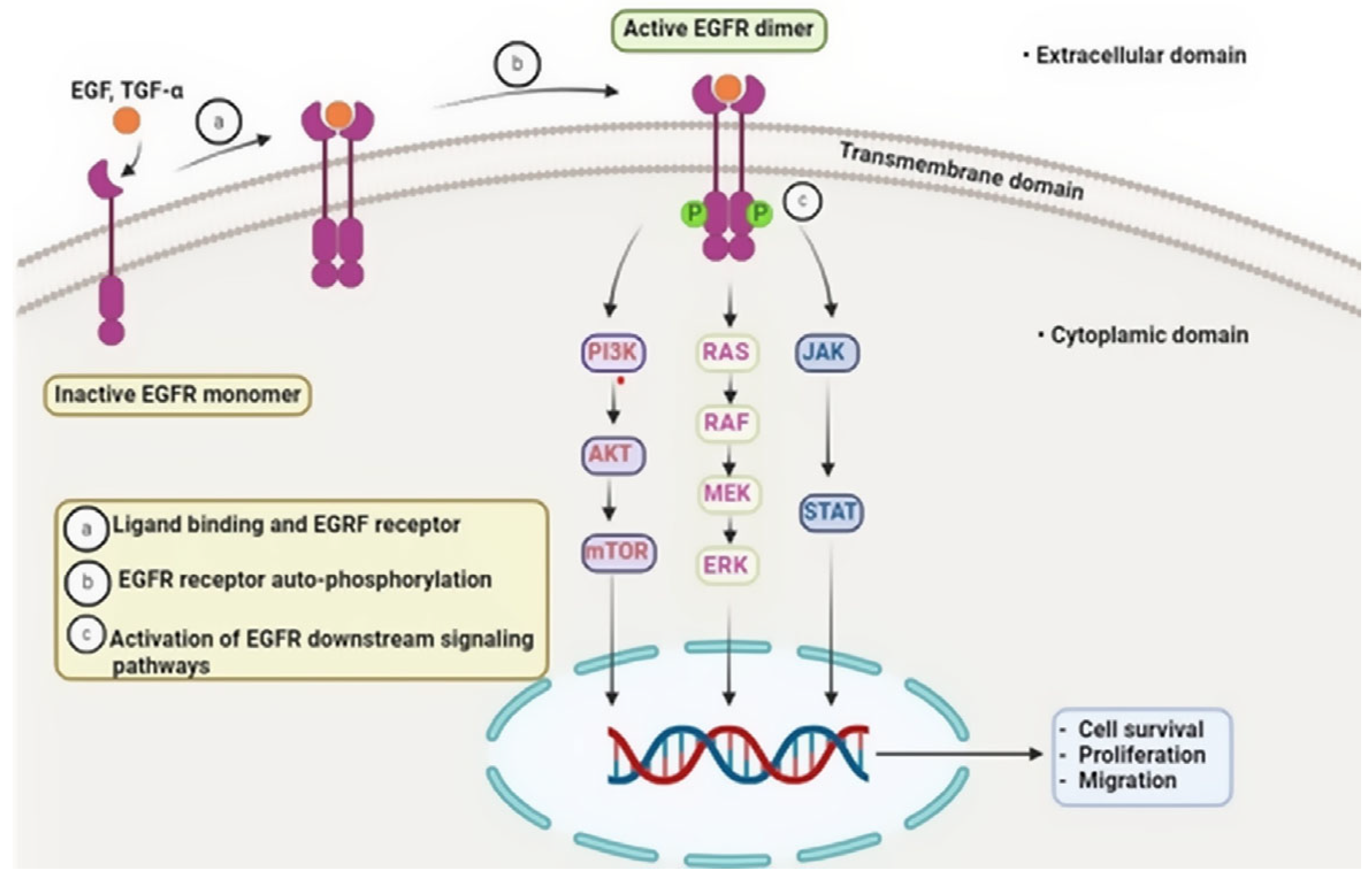
Protein kinases are crucial therapeutic targets for the development of anticancer drugs because they regulate cell proliferation, differentiation, and apoptosis. One promising method of treating cancer is the creation of tiny compounds that block these kinases. A recent investigation reported the identification of 42 protein kinase inhibitors bearing a unique, unfused pyrazole moiety, all of which are undergoing clinical evaluation. The molecules demonstrated targeted inhibition across multiple oncogenic kinases, including protein kinase B (AKT), cyclin-dependent kinases (CDKs), epidermal growth factor receptor/vascular endothelial growth factor receptor (EGFR/VEGFR), mitogen-activated protein kinase (MAPK), B-Raf proto-oncogene serine/threonine kinase (BRAF), Janus kinase (JAK), hepatocyte growth factor receptor (c-Met), and Bruton tyrosine kinase (BTK), highlighting their broad-spectrum anticancer potential. Clinically relevant lead compounds such as afuresertib (AKT inhibitor), lazertinib (EGFR inhibitor), dexmetinib (MAPK pathway inhibitor), encorafenib (BRAF inhibitor), ruxolitinib (JAK inhibitor), crizotinib (c-Met inhibitor), and pirobrutinib (BTK inhibitor) have shown considerable therapeutic efficacy and continue to hold promise for future drug development. Figure 17 provides a mechanistic overview of the EGFR-centered signaling network relevant to this section, showing how receptor activation propagates through the phosphoinositide 3-kinase/protein kinase B/mammalian target of rapamycin (PI3K/AKT/mTOR), rat sarcoma/rapidly accelerated fibrosarcoma/mitogen-activated protein kinase kinase/extracellular signal-regulated kinase (RAS/RAF/MEK/ERK), and Janus kinase/signal transducer and activator of transcription (JAK/STAT) axes that govern cell survival, proliferation, and migration—processes frequently modulated by the pyrazole-based kinase inhibitors discussed below [44,48,89].
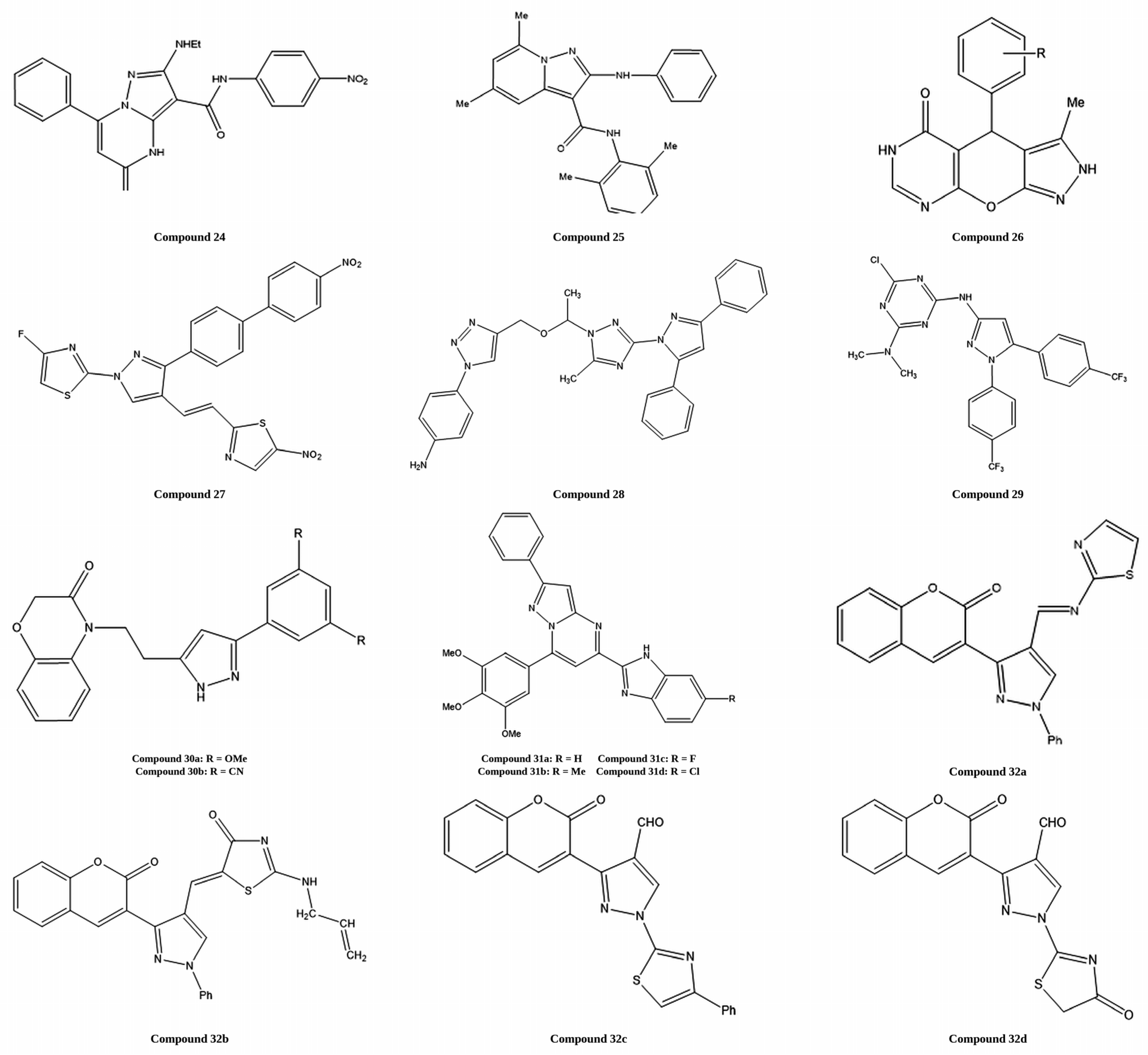
Pyrazolopyrimidine derivatives were synthesized and evaluated for in vitro antiproliferative activity against HCT-116 and MCF-7 cancer cell lines using the MTT assay. Compounds 24 and 25 showed the best activity within the series, with compound 24 being the most potent and displaying an IC50 value of 1.51 µM against HCT-116 cells. As indicated in Figure 18, the observed activity suggests that structural modification of this scaffold can meaningfully improve antiproliferative effects in colorectal cancer models [90].
Pyrazolo[4′,3′:5,6]pyrano[2,3-d]pyrimidin-5(2H)-one derivatives were designed and synthesized using a fused heterocyclic framework to evaluate their anticancer efficacy. The synthesized compounds were evaluated for cytotoxicity against MCF-7, Caco-2, HeLa, and HepG2 cancer cell lines. Among the tested molecules, compounds 26a and 26b exhibited potent cytotoxicity, with IC50 values of 13–17 µg/mL, closely matching the activity of the reference drug doxorubicin. Among them, compound 26a was identified as the most active derivative in the series. As shown in Figure 18, structural variations between 26a and 26b contribute to their comparable yet slightly differing cytotoxic profiles [91].
Thiazole–pyrazole derivatives were designed and synthesized via molecular hybridization to evaluate their in vitro anticancer potential. The synthesized compounds were assessed for cytotoxicity against the MCF-7 and HeLa cancer cell lines. Among the tested molecules, compound 27 exhibited high cytotoxicity, with an IC50 value of 30.7 µg/mL against MCF-7 cells and below 10 µg/mL against HeLa cells, demonstrating activity against HeLa cells comparable to the standard chemotherapy drug adriamycin. Based on its superior antiproliferative profile, compound 27 was identified as the most potent derivative in the series. As shown in Figure 18, the structural features of compound 27 may account for its enhanced cytotoxic performance across different cancer cell lines [92,93].
1,2,3-Triazole–pyrazole hybrid derivatives were designed and synthesized via Cu-catalyzed azide–alkyne cycloaddition (CuAAC) click chemistry to enhance anticancer activity by inhibiting EGFR. The synthesized compounds were evaluated for their in vitro cytotoxicity against the HepG2, HCT-116, and MCF-7 cancer cell lines. Among the tested molecules, compound 28 exhibited the most potent anticancer activity, with IC50 values of 12.22, 14.16, and 14.64 µM, respectively, comparable to those of doxorubicin. Molecular docking studies further confirmed its strong binding affinity toward the EGFR kinase domain, identifying compound 28 as the most active derivative in the series. As illustrated in Figure 18, the structural features responsible for its enhanced receptor binding and anticancer activity are clearly presented [94].
1,3,5-Triazine-based pyrazole hybrid derivatives were designed and synthesized using a molecular hybridization strategy to target EGFR tyrosine kinase. The synthesized compounds were biologically evaluated for EGFR inhibitory activity and anticancer potential across multiple human cancer cell lines, including MCF-7, HepG2, HCT-116, PC-3, LoVo, and drug-resistant LoVo/DX cells. The derivatives exhibited IC50 values ranging from 229.4 to 596.2 nM, comparable to standard drugs such as doxorubicin and erlotinib. Structure–activity relationship analysis revealed that the nature and position of substituents on the phenyl ring, particularly electron-withdrawing groups at the para position, significantly enhanced activity. Among the series, compound 29, bearing a para-trifluoromethyl substituent, demonstrated the highest EGFR inhibition with an IC50 value of 229.4 nM and was identified as the most potent derivative. As shown in Figure 18, the presence of the para-trifluoromethyl group significantly enhances the interaction of compound 29 within the EGFR binding pocket, thereby improving its inhibitory activity [95].
3,5-Disubstituted 1,4-benzoxazine–pyrazole hybrid derivatives were designed and synthesized via molecular hybridization to evaluate their antiproliferative activity via EGFR inhibition. The synthesized compounds were evaluated for their in vitro anticancer activity against the MCF-7, A549, HeLa, and PC-3 human cancer cell lines. Among the tested molecules, compounds 30a and 30b exhibited significant cytotoxicity, with IC50 values ranging from 2.82 to 6.28 µM, comparable to those of the standard drug etoposide. Further EGFR inhibition studies revealed superior potency, with IC50 values of 0.6124 µM for compound 30a and 0.5132 µM for compound 30b. Molecular docking analysis also confirmed their strong interaction within the EGFR active site, identifying compound 30b as the most potent derivative in the series. As shown in Figure 18, the structural configuration of these derivatives contributes to their enhanced EGFR inhibitory activity and anticancer potential [96].
Benzimidazole-linked pyrazolo[1,5-a]pyrimidine derivatives were designed and synthesized via molecular hybridization to evaluate their antiproliferative activity via EGFR inhibition. The synthesized compounds were assessed for their in vitro anticancer potential against MCF-7, A549, HeLa, and SiHa cancer cell lines, as well as for their toxicity in normal MRC-5 cells. Among the tested molecules, compounds 31a31d exhibited potent selective cytotoxicity with micro- to nanomolar IC50 values and low toxicity toward normal cells. Mechanistic investigations revealed that these derivatives induced apoptosis by downregulating EGFR, p-EGFR, STAT3, p-STAT3, Bcl-2, and procaspase-9, while upregulating pro-apoptotic proteins such as p53, p21, and BAX. EGFR inhibition studies demonstrated IC50 values of 0.82, 0.31, 0.37, and 0.29 µM for compounds 31a31d, respectively, surpassing the standard drug erlotinib. Based on these findings, compound 31c was identified as the most potent derivative in the series. As shown in Figure 18, the structural features of these derivatives contribute to their enhanced EGFR inhibitory activity and apoptosis-inducing potential [97].
Coumarin–pyrazole–thiazole hybrid derivatives were synthesized through condensation of thiazole intermediates and then evaluated against MCF-7, HepG2, and HCT-116 tumor cell lines. Several compounds showed marked cytotoxicity and were associated with cancer cell death and cell-cycle arrest. In this group, compounds 32a32d displayed activity comparable to doxorubicin and also showed strong binding affinity toward cyclin-dependent kinase 8 (CDK-8) in docking studies, supporting their potential as promising anticancer leads. As illustrated in Figure 18, the overall hybrid framework appears to favor productive interaction with the CDK-8 binding domain [98].

5.3. Multitargeted Kinase Inhibition

Multitarget kinase inhibitors offer a promising approach to precision cancer therapy by simultaneously disrupting multiple tumor signaling pathways, thereby helping minimize the development of drug resistance. Sorafenib, a pioneering multi-kinase inhibitor, has set a precedent by targeting key receptors, including vascular endothelial growth factor receptor (VEGFR), platelet-derived growth factor receptor (PDGFR), and KIT proto-oncogene receptor tyrosine kinase (KIT), effectively blocking both angiogenesis and proliferation. Therefore, sorafenib has been widely adopted as the primary treatment option for advanced stages of hepatocellular and renal cell carcinomas [99].
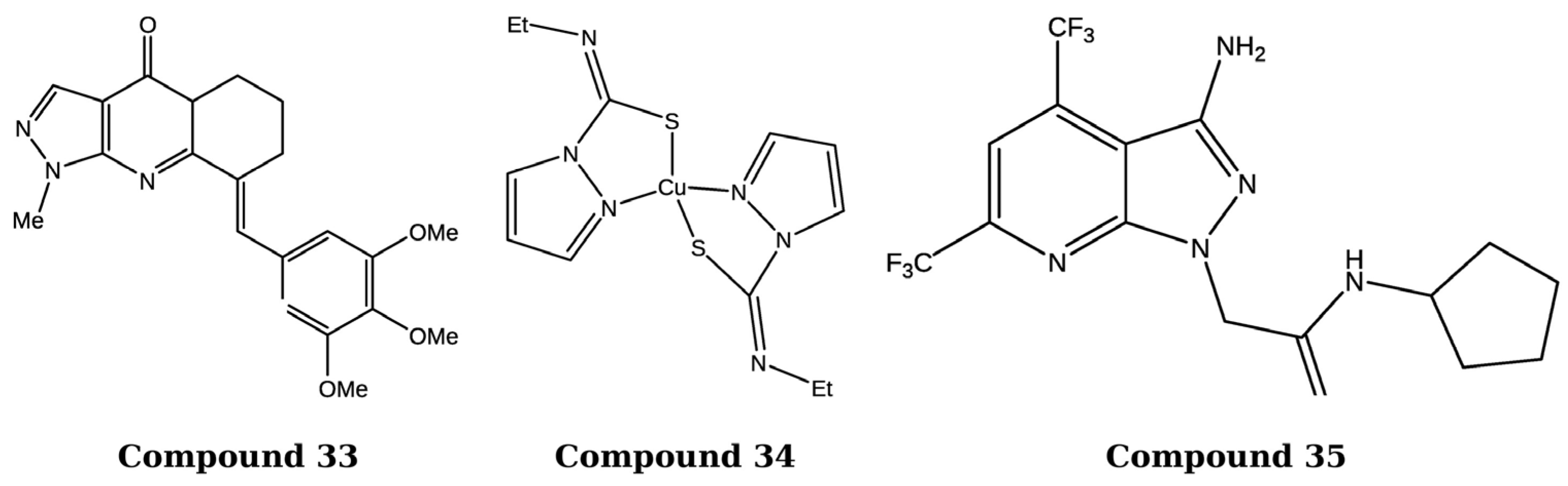
Pyrazolo[3,4-d]pyrimidine derivatives bearing carbon-aryl (heteryl)idene moieties were synthesized and evaluated for their anticancer potential across 15 different human cancer cell lines. The synthesized compounds demonstrated notable antiproliferative activity, and further in vivo evaluation in HT-29 xenograft mouse models confirmed their cytotoxicity. Mechanistic studies revealed that the active derivatives induced G2/M phase cell cycle arrest by disrupting mitochondrial membrane potential, inhibited VEGFR-2 kinase via hydrogen-bonding interactions with Cys-919, and interfered with tubulin polymerization by binding to the colchicine-binding site. Among the series, compound 33 exhibited the most potent activity with IC50 values ranging from 0.03 to 6.561 µM, suggesting that its anticancer effect may be mediated through anti-angiogenic activity and microtubule disruption. As shown in Figure 19, the structural features of compound 33 contribute to its enhanced biological activity and potential mechanism of action involving inhibition of tumor vascularization and microtubule dynamics [100].
Pyrazole-based ligands incorporating bidentate nitrogen and sulfur donor atoms were synthesized and subsequently complexed with copper(II) ions to evaluate their antitumor potential against MCF-7 breast cancer cells. The resulting copper(II) complexes exhibited enhanced cytotoxicity compared to their uncoordinated ligands and demonstrated stronger binding interactions with EGFR and CDK2 in molecular docking studies. Among the synthesized derivatives, compound 34 showed the highest cytotoxicity against MCF-7 cells, with an IC50 of 20.70 µM, outperforming the other tested ligands in the series. As shown in Figure 19, the structural characteristics of compound 34 contribute to its enhanced antiproliferative activity against breast cancer cells [101].
Pyrazolo[3,4-b]pyridine derivatives incorporating amide and amino acid functionalities were synthesized and evaluated for their antiproliferative activity against A549, MCF-7, DU145, and HeLa cancer cell lines. The synthesized compounds demonstrated promising cytotoxicity compared with the standard drug 5-fluorouracil. Molecular docking studies further indicated strong binding interactions of the active derivatives with EGFR and HER2 targets. Among the series, compound 35 exhibited the highest cytotoxic potency, with IC50 values of 21.2, 18.4, 19.2, and 25.3 µM against the respective cancer cell lines, along with a binding energy of –10.98 kcal/mol and an inhibition constant of 23.91 µM. As shown in Figure 19, the structural framework of compound 35 supports its enhanced binding affinity and cytotoxic potential compared to other derivatives in the series [102].

5.4. Other Targets Inhibition

5.4.1. DNA Binding Agents

A novel group of anticancer agents, DNA-binding inhibitors, functions by directly targeting DNA to halt cancer cell proliferation. These agents differ from traditional chemotherapy by offering selective action, innovative mechanisms, lower side effects, and the potential to overcome resistance—highlighting their potential in future cancer treatment strategies [103].
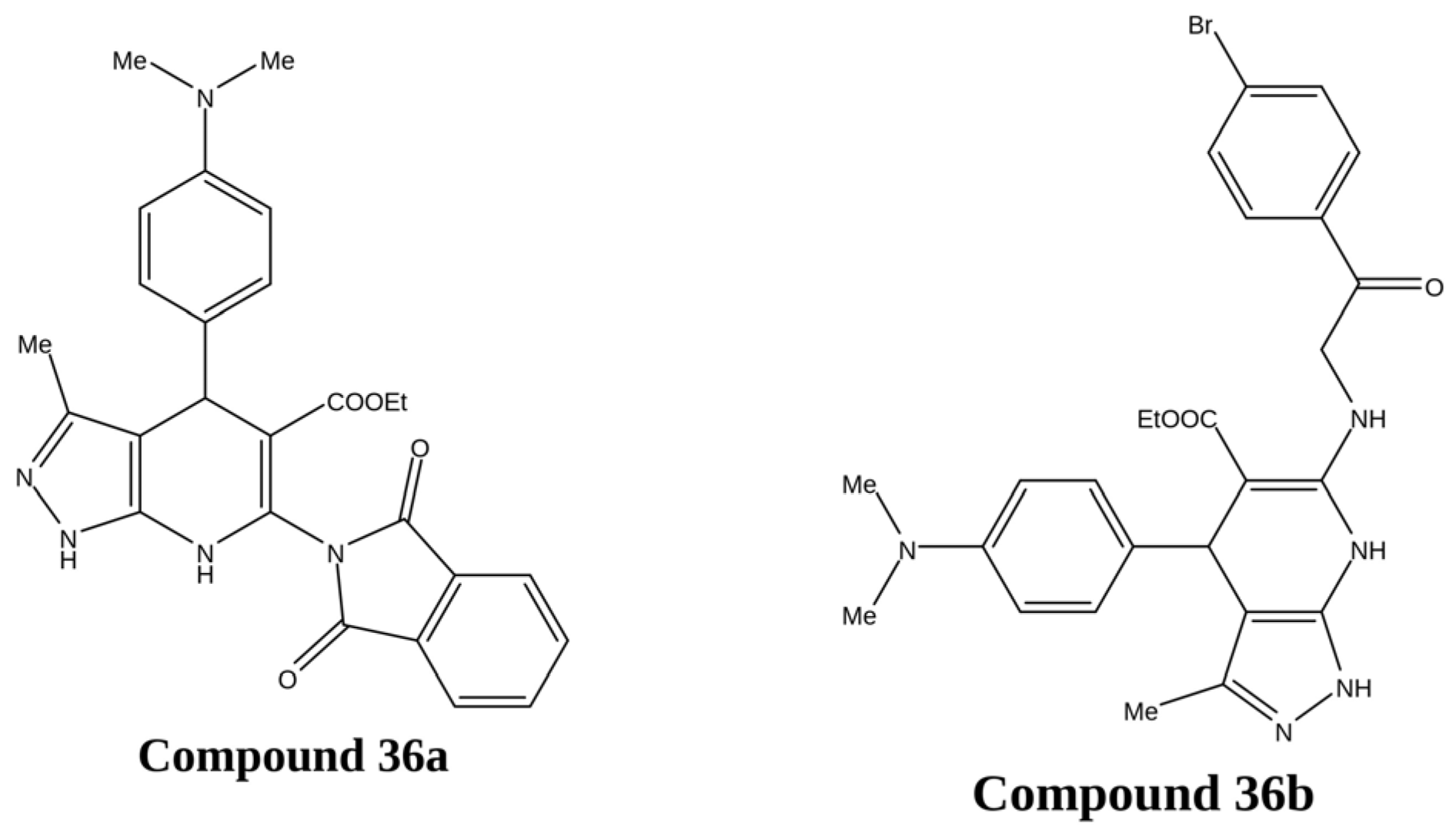
A novel series of pyrazolo[3,4-b]pyridine derivatives was synthesized using a multistep synthetic strategy and evaluated for in vitro anticancer activity against HepG2, MCF-7, and HeLa cancer cell lines. The biological evaluation revealed that the synthesized compounds exhibited significant cytotoxicity, with reduced toxicity toward normal human amniotic-derived epithelial (WISH) and WI-38 cell lines. DNA-binding studies further demonstrated a strong interaction with DNA, indicating a mechanism comparable to that of the standard drug doxorubicin. Among the tested compounds, 36a and 36b emerged as the most active derivatives, showing marked cytotoxicity (IC50 values of 3.11–4.91 µM and 4.06–4.24 µM, respectively) and notable DNA-binding affinity (IC50 values of 27.13 µM and 29.15 µM, respectively). As shown in Figure 20, the structural framework of these derivatives contributes to their enhanced cytotoxic potential and improved interaction with DNA [104].

5.4.2. Topoisomerase Inhibitors

DNA topoisomerases, especially type IIA, represent attractive targets for cancer therapy. These enzymes play a crucial role in maintaining DNA’s topological stability by relieving excessive winding or unwinding during replication. Research indicates that type IIA topoisomerases are often overexpressed and hyperactive in cancer cells compared to normal cells. Thus, specifically targeting and suppressing the activity of these enzymes in cancer cells may effectively destroy cancer cells while sparing healthy ones [105].
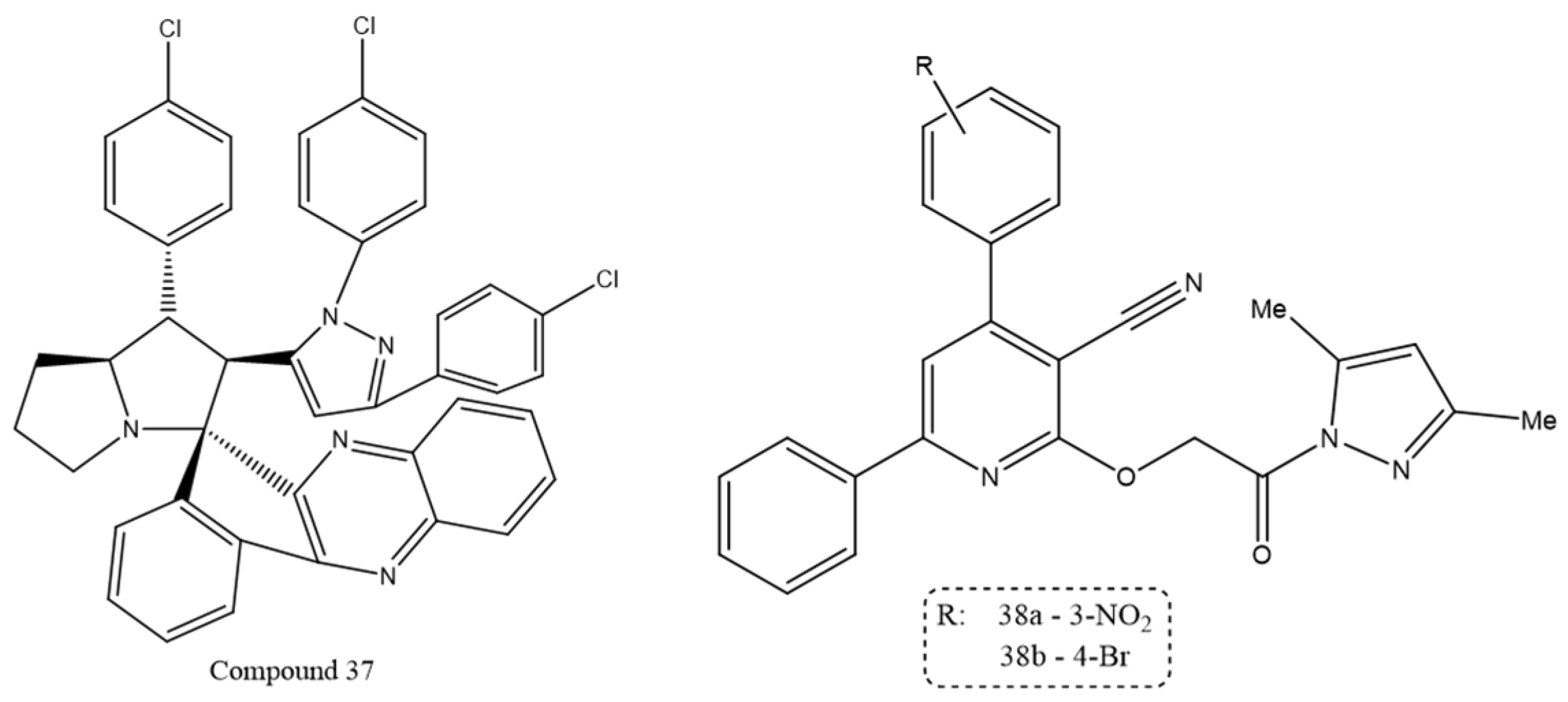
A series of spiro[indenoquinoxalinepyrrolizidine]-pyrazole conjugates was synthesized and evaluated for in vitro anticancer activity against HeLa cells. Biological screening showed stronger inhibition of cancer cell proliferation than that produced by camptothecin. Within this series, compound 37 displayed the highest activity, with an IC50 value of 1.93 ± 0.18 µM [106].
Another series of pyrazole derivatives was developed and evaluated for cytotoxicity against Caco-2 and MCF-7 cancer cell lines. The compounds showed notable antiproliferative effects, and molecular docking suggested strong binding to the topoisomerase-IIβ active site. Compounds 38a and 38b were the most active analogues, with pronounced activity against Caco-2 cells and log IC50 values of –0.657 and –0.498 µM at 0.1 and 1 µM, respectively, exceeding the activity of docetaxel. As shown in Figure 21, their structural features may underlie the enhanced cytotoxic profile observed in this series [107].

5.4.3. HDAC Inhibitors

Targeting histone deacetylases (HDACs) represents a validated and promising avenue in cancer treatment. Several HDAC inhibitors have successfully progressed to clinical use, with six: vorinostat, romidepsin, belinostat, panobinostat, chidamide, and pracinostat having received U.S. Food and Drug Administration (FDA) approval. These drugs have shown effectiveness in treating T-cell lymphomas and recurrent multiple myeloma. However, their use in solid tumors remains limited due to side effects such as thrombosis, leukopenia, and anemia. Dysregulated HDAC activity is associated with various cancers, supporting the rationale for developing HDAC inhibitors [108,109].
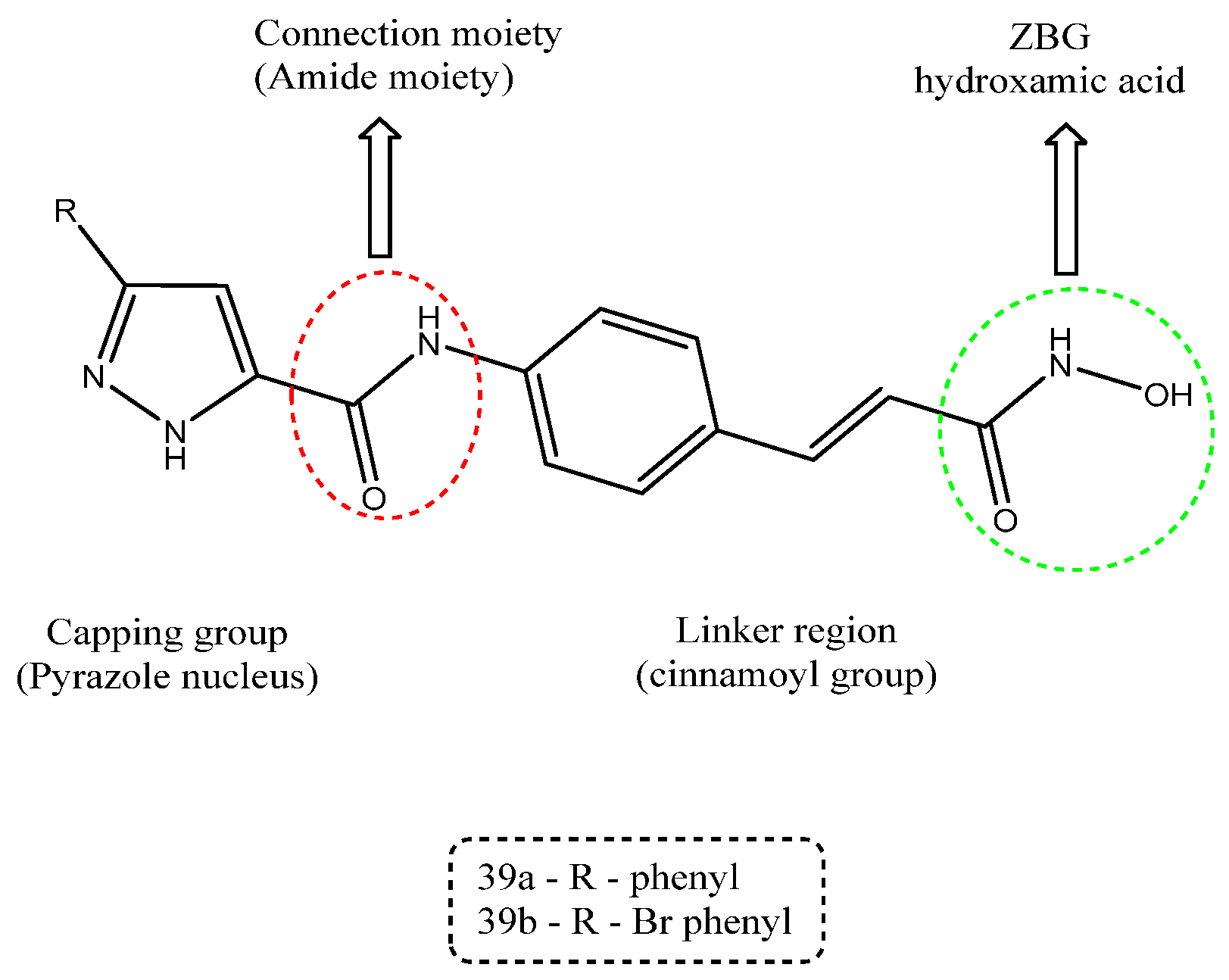
A series of hydroxamic acid derivatives incorporating a pyrazole cap and a cinnamoyl linker was synthesized using an appropriate synthetic strategy and evaluated for histone deacetylase (HDAC) inhibitory activity. The biological studies demonstrated that the synthesized compounds exhibited potent HDAC inhibition and effectively reduced cancer cell proliferation in a dose- and time-dependent manner. Molecular docking studies further confirmed their effective binding within the histone deacetylase 8 (HDAC8) hydrophobic pocket, along with zinc ion coordination by the hydroxamic acid moiety. Among the tested derivatives, compounds 39a and 39b emerged as the most active analogues, displaying strong HDAC inhibitory activity (IC50 values ranging from 1.3 to 6.3 µM) and antiproliferative activity (IC50 values of 5.34 and 5.61 µM, respectively). Structure–activity relationship analysis highlighted the essential role of the hydroxamic acid group in zinc chelation, while the cinnamoyl linker and pyrazole moiety contributed to enhanced isoform selectivity and potency. As illustrated in Figure 22, the pharmacophoric features, including the capping pyrazole nucleus, the cinnamoyl linker region, and the hydroxamic acid zinc-binding group (ZBG), are clearly depicted, which explains their improved HDAC inhibitory activity [110].
Collectively, the mechanistic data indicate that pyrazole derivatives can engage a broad spectrum of cancer-relevant targets, including tubulin, EGFR-related signaling, topoisomerases, DNA, and HDACs. Nevertheless, the depth of mechanistic validation is not uniform across the literature. For several series, target assignment is supported by enzyme inhibition, apoptosis, or cell-cycle assays, and, in selected cases, in vivo studies; however, in many reports, the proposed mechanism relies mainly on cytotoxicity data supplemented by molecular docking. This limits the strength of causal interpretation, because docking alone cannot confirm target engagement, pathway selectivity, or the relative contribution of off-target effects. Future studies would therefore benefit from more rigorous and standardized mechanistic validation, including orthogonal biochemical assays, target-engagement studies, selectivity profiling, and better integration of in vitro and in vivo evidence. The main molecular targets, representative compounds, and the level of supporting biological evidence discussed in this section are summarized in Table 2.

6. Future Perspectives

Pyrazoles, as nitrogen-containing aromatic scaffolds, remain highly attractive in anticancer drug discovery because of their favorable chemical properties and broad biological potential. Current research points to several particularly promising directions, including target-focused design, combination strategies, and nanotechnology-based delivery. Further progress will depend on continued lead optimization, exploration of additional molecular targets, and the identification of biomarkers that may support more precise therapeutic application. Future work is also likely to focus on clarifying the molecular basis of pyrazole-mediated anticancer effects, including their influence on signaling pathways, epigenetic regulation, cancer stem cells, and resistance mechanisms. Equally important will be the development of rational combination approaches and the design of derivatives with improved pharmacokinetic and pharmacodynamic profiles.
From a translational perspective, one of the main challenges in this field is the gap between promising early-stage activity and the level of evidence required for drug development. Many pyrazole-based candidates are still supported mainly by single-study in vitro data, whereas comparative pharmacokinetic, toxicological, selectivity, and in vivo efficacy data remain limited. More standardized biological evaluation and reporting would improve cross-study comparability and support more reliable prioritization of leads for further development. Overall, pyrazole derivatives remain a promising class of anticancer candidates, but their successful translation will require not only continued scaffold optimization, but also stronger biological validation and a more consistent evidence base.
An additional translational aspect that merits attention is that a subset of pyrazole-based anticancer candidates has already progressed beyond single-study in vitro screening to broader preclinical evaluation, including selected in vivo efficacy studies and mechanism-oriented follow-up in animal models [111,112]. This translational space also extends to natural-product-inspired hybrid design. In particular, steroidal and secosteroidal pyrazoline/pyrazole derivatives have emerged as promising scaffolds with anticancer potential, while pyrazole-containing terpenoid hybrids, especially pentacyclic triterpenoid systems, represent another relevant direction for further optimization [112,113,114]. In parallel, the patent literature indicates continued medicinal chemistry interest in pyrazole-containing anticancer agents, including programs directed toward CDK2, CDK12/13, KRAS-mutant cancers, and ErbB/HER2-related signaling [115,116,117,118]. Together, these observations support the view that the pyrazole scaffold is not only synthetically versatile but also increasingly relevant from a broader preclinical and translational perspective.

7. Materials and Methods

This narrative review was based on a targeted literature search of PubMed, Scopus, and Google Scholar updated up to March 2026, with emphasis on studies published between 2000 and 2026. Priority was given to recent original research articles describing the synthesis, biological evaluation, molecular targets, and structure–activity relationships of pyrazole derivatives with anticancer activity, while older seminal references were included selectively when necessary for historical, chemical, or mechanistic context. Selected recent review articles, including studies published in 2025–2026, were also incorporated to provide updated background and contextual support. The reference lists of relevant articles were additionally screened to identify further studies for inclusion.

8. Conclusions

Heterocyclic compounds, especially nitrogen-containing scaffolds such as pyrazoles, continue to attract considerable scientific interest because of their structural diversity and broad pharmacological potential. In the anticancer field, pyrazole derivatives have shown promising activity through multiple mechanisms, including inhibition of tubulin polymerization, kinase modulation, and induction of apoptosis, which underscores the versatility of this scaffold for medicinal chemistry optimization. Structure–activity relationship studies have further demonstrated that appropriate substitution patterns can substantially influence potency, selectivity, and target engagement. At the same time, the literature reviewed here indicates that many currently available findings remain difficult to compare directly because of differences in biological models, assay conditions, reference compounds, and reporting formats. Moreover, although several pyrazole-based candidates have shown encouraging activity, most remain at an early preclinical stage and are still supported predominantly by in vitro data, whereas comparative in vivo, toxicological, pharmacokinetic, and selectivity studies are often limited. For this reason, further progress in the field will depend not only on continued scaffold optimization but also on more rigorous mechanistic validation and more standardized biological evaluation. Overall, the pyrazole core remains a highly valuable platform in anticancer drug discovery, and this review aims to provide a useful framework for the rational development of next-generation pyrazole-based anticancer agents.

Author Contributions

Conceptualization, K.K.R., V.B.H. and M.G.; methodology, M.G., K.K.R. and V.B.H.; investigation, K.K.R., V.B.H., D.M.P., Ł.S. and M.G.; resources, K.K.R. and V.B.H.; data curation, K.K.R., V.B.H., D.M.P., M.G. and Ł.S.; writing—original draft preparation, K.K.R., V.B.H., Ł.S. and M.G.; writing—review and editing, M.G., D.M.P., Ł.S., K.K.R., A.K. and V.B.H.; visualization, M.G., V.B.H. and D.M.P.; supervision, A.K. and M.G.; project administration, K.K.R. and V.B.H. All authors have read and agreed to the published version of the manuscript.

Funding

This research received no external funding.

Institutional Review Board Statement

Not applicable.

Informed Consent Statement

Not applicable.

Data Availability Statement

No new data were created or analyzed in this study. All data supporting the findings of this review are contained within the manuscript.

Conflicts of Interest

The authors declare no conflicts of interest.

Abbreviations

The following abbreviations are used in this manuscript:
EGFRepidermal growth factor receptor
CDKscyclin-dependent kinases
BTKBruton tyrosine kinase
DNAdeoxyribonucleic acid
IARCInternational Agency for Research on Cancer
SARStructure–activity relationship(s)
SRBsulforhodamine B
MCF-7human breast adenocarcinoma cell line
A549human lung adenocarcinoma cell line
HCT-116human colorectal carcinoma cell line
HT-29human colorectal adenocarcinoma cell line
AsPC-1human pancreatic adenocarcinoma cell line
SW1990human pancreatic adenocarcinoma cell line
MRC-5human fetal lung fibroblast cell line
PC-3human prostate adenocarcinoma cell line
NMRnuclear magnetic resonance
IRinfrared
ESI-MSelectrospray ionization mass spectrometry
HeLahuman cervical adenocarcinoma cell line
Caco-2human colorectal adenocarcinoma cell line
MTT3-(4,5-dimethylthiazol-2-yl)-2,5-diphenyltetrazolium bromide
SiHahuman cervical squamous cell carcinoma cell line
COLO205human colorectal adenocarcinoma cell line
HepG2human hepatocellular carcinoma cell line
HaCaThuman immortalized keratinocyte cell line
HER2human epidermal growth factor receptor 2
SW480human colorectal adenocarcinoma cell line
MDA-MB-231human breast adenocarcinoma cell line
EGFRWTwild-type epidermal growth factor receptor
EGFRL858RL858R mutant epidermal growth factor receptor
RT-qPCRreverse transcription quantitative polymerase chain reaction
S100A4S100 calcium-binding protein A4
MMP-9matrix metalloproteinase-9
ARandrogen receptor
LNCaPLymph node carcinoma of the prostate cell line
K562human chronic myelogenous leukemia cell line
ABT-751investigational tubulin polymerization inhibitor
CCK-8Cell Counting Kit-8
B16F10murine melanoma cell line
HEKhuman embryonic kidney cells
A2780human ovarian carcinoma cell line
CA-4combretastatin A-4
RNAribonucleic acid
CMapConnectivity Map
AKTprotein kinase B
VEGFRvascular endothelial growth factor receptor
MAPKmitogen-activated protein kinase
BRAFB-Raf proto-oncogene serine/threonine kinase
JAKJanus kinase
c-Methepatocyte growth factor receptor
PI3K/AKT/mTORphosphoinositide 3-kinase/protein kinase B/mammalian target of rapamycin
RAS/RAF/MEK/ERKrat sarcoma/rapidly accelerated fibrosarcoma/mitogen-activated protein kinase kinase/extracellular signal-regulated kinase
JAK/STATJanus kinase/signal transducer and activator of transcription
CuAACcopper-catalyzed azide-alkyne cycloaddition
LoVohuman colorectal adenocarcinoma cell line
LoVo/DXdoxorubicin-resistant LoVo cell line
p-EGFRphosphorylated epidermal growth factor receptor
STAT3signal transducer and activator of transcription 3
p-STAT3phosphorylated signal transducer and activator of transcription 3
Bcl-2B-cell lymphoma 2
BAXBCL2-associated X protein
CDK-8cyclin-dependent kinase 8
PDGFRplatelet-derived growth factor receptor
KITKIT proto-oncogene receptor tyrosine kinase
VEGFR-2vascular endothelial growth factor receptor 2
CDK2cyclin-dependent kinase 2
DU145human prostate carcinoma cell line
WISHhuman amniotic-derived epithelial cell line
WI-38human fetal lung fibroblast cell line
HDAChistone deacetylase
FDAU.S. Food and Drug Administration
HDAC8histone deacetylase 8
ZBGzinc-binding group

References

  1. Rawat, A.; Reddy, A.V. Recent advances on anticancer activity of coumarin derivatives. Eur. J. Med. Chem. Rep. 2022, 5, 100038. [Google Scholar] [CrossRef]
  2. Duan, C.; Yu, M.; Xu, J.; Li, B.Y.; Zhao, Y.; Kankala, R.K. Overcoming Cancer Multi-drug Resistance (MDR): Reasons, mechanisms, nanotherapeutic solutions, and challenges. Biomed. Pharmacother. 2023, 162, 114643. [Google Scholar] [CrossRef]
  3. Brown, J.S.; Amend, S.R.; Austin, R.H.; Gatenby, R.A.; Hammarlund, E.U.; Pienta, K.J. Updating the definition of cancer. Mol. Cancer Res. 2023, 21, 1142–1147. [Google Scholar] [CrossRef]
  4. Saini, A.; Kumar, M.; Bhatt, S.; Saini, V.; Malik, A. Cancer causes and treatments. Int. J. Pharm. Sci. Res. 2020, 11, 3121–3134. [Google Scholar] [CrossRef]
  5. Wang, J.J.; Lei, K.F.; Han, F. Tumor microenvironment. Recent advances in various cancer treatments. Eur. Rev. Med. Pharmacol. Sci. 2018, 22, 3855–3864. [Google Scholar]
  6. Kibria, G.; Hatakeyama, H.; Harashima, H. Cancer multidrug resistance: Mechanisms involved and strategies for circumvention using a drug delivery system. Arch. Pharmacal Res. 2014, 37, 4–15. [Google Scholar] [CrossRef] [PubMed]
  7. Eicher, T.; Hauptmann, S.; Speicher, A. The Chemistry of Heterocycles: Structures, Reactions, Synthesis, and Applications; John Wiley & Sons: Hoboken, NJ, USA, 2013. [Google Scholar] [CrossRef]
  8. Kudo, N.; Furuta, S.; Taniguchi, M.; Endo, T.; Sato, K. Synthesis and herbicidal activity of 1, 5-diarylpyrazole derivatives. Chem. Pharm. Bull. 1999, 47, 857–868. [Google Scholar] [CrossRef]
  9. Dias, L.R.; Salvador, R.R. Pyrazole carbohydrazide derivatives of pharmaceutical interest. Pharmaceuticals 2012, 5, 317–324. [Google Scholar] [CrossRef] [PubMed]
  10. Akbas, E.; Berber, I.; Sener, A.; Hasanov, B. Synthesis and antibacterial activity of 4-benzoyl-1-methyl-5-phenyl-1H-pyrazole-3-carboxylic acid and derivatives. Il Farm. 2005, 60, 23–26. [Google Scholar] [CrossRef]
  11. Prasath, R.; Bhavana, P.; Sarveswari, S.; Ng, S.W.; Tiekink, E.R. Efficient ultrasound-assisted synthesis, spectroscopic, crystallographic and biological investigations of pyrazole-appended quinolinyl chalcones. J. Mol. Struct. 2015, 1081, 201–210. [Google Scholar] [CrossRef]
  12. Kamal, A.; Shaik, A.B.; Jain, N.; Kishor, C.; Nagabhushana, A.; Supriya, B.; Kumar, G.B.; Chourasiya, S.S.; Suresh, Y.; Mishra, R.K.; et al. Design and synthesis of pyrazole-oxindole conjugates targeting tubulin polymerization as new anticancer agents. Eur. J. Med. Chem. 2015, 92, 501–513. [Google Scholar] [CrossRef]
  13. Xu, Y.; Liu, X.H.; Saunders, M.; Pearce, S.; Foulks, J.M.; Parnell, K.M.; Clifford, A.; Nix, R.N.; Bullough, J.; Hendrickson, T.F.; et al. Discovery of 3-(trifluoromethyl)-1H-pyrazole-5-carboxamide activators of the M2 isoform of pyruvate kinase (PKM2). Bioorg. Med. Chem. Lett. 2014, 24, 515–519. [Google Scholar] [CrossRef]
  14. Kumar, R.S.; Arif, I.A.; Ahamed, A.; Idhayadhulla, A. Anti-inflammatory and antimicrobial activities of novel pyrazole analogues. Saudi J. Biol. Sci. 2016, 23, 614–620. [Google Scholar] [CrossRef] [PubMed]
  15. El-Moghazy, S.M.; Barsoum, F.F.; Abdel-Rahman, H.M.; Marzouk, A.A. Synthesis and anti-inflammatory activity of some pyrazole derivatives. Med. Chem. Res. 2012, 21, 1722–1733. [Google Scholar] [CrossRef]
  16. Bekhit, A.A.; Nasralla, S.N.; El-Agroudy, E.J.; Hamouda, N.; Abd El-Fattah, A.; Bekhit, S.A.; Amagase, K.; Ibrahim, T.M. Investigation of the anti-inflammatory and analgesic activities of promising pyrazole derivative. Eur. J. Pharm. Sci. 2022, 168, 106080. [Google Scholar] [CrossRef] [PubMed]
  17. Ahsan, M.J.; Samy, J.G.; Jain, C.B.; Dutt, K.R.; Khalilullah, H.; Nomani, M.S. Discovery of novel antitubercular 1, 5-dimethyl-2-phenyl-4-([5-(arylamino)-1, 3, 4-oxadiazol-2-yl] methylamino)-1, 2-dihydro-3H-pyrazol-3-one analogues. Bioorg. Med. Chem. Lett. 2012, 22, 969–972. [Google Scholar] [CrossRef]
  18. Pandit, U.; Dodiya, A. Synthesis and antitubercular activity of novel pyrazole-quinazolinone hybrid analogs. Med. Chem. Res. 2013, 22, 3364–3371. [Google Scholar] [CrossRef]
  19. Liu, G.N.; Luo, R.H.; Zhou, Y.; Zhang, X.J.; Li, J.; Yang, L.M.; Zheng, Y.T.; Liu, H. Synthesis and anti-HIV-1 activity evaluation for novel 3a, 6a-dihydro-1 H-pyrrolo [3, 4-c] pyrazole-4, 6-dione derivatives. Molecules 2016, 21, 1198. [Google Scholar] [CrossRef]
  20. El-Sabbagh, O.I.; Baraka, M.M.; Ibrahim, S.M.; Pannecouque, C.; Andrei, G.; Snoeck, R.; Balzarini, J.; Rashad, A.A. Synthesis and antiviral activity of new pyrazole and thiazole derivatives. Eur. J. Med. Chem. 2009, 44, 3746–3753. [Google Scholar] [CrossRef]
  21. Khoobi, M.; Ghanoni, F.; Nadri, H.; Moradi, A.; Hamedani, M.P.; Moghadam, F.H.; Emami, S.; Vosooghi, M.; Zadmard, R.; Foroumadi, A.; et al. New tetracyclic tacrine analogs containing pyrano [2, 3-c] pyrazole: Efficient synthesis, biological assessment and docking simulation study. Eur. J. Med. Chem. 2015, 89, 296–303. [Google Scholar] [CrossRef]
  22. Kumar, A.; Gawande, P.; Jana, S.; Murmu, A.; Matore, B.W.; Singh, J.; Roy, P.P. Current Perspectives on Pyrazole Scaffolds and Their Potential Impact on Alzheimer’s Disease. In Molecular Targets and Therapeutic Interventions Against Neurodegenerative Diseases; CRC Press: Boca Raton, FL, USA, 2025; pp. 152–189. [Google Scholar]
  23. Chaudhry, F.; Naureen, S.; Huma, R.; Shaukat, A.; Al-Rashida, M.; Asif, N.; Ashraf, M.; Munawar, M.A.; Khan, M.A. In search of new α-glucosidase inhibitors: Imidazolylpyrazole derivatives. Bioorg. Chem. 2017, 71, 102–109. [Google Scholar] [CrossRef]
  24. Cottineau, B.; Toto, P.; Marot, C.; Pipaud, A.; Chenault, J. Synthesis and hypoglycemic evaluation of substituted pyrazole-4-carboxylic acids. Bioorg. Med. Chem. Lett. 2002, 12, 2105–2108. [Google Scholar] [CrossRef]
  25. Mortada, S.; Karrouchi, K.; Hamza, E.H.; Oulmidi, A.; Bhat, M.A.; Mamad, H.; Aalilou, Y.; Radi, S.; Ansar, M.H.; Masrar, A.; et al. Synthesis, structural characterizations, in vitro biological evaluation and computational investigations of pyrazole derivatives as potential antidiabetic and antioxidant agents. Sci. Rep. 2024, 14, 1312. [Google Scholar] [CrossRef] [PubMed]
  26. Tuha, A.; Bekhit, A.A.; Seid, Y. Screening of some pyrazole derivatives as promising antileishmanial agent. Afr. J. Pharm. Pharmacol. 2017, 11, 32–37. [Google Scholar] [CrossRef]
  27. Reviriego, F.; Olmo, F.; Navarro, P.; Marín, C.; Ramírez-Macías, I.; García-España, E.; Albelda, M.T.; Gutiérrez-Sánchez, R.; Sánchez-Moreno, M.; Arán, V.J. Simple dialkyl pyrazole-3, 5-dicarboxylates show in vitro and in vivo activity against disease-causing trypanosomatids. Parasitology 2017, 144, 1133–1143. [Google Scholar] [CrossRef] [PubMed]
  28. Balaji, S.N.; Ahsan, M.J.; Jadav, S.S.; Trivedi, V. Molecular modelling, synthesis, and antimalarial potentials of curcumin analogues containing heterocyclic ring. Arab. J. Chem. 2019, 12, 2492–2500. [Google Scholar] [CrossRef]
  29. Cunico, W.; Cechinel, C.A.; Bonacorso, H.G.; Martins, M.A.; Zanatta, N.; de Souza, M.V.; Freitas, I.O.; Soares, R.P.; Krettli, A.U. Antimalarial activity of 4-(5-trifluoromethyl-1H-pyrazol-1-yl)-chloroquine analogues. Bioorg. Med. Chem. Lett. 2006, 16, 649–653. [Google Scholar] [CrossRef]
  30. Abdel-Aziz, M.; Abuo-Rahma, G.E.; Hassan, A.A. Synthesis of novel pyrazole derivatives and evaluation of their antidepressant and anticonvulsant activities. Eur. J. Med. Chem. 2009, 44, 3480–3487. [Google Scholar] [CrossRef] [PubMed]
  31. Bonesi, M.; Loizzo, M.R.; Statti, G.A.; Michel, S.; Tillequin, F.; Menichini, F. The synthesis and Angiotensin Converting Enzyme (ACE) inhibitory activity of chalcones and their pyrazole derivatives. Bioorg. Med. Chem. Lett. 2010, 20, 1990–1993. [Google Scholar] [CrossRef] [PubMed]
  32. Gomha, S.; Khalil, K.; Abdel-Aziz, H.; Abdalla, M. Synthesis and antihypertensive α-blocking activity evaluation of thiazole derivatives bearing pyrazole moiety. Heterocycles 2015, 91, 1763–1773. [Google Scholar] [CrossRef]
  33. Shabbir, A.; Shahzad, M.; Ali, A.; Zia-ur-Rehman, M. Anti-arthritic activity of N′-[(2, 4-dihydroxyphenyl) methylidene]-2-(3, 4-dimethyl-5, 5-dioxidopyrazolo [4, 3-c][1-2] benzothiazin-1 (4H)-yl) acetohydrazide. Eur. J. Pharmacol. 2014, 738, 263–272. [Google Scholar] [CrossRef] [PubMed]
  34. Kumar, R.; Arora, J.; Ruhil, S.; Phougat, N.; Chhillar, A.K.; Prasad, A.K. Synthesis and anti-microbial studies of Pyrimidine Pyrazole heterocycles. Adv. Chem. 2014, 2014, 329681. [Google Scholar] [CrossRef]
  35. Behr, L.C.; Fusco, R.; Jarboe, C.H.; Wiley, R.H. Pyrazoles, Pyrazolines, Pyrazolidines, Indazoles, and Condensed Rings; Interscience Publishers: New York, NY, USA, 1967; Available online: https://cir.nii.ac.jp/crid/1130282272566289920 (accessed on 3 February 2026).
  36. Chopra, N.; Kaur, D.; Chopra, G. Nature and hierarchy of hydrogen-bonding interactions in binary complexes of azoles with water and hydrogen peroxide. ACS Omega 2018, 3, 12688–12702. [Google Scholar] [CrossRef]
  37. Kumari, S.; Paliwal, S.; Chauhan, R. Synthesis of pyrazole derivatives possessing anticancer activity: Current status. Synth. Commun. 2014, 44, 1521–1578. [Google Scholar] [CrossRef]
  38. Incyte Corporation. JAKAFI® (Ruxolitinib) Tablets, for Oral Use. Full Prescribing Information; U.S. Food and Drug Administration: Silver Spring, MD, USA, 2023.
  39. Pfizer Labs. XALKORI® (Crizotinib) Capsules, for Oral Use. Full Prescribing Information; U.S. Food and Drug Administration: Silver Spring, MD, USA, 2022.
  40. Array BioPharma Inc. BRAFTOVI® (Encorafenib) Capsules, for Oral Use. Highlights of Prescribing Information; U.S. Food and Drug Administration: Silver Spring, MD, USA, 2026.
  41. Becerra, D.; Castillo, J.-C. Recent advances in the synthesis of anticancer pyrazole derivatives using microwave, ultrasound, and mechanochemical techniques. RSC Adv. 2025, 15, 7018–7038. [Google Scholar] [CrossRef]
  42. Hofny, H.A.; Abdelhamid, A.O.; Hegazy, N.H. A review of recent advances in anticancer activity and SAR of pyrazole derivatives. Arch. Pharm. 2025, 358, e2400470. [Google Scholar] [CrossRef]
  43. Akil, M.; Yadav, C.S.; Khan, A.R.; Ahmad, N.; Azad, I. Exploring pyrazole derivatives as potential anticancer agents: A review. ChemistrySelect 2026, 11, e04987. [Google Scholar] [CrossRef]
  44. Harras, M.F.; Sabour, R. Design, synthesis and biological evaluation of novel 1,3,4-trisubstituted pyrazole derivatives as potential chemotherapeutic agents for hepatocellular carcinoma. Bioorg. Chem. 2018, 78, 149–157. [Google Scholar] [CrossRef]
  45. Ameziane El Hassani, I.; Rouzi, K.; Assila, H.; Karrouchi, K.; Ansar, M. Recent Advances in the Synthesis of Pyrazole Derivatives: A Review. Reactions 2023, 4, 478–504. [Google Scholar] [CrossRef]
  46. Moussa, Z.; Ramanathan, M.; Alharmoozi, S.M.; Alkaabi, S.A.S.; Al Aryani, S.H.M.; Ahmed, S.A.; Al-Masri, H.T. Recent highlights in the synthesis and biological significance of pyrazole derivatives. Heliyon 2024, 10, e38894. [Google Scholar] [CrossRef] [PubMed]
  47. Zhang, Y.; Wu, C.; Zhang, N.; Fan, R.; Ye, Y.; Xu, J. Recent Advances in the Development of Pyrazole Derivatives as Anticancer Agents. Int. J. Mol. Sci. 2023, 24, 12724. [Google Scholar] [CrossRef] [PubMed]
  48. Nitulescu, G.M.; Stancov, G.; Seremet, O.C.; Nitulescu, G.; Mihai, D.P.; Duta-Bratu, C.G.; Barbuceanu, S.F.; Olaru, O.T. The importance of the pyrazole scaffold in the design of protein kinases inhibitors as targeted anticancer therapies. Molecules 2023, 28, 5359. [Google Scholar] [CrossRef]
  49. Kost, A.N.; Grandberg, I.I. Progress in pyrazole chemistry. Adv. Heterocycl. Chem. 1966, 6, 347–429. [Google Scholar] [CrossRef]
  50. Zhang, K.; Ye, K.; Tang, H.; Qi, Z.; Wang, T.; Mao, J.; Zhang, X.; Jiang, S. Development and therapeutic implications of tyrosine kinase 2 inhibitors. J. Med. Chem. 2023, 66, 4378–4416. [Google Scholar] [CrossRef]
  51. Steinmetz, M.O.; Prota, A.E. Microtubule-targeting agents: Strategies to hijack the cytoskeleton. Trends Cell Biol. 2018, 28, 776–792. [Google Scholar] [CrossRef]
  52. Gaber, A.A.; El-Morsy, A.M.; Sherbiny, F.F.; Bayoumi, A.H.; El-Gamal, K.M.; El-Adl, K.; Al-Karmalawy, A.A.; Ezz Eldin, R.R.; Saleh, M.A.; Abulkhair, H.S. Pharmacophore-linked pyrazolo [3, 4-d] pyrimidines as EGFR-TK inhibitors: Synthesis, anticancer evaluation, pharmacokinetics, and in silico mechanistic studies. Arch. Pharm. 2025, 358, e2100258. [Google Scholar] [CrossRef]
  53. Yamali, C.; Gul, H.I.; Kazaz, C.; Levent, S.; Gulcin, I. Synthesis, structure elucidation, and in vitro pharmacological evaluation of novel polyfluoro substituted pyrazoline type sulfonamides as multi-target agents for inhibition of acetylcholinesterase and carbonic anhydrase I and II enzymes. Bioorg. Chem. 2020, 96, 103627. [Google Scholar] [CrossRef]
  54. Abrigach, F.; Touzani, R. Pyrazole derivatives with NCN junction and their biological activity: A review. Med. Chem. 2016, 6, 292–298. [Google Scholar] [CrossRef]
  55. Fustero, S.; Sánchez-Roselló, M.; Barrio, P.; Simon-Fuentes, A. From 2000 to mid-2010, A fruitful decade for the synthesis of pyrazoles. Chem. Rev. 2011, 111, 6984–7034. [Google Scholar] [CrossRef] [PubMed]
  56. Cacchi, S.; Fabrizi, G.; Carangio, A. Functionalised pyrazoles through a facile one-pot procedure from N-tosyl-N-propargylhydrazine and aryl iodides or vinyl triflates. Synlett 1997, 8, 959–961. [Google Scholar] [CrossRef]
  57. Miguel, F.B.; Dantas, J.A.; Amorim, S.; Andrade, G.F.; Costa, L.A.S.; Couri, M.R.C. Synthesis, spectroscopic and computational characterization of the tautomerism of pyrazoline derivatives from chalcones. Spectrochim. Acta Part A 2016, 152, 318–326. [Google Scholar]
  58. Lokeshwari, D.M.; Achutha, D.K.; Srinivasan, B.; Shivalingegowda, N.; Krishnappagowda, L.N.; Kariyappa, A.K. Synthesis of novel 2-pyrazoline analogues with potent anti-inflammatory effect mediated by inhibition of phospholipase A2: Crystallographic, in silico docking and QSAR analysis. Bioorg. Med. Chem. Lett. 2017, 27, 3806–3811. [Google Scholar] [CrossRef] [PubMed]
  59. Farooq, S.; Ngaini, Z. One-pot and two-pot synthesis of chalcone based mono and bis-pyrazolines. Tetrahedron Lett. 2020, 61, 151416. [Google Scholar] [CrossRef]
  60. James, J.P.; Ishwar Bhat, K.; More, U.A.; Joshi, S.D. Design, synthesis, molecular modeling, and ADMET studies of some pyrazoline derivatives as shikimate kinase inhibitors. Med. Chem. Res. 2018, 27, 546–559. [Google Scholar] [CrossRef]
  61. Beyhan, N.; Kocyigit-Kaymakcioglu, B.; Gümrü, S.; Aricioglu, F. Synthesis and anticonvulsant activity of some 2-pyrazolines derived from chalcones. Arab. J. Chem. 2017, 10, S2073–S2081. [Google Scholar] [CrossRef]
  62. Singh, S.; Tahlan, S.; Singh, K.; Verma, P.K. Novel pyrazole derivatives: Rationale design, synthesis, sar study and biological potential based on In Vitro Study. J. Mol. Struct. 2024, 1310, 138186. [Google Scholar] [CrossRef]
  63. Khan, M.F.; Anwer, T.; Bakht, A.; Verma, G.; Akhtar, W.; Alam, M.M.; Rizvi, M.A.; Akhter, M.; Shaquiquzzaman, M. Unveiling novel diphenyl-1H-pyrazole based acrylates tethered to 1, 2, 3-triazole as promising apoptosis inducing cytotoxic and anti-inflammatory agents. Bioorg. Chem. 2019, 87, 667–678. [Google Scholar] [CrossRef]
  64. Sivaramakarthikeyan, R.; Iniyaval, S.; Lim, W.M.; Hii, L.W.; Mai, C.W.; Ramalingan, C. Pyrazolylphenanthroimidazole heterocycles: Synthesis, biological and molecular docking studies. New J. Chem. 2020, 44, 19612–19622. [Google Scholar] [CrossRef]
  65. Fadaly, W.A.; Elshaier, Y.A.; Hassanein, E.H.; Abdellatif, K.R. New 1, 2, 4-triazole/pyrazole hybrids linked to oxime moiety as nitric oxide donor celecoxib analogs: Synthesis, cyclooxygenase inhibition anti-inflammatory, ulcerogenicity, anti-proliferative activities, apoptosis, molecular modeling and nitric oxide release studies. Bioorg. Chem. 2020, 98, 103752. [Google Scholar] [CrossRef] [PubMed]
  66. Kolluri, P.K.; Gurrapu, N.; Subhashini, N.J.; Putta, S.; Singh, S.S.; Vani, T.; Manga, V. Design, synthesis of novel (Z)-2-(3-(4-((3-benzyl-2, 4-dioxothiazolidin-5-ylidene) methyl)-1-phenyl-1H-pyrazol-3-yl) phenoxy)-N-arylacetamide derivatives: Evaluation of cytotoxic activity and molecular docking studies. J. Mol. Struct. 2020, 1202, 127300. [Google Scholar] [CrossRef]
  67. Burgart, Y.V.; Agafonova, N.A.; Shchegolkov, E.V.; Krasnykh, O.P.; Kushch, S.O.; Evstigneeva, N.P.; Gerasimova, N.A.; Maslova, V.V.; Triandafilova, G.A.; Solodnikov, S.Y.; et al. Multiple biological active 4-aminopyrazoles containing trifluoromethyl and their 4-nitroso-precursors: Synthesis and evaluation. Eur. J. Med. Chem. 2020, 208, 112768. [Google Scholar] [CrossRef]
  68. Mamidala, S.; Aravilli, R.K.; Ramesh, G.; Khajavali, S.; Chedupaka, R.; Manga, V.; Vedula, R.R. A facile one-pot, three-component synthesis of a new series of thiazolyl pyrazole carbaldehydes: In vitro anticancer evaluation, in silico ADME/T, and molecular docking studies. J. Mol. Struct. 2021, 1236, 130356. [Google Scholar] [CrossRef]
  69. Suryanarayana, K.; Robert, A.R.; Kerru, N.; Pooventhiran, T.; Thomas, R.; Maddila, S.; Jonnalagadda, S.B. Design, synthesis, anticancer activity and molecular docking analysis of novel dinitrophenylpyrazole bearing 1, 2, 3-triazoles. J. Mol. Struct. 2021, 1243, 130865. [Google Scholar] [CrossRef]
  70. Akhtar, W.; Marella, A.; Alam, M.M.; Khan, M.F.; Akhtar, M.; Anwer, T.; Khan, F.; Naematullah, M.; Azam, F.; Rizvi, M.A.; et al. Design and synthesis of pyrazole-pyrazoline hybrids as cancer-associated selective COX-2 inhibitors. Arch. Pharm. 2021, 354, 2000116. [Google Scholar] [CrossRef]
  71. Fakhry, M.M.; Mattar, A.A.; Alsulaimany, M.; Al-Olayan, E.M.; Al-Rashood, S.T.; Abdel-Aziz, H.A. New Thiazolyl-Pyrazoline derivatives as potential dual EGFR/HER2 inhibitors: Design, synthesis, anticancer activity evaluation and in silico study. Molecules 2023, 28, 7455. [Google Scholar] [CrossRef]
  72. Doan, N.Q.; Nguyen, N.T.; Nguyen, N.B.; Tran, T.T.; Tran, Q.N.; Truong, T.N. Design, synthesis, in vitro and in silico evaluation of anti-colorectal cancer activity of curcumin analogues containing 1, 3-diphenyl-1H-pyrazole targeting EGFR tyrosine kinase. Biochim. Biophys. Acta Gen. Subj. 2023, 1867, 130414. [Google Scholar] [CrossRef]
  73. Theodore, C.E.; Anusuya, A.M.; Sivaiah, G.; Jain, R.; Kumar, C.A.; Prasad, S.B.; Raghu, M.S.; Alharti, F.A.; Prashanth, M.K.; Jeon, B.H. Design, synthesis, molecular docking and biological evaluation of novel pyrazole derivatives bearing quinoxalinone moiety as multi-targeted anticancer agents. J. Mol. Struct. 2023, 1288, 135765. [Google Scholar] [CrossRef]
  74. Zaki, R.M.; Wani, M.Y.; Mohammed, A.; El-Said, W.A. Design, synthesis and evaluation of novel Se-alkylated pyrazoles and their cyclized analogs as potential anticancer agents. J. Mol. Struct. 2023, 1276, 134670. [Google Scholar] [CrossRef]
  75. El-Atawy, M.A.; Kebeish, R.; Almotairy, A.R.; Omar, A.Z. Design, Synthesis, Characterization, and Cytotoxicity of New Pyrazolylmethylene-2-thioxoimidazolidin-4-one Derivatives towards Androgen-Sensitive LNCaP Prostate Cancer Cells. Biomolecules 2024, 14, 811. [Google Scholar] [CrossRef]
  76. Balbi, A.; Anzaldi, M.; Macciò, C.; Aiello, C.; Mazzei, M.; Gangemi, R.; Castagnola, P.; Miele, M.; Rosano, C.; Viale, M. Synthesis and biological evaluation of novel pyrazole derivatives with anticancer activity. Eur. J. Med. Chem. 2011, 46, 5293–5309. [Google Scholar] [CrossRef] [PubMed]
  77. Giller, S.A.; Mazheika, I.B.; Grandberg, I.I. Electron density distribution in heterocyclic systems with two vicinal nitrogen atoms. II. Pyrazole dipole moments. Chem. Heterocycl. Compd. 1965, 1, 69–71. [Google Scholar] [CrossRef]
  78. Mohammed, E.Z.; Mahmoud, W.R.; George, R.F.; Hassan, G.S.; Omar, F.A.; Georgey, H.H. Synthesis, in vitro anticancer activity and in silico studies of certain pyrazole-based derivatives as potential cyclin-dependent kinases (CDKs) inhibitors. Bioorg. Chem. 2021, 116, 105347. [Google Scholar] [CrossRef] [PubMed]
  79. Chermahini, A.N.; Teimouri, A.; Salimi Beni, A.; Dordahan, F. Theoretical studies on the effect of substituent in the proton transfer reaction of 4-substituted pyrazoles. Comput. Theor. Chem. 2013, 1008, 67–73. [Google Scholar] [CrossRef]
  80. Cui, Y.J.; Tang, L.Q.; Zhang, C.M.; Liu, Z.P. Synthesis of novel pyrazole derivatives and their tumor cell growth inhibitory activity. Molecules 2019, 24, 279. [Google Scholar] [CrossRef]
  81. Romagnoli, R.; Oliva, P.; Salvador, M.K.; Camacho, M.E.; Padroni, C.; Brancale, A.; Ferla, S.; Hamel, E.; Ronca, R.; Grillo, E.; et al. Design, synthesis and biological evaluation of novel vicinal diaryl-substituted 1H-Pyrazole analogues of combretastatin A-4 as highly potent tubulin polymerization inhibitors. Eur. J. Med. Chem. 2019, 181, 111577. [Google Scholar] [CrossRef]
  82. Wang, G.; Liu, W.; Peng, Z.; Huang, Y.; Gong, Z.; Li, Y. Design, synthesis, molecular modeling, and biological evaluation of pyrazole-naphthalene derivatives as potential anticancer agents on MCF-7 breast cancer cells by inhibiting tubulin polymerization. Bioorg. Chem. 2020, 103, 104141. [Google Scholar] [CrossRef] [PubMed]
  83. Li, G.; Wang, Y.; Li, L.; Ren, Y.; Deng, X.; Liu, J.; Wang, W.; Luo, M.; Liu, S.; Chen, J. Design, synthesis, and bioevaluation of pyrazolo [1, 5-a] pyrimidine derivatives as tubulin polymerization inhibitors targeting the colchicine binding site with potent anticancer activities. Eur. J. Med. Chem. 2020, 202, 112519. [Google Scholar] [CrossRef] [PubMed]
  84. Alam, M.J.; Alam, O.; Perwez, A.; Rizvi, M.A.; Naim, M.J.; Naidu, V.G.; Imran, M.; Ghoneim, M.M.; Alshehri, S.; Shakeel, F. Design, synthesis, molecular docking, and biological evaluation of pyrazole hybrid chalcone conjugates as potential anticancer agents and tubulin polymerization inhibitors. Pharmaceuticals 2022, 15, 280. [Google Scholar] [CrossRef]
  85. Cherukumalli, P.K.; Tadiboina, B.R.; Gulipalli, K.C.; Bodige, S.; Badavath, V.N.; Sridhar, G.; Gangarapu, K. Design and synthesis of novel urea derivatives of pyrimidine-pyrazoles as anticancer agents. J. Mol. Struct. 2022, 1251, 131937. [Google Scholar] [CrossRef]
  86. Sagam, R.R.; Nukala, S.K.; Nagavath, R.; Sirassu, N.; Mohammod, M.; Manchal, R.; Thirukovela, N.S. Synthesis of new morpholine-benzimidazole-pyrazole hybrids as tubulin polymerization inhibiting anticancer agents. J. Mol. Struct. 2022, 1268, 133692. [Google Scholar] [CrossRef]
  87. Man, R.J.; Lu, T.; Zheng, C.C.; Li, T.; Wu, M.K.; Li, D.D.; He, X.M. Discovery of pyrazole-carbohydrazide with indole moiety as tubulin polymerization inhibitors and anti-tumor candidates. Drug Dev. Res. 2023, 84, 110–120. [Google Scholar] [CrossRef]
  88. Borrego, E.A.; Guerena, C.D.; Schiaffino Bustamante, A.Y.; Gutierrez, D.A.; Valenzuela, C.A.; Betancourt, A.P.; Varela-Ramirez, A.; Aguilera, R.J. A Novel Pyrazole Exhibits Potent Anticancer Cytotoxicity via Apoptosis, Cell Cycle Arrest, and the Inhibition of Tubulin Polymerization in Triple-Negative Breast Cancer Cells. Cells 2024, 13, 1225. [Google Scholar] [CrossRef]
  89. Chen, P.; Zhuang, Y.X.; Diao, P.C.; Yang, F.; Wu, S.Y.; Lv, L.; You, W.W.; Zhao, P.L. Synthesis, biological evaluation, and molecular docking investigation of 3-amidoindoles as potent tubulin polymerization inhibitors. Eur. J. Med. Chem. 2019, 162, 525–533. [Google Scholar] [CrossRef]
  90. Demiroglu-Zergeroglu, A.; Ayvali, N.; Turhal, G.; Ceylan, H.; Nacak Baytas, S. Investigation of potent anticarcinogenic activity of 1, 3-diarylpyrazole acrylamide derivatives in vitro. J. Pharm. Pharmacol. 2018, 70, 1619–1629. [Google Scholar] [CrossRef]
  91. Philoppes, J.N.; Khedr, M.A.; Hassan, M.H.; Kamel, G.; Lamie, P.F. New pyrazolopyrimidine derivatives with anticancer activity: Design, synthesis, PIM-1 inhibition, molecular docking study and molecular dynamics. Bioorg. Chem. 2020, 100, 103944. [Google Scholar] [CrossRef]
  92. Gorle, S.; Gangu, K.K.; Maddila, S.; Jonnalagadda, S.B. Synthesis and anticancer activity of novel pyrazolo [4′, 3′: 5, 6] pyrano [2, 3-d] pyrimidin-5 (2H)-one derivatives. Chem. Data Collect. 2020, 28, 100471. [Google Scholar] [CrossRef]
  93. Bansal, K.K.; Bhardwaj, J.K.; Saraf, P.; Thakur, V.K.; Sharma, P.C. Synthesis of thiazole clubbed pyrazole derivatives as apoptosis inducers and anti-infective agents. Mater. Today Chem. 2020, 17, 100335. [Google Scholar] [CrossRef]
  94. El Azab, I.H.; El-Sheshtawy, H.S.; Bakr, R.B.; Elkanzi, N.A. New 1, 2, 3-triazole-containing hybrids as antitumor candidates: Design, click reaction synthesis, DFT calculations, and molecular docking study. Molecules 2021, 26, 708. [Google Scholar] [CrossRef]
  95. Raghu, M.S.; Kumar, C.P.; Prashanth, M.K.; Kumar, K.Y.; Prathibha, B.S.; Kanthimathi, G.; Alissa, S.A.; Alghulikah, H.A.; Osman, S.M. Novel 1, 3, 5-triazine-based pyrazole derivatives as potential antitumor agents and EFGR kinase inhibitors: Synthesis, cytotoxicity, DNA binding, molecular docking and DFT studies. New J. Chem. 2021, 45, 13909–13924. [Google Scholar] [CrossRef]
  96. Benarjee, V.; Saritha, B.; Gangadhar, K.H.; Sailaja, B.B. Synthesis of some new 1, 4-benzoxazine-pyrazoles in water as EGFR targeting anticancer agents. J. Mol. Struct. 2022, 1265, 133188. [Google Scholar] [CrossRef]
  97. Bagul, C.; Rao, G.K.; Veena, I.; Kulkarni, R.; Tamboli, J.R.; Akunuri, R.; Shaik, S.P.; Pal-Bhadra, M.; Kamal, A. Benzimidazole-linked pyrazolo [1, 5-a] pyrimidine conjugates: Synthesis and detail evaluation as potential anticancer agents. Mol. Divers. 2023, 27, 1185–1202. [Google Scholar] [CrossRef]
  98. Alsolimani, A.K.; Ali, T.E.; Assiri, M.A.; Shati, A.A.; Alfaifi, M.Y.; Elbehairi, S.E. Novel Coumarin-Pyrazole-Thiazoles Hybrids: Synthesis, Anticancer Activity, Molecular Docking and In Silico ADMET prediction Studies. ChemistrySelect 2024, 9, e202401738. [Google Scholar] [CrossRef]
  99. Wilhelm, S.M.; Adnane, L.; Newell, P.; Villanueva, A.; Llovet, J.M.; Lynch, M. Preclinical overview of sorafenib, a multikinase inhibitor that targets both Raf and VEGF and PDGF receptor tyrosine kinase signaling. Mol. Cancer Ther. 2008, 7, 3129–3140. [Google Scholar] [CrossRef]
  100. Ruzi, Z.; Bozorov, K.; Nie, L.; Zhao, J.; Aisa, H.A. Novel pyrazolo [3, 4-d] pyrimidines as potential anticancer agents: Synthesis, VEGFR-2 inhibition, and mechanisms of action. Biomed. Pharmacother. 2022, 156, 113948. [Google Scholar] [CrossRef]
  101. Ghorbanpour, M.; Soltani, B.; Mota, A.; Jahanbin Sardroodi, J.; Mehdizadeh Aghdam, E.; Shayanfar, A.; Molavi, O.; Mohammad-Rezaei, R.; Ebadi-Nahari, M.; Ziegler, C.J. Copper (II) complexes with N, S donor pyrazole-based ligands as anticancer agents. Biometals 2022, 35, 1095–1111. [Google Scholar] [CrossRef]
  102. Bhukya, B.; Korra, R.; Guguloth, H. Synthesis of novel amide/amino acid functionalized pyrazolo [3, 4-b] pyridine derivatives; their anticancer activity and docking studies. J. Heterocycl. Chem. 2023, 60, 872–878. [Google Scholar] [CrossRef]
  103. Portugal, J.; Barceló, F. Noncovalent binding to DNA: Still a target in developing anticancer agents. Curr. Med. Chem. 2016, 23, 4108–4134. [Google Scholar] [CrossRef]
  104. El-Gohary, N.S.; Gabr, M.T.; Shaaban, M.I. Synthesis, molecular modeling and biological evaluation of new pyrazolo [3, 4-b] pyridine analogs as potential antimicrobial, antiquorum-sensing and anticancer agents. Bioorg. Chem. 2019, 89, 102976. [Google Scholar] [CrossRef]
  105. Delgado, J.L.; Hsieh, C.M.; Chan, N.L.; Hiasa, H. Topoisomerases as anticancer targets. Biochem. J. 2018, 475, 373–398. [Google Scholar] [CrossRef]
  106. Zimnitskiy, N.S.; Barkov, A.Y.; Ulitko, M.V.; Kutyashev, I.B.; Korotaev, V.Y.; Sosnovskikh, V.Y. An expedient synthesis of novel spiro [indenoquinoxaline-pyrrolizidine]-pyrazole conjugates with anticancer activity from 1, 5-diarylpent-4-ene-1, 3-diones through the 1, 3-dipolar cycloaddition/cyclocondensation sequence. New J. Chem. 2020, 44, 16185–16199. [Google Scholar] [CrossRef]
  107. Zebbiche, Z.; Şekerci, G.; Boulebd, H.; Küçükbay, F.; Tekin, S.; Tekin, Z.; Küçükbay, H.; Sandal, S.; Boumoud, B. Preparation, DFT calculations, docking studies, antioxidant, and anticancer properties of new pyrazole and pyridine derivatives. Biochem. Mol. Toxicol. 2022, 36, e23135. [Google Scholar] [CrossRef]
  108. Wen, J.; Bao, Y.; Niu, Q.; Yang, J.; Fan, Y.; Li, J.; Jing, Y.; Zhao, L.; Liu, D. Identification of N-(6-mercaptohexyl)-3-(4-pyridyl)-1H-pyrazole-5-carboxamide and its disulfide prodrug as potent histone deacetylase inhibitors with in vitro and in vivo anti-tumor efficacy. Eur. J. Med. Chem. 2016, 109, 350–359. [Google Scholar] [CrossRef]
  109. Yao, Y.; Liao, C.; Li, Z.; Wang, Z.; Sun, Q.; Liu, C.; Yang, Y.; Tu, Z.; Jiang, S. Design, synthesis, and biological evaluation of 1, 3-disubstituted-pyrazole derivatives as new class I and IIb histone deacetylase inhibitors. Eur. J. Med. Chem. 2014, 86, 639–652. [Google Scholar] [CrossRef]
  110. Zagni, C.; Citarella, A.; Oussama, M.; Rescifina, A.; Maugeri, A.; Navarra, M.; Scala, A.; Piperno, A.; Micale, N. Hydroxamic acid-based histone deacetylase (HDAC) inhibitors bearing a pyrazole scaffold and a cinnamoyl linker. Int. J. Mol. Sci. 2019, 20, 945. [Google Scholar] [CrossRef]
  111. Xu, Z.; Zhuang, Y.; Chen, Q. Current scenario of pyrazole hybrids with in vivo therapeutic potential against cancers. Eur. J. Med. Chem. 2023, 257, 115495. [Google Scholar] [CrossRef]
  112. Matiadis, D.; Sagnou, M. Pyrazoline Hybrids as Promising Anticancer Agents: An Up-to-Date Overview. Int. J. Mol. Sci. 2020, 21, 5507. [Google Scholar] [CrossRef] [PubMed]
  113. Ilovaisky, A.I.; Scherbakov, A.M.; Bogdanov, F.B.; Miciurov, D.; Chernoburova, E.I.; Merkulova, V.M.; Bozhenko, E.I.; Dmitrenok, A.S.; Salnikova, D.I.; Sorokin, D.V.; et al. Secosteroid-2-Pyrazoline Hybrids: Design, Synthesis, Biological Evaluation and Development of Therapeutic Combinations Against ER?-Positive Breast Cancer Cells. Biomedicines 2025, 13, 3057. [Google Scholar] [CrossRef]
  114. Khwaza, V.; Mlala, S.; Oyedeji, O.O.; Aderibigbe, B.A. Pentacyclic Triterpenoids with Nitrogen-Containing Heterocyclic Moiety, Privileged Hybrids in Anticancer Drug Discovery. Molecules 2021, 26, 2401. [Google Scholar] [CrossRef] [PubMed]
  115. Ramsden, P.D.; Bifulco, N.; Brooijmans, N.; Perola, E.; Vargas, R.; Wenglowsky, S.M.; Wilson, D. Substituted Pyrimidinyl-Pyrazoles as CDK2 Inhibitors. WO2022266190A1, 22 December 2022. [Google Scholar]
  116. Poddutoori, R.; Samajdar, S.; Mukherjee, S. Substituted Pyrazole Derivatives as Selective CDK12/13 Inhibitors. US10894786B2, 19 January 2021. [Google Scholar]
  117. Cotesta, S.; Gerspacher, M.; Leblanc, C.; Lorthiois, E.L.J.; Liu, B.; Machauer, R.; Mah, R.; Mura, C.; Rigollier, P.; Schneider, N.; et al. Pyrazolyl Derivatives Useful as Anti-Cancer Agents. US11702409B2, 18 July 2023. [Google Scholar]
  118. Zhou, D.; Cheng, Z.; Wang, Z. ErbB Receptor Inhibitors as Anti-Tumor Agents. WO2021179274A1, 16 September 2021. [Google Scholar]
Figure 1. Examples of marketed anticancer drugs containing the pyrazole scaffold.
Ijms 27 03403 g001
Figure 2. Chemical structure of pyrazole.
Ijms 27 03403 g002
Figure 3. General methods of synthesis of pyrazole derivatives. Representative route clusters are indicated as (ae).
Ijms 27 03403 g003
Figure 4. Structure of compound 1 representing a 1,2,3-triazole-linked 3-(1,3-diphenyl-1H-pyrazol-4-yl)acrylate derivative.
Ijms 27 03403 g004
Figure 5. Structure of compound 2 representing a pyrazolyl phenanthroimidazole derivative.
Ijms 27 03403 g005
Figure 6. Structures of compounds 3a and 3b representing 1,2,4-triazole–pyrazole derivatives and compounds 4a and 4b representing (Z)-2-(3-(4-((3-benzyl-2,4-dioxothiazolidin-5-ylidene)methyl)-1-phenyl-1H-pyrazol-3-yl)phenoxy)-N-arylacetamide derivatives.
Ijms 27 03403 g006
Figure 7. Chemical structure of compounds 5a and 5b representing 4-aminopyrazole derivatives.
Ijms 27 03403 g007
Figure 8. Chemical structure of compound 6 representing thiazolyl–pyrazole carbaldehyde hybrids.
Ijms 27 03403 g008
Figure 9. Chemical structure of compounds 7a7c representing dinitrophenyl-pyrazole-linked triazole derivatives.
Ijms 27 03403 g009
Figure 10. Structure of compound 8 representing pyrazole–pyrazoline derivatives.
Ijms 27 03403 g010
Figure 11. Structure of compounds 9a9d representing thiazolyl-pyrazoline derivatives.
Ijms 27 03403 g011
Figure 12. Structure of compound 10a representing pyridazine-linked pyrazoline derivatives.
Ijms 27 03403 g012
Figure 13. Structure of compounds 11a11d representing pyrazole-clubbed quinoxalinone derivatives.
Ijms 27 03403 g013
Figure 14. Structures of compounds 12a and 12b representing Se-alkylated pyrazole derivatives.
Ijms 27 03403 g014
Figure 15. Chemical structure of compounds 13a and 13b representing pyrazolylmethylene-2-thioxoimidazolidin-4-one derivatives.
Ijms 27 03403 g015
Figure 16. Chemical structures of compounds 1423 representing pyrazole derivatives acting as tubulin polymerization inhibitors.
Ijms 27 03403 g016
Figure 17. Schematic representation of EGFR activation and downstream signaling pathways.
Ijms 27 03403 g017
Figure 18. Chemical structure of compounds 2432 representing pyrazole derivatives as kinase inhibitors.
Ijms 27 03403 g018
Figure 19. Chemical structure of compounds 3335 representing pyrazole derivatives as Multitargeted kinase inhibitors.
Ijms 27 03403 g019
Figure 20. Chemical structure of compounds 36a and 36b representing pyrazole derivatives as DNA binding inhibitors.
Ijms 27 03403 g020
Figure 21. Chemical structure of compounds 37, 38a and 38b representing pyrazole derivatives as Topoisomerase inhibitors.
Ijms 27 03403 g021
Figure 22. Chemical structure of compounds 39a and 39b representing pyrazole derivatives as HDAC inhibitors.
Ijms 27 03403 g022
Table 1. Representative pyrazole-based anticancer series and recurrent SAR observations discussed in Section 4.
Scaffold/SeriesRepresentative Compound(s)Main Model(s)Best Reported ActivityKey SAR Takeaway
1,2,3-Triazole-linked 3-(1,3-diphenyl-1H-pyrazol-4-yl)acrylatesCompound 1 [63]MCF-7, A549, HCT-116, HT-29IC50 1.764–4.496 μMElectron-donating groups on the diphenyl pyrazole core improved activity, whereas an electron-withdrawing nitro-substituted phenyl ring on the triazole side favored stronger target interactions.
Pyrazole-1,2,4-triazole hybridsCompounds 3a, 3b [65]A-549, MCF-7, HCT-116, PC-3IC50 3.66–6.48 μMA C-4 triazole linker, a C-3 methyl isostere, an oxime NO-donor moiety, and a sulfamoyl group were associated with improved potency and selectivity.
N-Aryl acetamide pyrazolesCompounds 4a, 4b [66]MCF-7IC50 0.604–0.665 μMMethoxy-rich aryl substitution enhanced activity, while the amide linkage contributed to favorable polarity and reduced aggregation.
4-AminopyrazolesCompound 5b [67]HeLaIC50 0.074 μMSubstituent changes at N1 and C5 strongly affected potency; NH2/NO-related substitution patterns and methyl groups were particularly favorable.
Pyrazole-pyrazoline hybridsCompound 8 [70]A549, SiHa, COLO205, HepG2IC50 2.09–4.94 μM; HaCaT > 50 μMAn unsubstituted ring B and methoxy substitution on ring C improved activity, while increasing electronegativity reduced efficacy.
Thiazolyl-pyrazoline dual kinase hybridsCompound 9c [71]MCF-7; EGFR/HER2EGFR IC50 0.005 μM; HER2 IC50 0.022 μMThe thiazolyl-pyrazoline framework enabled strong dual EGFR/HER2 inhibition and supported apoptosis-related effects.
Quinoxalinone-pyrazole derivativesCompound 11d [73]MCF-7, HCT-116, A549; EGFRCell IC50 2.04–19.83 μM; EGFR IC50 1.28 μMA nitro substituent at the R position was more favorable than halogens for both cytotoxic and EGFR-inhibitory activity.
Pyrazolylmethylene-2-thioxoimidazolidin-4-one derivativesCompound 13b [75]LNCaP, PC-3, WI-38IC50 5.22 +/− 0.12 μMElectron-withdrawing fluoro and trifluoromethyl substituents improved potency, androgen-receptor selectivity, and the safety profile.
Table 2. Representative molecular targets, illustrative pyrazole derivatives, and the level of mechanistic support discussed in Section 5.
Target/MechanismRepresentative CompoundsEvidence Supporting AssignmentRepresentative ActivityInterpretative Takeaway
Tubulin polymerization inhibitionCompounds 15, 20, 21, 22 [81,86,87,88]Tubulin assays, cell-cycle/apoptosis studies, transcriptomic profiling, and selected in vivo evidenceCompound 15: 0.06–0.25 nM in cells; tubulin IC50 0.35 μM. Compound 20: tubulin IC50 0.35 μM.Tubulin is among the best-supported targets in this review, although the depth of validation still varies between series.
EGFR/HER2-directed kinase inhibitionCompounds 9c, 23, 2831 [52,71,94,95,96,97]Enzyme inhibition, docking, apoptosis/protein-expression assays, and selective normal-cell comparisons in some seriesCompound 9c: EGFR IC50 0.005 μM; HER2 IC50 0.022 μM. Compounds 31a31d: EGFR IC50 0.29–0.82 μM.EGFR-centered design is a recurring theme, but the strength of mechanistic confirmation is uneven across studies.
Other kinase pathways/multitarget kinase inhibitionCompounds 2427, 3235 [90,91,92,93,98,100,101,102]Cytotoxicity screening, docking, kinase-related assays, and selected in vivo validationCompound 33: IC50 0.03–6.561 μM across 15 cell lines with VEGFR-2/tubulin-related effects.Multitarget design may help address resistance, but it also makes it harder to assign a single dominant mechanism.
DNA bindingCompounds 36, 36b [104]DNA-binding studies plus cytotoxicity evaluation against cancer and normal cellsCell IC50 3.11–4.91 μM and 4.06–4.24 μM; DNA-binding IC50 27.13 and 29.15 μM.Direct DNA interaction is supported experimentally, although the broader selectivity profile still remains limited.
Topoisomerase inhibitionCompounds 37, 38a, 38b [106,107]Cytotoxicity assays and docking against topoisomerase-related targetsCompound 37: HeLa IC50 1.93 +/− 0.18 μM; compounds 38a,38b active against Caco-2 cells.The reported data are promising, but more direct biochemical confirmation of topoisomerase inhibition would strengthen causality.
HDAC inhibitionCompounds 39a, 39b [110]HDAC inhibition assays, docking, and antiproliferative studiesHDAC IC50 1.3–6.3 μM; antiproliferative IC50 5.34 and 5.61 μM.These findings support the pyrazole scaffold as a useful cap group in HDAC-oriented design, especially when paired with an appropriate zinc-binding motif.
Disclaimer/Publisher’s Note: The statements, opinions and data contained in all publications are solely those of the individual author(s) and contributor(s) and not of MDPI and/or the editor(s). MDPI and/or the editor(s) disclaim responsibility for any injury to people or property resulting from any ideas, methods, instructions or products referred to in the content.