Rational Design of Conjugated Phenylpropanoid–Polyene Hybrids: Density Functional Theory Insights into Antiradical and Optical Properties


Abstract
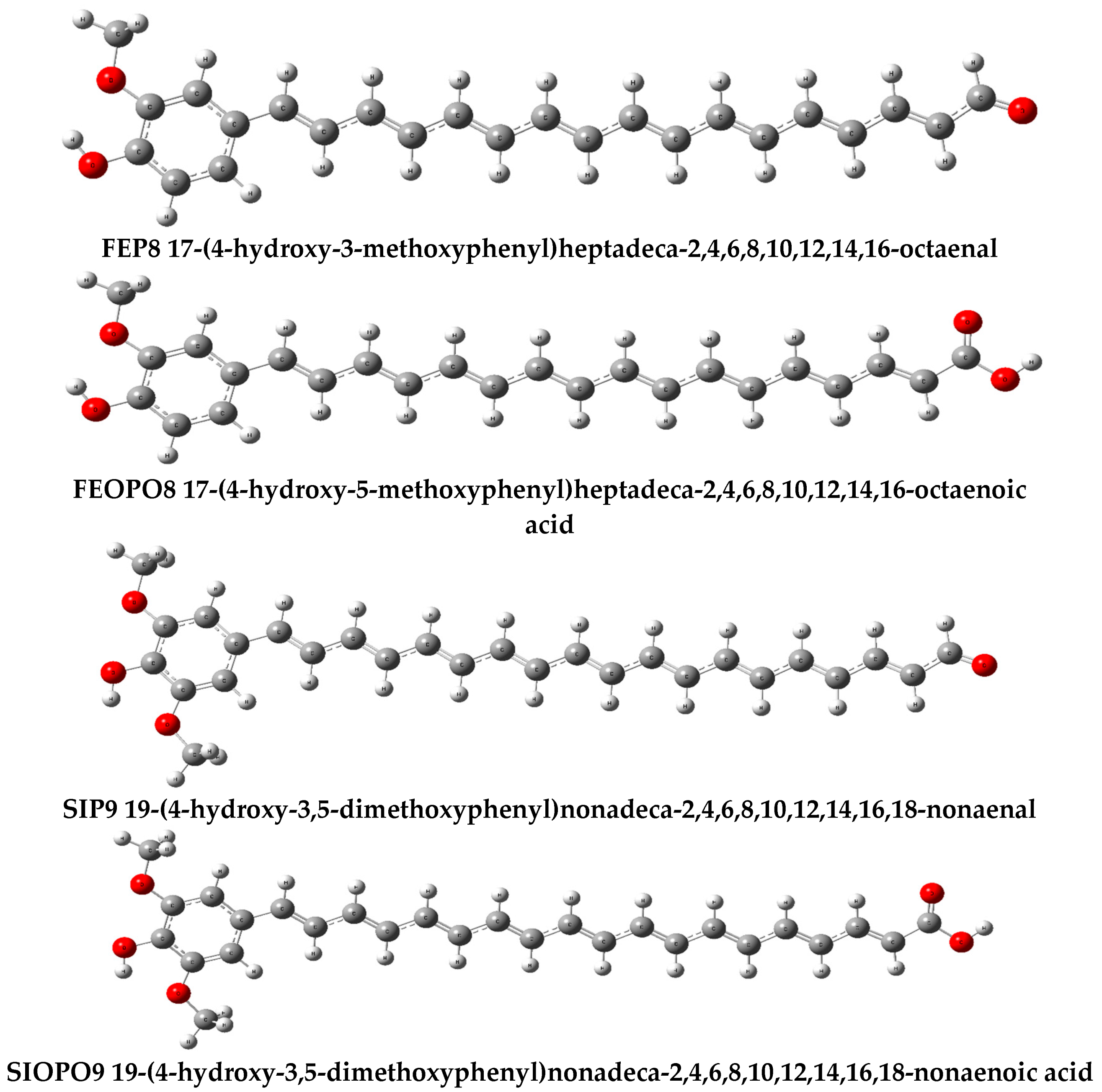
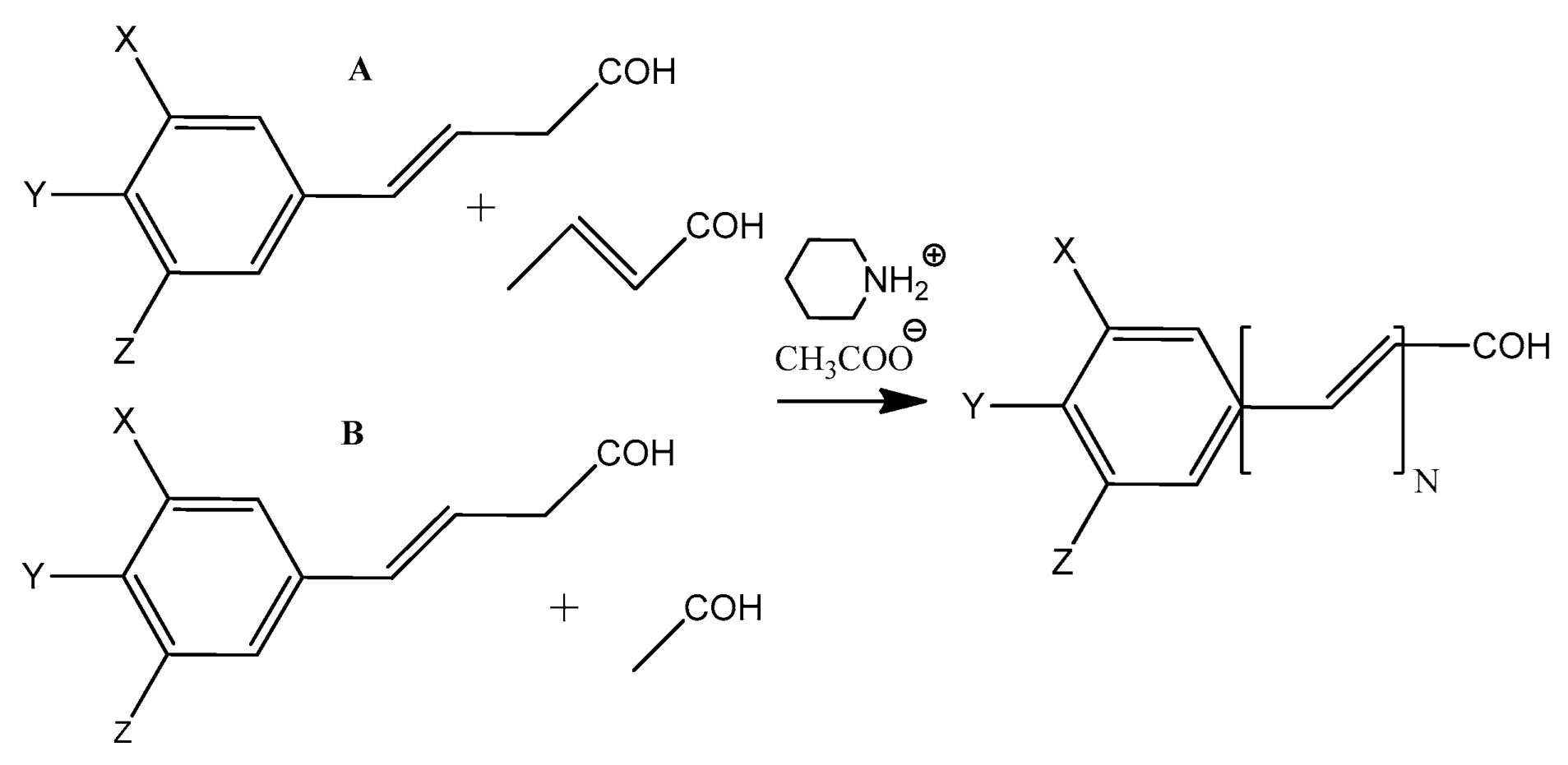
1. Introduction
2. Results and Discussion
- (i)
- (ii)
3. Materials and Methods
4. Conclusions
Supplementary Materials
Funding
Institutional Review Board Statement
Informed Consent Statement
Data Availability Statement
Acknowledgments
Conflicts of Interest
Abbreviations
| ACE | Angiotensin Converting Enzyme |
| AIP | Adiabatic Ionization Potential |
| BDE | Bond Dissociation Enthalpy |
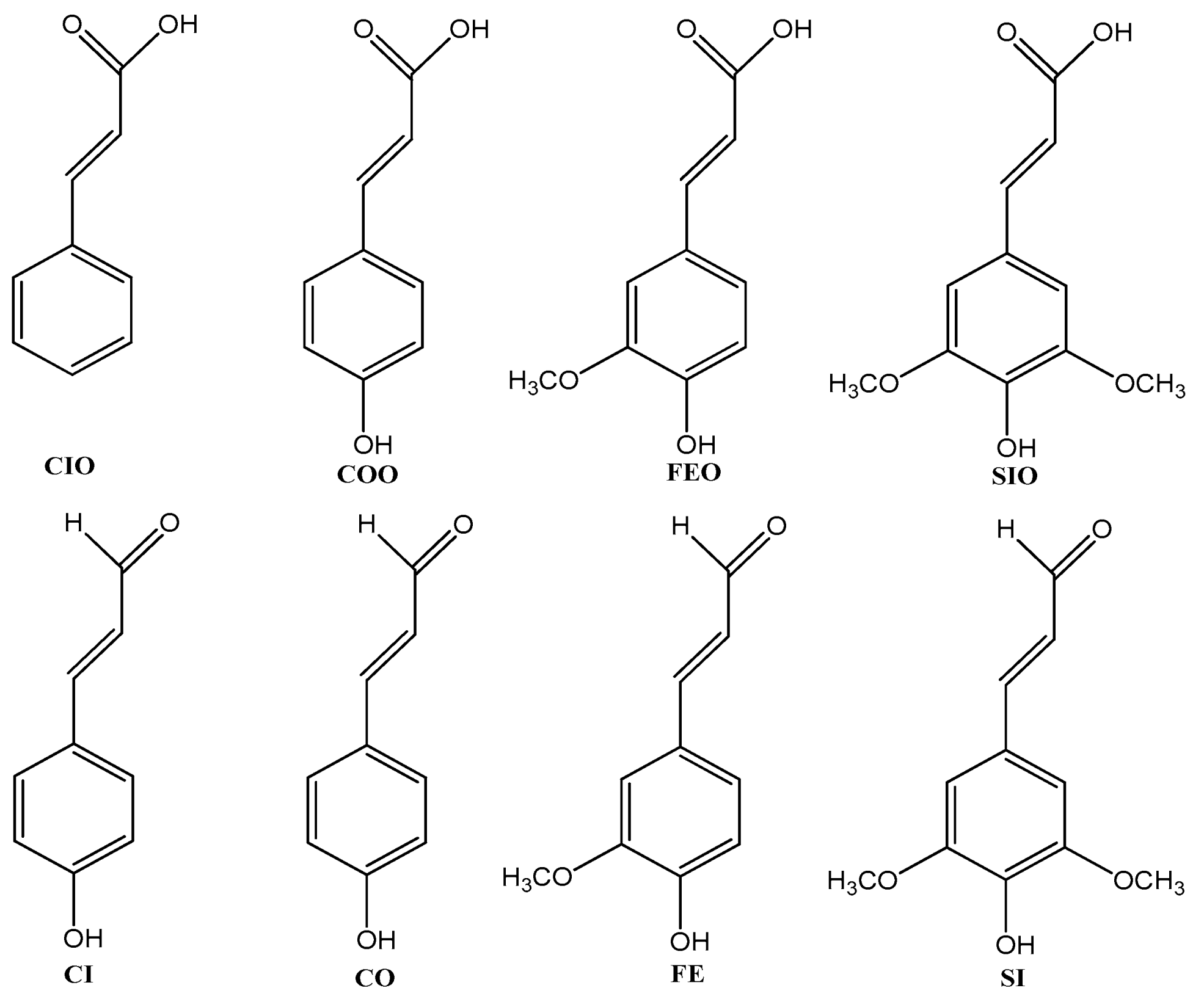
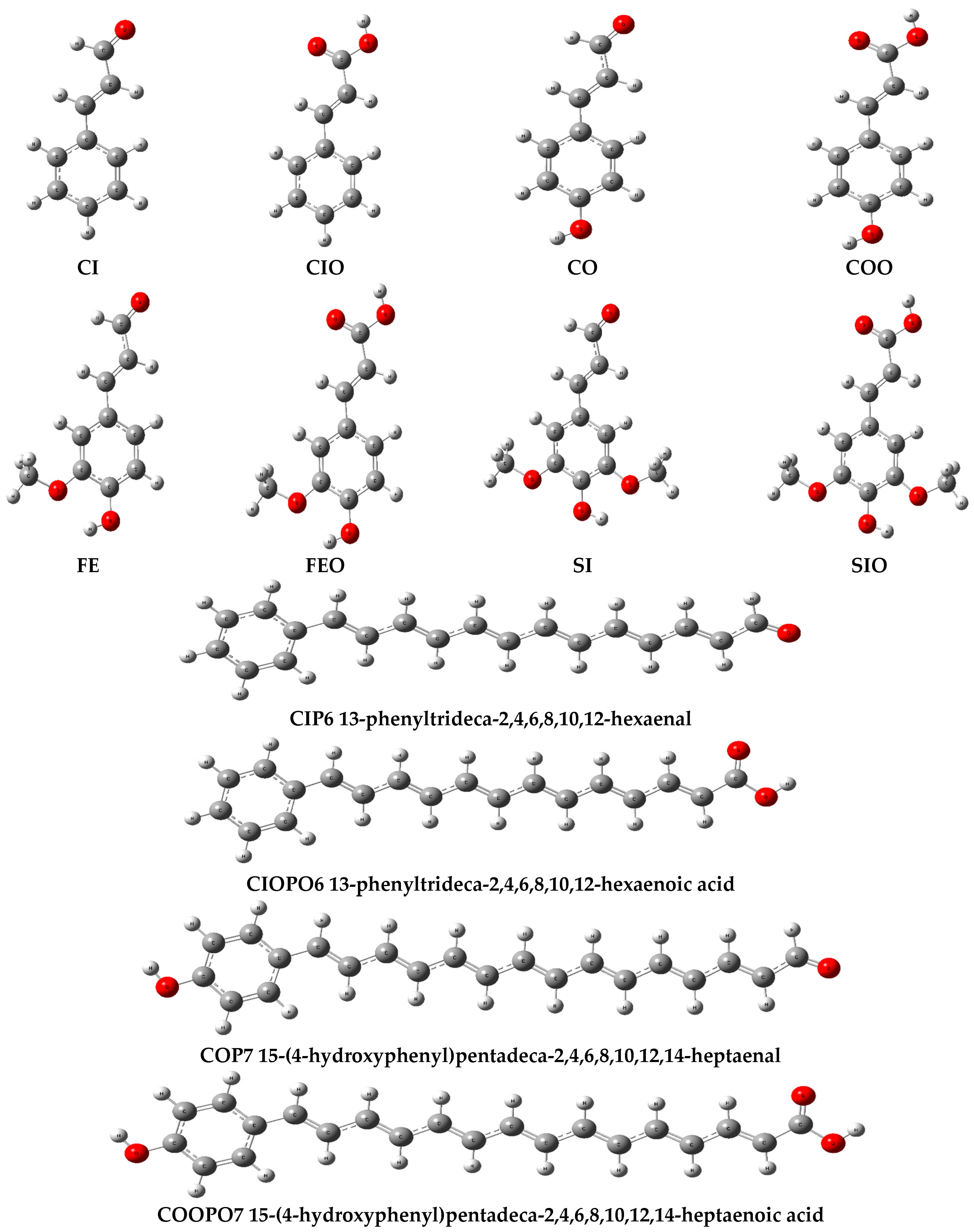
| CI | Cinnamaldehyde |
| CIO | Cinnamic Acid |
| CO | Coumaric Aldehyde |
| COO | Coumaric Acid |
| CPET | Concerted Proton-Electron Transfer |
| DFT | Density Functional Theory |
| EA | Electron Affinity |
| ETE | Electron Transfer Enthalpy |
| FE | Ferulic Aldehyde (FE) |
| FEO | Ferulic Acid |
| HAT | Hydrogen Atom Transfer |
| HOMO | Highest Occupied Molecular Orbital |
| IP | Ionization Potential |
| LUMO | Lowest Occupied Molecular Orbital |
| P6 | Tetradecahexenal |
| P7 | Hexadecaheptenal |
| P8 | Octadecaoctenal |
| P9 | Eicosanonenal |
| PA | Proton Affinity |
| PCET | Proton-Coupled Electron Transfer |
| PDE | Proton Dissociation Enthalpy |
| PO6 | Tetradecahexenoic Acid |
| PO7 | Hexadecahepteoic Acid |
| PO8 | Octadecaoctenaenoic Acid |
| PO9 | Eicosanonenaoic Acid |
| RAF | Radical Adduct Formation |
| RNS | Reactive Nitrogen Species |
| ROS | Reactive Oxygen Species |
| SET | Single Electron Transfer |
| SET-PT | Single Electron Transfer Followed by Proton Transfer |
| SI | Sinapic Aldehyde |
| SIO | Sinapic Acid |
| SPLET | Sequential Proton Loss Electron Transfer |
| TD-DFT | Time Dependent Density Functional Theory |
| VIP | Vertical Ionization Potential |
References
- Zhao, J.K.; Fujita, K.; Sakai, K. Reactive oxygen species, nitric oxide, and their interactions play different roles in Cupressus lusitanica cell death and phytoalexin biosynthesis. New Phytol. 2007, 175, 215–229. [Google Scholar] [CrossRef]
- Chaudhary, P.; Janmeda, P.; Docea, A.O.; Yeskaliyeva, B.; Razis, A.F.A.; Modu, B.; Calina, D.; Sharifi-Rad, J. Oxidative stress, free radicals and antioxidants: Potential crosstalk in the pathophysiology of human diseases. Front. Chem. 2023, 11, 1158198. [Google Scholar] [CrossRef]
- Abeyrathne, E.D.N.S.; Nam, K.; Huang, X.; Ahn, D.U. Plant- and animal-based antioxidants’ structure, efficacy, Mechanisms, and applications: A Review. Antioxidants 2022, 11, 1025. [Google Scholar] [CrossRef]
- Maia, L.F.; Fernandes, R.F.; Lobo-Hajdu, G.; de Oliveira, L.F.C. Conjugated polyenes as chemical probes of life signature: Use of Raman spectroscopy to differentiate polyenic pigments. Philos. Trans. R. Soc. A 2014, 372, 20140200. [Google Scholar] [CrossRef][Green Version]
- Burtt, E.H., Jr.; Schroeder, M.R.; Smith, L.A.; Sroka, J.E.; McGraw, K.J. Colourful parrot feathers resist bacterial degradation. Biol. Lett. 2011, 7, 214–216. [Google Scholar] [CrossRef][Green Version]
- Pini, E.; Bertelli, A.; Stradi, R.; Falchi, M. Biological activity of parrodienes, a new class of polyunsaturated linear aldehydes similar to carotenoids. Drugs Exp. Clin. Res. 2004, 30, 203–206. [Google Scholar] [PubMed]
- Flori, E.; Mastrofrancesco, A.; Kovacs, D.; Ramot, Y.; Briganti, S.; Bellei, B.; Paus, R.; Picardo, M. 2,4,6-Octatrienoic acid is a novel promoter of melanogenesis and antioxidant defence in normal human melanocytes via PPAR-γ activation. Pigment. Cell Melanoma Res. 2011, 24, 618–630. [Google Scholar] [CrossRef] [PubMed]
- Mukherjee, S.; Ray, D.; Falchi, M.; Bertelli, A.; Pini, E.; Das, D.K. Cardioprotection with the parrodiene 2,4,6-octatrienal and its potassium salt through activation of the Akt-Bcl-2 survival pathway. J. Nat. Prod. 2009, 72, 871–875. [Google Scholar] [CrossRef] [PubMed]
- Tagliazucchi, D.; Verzelloni, E.; Pini, E.; Ronca, G.; Conte, A. Effect of chain length and aldehydic function on some biological properties of parropolyenes. Pharmacologyonline 2006, 3, 765–771. [Google Scholar]
- Morelli, R.; Loscalzo, R.; Stradi, R.; Bertelli, A.; Falchi, M. Evaluation of the antioxidant activity of new carotenoid-like compounds by electron paramagnetic resonance. Drugs Exp. Clin. Res. 2003, 29, 95–100. [Google Scholar] [PubMed]
- McGraw, K.J.; Nogare, M.C. Carotenoid pigments and the selectivity of psittacofulvin based coloration systems in parrots. Comp. Biochem. Physiol. B 2004, 138, 229–233. [Google Scholar] [CrossRef]
- Stradi, R.; Pina, E.; Celentano, G. The chemical structure of the pigments in Ara macao plumage. Comp. Biochem. Physiol. Part B 2001, 130, 57–63. [Google Scholar] [CrossRef]
- Tay, E.J.; Barnsley, J.E.; Thomas, D.B.; Gordon, K.C. Elucidating the resonance Raman spectra of psittacofulvins. Mol. Biomol. Spectrosc. 2021, 262, 120146. [Google Scholar] [CrossRef]
- Adamec, F.; Greco, J.A.; LaFountain, A.M.; Magdaong, N.M.; Fuciman, M.; Birge, R.R.; Polivka, T.; Frank, H.A. Spectroscopic investigation of a brightly colored psittacofulvin pigment from parrot feathers. Chem. Phys. Lett. 2016, 648, 195–199. [Google Scholar] [CrossRef]
- Soldati, A.L.; Jacob, D.E.; Wehrmeister, U.; Häger, T.; Hofmeister, W. Micro-Raman spectroscopy of pigments contained in different calcium carbonate polymorphs from freshwater cultured pearls. J. Raman Spectrosc. 2008, 39, 525–536. [Google Scholar] [CrossRef]
- Karampelas, S.; Fritsch, E.; Mevellec, J.Y.; Sklavounos, S.; Soldatos, T. Role of polyenes in the coloration of cultured freshwater pearls. Eur. J. Mineral. 2009, 21, 85–97. [Google Scholar] [CrossRef]
- Hedegaard, C.; Bardeau, J.-F.; Chateigner, D. Molluscan shell pigments: An in situ resonance Raman study. J. Molluscan Stud. 2006, 72, 157–162. [Google Scholar] [CrossRef]
- Barnard, W.; de Waal, D. 2006 Raman investigation of pigmentary molecules in the molluscan biogenic matrix. J. Raman Spectrosc. 2006, 37, 342–352. [Google Scholar] [CrossRef]
- de Oliveira, L.N.; de Oliveira, V.E.; D’ávila, S.; Edwards, H.G.M.; de Oliveira, L.F.C. Raman spectroscopy as a tool for polyunsaturated compound characterization in gastropod and limnic terrestrial shell specimens. Spectrochim. Acta A 2013, 114, 541–546. [Google Scholar] [CrossRef]
- Luwei, F.; Mingxing, Y. In situ resonance Raman spectra of organic pigments in momo coral. J. China Univ. Geosci. 2008, 19, 146–151. [Google Scholar] [CrossRef]
- Bergamonti, L.; Bersani, D.; Csermely, D.; Lottici, P.P. The nature of the pigments in corals and pearls: A contribution from Raman spectroscopy. Spectrosc. Lett. 2011, 44, 453–458. [Google Scholar] [CrossRef]
- Maia, L.F.; Fleury, B.G.; Lages, B.G.; Barbosa, J.P.; Pinto, Â.C.; Castro, H.V.; de Oliveira, V.E.; Edwards, H.G.M.; de Oliveira, L.F.C. Identification of reddish pigments in octocorals by Raman spectroscopy. J. Raman Spectrosc. 2011, 42, 653–658. [Google Scholar] [CrossRef]
- Karampelas, S.; Fritsch, E.; Rondeau, B.; Andouche, A.; Métivier, B. Identification of the endangered pink-to-red stylaster corals by Raman spectroscopy. Gems Gemol. 2009, 45, 48–52. [Google Scholar] [CrossRef]
- Shi, L.; Liu, X.; Mao, J.; Han, X. Study of coloration mechanism of cultured freshwater pearls from mollusk Hyriopsis cumingii. J. Appl. Spectrosc. 2014, 81, 97–101. [Google Scholar] [CrossRef]
- Fuentes, F.; Iván Palomo, I. Mechanisms of endothelial cell protection by hydroxycinnamic acids. Vasc. Pharmacol. 2014, 63, 155–161. [Google Scholar] [CrossRef]
- Kwon, J.A.; Yu, C.B.; Park, H.D. Bacteriocidal effects and inhibition of cell separation of cinnamic aldehyde on Bacillus cereus. Lett. Appl. Microbiol. 2003, 37, 61–65. [Google Scholar] [CrossRef]
- Roychoudhury, S.; Sinha, B.; Choudhury, B.P.; Jha, N.K.; Palit, P.; Kundu, S.; Mandal, S.C.; Kolesarova, A.; Yousef, M.I.; Ruokolainen, J.; et al. Scavenging properties of plant-derived natural biomolecule para-coumaric acid in the prevention of oxidative stress-induced diseases. Antioxidants 2021, 10, 1205. [Google Scholar] [CrossRef]
- Varbanova, M.; Porter, K.; Lu, F.; Ralph, J.; Hammerschmidt, R.; Jones, A.D.; Day, B. Molecular and biochemical basis for stress-induced accumulation of free and bound p-coumaraldehyde in cucumber. Plant Physiol. 2011, 157, 1056–1066. [Google Scholar] [CrossRef]
- Hong, S.H.; Ismail, I.A.; Kang, S.M.; Han, D.C.; Kwon, B.M. Cinnamaldehydes in cancer chemotherapy. Phytother. Res. 2016, 30, 754–767. [Google Scholar] [CrossRef]
- Kunnummal, S.P.; Khan, M. Diet-gut microbiome interaction and ferulic acid bioavailability: Implications on neurodegenerative disorders. Eur. J. Nutr. 2024, 63, 51–66. [Google Scholar] [CrossRef]
- Pandi, A.; Kalappan, V.M. Pharmacological and therapeutic applications of sinapic acid—An updated review. Mol. Biol. Rep. 2021, 48, 3733–3745. [Google Scholar] [CrossRef]
- González Moa, M.J.; Mandado, M.; Mosquera, R.A. QTAIM charge density study of natural cinnamic acids. Chem. Phys. Lett. 2006, 424, 17–22. [Google Scholar] [CrossRef]
- Kong, L.; Sun, Z.-L.; Wang, L.-F.; Zhang, H.-Y.; Yao, S.-D. Theoretical elucidation of the radical-scavenging-activity difference of hydroxycinnamic acid derivatives. Helv. Chim. Acta 2004, 87, 511–515. [Google Scholar] [CrossRef]
- Nsangou, M.; Fifen, J.J.; Dhaouadi, Z.; Lahmar, S. Hydrogen atom transfer in the reaction of hydroxycinnamic acids with OH and HO2 radicals: DFT study. J. Mol. Struct. THEOCHEM 2008, 862, 53–59. [Google Scholar] [CrossRef]
- Sebastian, S.; Sundaraganesan, N.; Manoharan, S. Molecular structure, spectroscopic studies and first-order molecular hyperpolarizabilities of ferulic acid by density functional study. Spectrochim. Acta Part A Mol. Biomol. Spectrosc. 2009, 74, 312–323. [Google Scholar] [CrossRef]
- León-Carmona, J.R.; Alvarez-Idaboy, J.R.; Galano, A. On the peroxyl scavenging activity of hydroxycinnamic acid derivatives: Mechanisms, kinetics, and importance of the acid–base equilibrium. Phys. Chem. Chem. Phys. 2012, 14, 12534–12543. [Google Scholar] [CrossRef]
- Zhao, Y.; Schultz, N.E.; Truhlar, D.G. Design of density functionals by combining the method of constraint satisfaction with parametrization for thermochemistry, thermochemical kinetics, and noncovalent interactions. J. Chem. Theory Comput. 2006, 2, 364–382. [Google Scholar] [CrossRef]
- Marenich, A.V.; Cramer, C.J.; Truhlar, D.G. Universal solvation model based on solute electron density and on a continuum model of the solvent defined by the bulk dielectric constant and atomic surface tensions. J. Phys. Chem. B 2009, 113, 6378–6396. [Google Scholar] [CrossRef] [PubMed]
- Urbaniak, A.; Molski, M.; Szeląg, M. Quantum-chemical Calculations of the antioxidant properties of trans-p-coumaric acid and trans-sinapinic acid. Comput. Methods Sci. Technol. 2012, 18, 117–128. [Google Scholar] [CrossRef]
- Urbaniak, A.; Szeląg, M.; Molski, M. Theoretical investigation of stereochemistry and solvent influence on antioxidant activity of ferulic acid. Comput. Theor. Chem. 2013, 1012, 33–40. [Google Scholar] [CrossRef]
- Sherefedin, U.; Belay, A.; Kebede, A.; Asemare, S.; Woldegiorges, K.; Kumela, A.G.; Gudishe, K. Determination of the ground and excited state dipole moments of ferulic and sinapic acids by solvatochromic effects and density function theory method. AIP Adv. 2023, 13, 105227. [Google Scholar] [CrossRef]
- Domagalska, B.W.; Wilk, K.A.; Wysocki, S. Experimental and theoretical studies on solvent effects of amphiphilic conjugated polyenals. Phys. Chem. Chem. Phys. 2023, 5, 696–702. [Google Scholar] [CrossRef]
- Rimarčik, J.; Lukeš, V.; Klein, E.; Ilčin, M. Study of the solvent effect on the enthalpies of homolytic and heterolytic N–H bond cleavage in p-phenylenediamine and tetracyano-p-phenylenediamine. J. Mol. Struct. THEOCHEM 2010, 952, 25–30. [Google Scholar] [CrossRef]
- Schrauben, J.N.; Cattaneo, M.; Day, T.C.; Tenderholt, A.L.; Mayer, J.M. Multiple-site concerted proton-electron transfer reactions of hydrogen-bonded phenols are nonadiabatic and well described by semiclassical Marcus theory. J. Am. Chem. Soc. 2012, 134, 16635–16645. [Google Scholar] [CrossRef]
- Tyburski, R.; Liu, T.; Glover, S.D.; Hammarstrom, L. Proton-coupled electron transfer guidelines, fair and square. J. Am. Chem. Soc. 2021, 143, 560–570. [Google Scholar] [CrossRef]
- Leopoldini, M.; Russo, N.; Toscano, M. Gas and liquid phase acidity of natural antioxidants. J. Agric. Food Chem. 2006, 54, 3078–3085. [Google Scholar] [CrossRef]
- Li, X.; Ouyang, X.; Liang, M.; Chen, D. Comparative analysis of radical adduct formation (RAF) products and antioxidant pathways between myricetin-3-O-galactoside and myricetin aglycone. Molecules 2019, 24, 2769. [Google Scholar] [CrossRef]
- Koopmans, T. Über die zuordnung von wellenfunktionen und eigenwerten zu den einzelnen elektronen eines atoms. Physica 1934, 1, 104–113. [Google Scholar] [CrossRef]
- Bredas, J.-L. Mind the gap! Mater. Horiz. 2014, 1, 17–19. [Google Scholar] [CrossRef]
- Parr, R.G.; Yang, W. Density Functional Theory of Atoms and Molecules; Oxford University Press: Oxford, UK, 1989. [Google Scholar] [CrossRef]
- Pearson, R.G. Chemical Hardness—Applications from Molecules to Solids; Wiley: Weinheim, Germany, 1997. [Google Scholar]
- Sanchez-Marquez, J.; García, V.; Zorrilla, D.; Fernandez, M. On electronegativity, hardness, and reactivity descriptors: A new property-oriented basis set. J. Phys. Chem. A 2020, 124, 4700–4711. [Google Scholar] [CrossRef]
- Parr, R.G.; Szentpály, L.V.; Liu, S. Electrophilicity index. J. Am. Chem. Soc. 1999, 121, 1922–1924. [Google Scholar] [CrossRef]
- Gázquez, J.L.; Cedillo, A.; Vela, A.J. Electrodonating and electroaccepting powers. Phys. Chem. 2007, 111, 1966–1970. [Google Scholar] [CrossRef]
- Martinez, A. Donator acceptor map of psittacofulvins and anthocyanins: Are they good antioxidant substances? J. Phys. Chem. 2009, 113, 4915–4921. [Google Scholar] [CrossRef]
- Molski, M. Theoretical insight into psittacofulvins and their derivatives. Molecules 2024, 29, 2760. [Google Scholar] [CrossRef]
- Becke, A.D. Density-functional thermochemistry. III. The role of exact exchange. J. Chem. Phys. 1993, 98, 5648–5652. [Google Scholar] [CrossRef]
- Lee, C.; Yang, W.; Parr, R.G. Development of the Colle-Salvetti correlation-energy formula into a functional of the electron density. Phys. Rev. B 1988, 37, 785–789. [Google Scholar] [CrossRef]
- Weigend, F.; Ahlrichs, R. Balanced basis sets of split valence, triple zeta valence and quadruple zeta valence quality for H to Rn: Design and assessment of accuracy. Phys. Chem. Chem. Phys. 2005, 7, 3297–3305. [Google Scholar] [CrossRef] [PubMed]
- Cossi, M.; Rega, N.; Scalmani, G.; Barone, V. Energies, structures, and electronic properties of molecules in solution with the C-PCM solvation model. J. Comput. Chem. 2003, 24, 669–681. [Google Scholar] [CrossRef]
- Dunning, T.H. Gaussian basis sets for use in correlated molecular calculations. I. The atoms boron through neon and hydrogen. J. Chem. Phys. 1989, 90, 1007–1023. [Google Scholar] [CrossRef]
- Zhao, Y.; Truhlar, D.G. The M06 suite of density functionals for main group thermochemistry, thermochemical kinetics, noncovalent interactions, excited states, and transition elements: Two new functionals and systematic testing of four M06-class functionals and 12 other functionals. Theor. Chem. Acc. 2008, 120, 215–241, Erratum in Theor. Chem. Acc. 2008, 119, 525. [Google Scholar] [CrossRef]
- Becke, A.D.A. New mixing of Hartree–Fock and local density-functional theories. J. Chem. Phys. 1993, 98, 1372–1377. [Google Scholar] [CrossRef]
- Tomasi, J.; Mennucci, B.; Cancès, E. The IEF version of the PCM solvation method: An overview of a new method addressed to study molecular solutes at the QM ab initio level. J. Mol. Struct. THEOCHEM 1999, 464, 211–226. [Google Scholar] [CrossRef]
- Frisch, M.J.; Trucks, G.W.; Schlegel, H.B.; Scuseria, G.E.; Robb, M.A.; Cheeseman, J.R.; Scalmani, G.; Barone, V.; Petersson, G.A.; Nakatsuji, H.; et al. Gaussian, version 16, Revision A.03; Gaussian, Inc.: Wallingford, CT, USA, 2016.
- Stradi, R.; Bertelli, A.; Pini, E. Polyunsaturated Linear Aldehydes and Their Derivatives with Anti-Radical Activity. European Patent 1 501 774 B1, 12 August 2009. Available online: https://patents.google.com/patent/EP1501774B1/en (accessed on 31 March 2026).
- Guitard, R.; Nardello-Rataj, V.; Aubry, J.-M. Theoretical and kinetic tools for selecting effective antioxidants: Application to the protection of omega-3 oils with natural and synthetic phenols. Int. J. Mol. Sci. 2016, 17, 1220. [Google Scholar] [CrossRef]
- Karamać, M.; Koleva, L.; Kancheva, V.D.; Amarowicz, R. The structure–antioxidant activity relationship of ferulates. Molecules 2017, 22, 527. [Google Scholar] [CrossRef]
- Tang, X.; Wang, L.; Zhang, Y.; Sun, C.; Huang, Z. Enhancing the antioxidant potential of ESIPT-based naringenin flavonoids based on excited state hydrogen bond dynamics: A theoretical study. J. Photochem. Photobiol. B 2024, 258, 112996. [Google Scholar] [CrossRef]
- Zhang, Y.; Han, F.; Wang, L.; Tang, X.; Sun, C.; Wang, L. Influence of the adsorption effect of graphene quantum dot on the photophysical properties and multiple antioxidant processes of gallic acid. Chem. Phys. Lett. 2024, 846, 141325. [Google Scholar] [CrossRef]
- Tang, X.; Zhang, Y.; Wang, L.; Sun, C.; Wang, L.; Huang, Z. Excited-state antioxidant capacity of flavonoids based on solvent effect: A TD-DFT study. J. Mol. Liq. 2024, 404, 124973. [Google Scholar] [CrossRef]



| Descriptor | CI | CIP6 | P6 | CIO | CIOPO6 | PO6 |
|---|---|---|---|---|---|---|
| BDE | 84.67 | 75.59 | 99.17 | 102.79 | 85.56 | 86.15 |
| PA | 90.20 | 70.41 | 67.64 | 42.85 | 43.88 | 44.10 |
| ETE | 40.56 | 51.28 | 77.63 | 106.04 | 87.78 | 88.15 |
| PA+ETE | 130.77 | 121.69 | 145.27 | 148.89 | 131.66 | 132.25 |
| AIP | 127.47 | 93.91 | 89.55 | 126.42 | 93.28 | 94.58 |
| PDE | 3.29 | 27.78 | 55.71 | 22.47 | 38.38 | 37.66 |
| Gacidity | 332.61 | 268.08 | 311.24 | 285.62 | 286.20 | 286.42 |
| Mechanism | HAT1 | SPLET1 | SPLET1 | SPLET1 | SPLET1 | SPLET1 |
| Descriptor | CO | COP7 | P7 | COO | COOPO7 | PO7 |
|---|---|---|---|---|---|---|
| BDE1 BDE2 | 86.48 82.78 | 75.19 72.12 | 75.69 - | 98.58 82.33 | 82.09 71.97 | 84.23 - |
| PA1 PA2 | 96.12 43.04 | 70.53 45.13 | 72.51 - | 43.85 44.08 | 44.08 45.58 | 44.11 - |
| ETE1 ETE2 | 36.46 85.84 | 50.76 73.09 | 49.27 - | 100.82 84.34 | 84.10 72.48 | 86.22 - |
| PA1+ETE1 PA2+ETE2 | 132.57 128.88 | 121.28 118.22 | 121.78 - | 144.67 128.42 | 128.19 118.06 | 130.33 - |
| AIP | 116.75 | 88.54 | 92.04 | 115.71 | 88.05 | 91.43 |
| PDE1 PDE2 | 15.82 12.13 | 32.74 29.68 | 29.74 - | 28.97 12.72 | 40.13 30.01 | 38.90 - |
| G1acidity G2acidity | 337.82 286.34 | 313.21 288.54 | 315.59 - | 286.49 287.42 | 313.21 288.54 | 286.49 - |
| Mechanism | SPLET2 | SPLET2 | SPLET1 | SPLET2 | SPLET1 | SPLET1 |
| Descriptor | FE | FEP8 | P8 | FEO | FEOPO8 | PO8 |
|---|---|---|---|---|---|---|
| BDE1 BDE2 | 86.26 79.27 | 74.60 70.63 | 74.99 - | 96.11 78.91 | 80.44 70.53 | 82.59 - |
| PA1 PA2 | 96.44 44.76 | 68.90 46.76 | 70.47 - | 43.88 45.93 | 44.16 47.22 | 44.12 - |
| ETE1 ETE2 | 35.91 80.60 | 51.80 69.97 | 50.60 - | 98.32 79.07 | 82.37 69.40 | 84.57 - |
| PA1+ETE1 PA2+ETE2 | 132.35 125.37 | 120.70 116.72 | 121.07 - | 142.20 125.00 | 126.53 116.62 | 128.69 - |
| AIP | 110.49 | 86.16 | 89.50 | 109.54 | 85.70 | 88.94 |
| PDE1 PDE2 | 21.86 14.87 | 34.54 30.57 | 31.59 - | 32.67 15.47 | 40.83 30.92 | 39.75 - |
| G1acidity G2acidity | 337.99 288.27 | 311.21 290.95 | 313.72 - | 286.04 289.46 | 286.81 291.26 | 286.50 - |
| Mechanism | SPLET2 | SPLET2 | SPLET1 | SPLET1 | SPLET1 | SPLET1 |
| Descriptor | SI | SIP9 | P9 | SIO | SIOPO9 | PO9 |
|---|---|---|---|---|---|---|
| BDE1 BDE2 | 86.23 75.30 | 74.05 67.61 | 74.41 - | 94.45 74.97 | 79.22 67.54 | 81.16 - |
| PA1 PA2 | 96.38 44.42 | 67.55 46.24 | 68.85 - | 43.92 45.66 | 44.15 46.78 | 44.13 - |
| ETE1 ETE2 | 35.95 76.98 | 52.59 67.46 | 51.66 - | 96.63 75.41 | 81.16 66.86 | 83.13 - |
| PA1+ETE1 PA2+ETE2 | 132.33 121.40 | 120.14 113.71 | 120.51 - | 140.55 121.07 | 125.31 113.64 | 127.26 - |
| AIP | 107.52 | 86.67 | 87.43 | 106.52 | 84.04 | 86.93 |
| PDE1 PDE2 | 24.81 13.88 | 33.47 27.03 | 33.08 - | 34.03 14.55 | 41.27 29.60 | 40.33 - |
| G1acidity G2acidity | 337.62 287.65 | 310.47 290.43 | 312.26 - | 286.78 289.29 | 287.16 291.03 | 286.47 - |
| Mechanism | SPLET2 | SPLET2 | SPLET1 | SPLET1 | SPLET1 | SPLET1 |
| Compound | C–C | Compound | C–C |
|---|---|---|---|
| CI | 1.456 | FE | 1.449 |
| CIP6 | 1.456 | FEP8 | 1.453 |
| CIO | 1.458 | FEO | 1.452 |
| CIOPO6 | 1.457 | FEOPO8 | 1.454 |
| CO | 1.448 | SI | 1.448 |
| COP7 | 1.452 | SIP9 | 1.453 |
| COO | 1.453 | SIO | 1.452 |
| COOPO7 | 1.453 | SIOPO9 | 1.454 |
Disclaimer/Publisher’s Note: The statements, opinions and data contained in all publications are solely those of the individual author(s) and contributor(s) and not of MDPI and/or the editor(s). MDPI and/or the editor(s) disclaim responsibility for any injury to people or property resulting from any ideas, methods, instructions or products referred to in the content. |
© 2026 by the author. Licensee MDPI, Basel, Switzerland. This article is an open access article distributed under the terms and conditions of the Creative Commons Attribution (CC BY) license.
Share and Cite
Molski, M. Rational Design of Conjugated Phenylpropanoid–Polyene Hybrids: Density Functional Theory Insights into Antiradical and Optical Properties. Int. J. Mol. Sci. 2026, 27, 3378. https://doi.org/10.3390/ijms27083378
Molski M. Rational Design of Conjugated Phenylpropanoid–Polyene Hybrids: Density Functional Theory Insights into Antiradical and Optical Properties. International Journal of Molecular Sciences. 2026; 27(8):3378. https://doi.org/10.3390/ijms27083378
Chicago/Turabian StyleMolski, Marcin. 2026. "Rational Design of Conjugated Phenylpropanoid–Polyene Hybrids: Density Functional Theory Insights into Antiradical and Optical Properties" International Journal of Molecular Sciences 27, no. 8: 3378. https://doi.org/10.3390/ijms27083378
APA StyleMolski, M. (2026). Rational Design of Conjugated Phenylpropanoid–Polyene Hybrids: Density Functional Theory Insights into Antiradical and Optical Properties. International Journal of Molecular Sciences, 27(8), 3378. https://doi.org/10.3390/ijms27083378