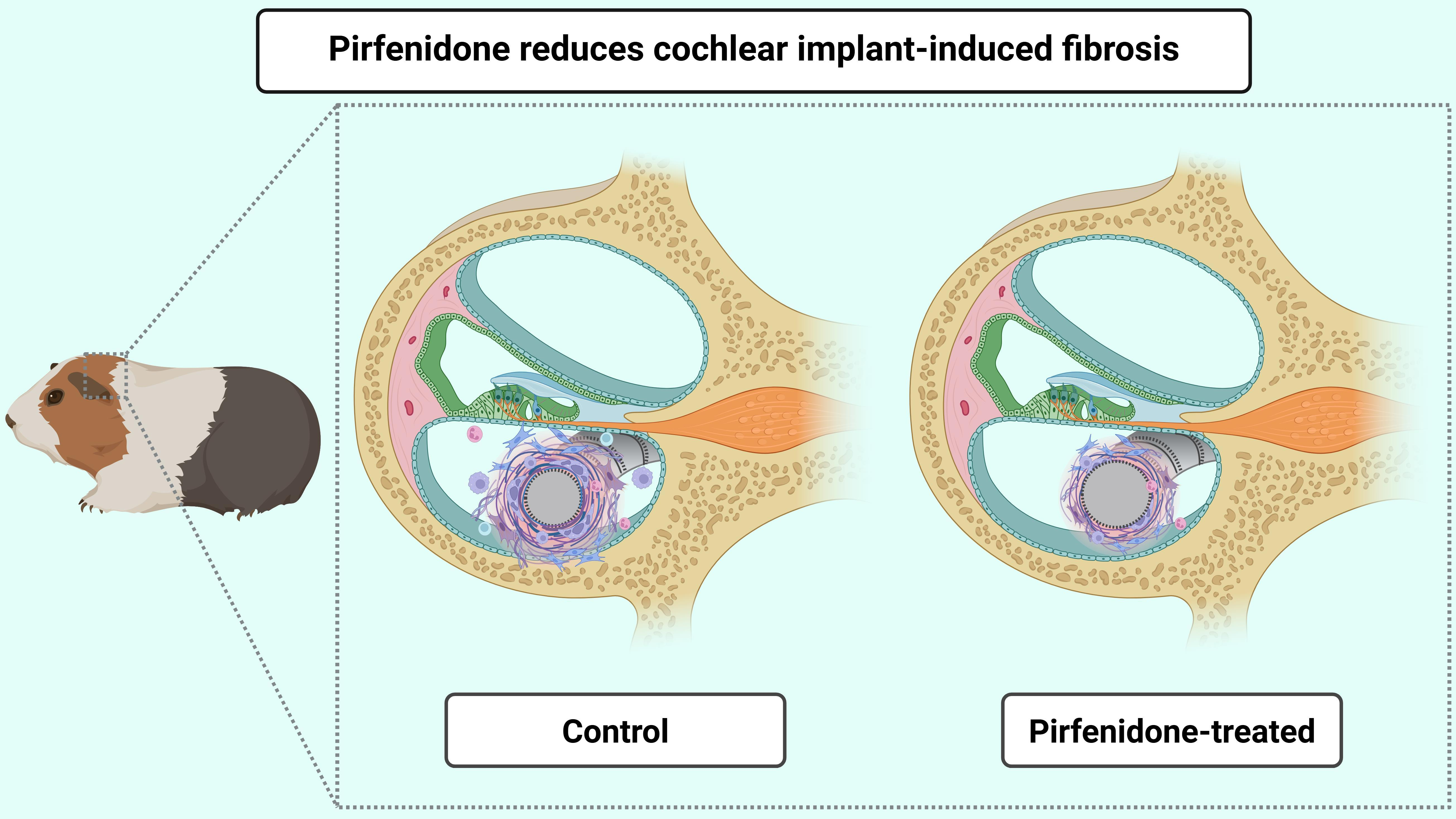
Pirfenidone Reduces Intracochlear Fibrosis Caused by Cochlear Implantation in a Guinea Pig Model

 ,
,  , , and
Abstract
1. Introduction
2. Results
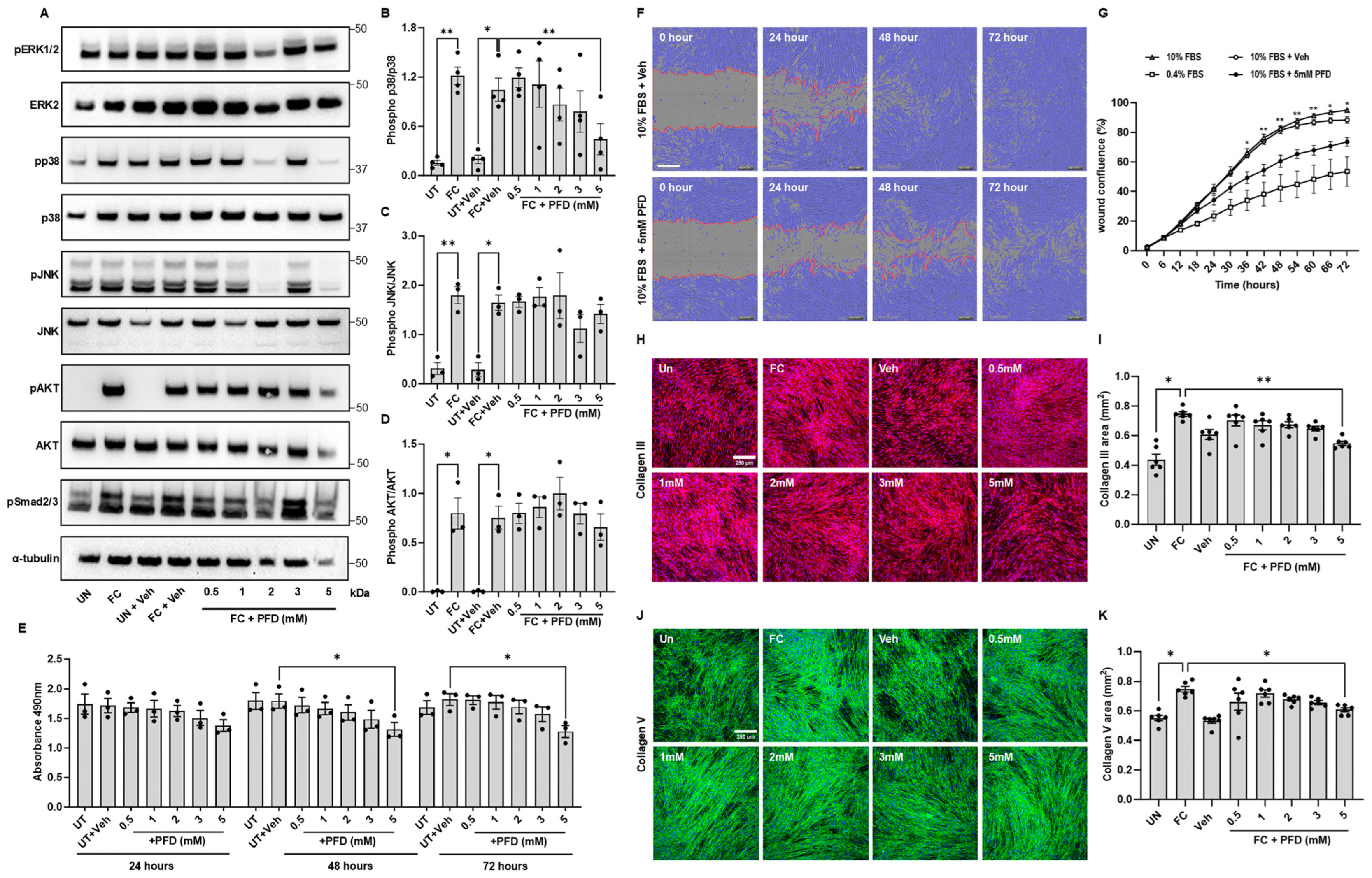
2.1. Pirfenidone (PFD) Reduces Proliferation, Collagen Deposition and the Wound Healing Response in Guinea Pig Primary Inner Ear Fibrocytes Cultures
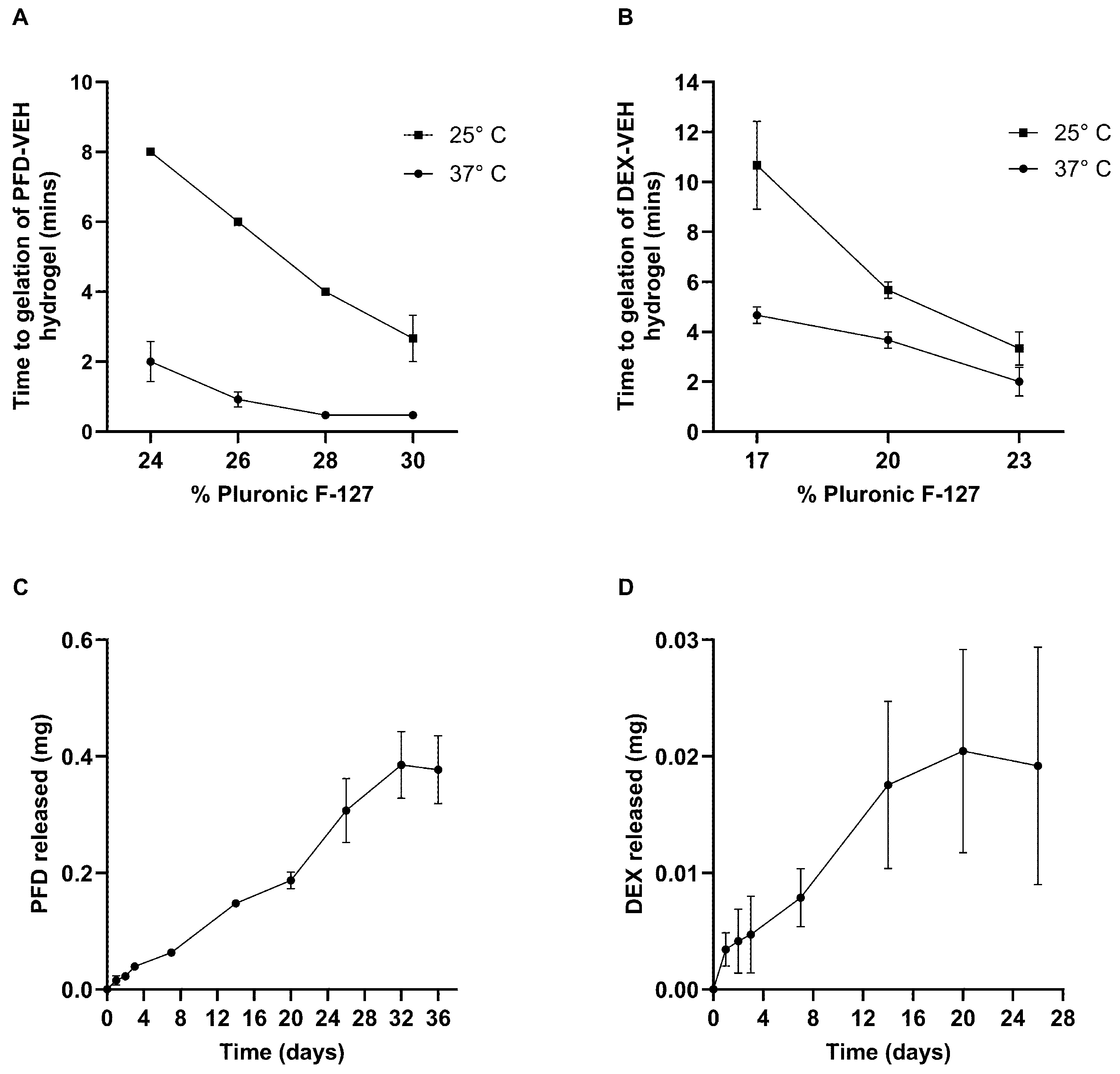
2.2. Development and Characterisation of Drug-Loaded Hydrogels
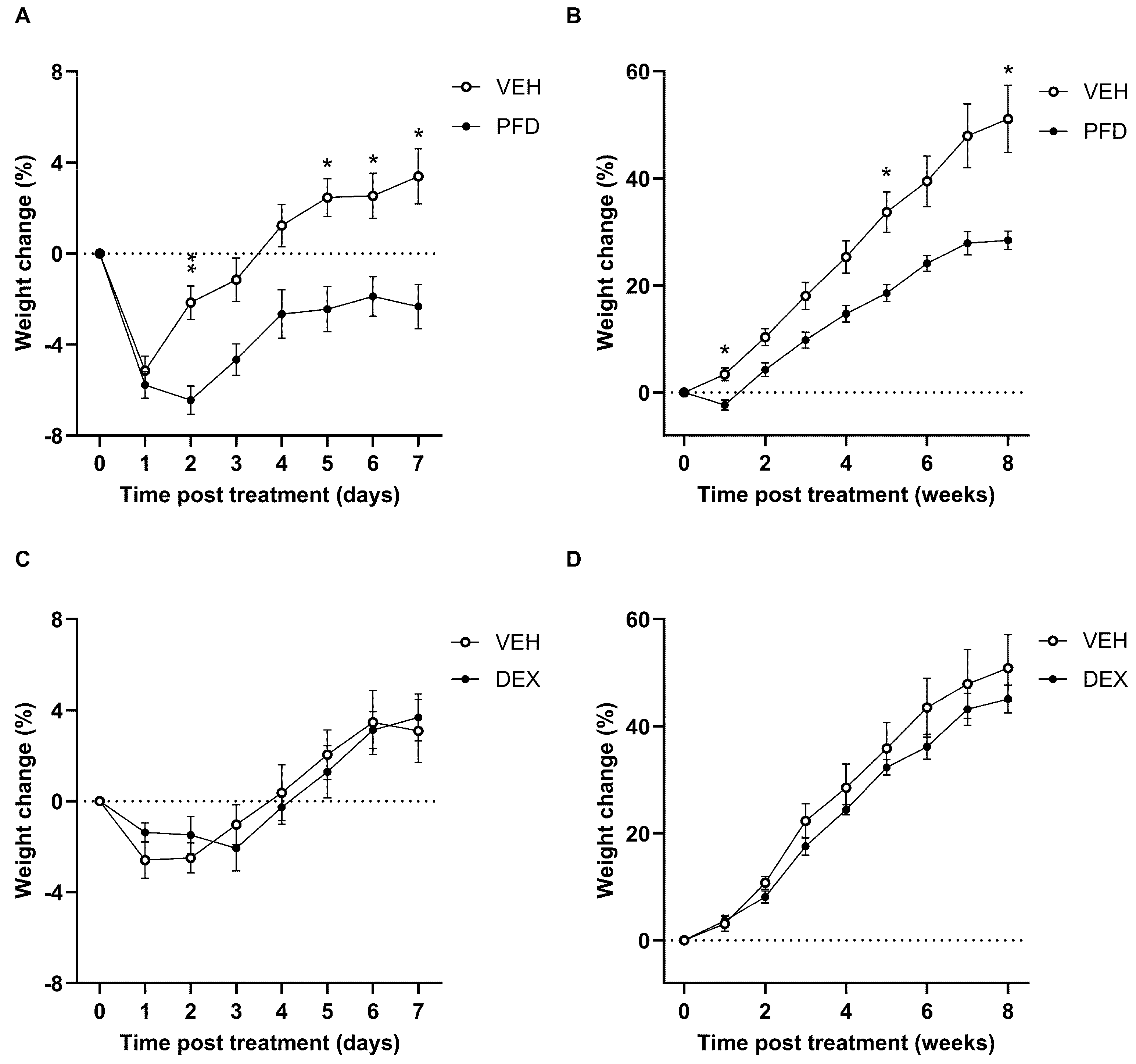
2.3. Local PFD Treatment-Induced Weight Loss in Guinea Pigs Following Implant Surgery
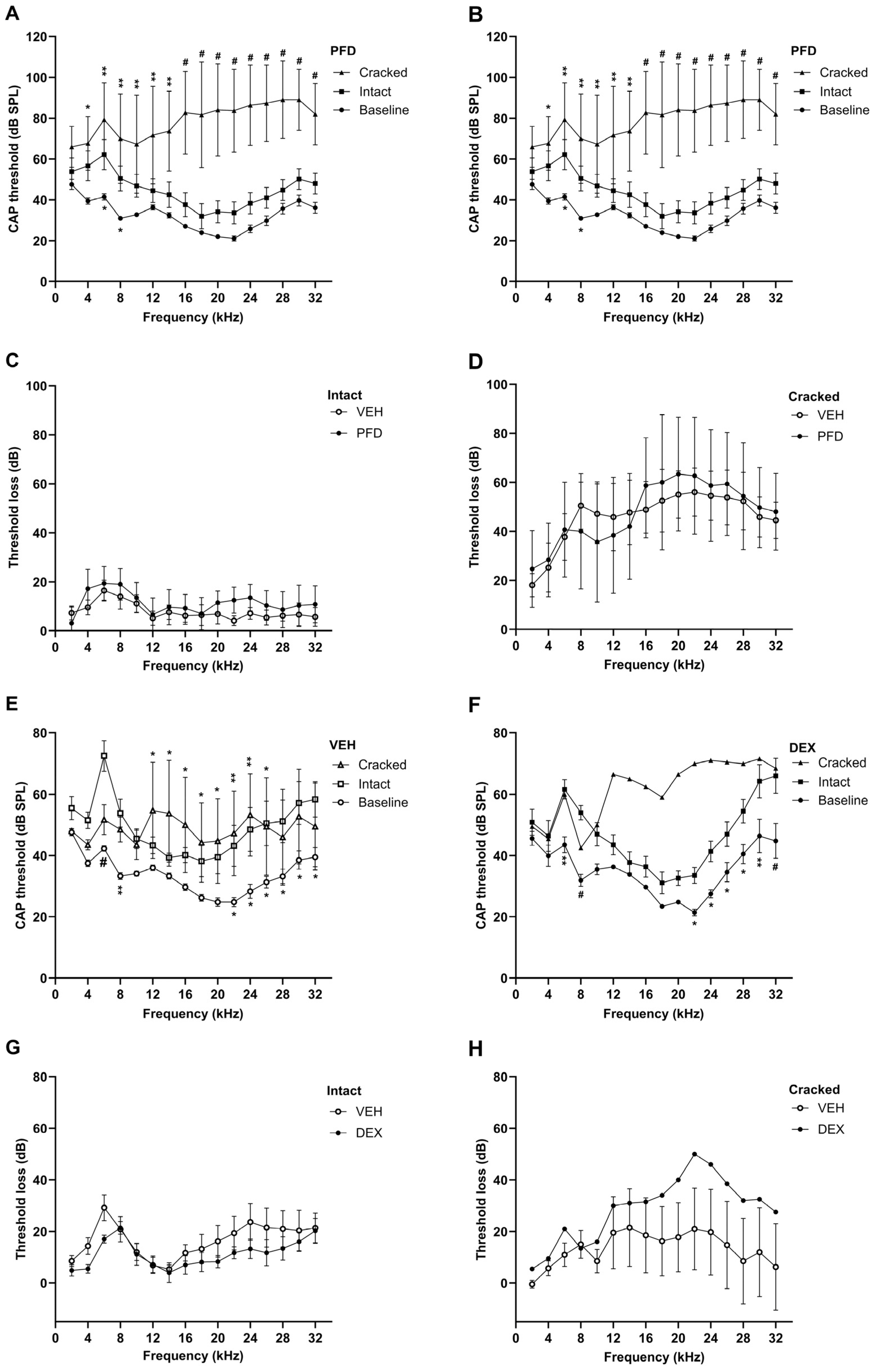
2.4. Delivery of PFD to Round Window Niche Had No Effect on Compound Action Potential (CAP) Thresholds
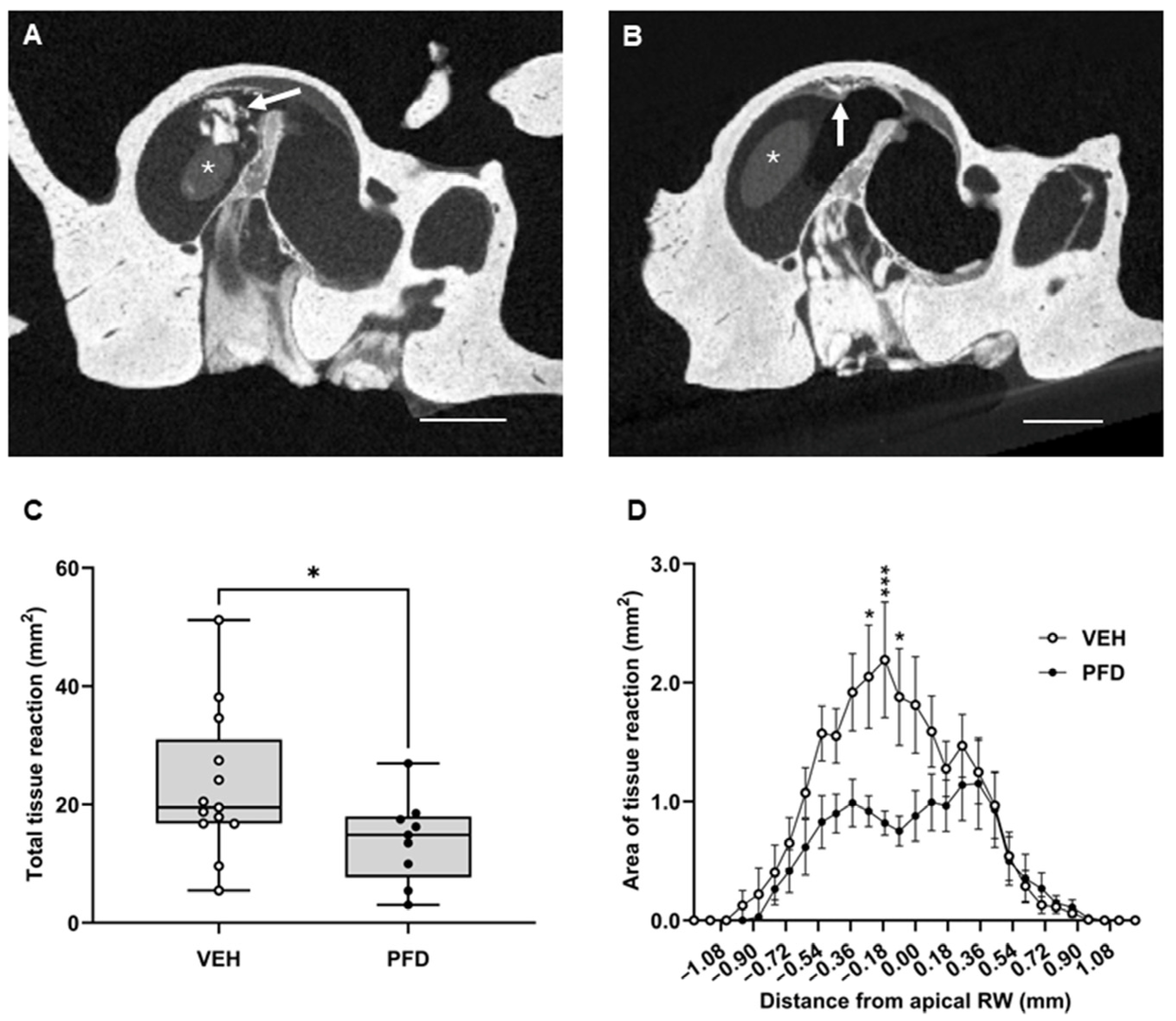
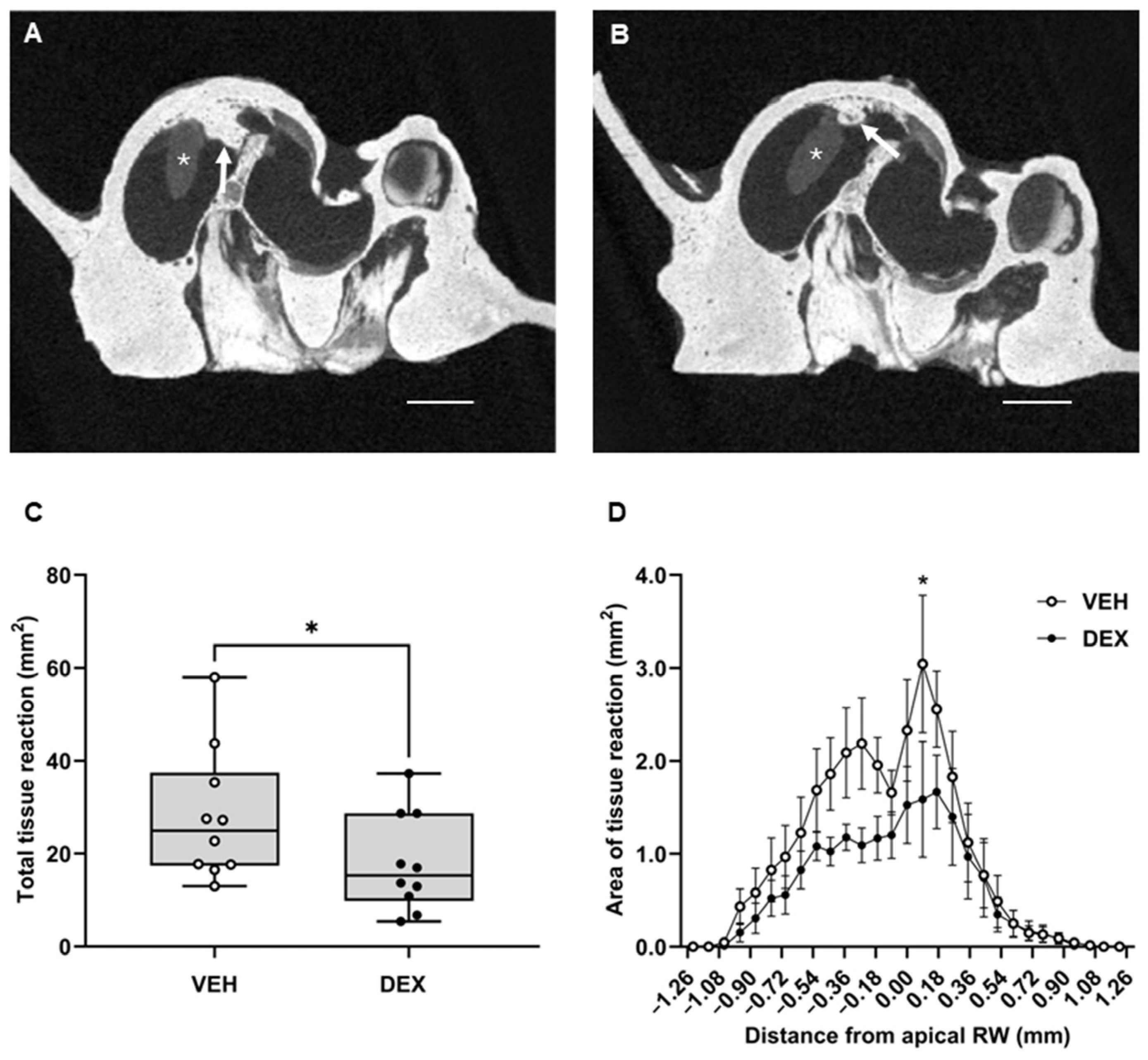
2.5. PFD Treatment Significantly Reduced Intracochlear Fibrosis and Neo-Ossification in a Guinea Pig Model of Implantation
3. Discussion
4. Materials and Methods
4.1. Animals
4.2. Isolation and Culture of Primary Fibrocytes from the Guinea Pig Inner Ear
4.3. Western Blot Analysis of Activated Signalling Pathways
4.4. Cell Proliferation and Wound Healing Analysis
4.5. Macromolecular Crowding Assay for Collagen Deposition In Vitro
4.6. Preparation of Drug-Loaded Hydrogels
4.7. Pluronic F-127 Hydrogel Gelation
4.8. Measuring Drug Release from Hydrogel In Vitro
4.9. High Performance Liquid Chromatography
4.10. Surgical Procedures, Compound Action Potential Thresholds of the Auditory Nerve and Insertion of Inactive Cochlear Implant
4.11. Terminal Surgery and Tissue Harvest
4.12. Micro-Computed Tomography (μCT) Analysis
4.13. Statistical Analysis
Supplementary Materials
Author Contributions
Funding
Institutional Review Board Statement
Informed Consent Statement
Data Availability Statement
Acknowledgments
Conflicts of Interest
Abbreviations
| DEX | Dexamethasone |
| PFD | Pirfenidone |
| VEH | Vehicle |
| TGFβ | Transforming growth factor-β |
| FC | Fibrotic cocktail |
| UN | Untreated |
| MTS | 3-(4,5-dimethylthiazol-2-yl)-5-(3-carboxymethoxyphenyl)-2-(4-sulfophenyl)-2H-tetra-zolium |
| SEM | Standard error of the mean |
| CAP | Compound action potential |
| PFA | Paraformaldehyde |
| PB | Phosphate buffer |
| PBS | Phosphate-buffered saline |
| μCT | Micro-computed tomography |
References
- Gaylor, J.M.; Raman, G.; Chung, M.; Lee, J.; Rao, M.; Lau, J.; Poe, D.S. Cochlear implantation in adults: A systematic review and meta-analysis. JAMA Otolaryngol. Head Neck Surg. 2013, 139, 265–272. [Google Scholar] [CrossRef]
- Schaefer, S.; Sahwan, M.; Metryka, A.; Kluk, K.; Bruce, I.A. The benefits of preserving residual hearing following cochlear implantation: A systematic review. Int. J. Audiol. 2021, 60, 561–577. [Google Scholar] [CrossRef]
- Kamakura, T.; Nadol, J.B., Jr. Correlation between word recognition score and intracochlear new bone and fibrous tissue after cochlear implantation in the human. Hear. Res. 2016, 339, 132–141. [Google Scholar] [CrossRef] [PubMed]
- Nadol, J.B., Jr.; Eddington, D.K.; Burgess, B.J. Foreign Body or Hypersensitivity Granuloma of the Inner Ear following Cochlear Implantation. One possible cause of a soft failure? Otol. Neurotol. 2008, 29, 1076. [Google Scholar] [CrossRef] [PubMed]
- Clark, G.M.; Shute, S.; Shepherd, R.; Carter, T. Cochlear implantation: Osteoneogenesis, electrode-tissue impedance, and residual hearing. Ann. Otol. Rhinol. Laryngol. Suppl. 1995, 166, 40–42. [Google Scholar]
- Jia, H.; Venail, F.; Piron, J.-P.; Batrel, C.; Pelliccia, P.; Artières, F.; Uziel, A.; Mondain, M. Effect of surgical technique on electrode impedance after cochlear implantation. Ann. Otol. Rhinol. Laryngol. 2011, 120, 529–534. [Google Scholar] [CrossRef]
- Wilk, M.; Hessler, R.; Mugridge, K.; Jolly, C.; Fehr, M.; Lenarz, T.; Scheper, V. Impedance changes and fibrous tissue growth after cochlear implantation are correlated and can be reduced using a dexamethasone eluting electrode. PLoS ONE 2016, 11, e0147552. [Google Scholar] [CrossRef]
- Balkany, T.J.; Hodges, A.V.; Buchman, C.A.; Luxford, W.M.; Pillsbury, C.H.; Roland, P.S.; Shallop, J.K.; Backous, D.D.; Franz, D.; Graham, J.M. Cochlear implant soft failures consensus development conference statement. Cochlear Implant. Int. 2005, 6, 105–122. [Google Scholar] [CrossRef]
- Chung, D.; Kim, A.H.; Parisier, S.; Linstrom, C.; Alexiades, G.; Hoffman, R.; Kohan, D. Revision cochlear implant surgery in patients with suspected soft failures. Otol. Neurotol. 2010, 31, 1194–1198. [Google Scholar] [CrossRef] [PubMed]
- Bas, E.; Dinh, C.T.; Ojo, R.; Eshraghi, A.A.; Water, T.R. Loss of residual hearing initiated by cochlear implantation: Role of inflammation-initiated cell death pathways, wound healing and fibrosis pathways, and potential otoprotective therapies. In Free Radicals in ENT Pathology; Springer: Berlin/Heidelberg, Germany, 2015; pp. 395–421. [Google Scholar]
- Zhang, D.; Chen, D.; Wang, K.; Pan, J.; Tang, J.; Zhang, H. Electrical stimulation of cochlear implant promotes activation of macrophages and fibroblasts under inflammation. Laryngoscope Investig. Otolaryngol. 2023, 8, 1390–1400. [Google Scholar] [CrossRef]
- Satoh, H.; Billings, P.; Firestein, G.S.; Harris, J.P.; Keithley, E.M. Transforming growth factor β expression during an inner ear immune response. Ann. Otol. Rhinol. Laryngol. 2006, 115, 81–88. [Google Scholar] [CrossRef]
- Claussen, A.D.; Quevedo, R.V.; Kirk, J.R.; Higgins, T.; Mostaert, B.; Rahman, M.T.; Oleson, J.; Hernandez, R.; Hirose, K.; Hansen, M.R. Chronic cochlear implantation with and without electric stimulation in a mouse model induces robust cochlear influx of CX3CR1+/GFP macrophages. Hear. Res. 2022, 426, 108510. [Google Scholar] [CrossRef]
- Fayad, J.N.; Makarem, A.O.; Linthicum, F.H., Jr. Histopathologic assessment of fibrosis and new bone formation in implanted human temporal bones using 3D reconstruction. Otolaryngol. Head Neck Surg. 2009, 141, 247–252. [Google Scholar] [CrossRef] [PubMed]
- Marsh, M.A.; Jenkins, H.A.; Coker, N.J. Histopathology of the temporal bone following multichannel cochlear implantation. Arch. Otolaryngol. Head Neck Surg. 1992, 118, 1257–1265. [Google Scholar] [CrossRef] [PubMed]
- Danielian, A.; Ishiyama, G.; Lopez, I.A.; Ishiyama, A. Predictors of fibrotic and bone tissue formation with 3-D reconstructions of post-implantation human temporal bones. Otol. Neurotol. 2021, 42, e942–e948. [Google Scholar] [CrossRef]
- Nadol, J.B., Jr.; O’Malley, J.T.; Burgess, B.J.; Galler, D. Cellular immunologic responses to cochlear implantation in the human. Hear. Res. 2014, 318, 11–17. [Google Scholar] [CrossRef]
- Nadol, J.B., Jr.; Burgess, B.J.; Gantz, B.J.; Coker, N.J.; Ketten, D.R.; Kos, I.; Roland, J.T., Jr.; Shiao, J.Y.; Eddington, D.K.; Montandon, P. Histopathology of cochlear implants in humans. Ann. Otol. Rhinol. Laryngol. 2001, 110, 883–891. [Google Scholar] [CrossRef]
- Vashishth, A.; Fulcheri, A.; Prasad, S.C.; Bassi, M.; Rossi, G.; Caruso, A.; Sanna, M. Cochlear implantation in cochlear ossification: Retrospective review of etiologies, surgical considerations, and auditory outcomes. Otol. Neurotol. 2018, 39, 17–28. [Google Scholar] [CrossRef]
- Briggs, R.; O’Leary, S.; Birman, C.; Plant, K.; English, R.; Dawson, P.; Risi, F.; Gavrilis, J.; Needham, K.; Cowan, R. Comparison of electrode impedance measures between a dexamethasone-eluting and standard Cochlear™ Contour Advance® electrode in adult cochlear implant recipients. Hear. Res. 2020, 390, 107924. [Google Scholar] [CrossRef] [PubMed]
- Farhadi, M.; Jalessi, M.; Salehian, P.; Ghavi, F.F.; Emamjomeh, H.; Mirzadeh, H.; Imani, M.; Jolly, C. Dexamethasone eluting cochlear implant: Histological study in animal model. Cochlear Implant. Int. 2013, 14, 45–50. [Google Scholar] [CrossRef]
- Liu, Y.; Jolly, C.; Braun, S.; Janssen, T.; Scherer, E.; Steinhoff, J.; Ebenhoch, H.; Lohner, A.; Stark, T.; Kiefer, J. Effects of a dexamethasone-releasing implant on cochleae: A functional, morphological and pharmacokinetic study. Hear. Res. 2015, 327, 89–101. [Google Scholar] [CrossRef]
- Eshraghi, A.A.; Dinh, C.T.; Bohorquez, J.; Angeli, S.; Abi-Hachem, R.; Van De Water, T.R. Local drug delivery to conserve hearing: Mechanisms of action of eluted dexamethasone within the cochlea. Cochlear Implant. Int. 2011, 12, S51–S53. [Google Scholar] [CrossRef] [PubMed]
- Needham, K.; Stathopoulos, D.; Newbold, C.; Leavens, J.; Risi, F.; Manouchehri, S.; Durmo, I.; Cowan, R. Electrode impedance changes after implantation of a dexamethasone-eluting intracochlear array. Cochlear Implant. Int. 2020, 21, 98–109. [Google Scholar] [CrossRef]
- Rahman, M.T.; Mostaert, B.; Eckard, P.; Fatima, S.M.; Scheperle, R.; Razu, I.; Hunger, B.; Olszewski, R.T.; Gu, S.; Garcia, C. Cochlear implants with dexamethasone-eluting electrode arrays reduce foreign body response in a murine model of cochlear implantation and human subjects. medRxiv 2024. medRxiv:10.11.24315311. [Google Scholar] [CrossRef] [PubMed]
- Behrends, W.; Wulf, K.; Raggl, S.; Fröhlich, M.; Eickner, T.; Dohr, D.; Esser, K.-H.; Lenarz, T.; Scheper, V.; Paasche, G. Dual drug delivery in Cochlear implants: In vivo study of dexamethasone combined with diclofenac or Immunophilin inhibitor MM284 in Guinea pigs. Pharmaceutics 2023, 15, 726. [Google Scholar] [CrossRef] [PubMed]
- Kikkawa, Y.S.; Nakagawa, T.; Ying, L.; Tabata, Y.; Tsubouchi, H.; Ido, A.; Ito, J. Growth factor-eluting cochlear implant electrode: Impact on residual auditory function, insertional trauma, and fibrosis. J. Transl. Med. 2014, 12, 280. [Google Scholar] [CrossRef] [PubMed]
- Jia, H.; François, F.; Bourien, J.; Eybalin, M.; Lloyd, R.; Van De Water, T.; Puel, J.-L.; Venail, F. Prevention of trauma-induced cochlear fibrosis using intracochlear application of anti-inflammatory and antiproliferative drugs. Neuroscience 2016, 316, 261–278. [Google Scholar] [CrossRef]
- Torre, A.; Martínez-Sánchez, F.D.; Narvaez-Chávez, S.M.; Herrera-Islas, M.A.; Aguilar-Salinas, C.A.; Córdova-Gallardo, J. Pirfenidone use in fibrotic diseases: What do we know so far? Immun. Inflamm. Dis. 2024, 12, e1335. [Google Scholar] [CrossRef] [PubMed]
- Kim, E.S.; Keating, G.M. Pirfenidone: A review of its use in idiopathic pulmonary fibrosis. Drugs 2015, 75, 219–230. [Google Scholar] [CrossRef]
- Conte, E.; Gili, E.; Fagone, E.; Fruciano, M.; Iemmolo, M.; Vancheri, C. Effect of pirfenidone on proliferation, TGF-β-induced myofibroblast differentiation and fibrogenic activity of primary human lung fibroblasts. Eur. J. Pharm. Sci. 2014, 58, 13–19. [Google Scholar] [CrossRef]
- Trivedi, R.; Redente, E.F.; Thakur, A.; Riches, D.W.H.; Kompella, U.B. Local delivery of biodegradable pirfenidone nanoparticles ameliorates bleomycin-induced pulmonary fibrosis in mice. Nanotechnology 2012, 23, 505101. [Google Scholar] [CrossRef]
- Pourgholamhossein, F.; Rasooli, R.; Pournamdari, M.; Pourgholi, L.; Samareh-Fekri, M.; Ghazi-Khansari, M.; Iranpour, M.; Poursalehi, H.-R.; Heidari, M.-R.; Mandegary, A. Pirfenidone protects against paraquat-induced lung injury and fibrosis in mice by modulation of inflammation, oxidative stress, and gene expression. Food Chem. Toxicol. 2018, 112, 39–46. [Google Scholar] [CrossRef]
- Li, Z.; Liu, X.; Wang, B.; Nie, Y.; Wen, J.; Wang, Q.; Gu, C. Pirfenidone suppresses MAPK signalling pathway to reverse epithelial-mesenchymal transition and renal fibrosis. Nephrology 2017, 22, 589–597. [Google Scholar] [CrossRef]
- Fayzullin, A.; Churbanov, S.; Ignatieva, N.; Zakharkina, O.; Tokarev, M.; Mudryak, D.; Khristidis, Y.; Balyasin, M.; Kurkov, A.; Golubeva, E.N. Local delivery of pirfenidone by PLA implants modifies foreign body reaction and prevents fibrosis. Biomedicines 2021, 9, 853. [Google Scholar] [CrossRef] [PubMed]
- Jung, K.I.; Park, C.K. Pirfenidone inhibits fibrosis in foreign body reaction after glaucoma drainage device implantation. Drug Des. Devel. Ther. 2016, 10, 1477–1488. [Google Scholar]
- Prêle, C.M.; Braack, K.J.; Atlas, M.; Kuthubutheen, J.; Miles, T.; Mulders, W.H.; Mutsaers, S.E. Understanding the Mechanisms Driving Fibrosis Following Cochlear Implantation—Lessons from Other Tissues. Cells 2025, 14, 1924. [Google Scholar] [CrossRef]
- Mahendrasingam, S.; Osborn, A.; Israr, M.Z.; Riasat, K.; Gater, R.V.; Spano, A.; Gogo-Fyneface, D.; Worrall, A.J.; Furness, D.N. The effects of substrate composition and topography on the characteristics and growth of cell cultures of cochlear fibrocytes. Hear. Res. 2022, 415, 108427. [Google Scholar] [CrossRef]
- Wang, X.; Fernandez, R.; Dellamary, L.; Harrop, A.; Ye, Q.; Lichter, J.; Lau, D.; LeBel, C.; Piu, F. Pharmacokinetics of dexamethasone solution following intratympanic injection in guinea pig and sheep. Audiol. Neurotol. 2011, 16, 233–241. [Google Scholar] [CrossRef]
- Salt, A.N.; Hartsock, J.; Plontke, S.; LeBel, C.; Piu, F. Distribution of dexamethasone and preservation of inner ear function following intratympanic delivery of a gel-based formulation. Audiol. Neurotol. 2011, 16, 323–335. [Google Scholar] [CrossRef] [PubMed]
- Braack, K.J.; Miles, T.; Amat, F.; Brown, D.J.; Atlas, M.D.; Kuthubutheen, J.; Mulders, W.H.A.M.; Prêle, C.M. Using x-ray micro computed tomography to quantify intracochlear fibrosis after cochlear implantation in a Guinea pig model. Heliyon 2023, 9, e19343. [Google Scholar] [CrossRef] [PubMed]
- Guo, X.; Yang, Y.; Liu, L.; Liu, X.; Xu, J.; Wu, K.; Yu, M. Pirfenidone induces G1 arrest in human Tenon’s fibroblasts in vitro involving AKT and MAPK signaling pathways. J. Ocul. Pharmacol. Ther. 2017, 33, 366–374. [Google Scholar] [CrossRef]
- Shi, Q.; Liu, X.; Bai, Y.; Cui, C.; Li, J.; Li, Y.; Hu, S.; Wei, Y. In vitro effects of pirfenidone on cardiac fibroblasts: Proliferation, myofibroblast differentiation, migration and cytokine secretion. PLoS ONE 2011, 6, e28134. [Google Scholar] [CrossRef]
- Shin, J.-M.; Park, J.-H.; Park, I.-H.; Lee, H.-M. Pirfenidone inhibits transforming growth factor β1-induced extracellular matrix production in nasal polyp-derived fibroblasts. Am. J. Rhinol. Allergy 2015, 29, 408–413. [Google Scholar] [CrossRef]
- Wang, X.; Dellamary, L.; Fernandez, R.; Ye, Q.; LeBel, C.; Piu, F. Principles of inner ear sustained release following intratympanic administration. Laryngoscope 2011, 121, 385–391. [Google Scholar] [CrossRef]
- Gausterer, J.C.; Saidov, N.; Ahmadi, N.; Zhu, C.; Wirth, M.; Reznicek, G.; Arnoldner, C.; Gabor, F.; Honeder, C. Intratympanic application of poloxamer 407 hydrogels results in sustained N-acetylcysteine delivery to the inner ear. Eur. J. Pharm. Biopharm. 2020, 150, 143–155. [Google Scholar] [CrossRef] [PubMed]
- Salt, A.; Hartsock, J.; Gill, R.; Smyth, D.; Kirk, J.; Verhoeven, K. Perilymph pharmacokinetics of marker applied through a cochlear implant in guinea pigs. PLoS ONE 2017, 12, e0183374. [Google Scholar] [CrossRef] [PubMed]
- Salt, A.N.; Hartsock, J.J.; Piu, F.; Hou, J. Dexamethasone and dexamethasone phosphate entry into perilymph compared for middle ear applications in guinea pigs. Audiol. Neurotol. 2018, 23, 245–257. [Google Scholar] [CrossRef] [PubMed]
- Somdas, M.A.; Li, P.M.; Whiten, D.M.; Eddington, D.K.; Nadol, J.B., Jr. Quantitative evaluation of new bone and fibrous tissue in the cochlea following cochlear implantation in the human. Audiol. Neurotol. 2007, 12, 277–284. [Google Scholar] [CrossRef]
- Seyyedi, M.; Nadol, J.B., Jr. Intracochlear inflammatory response to cochlear implant electrodes in the human. Otol. Neurotol. 2014, 35, 1545. [Google Scholar] [CrossRef]
- Milner, R.M.; Weller, C.R.; Brenman, A.K. Elevated bone conduction thresholds associated with middle ear fluid in adults. Int. J. Pediatr. Otorhinolaryngol. 1984, 6, 163–169. [Google Scholar] [CrossRef]
- Brown, D.T.; Marsh, R.R.; Potsic, W.P. Hearing loss induced by viscous fluids in the middle ear. Int. J. Pediatr. Otorhinolaryngol. 1983, 5, 39–46. [Google Scholar] [CrossRef]
- Ravicz, M.E.; Rosowski, J.J.; Merchant, S.N. Mechanisms of hearing loss resulting from middle-ear fluid. Hear. Res. 2004, 195, 103–130. [Google Scholar] [CrossRef]
- Choi, C.-H.; Oghalai, J.S. Predicting the effect of post-implant cochlear fibrosis on residual hearing. Hear. Res. 2005, 205, 193–200. [Google Scholar] [CrossRef] [PubMed]
- Hütten, M.; Dhanasingh, A.; Hessler, R.; Stöver, T.; Esser, K.-H.; Möller, M.; Lenarz, T.; Jolly, C.; Groll, J.; Scheper, V. In vitro and in vivo evaluation of a hydrogel reservoir as a continuous drug delivery system for inner ear treatment. PLoS ONE 2014, 9, e104564. [Google Scholar] [CrossRef] [PubMed]
- Ahmadi, N.; Gausterer, J.C.; Honeder, C.; Moetz, M.; Schöpper, H.; Zhu, C.; Saidov, N.; Gabor, F.; Arnoldner, C. Long-term effects and potential limits of intratympanic dexamethasone-loaded hydrogels combined with dexamethasone-eluting cochlear electrodes in a low-insertion trauma Guinea pig model. Hear. Res. 2019, 384, 107825. [Google Scholar] [CrossRef] [PubMed]
- Toulemonde, P.; Risoud, M.; Lemesre, P.E.; Tardivel, M.; Siepmann, J.; Vincent, C. 3D analysis of gerbil cochlea with cochlear implant. Eur. Ann. Otorhinolaryngol. Head Neck Dis. 2022, 139, 333–336. [Google Scholar] [CrossRef]
- Lv, Q.; Wang, J.; Xu, C.; Huang, X.; Ruan, Z.; Dai, Y. Pirfenidone alleviates pulmonary fibrosis in vitro and in vivo through regulating Wnt/GSK-3β/β-catenin and TGF-β1/Smad2/3 signaling pathways. Mol. Med. 2020, 26, 49. [Google Scholar] [CrossRef]
- Sun, Y.; Zhang, Y.; Chi, P. Pirfenidone suppresses TGF-β1-induced human intestinal fibroblasts activities by regulating proliferation and apoptosis via the inhibition of the Smad and PI3K/AKT signaling pathway. Mol. Med. Rep. 2018, 18, 3907–3913. [Google Scholar] [CrossRef]
- Li, A.G.; Quinn, M.J.; Siddiqui, Y.; Wood, M.D.; Federiuk, I.F.; Duman, H.M.; Ward, W.K. Elevation of transforming growth factor beta (TGFβ) and its downstream mediators in subcutaneous foreign body capsule tissue. J. Biomed. Mater. Res. Part A 2007, 82, 498–508. [Google Scholar] [CrossRef]
- Maeda, K.; Yoshida, K.; Ichimiya, I.; Suzuki, M. Dexamethasone inhibits tumor necrosis factor-α-induced cytokine secretion from spiral ligament fibrocytes. Hear. Res. 2005, 202, 154–160. [Google Scholar] [CrossRef]
- Tsurufuji, S.; Sugio, K.; Takemasa, F. The role of glucocorticoid receptor and gene expression in the anti-inflammatory action of dexamethasone. Nature 1979, 280, 408–410. [Google Scholar] [CrossRef]
- Oikarinen, A.I.; Vuorio, E.I.; Zaragoza, E.J.; Palotie, A.; Mon-Li, C.; Uitto, J. Modulation of collagen metabolism by glucocorticoids: Receptor-mediated effects of dexamethasone on collagen biosynthesis in chick embryo fibroblasts and chondrocytes. Biochem. Pharmacol. 1988, 37, 1451–1462. [Google Scholar] [CrossRef]
- Chaudhuri, N.; Duck, A.; Frank, R.; Holme, J.; Leonard, C. Real world experiences: Pirfenidone is well tolerated in patients with idiopathic pulmonary fibrosis. Respir. Med. 2014, 108, 224–226. [Google Scholar] [CrossRef]
- Fang, C.; Huang, H.; Guo, J.; Ferianc, M.; Xu, Z. Real-world experiences: Efficacy and tolerability of pirfenidone in clinical practice. PLoS ONE 2020, 15, e0228390. [Google Scholar] [CrossRef]
- Alsafadi, H.N.; Staab-Weijnitz, C.A.; Lehmann, M.; Lindner, M.; Peschel, B.; Königshoff, M.; Wagner, D.E. An ex vivo model to induce early fibrosis-like changes in human precision-cut lung slices. Am. J. Physiol.-Lung Cell. Mol. Physiol. 2017, 312, L896–L902, Erratum in Am. J. Physiol.-Lung Cell. Mol. Physiol. 2020, 318, L844. [Google Scholar] [CrossRef]
- Prêle, C.M.; Iosifidis, T.; McAnulty, R.J.; Pearce, D.R.; Badrian, B.; Miles, T.; Jamieson, S.E.; Ernst, M.; Thompson, P.J.; Laurent, G.J. Reduced SOCS1 expression in lung fibroblasts from patients with IPF is not mediated by promoter methylation or Mir155. Biomedicines 2021, 9, 498. [Google Scholar] [CrossRef] [PubMed]
- Schindelin, J.; Arganda-Carreras, I.; Frise, E.; Kaynig, V.; Longair, M.; Pietzsch, T.; Preibisch, S.; Rueden, C.; Saalfeld, S.; Schmid, B.; et al. Fiji: An open-source platform for biological-image analysis. Nat. Methods 2012, 9, 676–682. [Google Scholar] [CrossRef] [PubMed]
- Chen, C.; Peng, Y.; Wang, Z.; Fish, P.; Kaar, J.; Koepsel, R.; Russell, A.; Lareu, R.; Raghunath, M. The Scar-in-a-Jar: Studying potential antifibrotic compounds from the epigenetic to extracellular level in a single well. Br. J. Pharmacol. 2009, 158, 1196–1209. [Google Scholar] [CrossRef] [PubMed]
- Hossain, M.L.; Nguyen, M.; Benington, L.; Lim, L.Y.; Hammer, K.; Hettiarachchi, D.; Locher, C. Application of a customised Franz-type cell coupled with HPTLC to monitor the timed release of bioactive components in complex honey matrices. Methods Protoc. 2023, 6, 70. [Google Scholar] [CrossRef]
- Wang, Y.; Zhao, X.; Zhong, J.; Chen, Y.; Liu, X.; Wang, G. Simple determination of pirfenidone in rat plasma via high-performance liquid chromatography. Biomed. Chromatogr. 2006, 20, 1375–1379. [Google Scholar] [CrossRef]
- Brugnera, M.; Vicario-de-la-Torre, M.; Andrés-Guerrero, V.; Bravo-Osuna, I.; Molina-Martínez, I.T.; Herrero-Vanrell, R. Validation of a rapid and easy-to-apply method to simultaneously quantify co-loaded dexamethasone and melatonin PLGA microspheres by HPLC-UV: Encapsulation efficiency and in vitro release. Pharmaceutics 2022, 14, 288. [Google Scholar] [CrossRef] [PubMed]
- Johnstone, J.R.; Alder, V.A.; Johnstone, B.M.; Robertson, D.; Yates, G.K. Cochlear action potential threshold and single unit thresholds. J. Acoust. Soc. Am. 1979, 65, 254–257. [Google Scholar] [CrossRef] [PubMed]
- Mulders, W.H.A.M.; Barry, K.M.; Robertson, D. Effects of furosemide on cochlear neural activity, central hyperactivity and behavioural tinnitus after cochlear trauma in guinea pig. PLoS ONE 2014, 9, e97948. [Google Scholar] [CrossRef] [PubMed]


Disclaimer/Publisher’s Note: The statements, opinions and data contained in all publications are solely those of the individual author(s) and contributor(s) and not of MDPI and/or the editor(s). MDPI and/or the editor(s) disclaim responsibility for any injury to people or property resulting from any ideas, methods, instructions or products referred to in the content. |
© 2026 by the authors. Licensee MDPI, Basel, Switzerland. This article is an open access article distributed under the terms and conditions of the Creative Commons Attribution (CC BY) license.
Share and Cite
Braack, K.J.; Short, K.L.; Plester, J.; Miles, T.; Lim, L.Y.; Atlas, M.D.; Kuthubutheen, J.; Mulders, W.H.A.M.; Prêle, C.M. Pirfenidone Reduces Intracochlear Fibrosis Caused by Cochlear Implantation in a Guinea Pig Model. Int. J. Mol. Sci. 2026, 27, 3242. https://doi.org/10.3390/ijms27073242
Braack KJ, Short KL, Plester J, Miles T, Lim LY, Atlas MD, Kuthubutheen J, Mulders WHAM, Prêle CM. Pirfenidone Reduces Intracochlear Fibrosis Caused by Cochlear Implantation in a Guinea Pig Model. International Journal of Molecular Sciences. 2026; 27(7):3242. https://doi.org/10.3390/ijms27073242
Chicago/Turabian StyleBraack, Kady J., Kelly L. Short, Jorjina Plester, Tylah Miles, Lee Yong Lim, Marcus D. Atlas, Jafri Kuthubutheen, Wilhelmina H. A. M. Mulders, and Cecilia M. Prêle. 2026. "Pirfenidone Reduces Intracochlear Fibrosis Caused by Cochlear Implantation in a Guinea Pig Model" International Journal of Molecular Sciences 27, no. 7: 3242. https://doi.org/10.3390/ijms27073242
APA StyleBraack, K. J., Short, K. L., Plester, J., Miles, T., Lim, L. Y., Atlas, M. D., Kuthubutheen, J., Mulders, W. H. A. M., & Prêle, C. M. (2026). Pirfenidone Reduces Intracochlear Fibrosis Caused by Cochlear Implantation in a Guinea Pig Model. International Journal of Molecular Sciences, 27(7), 3242. https://doi.org/10.3390/ijms27073242