Recent Progress on Polyphenols of Malaysian Honey and Their Molecular Mechanism Pathways in Cancer—A Comprehensive Review

 , ,
, ,
Abstract
1. Introduction
1.1. Therapeutic Potential of Honey
1.2. Composition of Honey and Its Anticancer Properties
2. Methodologies
3. Molecular Mechanism of Polyphenols in Modulating Key Pathway of Cancer Progression
3.1. Effect of Phenolic Acid in Cancer
3.1.1. Hydroxycinnamic Acids
Caffeic Acid and Its Esters
3.1.2. Gallic Acid
p-Coumaric Acid
3.1.3. Hydrobenzoic Acids
Gallic Acid
Salicylic Acid
Syringic Acid
3.2. Simple Aromatic Acids
3.2.1. Trans-Cinnamic Acid
3.2.2. Benzoic Acid
3.3. Effect of Flavonoids on Cancer
3.3.1. Chrysin and Its Derivatives
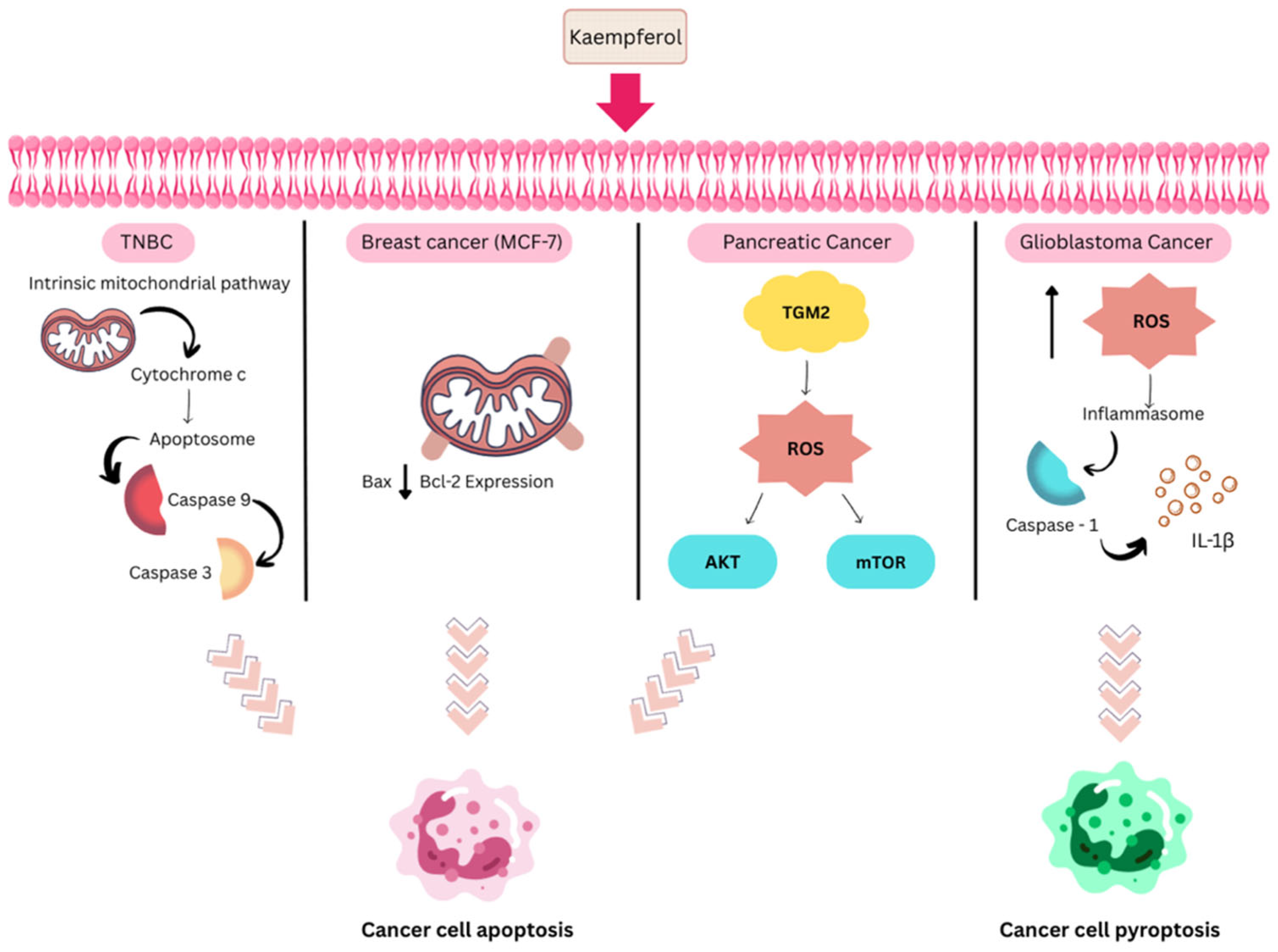
3.3.2. Kaempferol
3.3.3. Fisetin
3.3.4. Catechin
3.3.5. Apigenin
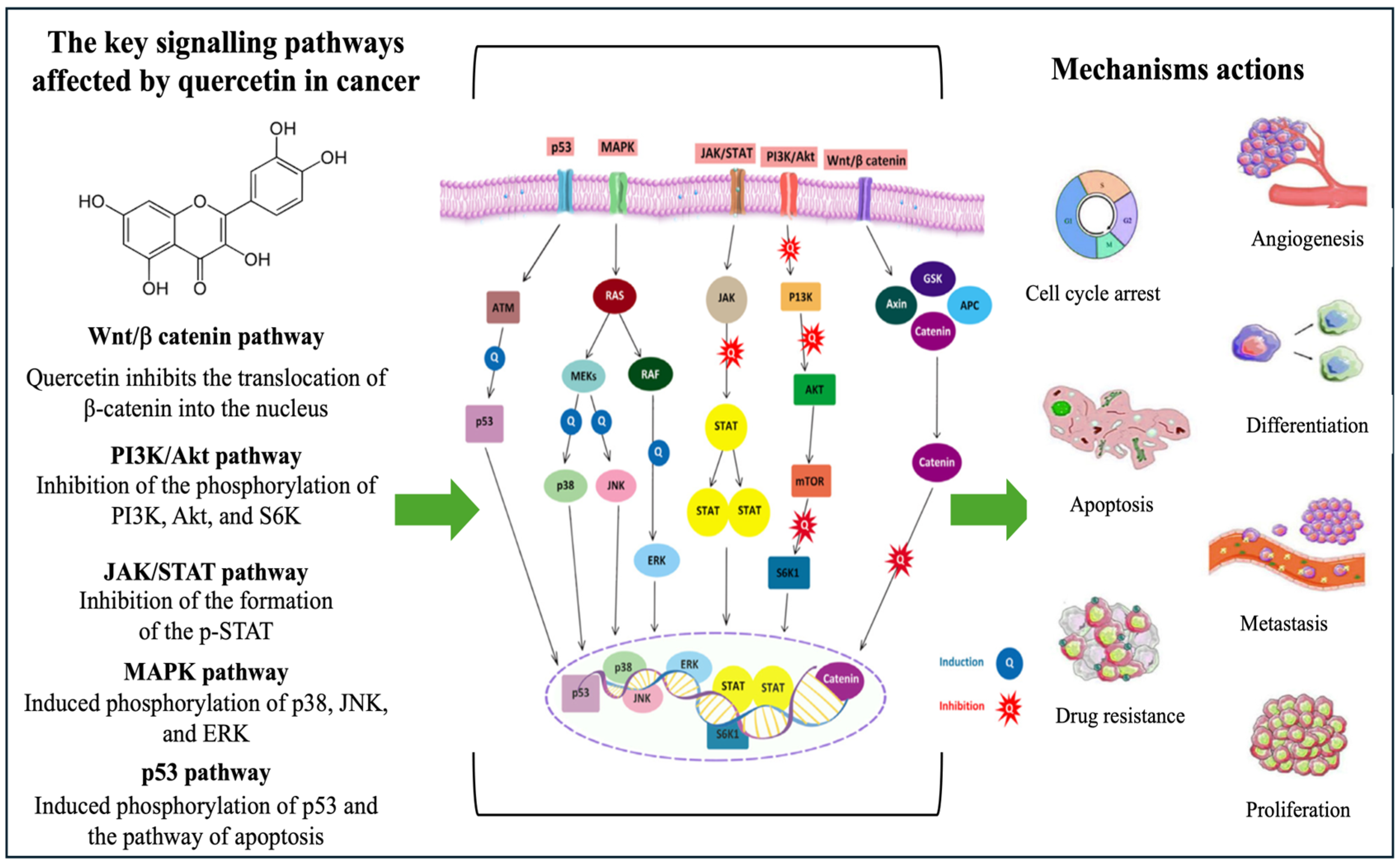
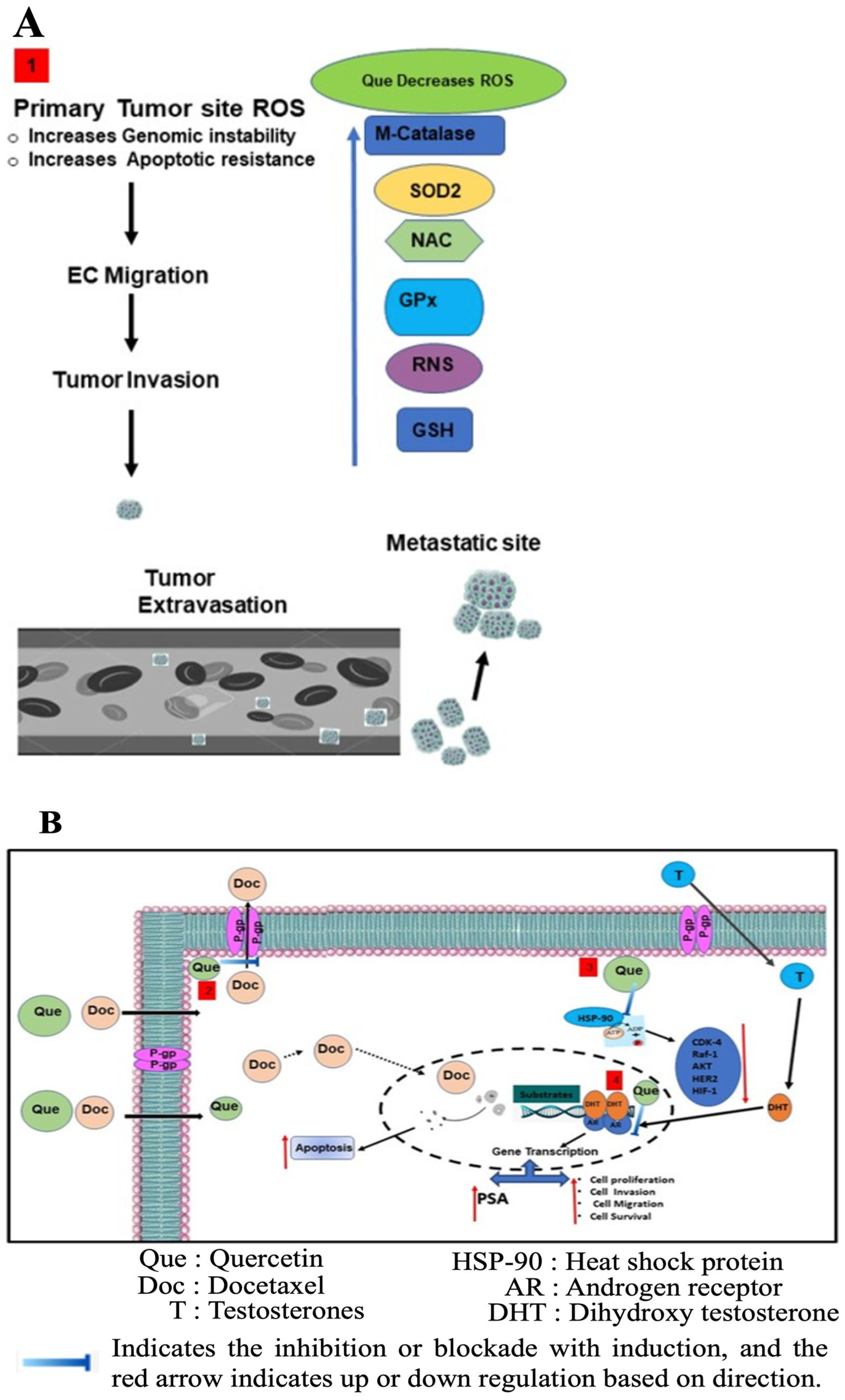
3.3.6. Quercetin
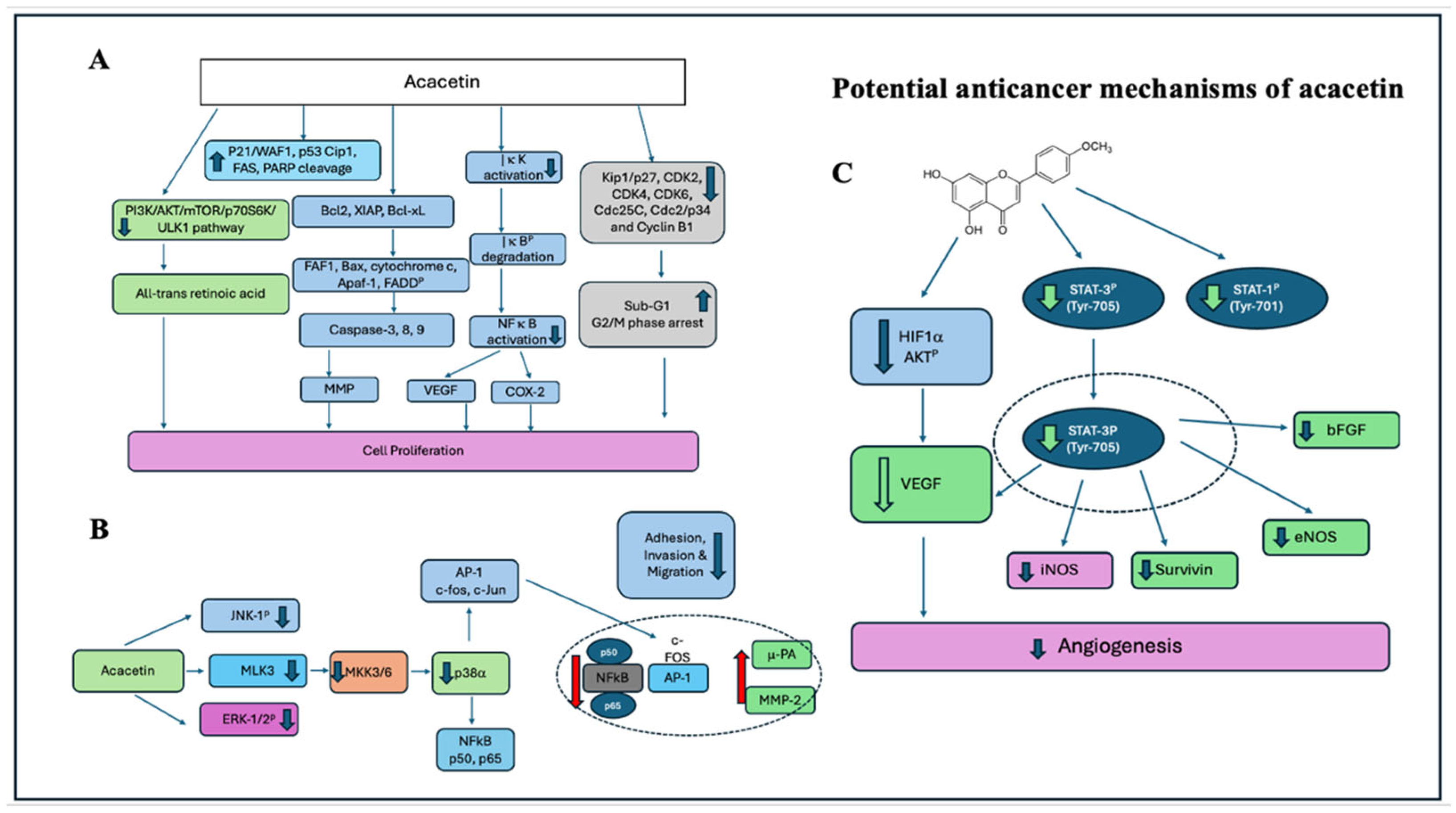
3.3.7. Acacetin
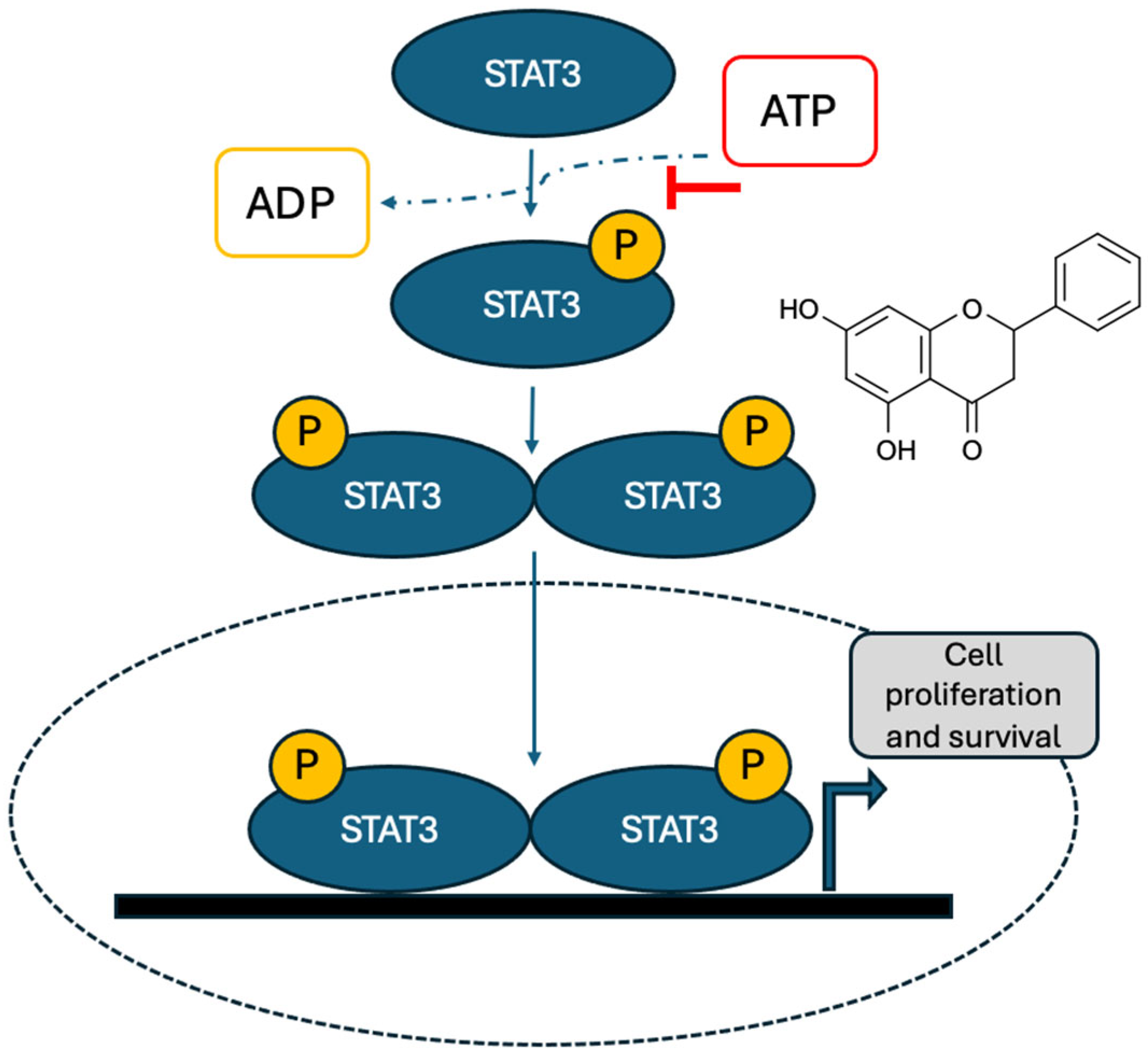
3.3.8. Pinocembrin
3.3.9. Pinobanksin
3.4. Other Flavonoid Compounds
3.4.1. Hesperetin
3.4.2. Naringenin
3.4.3. Vitexin
3.4.4. Isoorientin
3.4.5. Xanthohumol
3.4.6. Galangin
4. Therapeutic Potential for Malaysian Honey as an Anticancer Agent
5. Challenges and Limitations of Honey as an Anticancer Agent
6. Conclusions
Author Contributions
Funding
Institutional Review Board Statement
Informed Consent Statement
Data Availability Statement
Conflicts of Interest
Appendix A. List of Chemical Composition of Honey
| Component of Honey | References | |
| Water | [232,233] | |
| Sugar | Glucose | [234] |
| Fructose | [234] | |
| Sucrose | [234] | |
| Trehalose | [234] | |
| Isomaltose | [234] | |
| Maltose | [234] | |
| Maltulose | [234] | |
| Melibiose | [233] | |
| Rhamnose | [235] | |
| Maltotetraose | [234] | |
| Raffinose | [234] | |
| Protein | [232] | |
| Enzyme | Invertase | [232] |
| Glucose oxidase | [236] | |
| Catalase | [236] | |
| Phosphatases | [237] | |
| Amino acids | [233,236] | |
| Organic acids | Gluconic acid | [235] |
| Acetic acid | [233] | |
| Lipids | [238] | |
| Vitamins | Ascorbic acid | [236] |
| Niacin | [236] | |
| Pyridoxine | [236] | |
| Thiamine | [236] | |
| B2 complex | [236] | |
| B6 pantothenic acid | [236] | |
| Minerals | [235,236] | |
| Carotenoids | [236] | |
| Polyphenols | Vanillic acid | [232,235,236] |
| Syringic acid | [235,236] | |
| Luteolin | [235,236] | |
| Apigenin | [235,236] | |
| Myricetin | [235,236] | |
| Ferulic acid | [239] | |
| Myricetin | [236,239] | |
| Ellagic acid | [240] | |
| Tricetin | [241] | |
| Quercetin | [232,239] | |
| Galangin | [236] | |
| Chrysin | [239,240] | |
| Tectochrysin | [241] | |
| Isorhamnetin | [240] | |
| Kaempferol | [232,235,239,240] | |
| Pinobanksin | [185] | |
| Pinocembrin | [236] | |
| Catechin | [236] | |
| Epicatechin | [242] | |
| Acacetin | [240] | |
| Daidzein | [243] | |
| Genistein | [243] | |
| Caffeic acid | [232,235,236,239,240] | |
| Chlorogenic acid | [236,240] | |
| Gallic acid | [232,235,236,239,240] | |
Appendix B. Summary of the Anticancer Properties of Malaysian Honeys
| Honey | Type of Cancer Cells | Findings | In Vitro/In Vivo/Clinical Trial | References |
| Acacia | Lung cancer cell (NCI-H460) | Inhibited cell proliferation via cell cycle arrest at G0/G1 phase, stimulation of cytokines and calcium ion, and downregulation of Bcl-2 and p53 gene | In vitro | [244] |
| Human (A375) and murine (B16-F1) melanoma | Induce antiproliferative effect and hyperploid progression through G0/G1 cell cycle arrest and | In vitro | [245] | |
| breast cancer (MCF-7), lung cancer (A549), and colon cancer (HCT-116) | Inhibit cell proliferation with IC50 value of 5.053 μg/mL, 5.382 μg/mL, and 6.728 μg/mL against the breast, colon, and lung cancer cell lines, respectively | In vitro | [246] | |
| HCT116 (colon); MCF7 (breast), and HepG2 (liver) | Inhibit cell proliferation with IC50 ranged 117.99 to 482.65 µg/mL | In vitro | [247] | |
| Breast cancer (MCF-7) | Antiproliferative effect through induction of apoptosis. | In vitro | [248] | |
| Prostate cancer cell line (PC-3) | Promote apoptosis via modulation of G0/G1 phase, pro-inflammatory cytokines, calcium ions secretion and downregulation of prostate-specific antigen. | In vitro | [249] | |
| Gelam | HCT 116 Colorectal Cancer Cells | Inhibit cell proliferation with IC50 of 75 mg/mL and induce apoptosis | In vitro | [250] |
| Colon cancer (HCT 116) | Inhibit cell proliferation with IC50 2.0% v/v after 72 incubation | In vitro | [251] | |
| Human diploid fibroblast | Attenuated radiation-induced cell death by promoting cell cycle progression and inhibiting apoptosis by downregulating ATM, p73, and p16 | In vitro | [252] | |
| HT 29 colon cancer | Inhibit cell proliferation with IC50 of 39.0 mg/mL by inducing apoptosis through DNA damage and suppressing inflammation via reduction in prostaglandin E2. | In vitro | [220] | |
| HT29 Colon cancer | Promote apoptosis via mTOR and Wnt/B-catenin pathway. -downregulated the gene expressions of Akt, mTOR, Raptor, Rictor, β-catenin, Gsk3β, Tcf4 and cyclin D1 while cytochrome C and caspase 3 genes were shown to be upregulated | In vitro | [253] | |
| HT29 colon cancer | Induce apoptosis by upregulating early pro-apoptotic proteins (caspase 9 and IκB) and downregulating cancer-related genes (KRAS, ERK, AKT, Bcl-xL, NFkB (p65)) | In vitro | [254] | |
| Pineapple | HT 29 colon cancer | Inhibit cell proliferation with IC50 of 85.5 mg/mL by inducing apoptosis through DNA damage and suppressing inflammation via reduction in prostaglandin E2. | In vitro | [220] |
| Kelulut | Cervical cancer (HeLa) | Inhibit cell proliferation with IC50 of 75.76 mg/mL) | In vitro | [255] |
| Lung cancer (A549) | Inhibit cell proliferation at IC50 of 0.62% v/v by inducing cell cycle arrest at G2/M phase | In vitro | [256] | |
| Sprague Dawley rats | possessed chemo-preventive properties in rats induced with colorectal cancer and it was found to be not toxic to rats. | In vivo | [257] | |
| Tualang | Sprague Dawley rats | Tualang honey ameliorated breast cancer by increasing the susceptibility of proapoptotic proteins; apoptotic protease activating factor-1 (Apaf-1) interferon-gamma (IFN-γ) interferon gamma receptor-1 (IFNGR1) tumor protein P53 (p53) and decreased the expression of anti-apoptotic proteins; tumour necrosis factor alpha (TNF-α), cyclooxygenase-2 (COX-2) and B-cell lymphoma-extra-large (Bcl-xL). | In vivo | [258] |
| Sprague Dawley rats | Tualang Honey alleviated breast cancers in rats by reducing cancer cell growth and enhanced histological grading. | In vivo | [259] | |
| Sprague Dawley rats | Tualang honey showed chemo-preventive properties in oral squamous cell carcinoma-induced rats by suppressing cancer cell proliferation and activity and preserving cellular adhesion. | In vivo | [260] | |
| Sprague Dawley rats | Tualang Honey alleviated breast carcinogenesis by modulating haematologic, oestrogenic and apoptotic activities in the breast cancer animal model. | In vivo | [261] | |
| Breast cancer (MCF-7 & MDA-MB-231) | Tualang honey promoted apoptotic cell death induced by tamoxifen in breast cancer cell lines. | In vitro | [262] | |
| Breast cancer (MCF-7 & MDA-MB-231) | Tualang honey demonstrated cytotoxic and apoptotic activities against human breast cancer cell lines with the mitochondrial apoptotic pathway’s involvement. Activates caspase-3/7 and -9. | In vitro | [219] | |
| Breast cancer (MCF-7) | Tualang honey was found to be cytotoxic to breast cancer cell line (MCF-7) but protected non-tumorigenic epithelial breast cell line (MCF-10A) from the toxic effects of tamoxifen active metabolite 4-hydroxytamoxifen. | In vitro | [263] | |
| Cervical cancer (HeLa) | Tualang honey demonstrated cytotoxic and apoptotic activities against human cervical cancer cell lines with the mitochondrial apoptotic pathway’s involvement. Activates caspase-3/7 and -9. | In vitro | [219] | |
| Oral squamous cell carcinomas (CRL-1623) | Tualang honey showed an anti-proliferative effect on oral squamous cell carcinoma and osteosarcoma cell lines by inducing early apoptosis. | In vitro | [264] | |
| Human Osteosarcomas (CRL-1543) | ||||
| Acute and chronic myeloid leukaemia (K562 and MV4-11) | Tualang honey demonstrated apoptosis-inducing ability for acute and chronic myeloid leukaemia (K562 and MV4-11) cell lines. | In vitro | [265] | |
| Mouse keratinocyte (PAM212) | Tualang honey protected keratinocytes from ultraviolet radiation-induced inflammation and DNA damage via modulation in early biomarkers of photocarcinogenesis. | In vitro | [266] | |
| Human Keloid fibroblasts (pKHDF) | The methanolic honey extraction has an antiproliferative effect on keloid fibroblasts at 50%, 25%, 12.50% and 6.25% of concentration. | In vitro | [267] | |
| Lung cancer (A549 and H23) | TH inhibited the proliferation of ADC cells in a dose- and time-dependent manner through cell cycle arrest at the G2/M phase. TH induces apoptosis through both intrinsic and extrinsic pathways. | In vitro | [268] | |
| Lung cancer (A549 and H23) | TH exerts anticancer activity through modulation of pertinent cancer-related proteins associated with cell proliferation, apoptosis, and angiogenesis, such as HRAS, HSPB1, TUBA1C, PCNA, ELAVL1, and H3F3A. | In vitro | [269] | |
| Lung cancer (A549) | TH promote apoptosis of A549 cells through alteration of the PI3K/AKT signaling pathway-related proteins. | In vitro | [270] | |
| Head and neck cancer | Tualang honey improved cancer-related fatigue and quality of life of patients with head and neck cancer post-chemotherapy or radiotherapy. | Human study | [271] | |
| Breast cancer | Combination of Tualang honey and anastrozole showed more improvement in decreasing breast background parenchymal enhancement in patients with breast cancer than anastrozole alone. | Human study | [272] |
References
- Sriharikrishnaa, S.; Suresh, P.S.; Prasada, K.S. An Introduction to Fundamentals of Cancer Biology. In Optical Polarimetric Modalities for Biomedical Research; Mazumder, N., Kistenev, Y.V., Borisova, E., Prasada, K.S., Eds.; Springer International Publishing: Cham, Switzerland, 2023; pp. 307–330. [Google Scholar] [CrossRef]
- Bray, F.; Laversanne, M.; Sung, H.; Ferlay, J.; Siegel, R.L.; Soerjomataram, I.; Jemal, A. Global cancer statistics 2022: GLOBOCAN estimates of incidence and mortality worldwide for 36 cancers in 185 countries. CA A Cancer J. Clin. 2024, 74, 229–263. [Google Scholar] [CrossRef] [PubMed]
- Today, H. Malaysia’s Cancer Landscape: A Closer Look at Incidence, Trends and Risk Factors. Available online: https://healthcaretoday.com.my/malaysias-cancer-landscape-a-closer-look-at-incidence-trends-and-risk-factors.html (accessed on 10 April 2025).
- Koya, A.I.; Ibrahim, S.A. Carcinogenesis. In StatPearls; StatPearls: Treasure Island, FL, USA, 2025. [Google Scholar]
- Klaunig, J.E.; Wang, Z. Oxidative stress in carcinogenesis. Curr. Opin. Toxicol. 2018, 7, 116–121. [Google Scholar] [CrossRef]
- Ferreira, L.M.R.; Cunha-Oliveira, T.; Sobral, M.C.; Abreu, P.L.; Alpoim, M.C.; Urbano, A.M. Impact of Carcinogenic Chromium on the Cellular Response to Proteotoxic Stress. Int. J. Mol. Sci. 2019, 20, 4901. [Google Scholar] [CrossRef]
- Cavalcanti, I.D.L.; Soares, J.C.S. Conventional Cancer Treatment. In Advances in Cancer Treatment; Springer: Berlin/Heidelberg, Germany, 2021; pp. 29–56. [Google Scholar] [CrossRef]
- Kinoshita, T.; Goto, T. Links between Inflammation and Postoperative Cancer Recurrence. J. Clin. Med. 2021, 10, 228. [Google Scholar] [CrossRef]
- Min, H.-Y.; Lee, H.-Y. Molecular targeted therapy for anticancer treatment. Exp. Mol. Med. 2022, 54, 1670–1694. [Google Scholar] [CrossRef]
- Behranvand, N.; Nasri, F.; Zolfaghari Emameh, R.; Khani, P.; Hosseini, A.; Garssen, J.; Falak, R. Chemotherapy: A double-edged sword in cancer treatment. Cancer Immunol. Immunother. 2021, 71, 507–526. [Google Scholar] [CrossRef]
- Jin, W.H.; Seldon, C.; Butkus, M.; Sauerwein, W.; Giap, H.B. A Review of Boron Neutron Capture Therapy: Its History and Current Challenges. Int. J. Part. Ther. 2022, 9, 71–82. [Google Scholar] [CrossRef]
- Dong, Y.; Wu, X.; Chen, X.; Zhou, P.; Xu, F.; Liang, W. Nanotechnology shaping stem cell therapy: Recent advances, application, challenges, and future outlook. Biomed. Pharmacother. 2021, 137, 111236. [Google Scholar] [CrossRef]
- Bonsignore, G.; Patrone, M.; Grosso, F.; Martinotti, S.; Ranzato, E. Cancer Therapy Challenge: It Is Time to Look in the “St. Patrick’s Well” of the Nature. Int. J. Mol. Sci. 2021, 22, 10380. [Google Scholar] [CrossRef]
- Guerra-Martín, M.D.; Tejedor-Bueno, M.S.; Correa-Casado, M. Effectiveness of Complementary Therapies in Cancer Patients: A Systematic Review. Int. J. Environ. Res. Public Health 2021, 18, 1017. [Google Scholar] [CrossRef] [PubMed]
- Martinotti, S.; Bonsignore, G.; Ranzato, E. Understanding the Anticancer Properties of Honey. Int. J. Mol. Sci. 2024, 25, 11724. [Google Scholar] [CrossRef]
- Alam, S.; Asif Aziz, M.; Waqar, M.; Rasheed, A. Nature’s Remedies: Unlocking the Therapeutic Potential of Honey and Propolis. In Health Benefits of Honey and Propolis—Scientific Evidence and Medicinal Uses; Food Science and Nutrition; IntechOpen: London, UK, 2024. [Google Scholar] [CrossRef]
- Pasini, F.; Gardini, S.; Marcazzan, G.L.; Caboni, M.F. Buckwheat honeys: Screening of composition and properties. Food Chem. 2013, 141, 2802–2811. [Google Scholar] [CrossRef] [PubMed]
- Qamar, W.; Rehman, M.U. Brief History and Traditional Uses of Honey. In Therapeutic Applications of Honey and Its Phytochemicals; Springer: Berlin/Heidelberg, Germany, 2020; pp. 1–10. [Google Scholar] [CrossRef]
- Kaya, B.; Yıldırım, A. Determination of the antioxidant, antimicrobial and anticancer properties of the honey phenolic extract of five different regions of Bingöl province. J. Food Sci. Technol. 2020, 58, 2420–2430. [Google Scholar] [CrossRef] [PubMed]
- Abu-Farich, B.; Hamarshi, H.; Masalha, M.; Aboulghazi, A.; Kmail, A.; El Ouassete, M.; Imtara, H.; Lyoussi, B.; Saad, B. Polyphenol Contents, Antibacterial and Antioxidant Effects of Four Palestinian Honey Samples, and their Anticancer Effects on Human Breast Cancer Cells. J. Pure Appl. Microbiol. 2024, 18, 1372–1385. [Google Scholar] [CrossRef]
- Becerril-Sánchez, A.L.; Quintero-Salazar, B.; Dublán-García, O.; Escalona-Buendía, H.B. Phenolic Compounds in Honey and Their Relationship with Antioxidant Activity, Botanical Origin, and Color. Antioxidants 2021, 10, 1700. [Google Scholar] [CrossRef]
- Ahmed, S.; Othman, N.H. Honey as a Potential Natural Anticancer Agent: A Review of Its Mechanisms. Evid.-Based Complement. Altern. Med. 2013, 2013, 829070. [Google Scholar] [CrossRef]
- Sharaf El-Din, M.G.; Farrag, A.F.S.; Wu, L.; Huang, Y.; Wang, K. Health benefits of honey: A critical review on the homology of medicine and food in traditional and modern contexts. J. Tradit. Chin. Med. Sci. 2025, 12, 147–164. [Google Scholar] [CrossRef]
- Samarghandian, S.; Farkhondeh, T.; Samini, F. Honey and Health: A Review of Recent Clinical Research. Pharmacogn. Res. 2017, 9, 121–127. Available online: https://www.phcogres.com/article/9/2/121 (accessed on 10 April 2025).
- Kamarulzaidi, M.A.; Mohd, Y.Z.; Hasan Adli, D.S. Quranic Advocation of Honey Consumption and its Application Towards Memory Enhancement. Int. J. Quranic Res. 2014, 6, 17–32. [Google Scholar] [CrossRef]
- PehlİVan, T. Comparison Study on Honey in the Islamic Nutrition Culture; The Status of Prophet Muhammad s (Pbuh) and Avicenna s Applications According to Current Scientific Studies. J. Tour. Gastron. Stud. 2023, 11, 279–297. [Google Scholar] [CrossRef]
- Lee, D.S.; Sinno, S.; Khachemoune, A. Honey and Wound Healing. Am. J. Clin. Dermatol. 2011, 12, 181–190. [Google Scholar] [CrossRef]
- Ozturk, F.; Karyme Lozano, A.; Ndayisenga, C.; Celik Yilmaz, A. A Systematic Review of Honey’s Benefits for Burn Wound Treatment. In Health Benefits of Honey and Propolis—Scientific Evidence and Medicinal Uses; Food Science and Nutrition; IntechOpen: London, UK, 2024. [Google Scholar] [CrossRef]
- Obey, J.K.; Ngeiywa, M.M.; Lehesvaara, M.; Kauhanen, J.; von Wright, A.; Tikkanen-Kaukanen, C. Antimicrobial activity of commercial organic honeys against clinical isolates of human pathogenic bacteria. Org. Agric. 2022, 12, 267–277. [Google Scholar] [CrossRef]
- Shakoori, Z.; Salaseh, E.; Mehrabian, A.R.; Tehrani, D.M.; Dardashti, N.F.; Salmanpour, F. The amount of antioxidants in honey has a strong relationship with the plants selected by honey bees. Sci. Rep. 2024, 14, 351. [Google Scholar] [CrossRef] [PubMed]
- Wang, Y.; Li, Y.; Xia, W.; Tao, M.; Zhang, Y.; Dong, L.; Li, T.; Fu, X. Honey-fried licorice in the treatment of arrhythmia: Structure elucidation and the mechanism of antiarrhythmic activity. Phytomedicine 2025, 136, 156259. [Google Scholar] [CrossRef] [PubMed]
- Holubová, A.; Chlupáčová, L.; Krocová, J.; Cetlová, L.; Peters, L.J.F.; Cremers, N.A.J.; Pokorná, A. The Use of Medical Grade Honey on Infected Chronic Diabetic Foot Ulcers—A Prospective Case-Control Study. Antibiotics 2023, 12, 1364. [Google Scholar] [CrossRef]
- Eteraf-Oskouei, T.; Najafi, M. Traditional and modern uses of natural honey in human diseases: A review. Iran. J. Basic. Med. Sci. 2013, 16, 731–742. [Google Scholar]
- Thamasopinkul, C.; Ritthiruangdej, P.; Kasemsumran, S.; Suwonsichon, T.; Haruthaithanasan, V.; Ozaki, Y. Temperature compensation for determination of moisture and reducing sugar of longan honey by near infrared spectroscopy. J. Near Infrared Spectrosc. 2017, 25, 36–44. [Google Scholar] [CrossRef]
- Anklam, E. A review of the analytical methods to determine the geographical and botanical origin of honey. Food Chem. 1998, 63, 549–562. [Google Scholar] [CrossRef]
- Blasa, M.; Candiracci, M.; Accorsi, A.; Piacentini, M.P.; Albertini, M.C.; Piatti, E. Raw Millefiori honey is packed full of antioxidants. Food Chem. 2006, 97, 217–222. [Google Scholar] [CrossRef]
- Gheldof, N.; Wang, X.-H.; Engeseth, N.J. Identification and Quantification of Antioxidant Components of Honeys from Various Floral Sources. J. Agric. Food Chem. 2002, 50, 5870–5877. [Google Scholar] [CrossRef]
- Khalil, M.I.; Sulaiman, S.A.; Alam, N.; Ramli, N.S.; Mohamed, M.; Bai’e, S.; Hua, G.S. Content and Antioxidant Properties of Processed Tualang Honey (Agromas®) Collected from Different Regions in Malaysia. Int. J. Pharm. Pharm. Sci. 2012, 4, 214–219. [Google Scholar]
- Olaitan, P.B.; Adeleke, O.E.; Ola, I.O. Honey: A reservoir for microorganisms and an inhibitory agent for microbes. Afr. Health Sci. 2007, 7, 159–165. Available online: https://pmc.ncbi.nlm.nih.gov/articles/PMC2269714/ (accessed on 10 April 2025). [PubMed]
- Saxena, S.; Gautam, S.; Sharma, A. Physical, biochemical and antioxidant properties of some Indian honeys. Food Chem. 2010, 118, 391–397. [Google Scholar] [CrossRef]
- Ahmed, S.; Othman, N.H. Review of the medicinal effects of tualang honey and a comparison with manuka honey. Malays. J. Med. Sci. 2013, 20, 6–13. [Google Scholar]
- Bertoncelj, J.; Dobersek, U.; Jamnik, M.; Golob, T. Evaluation of the phenolic content, antioxidant activity and colour of Slovenian honey. Food Chem. 2007, 105, 822–828. [Google Scholar] [CrossRef]
- Estevinho, L.; Pereira, A.P.; Moreira, L.; Dias, L.G.; Pereira, E. Antioxidant and antimicrobial effects of phenolic compounds extracts of Northeast Portugal honey. Food Chem. Toxicol. 2008, 46, 3774–3779. [Google Scholar] [CrossRef]
- Ferreira, I.C.F.R.; Aires, E.; Barreira, J.C.M.; Estevinho, L.M. Antioxidant activity of Portuguese honey samples: Different contributions of the entire honey and phenolic extract. Food Chem. 2009, 114, 1438–1443. [Google Scholar] [CrossRef]
- Jaganathan, S.K.; Mandal, M.; Mehta, K. Antiproliferative Effects of Honey and of Its Polyphenols: A Review. BioMed Res. Int. 2009, 2009, 830616. [Google Scholar] [CrossRef]
- Trautvetter, S.; Koelling-Speer, I.; Speer, K. Confirmation of phenolic acids and flavonoids in honeys by UPLC-MS. Apidologie 2009, 40, 140–150. [Google Scholar] [CrossRef]
- Alvarez-Suarez, J.M.; González-Paramás, A.M.; Santos-Buelga, C.; Battino, M. Antioxidant Characterization of Native Monofloral Cuban Honeys. J. Agric. Food Chem. 2010, 58, 9817–9824. [Google Scholar] [CrossRef]
- Guler, A.; Bakan, A.; Nisbet, C.; Yavuz, O. Determination of important biochemical properties of honey to discriminate pure and adulterated honey with sucrose (Saccharum officinarum L.) syrup. Food Chem. 2007, 105, 1119–1125. [Google Scholar] [CrossRef]
- Bakrim, S.; El Omari, N.; El Hachlafi, N.; Bakri, Y.; Lee, L.-H.; Bouyahya, A. Dietary Phenolic Compounds as Anticancer Natural Drugs: Recent Update on Molecular Mechanisms and Clinical Trials. Foods 2022, 11, 3323. [Google Scholar] [CrossRef] [PubMed]
- Pavlíková, N. Caffeic Acid and Diseases—Mechanisms of Action. Int. J. Mol. Sci. 2022, 24, 588. [Google Scholar] [CrossRef] [PubMed]
- Damasceno, S.S.; Dantas, B.B.; Ribeiro-Filho, J.; Antônio, M.; Araújo, D.; Galberto, M.; da Costa, J. Chemical Properties of Caffeic and Ferulic Acids in Biological System: Implications in Cancer Therapy. A Review. Curr. Pharm. Des. 2017, 23, 3015–3023. [Google Scholar] [CrossRef]
- Birková, A. Caffeic acid: A brief overview of its presence, metabolism, and bioactivity. Bioact. Compd. Health Dis. 2020, 3, 74. [Google Scholar] [CrossRef]
- Zhang, N.; Chen, Y.; Zhao, Y.; Fan, D.; Li, L.; Yan, B.; Tao, G.; Zhao, J.; Zhang, H.; Wang, M. Caffeic acid assists microwave heating to inhibit the formation of mutagenic and carcinogenic PhIP. Food Chem. 2020, 317, 126447. [Google Scholar] [CrossRef]
- Yang, C.; Song, J.; Hwang, S.; Choi, J.; Song, G.; Lim, W. Apigenin enhances apoptosis induction by 5-fluorouracil through regulation of thymidylate synthase in colorectal cancer cells. Redox Biol. 2021, 47, 102144. [Google Scholar] [CrossRef]
- Bai, X.; Li, S.; Liu, X.; An, H.; Kang, X.; Guo, S. Caffeic Acid, an Active Ingredient in Coffee, Combines with DOX for Multitarget Combination Therapy of Lung Cancer. J. Agric. Food Chem. 2022, 70, 8326–8337. [Google Scholar] [CrossRef]
- Chomanicova, N.; Gazova, A.; Adamickova, A.; Valaskova, S.; Kyselovic, J. The Role of AMPK/mTOR Signaling Pathway in Anticancer Activity of Metformin. Physiol. Res. 2021, 70, 501–508. [Google Scholar] [CrossRef]
- Vasileva, L.V.; Savova, M.S.; Amirova, K.M.; Balcheva-Sivenova, Z.; Ferrante, C.; Orlando, G.; Wabitsch, M.; Georgiev, M.I. Caffeic and Chlorogenic Acids Synergistically Activate Browning Program in Human Adipocytes: Implications of AMPK- and PPAR-Mediated Pathways. Int. J. Mol. Sci. 2020, 21, 9740. [Google Scholar] [CrossRef]
- Tolba, M.F.; Omar, H.A.; Azab, S.S.; Khalifa, A.E.; Abdel-Naim, A.B.; Abdel-Rahman, S.Z. Caffeic Acid Phenethyl Ester: A Review of Its Antioxidant Activity, Protective Effects against Ischemia-reperfusion Injury and Drug Adverse Reactions. Crit. Rev. Food Sci. Nutr. 2014, 56, 2183–2190. [Google Scholar] [CrossRef] [PubMed]
- Cortez, N.; Villegas, C.; Burgos, V.; Cabrera-Pardo, J.R.; Ortiz, L.; González-Chavarría, I.; Nchiozem-Ngnitedem, V.-A.; Paz, C. Adjuvant Properties of Caffeic Acid in Cancer Treatment. Int. J. Mol. Sci. 2024, 25, 7631. [Google Scholar] [CrossRef] [PubMed]
- Mirzaei, S.; Gholami, M.H.; Zabolian, A.; Saleki, H.; Farahani, M.V.; Hamzehlou, S.; Far, F.B.; Sharifzadeh, S.O.; Samarghandian, S.; Khan, H.; et al. Caffeic acid and its derivatives as potential modulators of oncogenic molecular pathways: New hope in the fight against cancer. Pharmacol. Res. 2021, 171, 105759. [Google Scholar] [CrossRef] [PubMed]
- Alam, M.; Ashraf, G.M.; Sheikh, K.; Khan, A.; Ali, S.; Ansari, M.M.; Adnan, M.; Pasupuleti, V.R.; Hassan, M.I. Potential Therapeutic Implications of Caffeic Acid in Cancer Signaling: Past, Present, and Future. Front. Pharmacol. 2022, 13, 845871. [Google Scholar] [CrossRef]
- Dikmen, G.; Guney, G.; Genc, L. Characterization of Solid Lipid Nanoparticles Containing Caffeic Acid and Determination of its Effects on MCF-7 Cells. Recent Pat. Anti-Cancer Drug Discov. 2015, 10, 224–232. [Google Scholar] [CrossRef]
- Xu, Z.; Fang, Q.; Xin, W.; Chen, L.; Fu, Y.; Qi, Y.; Ding, H.; Fang, L. Caffeic acid phenethyl ester suppresses metastasis of breast cancer cells by inactivating FGFR1 via MD2. PLoS ONE 2023, 18, e0289031. [Google Scholar] [CrossRef]
- Tehami, W.; Nani, A.; Khan, N.A.; Hichami, A. New Insights Into the Anticancer Effects of p-Coumaric Acid: Focus on Colorectal Cancer. Dose-Response 2023, 21, 15593258221150704. [Google Scholar] [CrossRef]
- Hu, X.; Yang, Z.; Liu, W.; Pan, Z.; Zhang, X.; Li, M.; Liu, X.; Zheng, Q.; Li, D. The Anti-tumor Effects of p-Coumaric Acid on Melanoma A375 and B16 Cells. Front. Oncol. 2020, 10, 558414. [Google Scholar] [CrossRef]
- Bhuia, M.S.; Rahaman, M.M.; Islam, T.; Bappi, M.H.; Sikder, M.I.; Hossain, K.N.; Akter, F.; Al Shamsh Prottay, A.; Rokonuzzman, M.; Gürer, E.S.; et al. Neurobiological effects of gallic acid: Current perspectives. Chin. Med. 2023, 18, 27. [Google Scholar] [CrossRef]
- Arsianti, A.; Nur Azizah, N.; Erlina, L. Molecular docking, ADMET profiling of gallic acid and its derivatives (N-alkyl gallamide) as apoptosis agent of breast cancer MCF-7 Cells. F1000Research 2024, 11, 1453. [Google Scholar] [CrossRef]
- Zhang, T.; Zhang, X.; Fei, Y.; Lu, J.; Zhou, D.; Zhang, L.; Fan, S.; Zhou, J.; Liang, C.; Su, Y. Gallic acid suppresses the progression of clear cell renal cell carcinoma through inducing autophagy via the PI3K/Akt/Atg16L1 signaling pathway. Int. J. Oncol. 2024, 65, 70. [Google Scholar] [CrossRef] [PubMed]
- Das, A.J.; Das, M.K.; Singh, S.P.; Saikia, P.P.; Singh, N.; Islam, J.; Ansari, A.; Chattopadhyay, P.; Rajamani, P.; Miyaji, T.; et al. Synthesis of salicylic acid phenylethyl ester (SAPE) and its implication in immunomodulatory and anticancer roles. Sci. Rep. 2022, 12, 8735. [Google Scholar] [CrossRef] [PubMed]
- Ausina, P.; Branco, J.R.; Demaria, T.M.; Esteves, A.M.; Leandro, J.G.B.; Ochioni, A.C.; Mendonça, A.P.M.; Palhano, F.L.; Oliveira, M.F.; Abou-Kheir, W.; et al. Acetylsalicylic acid and salicylic acid present anticancer properties against melanoma by promoting nitric oxide-dependent endoplasmic reticulum stress and apoptosis. Sci. Rep. 2020, 10, 19617. [Google Scholar] [CrossRef] [PubMed]
- Liu, C.; Rokavec, M.; Huang, Z.; Hermeking, H. Salicylate induces AMPK and inhibits c-MYC to activate a NRF2/ARE/miR-34a/b/c cascade resulting in suppression of colorectal cancer metastasis. Cell Death Dis. 2023, 14, 707. [Google Scholar] [CrossRef]
- Imai, A.; Horinaka, M.; Aono, Y.; Iizumi, Y.; Takakura, H.; Ono, H.; Yasuda, S.; Taniguchi, K.; Nishimoto, E.; Ishikawa, H.; et al. Salicylic acid directly binds to ribosomal protein S3 and suppresses CDK4 expression in colorectal cancer cells. Biochem. Biophys. Res. Commun. 2022, 628, 110–115. [Google Scholar] [CrossRef]
- Ding, Y.; Fan, B.; Zhu, C.; Chen, Z. Shared and Related Molecular Targets and Actions of Salicylic Acid in Plants and Humans. Cells 2023, 12, 219. [Google Scholar] [CrossRef]
- Srinivasulu, C.; Ramgopal, M.; Ramanjaneyulu, G.; Anuradha, C.M.; Suresh Kumar, C. Syringic acid (SA)—A Review of Its Occurrence, Biosynthesis, Pharmacological and Industrial Importance. Biomed. Pharmacother. 2018, 108, 547–557. [Google Scholar] [CrossRef]
- Vermeulen, K.; Van Bockstaele, D.R.; Berneman, Z.N. The cell cycle: A review of regulation, deregulation and therapeutic targets in cancer. Cell Prolif. 2003, 36, 131–149. [Google Scholar] [CrossRef]
- Hosoda, A.; Ozaki, Y.; Kashiwada, A.; Mutoh, M.; Wakabayashi, K.; Mizuno, K.; Nomura, E.; Taniguchi, H. Syntheses of Ferulic Acid Derivatives and Their Suppressive Effects on Cyclooxygenase-2 Promoter Activity. Bioorganic Med. Chem. 2002, 10, 1189–1196. [Google Scholar] [CrossRef]
- Lavanya, M.; Srinivasan, P.; Padmini, R. Unveiling the Anticancer Effect of Syringic Acid and Its Derivatives in Hepatocellular Carcinoma. Int. J. Appl. Pharm. 2023, 15, 114–124. [Google Scholar] [CrossRef]
- Mihanfar, A.; Darband, S.G.; Sadighparvar, S.; Kaviani, M.; Mirza-Aghazadeh-Attari, M.; Yousefi, B.; Majidinia, M. In vitro and in vivo anticancer effects of syringic acid on colorectal cancer: Possible mechanistic view. Chem.-Biol. Interact. 2021, 337, 109337. [Google Scholar] [CrossRef] [PubMed]
- Abaza, M.-S.; Al-Attiyah, R.a.; Bhardwaj, R.; Abbadi, G.; Koyippally, M.; Afzal, M. Syringic acid fromTamarix aucherianapossesses antimitogenic and chemo-sensitizing activities in human colorectal cancer cells. Pharm. Biol. 2013, 51, 1110–1124. [Google Scholar] [CrossRef] [PubMed]
- Pei, J.; Velu, P.; Zareian, M.; Feng, Z.; Vijayalakshmi, A. Effects of Syringic Acid on Apoptosis, Inflammation, and AKT/mTOR Signaling Pathway in Gastric Cancer Cells. Front. Nutr. 2021, 8, 788929. [Google Scholar] [CrossRef] [PubMed]
- Yang, N.; Qiu, F.; Zhu, F.; Qi, L. Therapeutic Potential of Zinc Oxide-Loaded Syringic Acid Against in vitro and in vivo Model of Lung Cancer. Int. J. Nanomed. 2020, 15, 8249–8260. [Google Scholar] [CrossRef]
- Gheena, S.; Ezhilarasan, D. Syringic acid triggers reactive oxygen species–mediated cytotoxicity in HepG2 cells. Human Exp. Toxicol. 2019, 38, 694–702. [Google Scholar] [CrossRef]
- Zochedh, A.; Priya, M.; Chakaravarthy, C.; Sultan, A.B.; Kathiresan, T. Experimental and Computational Evaluation of Syringic Acid—Structural, Spectroscopic, Biological Activity and Docking Simulation. Polycycl. Aromat. Compd. 2022, 43, 6516–6548. [Google Scholar] [CrossRef]
- Cheemanapalli, S.; Palaniappan, C.; Mahesh, Y.; Iyyappan, Y.; Yarrappagaari, S.; Kanagaraj, S. In vitro and in silico perspectives to explain anticancer activity of a novel syringic acid analog ((4-(1H-1, 3-benzodiazol-2-yl)-2, 6-dimethoxy phenol)) through apoptosis activation and NFkB inhibition in K562 leukemia cells. Comput. Biol. Med. 2023, 152, 106349. [Google Scholar] [CrossRef]
- Niazi, Z.; Mujtaba, H.; Ibrahim, N.R.; Murtey, M.D.; Yusop, N. Strategies in the development of pro-oxidant therapy for oral squamous cell carcinoma: A scoping review. J. Taibah Univ. Med. Sci. 2025, 20, 417–428. [Google Scholar] [CrossRef]
- Van Loenhout, J.; Peeters, M.; Bogaerts, A.; Smits, E.; Deben, C. Oxidative Stress-Inducing Anticancer Therapies: Taking a Closer Look at Their Immunomodulating Effects. Antioxidants 2020, 9, 1188. [Google Scholar] [CrossRef]
- Rashedinia, M.; Nasrollahi, A.; Shafaghat, M.; Momeni, S.; Iranpak, F.; Saberzadeh, J.; Arabsolghar, R.; Sabahi, Z. Syringic acid induces cancer cell death in the presence of Cu (II) ions via pro-oxidant activity. Asian Pac. J. Trop. Biomed. 2022, 12, 270–278. [Google Scholar] [CrossRef]
- Koczurkiewicz-Adamczyk, P.; Piska, K.; Gunia-Krzyżak, A.; Bucki, A.; Jamrozik, M.; Lorenc, E.; Ryszawy, D.; Wójcik-Pszczoła, K.; Michalik, M.; Marona, H.; et al. Cinnamic acid derivatives as chemosensitising agents against DOX-treated lung cancer cells—Involvement of carbonyl reductase 1. Eur. J. Pharm. Sci. 2020, 154, 105511. [Google Scholar] [CrossRef] [PubMed]
- Girouard, J.; Belgorosky, D.; Hamelin-Morrissette, J.; Boulanger, V.; D’Orio, E.; Ramla, D.; Perron, R.; Charpentier, L.; Van Themsche, C.; Eiján, A.M.; et al. Molecular therapy with derivatives of amino benzoic acid inhibits tumor growth and metastasis in murine models of bladder cancer through inhibition of TNFα/NFΚB and iNOS/NO pathways. Biochem. Pharmacol. 2020, 176, 113778. [Google Scholar] [CrossRef] [PubMed]
- Nguyen, Q.N.; Lee, S.R.; Kim, B.; Hong, J.-H.; Jang, Y.S.; Lee, D.E.; Pang, C.; Kang, K.S.; Kim, K.H. Estrogenic Activity of 4-Hydroxy-Benzoic Acid from Acer tegmentosum via Estrogen Receptor α-Dependent Signaling Pathways. Plants 2022, 11, 3387. [Google Scholar] [CrossRef] [PubMed]
- Mutha, R.E.; Tatiya, A.U.; Surana, S.J. Flavonoids as natural phenolic compounds and their role in therapeutics: An overview. Future J. Pharm. Sci. 2021, 7, 25. [Google Scholar] [CrossRef]
- Intharuksa, A.; Kuljarusnont, S.; Sasaki, Y.; Tungmunnithum, D. Flavonoids and Other Polyphenols: Bioactive Molecules from Traditional Medicine Recipes/Medicinal Plants and Their Potential for Phytopharmaceutical and Medical Application. Molecules 2024, 29, 5760. [Google Scholar] [CrossRef]
- Cianciosi, D.; Forbes-Hernández, T.Y.; Afrin, S.; Gasparrini, M.; Reboredo-Rodriguez, P.; Manna, P.P.; Zhang, J.; Bravo Lamas, L.; Martínez Flórez, S.; Agudo Toyos, P.; et al. Phenolic Compounds in Honey and Their Associated Health Benefits: A Review. Molecules 2018, 23, 2322. [Google Scholar] [CrossRef]
- Moniruzzaman, M.; Amrah Sulaiman, S.; Gan, S.H. Phenolic Acid and Flavonoid Composition of Malaysian Honeys. J. Food Biochem. 2017, 41, e12282. [Google Scholar] [CrossRef]
- Erejuwa, O.; Sulaiman, S.; Wahab, M. Effects of Honey and Its Mechanisms of Action on the Development and Progression of Cancer. Molecules 2014, 19, 2497–2522. [Google Scholar] [CrossRef]
- Sarmah, D.; Sengupta, R. A Review on the Role of Phytoconstituents Chrysin on the Protective Effect on Liver and Kidney. Curr. Drug Discov. Technol. 2024, 21, 60–74. [Google Scholar] [CrossRef]
- Mohos, V.; Fliszár-Nyúl, E.; Ungvári, O.; Bakos, É.; Kuffa, K.; Bencsik, T.; Zsidó, B.Z.; Hetényi, C.; Telbisz, Á.; Özvegy-Laczka, C.; et al. Effects of Chrysin and Its Major Conjugated Metabolites Chrysin-7-Sulfate and Chrysin-7-Glucuronide on Cytochrome P450 Enzymes and on OATP, P-gp, BCRP, and MRP2 Transporters. Drug Metab. Dispos. 2020, 48, 1064–1073. [Google Scholar] [CrossRef]
- Niu, B.; Liao, K.; Zhou, Y.; Wen, T.; Quan, G.; Pan, X.; Wu, C. Application of glutathione depletion in cancer therapy: Enhanced ROS-based therapy, ferroptosis, and chemotherapy. Biomaterials 2021, 277, 121110. [Google Scholar] [CrossRef] [PubMed]
- Mahalanobish, S.; Kundu, M.; Ghosh, S.; Das, J.; Sil, P.C. Fabrication of phenyl boronic acid modified pH-responsive zinc oxide nanoparticles as targeted delivery of chrysin on human A549 cells. Toxicol. Rep. 2022, 9, 961–969. [Google Scholar] [CrossRef] [PubMed]
- Sokal, A.; Mruczek, P.; Niedoba, M.; Dewalska, A.; Stocerz, K.; Kadela-Tomanek, M. Anticancer Activity of Ether Derivatives of Chrysin. Molecules 2025, 30, 960. [Google Scholar] [CrossRef] [PubMed]
- Liu, Y.-M.; Li, Y.; Liu, R.-F.; Xiao, J.; Zhou, B.-N.; Zhang, Q.-Z.; Song, J.-X. Synthesis, characterization and preliminary biological evaluation of chrysin amino acid derivatives that induce apoptosis and EGFR downregulation. J. Asian Nat. Prod. Res. 2019, 23, 39–54. [Google Scholar] [CrossRef]
- Salama, A.A.A.; Allam, R.M. Promising targets of chrysin and daidzein in colorectal cancer: Amphiregulin, CXCL1, and MMP-9. Eur. J. Pharmacol. 2021, 892, 173763. [Google Scholar] [CrossRef]
- Liu, Y.-M.; Li, Y.; Xiao, J.; Zhang, Q.-Z.; Song, J.-X. Design, synthesis, and preliminary biological evaluation of chrysin amino acid derivatives that induce apoptosis and suppress cell migration. J. Asian Nat. Prod. Res. 2019, 22, 547–561. [Google Scholar] [CrossRef]
- Chen, J.; Wang, Y.; Zhao, D.; Zhang, L.; Zhang, W.; Fan, J.; Li, J.; Zhan, Q. Chrysin serves as a novel inhibitor of DGKα/FAK interaction to suppress the malignancy of esophageal squamous cell carcinoma (ESCC). Acta Pharm. Sin. B 2021, 11, 143–155. [Google Scholar] [CrossRef]
- Jung, G.-H.; Lee, J.-H.; Han, S.-H.; Woo, J.-S.; Choi, E.-Y.; Jeon, S.-J.; Han, E.-J.; Jung, S.-H.; Park, Y.-S.; Park, B.-K.; et al. Chrysin Induces Apoptosis via the MAPK Pathway and Regulates ERK/mTOR-Mediated Autophagy in MC-3 Cells. Int. J. Mol. Sci. 2022, 23, 15747. [Google Scholar] [CrossRef]
- Zhong, X.; Liu, D.; Jiang, Z.; Li, C.; Chen, L.; Xia, Y.; Liu, D.; Yao, Q.; Wang, D. Chrysin Induced Cell Apoptosis and Inhibited Invasion Through Regulation of TET1 Expression in Gastric Cancer Cells. OncoTargets Ther. 2020, 13, 3277–3287, Correction in Onco Targets Ther. 2021, 14, 697–698. [Google Scholar] [CrossRef]
- Bangar, S.P.; Chaudhary, V.; Sharma, N.; Bansal, V.; Ozogul, F.; Lorenzo, J.M. Kaempferol: A flavonoid with wider biological activities and its applications. Crit. Rev. Food Sci. Nutr. 2022, 63, 9580–9604. [Google Scholar] [CrossRef]
- Kaur, S.; Mendonca, P.; Soliman, K.F.A. The Anticancer Effects and Therapeutic Potential of Kaempferol in Triple-Negative Breast Cancer. Nutrients 2024, 16, 2392. [Google Scholar] [CrossRef] [PubMed]
- Lee, H.; Cho, H.; Yu, R.; Lee, K.; Chun, H.; Park, J. Mechanisms Underlying Apoptosis-Inducing Effects of Kaempferol in HT-29 Human Colon Cancer Cells. Int. J. Mol. Sci. 2014, 15, 2722–2737. [Google Scholar] [CrossRef] [PubMed]
- Zhu, L.; Xue, L. Kaempferol Suppresses Proliferation and Induces Cell Cycle Arrest, Apoptosis, and DNA Damage in Breast Cancer Cells. Oncol. Res. Featur. Preclin. Clin. Cancer Ther. 2019, 27, 629–634. [Google Scholar] [CrossRef] [PubMed]
- Zhang, R.; Zhang, Y.; Xin, X.; Huang, G.; Zhang, N.; Zeng, Q.; Tang, L.; Attaribo, T.; Lee, K.S.; Jin, B.R.; et al. Dual-Targeting Antiproliferation Hybrids Derived from 1-Deoxynojirimycin and Kaempferol Induce MCF-7 Cell Apoptosis through the Mitochondria-Mediated Pathway. J. Nat. Prod. 2021, 84, 1534–1543. [Google Scholar] [CrossRef]
- Wang, F.; Wang, L.; Qu, C.; Chen, L.; Geng, Y.; Cheng, C.; Yu, S.; Wang, D.; Yang, L.; Meng, Z.; et al. Kaempferol induces ROS-dependent apoptosis in pancreatic cancer cells via TGM2-mediated Akt/mTOR signaling. BMC Cancer 2021, 21, 396. [Google Scholar] [CrossRef]
- Chen, S.; Ma, J.; Yang, L.; Teng, M.; Lai, Z.-Q.; Chen, X.; He, J. Anti-glioblastoma Activity of Kaempferol via Programmed Cell Death Induction: Involvement of Autophagy and Pyroptosis. Front. Bioeng. Biotechnol. 2020, 8, 614419. [Google Scholar] [CrossRef]
- Yang, L.; Zhang, Y.; Chai, Z.; Zhou, Y.; Li, Z.; Wei, Y. Regulation of pyroptosis by NF-κB signaling. Front. Cell Death 2025, 3, 1503799. [Google Scholar] [CrossRef]
- Kumar, R.M.; Kumar, H.; Bhatt, T.; Jain, R.; Panchal, K.; Chaurasiya, A.; Jain, V. Fisetin in Cancer: Attributes, Developmental Aspects, and Nanotherapeutics. Pharmaceuticals 2023, 16, 196. [Google Scholar] [CrossRef]
- Markowska, A.; Antoszczak, M.; Kacprzak, K.; Markowska, J.; Huczyński, A. Role of Fisetin in Selected Malignant Neoplasms in Women. Nutrients 2023, 15, 4686. [Google Scholar] [CrossRef]
- Imtiyaz, K.; Husain Rahmani, A.; Alsahli, M.A.; Almatroodi, S.A.; Rizvi, M.M.A. Fisetin induces apoptosis in human skin cancer cells through downregulating MTH1. J. Biomol. Struct. Dyn. 2022, 41, 7339–7353. [Google Scholar] [CrossRef]
- Khozooei, S.; Lettau, K.; Barletta, F.; Jost, T.; Rebholz, S.; Veerappan, S.; Franz-Wachtel, M.; Macek, B.; Iliakis, G.; Distel, L.V.; et al. Fisetin induces DNA double-strand break and interferes with the repair of radiation-induced damage to radiosensitize triple negative breast cancer cells. J. Exp. Clin. Cancer Res. 2022, 41, 256. [Google Scholar] [CrossRef] [PubMed]
- Afroze, N.; Pramodh, S.; Shafarin, J.; Bajbouj, K.; Hamad, M.; Sundaram, M.K.; Haque, S.; Hussain, A. Fisetin Deters Cell Proliferation, Induces Apoptosis, Alleviates Oxidative Stress and Inflammation in Human Cancer Cells, HeLa. Int. J. Mol. Sci. 2022, 23, 1707. [Google Scholar] [CrossRef] [PubMed]
- Sarvarian, P.; Samadi, P.; Gholipour, E.; Khodadadi, M.; Pourakbari, R.; Akbarzadelale, P.; Shamsasenjan, K. Fisetin-loaded grape-derived nanoparticles improve anticancer efficacy in MOLT-4 cells. Biochem. Biophys. Res. Commun. 2023, 658, 69–79. [Google Scholar] [CrossRef] [PubMed]
- Sakika, K.A.; Saiman, M.Z.; Zamakshshari, N.H.; Ahmed, I.A.; Nasharuddin, M.N.A.; Mohd Hashim, N. Analysis of Antioxidant Properties and Volatile Compounds of Honey from Different Botanical and Geographical Origins. Sains Malays. 2022, 51, 1111–1121. [Google Scholar] [CrossRef]
- Machado De-Melo, A.A.; Almeida-Muradian, L.B.d.; Sancho, M.T.; Pascual-Maté, A. Composition and properties of Apis mellifera honey: A review. J. Apic. Res. 2017, 57, 5–37. [Google Scholar] [CrossRef]
- Li, X.-X.; Liu, C.; Dong, S.-L.; Ou, C.-S.; Lu, J.-L.; Ye, J.-H.; Liang, Y.-R.; Zheng, X.-Q. Anticarcinogenic potentials of tea catechins. Front. Nutr. 2022, 9, 1060783. [Google Scholar] [CrossRef]
- Cheng, Z.; Zhang, Z.; Han, Y.; Wang, J.; Wang, Y.; Chen, X.; Shao, Y.; Cheng, Y.; Zhou, W.; Lu, X.; et al. A review on anti-cancer effect of green tea catechins. J. Funct. Foods 2020, 74, 104172. [Google Scholar] [CrossRef]
- Farhan, M. Green Tea Catechins: Nature’s Way of Preventing and Treating Cancer. Int. J. Mol. Sci. 2022, 23, 10713. [Google Scholar] [CrossRef]
- Kuban-Jankowska, A.; Kostrzewa, T.; Musial, C.; Barone, G.; Lo-Bosco, G.; Lo-Celso, F.; Gorska-Ponikowska, M. Green Tea Catechins Induce Inhibition of PTP1B Phosphatase in Breast Cancer Cells with Potent Anti-Cancer Properties: In Vitro Assay, Molecular Docking, and Dynamics Studies. Antioxidants 2020, 9, 1208. [Google Scholar] [CrossRef]
- Payen, V.L.; Porporato, P.E.; Danhier, P.; Vazeille, T.; Blackman, M.C.N.M.; May, B.H.; Niebes, P.; Sonveaux, P. (+)-Catechin in a 1:2 Complex with Lysine Inhibits Cancer Cell Migration and Metastatic Take in Mice. Front. Pharmacol. 2017, 8, 869. [Google Scholar] [CrossRef]
- Silva, C.; Correia-Branco, A.; Andrade, N.; Ferreira, A.C.; Soares, M.L.; Sonveaux, P.; Stephenne, J.; Martel, F. Selective pro-apoptotic and antimigratory effects of polyphenol complex catechin:lysine 1:2 in breast, pancreatic and colorectal cancer cell lines. Eur. J. Pharmacol. 2019, 859, 172533. [Google Scholar] [CrossRef]
- Sun, H.; Yin, M.; Hao, D.; Shen, Y. Anti-Cancer Activity of Catechin against A549 Lung Carcinoma Cells by Induction of Cyclin Kinase Inhibitor p21 and Suppression of Cyclin E1 and P–AKT. Appl. Sci. 2020, 10, 2065. [Google Scholar] [CrossRef]
- Michel, O.; Szlasa, W.; Baczyńska, D.; Saczko, J.; Tarek, M.; Kulbacka, J. The role of catechin in electroporation of pancreatic cancer cells—Effects on pore formation and multidrug resistance proteins. Bioelectrochemistry 2022, 147, 108199. [Google Scholar] [CrossRef] [PubMed]
- Ashrafizadeh, M.; Bakhoda, M.R.; Bahmanpour, Z.; Ilkhani, K.; Zarrabi, A.; Makvandi, P.; Khan, H.; Mazaheri, S.; Darvish, M.; Mirzaei, H. Apigenin as Tumor Suppressor in Cancers: Biotherapeutic Activity, Nanodelivery, and Mechanisms with Emphasis on Pancreatic Cancer. Front. Chem. 2020, 8, 829. [Google Scholar] [CrossRef] [PubMed]
- Chen, Y.-H.; Wu, J.-X.; Yang, S.-F.; Yang, C.-K.; Chen, T.-H.; Hsiao, Y.-H. Anticancer Effects and Molecular Mechanisms of Apigenin in Cervical Cancer Cells. Cancers 2022, 14, 1824. [Google Scholar] [CrossRef]
- Shi, J.; Ji, X.; Shan, S.; Zhao, M.; Bi, C.; Li, Z. The interaction between apigenin and PKM2 restrains progression of colorectal cancer. J. Nutr. Biochem. 2023, 121, 109430. [Google Scholar] [CrossRef]
- Feng, Y.-B.; Chen, L.; Chen, F.-X.; Yang, Y.; Chen, G.-H.; Zhou, Z.-H.; Xu, C.-F. Immunopotentiation effects of apigenin on NK cell proliferation and killing pancreatic cancer cells. Int. J. Immunopathol. Pharmacol. 2023, 37, 03946320231161174. [Google Scholar] [CrossRef]
- Laky, M.; Arslan, M.; Zhu, X.; Rausch-Fan, X.; Moritz, A.; Sculean, A.; Laky, B.; Ramseier, C.A.; Stähli, A.; Eick, S. Quercetin in the Prevention of Induced Periodontal Disease in Animal Models: A Systematic Review and Meta-Analysis. Nutrients 2024, 16, 735. [Google Scholar] [CrossRef]
- Augusco, M.A.C.; Sarri, D.A.; Panontin, J.F.; Rodrigues, M.A.M.; Fernandes, R.d.M.N.; Silva, J.F.M.d.; Cardoso, C.A.L.; Rambo, M.K.D.; Scapin, E. Extracts from the Leaf of Couroupita guianensis (Aubl.): Phytochemical, Toxicological Analysis and Evaluation of Antioxidant and Antimicrobial Activities against Oral Microorganisms. Plants 2023, 12, 2327. [Google Scholar] [CrossRef]
- Biswas, P.; Dey, D.; Biswas, P.K.; Rahaman, T.I.; Saha, S.; Parvez, A.; Khan, D.A.; Lily, N.J.; Saha, K.; Sohel, M.; et al. A Comprehensive Analysis and Anti-Cancer Activities of Quercetin in ROS-Mediated Cancer and Cancer Stem Cells. Int. J. Mol. Sci. 2022, 23, 11746. [Google Scholar] [CrossRef]
- Aghababaei, F.; Hadidi, M. Recent Advances in Potential Health Benefits of Quercetin. Pharmaceuticals 2023, 16, 1020. [Google Scholar] [CrossRef] [PubMed]
- Kundur, S.; Prayag, A.; Selvakumar, P.; Nguyen, H.; McKee, L.; Cruz, C.; Srinivasan, A.; Shoyele, S.; Lakshmikuttyamma, A. Synergistic anticancer action of quercetin and curcumin against triple-negative breast cancer cell lines. J. Cell. Physiol. 2018, 234, 11103–11118. [Google Scholar] [CrossRef] [PubMed]
- Li, C.; Lei, S.; Ding, L.; Xu, Y.; Wu, X.; Wang, H.; Zhang, Z.; Gao, T.; Zhang, Y.; Li, L. Global burden and trends of lung cancer incidence and mortality. Chin. Med. J. 2023, 136, 1583–1590. [Google Scholar] [CrossRef] [PubMed]
- Nguyen, T.T.T. The role of activated MEK-ERK pathway in quercetin-induced growth inhibition and apoptosis in A549 lung cancer cells. Carcinogenesis 2003, 25, 647–659. [Google Scholar] [CrossRef]
- Xingyu, Z.; Peijie, M.; Dan, P.; Youg, W.; Daojun, W.; Xinzheng, C.; Xijun, Z.; Yangrong, S. Quercetin suppresses lung cancer growth by targeting Aurora B kinase. Cancer Med. 2016, 5, 3156–3165. [Google Scholar] [CrossRef]
- Suntres, Z.E. Liposomal Antioxidants for Protection against Oxidant-Induced Damage. J. Toxicol. 2011, 2011, 152474. [Google Scholar] [CrossRef]
- Lamson, D.W.; Brignall, M.S. Antioxidants and cancer, part 3: Quercetin. Altern. Med. Rev. 2000, 5, 196–208. [Google Scholar]
- Riaz, M.K.; Zhang, X.; Wong, K.H.; Chen, H.; Liu, Q.; Chen, X.; Zhang, G.; Lu, A.; Yang, Z. Pulmonary delivery of transferrin receptors targeting peptide surface-functionalized liposomes augments the chemotherapeutic effect of quercetin in lung cancer therapy. Int. J. Nanomed. 2019, 14, 2879–2902. [Google Scholar] [CrossRef]
- Li, H.; Tan, L.; Zhang, J.-W.; Chen, H.; Liang, B.; Qiu, T.; Li, Q.-S.; Cai, M.; Zhang, Q.-H. Quercetin is the Active Component of Yang-Yin-Qing-Fei-Tang to Induce Apoptosis in Non-Small Cell Lung Cancer. Am. J. Chin. Med. 2019, 47, 879–893. [Google Scholar] [CrossRef]
- Altekruse, S.F.; Huang, L.; Cucinelli, J.E.; McNeel, T.S.; Wells, K.M.; Oliver, M.N. Spatial Patterns of Localized-Stage Prostate Cancer Incidence Among White and Black Men in the Southeastern United States, 1999–2001. Cancer Epidemiol. Biomark. Prev. 2010, 19, 1460–1467. [Google Scholar] [CrossRef]
- Petrylak, D.P.; Tangen, C.M.; Hussain, M.H.A.; Lara, P.N.; Jones, J.A.; Taplin, M.E.; Burch, P.A.; Berry, D.; Moinpour, C.; Kohli, M.; et al. Docetaxel and Estramustine Compared with Mitoxantrone and Prednisone for Advanced Refractory Prostate Cancer. N. Engl. J. Med. 2004, 351, 1513–1520. [Google Scholar] [CrossRef]
- Sharma, S.; Cwiklinski, K.; Mahajan, S.D.; Schwartz, S.A.; Aalinkeel, R. Combination Modality Using Quercetin to Enhance the Efficacy of Docetaxel in Prostate Cancer Cells. Cancers 2023, 15, 902. [Google Scholar] [CrossRef] [PubMed]
- Alsakarneh, S.; Jaber, F.; Beran, A.; Aldiabat, M.; Abboud, Y.; Hassan, N.; Abdallah, M.; Abdelfattah, T.; Numan, L.; Clarkston, W.; et al. The National Burden of Colorectal Cancer in the United States from 1990 to 2019. Cancers 2024, 16, 205. [Google Scholar] [CrossRef] [PubMed]
- Terana, G.; Abd-Alhaseeb, M.; Omran, G.; Okda, T.M. Quercetin potentiates 5-fluorouracil effects in human colon cancer cells through targeting the Wnt/β-catenin signalling pathway: The role of miR-27a. Współczesna Onkol. 2022, 26, 229–238. [Google Scholar] [CrossRef] [PubMed]
- Hemati, M.; Haghiralsadat, F.; Jafary, F.; Moosavizadeh, S.; Moradi, A. Targeting cell cycle protein in gastric cancer with CDC20siRNA and anticancer drugs (doxorubicin and quercetin) co-loaded cationic PEGylated nanoniosomes. Int. J. Nanomed. 2019, 14, 6575–6585. [Google Scholar] [CrossRef]
- Hu, Y.; Li, R.; Jin, J.; Wang, Y.; Ma, R. Quercetin improves pancreatic cancer chemo-sensitivity by regulating oxidative-inflammatory networks. J. Food Biochem. 2022, 46, e14453. [Google Scholar] [CrossRef]
- Hisaka, T.; Sakai, H.; Sato, T.; Goto, Y.; Nomura, Y.; Fukutomi, S.; Fujita, F.; Mizobe, T.; Nakashima, O.; Tanigawa, M.; et al. Quercetin Suppresses Proliferation of Liver Cancer Cell LinesIn Vitro. Anticancer Res. 2020, 40, 4695–4700. [Google Scholar] [CrossRef]
- Zhao, N.; Dong, Q.; Fu, X.-X.; Du, L.-L.; Cheng, X.; Du, Y.-M.; Liao, Y.-H. Acacetin Blocks Kv1.3 Channels and Inhibits Human T Cell Activation. Cell. Physiol. Biochem. 2014, 34, 1359–1372. [Google Scholar] [CrossRef]
- Singh, S.; Gupta, P.; Meena, A.; Luqman, S. Acacetin, a flavone with diverse therapeutic potential in cancer, inflammation, infections and other metabolic disorders. Food Chem. Toxicol. 2020, 145, 111708. [Google Scholar] [CrossRef]
- Shim, H.Y.; Park, J.H.; Paik, H.D.; Nah, S.Y.; Kim, D.S.; Han, Y.S. Acacetin-induced apoptosis of human breast cancer MCF-7 cells involves caspase cascade, mitochondria-mediated death signaling and SAPK/JNK1/2-c-Jun activation. Mol. Cells 2007, 24, 95–104. [Google Scholar] [CrossRef]
- Wang, S.; Lin, B.; Liu, W.; Wei, G.; Li, Z.; Yu, N.; Xue, X.; Ji, G. Acacetin Induces Apoptosis in Human Osteosarcoma Cells by Modulation of ROS/JNK Activation. Drug Des. Dev. Ther. 2020, 14, 5077–5085. [Google Scholar] [CrossRef] [PubMed]
- Hsu, Y.-L.; Kuo, P.-L.; Lin, C.-C. Acacetin inhibits the proliferation of Hep G2 by blocking cell cycle progression and inducing apoptosis. Biochem. Pharmacol. 2004, 67, 823–829. [Google Scholar] [CrossRef] [PubMed]
- Wang, W.; VanAlstyne, P.C.; Irons, K.A.; Chen, S.; Stewart, J.W.; Birt, D.F. Individual and Interactive Effects of Apigenin Analogs on G2/M Cell-Cycle Arrest in Human Colon Carcinoma Cell Lines. Nutr. Cancer 2004, 48, 106–114. [Google Scholar] [CrossRef] [PubMed]
- Zhang, G.; Li, Z.; Dong, J.; Zhou, W.; Zhang, Z.; Que, Z.; Zhu, X.; Xu, Y.; Cao, N.; Zhao, A. Acacetin inhibits invasion, migration and TGF-β1-induced EMT of gastric cancer cells through the PI3K/Akt/Snail pathway. BMC Complement. Med. Ther. 2022, 22, 10. [Google Scholar] [CrossRef]
- Singh, R.P. Acacetin inhibits cell growth and cell cycle progression, and induces apoptosis in human prostate cancer cells: Structure-activity relationship with linarin and linarin acetate. Carcinogenesis 2005, 26, 845–854. [Google Scholar] [CrossRef]
- Li, J.; Zhong, X.; Zhao, Y.; Shen, J.; Xiao, Z.; Pilapong, C. Acacetin inhibited non-small-cell lung cancer (NSCLC) cell growth via upregulating miR-34a in vitro and in vivo. Sci. Rep. 2024, 14, 2348. [Google Scholar] [CrossRef]
- Kandhari, K.; Mishra, J.P.N.; Agarwal, R.; Singh, R.P. Acacetin induces sustained ERK1/2 activation and RIP1-dependent necroptotic death in breast cancer cells. Toxicol. Appl. Pharmacol. 2023, 462, 116409. [Google Scholar] [CrossRef]
- Kandhari, K.M.; Singh, R.J. Acacetin Inhibits Cell Proliferation, Survival, and Migration in Human Breast Cancer Cells. Int. J. Pharm. Biol. Sci. 2019, 9, 443–452. Available online: https://www.ijpbs.com/abstract.php?iid=1450 (accessed on 10 April 2025).
- Prasad, N.; Sharma, J.R.; Yadav, U.C.S. Induction of growth cessation by acacetin via β-catenin pathway and apoptosis by apoptosis inducing factor activation in colorectal carcinoma cells. Mol. Biol. Rep. 2019, 47, 987–1001. [Google Scholar] [CrossRef]
- Yun, S.; Lee, Y.-J.; Choi, J.; Kim, N.D.; Han, D.C.; Kwon, B.-M. Acacetin Inhibits the Growth of STAT3-Activated DU145 Prostate Cancer Cells by Directly Binding to Signal Transducer and Activator of Transcription 3 (STAT3). Molecules 2021, 26, 6204. [Google Scholar] [CrossRef]
- Alfwuaires, M.; Elsawy, H.; Sedky, A. Acacetin Inhibits Cell Proliferation and Induces Apoptosis in Human Hepatocellular Carcinoma Cell Lines. Molecules 2022, 27, 5361. [Google Scholar] [CrossRef] [PubMed]
- Torre, L.A.; Trabert, B.; DeSantis, C.E.; Miller, K.D.; Samimi, G.; Runowicz, C.D.; Gaudet, M.M.; Jemal, A.; Siegel, R.L. Ovarian cancer statistics, 2018. CA A Cancer J. Clin. 2018, 68, 284–296. [Google Scholar] [CrossRef] [PubMed]
- Tian, M.; Tang, Y.; Huang, T.; Liu, Y.; Pan, Y. Amelioration of human peritoneal mesothelial cell co-culture-evoked malignant potential of ovarian cancer cells by acacetin involves LPA release-activated RAGE-PI3K/AKT signaling. Cell. Mol. Biol. Lett. 2021, 26, 51. [Google Scholar] [CrossRef] [PubMed]
- Wong, P.L.; Ahmat, N.; Abas, F. Pinocembrin: Insights into the Resources, Biosynthesis, Bioavailability, Safety, Biological Activities and Pharmacology. In Handbook of Dietary Flavonoids; Springer: Berlin/Heidelberg, Germany, 2023; pp. 1–63. [Google Scholar] [CrossRef]
- Shen, X.; Liu, Y.; Luo, X.; Yang, Z. Advances in Biosynthesis, Pharmacology, and Pharmacokinetics of Pinocembrin, a Promising Natural Small-Molecule Drug. Molecules 2019, 24, 2323. [Google Scholar] [CrossRef]
- Kumar, M.A.S.; Nair, M.; Hema, P.S.; Mohan, J.; Santhoshkumar, T.R. Pinocembrin triggers Bax-dependent mitochondrial apoptosis in colon cancer cells. Mol. Carcinog. 2006, 46, 231–241. [Google Scholar] [CrossRef]
- Chen, K.-S.; Shi, M.-D.; Chien, C.-S.; Shih, Y.-W. Pinocembrin suppresses TGF-β1-induced epithelial-mesenchymal transition and metastasis of human Y-79 retinoblastoma cells through inactivating αvβ3 integrin/FAK/p38α signaling pathway. Cell Biosci. 2014, 4, 41. [Google Scholar] [CrossRef]
- Zheng, Y.; Wang, K.; Wu, Y.; Chen, Y.; Chen, X.; Hu, C.W.; Hu, F. Pinocembrin induces ER stress mediated apoptosis and suppresses autophagy in melanoma cells. Cancer Lett. 2018, 431, 31–42. [Google Scholar] [CrossRef]
- Elbatreek, M.H.; Mahdi, I.; Ouchari, W.; Mahmoud, M.F.; Sobeh, M. Current advances on the therapeutic potential of pinocembrin: An updated review. Biomed. Pharmacother. 2023, 157, 114032. [Google Scholar] [CrossRef]
- Zhu, X.; Li, R.; Wang, C.; Zhou, S.; Fan, Y.; Ma, S.; Gao, D.; Gai, N.; Yang, J. Pinocembrin Inhibits the Proliferation and Metastasis of Breast Cancer via Suppression of the PI3K/AKT Signaling Pathway. Front. Oncol. 2021, 11, 661184. [Google Scholar] [CrossRef]
- Saengboonmee, C.; Thithuan, K.; Mahalapbutr, P.; Taebprakhon, C.; Aman, A.; Rungrotmongkol, T.; Kamkaew, A.; Schevenels, F.T.; Chompupong, T.; Wongkham, S.; et al. Anti-proliferative Effects of Pinocembrin Isolated From Anomianthus dulcis on Hepatocellular Carcinoma Cells. Integr. Cancer Ther. 2024, 23, 15347354241237519. [Google Scholar] [CrossRef]
- Jiang, L.; Yang, Y.; Feng, H.; Zhou, Q.; Liu, Y. Pinocembrin Inhibits the Proliferation, Migration, Invasiveness, and Epithelial-Mesenchymal Transition of Colorectal Cancer Cells by Regulating LACTB. Cancer Biother. Radiopharm. 2022, 37, 527–536. [Google Scholar] [CrossRef] [PubMed]
- Wang, G.; Cheng, J.; Yao, M.; Li, J.; Chen, T.; Zhang, J.; Du, W.; Chen, Y. Network pharmacology-based strategy to reveal the mechanism of pinocembrin against ovarian cancer. Naunyn-Schmiedeberg’s Arch. Pharmacol. 2024, 398, 3803–3815. [Google Scholar] [CrossRef] [PubMed]
- Zhang, J.; Xue, Z.; Wang, B.; Wen, J.; Wang, Y. Pinocembrin inhibits migration and invasion of nonsmall cell lung cancer cells by inhibiting STAT3 signaling. STEMedicine 2023, 4, e173. [Google Scholar] [CrossRef]
- Shao, L.; Shao, Y.; Yuan, Y. Pinocembrin flavanone inhibits cell viability in PC-3 human prostate cancer by inducing cellular apoptosis, ROS production and cell cycle arrest. Acta Pharm. 2021, 71, 669–678. [Google Scholar] [CrossRef]
- Bang, H.-J.; Ahn, M.-R. Antiangiogenic effect of pinobanksin on human umbilical vein endothelial cells. J. Funct. Foods 2021, 79, 104408. [Google Scholar] [CrossRef]
- Zheng, Y.-Z.; Deng, G.; Chen, D.-F.; Liang, Q.; Guo, R.; Fu, Z.-M. Theoretical studies on the antioxidant activity of pinobanksin and its ester derivatives: Effects of the chain length and solvent. Food Chem. 2018, 240, 323–329. [Google Scholar] [CrossRef]
- Elangovan, B. A review on pharmacological studies of natural flavanone: Pinobanksin. 3 Biotech 2024, 14, 111. [Google Scholar] [CrossRef]
- Chen, W.T.; Zhang, Y.Y.; Qiang, Q.; Zou, L.L.; Zou, P.; Xu, Y. Pinobanksin from peony seed husk: A flavonoid with the potential to inhibit the proliferation of SH-SY5Y. Food Sci. Nutr. 2023, 12, 815–829. [Google Scholar] [CrossRef]
- ÖZtÜRk, O.; Yilmaz-AydoĞAn, H.; Pehlevan, F.; ÖZtÜRk, T.; Eronat, A.P.; CevİZ, A.B.; MelekoĞLu, A. Synergistic and Dose-Dependent Effects of Pinostrobin, Pinocembrin and Pinobanksin on Different Breast Cancer Cell Lines. Kafkas Univ. Vet. Fak. Derg. 2023, 30, 23–30. [Google Scholar] [CrossRef]
- Moskwa, J.; Naliwajko, S.K.; Markiewicz-Żukowska, R.; Gromkowska-Kępka, K.J.; Soroczyńska, J.; Puścion-Jakubik, A.; Borawska, M.H.; Isidorov, V.; Socha, K. Polish and New Zealand Propolis as Sources of Antioxidant Compounds Inhibit Glioblastoma (T98G, LN-18) Cell Lines and Astrocytoma Cells Derived from Patient. Antioxidants 2022, 11, 1305. [Google Scholar] [CrossRef]
- Tumbarski, Y.; Ivanov, I.; Todorova, M.; Apostolova, S.; Tzoneva, R.; Nikolova, K. Phenolic Content, Antioxidant Activity and In Vitro Anti-Inflammatory and Antitumor Potential of Selected Bulgarian Propolis Samples. Biomedicines 2025, 13, 334. [Google Scholar] [CrossRef] [PubMed]
- Falcão, S.I.; Calhelha, R.C.; Touzani, S.; Lyoussi, B.; Ferreira, I.C.F.R.; Vilas-Boas, M. In Vitro Interactions of Moroccan Propolis Phytochemical’s on Human Tumor Cell Lines and Anti-Inflammatory Properties. Biomolecules 2019, 9, 315. [Google Scholar] [CrossRef] [PubMed]
- Sohel, M.; Sultana, H.; Sultana, T.; Al Amin, M.; Aktar, S.; Ali, M.C.; Rahim, Z.B.; Hossain, M.A.; Al Mamun, A.; Amin, M.N.; et al. Chemotherapeutic potential of hesperetin for cancer treatment, with mechanistic insights: A comprehensive review. Heliyon 2022, 8, e08815. [Google Scholar] [CrossRef] [PubMed]
- Bakhshan, M.A.; Sheikhzadeh, S.; Delirezh, N. Hesperidin nanoparticles for prostate cancer therapy: Preparation, characterization and cytotoxic activity. Biomed. Mater. 2024, 19, 035044. [Google Scholar] [CrossRef]
- Wu, D.; Li, J.; Hu, X.; Ma, J.; Dong, W. Hesperetin inhibits Eca-109 cell proliferation and invasion by suppressing the PI3K/AKT signaling pathway and synergistically enhances the anti-tumor effect of 5-fluorouracil on esophageal cancer in vitro and in vivo. RSC Adv. 2018, 8, 24434–24443. [Google Scholar] [CrossRef]
- Rajasekar, M. Synthesis and characterization of hesperetin derivatives and toxicity level of the zebrafish model. Heliyon 2021, 7, e06066. [Google Scholar] [CrossRef]
- Motallebi, M.; Bhia, M.; Rajani, H.F.; Bhia, I.; Tabarraei, H.; Mohammadkhani, N.; Pereira-Silva, M.; Kasaii, M.S.; Nouri-Majd, S.; Mueller, A.-L.; et al. Naringenin: A potential flavonoid phytochemical for cancer therapy. Life Sci. 2022, 305, 120752. [Google Scholar] [CrossRef]
- Bodduluru, L.N.; Kasala, E.R.; Madhana, R.M.; Barua, C.C.; Hussain, M.I.; Haloi, P.; Borah, P. Naringenin ameliorates inflammation and cell proliferation in benzo(a)pyrene induced pulmonary carcinogenesis by modulating CYP1A1, NFκB and PCNA expression. Int. Immunopharmacol. 2016, 30, 102–110. [Google Scholar] [CrossRef]
- Qanungo, S.; Das, M.; Haldar, S.; Basu, A. Epigallocatechin-3-gallate induces mitochondrial membrane depolarization and caspase-dependent apoptosis in pancreatic cancer cells. Carcinogenesis 2005, 26, 958–967. [Google Scholar] [CrossRef]
- Xu, Z.; Huang, B.; Liu, J.; Wu, X.; Luo, N.; Wang, X.; Zheng, X.; Pan, X. Combinatorial anti-proliferative effects of tamoxifen and naringenin: The role of four estrogen receptor subtypes. Toxicology 2018, 410, 231–246. [Google Scholar] [CrossRef]
- Lim, W.; Park, S.; Bazer, F.W.; Song, G. Naringenin-Induced Apoptotic Cell Death in Prostate Cancer Cells Is Mediated via the PI3K/AKT and MAPK Signaling Pathways. J. Cell. Biochem. 2017, 118, 1118–1131. [Google Scholar] [CrossRef] [PubMed]
- Lu, L.; Deng, Y.; Li, J.; Feng, X.; Zou, H. Molecular Mechanisms of Vitexin: An Update on Its Anti-Cancer Functions. Int. J. Mol. Sci. 2025, 26, 5853. [Google Scholar] [CrossRef] [PubMed]
- Liang, C.; Jiang, Y.; Sun, L. Vitexin suppresses the proliferation, angiogenesis and stemness of endometrial cancer through the PI3K/AKT pathway. Pharm. Biol. 2023, 61, 581–589. [Google Scholar] [CrossRef] [PubMed]
- Wei, Z.; Chen, J.; Zuo, F.; Guo, J.; Sun, X.; Liu, D.; Liu, C. Traditional Chinese Medicine has great potential as candidate drugs for lung cancer: A review. J. Ethnopharmacol. 2023, 300, 115748. [Google Scholar] [CrossRef]
- Zhang, T.; Xiu, Y.-H.; Xue, H.; Li, Y.-N.; Cao, J.-L.; Hou, W.-S.; Liu, J.; Cui, Y.-H.; Xu, T.; Wang, Y.; et al. A Mechanism of Isoorientin-Induced Apoptosis and Migration Inhibition in Gastric Cancer AGS Cells. Pharmaceuticals 2022, 15, 1541. [Google Scholar] [CrossRef]
- Chen, S.X.; Zhao, F.; Huang, X.J. MAPK signaling pathway and erectile dysfunction. Zhonghua Nan Ke Xue 2018, 24, 442–446. [Google Scholar]
- Zou, Y.; Li, R.; Kuang, D.; Zuo, M.; Li, W.; Tong, W.; Jiang, L.; Zhou, M.; Chen, Y.; Gong, W.; et al. Galangin Inhibits Cholangiocarcinoma Cell Growth and Metastasis through Downregulation of MicroRNA-21 Expression. BioMed Res. Int. 2020, 2020, 5846938. [Google Scholar] [CrossRef]
- Xu, W.T.; Shen, G.N.; Li, T.Z.; Zhang, Y.; Zhang, T.; Xue, H.; Zuo, W.B.; Li, Y.N.; Zhang, D.J.; Jin, C.H. Isoorientin induces the apoptosis and cell cycle arrest of A549 human lung cancer cells via the ROS-regulated MAPK, STAT3 and NF-κB signaling pathways. Int. J. Oncol. 2020, 57, 550–561. [Google Scholar] [CrossRef]
- Gundogdu, G.; Dodurga, Y.; Elmas, L.; Yilmaz Tasci, S.; Sezen Karaoglan, E. Investigation of the Anticancer Mechanism of Isoorientin Isolated from Eremurus Spectabilis Leaves via Cell Cycle Pathways in HT-29 Human Colorectal Adenocarcinoma Cells. Eurasian J. Med. 2018, 50, 168–172. [Google Scholar] [CrossRef]
- Stevens, J.F.; Page, J.E. Xanthohumol and related prenylflavonoids from hops and beer: To your good health! Phytochemistry 2004, 65, 1317–1330. [Google Scholar] [CrossRef]
- Zhao, X.; Jiang, K.A.I.; Liang, B.I.N.; Huang, X. Anticancer effect of xanthohumol induces growth inhibition and apoptosis of human liver cancer through NF-κB/p53-apoptosis signaling pathway. Oncol. Rep. 2016, 35, 669–675. [Google Scholar] [CrossRef] [PubMed]
- Yong, W.K.; Abd Malek, S.N. Xanthohumol Induces Growth Inhibition and Apoptosis in Ca Ski Human Cervical Cancer Cells. Evid.-Based Complement. Altern. Med. 2015, 2015, 921306. [Google Scholar] [CrossRef]
- Gholizadeh Siahmazgi, Z.; Irani, S.; Ghiaseddin, A.; Fallah, P.; Haghpanah, V. Xanthohumol hinders invasion and cell cycle progression in cancer cells through targeting MMP2, MMP9, FAK and P53 genes in three-dimensional breast and lung cancer cells culture. Cancer Cell Int. 2023, 23, 153. [Google Scholar] [CrossRef] [PubMed]
- Bordoloi, D.; Roy, N.K.; Monisha, J.; Padmavathi, G.; Kunnumakkara, A.B. Multi-Targeted Agents in Cancer Cell Chemosensitization: What We Learnt from Curcumin Thus Far. Recent Pat. Anti-Cancer Drug Discov. 2016, 11, 67–97. [Google Scholar] [CrossRef]
- Kunnumakkara, A.B.; Diagaradjane, P.; Guha, S.; Deorukhkar, A.; Shentu, S.; Aggarwal, B.B.; Krishnan, S. Curcumin Sensitizes Human Colorectal Cancer Xenografts in Nude Mice to γ-Radiation by Targeting Nuclear Factor-κB–Regulated Gene Products. Clin. Cancer Res. 2008, 14, 2128–2136. [Google Scholar] [CrossRef]
- Scagliarini, A.; Mathey, A.; Aires, V.; Delmas, D. Xanthohumol, a Prenylated Flavonoid from Hops, Induces DNA Damages in Colorectal Cancer Cells and Sensitizes SW480 Cells to the SN38 Chemotherapeutic Agent. Cells 2020, 9, 932. [Google Scholar] [CrossRef]
- Rampogu, S.; Gajula, R.G.; Lee, K.W. A comprehensive review on chemotherapeutic potential of galangin. Biomed. Pharmacother. 2021, 141, 111808. [Google Scholar] [CrossRef]
- Fang, D.; Xiong, Z.; Xu, J.; Yin, J.; Luo, R. Chemopreventive mechanisms of galangin against hepatocellular carcinoma: A review. Biomed. Pharmacother. 2019, 109, 2054–2061. [Google Scholar] [CrossRef]
- Liang, X.; Wang, P.; Yang, C.; Huang, F.; Wu, H.; Shi, H.; Wu, X. Galangin Inhibits Gastric Cancer Growth Through Enhancing STAT3 Mediated ROS Production. Front. Pharmacol. 2021, 12, 646628. [Google Scholar] [CrossRef]
- Li, X.; Zhou, M.; Chen, W.; Sun, J.; Zhao, Y.; Wang, G.; Wang, B.; Pan, Y.; Zhang, J.; Xu, J. Integrating network pharmacology, bioinformatics, and experimental validation to unveil the molecular targets and mechanisms of galangin for treating hepatocellular carcinoma. BMC Complement. Med. Ther. 2024, 24, 208. [Google Scholar] [CrossRef]
- Fauzi, A.N.; Norazmi, M.N.; Yaacob, N.S. Tualang honey induces apoptosis and disrupts the mitochondrial membrane potential of human breast and cervical cancer cell lines. Food Chem. Toxicol. 2011, 49, 871–878. [Google Scholar] [CrossRef]
- Wen, C.T.P.; Hussein, S.Z.; Abdullah, S.; Karim, N.A.; Makpol, S.; Yusof, Y.A.M. Gelam and Nenas Honeys Inhibit Proliferation of HT 29 Colon Cancer Cells by Inducing DNA Damage and Apoptosis while Suppressing Inflammation. Asian Pac. J. Cancer Prev. 2012, 13, 1605–1610. [Google Scholar] [CrossRef] [PubMed]
- Ghosh, T. Potential Natural Antioxidant and Other Health Benefits of Honey and its Possible Limitations. Int. J. Res. Anal. Sci. Eng. 2021, 1, 40–47. [Google Scholar]
- El-Seedi, H.R.; Eid, N.; Abd El-Wahed, A.A.; Rateb, M.E.; Afifi, H.S.; Algethami, A.F.; Zhao, C.; Al Naggar, Y.; Alsharif, S.M.; Tahir, H.E.; et al. Honey Bee Products: Preclinical and Clinical Studies of Their Anti-inflammatory and Immunomodulatory Properties. Front. Nutr. 2022, 8, 761267. [Google Scholar] [CrossRef] [PubMed]
- Ladas, S.D.; Haritos, D.N.; Raptis, S.A. Honey may have a laxative effect on normal subjects because of incomplete fructose absorption. Am. J. Clin. Nutr. 1995, 62, 1212–1215. [Google Scholar] [CrossRef]
- Awad, B.Y.H.; Shahin, F.B.Y.; Awad, M.Y.H.; Warasna, H.J.M.; Mahfoud, A.; Jobran, A.W.M.; Owais, T.A. Exploring parents’ knowledge, attitudes and practices on honey and botulism in the West Bank, Palestine: A cross-sectional study. Ann. Med. 2025, 57, 2489012. [Google Scholar] [CrossRef]
- Ogwu, M.C.; Izah, S.C. Honey as a Natural Antimicrobial. Antibiotics 2025, 14, 255. [Google Scholar] [CrossRef]
- Seraglio, S.K.T.; Schulz, M.; Gonzaga, L.V.; Fett, R.; Costa, A.C.O. Current status of the gastrointestinal digestion effects on honey: A comprehensive review. Food Chem. 2021, 357, 129807. [Google Scholar] [CrossRef]
- Wu, H.; Liu, Z.; Lu, P.; Barrow, C.; Dunshea, F.R.; Suleria, H.A.R. Bioaccessibility and bioactivities of phenolic compounds from roasted coffee beans during in vitro digestion and colonic fermentation. Food Chem. 2022, 386, 132794. [Google Scholar] [CrossRef]
- Zhang, W.; Song, J.; Su, X.; Zhu, D.; Xu, Y.; Jia, X.; Feng, L.; Yang, B. The effects of honey processing on nanoparticles in Astragali Radix decoction: Self-assembly, bioavailability, and bioactivity. Food Res. Int. 2025, 218, 116877. [Google Scholar] [CrossRef]
- Isibor, P.O. Regulations and Policy Considerations for Nanoparticle Safety. In Environmental Nanotoxicology; Springer: Berlin/Heidelberg, Germany, 2024; pp. 295–316. [Google Scholar] [CrossRef]
- Machado, A.; Toubarro, D.; Baptista, J.; Tejera, E.; Álvarez-Suárez, J.M. Selected honey as a multifaceted antimicrobial agent: Review of compounds, mechanisms, and research challenges. Future Microbiol. 2025, 20, 589–610. [Google Scholar] [CrossRef]
- Kadi, R.H.; Sami, R.; Almatrafi, M.; Harara, S.; Al-Eisa, R.A.; Bedaiwi, R.I.; Al-Harthi, H.F.; Aljuraide, N.I.; Baakdah, F.; Alharbi, Z.M.; et al. Investigation of Some Histological, Physiological and Microbiological Properties of Honey Types and Vaseline as Medications of Second Degree Burns in Rats. Int. J. Pharmacol. 2024, 20, 527–535. [Google Scholar] [CrossRef]
- Dobrinas, S.; Soceanu, A.; Birghila, S.; Birghila, C.; Matei, N.; Popescu, V.; Constanda, L.M. Chemical Analysis and Quality Assessment of Honey Obtained from Different Sources. Processes 2022, 10, 2554. [Google Scholar] [CrossRef]
- Nguyen, T.Q.N.; Kružík, V.; Škorpilová, T.; Javůrková, Z.; Pospiech, M.; Anh, L.T.H.; Nguyen, T.K.T.; Nguyen Tran, V.; Čížková, H. Physicochemical, sugar, and volatile profile characterization of blong song, bidens, coffee, and mint honeys originating from Vietnam. J. Apic. Res. 2024, 63, 946–958. [Google Scholar] [CrossRef]
- Hossain, M.M.; Nath Barman, D.; Rahman, M.A.; Khandker, S.S. Carbohydrates in Honey. In Honey; Wiley: Hoboken, NJ, USA, 2023; pp. 32–45. [Google Scholar] [CrossRef]
- Kunat-Budzyńska, M.; Rysiak, A.; Wiater, A.; Grąz, M.; Andrejko, M.; Budzyński, M.; Bryś, M.S.; Sudziński, M.; Tomczyk, M.; Gancarz, M.; et al. Chemical Composition and Antimicrobial Activity of New Honey Varietals. Int. J. Environ. Res. Public Health 2023, 20, 2458. [Google Scholar] [CrossRef]
- Zammit Young, G.-W.; Blundell, R. A review on the phytochemical composition and health applications of honey. Heliyon 2023, 9, e12507. [Google Scholar] [CrossRef]
- Alaerjani, W.M.A.; Abu-Melha, S.; Alshareef, R.M.H.; Al-Farhan, B.S.; Ghramh, H.A.; Al-Shehri, B.M.A.; Bajaber, M.A.; Khan, K.A.; Alrooqi, M.M.; Modawe, G.A.; et al. Biochemical Reactions and Their Biological Contributions in Honey. Molecules 2022, 27, 4719. [Google Scholar] [CrossRef]
- Isidorov, V.; Zalewski, A.; Zambrowski, G.; Swiecicka, I. Chemical Composition and Antimicrobial Properties of Honey Bee Venom. Molecules 2023, 28, 4135. [Google Scholar] [CrossRef]
- Lima, Â.C.O.; Dias, E.R.; Reis, I.M.A.; Carneiro, K.O.; Pinheiro, A.M.; Nascimento, A.S.; Silva, S.M.P.C.; Carvalho, C.A.L.; Mendonça, A.V.R.; Vieira, I.J.C.; et al. Ferulic acid as major antioxidant phenolic compound of the Tetragonisca angustula honey collected in Vera Cruz—Itaparica Island, Bahia, Brazil. Braz. J. Biol. 2024, 84, e253599. [Google Scholar] [CrossRef]
- Lawag, I.L.; Sostaric, T.; Lim, L.Y.; Hammer, K.; Locher, C. The Development and Application of a HPTLC-Derived Database for the Identification of Phenolics in Honey. Molecules 2022, 27, 6651. [Google Scholar] [CrossRef]
- Patel, D.K. Potential Benefits of Tricetin in Medicine for the Treatment of Cancers and Other Health-Related Disorders: Medicinal Importance and Therapeutic Benefit. Nat. Prod. J. 2022, 12, e211221199198. [Google Scholar] [CrossRef]
- Yayinie, M.; Atlabachew, M.; Tesfaye, A.; Hilluf, W.; Reta, C.; Alemneh, T. Polyphenols, flavonoids, and antioxidant content of honey coupled with chemometric method: Geographical origin classification from Amhara region, Ethiopia. Int. J. Food Prop. 2022, 25, 76–92. [Google Scholar] [CrossRef]
- Sultana, S.; Foster, K.J.; Lawag, I.L.; Lim, L.Y.; Hammer, K.; Locher, C. Estrogenic Isoflavones in Clover Plants, Flower Nectar, Unripe Honeys and Mature Honeys: A Natural Biochemical Transformation of Isoflavones by Honeybees. Foods 2024, 13, 1739. [Google Scholar] [CrossRef] [PubMed]
- Aliyu, M.; Odunola, O.A.; Farooq, A.D.; Rasheed, H.; Mesaik, A.M.; Choudhary, M.I.; Channa, I.S.; Khan, S.A.; Erukainure, O.L. Molecular Mechanism of Antiproliferation Potential ofAcaciaHoney on NCI-H460 Cell Line. Nutr. Cancer 2013, 65, 296–304. [Google Scholar] [CrossRef] [PubMed]
- Pichichero, E.; Cicconi, R.; Mattei, M.; Muzi, M.G.; Canini, A. Acacia honey and chrysin reduce proliferation of melanoma cells through alterations in cell cycle progression. Int. J. Oncol. 2010, 37, 973–981. [Google Scholar] [CrossRef]
- Hamadou, W.S.; Bouali, N.; Badraoui, R.; Hadj Lajimi, R.; Hamdi, A.; Alreshidi, M.; Patel, M.; Adnan, M.; Siddiqui, A.J.; Noumi, E.; et al. Chemical Composition and the Anticancer, Antimicrobial, and Antioxidant Properties of Acacia Honey from the Hail Region: The in vitro and in silico Investigation. Evid.-Based Complement. Altern. Med. 2022, 2022, 1518511. [Google Scholar] [CrossRef]
- Mohammed, M.E.A.; Shati, A.A.; Alfaifi, M.Y.; Elbehairi, S.E.I.; Alshehri, M.A.; Alhag, S.K.; Suleiman, M.H.A.; Ghramh, H.A.; Ibrahim, A.; Alshehri, A.M.; et al. Acacia honey from different altitudes: Total phenols and flavonoids, laser-induced fluorescence (LIF) spectra, and anticancer activity. J. Int. Med. Res. 2020, 48, 0300060520943451. [Google Scholar] [CrossRef]
- Mohd Salleh, M.A.; Eshak, Z.; Wan Ismail, W.I. Acacia Honey Induces Apoptosis in Human Breast Adenocarcinoma Cell Lines (Mcf-7). J. Teknol. 2017, 79, 9–16. [Google Scholar] [CrossRef]
- Aliyu, M. Acacia Honey Modulates Cell Cycle Progression, Pro-inflammatory Cytokines and Calcium Ions Secretion in PC-3 Cell Lines. J. Cancer Sci. Ther. 2012, 4, 401–407. [Google Scholar] [CrossRef]
- Hakim, L.; Alias, E.; Makpol, S.; Ngah, W.Z.W.; Morad, N.A.; Yusof, Y.A.M. Gelam Honey and Ginger Potentiate the Anti Cancer Effect of 5-FU against HCT 116 Colorectal Cancer Cells. Asian Pac. J. Cancer Prev. 2014, 15, 4651–4657. [Google Scholar] [CrossRef]
- Fadhli, M.R.M.N.; Noorfathiah, I.; Hana, M.A.N.F.; Ashraf, M.S.M.; Zolkapli, E.; Mizaton, H.H.; Iryani, W.I.W. Gelam (Melaleuca sp.) honey demonstrates antiproliferative effect on colon cancer cell lines (HCT116). In Proceedings of the 2012 IEEE Symposium on Business, Engineering and Industrial Applications, Bandung, Indonesia, 23–26 September 2012; pp. 362–364. [Google Scholar] [CrossRef]
- Tengku Ahmad, T.A.F.; Jaafar, F.; Jubri, Z.; Abdul Rahim, K.; Rajab, N.F.; Makpol, S. Gelam honey attenuated radiation-induced cell death in human diploid fibroblasts by promoting cell cycle progression and inhibiting apoptosis. BMC Complement. Altern. Med. 2014, 14, 108. [Google Scholar] [CrossRef] [PubMed]
- Wee, L.H.; Morad, N.A.; Aan, G.J.; Makpol, S.; Ngah, W.Z.W.; Yusof, Y.A.M. Mechanism of Chemoprevention against Colon Cancer Cells Using Combined Gelam Honey and Ginger Extract via mTOR and Wnt/β-catenin Pathways. Asian Pac. J. Cancer Prev. 2015, 16, 6549–6556. [Google Scholar] [CrossRef] [PubMed]
- Tahir, A.A.; Sani, N.F.A.; Murad, N.A.; Makpol, S.; Ngah, W.Z.W.; Yusof, Y.A.M. Combined ginger extract & Gelam honey modulate Ras/ERK and PI3K/AKT pathway genes in colon cancer HT29 cells. Nutr. J. 2015, 14, 31. [Google Scholar] [CrossRef] [PubMed]
- Yusof, H.; Zulpa, A.K.; Mohd Isa, N.S.; Tufail Ahmad, F.; Kassim, M.N.I. Stingless Bee Honey and Honeybee Honey Characteristics in Relation to Anticancer Potential. IIUM Med. J. Malays. 2021, 20, 29–36. [Google Scholar] [CrossRef]
- Salim, S.N.M.; Ramakreshnan, L.; Fong, C.S.; Wahab, R.A.; Rasad, M.S.B.A. In-vitro cytotoxicity of Trigona itama honey against human lung adenocarcinoma epithelial cell line (A549). Eur. J. Integr. Med. 2019, 30, 100955. [Google Scholar] [CrossRef]
- Saiful Yazan, L.; Muhamad Zali, M.F.S.; Mohd Ali, R.; Zainal, N.A.; Esa, N.; Sapuan, S.; Ong, Y.S.; Tor, Y.S.; Gopalsamy, B.; Voon, F.L.; et al. Chemopreventive Properties and Toxicity of Kelulut Honey inSprague DawleyRats Induced with Azoxymethane. BioMed Res. Int. 2016, 2016, 4036926. [Google Scholar] [CrossRef]
- Ahmed, S.; Sulaiman, S.A.; Othman, N.H.; Majtan, J. Oral Administration of Tualang and Manuka Honeys Modulates Breast Cancer Progression in Sprague-Dawley Rats Model. Evid.-Based Complement. Altern. Med. 2017, 2017, 5904361. [Google Scholar] [CrossRef]
- Kadir, E.A.; Sulaiman, S.A.; Yahya, N.K.; Othman, N.H. Inhibitory Effects of Tualang Honey on Experimental Breast Cancer in Rats: A Preliminary Study. Asian Pac. J. Cancer Prev. 2013, 14, 2249–2254. [Google Scholar] [CrossRef]
- Al-koshab, M.; Alabsi, A.M.; Bakri, M.M.; Naicker, M.S.; Seyedan, A. Chemopreventive activity of Tualang honey against oral squamous cell carcinoma—In vivo. Oral Surg. Oral Med. Oral Pathol. Oral Radiol. 2020, 129, 484–492. [Google Scholar] [CrossRef]
- Ahmed, S.; Othman, N.H. The anti-cancer effects of Tualang honey in modulating breast carcinogenesis: An experimental animal study. BMC Complement. Altern. Med. 2017, 17, 208. [Google Scholar] [CrossRef]
- Yaacob, N.S.; Nengsih, A.; Norazmi, M.N. Tualang Honey Promotes Apoptotic Cell Death Induced by Tamoxifen in Breast Cancer Cell Lines. Evid.-Based Complement. Altern. Med. 2013, 2013, 989841. [Google Scholar] [CrossRef]
- Yaacob, N.S.; Ismail, N.F. Comparison of cytotoxicity and genotoxicity of 4-hydroxytamoxifen in combination with Tualang honey in MCF-7 and MCF-10A cells. BMC Complement. Altern. Med. 2014, 14, 106. [Google Scholar] [CrossRef] [PubMed]
- Ghashm, A.A.; Othman, N.H.; Khattak, M.N.; Ismail, N.M.; Saini, R. Antiproliferative effect of Tualang honey on oral squamous cell carcinoma and osteosarcoma cell lines. BMC Complement. Altern. Med. 2010, 10, 49. [Google Scholar] [CrossRef] [PubMed]
- Nik Man, N.M.K.; Hassan, R.; Ang, C.Y.; Abdullah, A.D.; Mohd Radzi, M.A.R.; Sulaiman, S.A. Antileukemic Effect of Tualang Honey on Acute and Chronic Leukemia Cell Lines. BioMed Res. Int. 2015, 2015, 307094. [Google Scholar] [CrossRef]
- Ahmad, I.; Jimenez, H.; Yaacob, N.S.; Yusuf, N. Tualang Honey Protects Keratinocytes from Ultraviolet Radiation-Induced Inflammation and DNA Damage. Photochem. Photobiol. 2012, 88, 1198–1204. [Google Scholar] [CrossRef]
- Nurul Syazana, M.S.; Halim, A.S.; Gan, S.H.; Shamsuddin, S. Antiproliferative effect of methanolic extraction of tualang honey on human keloid fibroblasts. BMC Complement. Altern. Med. 2011, 11, 82. [Google Scholar] [CrossRef]
- Amran, N.; Wan-Ibrahim, W.I.; Rashid, N.N.; Ali, J.M.; Abdul-Rahman, P.S. Tualang honey inhibits cell proliferation and promotes apoptosis of human lung adenocarcinoma cells via apoptosis signaling pathway. Eur. J. Integr. Med. 2020, 37, 101149. [Google Scholar] [CrossRef]
- Amran, N.; Abdul-Rahman, P.S. Differential proteome and functional analysis of NSCLC cell lines in response to Tualang honey treatment. J. Ethnopharmacol. 2022, 293, 115264. [Google Scholar] [CrossRef]
- Abdul-Rahman, P.S. Tualang Honey Promotes Apoptosis of the A549 Lung Adenocarcinoma Cell Line via Modulation of PI3K/AKT Signaling Pathway-Related Proteins. Med. Health 2022, 17, 211–225. [Google Scholar] [CrossRef]
- Ramasamy, V.; Binti Mat Lazim, N.; Abdullah, B.; Singh, A. Effects of Tualang Honey on Cancer Related Fatigue: A Multicenter Open-label Trial of H&N Cancer Patients. Gulf J. Oncol. 2019, 1, 43–51. [Google Scholar]
- Hizan, N.S.; Hassan, N.H.M.; Haron, J.; Abubakar, M.B.; Mahdi, N.M.N.; Gan, S.H. Tualang honey adjunct with anastrozole improve parenchyma enhancement of breast tissue in breast cancer patients: A randomized controlled trial. Integr. Med. Res. 2018, 7, 322–327. [Google Scholar] [CrossRef]
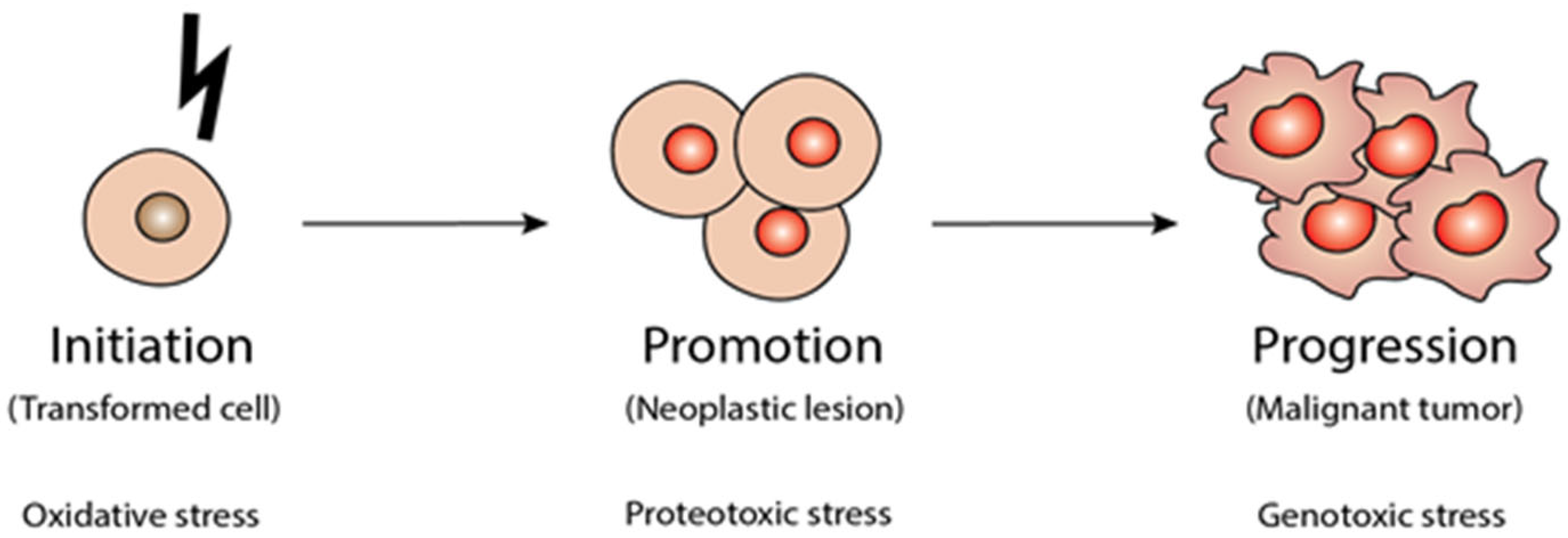
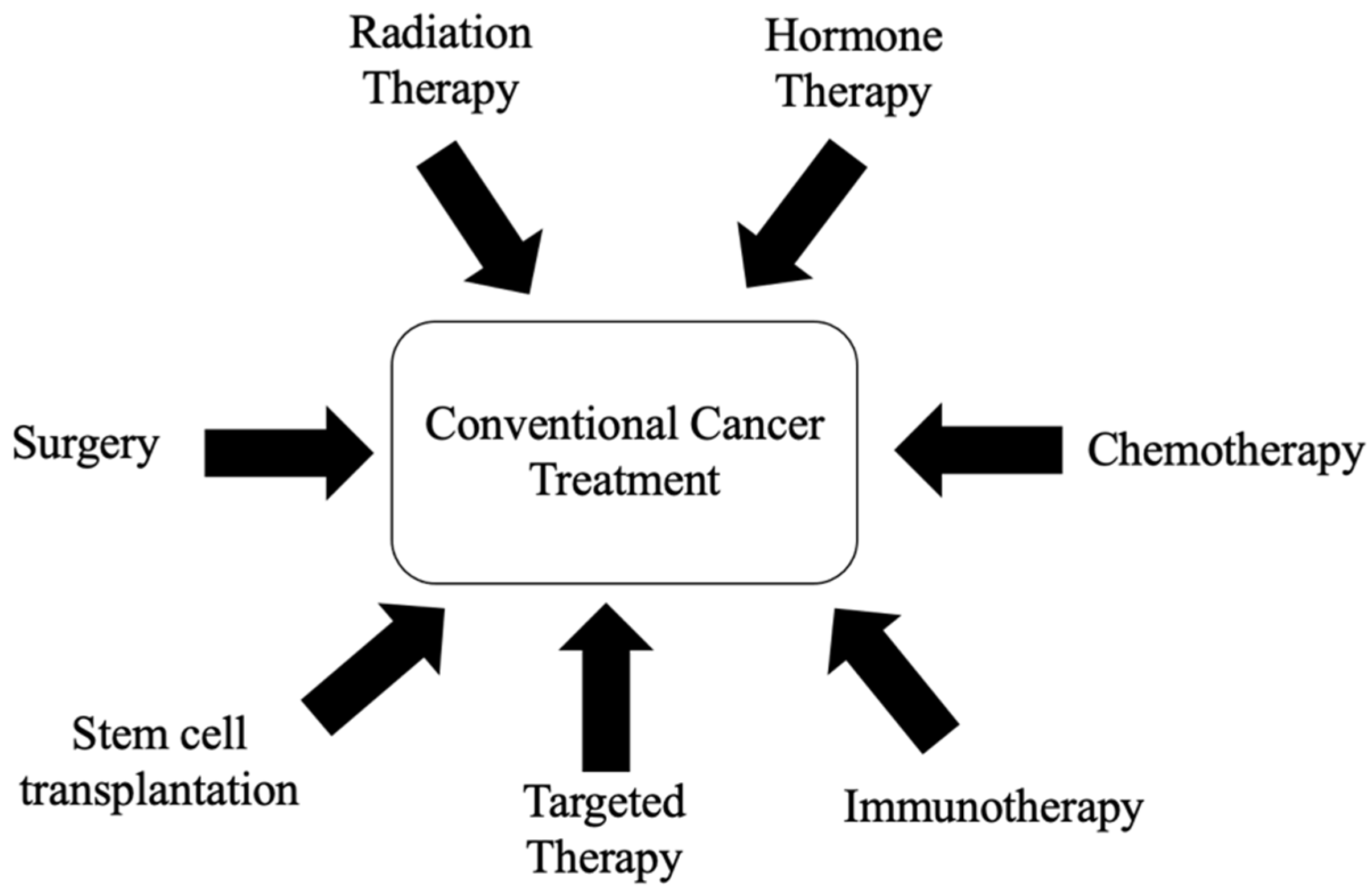


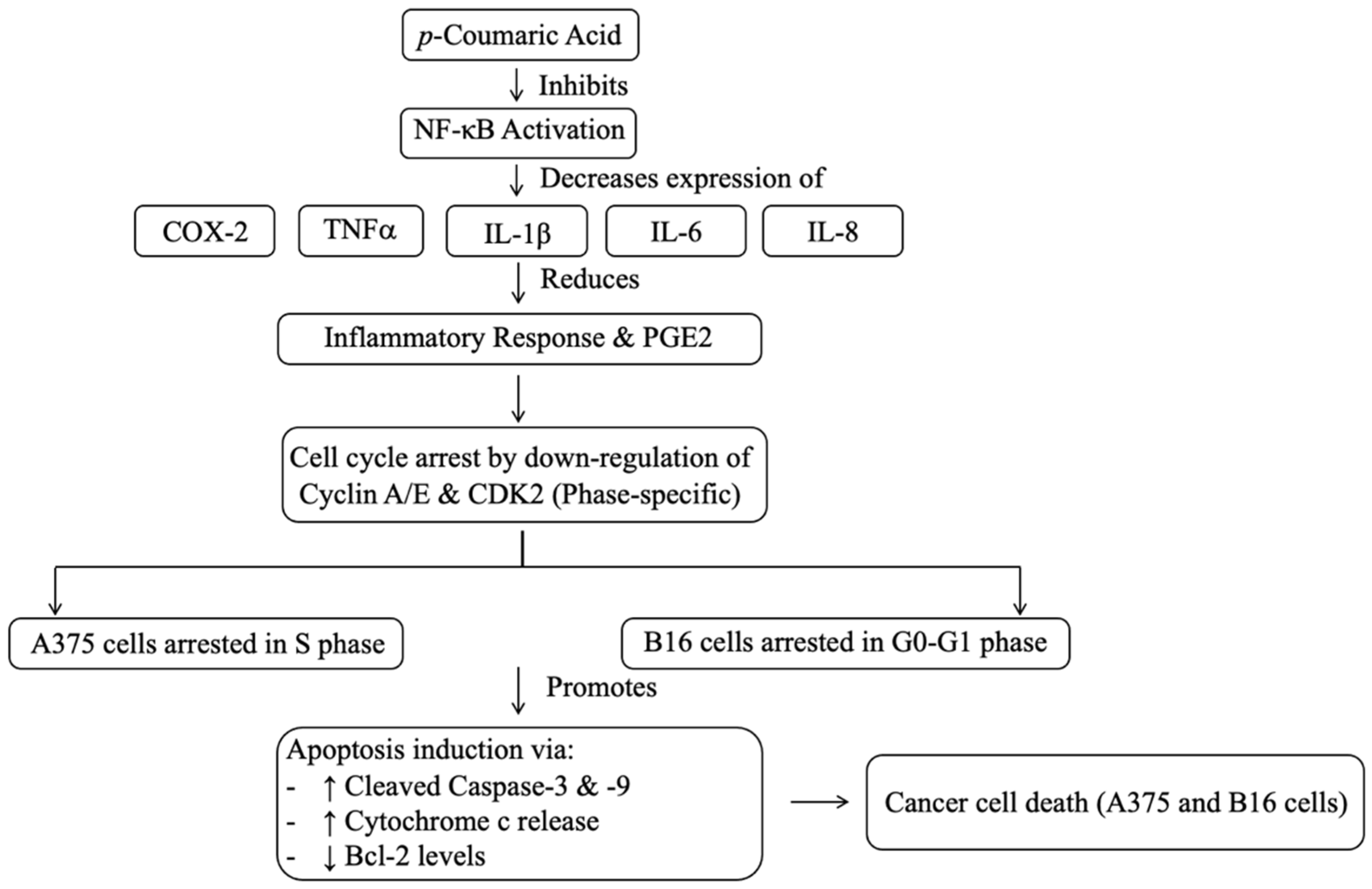


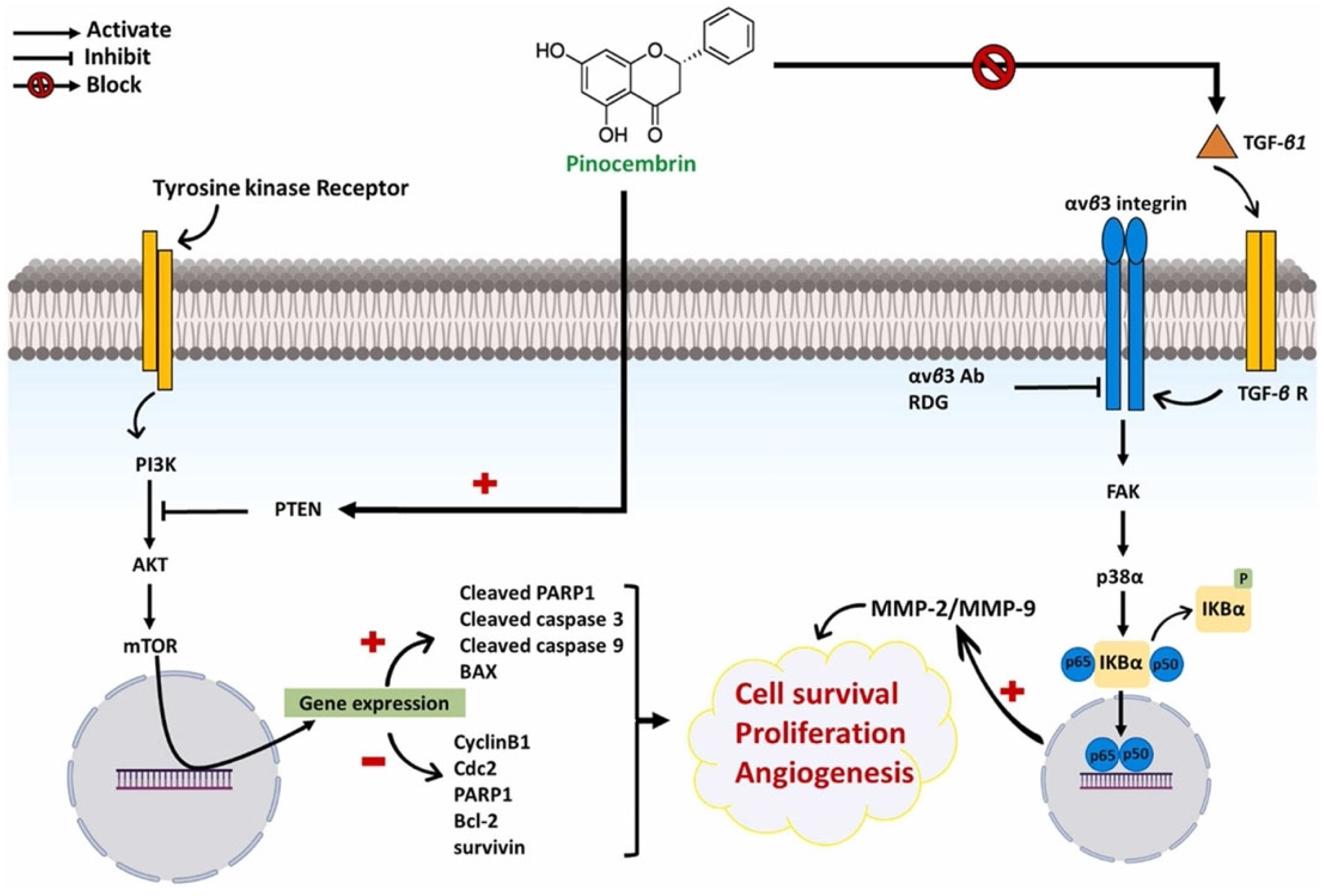


| Cancer Type | Findings | References |
|---|---|---|
| Colorectal cancer cells (SW-480) | Modulated the expression of proliferative genes, including p53, ERK1/2, AKT, PI3K, and NF-κB, in SW-480 cells. Additionally, syringic acid activated autophagy in SW-480 cells. | [78] |
| Gastric cancer cell lines (AGS) | Inducing apoptosis, inhibiting inflammation, and modulating the mTOR/AKT signalling pathway. | [80] |
| Lung cancer cell (A549) | Induced moderate ROS generation in a concentration-dependent manner, disrupted mitochondrial membrane potential, and caused morphological modifications. | [81] |
| Liver cancer (HepG2 Cells) | Syringic acid treatment significantly increased the expression of apoptotic markers, including caspases 3 and 9, cytochrome c, Apaf-1, Bax, and p53, in HepG2 cells. This upregulation suggests that syringic acid may induce apoptosis in these cells. | [82] |
| Breast cancer cell (In silico studies) | Syringic acid achieved the highest docking scores with PR and HER-2 proteins, at −7.7 kcal/mol | [83] |
| In silico studies | Syringic acid and its derivative SA10 bind to the active site of NF-κB, thereby interfering with the association between DNA and NF-κB. SA10 exhibits a more robust binding affinity than SA and is firmly docked into the interior of NF-κB, | [84] |
| Leukemia (K562 Cells) | SA10 exhibited a two-fold increase in inhibitory activity compared to SA. SA10 functions as both an NF-κB inhibitor and an apoptosis inducer, a significant finding given NF-κB’s role in promoting cancer cell survival and proliferation. | [84] |
| Kidney and liver cancer cells (HEK 293 and HepG2 cells) | Addition of Cu (II) to Syringic Acid significantly reduced HepG2 cell viability after 72 h, increasing ROS formation, apoptosis, and autophagy without affecting mitochondrial integrity. This combination showed pro-oxidant activity, reduced cell survival, and induced autophagy in cancer cells with minimal effects on normal cells, making it a promising therapeutic candidate for cancer treatment. | [87] |
| Cancer Type | Findings | References |
|---|---|---|
| Breast Cancer | Quercetin and curcumin induce histone acetylation at the BRCA1 promoter, reducing cell survival and migration in ER+ cells by counteracting the effects of BRCA1 knockdown. | [139] |
| Lung cancer | Inhibits overexpressed Aurora-B kinase, suppressing NSCLC cell growth. | [142] |
| Lung cancer | Induces apoptosis and cell cycle arrest in S phase via receptor-mediated endocytosis. | [145] |
| Prostate Cancer | Enhances ROS scavenging by increasing SOD, GxP, catalase, and GSH levels. | [149] |
| Colorectal Cancer | Enhances 5-FU sensitivity by suppressing the miR-27a/Wnt/β-catenin pathway in CRC. | [151] |
| Gastric Cancer | Silences CDC20 expression, inhibiting gastric cancer cell growth. | [152] |
| Pancreatic cancer | Regulates oxidative and inflammatory networks, affecting immunosuppressive cytokine induction. | [153] |
| Liver cancer | Inhibits proliferation of liver cancer cells via apoptosis and cell cycle arrest. | [154] |
| Cancer Type | Findings | References |
|---|---|---|
| Lung cancer (NSCLC) A549 and H460 | Acacetin inhibits NSCLC cell proliferation and induces apoptosis by regulating the p53/miR-34a/PD-L1 pathway. | [163] |
| Breast cancer T-47D and MDA-MB-231 cells | Acacetin exerts its anticancer effects on breast carcinoma cells by inducing cell cycle arrest, generating ROS, and activating RIP1-dependent necroptosis, effects that are modulated by ROS inhibition with NAC and RIP1 inhibition with Necrostatin-1. | [164] |
| Breast cancer MCF-7 and MDA-MB-468 | Inhibition of ERK1/2 and AKT signalling and modulation of the expression of cell cycle regulators. | [164] |
| Colon cancer cell lines, SW480 and HCT-116 | Acacetin induces mitochondrial ROS-mediated, caspase-independent cell death in SW480 and HCT-116 colon carcinoma cells through AIF activation | [166] |
| Prostate Cancer Cells DU145 | STAT3 activity is inhibited by direct binding, leading to downregulation of its target genes. | [167] |
| Liver cancer cell lines HepG2 | Inhibition of STAT3 activation by suppressing its phosphorylation and directly binding to STAT3, as well as inhibition of upstream kinases like c-Src, JAK1, and JAK2. | [168] |
| Gastric cancer MKN45 and MGC803 | Acacetin suppresses the invasion, metastasis, and TGF-β1-induced EMT of gastric cancer, and the mechanism likely involves the inhibition of the PI3K/Akt/Snail signalling pathway | [161] |
| Ovarian cancer | Acacetin suppresses LPA production, inhibiting the RAGE-PI3K/AKT pathway and reducing cell proliferation and inflammation. However, exogenous LPA can restore this pathway and counteract acacetin’s effects. | [170] |
| Cancer Type | Findings | References |
|---|---|---|
| Breast cancer (MCF-10A cells, breast cancer cell lines MCF-7, SKBR3, and MDA-MB-231) | Inhibiting cell proliferation, inducing cell cycle arrest and apoptosis, and regulating key signalling pathways like PI3K/AKT, thereby reducing cancer cell growth and spread | [177] |
| Liver cancer hepatocellular carcinoma. (HepG2 and Li-7) | Pinocembrin inhibits STAT3 phosphorylation, leading to downregulation of downstream target genes, such as cyclin D1, which, in turn, suppresses cyclin E expression. This STAT3 inhibition results in reduced cell proliferation and survival | [178] |
| Colorectal cancer (HT29 and HCT116 cells) | Pinocembrin suppressed the proliferation, migration, invasion, and EMT of colorectal cancer cells through the regulation of LACTB | [179] |
| Ovarian cancer (in silico studies) | Pinocembrin induces apoptosis in ovarian cancer cells via AKT1-mTOR signalling pathway | [180] |
| Prostate cancer (PC-3) | Pinocembrin induces apoptosis by generating endogenous ROS and leading to G0/G1 cell cycle arrest. | [182] |
| Lung cancer cells (A549) | Pinocembrin suppresses the migration and invasion of NSCLC cells by inhibiting the STAT3 pathway, thereby increasing E-cadherin expression and reducing N-cadherin and vimentin levels. However, this inhibitory effect is reversed by STAT3 overexpression. | [181] |
| Cancer Type | Findings | References |
|---|---|---|
| Bone tumour (SH-SY5Y cells) | Inhibits the proliferation of SH-SY5Y cells by interacting with BAX, Bcl-2, and CDK4/6. | [186] |
| Breast cancer cell lines (MCF-10A) | Significant proliferative effect against cancer cells. | [187] |
| Brain cancer (T98G, and LN-18) | Apoptosis induction, cell cycle arrest, and migration inhibition. | [188] |
| Breast cancer cells (MDA-MB-231) | Anti-proliferative, growth-inhibitory, and anti-invasive effects. | [189] |
| Human Tumour Cell Lines (MCF7, NCI-H460, HeLa, HepG2, MM127) | Anti-proliferative effect. | [190] |
Disclaimer/Publisher’s Note: The statements, opinions and data contained in all publications are solely those of the individual author(s) and contributor(s) and not of MDPI and/or the editor(s). MDPI and/or the editor(s) disclaim responsibility for any injury to people or property resulting from any ideas, methods, instructions or products referred to in the content. |
© 2026 by the authors. Licensee MDPI, Basel, Switzerland. This article is an open access article distributed under the terms and conditions of the Creative Commons Attribution (CC BY) license.
Share and Cite
Mohd Hatta, M.H.; Amran, N.; Kamisan, F.H.; Daud, M.H.; Abdul Manaf, M.F.; Chelilah, K.K.; Abdul Karim, N. Recent Progress on Polyphenols of Malaysian Honey and Their Molecular Mechanism Pathways in Cancer—A Comprehensive Review. Int. J. Mol. Sci. 2026, 27, 3074. https://doi.org/10.3390/ijms27073074
Mohd Hatta MH, Amran N, Kamisan FH, Daud MH, Abdul Manaf MF, Chelilah KK, Abdul Karim N. Recent Progress on Polyphenols of Malaysian Honey and Their Molecular Mechanism Pathways in Cancer—A Comprehensive Review. International Journal of Molecular Sciences. 2026; 27(7):3074. https://doi.org/10.3390/ijms27073074
Chicago/Turabian StyleMohd Hatta, Mohd Hayrie, Nazirah Amran, Farah Hidayah Kamisan, Maryam Hannah Daud, Mariatul Farhana Abdul Manaf, Kanaga Kumari Chelilah, and Norwahidah Abdul Karim. 2026. "Recent Progress on Polyphenols of Malaysian Honey and Their Molecular Mechanism Pathways in Cancer—A Comprehensive Review" International Journal of Molecular Sciences 27, no. 7: 3074. https://doi.org/10.3390/ijms27073074
APA StyleMohd Hatta, M. H., Amran, N., Kamisan, F. H., Daud, M. H., Abdul Manaf, M. F., Chelilah, K. K., & Abdul Karim, N. (2026). Recent Progress on Polyphenols of Malaysian Honey and Their Molecular Mechanism Pathways in Cancer—A Comprehensive Review. International Journal of Molecular Sciences, 27(7), 3074. https://doi.org/10.3390/ijms27073074