Deciphering RTK-RAS and MAPK Pathway Dependencies in Gemcitabine-Treated Pancreatic Ductal Adenocarcinoma Through Conversational Artificial Intelligence

 , ,
, , 
Abstract
1. Introduction
2. Results
2.1. Cohort Composition and Baseline Clinical Characteristics
2.2. Distribution of RTK-RAS and MAPK Pathway Alterations Across Age and Gemcitabine Context
2.2.1. RTK-RAS Pathway Alterations by Age and Treatment
2.2.2. MAPK Pathway Alterations by Age and Treatment
2.3. Gene-Level Architecture of RTK-RAS and MAPK Pathway Alterations Across Age and Gemcitabine Exposure
2.3.1. RTK-RAS Gene-Level Landscape Highlights Gemcitabine-Associated RTK Enrichment in Late-Onset PDAC
2.3.2. MAPK Gene-Level Landscape Reveals Age- and Treatment-Dependent Non-Canonical Dependencies
2.3.3. Integrated Interpretation
2.4. Overall Survival According to RTK-RAS Pathway Alteration Status
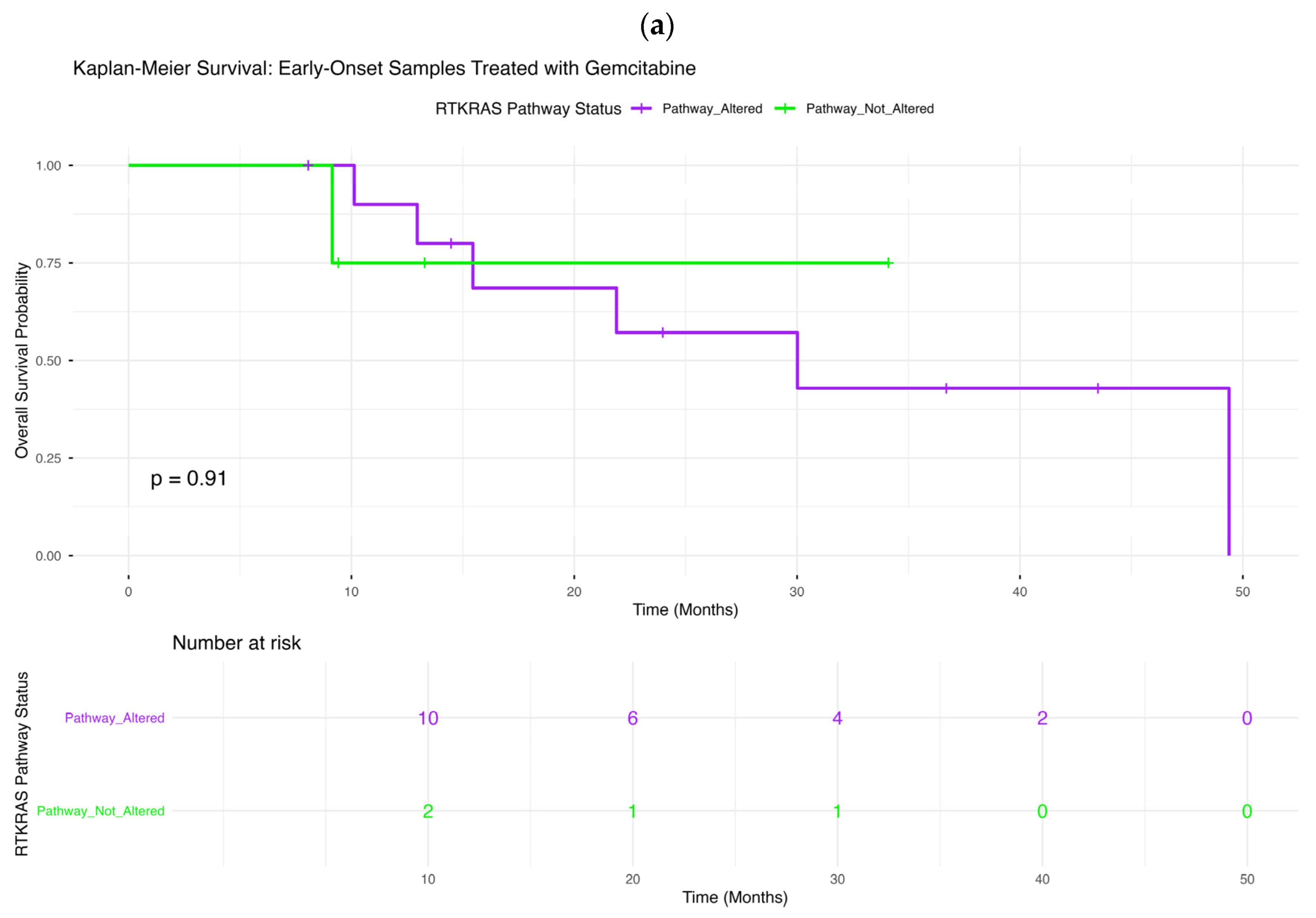
2.4.1. Early-Onset PDAC Treated with Gemcitabine
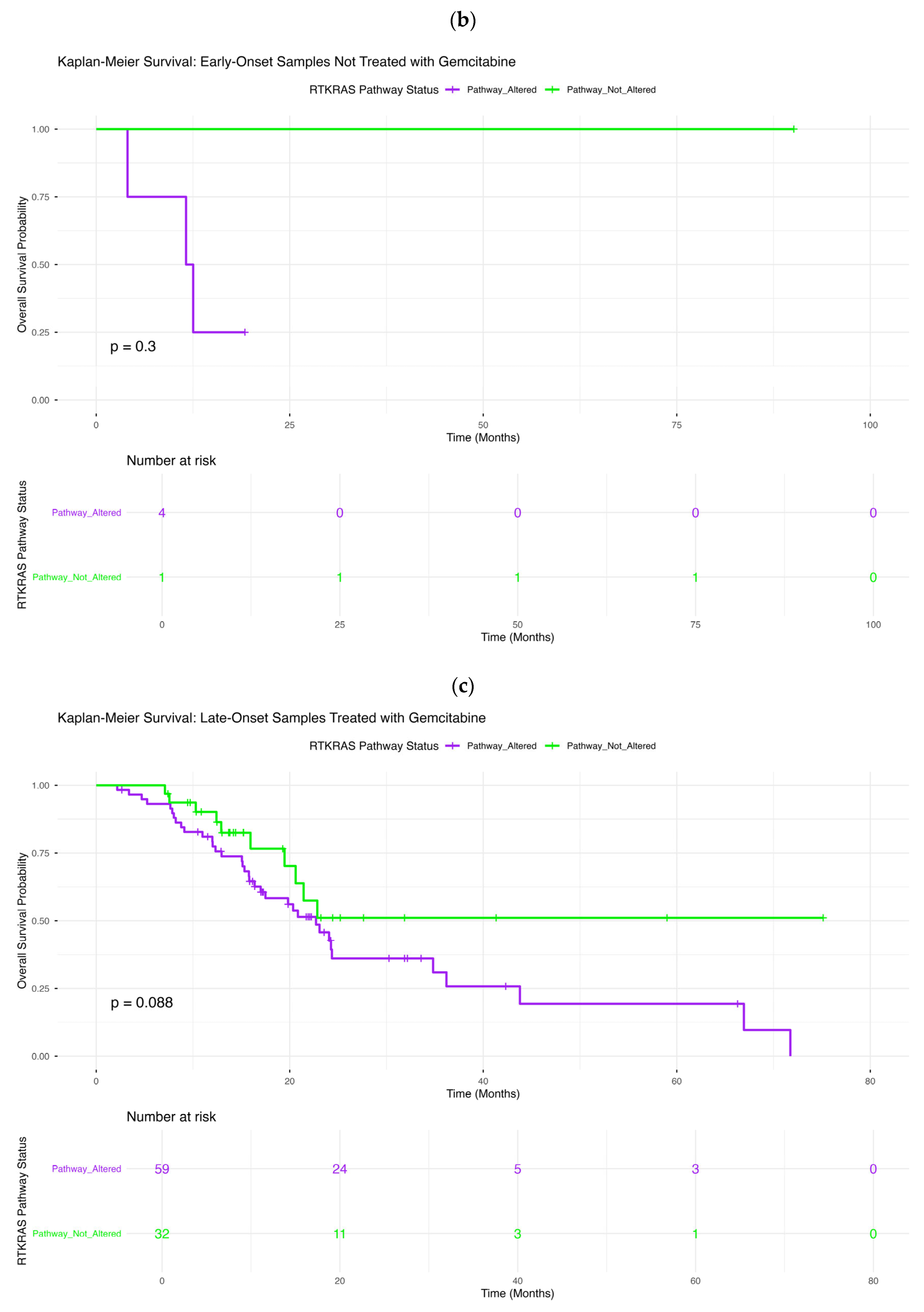
2.4.2. Early-Onset PDAC Not Treated with Gemcitabine
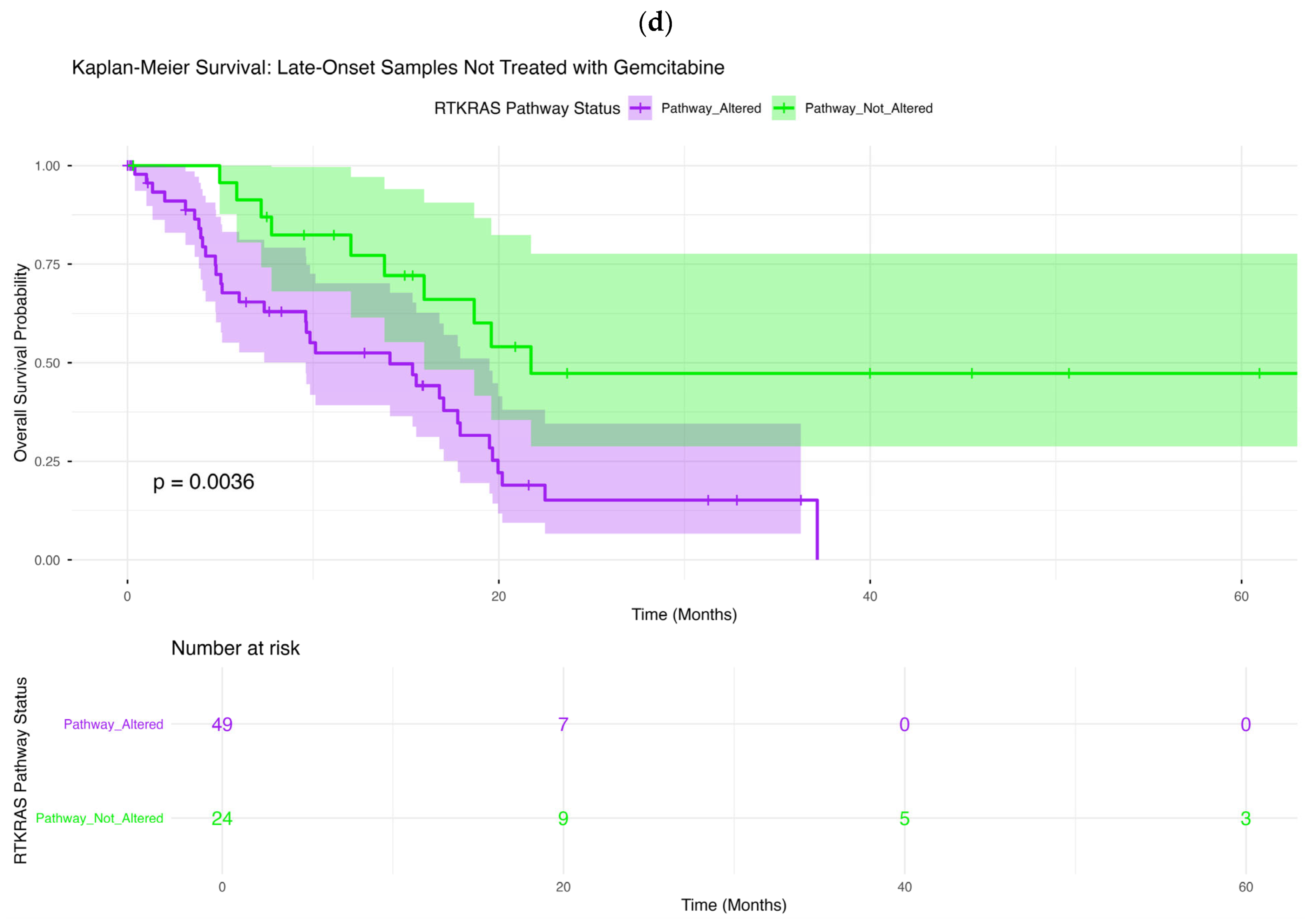
2.4.3. Late-Onset PDAC Treated with Gemcitabine
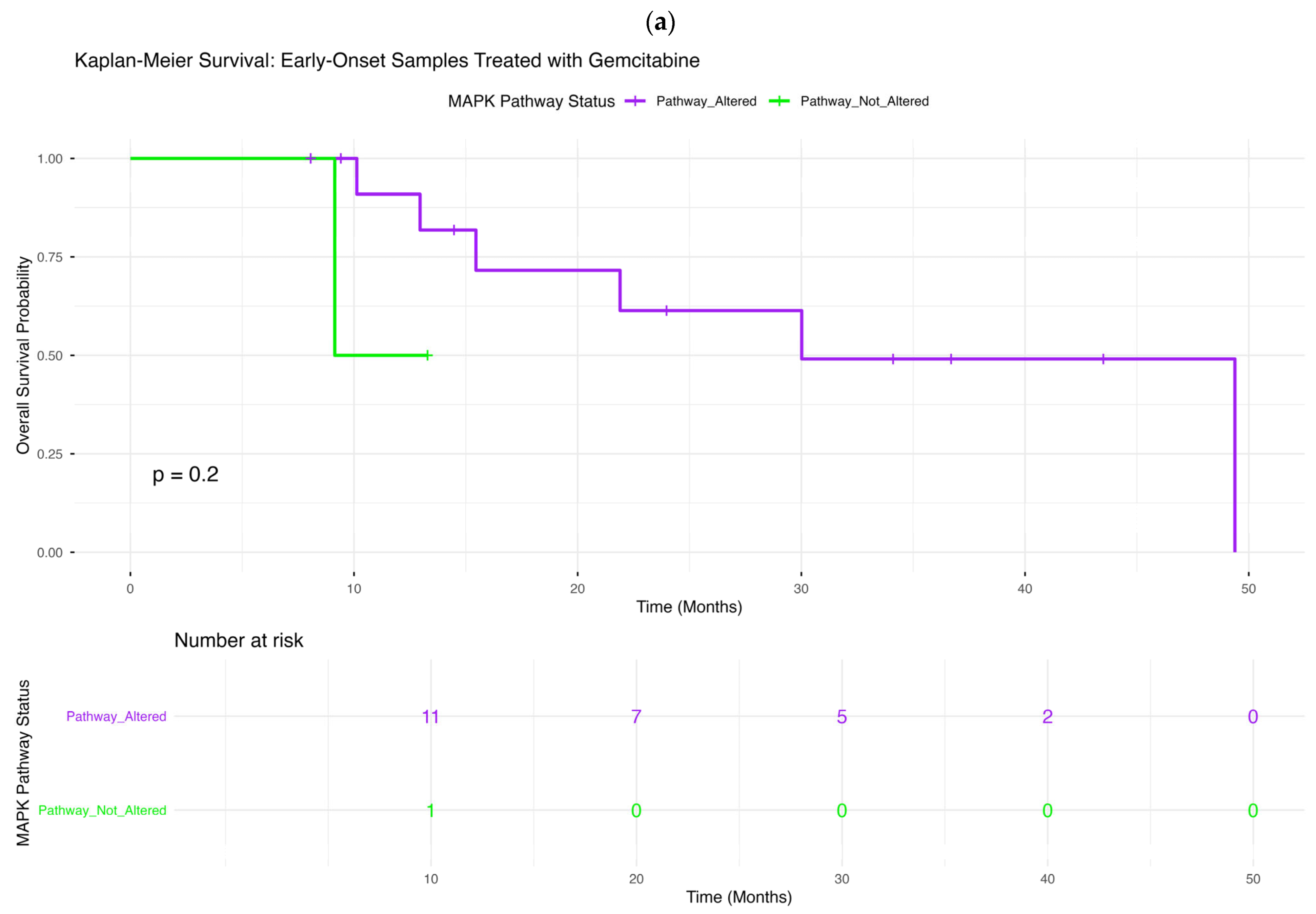
2.4.4. Late-Onset PDAC Not Treated with Gemcitabine
2.5. Overall Survival According to MAPK Pathway Alteration Status
2.5.1. Early-Onset PDAC Treated with Gemcitabine
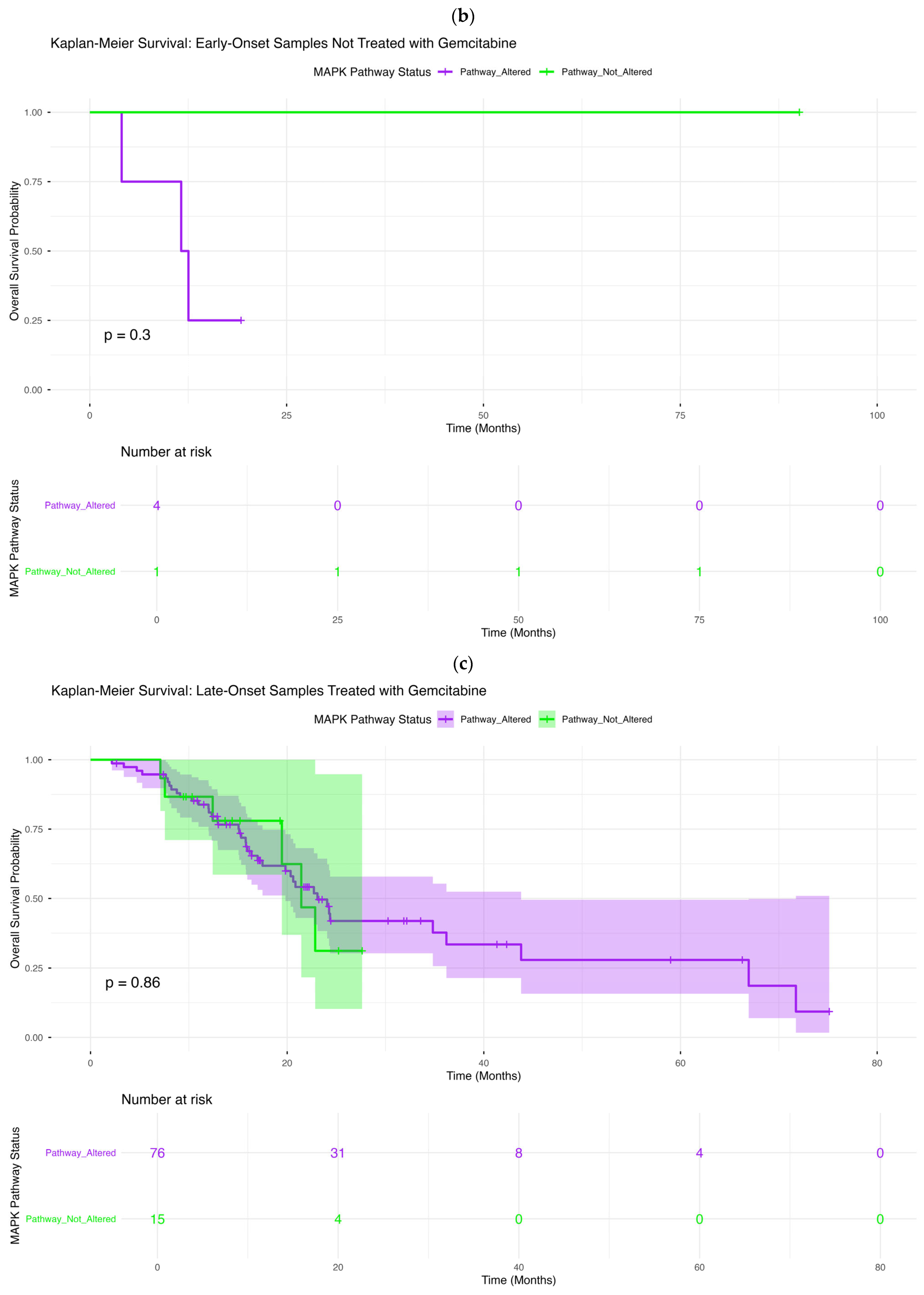
2.5.2. Early-Onset PDAC Not Treated with Gemcitabine
2.5.3. Late-Onset PDAC Treated with Gemcitabine
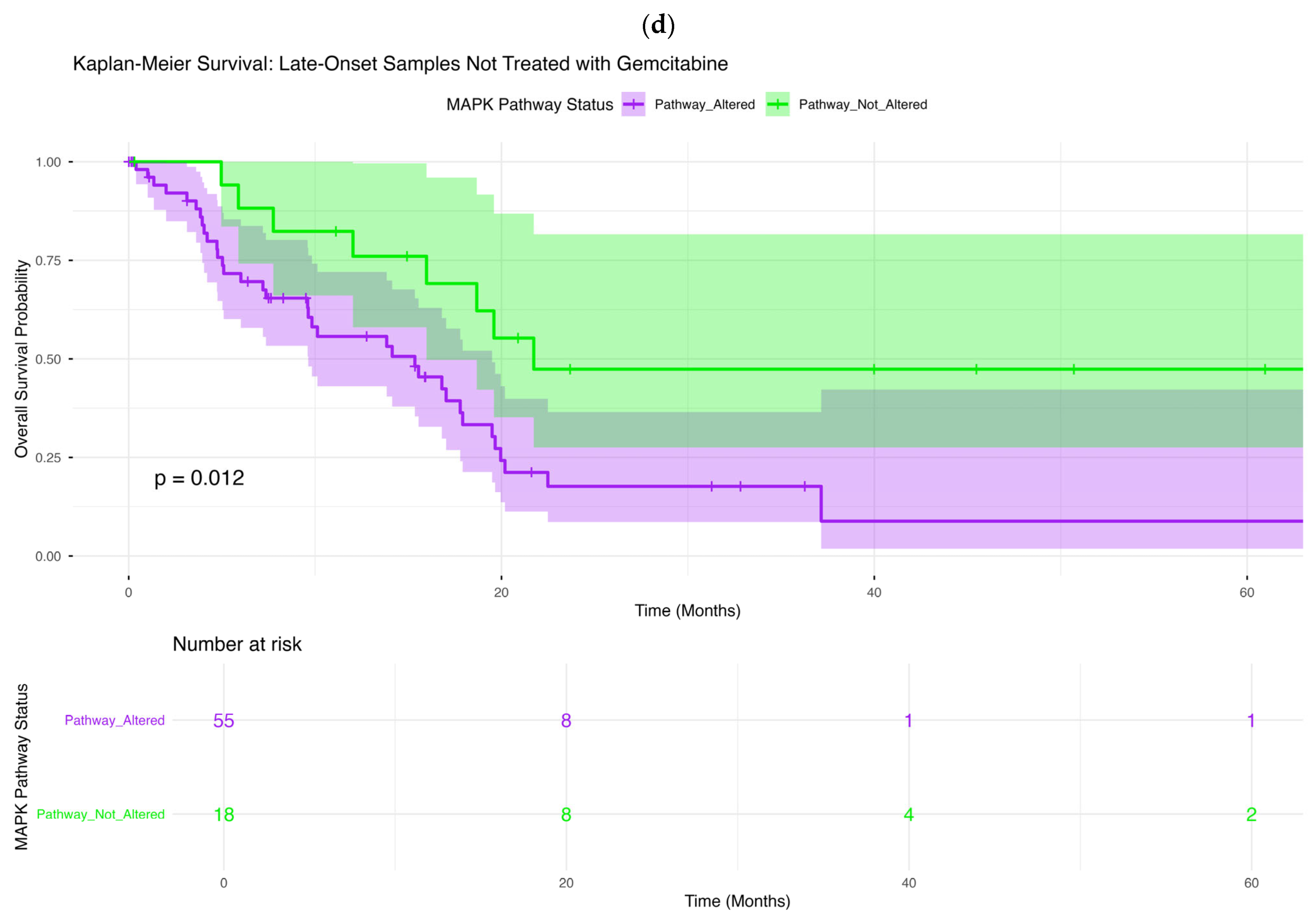
2.5.4. Late-Onset PDAC Not Treated with Gemcitabine
2.6. Conversational Artificial Intelligence-Driven Exploratory Analyses
2.6.1. AI-HOPE-RTK-RAS: Dynamic Cohort Construction and Pathway-Centric Profiling
2.6.2. AI-HOPE-MAPK: Treatment-Contextual MAPK Interrogation
3. Discussion
3.1. Pathway Prevalence Is Stable, but Pathway Architecture Is Not
3.2. Late-Onset Gemcitabine-Treated PDAC Shows RTK Diversification on a KRAS Backbone
3.3. Early-Onset PDAC Exhibits Distinct MAPK-Linked Non-Canonical Signatures
3.4. Prognostic Relevance of RTK-RAS and MAPK Alterations Is Context-Dependent
3.5. Conversational AI as an Analytic Layer for Reproducible, Context-Aware Precision Oncology
3.6. Limitations and Future Directions
3.7. Conclusions
4. Materials and Methods
4.1. Study Design and Data Provenance
4.2. Clinical Variables and Subgroup Definitions
4.3. RTK-RAS and MAPK Pathway Gene Set Curation and Alteration Definitions
4.4. Primary Endpoints and Statistical Analyses
4.5. Conversational AI-Enabled Analytic Workflow and Validation
Supplementary Materials
Author Contributions
Funding
Institutional Review Board Statement
Informed Consent Statement
Data Availability Statement
Acknowledgments
Conflicts of Interest
References
- Riner, A.N.; Velazquez-Villarreal, E.I.; Rajpara, S.; Qian, J.; Jin, Y.; Loza, D.; Akki, A.; Herremans, K.M.; Raj, R.; Williams, T.M.; et al. Somatic Genomic Profiling of Pancreatic Ductal Adenocarcinomas From a Diverse Cohort of Patients. Pancreas 2025, 54, e171–e178. [Google Scholar] [CrossRef] [PubMed] [PubMed Central]
- Monge, C.; Waldrup, B.; Carranza, F.G.; Manjarrez, S.; Velazquez-Villarreal, E. Pathway-Specific Genomic Alterations in Pancreatic Cancer Across Populations at Risk. Int. J. Mol. Sci. 2025, 26, 7695. [Google Scholar] [CrossRef] [PubMed] [PubMed Central]
- Beutel, A.K.; Halbrook, C.J. Barriers and opportunities for gemcitabine in pancreatic cancer therapy. Am. J. Physiol. Cell Physiol. 2023, 324, C540–C552. [Google Scholar] [CrossRef] [PubMed] [PubMed Central]
- De Dosso, S.; Siebenhüner, A.R.; Winder, T.; Meisel, A.; Fritsch, R.; Astaras, C.; Szturz, P.; Borner, M. Treatment landscape of metastatic pancreatic cancer. Cancer Treat. Rev. 2021, 96, 102180. [Google Scholar] [CrossRef] [PubMed]
- Binenbaum, Y.; Na’ara, S.; Gil, Z. Gemcitabine resistance in pancreatic ductal adenocarcinoma. Drug Resist. Updat. 2015, 23, 55–68. [Google Scholar] [CrossRef] [PubMed]
- Koltai, T.; Reshkin, S.J.; Carvalho, T.M.A.; Di Molfetta, D.; Greco, M.R.; Alfarouk, K.O.; Cardone, R.A. Resistance to Gemcitabine in Pancreatic Ductal Adenocarcinoma: A Physiopathologic and Pharmacologic Review. Cancers 2022, 14, 2486. [Google Scholar] [CrossRef] [PubMed] [PubMed Central]
- Natu, J.; Nagaraju, G.P. Gemcitabine effects on tumor microenvironment of pancreatic ductal adenocarcinoma: Special focus on resistance mechanisms and metronomic therapies. Cancer Lett. 2023, 573, 216382. [Google Scholar] [CrossRef] [PubMed]
- Quiñonero, F.; Mesas, C.; Doello, K.; Cabeza, L.; Perazzoli, G.; Jimenez-Luna, C.; Rama, A.R.; Melguizo, C.; Prados, J. The challenge of drug resistance in pancreatic ductal adenocarcinoma: A current overview. Cancer Biol. Med. 2019, 16, 688–699. [Google Scholar] [CrossRef] [PubMed] [PubMed Central]
- Buscail, L.; Bournet, B.; Cordelier, P. Role of oncogenic KRAS in the diagnosis, prognosis and treatment of pancreatic cancer. Nat. Rev. Gastroenterol. Hepatol. 2020, 17, 153–168. [Google Scholar] [CrossRef] [PubMed]
- Mann, K.M.; Ying, H.; Juan, J.; Jenkins, N.A.; Copeland, N.G. KRAS-related proteins in pancreatic cancer. Pharmacol. Ther. 2016, 168, 29–42. [Google Scholar] [CrossRef] [PubMed]
- Waters, A.M.; Der, C.J. KRAS: The Critical Driver and Therapeutic Target for Pancreatic Cancer. Cold Spring Harb. Perspect. Med. 2018, 8, a031435. [Google Scholar] [CrossRef] [PubMed] [PubMed Central]
- Ardalan, B.; Ciner, A.; Baca, Y.; Hinton, A.; Darabi, S.; Kasi, A.; Lou, E.; Azqueta, J.I.; Xiu, J.; Datta, J.; et al. Distinct Molecular and Clinical Features of Specific Variants of KRAS Codon 12 in Pancreatic Adenocarcinoma. Clin. Cancer Res. 2025, 31, 1082–1090. [Google Scholar] [CrossRef] [PubMed] [PubMed Central]
- McIntyre, C.A.; Grimont, A.; Park, J.; Meng, Y.; Sisso, W.J.; Seier, K.; Jang, G.H.; Walch, H.; Aveson, V.G.; Falvo, D.J.; et al. Distinct clinical outcomes and biological features of specific KRAS mutants in human pancreatic cancer. Cancer Cell 2024, 42, 1614–1629.e5. [Google Scholar] [CrossRef] [PubMed] [PubMed Central]
- Norton, C.; Shaw, M.S.; Rubnitz, Z.; Smith, J.; Soares, H.P.; Nevala-Plagemann, C.D.; Garrido-Laguna, I.; Florou, V. KRAS Mutation Status and Treatment Outcomes in Patients With Metastatic Pancreatic Adenocarcinoma. JAMA Netw. Open 2025, 8, e2453588. [Google Scholar] [CrossRef] [PubMed] [PubMed Central]
- Knox, J.J.; Jang, G.H.; Grant, R.C.; Zhang, A.; Ma, L.; Elimova, E.; Jang, R.; Moore, M.; Biagi, J.; Tehfe, M.; et al. Whole genome and transcriptome profiling in advanced pancreatic cancer patients on the COMPASS trial. Nat. Commun. 2025, 16, 5919. [Google Scholar] [CrossRef] [PubMed] [PubMed Central]
- Singh, H.; Xiu, J.; Kapner, K.S.; Yuan, C.; Narayan, R.R.; Oberley, M.; Farrell, A.; Surana, R.; Huffman, B.M.; Perez, K.; et al. Clinical and Genomic Features of Classical and Basal Transcriptional Subtypes in Pancreatic Cancer. Clin. Cancer Res. 2024, 30, 4932–4942. [Google Scholar] [CrossRef] [PubMed] [PubMed Central]
- Khan, N.; Raza, U.; Ali Zaidi, S.A.; Nuer, M.; Abudurousuli, K.; Paerhati, Y.; Aikebaier, A.; Zhou, W. Drugging the ‘undruggable’ KRAS: Breakthroughs, challenges, and opportunities in pancreatic cancer. Cancer Biol. Med. 2025, 22, 762–788. [Google Scholar] [CrossRef] [PubMed] [PubMed Central]
- Nollmann, F.I.; Ruess, D.A. Targeting Mutant KRAS in Pancreatic Cancer: Futile or Promising? Biomedicines 2020, 8, 281. [Google Scholar] [CrossRef] [PubMed] [PubMed Central]
- Stickler, S.; Rath, B.; Hamilton, G. Targeting KRAS in pancreatic cancer. Oncol. Res. 2024, 32, 799–805. [Google Scholar] [CrossRef] [PubMed] [PubMed Central]
- Kang, Y.W.; Lee, J.E.; Jung, K.H.; Son, M.K.; Shin, S.M.; Kim, S.J.; Fang, Z.; Yan, H.H.; Park, J.H.; Han, B.; et al. KRAS targeting antibody synergizes anti-cancer activity of gemcitabine against pancreatic cancer. Cancer Lett. 2018, 438, 174–186. [Google Scholar] [CrossRef] [PubMed]
- Lee, J.E.; Kang, Y.W.; Jung, K.H.; Son, M.K.; Shin, S.M.; Kim, J.S.; Kim, S.J.; Fang, Z.; Yan, H.H.; Park, J.H.; et al. Intracellular KRAS-specific antibody enhances the anti-tumor efficacy of gemcitabine in pancreatic cancer by inducing endosomal escape. Cancer Lett. 2021, 507, 97–111. [Google Scholar] [CrossRef] [PubMed]
- Réjiba, S.; Wack, S.; Aprahamian, M.; Hajri, A. K-ras oncogene silencing strategy reduces tumor growth and enhances gemcitabine chemotherapy efficacy for pancreatic cancer treatment. Cancer Sci. 2007, 98, 1128–1136. [Google Scholar] [CrossRef] [PubMed] [PubMed Central]
- Anthiya, S.; Öztürk, S.C.; Yanik, H.; Tavukcuoglu, E.; Şahin, A.; Datta, D.; Charisse, K.; Álvarez, D.M.; Loza, M.I.; Calvo, A.; et al. Targeted siRNA lipid nanoparticles for the treatment of KRAS-mutant tumors. J. Control. Release 2023, 357, 67–83. [Google Scholar] [CrossRef] [PubMed]
- Dutta, D.; Ray, P.; De, A.; Ghosh, A.; Hazra, R.S.; Ghosh, P.; Banerjee, S.; Diaz, F.J.; Upadhyay, S.P.; Quadir, M.; et al. pH-responsive targeted nanoparticles release ERK-inhibitor in the hypoxic zone and sensitize free gemcitabine in mutant K-Ras-addicted pancreatic cancer cells and mouse model. PLoS ONE 2024, 19, e0297749. [Google Scholar] [CrossRef] [PubMed] [PubMed Central]
- Hu, Q.; Feng, J.; Qi, L.; Jin, Y. Stromal Reprogramming Optimizes KRAS-Specific Chemotherapy Inducing Antitumor Immunity in Pancreatic Cancer. ACS Appl. Mater. Interfaces 2024, 16, 61583–61598. [Google Scholar] [CrossRef] [PubMed]
- Diaz, F.C.; Waldrup, B.; Carranza, F.G.; Manjarrez, S.; Velazquez-Villarreal, E. Conversational AI-Enabled Precision Oncology Reveals Context-Dependent MAPK Pathway Alterations in Hispanic/Latino and Non-Hispanic White Colorectal Cancer Stratified by Age and FOLFOX Exposure. Cancers 2026, 18, 293. [Google Scholar] [CrossRef] [PubMed] [PubMed Central]
- Shimizu, K.; Nishiyama, T.; Hori, Y. Gemcitabine Enhances Kras-MEK-Induced Matrix Metalloproteinase-10 Expression Via Histone Acetylation in Gemcitabine-Resistant Pancreatic Tumor-initiating Cells. Pancreas 2017, 46, 268–275. [Google Scholar] [CrossRef] [PubMed]
- Zhao, H.; Wu, S.; Li, H.; Duan, Q.; Zhang, Z.; Shen, Q.; Wang, C.; Yin, T. ROS/KRAS/AMPK Signaling Contributes to Gemcitabine-Induced Stem-like Cell Properties in Pancreatic Cancer. Mol. Ther. Oncolytics 2019, 14, 299–312. [Google Scholar] [CrossRef] [PubMed] [PubMed Central]
- Glorieux, C.; Xia, X.; You, X.; Wang, Z.; Han, Y.; Yang, J.; Noppe, G.; Meester, C.; Ling, J.; Robert, A.; et al. Cisplatin and gemcitabine exert opposite effects on immunotherapy with PD-1 antibody in K-ras-driven cancer. J. Adv. Res. 2022, 40, 109–124. [Google Scholar] [CrossRef] [PubMed] [PubMed Central]
- Gu, M.; Gao, Y.; Chang, P. KRAS Mutation Dictates the Cancer Immune Environment in Pancreatic Ductal Adenocarcinoma and Other Adenocarcinomas. Cancers 2021, 13, 2429. [Google Scholar] [CrossRef] [PubMed] [PubMed Central]
- Collisson, E.A.; Sadanandam, A.; Olson, P.; Gibb, W.J.; Truitt, M.; Gu, S.; Cooc, J.; Weinkle, J.; Kim, G.E.; Jakkula, L.; et al. Subtypes of pancreatic ductal adenocarcinoma and their differing responses to therapy. Nat. Med. 2011, 17, 500–503. [Google Scholar] [CrossRef] [PubMed] [PubMed Central]
- Monge, C.; Waldrup, B.; Carranza, F.G.; Velazquez-Villarreal, E. Ethnicity-Specific Molecular Alterations in MAPK and JAK/STAT Pathways in Early-Onset Colorectal Cancer. Cancers 2025, 17, 1093. [Google Scholar] [CrossRef] [PubMed] [PubMed Central]
- Monge, C.; Waldrup, B.; Carranza, F.G.; Velazquez-Villarreal, E. Molecular Alterations in TP53, WNT, PI3K, TGF-Beta, and RTK/RAS Pathways in Gastric Cancer Among Ethnically Heterogeneous Cohorts. Cancers 2025, 17, 1075. [Google Scholar] [CrossRef] [PubMed] [PubMed Central]
- Diaz, F.C.; Waldrup, B.; Carranza, F.G.; Manjarrez, S.; Velazquez-Villarreal, E. Prognostic Impact of RTK-RAS Alterations in FOLFOX-Treated Early-Onset Colorectal Cancer Revealed by Artificial Intelligence-Driven Precision Oncology. Cancers 2026, 18, 239. [Google Scholar] [CrossRef] [PubMed] [PubMed Central]
- Yang, E.W.; Waldrup, B.; Velazquez-Villarreal, E. Precision Oncology Through Dialogue: AI-HOPE-RTK-RAS Integrates Clinical and Genomic Insights into RTK-RAS Alterations in Colorectal Cancer. Biomedicines 2025, 13, 1835. [Google Scholar] [CrossRef] [PubMed] [PubMed Central]
- Yang, E.; Waldrup, B.; Velazquez-Villarreal, E. Artificial Intelligence for Precision Oncology: AI-HOPE-MAPK Uncovers Clinically Actionable MAPK Alterations in Colorectal Cancer. AI Precis. Oncol. 2025, 2, 197–206. [Google Scholar] [CrossRef]
- Liu, X.; Baer, J.M.; Stone, M.L.; Knolhoff, B.L.; Hogg, G.D.; Turner, M.C.; Kao, Y.L.; Weinstein, A.G.; Ahmad, F.; Chen, J.; et al. Stromal reprogramming overcomes resistance to RAS-MAPK inhibition to improve pancreas cancer responses to cytotoxic and immune therapy. Sci. Transl. Med. 2024, 16, eado2402. [Google Scholar] [CrossRef] [PubMed] [PubMed Central]
- Seicean, A.; Petrusel, L.; Seicean, R. New targeted therapies in pancreatic cancer. World J. Gastroenterol. 2015, 21, 6127–6145. [Google Scholar] [CrossRef] [PubMed] [PubMed Central]
- Costello, E.; Greenhalf, W.; Neoptolemos, J.P. New biomarkers and targets in pancreatic cancer and their application to treatment. Nat. Rev. Gastroenterol. Hepatol. 2012, 9, 435–444. [Google Scholar] [CrossRef] [PubMed]
- Grant, T.J.; Hua, K.; Singh, A. Molecular Pathogenesis of Pancreatic Cancer. Prog. Mol. Biol. Transl. Sci. 2016, 144, 241–275. [Google Scholar] [CrossRef] [PubMed] [PubMed Central]
- Haas, M.; Ormanns, S.; Baechmann, S.; Remold, A.; Kruger, S.; Westphalen, C.B.; Siveke, J.T.; Wenzel, P.; Schlitter, A.M.; Esposito, I.; et al. Extended RAS analysis and correlation with overall survival in advanced pancreatic cancer. Br. J. Cancer 2017, 116, 1462–1469. [Google Scholar] [CrossRef] [PubMed] [PubMed Central]
- Hu, T.; Shukla, S.K.; Vernucci, E.; He, C.; Wang, D.; King, R.J.; Jha, K.; Siddhanta, K.; Mullen, N.J.; Attri, K.S.; et al. Metabolic Rewiring by Loss of Sirt5 Promotes Kras-Induced Pancreatic Cancer Progression. Gastroenterology 2021, 161, 1584–1600. [Google Scholar] [CrossRef] [PubMed] [PubMed Central]
- Khine, H.E.E.; Suriya, U.; Rungrotmongkol, T.; Chamni, S.; Lu, Y.; Bénard, A.; Lan, B.; Mukhopadhyay, D.; Chang, D.; Biankin, A.; et al. Jorunnamycin A induces apoptosis in pancreatic ductal adenocarcinoma cells, spheroids, and patient-derived organoids by modulating KRAS-mediated survival pathways. Sci. Rep. 2025, 15, 11376. [Google Scholar] [CrossRef] [PubMed] [PubMed Central]
- Kim, S.T.; Lim, D.H.; Jang, K.T.; Lim, T.; Lee, J.; Choi, Y.L.; Jang, H.L.; Yi, J.H.; Baek, K.K.; Park, S.H.; et al. Impact of KRAS mutations on clinical outcomes in pancreatic cancer patients treated with first-line gemcitabine-based chemotherapy. Mol. Cancer Ther. 2011, 10, 1993–1999. [Google Scholar] [CrossRef] [PubMed]
- Liu, K.; Geng, Y.; Wang, L.; Xu, H.; Zou, M.; Li, Y.; Zhao, Z.; Chen, T.; Xu, F.; Sun, L.; et al. Systematic exploration of the underlying mechanism of gemcitabine resistance in pancreatic adenocarcinoma. Mol. Oncol. 2022, 16, 3034–3051. [Google Scholar] [CrossRef] [PubMed] [PubMed Central]
- Xu, Z.; Li, W.; Dong, X.; Chen, Y.; Zhang, D.; Wang, J.; Zhou, L.; He, G. Precision medicine in colorectal cancer: Leveraging multi-omics, spatial omics, and artificial intelligence. Clin. Chim. Acta 2024, 559, 119686. [Google Scholar] [CrossRef] [PubMed]
- Hoseini, S.H.; Enayati, P.; Nazari, M.; Babakhanzadeh, E.; Rastgoo, M.; Sohrabi, N.B. Biomarker Profile of Colorectal Cancer: Current Findings and Future Perspective. J. Gastrointest. Cancer 2024, 55, 497–510. [Google Scholar] [CrossRef] [PubMed]
- Miao, B.; Lih, T.M.; Hu, Y.; Zhang, H. Signatures of Pancreatic Ductal Adenocarcinoma Uncovered by Integrative Multi-Omics Analysis. Cancers 2026, 18, 687. [Google Scholar] [CrossRef] [PubMed] [PubMed Central]



| Clinical Feature | PAAD Cohort n (%) |
|---|---|
| Age Onset and Treatment | |
| Early-Onset (<50) Treated with Gemcitabine | 15 (8.2%) |
| Late-Onset (≥50) Treated with Gemcitabine | 91 (49.5%) |
| Early-Onset (<50) Not Treated with Gemcitabine | 5 (2.7%) |
| Late-Onset (≥50) Not Treated with Gemcitabine | 73 (39.7%) |
| Cancer Type | |
| Pancreatic Adenocarcinoma | 184 (100.0%) |
| Sex | |
| Male | 101 (54.9%) |
| Female | 83 (45.1%) |
| Sample Type | |
| Primary Tumor | 184 (100.0%) |
| Stage at Diagnosis | |
| Stage I | 21 (11.4%) |
| Stage II | 151 (82.1%) |
| Stage III | 5 (2.7%) |
| Stage IV | 5 (2.7%) |
| NA | 2 (1.1%) |
| Ethnicity | |
| Hispanic or Latino | 5 (2.7%) |
| Not Hispanic or Latino | 136 (73.9%) |
| Unknown | 43 (23.4%) |
| (a) | ||||||
| Pathway Alterations | Early-Onset Treated with Gemcitabine n (%) | Early-Onset Not Treated with Gemcitabine n (%) | p-Value | Late-Onset Treated with Gemcitabine n (%) | Late-Onset Not Treated with Gemcitabine n (%) | p-Value |
| RTK/RAS Alterations Present | 11 (73.3%) | 4 (80.0%) | 1 | 59 (64.8%) | 49 (67.1%) | 0.8875 |
| RTK/RAS Alterations Absent | 4 (26.7%) | 1 (20.0%) | 32 (35.2%) | 24 (32.9%) | ||
| (b) | ||||||
| Pathway Alterations | Early-Onset Treated with Gemcitabine n (%) | Late-Onset Treated with Gemcitabine n (%) | p-value | Early-Onset Not Treated with Gemcitabine n (%) | Late-Onset Not Treated with Gemcitabine n (%) | p-value |
| RTK/RAS Alterations Present | 11 (73.3%) | 59 (64.8%) | 0.7693 | 4 (80.0%) | 49 (67.1%) | 1 |
| RTK/RAS Alterations Absent | 4 (26.7%) | 32 (35.2%) | 1 (20.0%) | 24 (32.9%) | ||
| (c) | ||||||
| Pathway Alterations | Early-Onset Treated with Gemcitabine n (%) | Early-Onset Not Treated with Gemcitabine n (%) | p-value | Late-Onset Treated with Gemcitabine n (%) | Late-Onset Not Treated with Gemcitabine n (%) | p-value |
| MAPK Alterations Present | 13 (86.7%) | 4 (80.0%) | 1 | 76 (83.5%) | 55 (75.3%) | 0.2706 |
| MAPK Alterations Absent | 2 (13.3%) | 1 (20.0%) | 15 (16.5%) | 18 (24.7%) | ||
| (d) | ||||||
| Pathway Alterations | Early-Onset Treated with Gemcitabine n (%) | Late-Onset Treated with Gemcitabine n (%) | p-value | Early-Onset Not Treated with Gemcitabine n (%) | Late-Onset Not Treated with Gemcitabine n (%) | p-value |
| MAPK Alterations Present | 13 (86.7%) | 76 (83.5%) | 1 | 4 (80.0%) | 55 (75.3%) | 1 |
| MAPK Alterations Absent | 2 (13.3%) | 15 (16.5%) | 1 (20.0%) | 18 (24.7%) | ||
Disclaimer/Publisher’s Note: The statements, opinions and data contained in all publications are solely those of the individual author(s) and contributor(s) and not of MDPI and/or the editor(s). MDPI and/or the editor(s) disclaim responsibility for any injury to people or property resulting from any ideas, methods, instructions or products referred to in the content. |
© 2026 by the authors. Licensee MDPI, Basel, Switzerland. This article is an open access article distributed under the terms and conditions of the Creative Commons Attribution (CC BY) license.
Share and Cite
Diaz, F.C.; Waldrup, B.; Carranza, F.G.; Manjarrez, S.; Velazquez-Villarreal, E. Deciphering RTK-RAS and MAPK Pathway Dependencies in Gemcitabine-Treated Pancreatic Ductal Adenocarcinoma Through Conversational Artificial Intelligence. Int. J. Mol. Sci. 2026, 27, 3011. https://doi.org/10.3390/ijms27073011
Diaz FC, Waldrup B, Carranza FG, Manjarrez S, Velazquez-Villarreal E. Deciphering RTK-RAS and MAPK Pathway Dependencies in Gemcitabine-Treated Pancreatic Ductal Adenocarcinoma Through Conversational Artificial Intelligence. International Journal of Molecular Sciences. 2026; 27(7):3011. https://doi.org/10.3390/ijms27073011
Chicago/Turabian StyleDiaz, Fernando C., Brigette Waldrup, Francisco G. Carranza, Sophia Manjarrez, and Enrique Velazquez-Villarreal. 2026. "Deciphering RTK-RAS and MAPK Pathway Dependencies in Gemcitabine-Treated Pancreatic Ductal Adenocarcinoma Through Conversational Artificial Intelligence" International Journal of Molecular Sciences 27, no. 7: 3011. https://doi.org/10.3390/ijms27073011
APA StyleDiaz, F. C., Waldrup, B., Carranza, F. G., Manjarrez, S., & Velazquez-Villarreal, E. (2026). Deciphering RTK-RAS and MAPK Pathway Dependencies in Gemcitabine-Treated Pancreatic Ductal Adenocarcinoma Through Conversational Artificial Intelligence. International Journal of Molecular Sciences, 27(7), 3011. https://doi.org/10.3390/ijms27073011